

Checkpoint Charlie
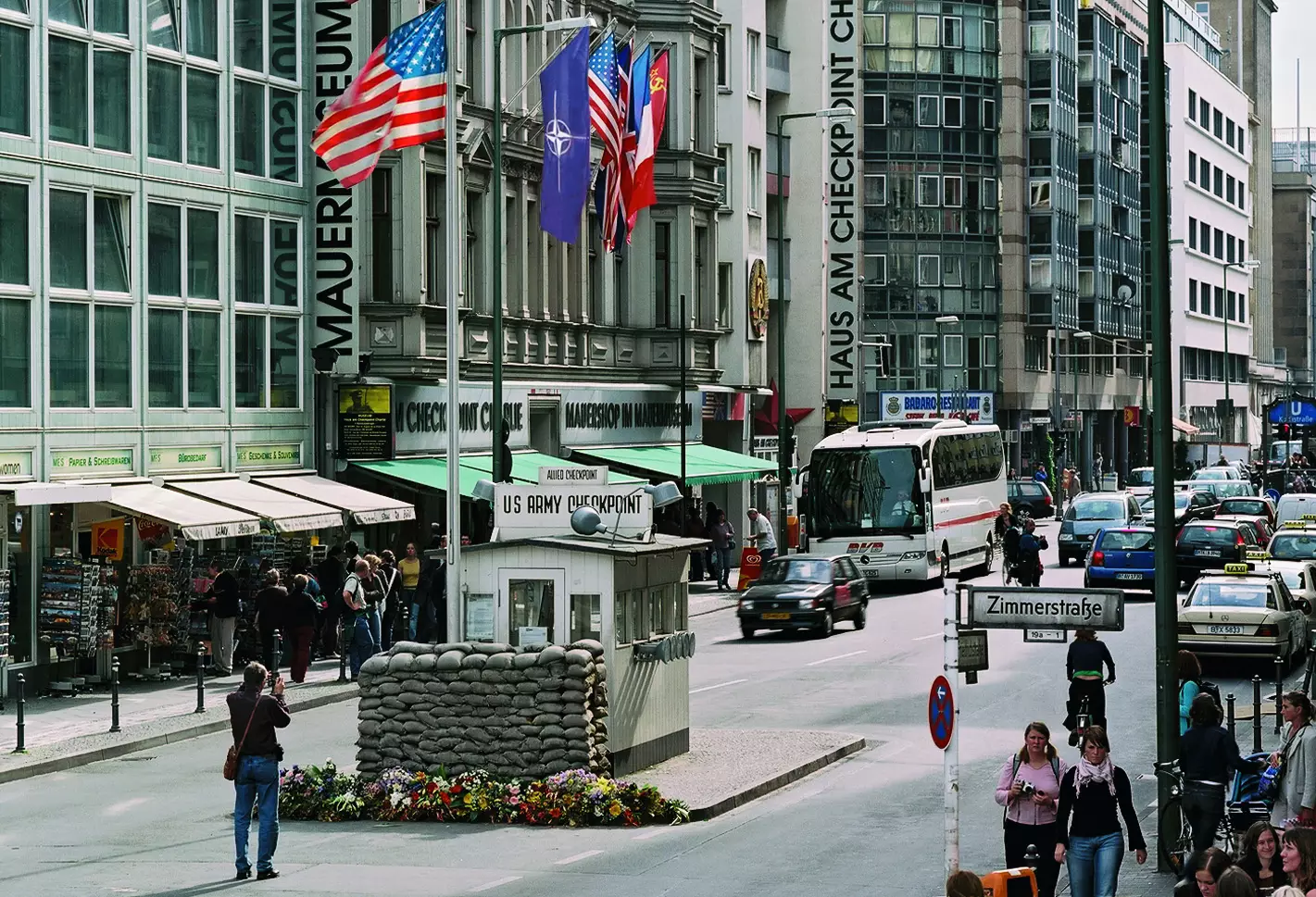
Checkpoint Charlie once marked the most controlled doorway between two worlds. It was the only crossing that allowed foreigners to move between East and West Berlin, while local residents on either side could not use it. This strict rule helped build its reputation as a place of secret meetings, coded messages, and quiet exchanges during the Cold War. Its name came from the NATO phonetic alphabet, following Checkpoints Alpha and Bravo at the autobahn crossings of Helmstedt and Dreilinden.
A Day of Tanks and Tension
The atmosphere around Checkpoint Charlie turned electric on 27 October 1961. On that day, American and Soviet tanks faced each other only about 200 meters apart. The standoff lasted hours and brought the city to the edge of crisis, underlining just how fragile the peace felt at this border point.
What Remains on the Street Today
Much has changed since the Wall came down. Sections of the Berlin Wall were removed to make way for new buildings, including the American Business Center and other developments. The junction of Zimmerstraße and Friedrichstraße, near U-Bahn Kochstraße (U6), still displays the famous sign that reads, “You Are Leaving the American Sector.”
The original guardhouse from Checkpoint Charlie is no longer on the street. It moved to the Allied Museum on Clayallee, where it is preserved as a historical object. Nearby, the Haus am Checkpoint Charlie offers a more colorful experience. This private museum exhibits memorabilia connected to the Wall and showcases the inventive devices used by people fleeing the GDR—among them, a tiny submarine that once carried escapees beneath the water.
Souvenir Stamps and Practical Notes
Street vendors in the area sometimes offer “passport control” booths where they stamp souvenir marks for a small fee. These stamps are not official and could invalidate a current passport. A safer option is to bring an expired passport or a small notebook to collect the stamps without risking travel documents.
Source - https://en.wikipedia.org/wiki/Checkpoint_Charlie