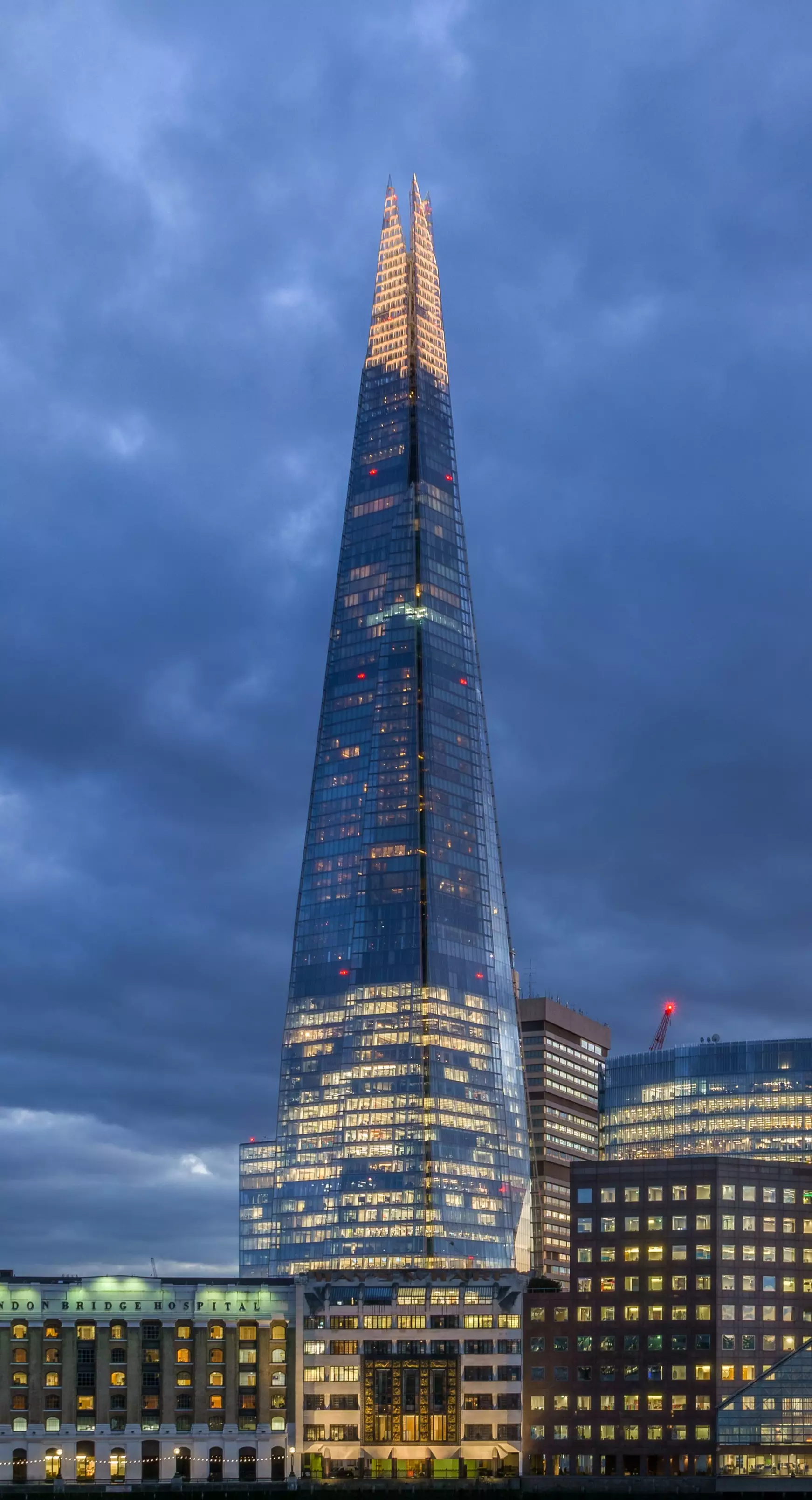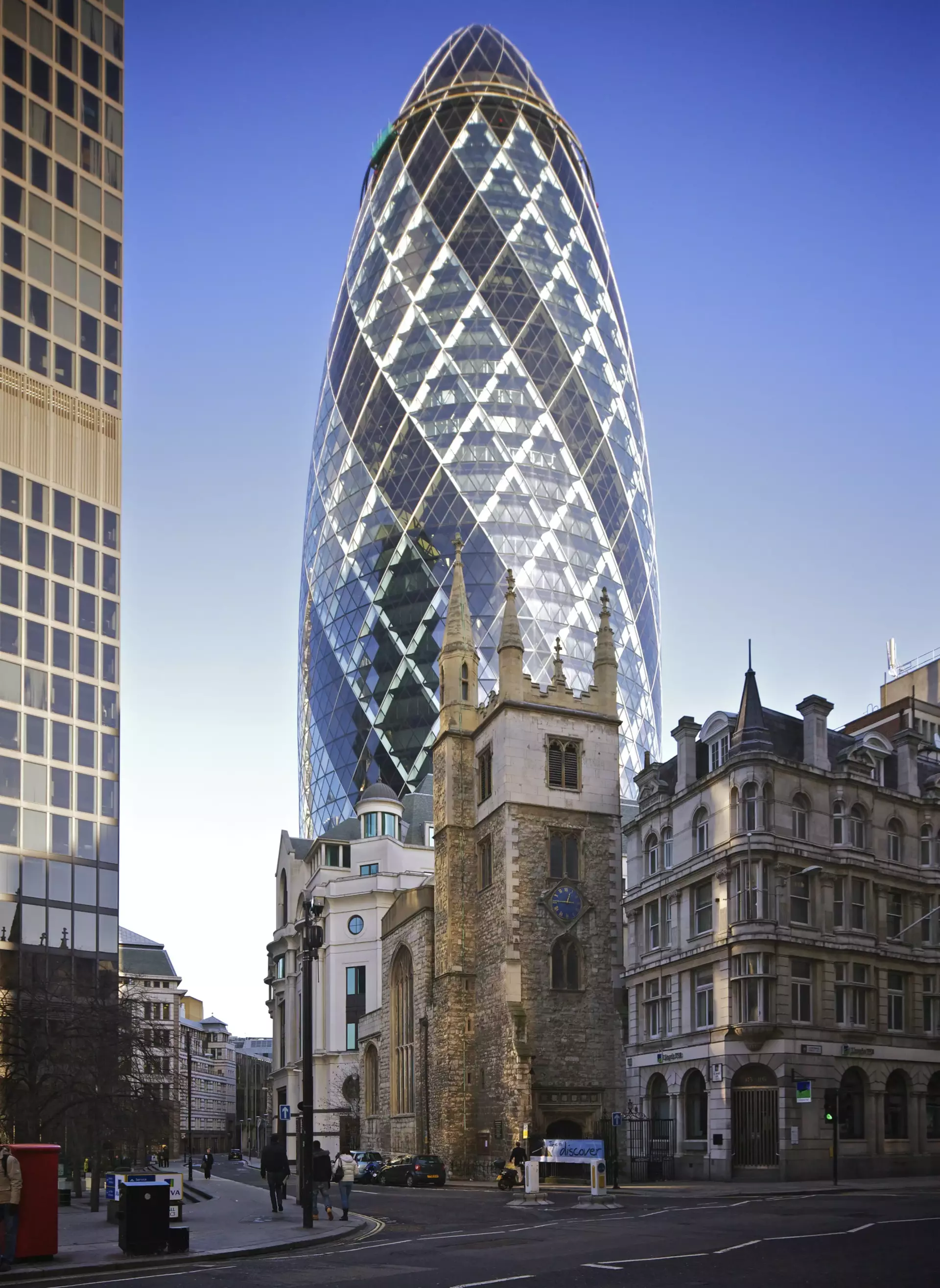
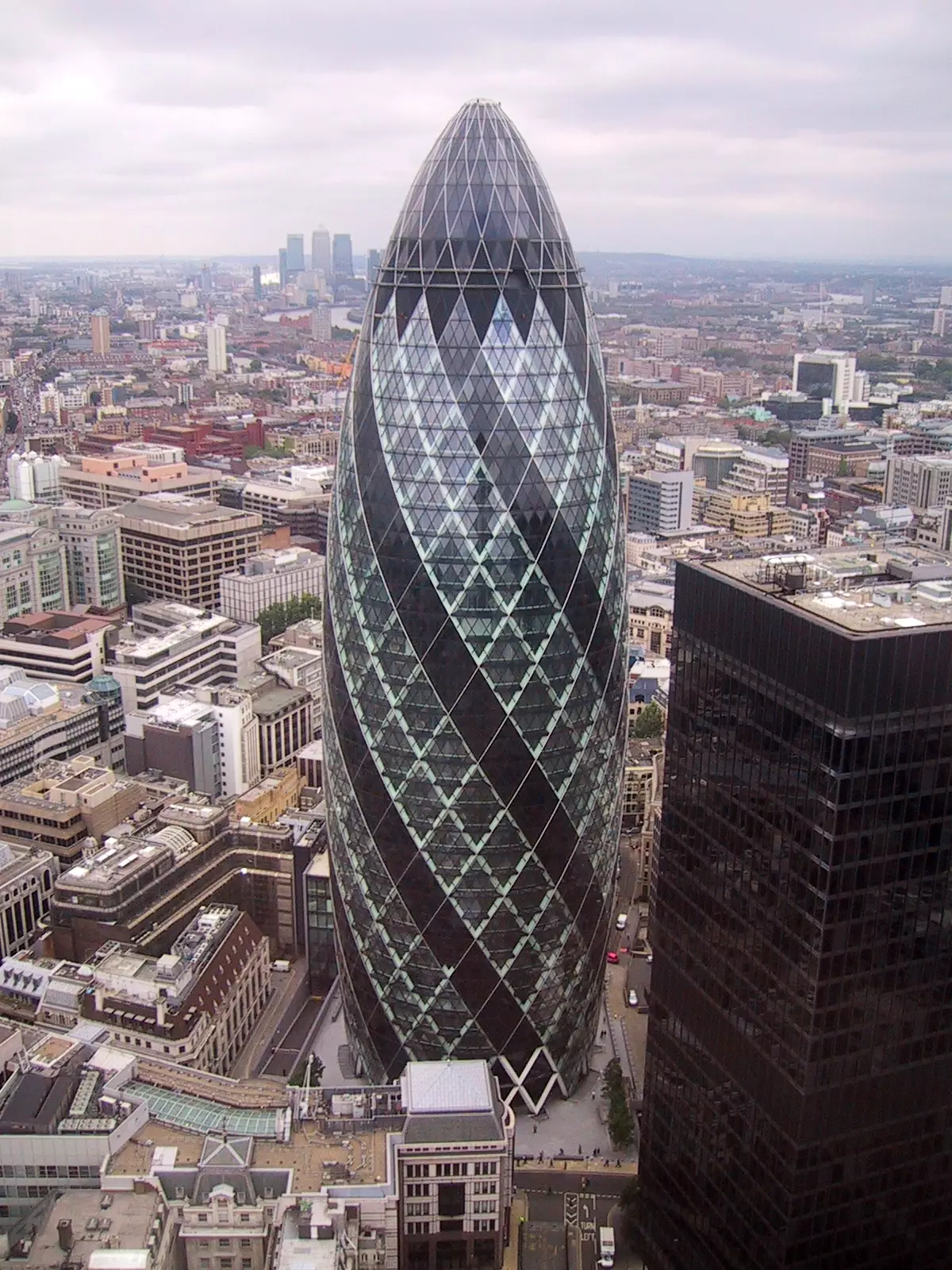
Standing out against London's skyline, The Gherkin is an iconic piece of modern architecture designed by Sir Norman Foster, one of Britain's renowned architects. This striking curved glass skyscraper was honored with the Stirling Architectural Prize for Best Building in 2004, showcasing its architectural excellence and innovative design.
The Gherkin stands where the Baltic Exchange building once was, a site that has seen both tragedy and transformation. In 1992, an IRA bomb destroyed the original structure, taking the lives of three people. Today, the site has been revitalized, with the Gherkin embodying both resilience and modern ingenuity.
On the Bury Street side of the Gherkin, near some black stone benches, lies the Tomb of the Unknown Girl. This memorial honors a teenaged Londoner who died 1,600 years ago. The site is marked with a marble laurel wreath and an inscription, offering a poignant reminder of the city’s deep and layered history.
For those looking to experience dining with a breathtaking view, Searcy's Restaurant at the top of The Gherkin offers a unique culinary experience. Reservations are available up to five weeks in advance, ensuring that visitors can plan their visit to enjoy the spectacular panoramic views of the city. Security checks are part of the experience, adding an extra layer of exclusivity to the visit.
Source - https://en.wikipedia.org/wiki/The_Gherkin
This is probably the most famous criminal court in the world, and has been London's principal criminal court for centuries. It hears cases remitted to it from all over England and Wales as well as the Greater London area. The present building dates largely from 1907 (a new block was added from 1970 for more modern facilities) and stands on the site of the infamous medieval Newgate Gaol. The Central Criminal Court is of course best known today for its association with John Mortimer's Rumpole of the Bailey character, novels and television series. Daily case listings are available at The law pages. No bags, cameras, drinks, food or mobile phones—no facilities for safekeeping. Children under 14 are not admitted.
Old train station with an enormous office and shopping complex in glass and pale stone. A lavish hotel is also on the site. The name comes from the Queen Eleanor (13th century) gothic pillar outside the station, which is actually a Victorian-era replica. Charing Cross Road was once famous for its vintage book shops, but these have now largely disappeared due to high rents and online competition; however, the road is still home to one of London's largest bookshops, Foyle's.
Another Richard Rogers creation, nicknamed the Cheesegrater. Completed in 2014. Also opposite Lloyd's.
A small museum is set in a Victorian house near the infamous Battle of Cable Street. There are 5 floors including the basement, each dedicated to several aspects of famous murders starting with a recreation of Mitre Square on the first floor, Jack the Ripper's sitting room on the second floor, the police station on the third, a victim's bedroom on the fourth and the mortuary in the basement. There is also a walking tour. Book tickets online to save money, there is also a Halloween special deal.
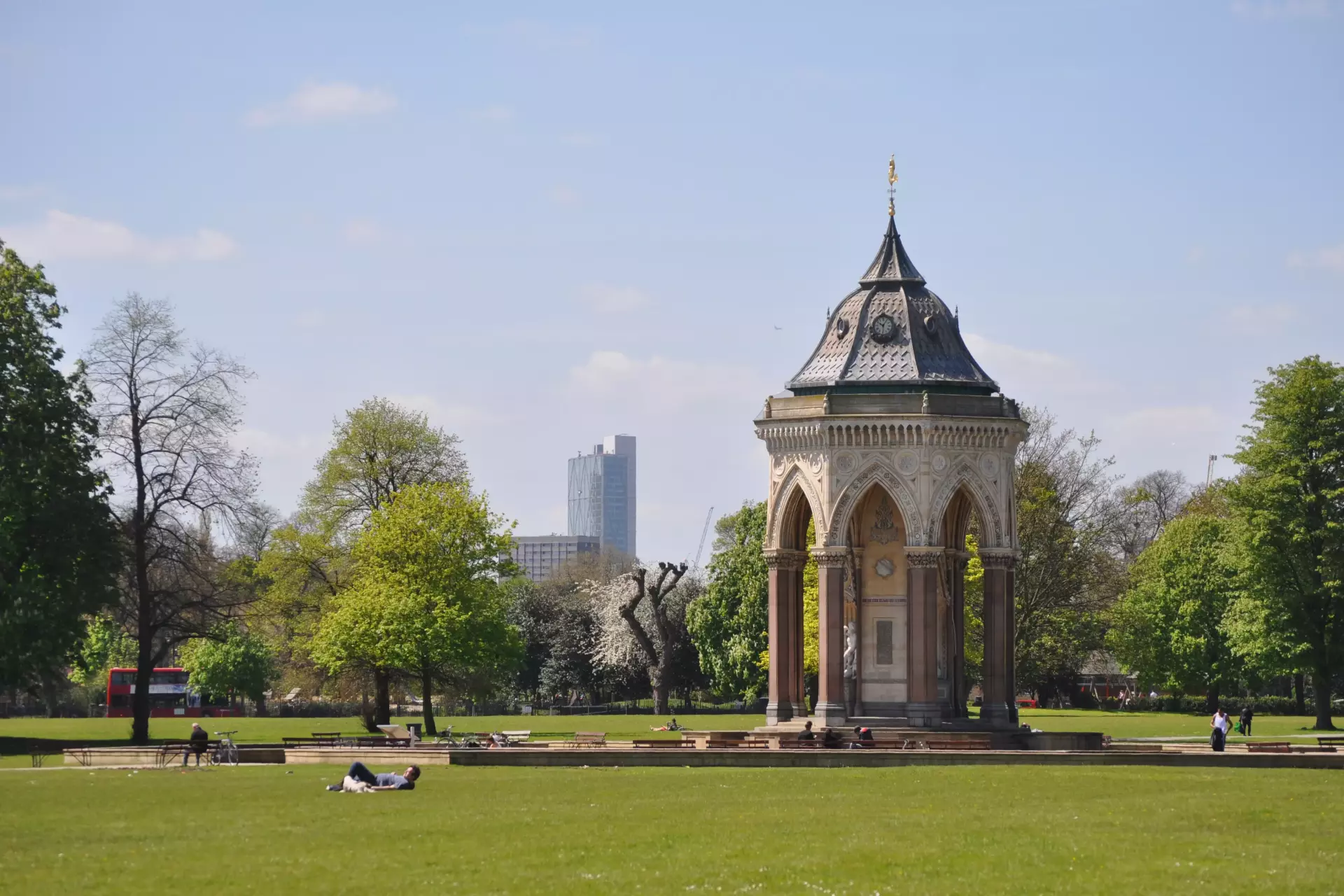
More of an artificial stream than a fountain, flowing in an oval through an open grassy area which, in normal summers, is a popular paddling spot for children and grown-ups alike.
One of the "Magnificent Seven" old cemeteries in London. Graves range from plain to ornate and the site can be a tranquil place to walk amid the bustle of the city. It was opened in 1840 and is still a working cemetery, although it was closed for some time in the late 20th century. Can be nice, if morbid, for an afternoon stroll, especially as a route (and cycle route) between Old Brompton Road and Fulham Road.
A royal residence which is still used by Prince William, Kate and their young family. Much of it is however open to the public and it is a very popular tourist attraction perhaps due as much to its association with Princess Diana as anything else. The King's Gallery here is a magnificent Regency period court drawing room and contains some impressive paintings including a Van Dyke. Also a nice restaurant on site called The Orangery.
This small tower across the road from the Houses of Parliament is the only part of the original Palace of Westminster still standing. While it is overshadowed in splendour by the surrounding buildings, it's well worth a visit, and has good displays about the early history of Westminster.
The western half of the twin parks and the half that is often forgotten in public consciousness. It tends to be more formal than its neighbouring park. Highly detailed, Gothic-style monument to commemorate Prince Albert, husband of Queen Victoria. Opposite the Royal Albert Hall. Diana, Princess of Wales Memorial Playground A 900-year-old tree stump carved and painted to feature elves and small animals. A royal residence which is still used by Prince William, Kate and their young family. Much of it is however open to the public and it is a very popular tourist attraction perhaps due as much to its association with Princess Diana as anything else. The King's Gallery here is a magnificent Regency period court drawing room and contains some impressive paintings including a Van Dyke. Also a nice restaurant on site called The Orangery. Full of swans, geese, gulls, and other birds. Deckchairs can be hired for £1.50. The park benches and grassy areas are free. A nice modern art gallery, near to the Serpentine. Too small to host a permanent collection, instead hosts temporary exhibitions which can last anything from a few weeks to over a year. Each summer a pavilion next to the gallery is designed by a different architect, which then houses various cultural events.
The Abbey charges tourists for entry, but not for worshippers. Attend a church service for free and enjoy some of the finest choral music in London from the choir. Choral Evensong at 3pm (Sa Su) or 5pm (weekdays), depending on time of year, is an especially good bet. The Abbey is the traditional scene for the coronation of British monarchs and the burial place of many past kings and queens. The Abbey contains a good gift shop and the Cellarium Café, which traces its history to the 14th century, is a good place to buy a noontime meal. Westminster Abbey is usually open to visitors from Monday to Saturday throughout the year. On Sundays and religious holidays such as Easter and Christmas, the Abbey is open for worship only. All are welcome and it is free to attend services. Visitor access to the Abbey is via the West Gate of the North Green.
A medieval church that was rebuilt in the late 18th century, noted for its well-preserved interior. The former churchyard was converted into a public space in 1880, called Postman's Park as it was frequented by workers from the nearby Post Office headquarters.
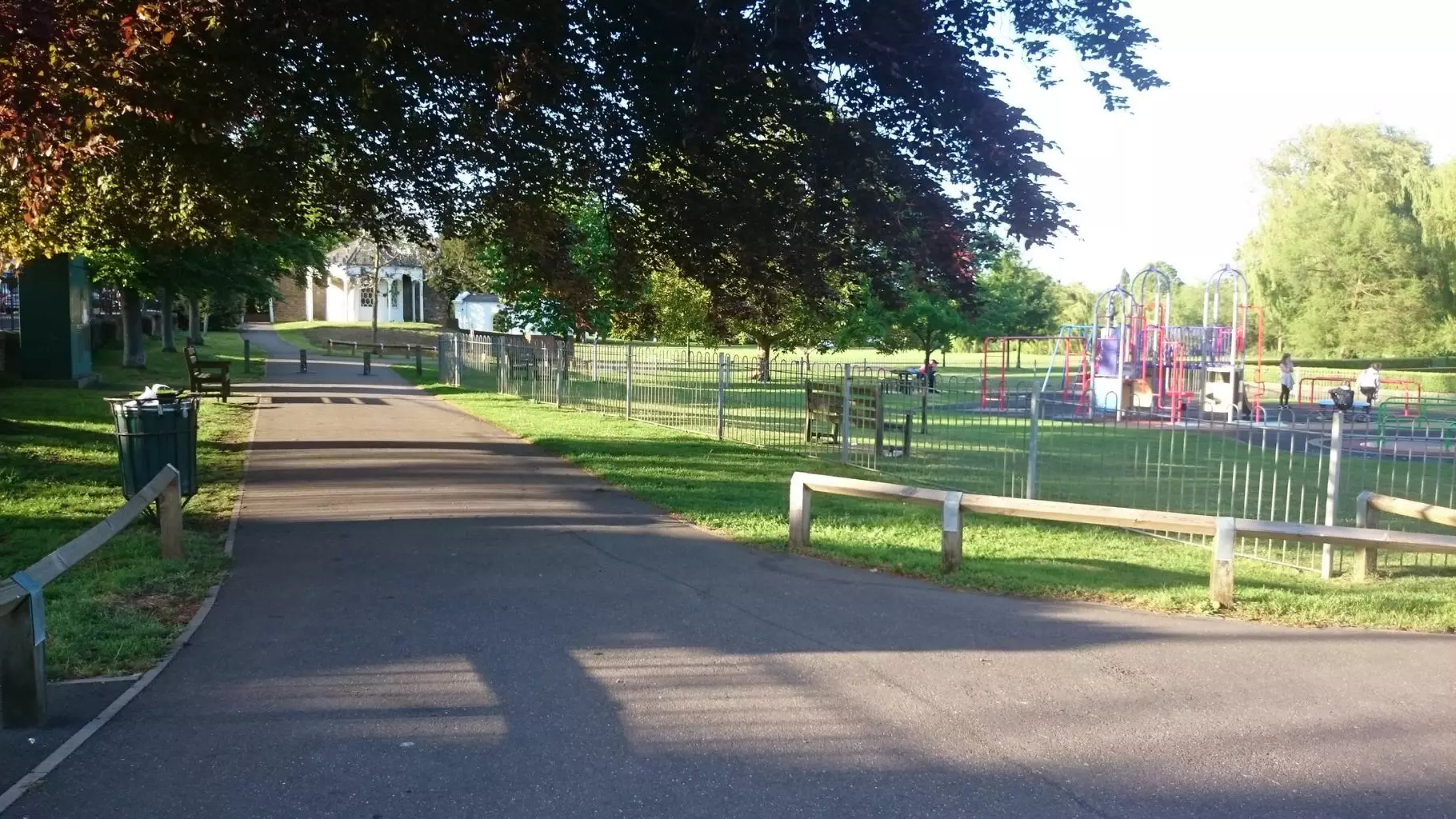
This park used to be the grounds of Lambeth Palace but has been a public park since 1901. In addition to the green space it provides, it contains a range of sports facilities (booking required, except for the cricket nets) and a playground.