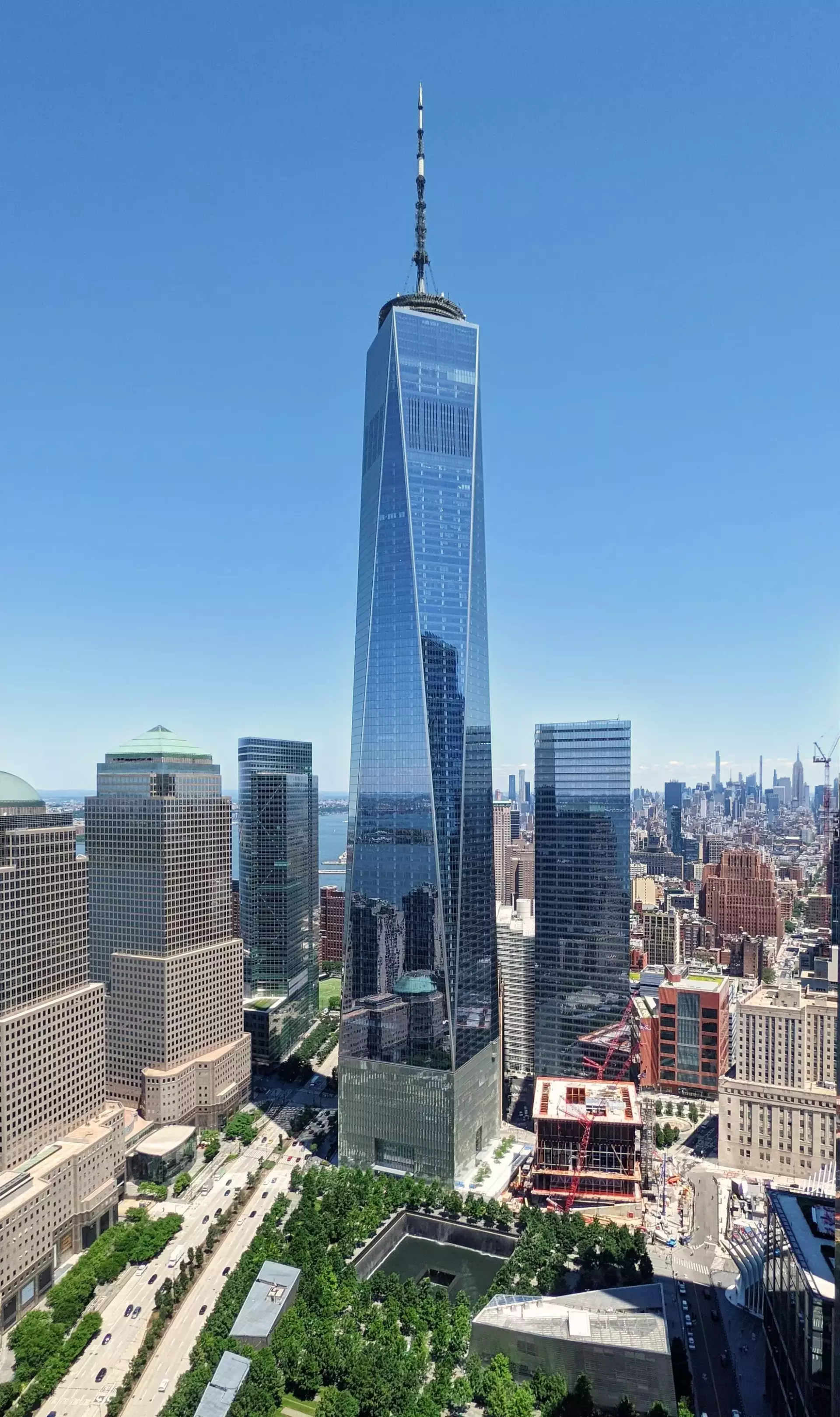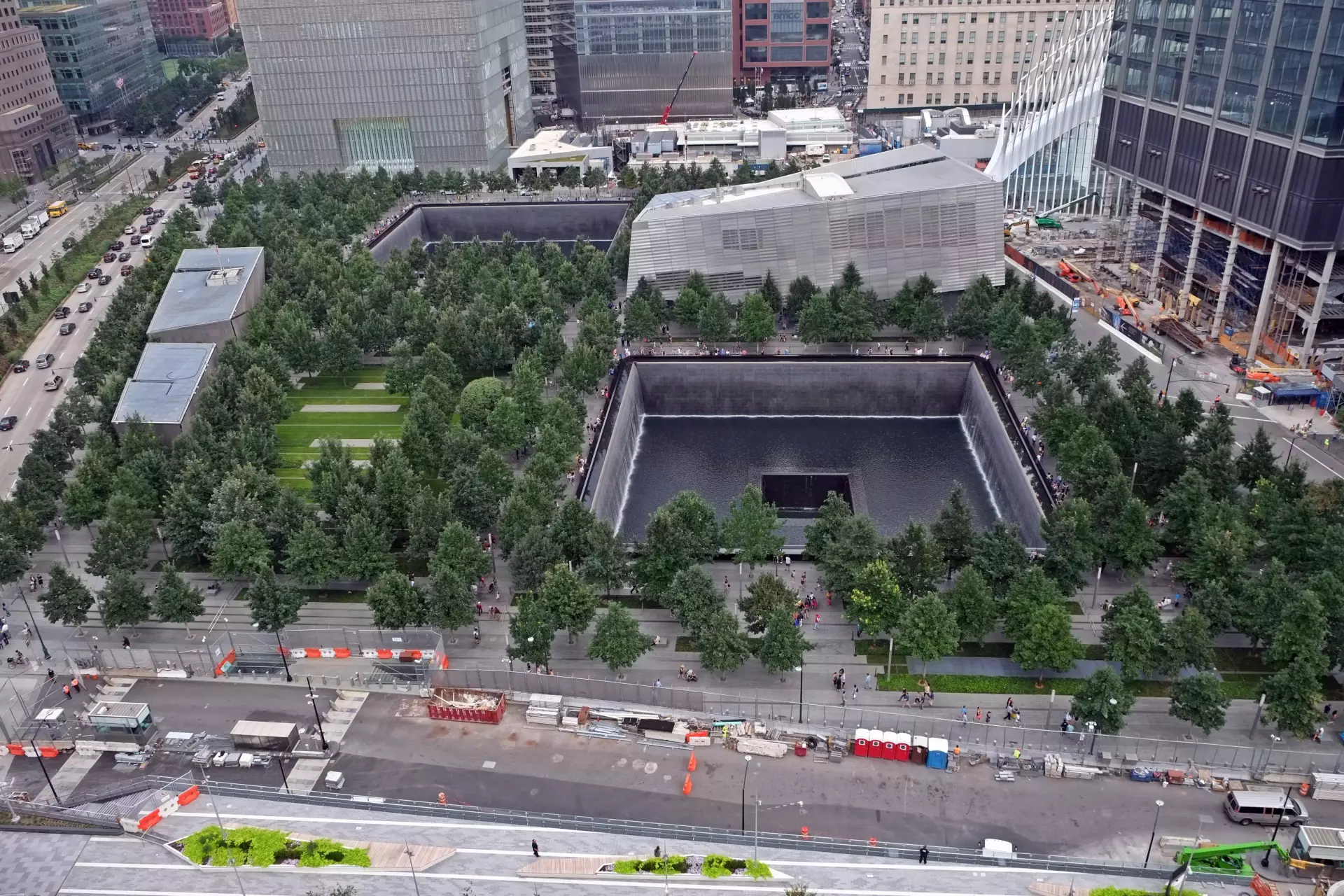
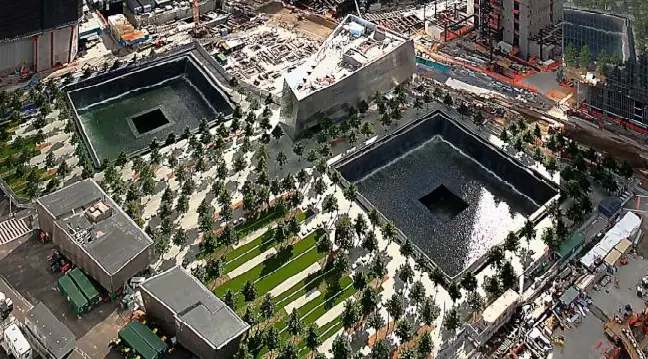
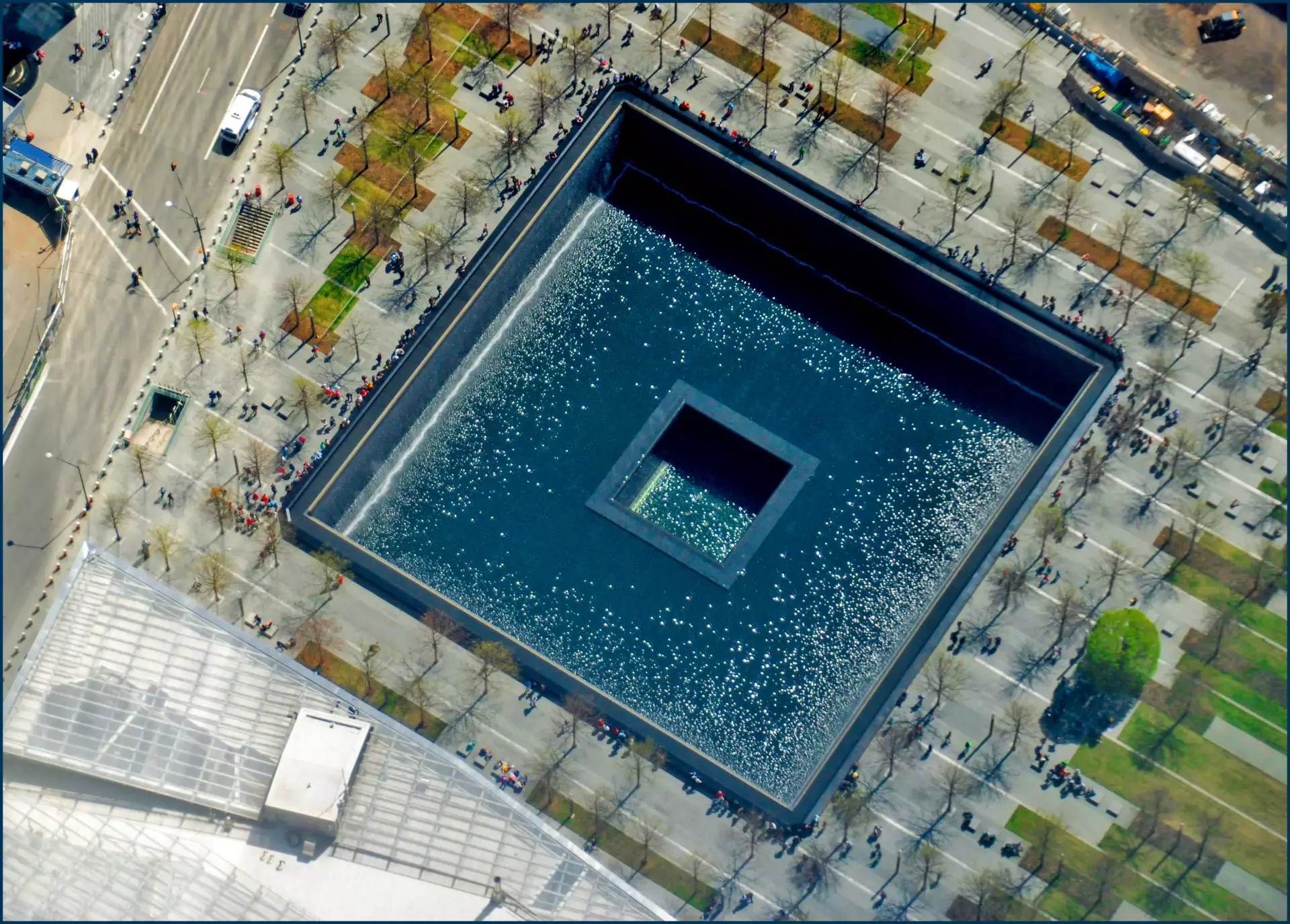
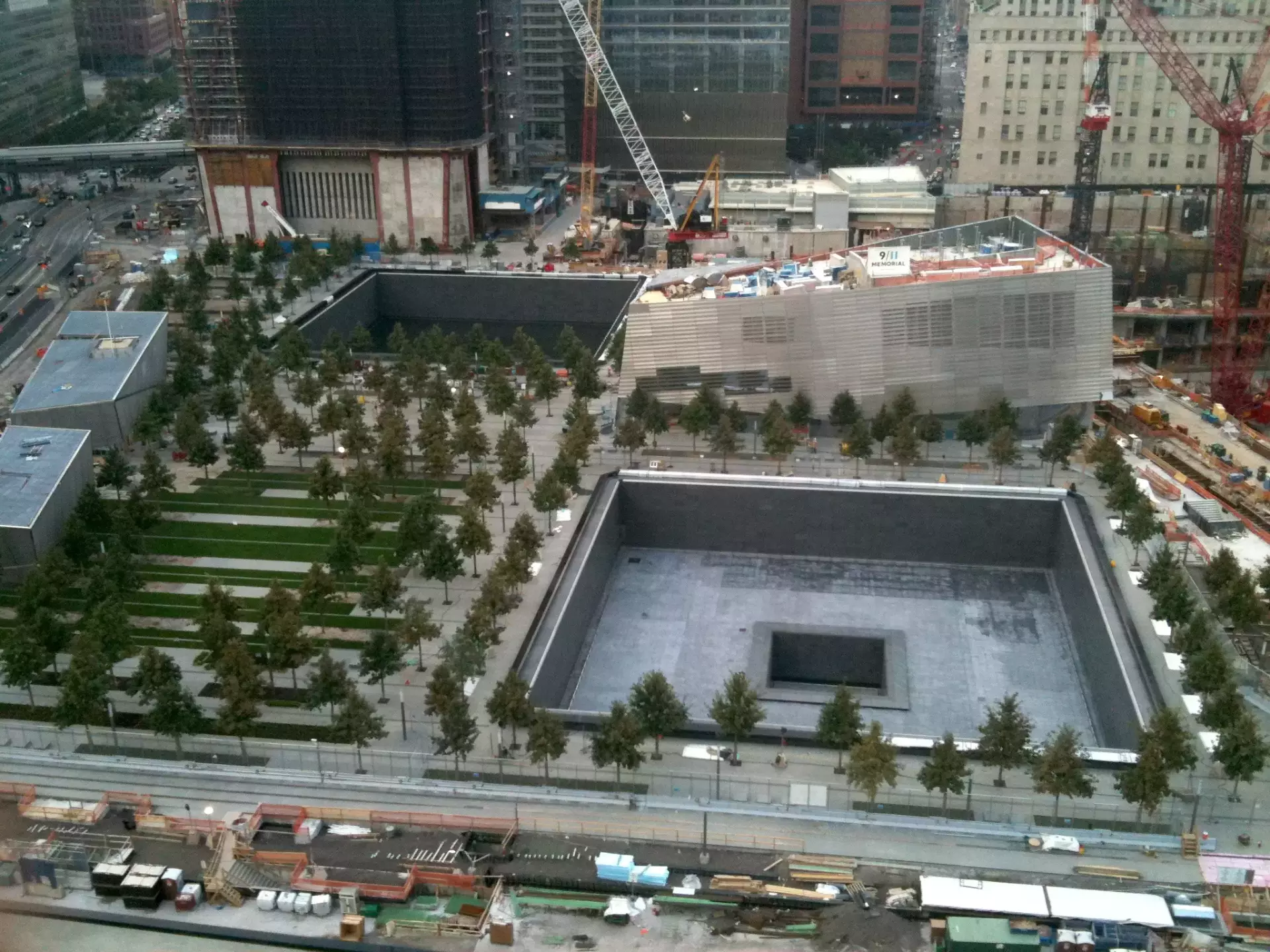
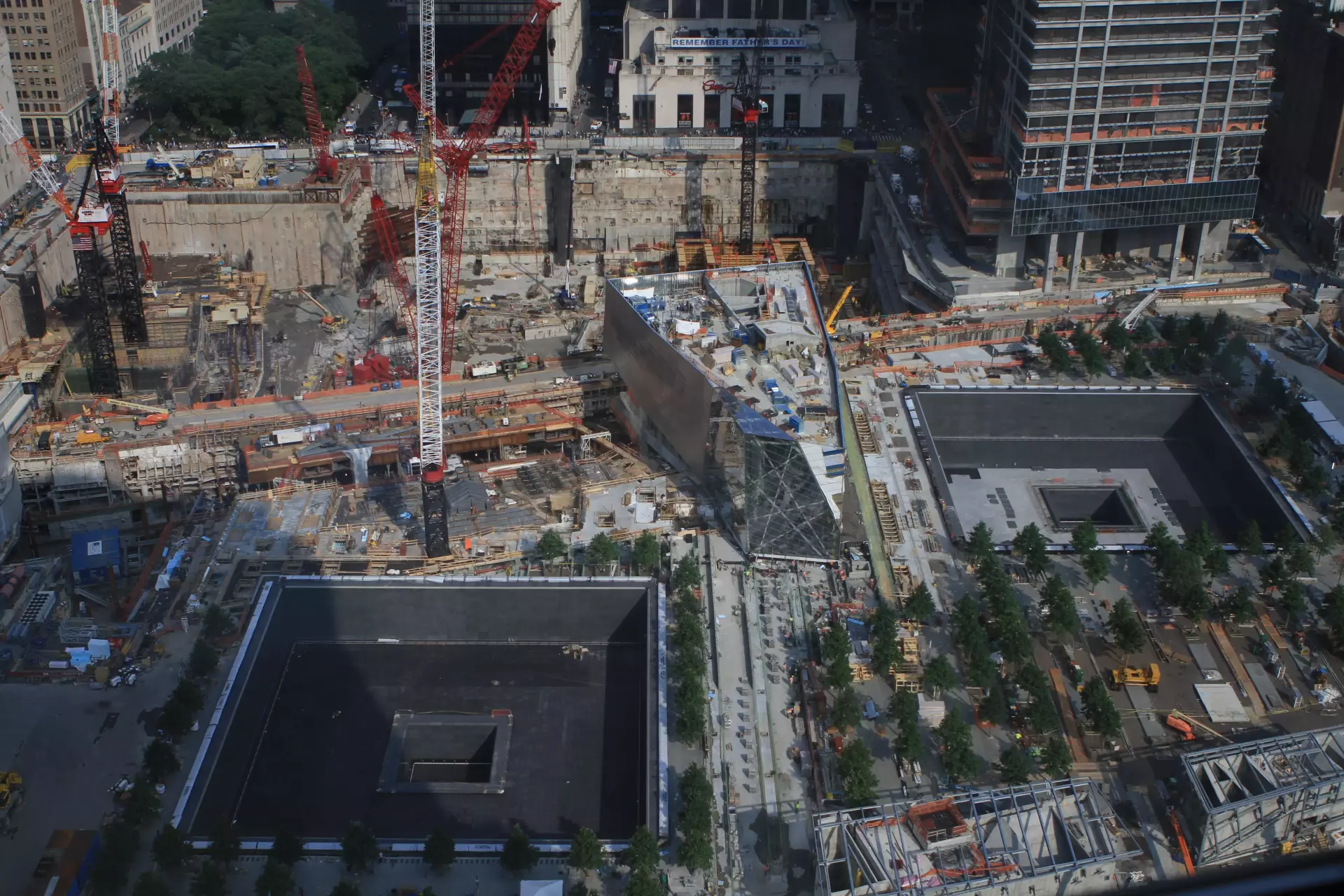
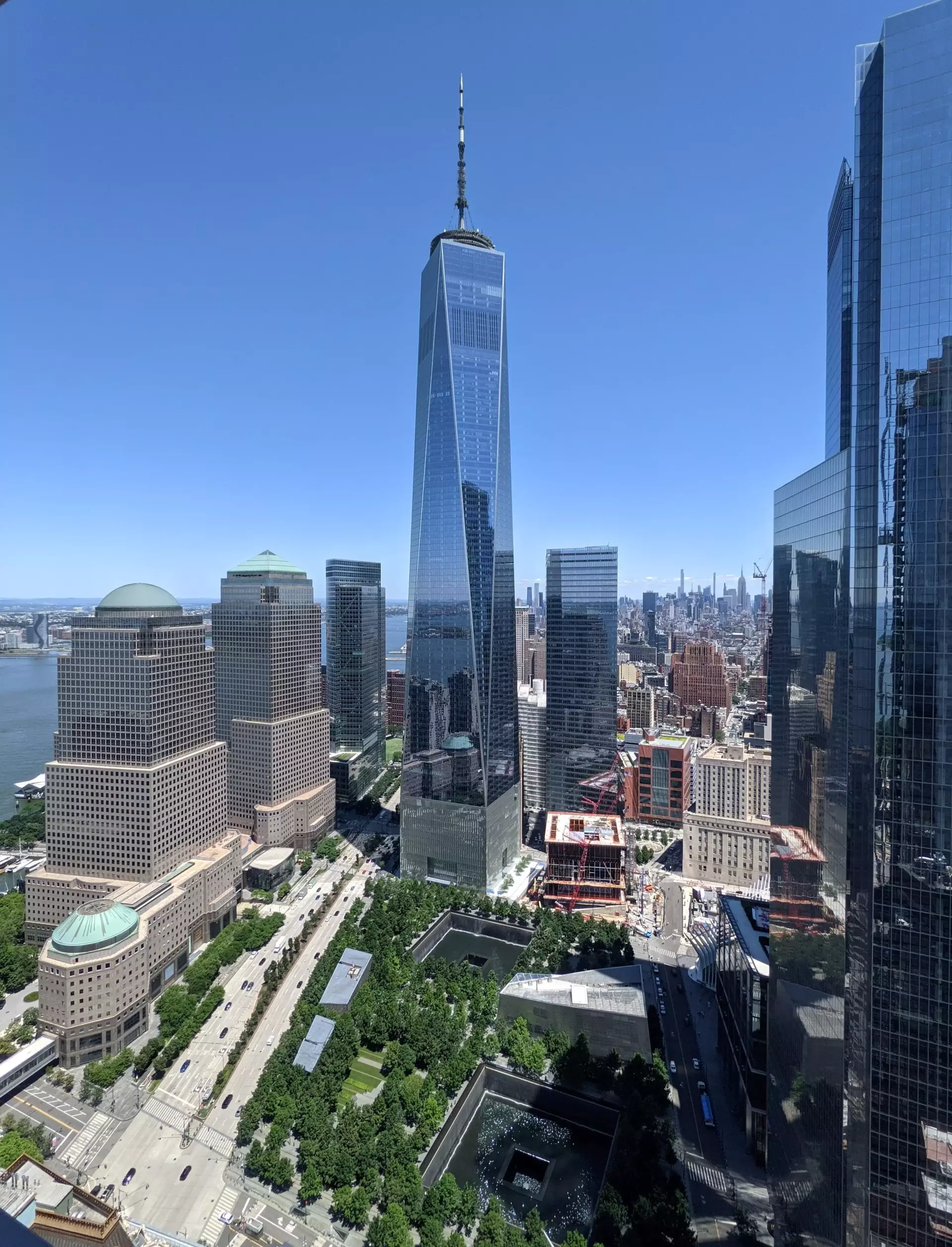
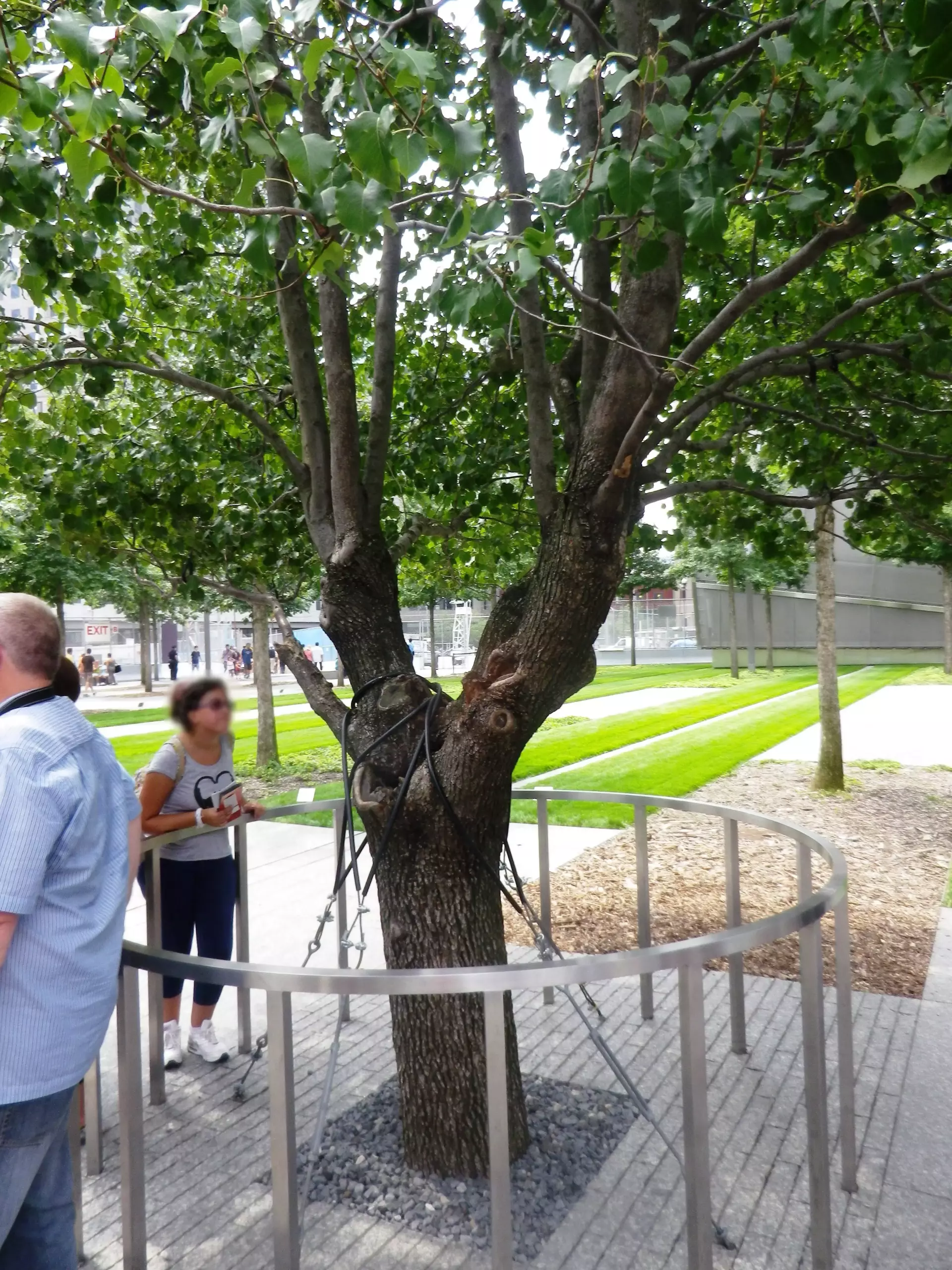
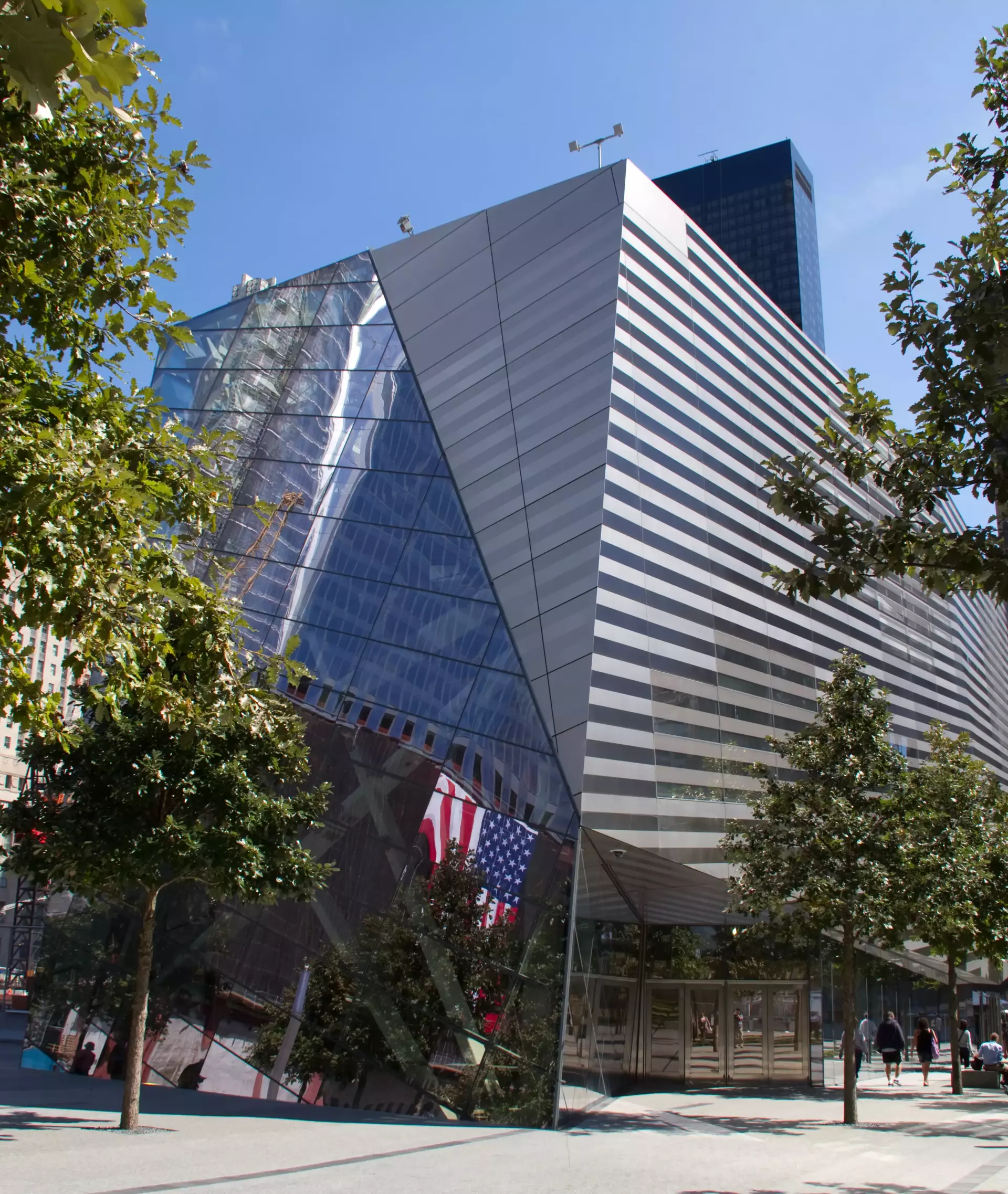
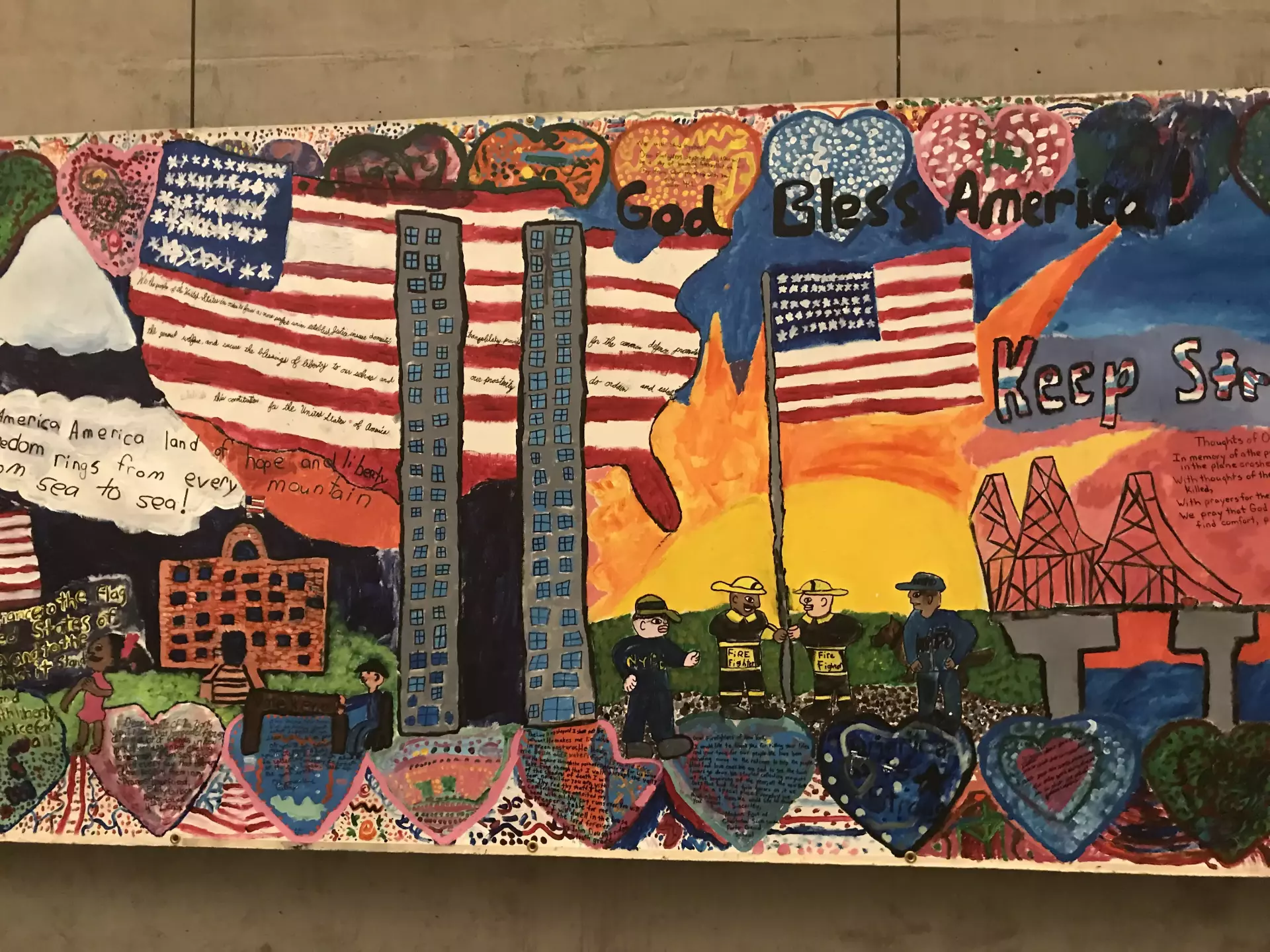
The National September 11 Memorial & Museum stands on the site where the World Trade Center towers once rose. This poignant site features two immense waterfalls and reflecting pools, occupying the footprints of the twin towers. These pools are surrounded by bronze panels, where the names of the nearly 3,000 victims of that tragic day are inscribed, offering a solemn remembrance.
As visitors walk around the pools, they are enveloped by the sound of cascading water, which adds to the contemplative atmosphere. The bronze panels that line the pools allow individuals to pause and reflect on each name etched into the metal. Occasionally, a white rose is placed on one of these names, marking the birthday of that particular victim and serving as a touching tribute to their memory.
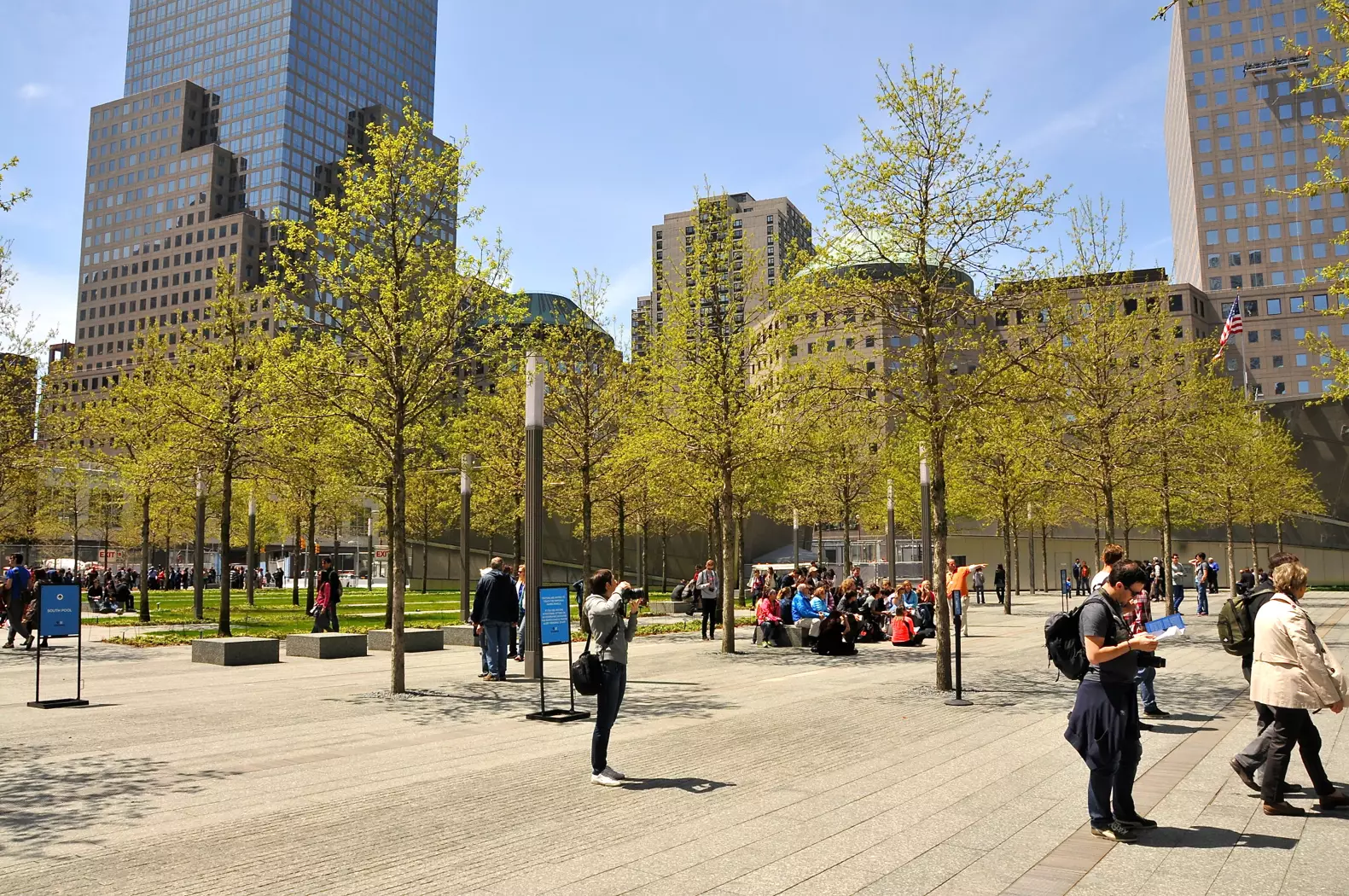
Surrounding the memorial, a plaza filled with a grove of trees provides a place of peace and contemplation. The trees offer shade and comfort to those who come to pay their respects, creating a serene environment amidst the bustling city.
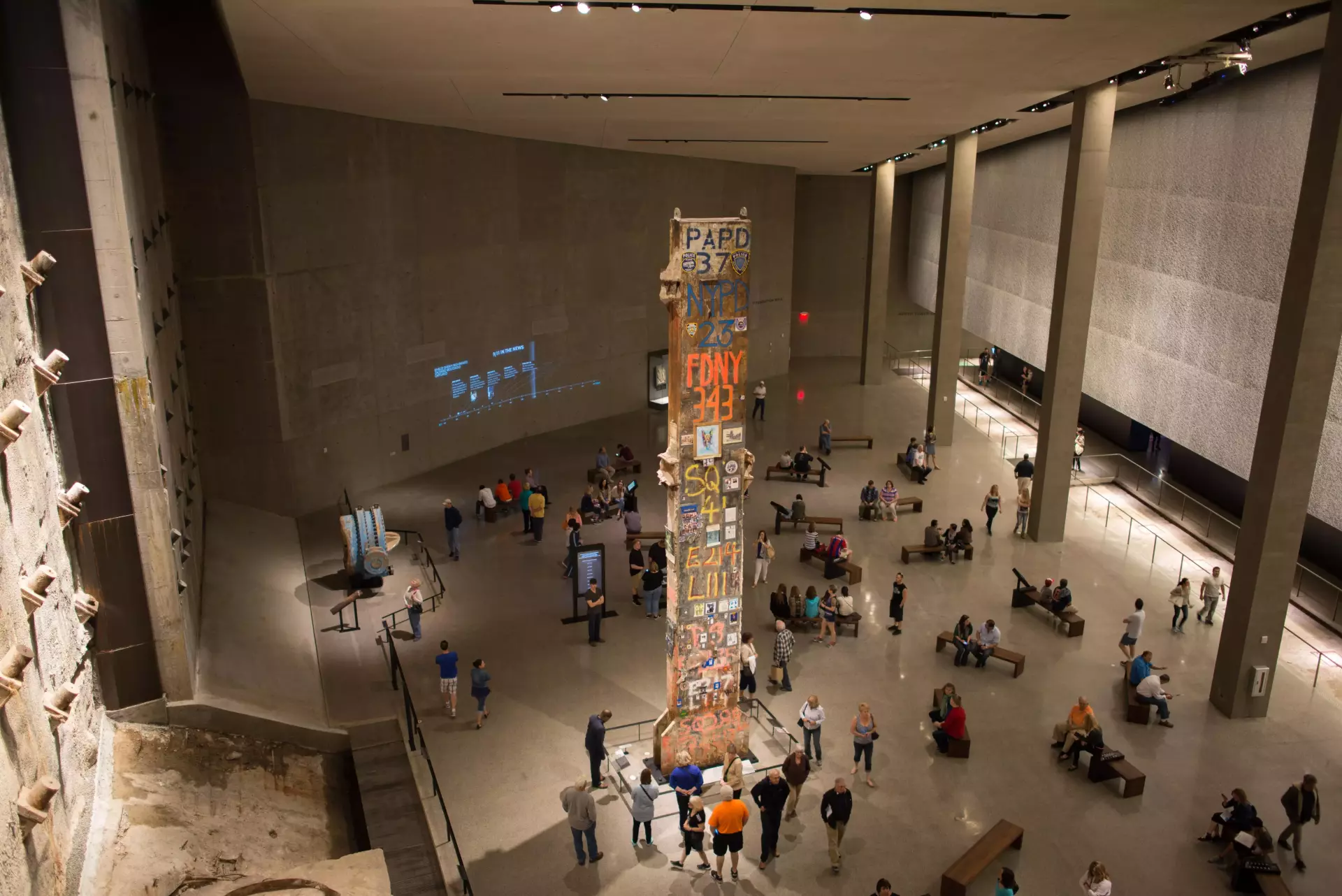
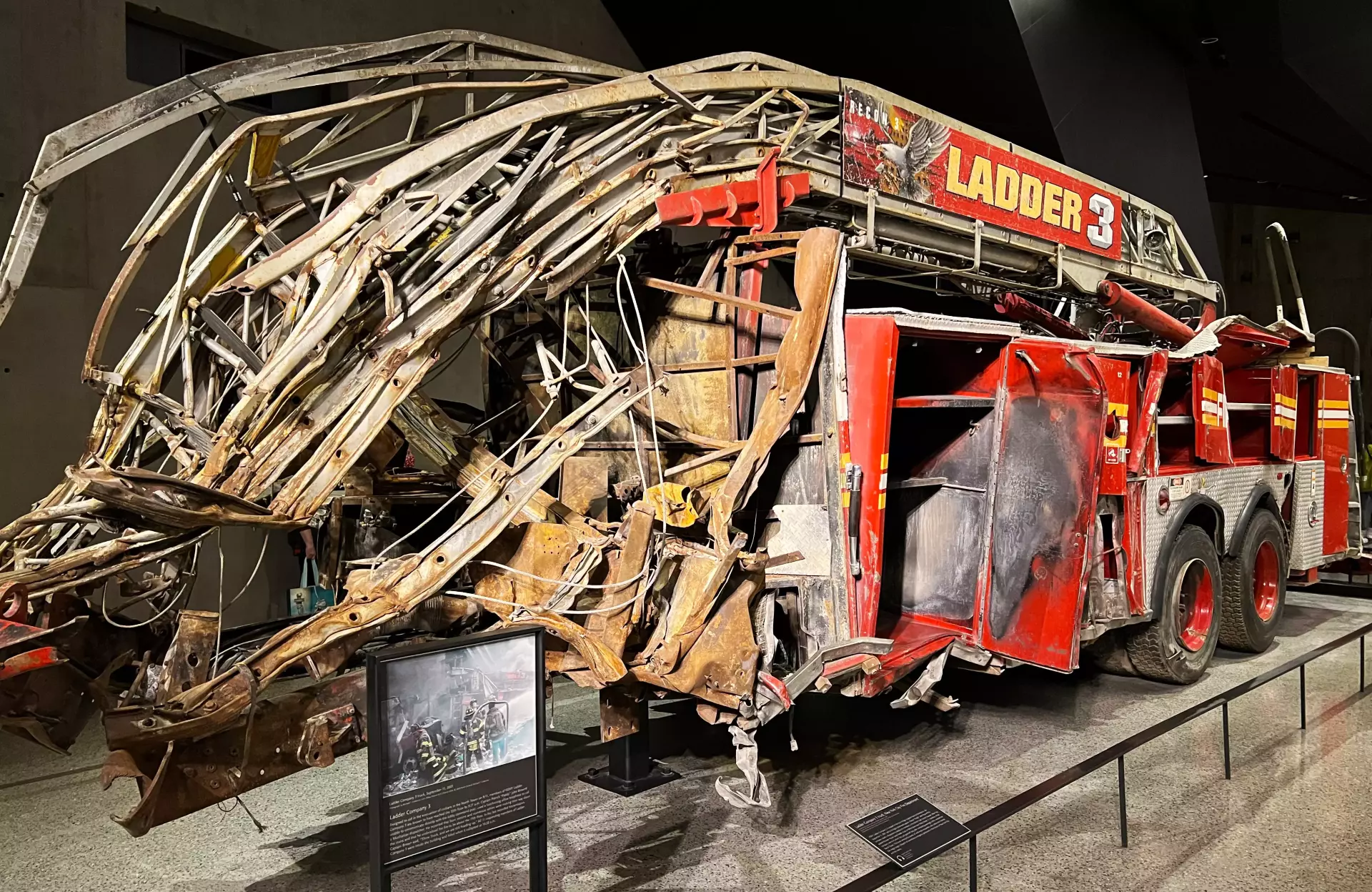
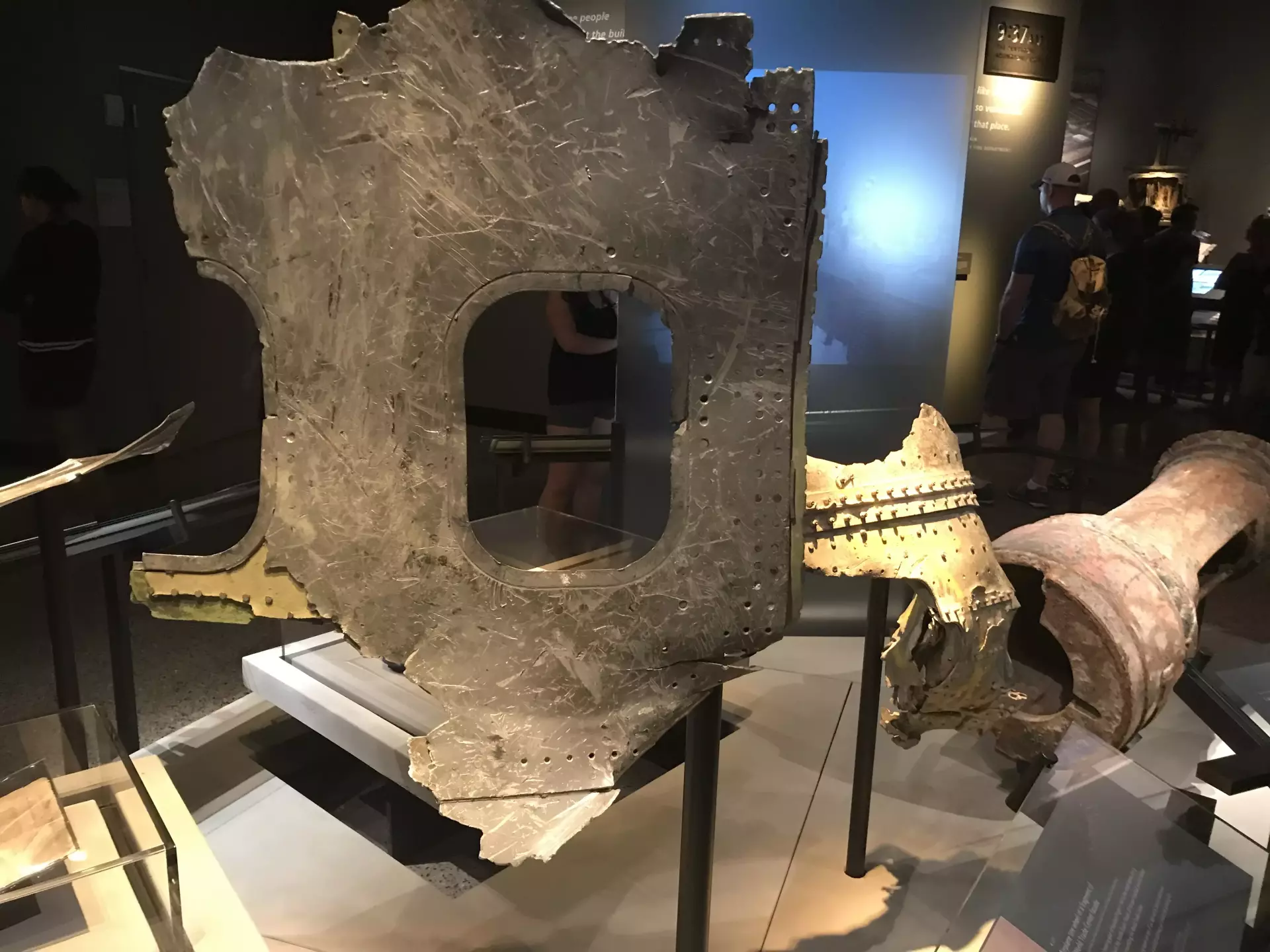
Adjacent to the memorial and located underground, the museum offers an in-depth exploration of the events of September 11, 2001, and the lasting impact they have had. Inside, visitors can find remnants of the original towers and various artifacts from that day. The museum's exhibits provide context, detailing both the events and the personal stories of those affected.
Source - https://en.wikipedia.org/wiki/National_September_11_Memorial_%26_Museum
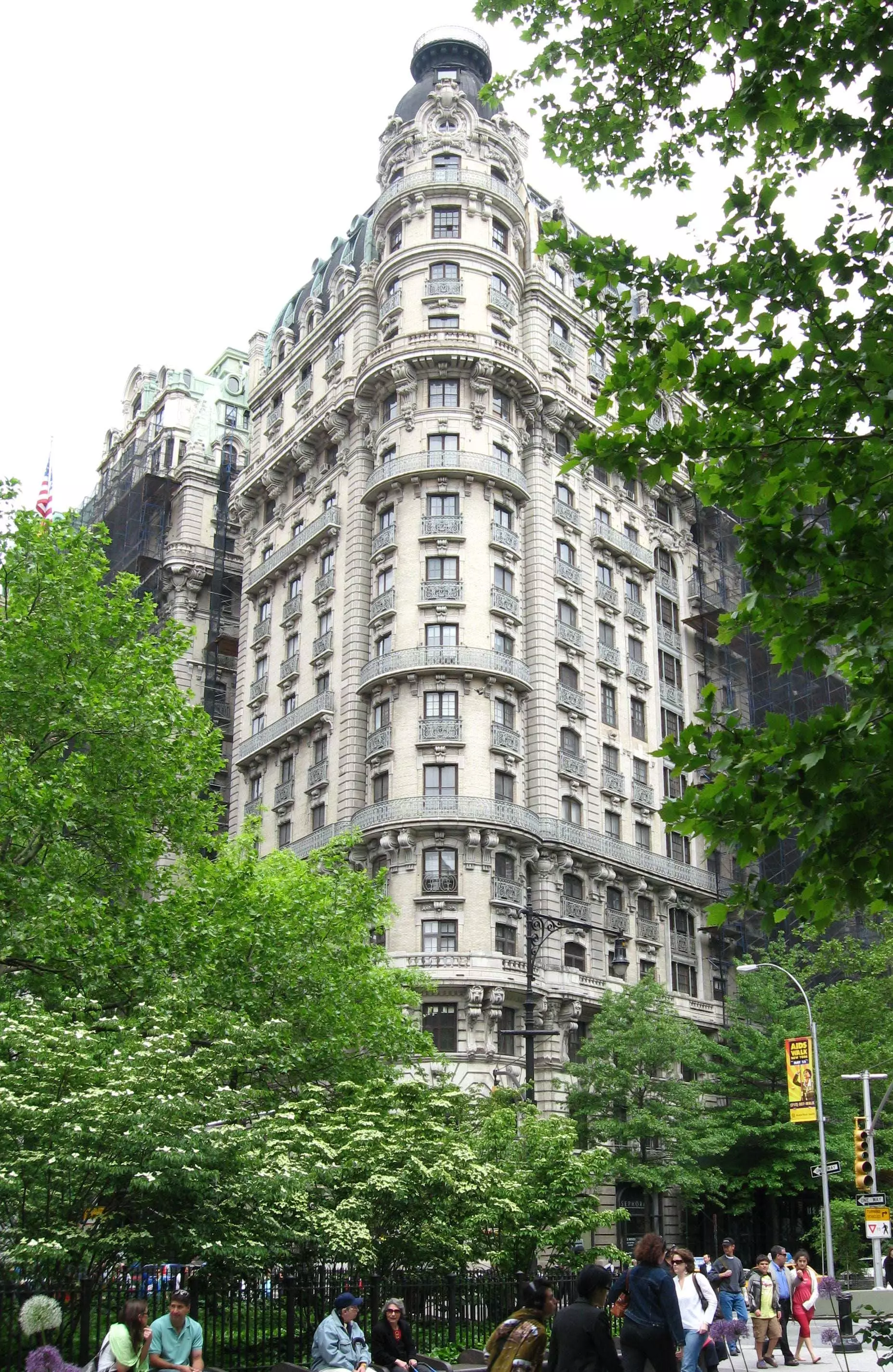
A museum and library devoted to Spanish, Portuguese, and Latin American art and culture.
So named in 1981 in memory of John Lennon, the former Beatle, who was murdered close by outside his home in the Dakota building. Lennon's widow Yoko Ono, who still lives in the Dakota, subsequently donated $1 million to upgrade the area with hundreds of tree and flower species, including strawberries. The area serves as a Garden of Peace and includes a memorial floor mosaic (donated by the Italian city of Naples) that says simply "Imagine", referring to the title of one of Lennon's evocative songs.
A self supporting arm of the MTA, it is housed in the Subway's former Court Street Station, on a spur line from the current A and C lines. Closed to passengers in 1946, it was reopened in 1976 as the New York Transit Exhibit and was popular enough to be made permanent. The museum is made up of two underground levels: the Mezzanine, which hosts exhibits on the construction of the subway, surface transportation in New York, fare collection and rotating exhibits on various transit-related subjects; and the station platform, which houses about 20 retired subway cars dating as far back as 1903 and a working signal tower. The museum sponsors events throughout the year, including simple art projects, walking tours on the subway, and rides on the museums' fleet of retired trains. There is also an annex of the museum in Grand Central Station in Midtown Manhattan.
The garden is 52 acres and the layout was well planned. It is definitely worth a visit. Designed by the Olmsted Brothers in 1910 and open to the public since 1911, the garden includes an authentic Japanese garden, a Children's Garden, and the Cranford Rose Garden. The garden has the largest cherry blossom trees in one place outside of Japan. There are 42 gorgeous varieties. The Brooklyn Botanic Garden hosts various festivities throughout the year, including Hanami Sakura in May and the Chile Pepper Festival in October.
This 11 acre lake is one of Central Park's finest spots; surrounded by flowering trees and inhabited by several fish and turtle species.
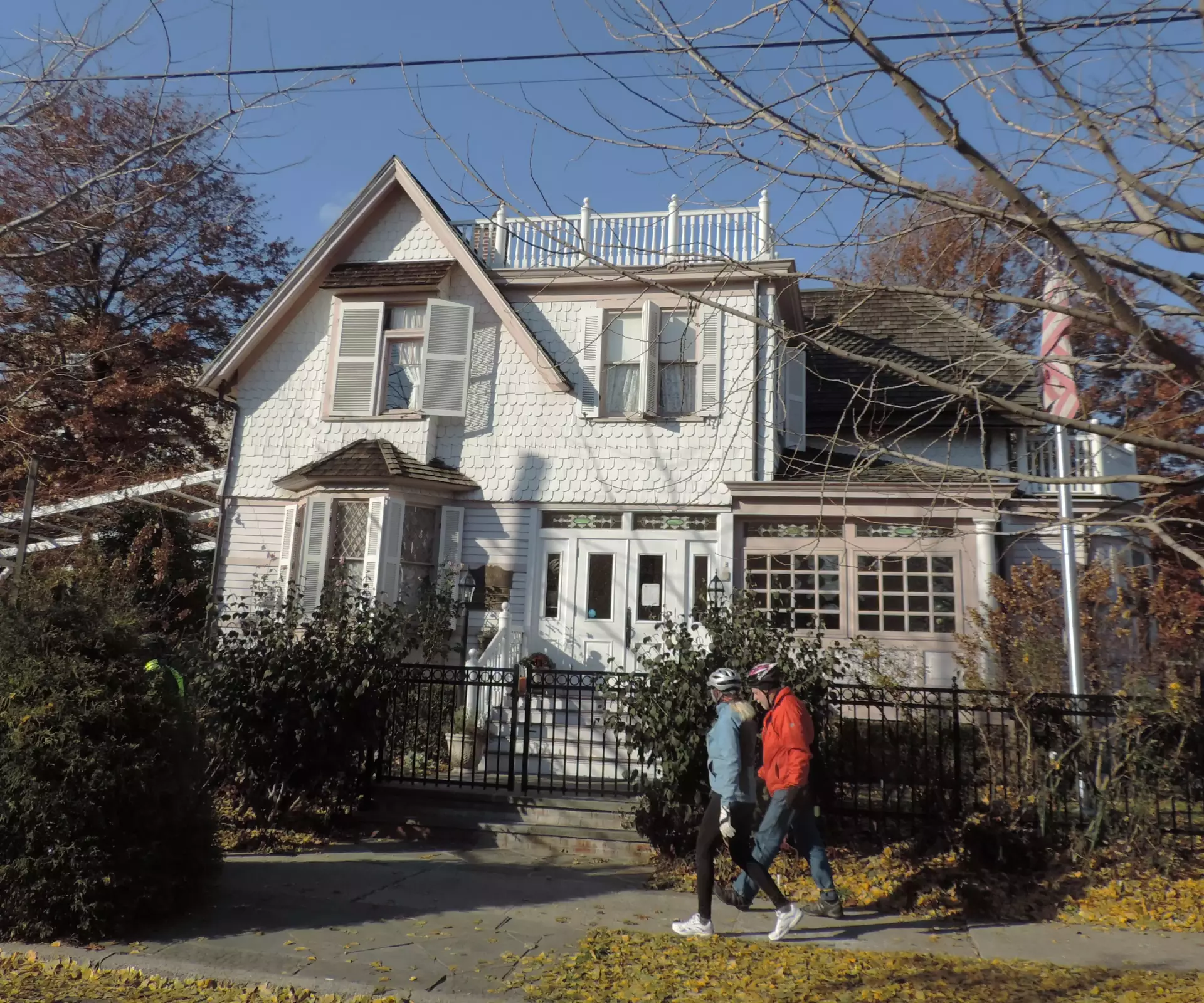
Street built by architect Samuel Burrage Reed. A major mansion owned by circus entrepreneur Anthony Bailey - joined with showman Phineas T. Barnum in 1881 to form the Barnum & Bailey circus. Now Known to the children of Harlem as the Beauty and the Beast house.
This beach is a pleasant place to relax. The water is safe enough to swim in, but it's not the best you can get (you'd get a better deal down the Jersey Shore or on Long Island). The boardwalk, one of the longest in the United States, is great for running or biking.
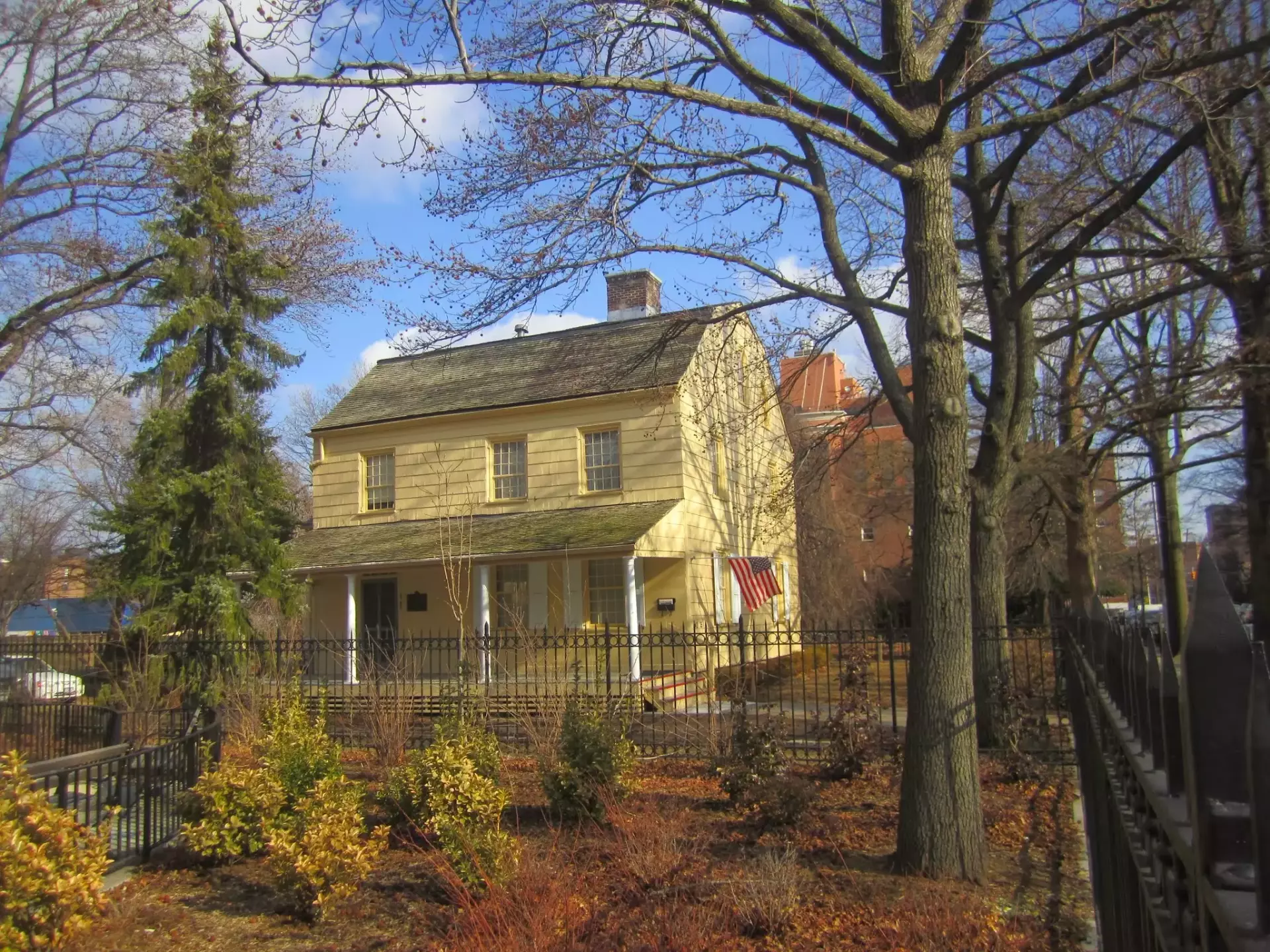
Built in 1765, this is the oldest house on Manhattan Island. It served as George Washington's headquarters in 1776. Now a museum set on a 1.5-acre park, it features a decorative-arts collection representing the colonial and Revolutionary War periods. Washington's office is among the 12 restored rooms.
On this site on April 30, 1789, George Washington stood on a balcony overlooking Wall Street and was inaugurated as the first president of the United States. The old building on the site had been used as New York's city hall and had hosted some of the first congregations of the colonies in the lead-up to the American Revolution, such as the Stamp Act Congress. After the revolution the building, now Federal Hall, briefly housed Congress, the Supreme Court, and Executive Branch offices before the national capital moved to Philadelphia. The current building dates to 1842 and was used first as a Customs House, then later the US Sub-Treasury (millions of dollars of gold and silver were kept in the basement vaults). Today the building is maintained by the National Park Service as a museum dedicated to the history of the site. Guided tours of the building are available, or you can just walk in and look up at the rotunda and view some of the artifacts, such as the bible Washington used in his inauguration ceremony.
Large garden and arboretum featuring a variety of plants, and also a Victorian-style wedding garden.
A very impressive skyscraper with a green spire which was completed in 1930 and surpassed the height of the nearby Woolworth Building (see Manhattan/TriBeCa#See), making it the tallest building in the world until the Chrysler Building was completed just a month later (which in turn lost that title to the Empire State Building less than a year later). The building was leased by Donald Trump in 1995, hence its current name.
A sort of mini forest, described by its designer as a "wild garden," the Ramble is sculpted out of a wooded hillside, with winding paths, rocky outcrops, secluded glades, and a tumbling stream. If one travels through the ramble when the trees are full, it is easy to lose sight of the city's skyscrapers; it's as if you're no longer in Manhattan. The Ramble is also an excellent place to bird watch, with over 250 species of birds that stop here on their migration.
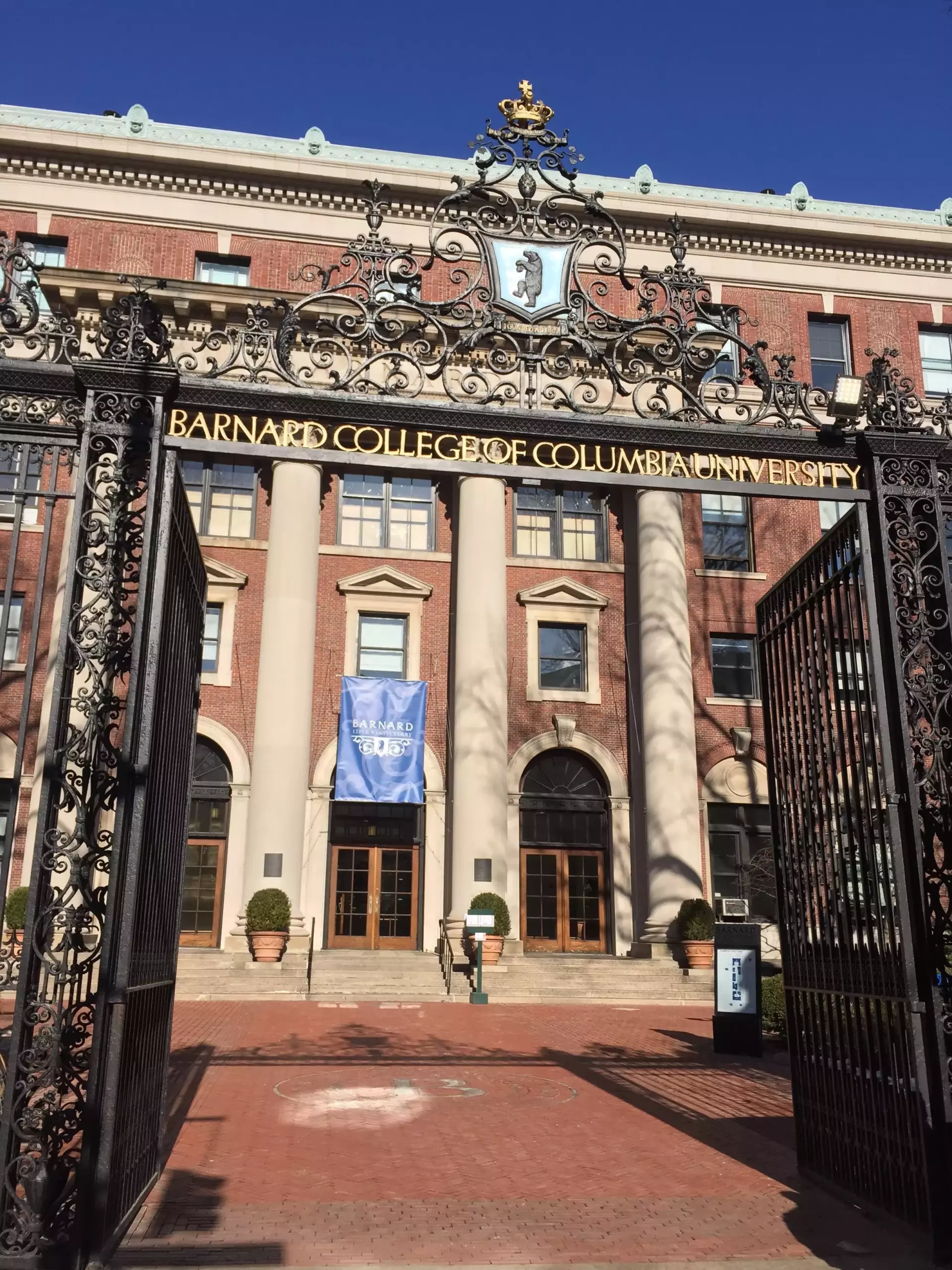
One of the foremost conservatories of those disciplines in the United States.
One of the most famous and iconic landmarks in the USA, if not the world. A gift from the people of France to celebrate the centennial of the United States, stands upon Liberty Island and is one of the most famous symbols of the nation and has been inscribed on the UNESCO World Heritage list. Upon departing the ferry, you can visit the Visitor Information Station, which has a schedule of the day's events. Visitors can also meet at the Liberty Island Flagpole (behind the statue) for a ranger-led tour of the island. You can also visit the monument lobby, museum (where you'll see various exhibits on the statue, the old torch, and the famous "New Colossus" sonnet), and outside to the promenade and Fort Wood (the 11-point star-shaped structure the statue stands upon). You can also take a trip to the pedestal observation deck (though not up into the statue itself, unless you have a Reserve with Crown ticket); visitors can look upward to view the interior of the statue (there are four marked viewing locations); and the pedestal observation deck provides a 360-degree view, which includes the New York City skyline. Security checks are rigorous, so travel as light as possible. Backpacks and other large bags are not permitted on the tours but can be stored in lockers for a fee. On busy days there may be long waits. Visitors with the Reserve with Crown ticket are allowed to climb up a circular staircase from the base of the statue to the crown, but tickets are very limited and should be reserved three or four months (up to one year) in advance. Children must be at least 4-feet tall, and must be able to walk up and down the stairs by themselves, and all ticket holders must show a photo ID to match the name on their tickets. The design of Lady Liberty's torch evokes the universal symbol of enlightenment, which lights the way to freedom, showing immigrants the path to liberty and justice.
An Episcopalian (Anglican) church and parish was first established on this site in 1697 under charter by King William III. The present Neo-Gothic Revival church building (the third incarnation) dates from 1846 and remains a significant landmark within Downtown. The original burial ground at Trinity Church includes the graves and memorials of many historic figures, including Alexander Hamilton, William Bradford, Robert Fulton, and Albert Gallatin.
The historic heart of the Financial District and the home of the New York Stock Exchange, Wall Street is a metonym for American big business, stock trading and the entire financial industry, although most New York financial firms are no longer headquartered on the street itself, but housed nearby in new offices, and some have moved to Jersey City. A narrow street running downhill from Broadway to the East River, Wall Street was named for the wall that was built here in 1652 to keep Manhattan's indigenous peoples out of the growing Dutch settlement. The wall was demolished by the British in 1699. By the late 18th century, traders and speculators would gather under a buttonwood tree at the foot of Wall Street to trade informally - this was the origin of the New York Stock Exchange that was established in 1817.