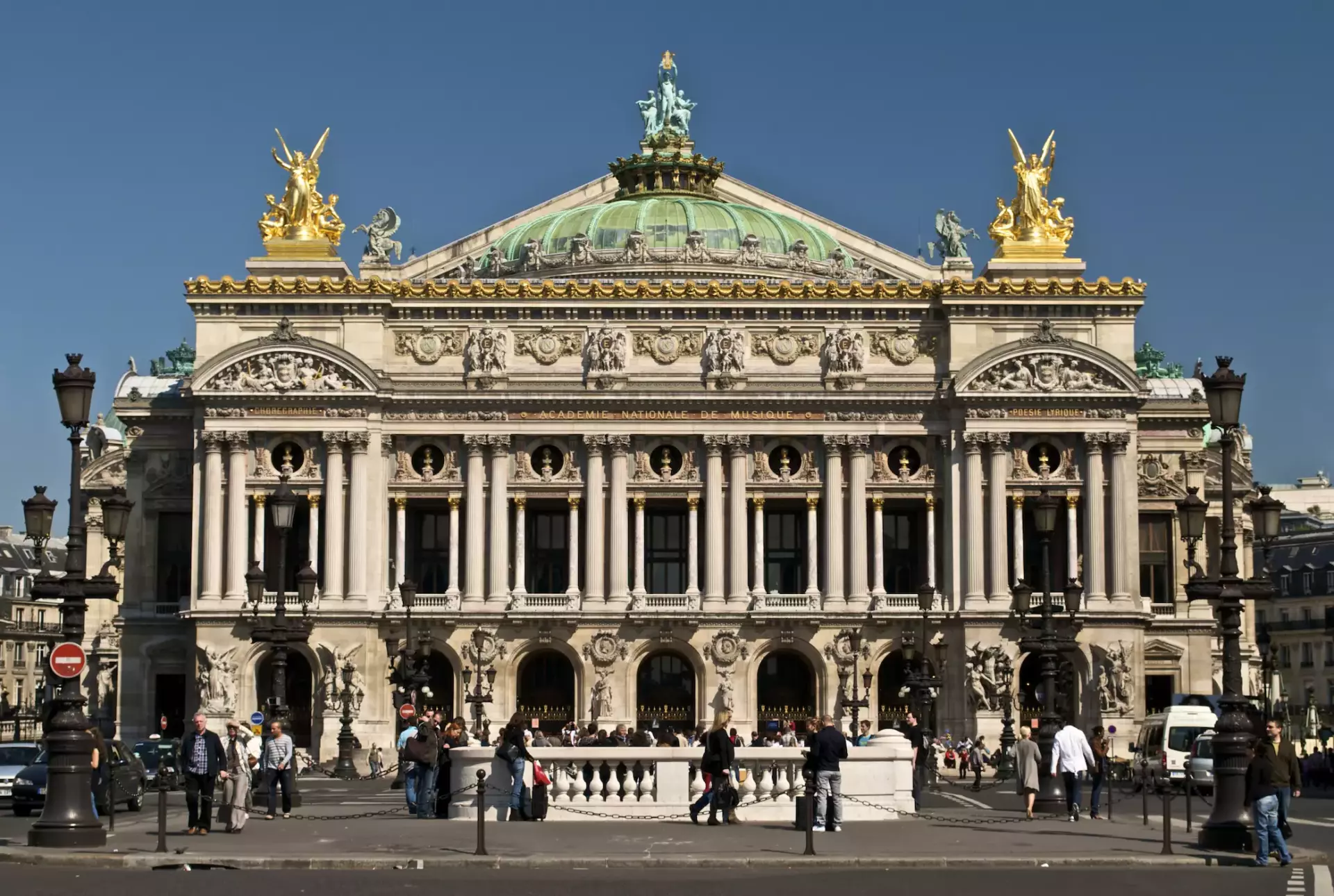
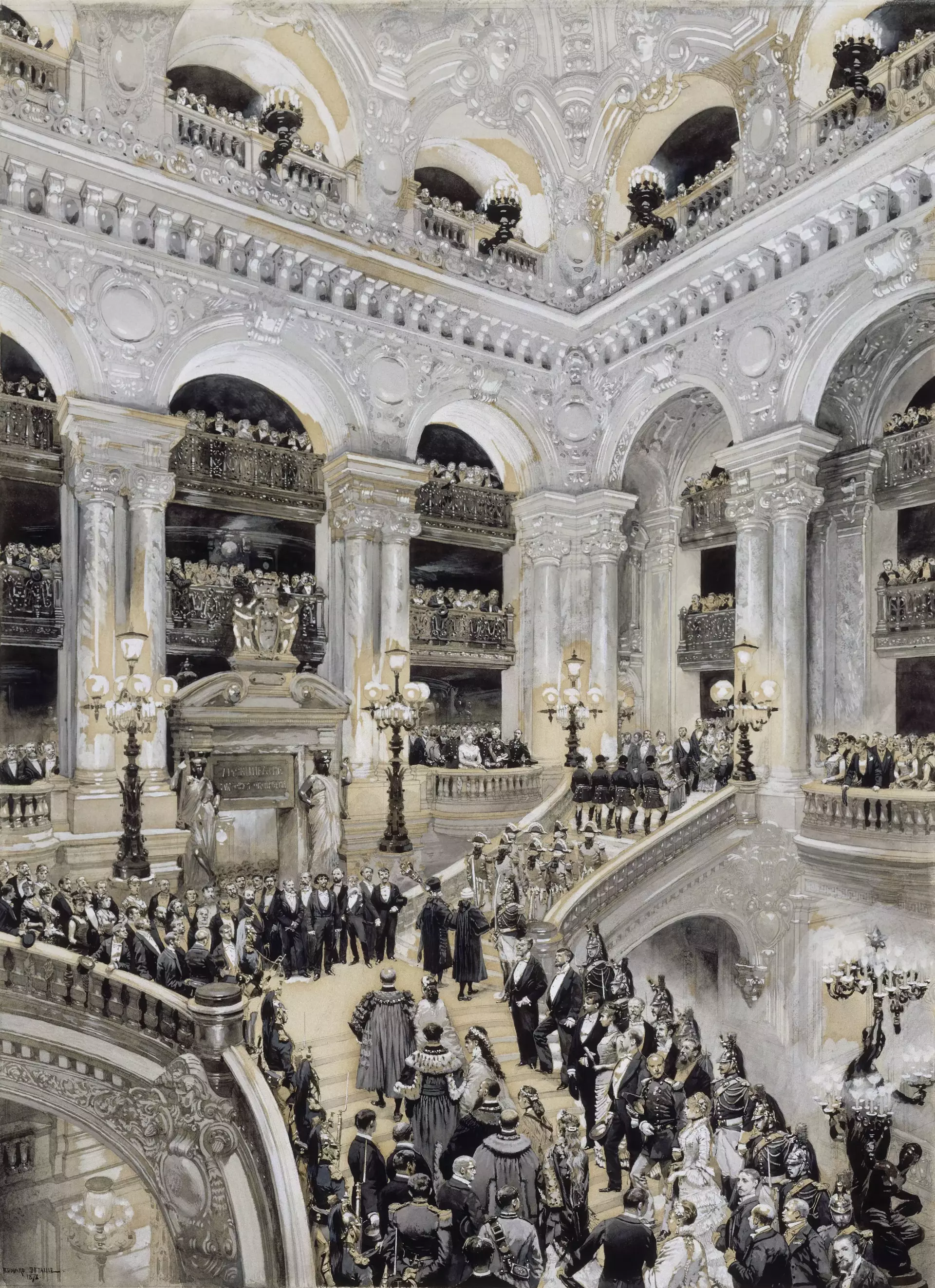
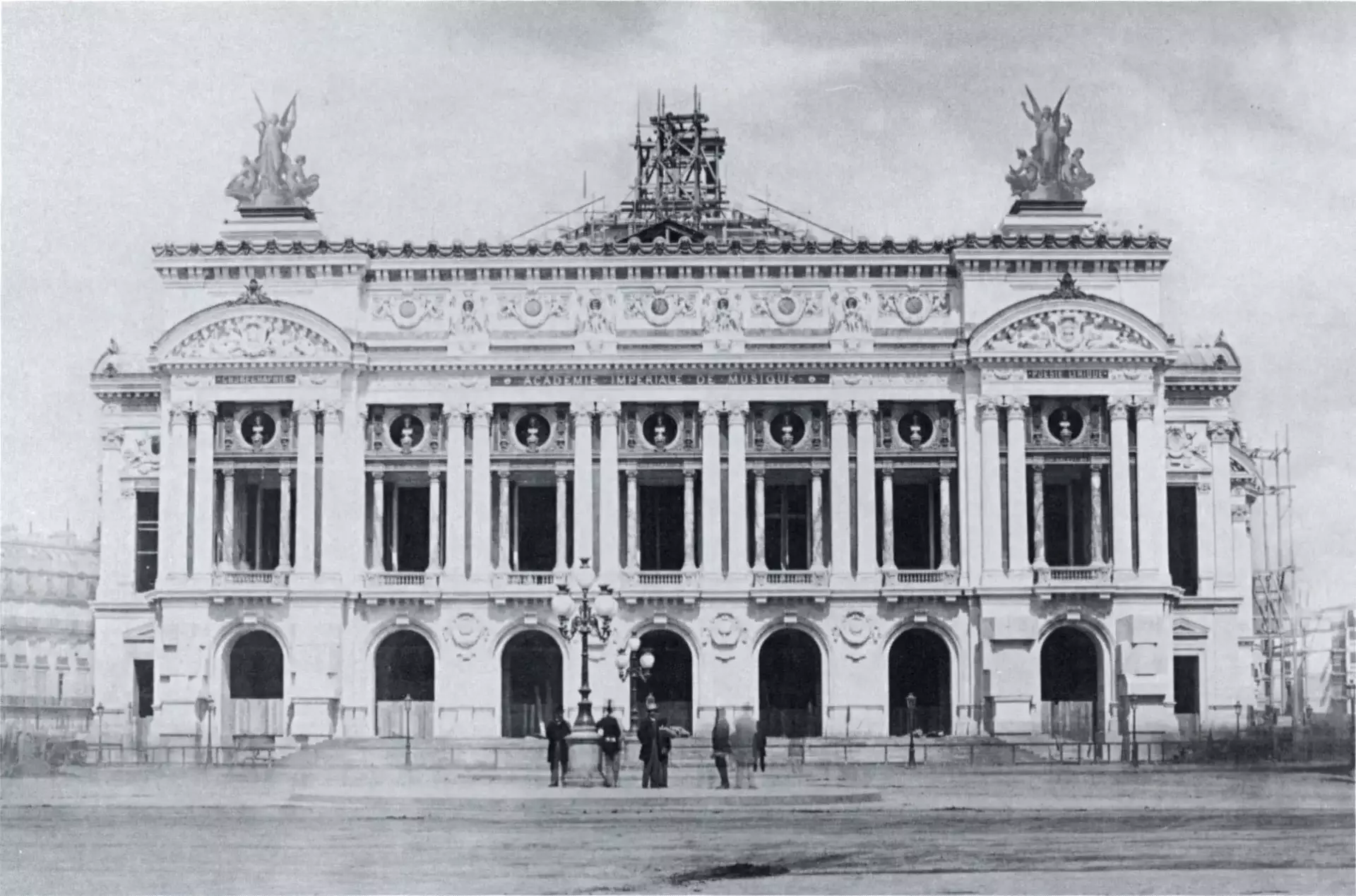
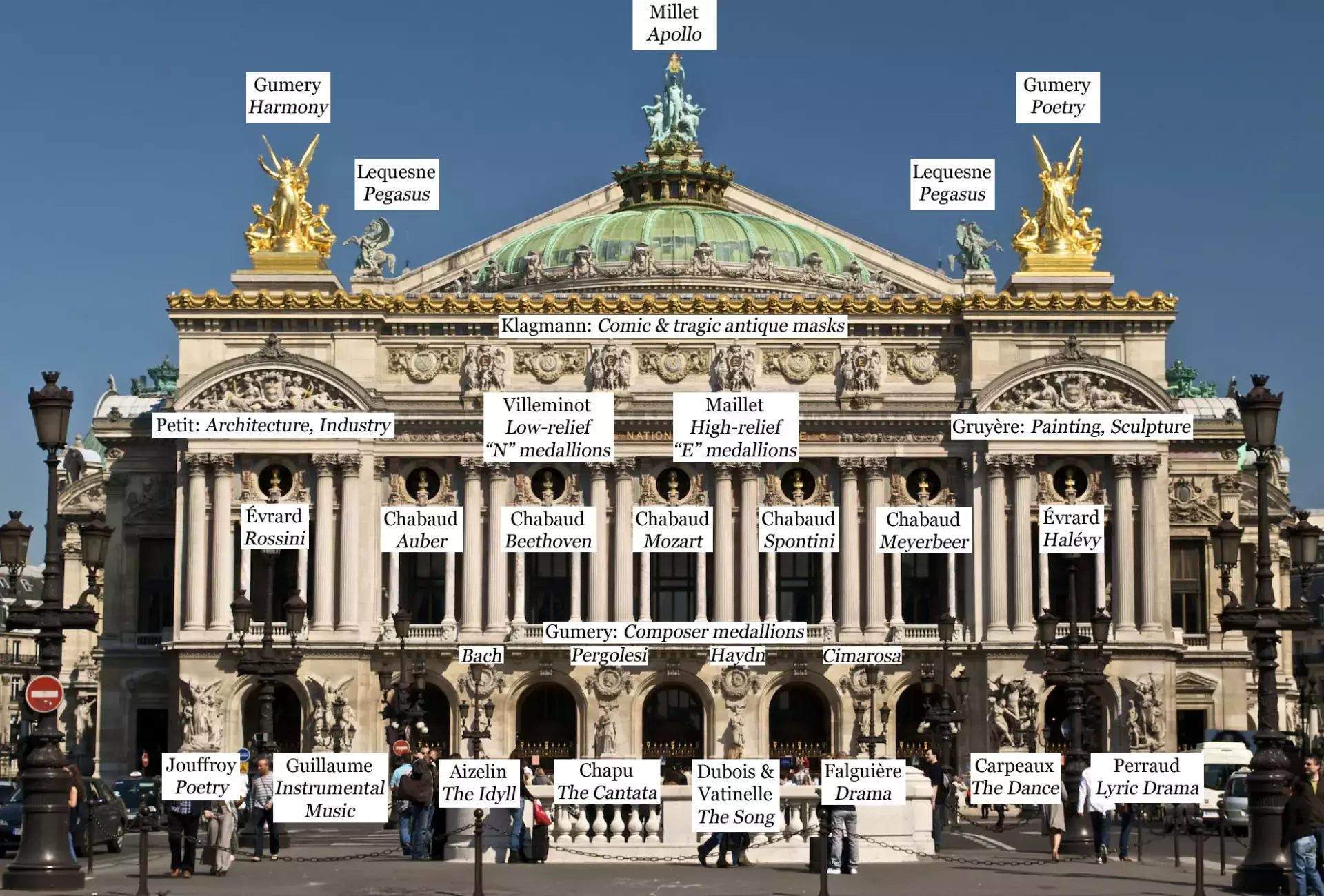
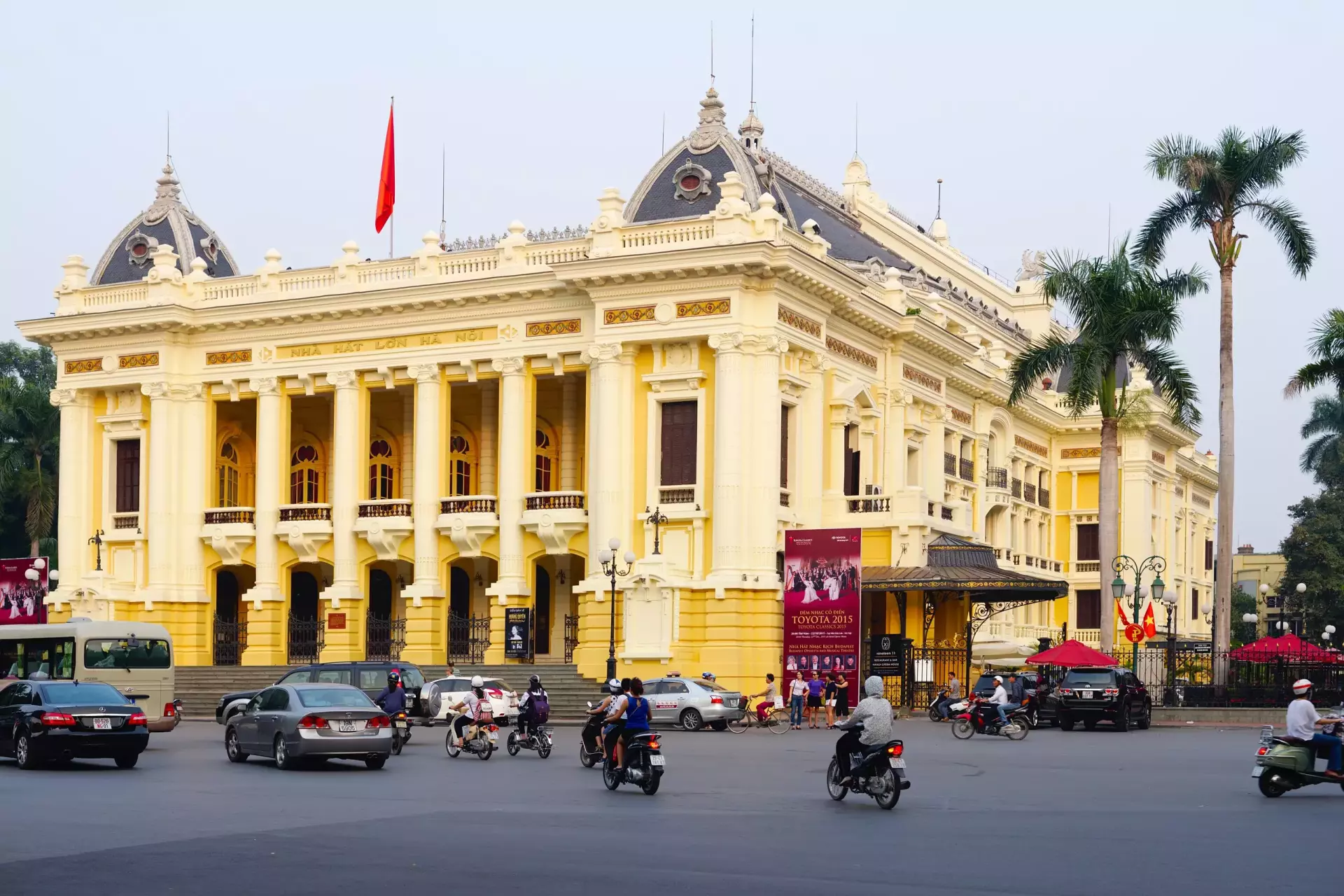
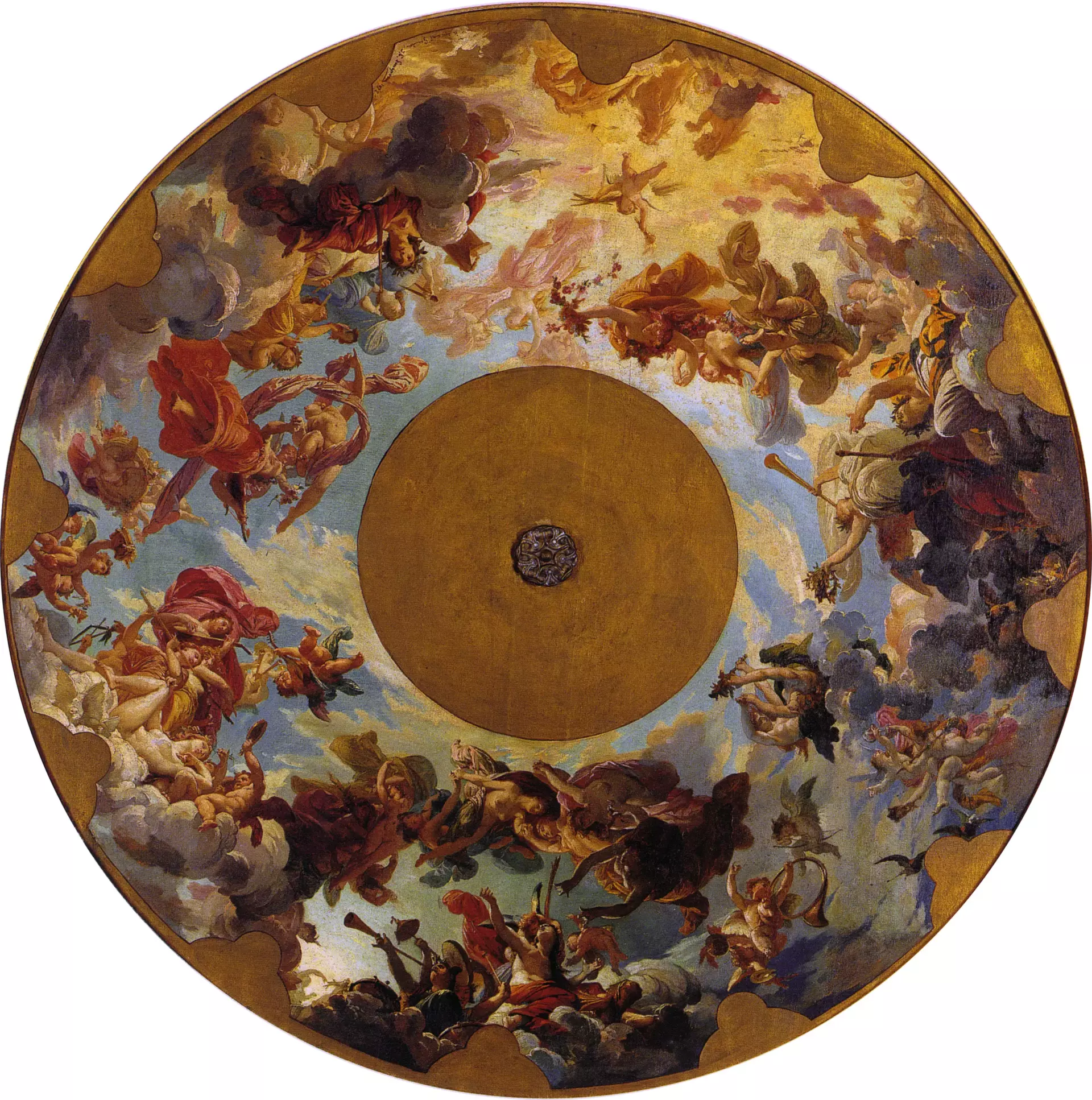
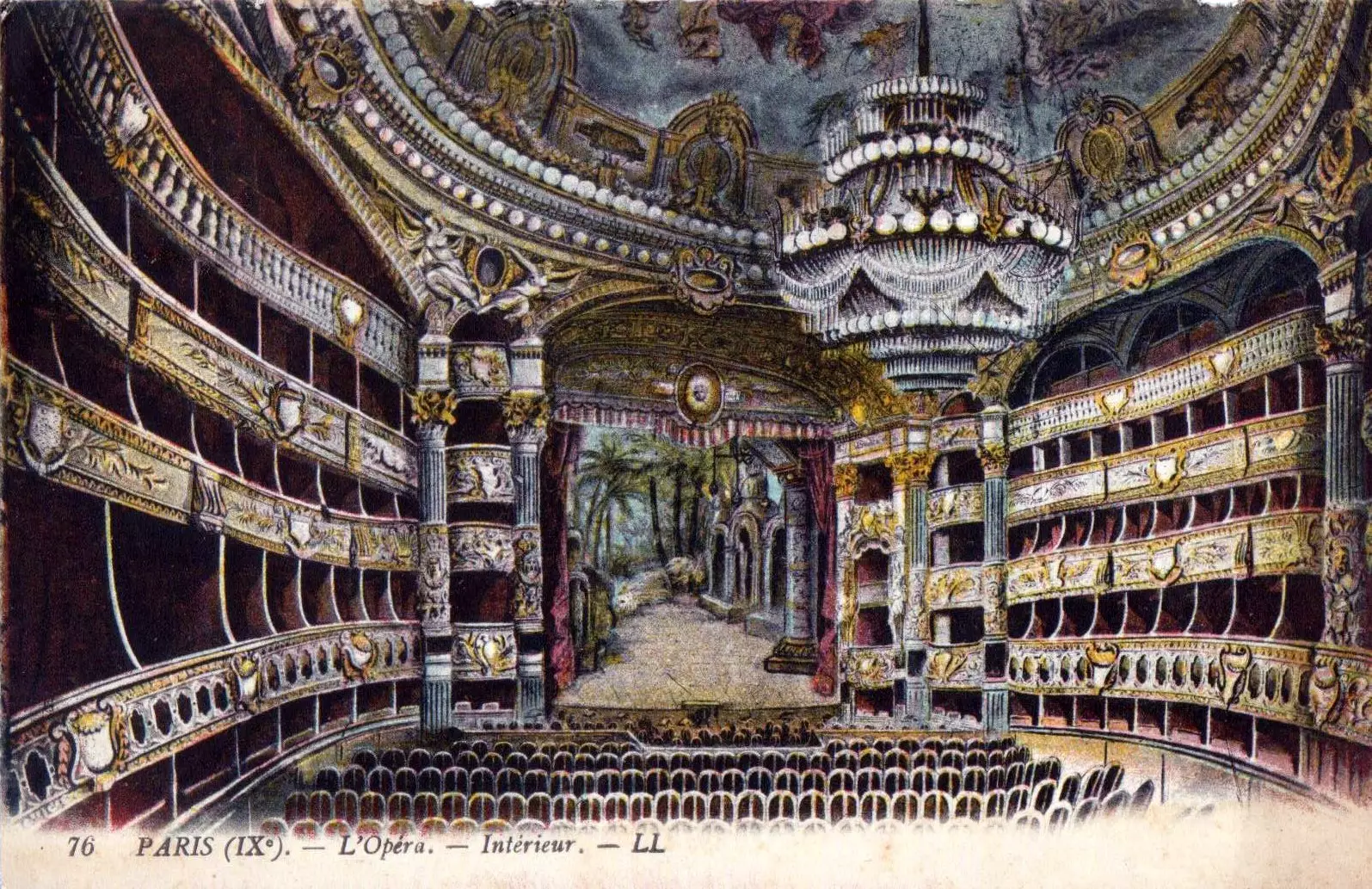
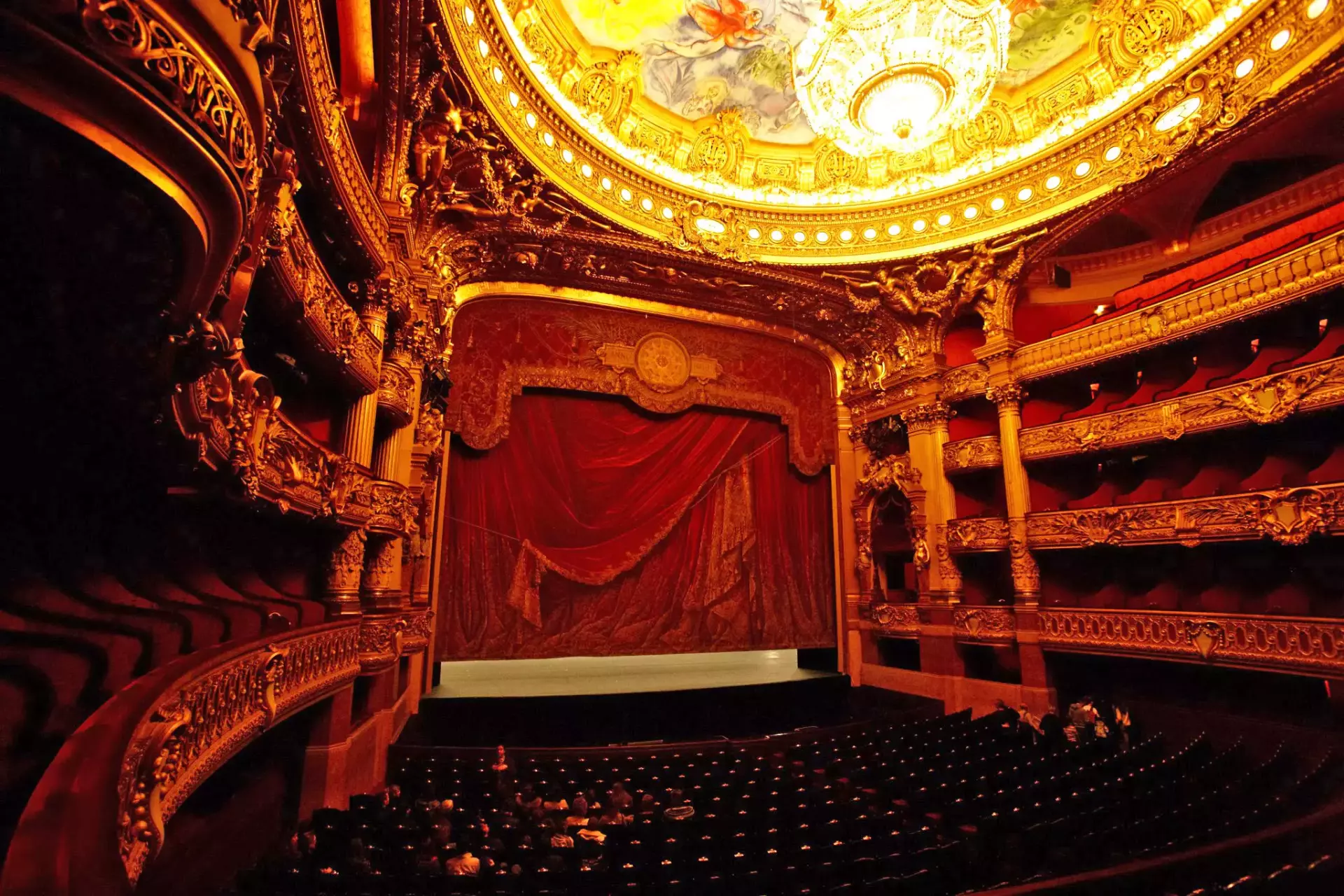
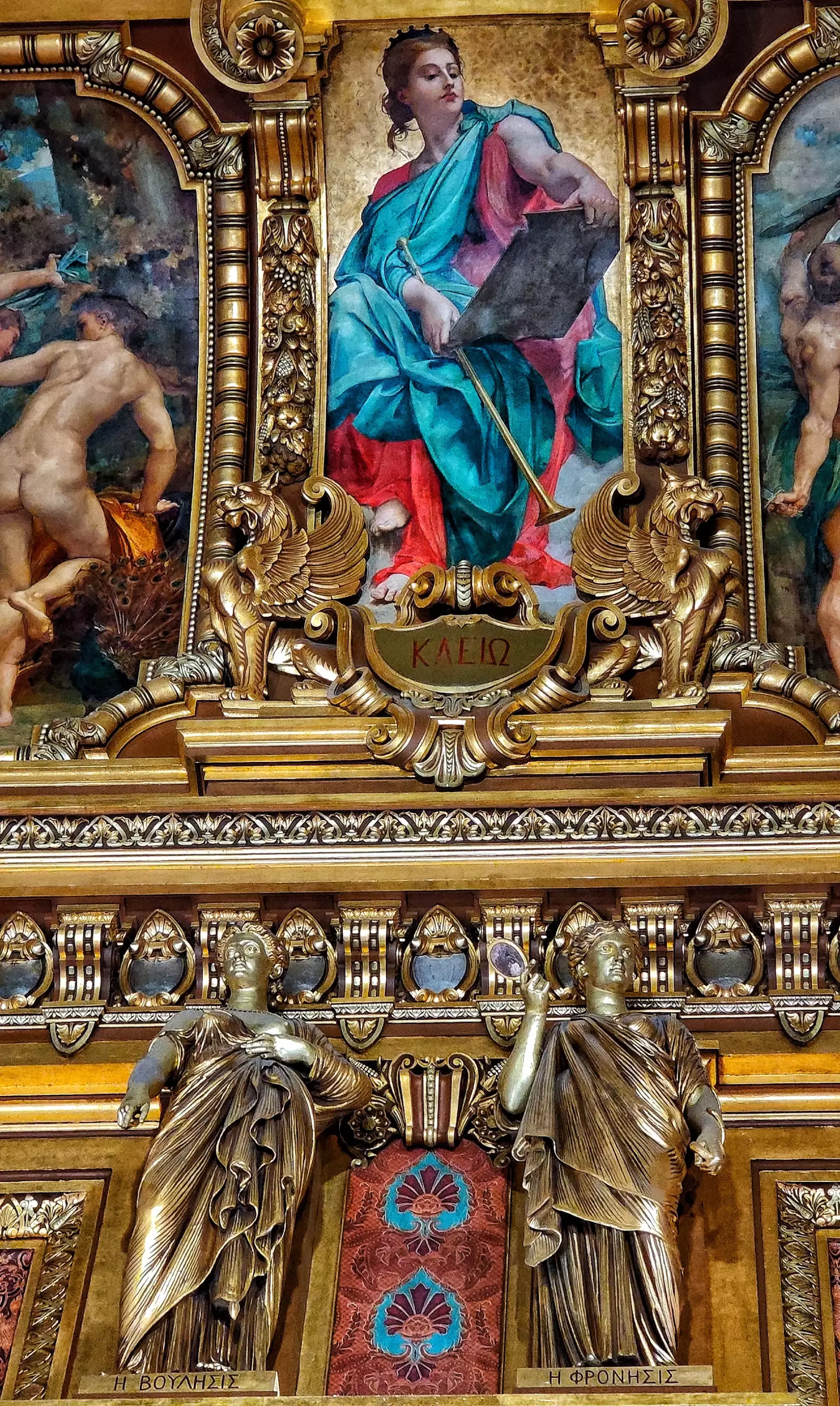
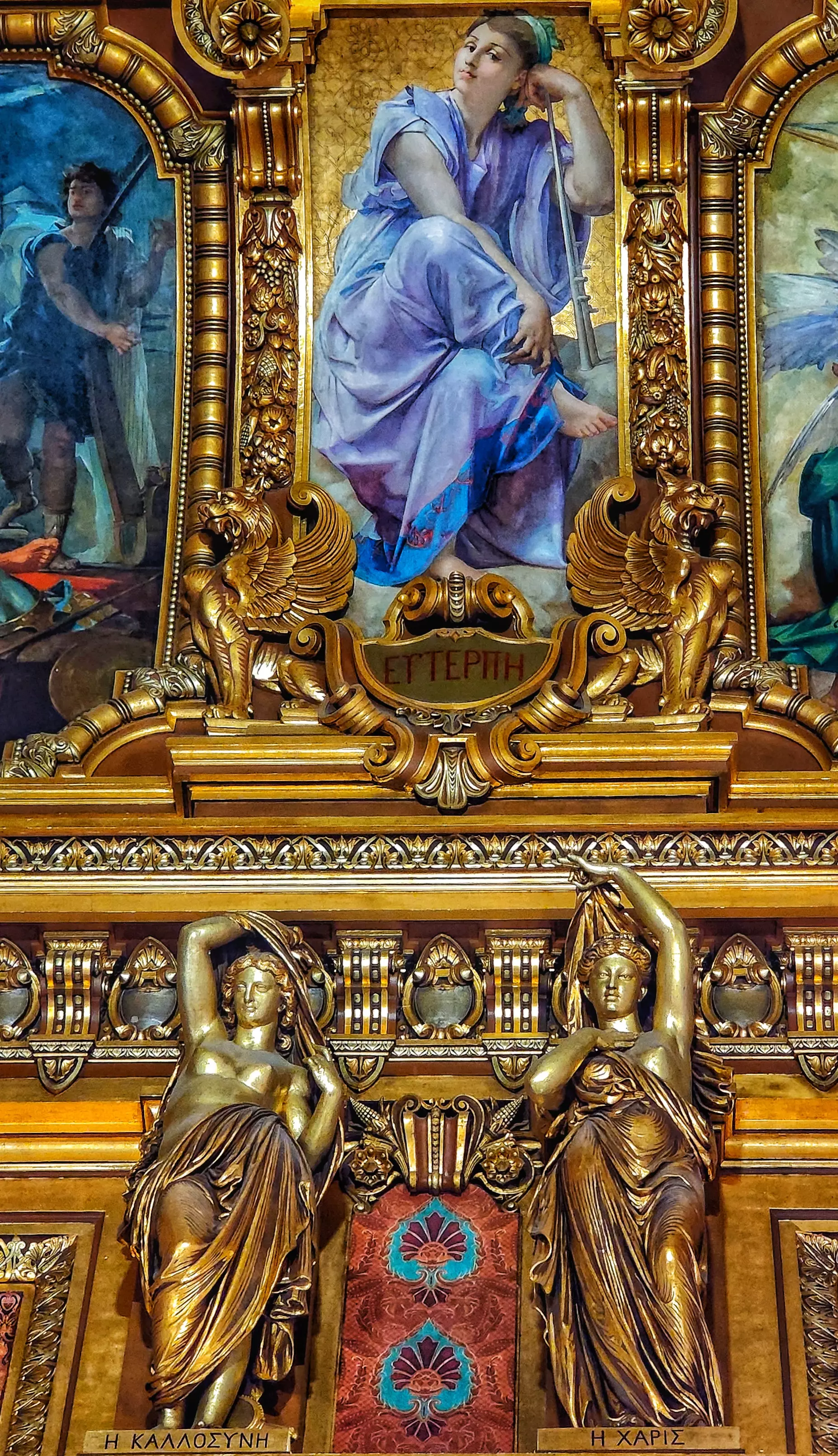
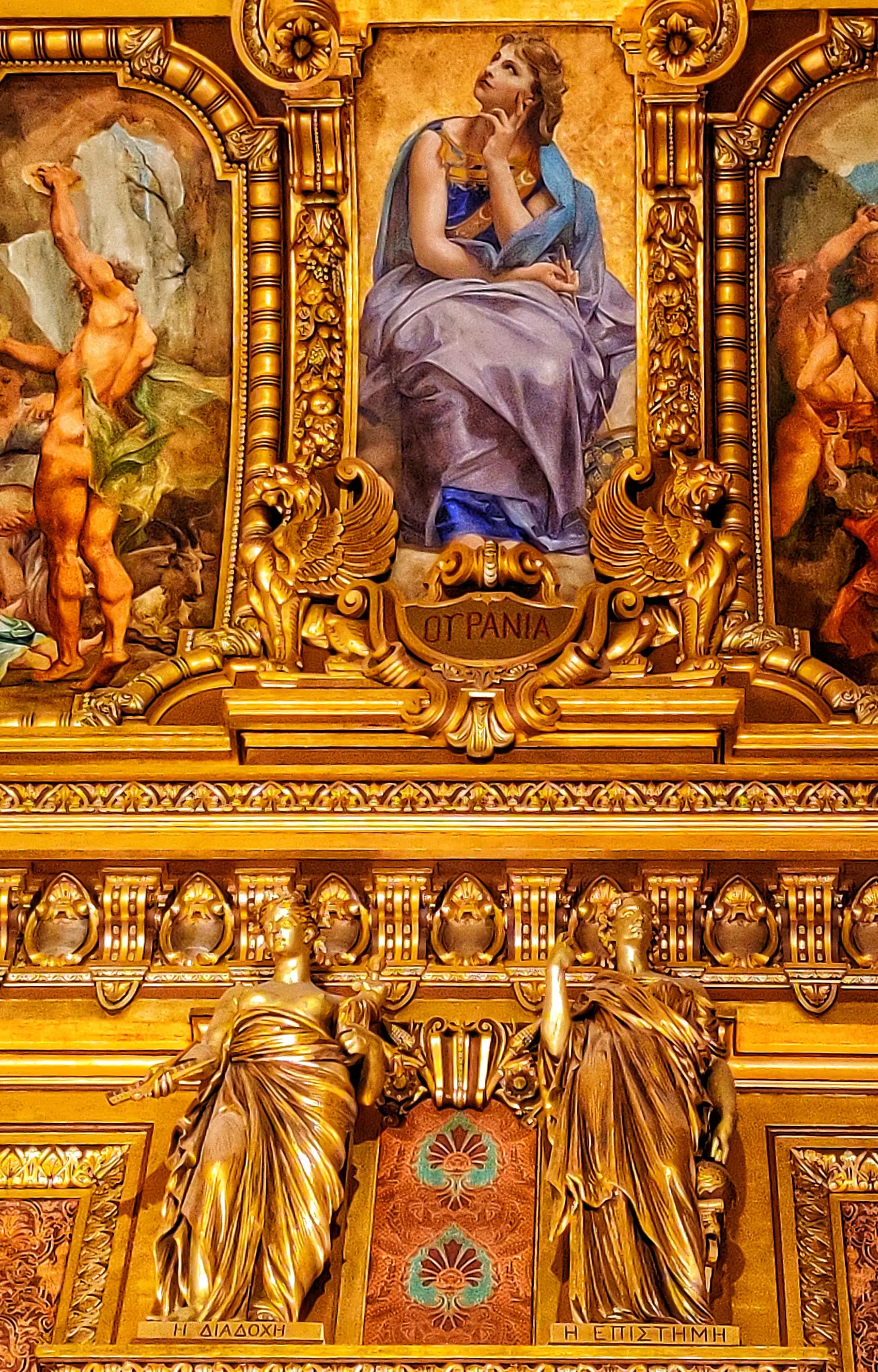
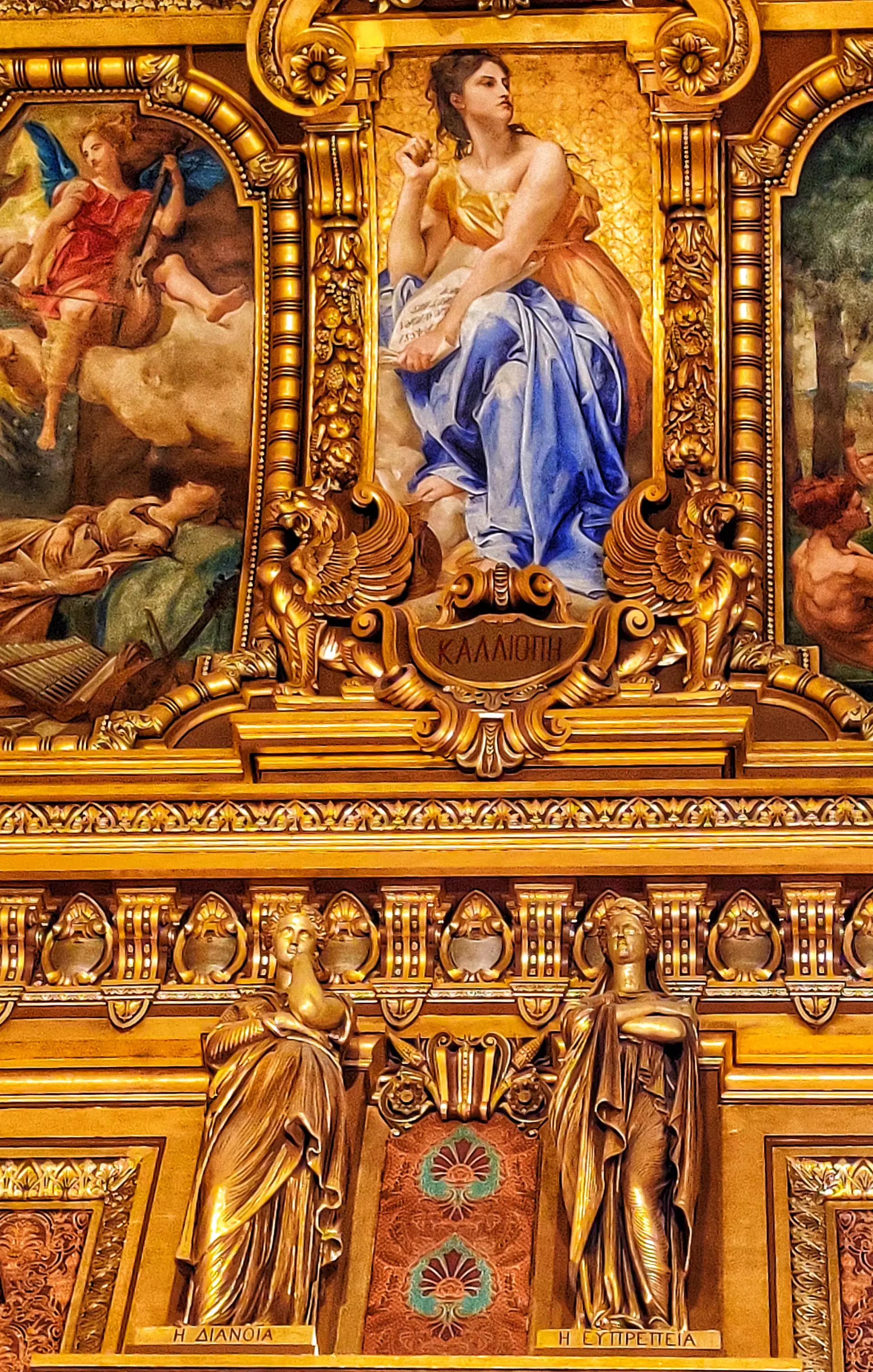
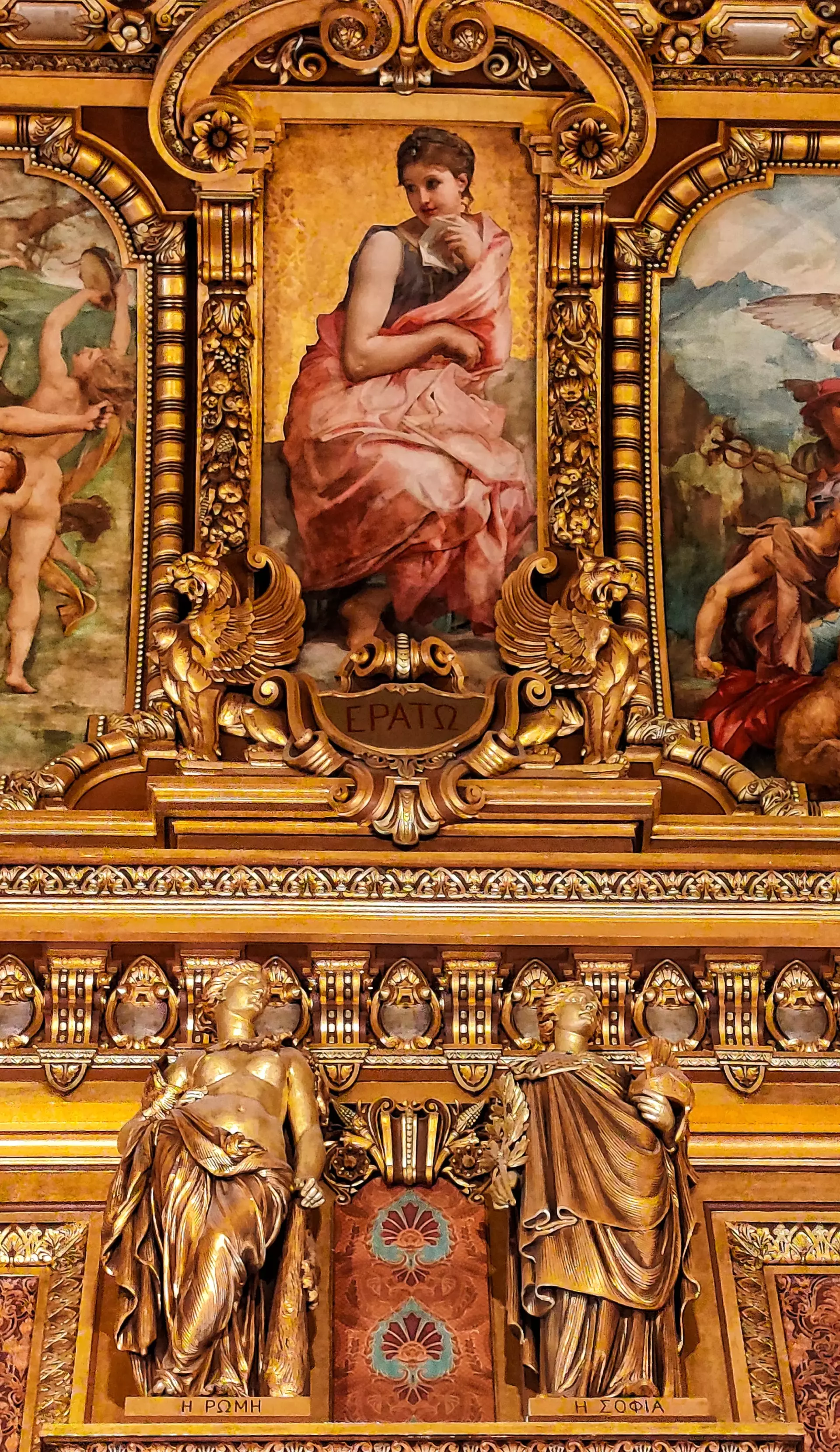
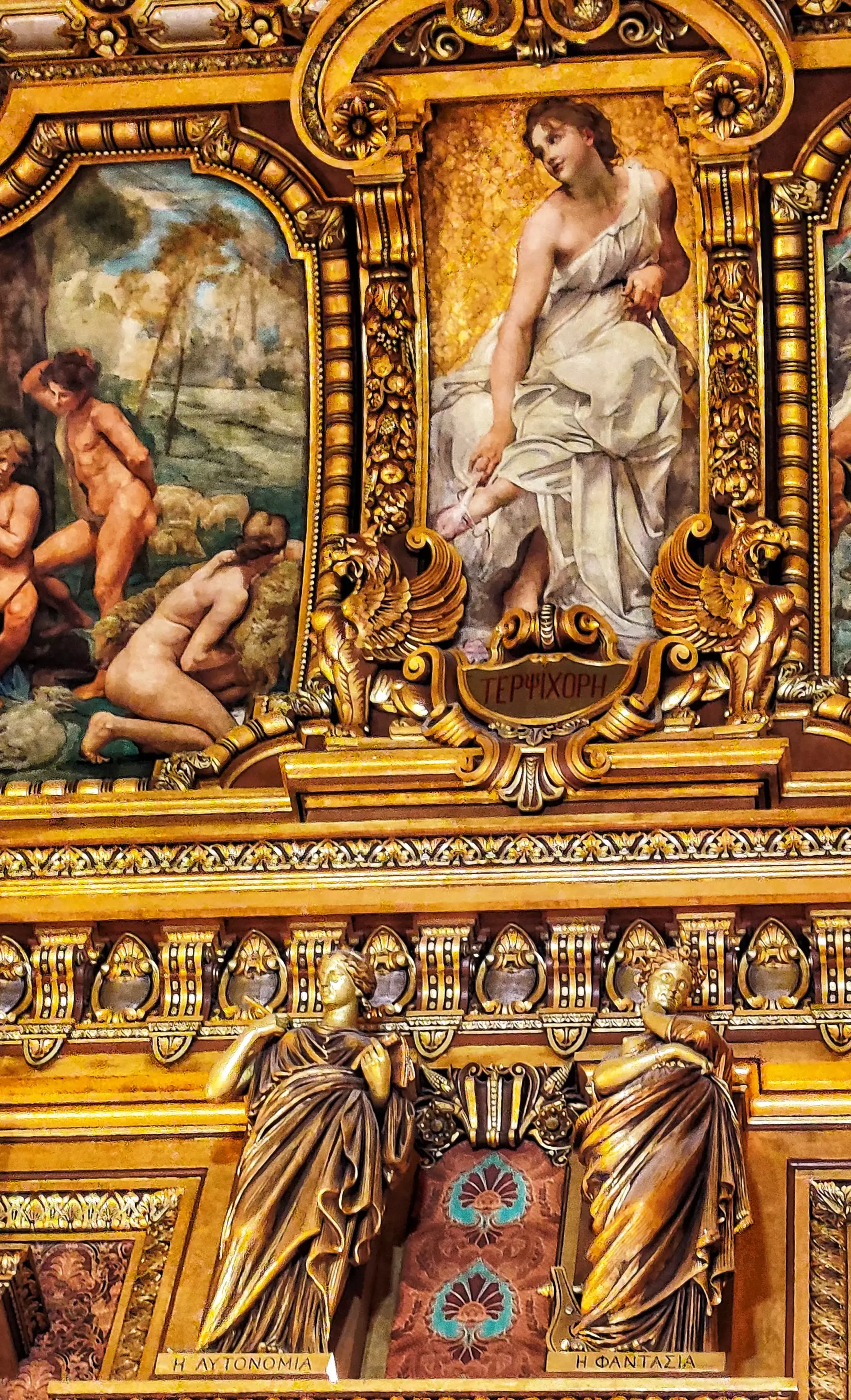
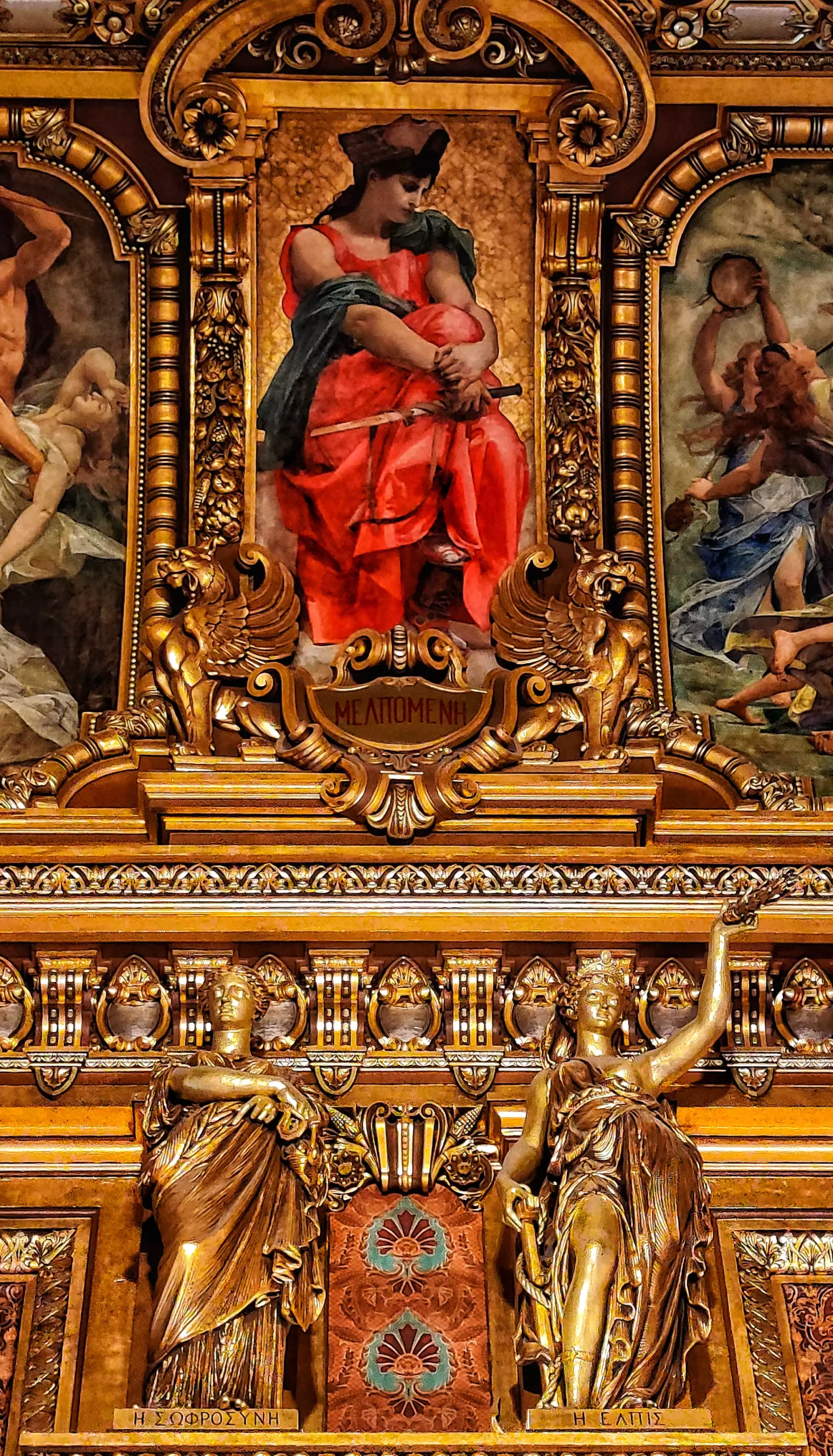
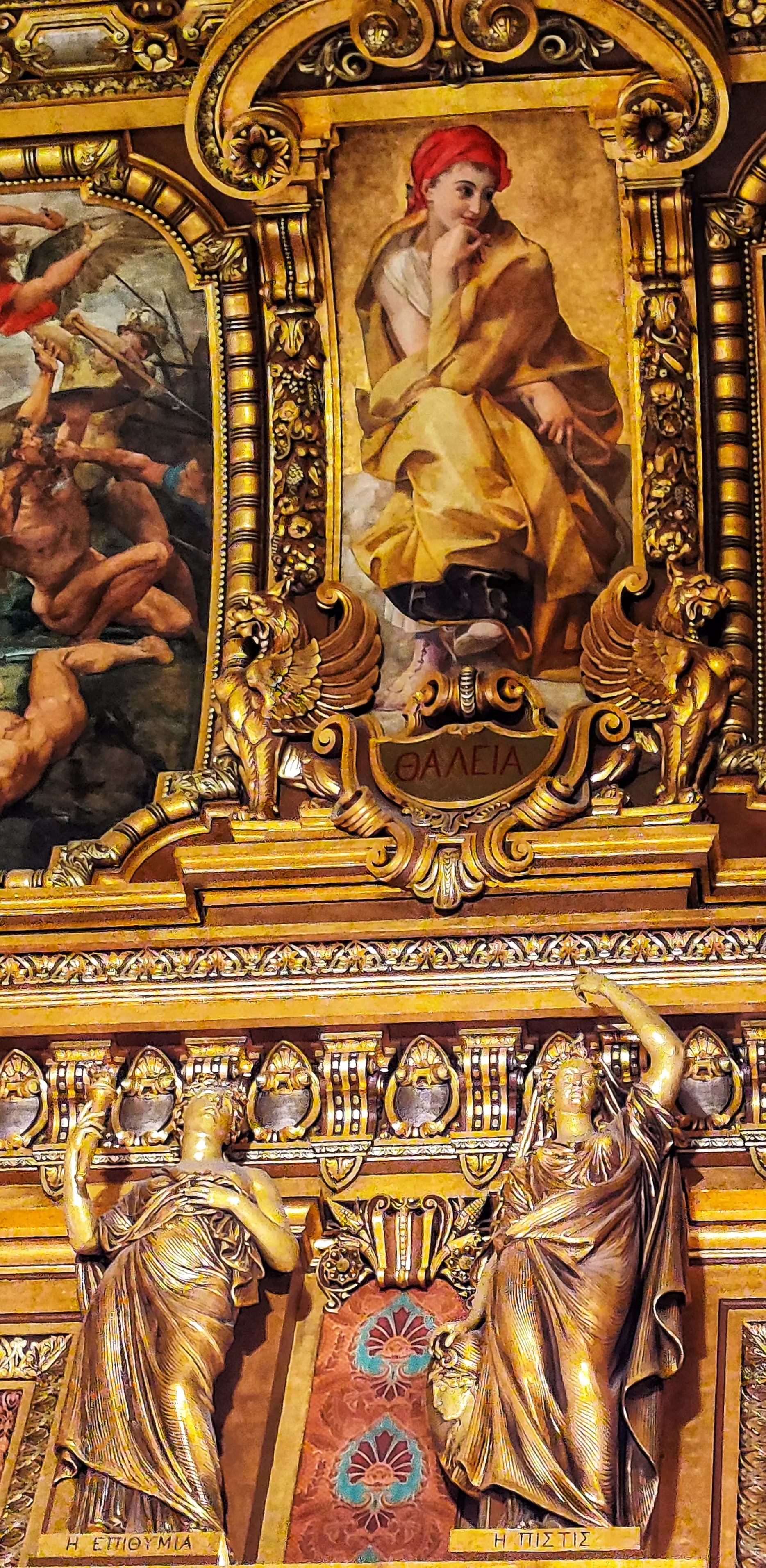
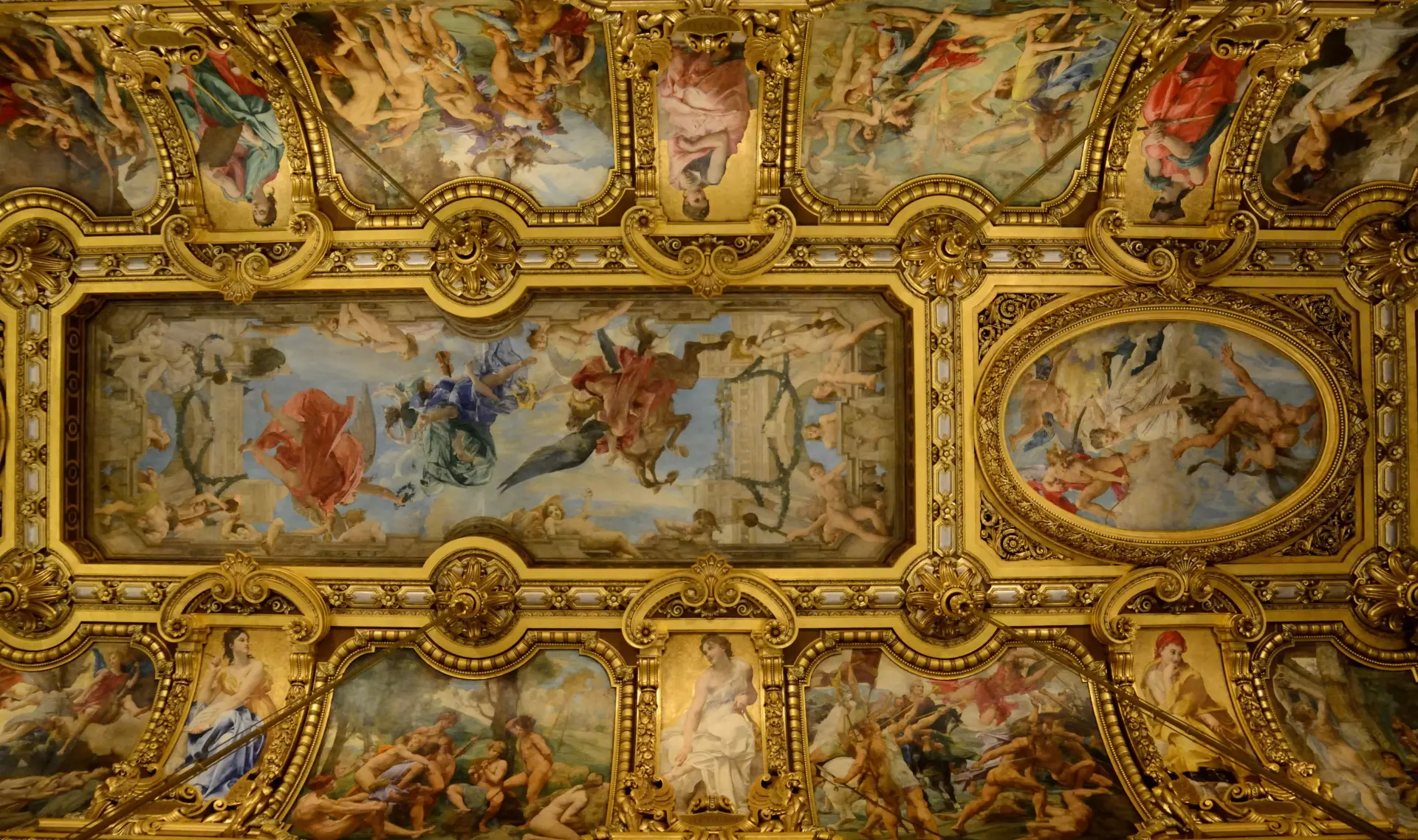
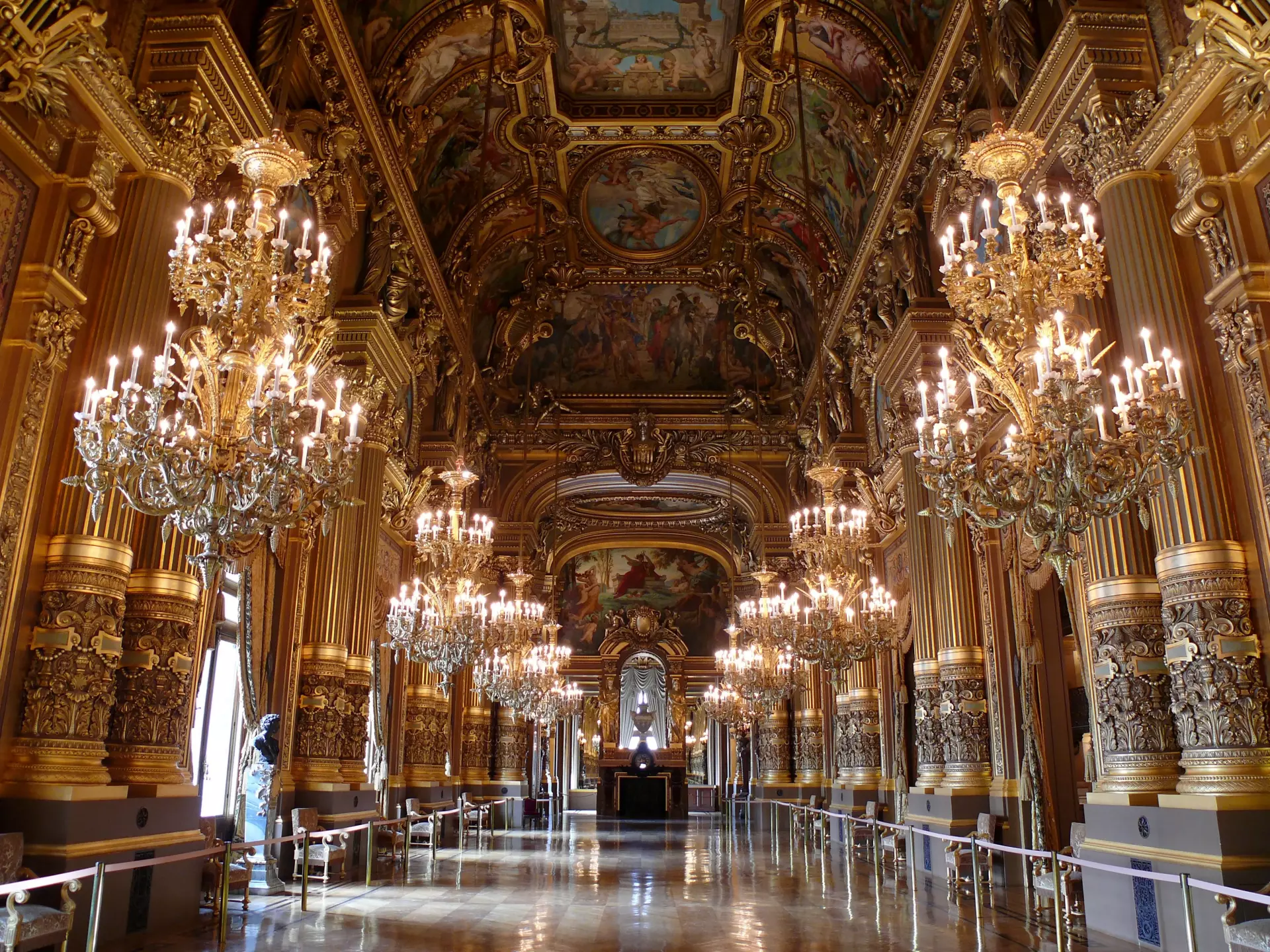
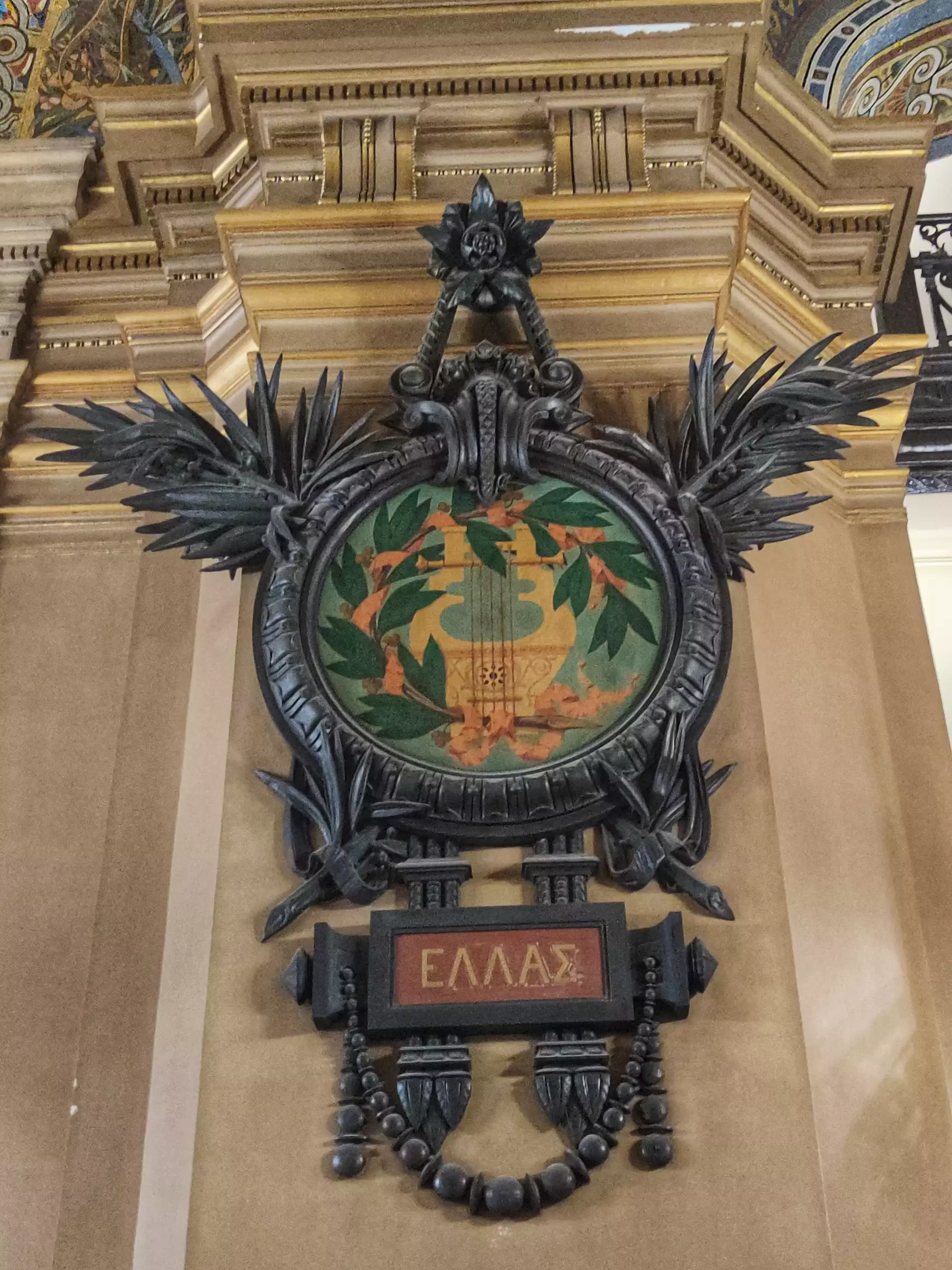
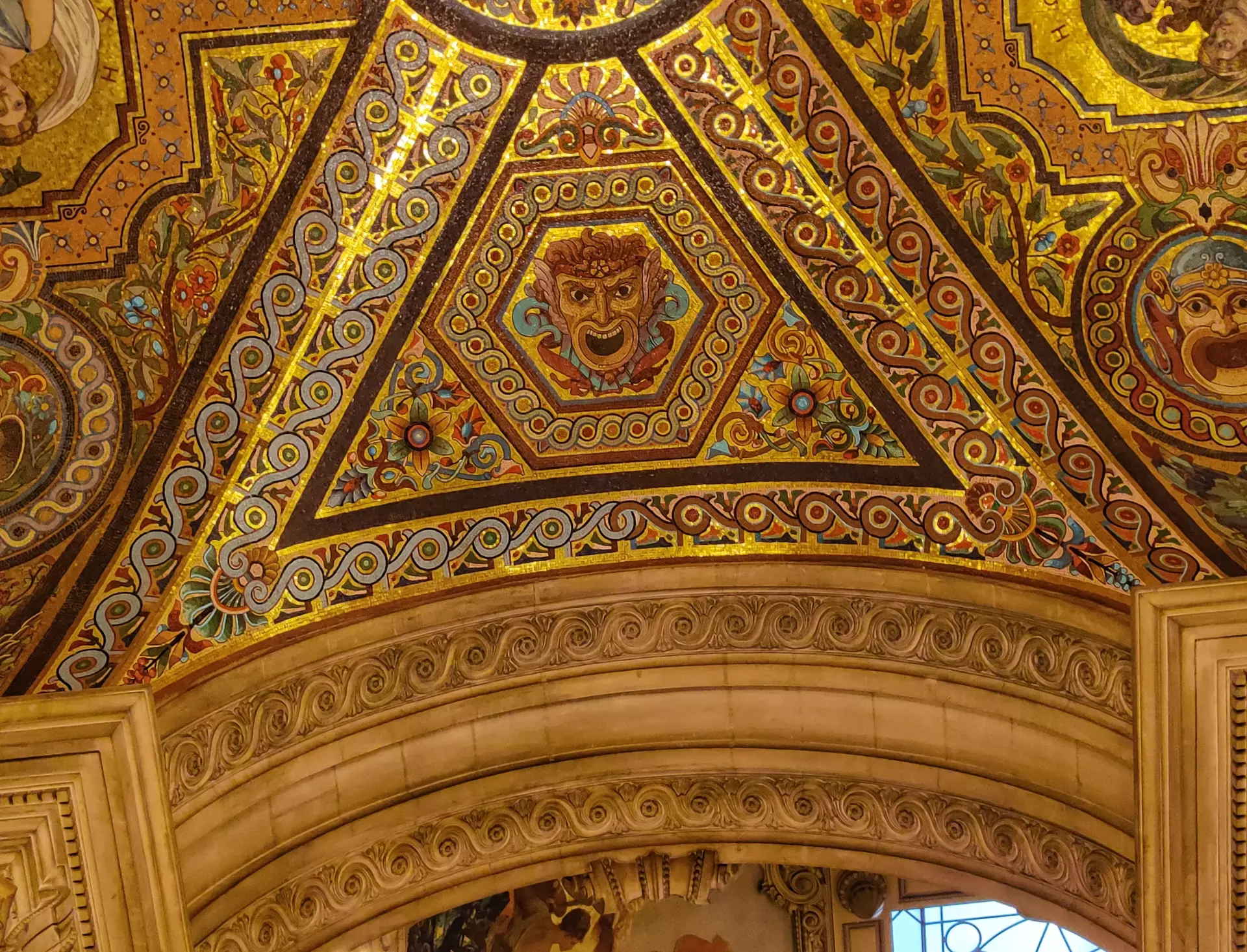
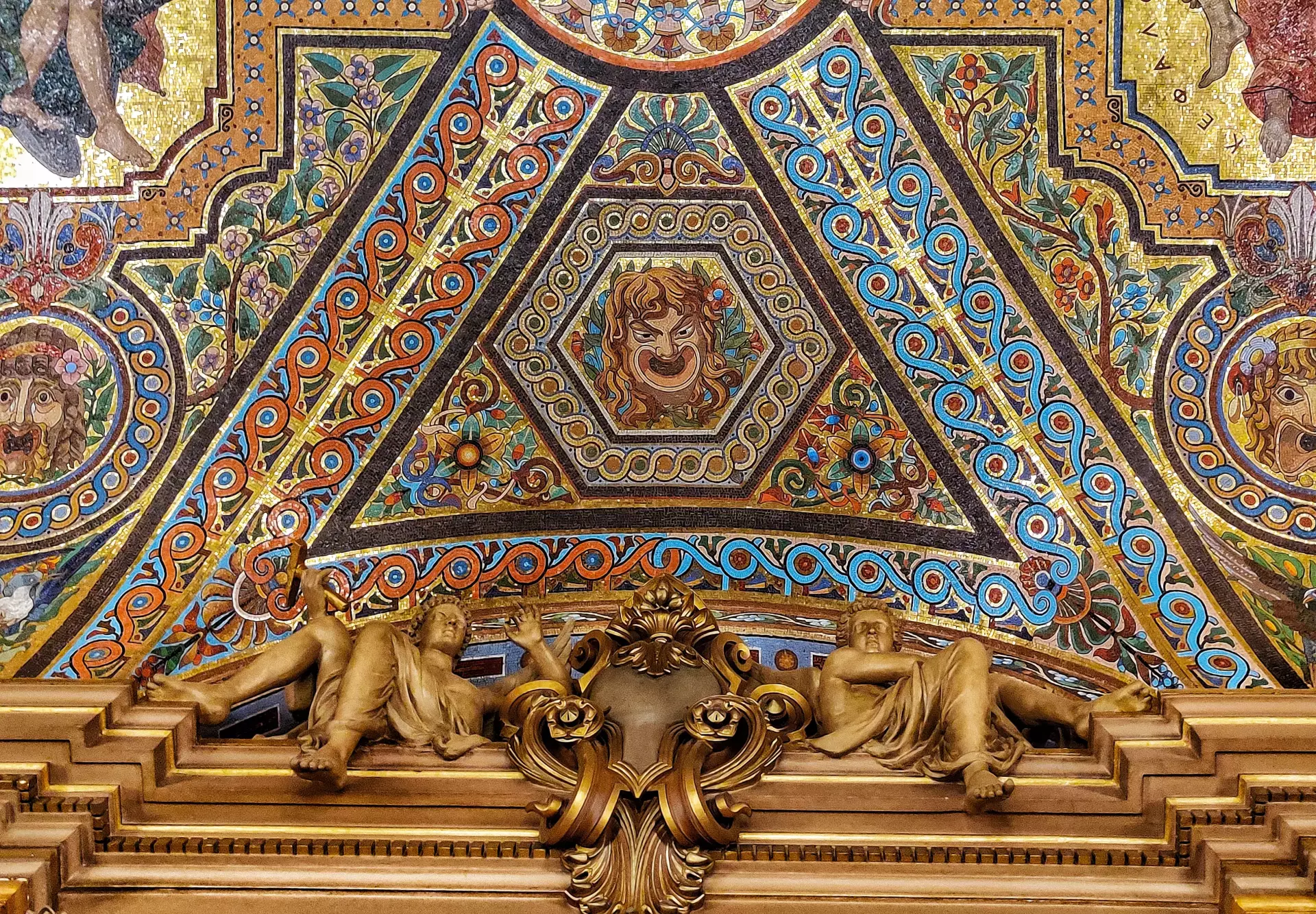
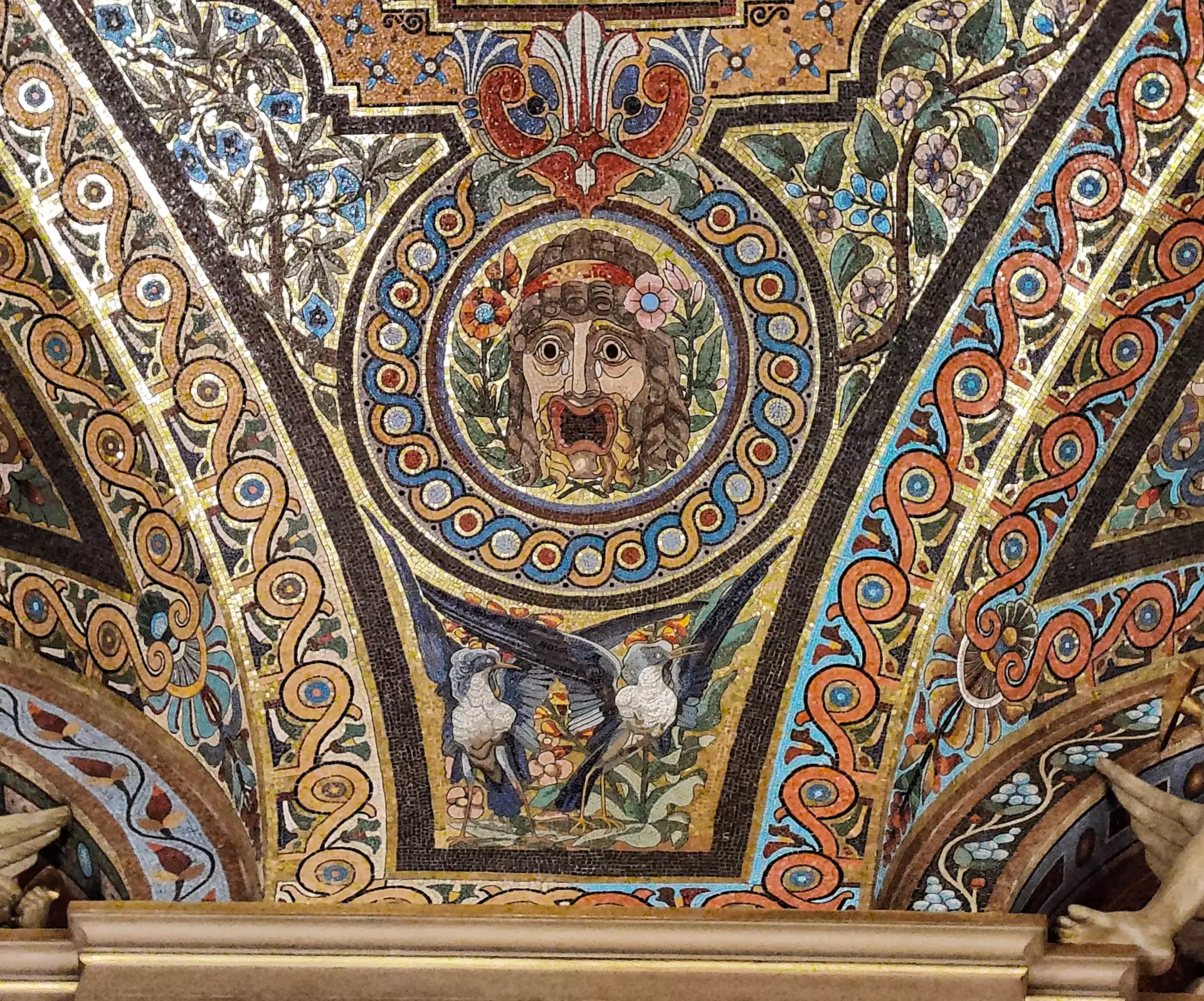
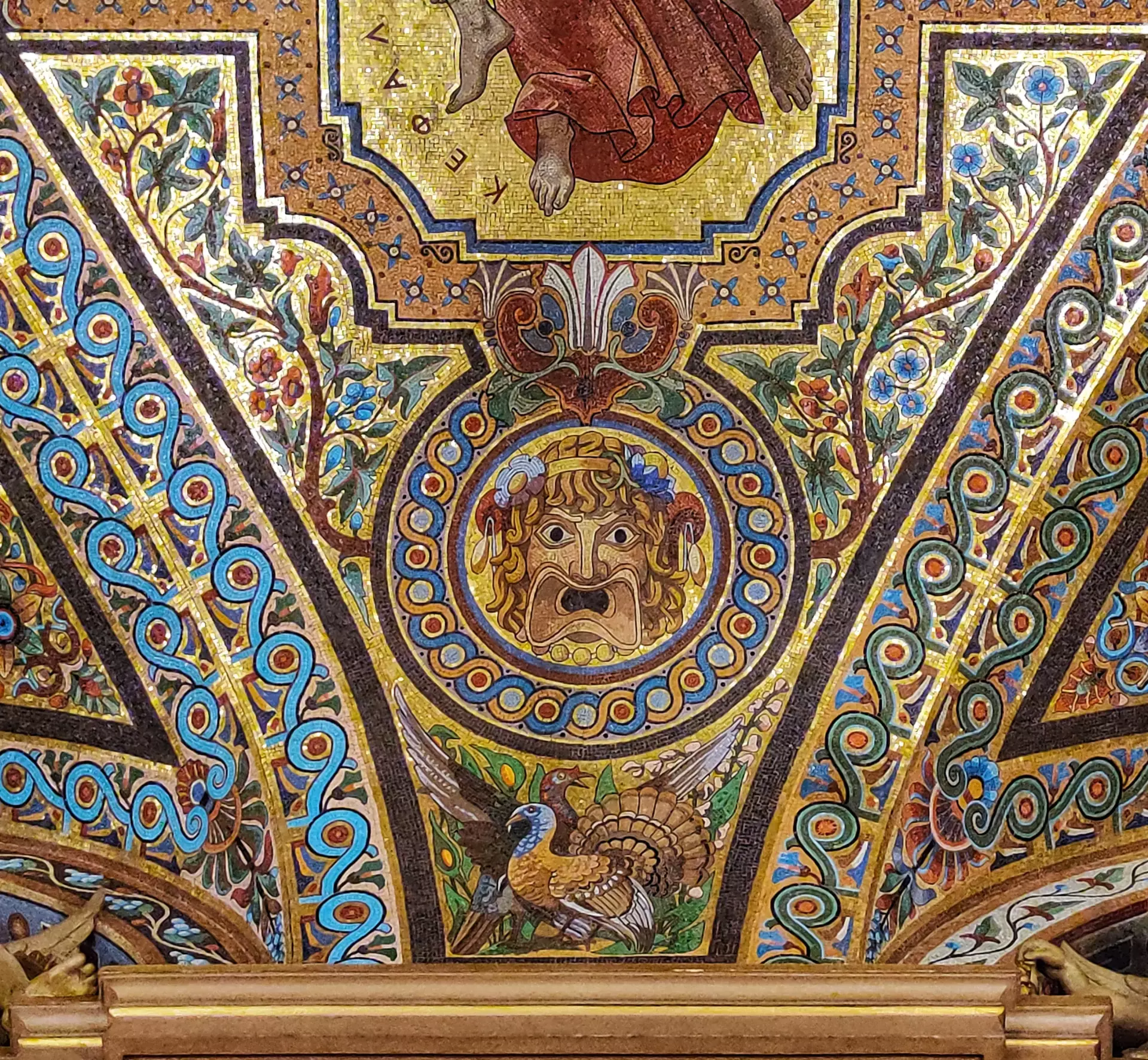
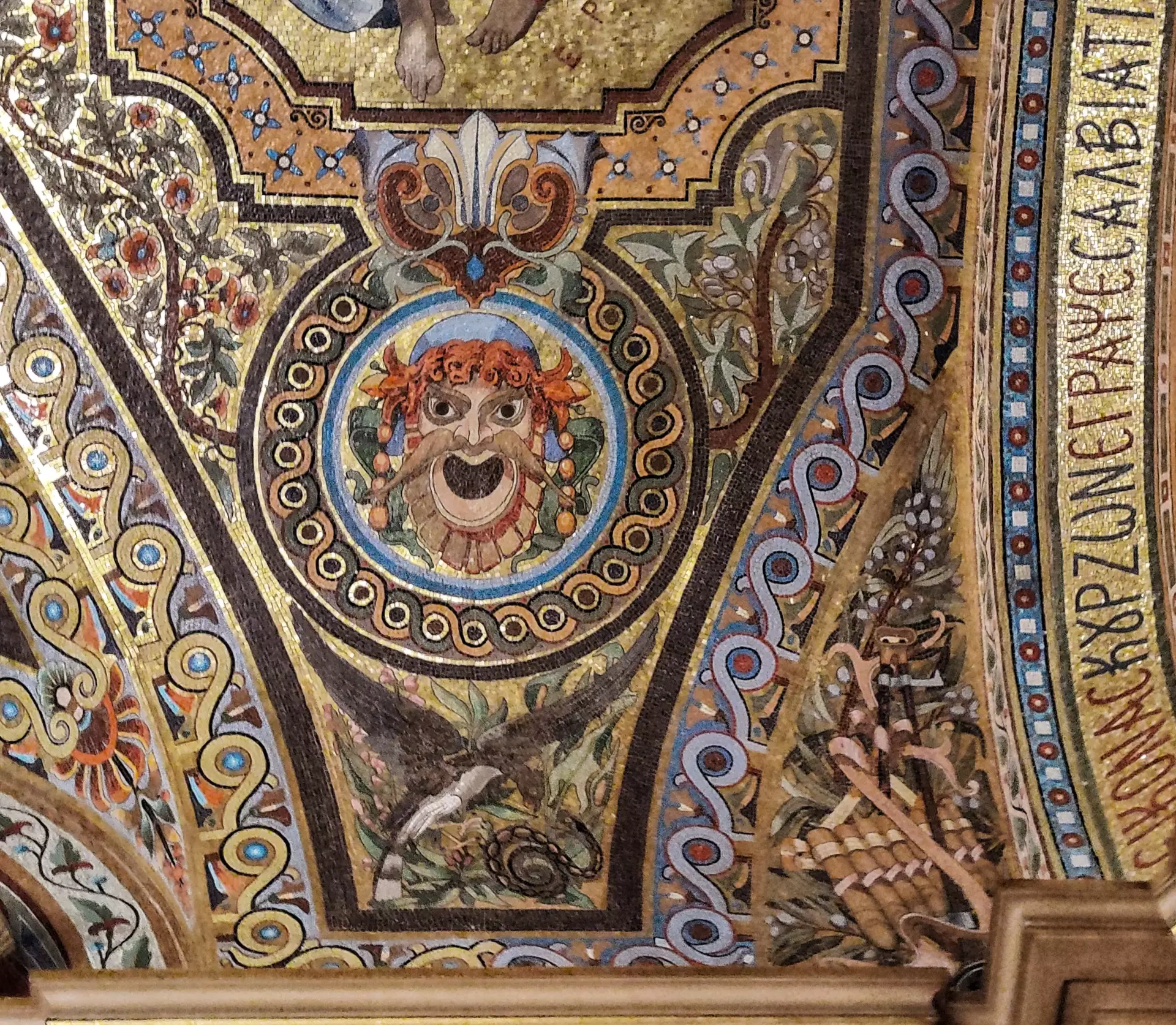
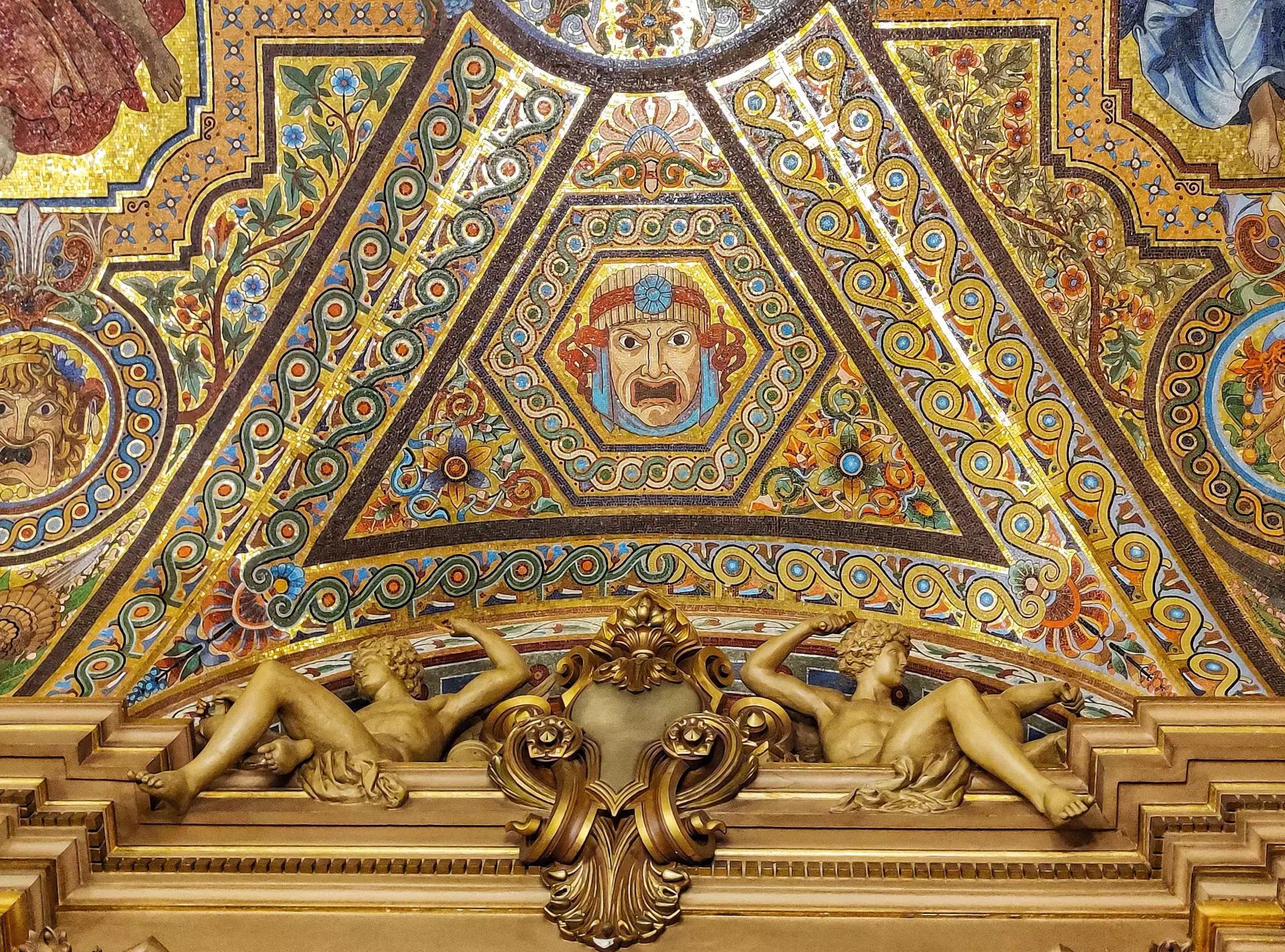
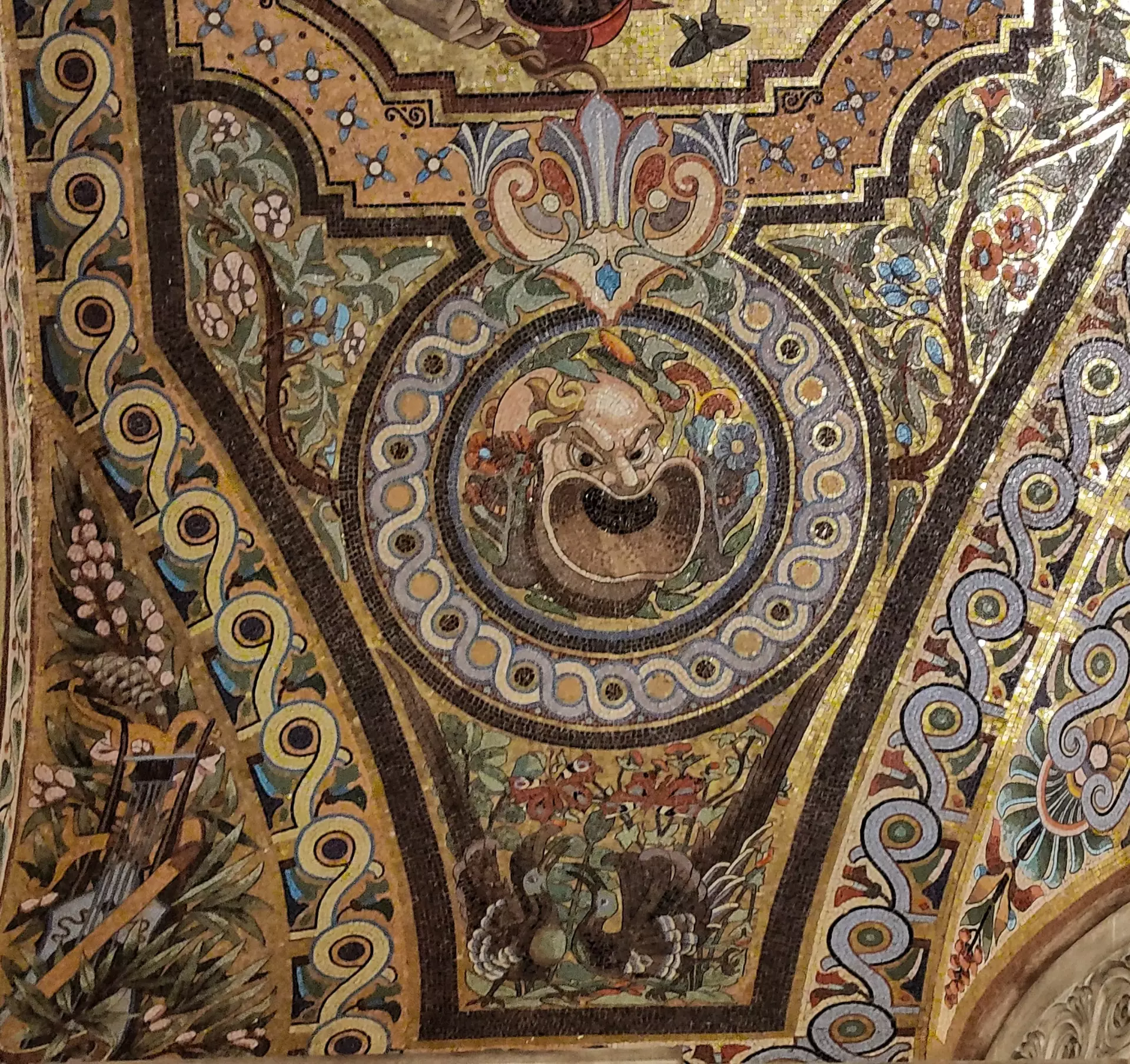
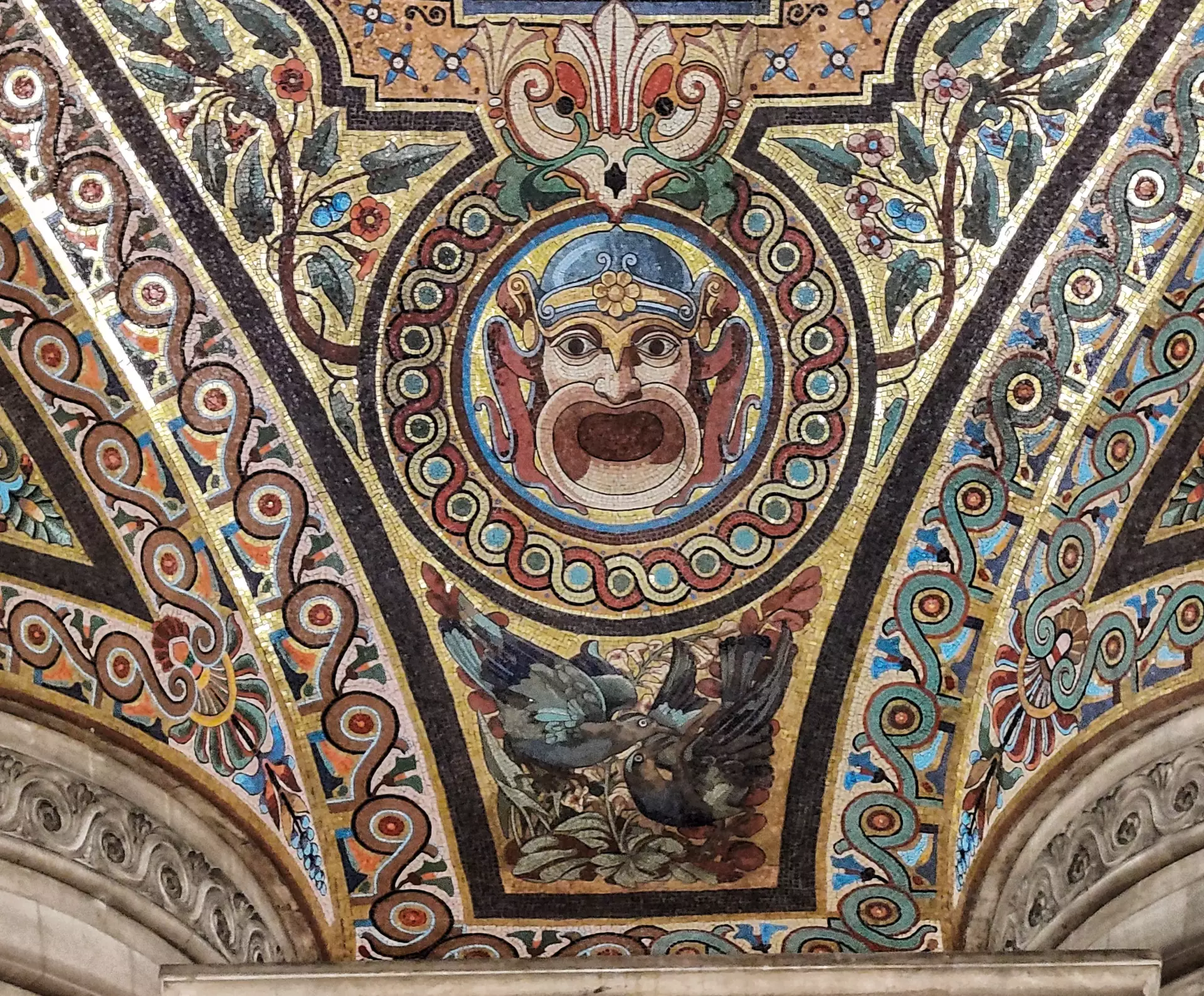
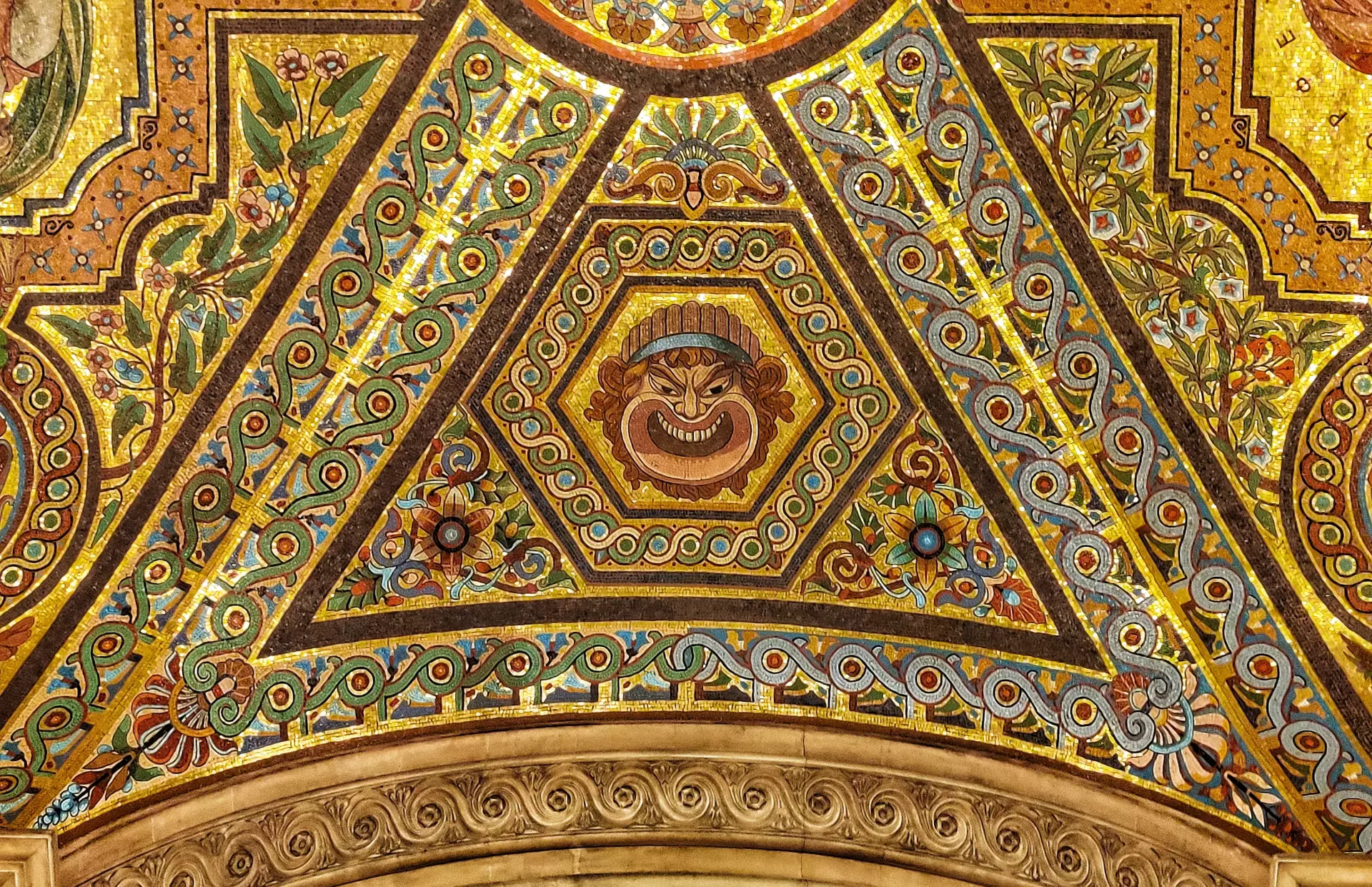
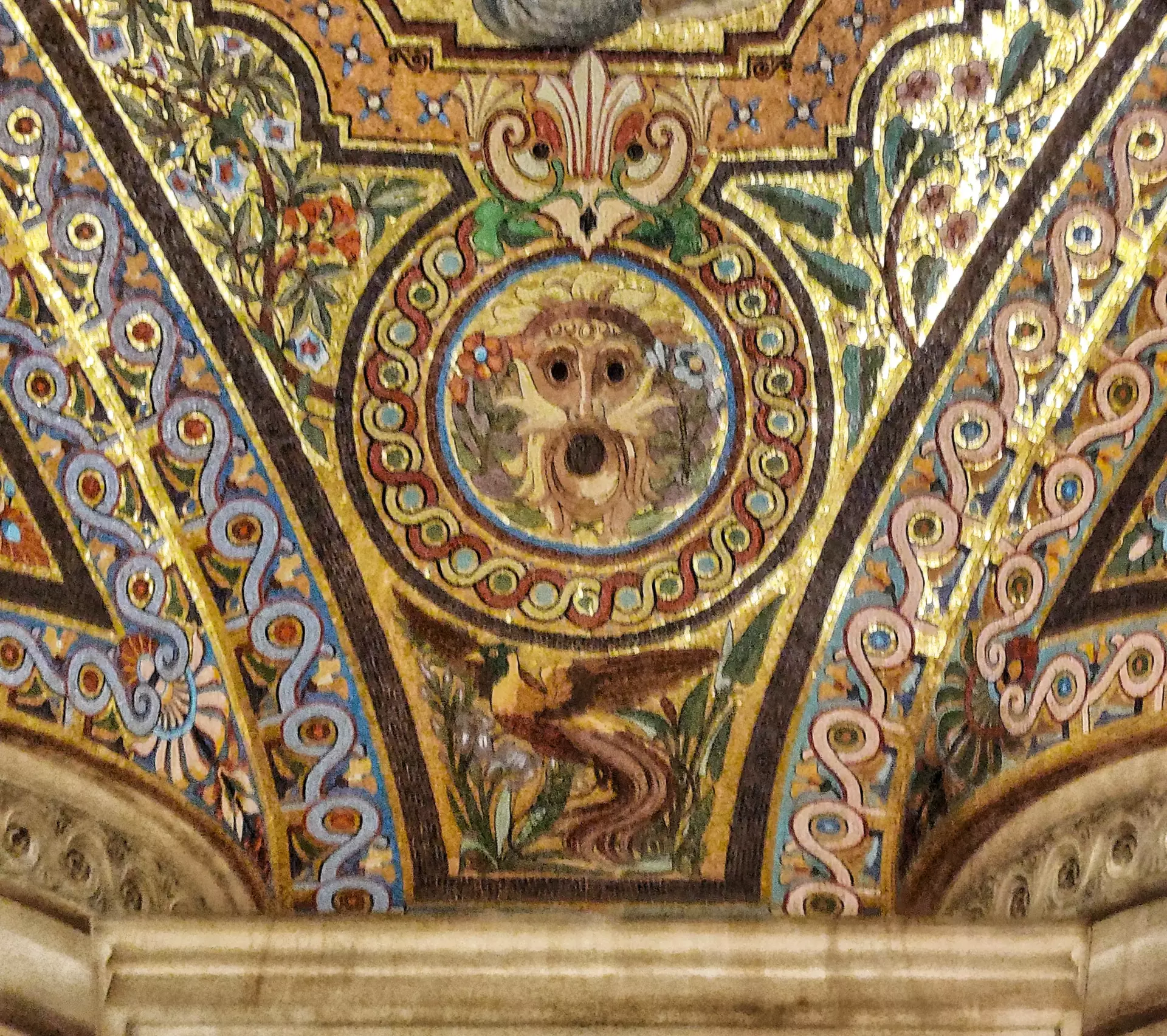
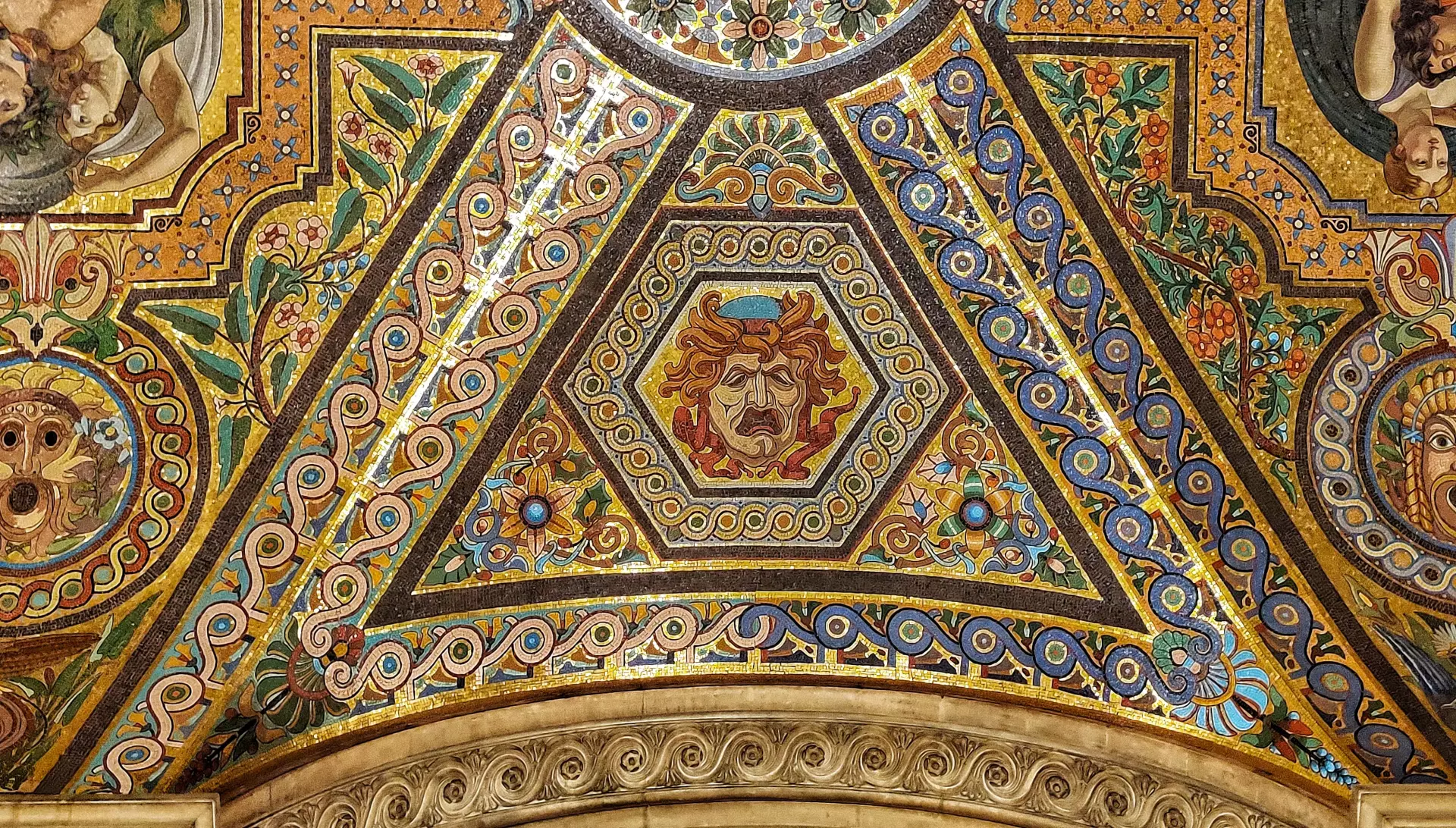
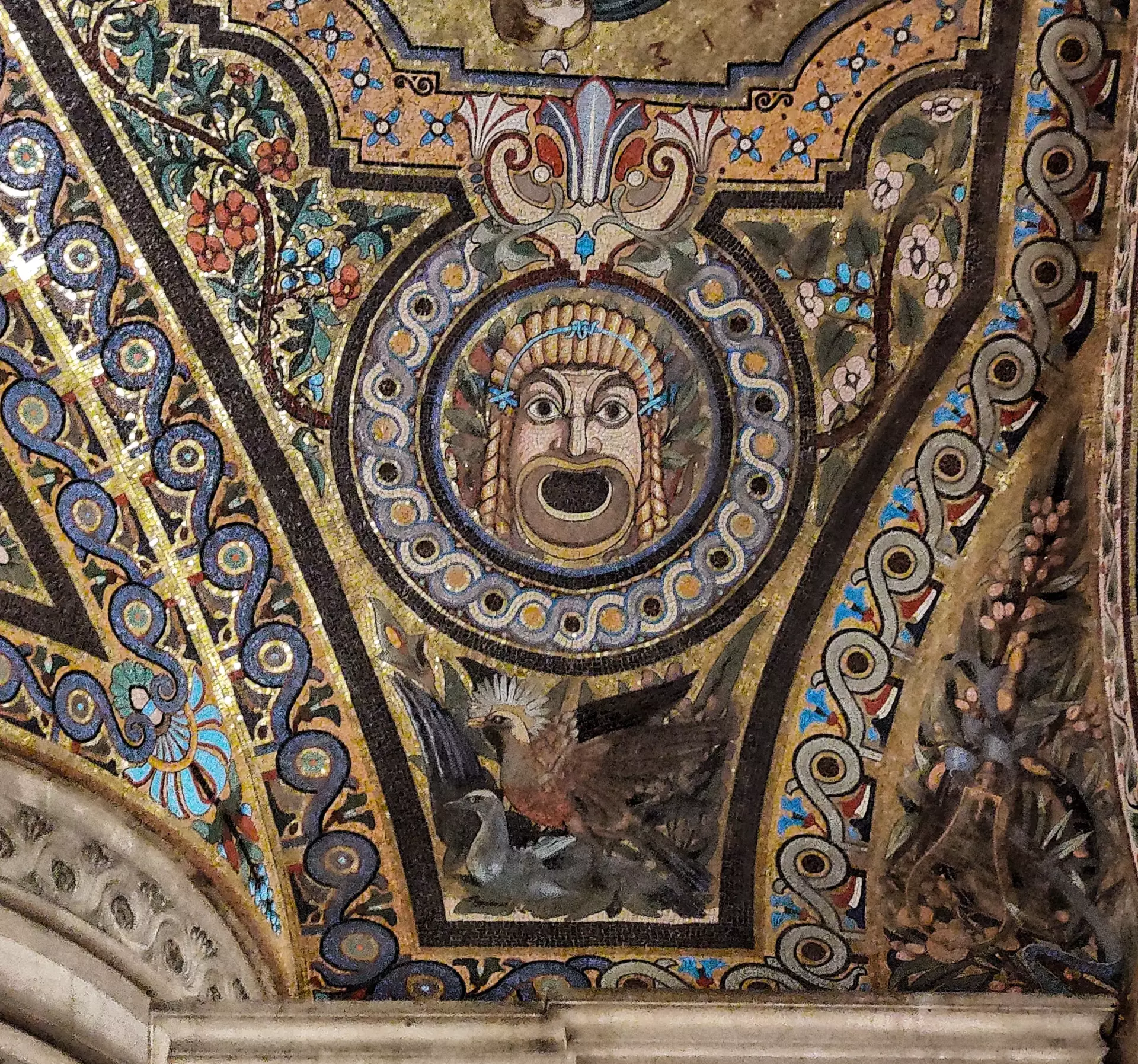
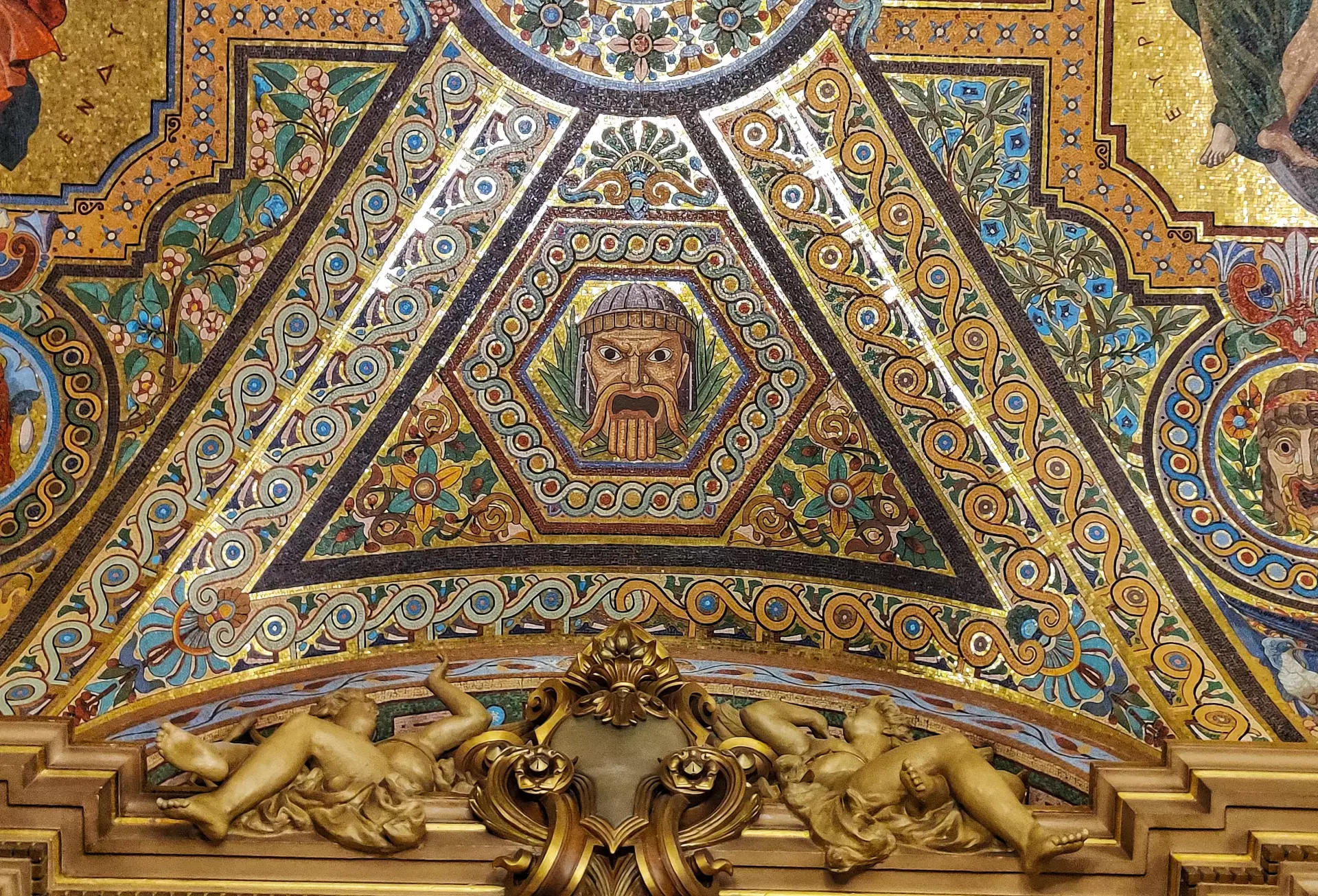
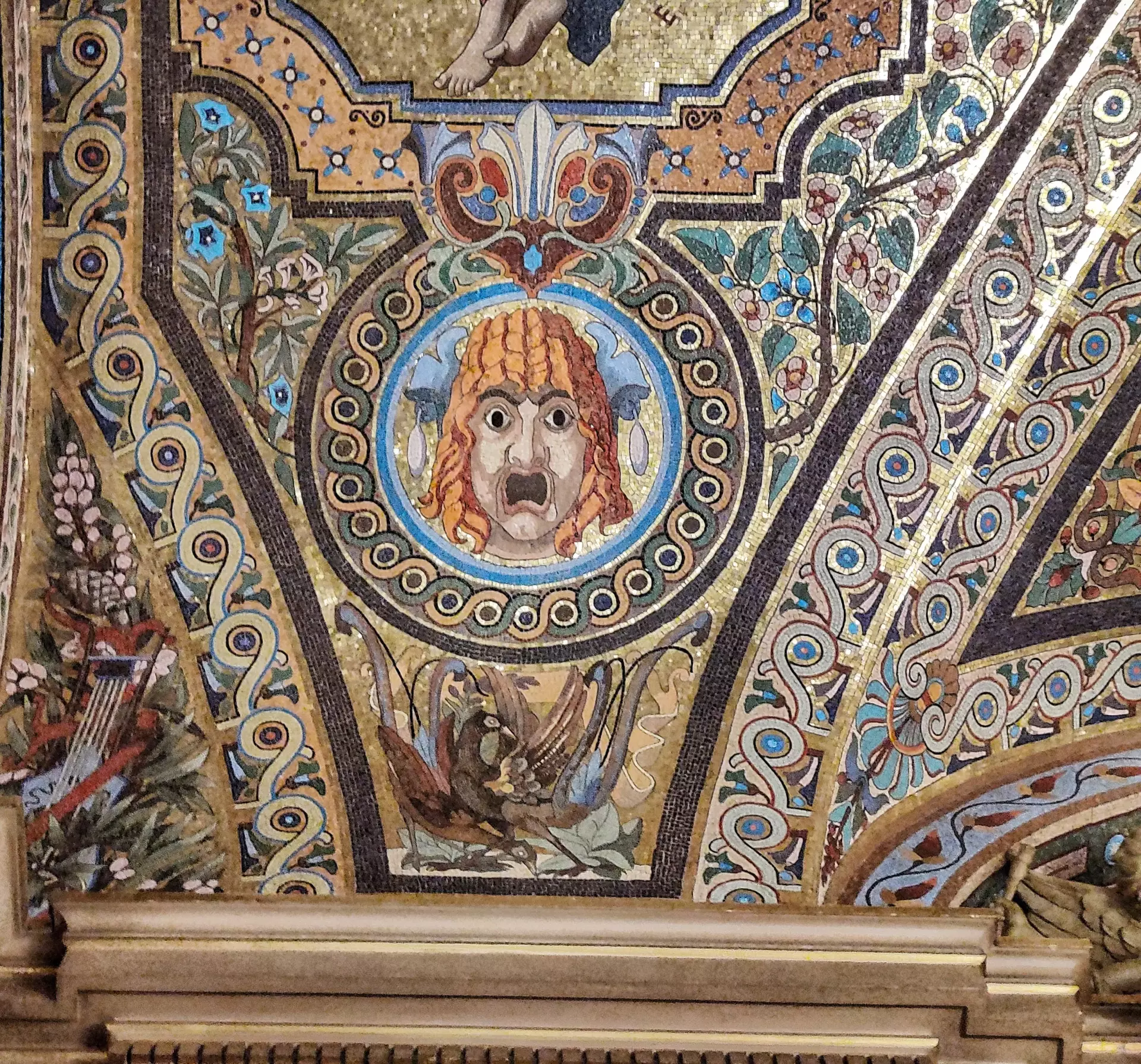
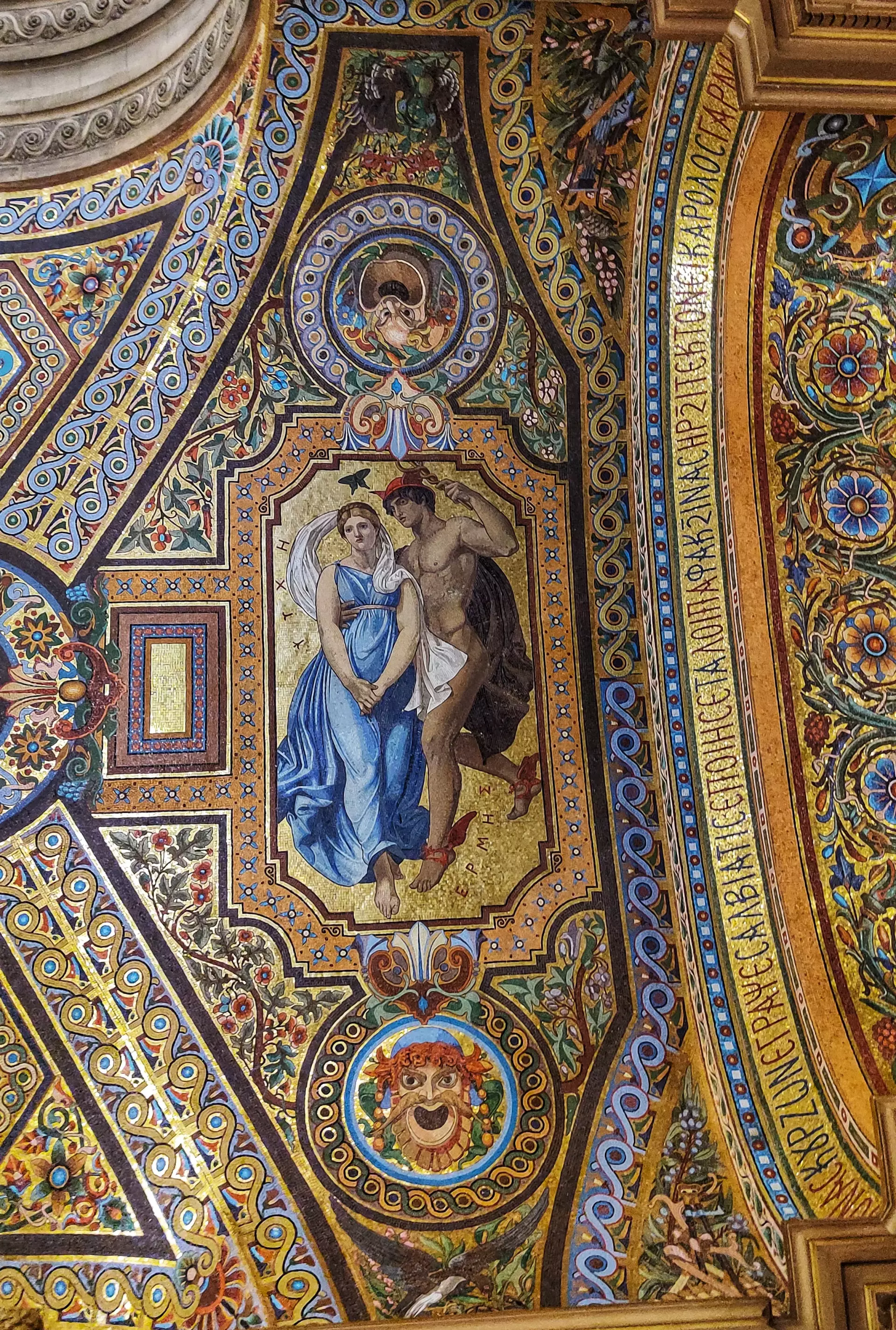
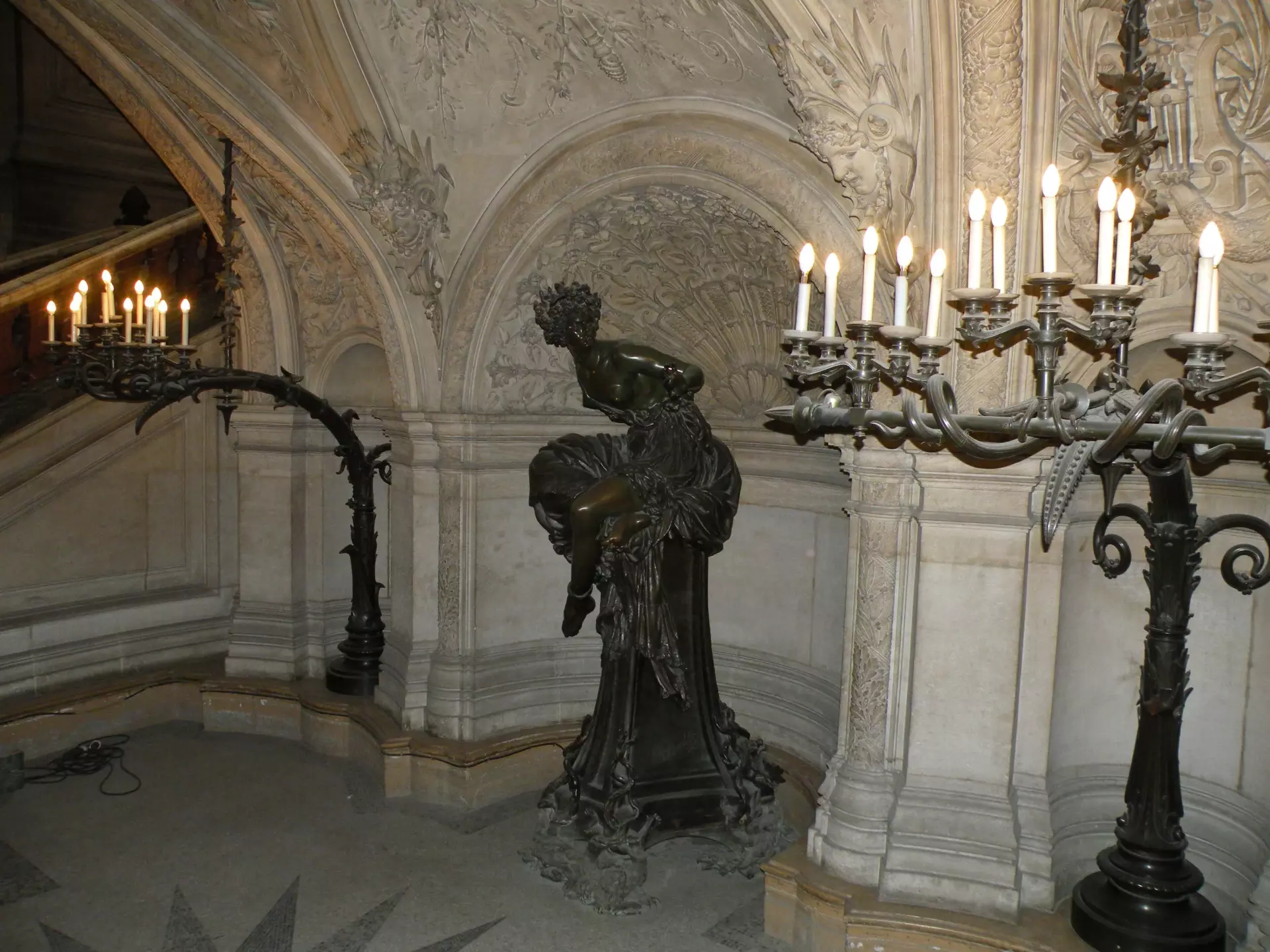
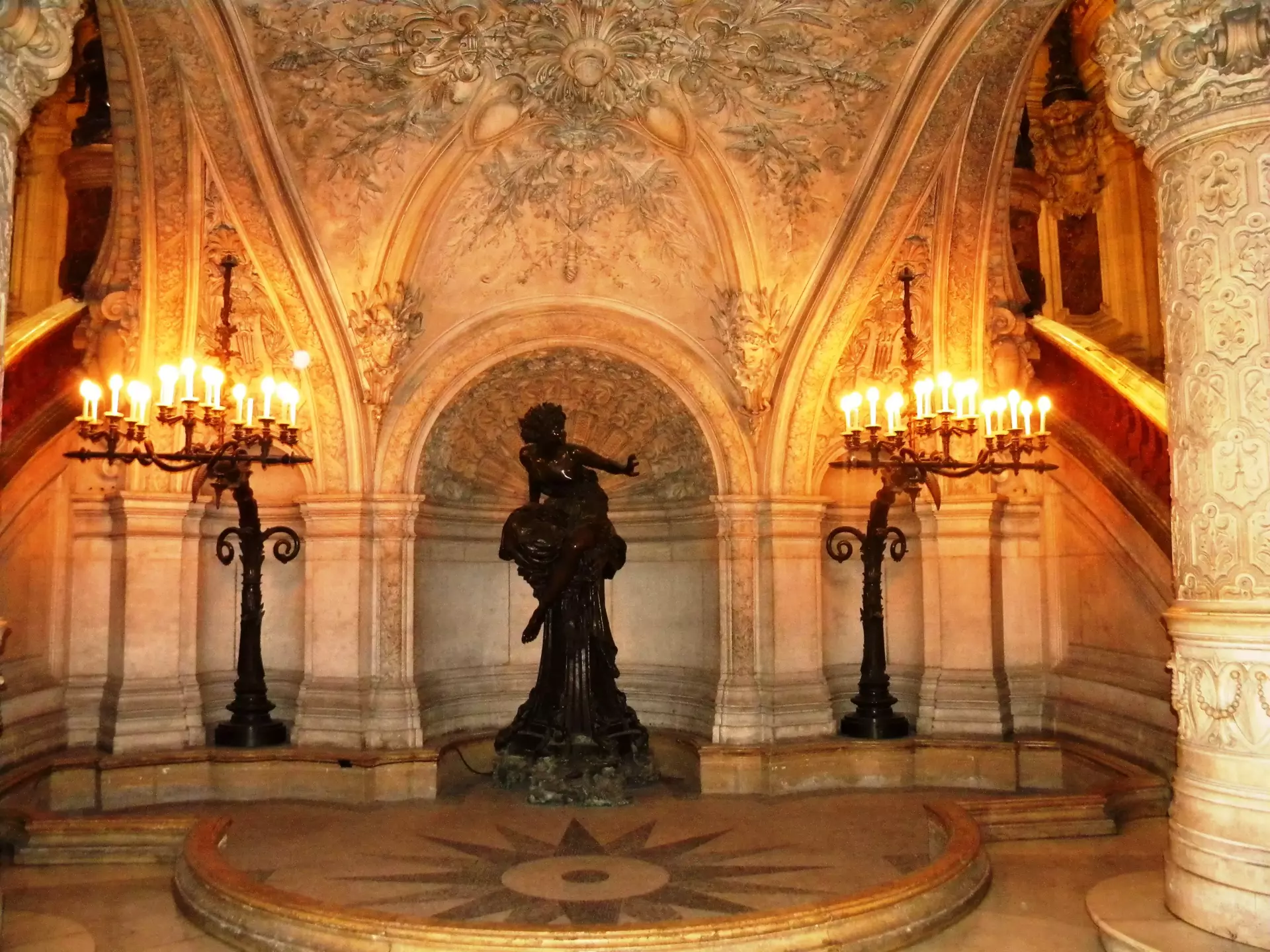
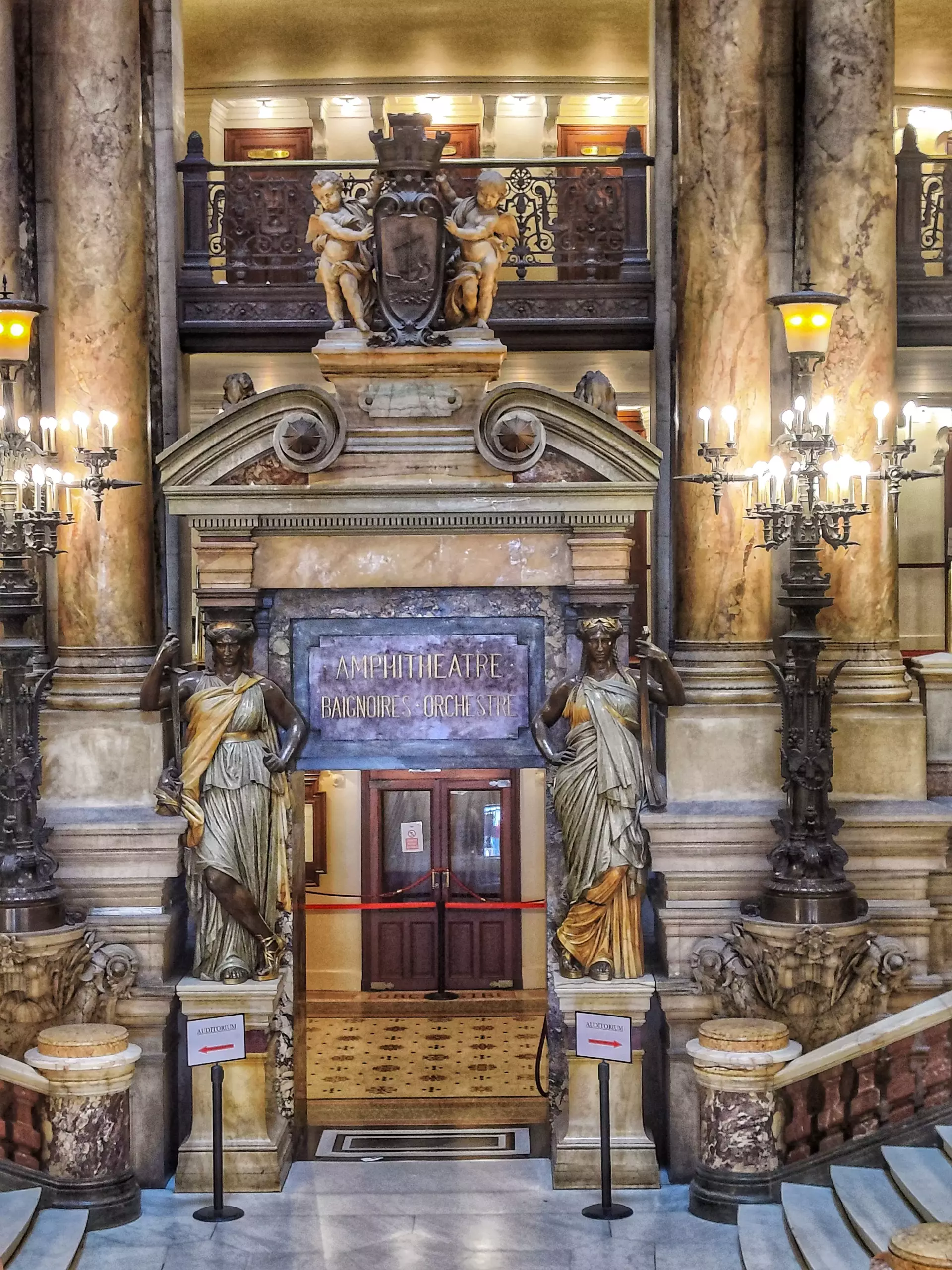
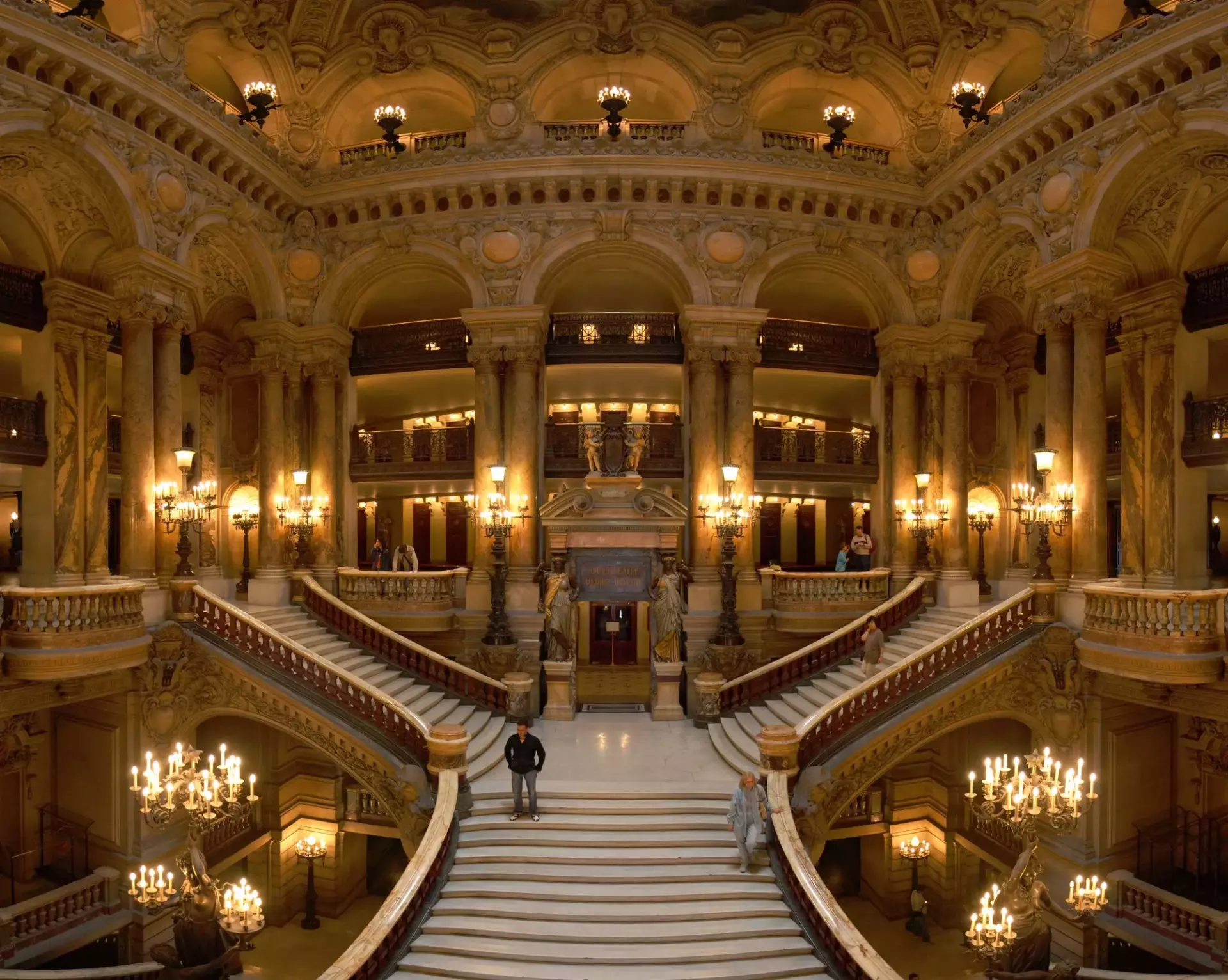
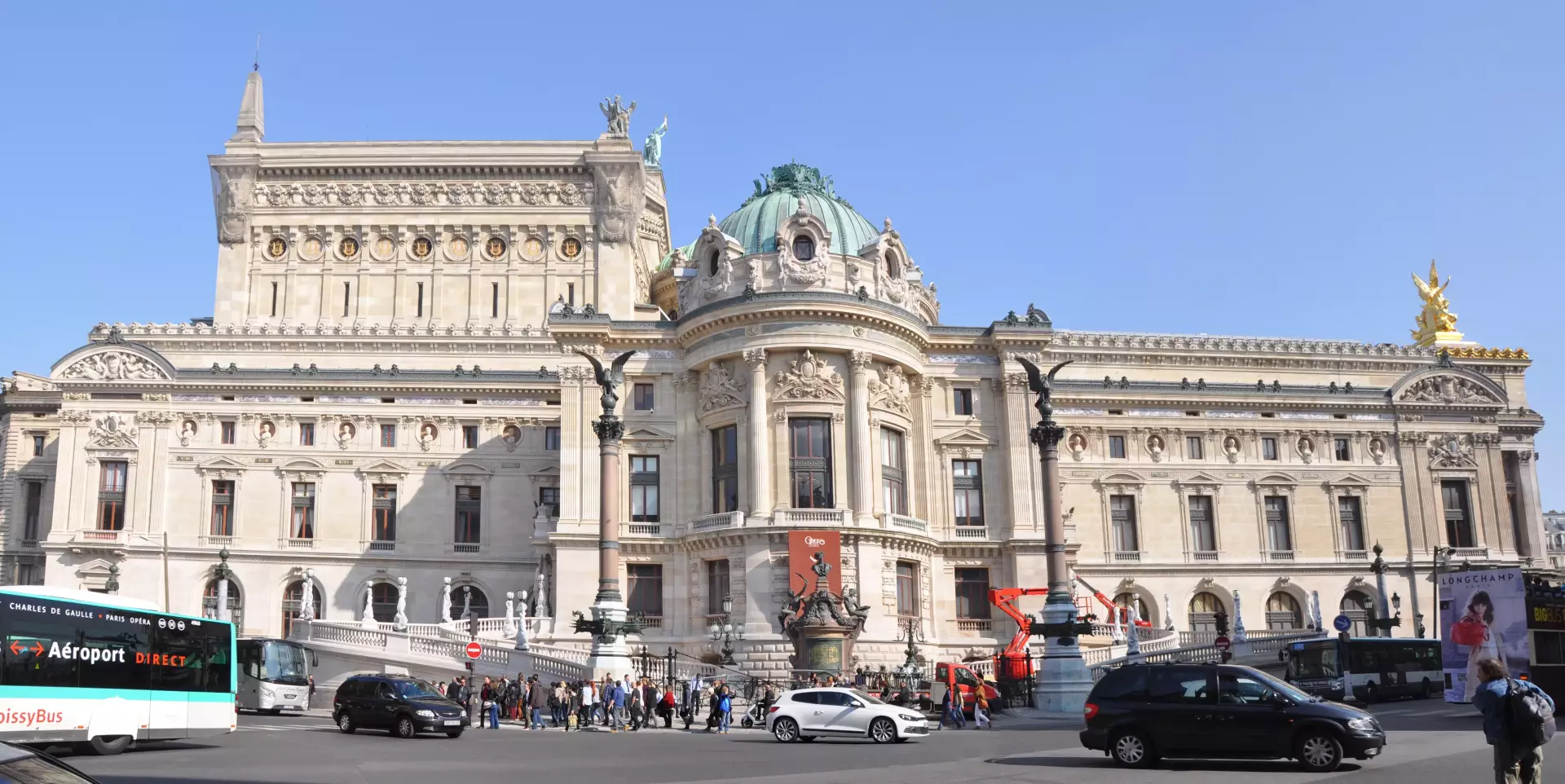
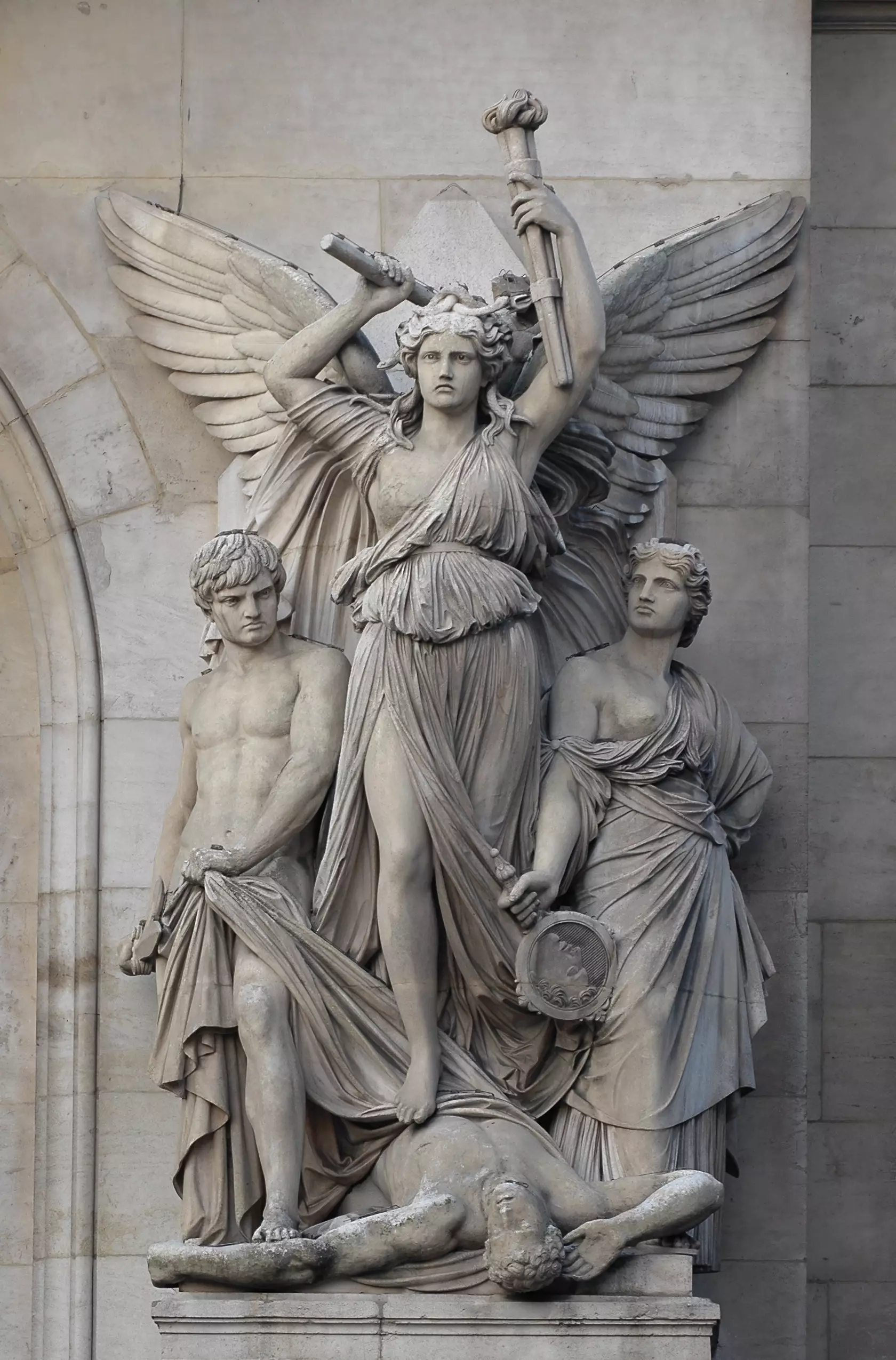
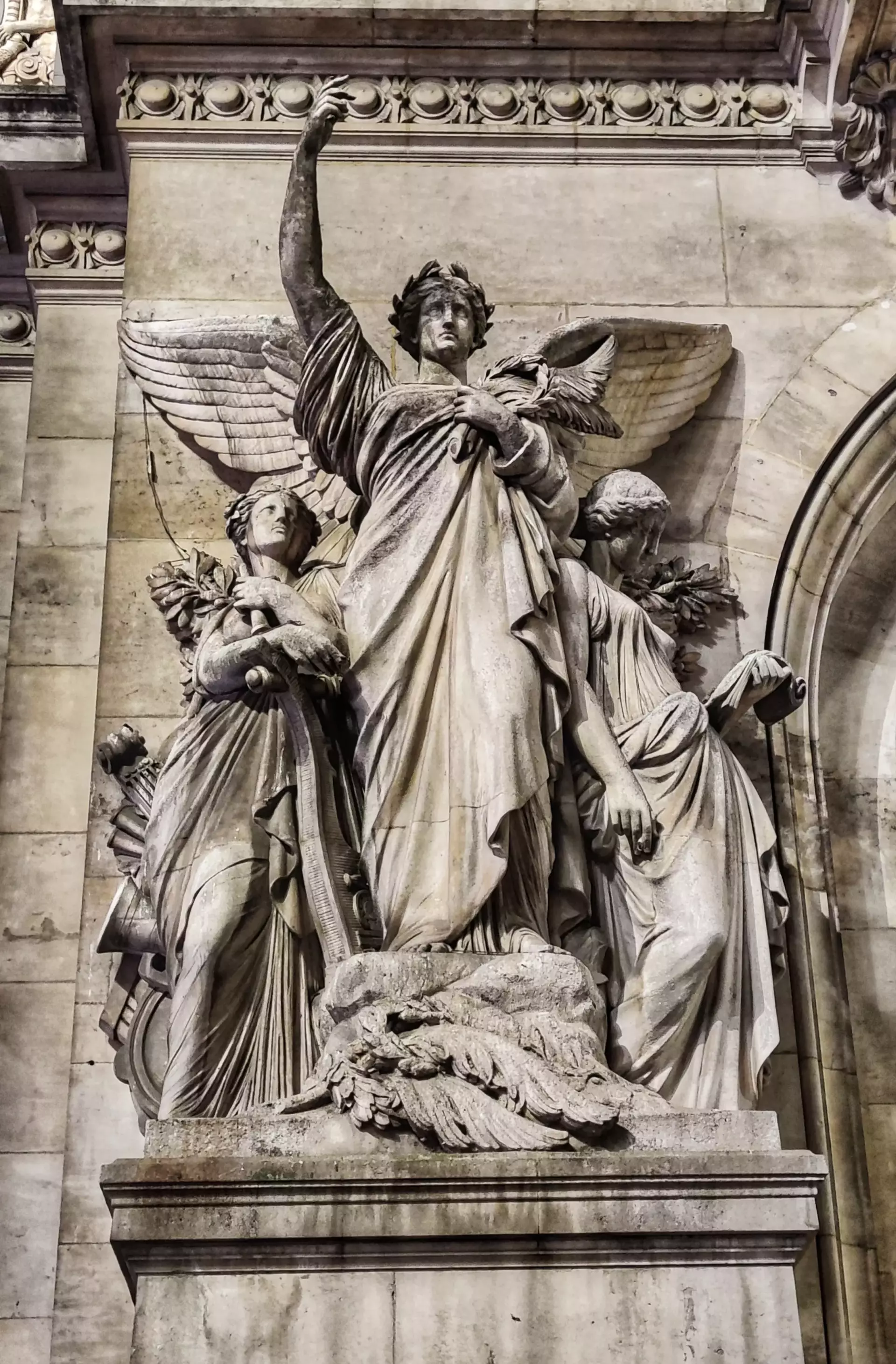
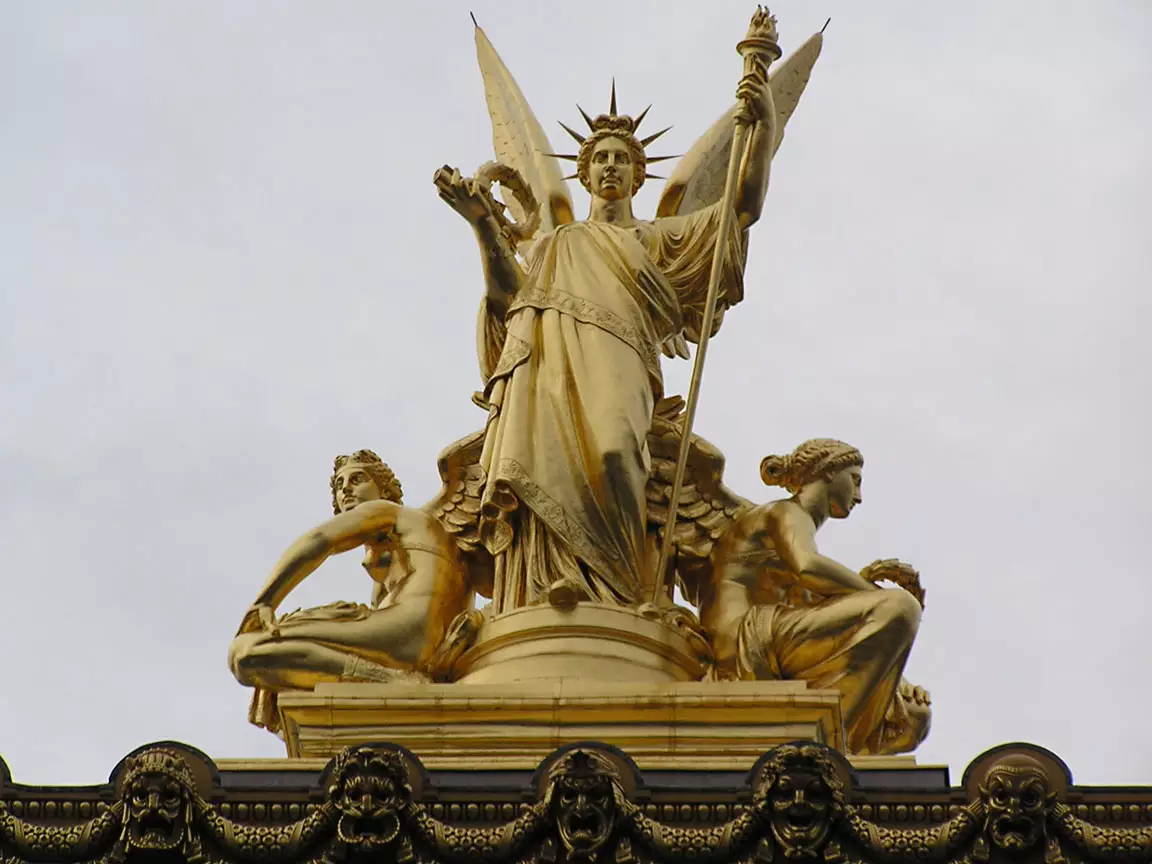
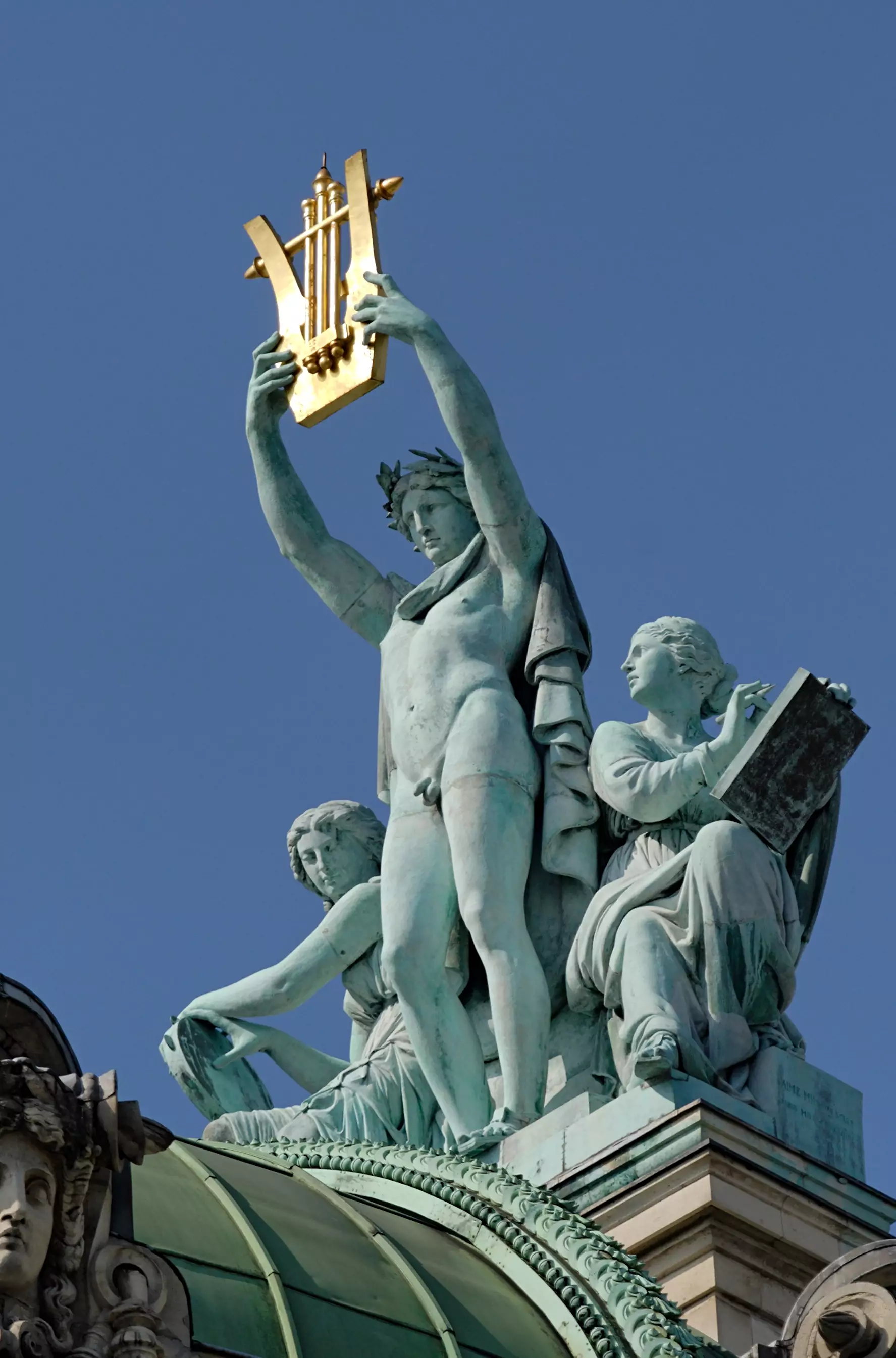
The Palais Garnier is famously known as the backdrop for The Phantom of the Opera, and its grandeur is evident both inside and out. Visitors are often struck by the lavish details, from gilded decorations to sweeping staircases.
Since the Opera Bastille opened in the 12th arrondissement in 1989, the Palais Garnier has shifted its focus. Today, it is primarily used for dance performances, with ballet taking center stage in this historic venue.
Source - https://en.wikipedia.org/wiki/Palais_Garnier
An ancient Roman theater, the only surviving above-ground ruins of the Gallo-Roman era in Paris (ancient Lutetia, French Lutèce) apart from the nearby Thermes de Cluny. The theatre could hold approximately 15,000 spectators and measures some 132 m x 100 m. Built sometime in the 2nd century CE, the location of the actor's dressing room, the platform of the stage, and lapidary remains can still be seen. The remains were rediscovered in 1869, when new streets were being built. An excavation was subsequently ordered in 1883. The theatre has been preserved as a quiet archaeological park removed from the bustle of Parisian streets.
The Jewish quarter, with many small delis and shops. Lively on most days except for Saturdays.
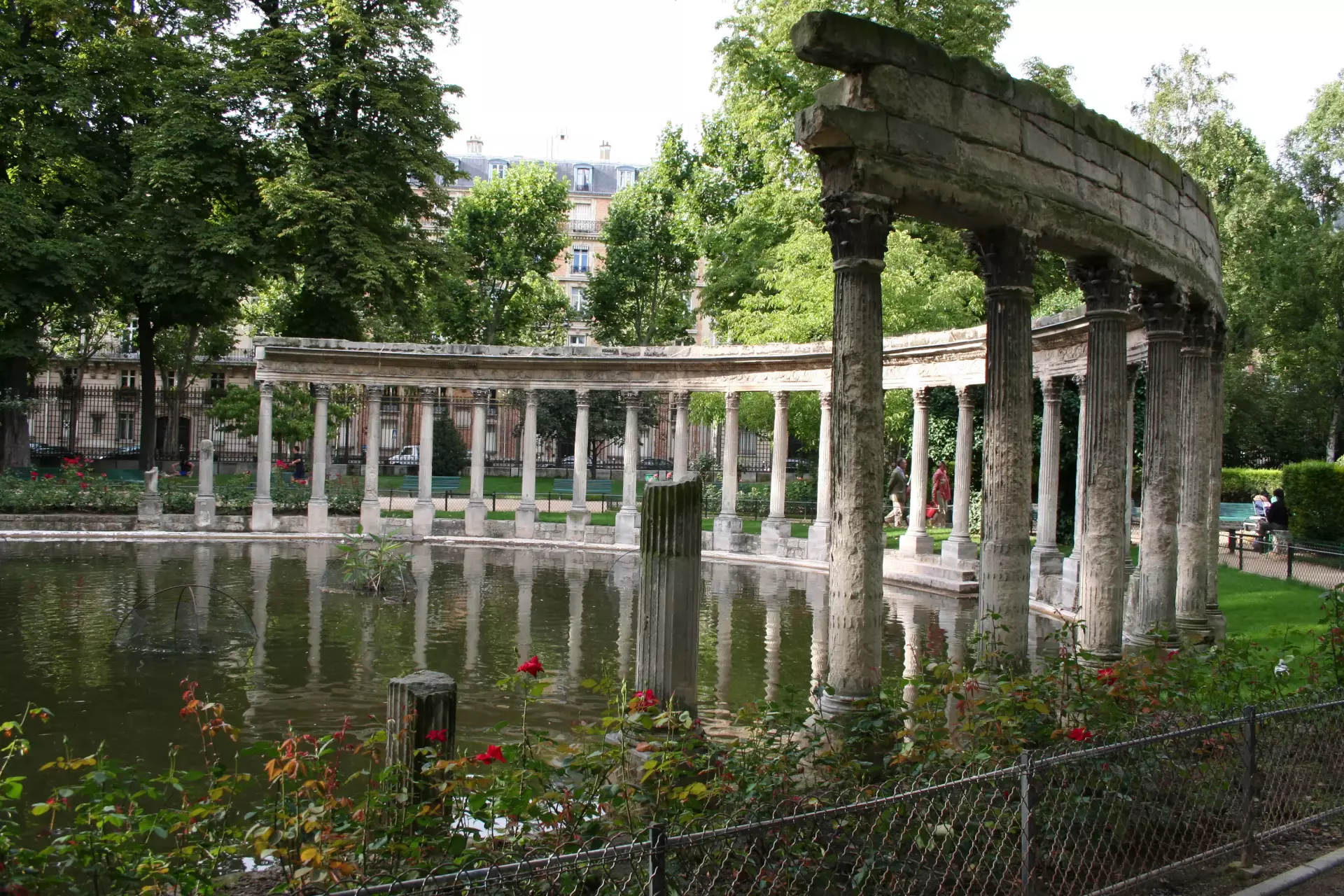
One of Paris's best kept secrets, painted by Monet numerous times. It is a very elegant centre of green in the middle of cosmopolitan Paris. Make sure you check out the statues, entrance rotunda and the surrounding mansions. Thanks to Haussmann himself this precious slice of parkland was reserved for the enjoyment and leisure of the people of Paris. It is unusual in France due to its casual, informal "English" style planning, and is a contrast to other Parisian parks such as the classically laid out and formal Luxembourg Gardens and the Tuileries. Randomly placed throughout the park are scaled-down architectural replicas including an Egyptian pyramid, Dutch windmill, and a Chinese fort. Free Wi-Fi in the park.
The oldest planned square in Paris, and what many tourists as well as locals consider the heart of the Marais area.
The Palais de Tokyo is Paris's largest specialist contemporary art exhibition venue, owned and operated by the national government. The building dates to 1937 and also includes the Museum of Modern Art of the City of Paris.
One of the truly great venues for the performing arts anywhere in the world, Paris' new opera house actually managed to inspire some neighborhood protest during its planning and construction. Pretty much everybody is a believer nowadays though. Check out the website for upcoming shows, it might even make sense to plan a trip to Paris around one.
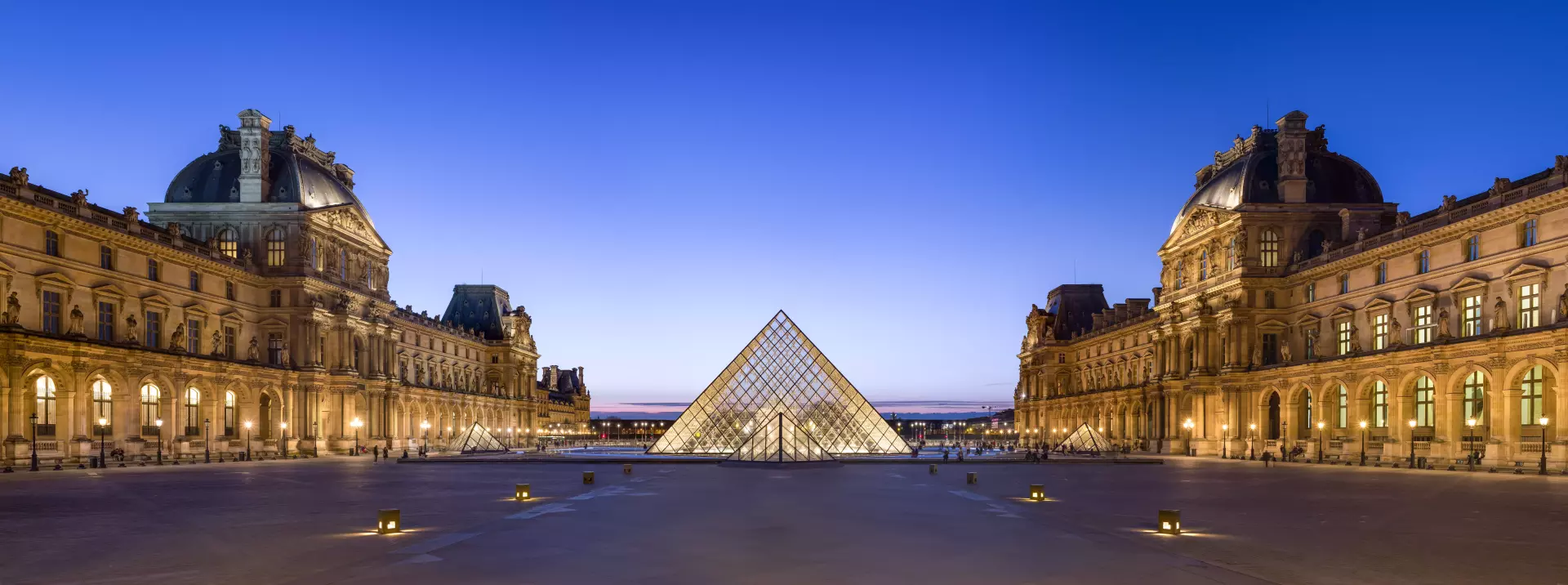
Its exhibits come from such diverse origins as ancient Egypt, classical Greece and the Roman Empire, medieval Europe, and Napoleonic France, but controversially including many items that were looted from their places of origin. Its most famous exhibit, of course, is Leonardo da Vinci's painting of the Mona Lisa (French: La Joconde, Italian: La Gioconda), generally to be found surrounded by hordes of camera-flashing tourists. The Louvre poses many of the same challenges to the visitor as Paris itself; overwhelming in size, crowded in high seasons, and much information available only in French. If you want to see everything in the Louvre, plan at least two full days. However, it is better to pick and choose, as the collection was assembled with an eye to completeness rather than quality. As of July 2019, due to intense crowding and reports of ticket fraud, entry now almost always requires a pre-booked timed ticket, even for holders of the Paris Museum Pass.
One of the last remnants of medieval Paris outside of the 4th, this tower was once part of a castle called l'hôtel de Bourgogne.
Those who are unfamiliar with conceptual art sometimes don't know quite what to expect, or how to approach it. Such travellers should rest assured that the curators at the Pompidou Centre have assembled a marvellous introduction consisting of mostly approachable works which delight, amuse, and entertain. The art is far from the only reason for a visit, as the building also contains a vast public library and a fine restaurant (run by the Costes brothers) on the roof. In fact the place is literally surrounded by some of the nicest pavement cafés in the city, in its superb location between the car-free above ground part of Forum Les Halles and the Marais art district.
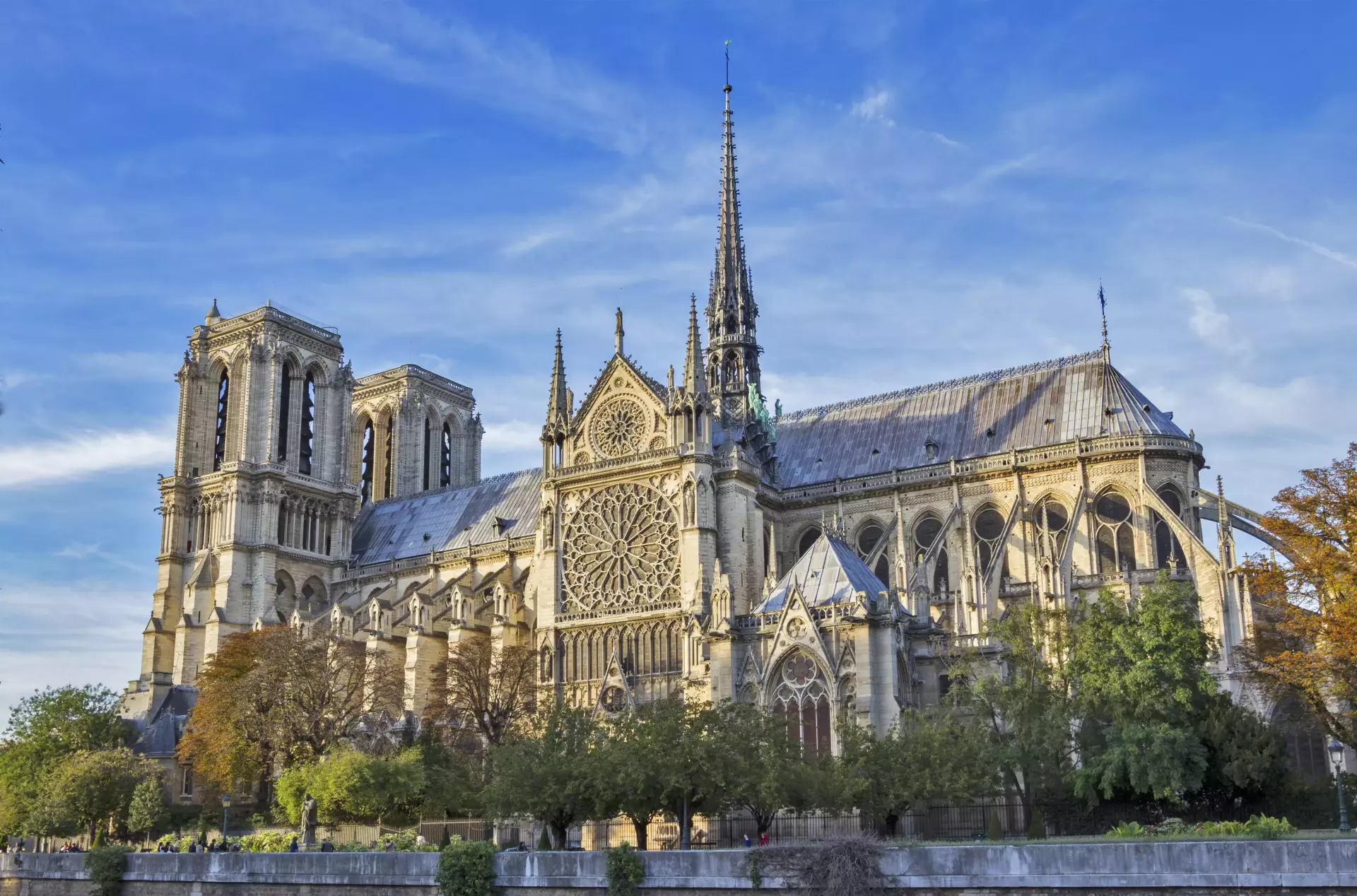
The early Gothic Cathédrale de Notre Dame (Our Lady) has a 12th century design but wasn't completed until the 14th. Still it is a good example of the development of the style, though the west or main portal is a bit unusual in its rigidity. A April 2019 fire caused severe damage, but after extensive renovation the cathedral was reopened to the public in December 2024.
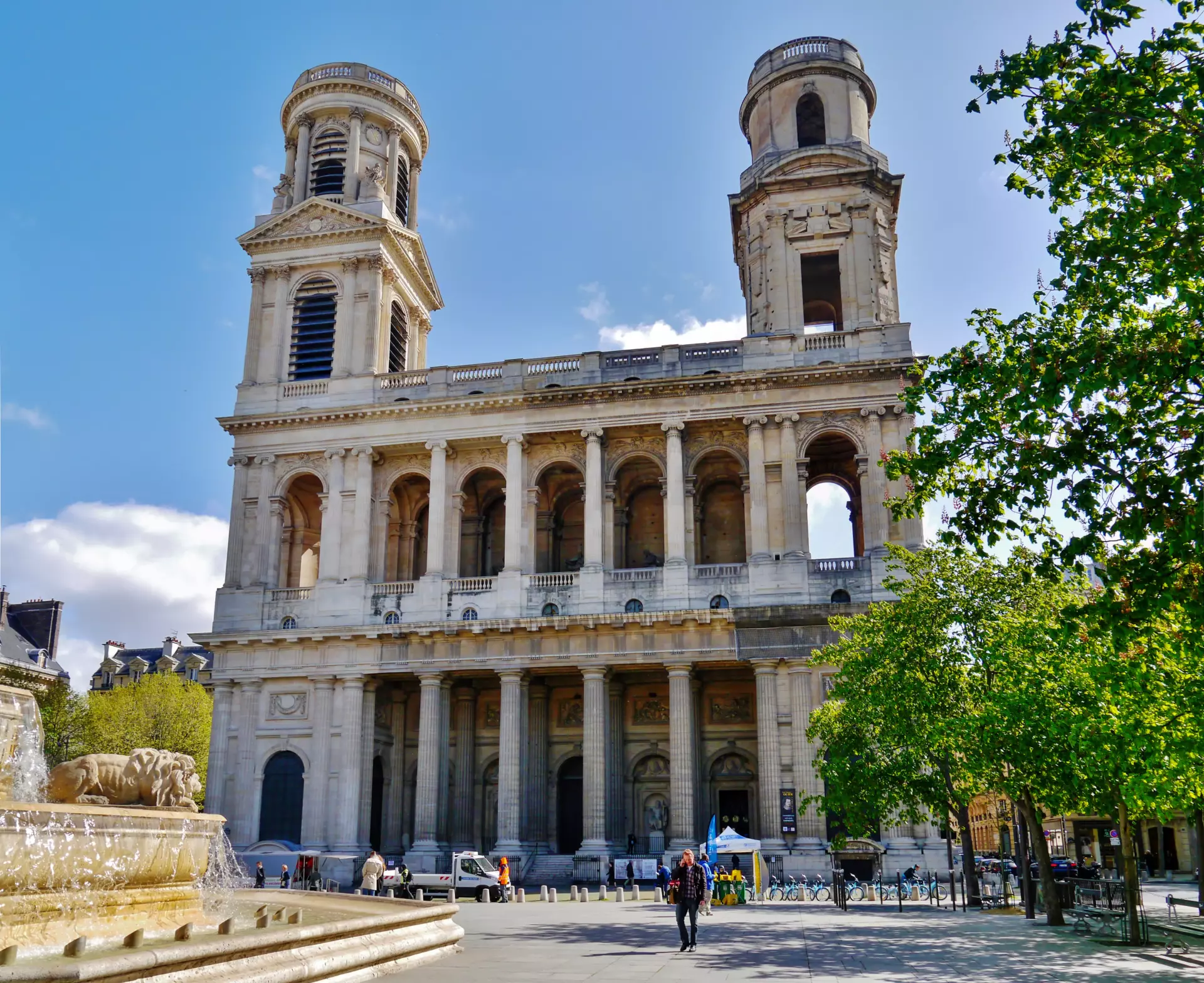
The oldest church in Paris, founded in the year 542 by King Childebert. The church as it exists today dates mainly from the 11th century, the period in which it became the center of a powerful Benedictine abbey. The Revolution witnessed the suppression of the abbey in 1794, when most of the monastic buildings were put to the torch. Earlier, 318 priests had been hacked to death nearby by a mob on 3 September 1792. The church underwent significant restoration in the 19th century, ensuring the preservation of the building, which by that date represented a fascinating mix of styles: 6th century marble columns placed alongside Gothic vaults and supported by Romanesque arches. Famous burials within the church include René Descartes (philosopher), Nicolas Boileau (poet) and King John Casimir of Poland, who had become (in 1669, before his death) abbot of the church's monastery.
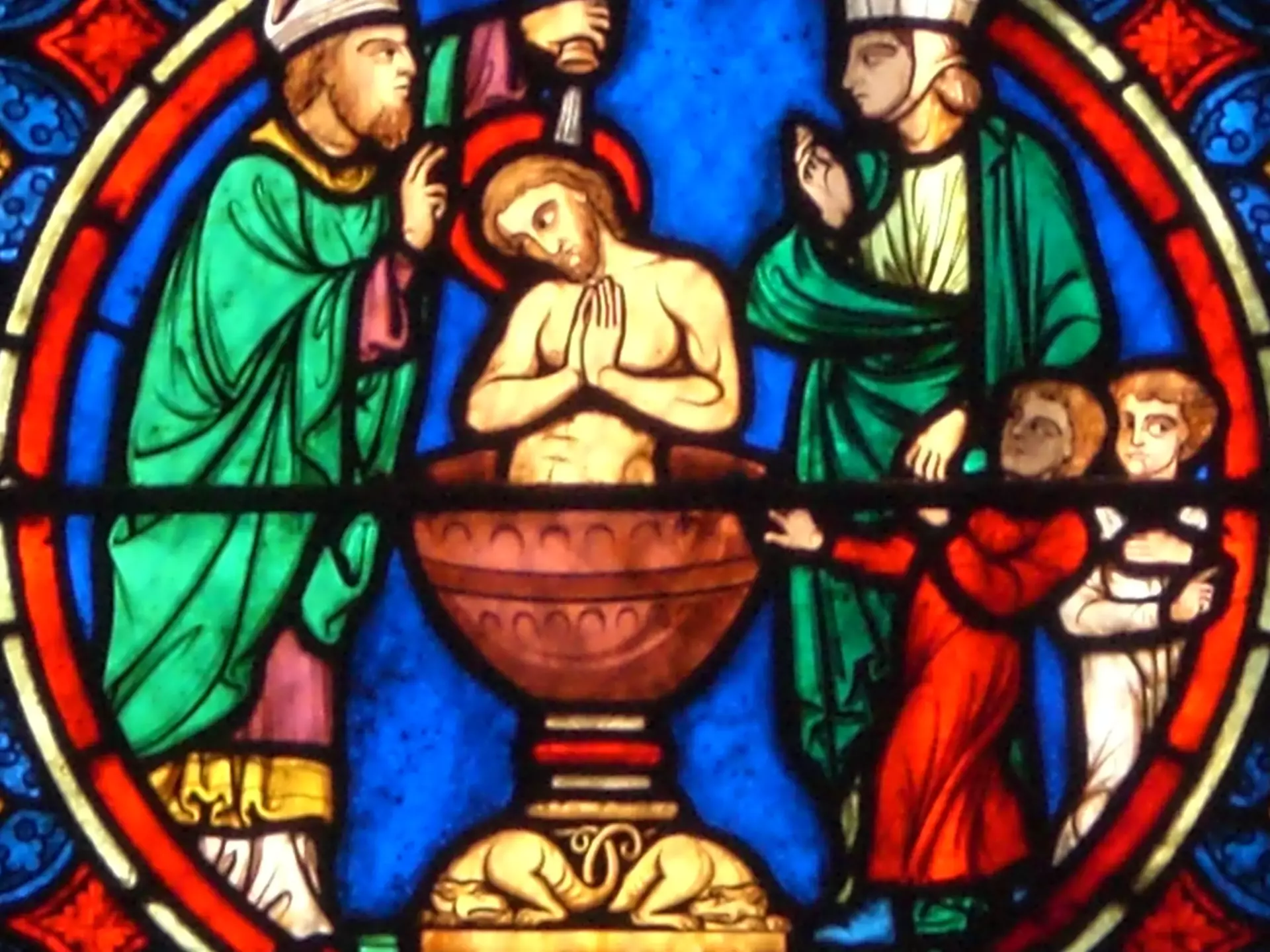
Soaring stained glass windows beaming ample light onto the rich primary colours of the tile mosaics on the floor, this photogenic church was built by the French kings to house the relics of the Crown of Thorns. Make sure you go on a sunny day, as the highlight of this small chapel in Rayonnante Gothic style are the large stained-glass windows which soar up to near the vaulted ceiling. Also of interest is the extremely ornate lower level. If it happens to be rainy or cloudy, give Sainte-Chapelle a miss, as the play of coloured lights on the floor is well worth the wait for a sunnier day. As the chapelle is inside the Courts of Justice, there will thus be a security check.
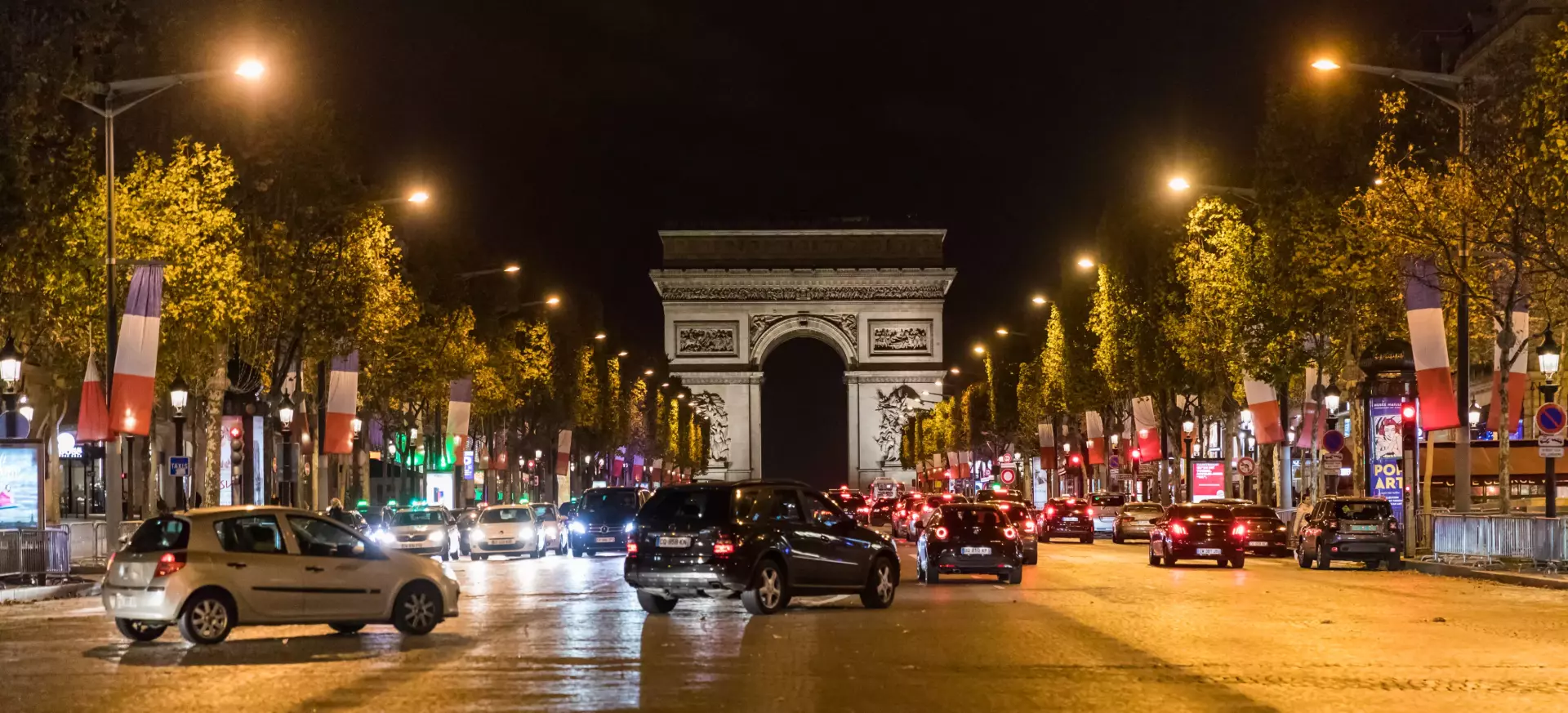
This iconic triumphal arch forms the focus of the main east-west road axis of Paris, running between the Louvre and the Grande Arche de la Défense in the west. The monument was commissioned by Napoleon in 1806 as a tribute to his victories as Emperor of France - it was finally completed in 1836, long after his death. 50 m (150 ft) high and 45 m wide, the Arc de Triomphe is decorated with battle scenes and martial sculptures that includes La Marseillaise by Rude. The Tomb of the Unknown Soldier was placed beneath the arch in 1920, where an eternal flame burns in tribute to the French dead of both World Wars. The arch is surrounded by a large roundabout, aptly known as l'Etoile - 'the star' - with 12 thoroughfares leading off from it. Visitors can purchase a ticket to climb to the top of the arch, from where magnificent views spread out over western Paris. Admission to a small museum devoted to the history and meaning of the monument is included. The central island and the arch are accessed by an underground passage. Do not attempt to negotiate by foot the busy multi-lane road that rings the Arc de Triomphe, which many Parisian drivers seem to consider their own personal speedway.
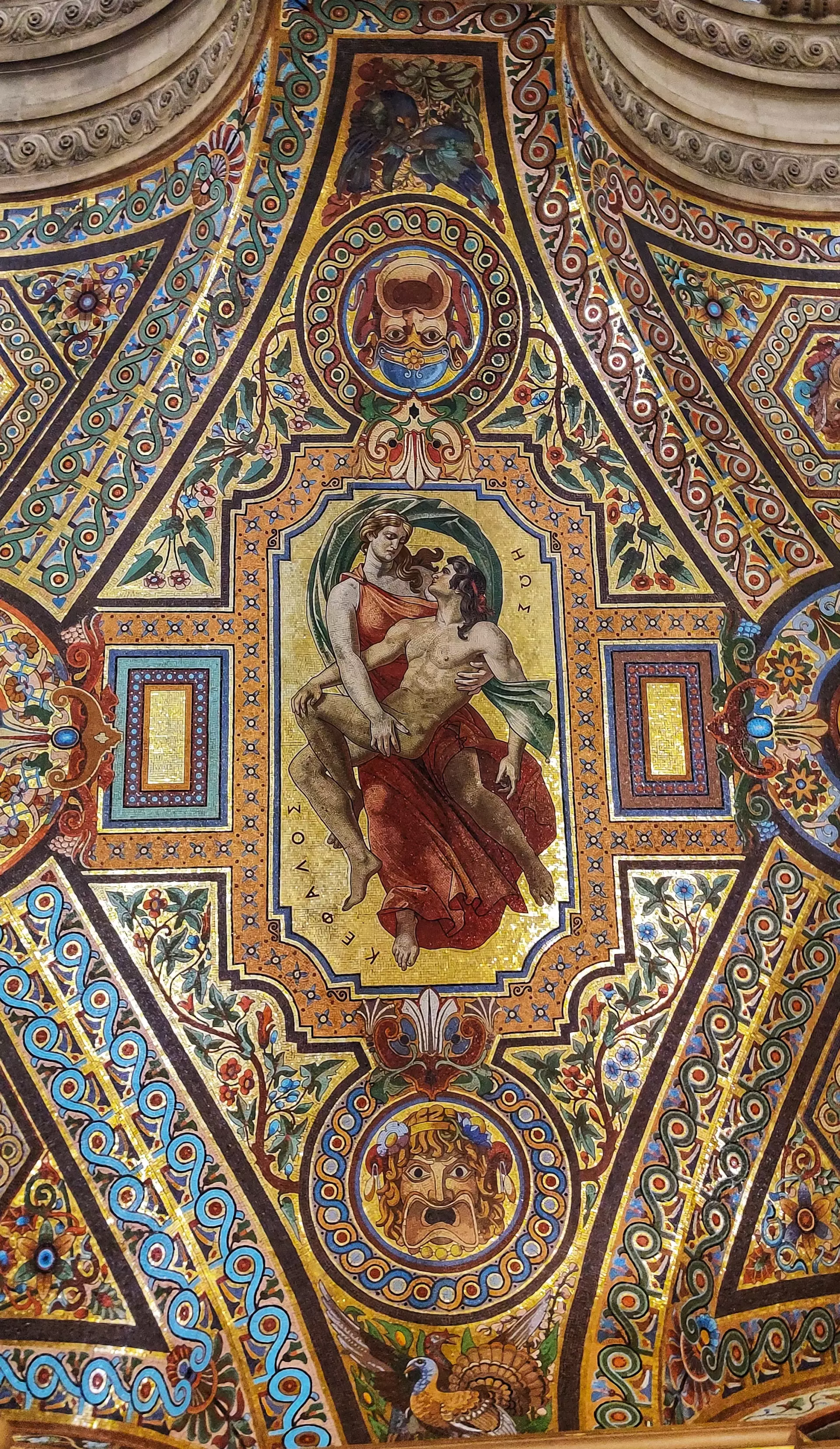
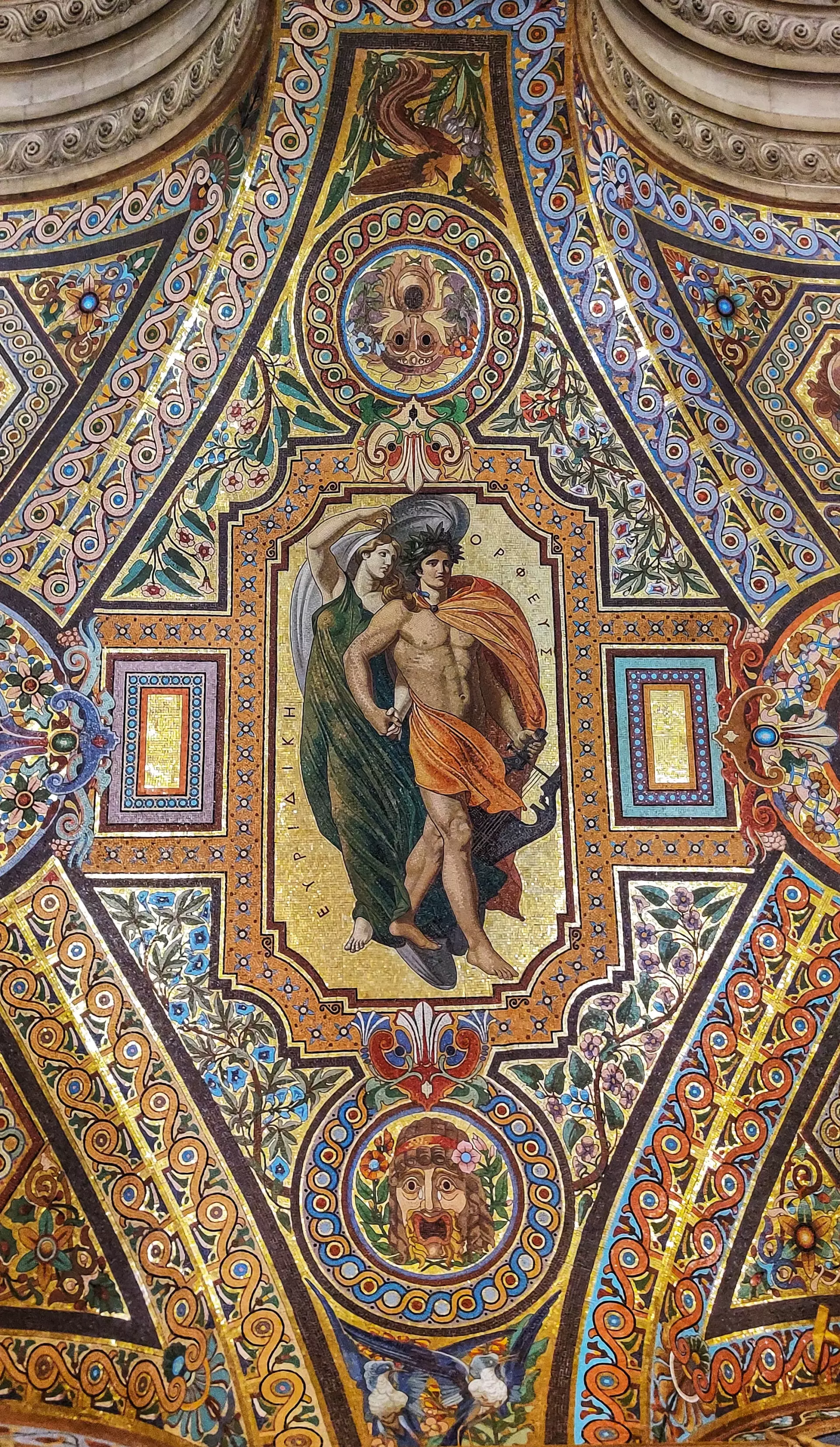
The east wing of the Palais de Tokyo holds the modern art collection of the city of Paris, dating roughly from World War I to date (the older part of the collection is at the Petit Palais in the 8th), including around 10,000 works.
St. Geneviève was responsible for saving Paris from the Huns in 451 and her shrine in the church has been a popular place of pilgrimage ever since. The church as it stands dates from between 1492 and 1626 and is a mix of Gothic and Renaissance architectural styles. A unique feature is the Renaissance rood screen, the sole survivor in the city.
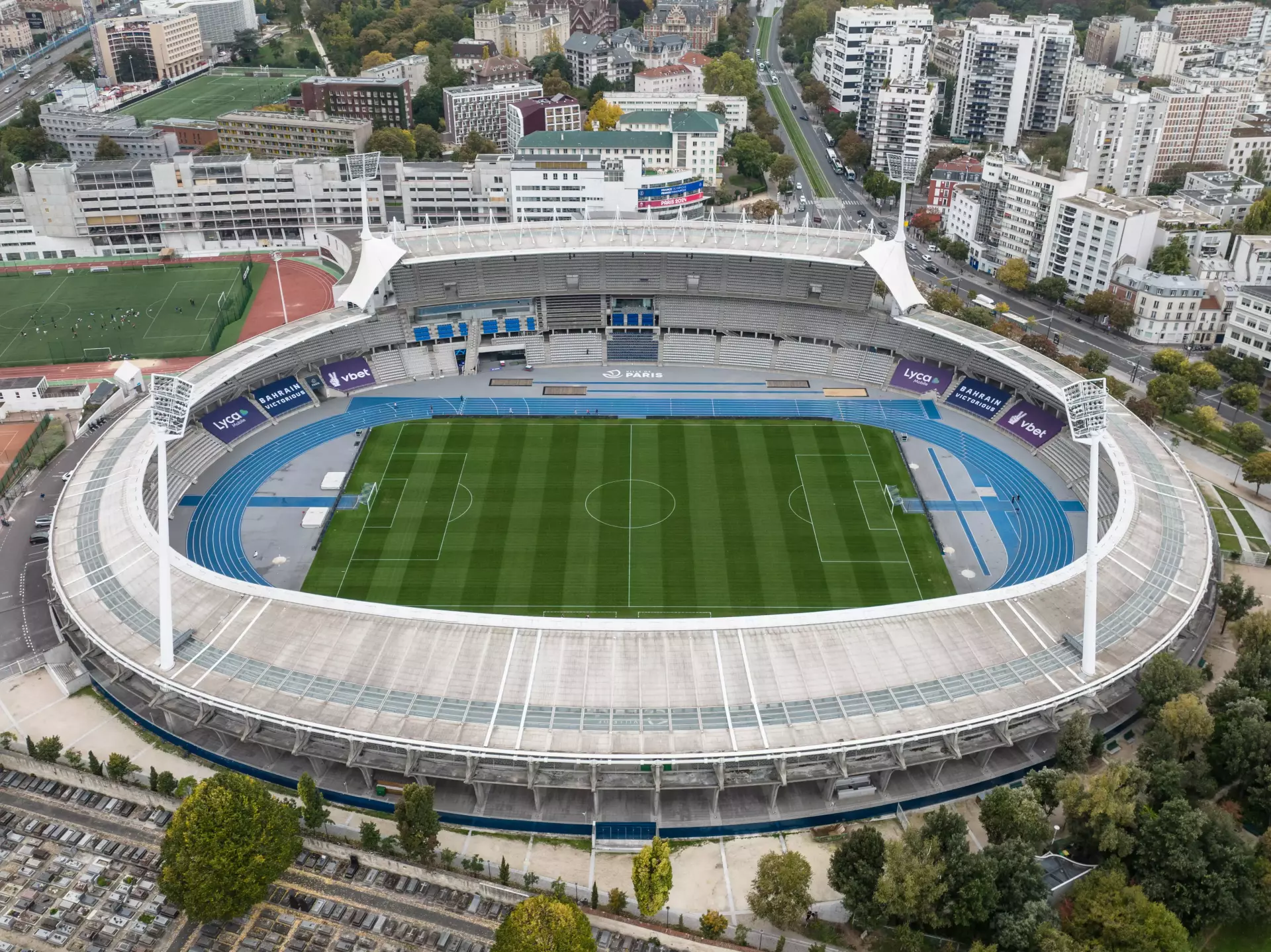
The Stade Charlety is a massive multi-sport arena, hosting football (soccer), tennis, rugby and squash matches.
Tourists cross this park with the large fountain on the way to the Place du Trocadéro viewpoint to the Eiffel Tower.