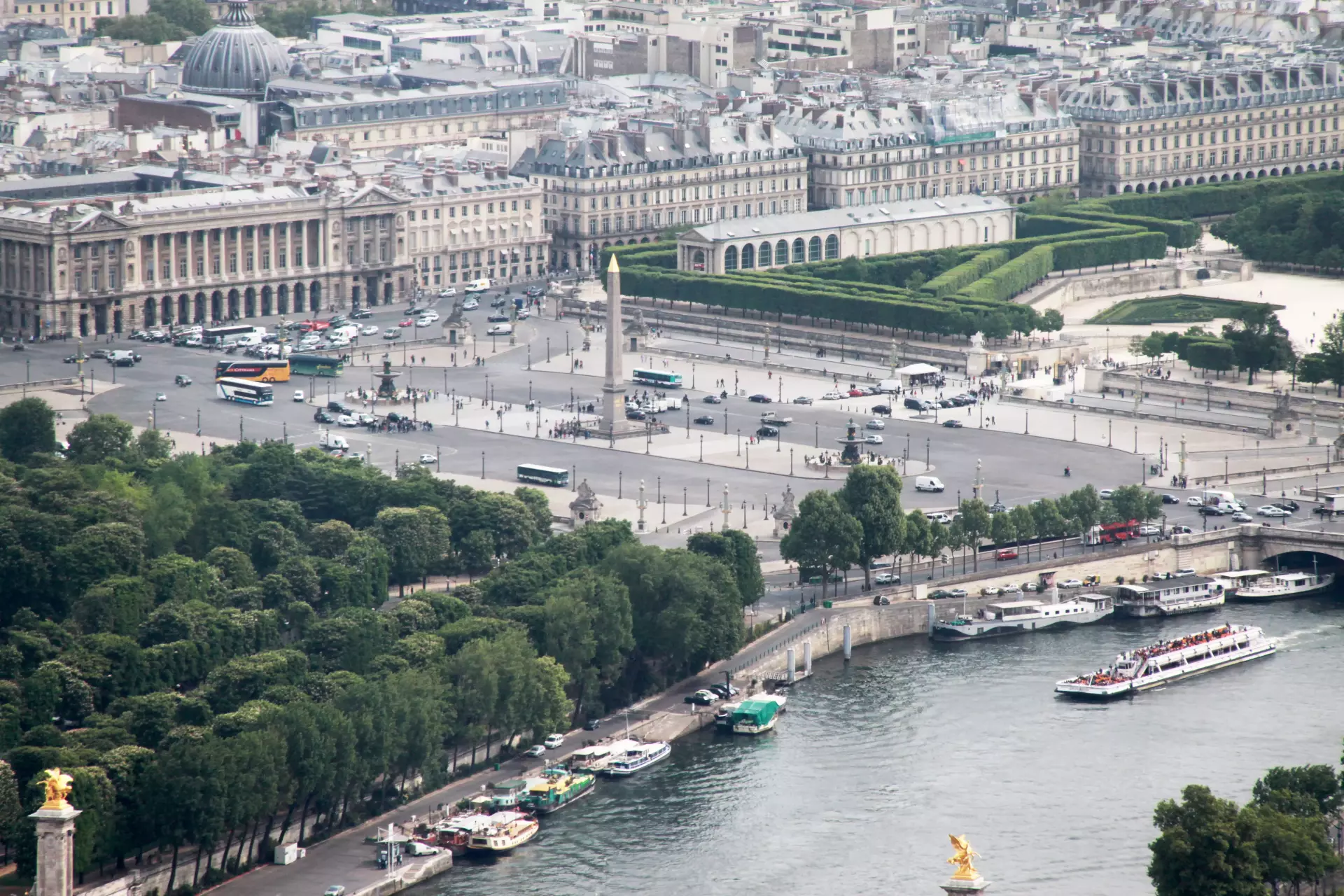
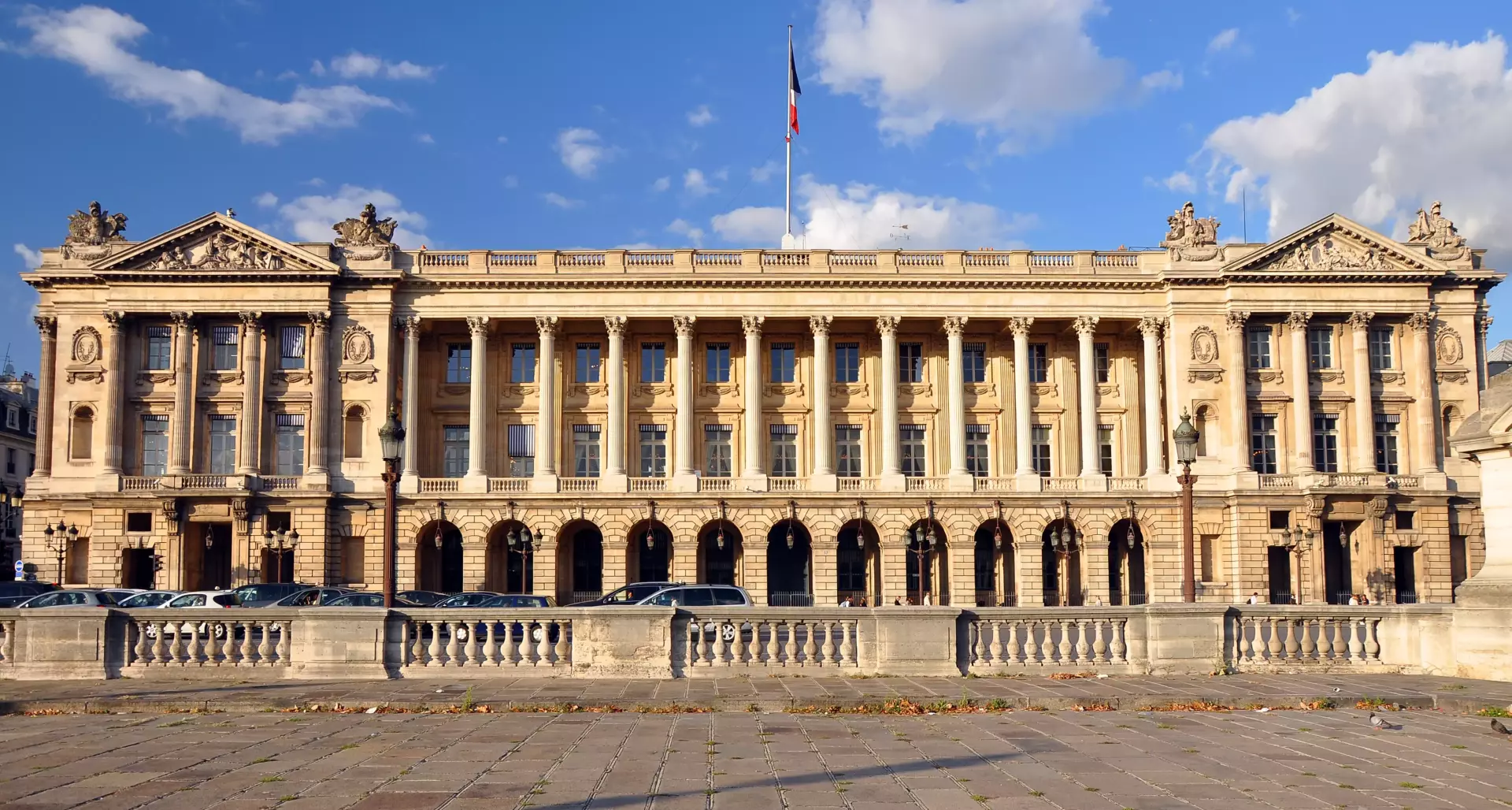
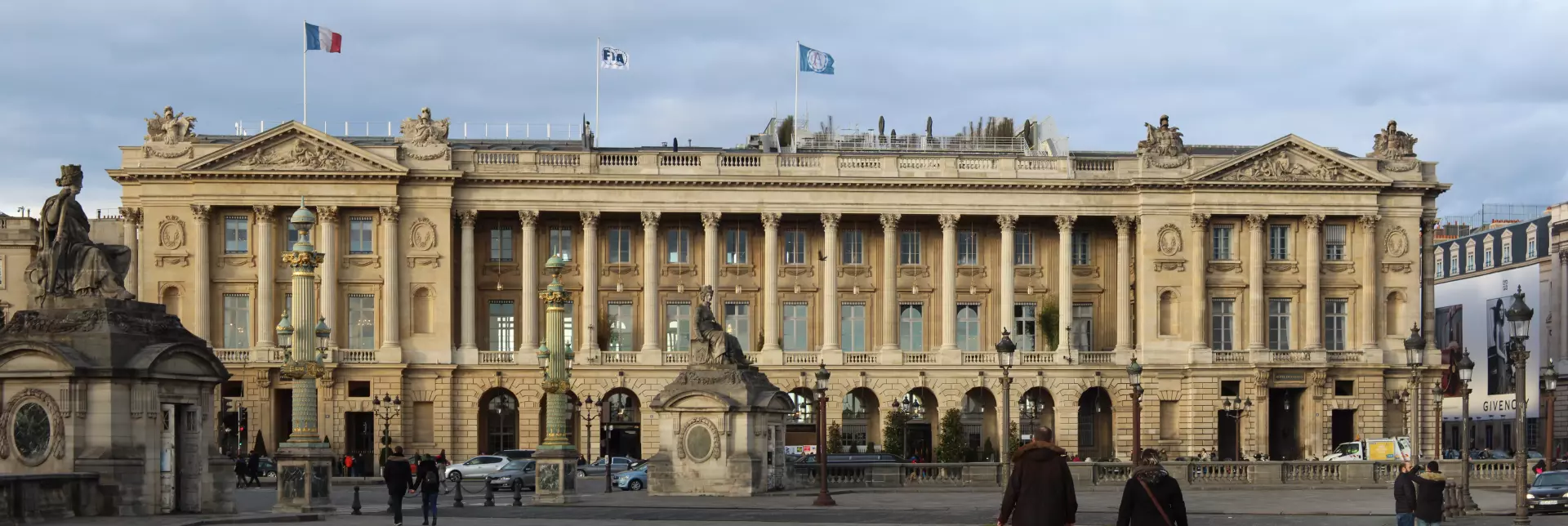
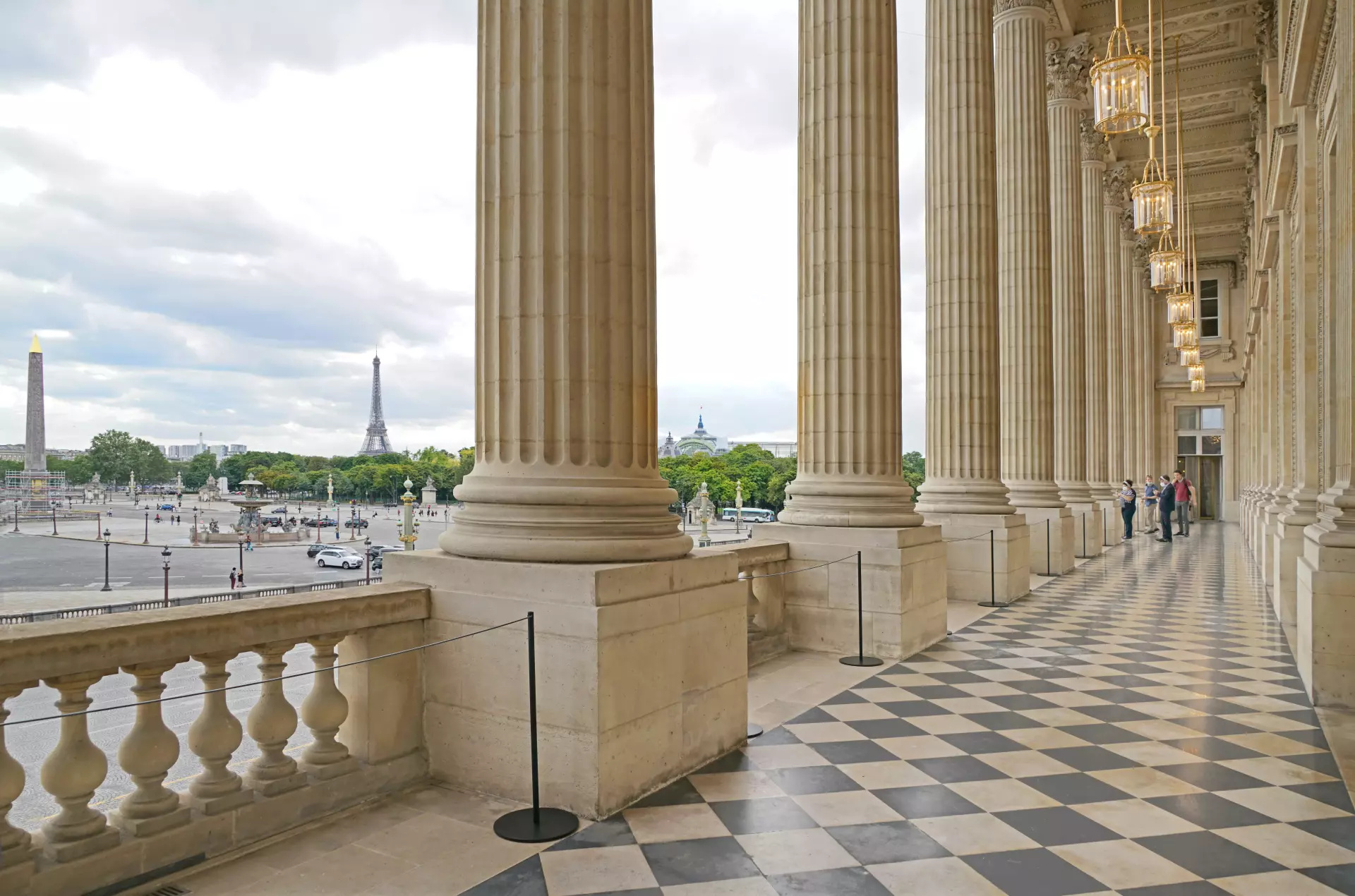
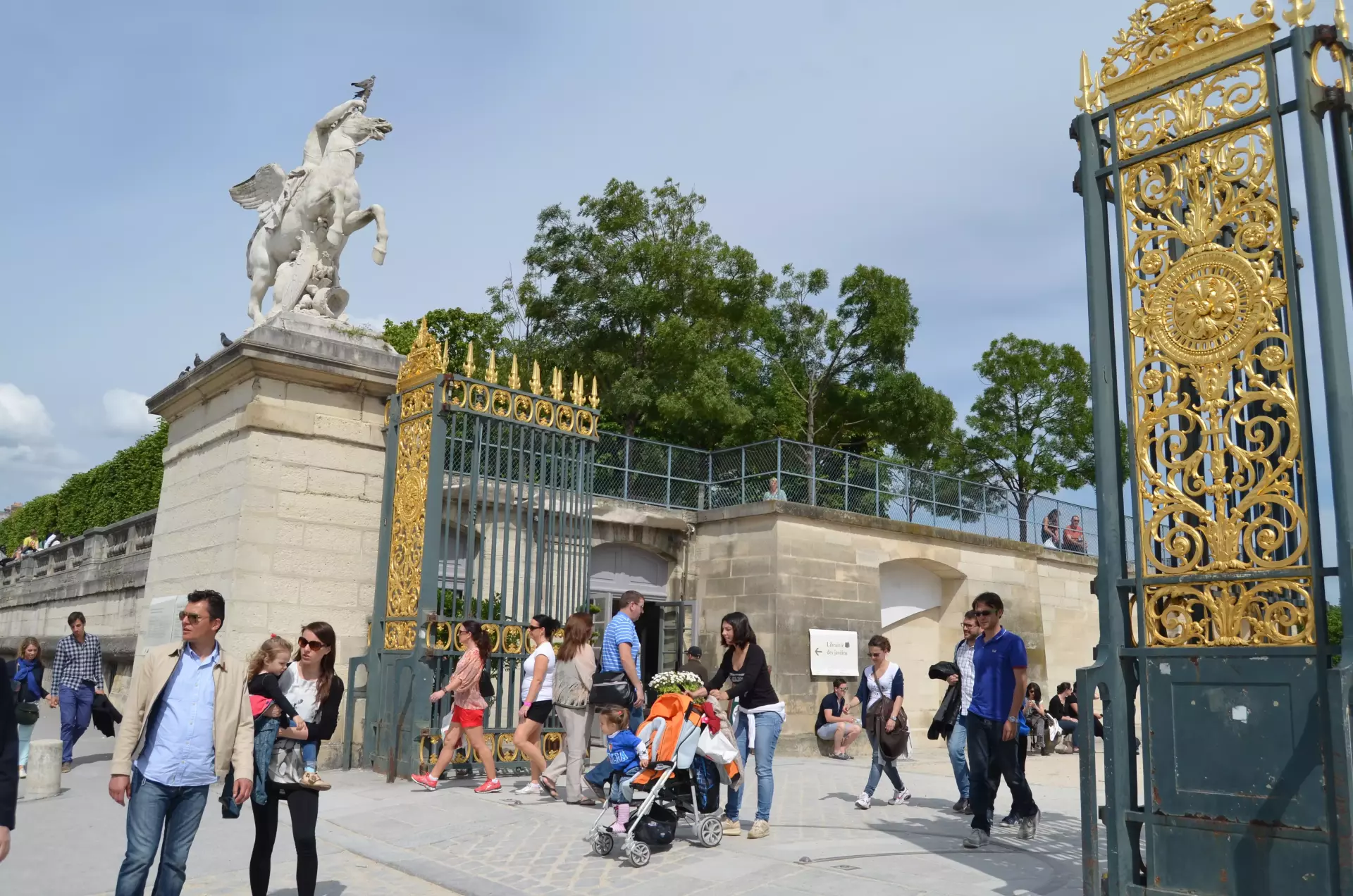
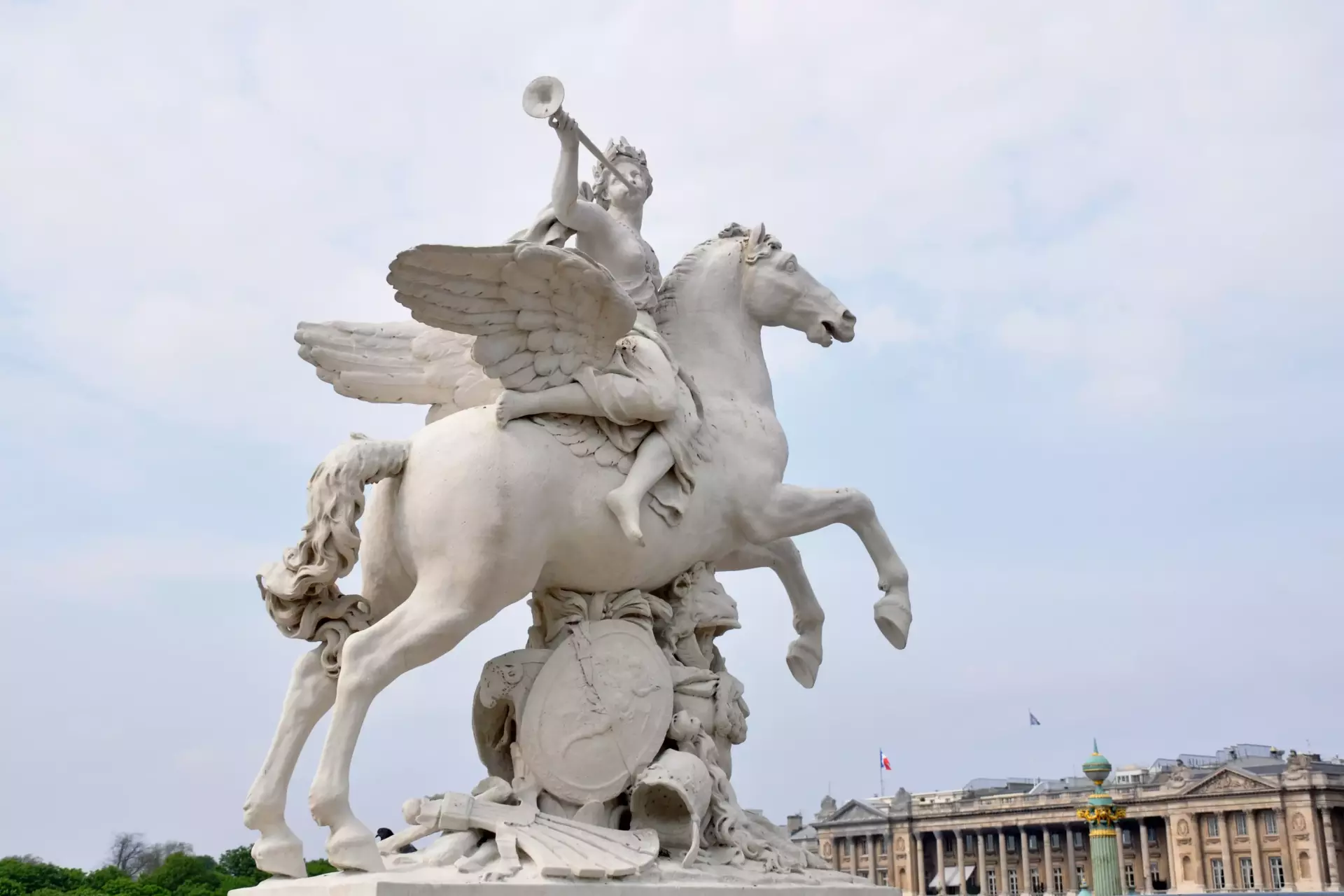
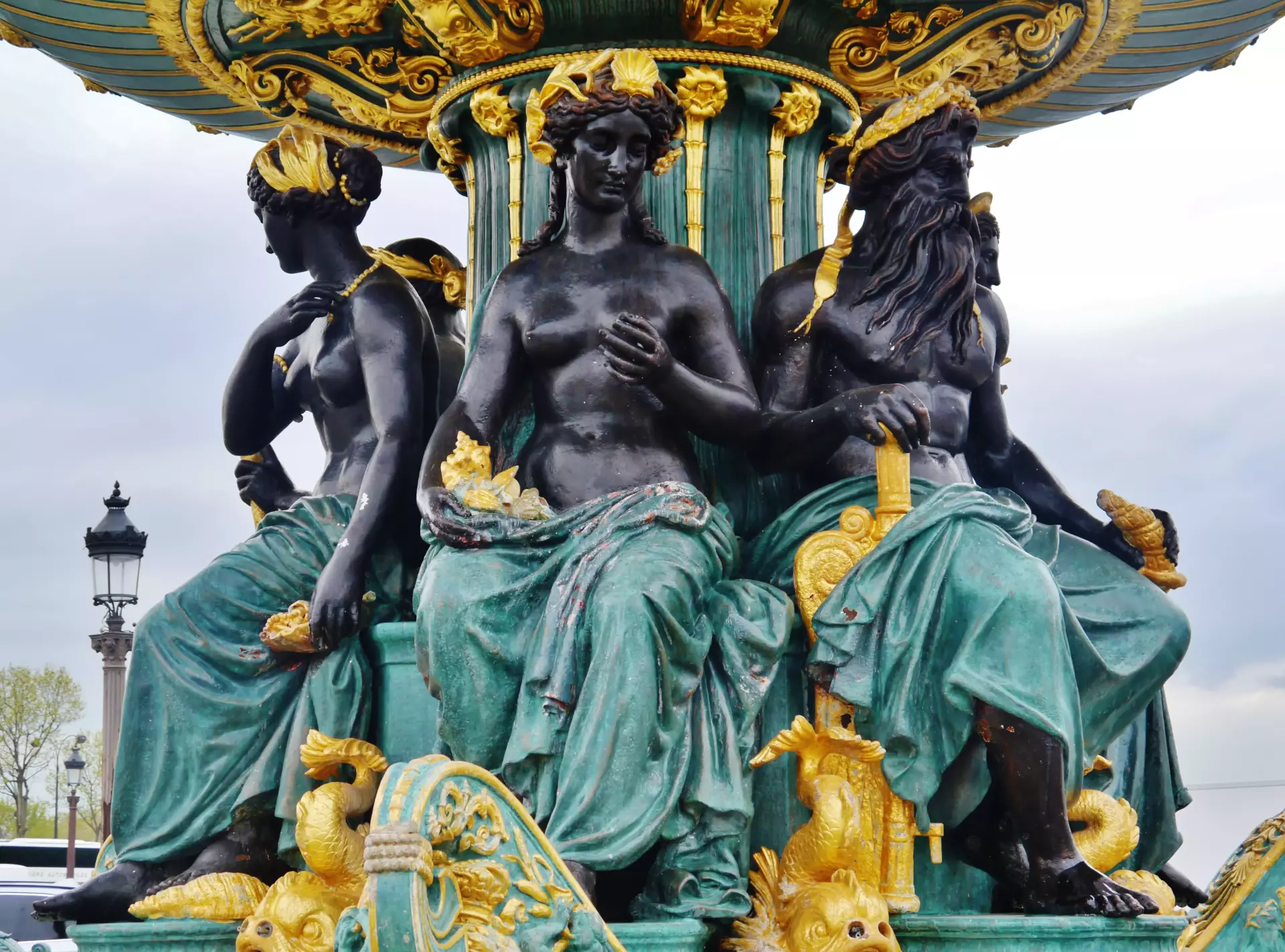
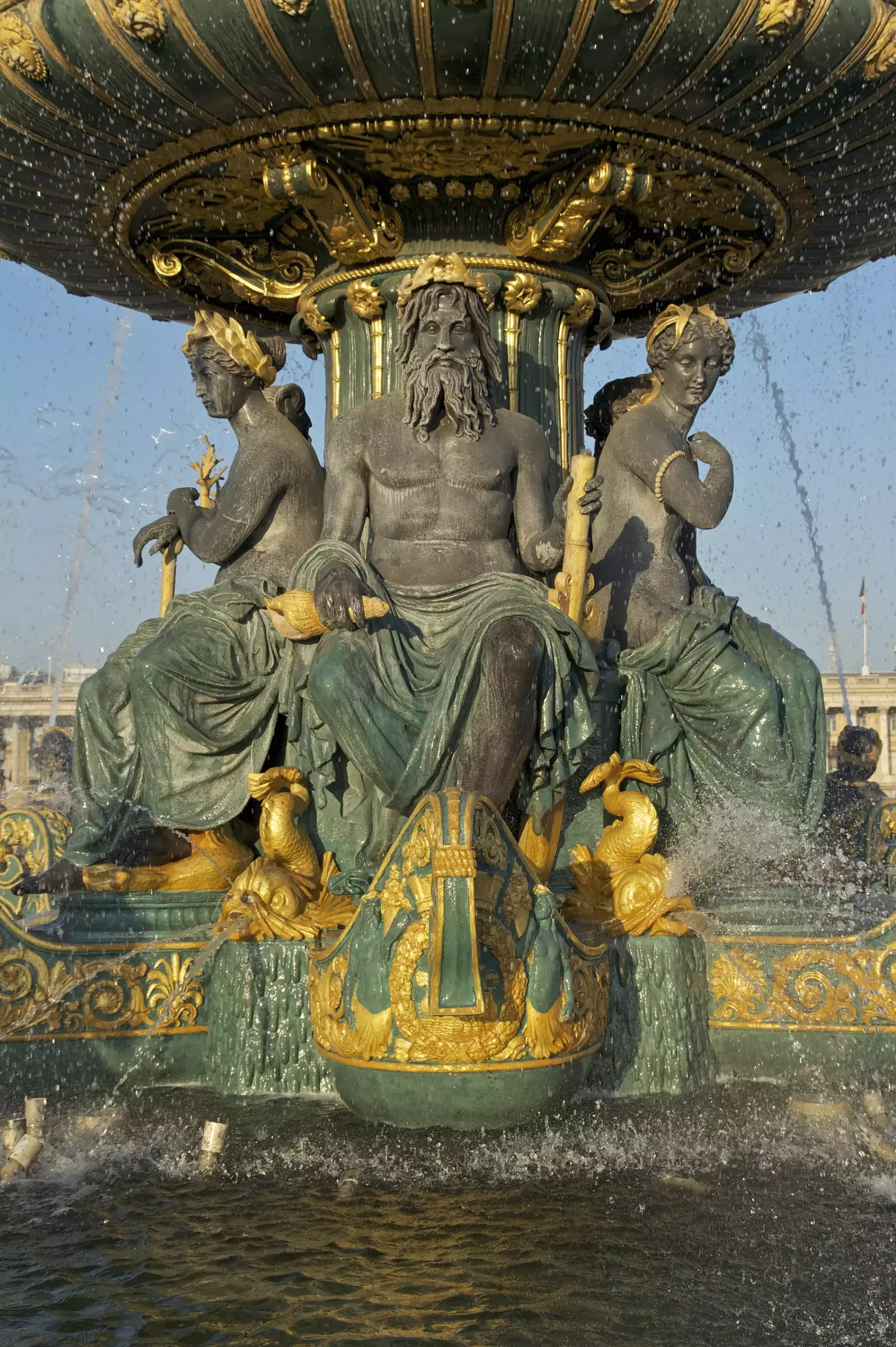
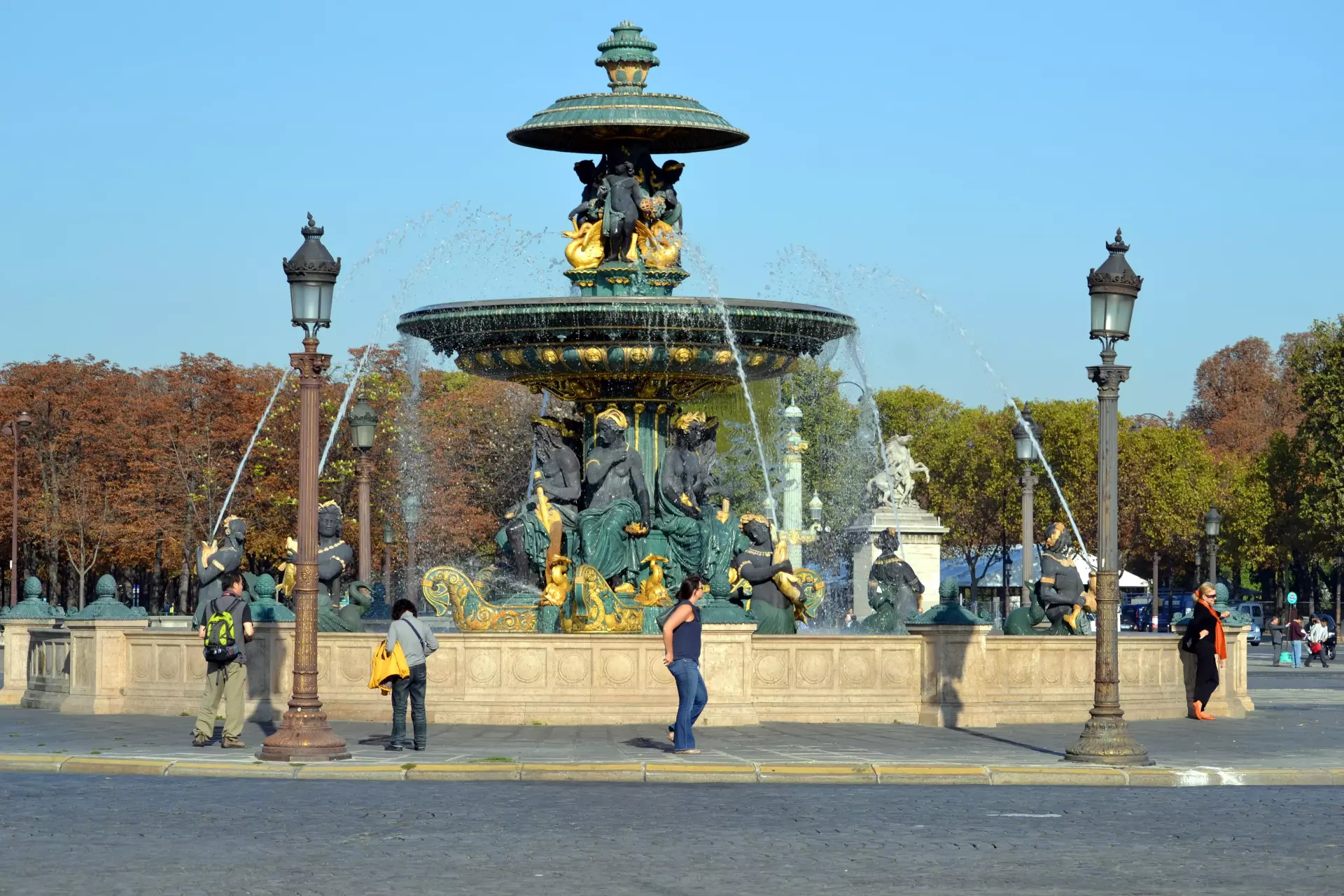
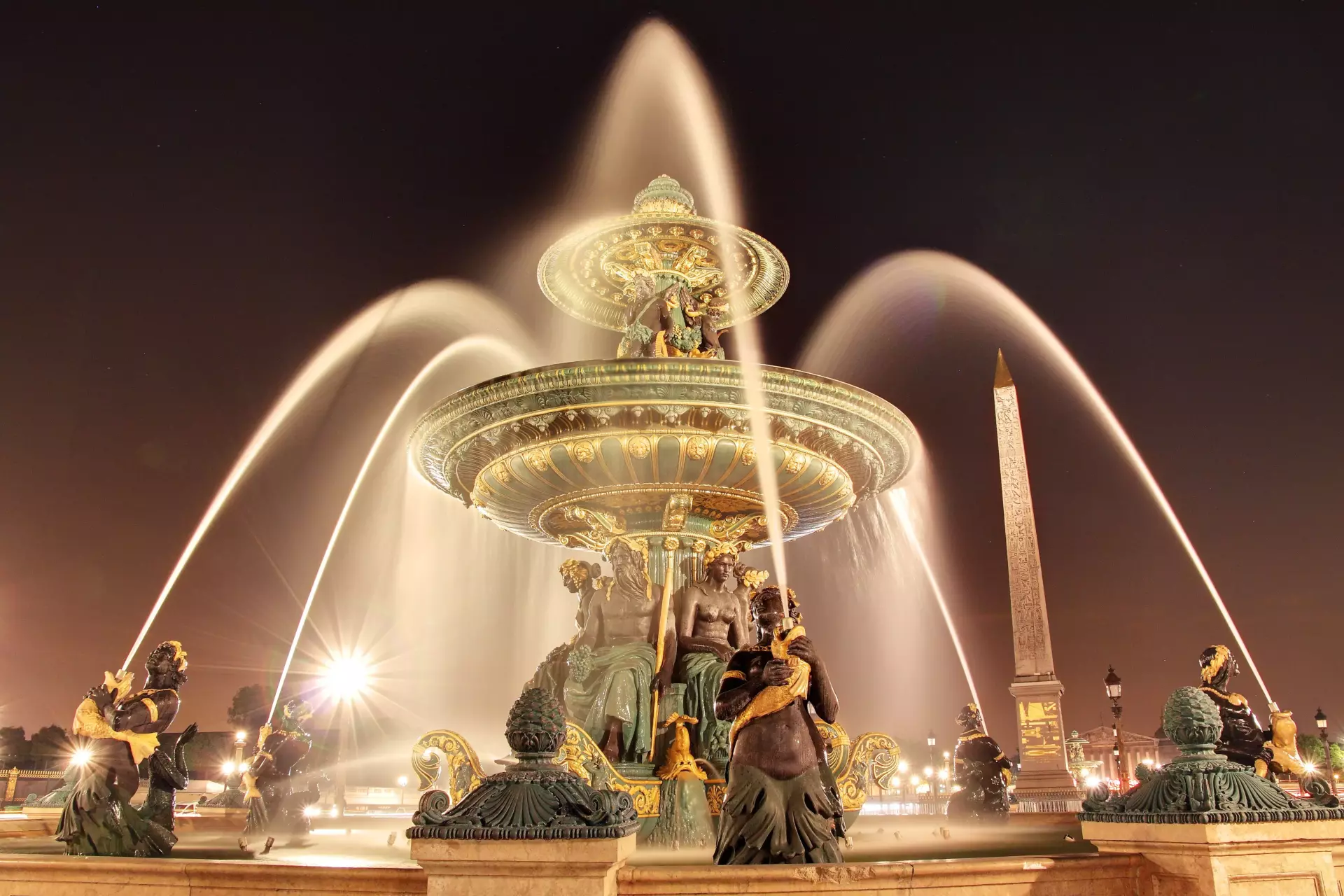
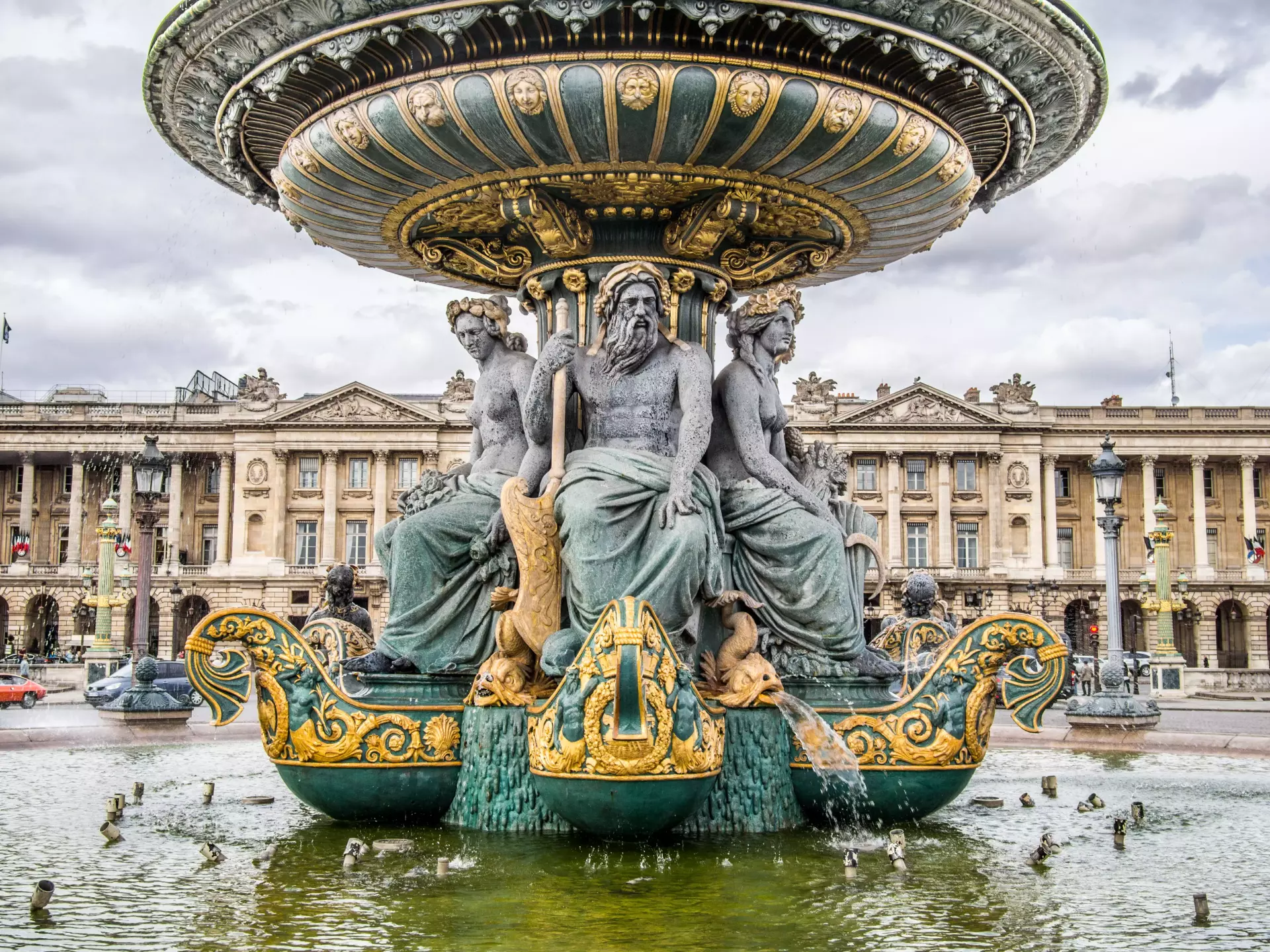
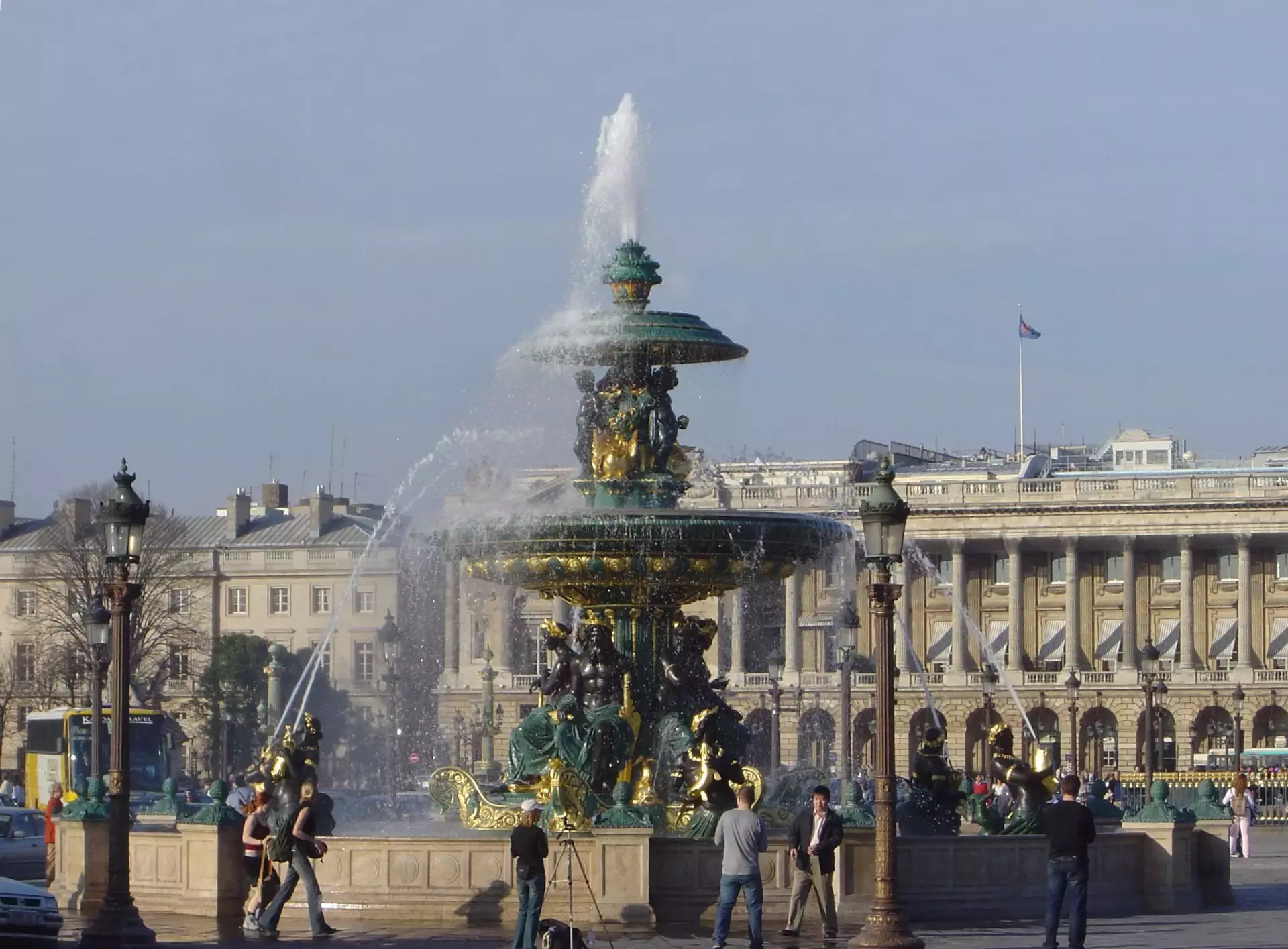
Place de la Concorde is the largest public square in Paris, known for its impressive views and open space. Located between the Champs-Élysées and the Tuileries Garden, the square offers breathtaking scenes of Parisian landmarks in every direction.
This famous square has witnessed many dramatic moments in French history. During the French Revolution, it was called Place de la Révolution. It became the site where King Louis XVI, Queen Marie Antoinette, and many others lost their lives to the guillotine during the Reign of Terror. Today, the square stands as a reminder of these turbulent times.
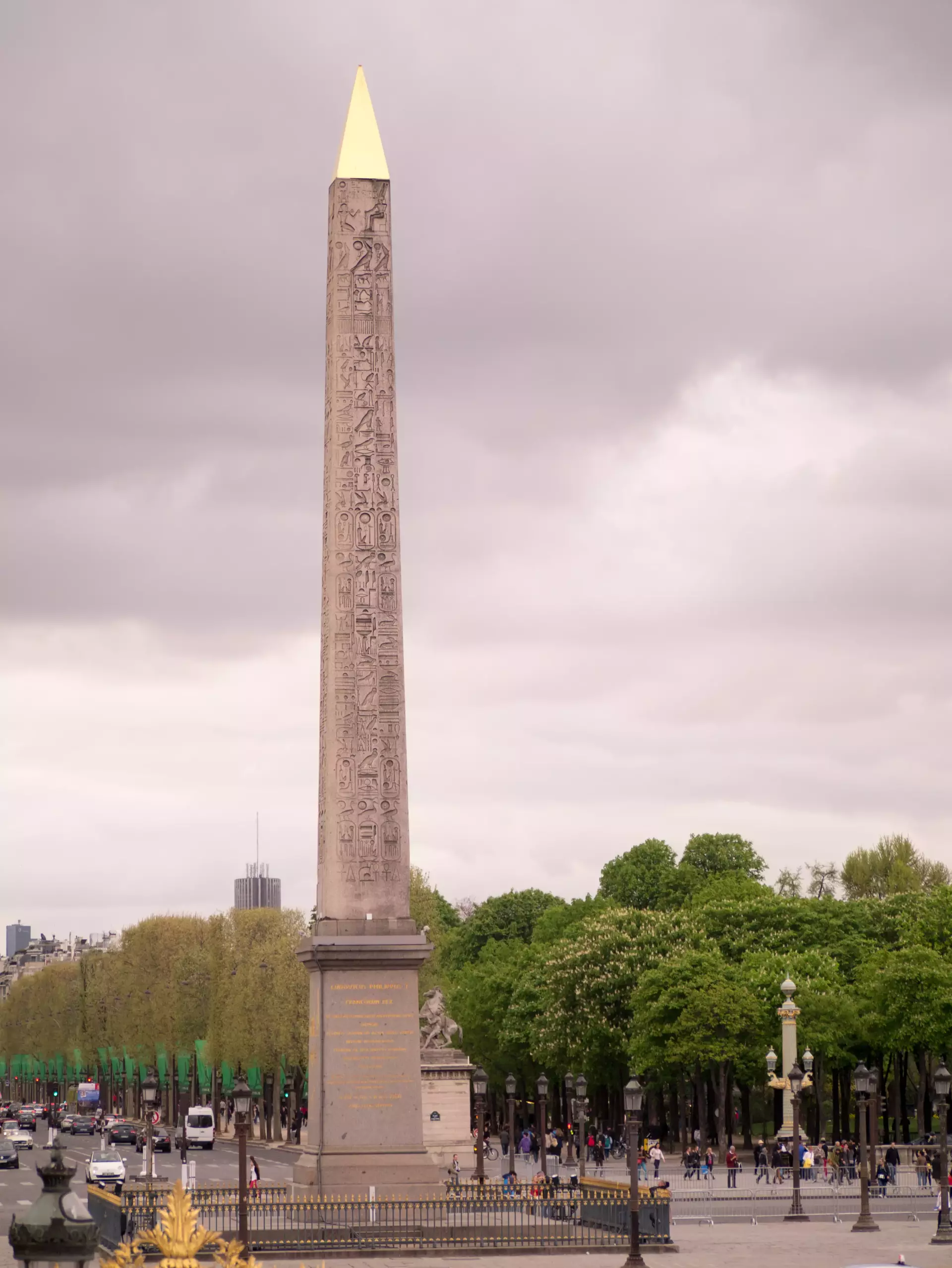
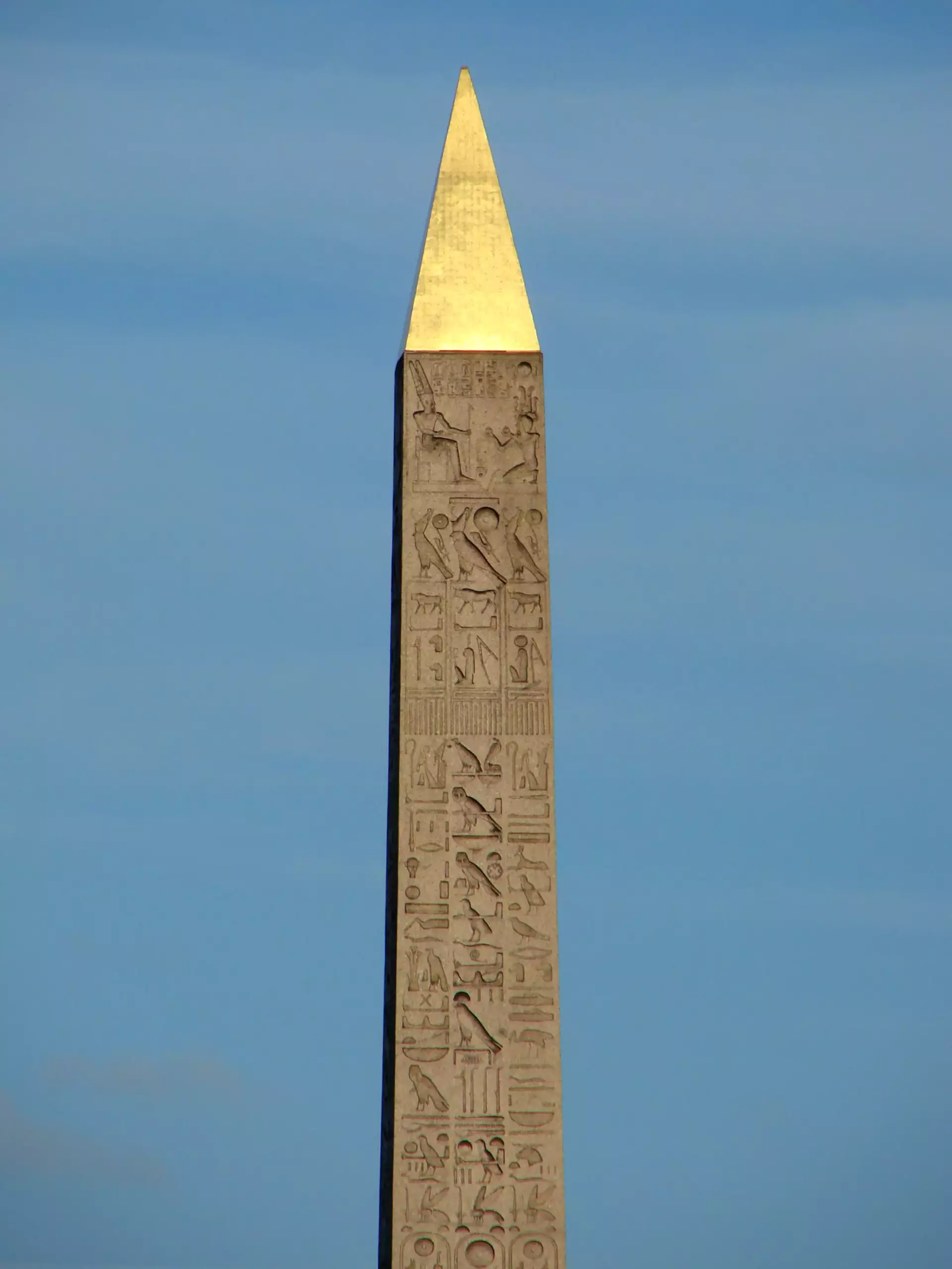
At the center of Place de la Concorde stands a striking monument: a large Egyptian obelisk. This ancient structure was brought to Paris from the Temple of Luxor in the 19th century. Covered in hieroglyphics, the obelisk adds a unique touch of history from another era and country, contrasting with the classic French architecture that surrounds it.
Source - https://en.wikipedia.org/wiki/Place_de_la_Concorde
Established in 1926, it was meant to show appreciation for Muslim help in fighting the Germans. The café serves excellent mint tea and North African food.
A Gothic church tower in a square 150m to the west of the Hôtel de Ville was restored by Ballu, is all that remains of Eglise Saint-Jacques-de-la-Boucherie, which was the meeting place in Paris for pilgrims heading to Santiago de Compestela. As such it is included on the UNESCO World Heritage List as part of the Routes of Santiago de Compostela in France.
The house of the symbolist painter has now become a museum to his life and work.
A monument to the French art de vivre, housed in a 19th-century wing of the Louvre that has been restored to beaux-arts splendour, its galleries and period rooms showcase eight centuries of Gallic taste in interior decoration.
Tourists cross this park with the large fountain on the way to the Place du Trocadéro viewpoint to the Eiffel Tower.
Those who are unfamiliar with conceptual art sometimes don't know quite what to expect, or how to approach it. Such travellers should rest assured that the curators at the Pompidou Centre have assembled a marvellous introduction consisting of mostly approachable works which delight, amuse, and entertain. The art is far from the only reason for a visit, as the building also contains a vast public library and a fine restaurant (run by the Costes brothers) on the roof. In fact the place is literally surrounded by some of the nicest pavement cafés in the city, in its superb location between the car-free above ground part of Forum Les Halles and the Marais art district.
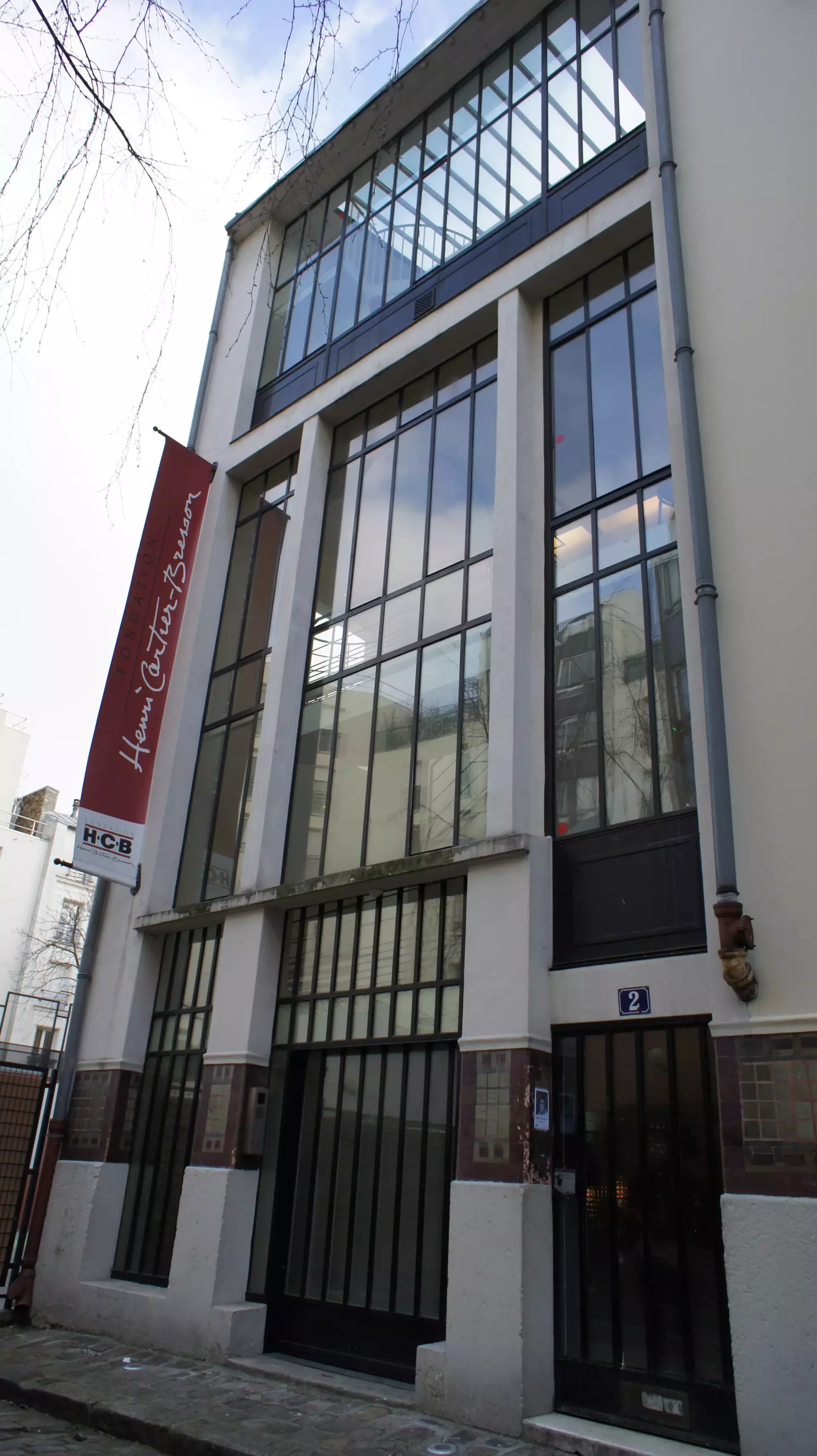
The foundation opened its doors in May 2003. It preserves Henri Cartier-Bresson and Martine Franck’s archives. Exhibition of photographs, paintings, sculptings, and illustrations.
An ancient Roman theater, the only surviving above-ground ruins of the Gallo-Roman era in Paris (ancient Lutetia, French Lutèce) apart from the nearby Thermes de Cluny. The theatre could hold approximately 15,000 spectators and measures some 132 m x 100 m. Built sometime in the 2nd century CE, the location of the actor's dressing room, the platform of the stage, and lapidary remains can still be seen. The remains were rediscovered in 1869, when new streets were being built. An excavation was subsequently ordered in 1883. The theatre has been preserved as a quiet archaeological park removed from the bustle of Parisian streets.
It was conceived by Louis XV as a grand neo-classical church honouring St. Geneviève, the patron saint of Paris. After the Revolution, the building was converted into a mausoleum for the great philosophers, military, artists, scientists, and heroes of the French Republic. Occupants of the crypt include Voltaire, Rousseau, Victor Hugo, Zola, the Curies, and Alexandre Dumas (reinterred here in 2002). The view from the dome (206 steps) is marvellous. Check tour departure times at the information desk. A fascinating reconstruction of Foucault's pendulum also hangs within the Panthéon.
Built in 1717, the windmill is now part of a restaurant of the same name, and is easily visible from the street.
Visitable only by reservation and then only one Saturday every month. A richly decorated palace built for Marie de Medici in the early 17th century, which is now the French Senate. For those interested in seeing a Parisian monument normally unavailable to the public, or for those interested in the inner workings of the French Government. The large Luxembourg Garden is open to the public year-round. The garden is home to the Medici fountain, a children's playground, and vintage toy boats for hire that children push around in the Grand Bassin duck pond (a 90-year tradition).
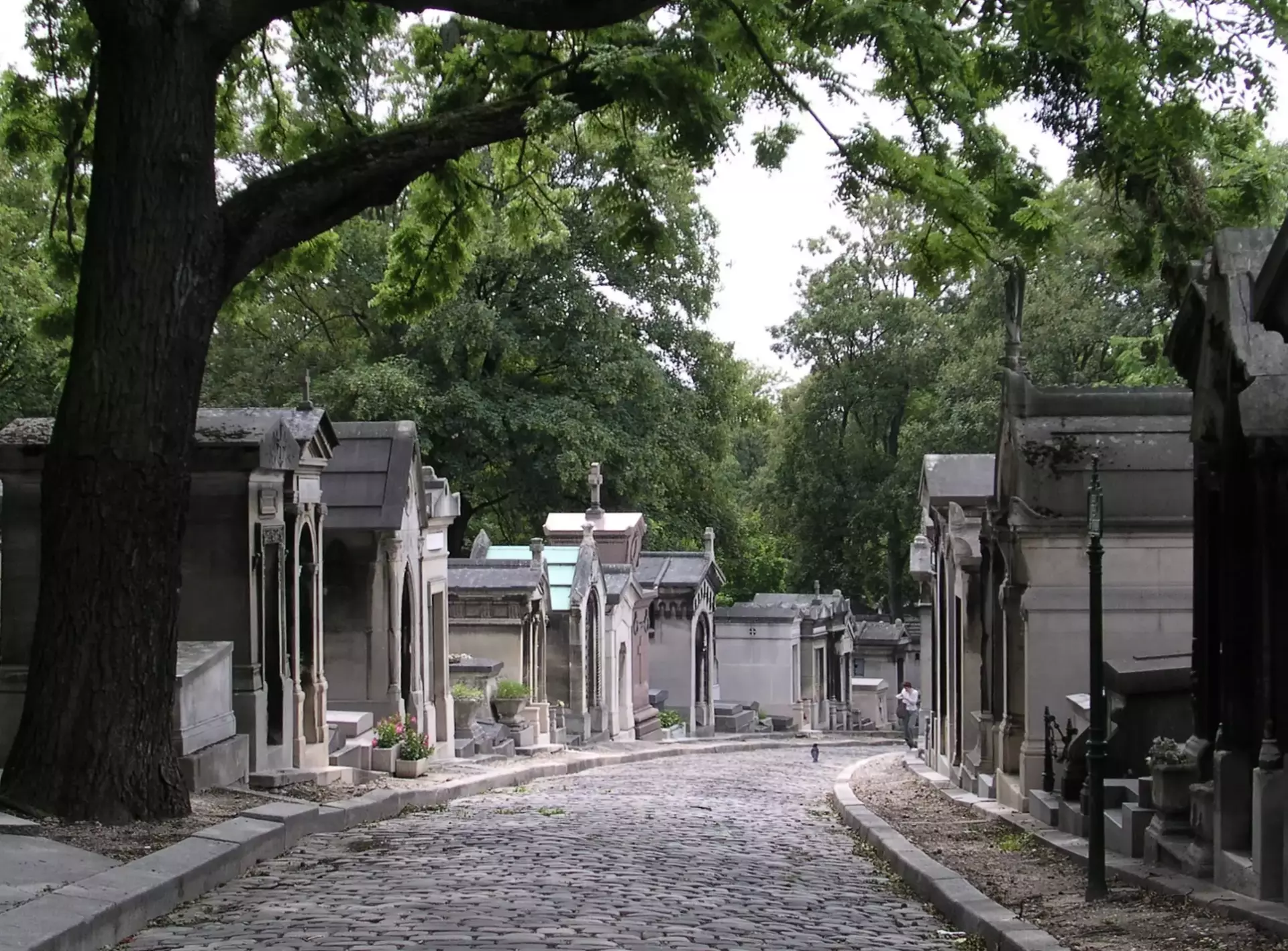
The burial place of existentialist philosopher Jean-Paul Sartre, feminist Simone de Beauvoir (both of whom lived nearby); musician Serge Gainsbourg; artist Man Ray; the poets Charles Baudelaire, Guy de Maupassant, Charles Sainte-Beuve, and Marguerite Duras; the founders of the Theatre of the Absurd Samuel Becket and Eugene Ionesco; the sculptors Constantin Brancusi and Ossip Zadkine; the composers Camille de Saint-Saens and César Franck; the actors Maria Montez and Jean Seberg; the French officer Alfred Dreyfus; the founder of the Larousse encyclopedia, Pierre Larousse; the industrialist André Citroen, and many others.
Founded in 1671 by Louis XIV as a hospital for 6,000 wounded soldiers—this function explaining the name of the building—the golden-domed Hôtel des Invalides still functions as an infirmary and now also houses the Musée de l'Armée. The church attached, l'Eglise du Dôme, houses the tomb of Napoleon.
This wedding cake-white church rises visibly above the north part of Paris. The striking building, with its towers and white onion dome (83 m high), was built between 1875-1914 on the birthplace of La Commune, officially as an act of penitence for the sins committed during the civil war in which thousands of Communards were executed, as well as for the previous bloodshed of the 1870 Franco-Prussian war. A number of prominent businessmen put up the money, and a dizzying combination of architects worked to put together the mock Romano-Byzantine extravaganza. Consecration followed in 1919. The view over Paris from the dome and from the square before it (200 m above sea level) is unsurpassed, apart from that enjoyed at the Eiffel Tower (50 km on a clear day). For the athletic traveller there are stairs from several directions to the top of the hill; otherwise there is also a funicular which runs every few minutes during the daytime from Place St. Pierre. Follow the signs that say "Funiculaire De Montmartre". Beware that the guards don't like it if they catch you taking pictures inside and will even yell "No photo!" and chase you down if they see you with a camera. Be warned: along the lower steps leading up to church, groups of mostly young African men gather and reach toward you with a small string, offering to loop it round your finger. In case it happens, pull back your hand, brush them off and move on. They might claim that "This is for the church." In case your feel that things go sideways, raise your voice to get people's attention and ask them call the police.
The Pasteur Museum is housed in the apartment where the great scientist spent the last 7 years of his life. Hardly touched since that time, the museum is full of personal memorabilia and scientific instruments. Pasteur is buried on the grounds in a flamboyant mosaic-decorated mausoleum. The museum was closed to individual visitors for security reasons after the 13th November 2015 Paris terrorist attacks.
The massive parish church of the Les Halles area is a notable example of late Gothic interspersed with Renaissance details (including the entire front façade), as it was only completed in the 17th century. Its unique form results from a combination of relatively short length and impressive height of over 30 metres inside. The latter allows room not only for an array of stained glass windows and paintings, but also France's largest church organ of 8,000 pipes. The sculpture Écoute, depicting an oversized human head, was placed in front of the church's southern facade and has become a favourite photo spot.
Since 2021 the 18th-century former Bourse de Commerce building has been the Paris home of the art collection of the French business magnate François Pinault, showing a rotating selection of contemporary artworks either newly commissioned or taken from his collection.
This iconic triumphal arch forms the focus of the main east-west road axis of Paris, running between the Louvre and the Grande Arche de la Défense in the west. The monument was commissioned by Napoleon in 1806 as a tribute to his victories as Emperor of France - it was finally completed in 1836, long after his death. 50 m (150 ft) high and 45 m wide, the Arc de Triomphe is decorated with battle scenes and martial sculptures that includes La Marseillaise by Rude. The Tomb of the Unknown Soldier was placed beneath the arch in 1920, where an eternal flame burns in tribute to the French dead of both World Wars. The arch is surrounded by a large roundabout, aptly known as l'Etoile - 'the star' - with 12 thoroughfares leading off from it. Visitors can purchase a ticket to climb to the top of the arch, from where magnificent views spread out over western Paris. Admission to a small museum devoted to the history and meaning of the monument is included. The central island and the arch are accessed by an underground passage. Do not attempt to negotiate by foot the busy multi-lane road that rings the Arc de Triomphe, which many Parisian drivers seem to consider their own personal speedway.