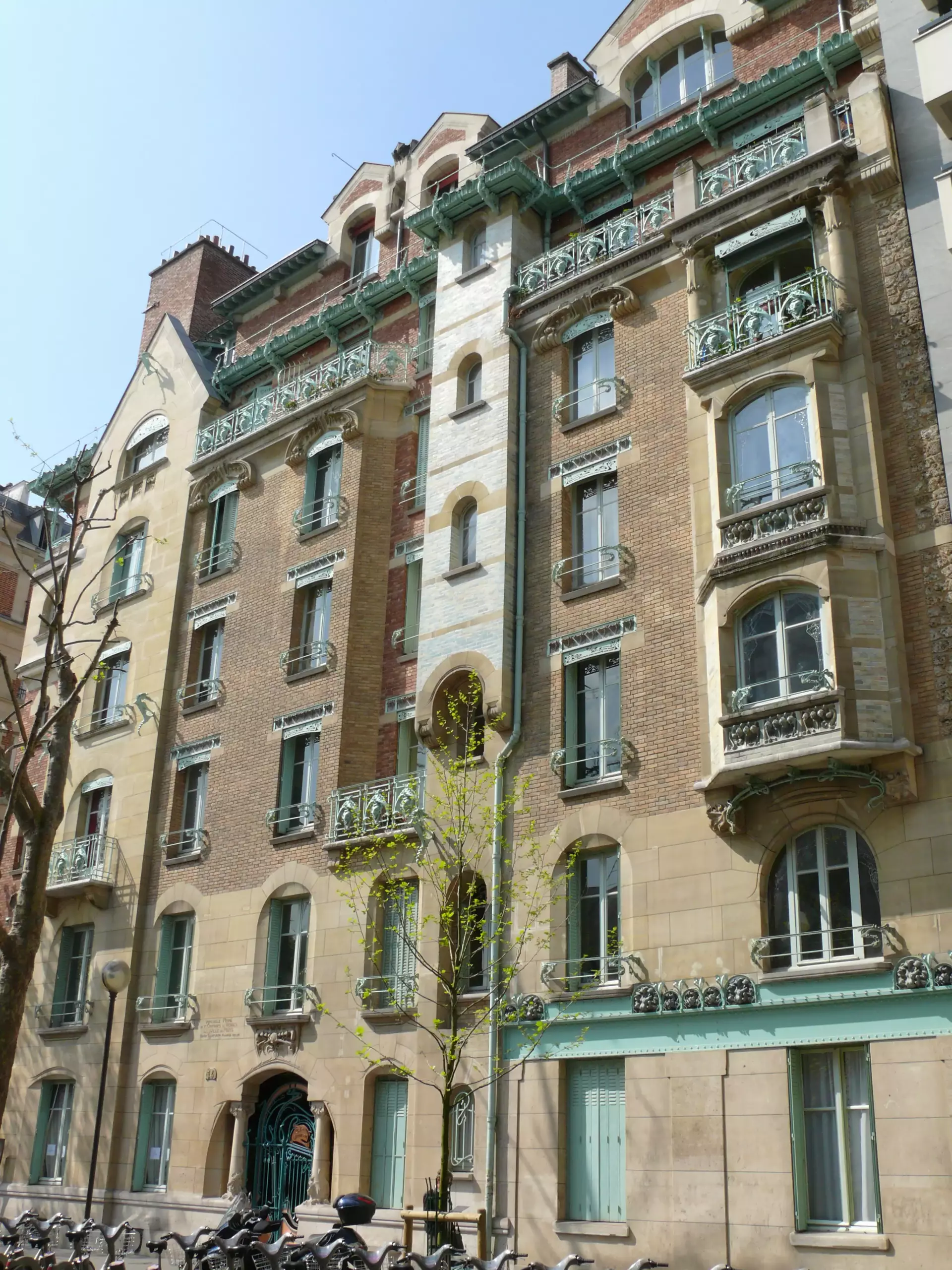
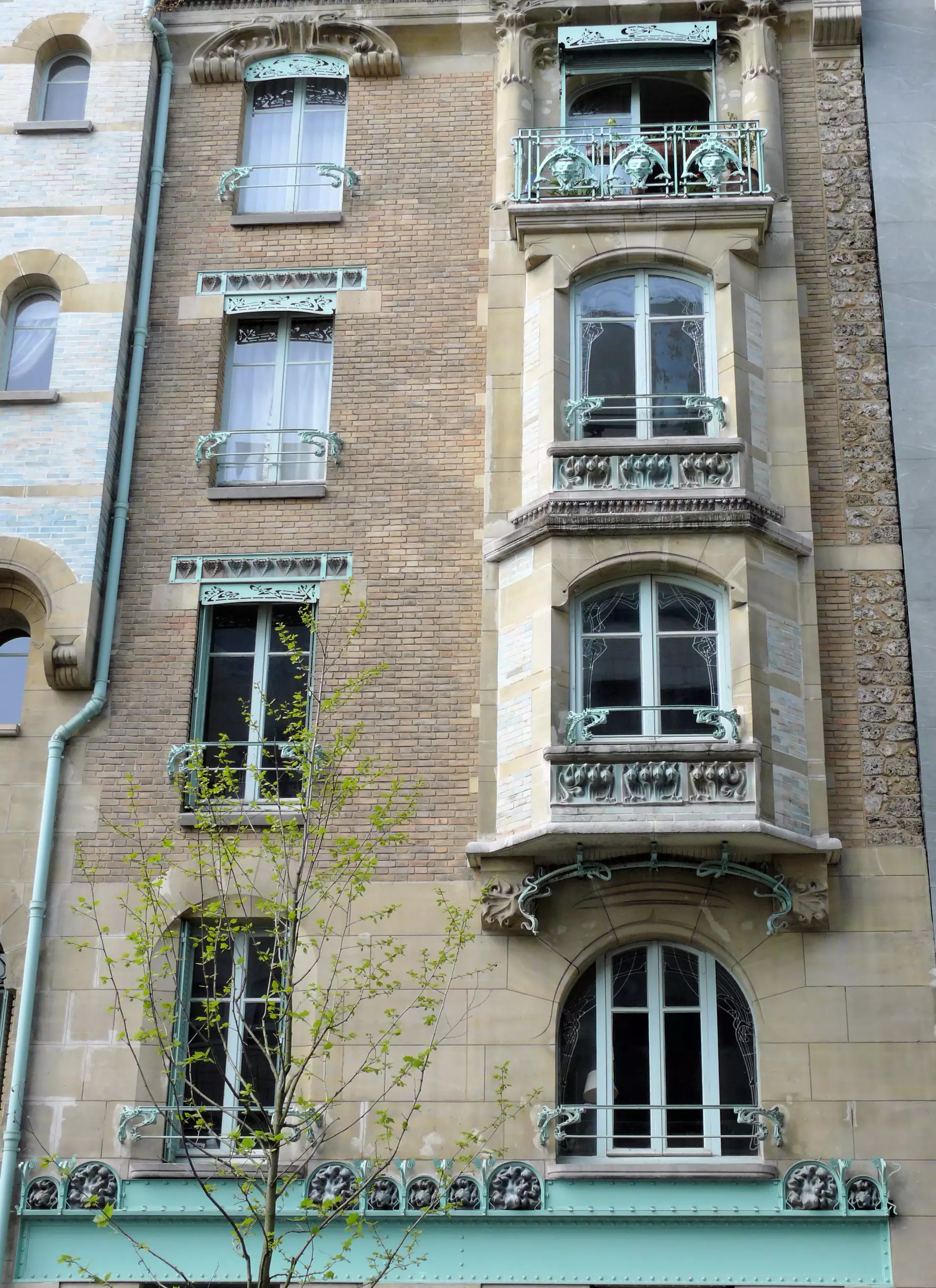
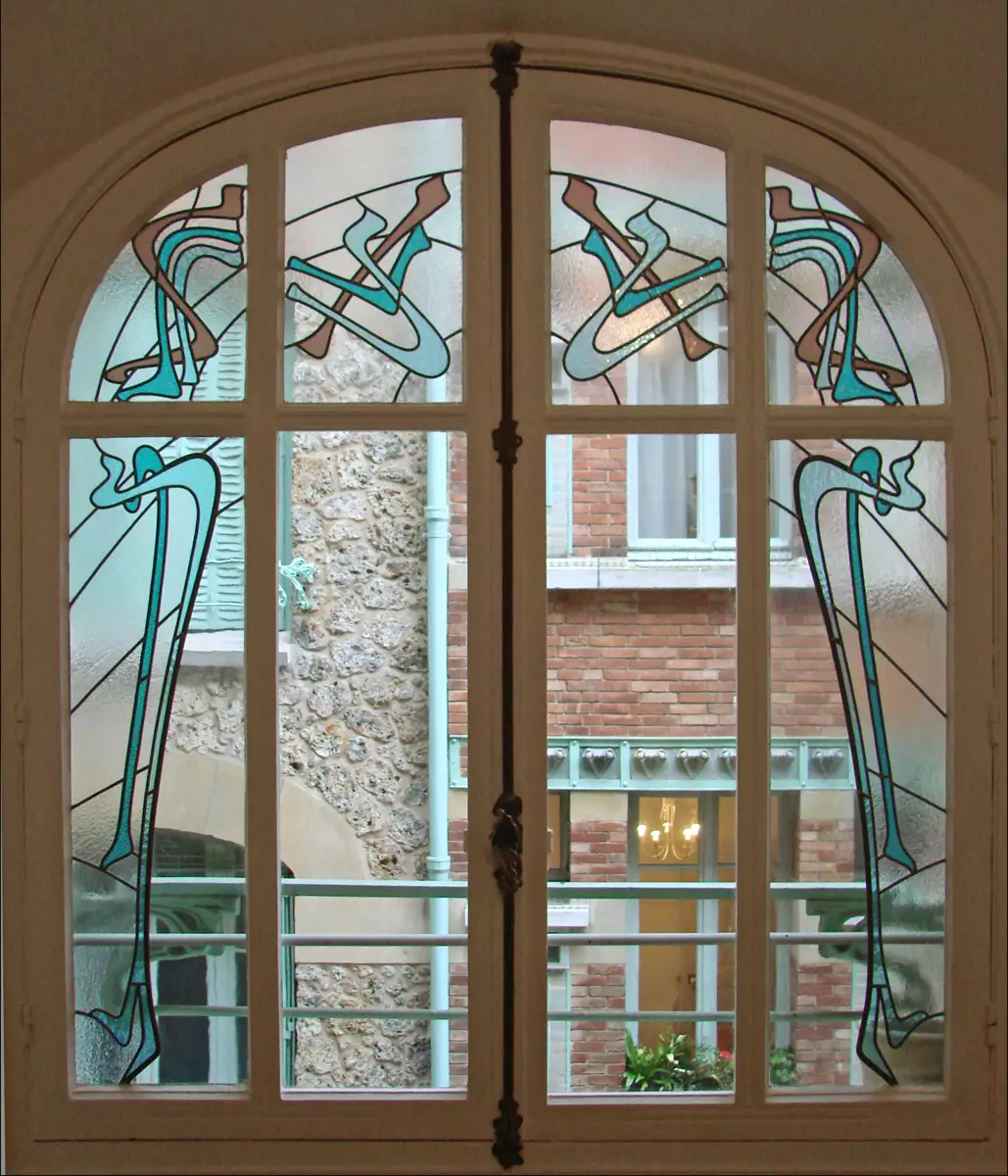
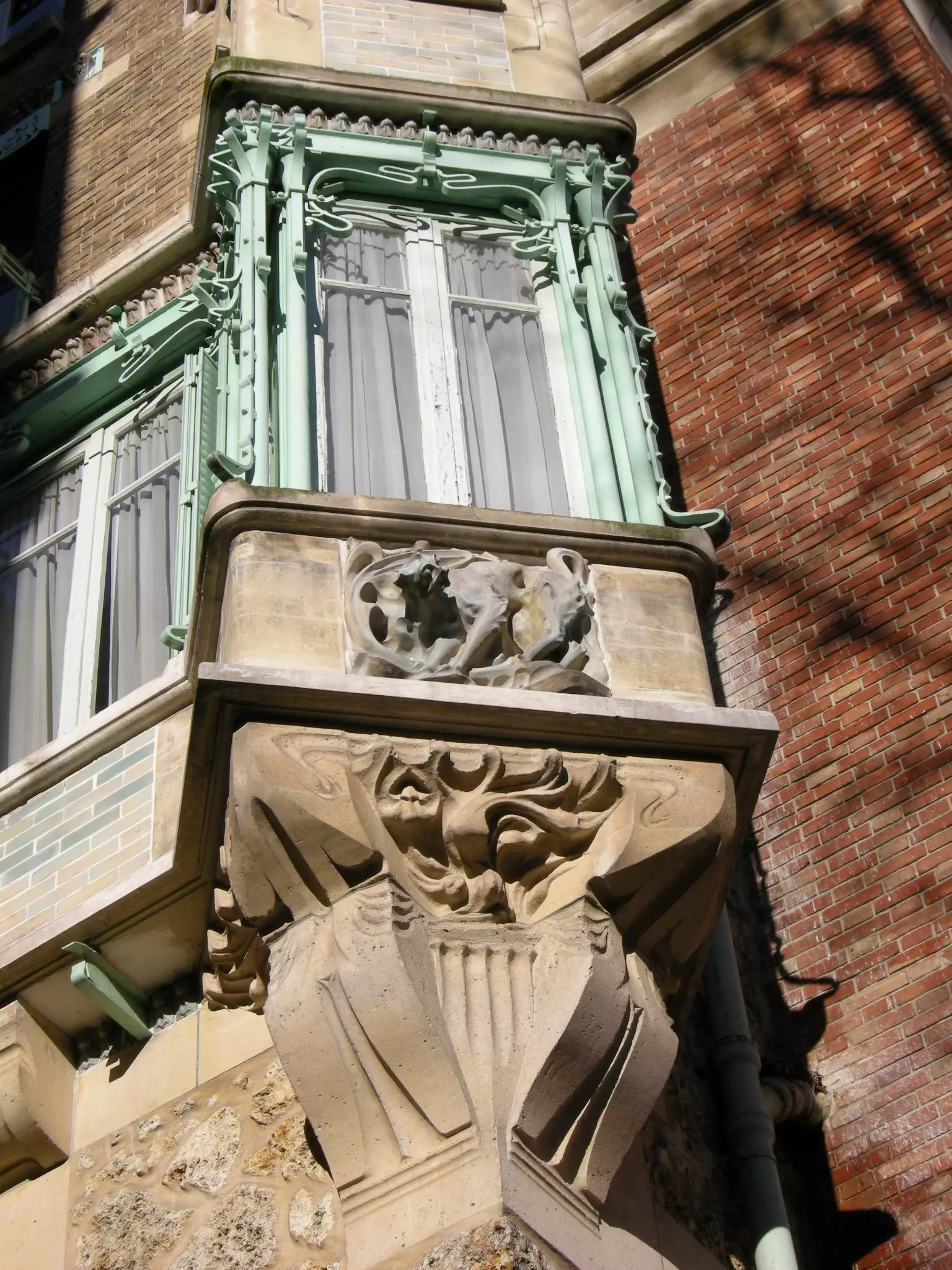
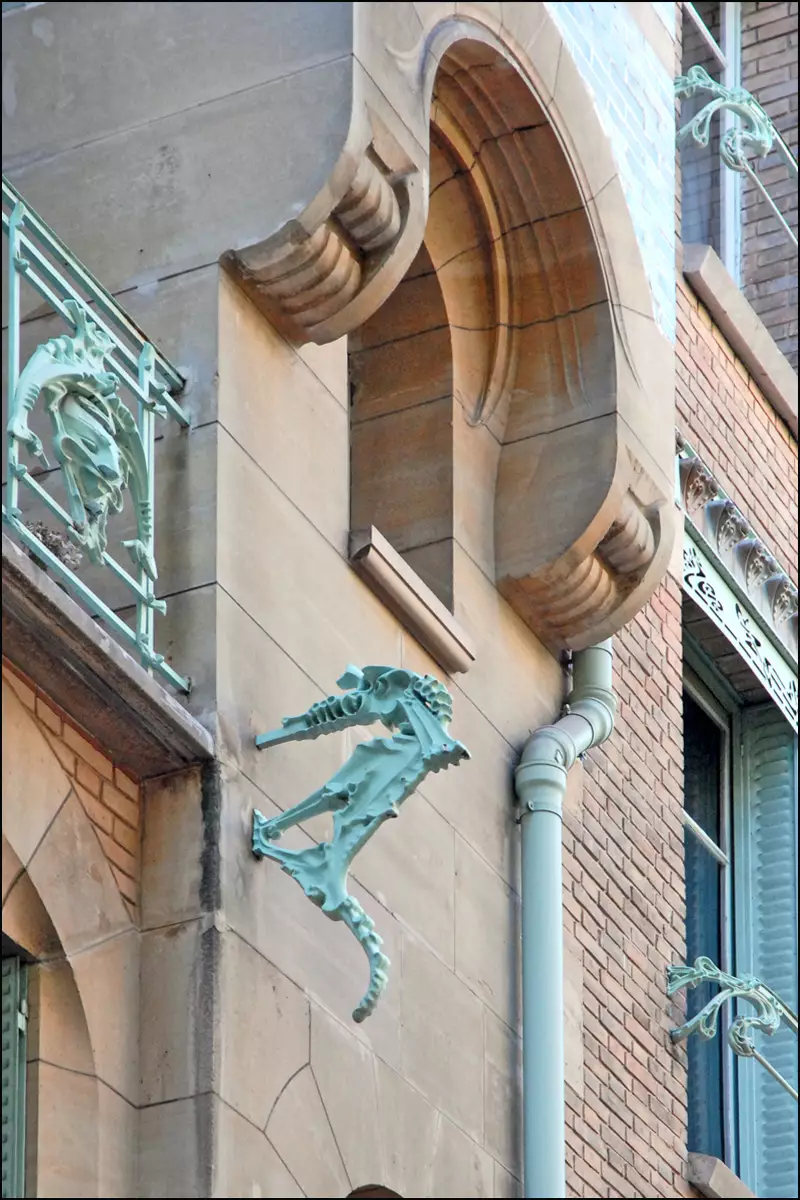
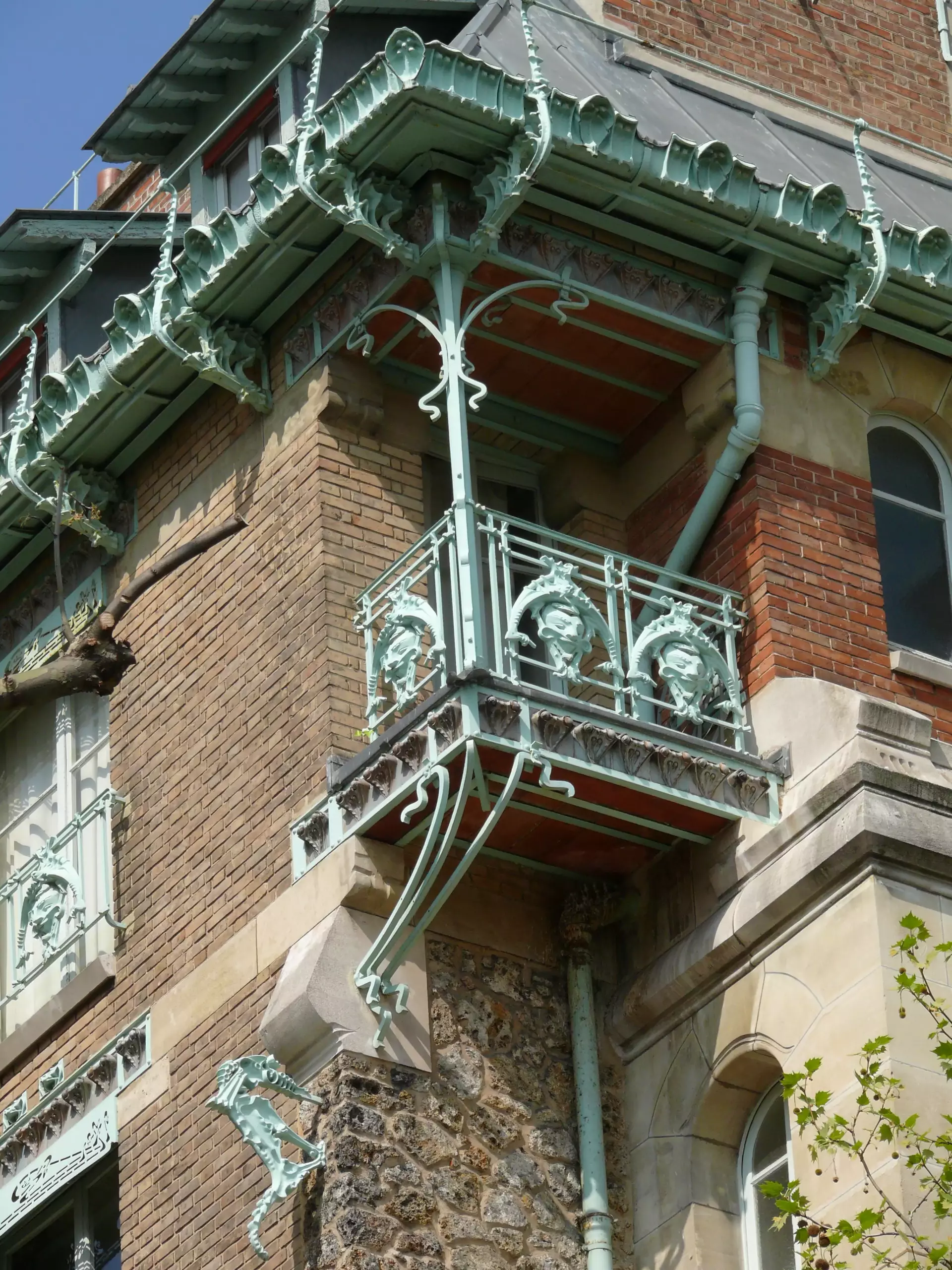
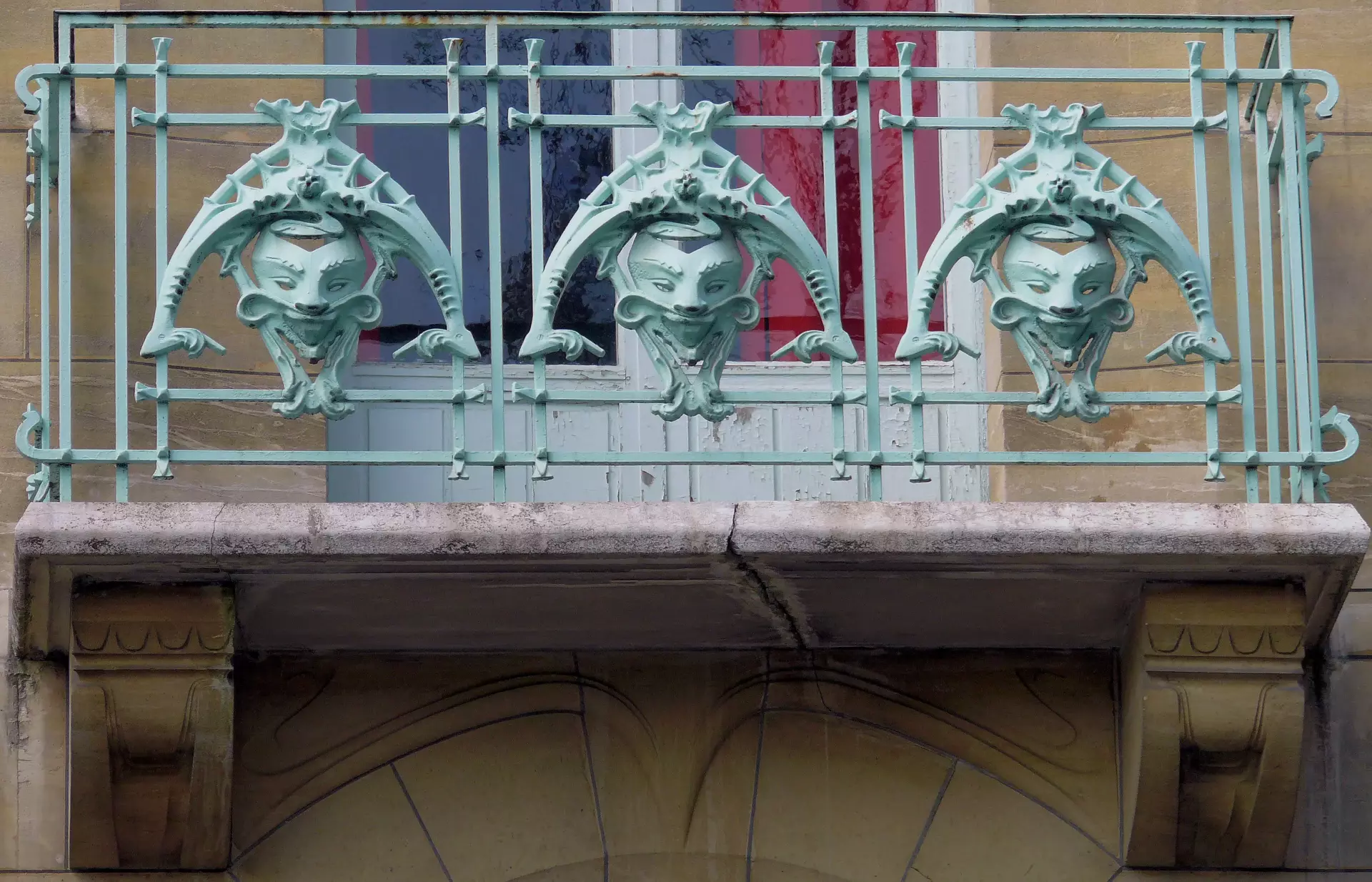
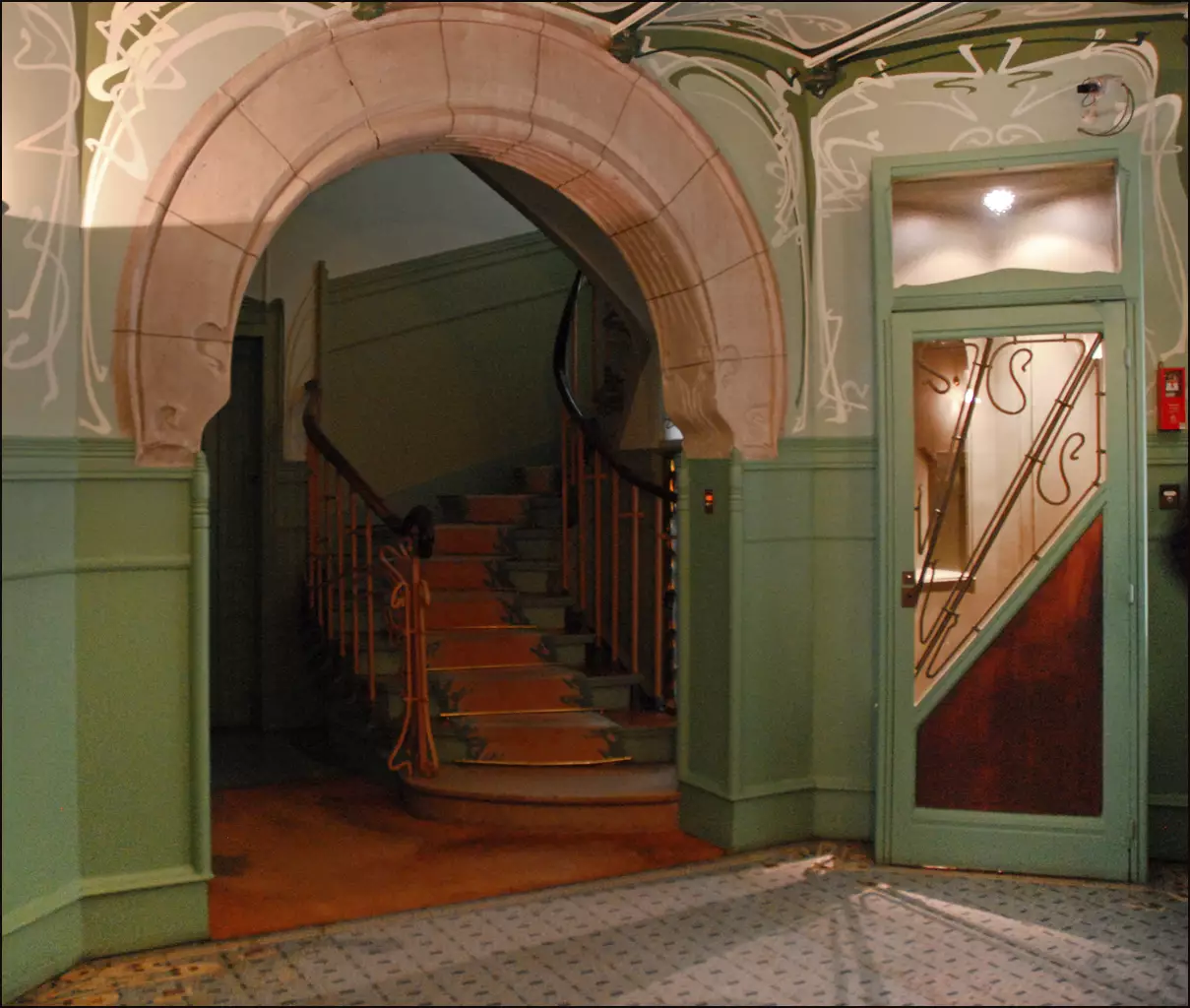
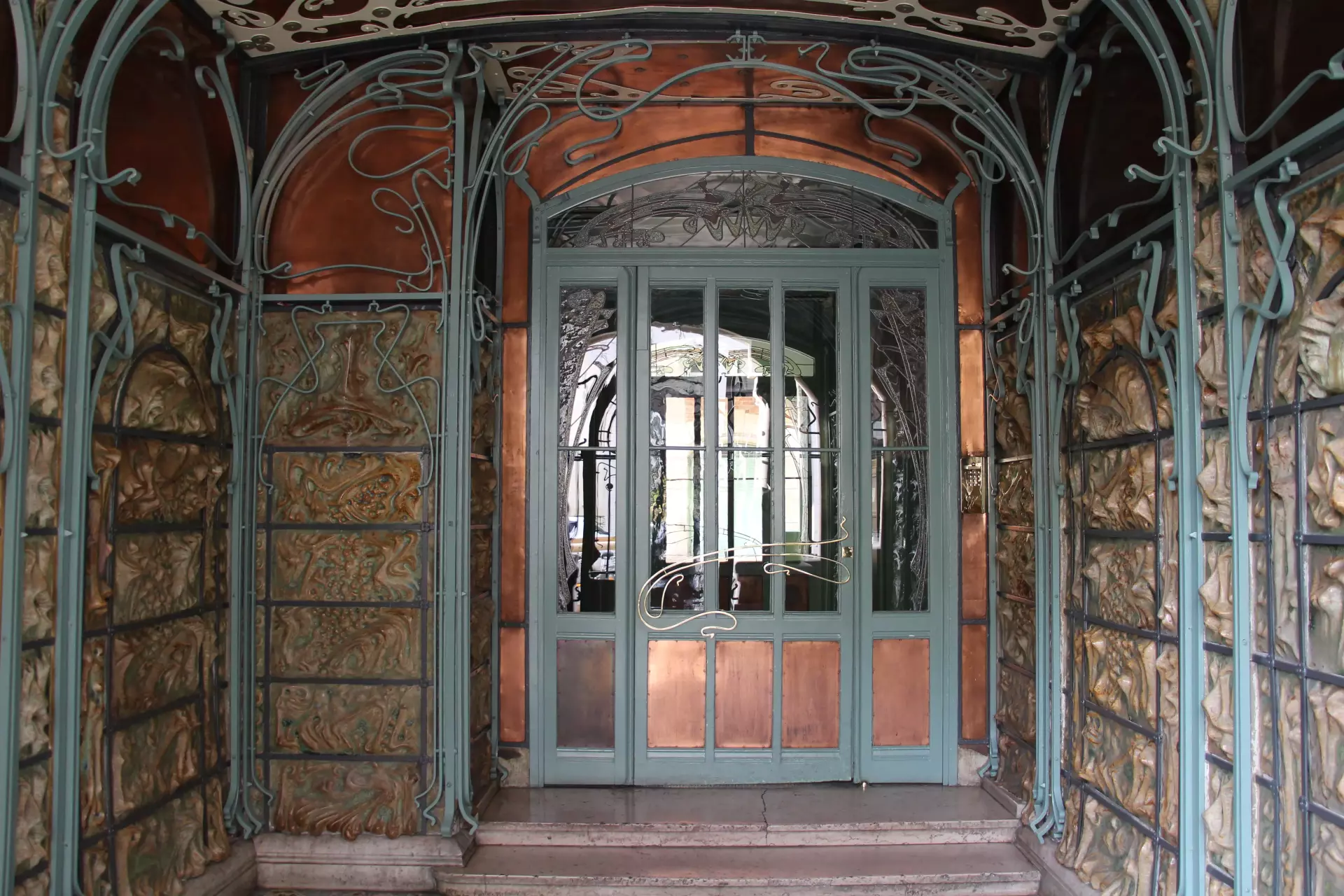
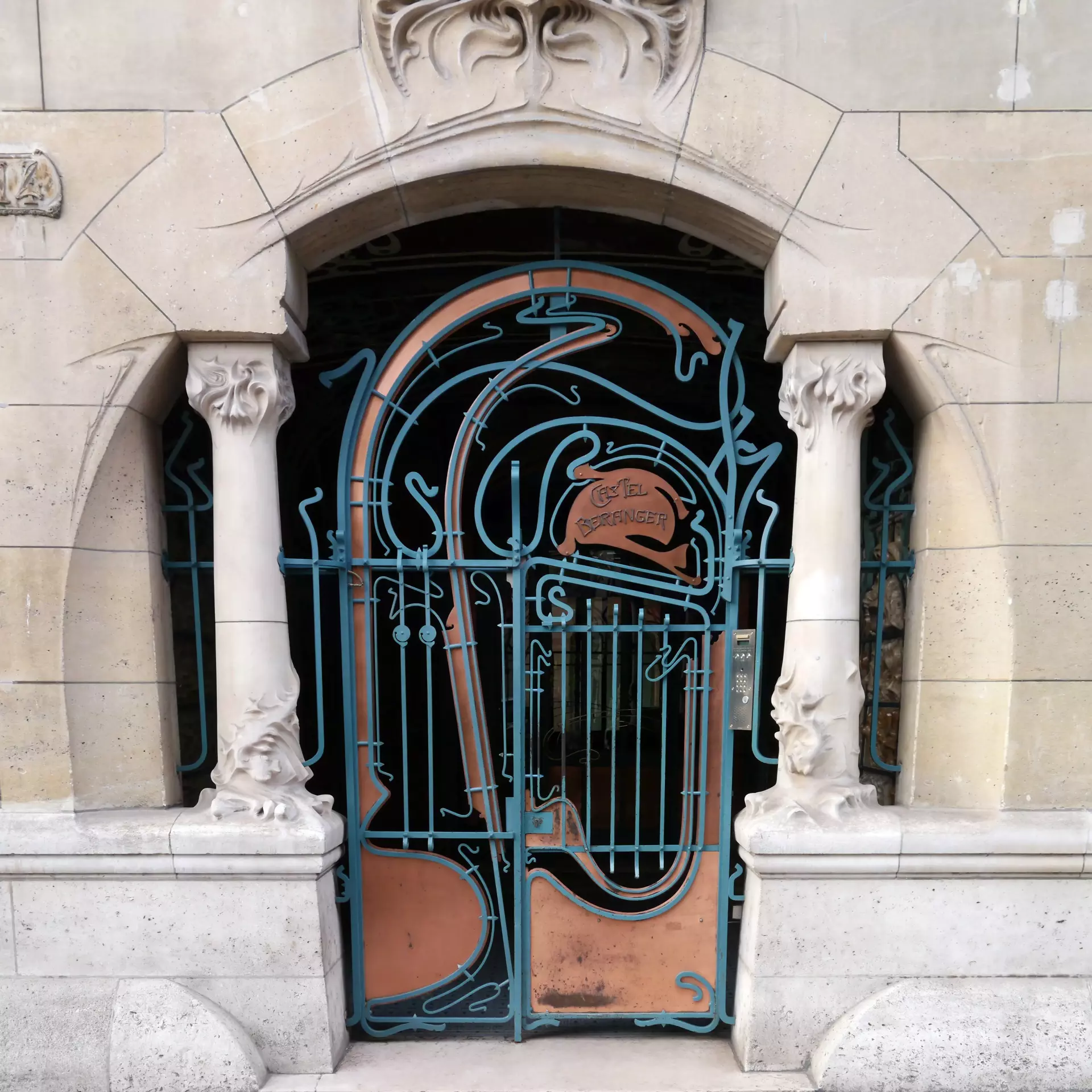
Castel Béranger stands as a remarkable apartment building in Paris, recognized as the city’s first structure designed fully in the Art Nouveau style. At the time of its completion, some critics mockingly called it "Castel Derangé" because of its unusual and bold appearance.
The building’s facade is a striking display of Art Nouveau’s signature curves, intricate ironwork, and varied materials. This innovative design did not go unnoticed; in 1898, Castel Béranger won a city-organized competition for the most beautiful and original facade in Paris. This accolade helped bring attention to the Art Nouveau movement and established the building as a landmark of creativity in architecture.
Castel Béranger houses 36 apartments, each uniquely crafted and still privately owned today. The interior spaces, filled with decorative details and custom features, remain closed to the public, preserving the privacy of the residents and the building’s quiet mystique.
Source - https://en.wikipedia.org/wiki/Castel_B%C3%A9ranger
There are a number of famous occupants, but the real reason to visit this cemetery is to see the ornate tombstones, sculptures, and other sometimes macabre, sometimes touching memorials Parisians have left here for their dead.
The C.I.U.P. is a student quarter established in 1925, providing homes for about 10,000 students, scientists, and artists from 120 countries. It has 40 houses attributed to individual nations. The individual houses organise top quality cultural and political events. Among the most remarkable buildings are the Fondation Deutsch de la Meurthe, the Heinrich Heine House (Maison Heinrich Heine - Fondation de l'Allemagne), the Swedish Student House (Maison des Etudiants Suédois), and the Swiss Pavilion (Pavillon Suisse) which was built in 1933 on plans of Le Corbusier.
An indoor sports arena that seats around 17,000 for sports and slightly over 20,000 for major concerts; formerly known as Palais des Omnisports de Paris-Bercy and Bercy Arena. Home to numerous concerts and major sporting events, most notably the Paris Masters tournament on the ATP World Tour in men's tennis.
This iconic triumphal arch forms the focus of the main east-west road axis of Paris, running between the Louvre and the Grande Arche de la Défense in the west. The monument was commissioned by Napoleon in 1806 as a tribute to his victories as Emperor of France - it was finally completed in 1836, long after his death. 50 m (150 ft) high and 45 m wide, the Arc de Triomphe is decorated with battle scenes and martial sculptures that includes La Marseillaise by Rude. The Tomb of the Unknown Soldier was placed beneath the arch in 1920, where an eternal flame burns in tribute to the French dead of both World Wars. The arch is surrounded by a large roundabout, aptly known as l'Etoile - 'the star' - with 12 thoroughfares leading off from it. Visitors can purchase a ticket to climb to the top of the arch, from where magnificent views spread out over western Paris. Admission to a small museum devoted to the history and meaning of the monument is included. The central island and the arch are accessed by an underground passage. Do not attempt to negotiate by foot the busy multi-lane road that rings the Arc de Triomphe, which many Parisian drivers seem to consider their own personal speedway.
The burial place of existentialist philosopher Jean-Paul Sartre, feminist Simone de Beauvoir (both of whom lived nearby); musician Serge Gainsbourg; artist Man Ray; the poets Charles Baudelaire, Guy de Maupassant, Charles Sainte-Beuve, and Marguerite Duras; the founders of the Theatre of the Absurd Samuel Becket and Eugene Ionesco; the sculptors Constantin Brancusi and Ossip Zadkine; the composers Camille de Saint-Saens and César Franck; the actors Maria Montez and Jean Seberg; the French officer Alfred Dreyfus; the founder of the Larousse encyclopedia, Pierre Larousse; the industrialist André Citroen, and many others.
20th- and 21st-century art in a building designed by Frank Gehry
The oldest church in Paris, founded in the year 542 by King Childebert. The church as it exists today dates mainly from the 11th century, the period in which it became the center of a powerful Benedictine abbey. The Revolution witnessed the suppression of the abbey in 1794, when most of the monastic buildings were put to the torch. Earlier, 318 priests had been hacked to death nearby by a mob on 3 September 1792. The church underwent significant restoration in the 19th century, ensuring the preservation of the building, which by that date represented a fascinating mix of styles: 6th century marble columns placed alongside Gothic vaults and supported by Romanesque arches. Famous burials within the church include René Descartes (philosopher), Nicolas Boileau (poet) and King John Casimir of Poland, who had become (in 1669, before his death) abbot of the church's monastery.
Visitable only by reservation and then only one Saturday every month. A richly decorated palace built for Marie de Medici in the early 17th century, which is now the French Senate. For those interested in seeing a Parisian monument normally unavailable to the public, or for those interested in the inner workings of the French Government. The large Luxembourg Garden is open to the public year-round. The garden is home to the Medici fountain, a children's playground, and vintage toy boats for hire that children push around in the Grand Bassin duck pond (a 90-year tradition).
Built in 1717, the windmill is now part of a restaurant of the same name, and is easily visible from the street.
Paris's international exhibition centre (the 4th largest in Europe) has millions of visitors annually.
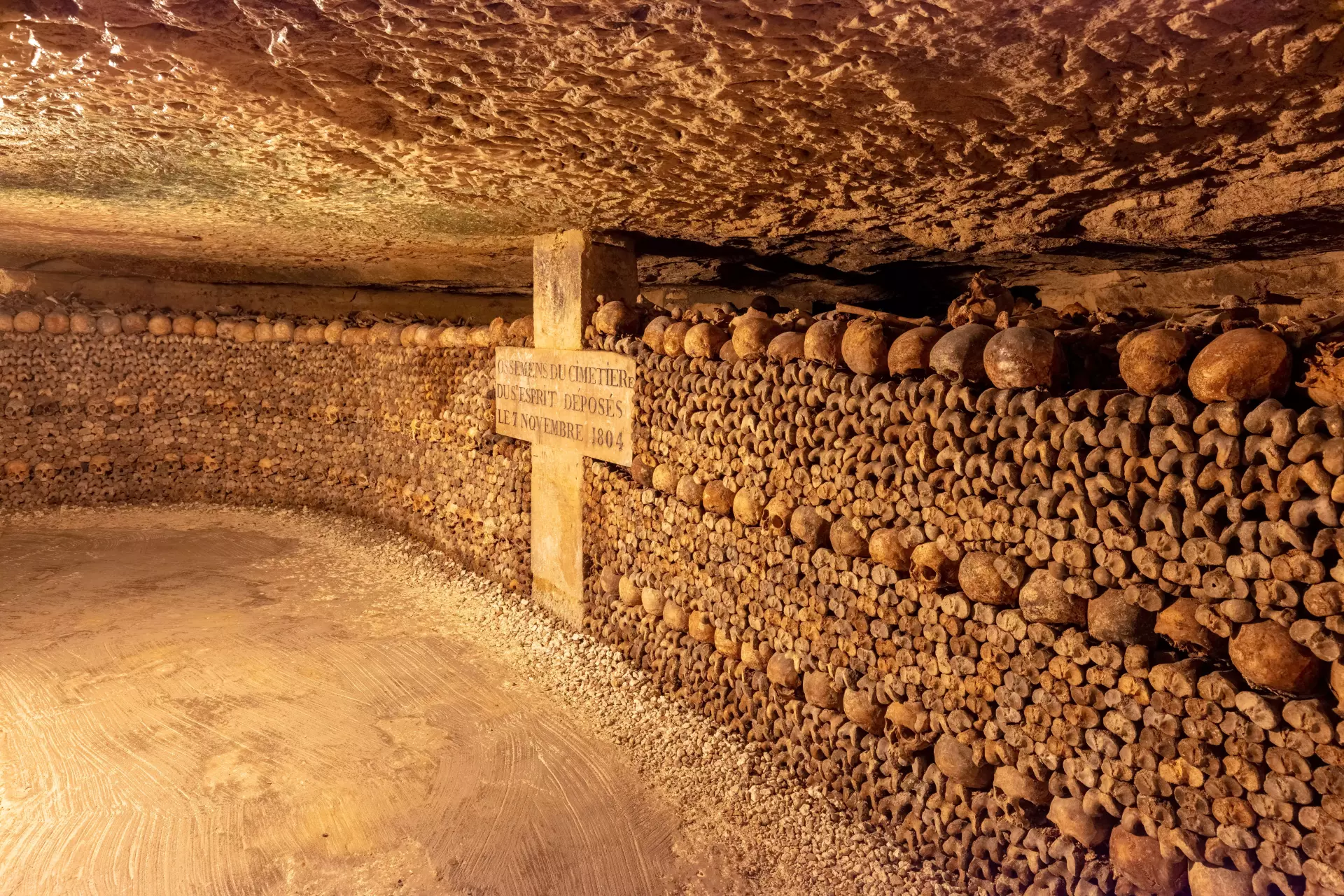
One of the most eye-popping sights of Paris, the catacombs represent a network of labyrinthine tunnels, first excavated in the Roman period, that now house the remains of over 6 million burials removed here from the various overcrowded cemeteries and charnel houses all over Paris in the late 18th and early 19th centuries. Well worth a visit: the atmosphere is suitably morbid and gloomy (without being too scary), the dark tunnels containing neatly stacked piles of skulls and long bones. There is a limit to the number of visitors allowed within the Catacombs at one time (200 persons). So, if you arrive just after opening, you must wait until someone exits, approximately 45–60 minutes, before anyone is admitted. Steep stairwell on the exit of the catacombs. Can be challenging for the elderly or the unfit. Tickets can be purchased online at a small premium (€29, includes audioguide), allows you pick a date&time and to skip the long line
The Palais de Tokyo is Paris's largest specialist contemporary art exhibition venue, owned and operated by the national government. The building dates to 1937 and also includes the Museum of Modern Art of the City of Paris.
Since 2021 the 18th-century former Bourse de Commerce building has been the Paris home of the art collection of the French business magnate François Pinault, showing a rotating selection of contemporary artworks either newly commissioned or taken from his collection.
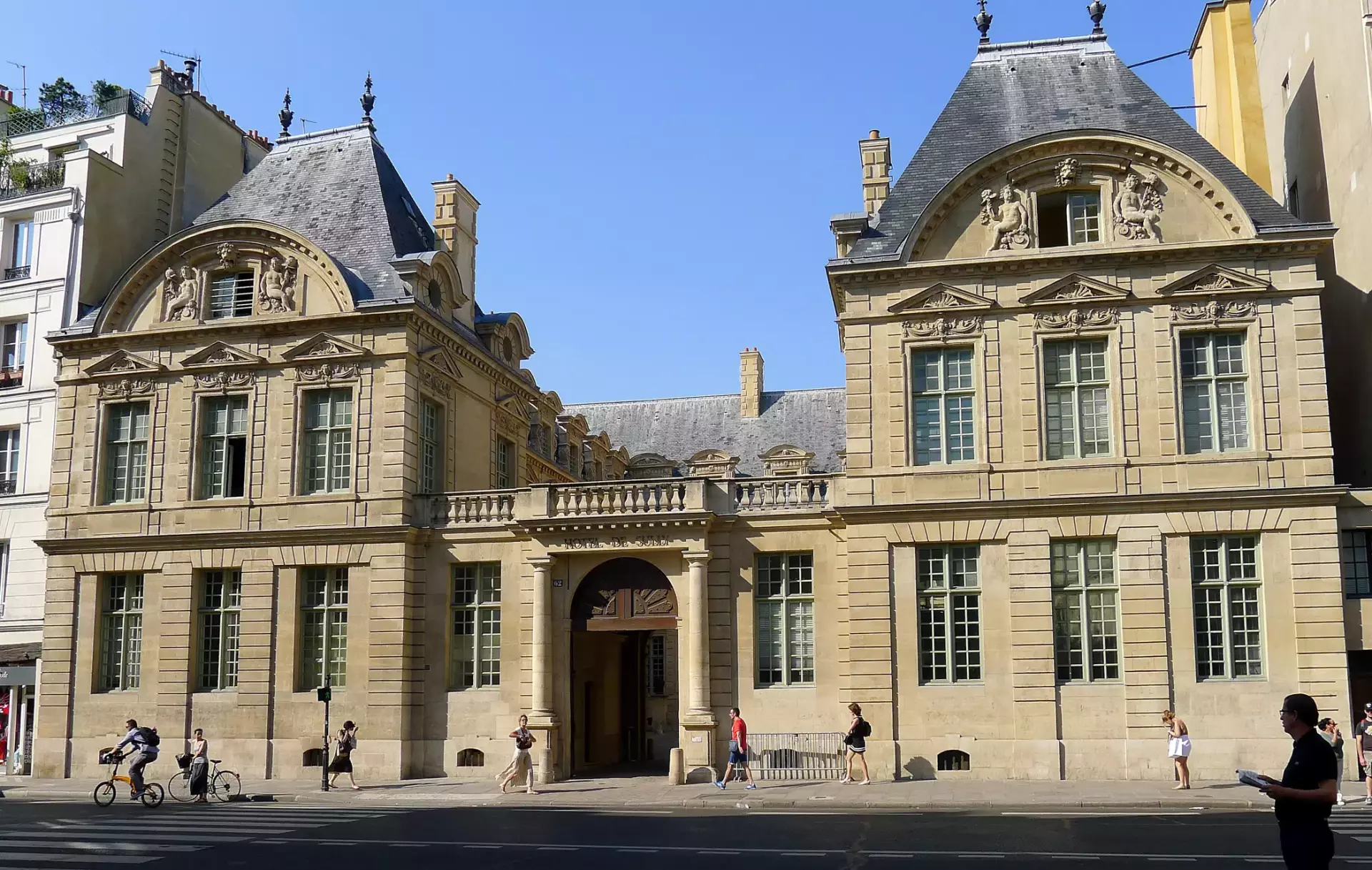
Built in 1625, the Hotel de Sully is an interesting house with some sculptures in a beautiful courtyard. The house features special exhibitions, so check listings when in Paris.
The museum is located in a 17th century house with a garden, and features the history and culture of Montmartre. Several famous artists had lived in the house including Renoir.
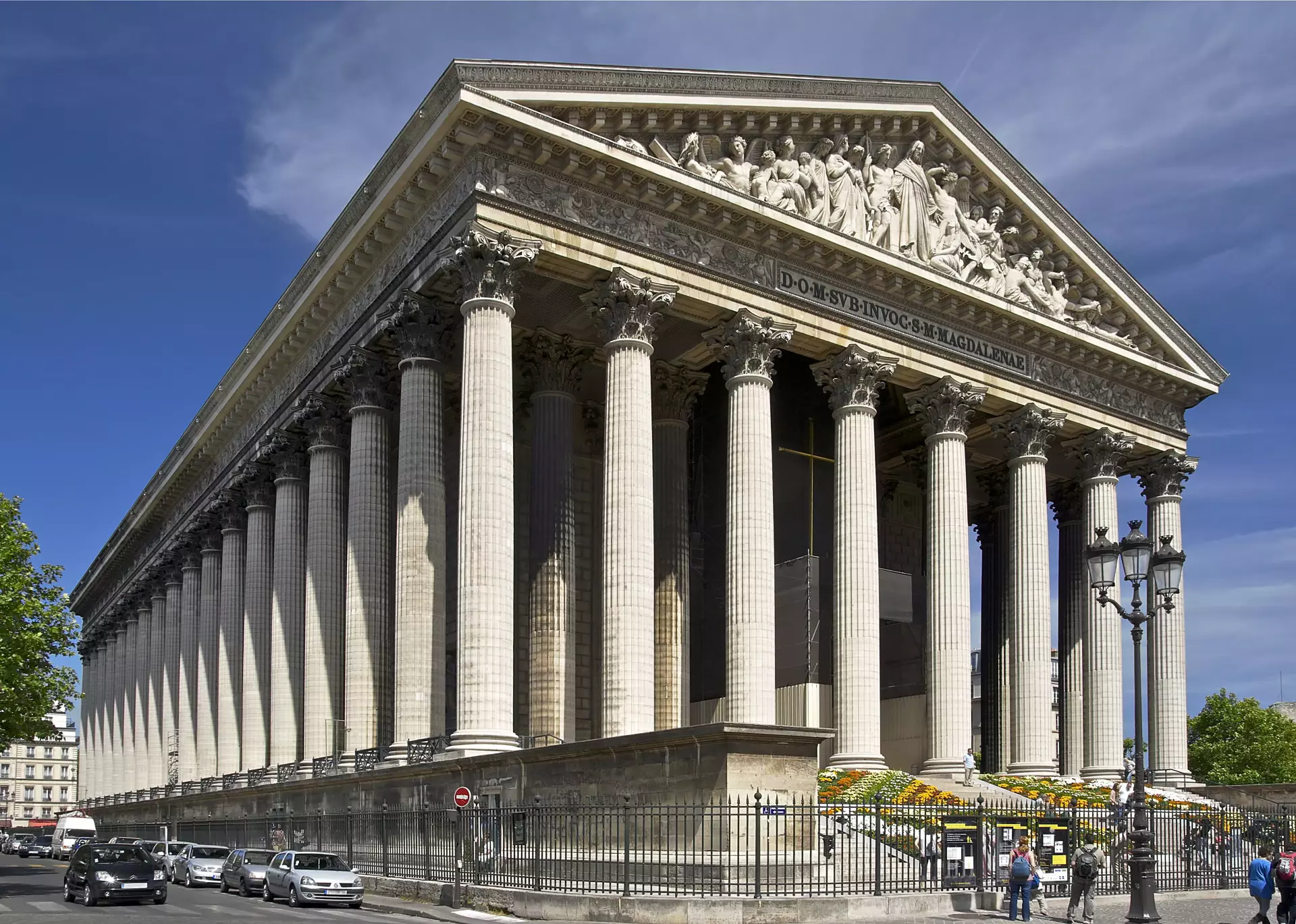
One of the best-known and most beautiful churches in Paris, in the guise of a Corinthian order classical temple. Construction started in 1764, although the church was not finally consecrated until 1845. The Madeleine has a lavish interior of marble and gold.
Housed in a 15th-century abbey, alongside 1st century Gallo-Roman baths, the museum has an extensive collection of medieval art and artifacts. Highlights include the medieval "Lady and the Unicorn" tapestries, a papal golden rose, and the original heads from the facade of Notre Dame.
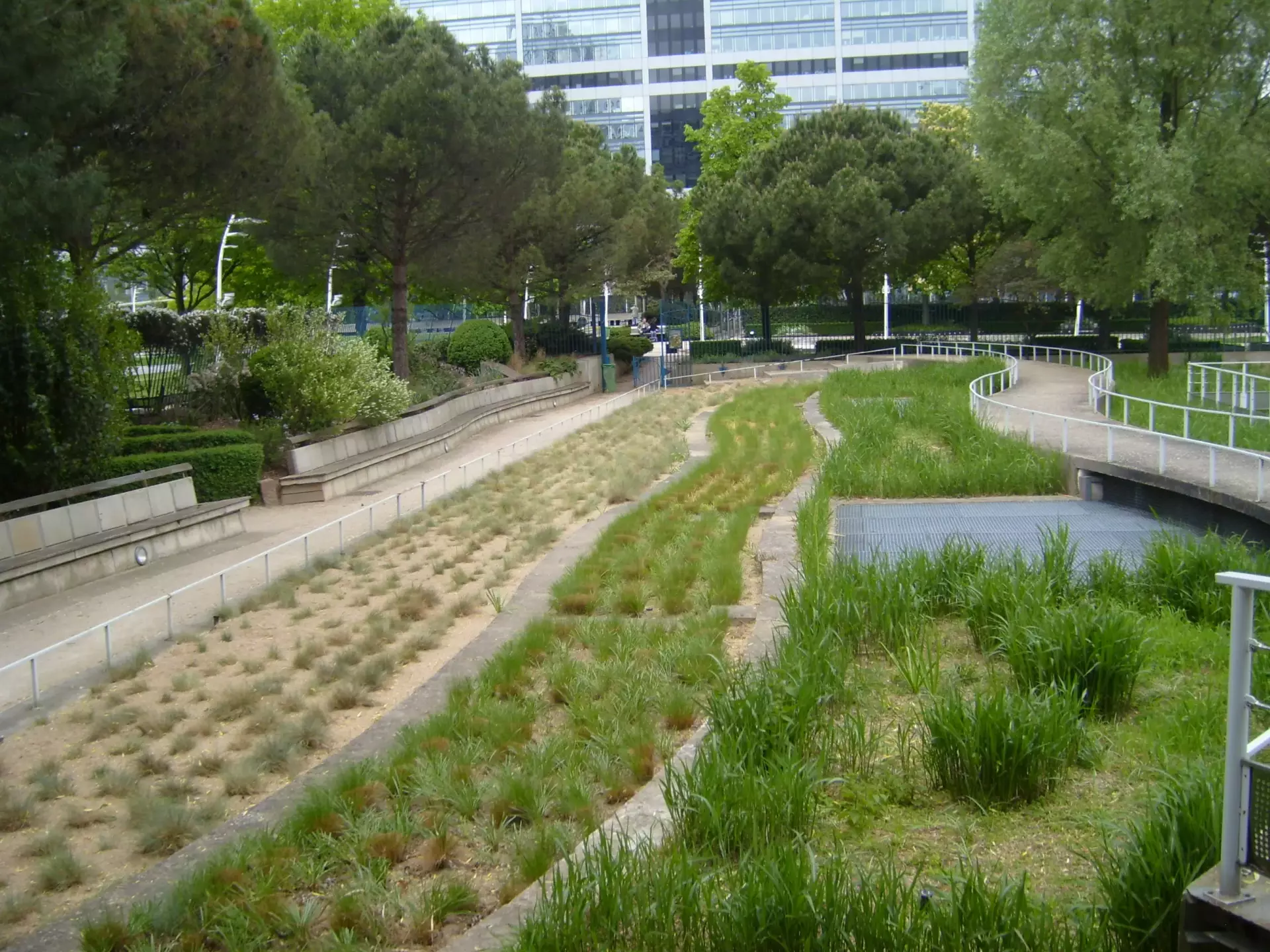
Between the River Seine and the rail yards attached to Gare de Lyon and Gare de Bercy is a green space which would seem pretty huge if the 12th weren't also the home of the Bois de Vincennes. The park is a good place to hang out waiting for the line to form for sporting events and concerts at AccorHotels Arena.
Most of the works by Picasso and others which were in the master's possession at the time of his death are now on display here.