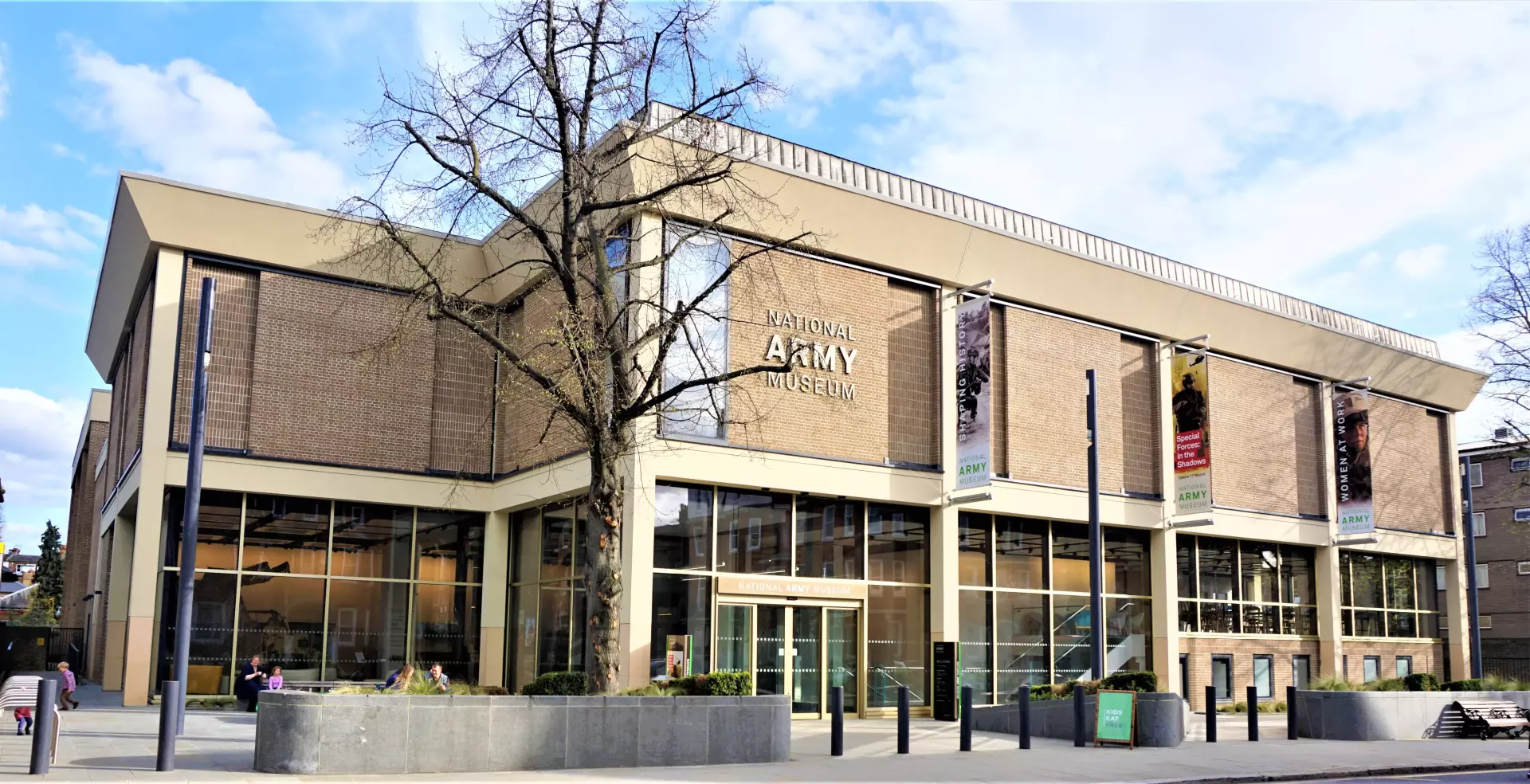
The National Army Museum offers a fascinating journey through the history of the British Army. Its exhibits delve into much more than just the military hardware, although it does feature an impressive array of equipment. Visitors can explore thought-provoking displays that provide deeper insights into the army's role and impact over the years.
Source - https://en.wikipedia.org/wiki/National_Army_Museum
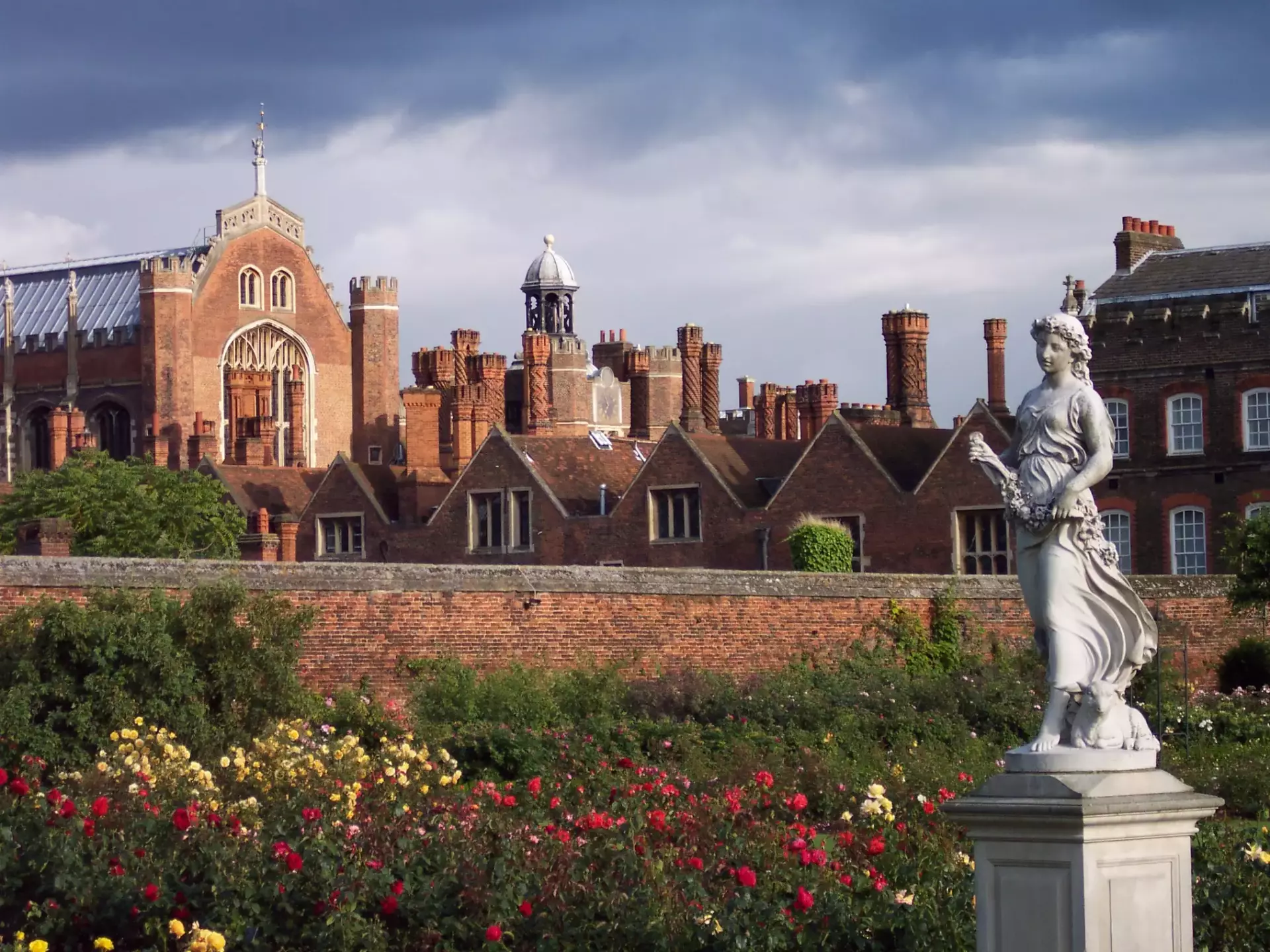
Historic home to English kings such as Henry VIII, now open to the public. There are many attractions which can occupy a whole day visit, including 60 acres of gardens with the famous maze, the Tudor kitchens, the Chapel Royal, the Great Hall, Mantegna's Triumphs of Caesar paintings, and various exhibitions about Henry VIII.
Site of the London residences for the Prime Minister (No. 10) and the Chancellor (No. 11).
Named in honour of Queen Victoria and her consort Prince Albert, this museum has existed for over 150 years. It contains a huge collection of decorative arts from all over the world and far back in time. Trying to see everything in one day would be exhausting, so use the excellent maps the V&A provides to plan where you want to go. There are regular exhibitions concentrating on a particular theme from Chinese art to fashion designers. Frequently they put on children's activities and late DJ nights.
Dr Samuel Johnson was the highly distinguished 18th-century "man of letters", best known for his comprehensive English Dictionary of 1755, but also for his prolific output of poems, essays and novels. Something of a "hidden gem", this small, independent museum is dedicated to him—and, with its historic interiors, paintings and prints, personal effects and other exhibits—gives an impression of what it might have been like during his occupancy from 1748 to 1759. Built in 1700, this impressive period building—a rare example of its kind in the area—survived the brutal onslaught of the Blitz during World War II and is now maintained in excellent condition.
This gallery houses the Tate collection of British art from 1500 through to contemporary art. A side wing collects together the gallery's collection of paintings by Turner, including some stunning seascapes. Temporary exhibitions are exceedingly varied: examples include exhibitions of Turner's paintings of Venice and the work of photographer Wolfgang Tillmans. The best known exhibition is the Turner Prize, consists of works by four artists shortlisted for the annual contemporary art prize, which runs from late October to January each year.
A neoclassical church that stands opposite the National Gallery. Since World War I, the homeless have sought shelter at this church, a tradition that continues to this day.
A medieval church that was rebuilt in the late 18th century, noted for its well-preserved interior. The former churchyard was converted into a public space in 1880, called Postman's Park as it was frequented by workers from the nearby Post Office headquarters.
Islamic Cultural Centre and the main mosque in London. Visitors are welcome but must be suitably attired. The Mosque runs classes, prayers, talks and events.
Museum at the former home of Dickens exhibiting writings, paintings, furniture and other items relating to the writer.
An attractive Gothic Revival church, completed in 1859 to a design by William Butterfield.
A branch of the Imperial War Museum, the Cabinet War Rooms preserves the underground corridors and rooms from which Churchill and the cabinet directed the war against Hitler and the Nazis, maintained almost exactly as they were left in 1945. In 1984, IWM opened the rooms to the public for the first time. In 2005, the attached Churchill Museum was opened as the world's first permanent museum dedicated to the life and wartime achievements of Sir Winston Churchill. Audio guides are included in your admission. No cloakroom, no rucksacks, no suitcases. Café is open daily from 10am to 5pm. Hot food is served until 3pm.
St. Margaret's is the church of the British Parliament, more specifically, the parish church of the House of Commons.
This garden square was established by Lord Southampton in 1665 and is the oldest square in London. It was opened to the public in the 1950s. The square is surrounded by a number of beautiful 18th- and 19th-century buildings and terraces.
After visiting the two Houses, visitors pass back through St. Stephen's Hall, and through Westminster Hall. Westminster Hall is one of the few areas of Parliament in which photography is permitted, and it is a very impressive place, dating back to the 9th century. Plaques on the floor mark where the bodies of deceased members of the royal family and other distinguished individuals granted the privilege by the British government lay in state (most recently Queen Elizabeth II in 2022), and significant events which took place in the hall (such as the trial of King Charles I).