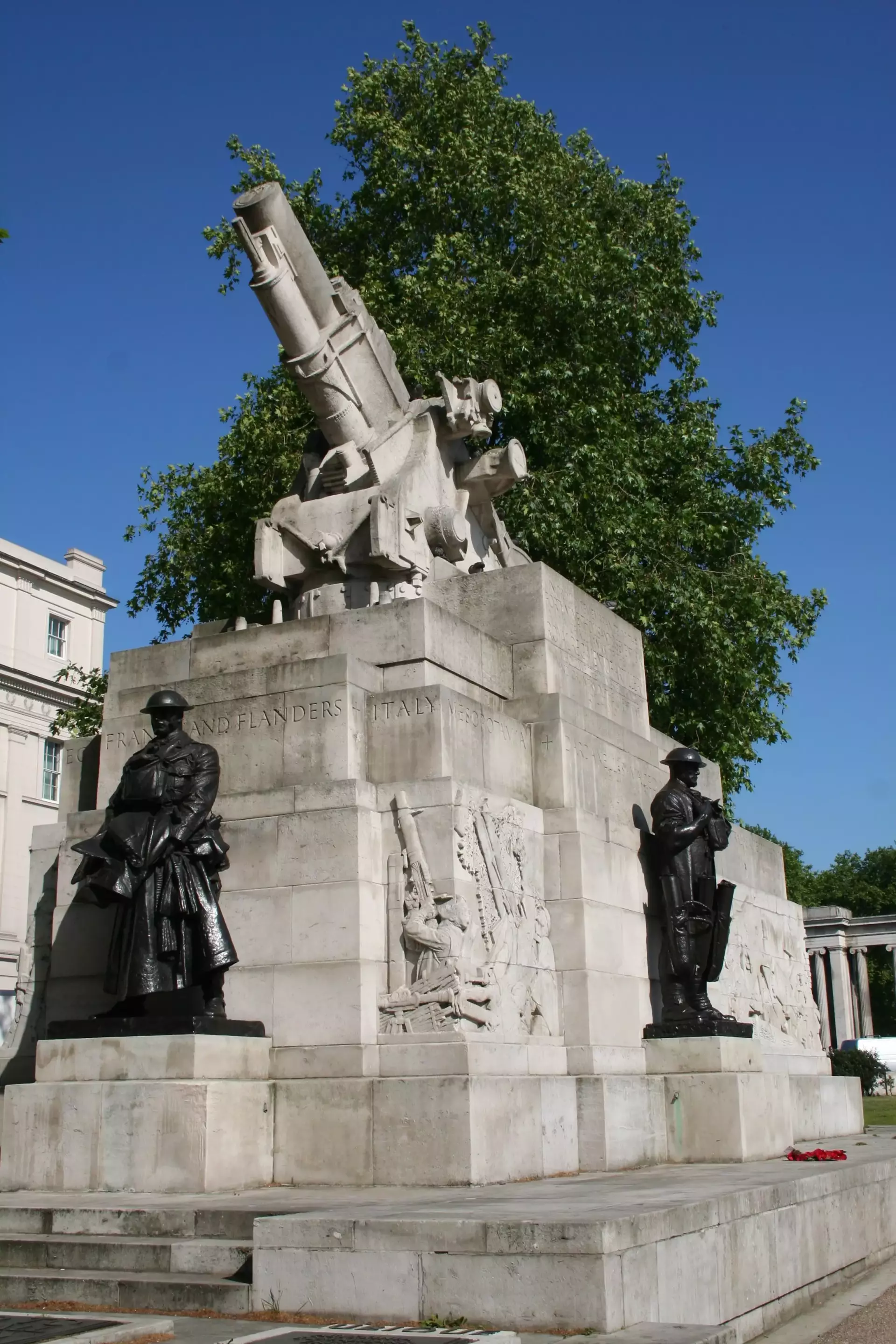
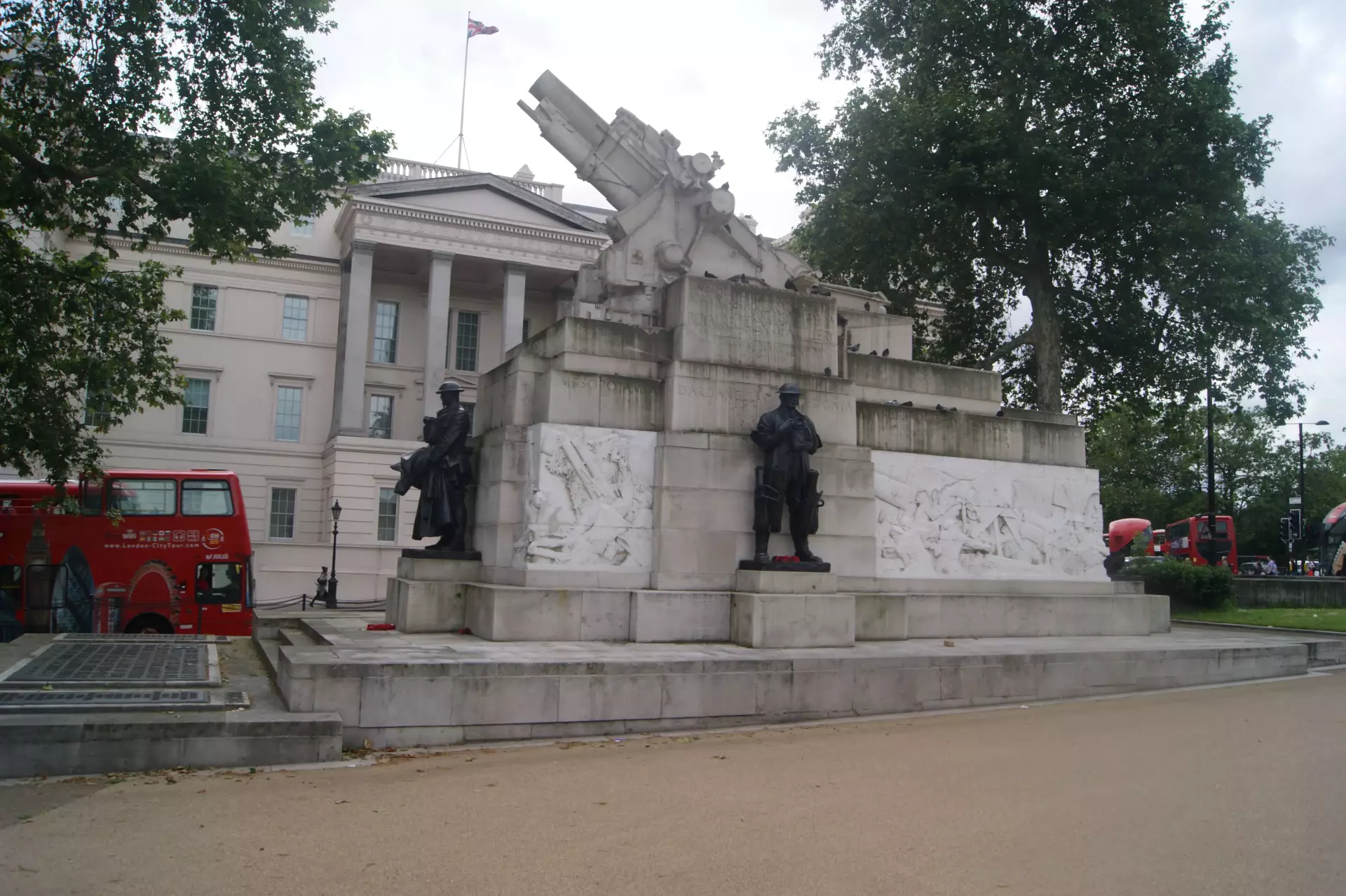
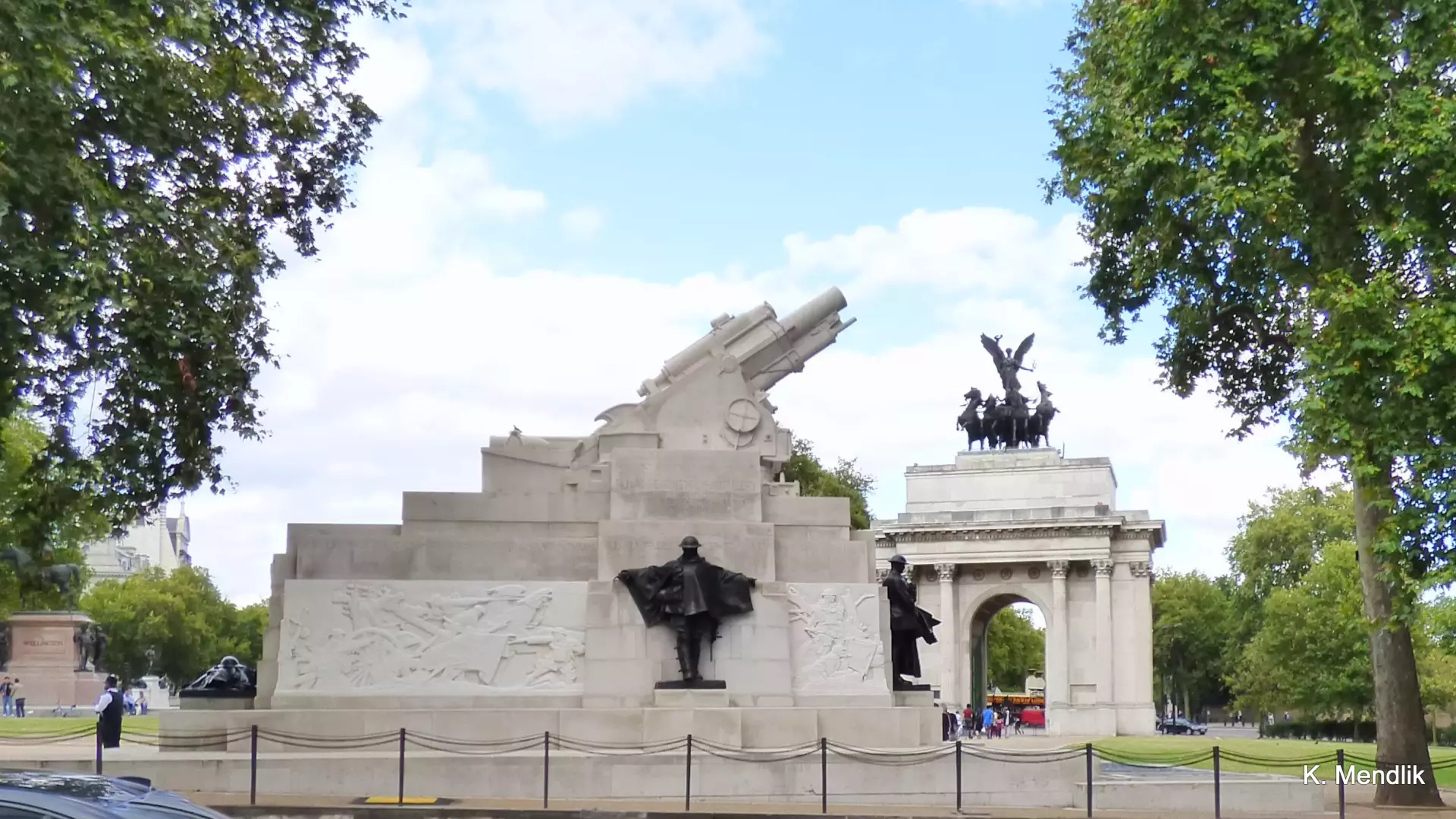
In the bustling city of London, a remarkable tribute stands at Hyde Park Corner, commemorating the valor and sacrifice of British soldiers during World War I. This is the Royal Artillery Memorial, a striking monument designed by Charles Sargeant Jagger, himself a veteran of the Great War.
At the heart of this memorial is a stone howitzer, an imposing symbol of the artillery's role during the conflict. The meticulous craftsmanship of the monument reflects the artist's firsthand experience in the war, where Jagger served with distinction before turning his talents to sculpture. Each element of the memorial is infused with the gravity of the events it commemorates.
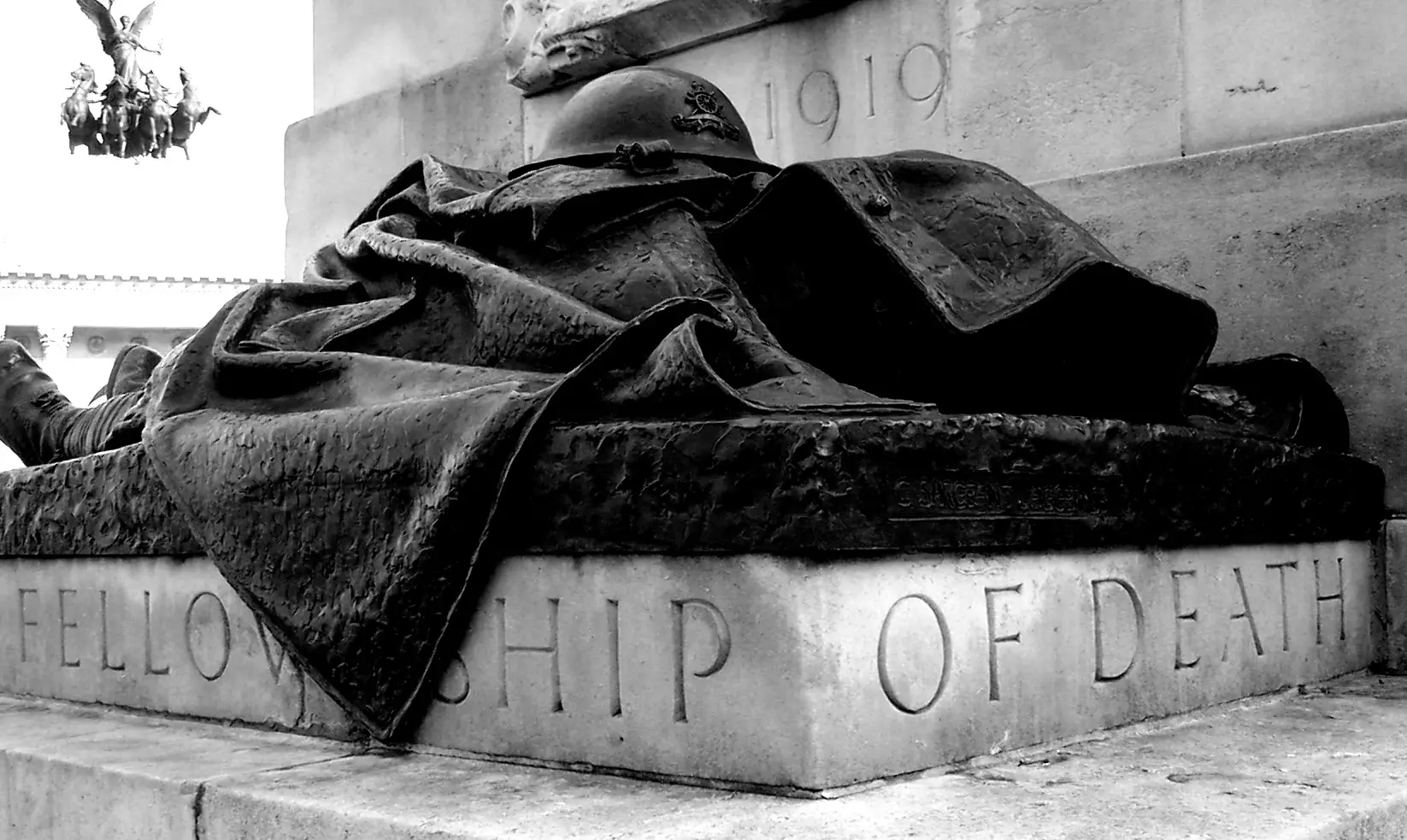
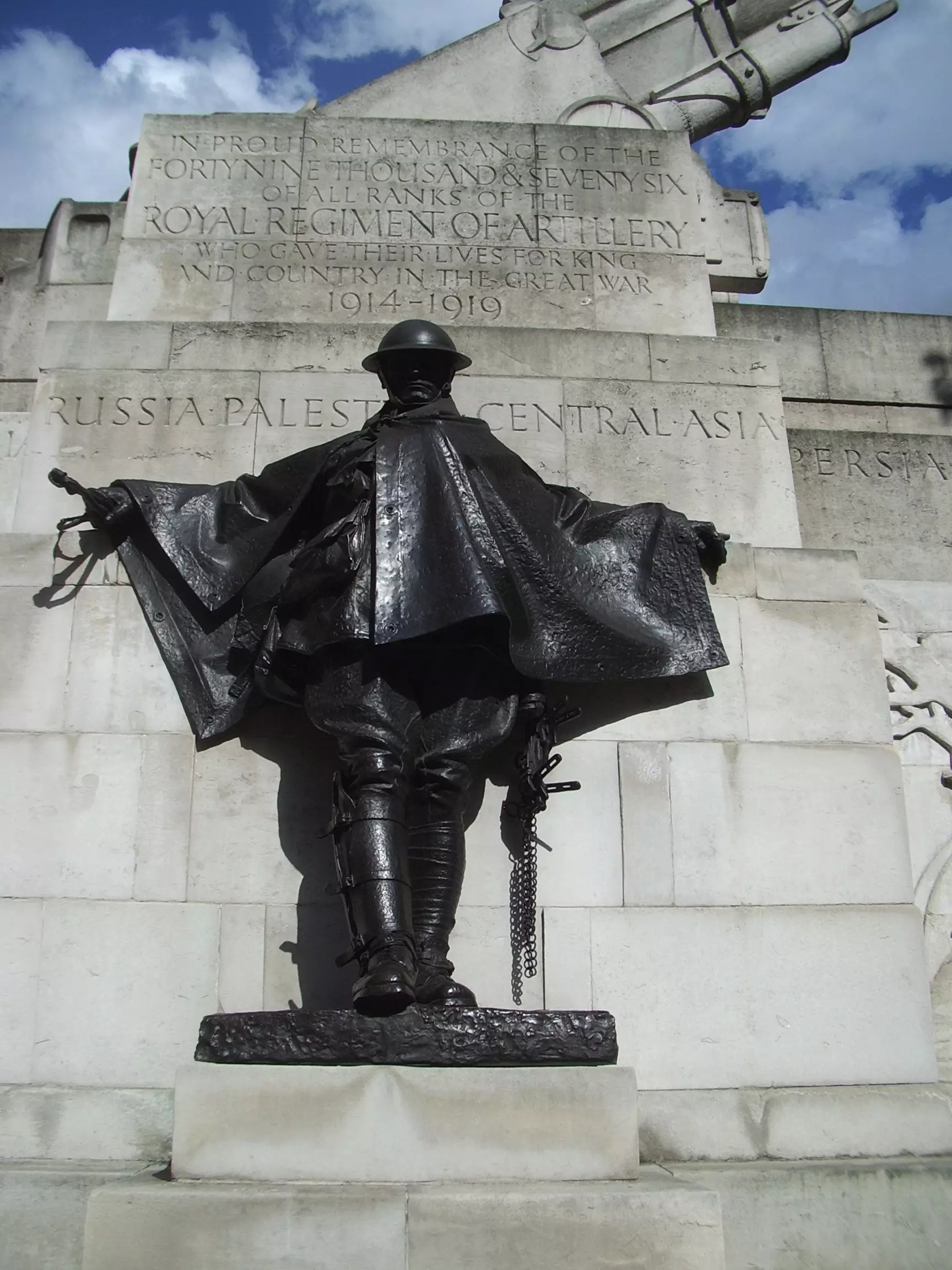
The memorial is not just a celebration of military achievement but also a poignant reminder of the human cost of war. Four bronze figures, each representing different aspects of the artillery, are positioned around the stone howitzer. These figures add a human element to the stark reality of war, portraying soldiers in moments of action, contemplation, and rest.
Jagger's work on the Royal Artillery Memorial is highly regarded for its realistic portrayal of soldiers and weaponry. His attention to detail and ability to convey emotion and narrative through sculpture make this monument a powerful piece of art. The memorial's design, with its combination of stone and bronze, creates a dynamic and engaging visual experience.
Today, the Royal Artillery Memorial continues to attract visitors from around the world. It serves as a significant historical marker, offering a place for reflection and remembrance. The monument stands as a testament to the skill and vision of Charles Sargeant Jagger, as well as a lasting tribute to the bravery and sacrifice of those who served in one of history's most devastating conflicts.
Source - https://en.wikipedia.org/wiki/Royal_Artillery_Memorial
Remains of the wall that surrounded the City of London for almost two thousand years. The parts around the Barbican are mostly Tudor due to maintenance (Roman remains can be seen in and around the Tower of London). Other local remains are the 51.5169-0.095833 Noble St wall fragment and the 51.5177-0.092234 St Alphage Gdns wall fragment.
A private residence which can only be seen from the street. Designed and built in a French neo-Gothic style by William Burges, it features a handsome cone-roofed tower. Legendary guitarist Jimmy Page has been the house's proud owner since he bought it from actor Richard Harris in 1972.
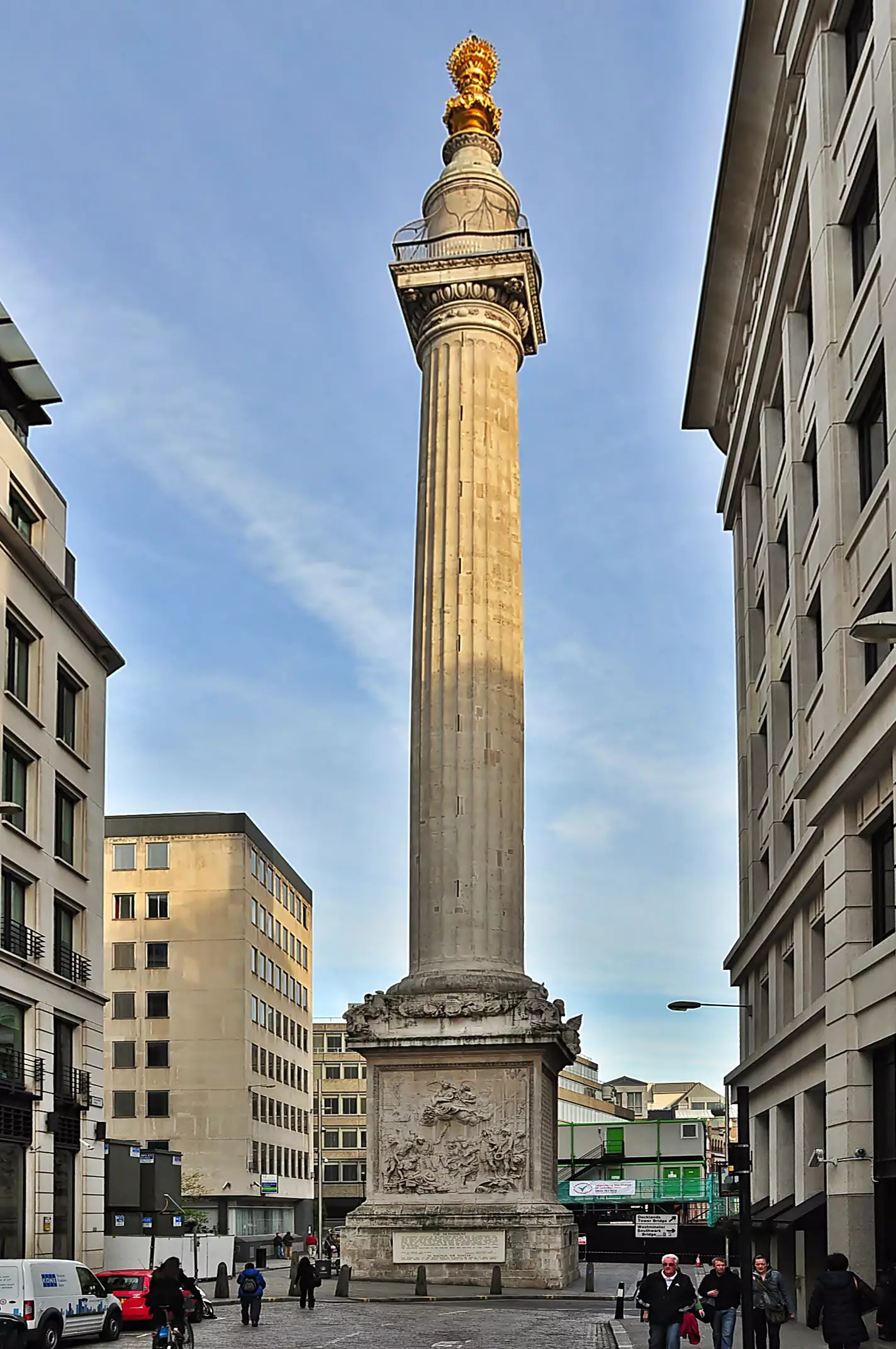
Designed by Sir Christopher Wren, this tall column (which can be ascended to get a great view) marks the alleged site where the Great Fire of London broke out in September 1666.
In contrast to the other Royal Parks in the area, Green Park can seem a little plain. It has no lakes or buildings and few monuments. It is still a pleasant green, lightly wooded, area in the centre of London, neighbouring two other parks and Buckingham Palace.
The eastern half of the twin parks. Of the two, Hyde Park is open for longer and has more open, unwooded land; it is often host to concerts, fun fairs and events. More of an artificial stream than a fountain, flowing in an oval through an open grassy area which, in normal summers, is a popular paddling spot for children and grown-ups alike.
After leaving its brutalist skyscraper on Old Broad St, the London Stock Exchange now resides on Paternoster Sq. Dating back to 1698, it is one of the world's oldest and largest stock markets.
The second biggest greenhouse in London, containing over 2,000 species of tropical plants as well as birds and fish.
A memorial made out of 52 stainless steel columns representing each of the 52 victims who died in a series of terrorist attacks in the London bombings on July 7th, 2005.
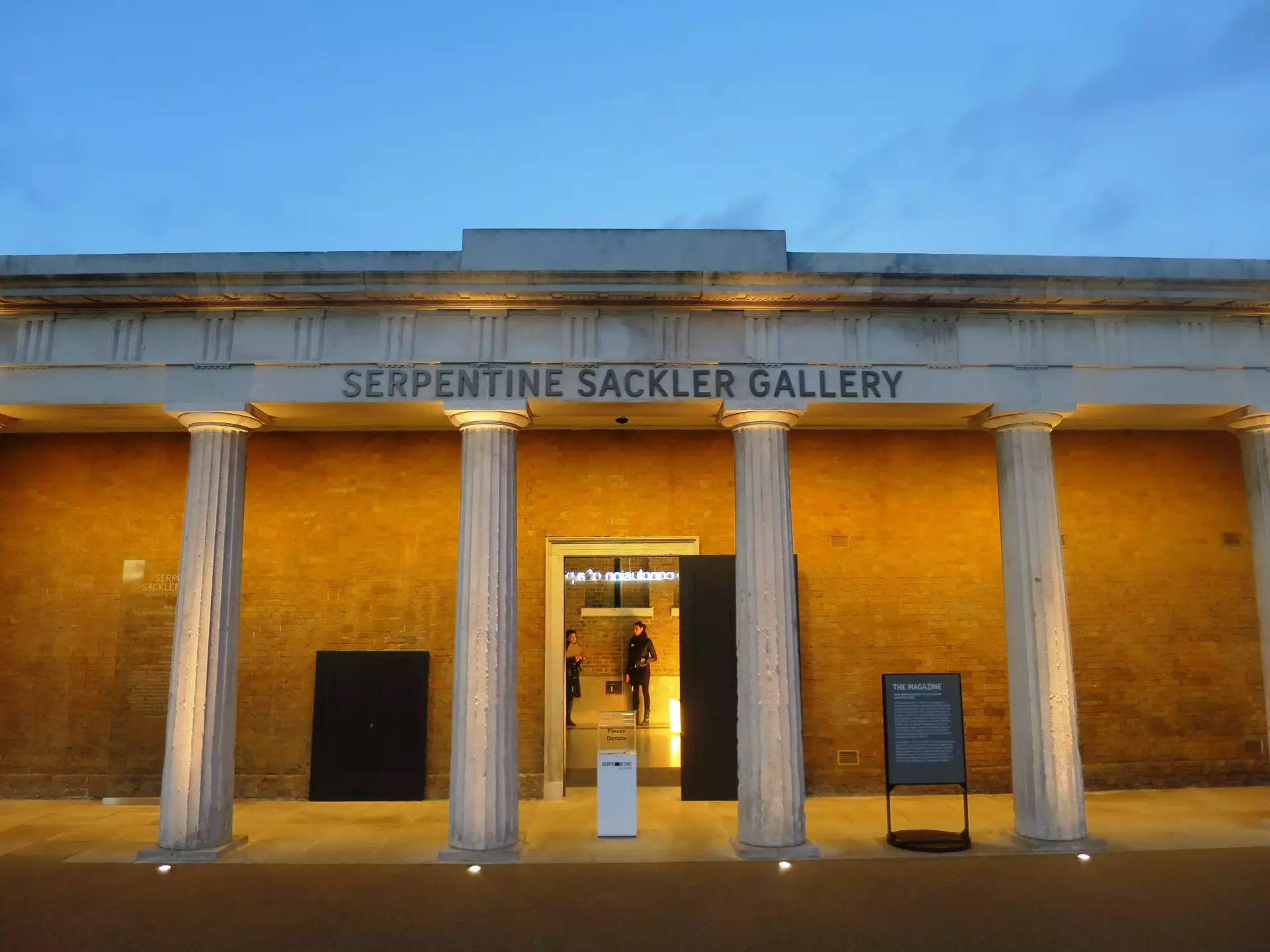
The western half of the twin parks and the half that is often forgotten in public consciousness. It tends to be more formal than its neighbouring park. Highly detailed, Gothic-style monument to commemorate Prince Albert, husband of Queen Victoria. Opposite the Royal Albert Hall. Diana, Princess of Wales Memorial Playground A 900-year-old tree stump carved and painted to feature elves and small animals. A royal residence which is still used by Prince William, Kate and their young family. Much of it is however open to the public and it is a very popular tourist attraction perhaps due as much to its association with Princess Diana as anything else. The King's Gallery here is a magnificent Regency period court drawing room and contains some impressive paintings including a Van Dyke. Also a nice restaurant on site called The Orangery. Full of swans, geese, gulls, and other birds. Deckchairs can be hired for £1.50. The park benches and grassy areas are free. A nice modern art gallery, near to the Serpentine. Too small to host a permanent collection, instead hosts temporary exhibitions which can last anything from a few weeks to over a year. Each summer a pavilion next to the gallery is designed by a different architect, which then houses various cultural events.
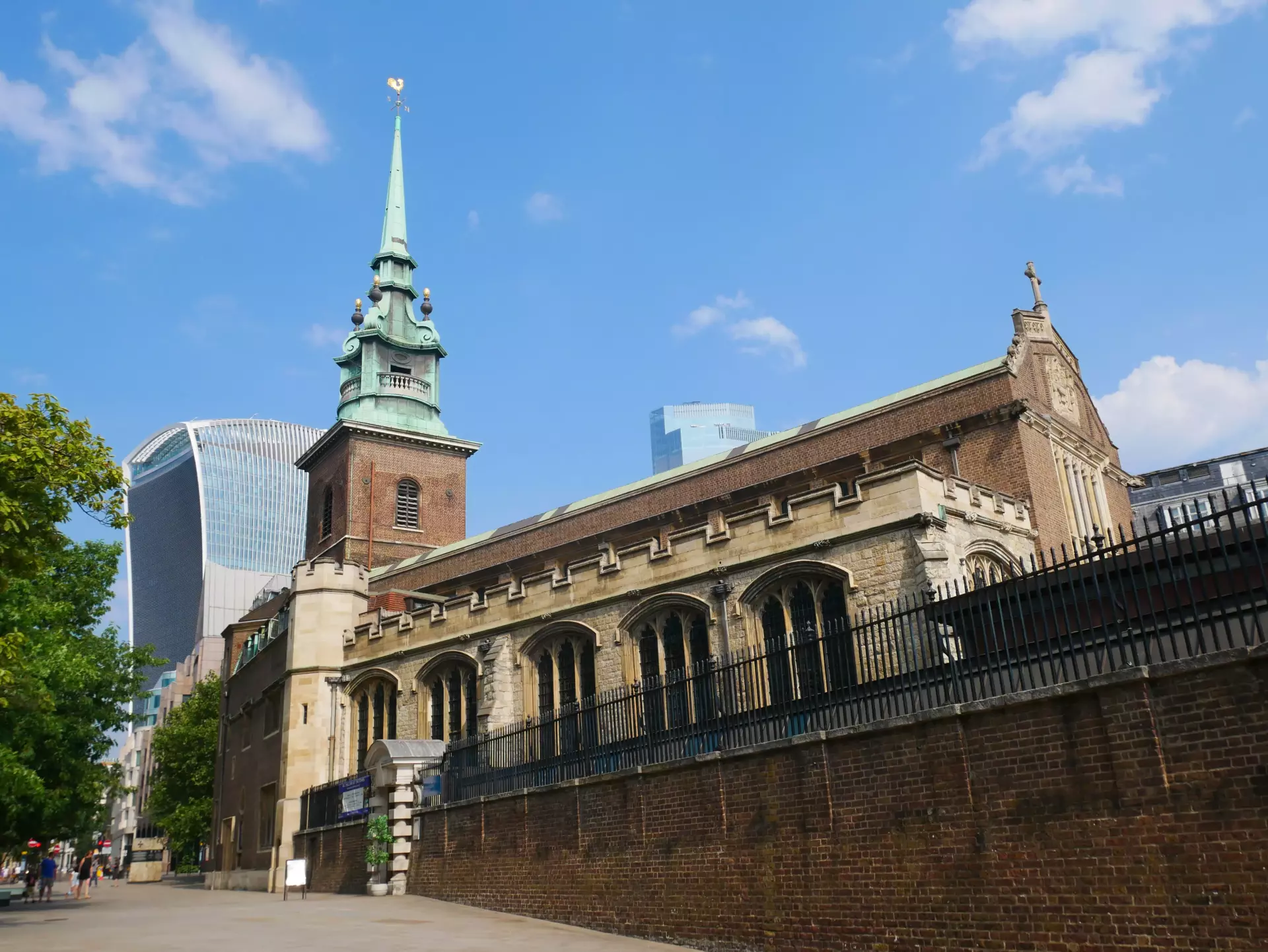
Su Catholic Church of England with bells and smells (incense). There is an impressive model of the old London Bridge.
The Serpentine is a long, thin artificial lake within Hyde Park which contains a range of waterfowl and fish. It was first made by damming the River Westbourne but it is now fed by three boreholes. The western end of the lake is actually in Kensington Gardens, in which it is called The Long Water. Swimming and boating are popular activities on the Serpentine; see 'Do' section.
This venerable old institution was absorbed by the neighbouring Natural History Museum in 1985 but still has something of a separate identity. Unsurprisingly, devoted to all things geological with especially popular exhibits on vulcanology and earthquakes and fossils of all types. Very popular with kids and often underrated.
This church on the bank of the Thames was built in 1157. It is the only church in London with chained books. A statue of Thomas More sits in front of the church.
There are three notable outdoor bathing ponds on the heath. The Men's Pond and Women's Pond are both part of the line of small lakes on the eastern edge of the heath known as Highgate Ponds, and the Mixed Pond is part of Hampstead Ponds on the opposite side. Swimming hours are seasonal, complicated, age-dependent and change frequently, so it is worth checking before making a special trip.
The former home of Sigmund Freud. A wide range of exhibits, most famously including the psycho-analytic couch that all of his patients used. Freud was an avid collector of antiquities and there is a fine collection of Greek, Roman and Oriental pieces on show.