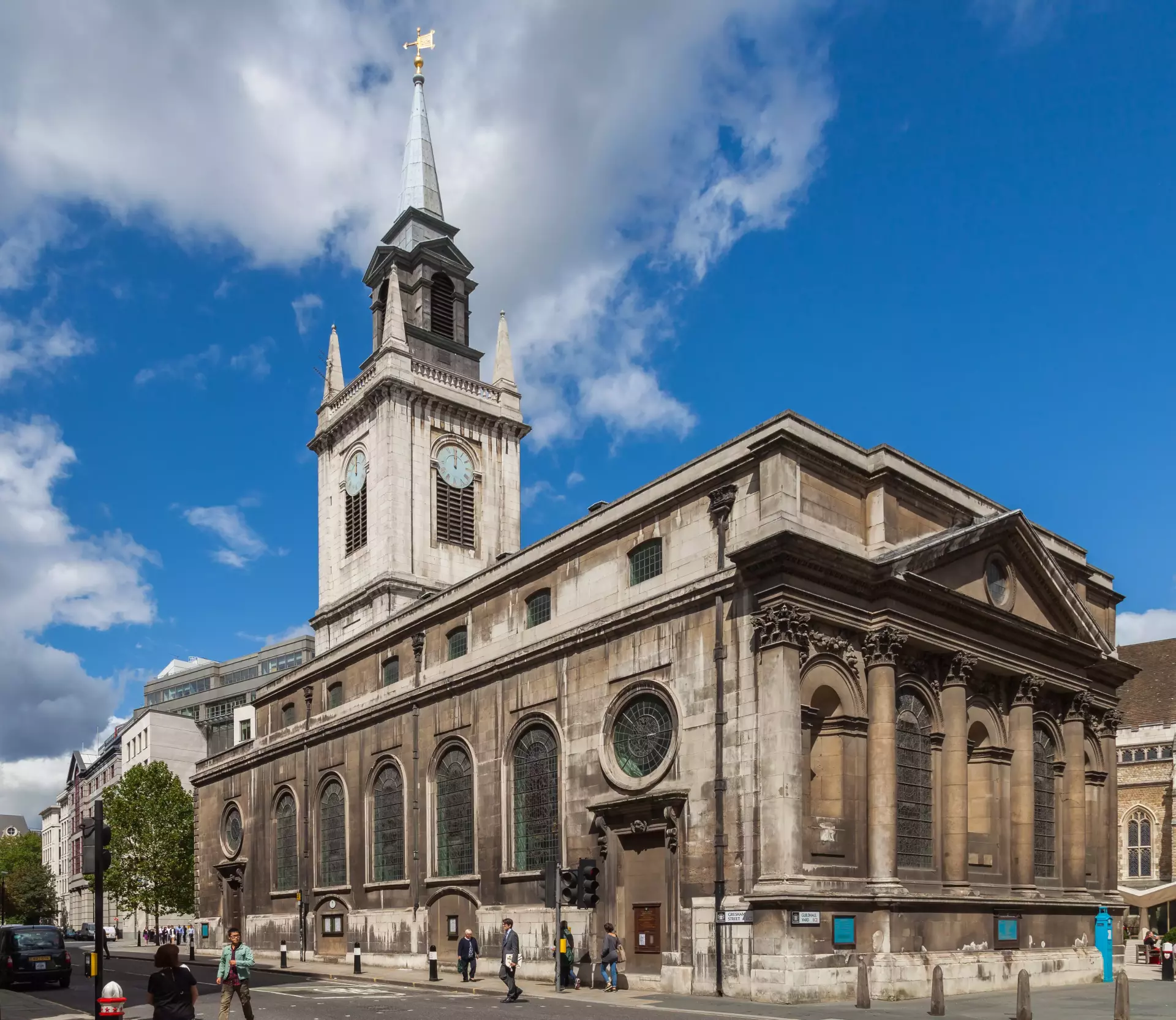
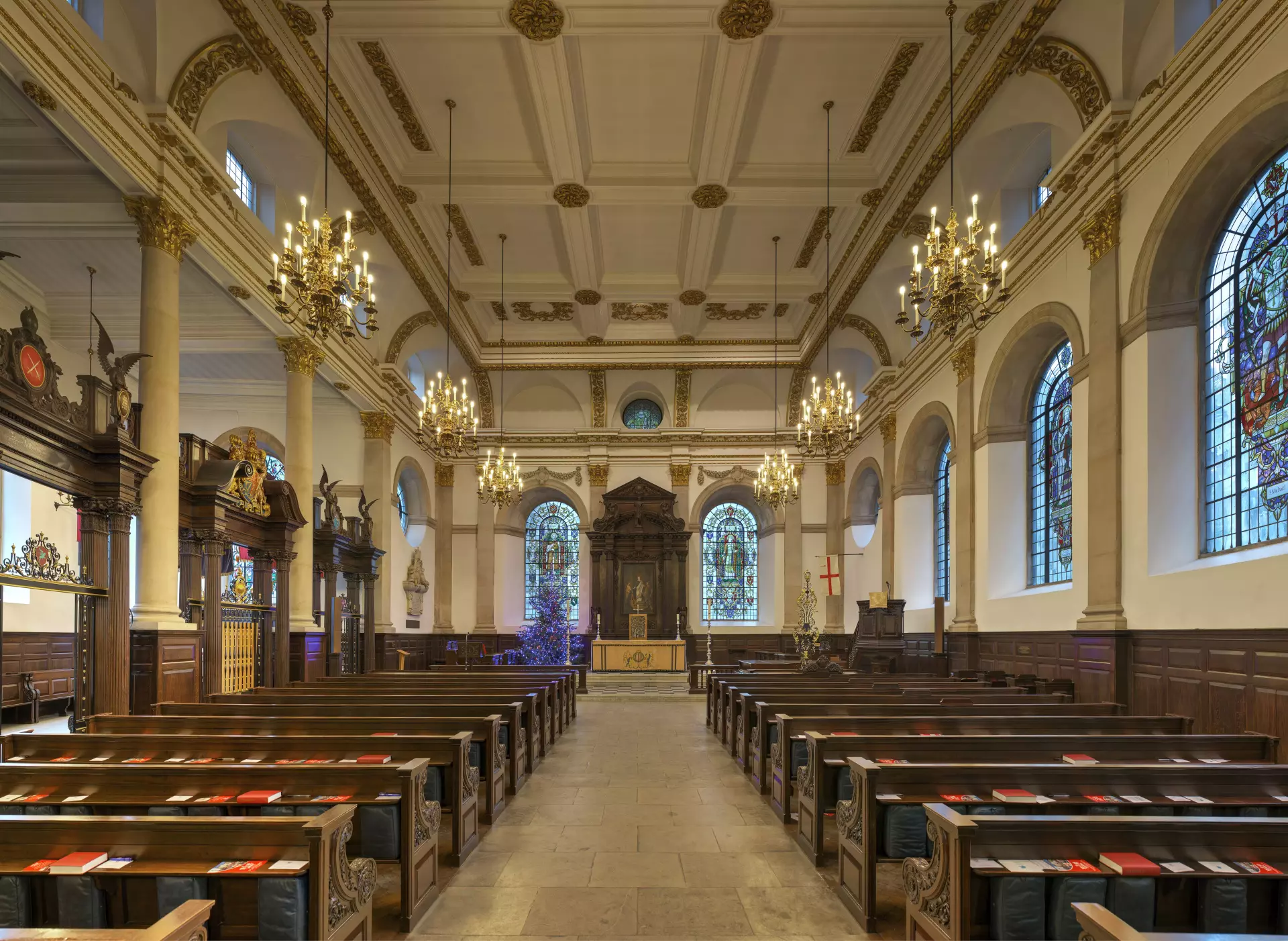
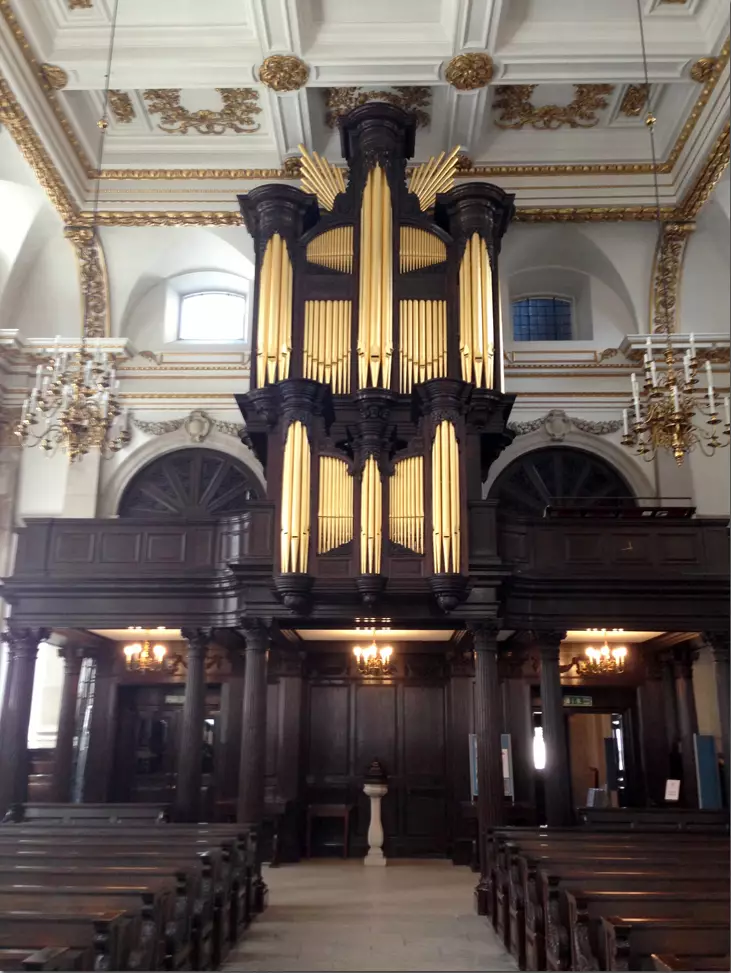
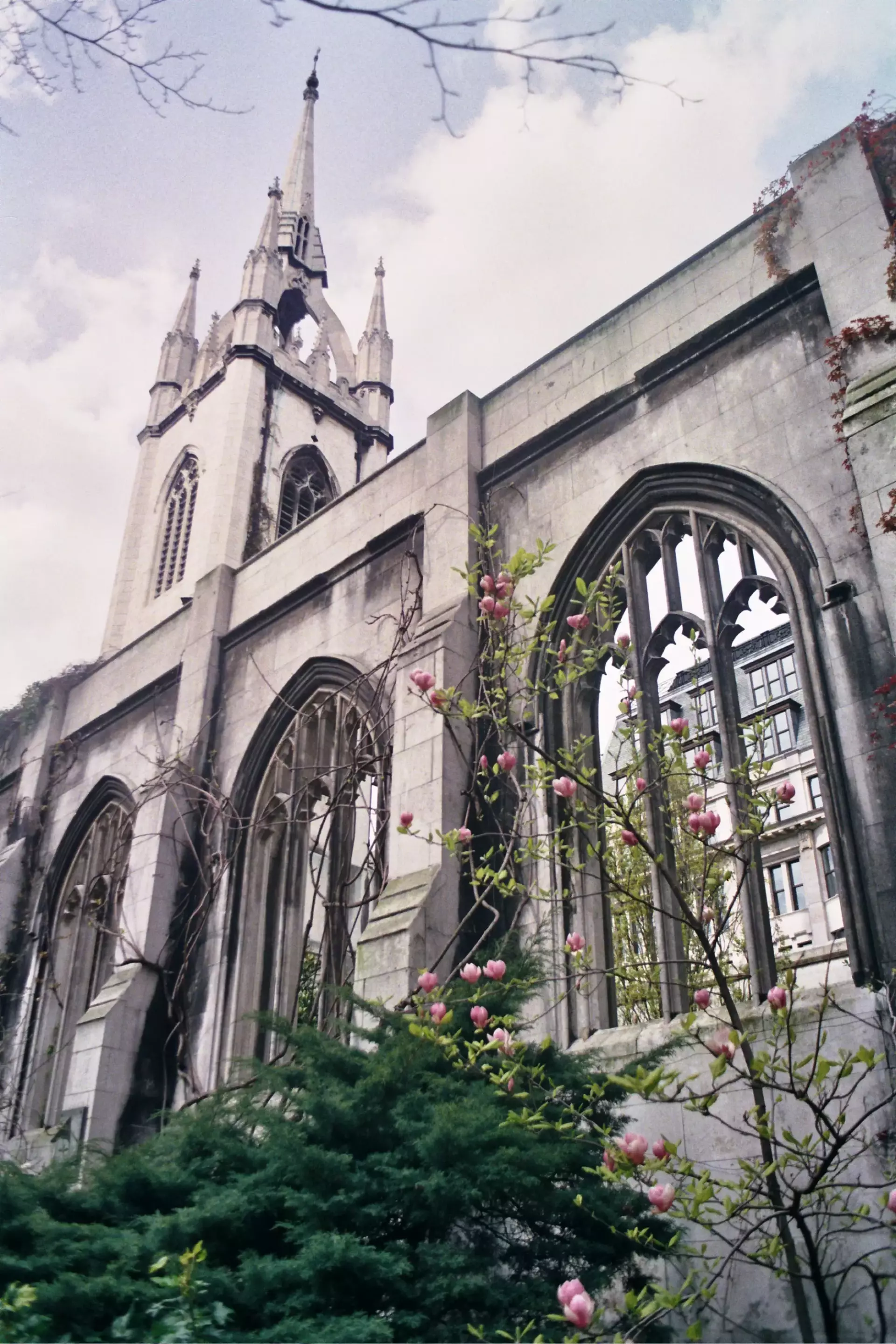
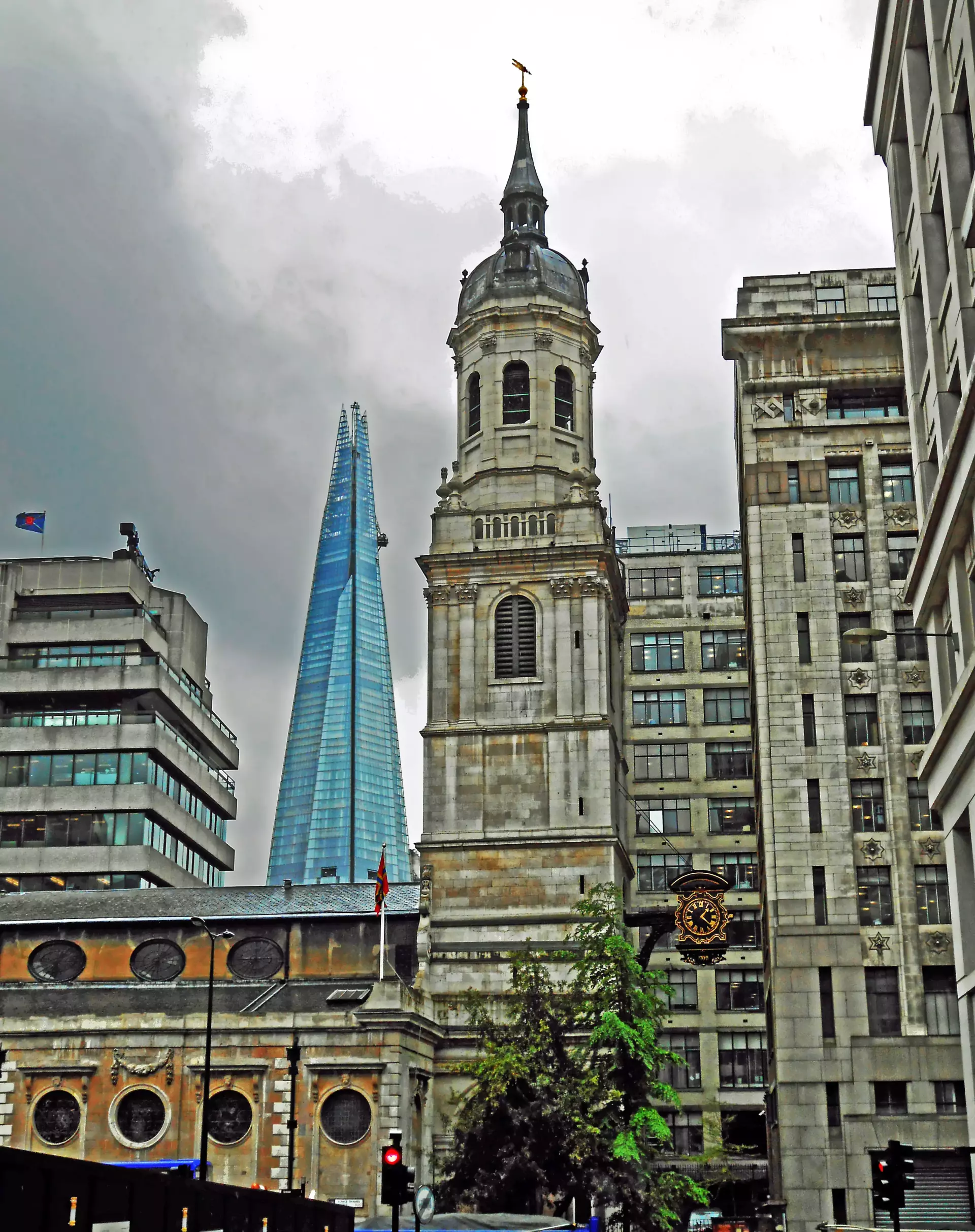
St Lawrence Jewry, located next to the Guildhall, serves as the official church for the Lord Mayor of London. This historical landmark is steeped in rich tradition and continues to play a significant role in the city's cultural and civic life.
Source - https://en.wikipedia.org/wiki/St_Lawrence_Jewry
The great domed cathedral of St Paul's, designed by Sir Christopher Wren to replace the Gothic medieval cathedral destroyed in 1666 in the Great Fire of London, was built between 1675–1710. Of the most famous London sights, St Paul's is the one most conveniently located for the Barbican. It's a significant building in British history, having been the site of the funerals of several British military leaders (Nelson, Wellington, Churchill), and significantly held peace services marking the end of the two world wars. The cathedral is also famous for its Whispering Wall, as well as its stunning view over the city. The crypt is also open to the public, holding the tombs of Nelson, Wellington and Christopher Wren. It is possible to sidestep the admission charge by entering for one of the midday services, even if you don't take part, or for the daily choral evensong in the late afternoon. However, you'd still need a ticket to get to the top. Photography is not allowed.
There are three notable outdoor bathing ponds on the heath. The Men's Pond and Women's Pond are both part of the line of small lakes on the eastern edge of the heath known as Highgate Ponds, and the Mixed Pond is part of Hampstead Ponds on the opposite side. Swimming hours are seasonal, complicated, age-dependent and change frequently, so it is worth checking before making a special trip.
A vast repository of the world's cultures, controversially including hundreds of items that were looted from their places of origin. Entire sections are devoted to Egyptian, Greek, and Middle Eastern artifacts, as well as the piece which united them all, the Rosetta Stone. Other items on everyone's list are the largest collection of mummies outside Egypt and the Elgin Marbles. The collection also includes some of the world's finest collections of Chinese and Sub-Saharan African art; perhaps the most famous of the latter are the Benin bronzes. A definite highlight of a trip to London. Temporary exhibitions are invariably excellent and meticulously researched, but can be expensive. It has a fine store, mainly selling replicas of items in the collection.
The main, central square of London, Trafalgar Square is associated with celebration and demonstration - it is the site of London's lacklustre New Year celebrations, and in 2003 was the site of the triumphant homecoming of the British Rugby team from the World Cup, and a centre for demonstration against Britain's involvement in the Iraq War. The square has been associated with the many hundreds of pigeons that used to be found here, but in 2003 a bylaw was passed to make it illegal to feed them. Nelson's Column, surrounded by the four bronze lions can be found here, on the south side of the square. The north-west plinth in the square was intended to hold an equestrian statue of William IV, but remained bare since 1841 due to insufficient funds. Since 1999, it has been used to display controversial contemporary sculpture. Houses the British national collection of western European art dating from the 13th to 19th centuries. A truly awe-inspiring collection, notable works include Hans Holbein's The Ambassadors, Van Gogh's Sunflowers and Constable's The Haywain. The vast majority of art is free of charge to visit. Temporary exhibitions are generally fairly costly, but invariably well researched and presented. The audioguides are very comprehensive, have comments on most of the paintings in the museum, and are free though this fact is not advertised. A donation is suggested. In addition to courses, workshops, lectures and other events, the National Gallery has free talks and tours every day. The National Portrait Gallery is just around the corner from the National Gallery and is an entertaining way to learn about British history since the Tudors. Visitors walk around the gallery chronologically, viewing portraits of notable figures from British history - from Henry VII, painted by Hans Holbein, to Blur, painted by Julian Opie. The High Commission of Canada immediately opposite to Trafalgar Square maintains a regular art exhibition featuring Canadian artists.
St. Margaret's is the church of the British Parliament, more specifically, the parish church of the House of Commons.
The Wallace Collection is one of the world's finest private art collections, the best known of which is Frans Hals's work The Laughing Cavalier. Other artists on display include Rembrandt, Titian, Poussin, and Reynolds. This is well worth escaping to after the hustle and bustle of Oxford Street.
The second biggest greenhouse in London, containing over 2,000 species of tropical plants as well as birds and fish.
Madame Tussauds is a world-famous waxwork museum, best known for its Grand Hall, with a collection of international royalty, statesmen and world leaders. Visitors generally report that the entrance fee does not warrant the selection of waxworks on show, which rarely resemble celebrities. Also, there is usually a long queue stretching down the road.
In contrast to the other Royal Parks in the area, Green Park can seem a little plain. It has no lakes or buildings and few monuments. It is still a pleasant green, lightly wooded, area in the centre of London, neighbouring two other parks and Buckingham Palace.
The complex incorporates the Old Broad House built in 1930s. The façades of which feature the famous sculpture of Prospero and Ariel and the Ariel friezes by Eric Gill and Gilbert Bayes. BBC's The One Show is transmitted from the studio at the ground floor every weeknight starting from 7PM. The studio is quite visible from the plaza outside and some parts of the show are performed from outside of the studio – in the plaza.
At the junction of five major roads, Piccadilly Circus is the home of the famous aluminum statue of Eros, which sits atop a fountain. The monument is officially known as Shaftesbury Memorial Fountain and initially wasn't supposed to depict Eros, but different god Anteros. The north side of Piccadilly Circus holds an enormous display board of electric advertisements, including Britain's biggest illuminated display (the widest in the world), advertising Coca-Cola.