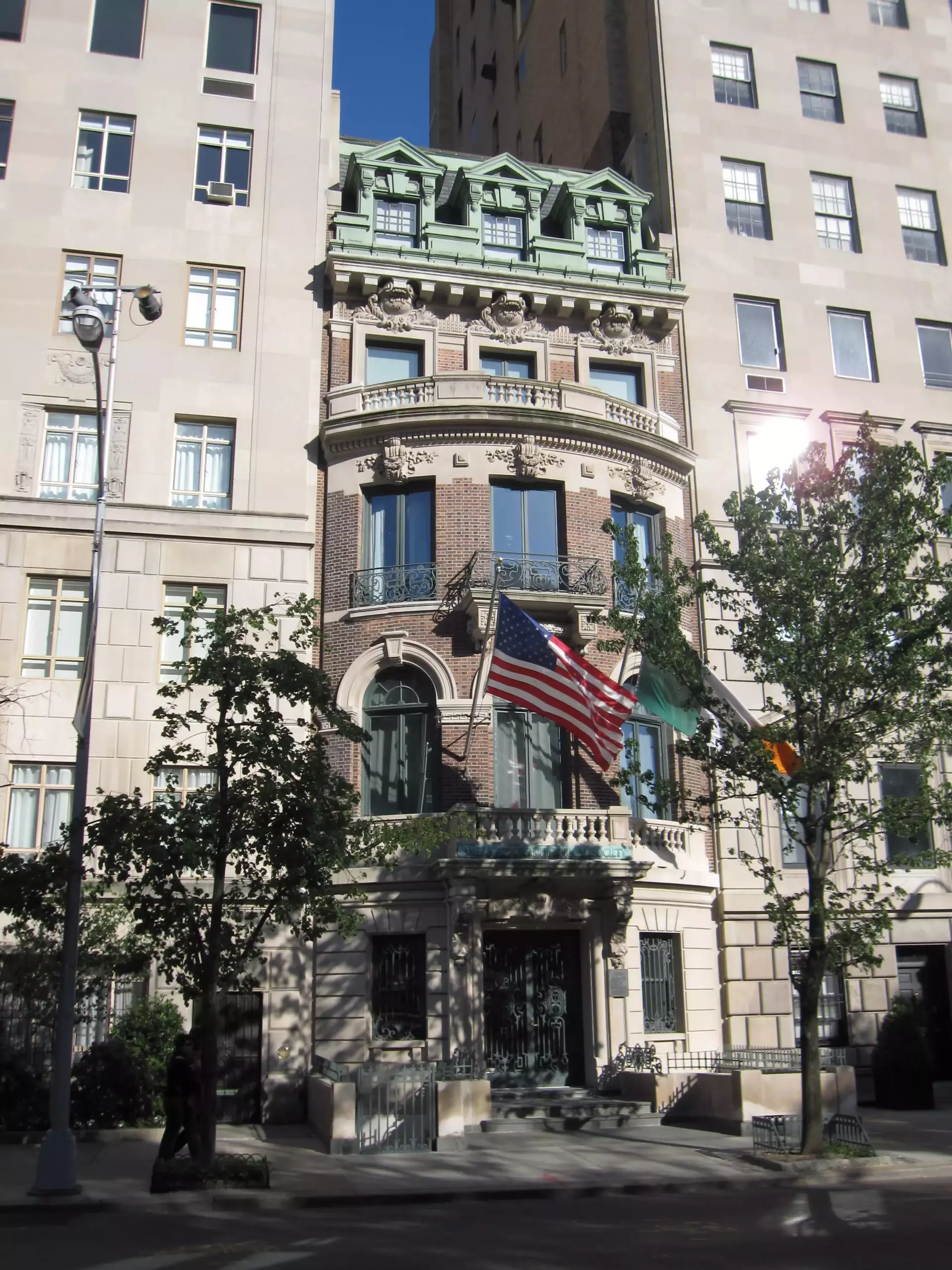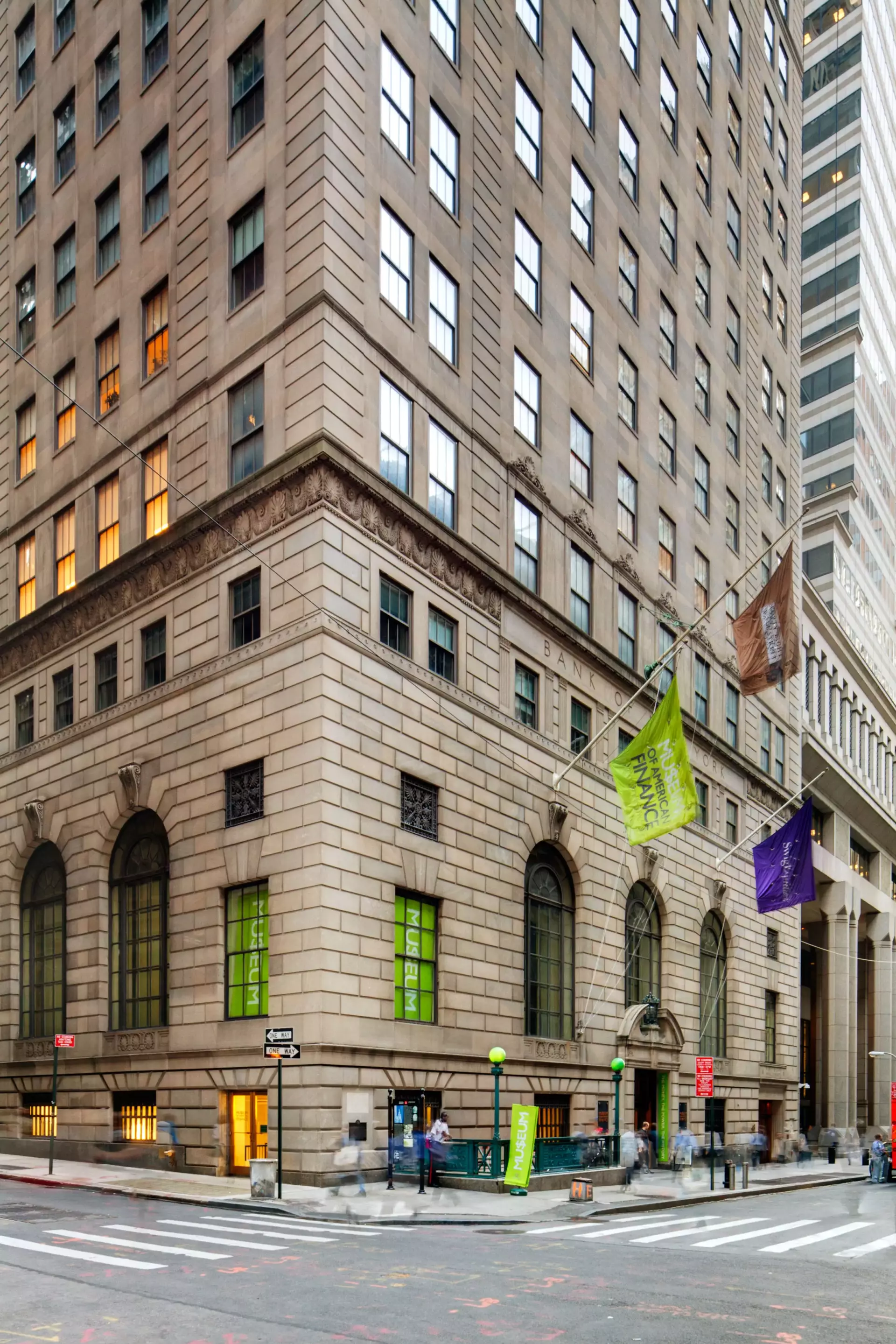
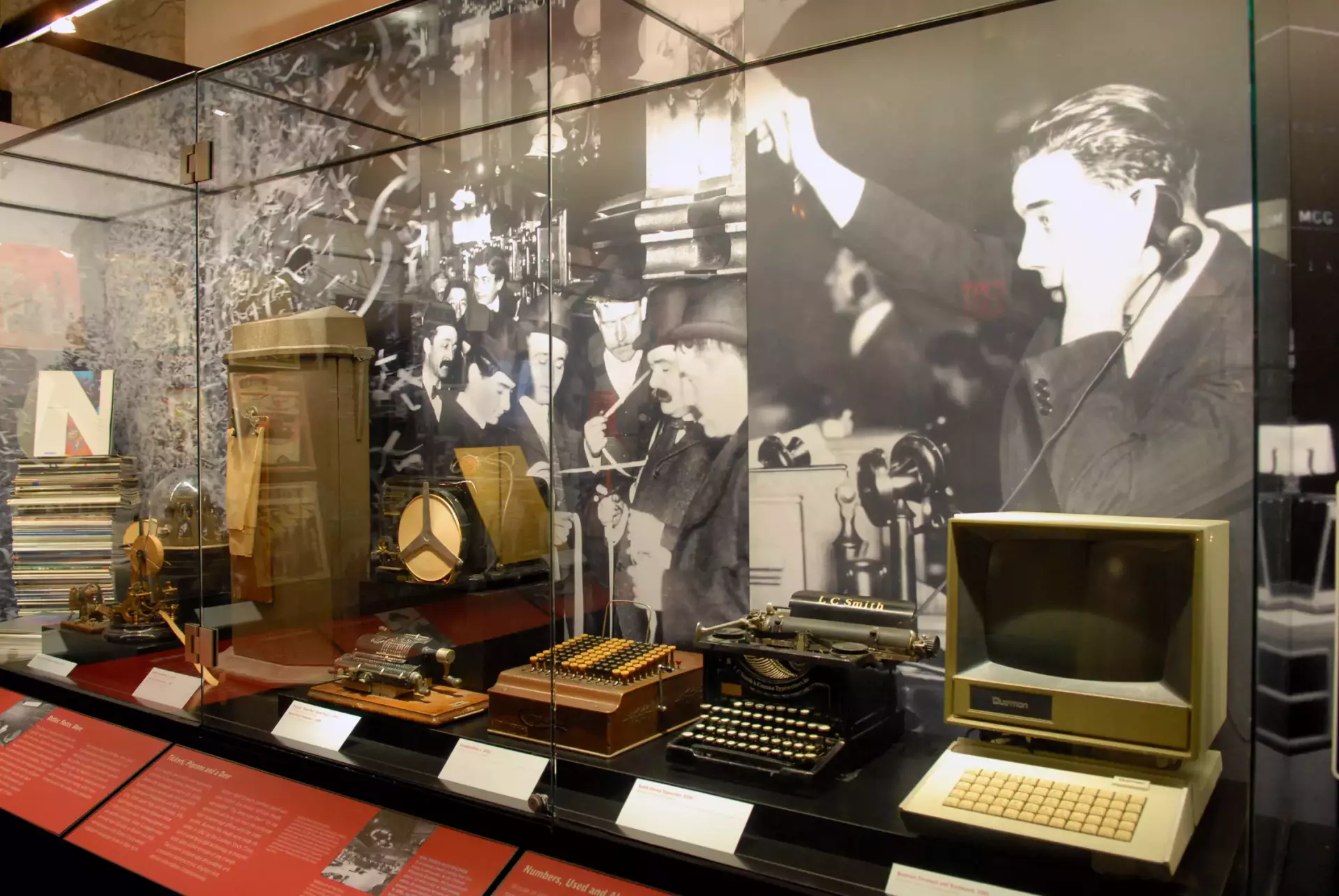
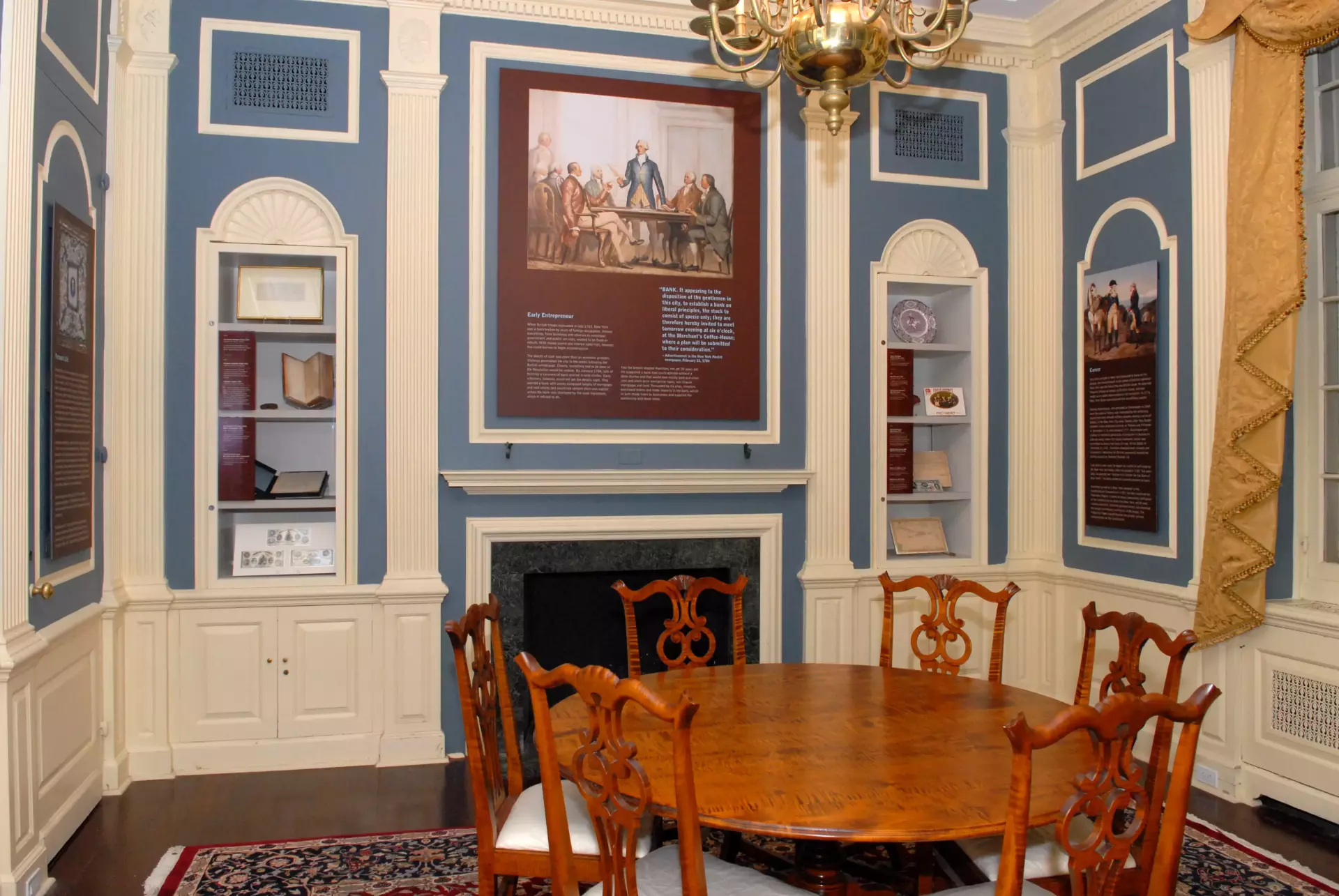
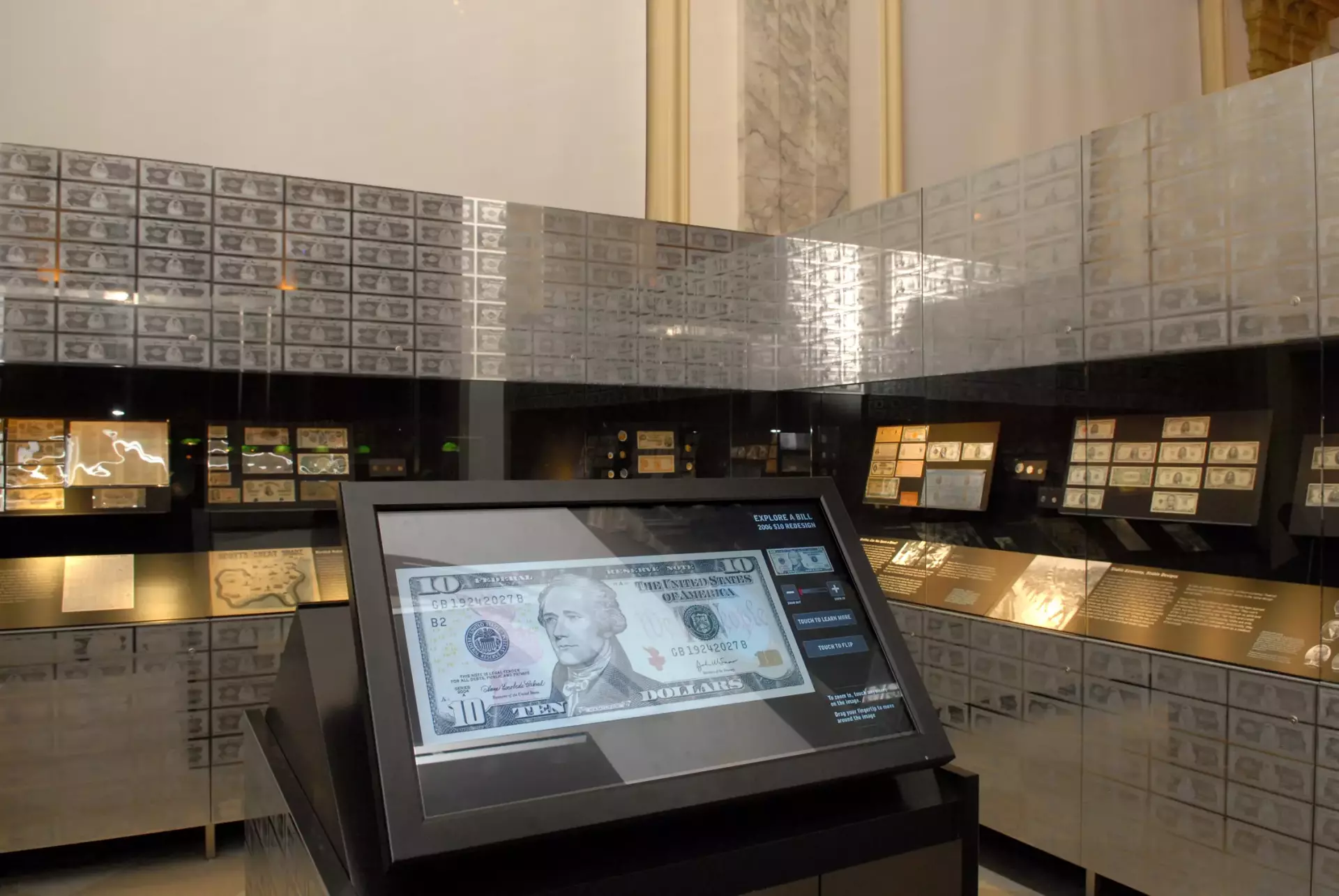
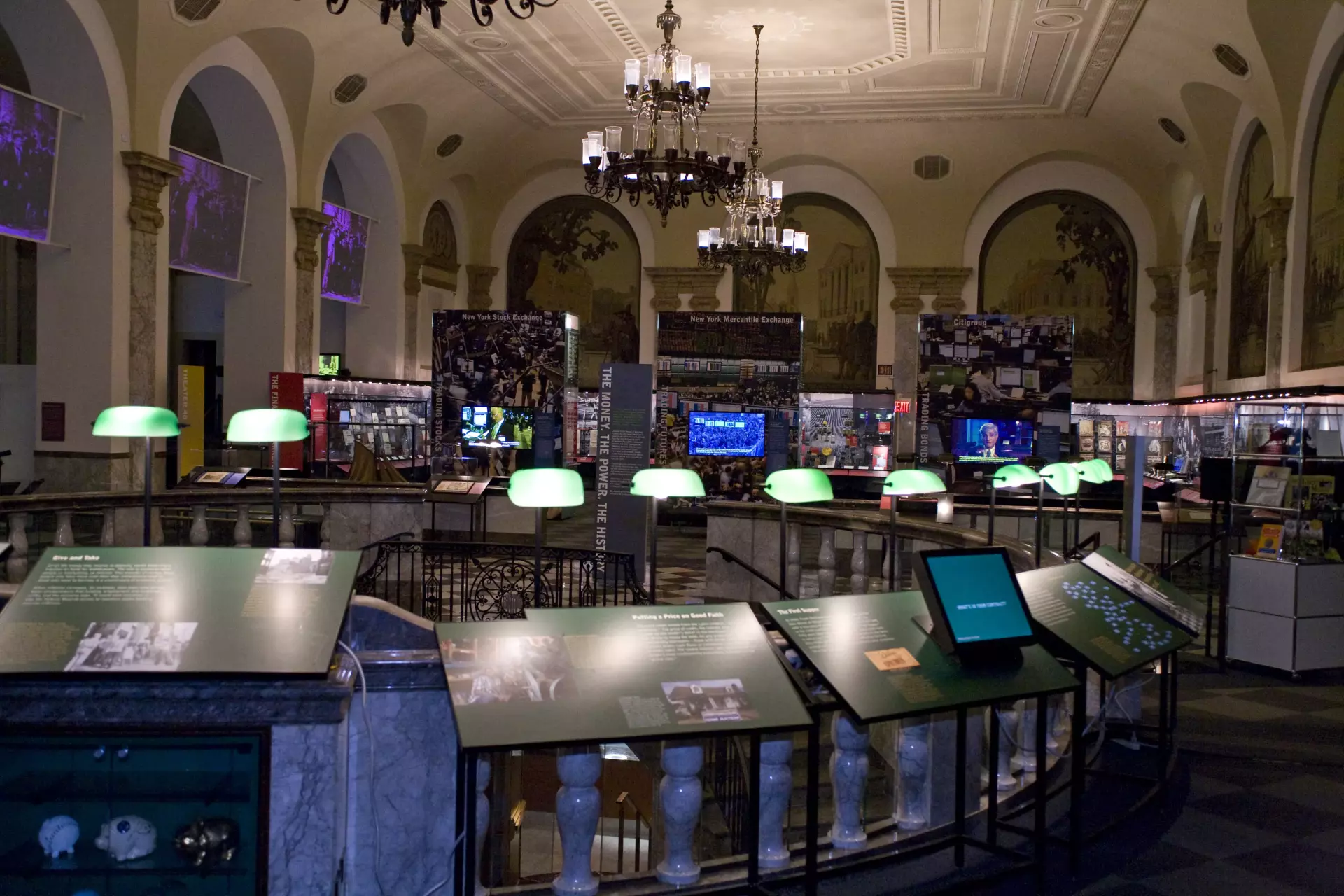
The Museum of American Finance offers a fascinating look into the world of finance and the markets. Despite its modest size, it provides an educational experience filled with intriguing exhibits that regularly change, ensuring that there is always something new to learn.
Visitors can explore various displays that delve into the history and development of financial markets. These exhibits cover a wide range of topics, from the evolution of currency to the rise of modern-day stock exchanges. Interactive elements and detailed information help demystify complex financial concepts, making them accessible to everyone.
As of March 2024, the museum has temporarily closed its doors. The closure is due to the search for a new location, indicating plans for future growth and improvement. This temporary pause allows for anticipation of what new offerings might come when the museum reopens.
Source - https://en.wikipedia.org/wiki/Museum_of_American_Finance
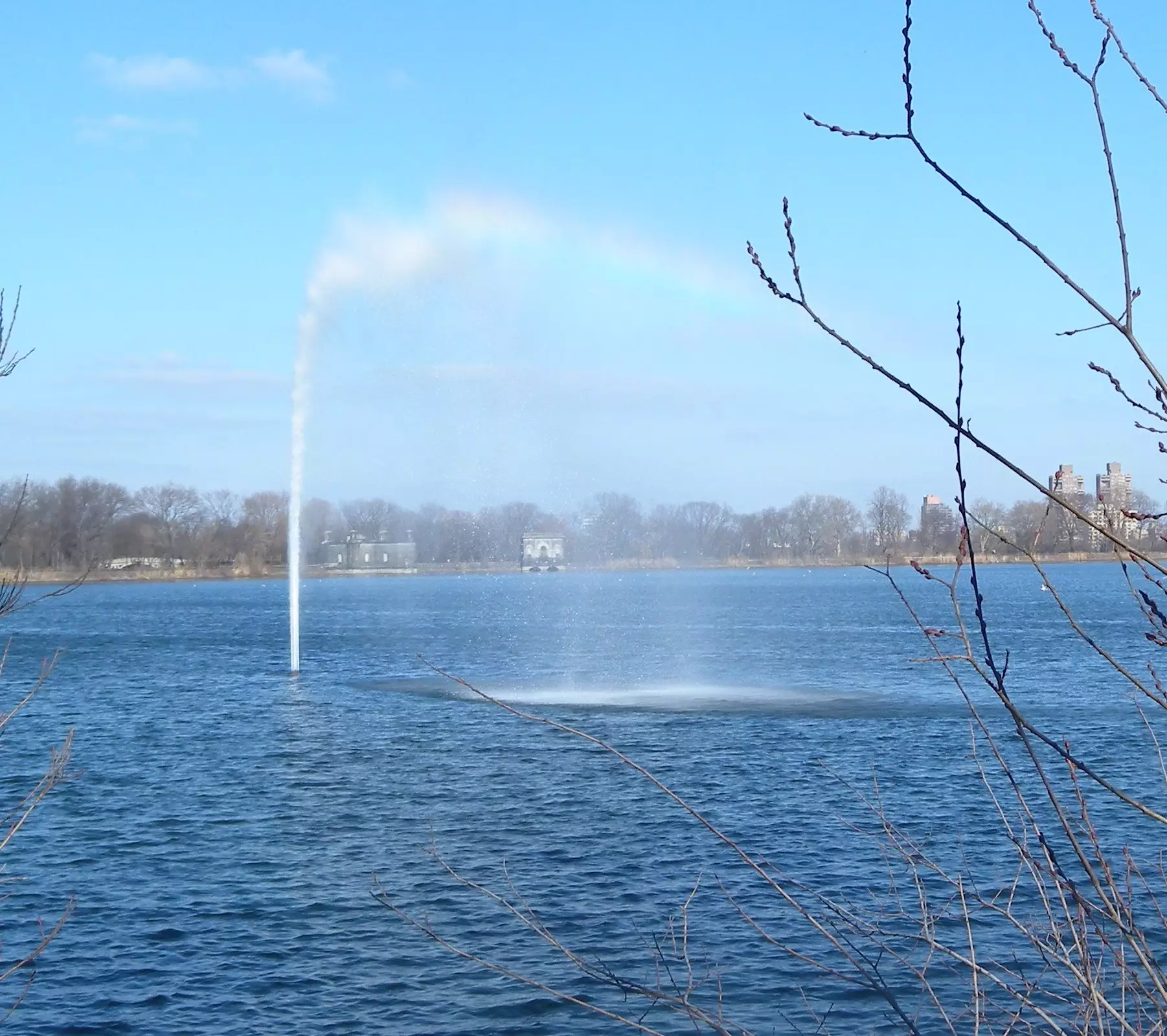
Near Grand Army Plaza, the Pond offers a tranquil setting just within the boundaries of the park. A rustic wood structure, "Cop Cot," overlooks the pond from an outcrop near the Sixth Avenue entrance.
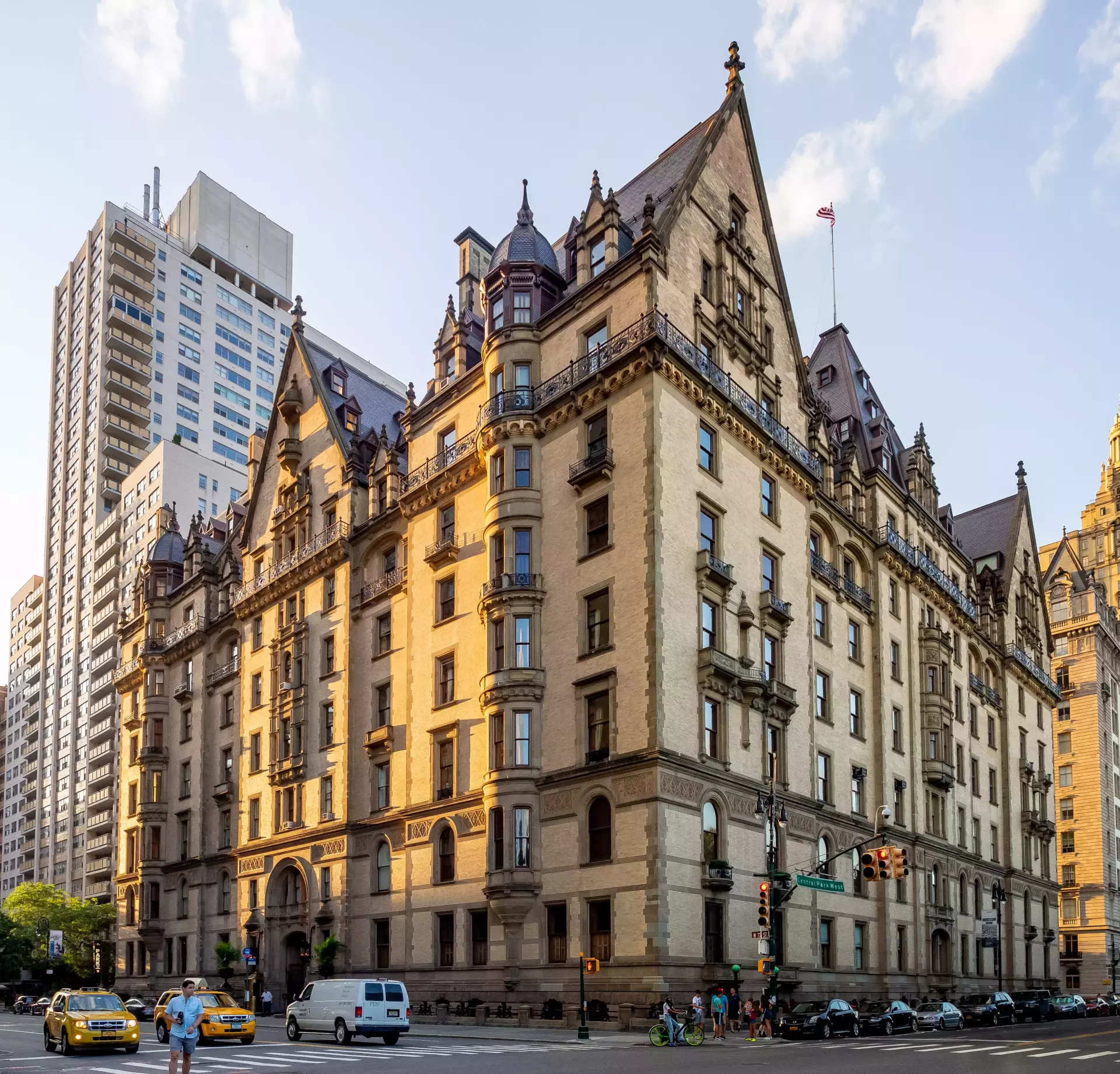
The historic building with the distinctive, iconic twin towers and a star-studded housing cooperative board. Built in 1930 in a vaguely Art Deco style to the design of Emery Roth, the San Remo actually has two separate addresses, lobbies and sets of shafts, each for a half of the building topped with a tower.
One of the Seven Sisters colleges, and is affiliated with Columbia University.
The garden is 52 acres and the layout was well planned. It is definitely worth a visit. Designed by the Olmsted Brothers in 1910 and open to the public since 1911, the garden includes an authentic Japanese garden, a Children's Garden, and the Cranford Rose Garden. The garden has the largest cherry blossom trees in one place outside of Japan. There are 42 gorgeous varieties. The Brooklyn Botanic Garden hosts various festivities throughout the year, including Hanami Sakura in May and the Chile Pepper Festival in October.
For most of the 18th century, Africans in New York City were buried in a graveyard outside the city. The graveyard was eventually forgotten and was rediscovered in 1991. This museum and memorial site commemorate the estimated 15,000 Africans that were interred on the site of the memorial. Note that the museum is located inside of a Federal building so airport-style security should be expected.
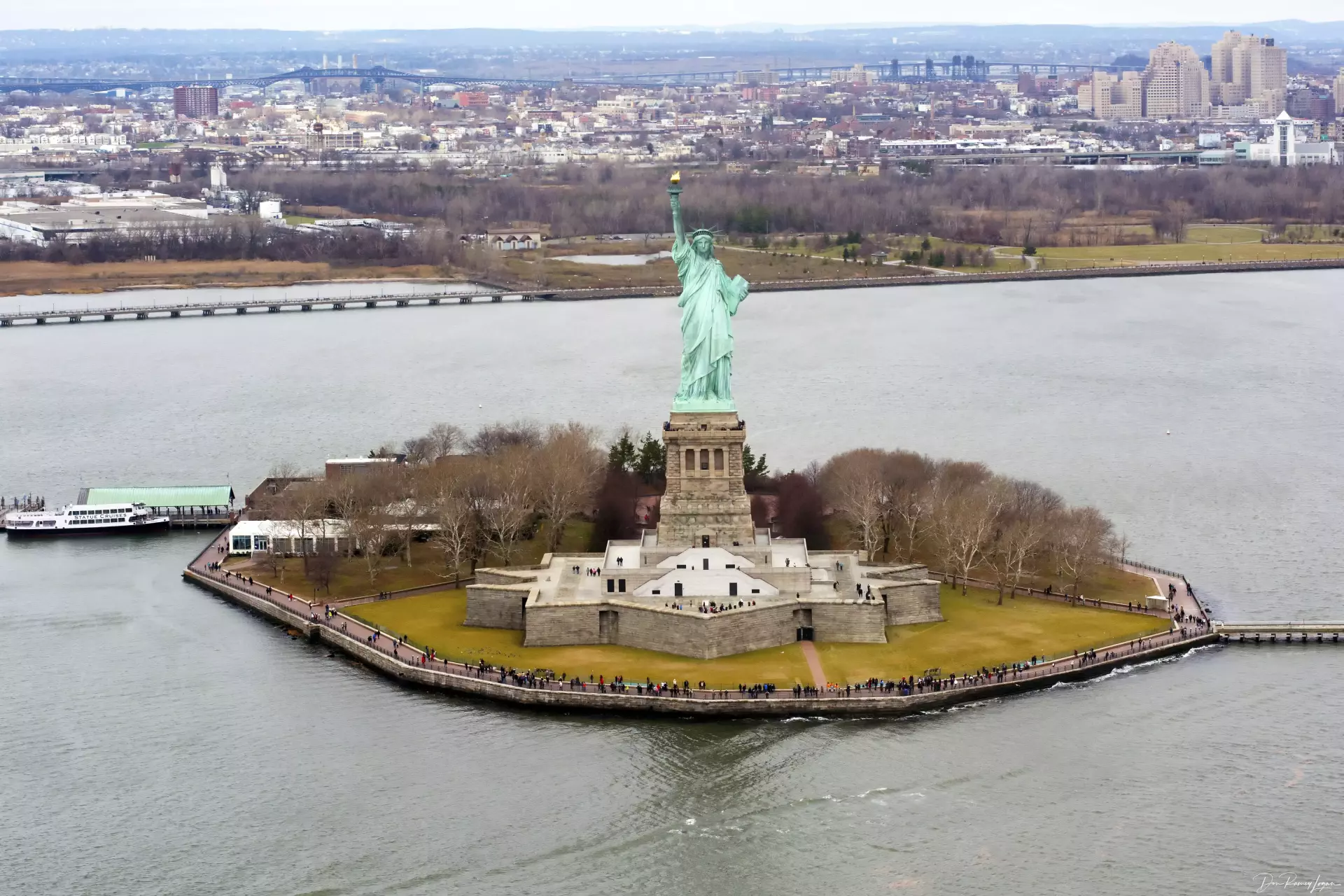
Ellis Island was home to the nation's primary federal immigration station, with over 12 million immigrant steamship passengers passing through from its opening in 1892 to its closing in 1954. Today, over 40 percent of America's population can trace their ancestry through Ellis Island. The island is home to the American Family Immigration History Center, which contains manifests of 25 million immigrants, passengers, and crew members who entered New York Harbor. The Immigration museum at Ellis Islands has details about "Peopling of America" and if you are an avid history lover, this museum will need at least 3-4 hrs of your time. Since the ferry ride takes you to both Ellis Island as well as the Liberty Island, you will have to plan your day well.
Housed in a 560,000-square-foot, Beaux-Arts building, the Brooklyn is the 2nd largest art museum in New York City and one of the largest in the USA. Its world-renowned permanent collections include more than one million objects, from ancient Egyptian masterpieces to contemporary art, and represent a wide range of cultures. It is a 30-minute subway ride from Midtown Manhattan, and has its own subway station (renovated in 2019-20), the museum is part of a complex of 19th-century parks and gardens that also includes Prospect Park, the Brooklyn Botanic Garden, and the Prospect Park Zoo. On the first Saturday of each month, the museum is open until 11PM with free admission and special events.
On the 70th floor of the Comcast Building (better known by some as "30 Rock") is this narrow observation deck, built to resemble the deck of a cruise ship. The deck affords uninterrupted views over Central Park to the north and across Midtown to the south.
This neo-Romanesque fairy castle was built in 1891, and a northern addition in very similar style was built in 1933. The older building is a busy post office serving Downtown Brooklyn and the northern addition houses the United States Bankruptcy Court for the Eastern District of New York.
A famous Ivy League college that has existed since British colonial times, when it was called King's College.
The John Bowne House was built by John Bowne in 1661. It is the oldest building in Queens, and it is one of the oldest buildings in New York City. John Bowne was a Quaker who advocated religious freedom, which was later written into the Bill of Rights. John Bowne's great-grandson, Robert Bowne, strongly advocated for the end of slavery in America. The house was the home of several generations of the Bowne House until 1945, when it was donated and converted into a museum.
Opened on November 15, 2022, this interactive museum utilizes technology to convey the history of Broadway, complete with props from past shows, costumes, and other artifacts. You can learn about how a Broadway show is made, and there is a gift shop selling not only their own merch, but also products from current Broadway shows and Broadway in general.
Built in 1766, the chapel is an active part of the Parish of Trinity Church and is Manhattan's oldest public building in continuous use. It is the only remaining colonial church in New York City and was George Washington's place of worship after he was inaugurated as president. Since 2001, the chapel has been known for surviving the events of 9/11 without even a broken window - despite being across the street from the World Trade Center - and for its role as a place of refuge for the WTC recovery workers in the days that followed.
Inwood Hill Park contains the last tracts of virgin forest in Manhattan. Many arrowheads and other artifacts of the former Native American occupants of Manhattan Island have been found in this park.
The Christmas Tree, the Skating Rink, NBC Studios, the shops and hubbub - you can't miss it. The Christmas Tree and the Skating Rink are naturally not year round, but in the summer, the complex is a hub for touristy operations. Within the striking Art Deco buildings of the complex are several dining establishments overlooking the area and many stores. See the Rockettes, another show, or just tour the famous Art Deco masterpiece. On the 70th floor of the Comcast Building (better known by some as "30 Rock") is this narrow observation deck, built to resemble the deck of a cruise ship. The deck affords uninterrupted views over Central Park to the north and across Midtown to the south.