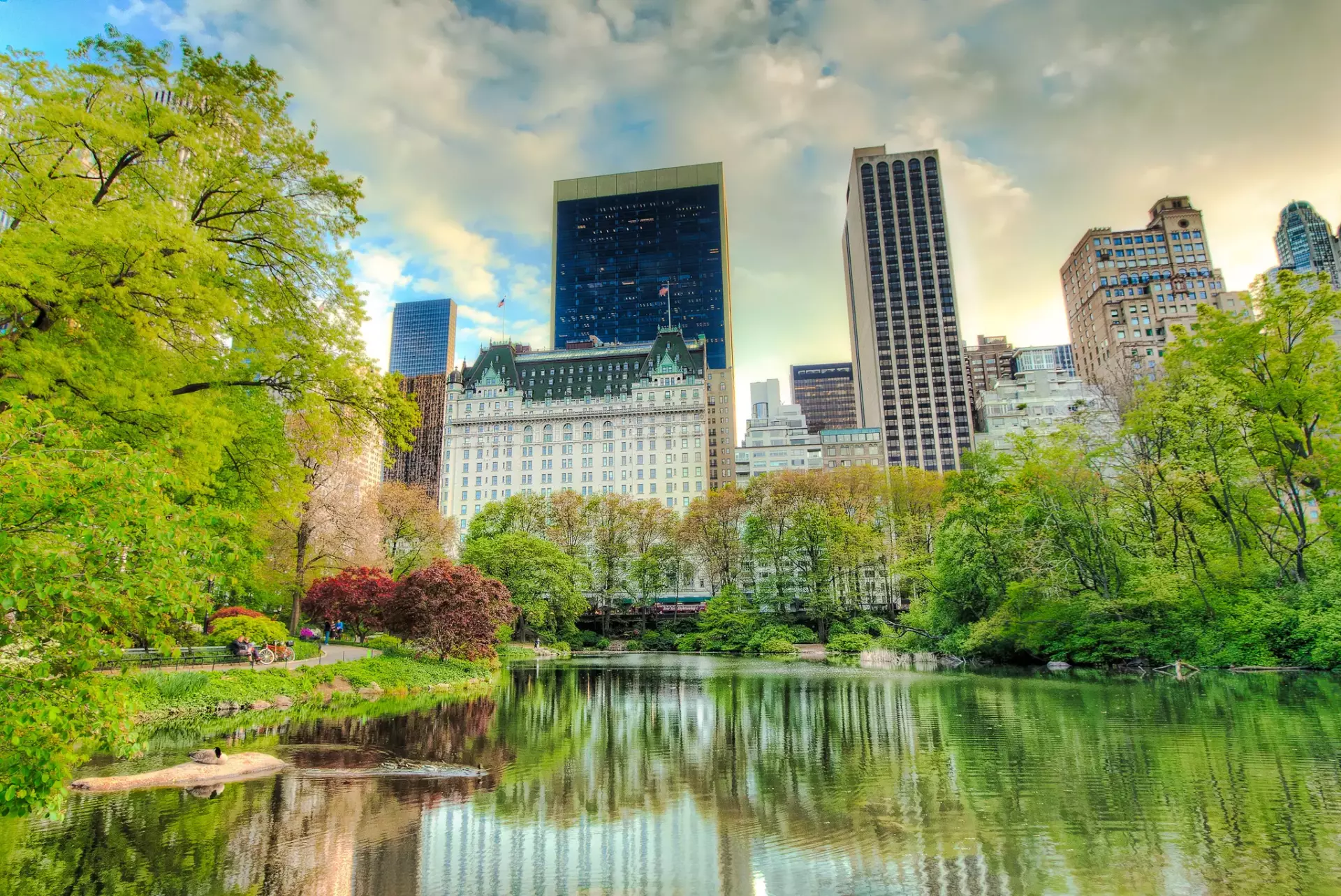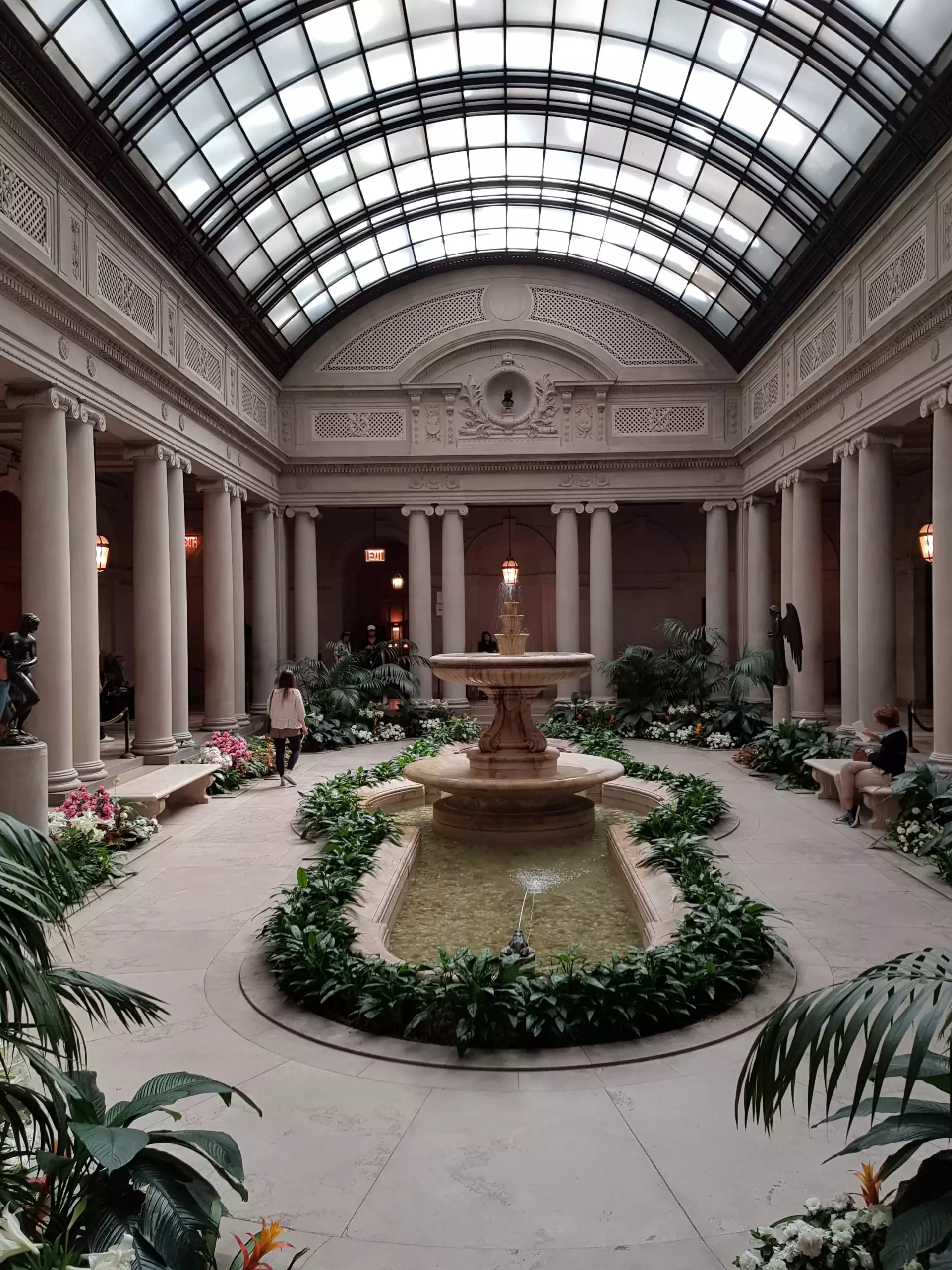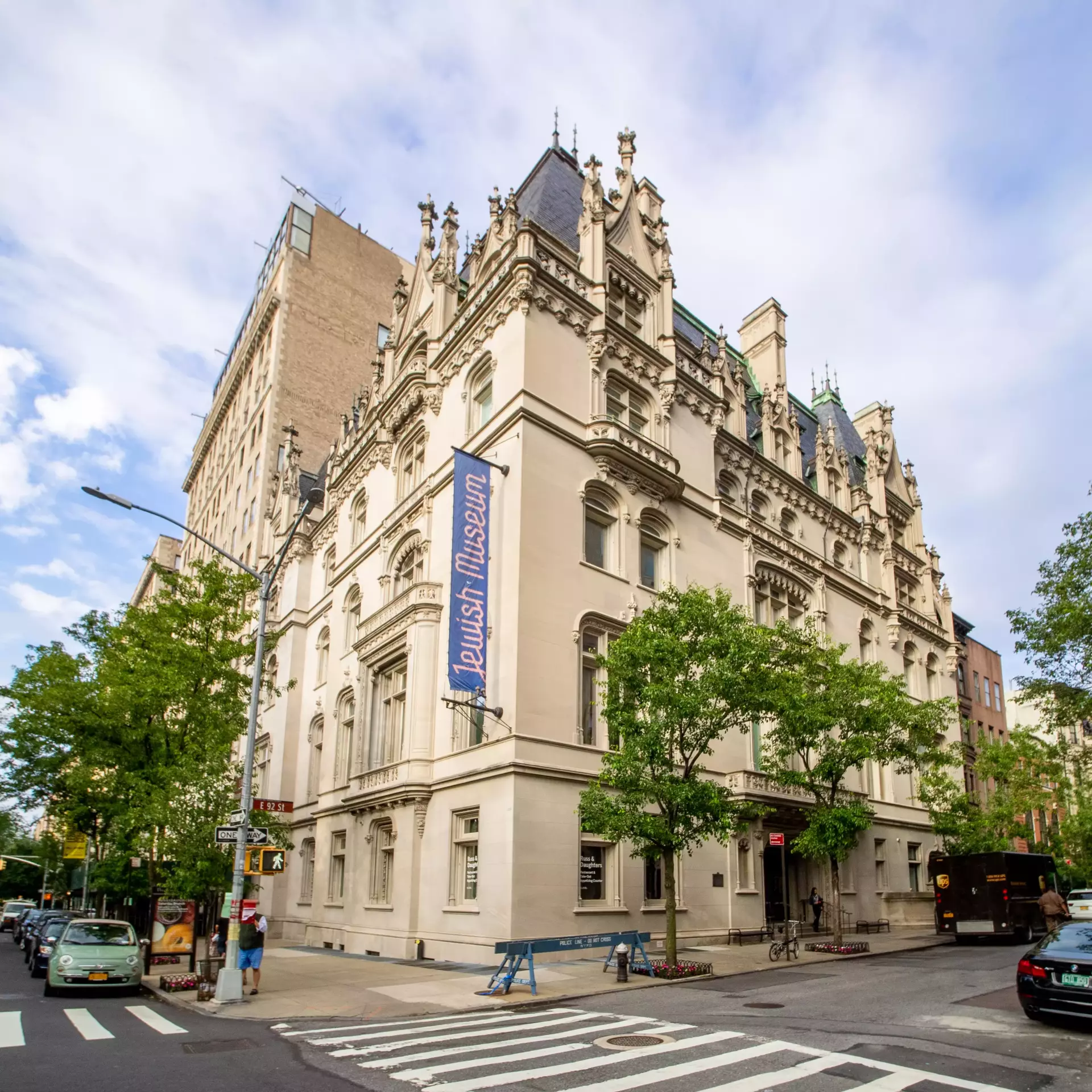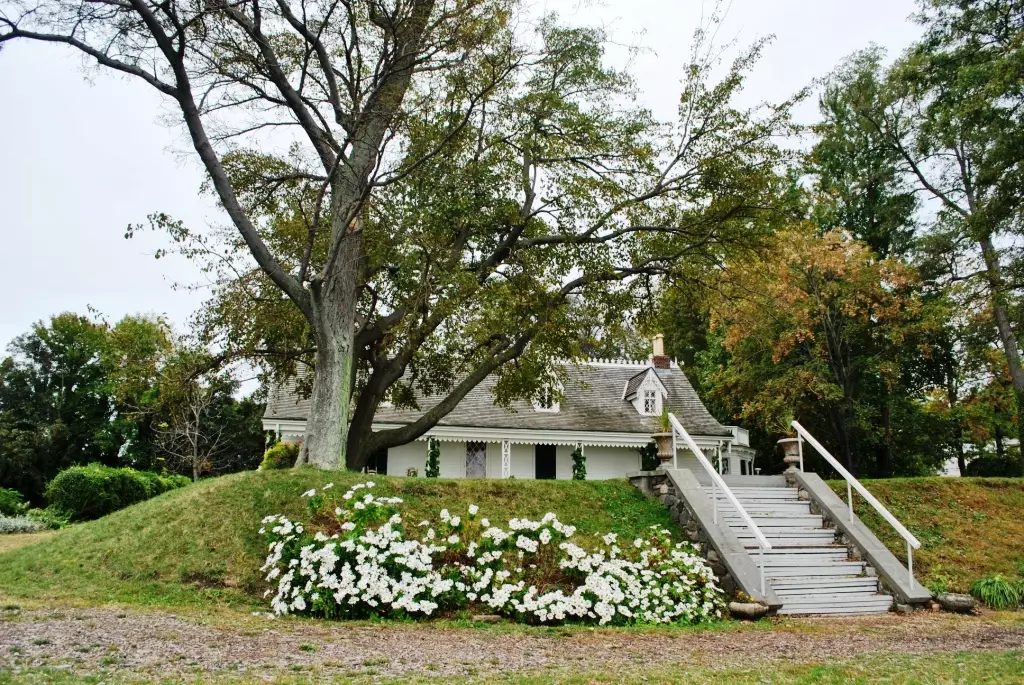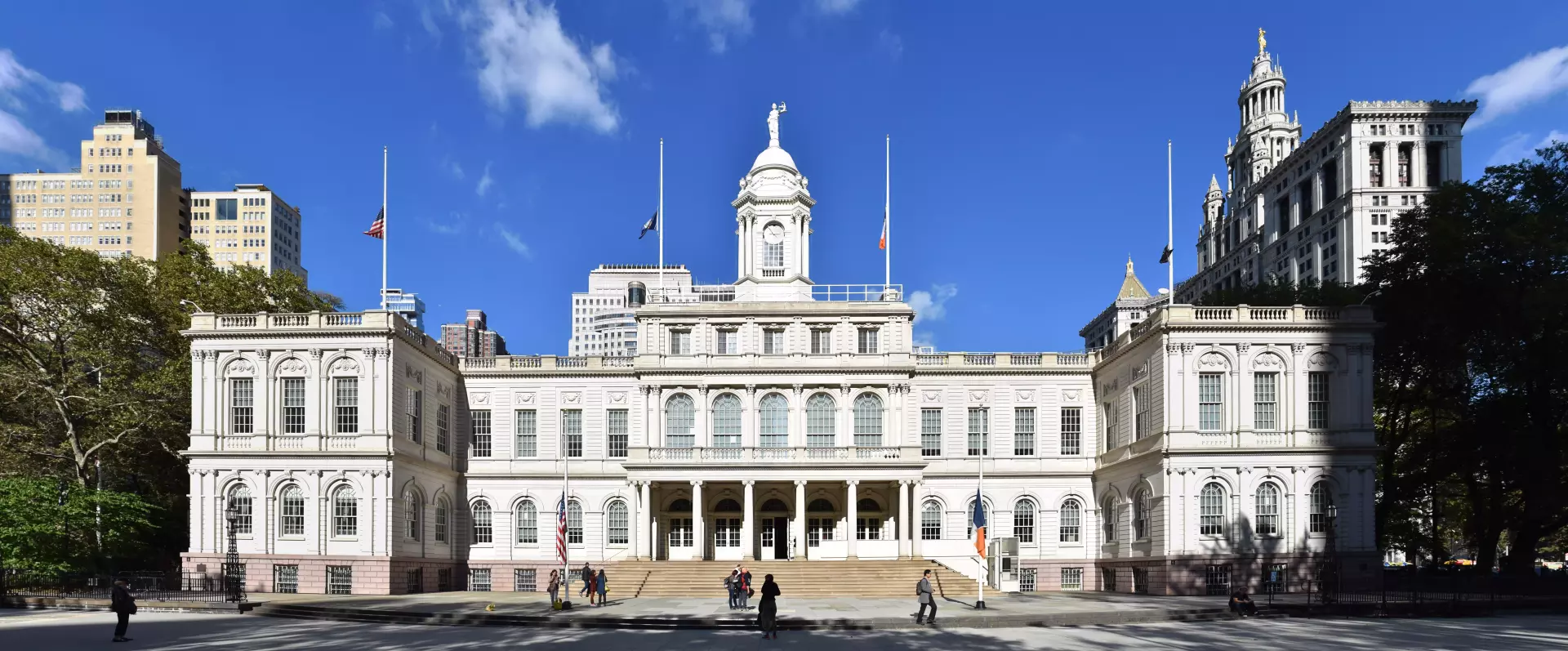
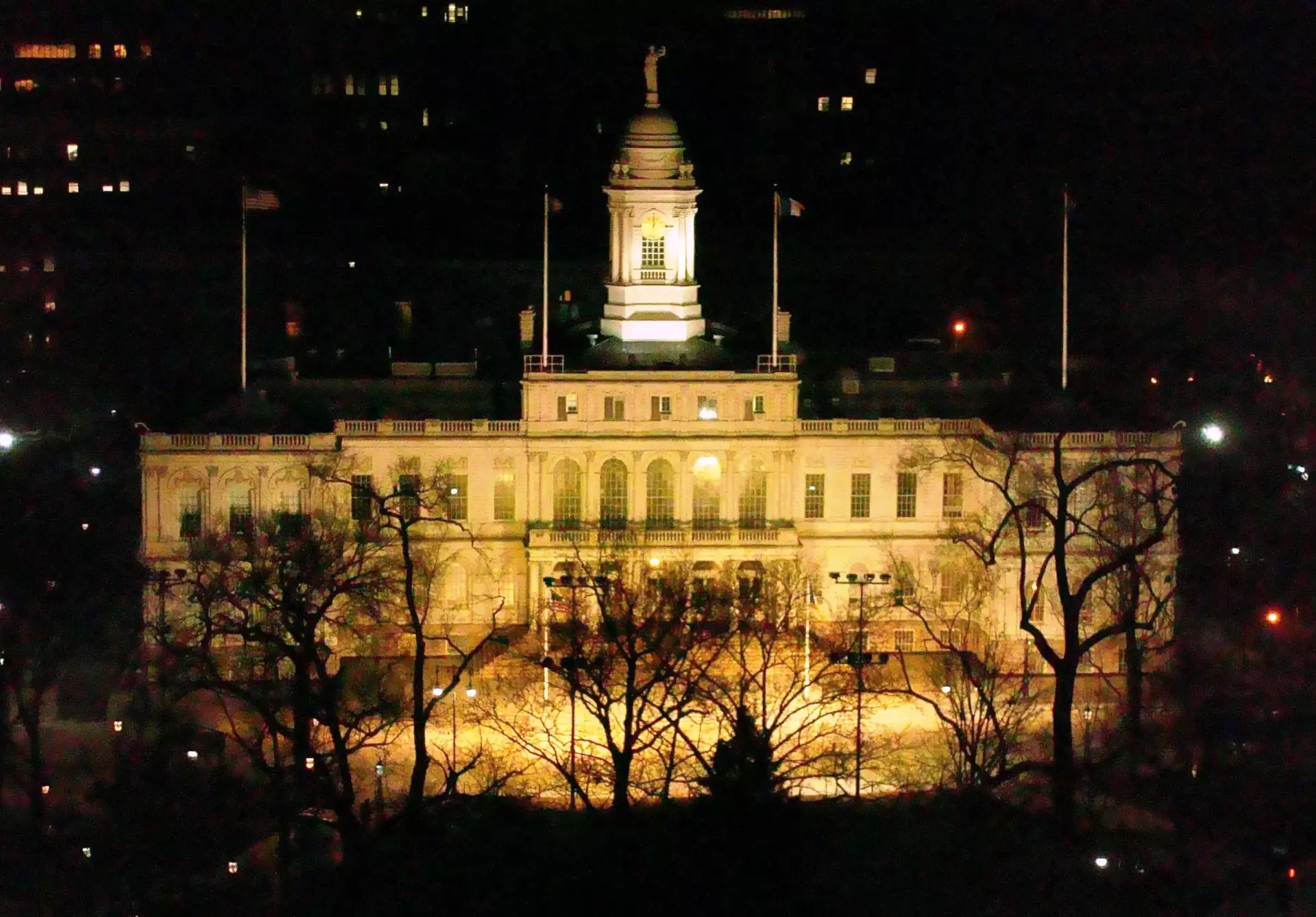
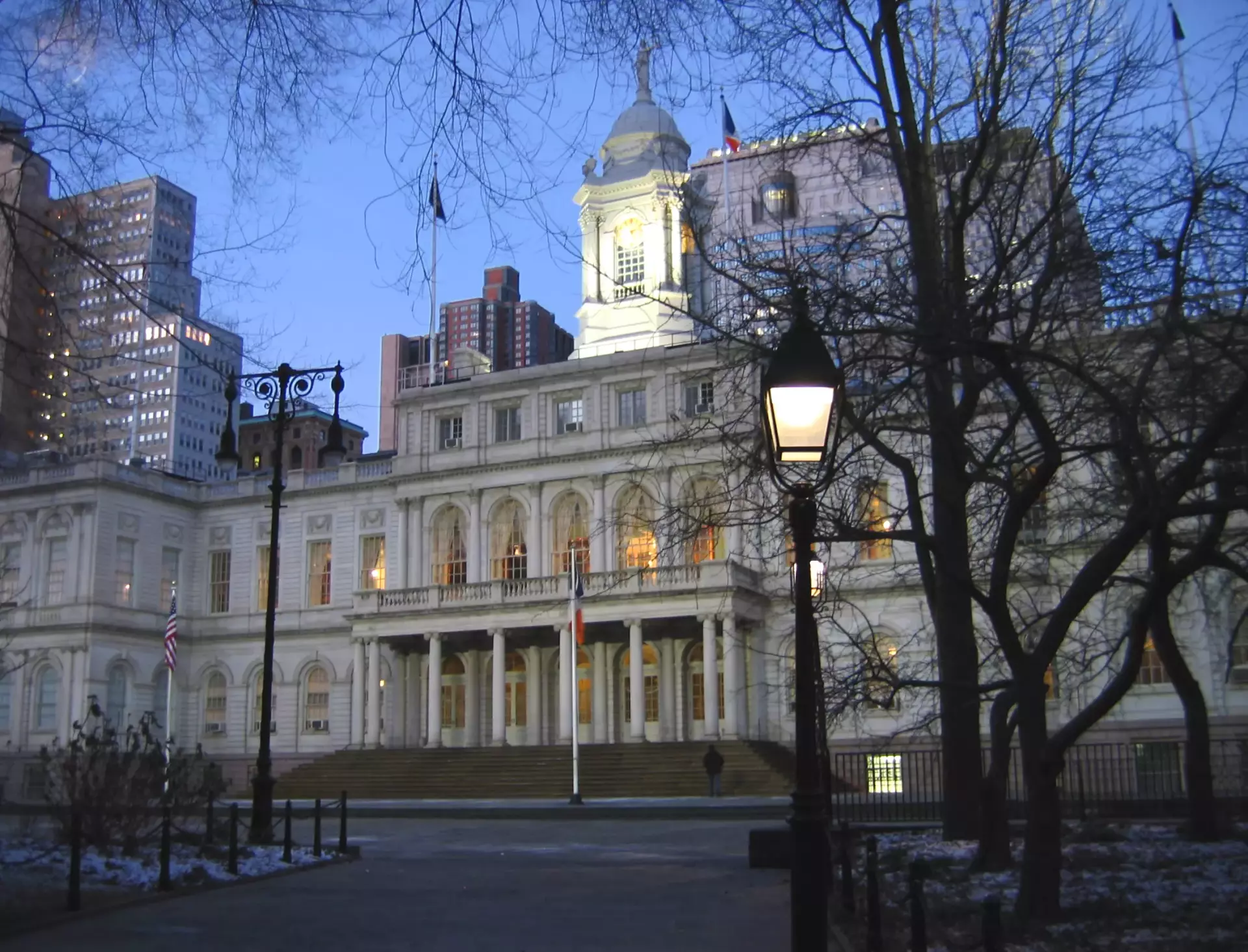
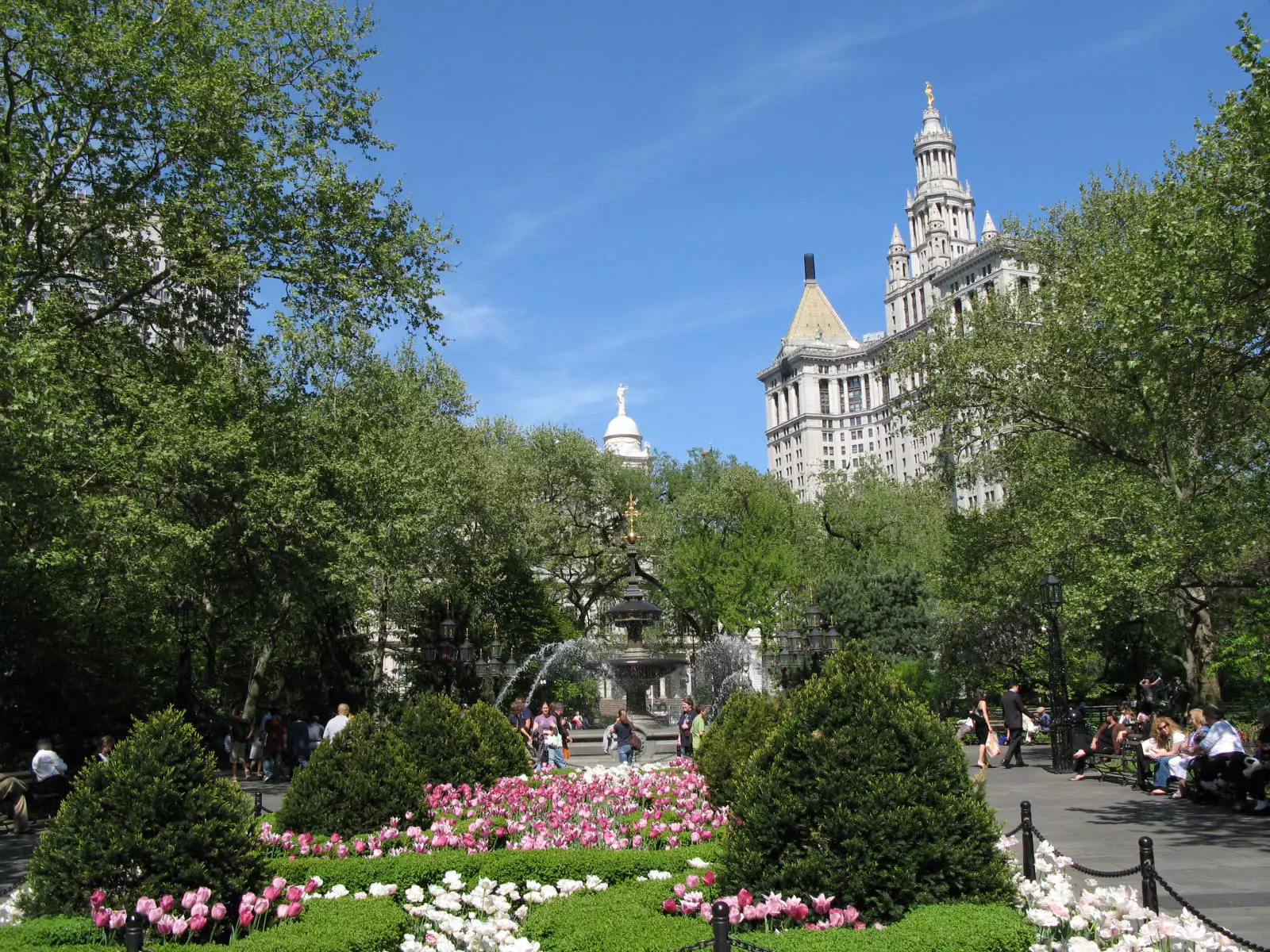
On a distinctive triangular block bordered by Broadway, Park Row, and Chambers Street lies City Hall, a stunning white architectural masterpiece completed in 1812. This historic building, with its graceful design, is still the seat of the mayor's office and New York City Council chambers. While access to the building itself is restricted to guided tours, the surrounding park provides a refreshing escape. Shady trees offer cool respite, and a charming fountain adds to the peaceful ambiance just south of the building.
North of City Hall, still within the same block, stands the imposing Tweed Courthouse. This magnificent government building is forever linked to Tammany Hall boss William M. Tweed. Though its grand architecture is a sight to behold, it carries a storied past. Tweed was notorious for using the courthouse construction as a means to embezzle vast amounts of money from the city's budget. In a twist of fate, he was eventually convicted in a courtroom within this very building, making it a landmark of justice and intrigue.
Source - https://en.wikipedia.org/wiki/New_York_City_Hall
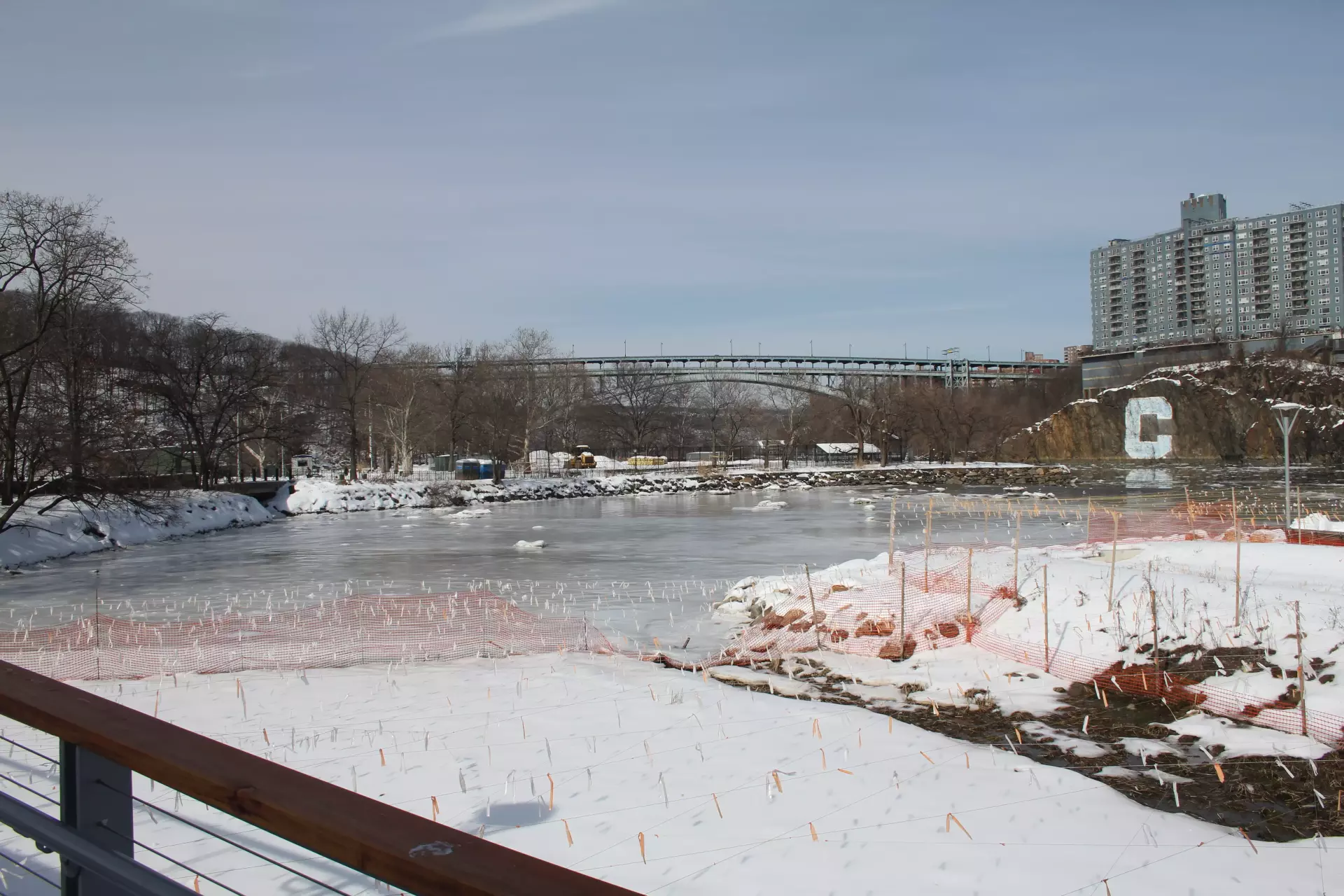
This beautiful park extends along the Hudson River north of Riverside Park and features wonderful views of the George Washington Bridge and New Jersey and a community feel.
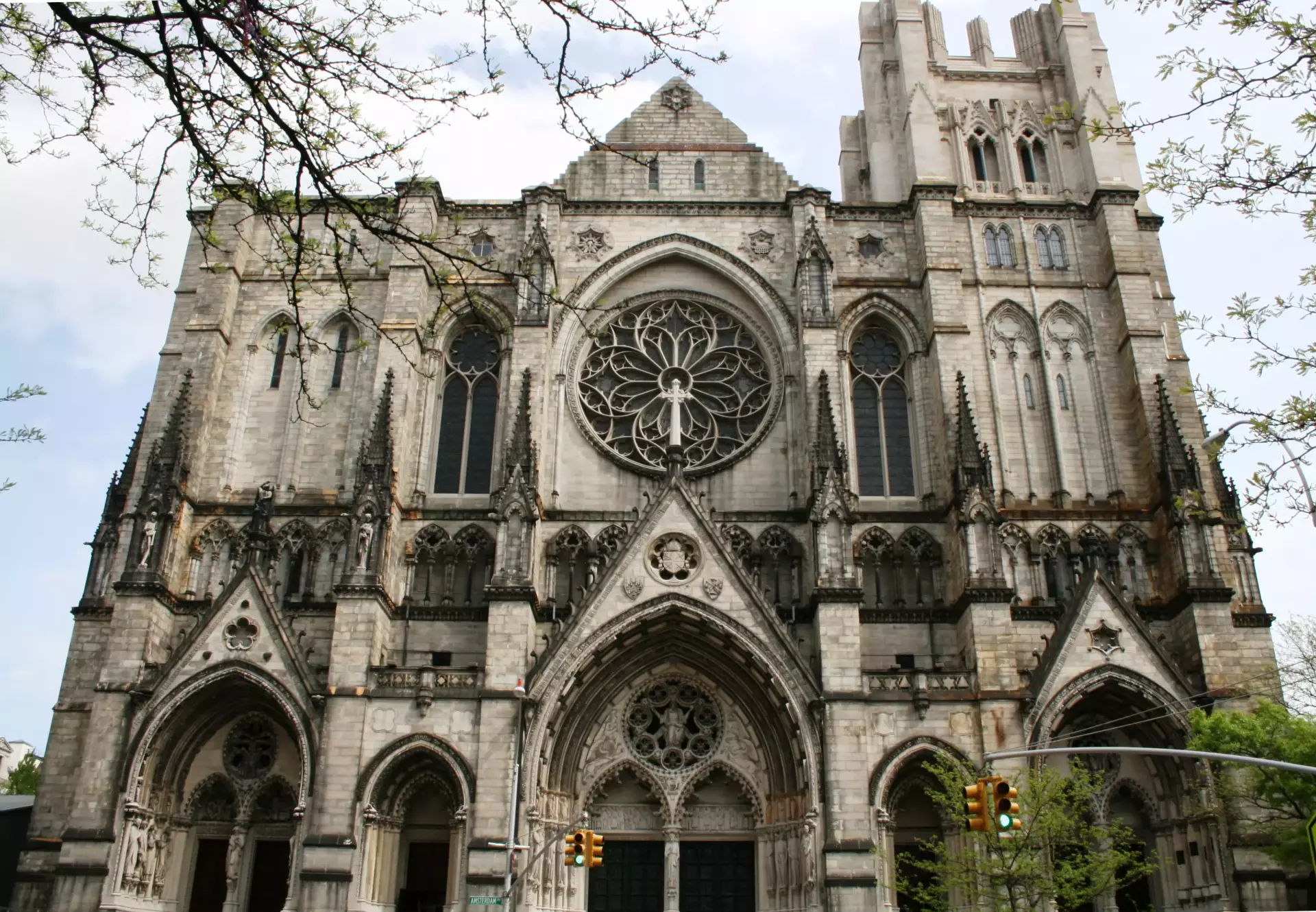
The interior of this Episcopal church is a peaceful place, and both the exterior and interior are architecturally harmonious and worth looking at if you are walking nearby.
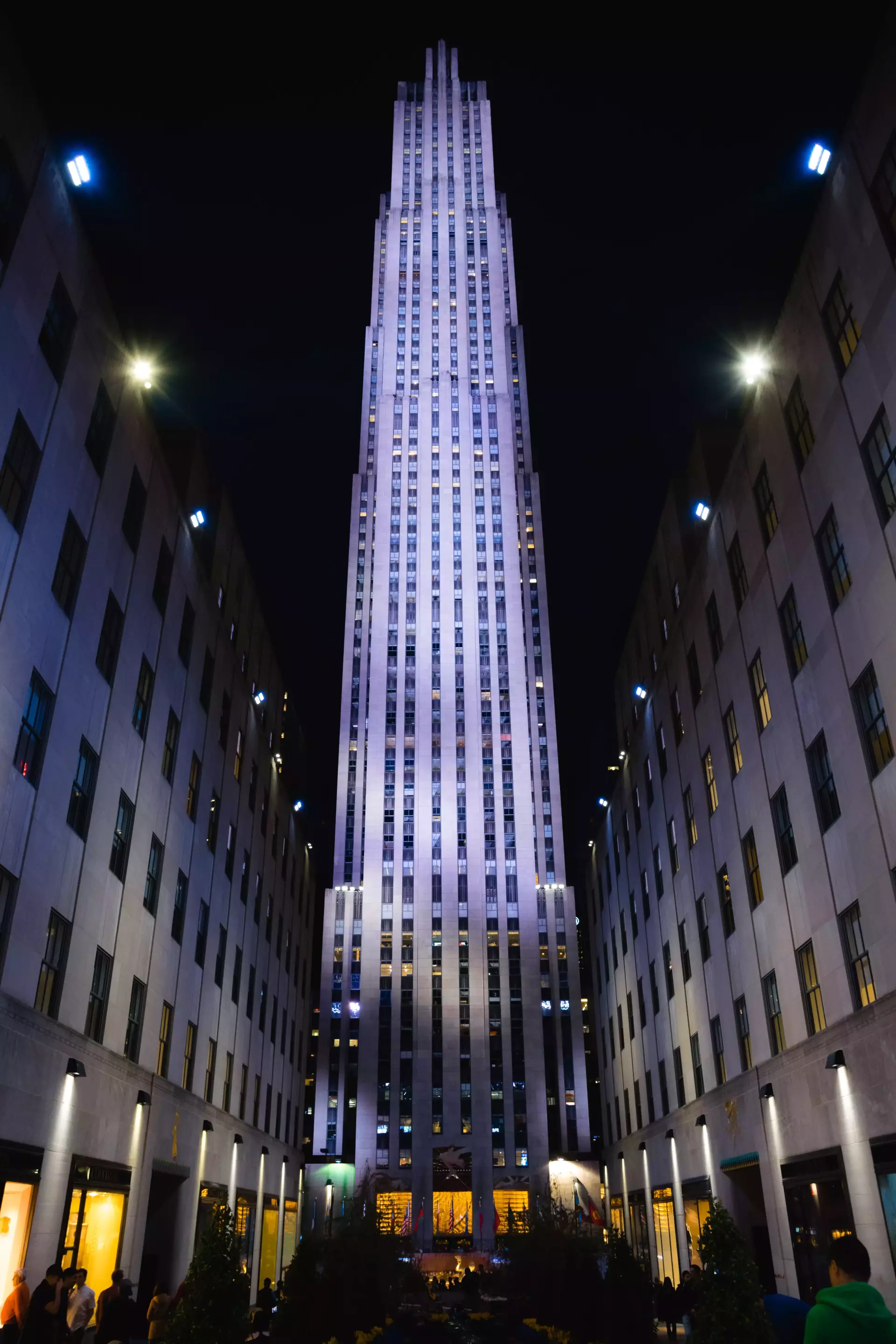
See the Rockettes, another show, or just tour the famous Art Deco masterpiece.
So named in 1981 in memory of John Lennon, the former Beatle, who was murdered close by outside his home in the Dakota building. Lennon's widow Yoko Ono, who still lives in the Dakota, subsequently donated $1 million to upgrade the area with hundreds of tree and flower species, including strawberries. The area serves as a Garden of Peace and includes a memorial floor mosaic (donated by the Italian city of Naples) that says simply "Imagine", referring to the title of one of Lennon's evocative songs.
Yet another unique but rich treat on 5th Avenue, the AIHS is a non-profit organization that educates visitors on Irish American culture and history. Immersive and traditional events are held often along with exhibits showcasing the array of unique art and music. If performing and visual arts aren't your thing, you can visit the library instead with over 10,000 books, newsletters, newspapers, and pieces of literature dating back to the 1700s that feature a wide variety of otherwise unknown topics that are great for anyone interested in European culture and history.
The garden is 52 acres and the layout was well planned. It is definitely worth a visit. Designed by the Olmsted Brothers in 1910 and open to the public since 1911, the garden includes an authentic Japanese garden, a Children's Garden, and the Cranford Rose Garden. The garden has the largest cherry blossom trees in one place outside of Japan. There are 42 gorgeous varieties. The Brooklyn Botanic Garden hosts various festivities throughout the year, including Hanami Sakura in May and the Chile Pepper Festival in October.
None of Central Park is actual virgin forest, but this is the closest any part of the park gets to feeling like genuine forest. It is beautiful and cool in hot weather. However, like a real forest, it is a mosquito habitat, so make sure to use insect repellent before walking through this part of the park.
At the southern tip of Manhattan, Battery Park is a waterfront green space, named for the artillery batteries which were installed here to protect the settlement of New York when it was under Dutch, then British rule. In the lead-up to the War of 1812, 40.70343-74.0168214 Castle Clinton was constructed as a fort to protect the city, and is now operated as a small museum. There are several memorials in the park, including 40.70387-74.0172715 The Sphere, a public art piece originally housed on the World Trade Center site which survived the events of September 11 and was moved to Battery Park. Ferries departing to the Statue of Liberty and Ellis Island (see below) depart from here.
Probably the most famous of the Guggenheim foundations (others found in Bilbao and Venice), which hold avant-garde modern art by artists such as Kandinsky and Mondrian, the New York branch is housed in a unique and famous building designed by Frank Lloyd Wright and rendered in a rounded, organic form and completed in 1959. Be sure to take the elevator to the top floor, then follow the spiral viewing floors downwards to the street level. One of eight buildings by Wright to be listed as a world heritage site.
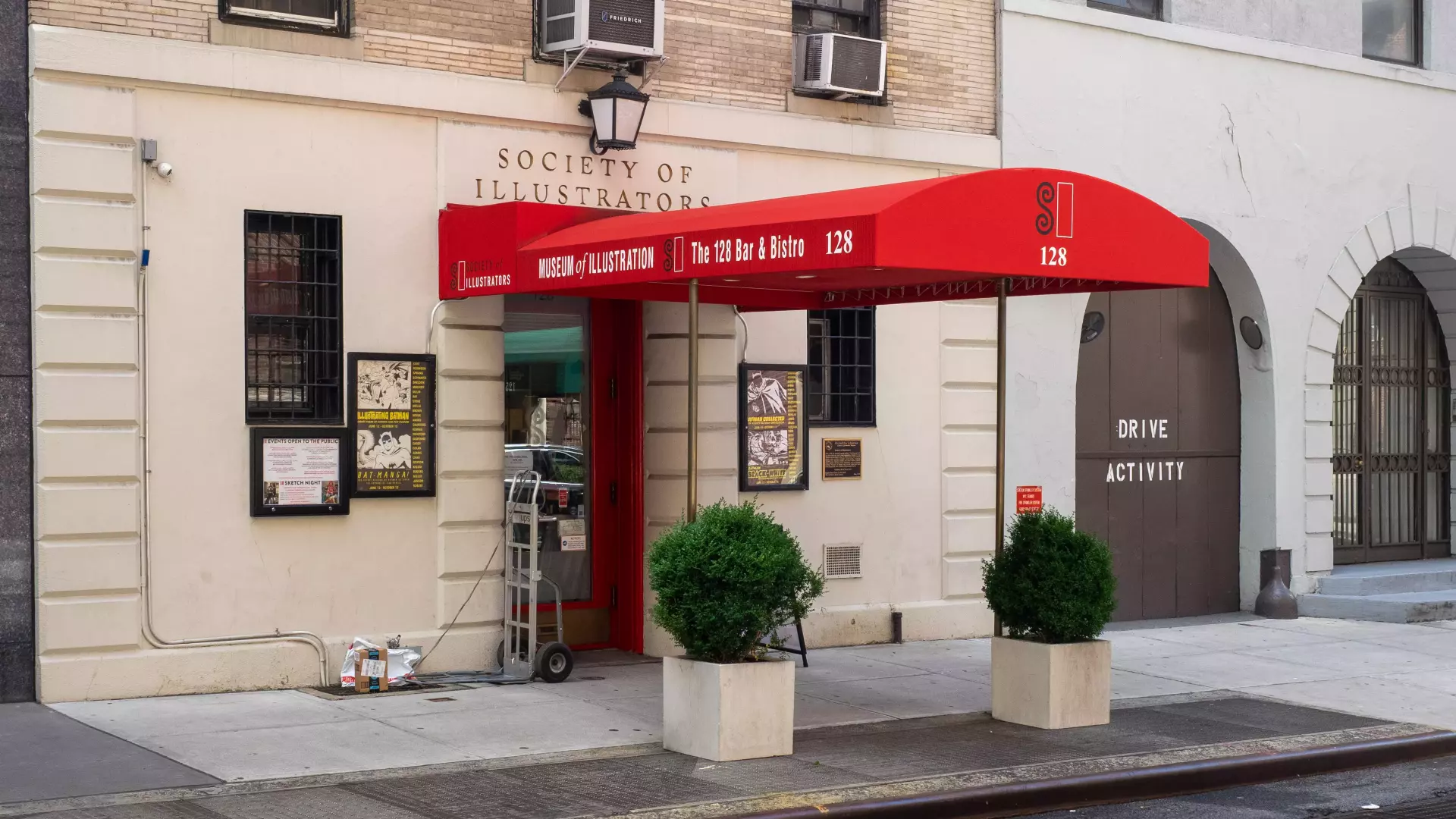
The Society of Illustrators is one of the many off the beaten path museums in New York City, and while it may not have as many visitors, it certainly isn't a place to miss. Certainly don't miss the art of illustration featured here, with countless historical galleries since the museum's opening in 1901. It's even the origin of the famous "I Want You For U.S. Army" poster of World War I and II.
The Manhattan Bridge, just a bit to the east of the Brooklyn Bridge, with signposted access from Jay St. slightly over 4 blocks north (toward the river) of Tillary St., can also be crossed by pedestrians and cyclists, but if you do so, you will be rattled by passing subway trains that traverse the bridge, your view will be partly obstructed by mesh, and you won't be in a position to see much to the north of the bridge (so no great views of the Midtown skyline like you get from the Brooklyn Bridge walkway). It's still worth doing if you have enough time, though, partly because of the views of the Brooklyn Bridge that you can see from the Manhattan Bridge. As of November 2021, construction is taking place on the bridge; it narrows the path pedestrians and cyclists share in places, but access is otherwise unimpeded.
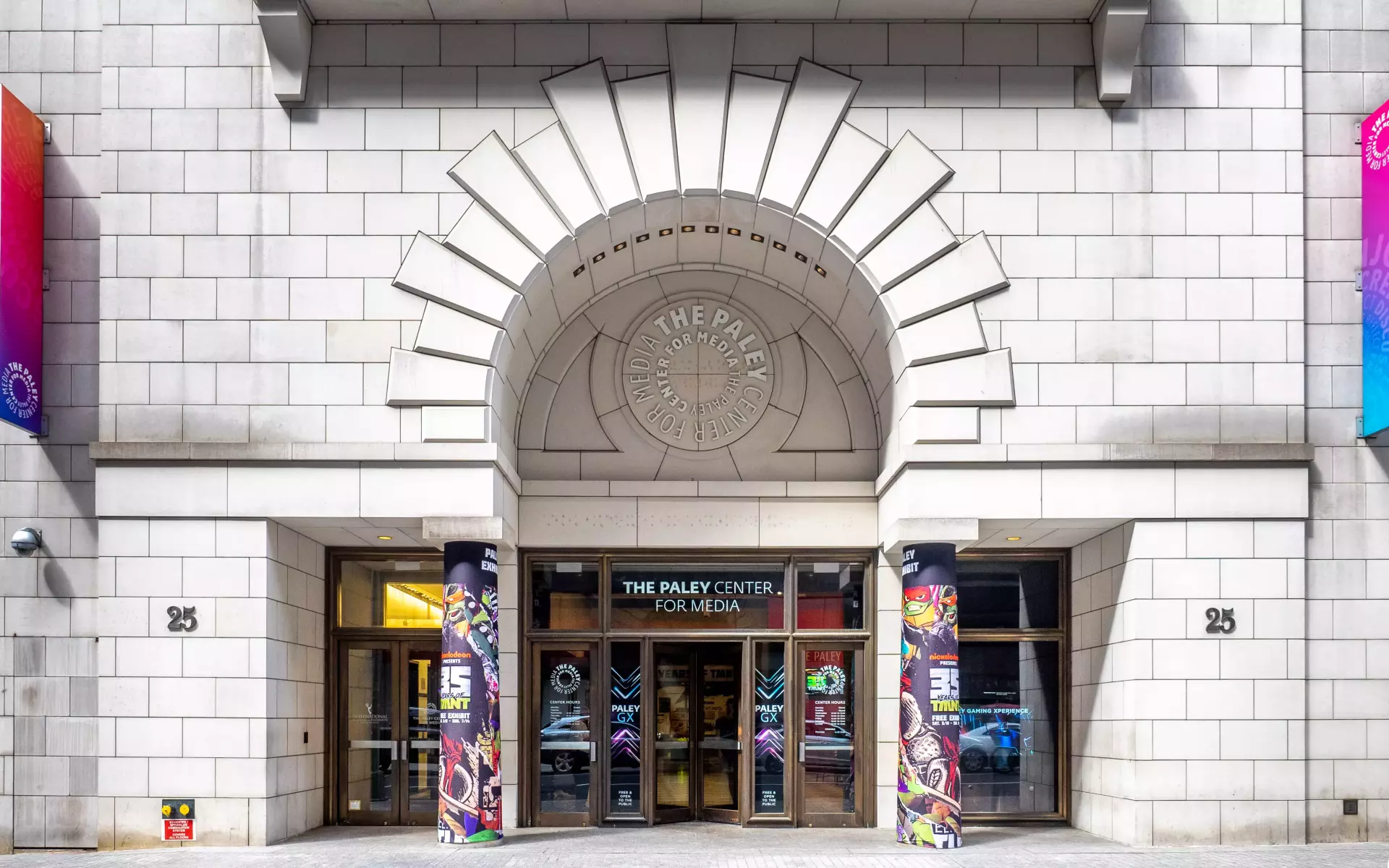
Dedicated to preserving and collecting television programs as a service to the public, the museum consists of two museum branches in Los Angeles and New York City; combined they hold over 100,000 television programs that are available to the public, providing a historical, artistic and cultural perspective to television and radio. You may use their library here for the price of admission. They have lots of old shows and a database so you can see if they have what you want.
A place filled with video screens, LED signs, and flashing lights; a world wonder or a tourist nightmare depending on your perspective, the "new" Times Square is a family-friendly theme park of themed restaurants, theaters and hotels, as well as a developing business district. The lights and signs can be viewed anytime, but the most enchanting experience comes when one visits Times Square at night, as all the signs and screens are ablaze with color. Times Square is also well known for its famous New Year's Eve ball drop. Those looking for the seedy Times Square of years past will find it around the Port Authority Bus Terminal, and on Eighth Avenue to the west. A ticket booth selling discounted Broadway and off-Broadway shows. However, the cheaper tickets aren't the only attraction, as the back of the booth is a large, red-lit glass staircase facing Times Square, which serves as a set of bleachers and offers an excellent opportunity to get above the street and just watch the crowds and flashing signs. Above the booth is a video screen with a live feed of the top step, giving you a chance to appear (if only briefly) on one of the many signs in Times Square. Originally the second-tallest building in the world when it opened in 1905, One Times Square was constructed to be the headquarters for The New York Times, a function it would serve for less than ten years. The annual Times Square ball drop is performed from the roof of this building. And you can't miss the famous Dow Jones news and sports zipper (the first news ticker in the world) attached to its lower facade.
A picturesque brick building that actually predates the park. It was built in 1851 to serve as a munitions supply depot for the New York State National Guard, and was designed to look like a medieval fortress, with battlements overlooking the area. Today the building holds a refreshment stand and a small art gallery with rotating/seasonal exhibits.
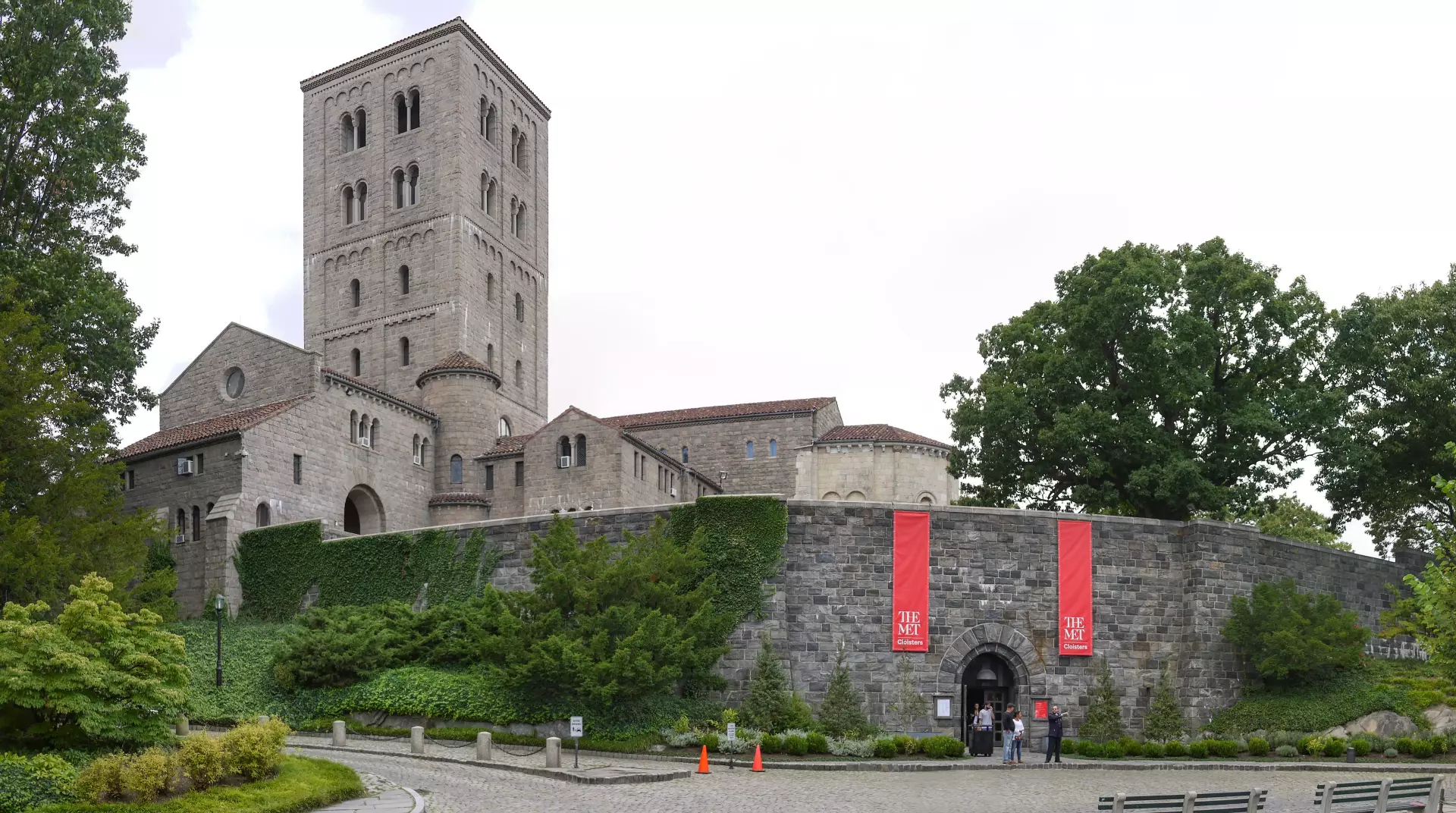
Located on four acres overlooking the Hudson River in Fort Tryon Park, the building incorporates elements from five medieval French cloisters – quadrangles enclosed by a roofed or vaulted passageway, or arcade – and from other monastic sites in southern France. There are various artworks on display in the museum, with the Unicorn Tapestries being the most famous.
A museum and library devoted to Spanish, Portuguese, and Latin American art and culture.
One of Manhattan's favorite meeting points, the centerpiece of this Terrace is the Angel of the Waters fountain, dedicated in 1873 and an enduring icon of the park.
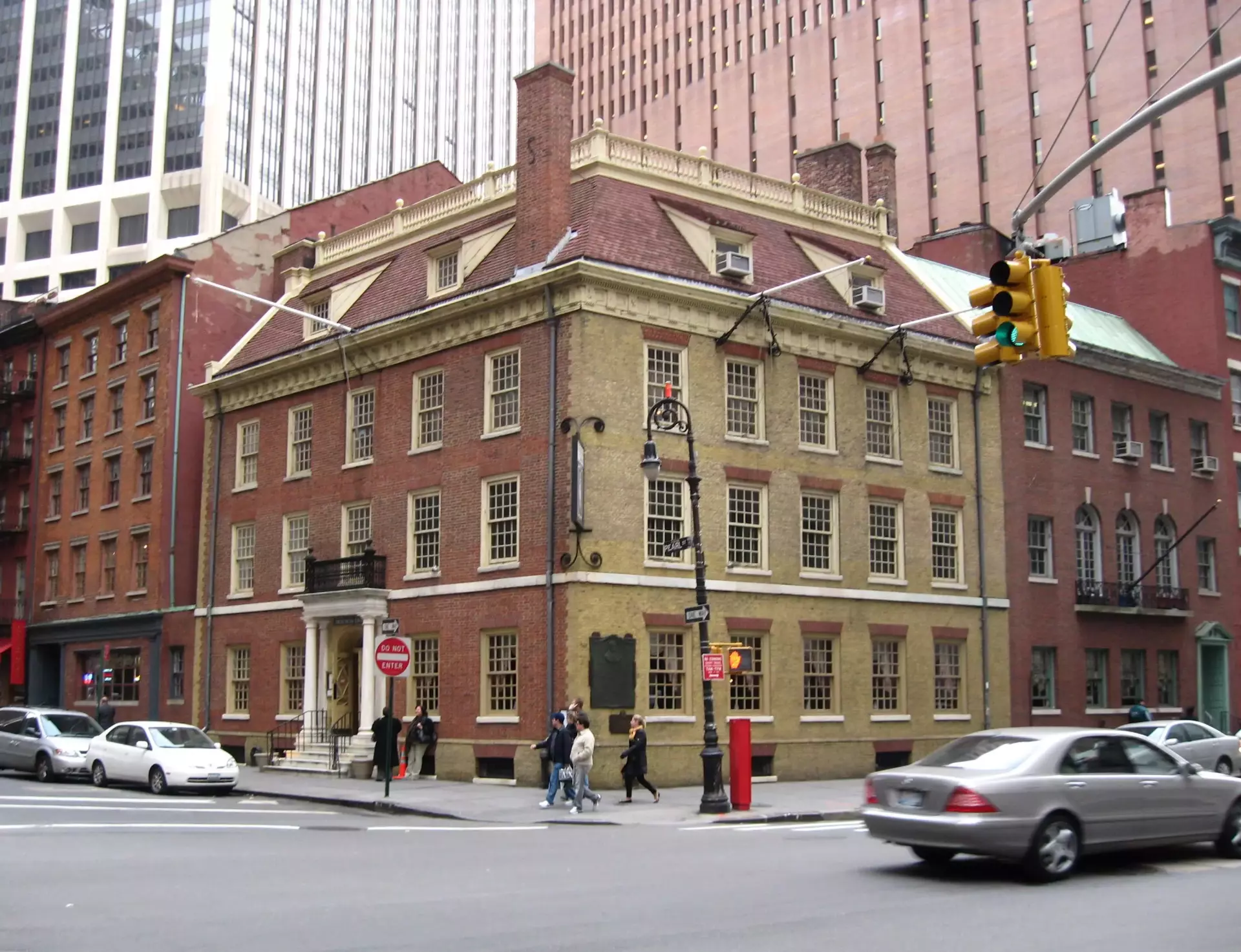
Dates back to 1680, and held an abortive peace conference during the Revolutionary War.