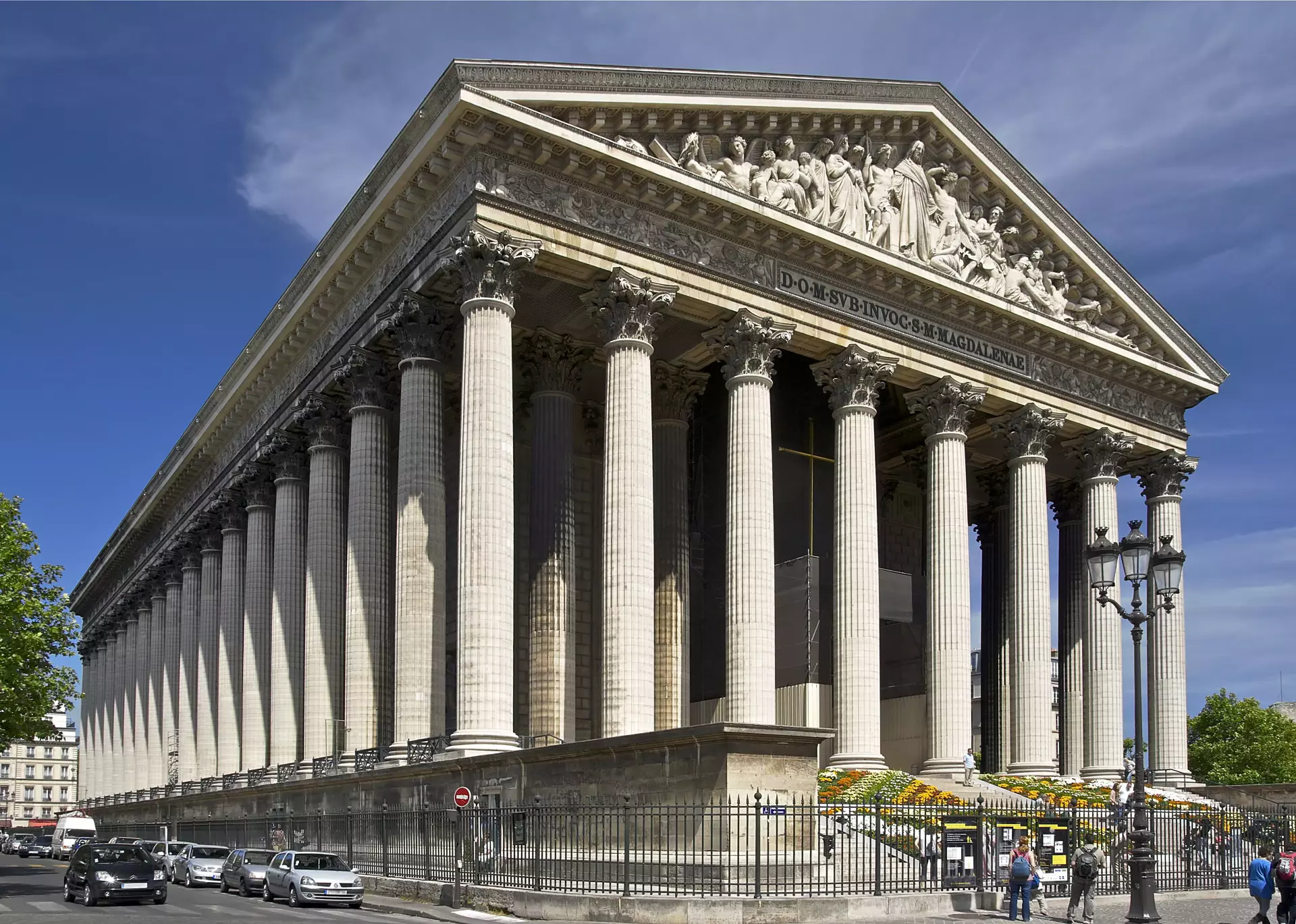
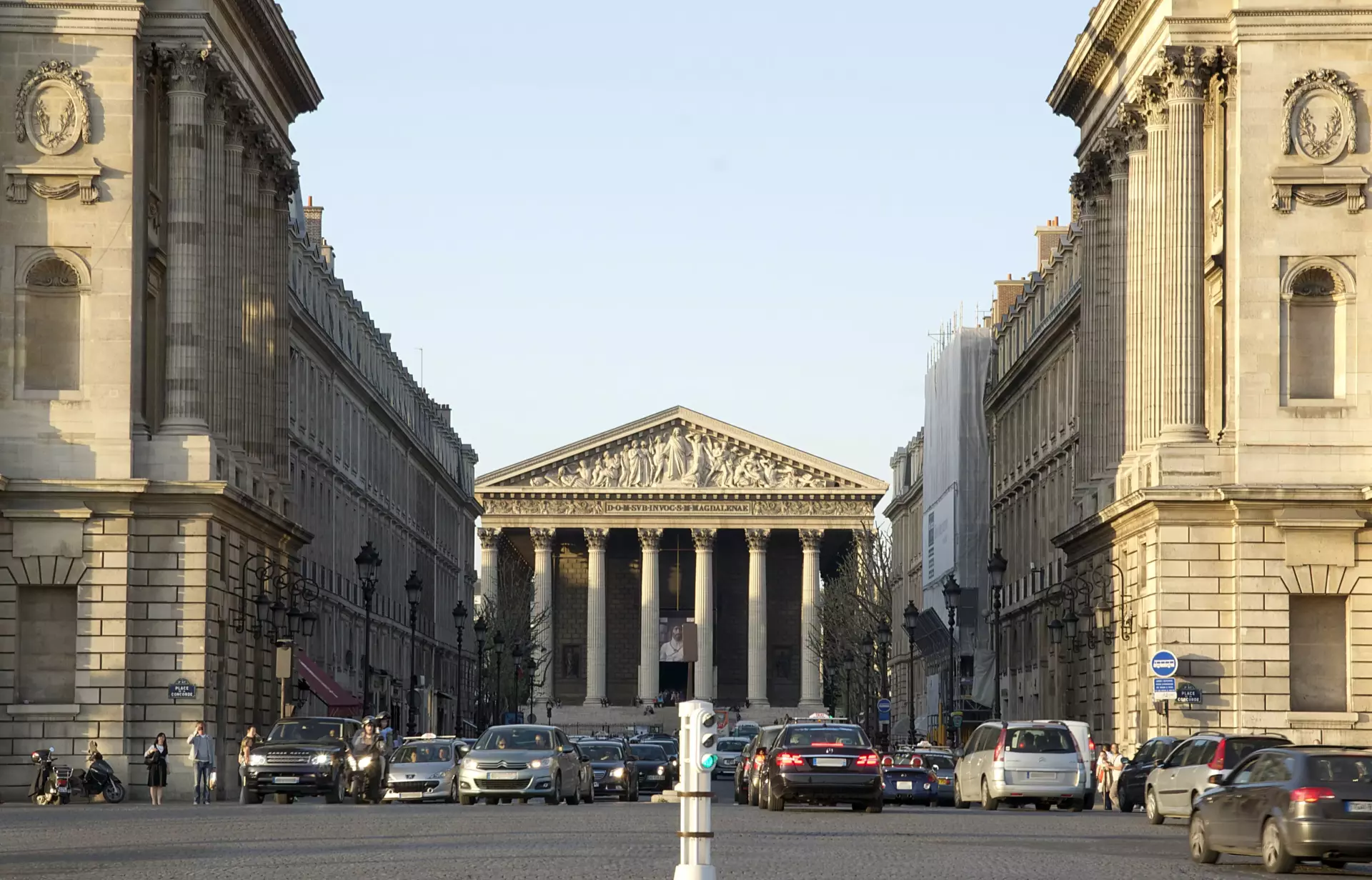
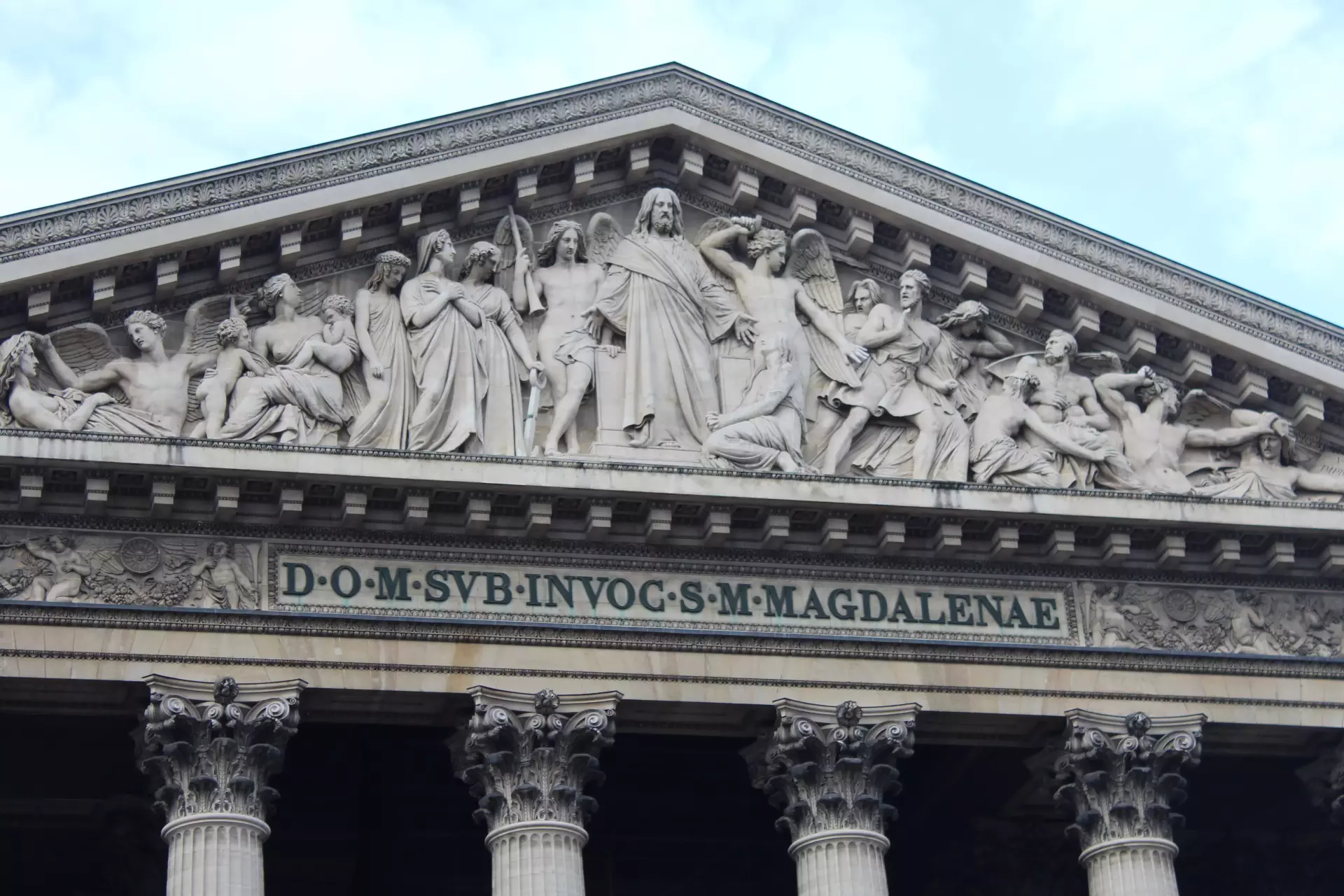
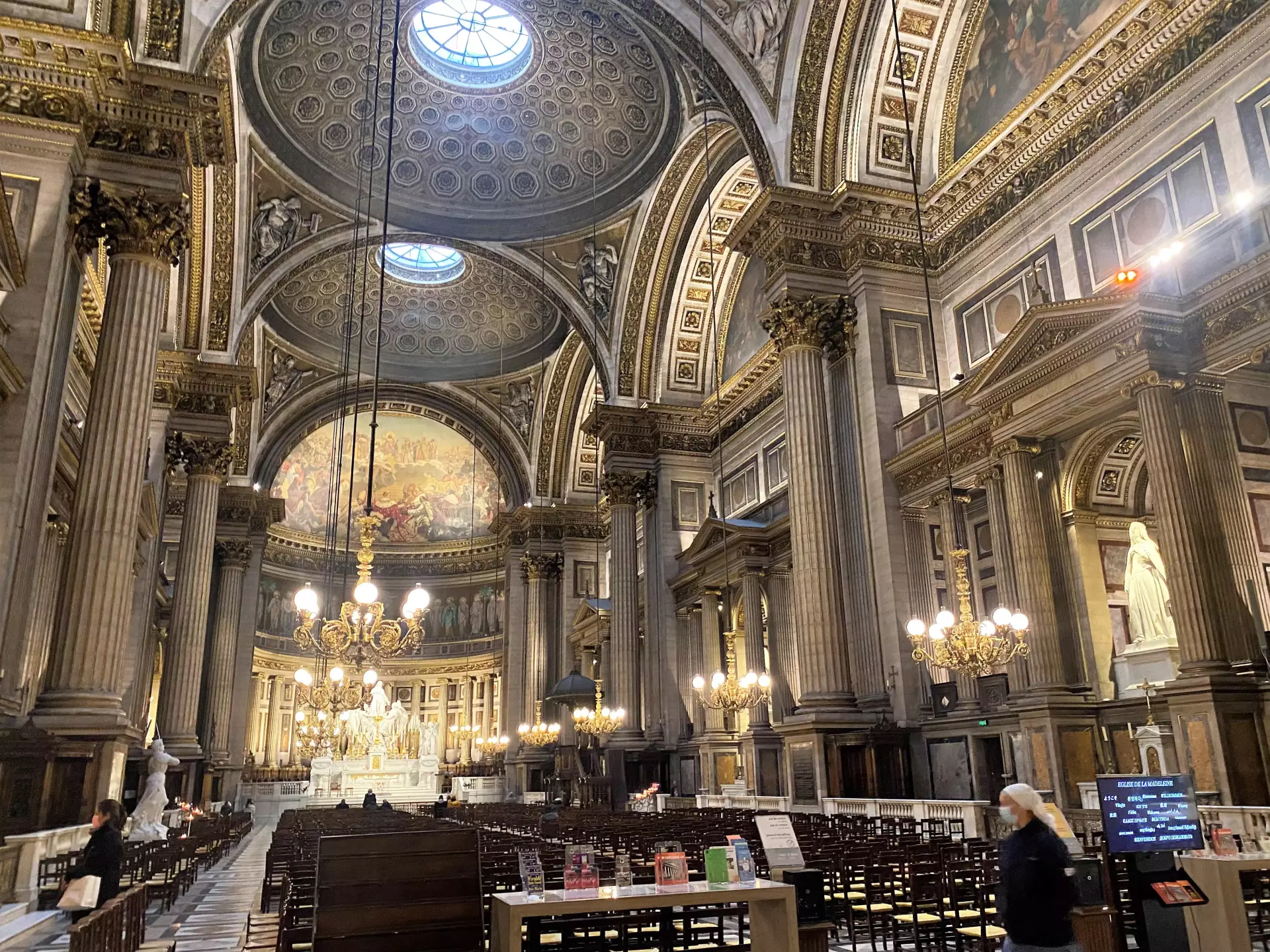
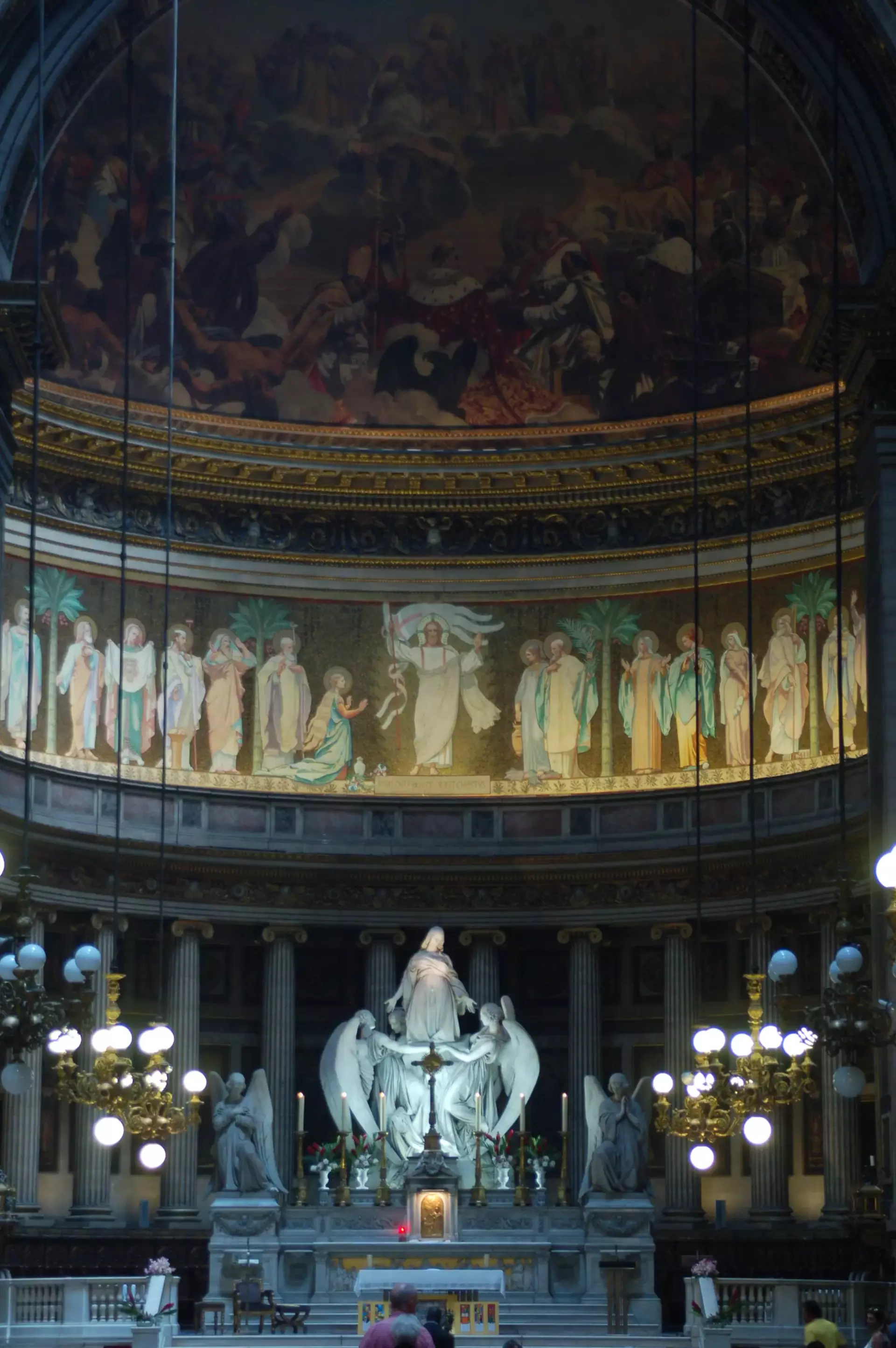
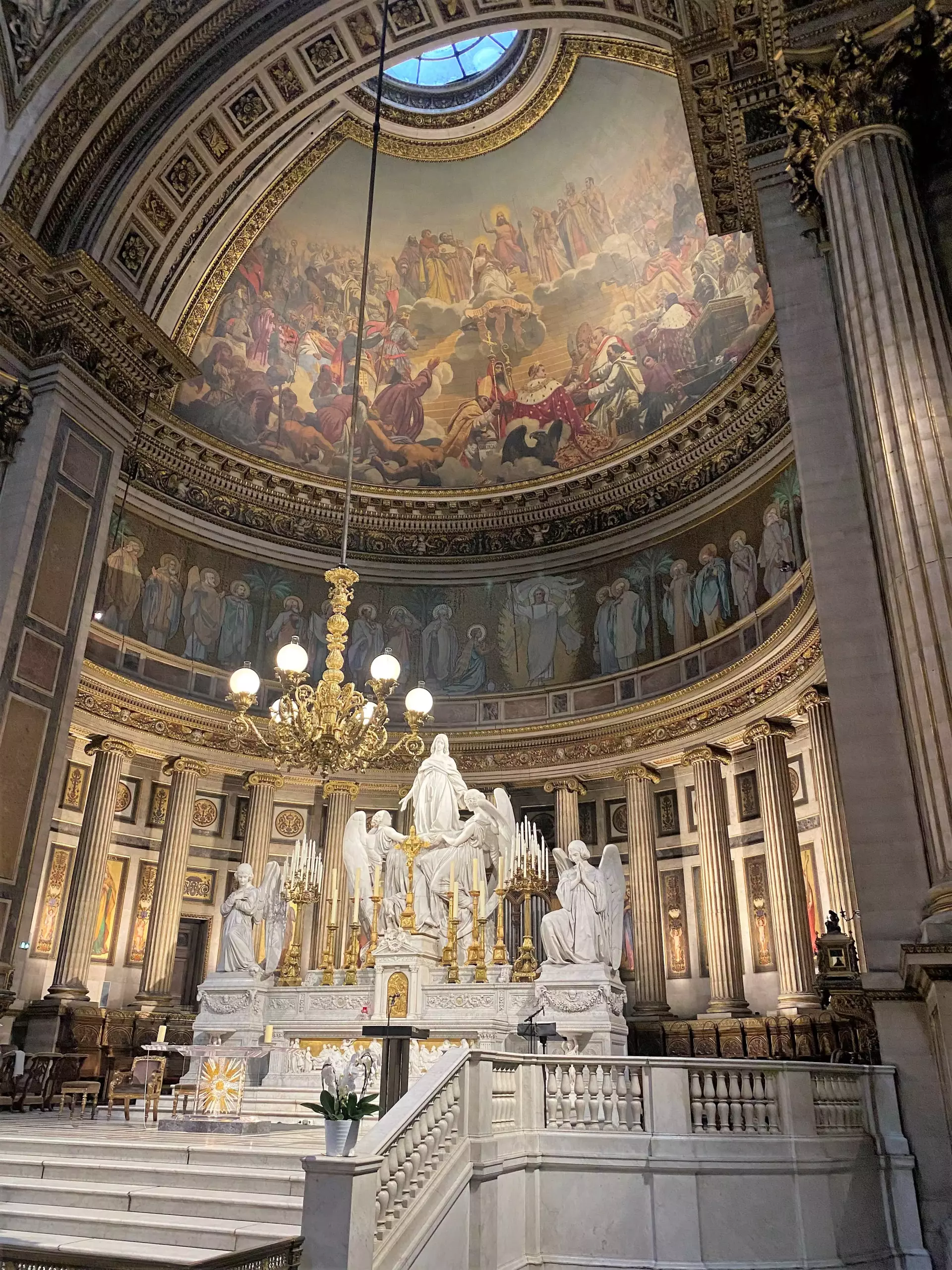
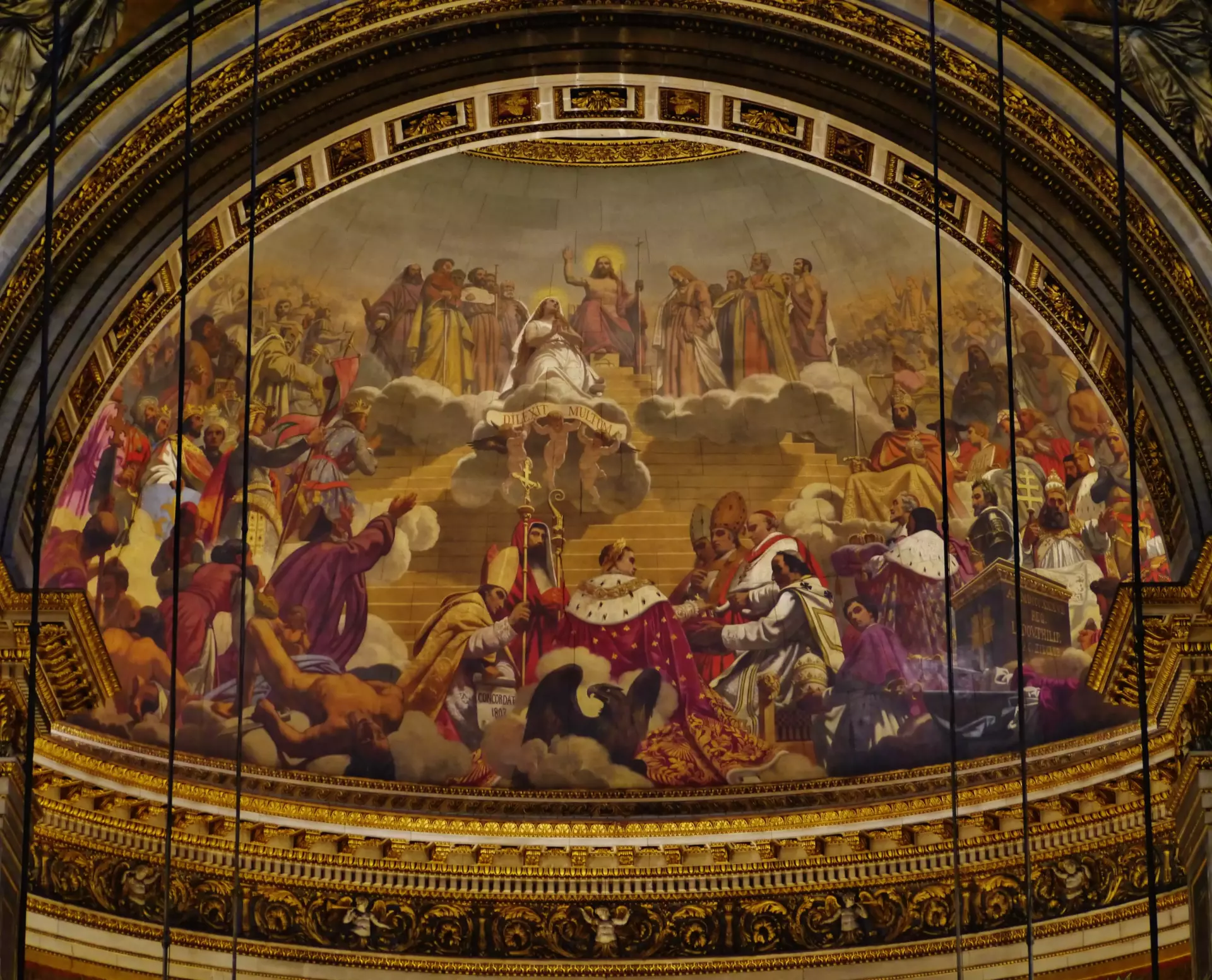
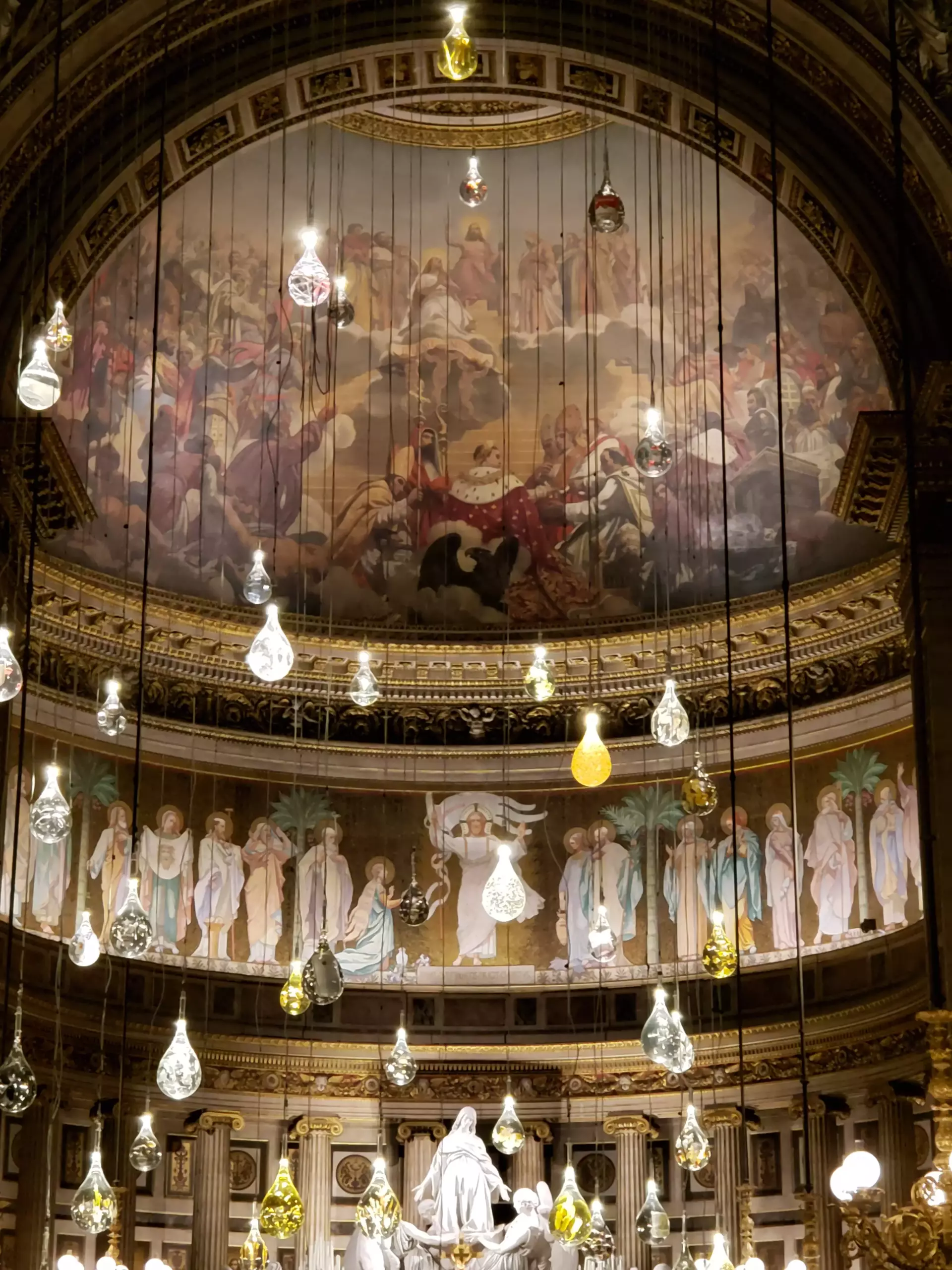
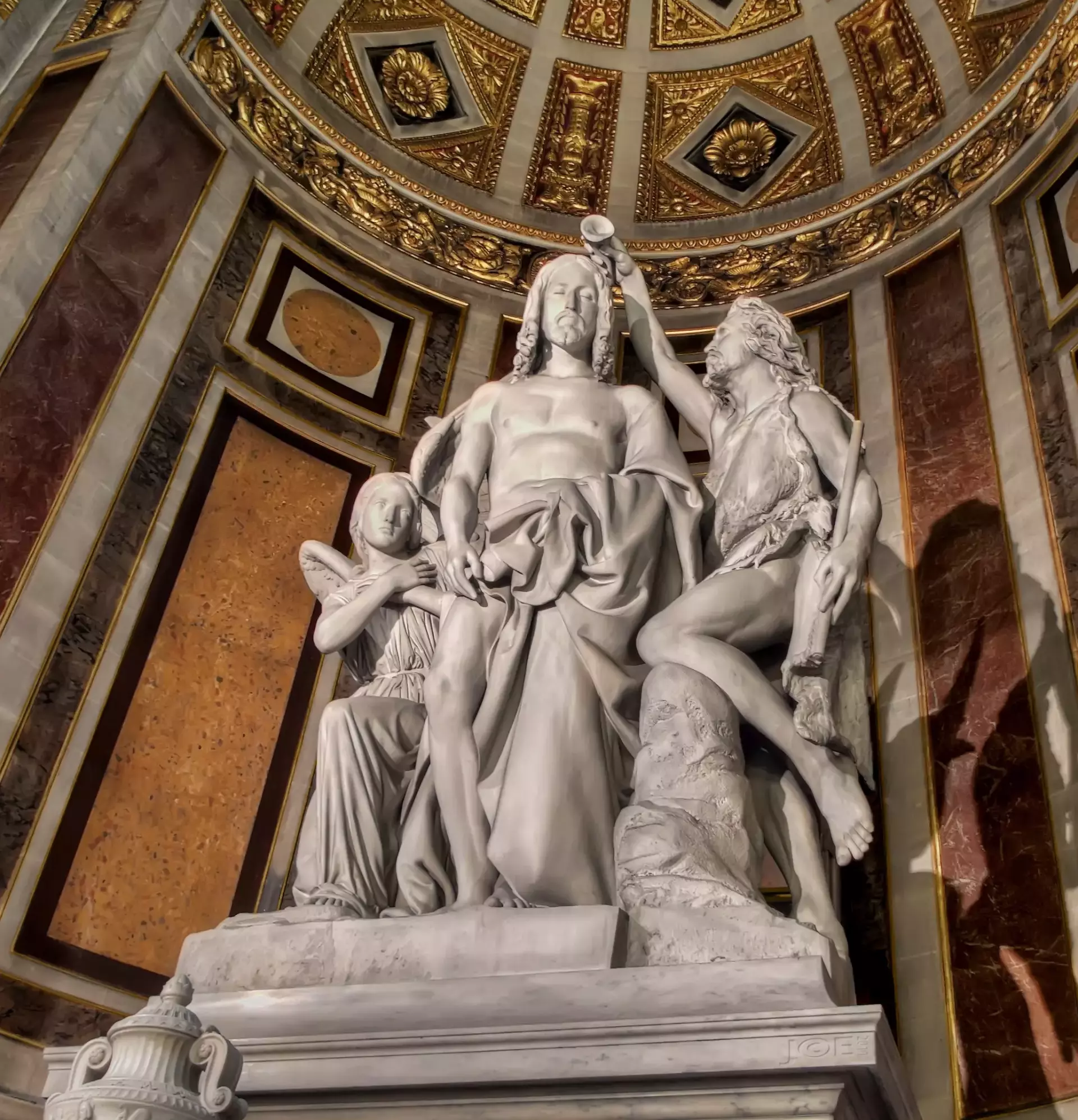
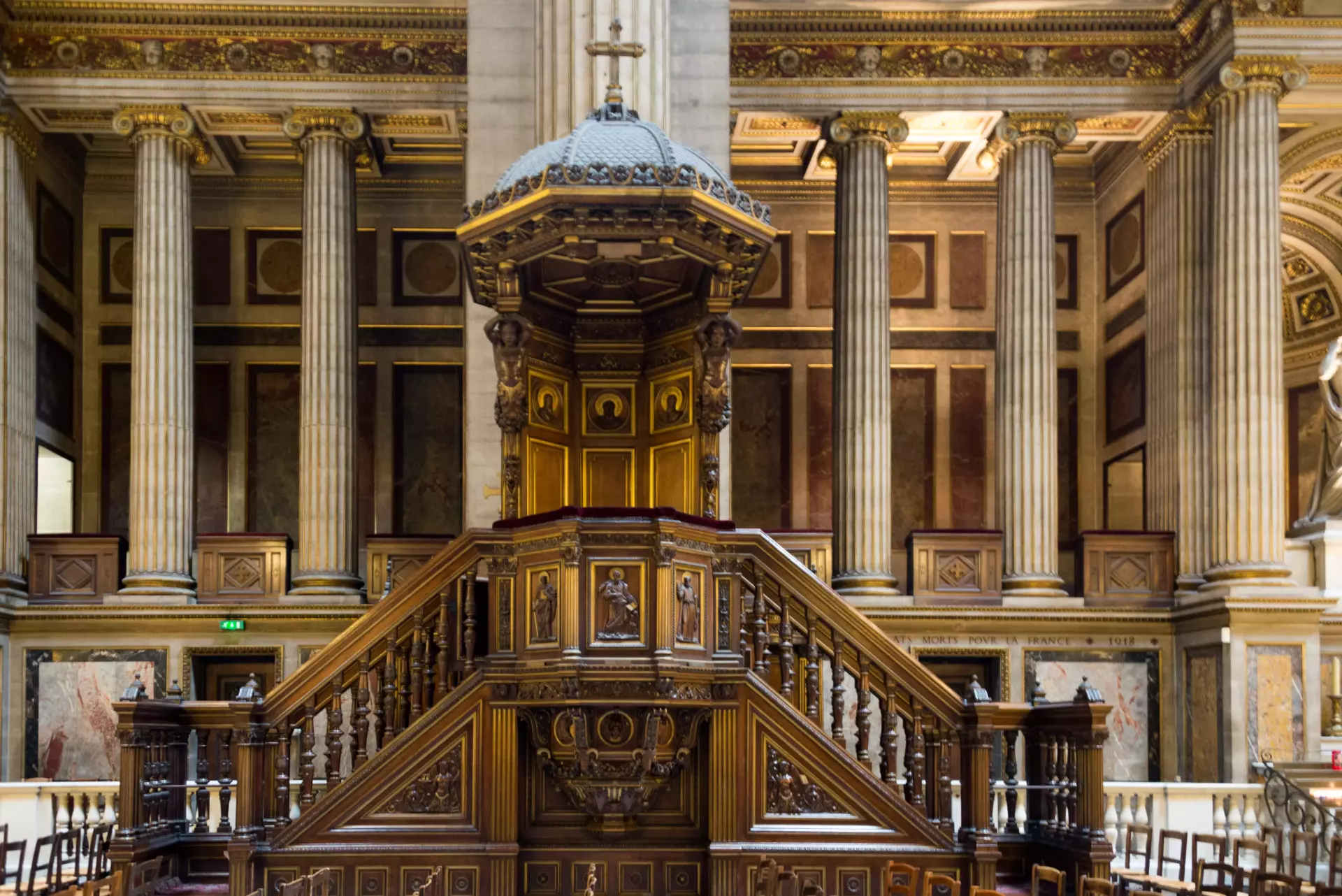
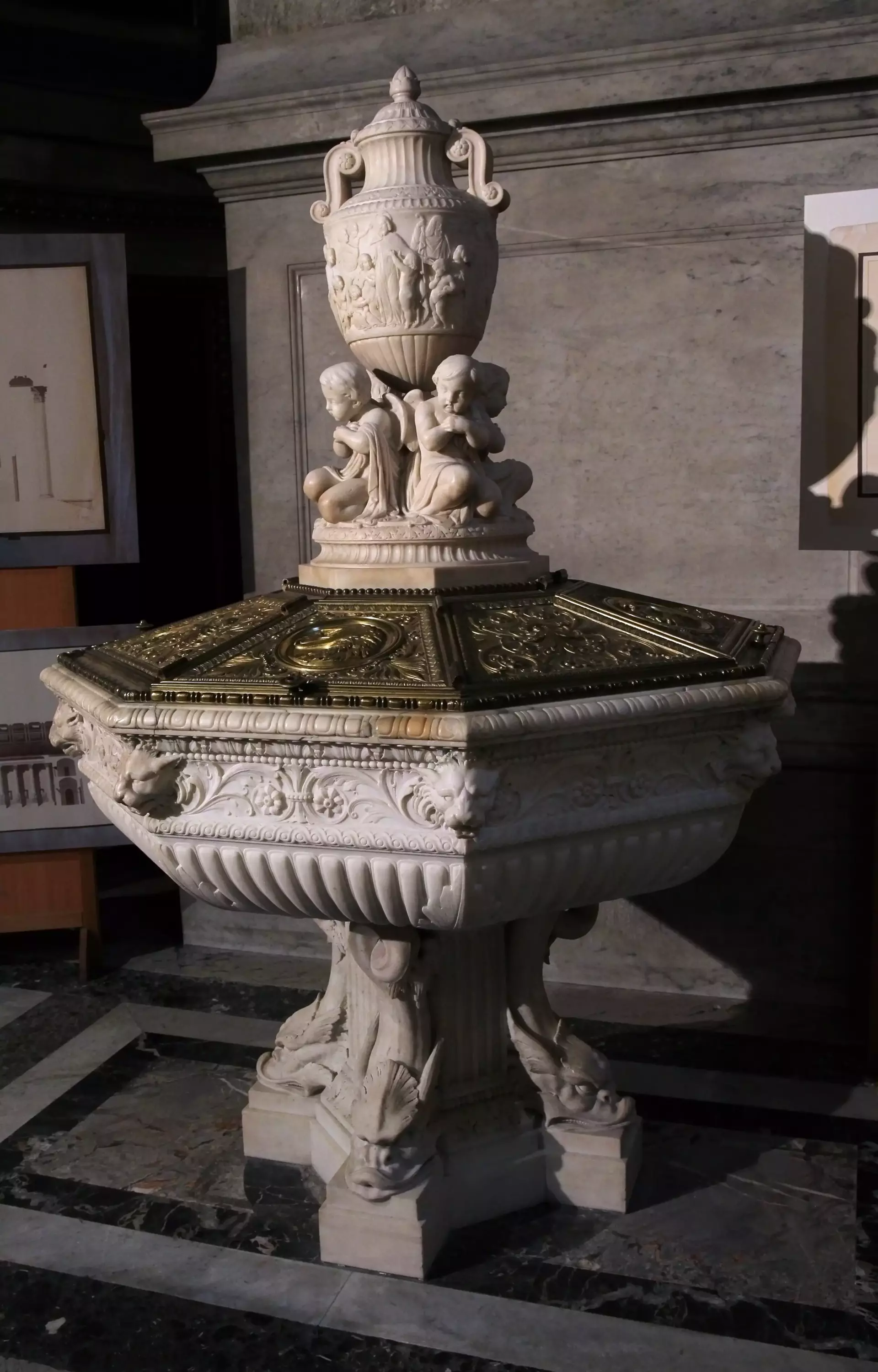
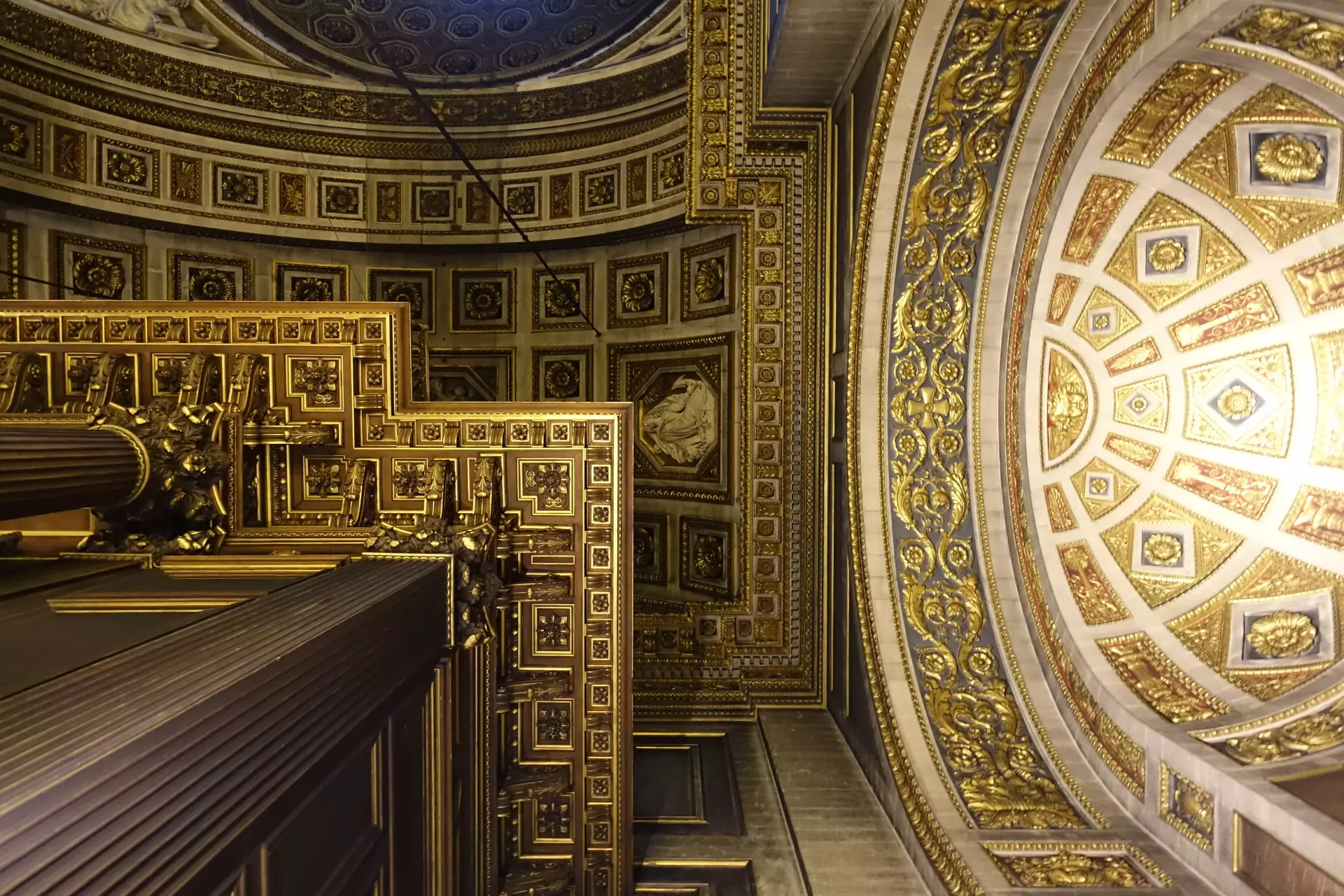
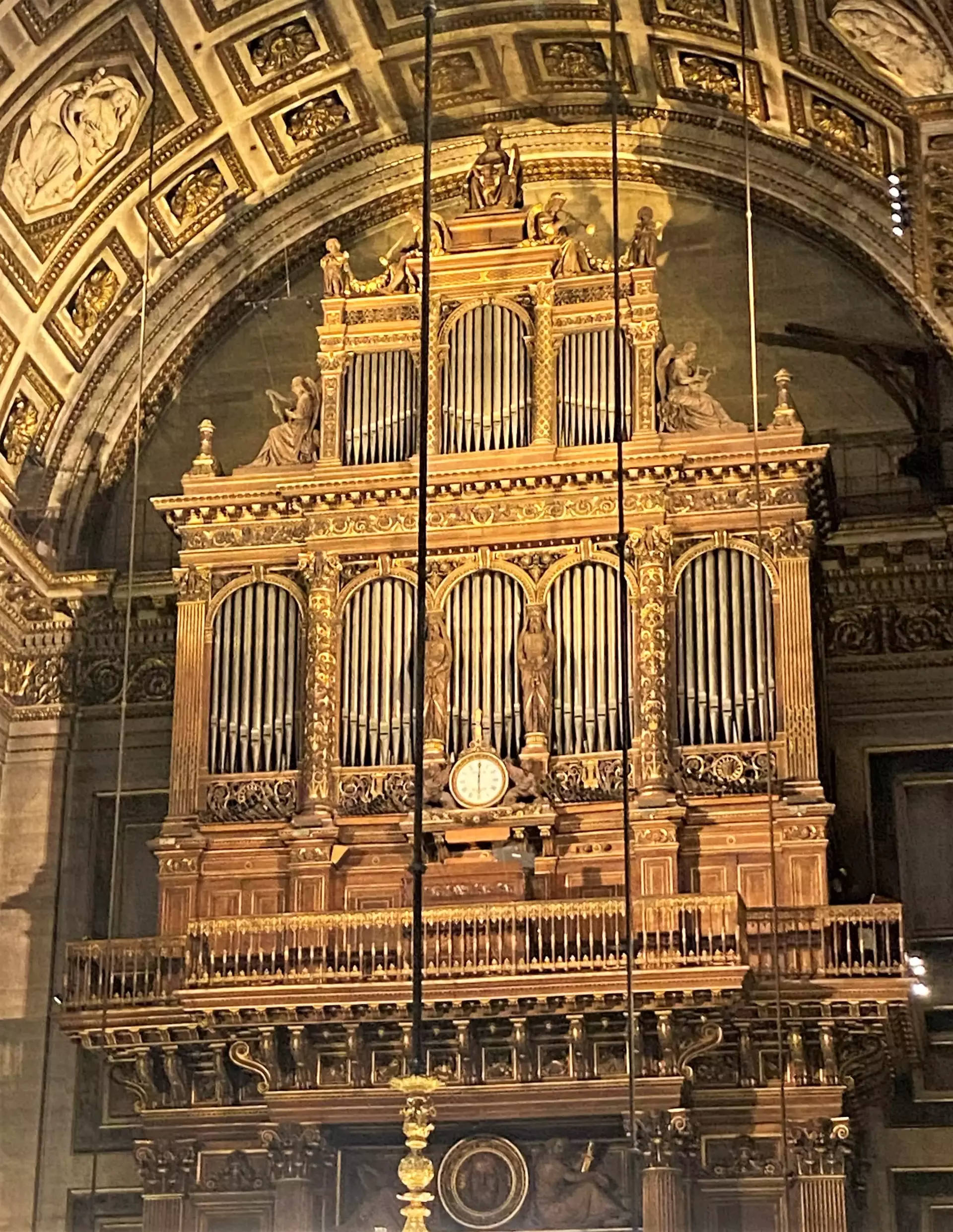
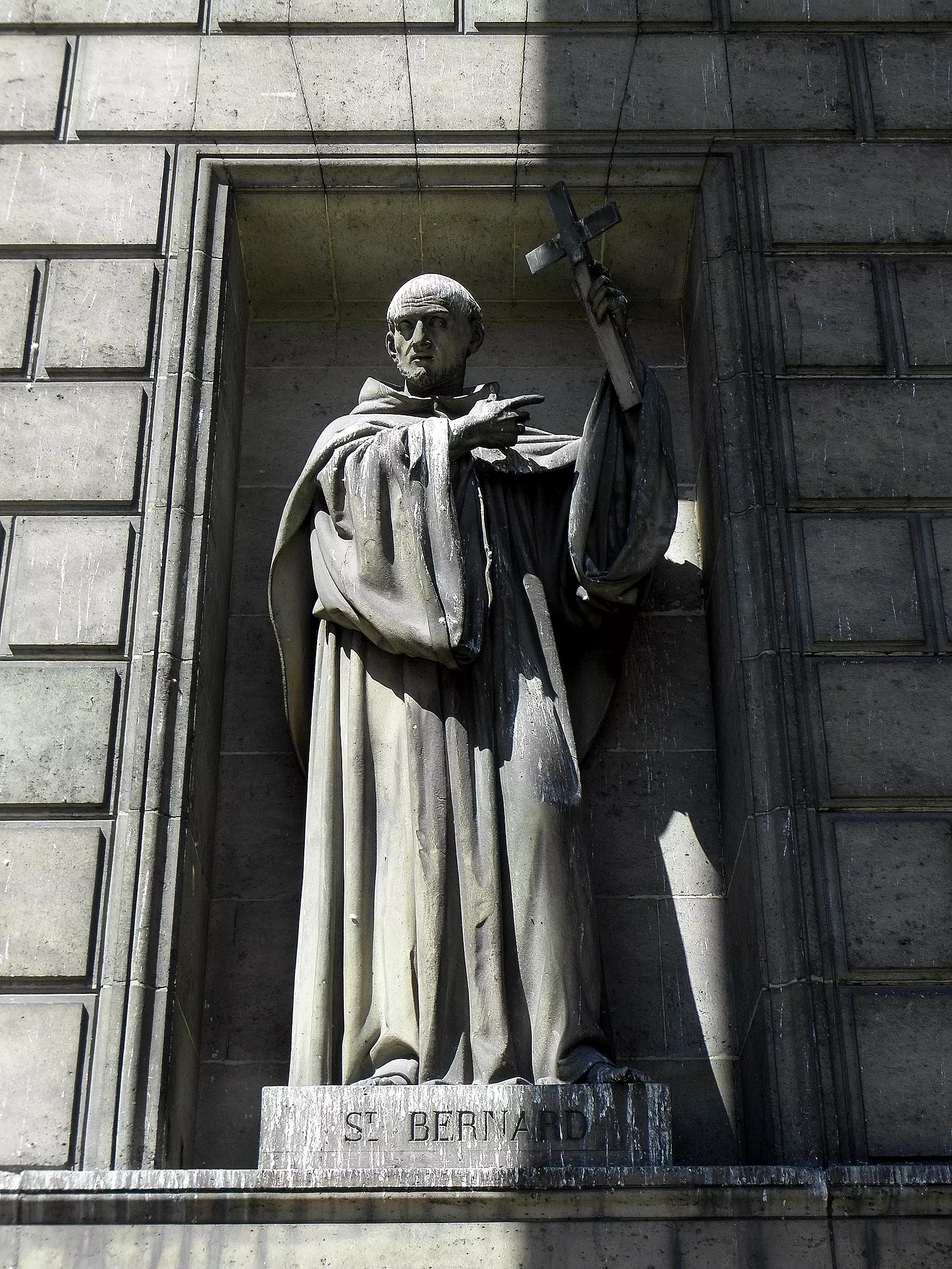
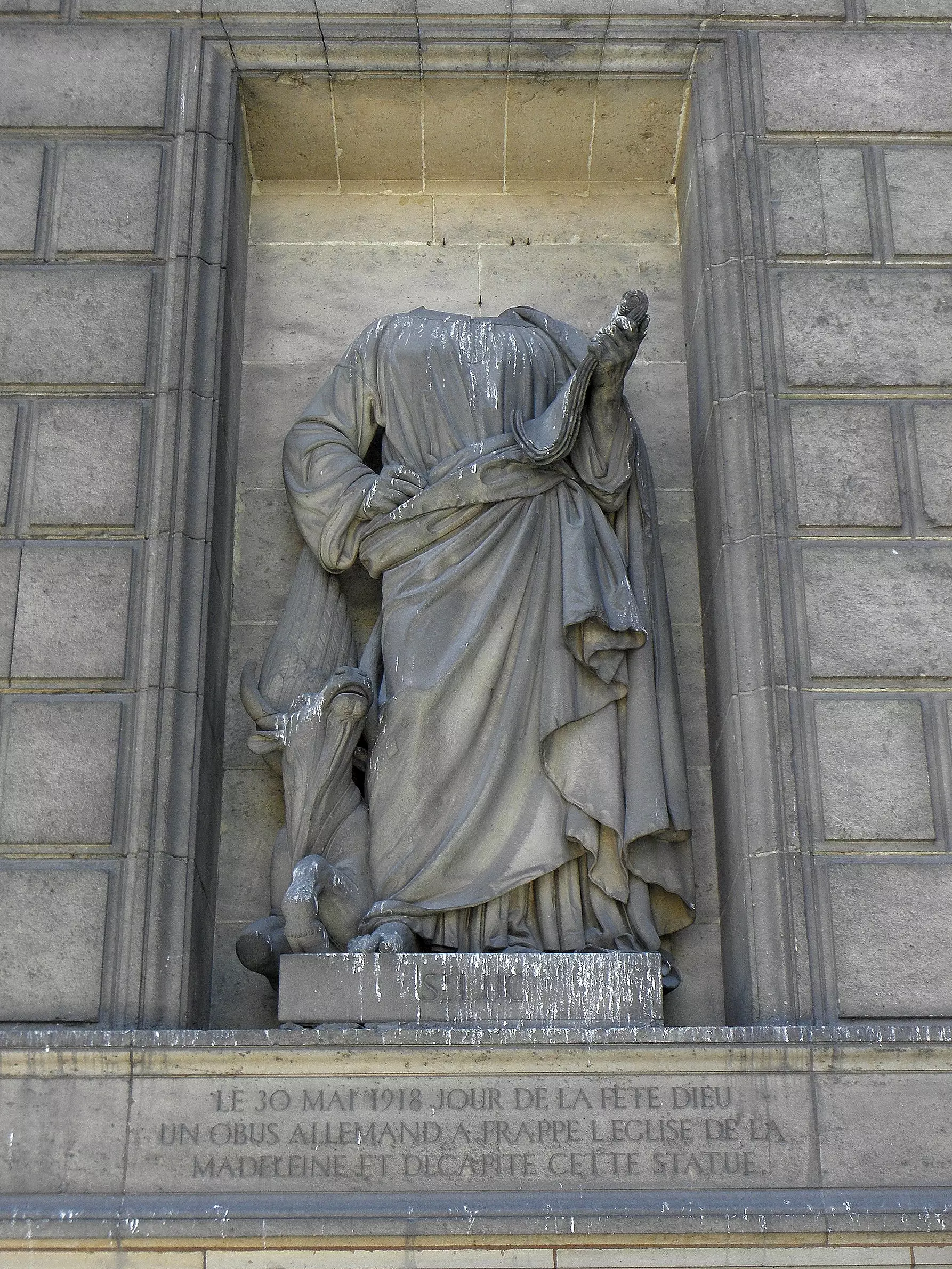
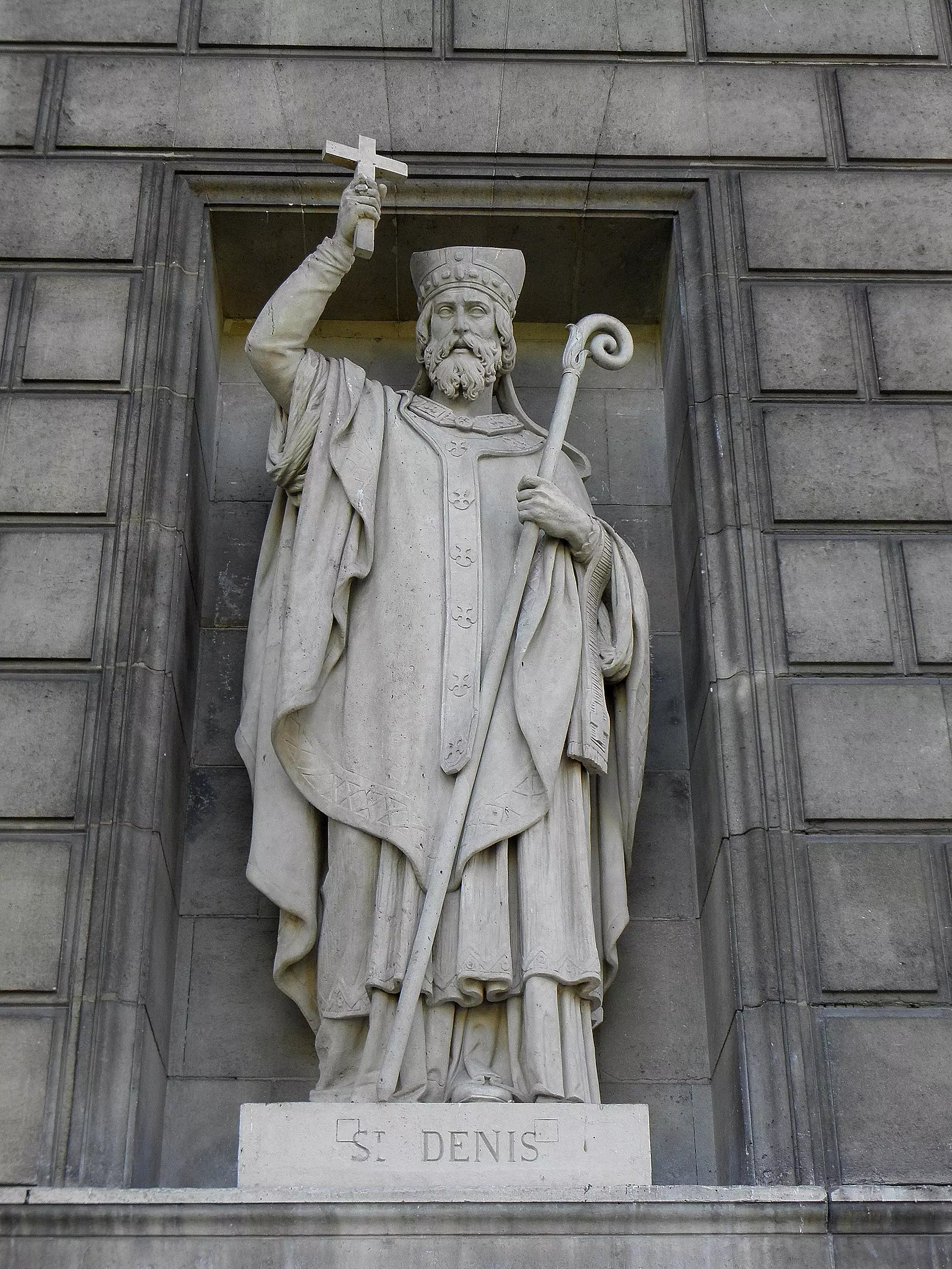
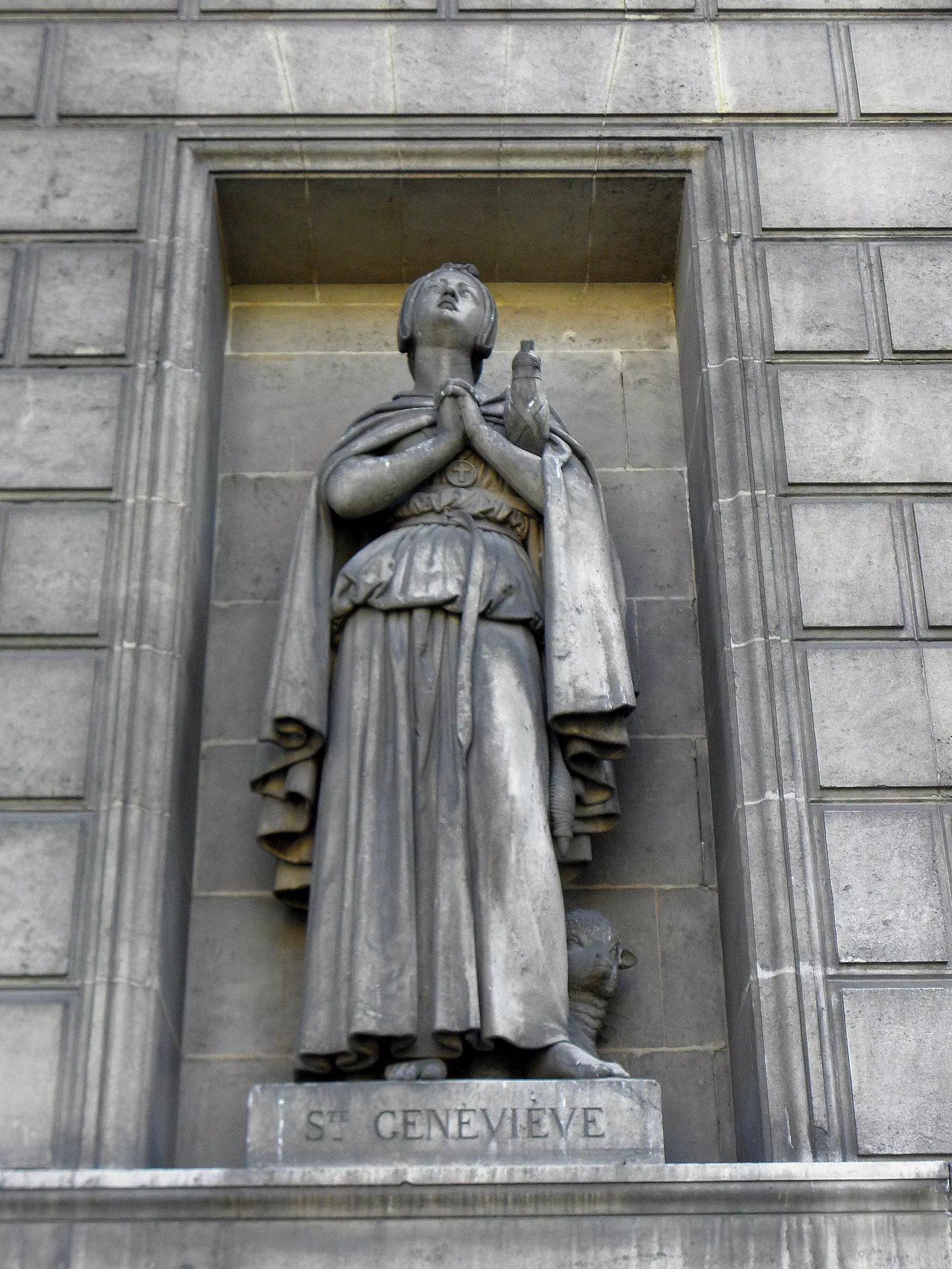
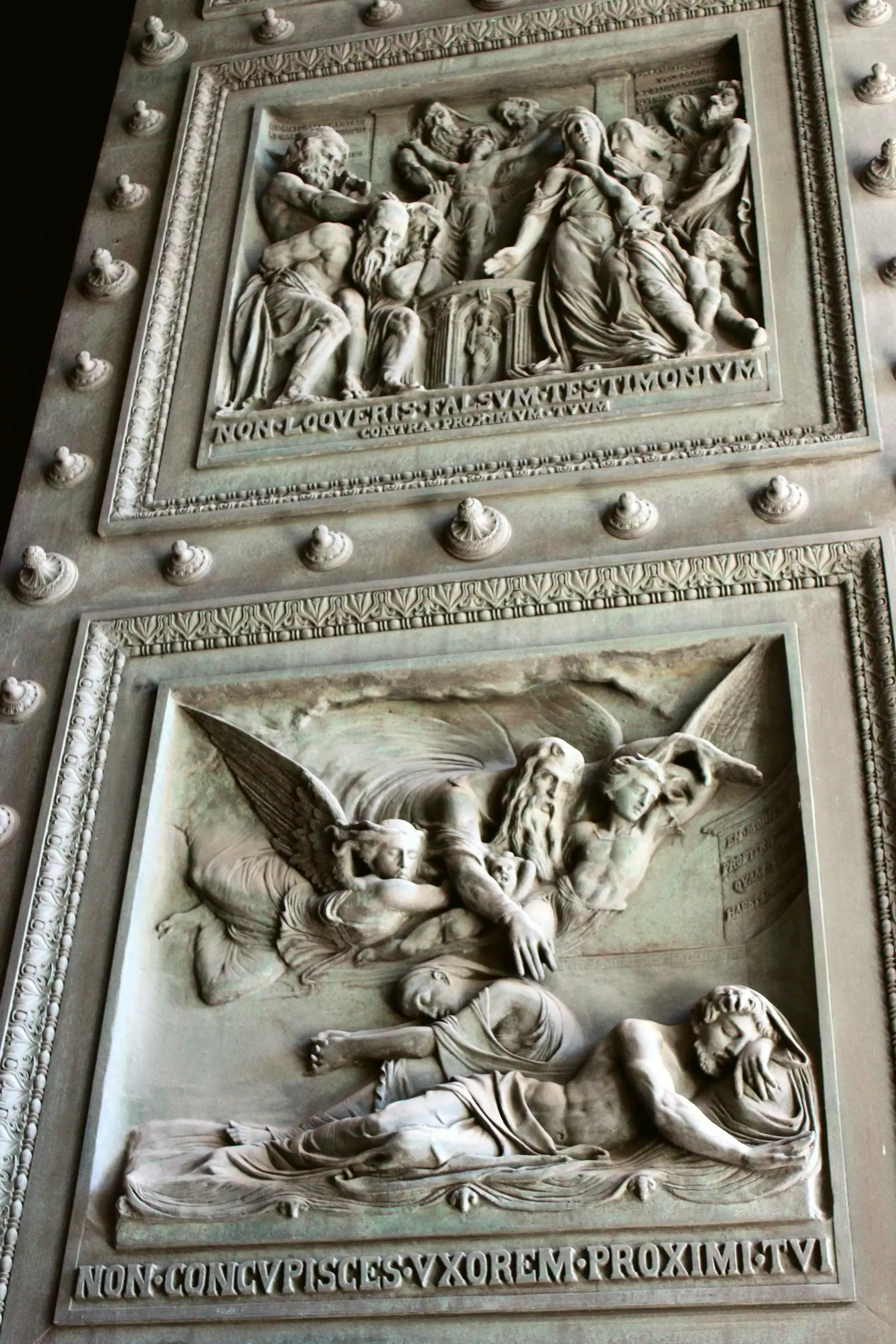
La Madeleine stands out as one of Paris’s most recognizable and stunning churches, designed to look like a grand Corinthian temple from ancient times. While construction began as early as 1764, the building was not officially consecrated until 1845, marking a long journey from its original plans to completion.
The church’s architecture is inspired by classical Greek temples, with its rows of towering Corinthian columns creating an impressive exterior. Stepping inside, visitors encounter a luxurious interior filled with gleaming marble and shimmering gold accents. The opulent design reflects the ambition and artistry that went into making La Madeleine a truly remarkable Parisian landmark.
Source - https://en.wikipedia.org/wiki/La_Madeleine,_Paris
a Roman Catholic church on the east side of the Place Saint-Sulpice within the rue Bonaparte, in the Luxembourg Quarter of the VIe arrondissement. At 113 metres long, 58 metres in width and 34 metres tall, it is only slightly smaller than Notre-Dame and thus the second largest church in the city. It is dedicated to Sulpitius the Pious. During the 18th century, an elaborate gnomon, the Gnomon of Saint-Sulpice, was constructed in the church. In front of the church itself is the magnificent Place Saint-Sulpice which contains the 'Fountain of the Four Bishops'. The church has a long-standing tradition of talented organists that dates back to the eighteenth century. In 1862, Aristide Cavaillé-Coll reconstructed and improved the existing organ built by François-Henri Clicquot. Though using many materials from Clicquot's French Classical organ, it is considered to be Cavaillé-Coll's magnum opus, featuring 102 speaking stops, and is perhaps the most impressive instrument of the romantic French symphonic-organ era. Its organists have also been renowned, starting with Nicolas Séjan in the 18th century, and continuing with Charles-Marie Widor (organist 1870-1933) and Marcel Dupré (organist 1934-1971), both great organists and composers of organ music. The current organists are 'titulaire' Daniel Roth (since 1985) and 'assistant titulaire' Sophie-Véronique Cauchefer-Choplin. In Saint-Sulpice Sunday organ recitals are held on a regular basis (Auditions du Dimanche, following the High Mass, usually from 11:30am till 12:05pm, during the subsequent mass, a visit of the organ loft is possible).
Since 2021 the 18th-century former Bourse de Commerce building has been the Paris home of the art collection of the French business magnate François Pinault, showing a rotating selection of contemporary artworks either newly commissioned or taken from his collection.
Enter Bastille station through any entrance or on any train and then make your way to the Bobigny/Pablo Picasso-bound platform. All that's left of the fortress whose front steps used to lead up from place de la Bastille are some foundation stones which you can see while waiting for a north bound train on this metro platform. There are maps and explanations showing where the fortress used to be relative the place and surroundings (basically the location of the old front steps are now occupied by Café des Phares).
Suspended above the train tracks this garden is surprisingly calm and chilled-out.
There are a number of famous occupants, but the real reason to visit this cemetery is to see the ornate tombstones, sculptures, and other sometimes macabre, sometimes touching memorials Parisians have left here for their dead.
Housed in an amazing Art Deco building, purpose-built for the 1931 Colonial Exhibition, featuring an elaborate frieze across the front facade that depicts the achievement of French overseas territories. It houses an Aquarium and an Immigration Museum. The aquarium can be seen in about an hour and is popular with families with small children.
Contained within two historic houses (hotels), the museum explores the history of Paris through objects in over 140 separate rooms.
The oldest church in Paris, founded in the year 542 by King Childebert. The church as it exists today dates mainly from the 11th century, the period in which it became the center of a powerful Benedictine abbey. The Revolution witnessed the suppression of the abbey in 1794, when most of the monastic buildings were put to the torch. Earlier, 318 priests had been hacked to death nearby by a mob on 3 September 1792. The church underwent significant restoration in the 19th century, ensuring the preservation of the building, which by that date represented a fascinating mix of styles: 6th century marble columns placed alongside Gothic vaults and supported by Romanesque arches. Famous burials within the church include René Descartes (philosopher), Nicolas Boileau (poet) and King John Casimir of Poland, who had become (in 1669, before his death) abbot of the church's monastery.
CLOSED UNTIL LATE 2024 OR 2025 FOR RENOVATION WORKS. Built in 1900 for the universal exposition, the Grand Palais was an engineering feat and a milestone of design, marking the transition between historicism and modern architecture. It remain impressive today due to its unique, exquisite style and sheer volume of its main nave. The Grand Palais, managed by the state-owned institution Rnm who also manage the Musee de Luxembourg, is used both for temporary exhibitions of historic and contemporary art collections (both beaux arts and applied) and unique events, such as catwalk shows during the Paris Fashion Week, Bonhams car auctions and prestigious galas.
A must for anyone interested in the history of the American Revolution. This small cemetery includes three mass graves from the French Revolution, plus a section that includes many of France's most noble families that lost members during the French Revolution and consequently have a continuing right to be buried there. In the farthest right hand corner is the tomb of General Lafayette, the friend and fellow soldier of George Washington. Beside him is his beloved wife plus other members of her family, the de Noailles, who were almost completely wiped out during the French Revolution because of their closeness to the Court. Since 1834 the American flag has apparently flown continuously over his grave, even during the German occupation of Paris during World War II. Well worthy of a visit.
Paris's international exhibition centre (the 4th largest in Europe) has millions of visitors annually.
One of the most eye-popping sights of Paris, the catacombs represent a network of labyrinthine tunnels, first excavated in the Roman period, that now house the remains of over 6 million burials removed here from the various overcrowded cemeteries and charnel houses all over Paris in the late 18th and early 19th centuries. Well worth a visit: the atmosphere is suitably morbid and gloomy (without being too scary), the dark tunnels containing neatly stacked piles of skulls and long bones. There is a limit to the number of visitors allowed within the Catacombs at one time (200 persons). So, if you arrive just after opening, you must wait until someone exits, approximately 45–60 minutes, before anyone is admitted. Steep stairwell on the exit of the catacombs. Can be challenging for the elderly or the unfit. Tickets can be purchased online at a small premium (€29, includes audioguide), allows you pick a date&time and to skip the long line
An ancient Roman theater, the only surviving above-ground ruins of the Gallo-Roman era in Paris (ancient Lutetia, French Lutèce) apart from the nearby Thermes de Cluny. The theatre could hold approximately 15,000 spectators and measures some 132 m x 100 m. Built sometime in the 2nd century CE, the location of the actor's dressing room, the platform of the stage, and lapidary remains can still be seen. The remains were rediscovered in 1869, when new streets were being built. An excavation was subsequently ordered in 1883. The theatre has been preserved as a quiet archaeological park removed from the bustle of Parisian streets.
A monument to the French art de vivre, housed in a 19th-century wing of the Louvre that has been restored to beaux-arts splendour, its galleries and period rooms showcase eight centuries of Gallic taste in interior decoration.
The massive parish church of the Les Halles area is a notable example of late Gothic interspersed with Renaissance details (including the entire front façade), as it was only completed in the 17th century. Its unique form results from a combination of relatively short length and impressive height of over 30 metres inside. The latter allows room not only for an array of stained glass windows and paintings, but also France's largest church organ of 8,000 pipes. The sculpture Écoute, depicting an oversized human head, was placed in front of the church's southern facade and has become a favourite photo spot.
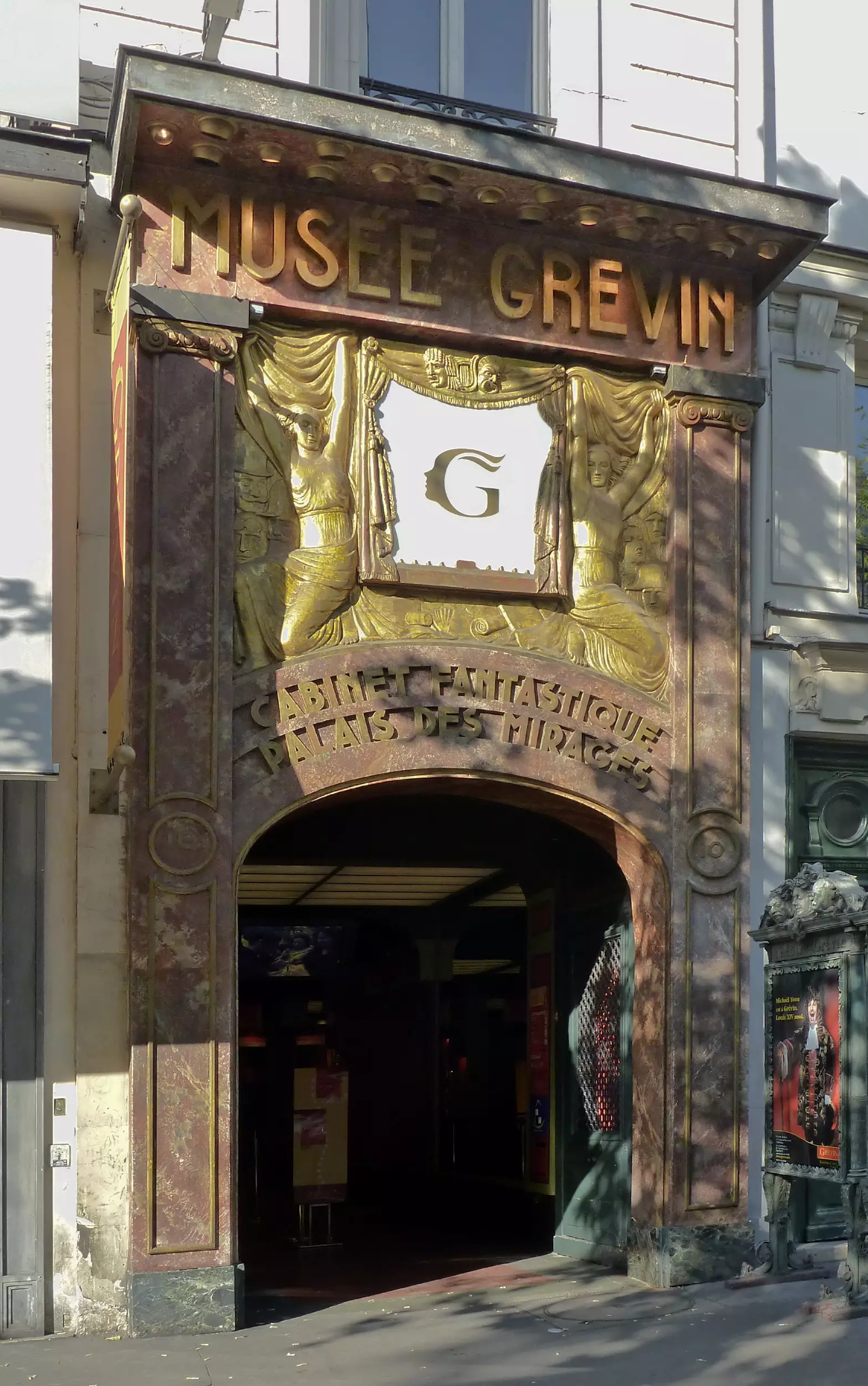
The Musée Grévin is a waxwork museum with some 500 characters arranged in scenes from the history of France and modern life.
The museum is located in a 17th century house with a garden, and features the history and culture of Montmartre. Several famous artists had lived in the house including Renoir.
Established in 1926, it was meant to show appreciation for Muslim help in fighting the Germans. The café serves excellent mint tea and North African food.