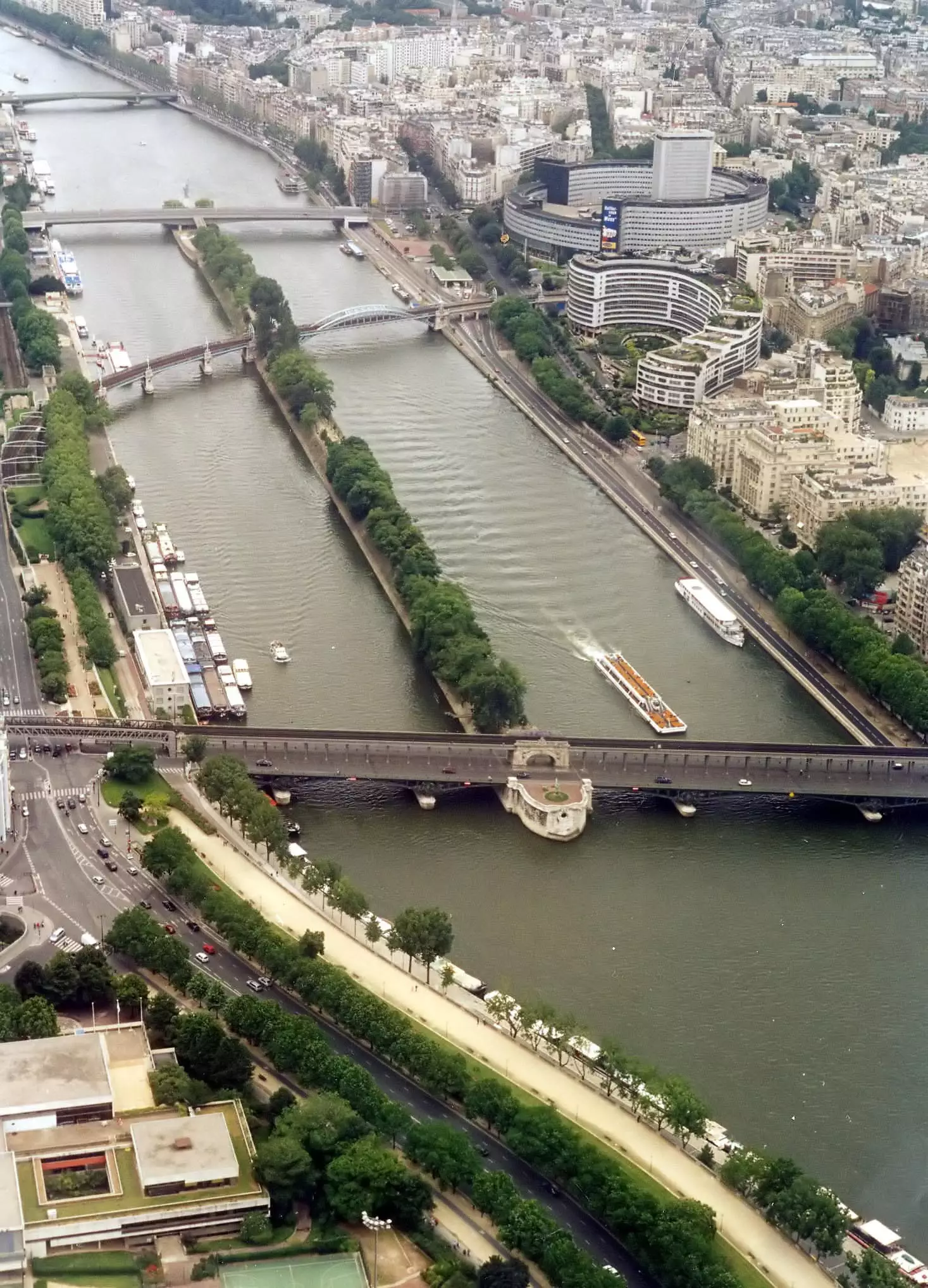
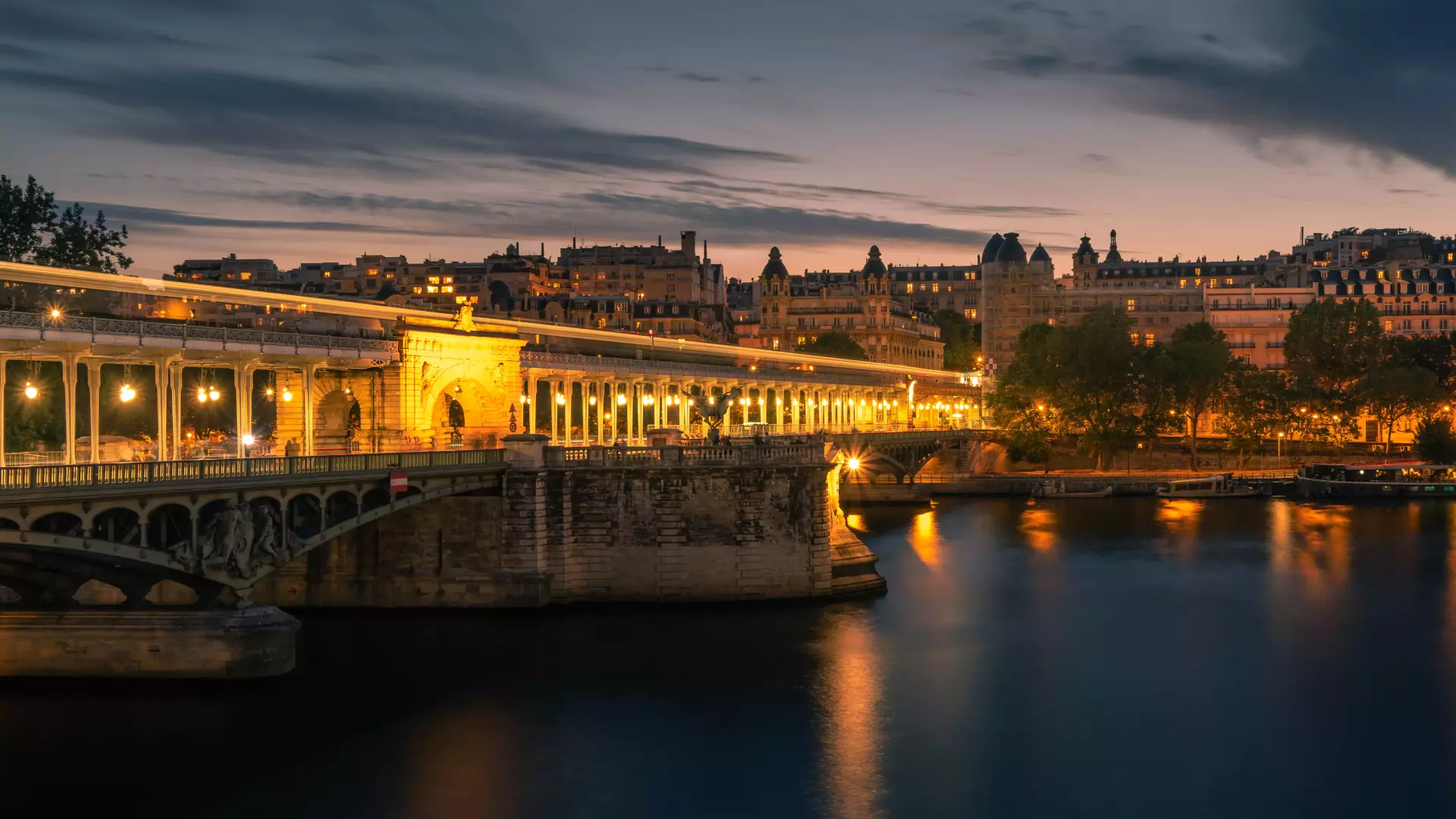
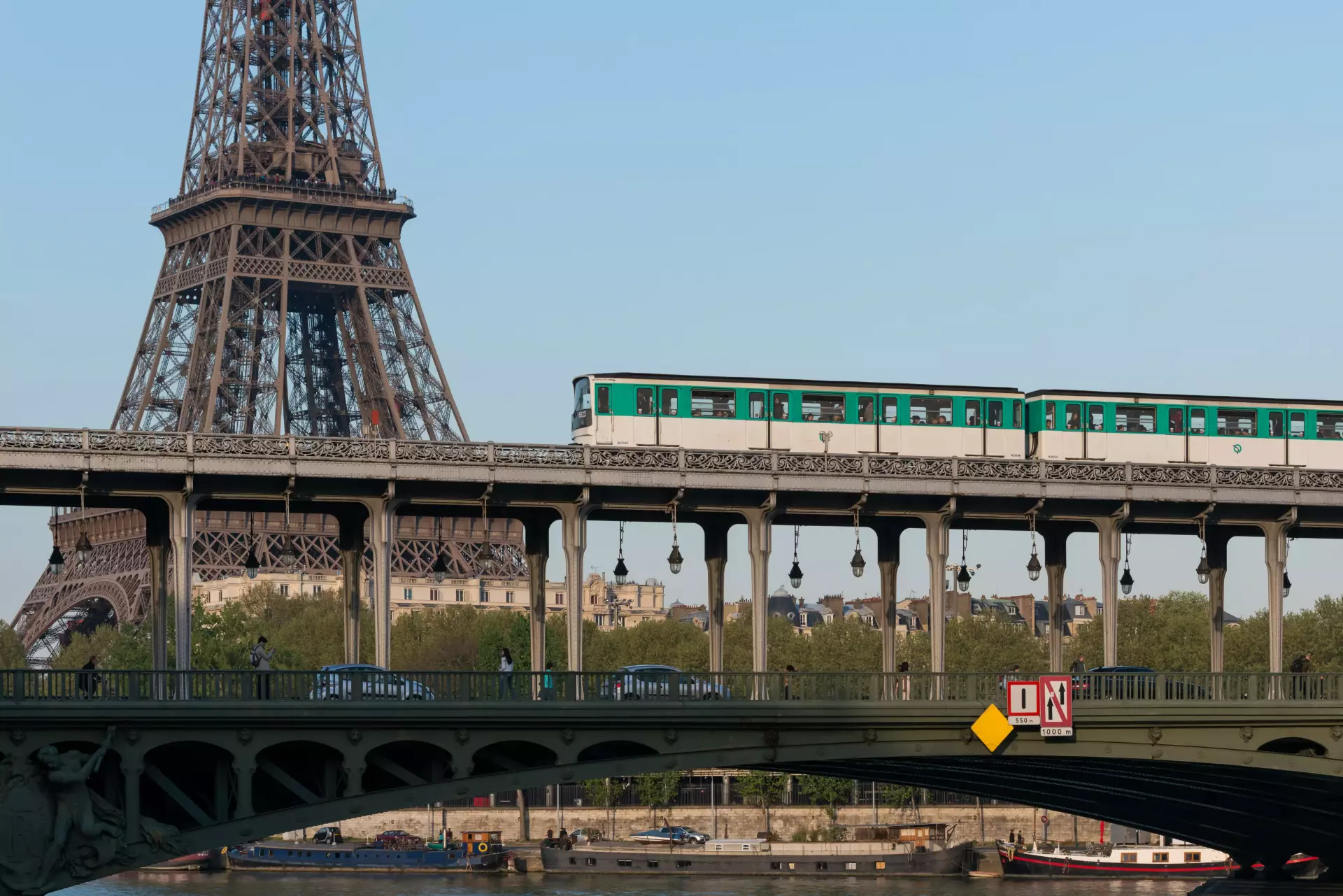
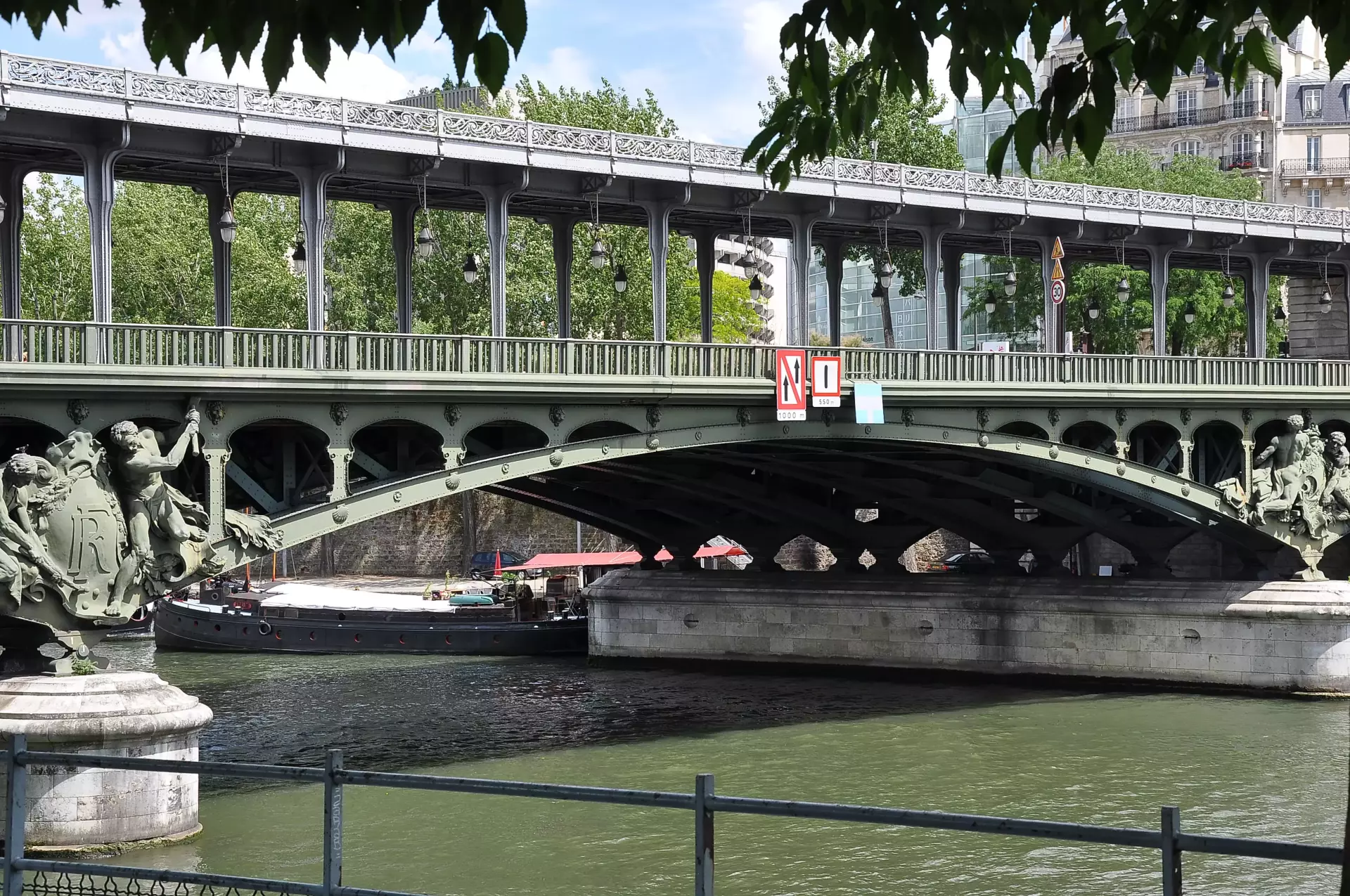
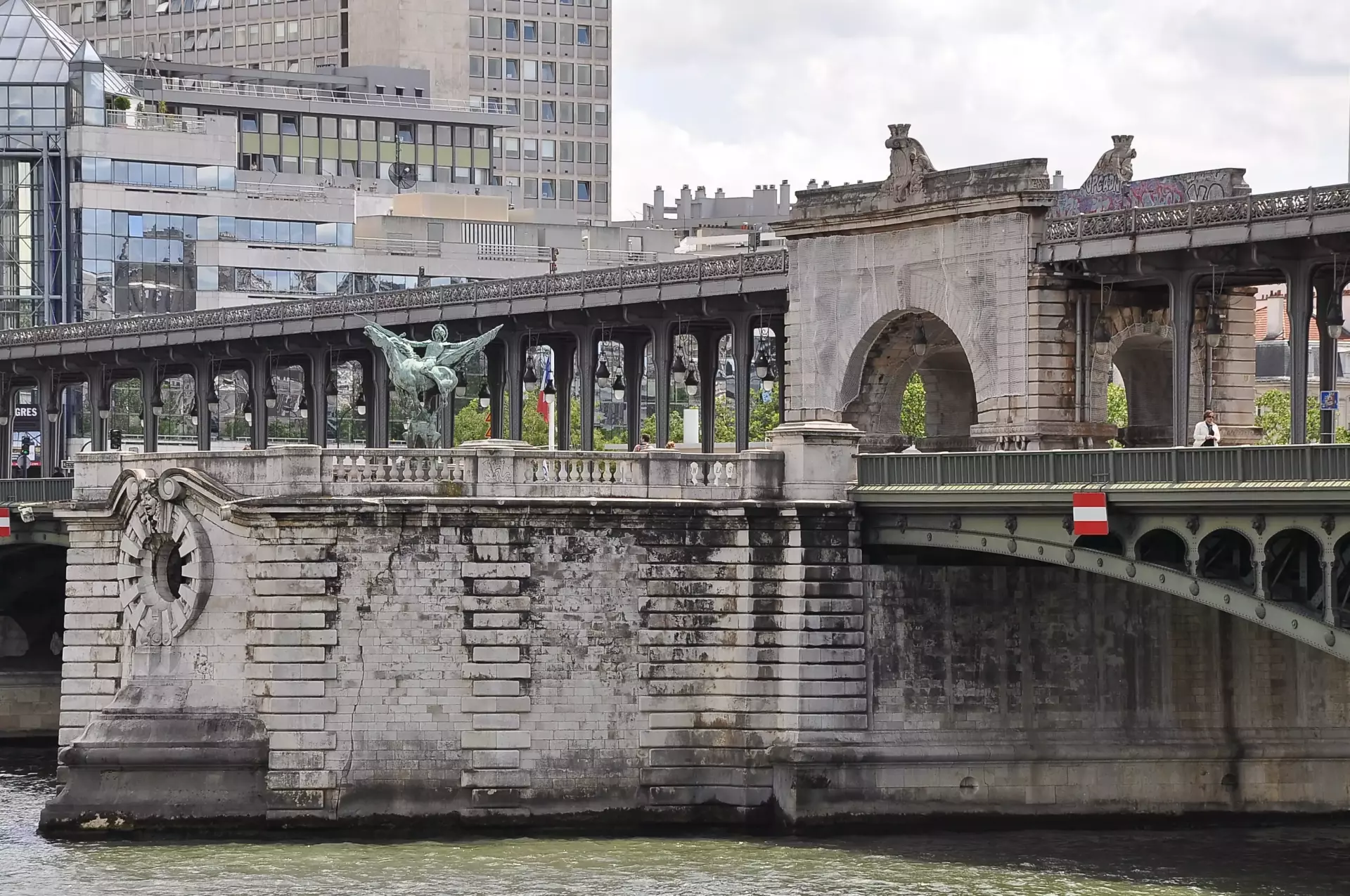
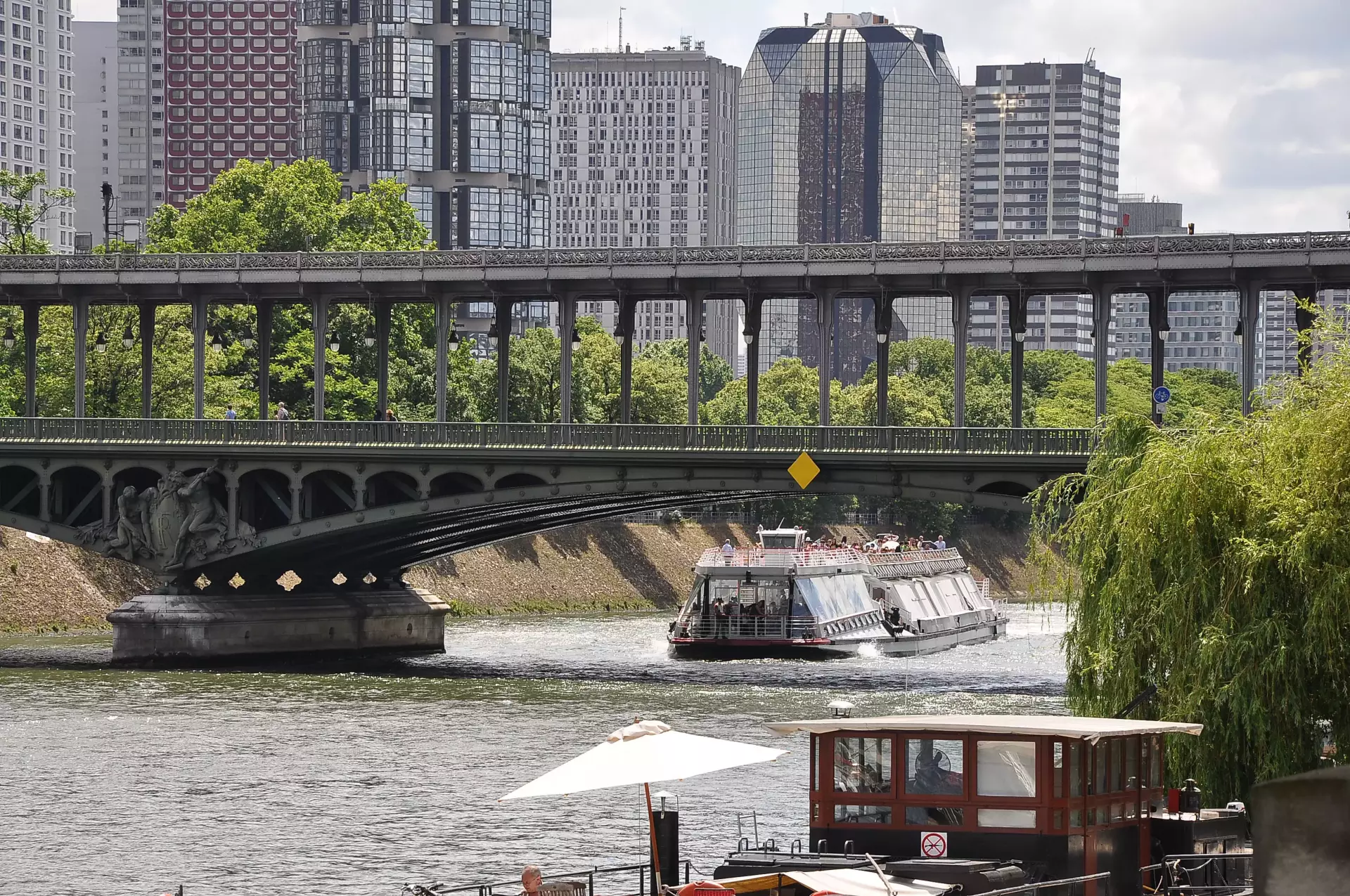
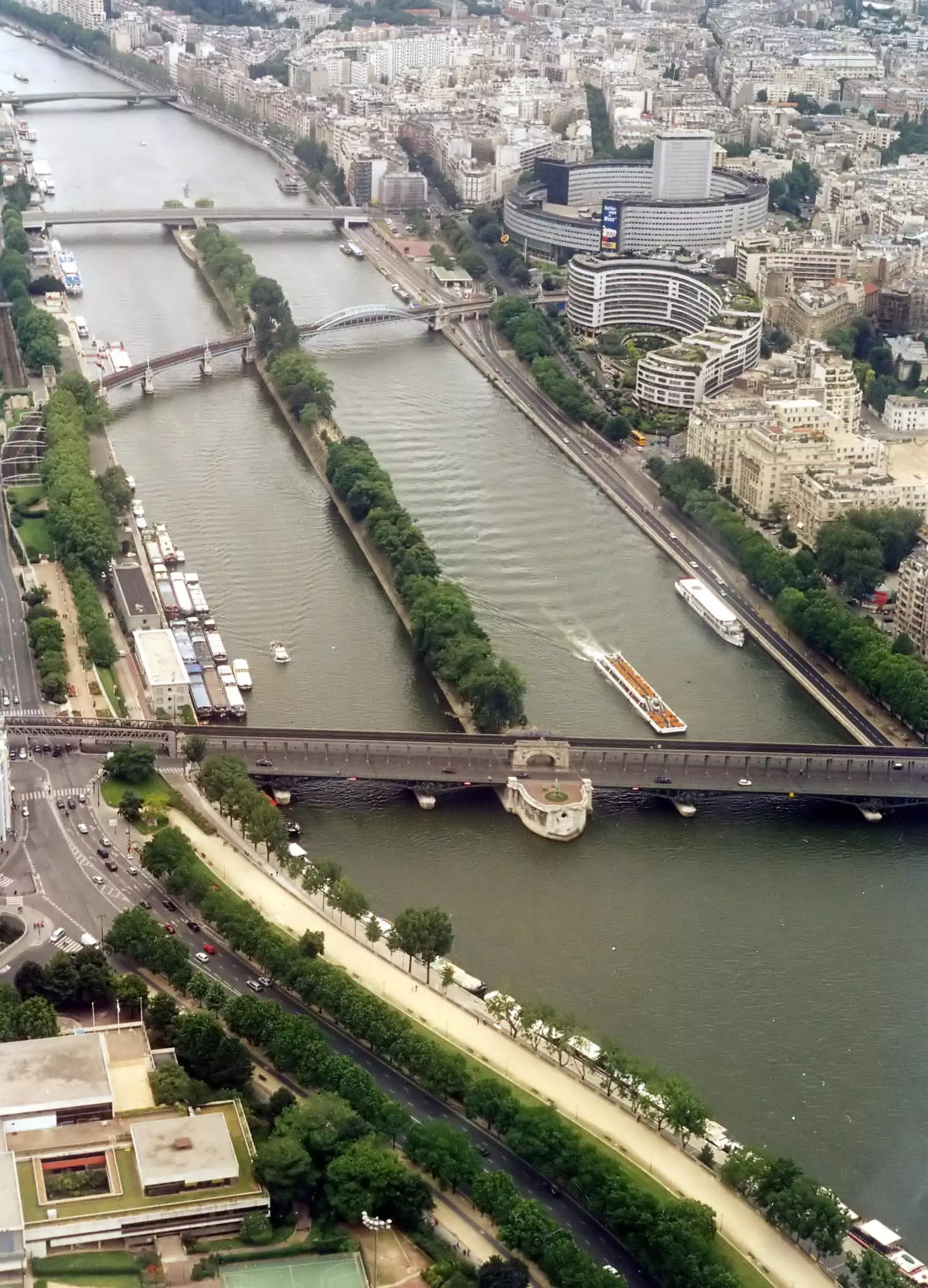
The Pont de Bir-Hakeim is a striking bridge in Paris, easily recognized for its two distinct levels. It stretches across the Seine River, connecting the 15th and 16th arrondissements, and has become a familiar sight for both locals and visitors.
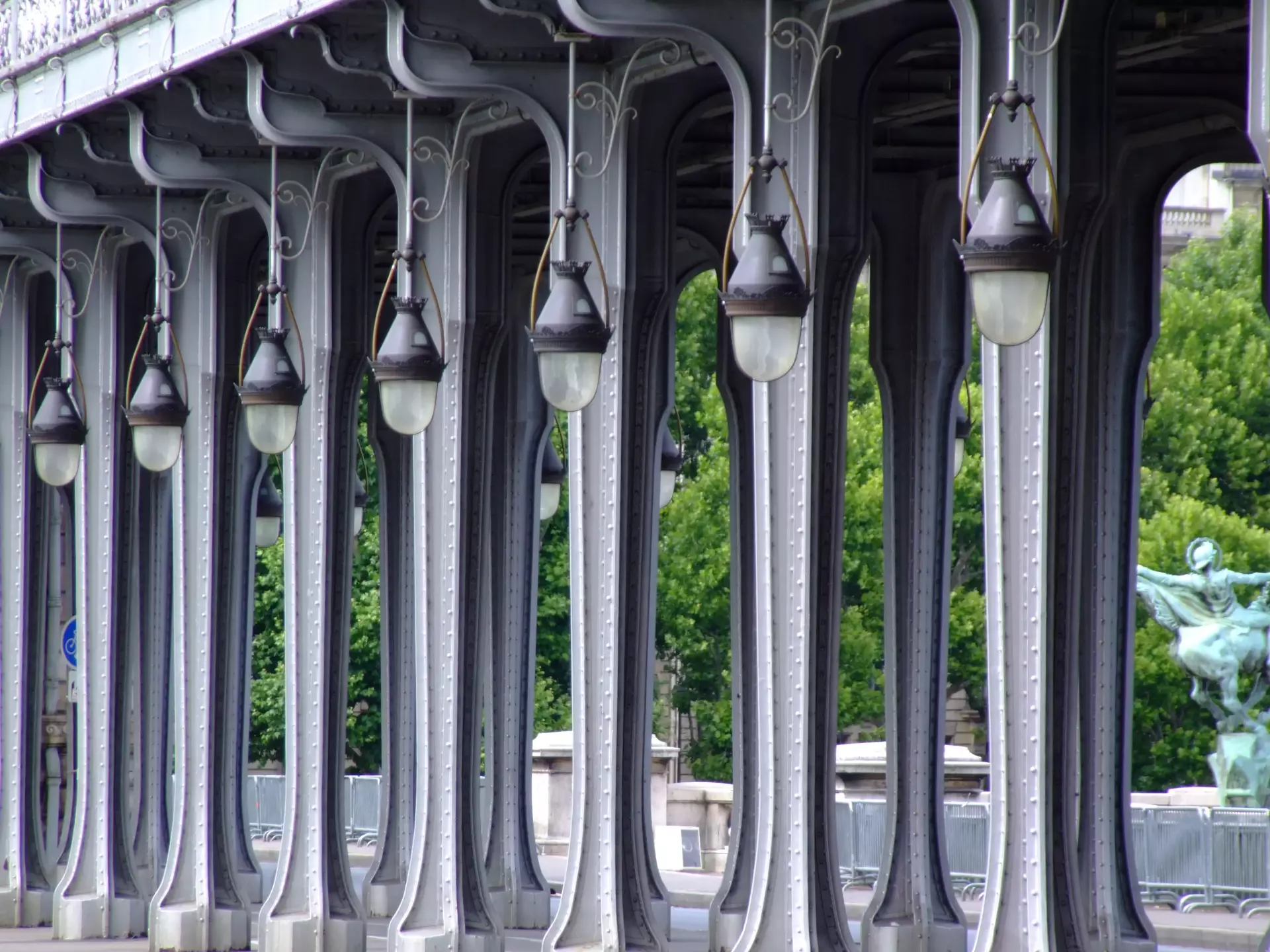
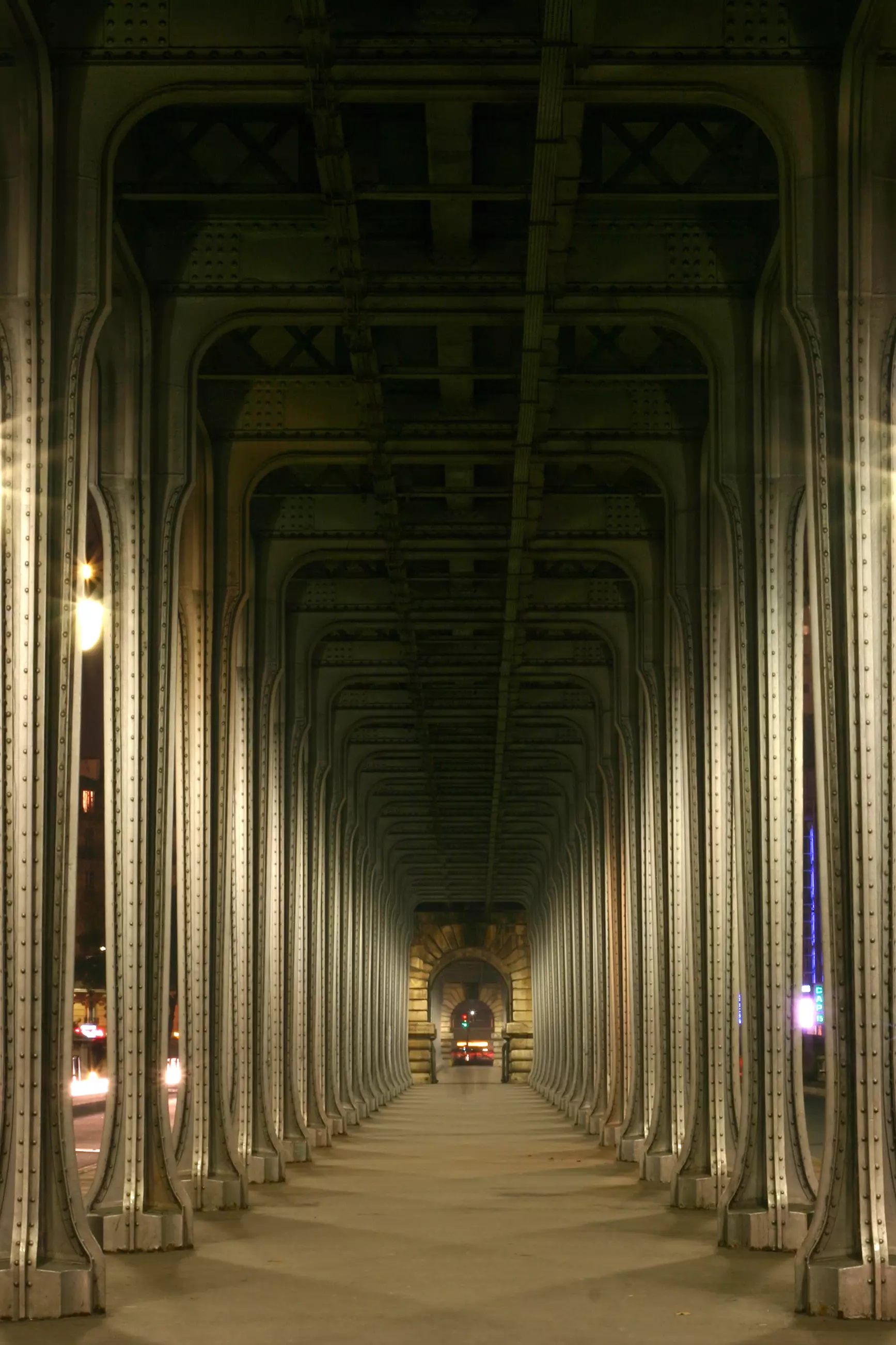
This bridge stands out due to its unique double-decker structure. The upper level is reserved for the Paris Métro Line 6, allowing trains to glide above the city with scenic river views. On the lower level, vehicles, cyclists, and pedestrians share the road and wide walkways. Sturdy steel arches support the bridge, while elegant lamp posts line the pedestrian paths, adding a touch of classic Parisian charm.
The Pont de Bir-Hakeim is a favorite backdrop for photographers and filmmakers. Its open framework provides panoramic views of the Eiffel Tower, especially popular during sunrise and sunset. Many movies and TV shows have used this spot for its romantic and cinematic setting, making it familiar even to those who have never visited Paris.
Source - https://en.wikipedia.org/wiki/Pont_de_Bir-Hakeim
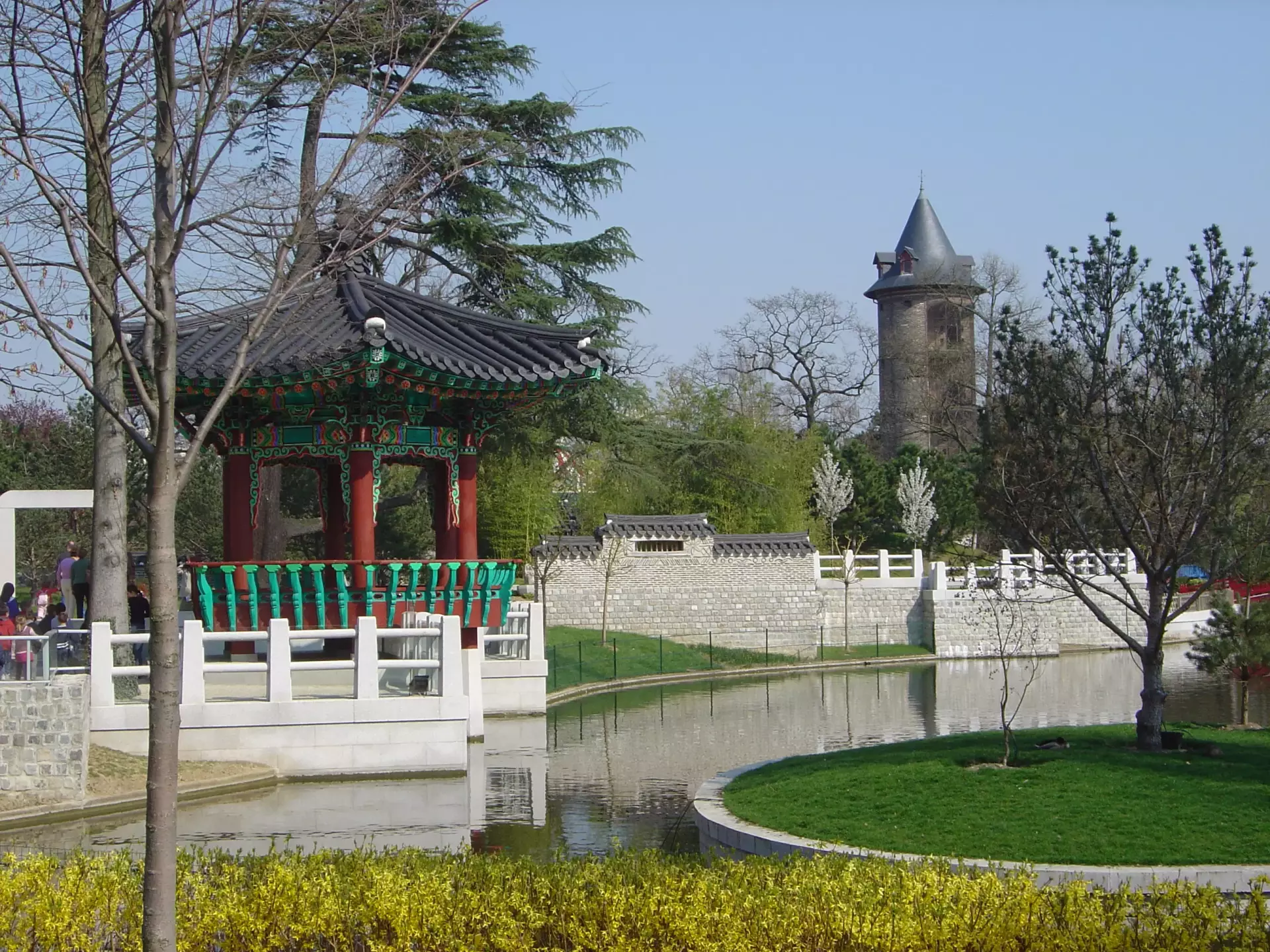
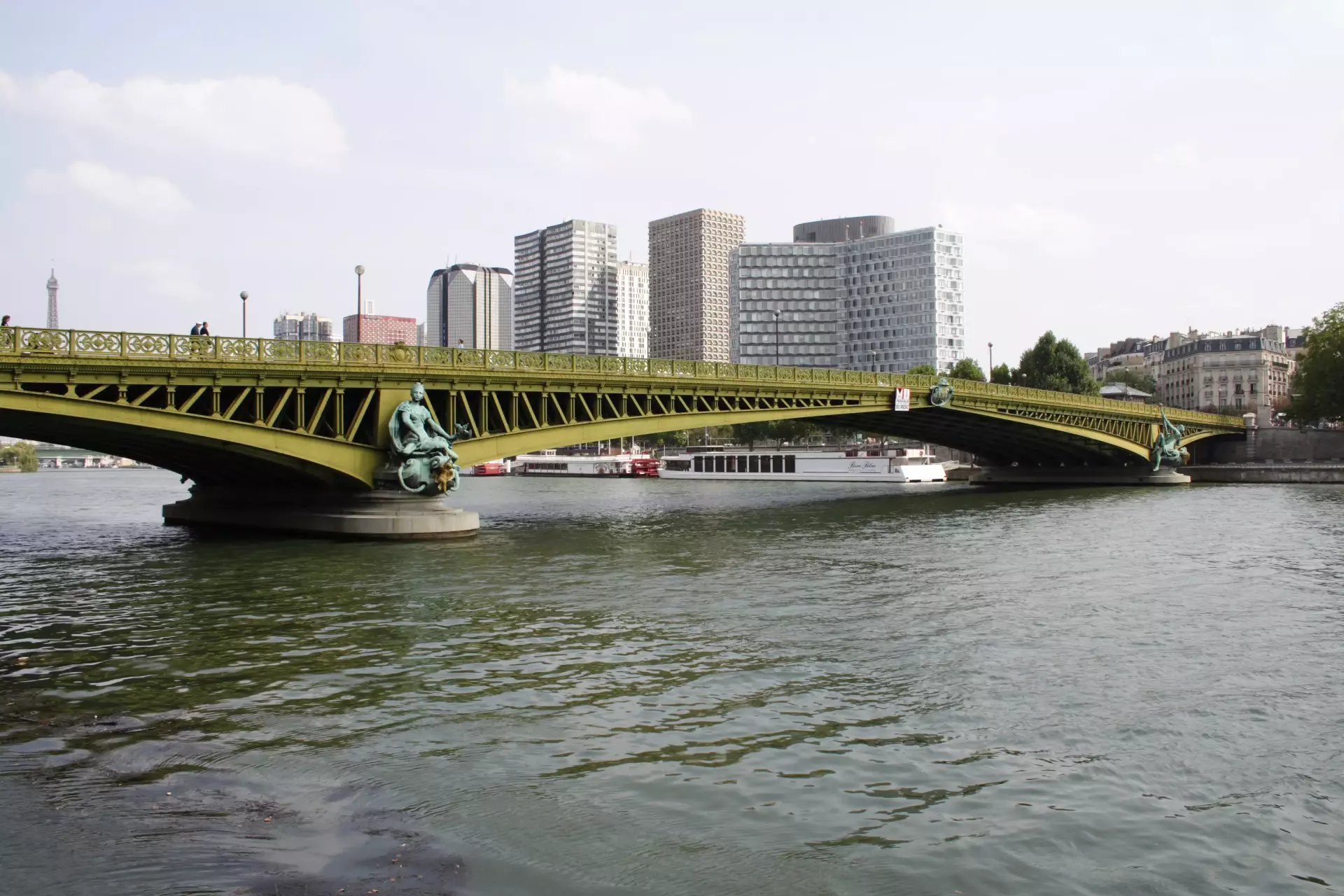
The bridge is widely regarded as the most ornate, extravagant bridge in the city. It is classified as a French Monument historique.
a Roman Catholic church on the east side of the Place Saint-Sulpice within the rue Bonaparte, in the Luxembourg Quarter of the VIe arrondissement. At 113 metres long, 58 metres in width and 34 metres tall, it is only slightly smaller than Notre-Dame and thus the second largest church in the city. It is dedicated to Sulpitius the Pious. During the 18th century, an elaborate gnomon, the Gnomon of Saint-Sulpice, was constructed in the church. In front of the church itself is the magnificent Place Saint-Sulpice which contains the 'Fountain of the Four Bishops'. The church has a long-standing tradition of talented organists that dates back to the eighteenth century. In 1862, Aristide Cavaillé-Coll reconstructed and improved the existing organ built by François-Henri Clicquot. Though using many materials from Clicquot's French Classical organ, it is considered to be Cavaillé-Coll's magnum opus, featuring 102 speaking stops, and is perhaps the most impressive instrument of the romantic French symphonic-organ era. Its organists have also been renowned, starting with Nicolas Séjan in the 18th century, and continuing with Charles-Marie Widor (organist 1870-1933) and Marcel Dupré (organist 1934-1971), both great organists and composers of organ music. The current organists are 'titulaire' Daniel Roth (since 1985) and 'assistant titulaire' Sophie-Véronique Cauchefer-Choplin. In Saint-Sulpice Sunday organ recitals are held on a regular basis (Auditions du Dimanche, following the High Mass, usually from 11:30am till 12:05pm, during the subsequent mass, a visit of the organ loft is possible).
An industrial design museum in Paris that houses the collection of the Conservatoire National des Arts et Métiers (National Conservatory of Arts and Industry), which was founded in 1794 as a repository for the preservation of scientific instruments and inventions.
Private collection of French, Italian, Dutch masterpieces in a typical XIXth century mansion.
The foundation opened its doors in May 2003. It preserves Henri Cartier-Bresson and Martine Franck’s archives. Exhibition of photographs, paintings, sculptings, and illustrations.
The Paris Botanical Garden, founded as the royal medicinal garden in 1626 by King Louis XIII's doctor, contains over 10,000 species. The grounds also include a small zoo known as La Ménagerie, and the Muséum National d'Histoire Naturelle, which includes the Grande Galerie de l'Evolution (where you can see thousands of naturalized animals from all over the world) and the 'Galerie de paléontologie et d'anatomie comparée' (same thing, but with skeletons).
The Pasteur Museum is housed in the apartment where the great scientist spent the last 7 years of his life. Hardly touched since that time, the museum is full of personal memorabilia and scientific instruments. Pasteur is buried on the grounds in a flamboyant mosaic-decorated mausoleum. The museum was closed to individual visitors for security reasons after the 13th November 2015 Paris terrorist attacks.
St. Geneviève was responsible for saving Paris from the Huns in 451 and her shrine in the church has been a popular place of pilgrimage ever since. The church as it stands dates from between 1492 and 1626 and is a mix of Gothic and Renaissance architectural styles. A unique feature is the Renaissance rood screen, the sole survivor in the city.
One of Paris's best kept secrets, painted by Monet numerous times. It is a very elegant centre of green in the middle of cosmopolitan Paris. Make sure you check out the statues, entrance rotunda and the surrounding mansions. Thanks to Haussmann himself this precious slice of parkland was reserved for the enjoyment and leisure of the people of Paris. It is unusual in France due to its casual, informal "English" style planning, and is a contrast to other Parisian parks such as the classically laid out and formal Luxembourg Gardens and the Tuileries. Randomly placed throughout the park are scaled-down architectural replicas including an Egyptian pyramid, Dutch windmill, and a Chinese fort. Free Wi-Fi in the park.
Its exhibits come from such diverse origins as ancient Egypt, classical Greece and the Roman Empire, medieval Europe, and Napoleonic France, but controversially including many items that were looted from their places of origin. Its most famous exhibit, of course, is Leonardo da Vinci's painting of the Mona Lisa (French: La Joconde, Italian: La Gioconda), generally to be found surrounded by hordes of camera-flashing tourists. The Louvre poses many of the same challenges to the visitor as Paris itself; overwhelming in size, crowded in high seasons, and much information available only in French. If you want to see everything in the Louvre, plan at least two full days. However, it is better to pick and choose, as the collection was assembled with an eye to completeness rather than quality. As of July 2019, due to intense crowding and reports of ticket fraud, entry now almost always requires a pre-booked timed ticket, even for holders of the Paris Museum Pass.
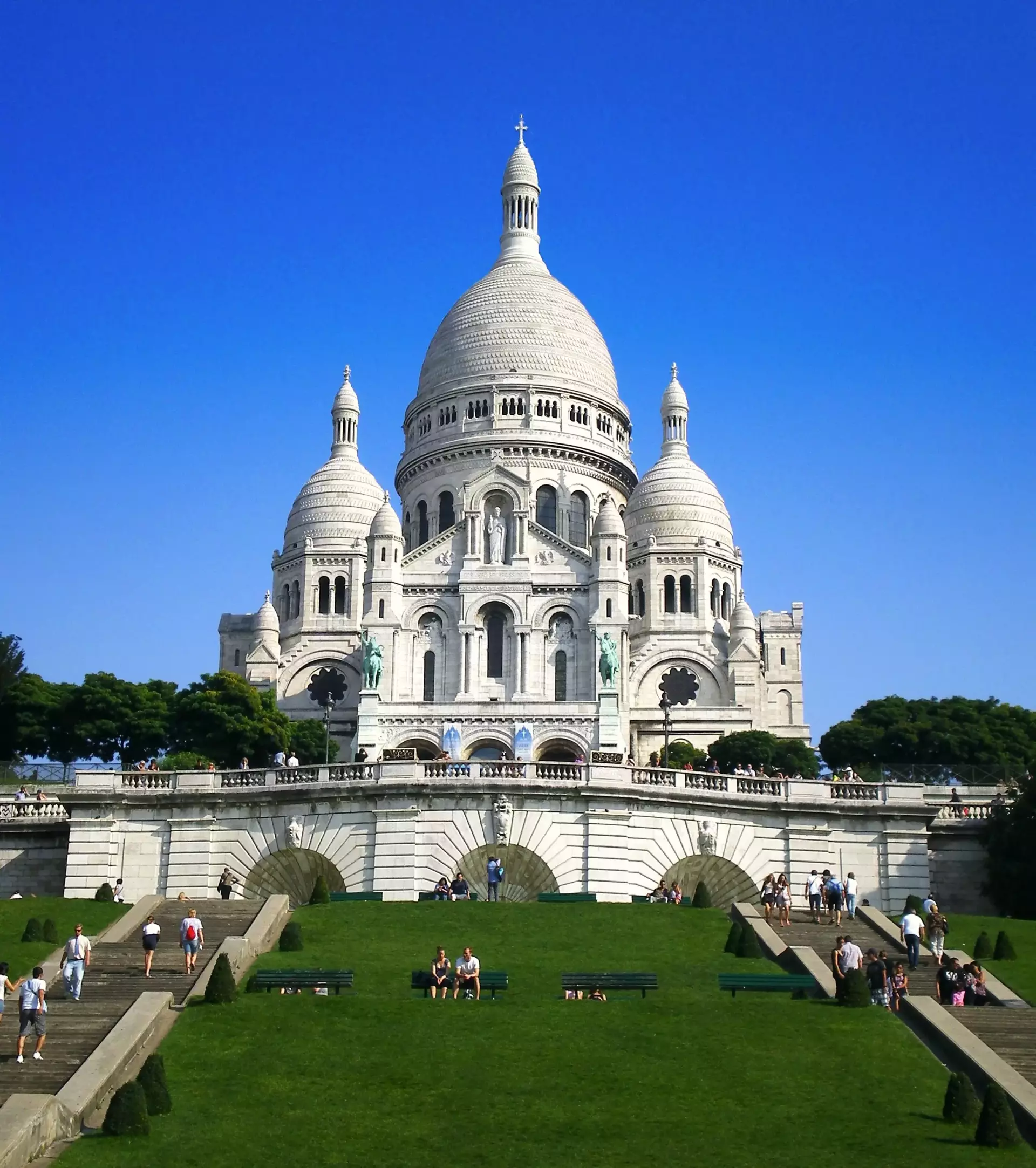
Many feel that this, Paris' town hall, is one of the loveliest buildings in the city. You might not get that from the front view, but try watching the light change on its roofs and towers during sunset from one of the cafés on the Ile de St. Louis, the Lutece for instance. Alternatively, go to the top floor of the Bazar de l'Hôtel de Ville (BHV) department store opposite, on rue de Rivoli and walk up a flight of stairs to the roof terrace (terrasse), from which there is a dramatic view of both the roof of the Hôtel de Ville and the immediate surroundings and river. The present Hôtel de Ville replaced the 16th century original which was burned down during the Commune in 1871. A pastiche of its predecessor, but on a far larger scale, it was designed by the architects Ballu and Deperthes, chosen after a competition, and was mostly completed by 1882. The building is lavishly, and some would say heavy-handedly, decorated both inside and out, and finished in an arrestingly white stone, similar to that used for the even more eye-catching Sacre-Coeur basilica. The statue on the garden wall on the south side is of Etienne Marcel, the most famous holder of the post of "prevôt des marchands" (provost of merchants) which pre-dated the office of mayor. Marcel came to a sticky end, lynched in 1358 by an angry mob after trying to assert the city's powers a little too energetically. The Hôtel de Ville was for many years the private fiefdom of Jacques Chirac, France's president before Sarkozy, and was the site of a scandal centring on both illegal jobs given to Chirac's party members and an immense entertainment budget. General de Gaulle greeted the crowds from a front window in 1944 when Paris was liberated from the Germans and Robespierre was shot in the jaw and arrested in the original building in 1794. Admirers of Hôtel de Ville's architecture will want to know that Ballu also built the Church of La Trinité in the 9th arrondissement and the belfry of the town hall of the 1st arrondissement, opposite the Louvre's east façade. Ballu also restored the Tour St Jacques (see below), which was uncovered after restoration work lasting over a decade.
A museum of contemporary art. It was founded in 1984 by the well-known jewel and watch manufacturer, Cartier. In 1994 it moved to the new building erected on plans of the architect Jean Nouvel.
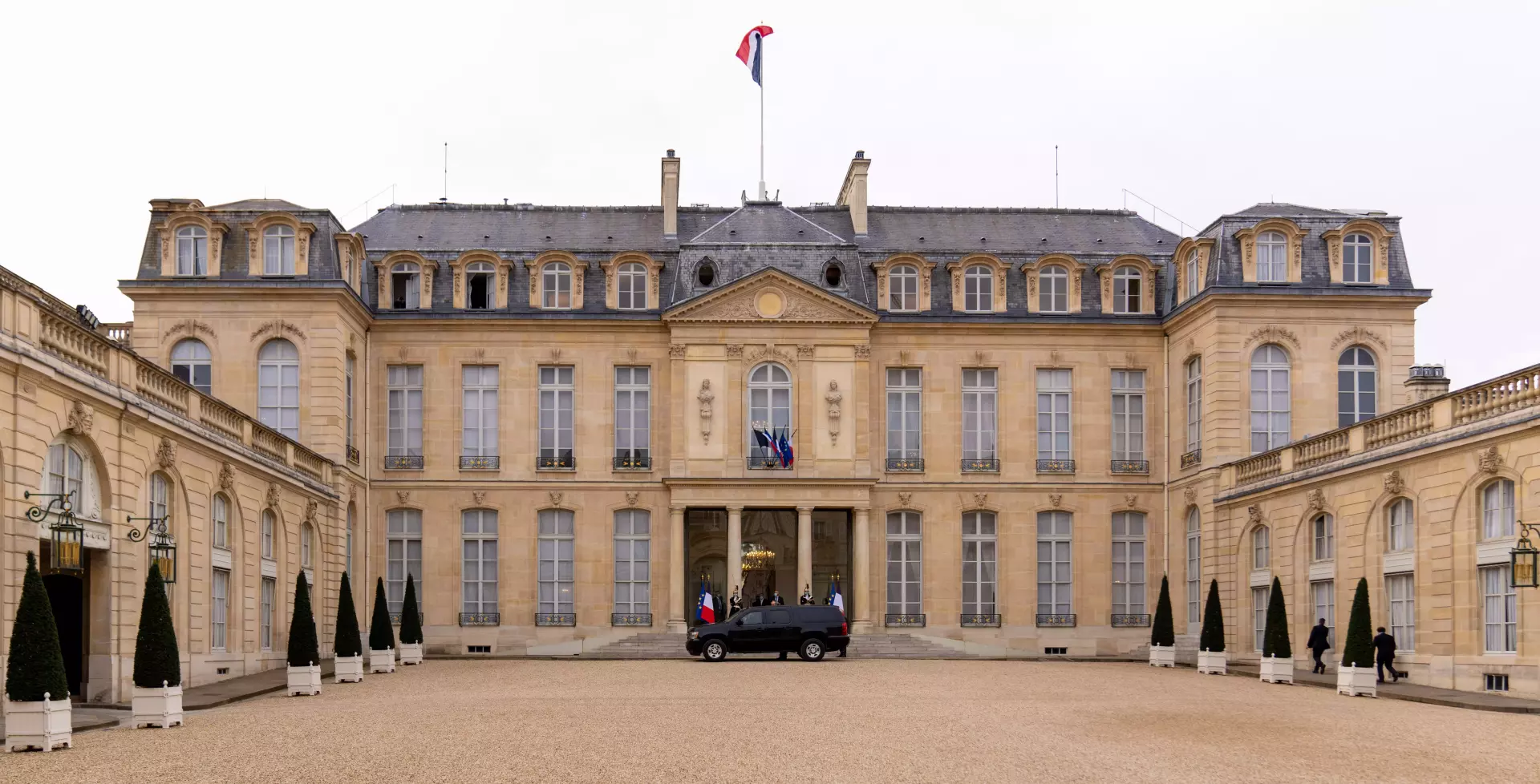
The official residence of the President of France since 1848. Dating to the early 18th century, it contains the office of the President and the meeting place of the Council of Ministers. It is located near the Champs-Élysées in the 8th arrondissement of Paris, the name Élysée deriving from Elysian Fields, the place of the blessed dead in Greek mythology. Not open to the public, except occasionally during the annual National Heritage Days (usually a weekend in mid-September). Important foreign visitors are hosted at the nearby Hôtel de Marigny, a palatial residence.
Opened in January 2005, the Holocaust Memorial comprises a major documentation centre and a wall bearing 76,000 names of Jews deported from France to the Nazi camps between 1942-1944. Includes an archive of a million artefacts, including 55,000 photographs. Excursions are run from the memorial to French internment camp sites such as Drancy.
Beautiful round "square" with an equestrian statue of King Louis XIV and matching 17th century buildings.
Contained within two historic houses (hotels), the museum explores the history of Paris through objects in over 140 separate rooms.
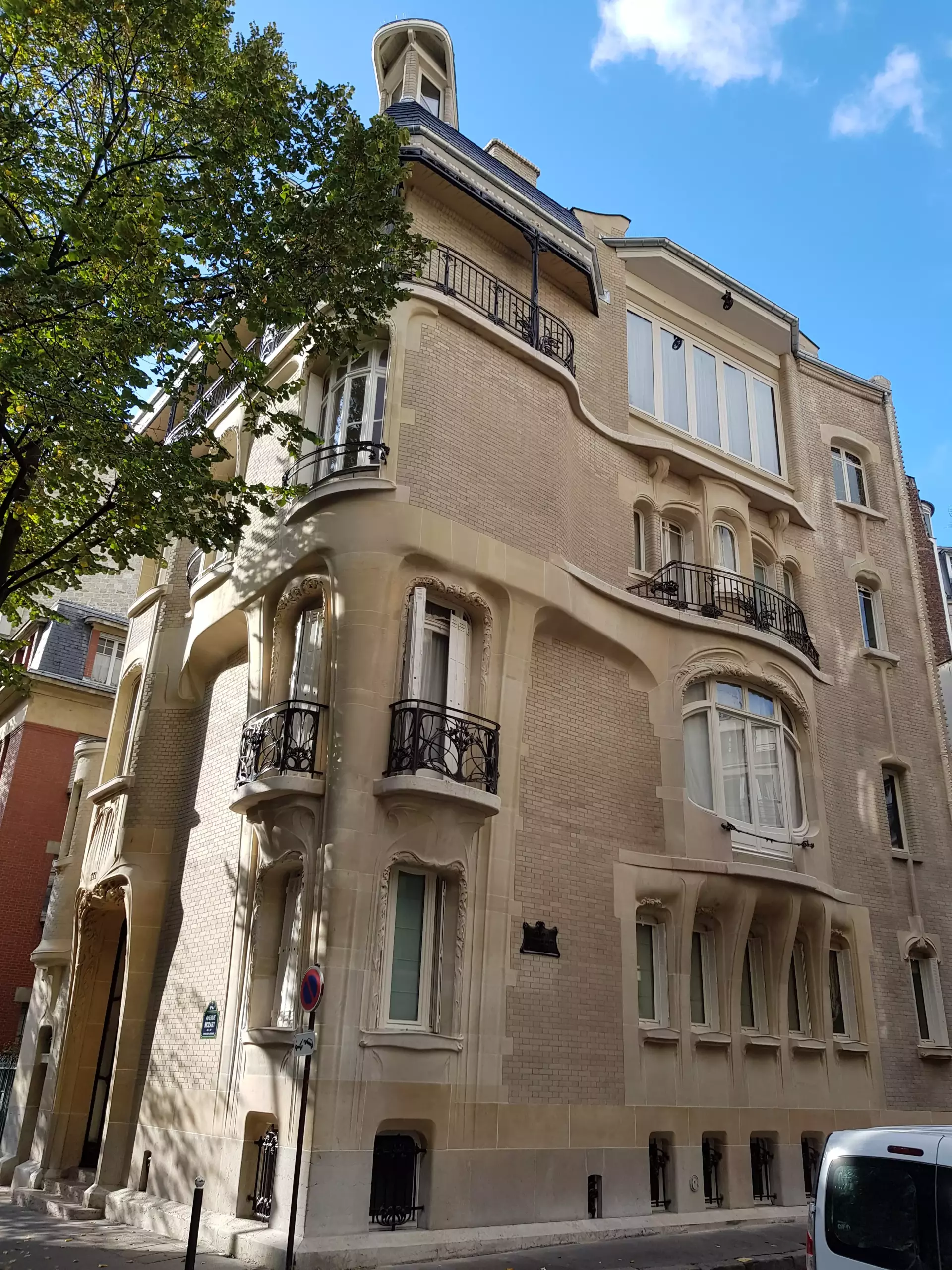
Guimard's own home, built in 1909-12. It is less decorated than Castel Béranger, but still beautifully shaped. Privately owned and not open to the public.