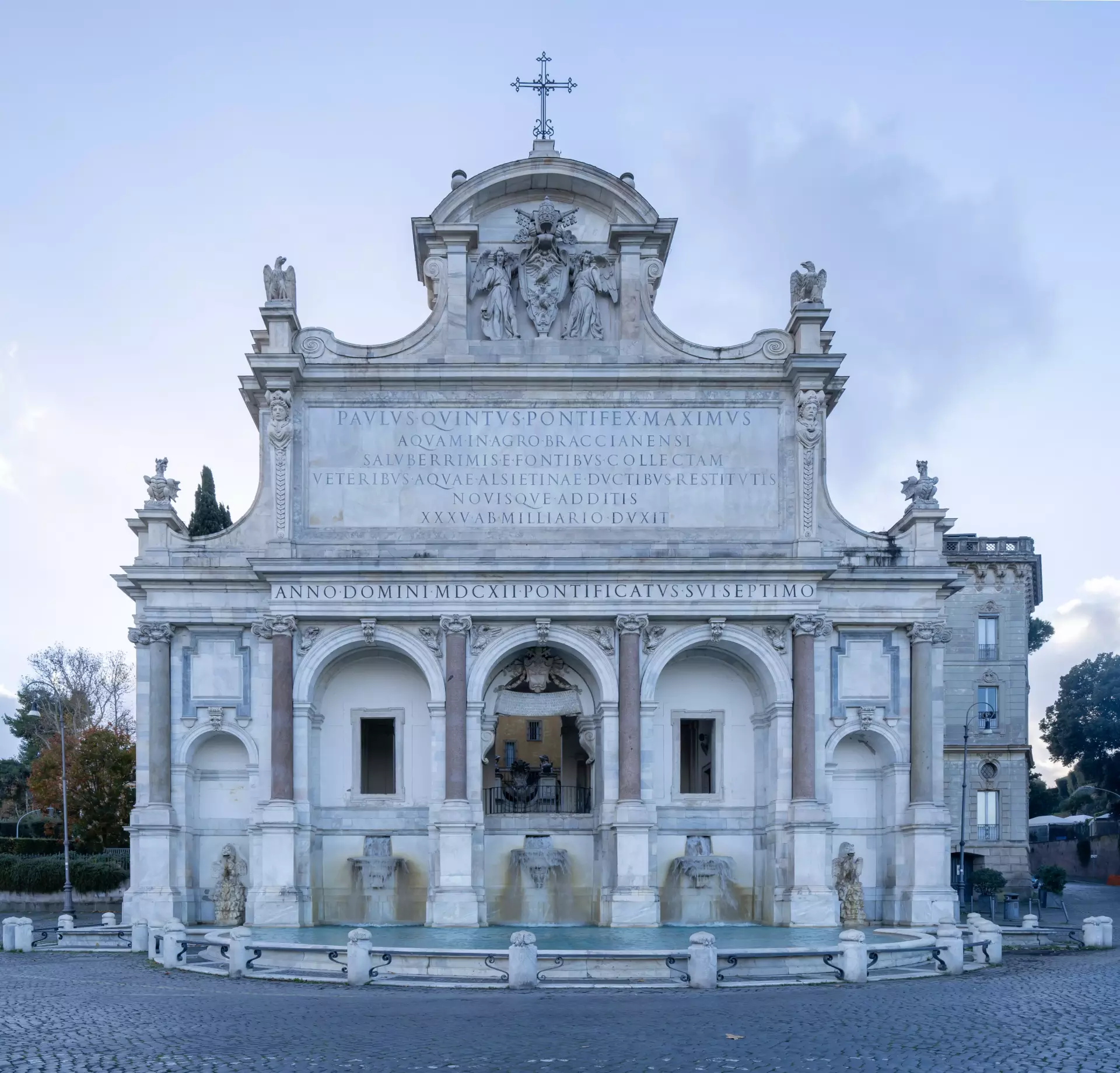
The Fontana dell'Acqua Paola stands as a grand example of early 17th-century Baroque architecture. Its impressive size and detailed design make it a significant landmark from the period when monumental fountains became popular in Rome.
Long before the fountain was built, water shaped life in this area of Rome. In ancient times, the neighborhood was known for its water mills, where grain was processed using the power of flowing water. This tradition highlighted the essential role that water played in daily Roman life and local industry.
The construction of the Fontana dell'Acqua Paola celebrated the reopening of an old Roman aqueduct. By restoring this ancient waterway, fresh water once again flowed into the city, marking a new era and providing Romans with a source of clean water. The fountain became a symbol of renewal and the enduring importance of water to the city’s development.
Source - https://en.wikipedia.org/wiki/Fontana_dell%27Acqua_Paola
Brand new museum designed to celebrate the art and architecture of the 21st century.
The remains of the ancient Roman archives, where Cicero and Seneca did research. Visible from the Forum and accessible through the Capitoline Museum.
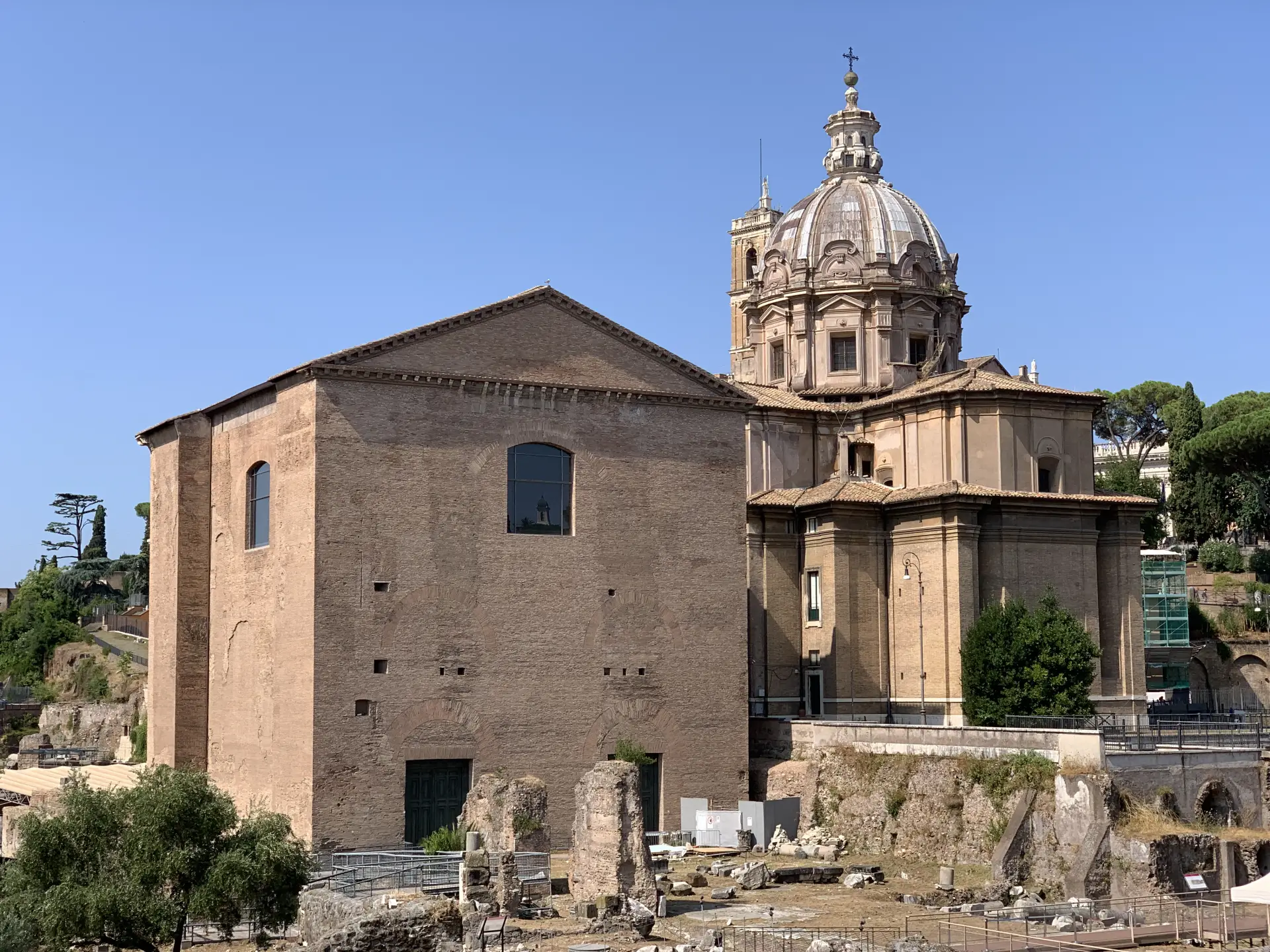
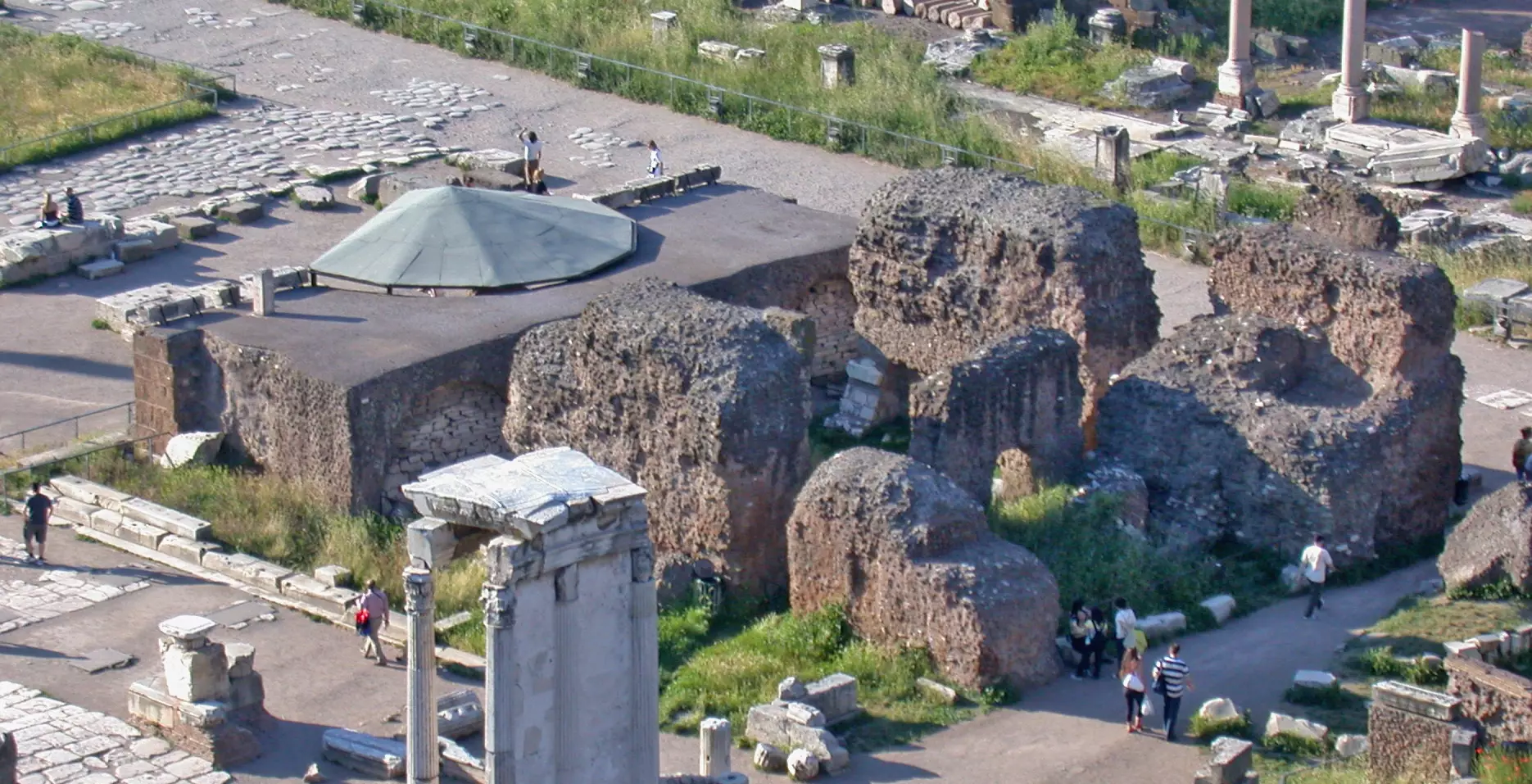
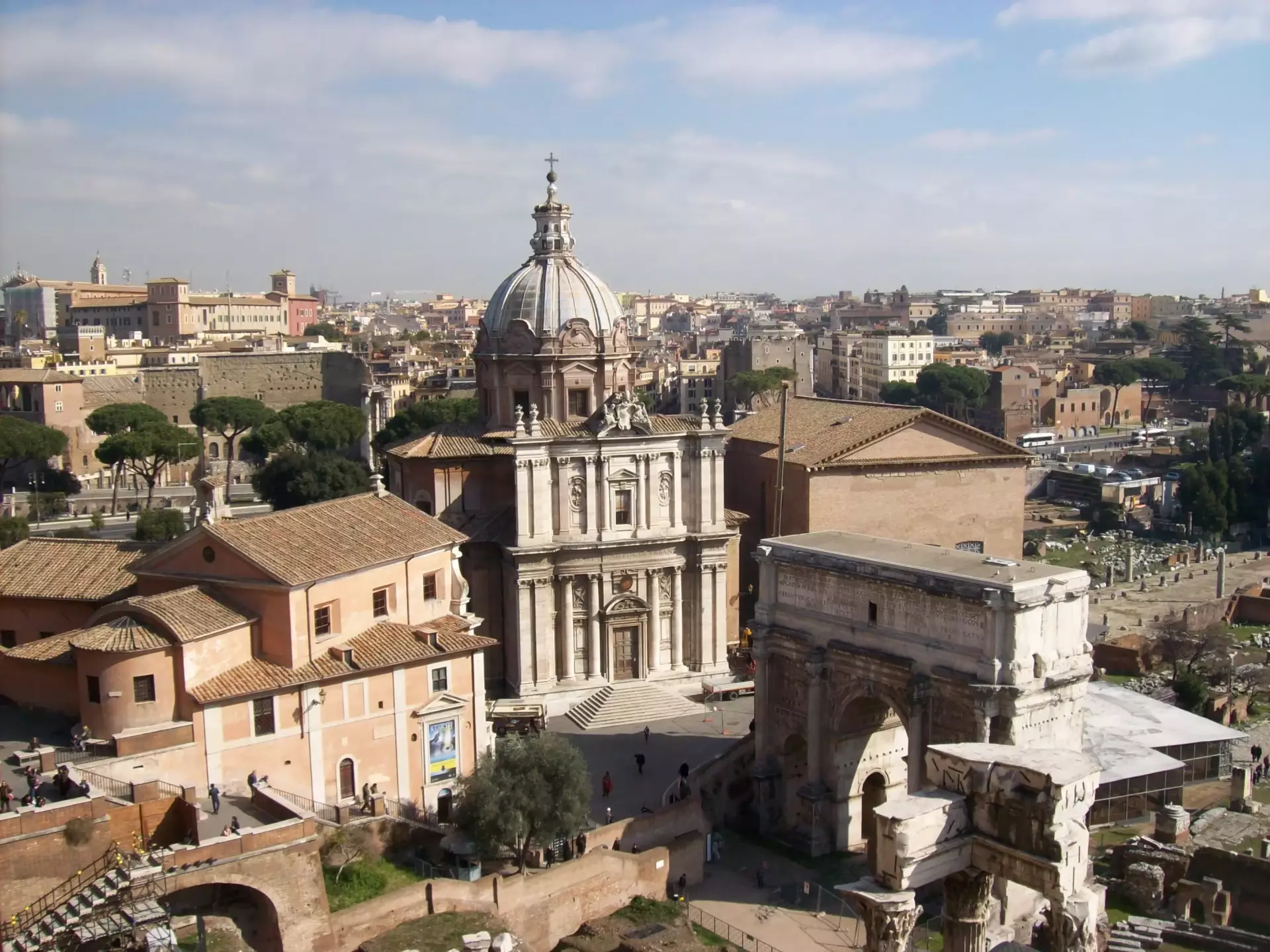
If stones could talk: these hallowed ruins were the most powerful seat of government in the world. To stand in the political, legal and religious centre of the whole Roman Empire brings shivers down one's spine. It is the best way of imagining the splendour and glory of ancient Rome. Located in a small valley between the Capitoline and Palatine hills, access to the Forum is by foot only, from an entrance on the Via dei Fori Imperiali. Wheelchair access is available for most of the Forum but be aware that the path is often bumpy due to it containing original stones from the ancient Roman period. The Forum is much less crowded than the Colosseum and, from a historical perspective, much more interesting. You can hire an audioguide for €5.5 from a small booth just above the Arch of Titus near the Colosseum. These audioguides contain an audio jack so that two people can easily share one. Built in 141 AD and dedicated to the Empress Faustina; after her husband emperor Antoninus Pius died in 161 AD the temple was rededicated to the couple. Completed in 179 BC. The 4th rebuilding of the meeting place for the Roman Senate, once converted into a church during the Middle Ages, but now restored since the 1930s. Erected in 203. You can see it close up from Via della Curia also (without entering the Forum). Finished in 29 BC, marks the spot of Caesar's spontaneous cremation and Mark Antony's funeral speech, made famous by Shakespeare in his play Julius Caesar ("Friends, Romans, Countrymen, lend me your ears ..."). Built in 81 AD by the emperor Domitianus in dedication to his brother Titus, who died earlier that year and reigned as emperor from 79-81, overseeing the opening of the Colosseum in 80 and the eruption of Mt Vesuvius the previous year. The remains of the ancient Roman archives, where Cicero and Seneca did research. Visible from the Forum and accessible through the Capitoline Museum.
Contains the tomb of Pope Hadrian IV, the last non-Italian pope before Pope John Paul I.
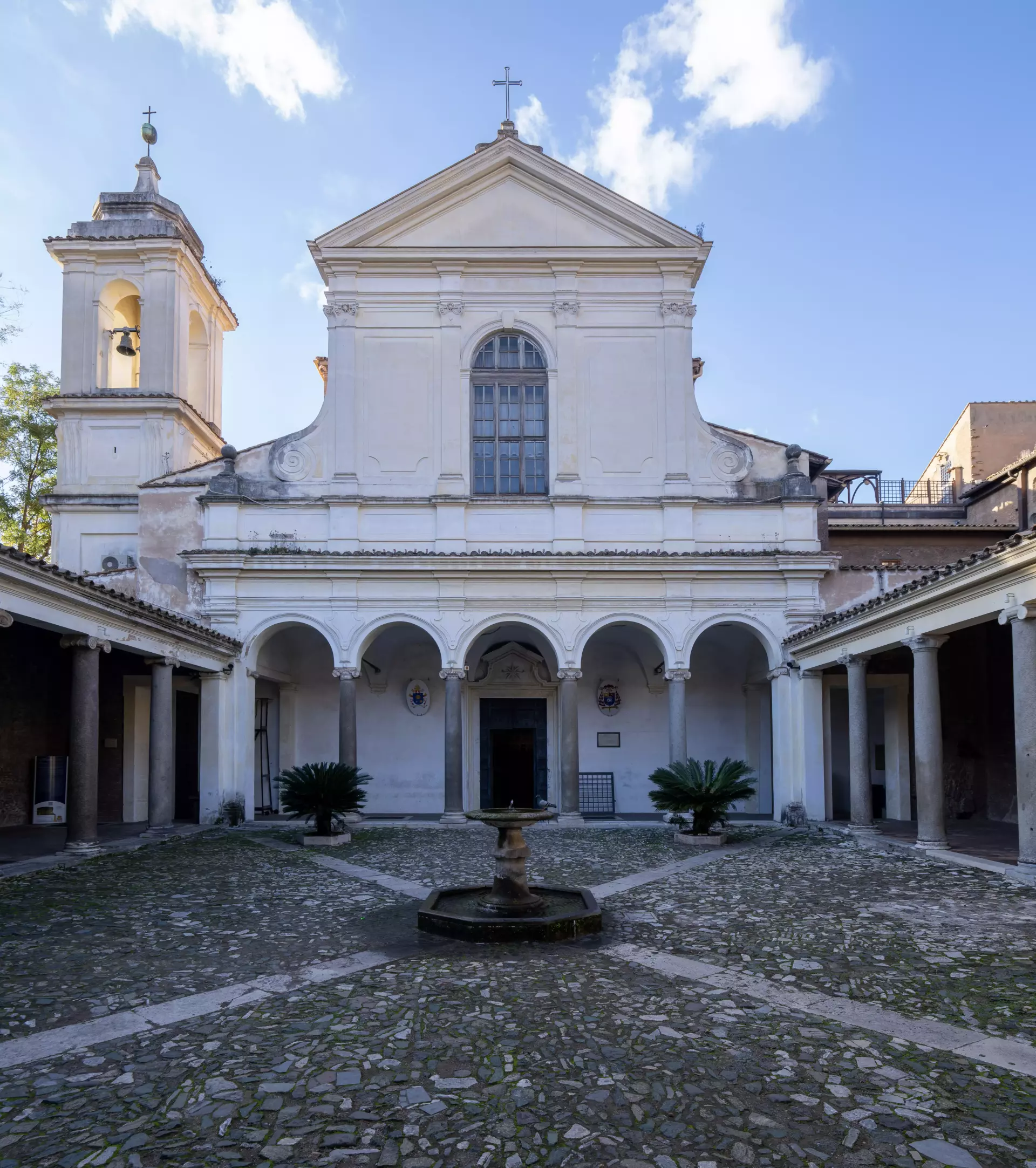
A very ancient church named after a saint who was in 1969 removed from the Roman Catholic calendar of saints for the lack of details of her life. But the church retains the name and is well worth visiting for an excellent 4th-century mosaic and attractive decorations on the facade. Visiting hours are short, but if you arrive close to 11:30, try talking to the attendant if you see him, and he might let you visit for a few minutes. The church is small, so 15 minutes should be long enough to see and absorb everything.
The Scala Sancta (Holy Stairs) is, according to Roman Catholic tradition, the staircase used by Jesus Christ to approach Pontius Pilate to be sentenced to death. Attracts numerous pilgrims who climb the stairs on their knees.
Home of the Abbot Primate of the Benedictine Confederation and Benedictine monks studying in Rome. Visit the monastic produce shop and listen to the best Gregorian chant in Rome during Vespers (19:15 each evening).
This is the largest square in Rome. It sometimes hosts pop concerts and is the focal point for Rome's New Year's Eve celebrations. The twin churches Santa Maria dei Miracoli (1681) and Santa Maria in Montesanto (1679) used to provide a clear welcome to Rome for those coming from the north. Much older, to the north of the piazza is yet another Santa Maria (see below). The Piazza del Popolo is considered as one of the most beautiful squares in Europe. It was enlarged and two streets, the Via di Ripetta and the Via del Babuino were added by order of Pope Sixtus V. In the middle of the square is an obelisk (see below). In 1809-1816, Giuseppe Valadier, Roman architect of French origin, gave the square its characteristic oval shape.
Home of the President of the Italian Republic, and the Quirinal Gardens. Built in 1573 as a papal summer residence, and has since also served as the residence for the pope and later for the king of Italy.
Perhaps most famous for a large model of imperial Rome, but also has a large display of various aspects of ancient Rome, using plaster casts, models and reconstructions of works found in museums throughout the world.
This little church is hard to find but well worth the extra effort although it is often closed when you get there. One of Borromini's masterpieces. It is located only a block from Piazza Navona, but not usually visible from the street, as you must enter the courtyard of an old palazzo to reach the church. Sant'Ivo is a small church the dome of which is shaped like the Star of David, but with every other point rounded. The steeple seen from the outside looks like it has a staircase wrapped around it that ascends to heaven. As the church was commissioned by the Barberini family that produced a number of popes and whose family symbol was the bee—some say the steeple resembles the stinger of the insect.