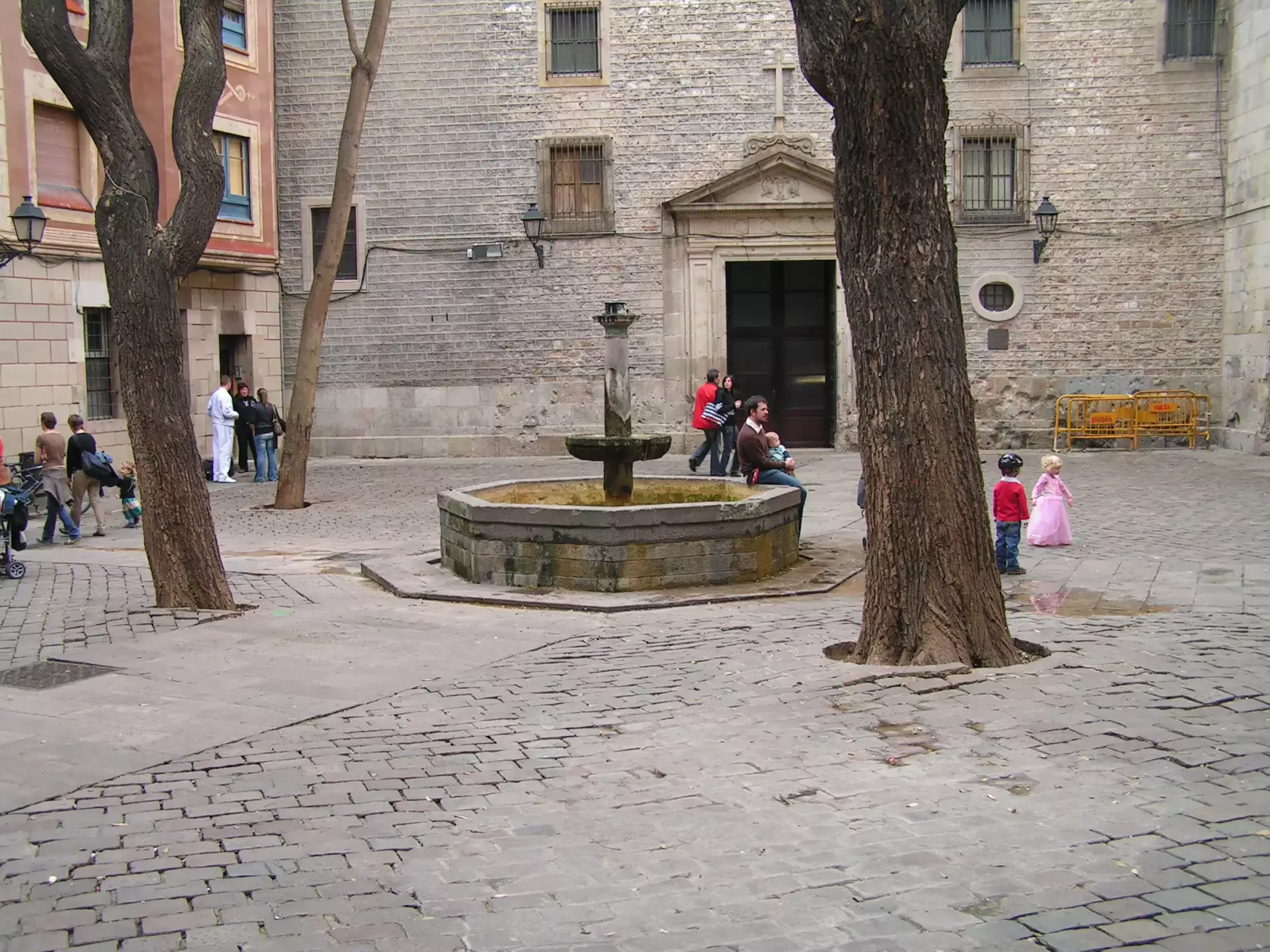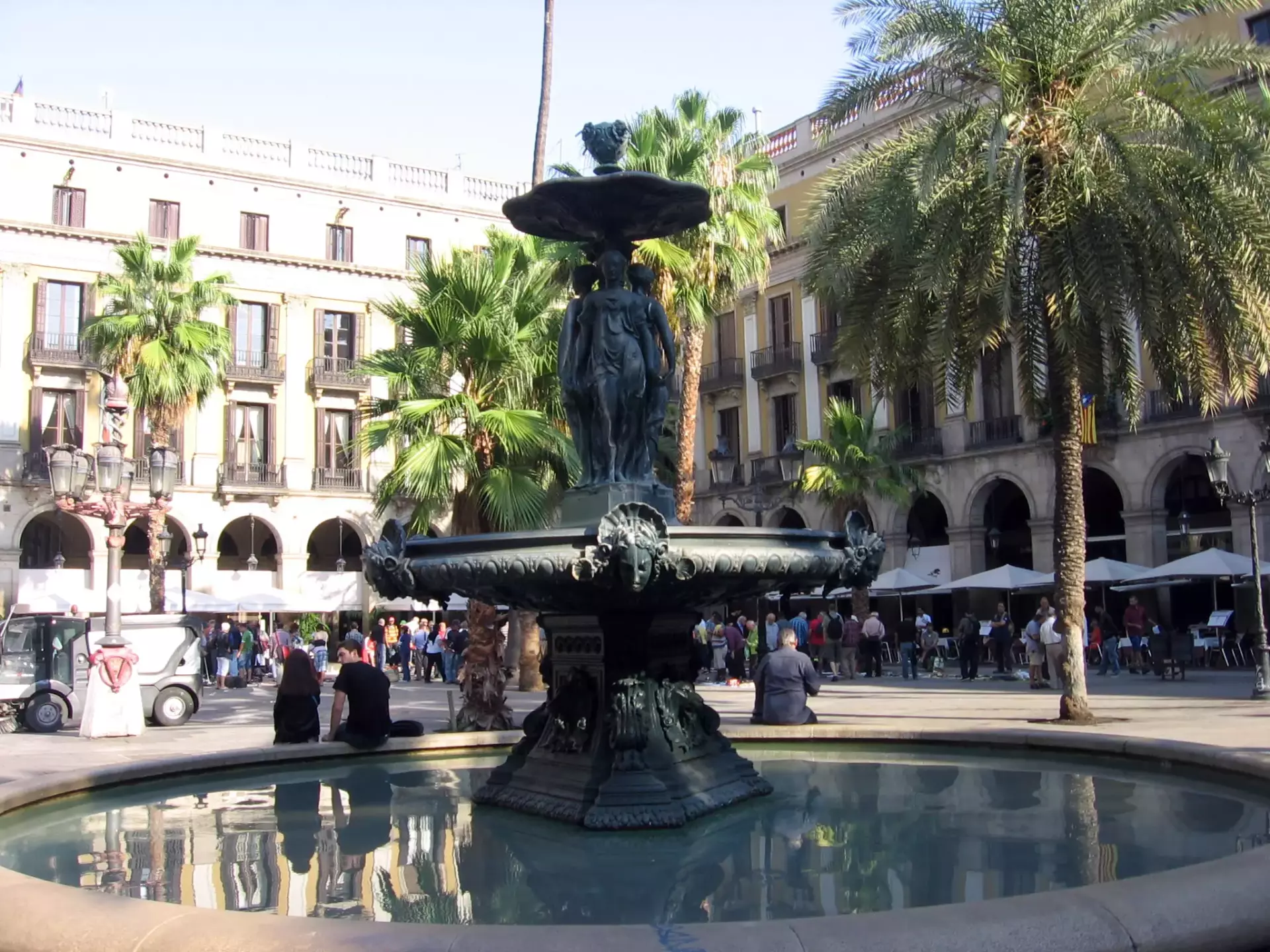
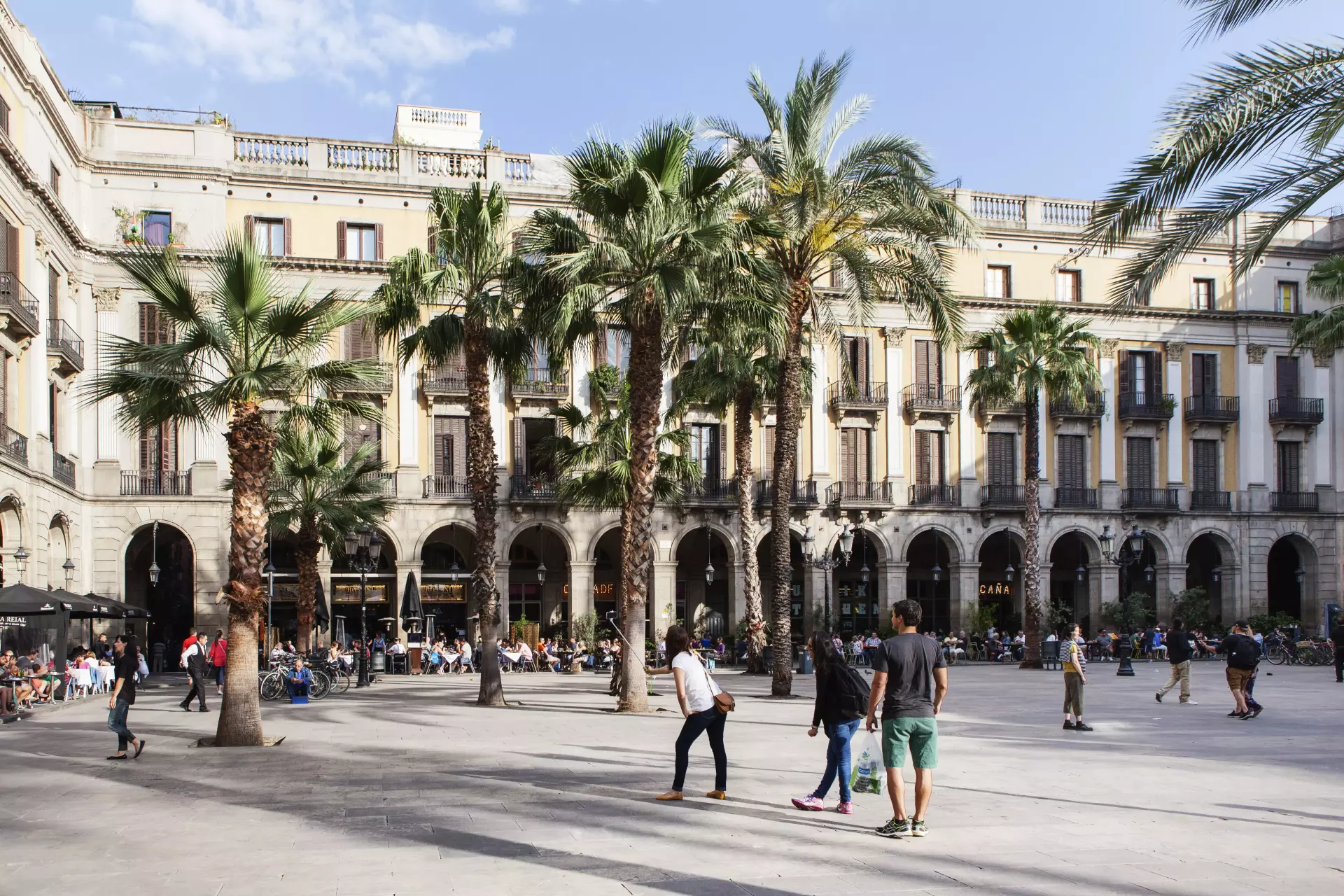
Plaça Reial is celebrated for its vibrant nightlife and distinctive architectural style. The square is adorned with elegant fountains and towering palm trees, creating a picturesque setting.
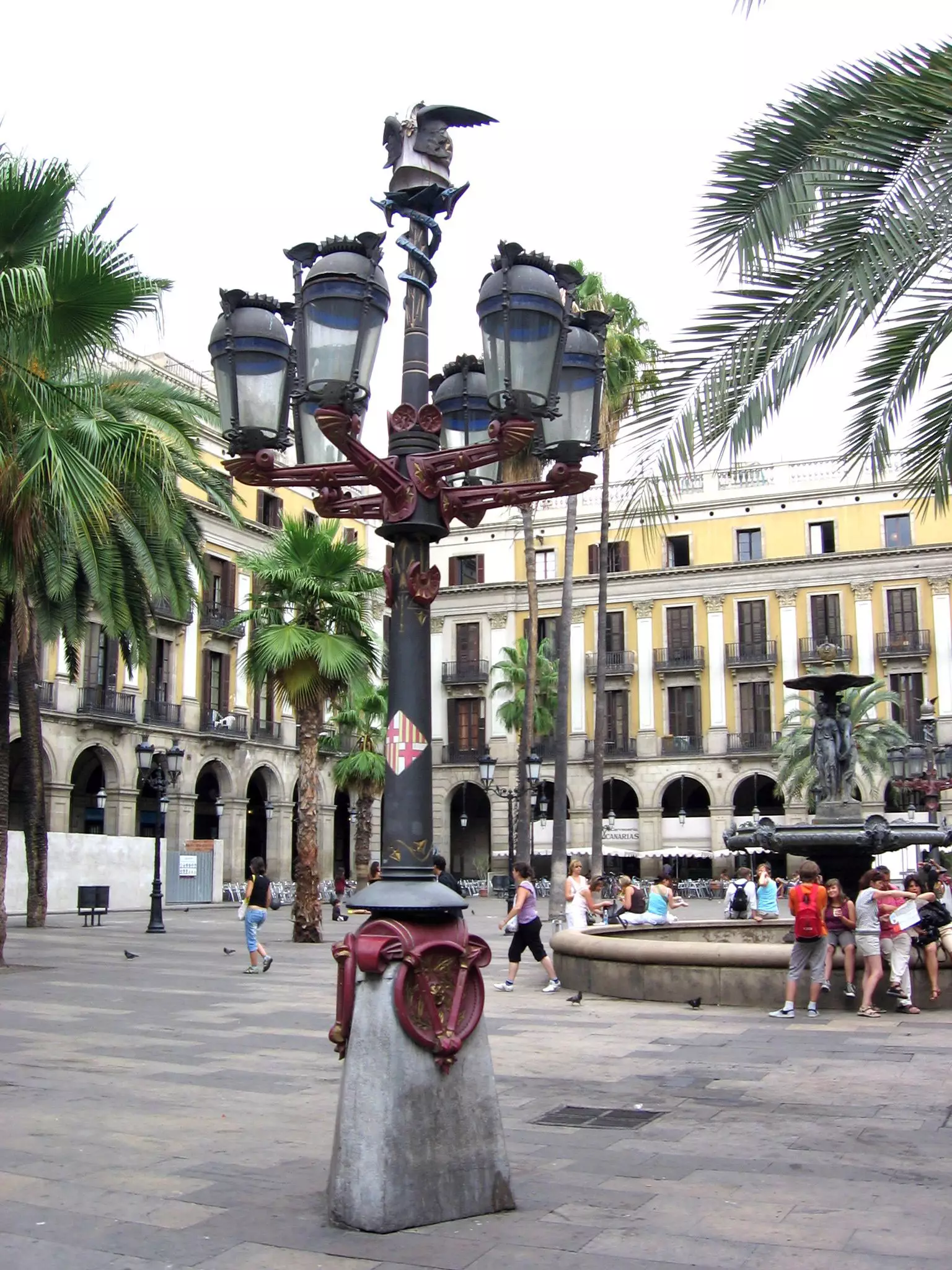
Constructed in the 19th century, Plaça Reial stands on the grounds of a former monastery. The Mendizábal law led to the expulsion of the monks, paving the way for this iconic square. A notable highlight is the streetlights designed by the renowned architect Antoni Gaudí, which continue to illuminate the area.
During the day, Plaça Reial is a bustling hub of activity. The square is lined with numerous bars and restaurants, each offering inviting terraces that attract both locals and visitors. Here, people enjoy meals and drinks while soaking in the lively atmosphere.
Source - https://en.wikipedia.org/wiki/Royal_Square_(Barcelona)
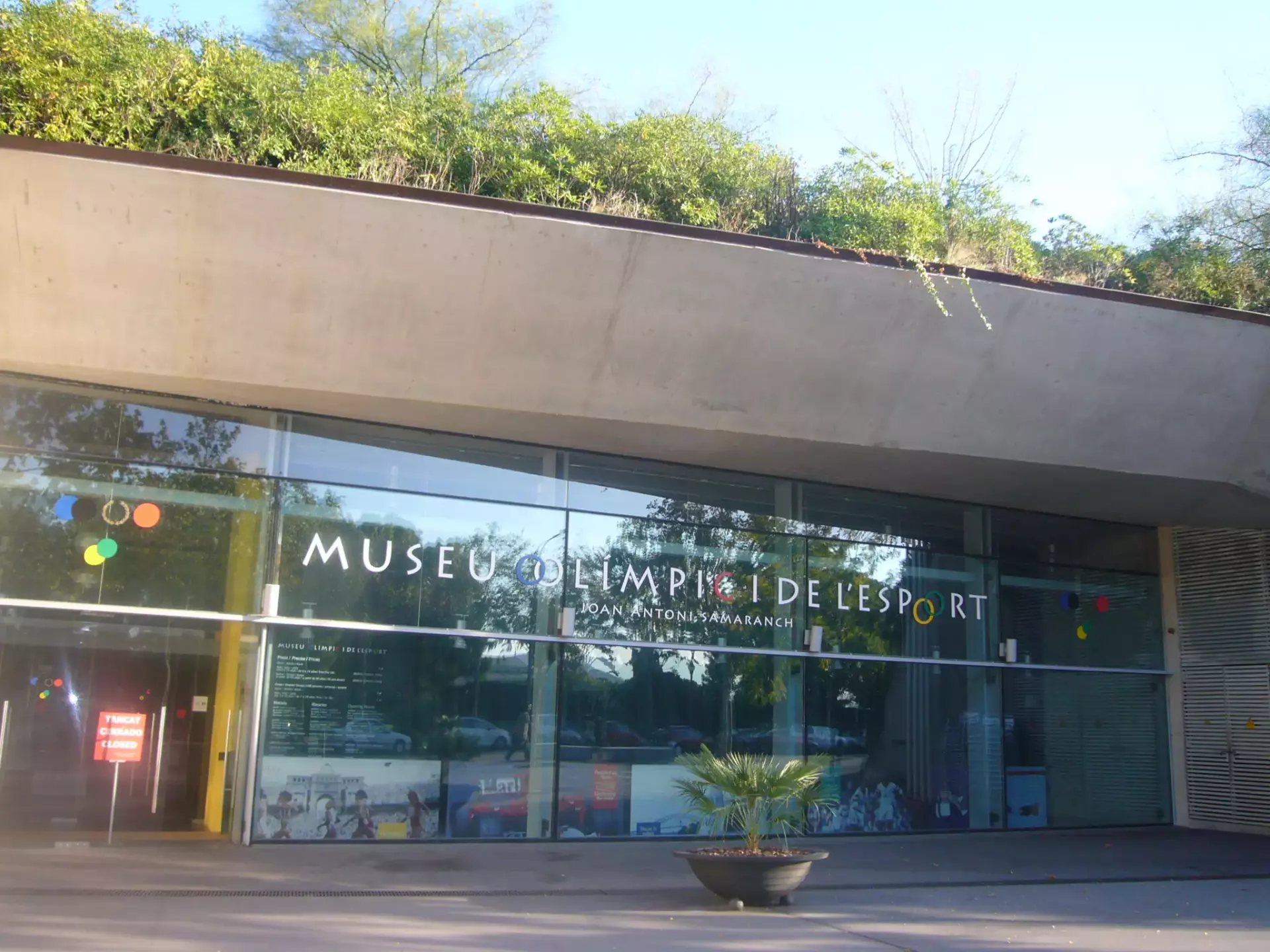
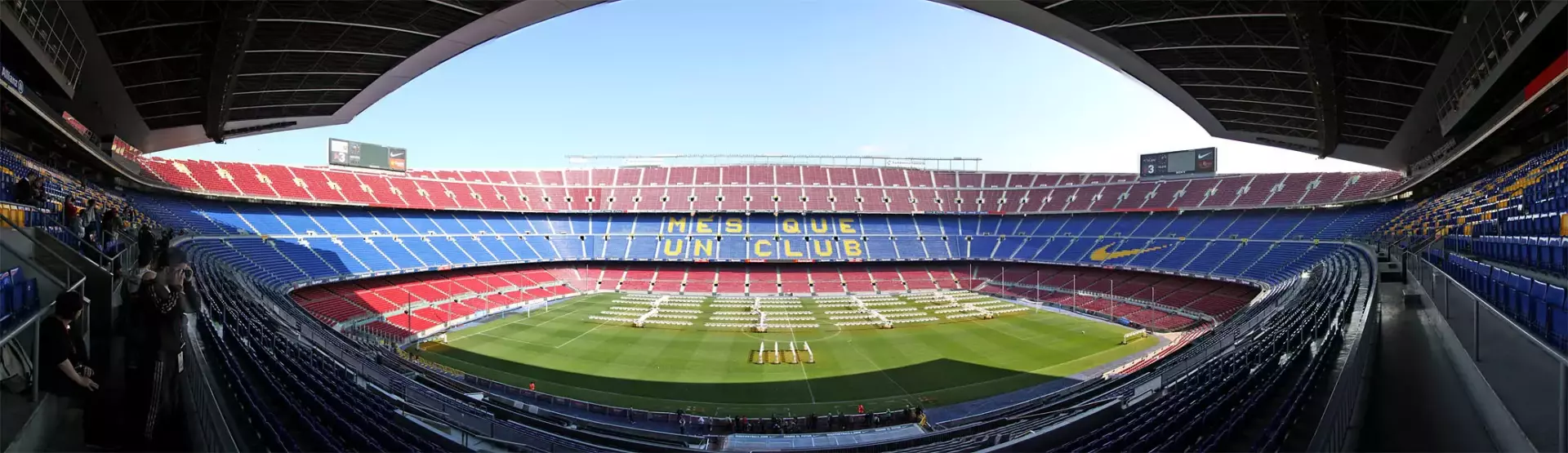
The stadium and its surroundings built in 1927 and renovated for the 1992 Summer Olympics provides nice architectonic and city views. Since it's not too crowded outside sport events, it's usually a pretty calm place.
Modernist design by Lluís Domènech i Montaner is a UNESCO World Heritage site, a masterpiece of Catalan's modernist architecture. This auditorium designed by Ramon Muntaner is the most important Modernist example in Ciutat Vella. It was the headquarters of the Orfeó Català, the oldest Catalan choir. The most beautiful part is the stalls with its fine detailing, although all the building is impressive. There are plenty of allegories about music and Catalonia, since the Orfeó Català is strongly bounded with the Catalan Renaixença, the romantic movement that tried to recuperate the Catalan history, language and traditions. It is also the best place in Barcelona to listen to symphonic music.
Situated on the Montjuic, it exhibits archaeological findings from Catalunia from different periods. Under 16 and 65+ free. €3 for others. Special discounts for other groups.
Although a botanic garden had been established in Barcelona as early as 1888, the current gardens date from 1999.
The first building Gaudi built in Barcelona. It has been opened as a museum. It's possible to walk the whole monumental enclosure, including the garden and the interior of the building. In UNESCO World Heritage Sites list since 2005.
Placa d'Espanya was created for the 1929 World Exhibition, on a site once used for public hangings. The fountain in the center of the square is a great attraction and plays music during the summer. Plaça Espanya is located at the base of Montjuic hill.
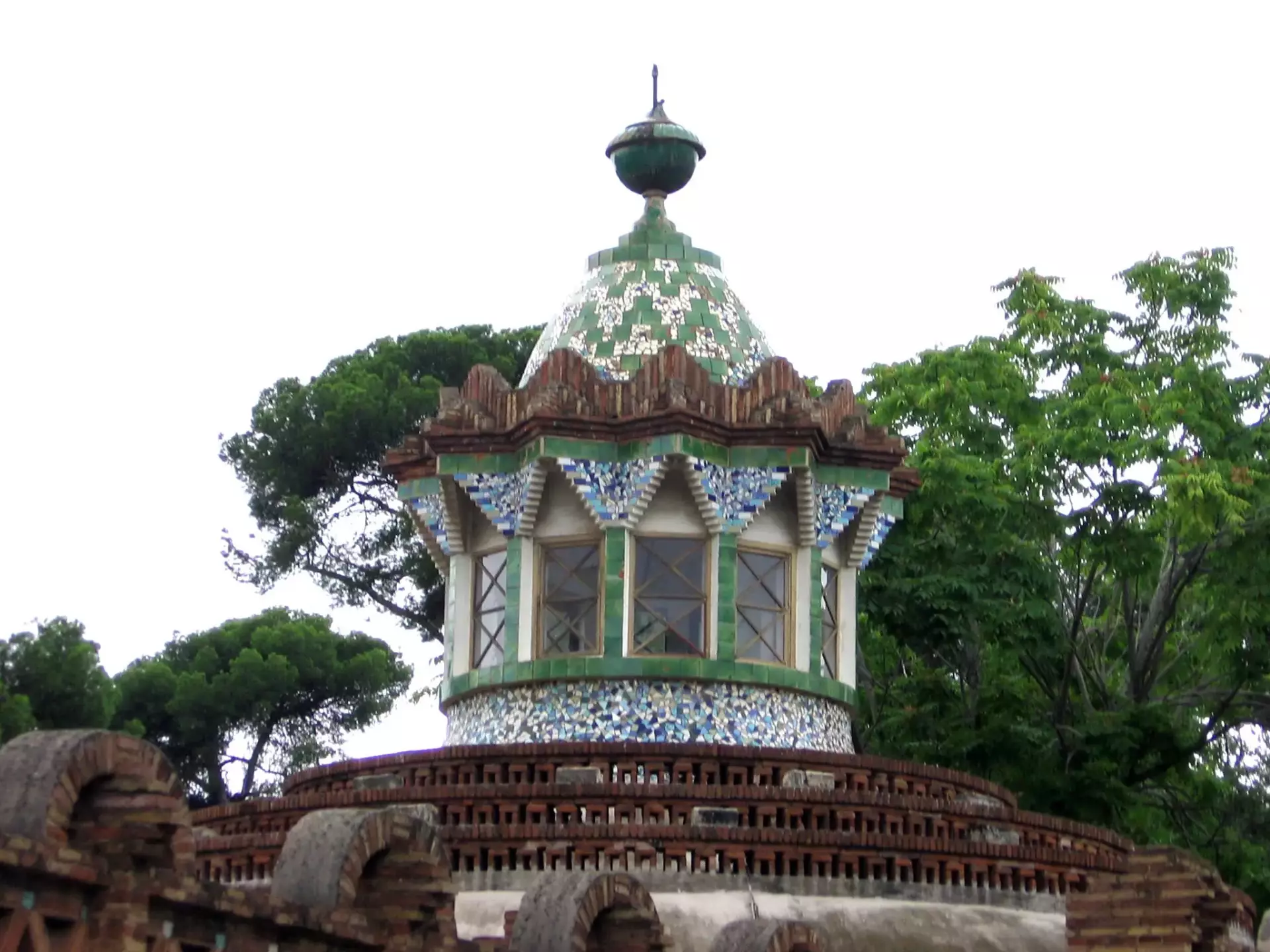
A complex of two pavilions by Antonio Gaudi. 2024 closed for renovation.
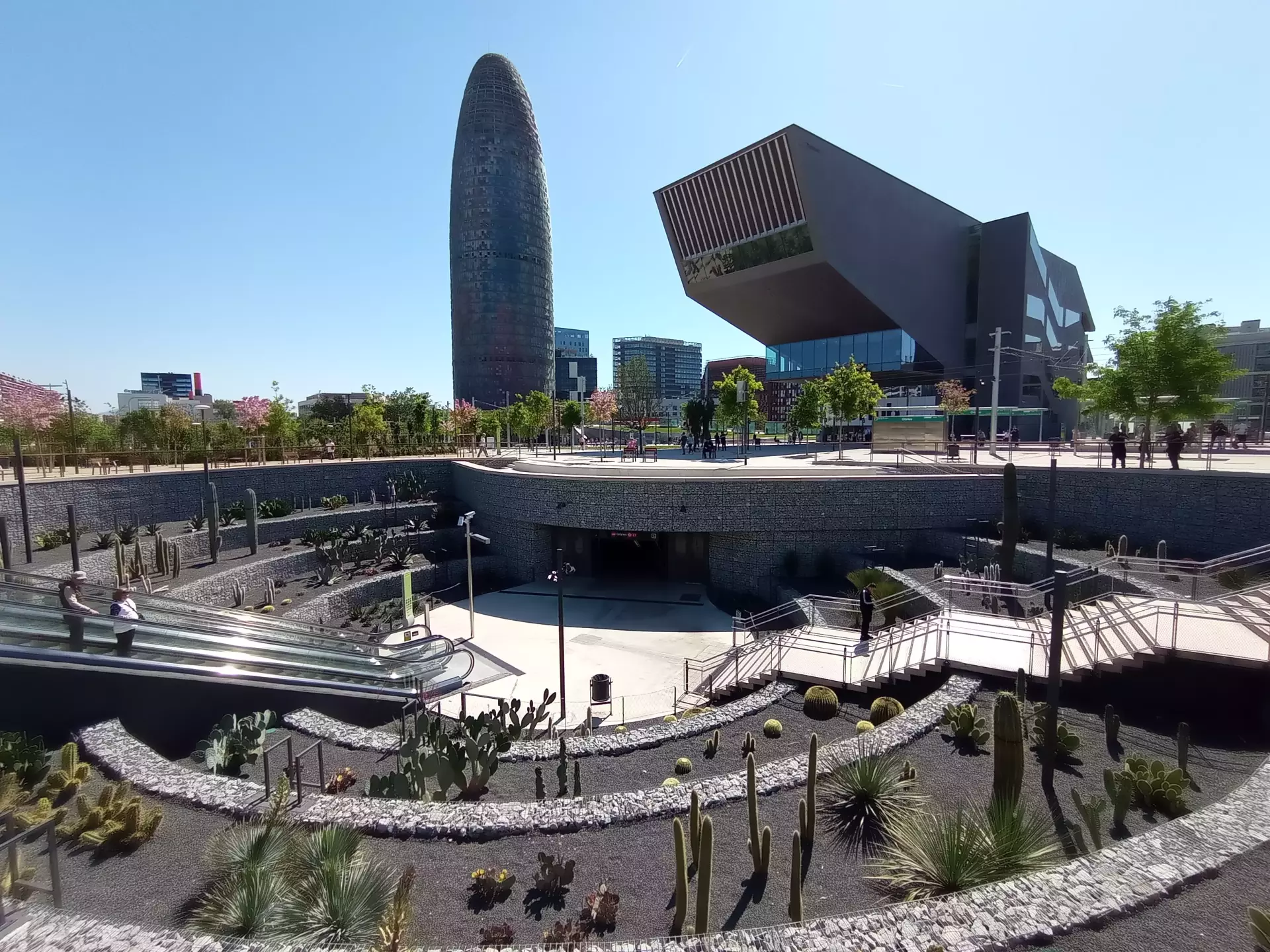
One of the most unusual landmarks in this otherwise ultra-modern area is this 19th-century (finished in 1882) brick water tower. Standing 62 metres tall, it is now overshadowed by neighbouring residential, office and hotel towers and easy to miss unless you know where to look for it.
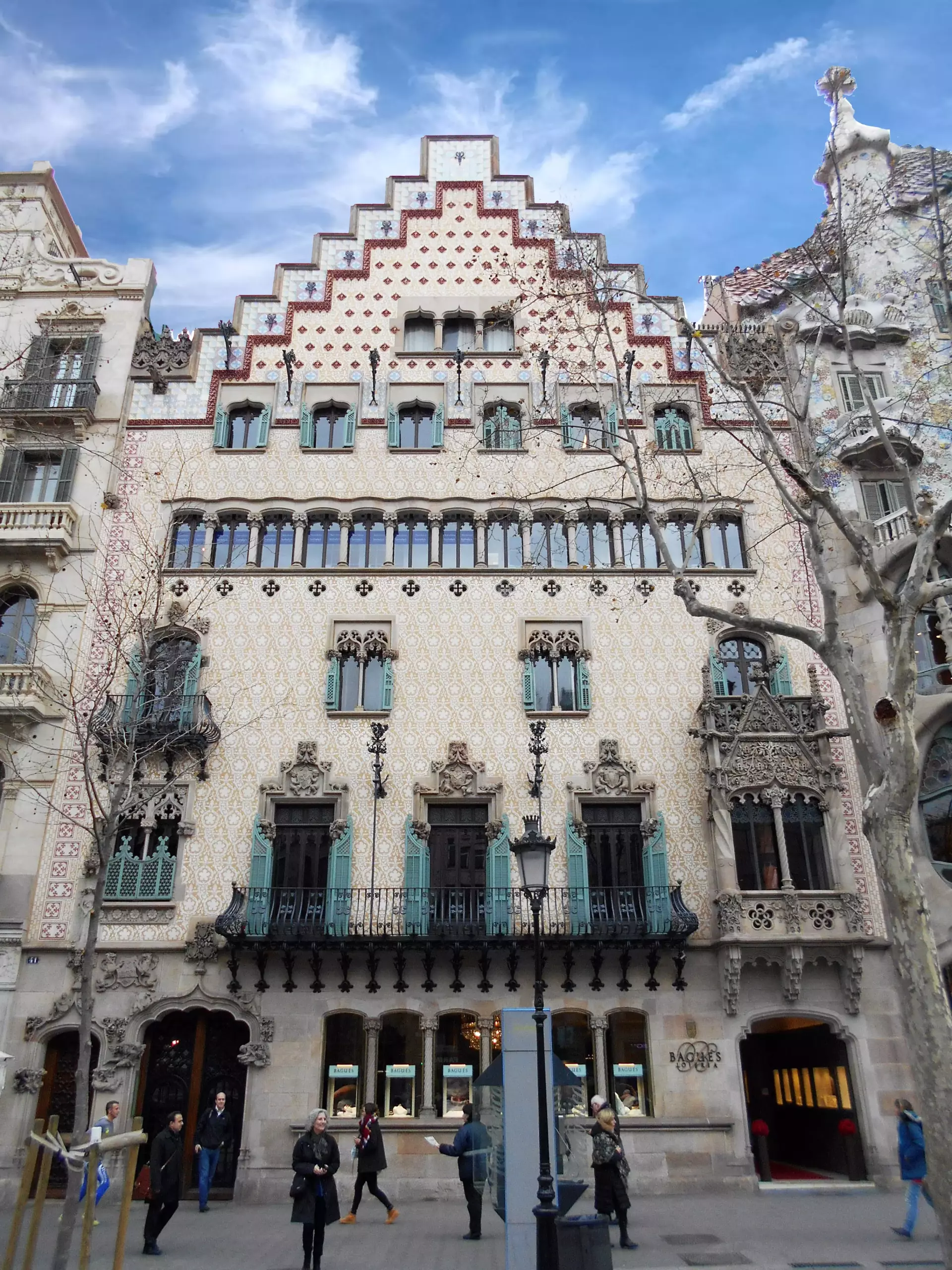
Designed by Puig i Cadafalch, the building is a fine work of Modernism. Check the detailed photos and explanation of facade sculptures. It also has a shop that sells fine chocolate (the Amatller family made its money out of cocoa).
This former hospital is an architectural masterpiece that is now open for visitors. Inpatient wards (and most outpatient facilities) have been moved to a new building of Nou Hospital, but in terms of touring the area, that makes it all the easier. One of "small hidden features" is a network of underground passages where small carriages can be seen, you can get there near WCs on a central square, between Banc de Sang and Quiròfans.
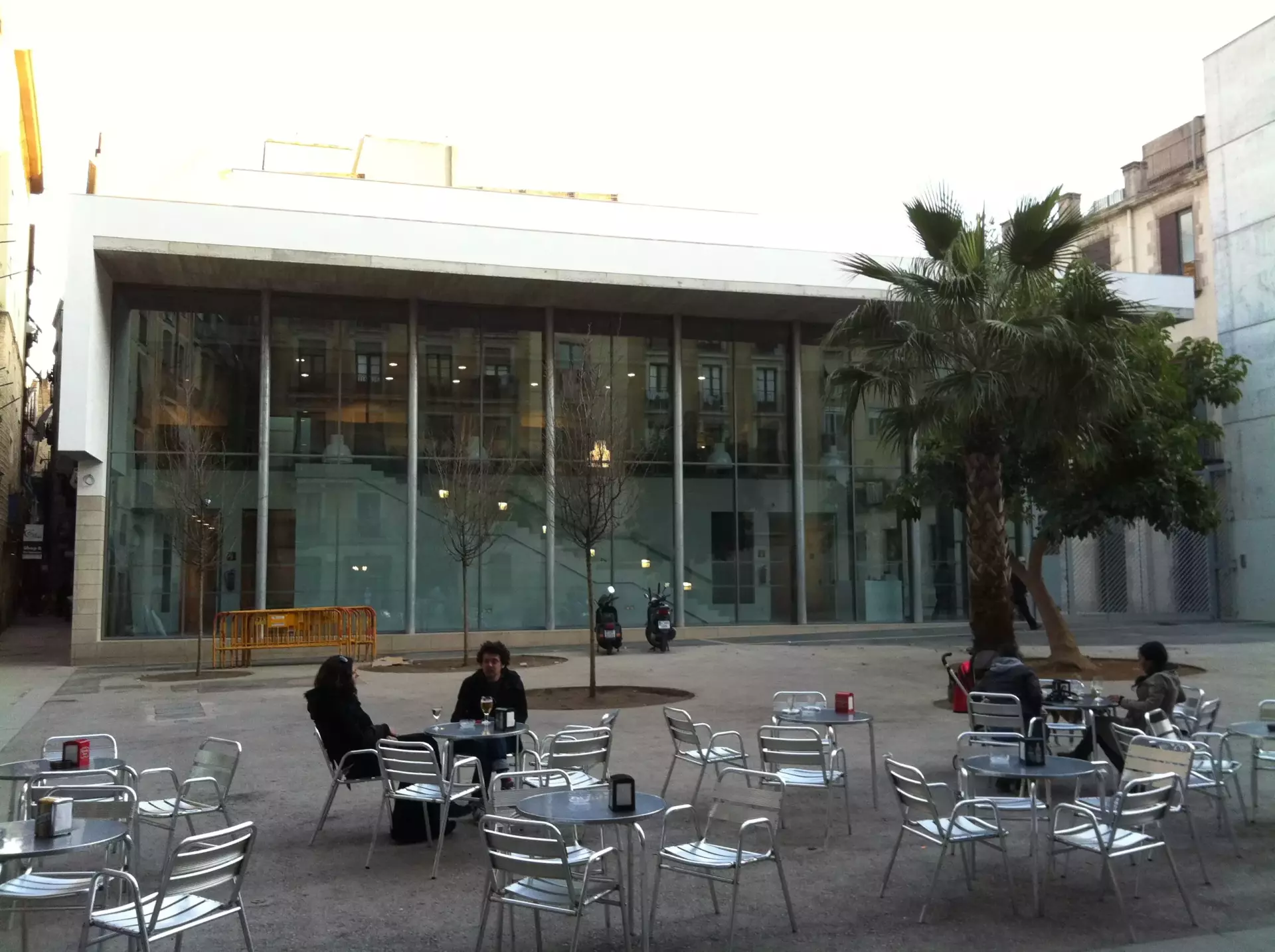
Created in 1984 by the artist Antoni Tàpies to promote the study and knowledge of modern and contemporary art.
This street has the biggest collection of Gothic houses in Barcelona. In amongst these houses is the Picasso Museum, which is definitely worth a visit. There are also smaller museums along the street, and many tapas restaurants though they may be more expensive on this street.
Urban park created from redeveloping industrial land. It covers 14 hectares and includes seven areas like a children's play area, a lake with sculptures and a central plaza.
One of Gaudi's masterpieces, there is not one straight edge on the exterior and the structure is one of Gaudi’s most eccentric and enticing architectural creations. Tours of the interior and the incredible roof structures are available. Great views of the tall buildings (especially La Sagrada Familia) from the roof. Hosts a large exposition of Gaudi works, covering Sagrada Familia and Casa Batlio, not only La Pedrera itself. The exposition is a good place to start your exploration of Gaudi; it reveals many hidden details for the art novice.