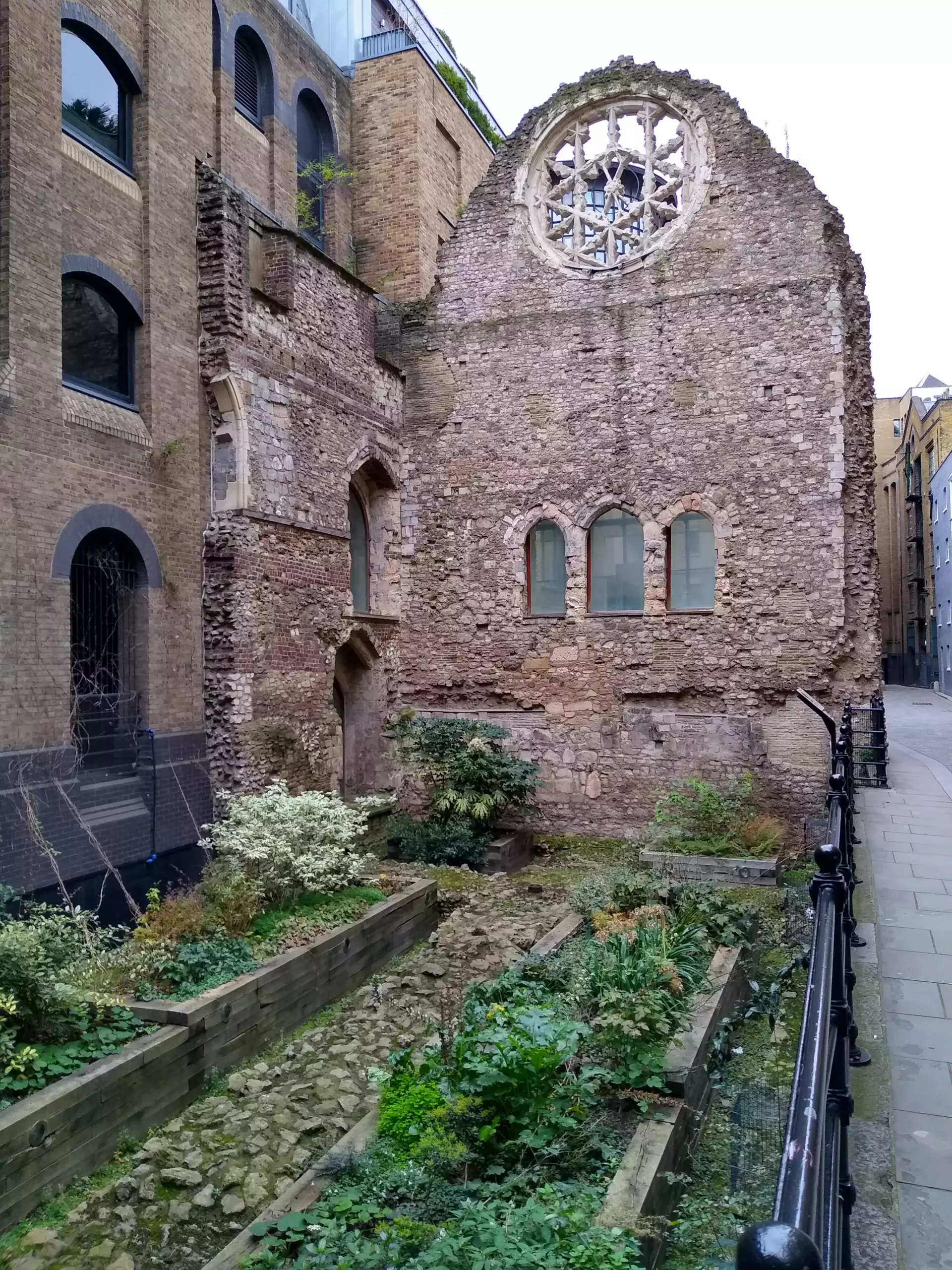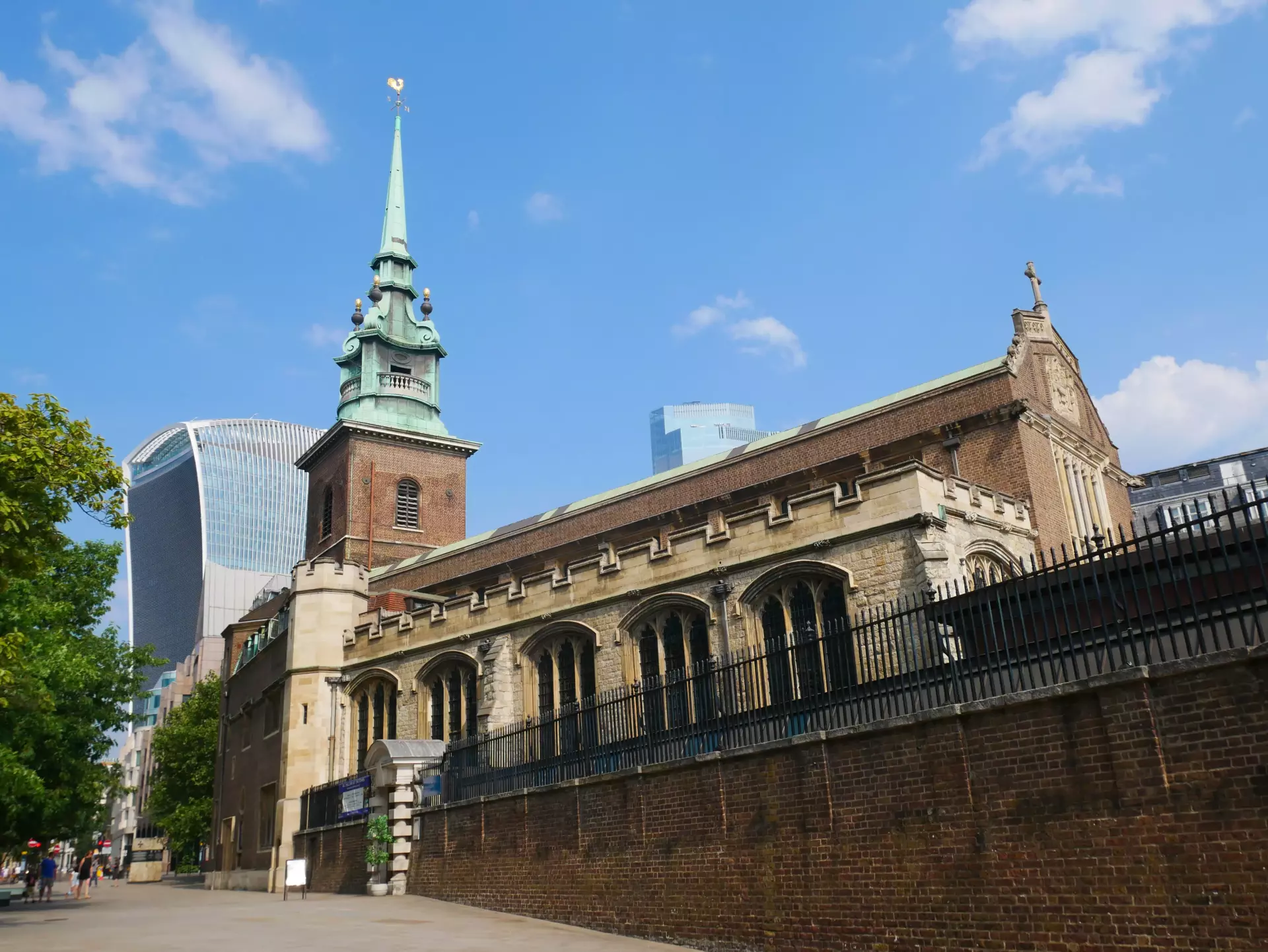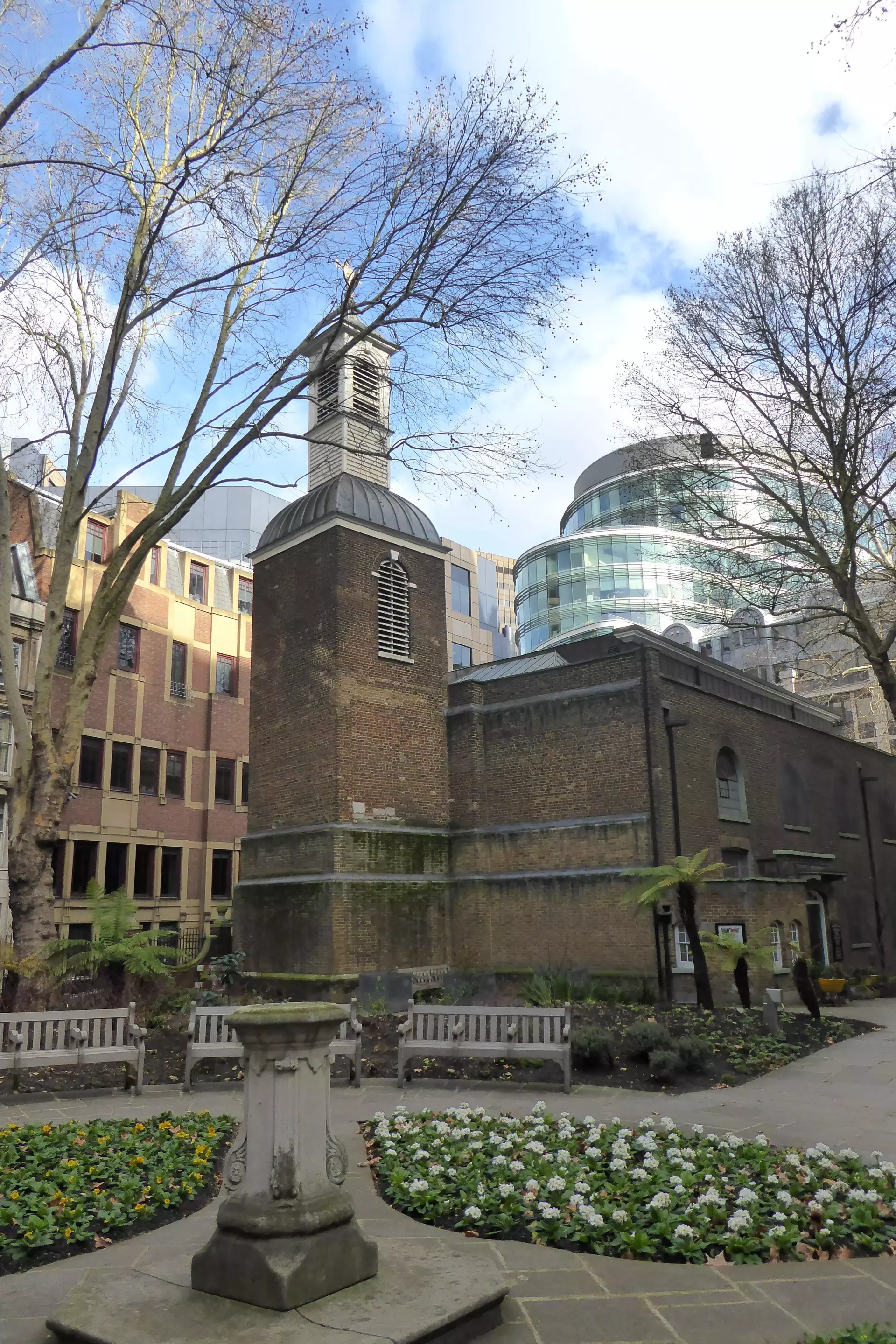
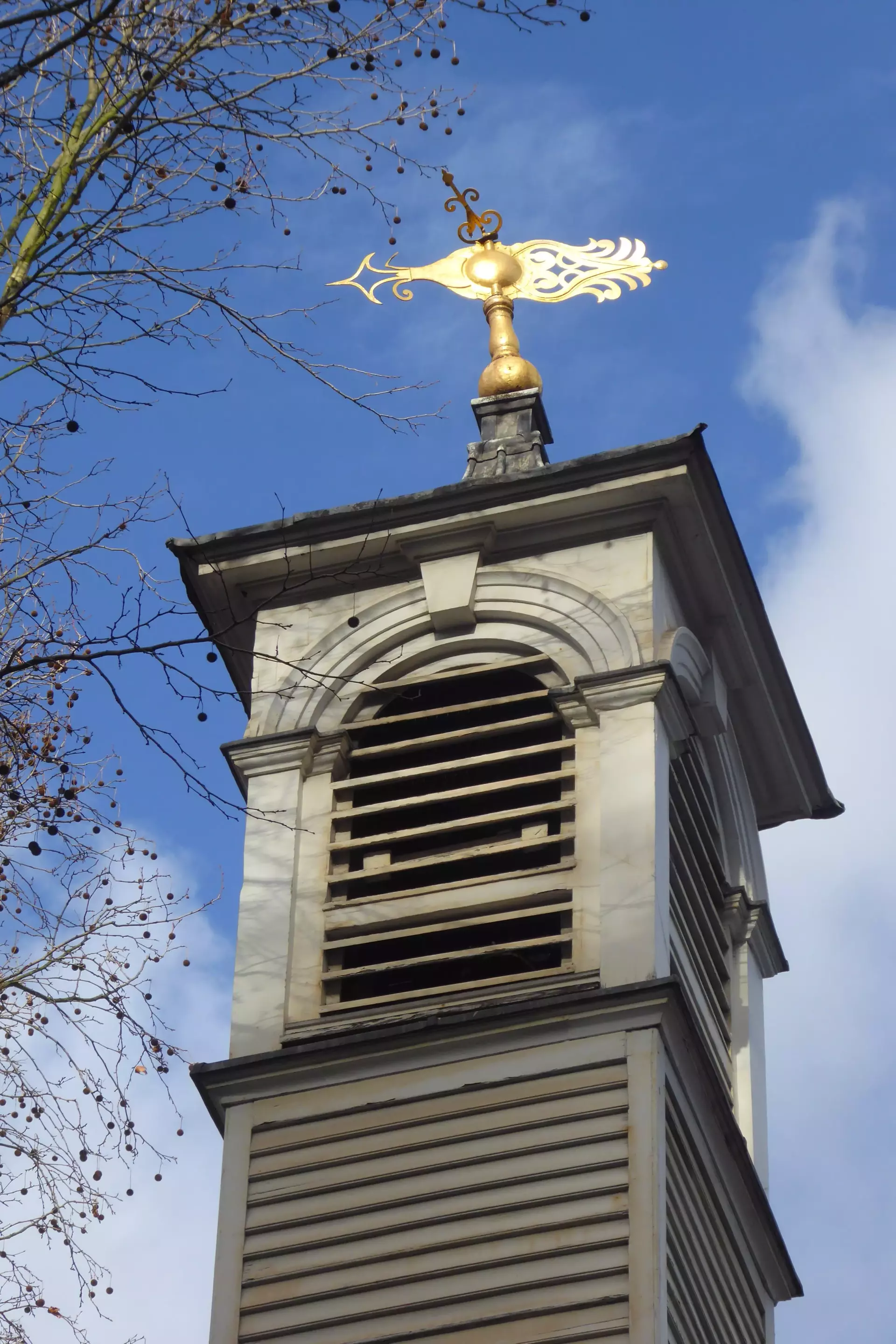
A medieval church reconstructed in the late 18th century is renowned for its beautifully preserved interior. This historical site offers a glimpse into the architectural styles and religious practices of its era while maintaining its charm and elegance. Visitors can admire the craftsmanship that has stood the test of time, making it a significant landmark in the area.
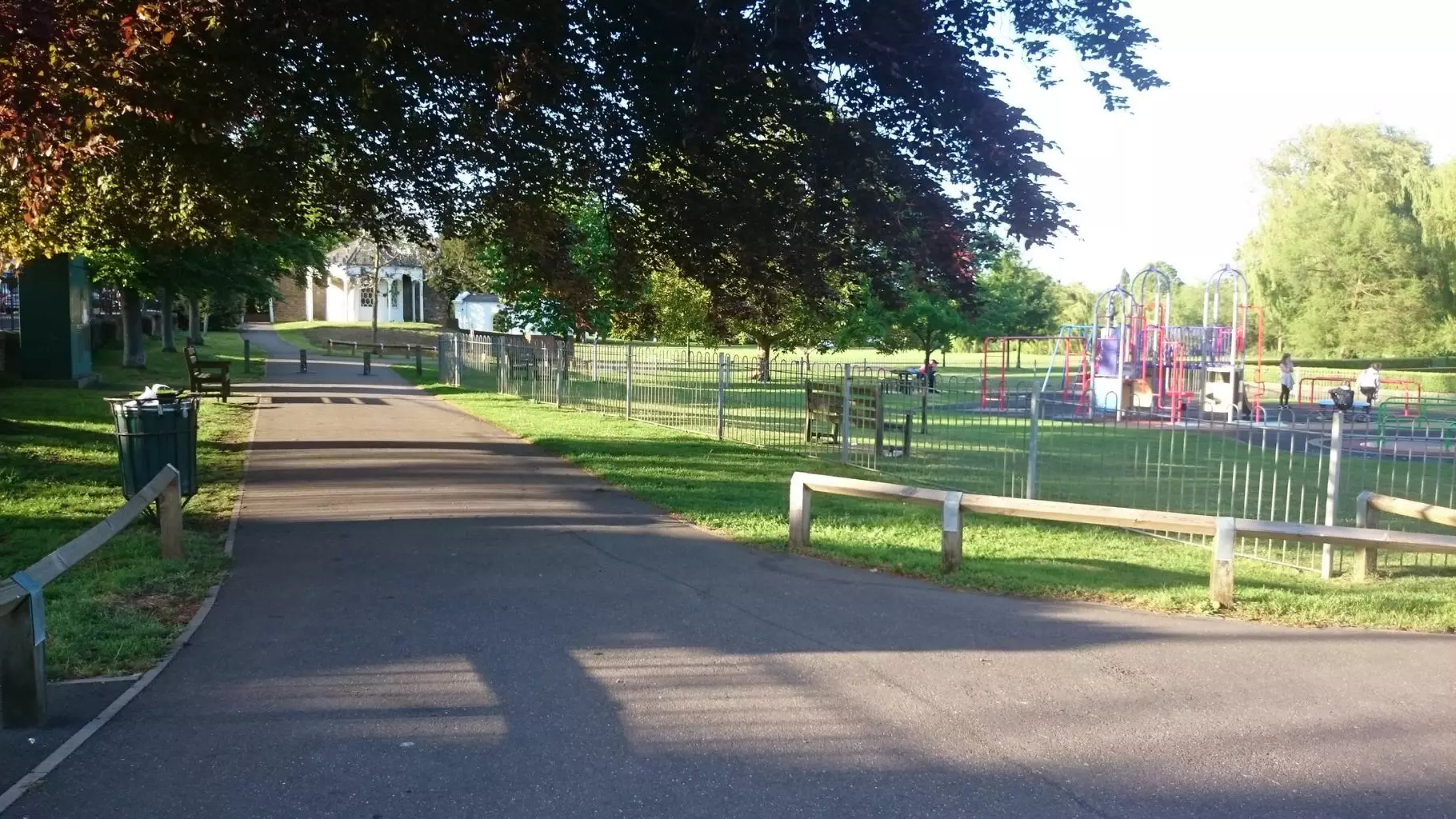
The former churchyard found new life in 1880 when it was transformed into a public space known as Postman's Park. This inviting park became a popular retreat for workers from the nearby Post Office headquarters, providing a peaceful escape from the bustling city. The blend of history and nature creates a serene environment where visitors can relax and reflect amidst the greenery and historic surroundings.
Source - https://en.wikipedia.org/wiki/St_Botolph%27s,_Aldersgate
A vast collection of cartoons and comics on display with special, often topical, exhibitions.
The second biggest greenhouse in London, containing over 2,000 species of tropical plants as well as birds and fish.
Formerly the teaching collection of Sir Flinders Petrie, one of Britain's greatest archaeologists, now preserved by University College London. Exhibits include beaded dresses, sculpture and wall reliefs, items of everyday use, papyri, cartonnage and pottery. Fascinating!
Grade I listed Saxon church founded before the 12th century. The exterior was mostly constructed in the 15th century, and the interior in the 19th. The north side of the church houses a musician's chapel opened in 1955. In addition to the services, there are often evening (chargeable) concerts.
Founded in 1123, by jester-turned-monk Rahere, this Norman church is one of the oldest in London. It was damaged in the Dissolution but managed to escape both the Great Fire and the Blitz. This is a Grade I listed building. Tourists are welcome when services are not in progress and are charged an admission fee (which does not apply to those coming to pray or use the café).
The largest open space in London, covering almost 1,000 hectares (2,500 acres) and home to a huge array of wildlife, including 400 wild deer. Also contains the lush Isabella Plantation, which is full of trees and flowers, and the Royal Ballet School, seen in the film Billy Elliot. Popular with cyclists, both for the on-road perimeter circuit and the off-road trails. There are several car parks for walkers and picnickers.
A small realm of serenity in the midst of the typical turmoil. It used to be the court of the Knights Templar. You can still visit the beautiful Romanesque church, which is one of the oldest ones in London (opened in 1185) and has connections to the order of Templars. The chancel of the church was built by Henry III. The church still serves the members of Gray's Inn and Lincoln's Inn and has frequent services open to the public. Fans of Dan Brown's The Da Vinci Code will recognise the church from both the novel and the film.
Church in Piccadilly designed by Sir Christopher Wren in 1684. It has a magnificent organ case and baptismal font by Grinling Gibbons.
The Guildhall Art Gallery houses the City Corporation's art collection, and also runs special exhibitions throughout the year. During construction of the modern gallery, workers discovered the ruins of London's Roman amphitheatre. The gallery was redesigned, and now the Amphitheatre is open to the public within the Guildhall Art Gallery itself and also free of charge.
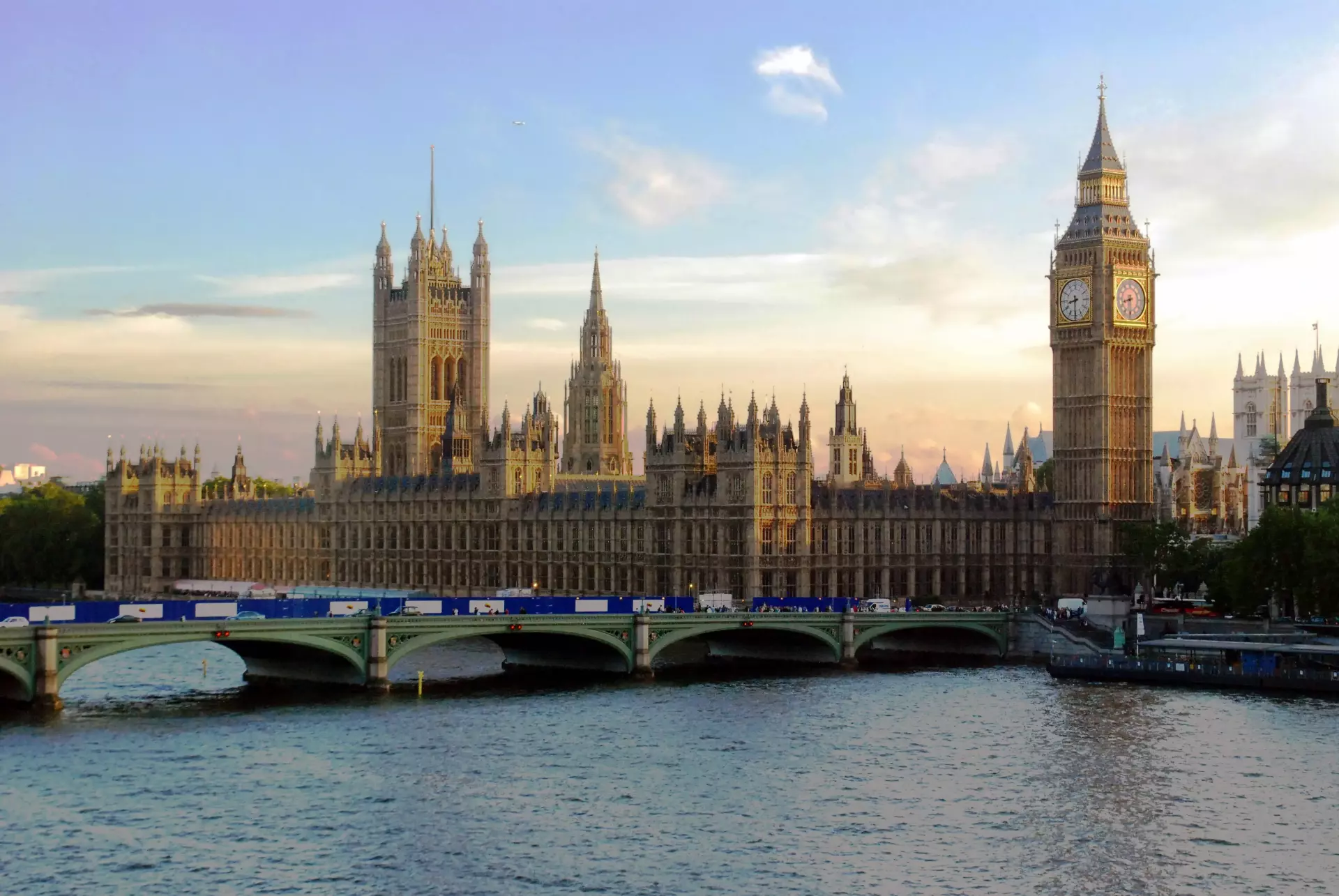
Probably the most colourful event in the UK's legislative calendar, this takes place in May or June every year, or after a general election, when the King travels to the Houses of Parliament to open the new parliamentary session. During this event, the Lords, Speaker of the House of Commons, and other office holders can be seen dressed in their ceremonial robes, and there is always an elaborate procession when the King makes his way to the Houses of Parliament from Buckingham Palace. This is one of the few occasions where all branches of the British government are gathered in the same place. Many traditions of the State Opening can trace their origins to a more turbulent past, when the relationship between the monarch and Parliament was sometimes antagonistic. In particular, since the English Civil War, the monarch has been banned from entering the House of Commons chamber, and instead must send a representative (the Black Rod) to summon the MPs to the Lords chamber, where he delivers his speech. Another notable tradition is the holding of a Hostage MP in Buckingham Palace, ostensibly to guarantee the safe return of the monarch, who is released once the King has returned to the palace safely after delivering his speech. While attendance at Parliament itself is limited to special guests that have been invited by the Prime Minister, it is broadcast live on the BBC, and you can also view the King's procession from Buckingham Palace to Parliament from the roadside for free.
In contrast to the other Royal Parks in the area, Green Park can seem a little plain. It has no lakes or buildings and few monuments. It is still a pleasant green, lightly wooded, area in the centre of London, neighbouring two other parks and Buckingham Palace.
This venerable old institution was absorbed by the neighbouring Natural History Museum in 1985 but still has something of a separate identity. Unsurprisingly, devoted to all things geological with especially popular exhibits on vulcanology and earthquakes and fossils of all types. Very popular with kids and often underrated.
This park used to be the grounds of Lambeth Palace but has been a public park since 1901. In addition to the green space it provides, it contains a range of sports facilities (booking required, except for the cricket nets) and a playground.
London's main zoo is in the northern reaches of Regent's Park. Takes a very conservation-driven approach these days and always has great exhibits aimed at children. Opened in 1828 for scientific study, then to the public in 1847.
Garden founded by apothecaries in the 17th century to the medicinal properties of plants. It was only opened to the public in the 1980s, when it became a charity. The heat-sink caused by its thick walls, combined with the general waste heat of London itself, keeps the garden much warmer than it would otherwise be at this latitude. Due to this, the garden contains the world's most northerly example of a grapefruit outside of a greenhouse, and the largest fruiting olive tree in the country. The collection contains thousands of different plant species.
Discover mementoes of the famous fictional detective. In reality, this was a lodging house used in the late 1800s and has three floors. The first floor contains Sherlock Holmes' study with Watson's desk, and has bullet holes spelling the initials VR (for Victoria Regina, Latin for Queen Victoria) much to the chagrin of the landlady Mrs. Hudson. Next to that is Holmes' bedroom with a rogues' gallery containing photographs of several notable Victorian-era murderers including Lizzy Bourdain. The remaining rooms upstairs have waxwork figures and artefacts referencing the novels, as well as their adaptations to stage and screen. Photography allowed, though filming requires permission. Prebooking is recommended to circumvent long queues.
The London residence of the Dukes of Wellington, which now acts as a museum for the inaugural and most famous holder of the title. It boasts an impressive collection of paintings, sculptures, medals and swords. Perhaps the most bizarre item in Wellington's collection is a nude statue of Napoleon Bonaparte, commissioned by the emperor himself and bought by the British government following his defeat at the Battle of Waterloo as a gift for the duke.
One of the most expensive residential streets on the planet! Most of the buildings here are embassies or ambassadorial residences but the rest of the mansions belong to some of the richest people in the country (or elsewhere). For added historical value, during World War II, the current Norwegian embassy was where King Haakon VII led the Norwegian government-in-exile (commemorated by a blue plaque) and MI19's "London Cage" prisoner-of-war facility was located here. There is no public right of way but the Crown Estate allow pedestrians and cyclists to use the street; photography is not permitted.