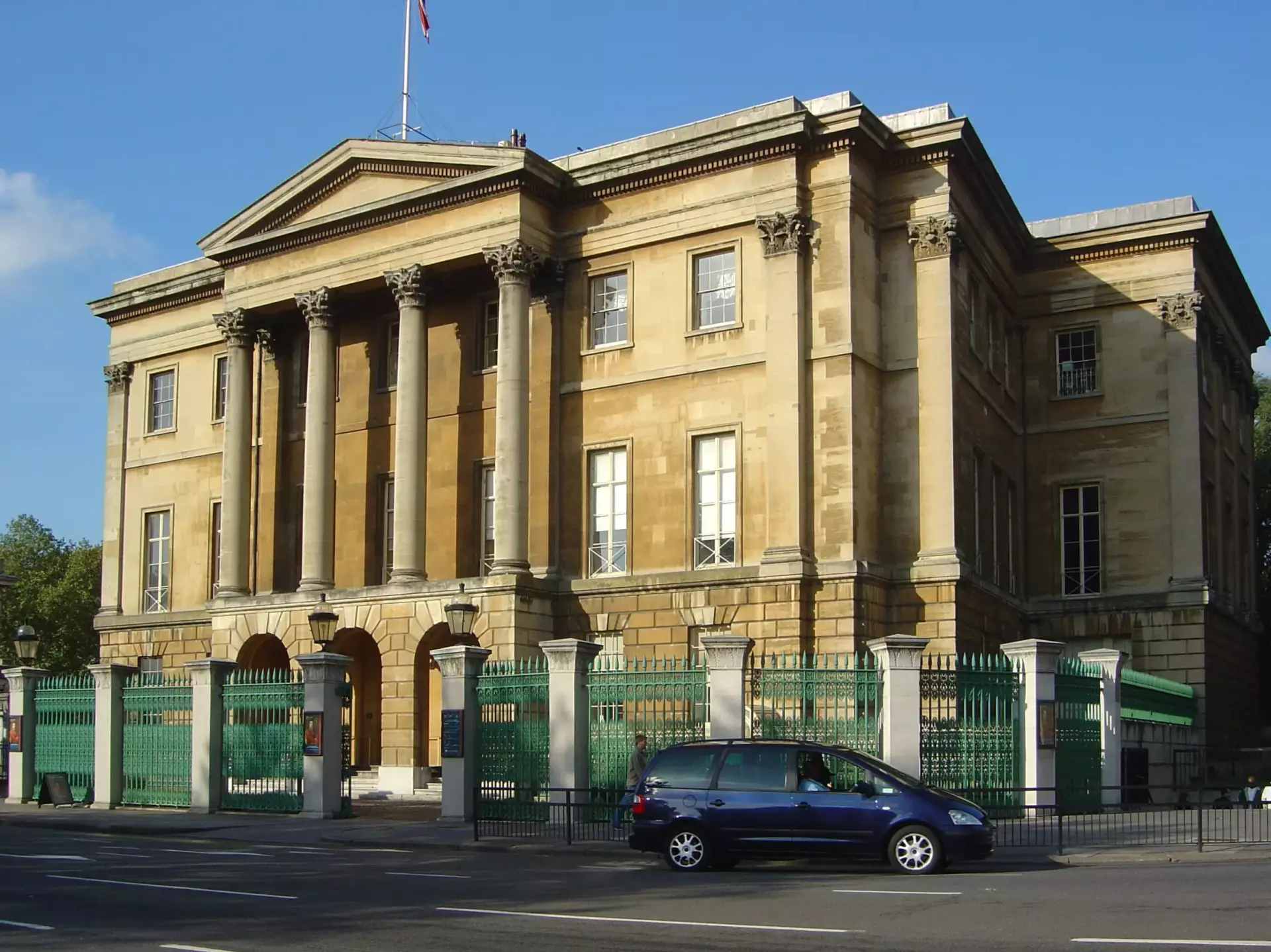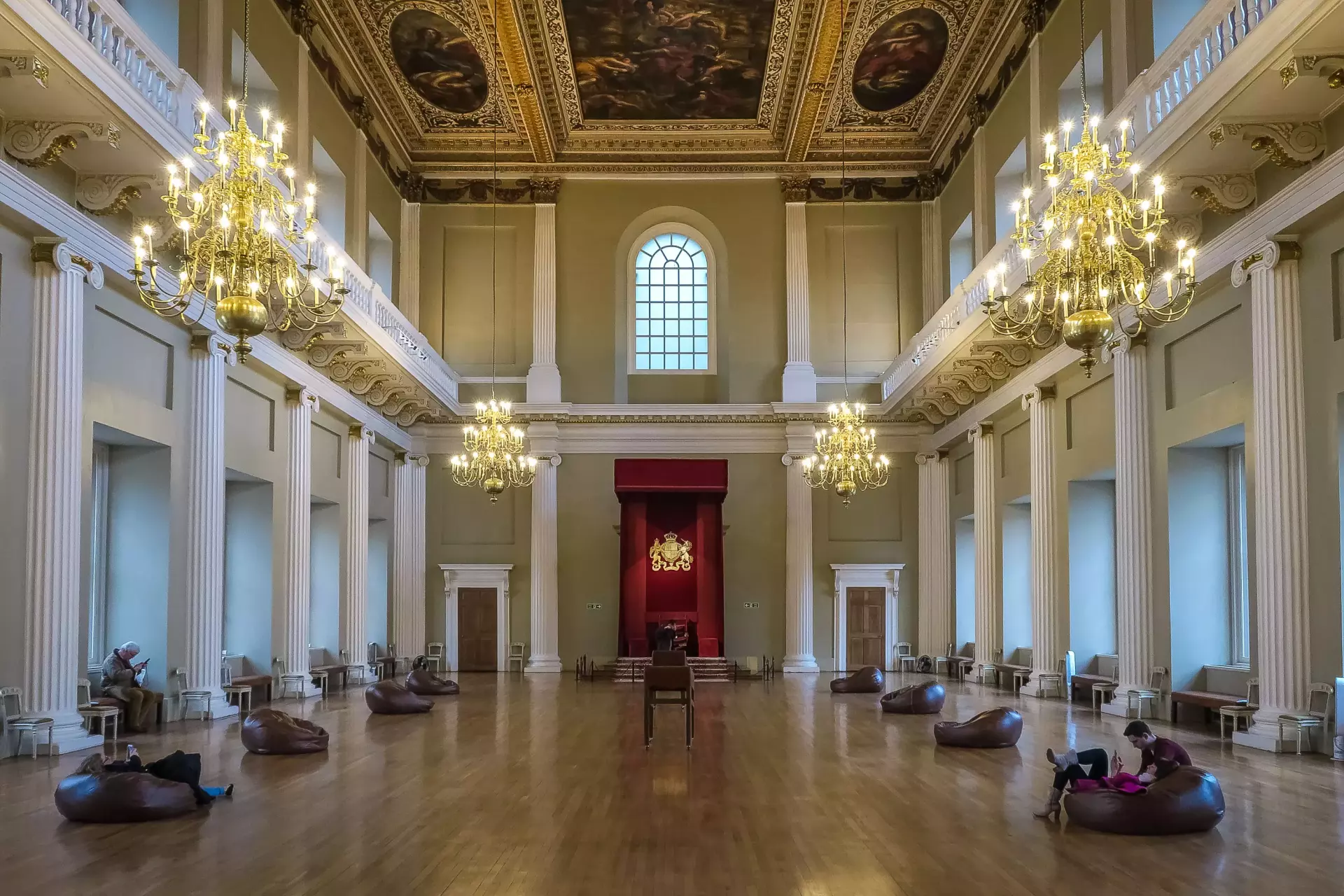
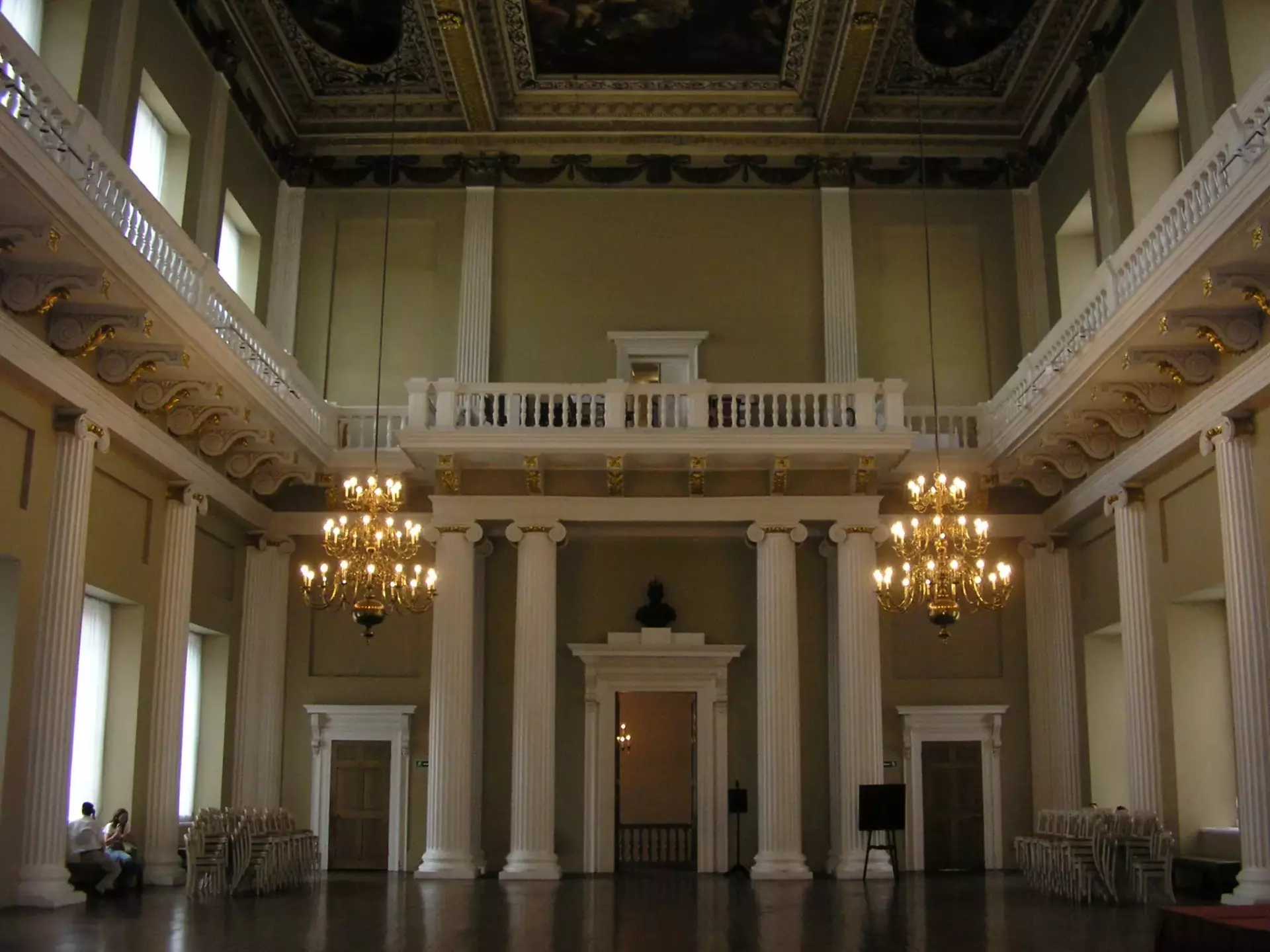
The Banqueting House, constructed between 1619 and 1622, stands as a testament to Neo-Classical architecture by Inigo Jones. This historic site is the sole survivor of Whitehall Palace, which served as the main residence of the English sovereigns from 1530 until 1698, when a devastating fire consumed most of it.
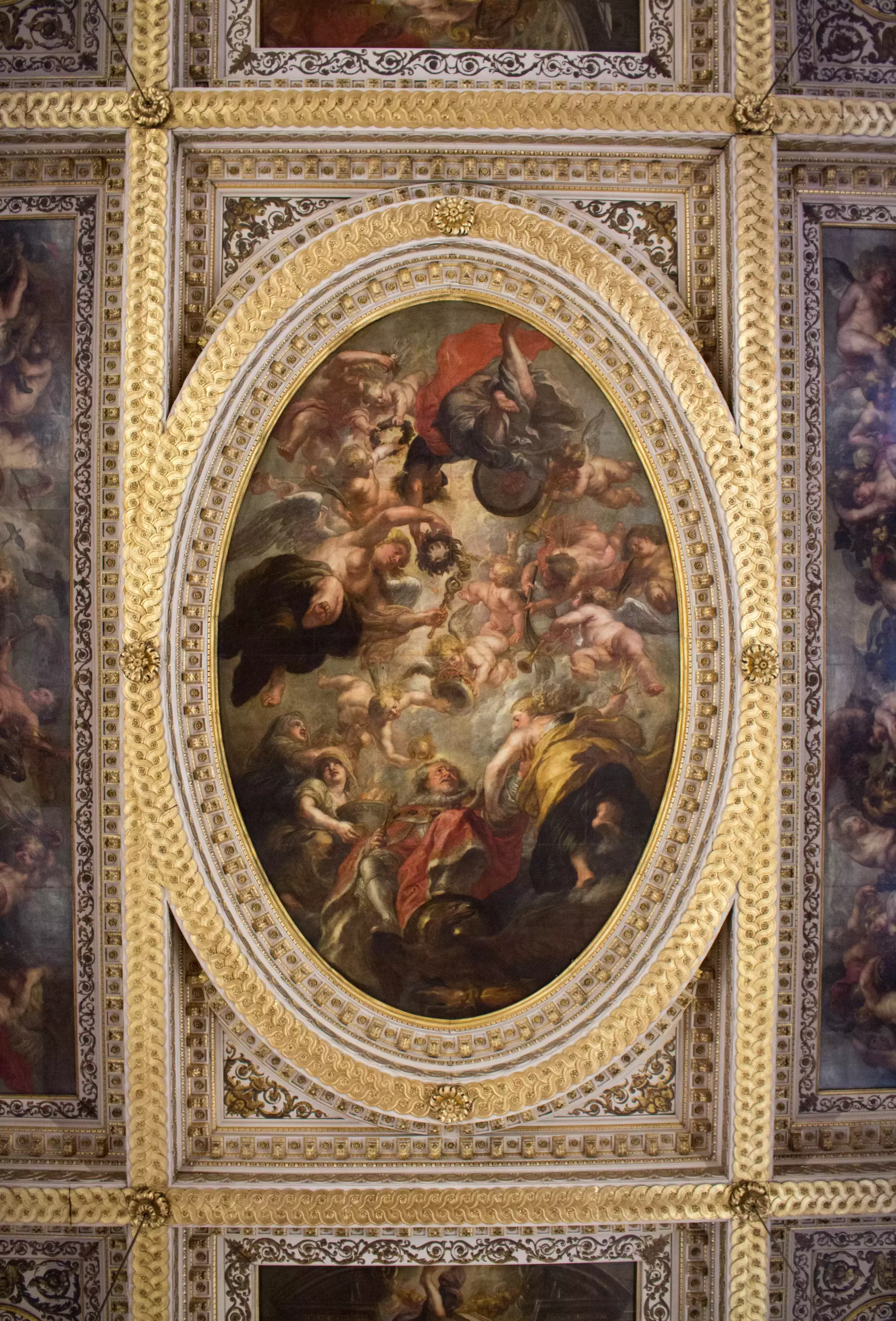
Admired for its exquisite design, the Banqueting House showcases the elegance of Neo-Classical style. Its grandeur is complemented by stunning paintings, including works by the renowned artist Rubens, which adorn its interiors.
Beyond its architectural allure, the Banqueting House holds a significant place in history. In 1649, amid the turbulent end of the English Civil War, it became the infamous site of King Charles I's execution. This event marked a pivotal moment in British history, echoing through the centuries.
Source - https://en.wikipedia.org/wiki/Banqueting_House

The Duke and Duchess of Lauderdale's elegant 17th-century manor house, a mile or so upriver from Richmond riverside.
This gallery houses the Tate collection of British art from 1500 through to contemporary art. A side wing collects together the gallery's collection of paintings by Turner, including some stunning seascapes. Temporary exhibitions are exceedingly varied: examples include exhibitions of Turner's paintings of Venice and the work of photographer Wolfgang Tillmans. The best known exhibition is the Turner Prize, consists of works by four artists shortlisted for the annual contemporary art prize, which runs from late October to January each year.
There are three notable outdoor bathing ponds on the heath. The Men's Pond and Women's Pond are both part of the line of small lakes on the eastern edge of the heath known as Highgate Ponds, and the Mixed Pond is part of Hampstead Ponds on the opposite side. Swimming hours are seasonal, complicated, age-dependent and change frequently, so it is worth checking before making a special trip.
Includes a small but beautiful quad and an interesting Neo-Classical facade. The core buildings of UCL were built after the university's foundation in 1826.
Cleopatra's Needle originated in the ancient Egyptian city of Heliopolis, in the Temple of Atum, but the Romans moved it to Alexandria in 12 BC. In 1819, viceroy Mehemet Ali presented Cleopatra's Needle to the British, commemorating military victories in Egypt, but it remained in Alexandria until 1877 when transportation was arranged to bring it to London. On the voyage, the ship capsized in a storm, killing six crewmembers. Cleopatra's Needle was thought to be lost, but Spanish trawlers found it afloat a few days later, and after some repairs, it arrived in London on 21 Jan 1878. The obelisk is flanked by two faux-sphinxes, which show the effects of bombings of London during World War II. Today, Cleopatra's Needle shows some wear from exposure to London's damp weather.
A splendid Regency house with enormous gardens and woodlands. The gardens alone are worth the visit and are a superb example of 18th-century landscaping. On show at the house is art by masters such as Rembrandt, Turner, Reynolds and Vermeer, and the gardens have a very notable sculpture by Henry Moore. A regular program of outdoor opera takes place here every summer. Movie buffs will recognise Kenwood from Mansfield Park among other famous films. Administered by English Heritage, separately from the rest of Hampstead Heath.
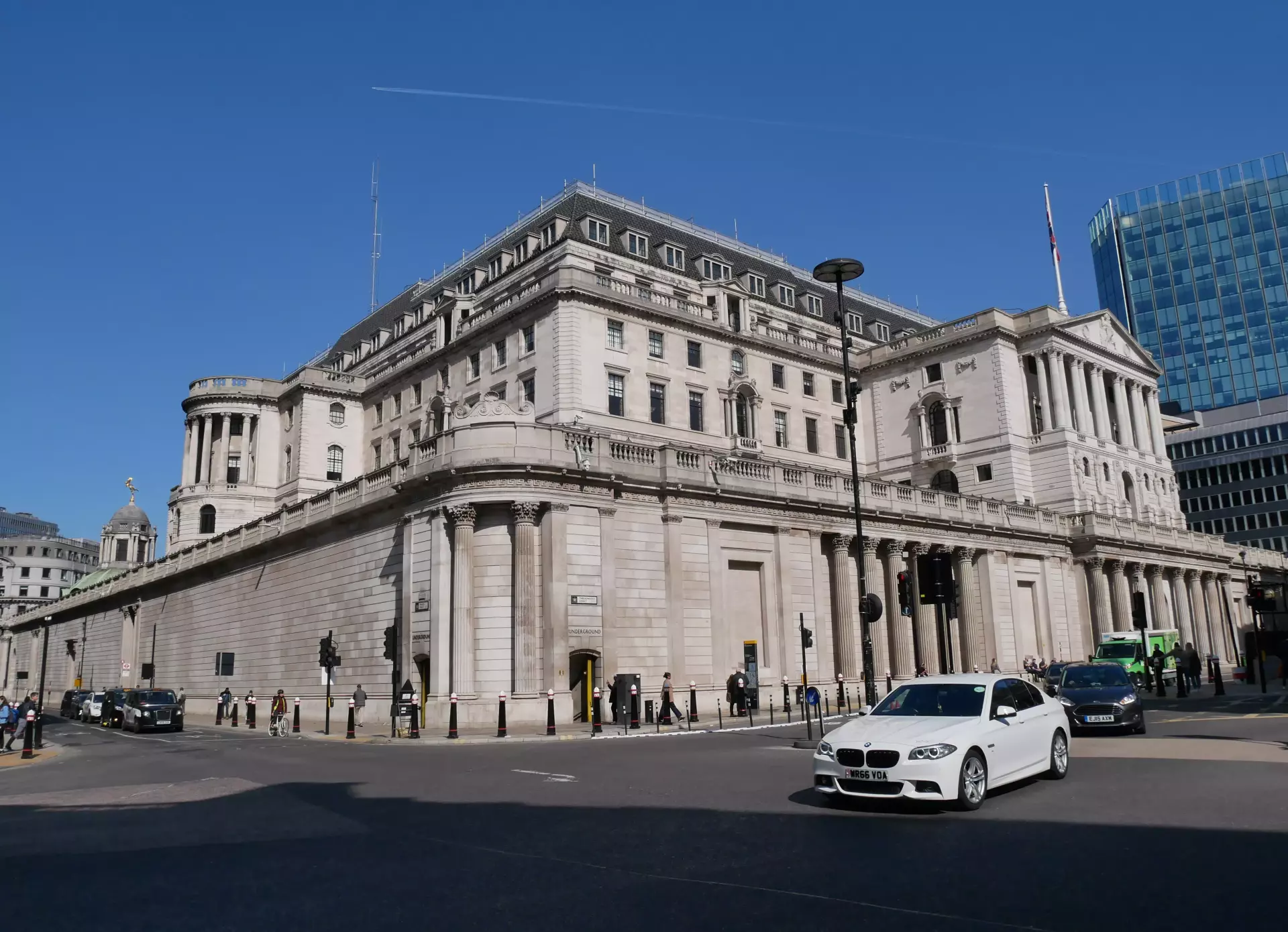
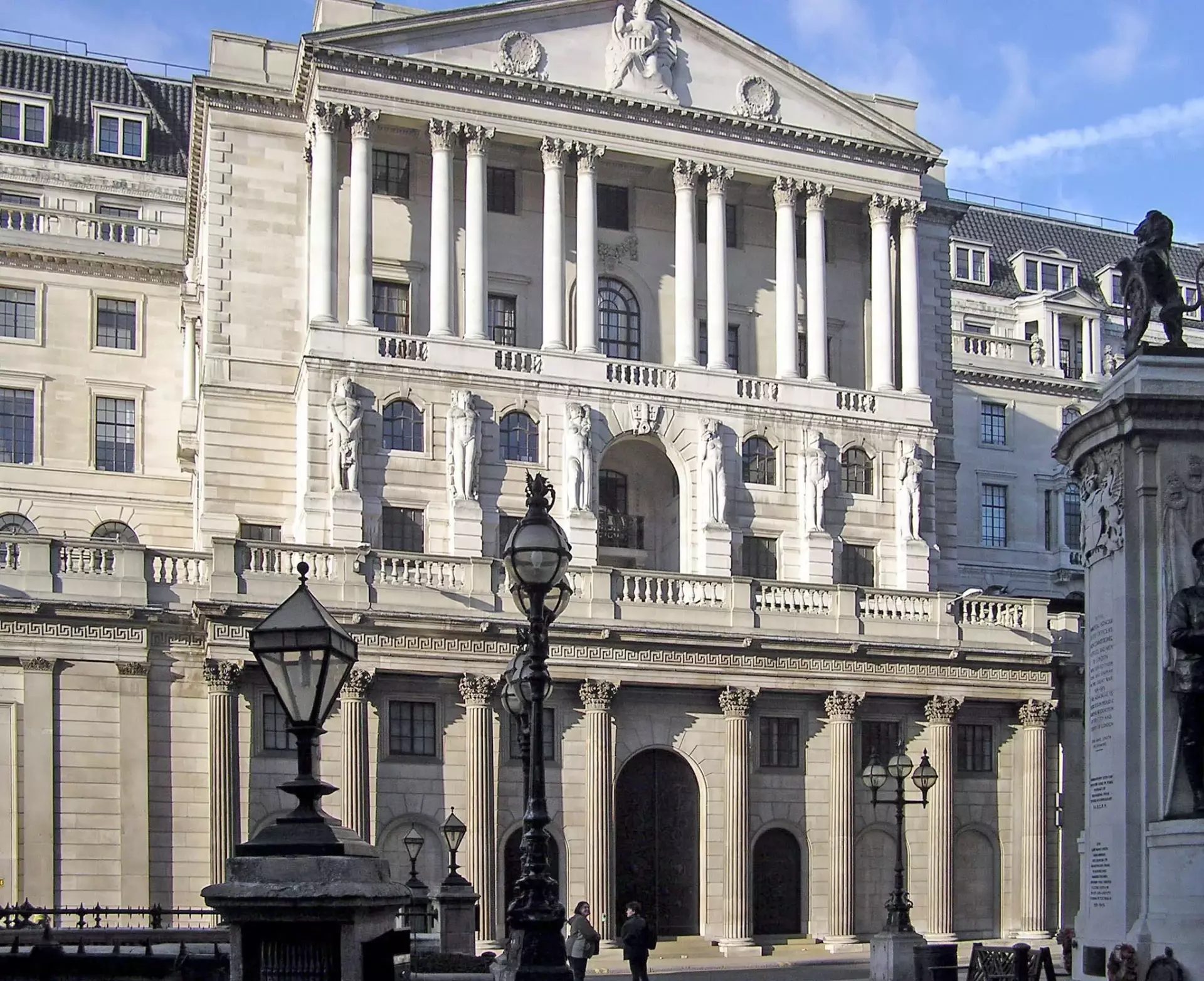
Charts the history of the bank from 1694 to the present day. A highlight is the opportunity to handle a genuine bar of gold. Photography allowed, but no flash.
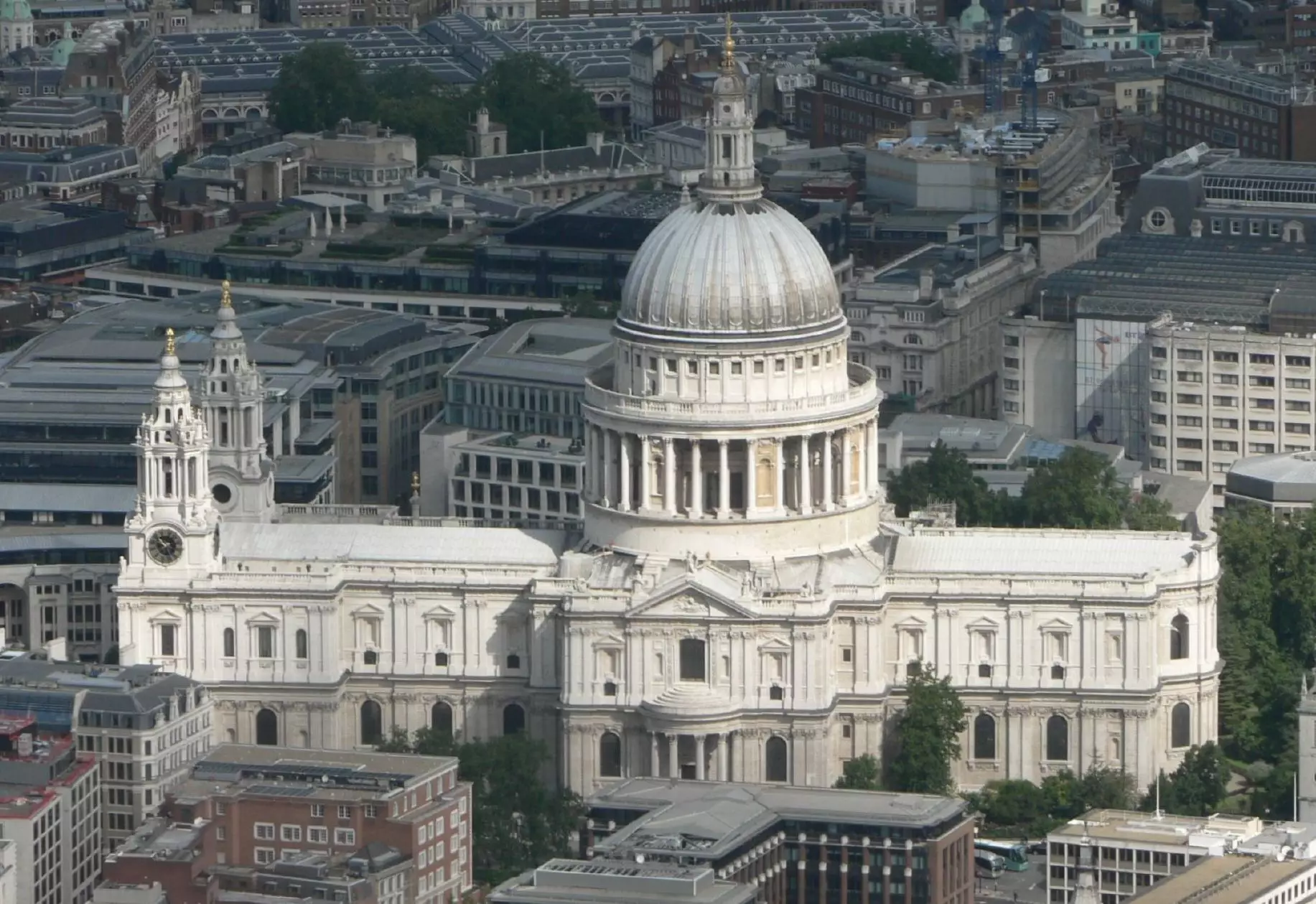
The great domed cathedral of St Paul's, designed by Sir Christopher Wren to replace the Gothic medieval cathedral destroyed in 1666 in the Great Fire of London, was built between 1675–1710. Of the most famous London sights, St Paul's is the one most conveniently located for the Barbican. It's a significant building in British history, having been the site of the funerals of several British military leaders (Nelson, Wellington, Churchill), and significantly held peace services marking the end of the two world wars. The cathedral is also famous for its Whispering Wall, as well as its stunning view over the city. The crypt is also open to the public, holding the tombs of Nelson, Wellington and Christopher Wren. It is possible to sidestep the admission charge by entering for one of the midday services, even if you don't take part, or for the daily choral evensong in the late afternoon. However, you'd still need a ticket to get to the top. Photography is not allowed.
This church on the bank of the Thames was built in 1157. It is the only church in London with chained books. A statue of Thomas More sits in front of the church.
A medieval church that was rebuilt in the late 18th century, noted for its well-preserved interior. The former churchyard was converted into a public space in 1880, called Postman's Park as it was frequented by workers from the nearby Post Office headquarters.
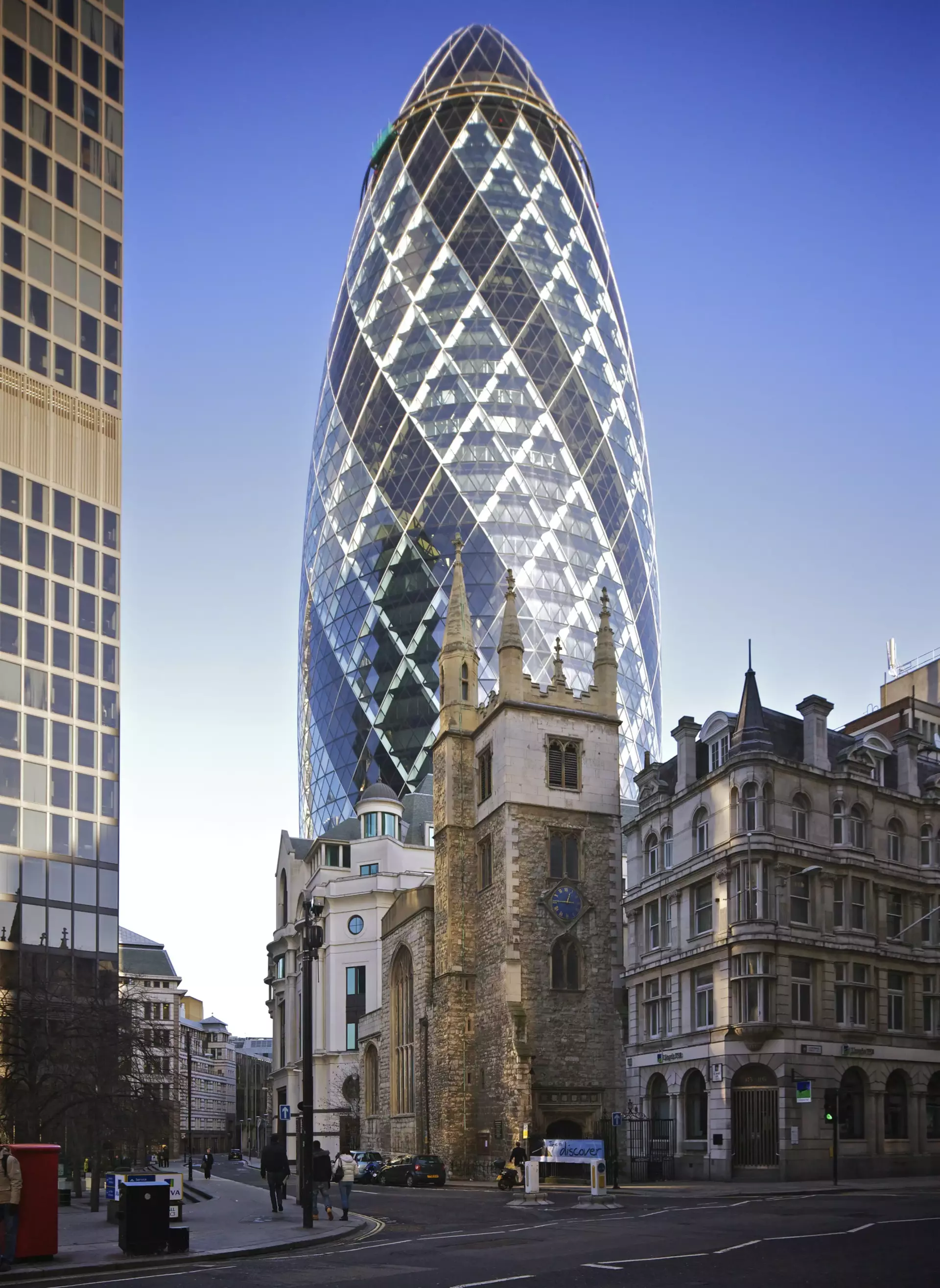
Designed by one of Britain's leading architects, Sir Norman Foster, this curved glass skyscraper was the 2004 recipient of the Stirling Architectural Prize for Best Building. It was built on the site of the Baltic Exchange building, destroyed in 1992 by an IRA bomb which killed three. On the Bury Street side of the Gherkin by some black stone benches is the Tomb of the Unknown Girl for a teenaged Londoner who died 1,600 years ago (see infobox above), marked with a marble laurel wreath and inscription. Searcy's Restaurant (from £50) at the top takes bookings up to five weeks in advance and you have to go through security before going up.
A branch of the Imperial War Museum, the Cabinet War Rooms preserves the underground corridors and rooms from which Churchill and the cabinet directed the war against Hitler and the Nazis, maintained almost exactly as they were left in 1945. In 1984, IWM opened the rooms to the public for the first time. In 2005, the attached Churchill Museum was opened as the world's first permanent museum dedicated to the life and wartime achievements of Sir Winston Churchill. Audio guides are included in your admission. No cloakroom, no rucksacks, no suitcases. Café is open daily from 10am to 5pm. Hot food is served until 3pm.
This park used to be the grounds of Lambeth Palace but has been a public park since 1901. In addition to the green space it provides, it contains a range of sports facilities (booking required, except for the cricket nets) and a playground.
The unusual "walkie scorchie" profile of this skyscraper by Rafael Vinoly has seen it grab the headlines, as did the "death rays" caused by the sun's heat reflecting off the building onto the street below when it was first completed; car tyres melted and burst, and at least one man fried an egg using only the heat from the walkie talkie. Visitors can access the sky garden to see a magnificent view over the City and beyond; it's the only place you can't see the tower from! Online booking to visit during the day is essential. Alternatively, you can eat at one of the restaurants in the evening.
Created by Tonkin Zulaikha Greer and Janet Laurence to remember the Australians who died in both world wars. Made from Australian granite.