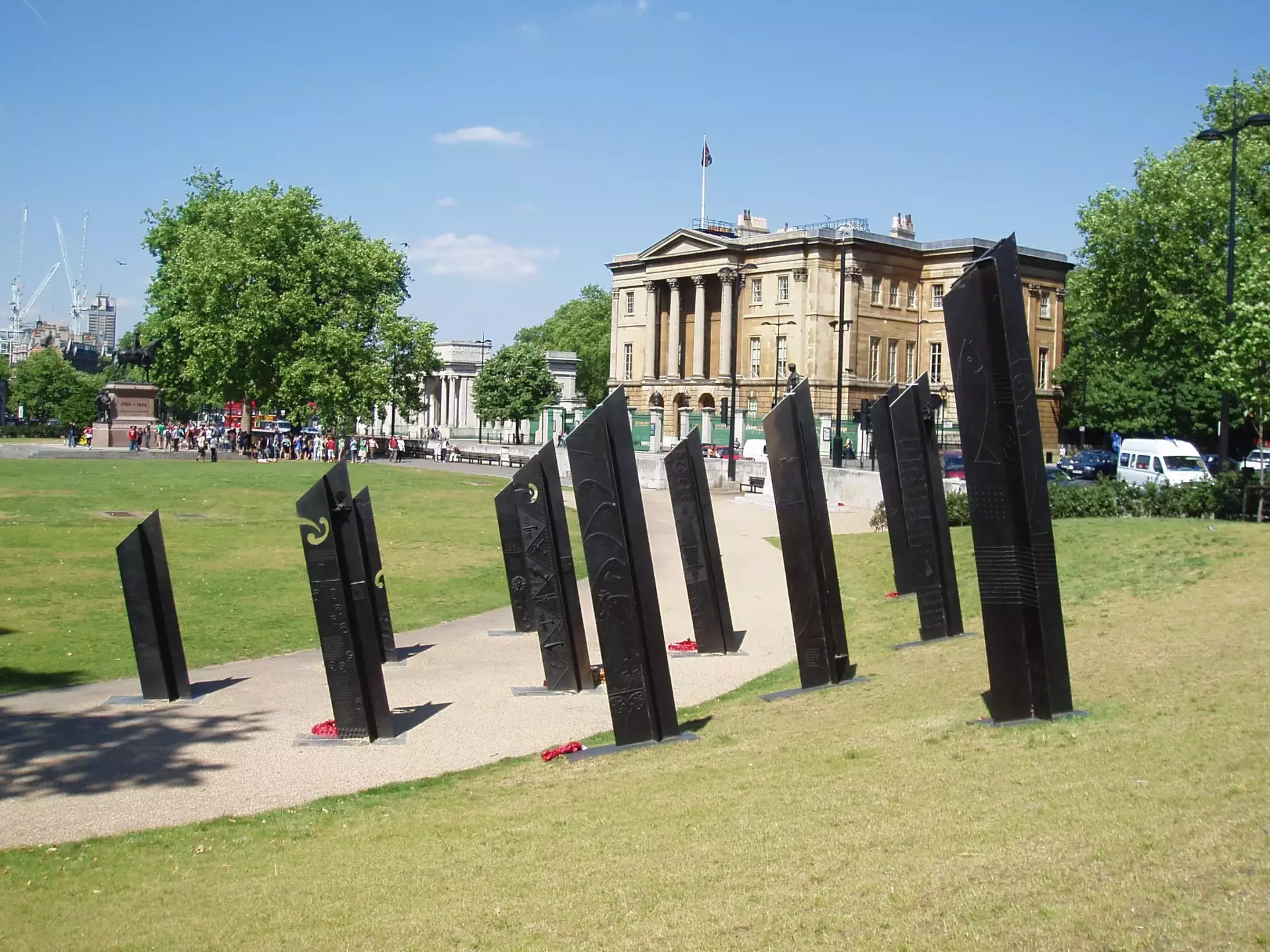
At Hyde Park Corner in London, a collection of sixteen cruciform bronze pillars stands as a testament to friendship and shared history. Designed by renowned artists Paul Dibble and John Hardwick-Smith, this impressive memorial honors the close ties between New Zealand and the United Kingdom.
The memorial serves as a poignant reminder of the sacrifices made by New Zealanders during the World Wars. Each pillar is meticulously crafted, symbolizing the courage and commitment of those who served. The design not only reflects the nation's valor but also its artistic spirit.
Paul Dibble and John Hardwick-Smith, both celebrated for their unique contributions to art and sculpture, combined their talents to create this masterpiece. Their collaboration resulted in a work that captures the essence of remembrance, blending traditional and modern elements seamlessly.
Strategically positioned at Hyde Park Corner, the memorial is surrounded by other significant monuments, creating a space of reflection and respect. Visitors often pause here to appreciate the artistry and the profound historical connections it represents.
The bronze pillars, with their distinctive design, invite onlookers to engage with the past while contemplating the enduring bonds between New Zealand and the UK.
Source - https://en.wikipedia.org/wiki/New_Zealand_War_Memorial,_London
The second largest of the London Royal Parks, covering an area of 450 hectares (1,099 acres). Lying north of Hampton Court Palace, the history of the park is inextricably linked to the palace, yet it has always had its own distinct rural character. There are herds of both Red Deer and Fallow Deer, they are wild but usually safe, just don't go too close or get between a hind and its calf. The D-Day linked bits are easiest found from the Teddington side. Go through SHAEF gate and there is an information board. You should be able to spot a flagpole a hundred yards into the park, this marks the spot where General Eisenhower had his office, if you have time, or children who are up for a challenge, there are bronze markers with combined British and Canadian and US flags at the corners where the main buildings of Camp Griffiss were. The partially restored early 18th-century baroque water gardens are a short walk from the Hampton Hill gate. The park is subdivided by Chestnut Avenue, Christopher Wren's grand approach to Hampton Court Palace which runs from Teddington Gate to Hampton Court Gate and with the gilded Diana fountain closer to the Palace end (you may have seen it as location for the finish line of some of the cycling events at the 2012 Olympics).
The National Portrait Gallery is just around the corner from the National Gallery and is an entertaining way to learn about British history since the Tudors. Visitors walk around the gallery chronologically, viewing portraits of notable figures from British history - from Henry VII, painted by Hans Holbein, to Blur, painted by Julian Opie.
The great domed cathedral of St Paul's, designed by Sir Christopher Wren to replace the Gothic medieval cathedral destroyed in 1666 in the Great Fire of London, was built between 1675–1710. Of the most famous London sights, St Paul's is the one most conveniently located for the Barbican. It's a significant building in British history, having been the site of the funerals of several British military leaders (Nelson, Wellington, Churchill), and significantly held peace services marking the end of the two world wars. The cathedral is also famous for its Whispering Wall, as well as its stunning view over the city. The crypt is also open to the public, holding the tombs of Nelson, Wellington and Christopher Wren. It is possible to sidestep the admission charge by entering for one of the midday services, even if you don't take part, or for the daily choral evensong in the late afternoon. However, you'd still need a ticket to get to the top. Photography is not allowed.
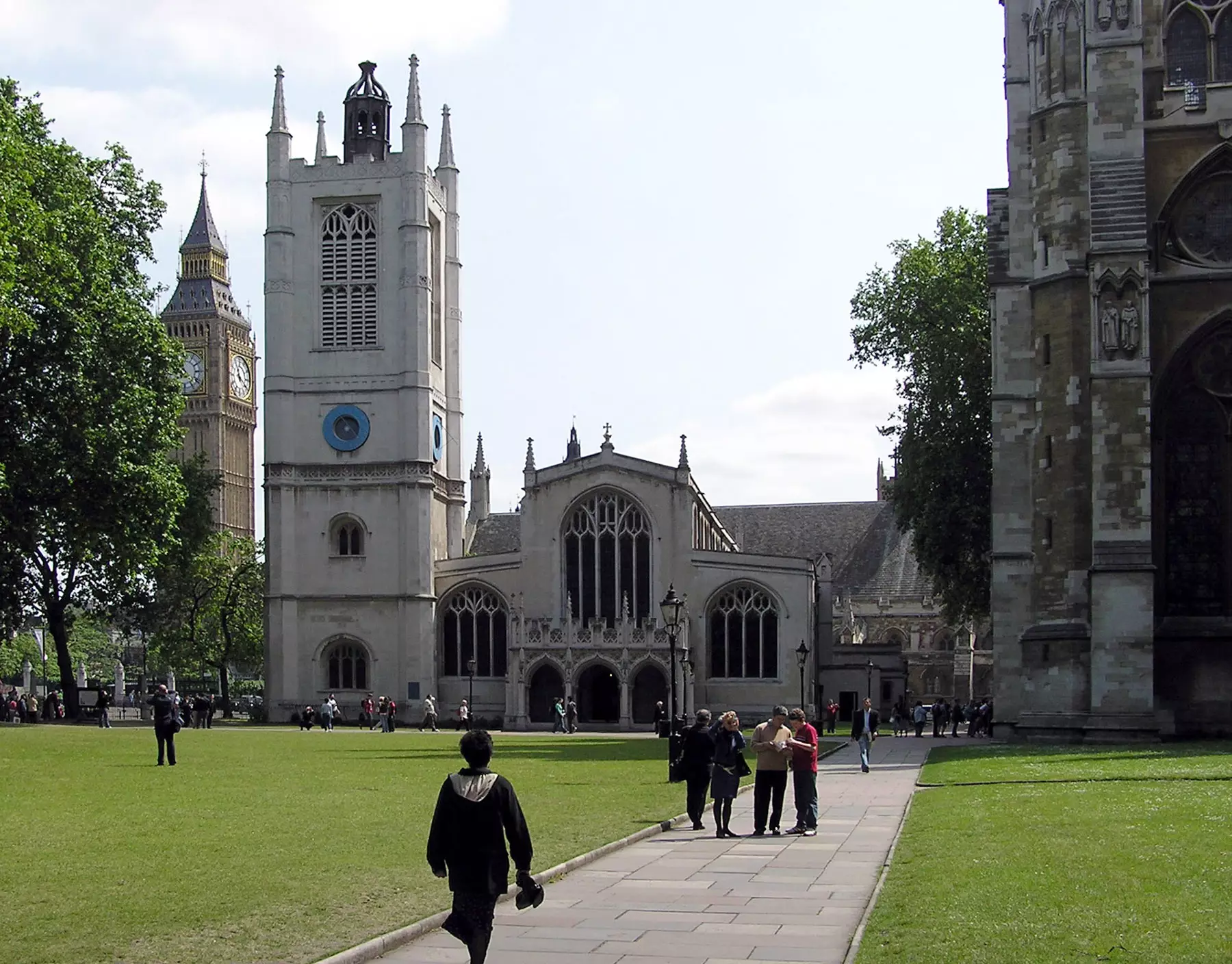
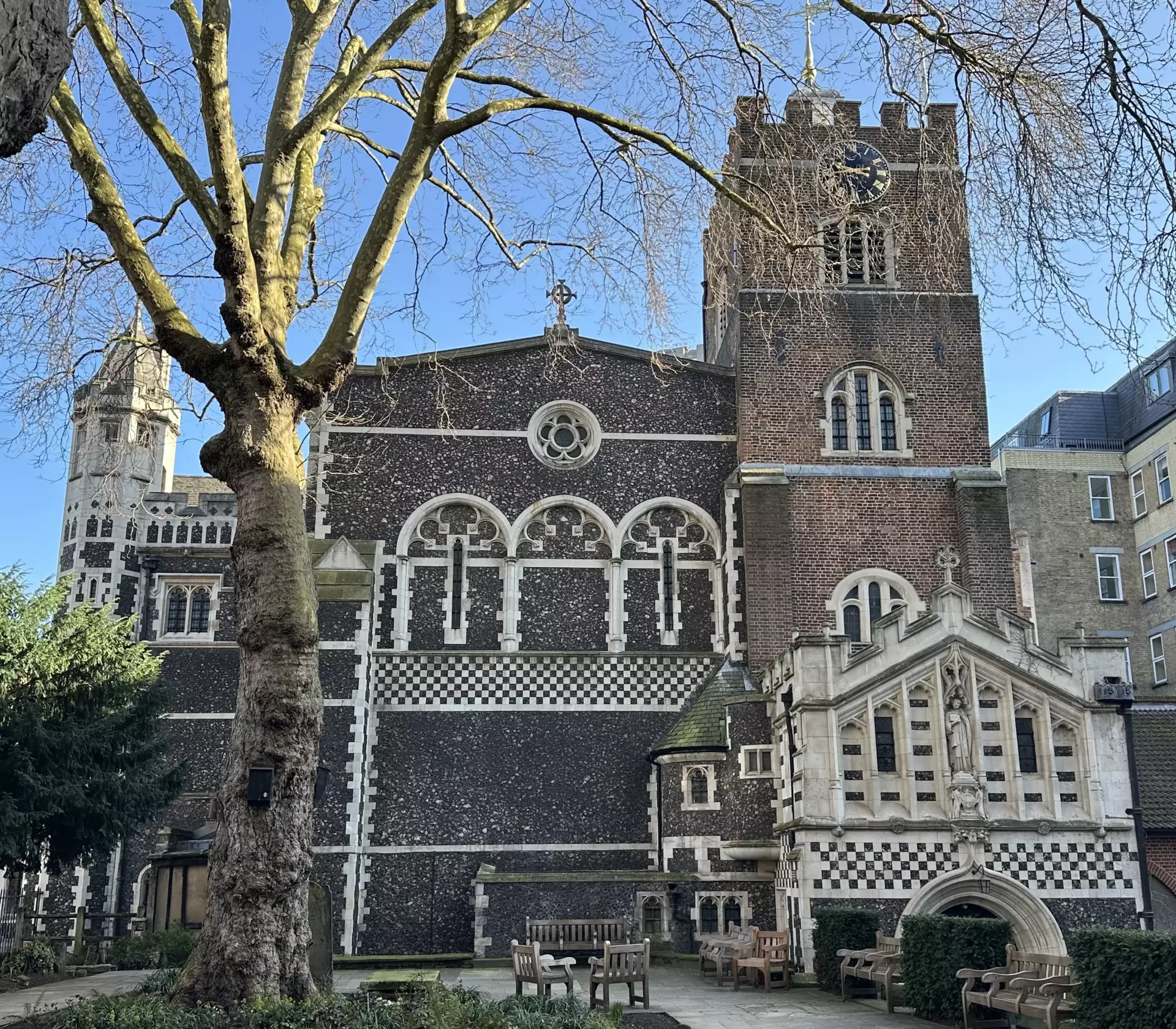
Medieval Grade I listed church. This church played a key role in the English Revolution and was the parish church of some of the most decisive Puritans: Oliver Cromwell was married and this is where John Milton was buried. It was the home of the Morning Exercises. The tower remains from the original building; the rest was destroyed in the Blitz but rebuilt based on the original plans.
In many cities a local transport museum would be of very narrow interest - not London, however! London's public transport is iconic, and the story of how it developed from horse and cart through early buses, Tube trains and trolleybuses to the present day is well worth coming to find out about. There is plenty of opportunity to clamber aboard the historic buses and Tube trains on display. Also, because London's transport is so well known, the museum shop contains plenty of items that make interesting and original gifts and souvenirs.
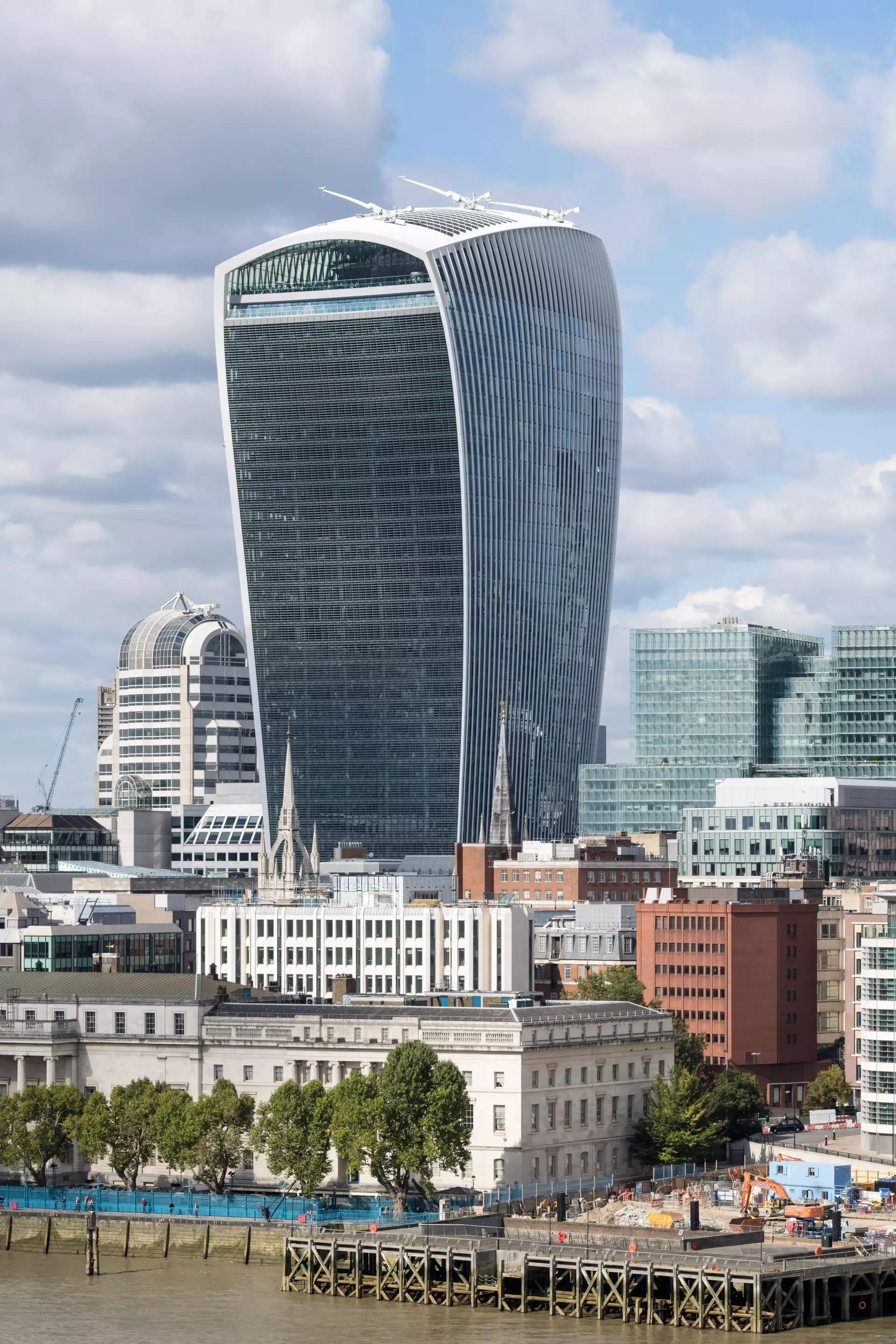
The headquarters of world's most famous insurance market, housed in a revolutionary (at the time) bizarre, Matrix-like glass-and-steel building designed by Richard Rogers, with all support services (lifts, ventilation, etc.) suspended outside. Recognised as a masterpiece of exoskeleton architecture.
A branch of the Imperial War Museum, the Cabinet War Rooms preserves the underground corridors and rooms from which Churchill and the cabinet directed the war against Hitler and the Nazis, maintained almost exactly as they were left in 1945. In 1984, IWM opened the rooms to the public for the first time. In 2005, the attached Churchill Museum was opened as the world's first permanent museum dedicated to the life and wartime achievements of Sir Winston Churchill. Audio guides are included in your admission. No cloakroom, no rucksacks, no suitcases. Café is open daily from 10am to 5pm. Hot food is served until 3pm.
Historic home to English kings such as Henry VIII, now open to the public. There are many attractions which can occupy a whole day visit, including 60 acres of gardens with the famous maze, the Tudor kitchens, the Chapel Royal, the Great Hall, Mantegna's Triumphs of Caesar paintings, and various exhibitions about Henry VIII.
Official residence of the Lord Mayor of the City of London, completed in 1753.
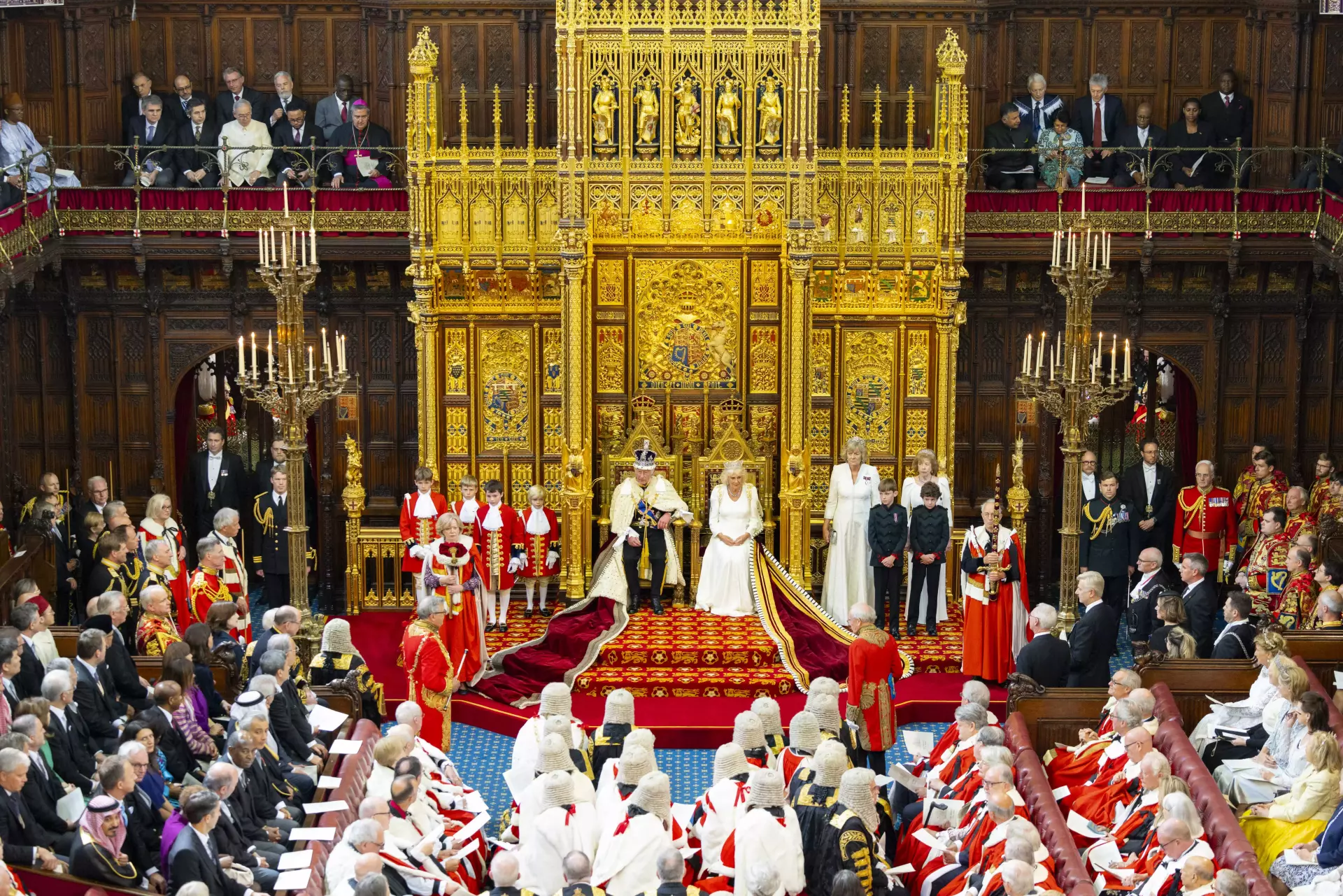
The main residence of His Majesty King Charles III, Her Royal Highness Queen Camilla, and latterly of HM Queen Elizabeth II. In the summer, 19 State Rooms are open to the public. Places are strictly limited, and it might not be possible to just turn up and get a ticket for a specific entry time, visitors should book in advance to ensure admission.
An enormous art gallery converted from the former Bankside Power Station, a visit to Tate Modern could easily take half a day. The gallery collects together contemporary and modern art from around the world, arranged thematically. The most stunning aspect of the building, is the enormous Turbine Hall, which plays host to a single piece of work commissioned for the space each year. An extension of the gallery has opened in a ten-storey building behind the existing power station.
At the junction of five major roads, Piccadilly Circus is the home of the famous aluminum statue of Eros, which sits atop a fountain. The monument is officially known as Shaftesbury Memorial Fountain and initially wasn't supposed to depict Eros, but different god Anteros. The north side of Piccadilly Circus holds an enormous display board of electric advertisements, including Britain's biggest illuminated display (the widest in the world), advertising Coca-Cola.
Worth a quick visit if you are passing. The brick and stone neo-Byzantine Catholic Cathedral (not to be confused with the much more famous Westminster Abbey) is near Victoria Station, just off Victoria Street. Construction started in 1895, and some of the interior is still unfinished. The Treasures of Westminster Cathedral exhibition is inexpensive and worthwhile for learning the history of the cathedral, there are interesting exhibits including a 1:28 wooden scale model uses by the architects. Has a café and gift shop.
After visiting the two Houses, visitors pass back through St. Stephen's Hall, and through Westminster Hall. Westminster Hall is one of the few areas of Parliament in which photography is permitted, and it is a very impressive place, dating back to the 9th century. Plaques on the floor mark where the bodies of deceased members of the royal family and other distinguished individuals granted the privilege by the British government lay in state (most recently Queen Elizabeth II in 2022), and significant events which took place in the hall (such as the trial of King Charles I).
More of an artificial stream than a fountain, flowing in an oval through an open grassy area which, in normal summers, is a popular paddling spot for children and grown-ups alike.