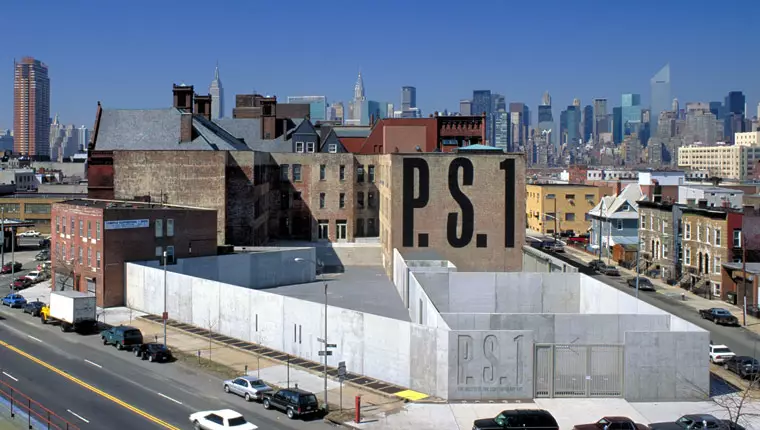
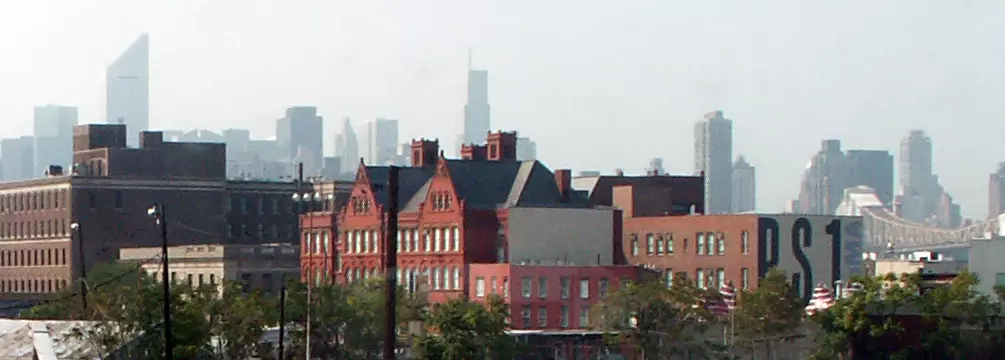
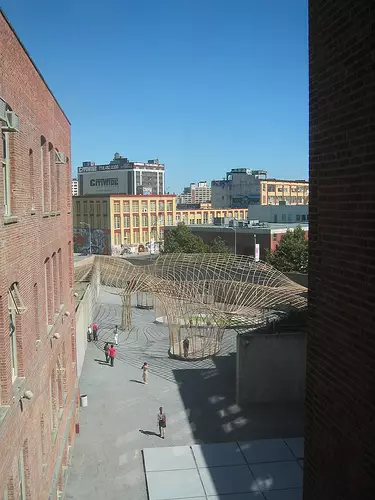
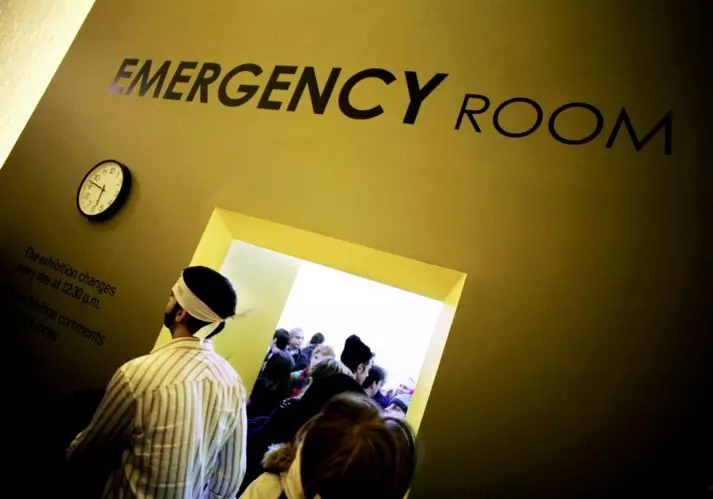
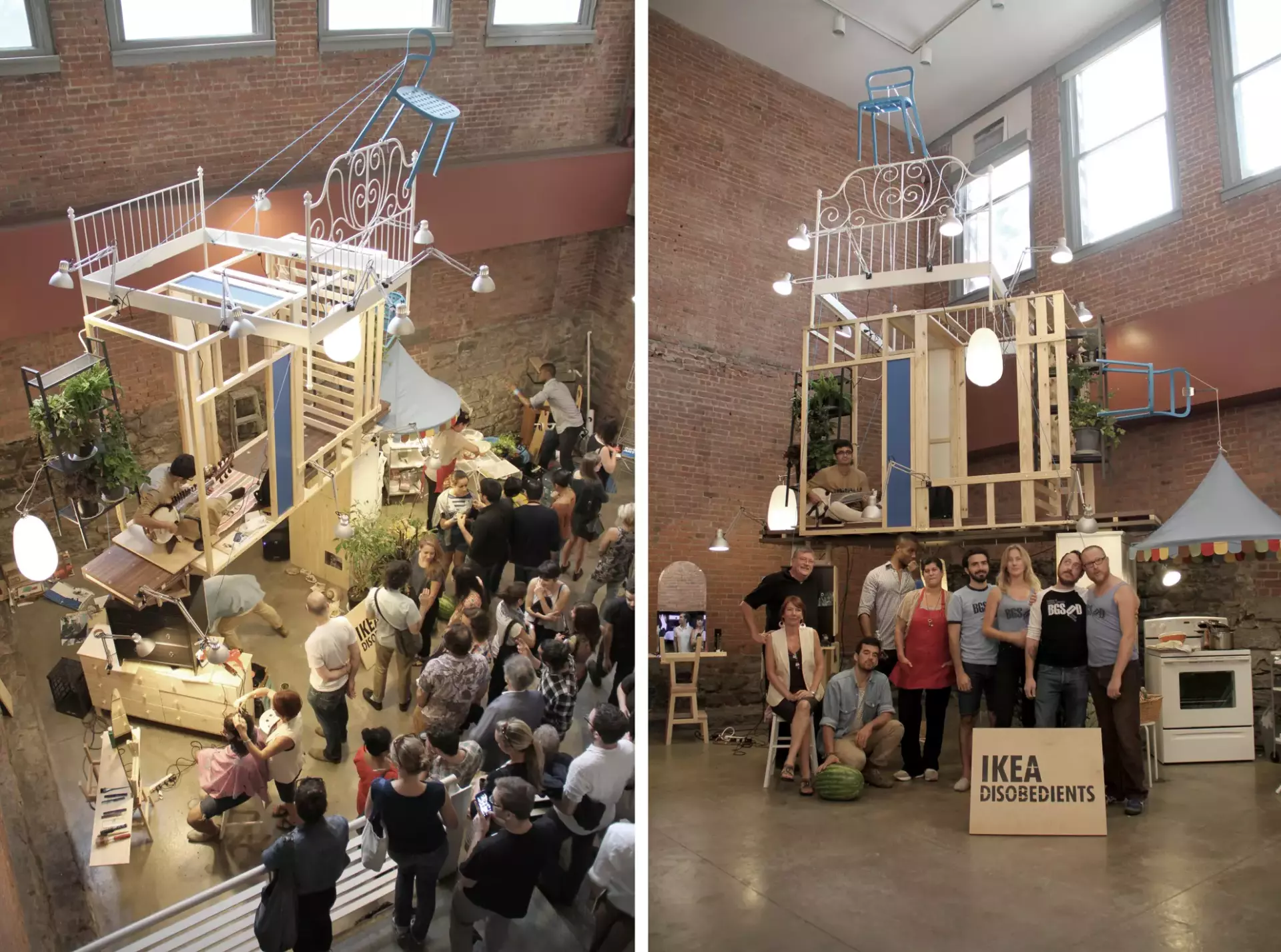
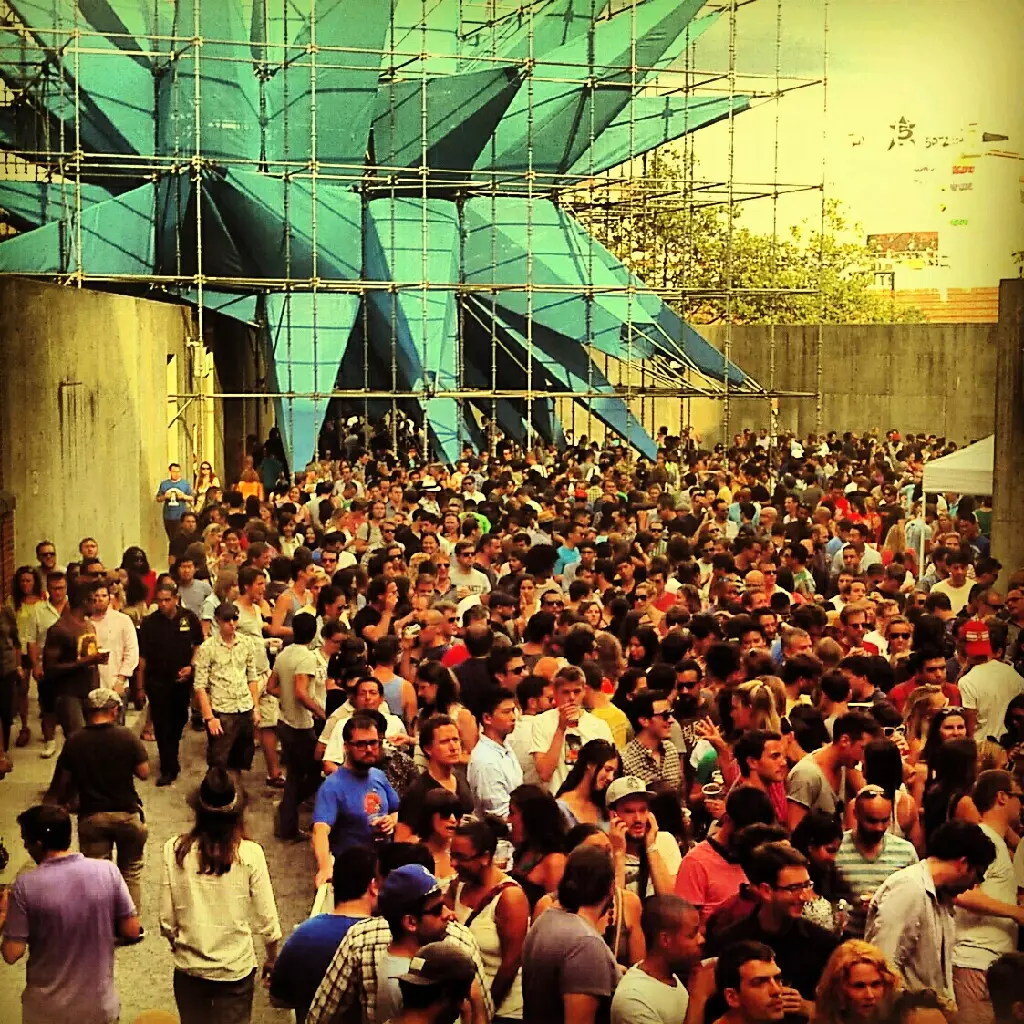
Supported by the Museum of Modern Art, this innovative and affordable contemporary art museum is housed in a former public school building. The transformation of the space retains much of the school's original characteristics. Large, former classrooms now serve as ideal spaces for art installations, while the vintage bathrooms evoke a sense of nostalgia.
Located just a few blocks south on Jackson Avenue from the Citibank tower, P.S.1's entrance is marked by a concrete slab, providing an interesting contrast and cleverly obscuring the view of the historic school building itself.
Besides the innovative art exhibits, P.S.1 also features a charming café where visitors can enjoy a relaxing break. Outdoor seating is available, allowing for a pleasant spot to unwind after exploring the museum's many offerings.
Source - https://en.wikipedia.org/wiki/MoMA_PS1
One of Manhattan's favorite meeting points, the centerpiece of this Terrace is the Angel of the Waters fountain, dedicated in 1873 and an enduring icon of the park.
Dates back to 1680, and held an abortive peace conference during the Revolutionary War.
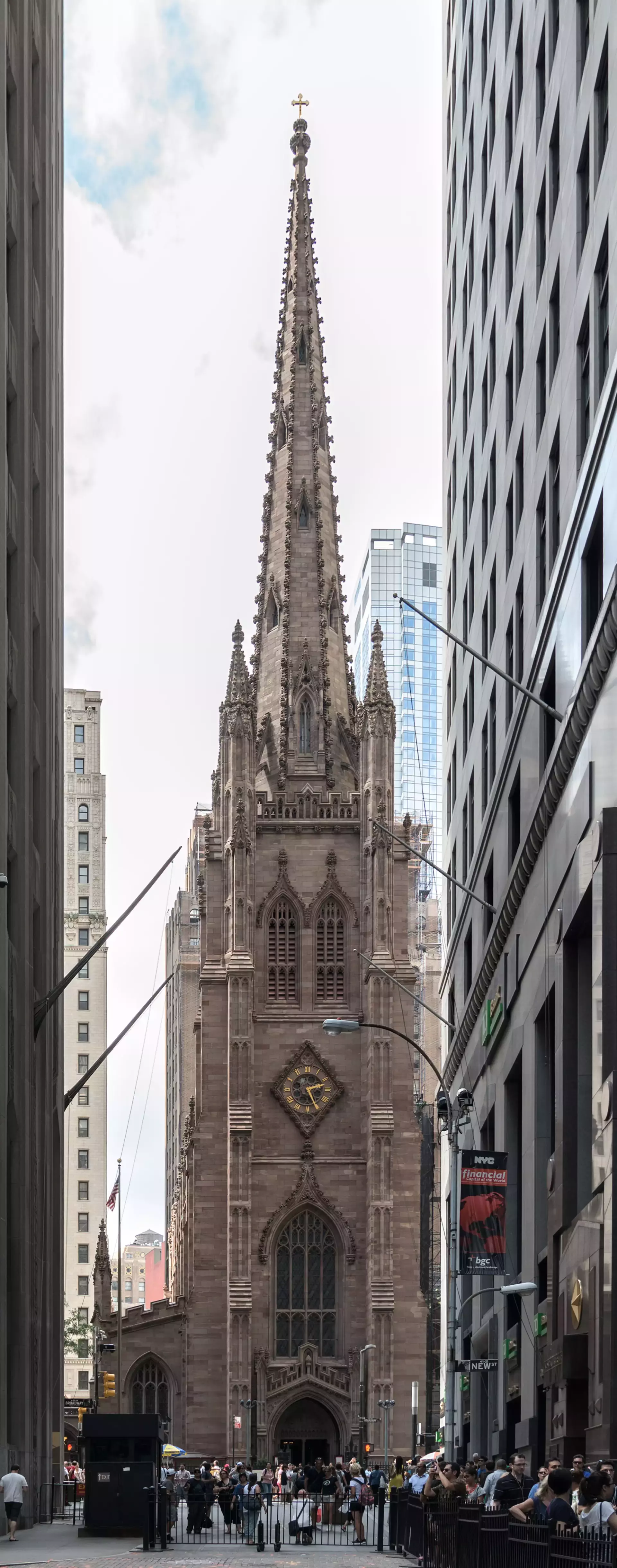
The interior of this Episcopal church is a peaceful place, and both the exterior and interior are architecturally harmonious and worth looking at if you are walking nearby.
The historic building with the distinctive, iconic twin towers and a star-studded housing cooperative board. Built in 1930 in a vaguely Art Deco style to the design of Emery Roth, the San Remo actually has two separate addresses, lobbies and sets of shafts, each for a half of the building topped with a tower.
From its intersection with Park Row (just east of City Hall) you can walk (takes about 20-30 minutes each way), bike, or drive across the historic and iconic bridge to Brooklyn. The view from the bridge is quite lovely, with excellent views of Lower Manhattan and Downtown Brooklyn and good views of Midtown and the New York Harbor in the distance.
This neo-Romanesque fairy castle was built in 1891, and a northern addition in very similar style was built in 1933. The older building is a busy post office serving Downtown Brooklyn and the northern addition houses the United States Bankruptcy Court for the Eastern District of New York.
The former home of steel baron Henry Clay Frick, this sprawling mansion is filled with Frick's enormous personal art collection, displayed as he left it. It's worth a visit for the house alone, which is explained nicely in the audio tour. The collection is impressive, including works by Whistler, Corot, El Greco, Turner, Renoir and Rembrandt.
A very impressive skyscraper with a green spire which was completed in 1930 and surpassed the height of the nearby Woolworth Building (see Manhattan/TriBeCa#See), making it the tallest building in the world until the Chrysler Building was completed just a month later (which in turn lost that title to the Empire State Building less than a year later). The building was leased by Donald Trump in 1995, hence its current name.
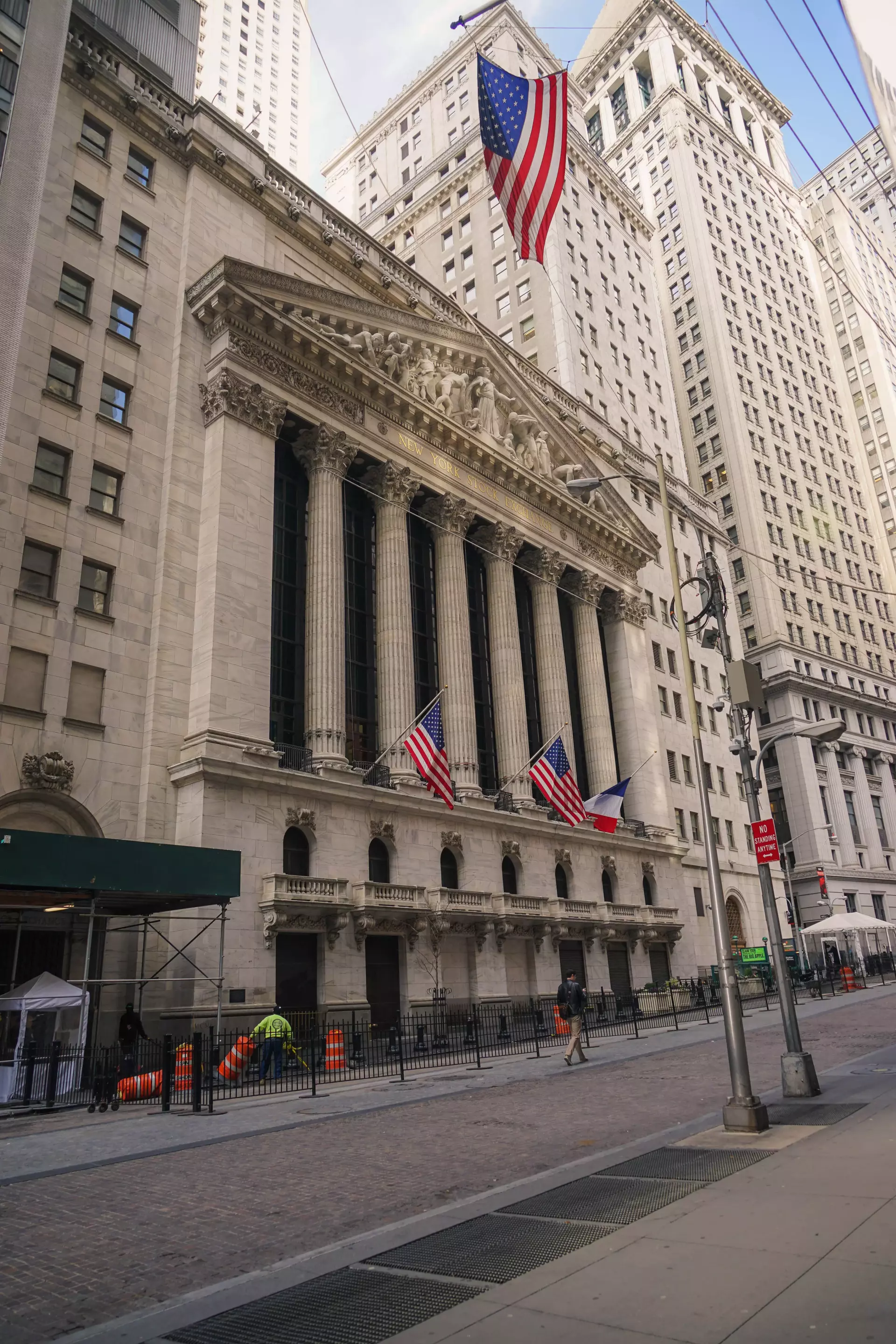
A historic site, not least because of the Black Thursday crash of the Exchange on 24 October 1929 and the subsequent sell-off panic which started on Black Tuesday, 29 October, precipitating the worldwide Great Depression of the early 1930s. The present Exchange building opened in 1903, recognized from the first as an example of masterful architecture, with the six massive Corinthian columns across its Broad Street facade imparting a feeling of substance and stability and, to many, seeming the very embodiment of America’s growth and prosperity. The building has been closed to the public since 9/11.
A spacious green lawn that was originally home to a herd of sheep, which grazed in the meadow and tended to in their nearby pen - a Victorian style building which today is the Tavern on the Green restaurant (see Eat below).
The Society of Illustrators is one of the many off the beaten path museums in New York City, and while it may not have as many visitors, it certainly isn't a place to miss. Certainly don't miss the art of illustration featured here, with countless historical galleries since the museum's opening in 1901. It's even the origin of the famous "I Want You For U.S. Army" poster of World War I and II.
This beach is a pleasant place to relax. The water is safe enough to swim in, but it's not the best you can get (you'd get a better deal down the Jersey Shore or on Long Island). The boardwalk, one of the longest in the United States, is great for running or biking.
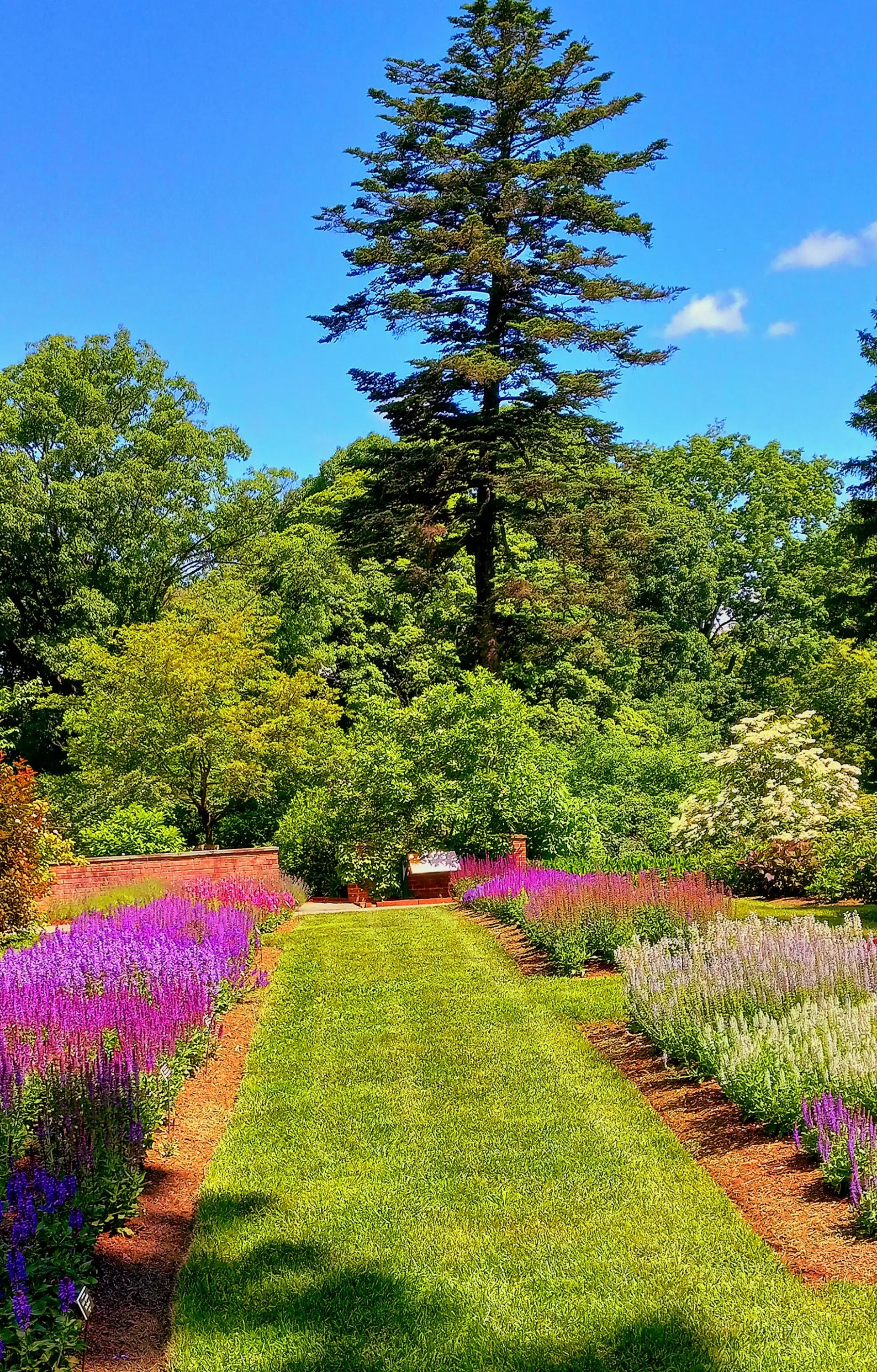
Large garden and arboretum featuring a variety of plants, and also a Victorian-style wedding garden.
This 11 acre lake is one of Central Park's finest spots; surrounded by flowering trees and inhabited by several fish and turtle species.
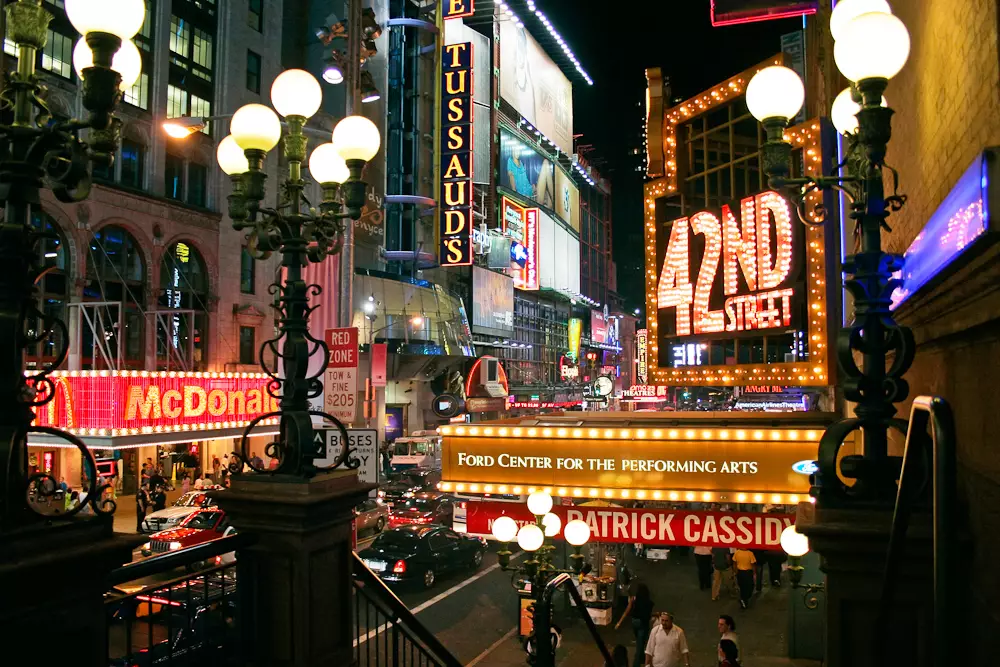
A place filled with video screens, LED signs, and flashing lights; a world wonder or a tourist nightmare depending on your perspective, the "new" Times Square is a family-friendly theme park of themed restaurants, theaters and hotels, as well as a developing business district. The lights and signs can be viewed anytime, but the most enchanting experience comes when one visits Times Square at night, as all the signs and screens are ablaze with color. Times Square is also well known for its famous New Year's Eve ball drop. Those looking for the seedy Times Square of years past will find it around the Port Authority Bus Terminal, and on Eighth Avenue to the west. A ticket booth selling discounted Broadway and off-Broadway shows. However, the cheaper tickets aren't the only attraction, as the back of the booth is a large, red-lit glass staircase facing Times Square, which serves as a set of bleachers and offers an excellent opportunity to get above the street and just watch the crowds and flashing signs. Above the booth is a video screen with a live feed of the top step, giving you a chance to appear (if only briefly) on one of the many signs in Times Square. Originally the second-tallest building in the world when it opened in 1905, One Times Square was constructed to be the headquarters for The New York Times, a function it would serve for less than ten years. The annual Times Square ball drop is performed from the roof of this building. And you can't miss the famous Dow Jones news and sports zipper (the first news ticker in the world) attached to its lower facade.
A small park at the foot of Broadway which is the oldest public park in the city and is the site of the Charging Bull sculpture created after the 1987 stock market crash. Bowling Green is also the origin point for the Broadway ticker-tape parades; if you walk up Broadway, you can view plaques in the sidewalk honoring the people or events celebrated in these parades.