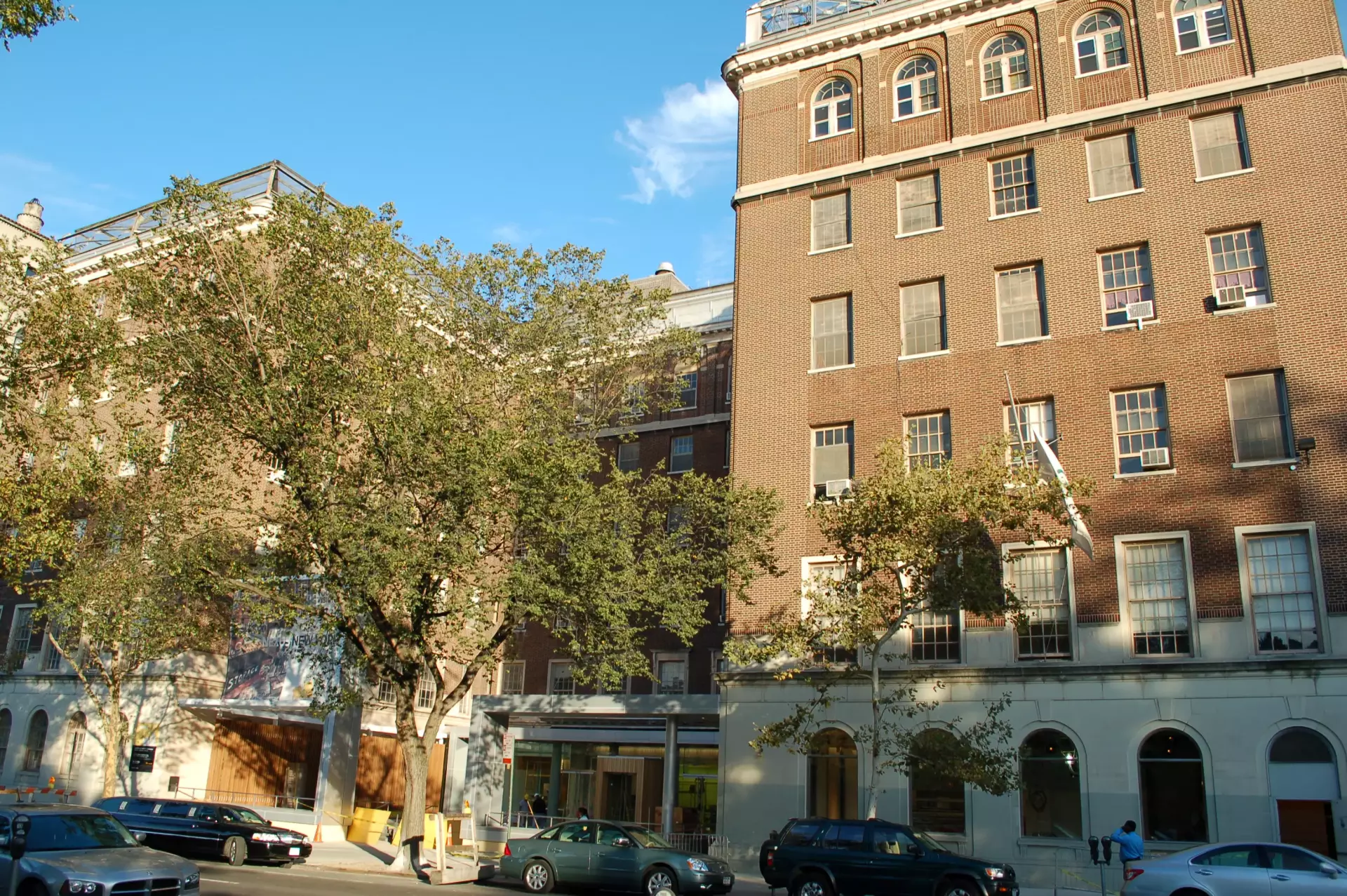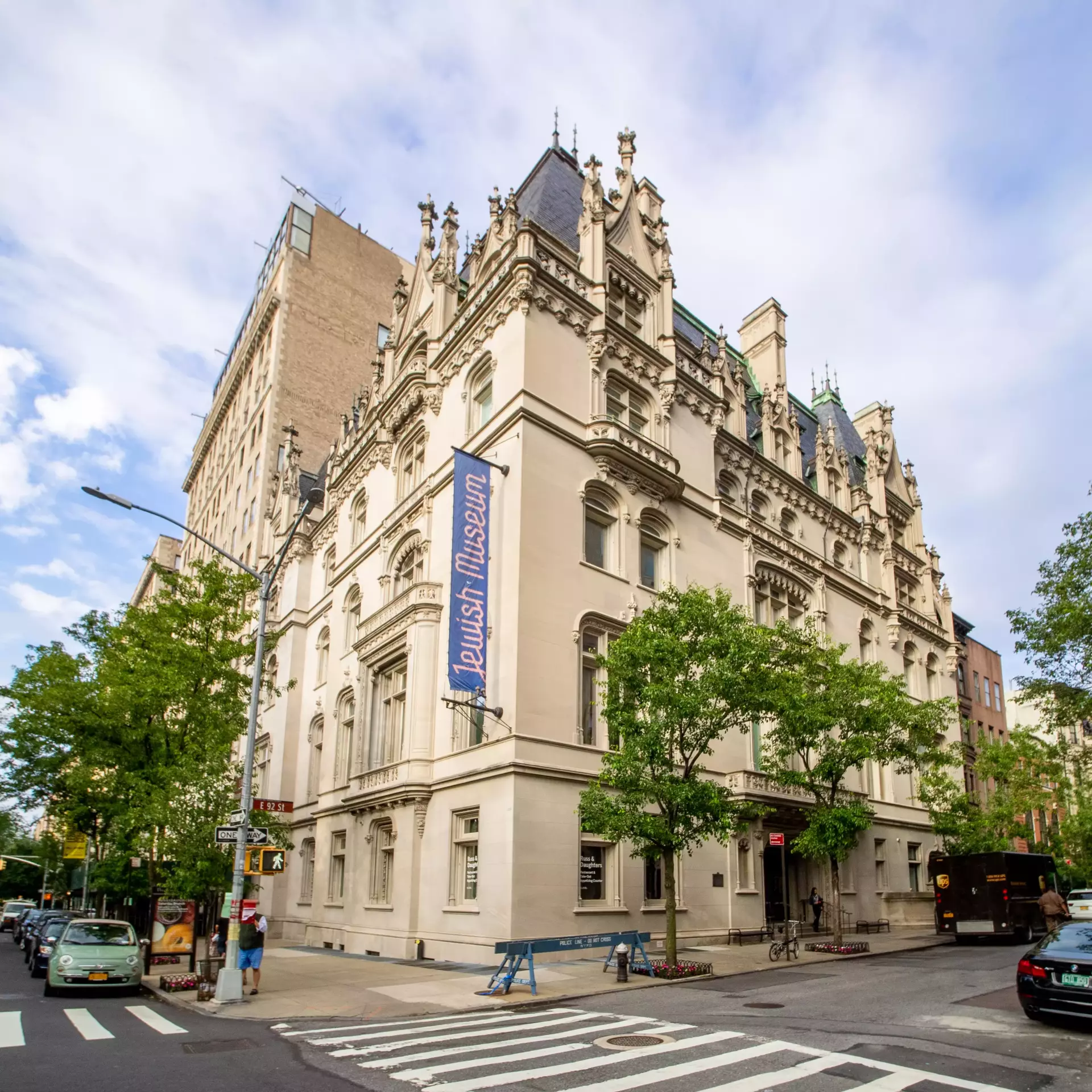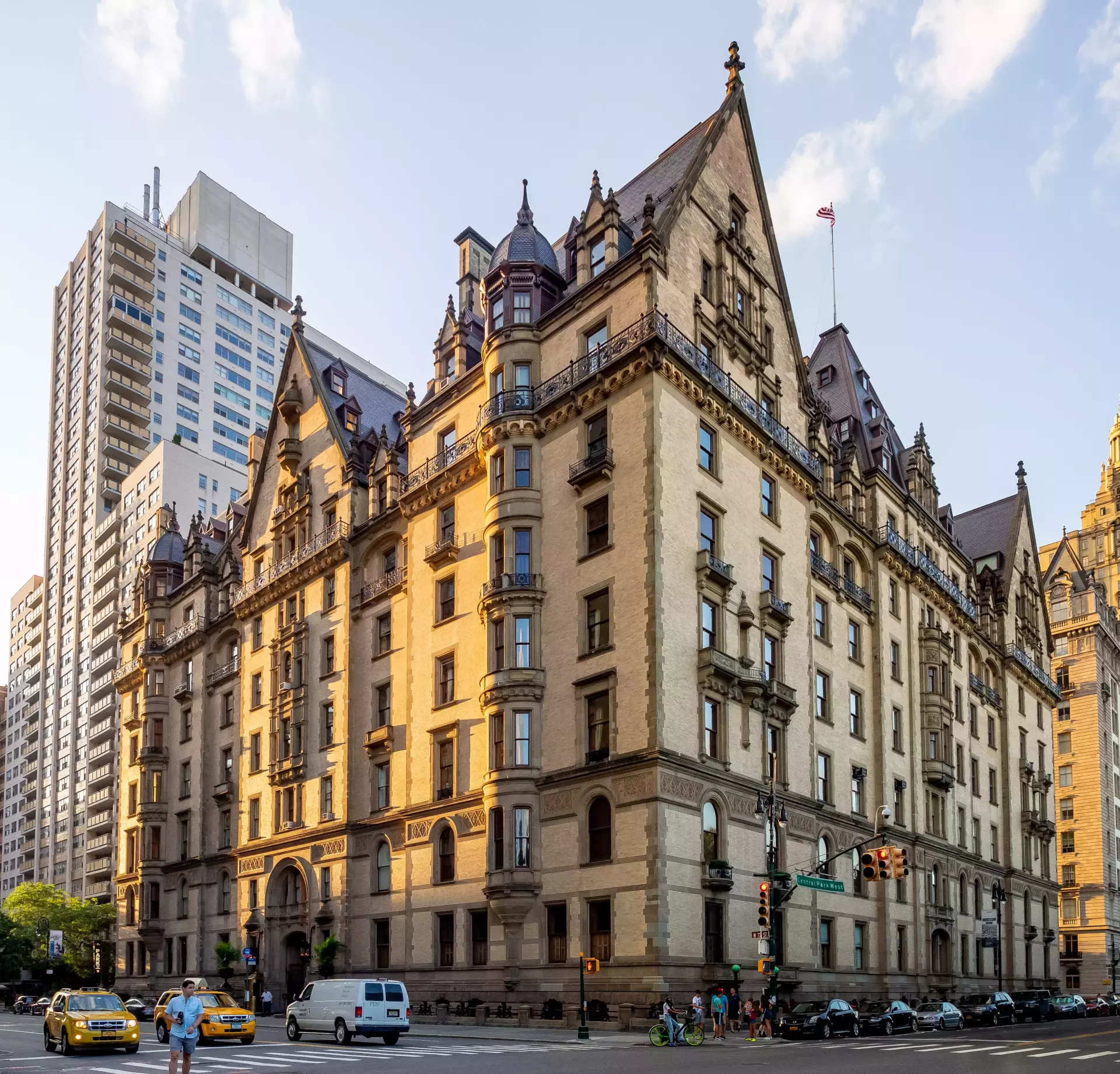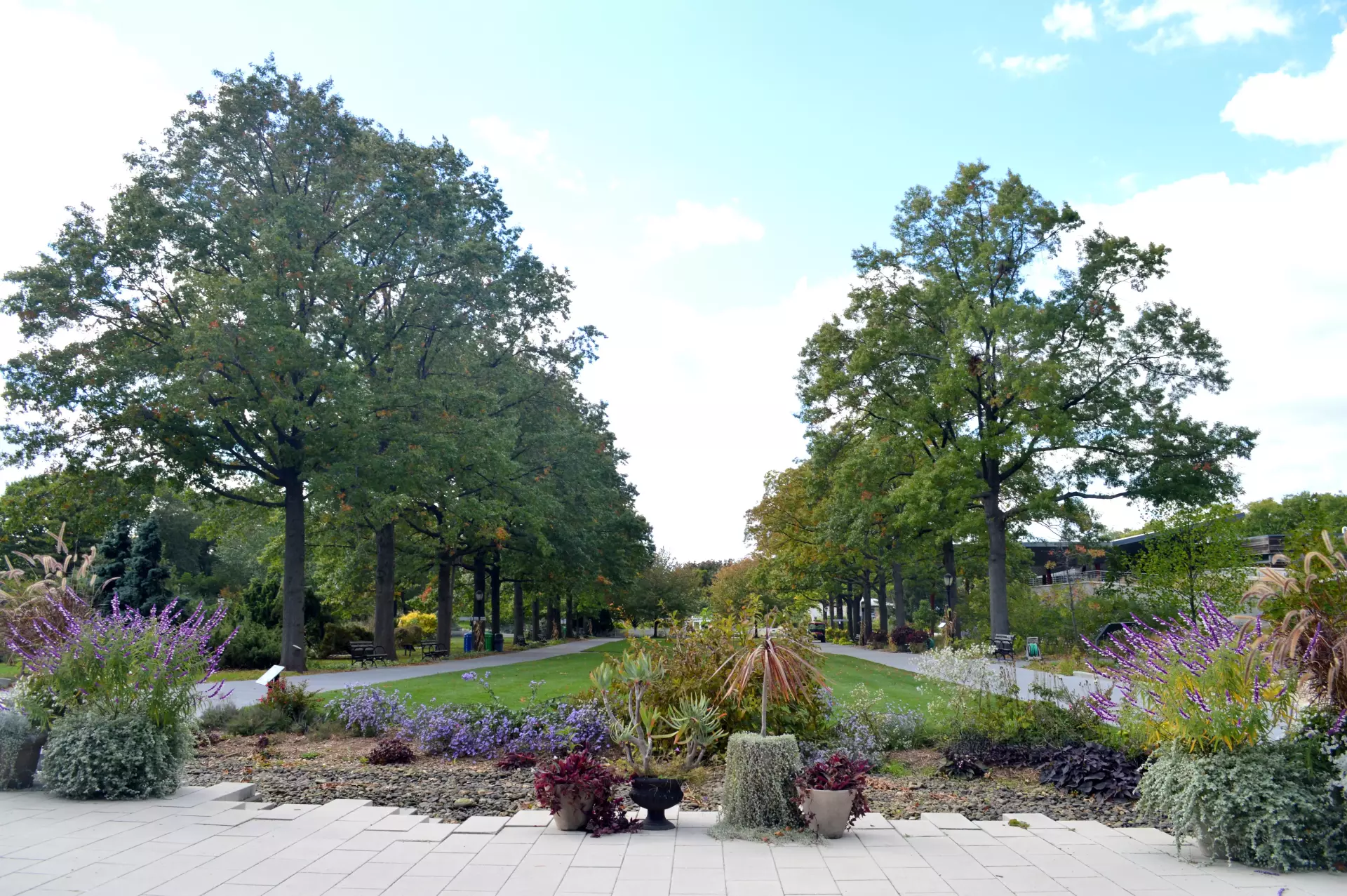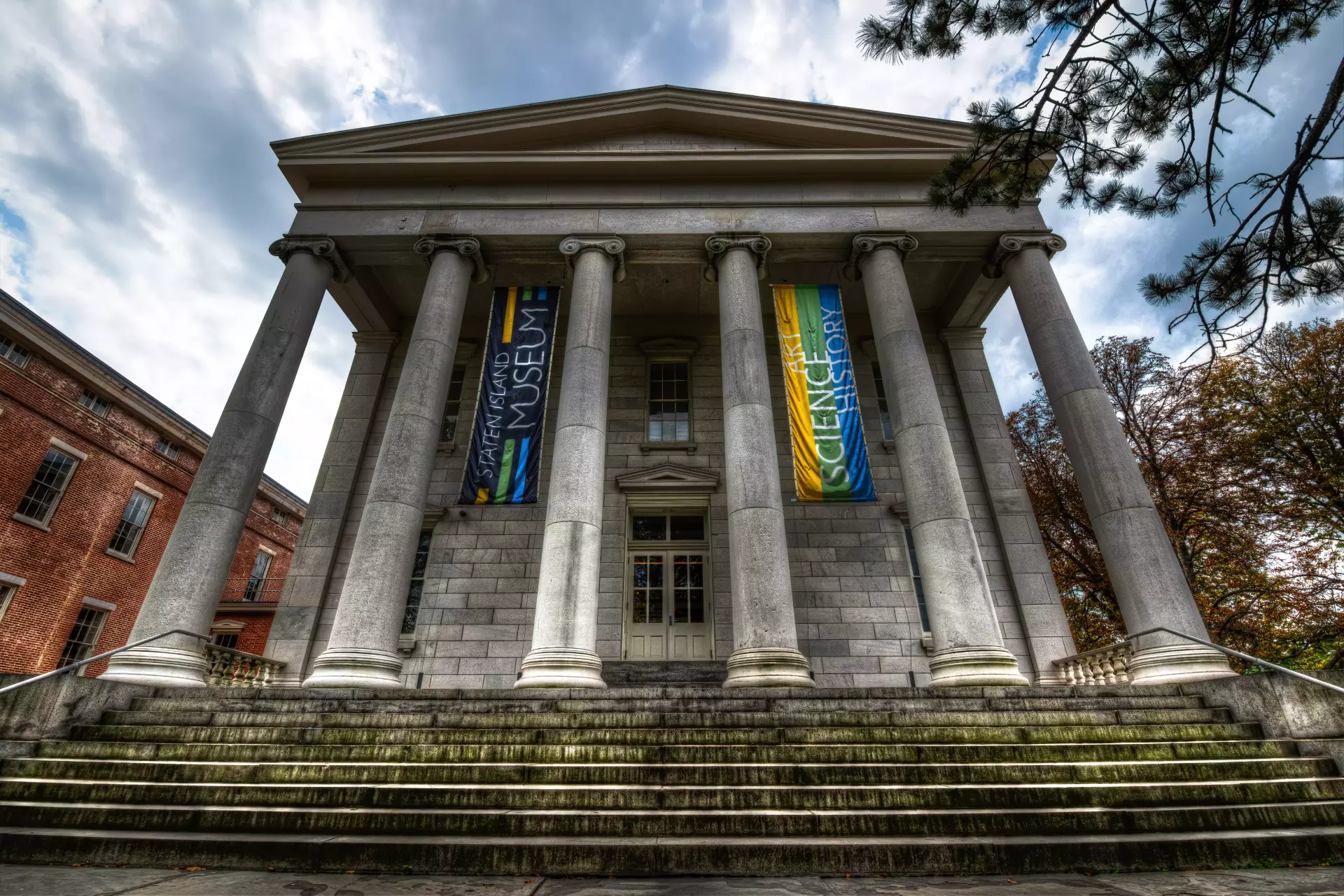
The Staten Island Museum is a unique place where history, art, and nature come together. It's located in Staten Island, one of New York City's five boroughs, and offers a diverse range of exhibits and activities for visitors of all ages. The museum's collections include natural science specimens, fine art, and cultural artifacts that tell the story of Staten Island's rich heritage.
Visitors can explore a wide array of exhibits that span various themes and interests. The natural science collection showcases local wildlife and geological specimens, providing a glimpse into the island's natural history. Art lovers can enjoy the museum's fine art collection, which features works from different periods and styles. Additionally, the cultural artifacts provide insight into the lives and traditions of the diverse communities that have inhabited Staten Island throughout the years.
The Staten Island Museum is not just about exhibits; it also offers a variety of educational programs and events. School groups and families can participate in guided tours and workshops designed to engage and educate. Special events are frequently organized, offering interactive experiences and activities that cater to different interests and age groups.
Committed to community involvement, the museum actively engages with local residents through initiatives aimed at preserving Staten Island's heritage. Conservation efforts are also a key focus, with programs dedicated to protecting the natural environment and promoting sustainability. These efforts ensure that the museum remains a vital part of the community, contributing to the preservation of Staten Island's unique identity.
Source - https://en.wikipedia.org/wiki/Staten_Island_Museum
Supported by the Museum of Modern Art, this innovative (and cheap) contemporary art museum is in a former public school building. The conversion left most of the original features of the school - the large ex-classrooms are perfect for installations - and the bathrooms are a blast from the past. P.S.1 is a few blocks south on Jackson Avenue from the Citibank tower; the entrance is a concrete slab (how fitting) which occludes view of the school itself. P.S.1 also has a nice cafe and outdoor seats.
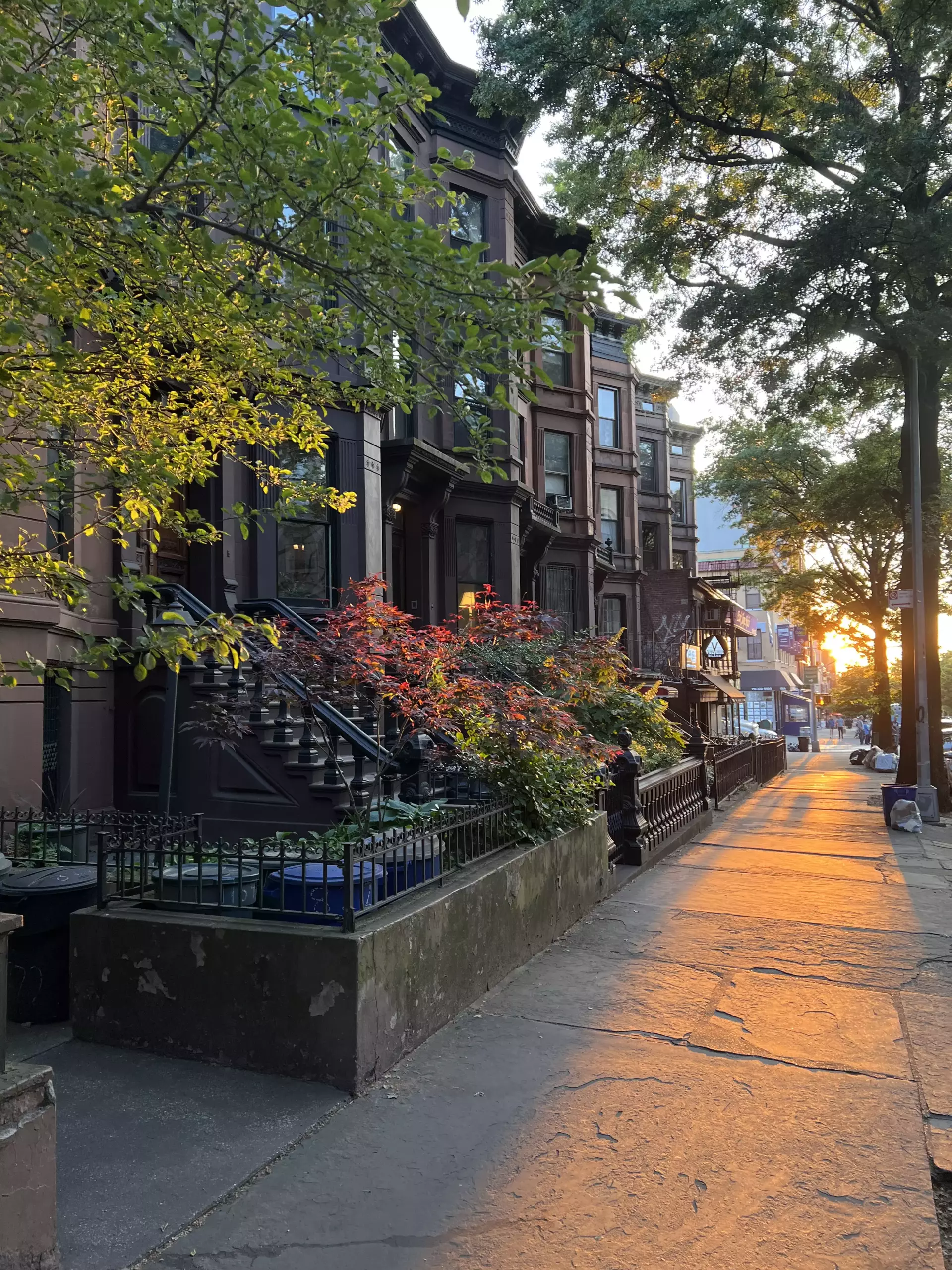
One of Brooklyn's most prized brownstone neighborhoods. It is predominantly residential, characterized by late 19th- and early 20th-century rowhouses with architectural significance. Street signs in the Historic District are brown rather than green.
Exhibits on the history of highrise and skyscraper construction.
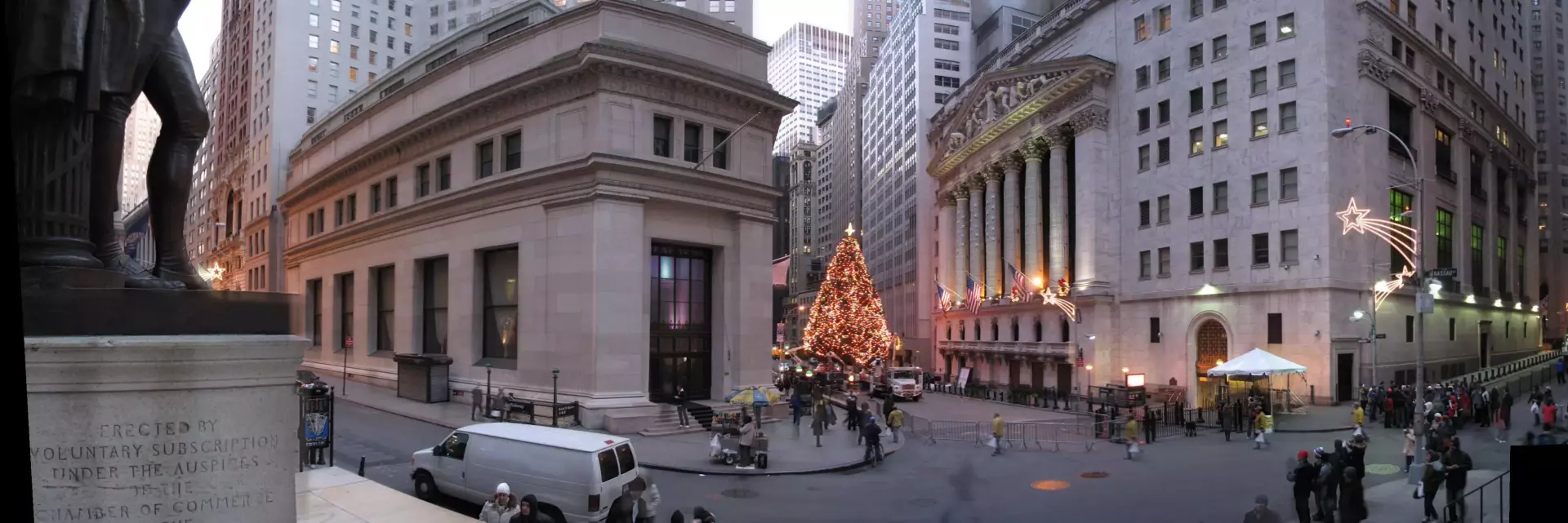
A small museum dedicated to finance and the markets, with exhibits that change periodically. Closed to find a new location as of Mar 2024.
Yet another unique but rich treat on 5th Avenue, the AIHS is a non-profit organization that educates visitors on Irish American culture and history. Immersive and traditional events are held often along with exhibits showcasing the array of unique art and music. If performing and visual arts aren't your thing, you can visit the library instead with over 10,000 books, newsletters, newspapers, and pieces of literature dating back to the 1700s that feature a wide variety of otherwise unknown topics that are great for anyone interested in European culture and history.
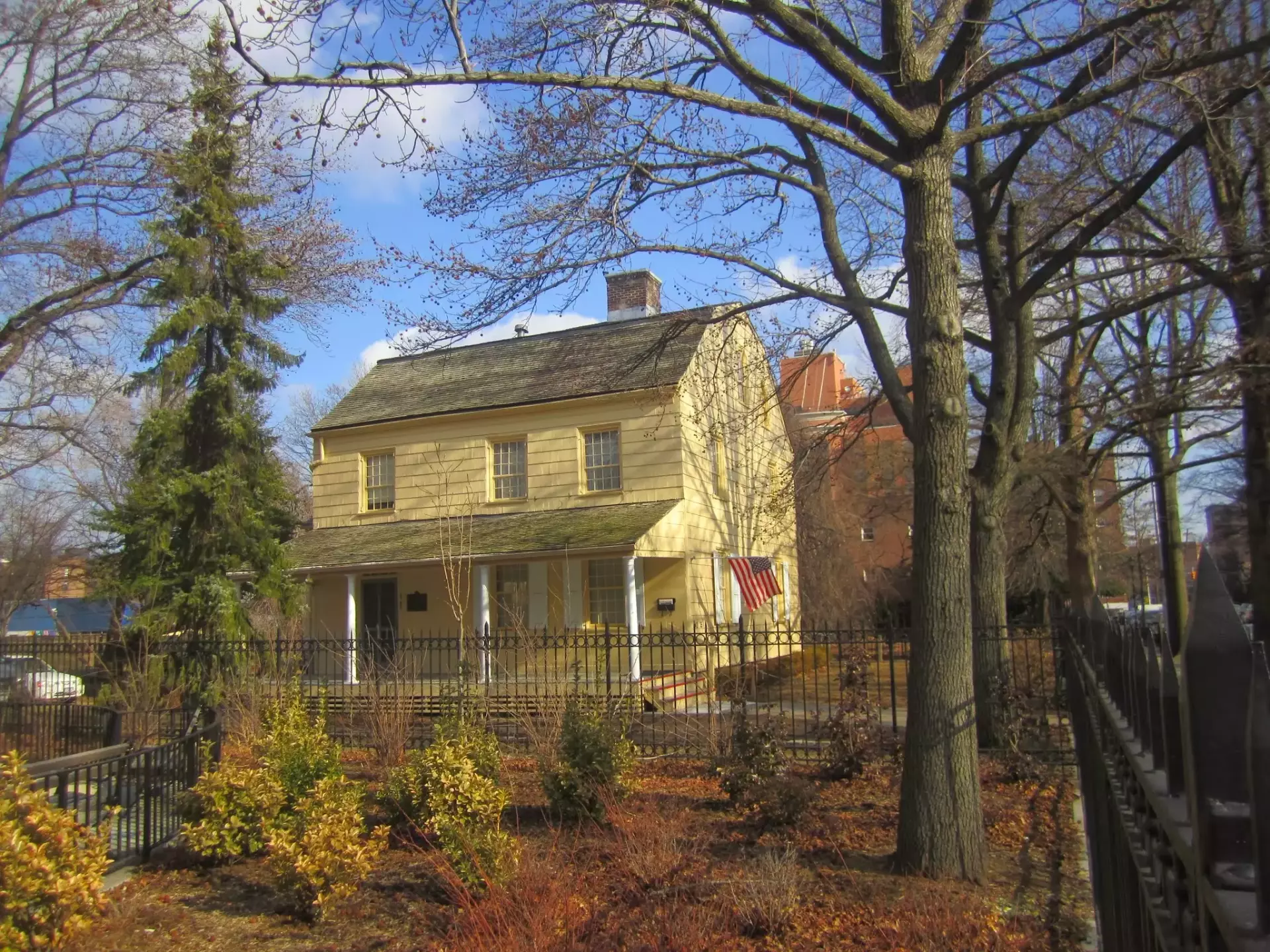
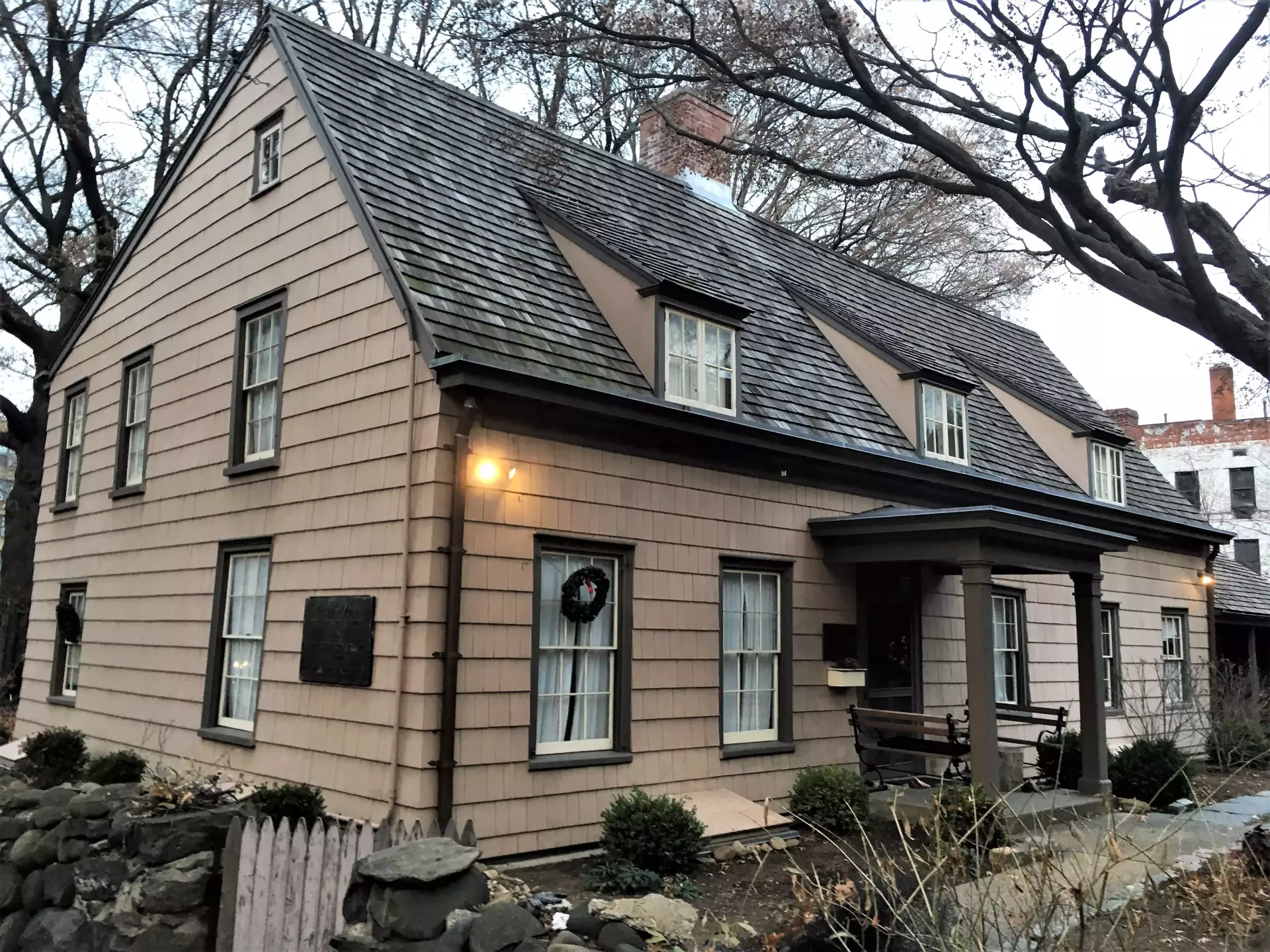
Dates back to 1680, and held an abortive peace conference during the Revolutionary War.
The Christmas Tree, the Skating Rink, NBC Studios, the shops and hubbub - you can't miss it. The Christmas Tree and the Skating Rink are naturally not year round, but in the summer, the complex is a hub for touristy operations. Within the striking Art Deco buildings of the complex are several dining establishments overlooking the area and many stores. See the Rockettes, another show, or just tour the famous Art Deco masterpiece. On the 70th floor of the Comcast Building (better known by some as "30 Rock") is this narrow observation deck, built to resemble the deck of a cruise ship. The deck affords uninterrupted views over Central Park to the north and across Midtown to the south.
Located on four acres overlooking the Hudson River in Fort Tryon Park, the building incorporates elements from five medieval French cloisters – quadrangles enclosed by a roofed or vaulted passageway, or arcade – and from other monastic sites in southern France. There are various artworks on display in the museum, with the Unicorn Tapestries being the most famous.
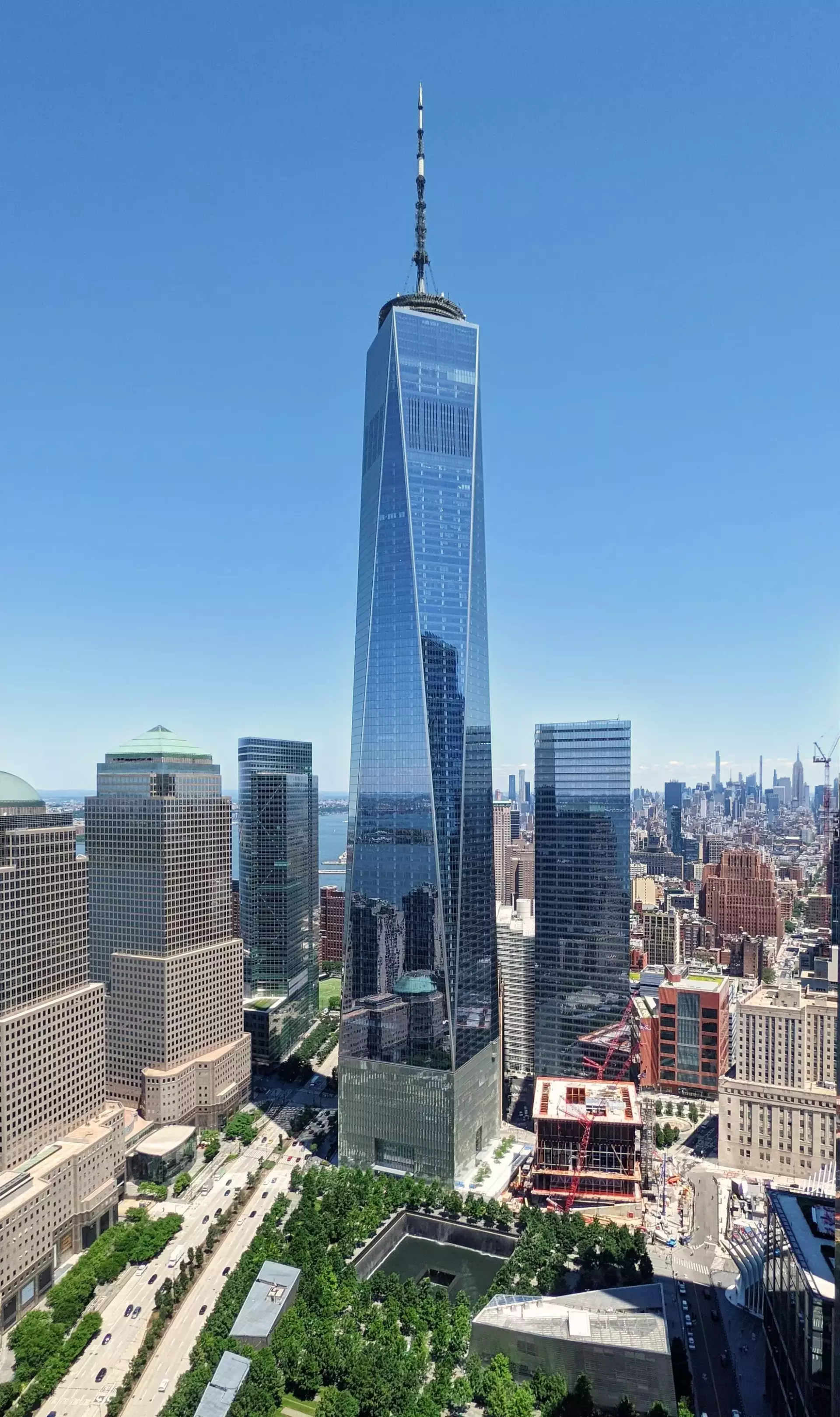
The One World Trade Center skyscraper rises 1,776 feet above the street and is the tallest building in the United States (and for that matter, the Western Hemisphere). Despite its colossal size, its simple design allows it to blend remarkably well into the Lower Manhattan skyline. An observation deck on the top floors offers 360-degree views of the city.
For most of the 18th century, Africans in New York City were buried in a graveyard outside the city. The graveyard was eventually forgotten and was rediscovered in 1991. This museum and memorial site commemorate the estimated 15,000 Africans that were interred on the site of the memorial. Note that the museum is located inside of a Federal building so airport-style security should be expected.
Street built by architect Samuel Burrage Reed. A major mansion owned by circus entrepreneur Anthony Bailey - joined with showman Phineas T. Barnum in 1881 to form the Barnum & Bailey circus. Now Known to the children of Harlem as the Beauty and the Beast house.
A museum and library devoted to Spanish, Portuguese, and Latin American art and culture.
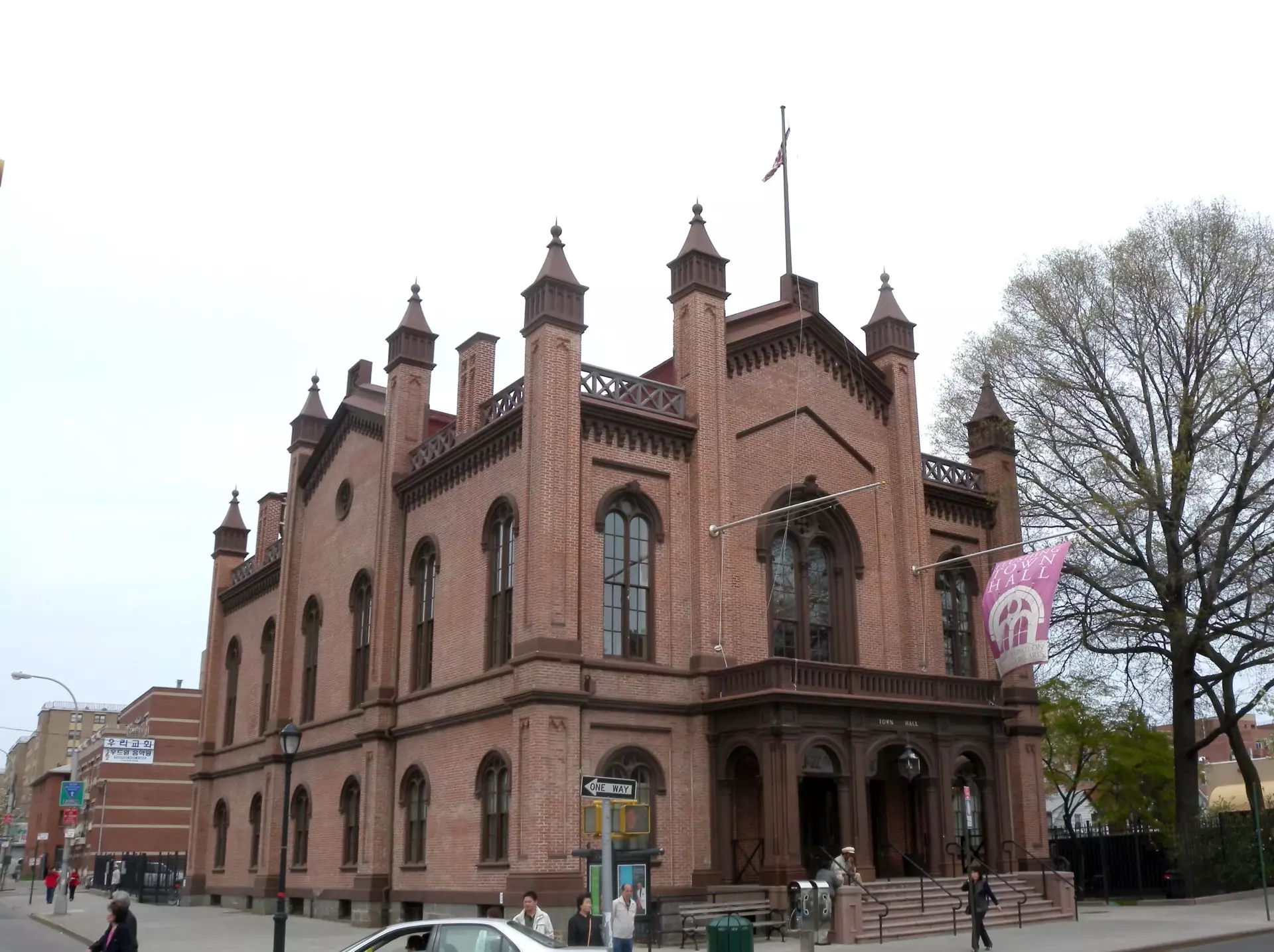
This pretty building was built as Brooklyn's city hall in 1851 and is still a very significant official building in very active use.
is considered a symbol of Queens. It is a 140-foot (43-meter) tall globe with a fountain below. It is beautiful to look at. In 1939 and 1964, Flushing Meadows-Corona Park was the location of the World's Fair, and the Unisphere was built for the 1964 World's Fair.
Affiliated with Columbia, Teacher's College is an architectural gem with its block length Beaux Arts and neo-Gothic façades.
On a triangular city block between Broadway, Park Row and Chambers Street sits City Hall, a gorgeous gleaming white building completed in 1812, which still hosts the mayor's office and the New York City Council chambers. The building itself is fenced off and only accessible by tour, but there is a lovely park surrounding the building, with plenty of shady trees and a pleasant fountain just to the south of the building. Just north of City Hall and on the same block is the 40.71337-74.005552 Tweed Courthouse, a gorgeous government structure and the legacy of Tammany Hall boss William M. Tweed, who used the courthouse project to embezzle large sums of money from the city budget and was convicted in a courtroom in this building.
Probably the most famous of the Guggenheim foundations (others found in Bilbao and Venice), which hold avant-garde modern art by artists such as Kandinsky and Mondrian, the New York branch is housed in a unique and famous building designed by Frank Lloyd Wright and rendered in a rounded, organic form and completed in 1959. Be sure to take the elevator to the top floor, then follow the spiral viewing floors downwards to the street level. One of eight buildings by Wright to be listed as a world heritage site.
Established in 1867 and laid out by Olmsted and Vaux, the designers of Manhattan's Central Park.