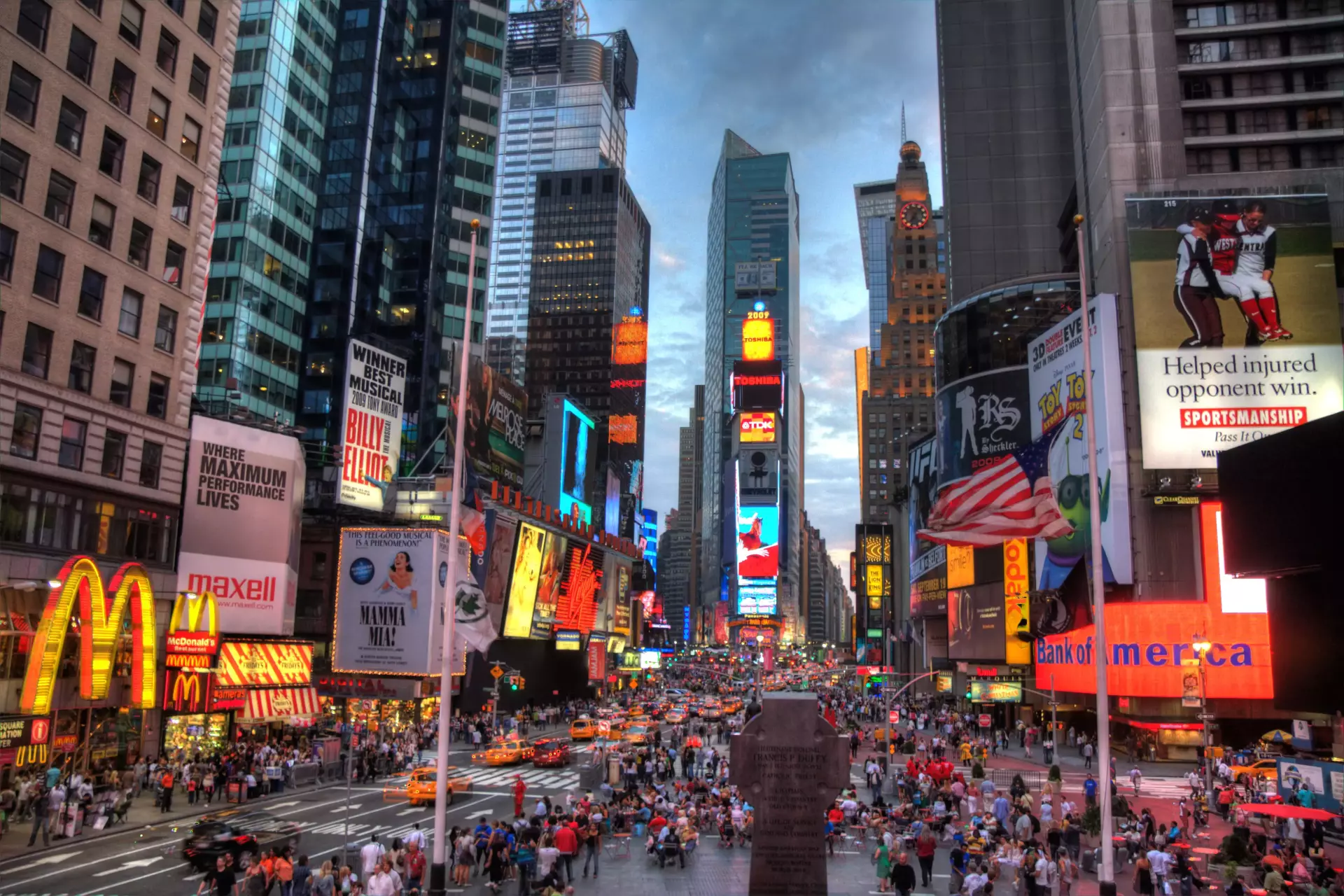
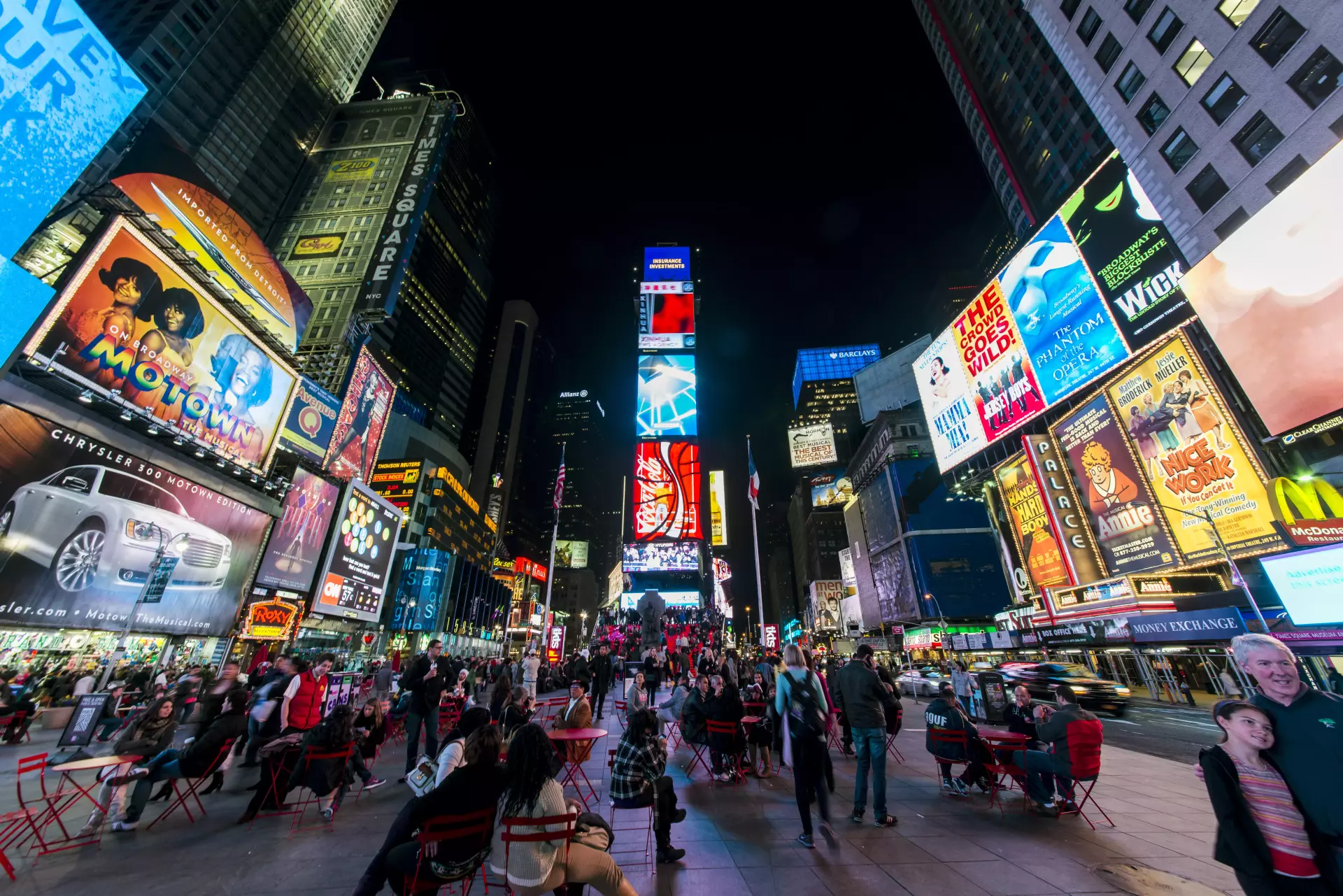
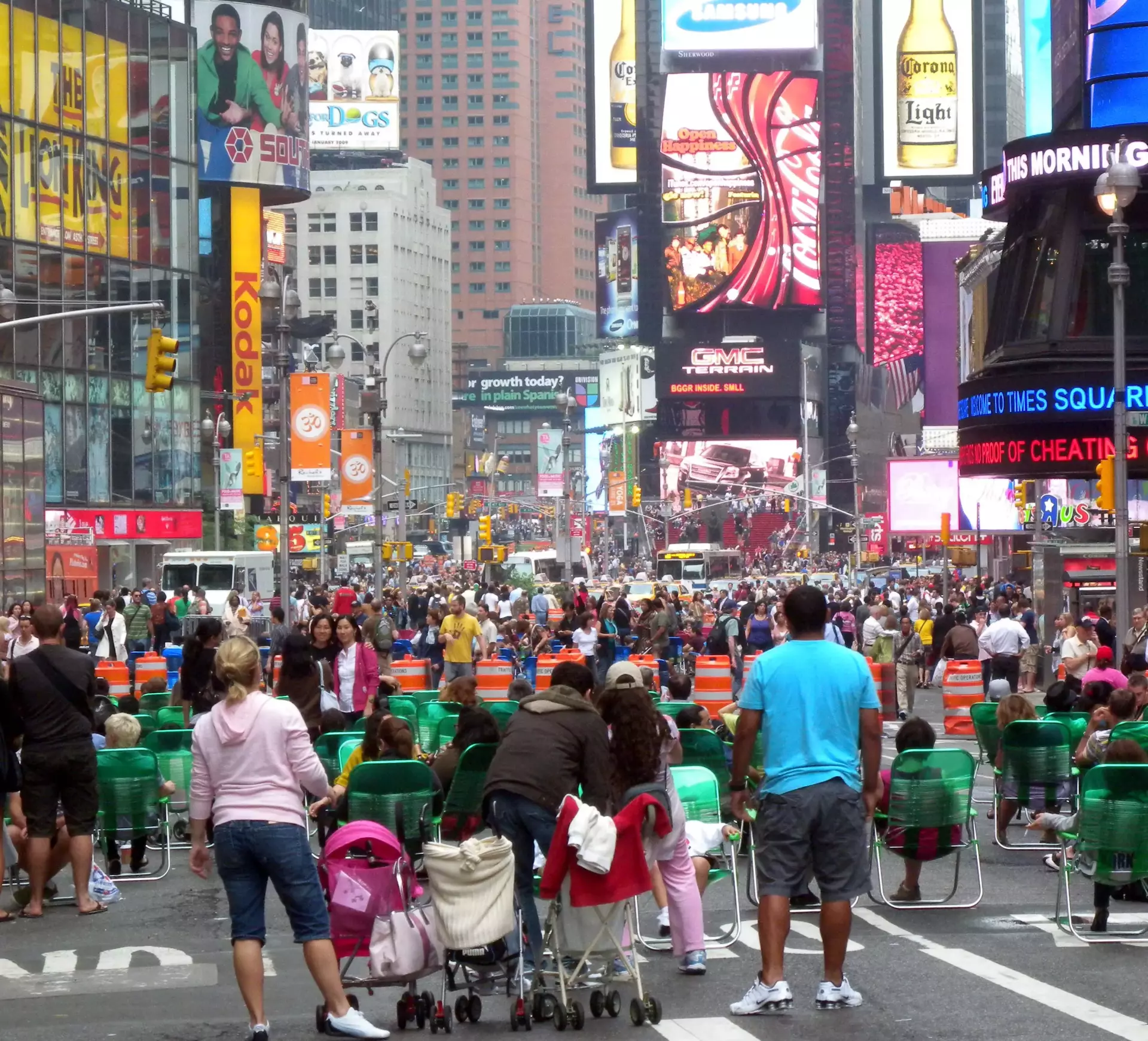
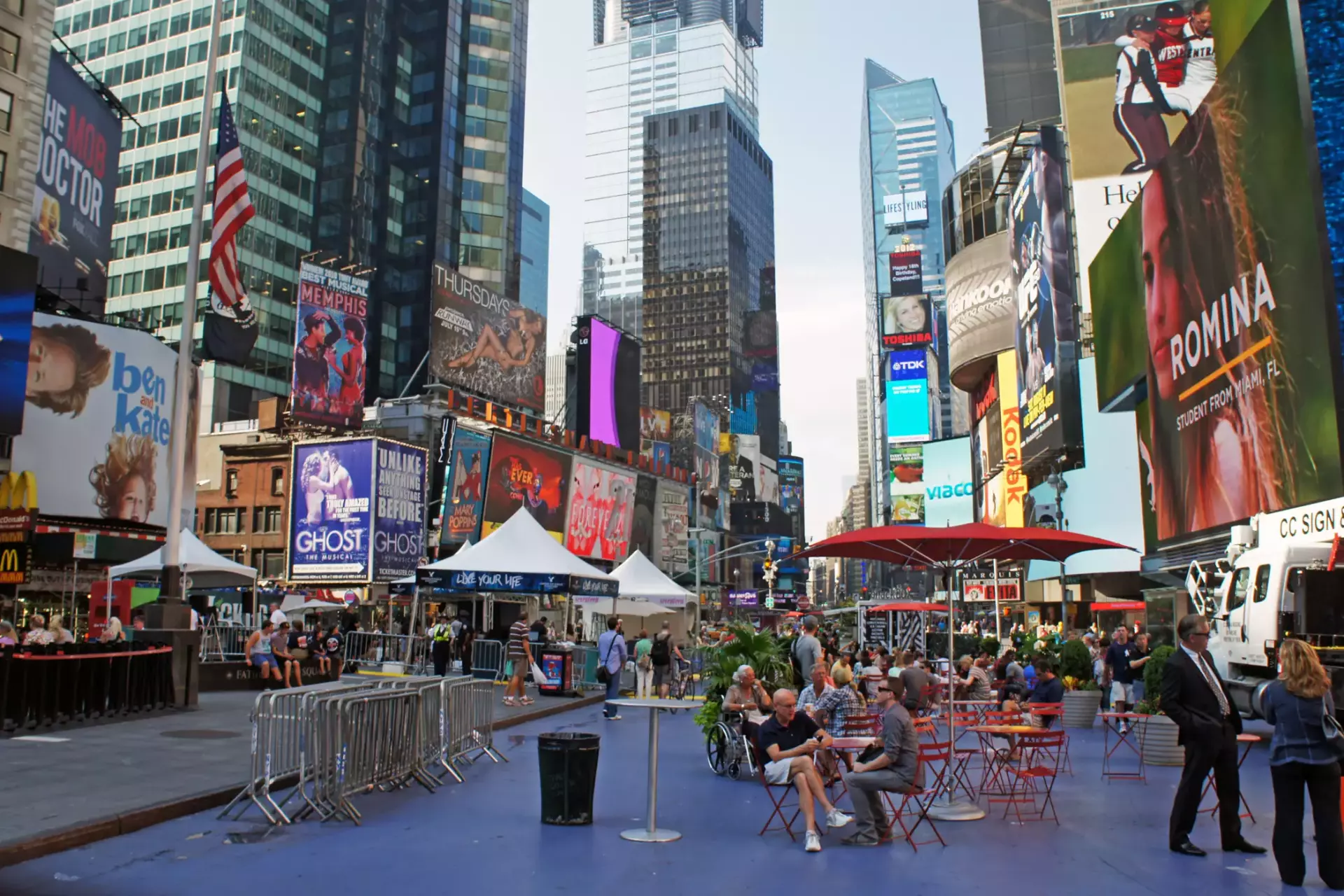
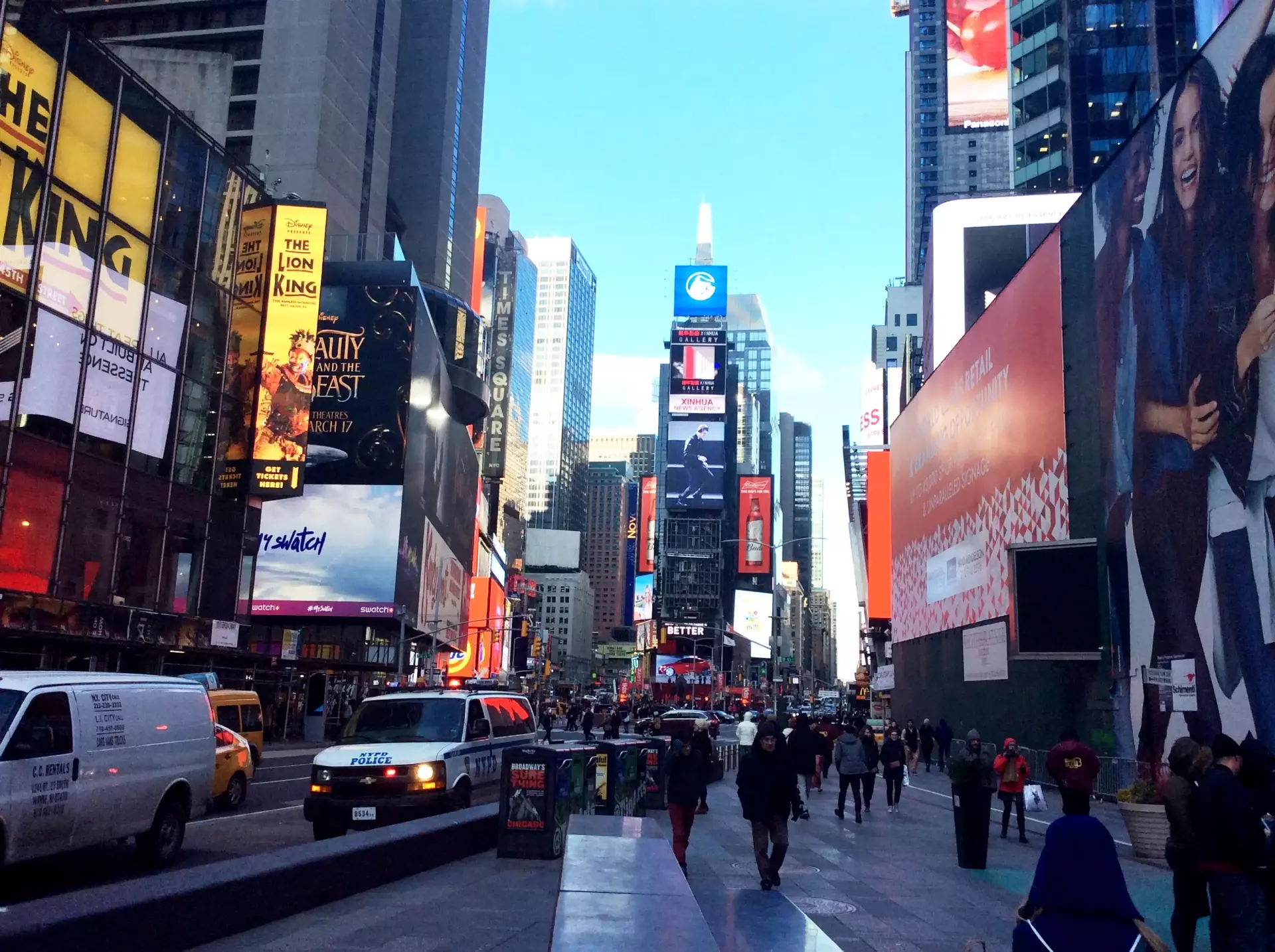
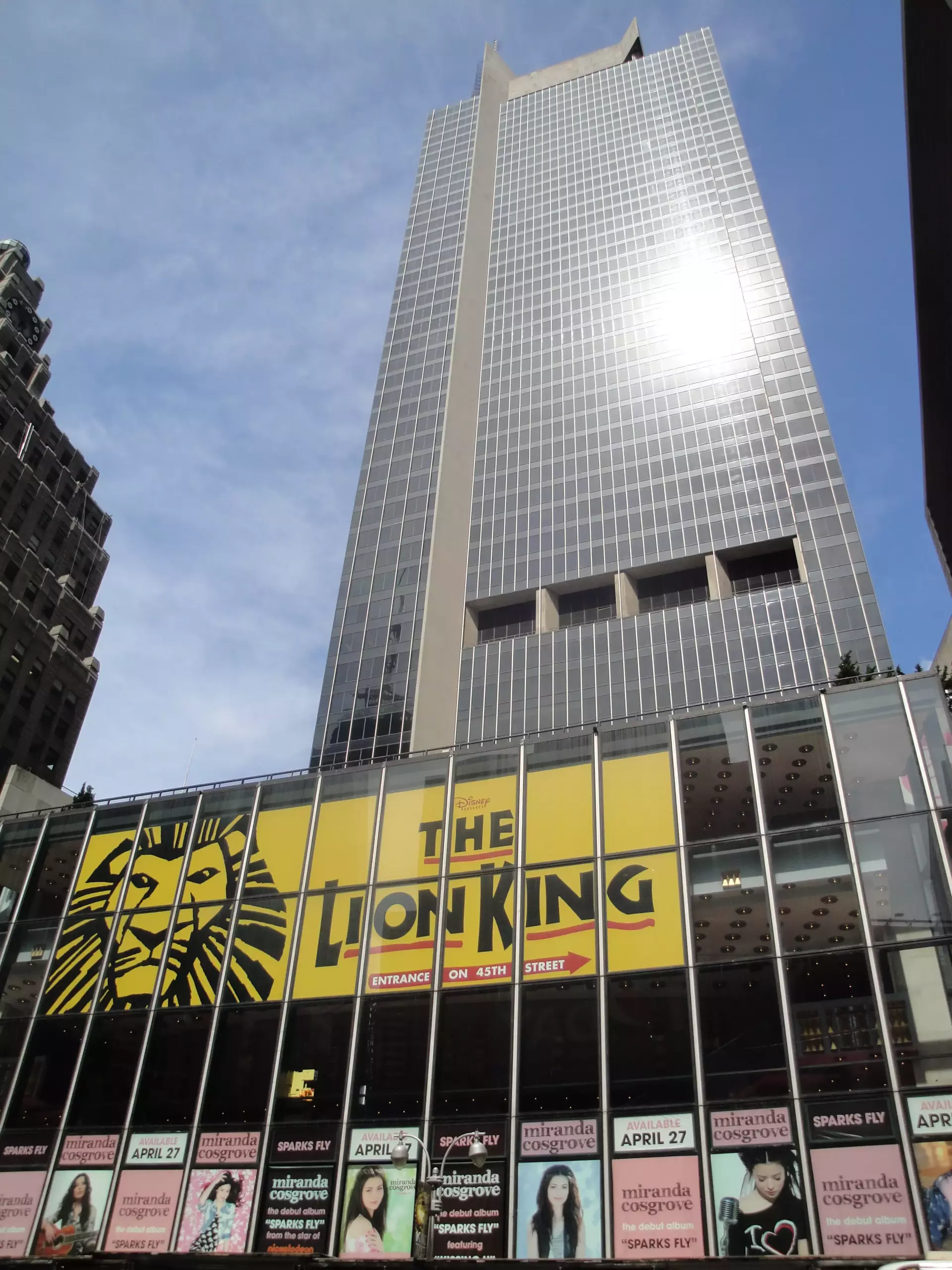
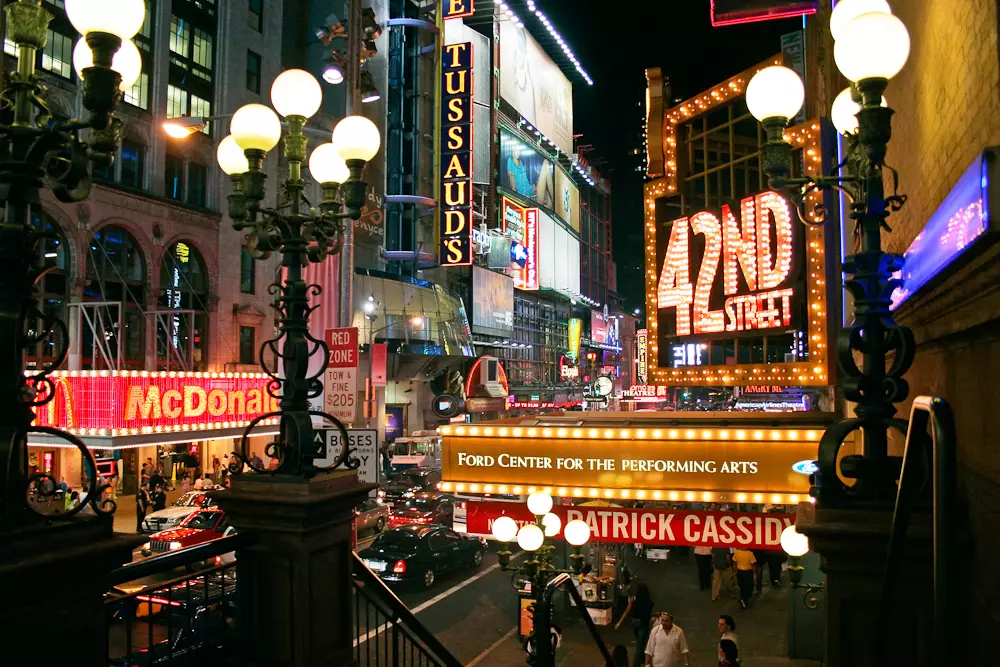
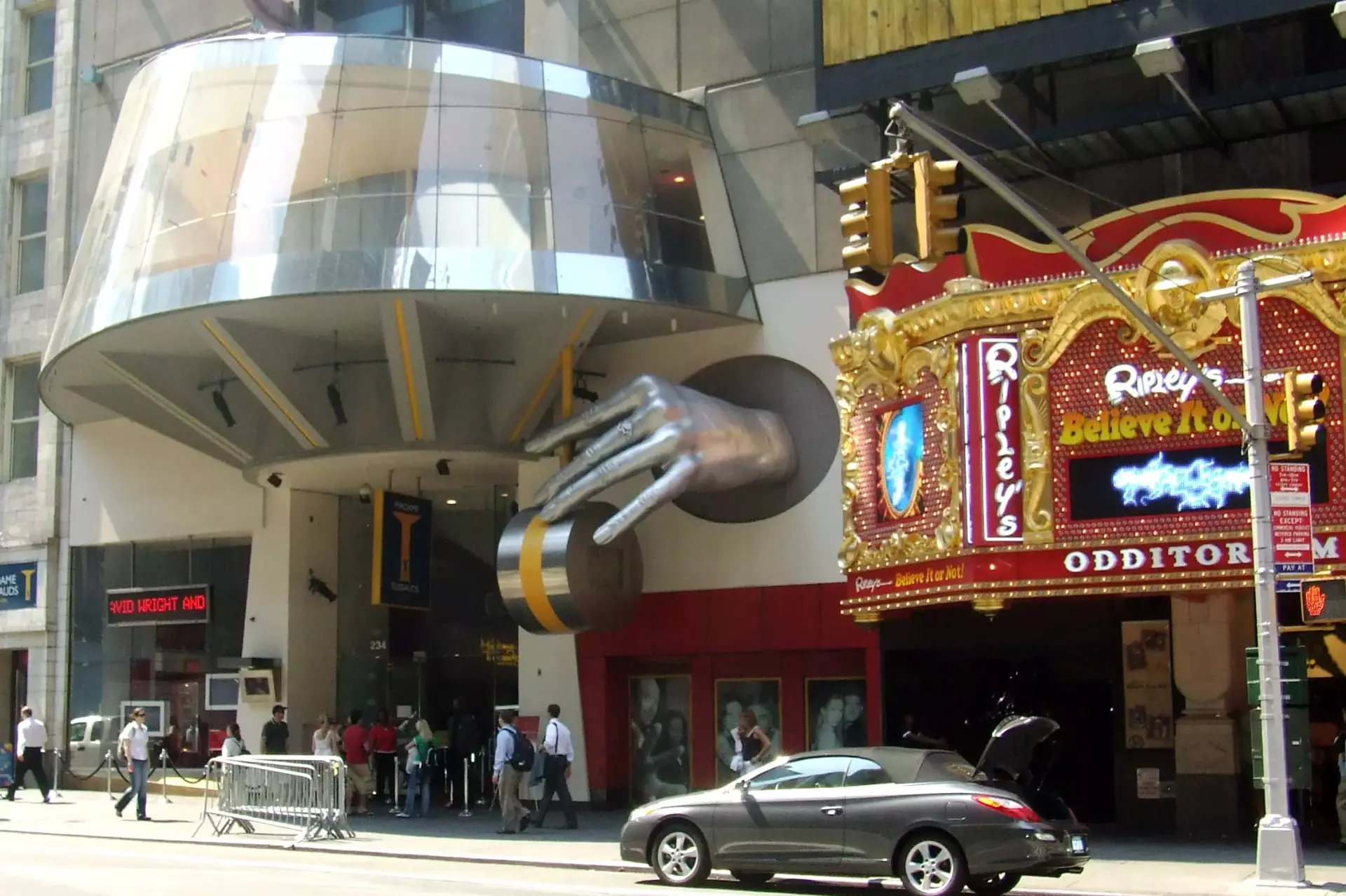
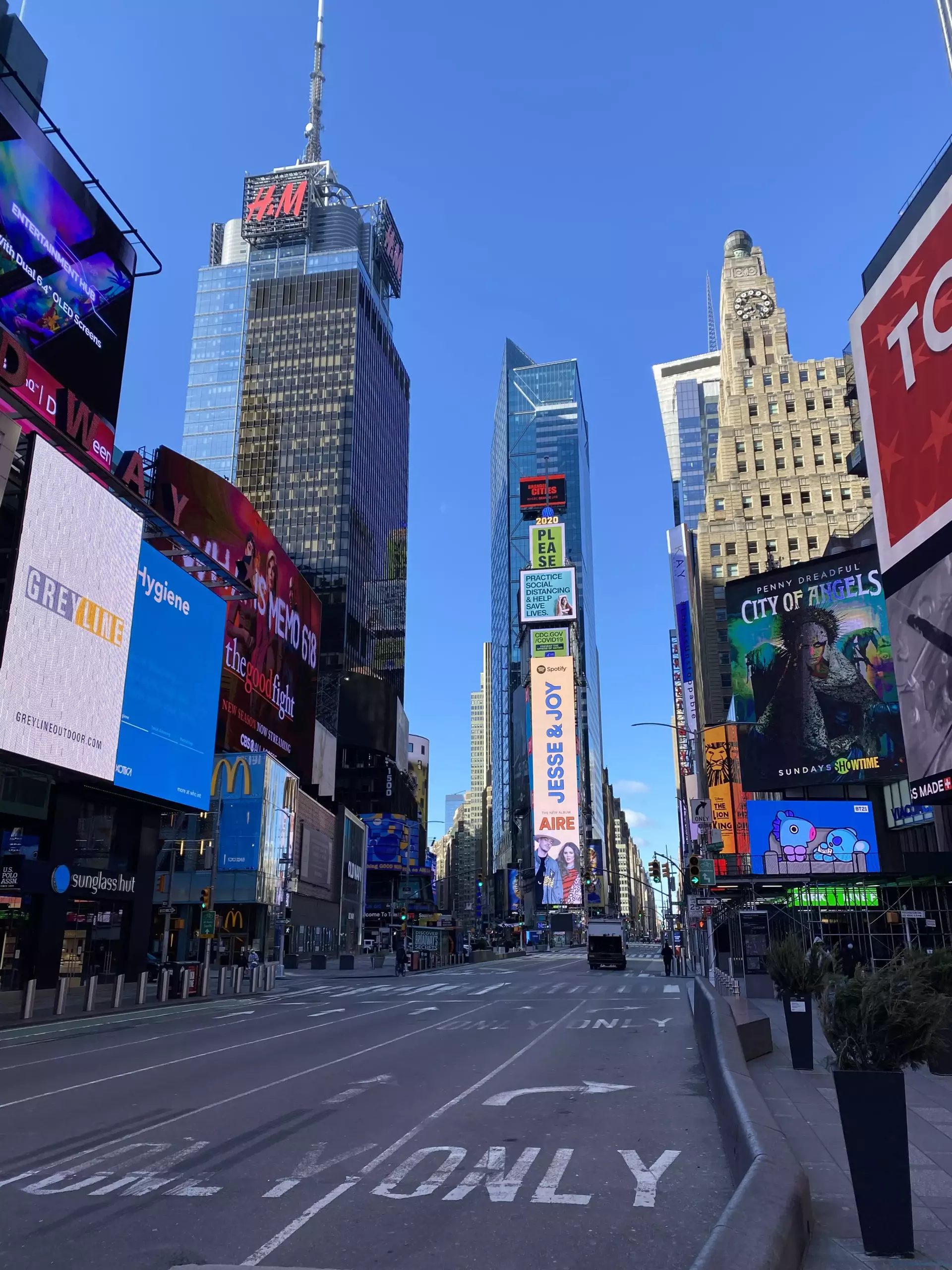
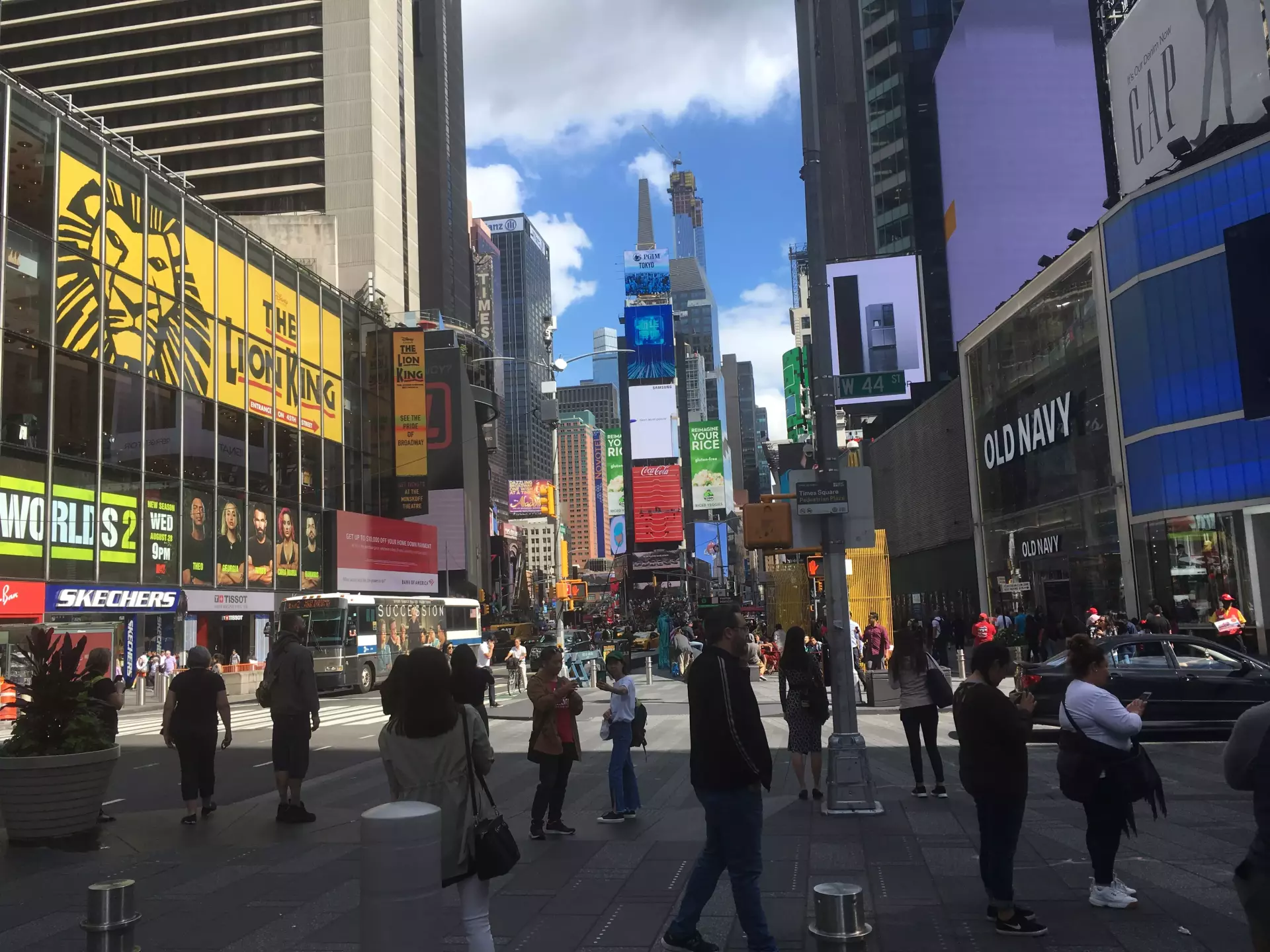
Times Square is a dazzling spectacle of video screens, LED signs, and flashing lights. Depending on who you ask, it can be seen as either a captivating world wonder or a bustling tourist hub. Today, Times Square is known for its family-friendly attractions, featuring themed restaurants, theaters, and hotels. It has also emerged as a significant business district.
While the vivid lights can be appreciated at any hour, visiting Times Square at night offers an especially mesmerizing experience. The whole area comes alive as the signs and screens burst into vibrant colors. Among its many claims to fame, Times Square is celebrated worldwide for the iconic New Year's Eve ball drop that draws thousands of visitors each year.
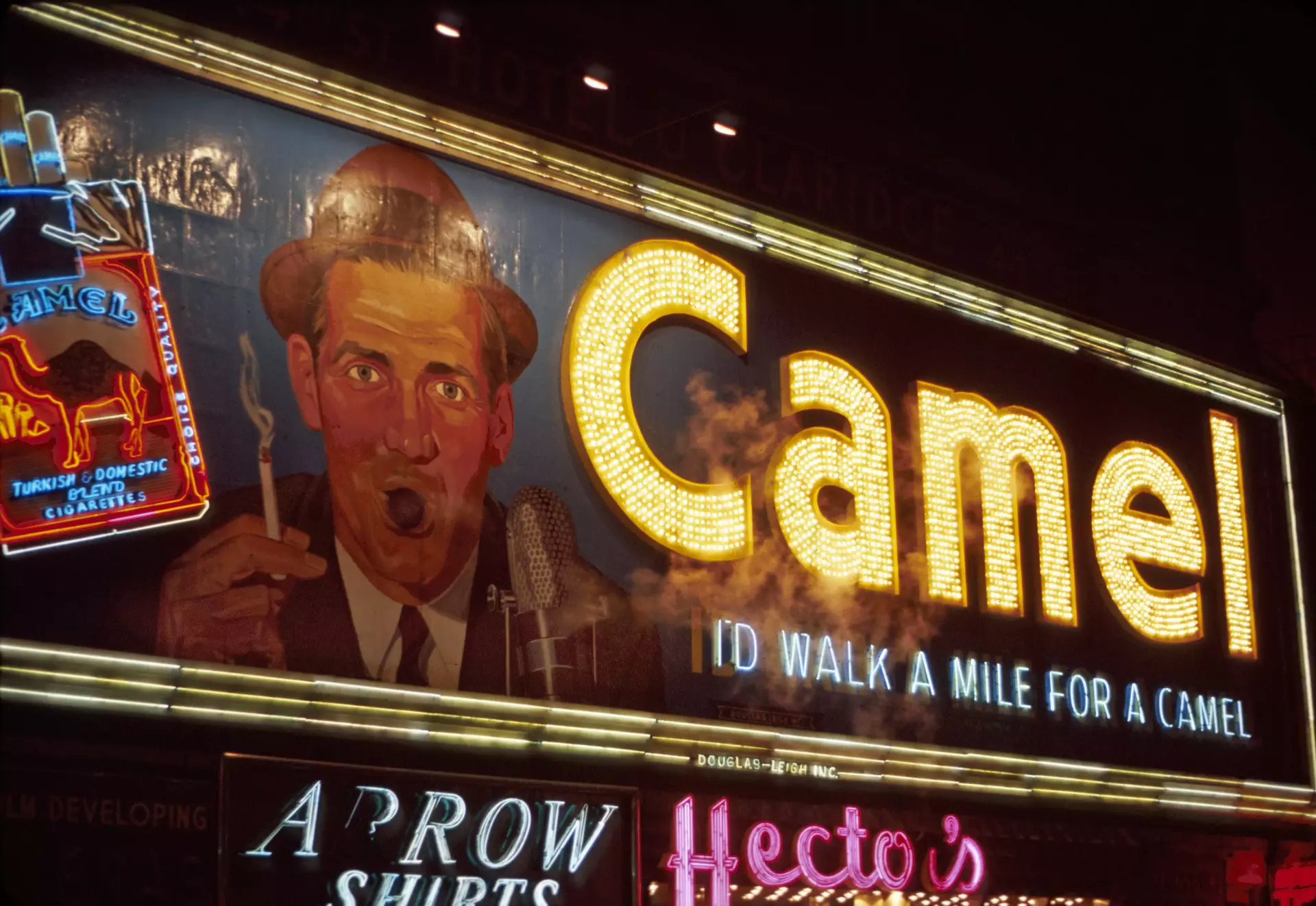
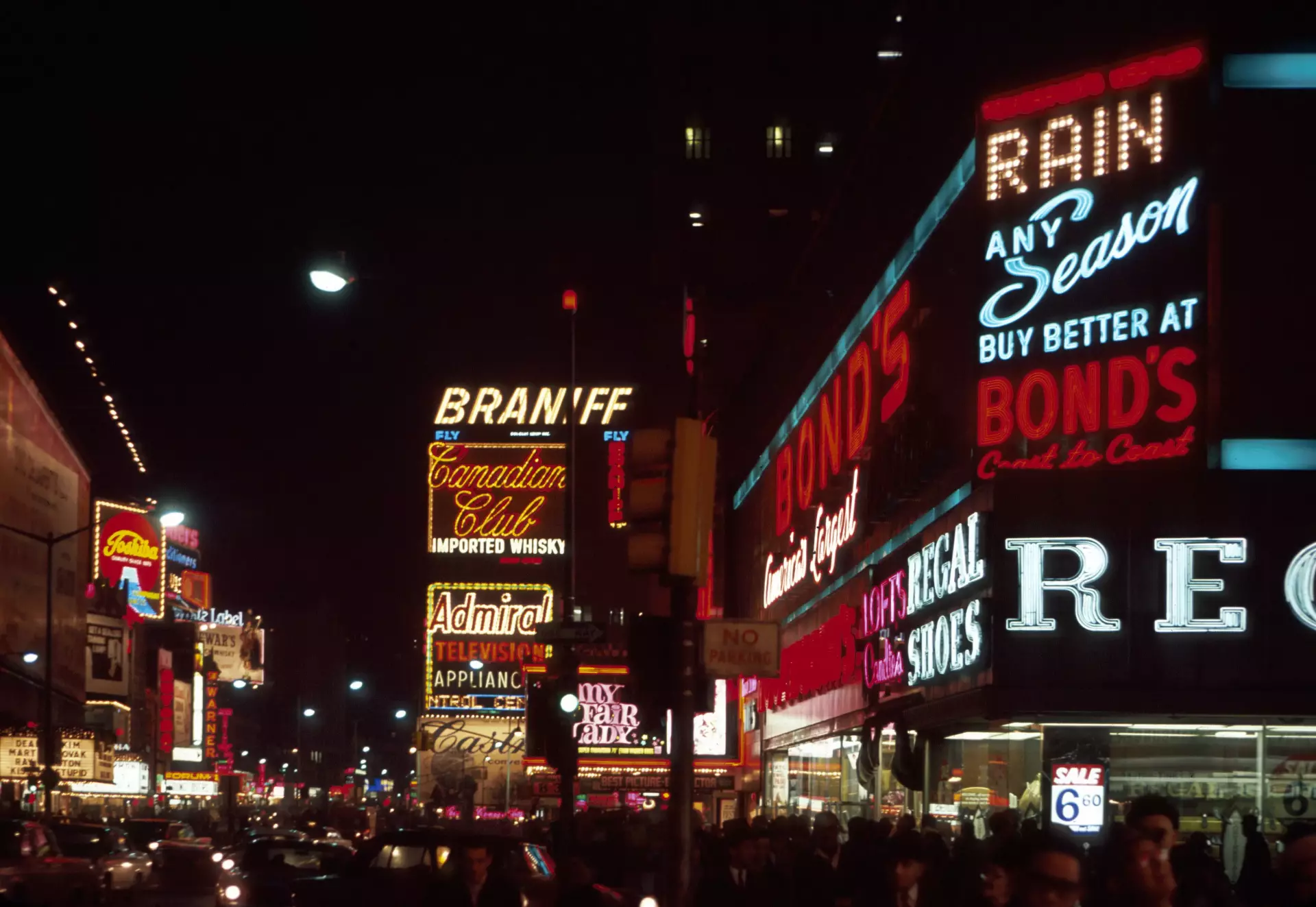
For those curious about the grittier Times Square of the past, traces of it can still be found near the Port Authority Bus Terminal and on Eighth Avenue to the west. Despite the area's transformation, these parts retain some character of the bygone era.
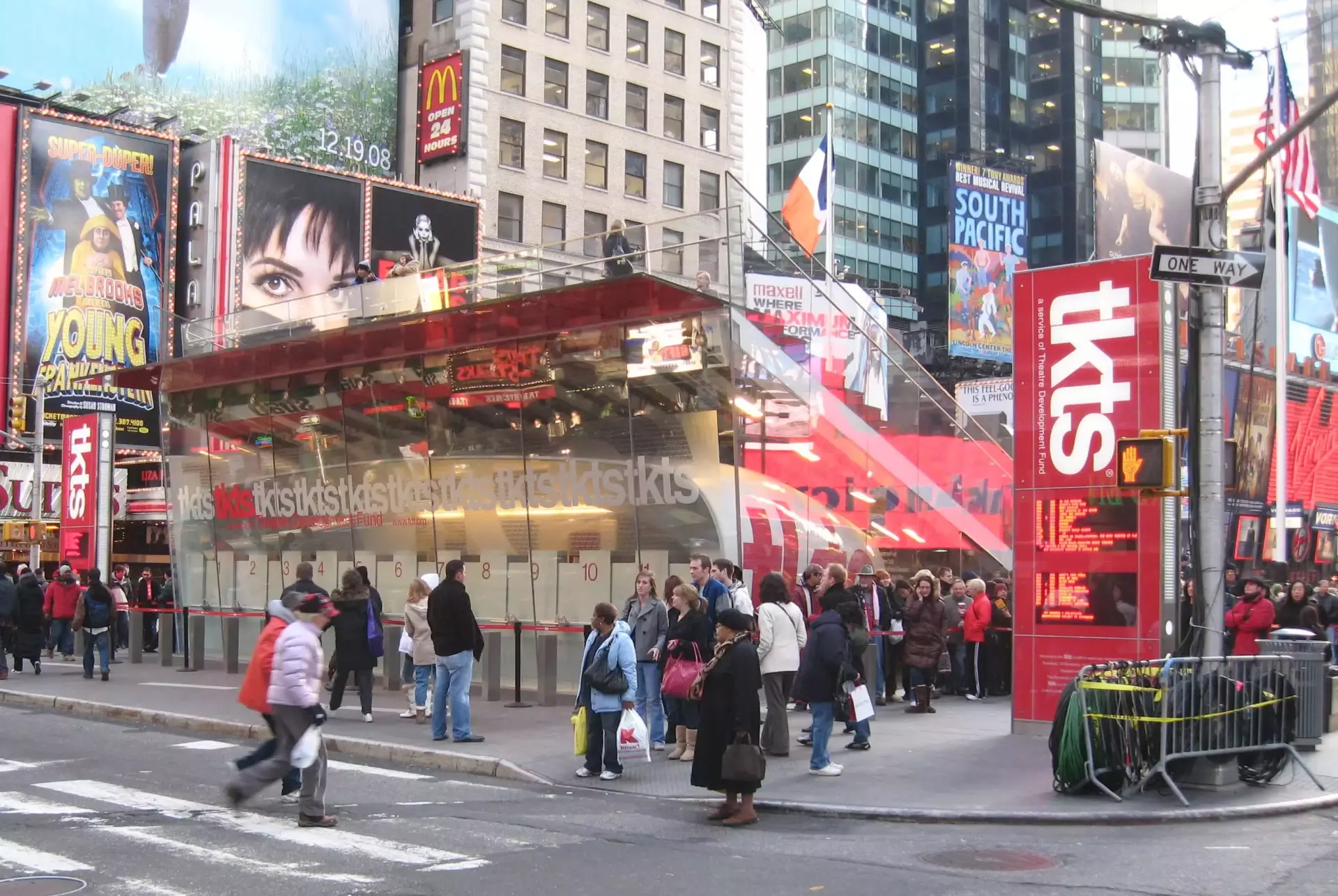
The TKTS Booth in Times Square offers discounted tickets for Broadway and off-Broadway shows, attracting theater enthusiasts looking for a good deal. Yet, there's more to this booth than affordable tickets. Behind it lies a striking red-lit glass staircase, serving as an elevated viewpoint. From these "bleachers," visitors can escape the street's bustle and enjoy a unique vantage point of the crowd and the endless flickering lights.
Above the booth, a video screen provides a live feed of the top step, offering passersby a fleeting chance to see themselves on one of the many displays that define Times Square.
When One Times Square was unveiled in 1905, it stood as the second-tallest building in the world. Originally built to house The New York Times, it served this purpose for less than a decade. Despite its brief tenure as a newspaper headquarters, the building remains a landmark for its role in the annual New Year's Eve ball drop.
Another notable feature of One Times Square is the famous Dow Jones news and sports ticker, the first of its kind. This news zipper, attached to the building's lower facade, continues to capture the attention of onlookers, broadcasting live updates to the many who pass by daily.
Source - https://en.wikipedia.org/wiki/Times_Square
The historic building with the distinctive, iconic twin towers and a star-studded housing cooperative board. Built in 1930 in a vaguely Art Deco style to the design of Emery Roth, the San Remo actually has two separate addresses, lobbies and sets of shafts, each for a half of the building topped with a tower.
So named in 1981 in memory of John Lennon, the former Beatle, who was murdered close by outside his home in the Dakota building. Lennon's widow Yoko Ono, who still lives in the Dakota, subsequently donated $1 million to upgrade the area with hundreds of tree and flower species, including strawberries. The area serves as a Garden of Peace and includes a memorial floor mosaic (donated by the Italian city of Naples) that says simply "Imagine", referring to the title of one of Lennon's evocative songs.
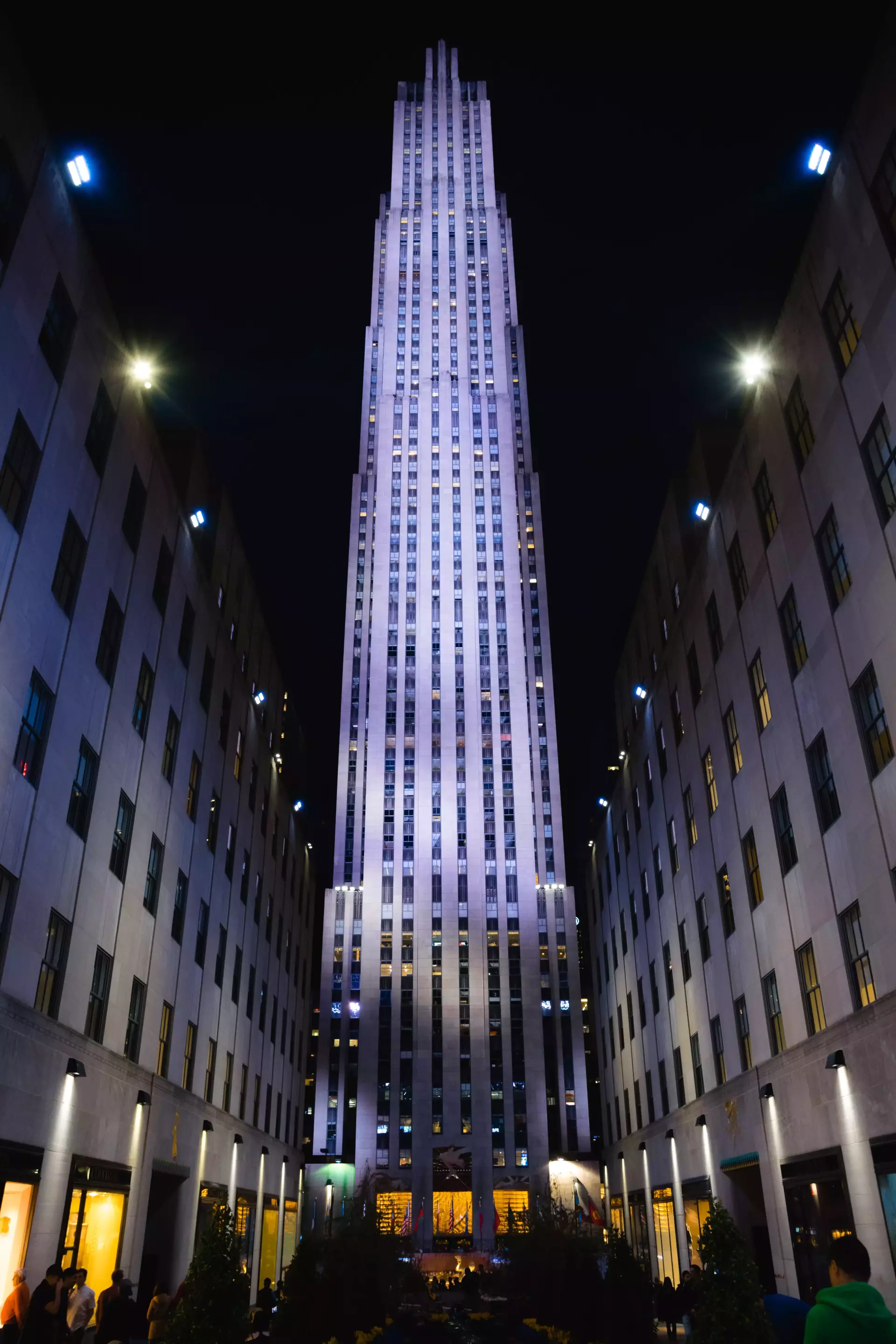
The Christmas Tree, the Skating Rink, NBC Studios, the shops and hubbub - you can't miss it. The Christmas Tree and the Skating Rink are naturally not year round, but in the summer, the complex is a hub for touristy operations. Within the striking Art Deco buildings of the complex are several dining establishments overlooking the area and many stores. See the Rockettes, another show, or just tour the famous Art Deco masterpiece. On the 70th floor of the Comcast Building (better known by some as "30 Rock") is this narrow observation deck, built to resemble the deck of a cruise ship. The deck affords uninterrupted views over Central Park to the north and across Midtown to the south.
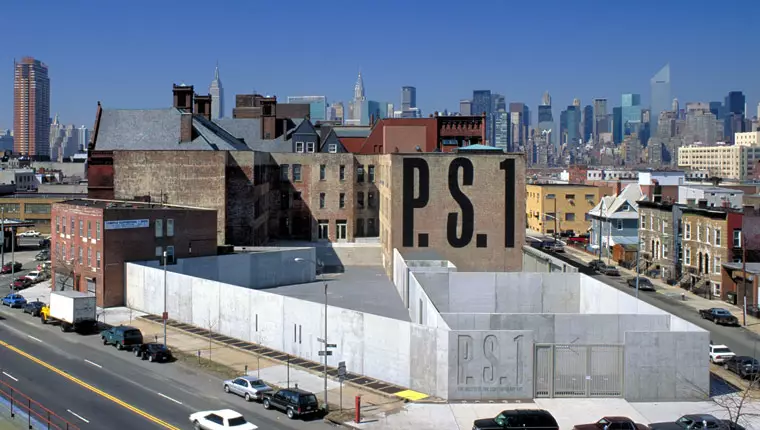
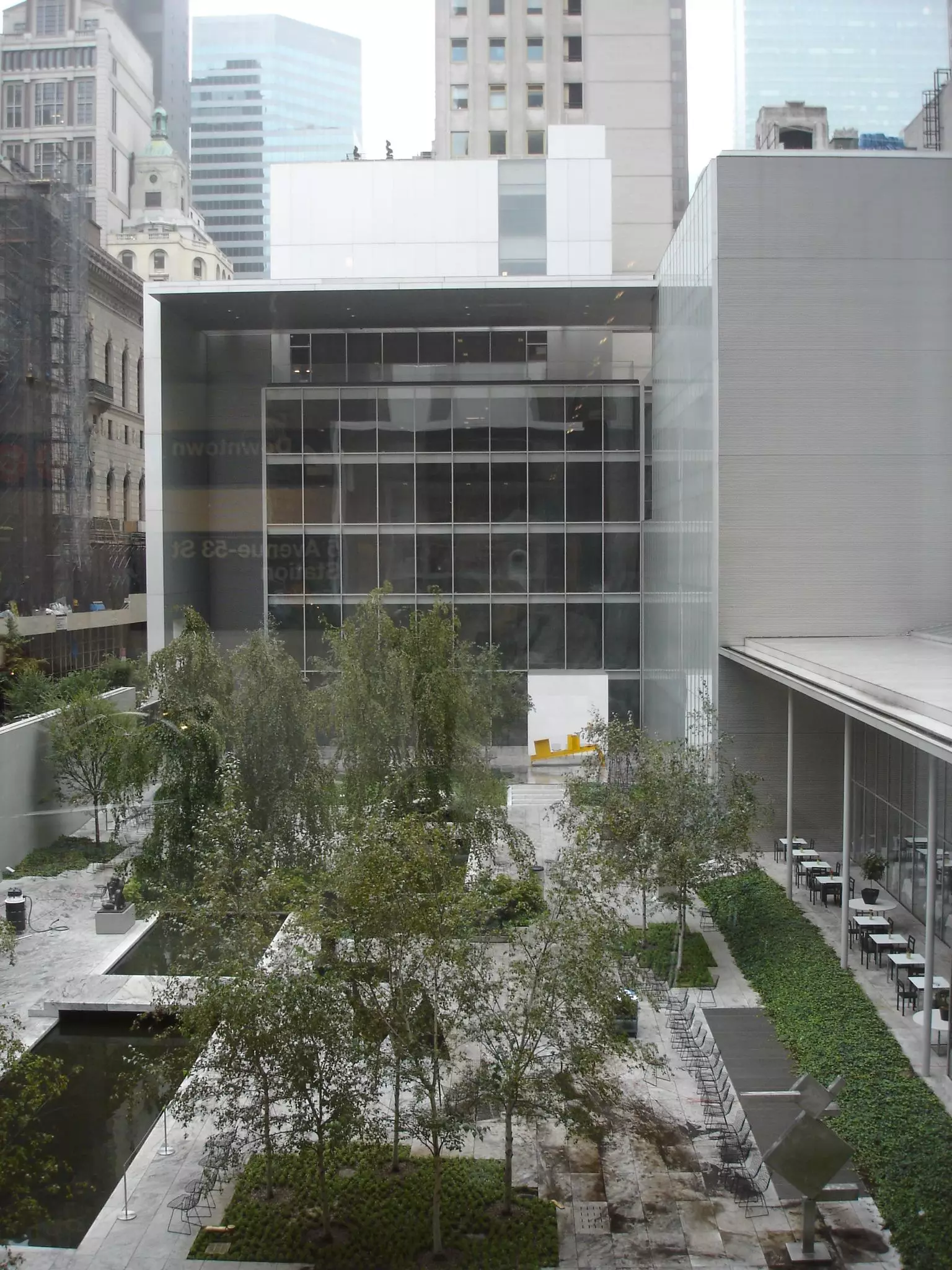
Supported by the Museum of Modern Art, this innovative (and cheap) contemporary art museum is in a former public school building. The conversion left most of the original features of the school - the large ex-classrooms are perfect for installations - and the bathrooms are a blast from the past. P.S.1 is a few blocks south on Jackson Avenue from the Citibank tower; the entrance is a concrete slab (how fitting) which occludes view of the school itself. P.S.1 also has a nice cafe and outdoor seats.
Housed in the Alexander Hamilton US Custom House, this Smithsonian museum is the New York branch of the National Museum of the American Indian (the other branches are in Washington, D.C. and Maryland).
A museum dedicated to the history of the NYPD.
A visual arts center featuring the Panorama of the City of New York, a large architectural scale model of New York City. Originally built for the 1964 World’s Fair, the 9,335 ft² (867.2 m2) display depicts all 895,000 of the city's buildings (excluding Far Rockaway due to space limitations). It was last fully updated in 1992 and select newer buildings are added on an ongoing basis. The Twin Towers of the original World Trade Center remain in place. In addition to the Panorama, the museum has several other exhibits, including items related to the 1939 and 1964 World's Fairs, Tiffany glass, and various 20th-century artworks.
One of Manhattan's favorite meeting points, the centerpiece of this Terrace is the Angel of the Waters fountain, dedicated in 1873 and an enduring icon of the park.
A sort of mini forest, described by its designer as a "wild garden," the Ramble is sculpted out of a wooded hillside, with winding paths, rocky outcrops, secluded glades, and a tumbling stream. If one travels through the ramble when the trees are full, it is easy to lose sight of the city's skyscrapers; it's as if you're no longer in Manhattan. The Ramble is also an excellent place to bird watch, with over 250 species of birds that stop here on their migration.
This pretty 17-story Beaux Arts building was completed in 1904 and designed to be New York City's first air conditioned hotel. It was a residential hotel, and housed a number of very famous people, including the Hall of Fame baseball player, Babe Ruth; the Italian tenor, Enrico Caruso; the modernist composer, Igor Stravinsky; the Italian conductor of the NBC Symphony, Arturo Toscanini; and writers Theodore Dreiser and Isaac Bashevis Singer. The building is now a condominium.
See the Rockettes, another show, or just tour the famous Art Deco masterpiece.
This pretty building was built as Brooklyn's city hall in 1851 and is still a very significant official building in very active use.
The former home of steel baron Henry Clay Frick, this sprawling mansion is filled with Frick's enormous personal art collection, displayed as he left it. It's worth a visit for the house alone, which is explained nicely in the audio tour. The collection is impressive, including works by Whistler, Corot, El Greco, Turner, Renoir and Rembrandt.
The One World Trade Center skyscraper rises 1,776 feet above the street and is the tallest building in the United States (and for that matter, the Western Hemisphere). Despite its colossal size, its simple design allows it to blend remarkably well into the Lower Manhattan skyline. An observation deck on the top floors offers 360-degree views of the city.
Governors Island has a long military history, home to headquarters and military posts of the United States Army from 1794 until 1966, then a complex for the U.S. Coast Guard before becoming a historic district open to tours.
A famous Ivy League college that has existed since British colonial times, when it was called King's College.
Kingsland Homestead is a historic home, built by Charles Doughty around 1774. It is now a museum with exhibits about the Victorian era, the slavery in Queens, and how Queens was affected by World War II.
A large and historically important Protestant church and center of progressive social activism. Also neo-Gothic.