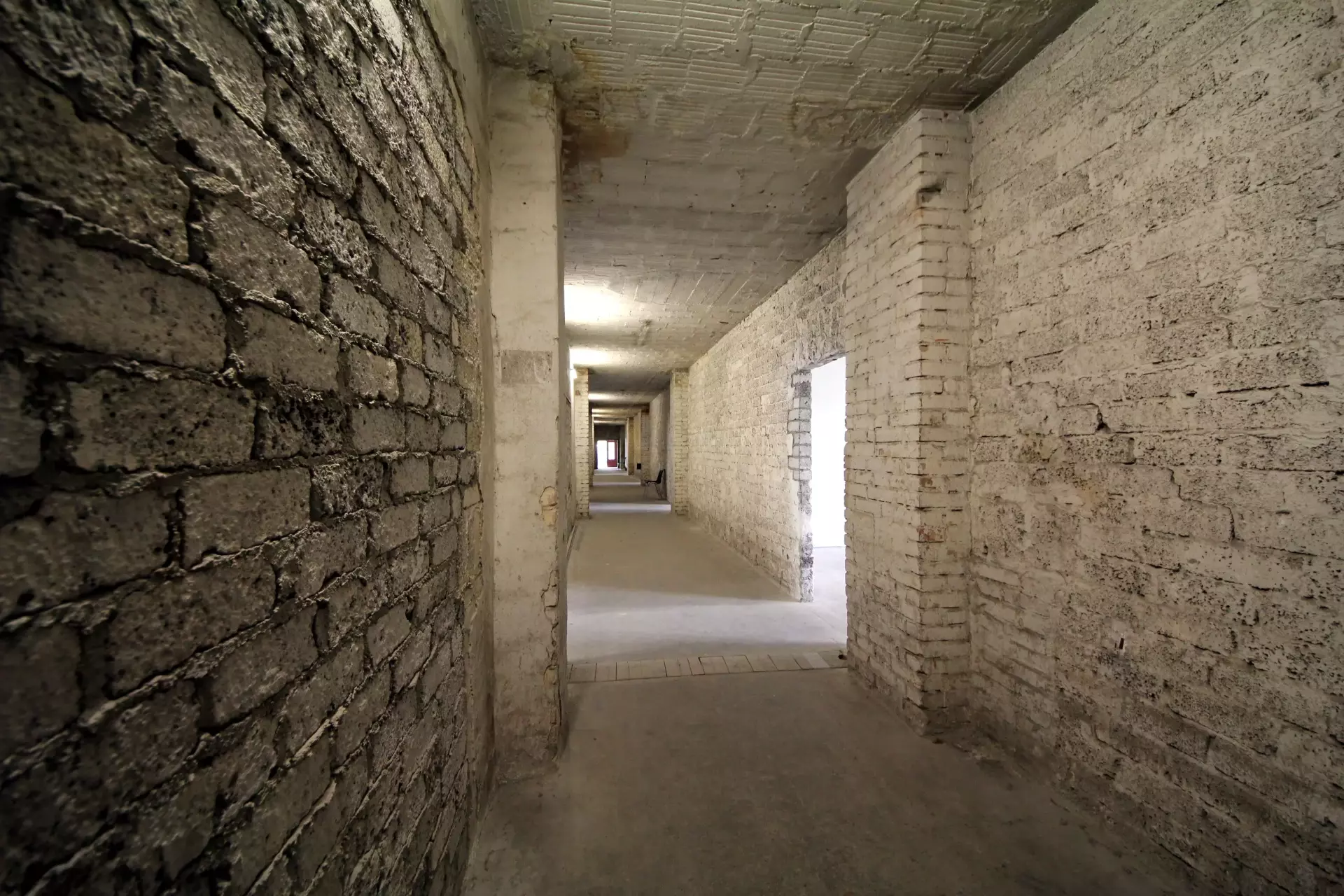
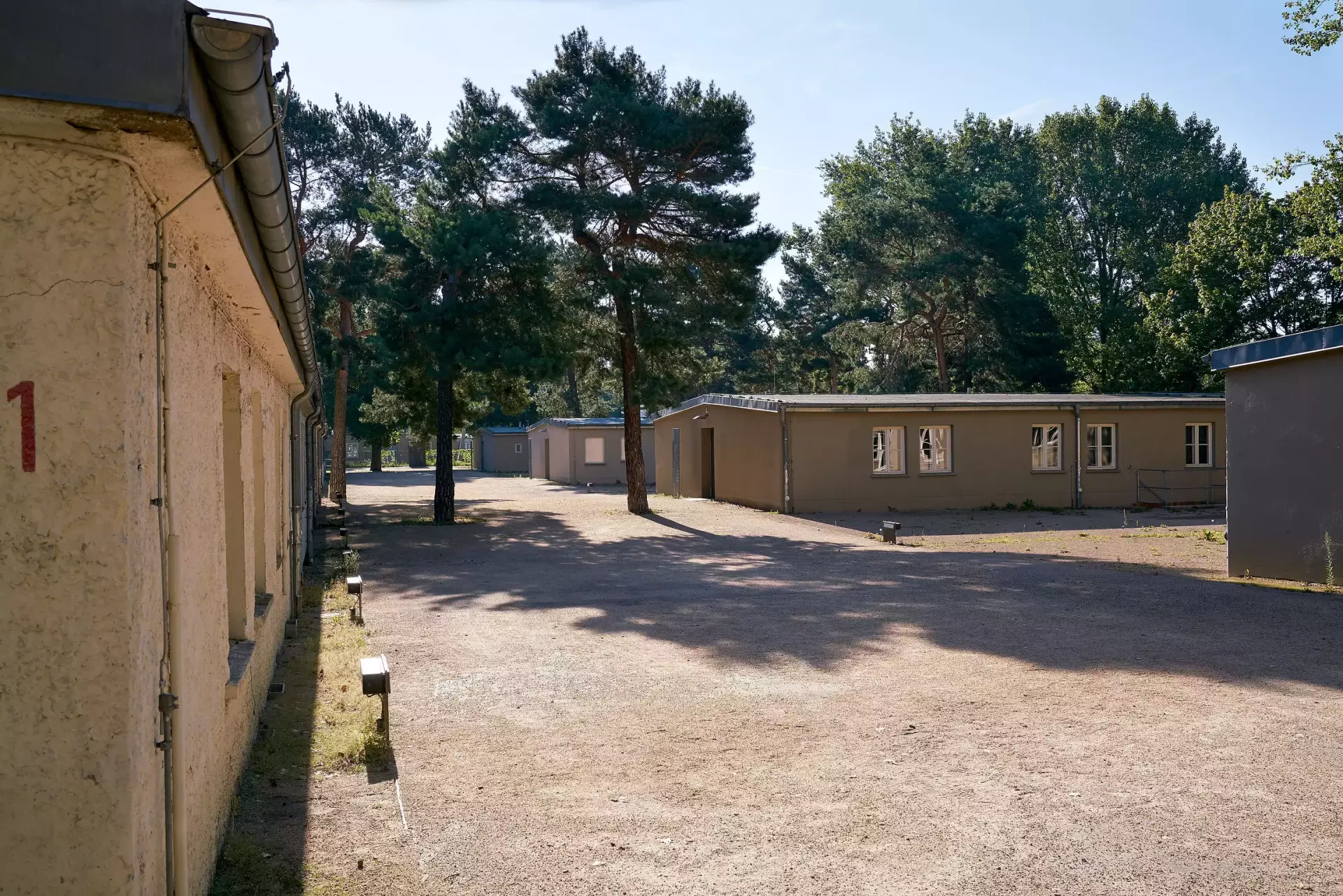
The former forced labor camp on Britzer Straße in Schöneweide is one of Berlin’s rare, intact historical sites from the Second World War. Built between 1943 and 1945, the camp once held thirteen housing barracks. Today, eleven of these original buildings still stand, offering a striking look at the scale and structure of the site.
The surviving barracks form a complete ensemble, unusual in a city where many wartime structures were destroyed or altered. The layout, spacing, and simple construction are directly visible, making it easier to understand how the camp was organized. The preservation of so many buildings in one place allows a clear view of daily life as it was imposed on forced laborers during the Nazi era.
Six barracks on the western side of the former camp are part of the Documentation Center on Nazi Forced Labor. These buildings host exhibitions and educational spaces that explore the system of forced labor under National Socialism, the stories of those who were deported and exploited, and the wider wartime economy that relied on their work. The remaining barracks on the grounds help maintain the original context, giving visitors a sense of the site’s size and function within Berlin’s wartime landscape.
Source - https://en.wikipedia.org/wiki/Nazi_Forced_Labour_Documentation_Centre
Berlin's biggest lake and popular resort for bathing and watersports. You can also travel there by tram, which is an experience by itself.
The building houses the personal offices of the Chancellor and the Chancellery staff. The Berlin Chancellery is one of the largest government headquarters buildings in the world. By comparison, the new Chancellery building is ten times the size of the White House. A semi official Chancellor's apartment is on the top floor of the building. The 200-m², two-room flat has thus far only been occupied by Gerhard Schröder chancellors since then have lived elsewhere. It is usually not possible to visit the building, but on occasion there are tours, usually around August. The building was deliberately designed in a way to symbolize the German constitutional system - it's in the line of sight of the Bundestag and lower in height, symbolizing the role of parliament in controlling government and "the people's house" being the higher power in the relationship between the two. Or at least that's the idea.
Huge technical museum, on a former railroad depot, featuring from ancient water and wind mills to computer pioneer Konrad Zuse's inventions, a collection of old to new vehicles of all types -bicycles, boats, trains, etc - and the interactive Spectrum science center with various hands-on experiments. There's an actual C-17 "Candy Bomber" airplane hanging on its façade. The railroad and aeronautical sections are hard to beat.
Germany's national centre for contemporary non-European art. The house is a leading centre for the contemporary arts and a venue for projects breaking through artistic boundaries. This architectural landmark was an American contribution to the international building exhibition INTERBAU 1957 as an embodiment of the free exchange of ideas. Colloquially called Schwangere Auster (Pregnant Oyster).
This heritage-protected public bathing beach which opened in 1907 is one of the largest inland lidos in Europe and has a 1275-m-long sand beach, a capacity for up to 30,000 guests and a popular nudist area.
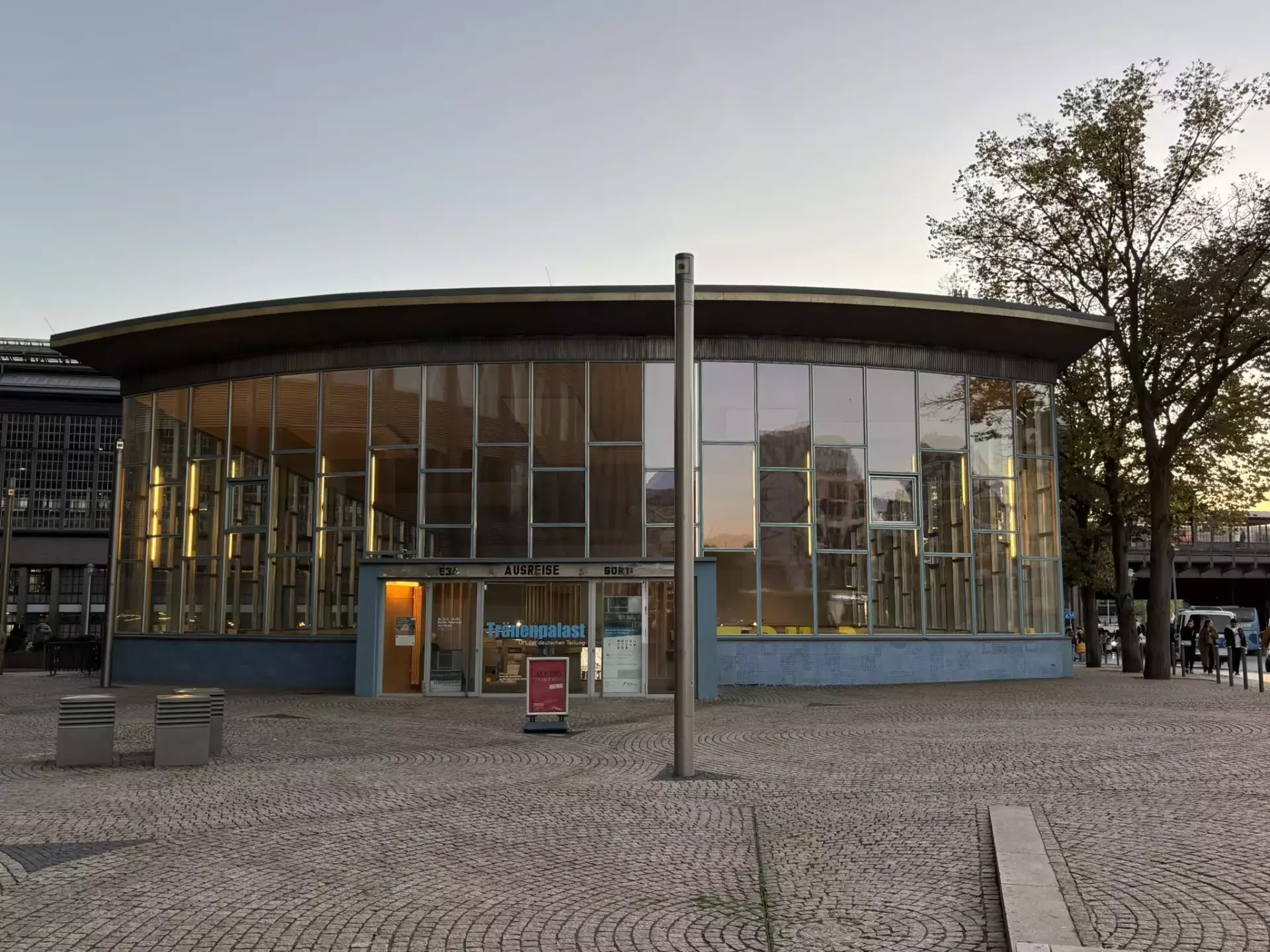
Millions of visitors leaving East Berlin by train said tearful goodbyes to their friends and relatives from the East at this former border checkpoint. Hardly a year after the wall came down, the building was turned into a nightclub until it was forced to close in 2006. It re-opened as a museum in September 2011 and now houses a permanent exhibition that brings the absurd normality of everyday life in the divided city back to life.
More than 30 million objects in the scientific collection and a fascinating exhibition in one of the most significant institutions of its kind in the world. Some parts still under construction.
Became famous from the film named after this street. During the Cold War, the street was split, with one section belonging to East Berlin and one to West Berlin.
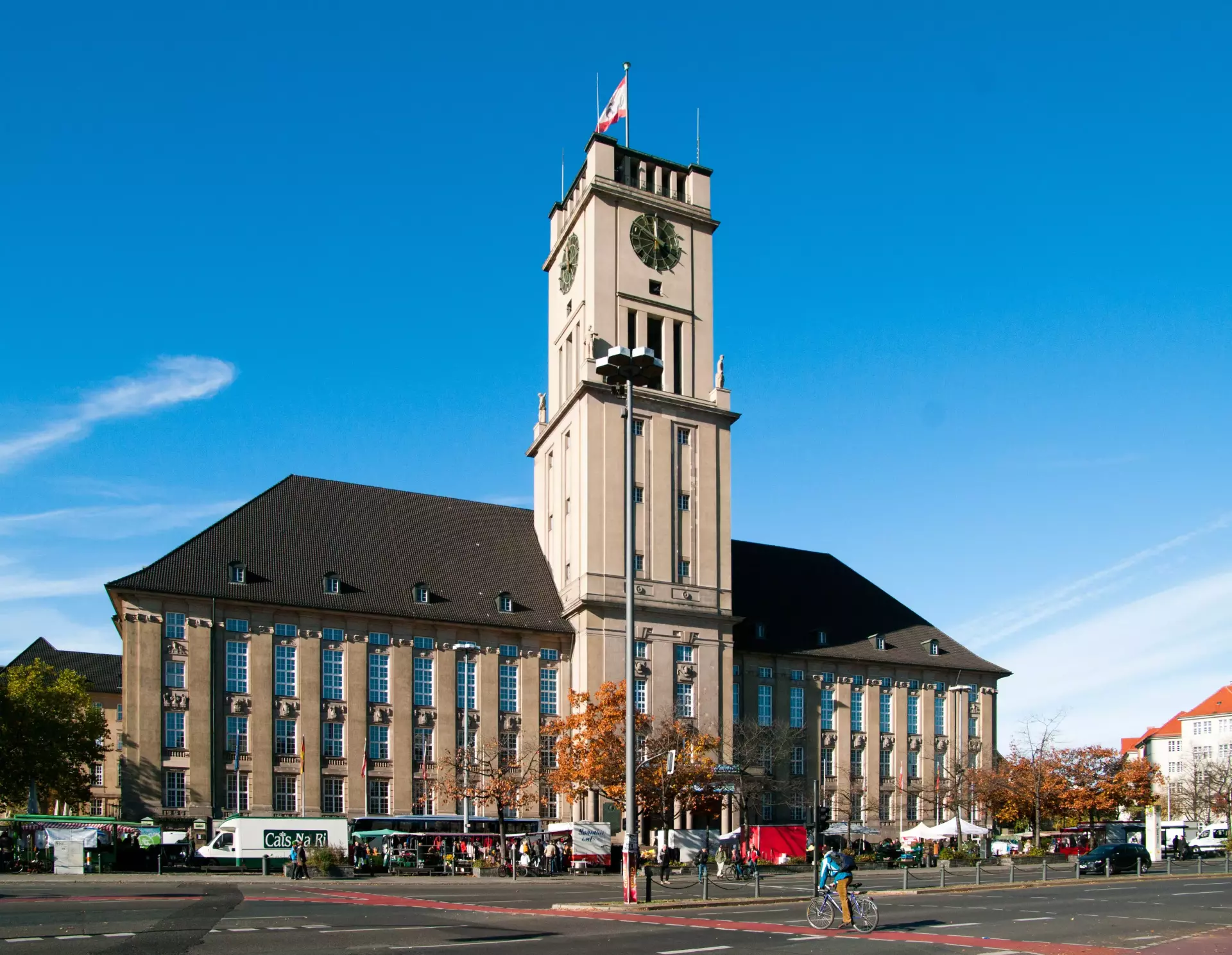
The district town hall was the main town hall for West Berlin during the Cold War. The freedom bell (a present from the American people) and several memorials from that time can be found here. On the main balcony in 1963 U.S. President John F. Kennedy made his famous statement, "All free men, wherever they may live, are citizens of Berlin, and, therefore, as a free man, I take pride in the words ‘Ich bin ein Berliner!’". On 10 November 1989 Helmut Kohl (chancellor (Bundeskanzler) 1982-1998) and Willy Brandt (former Bundeskanzler and mayor of Berlin) cheering the crowd as they saw the end of the Berlin Wall the night before. The town hall is an emotional place for most people in Berlin (especially West Berlin).
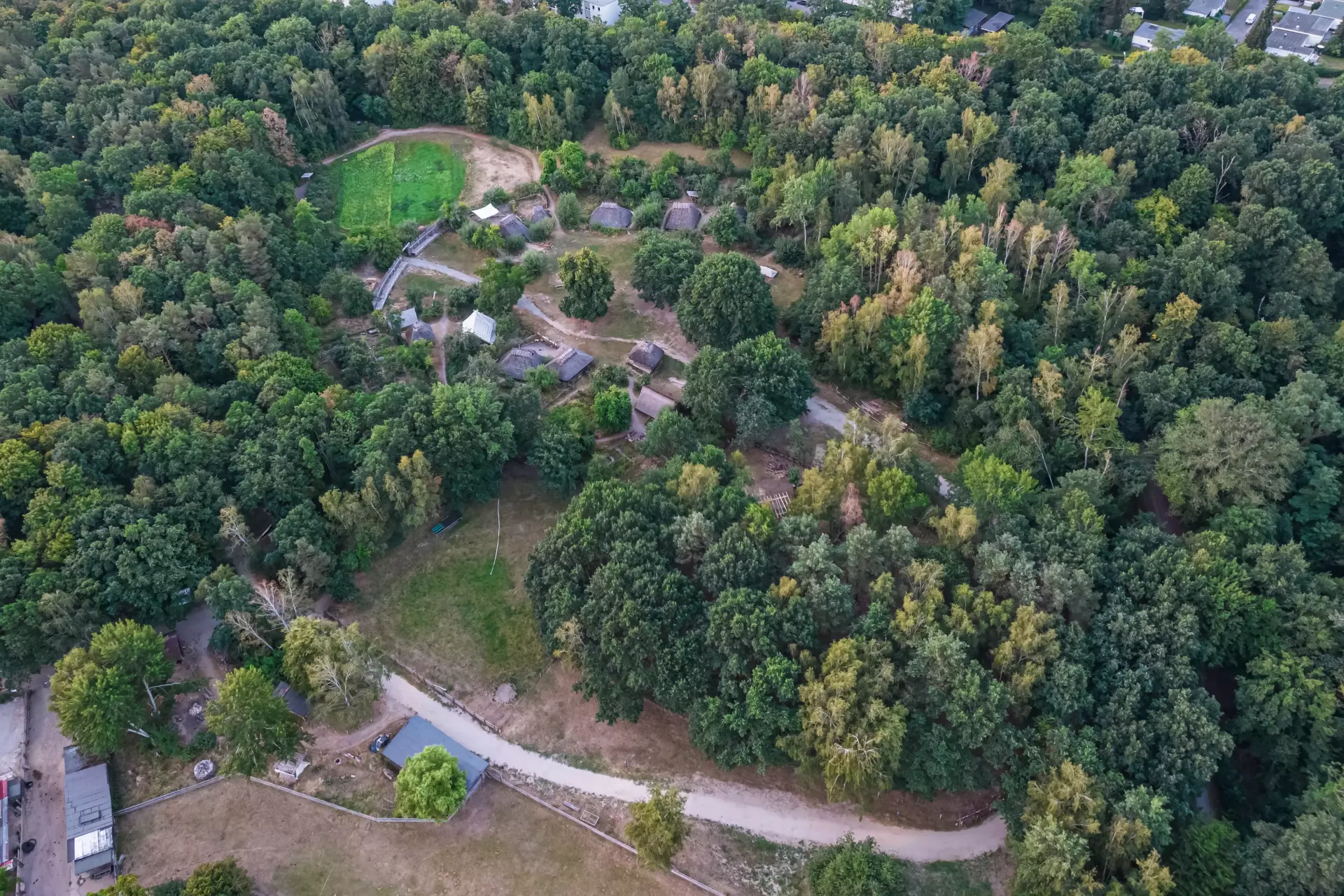
One of the most authentic and oldest villages (1247) in the outskirts of Berlin, it looks the same way it did some hundred years ago. Take S-Bahn 1 to Waidmannslust and then bus 222 to Alt-Lübars.