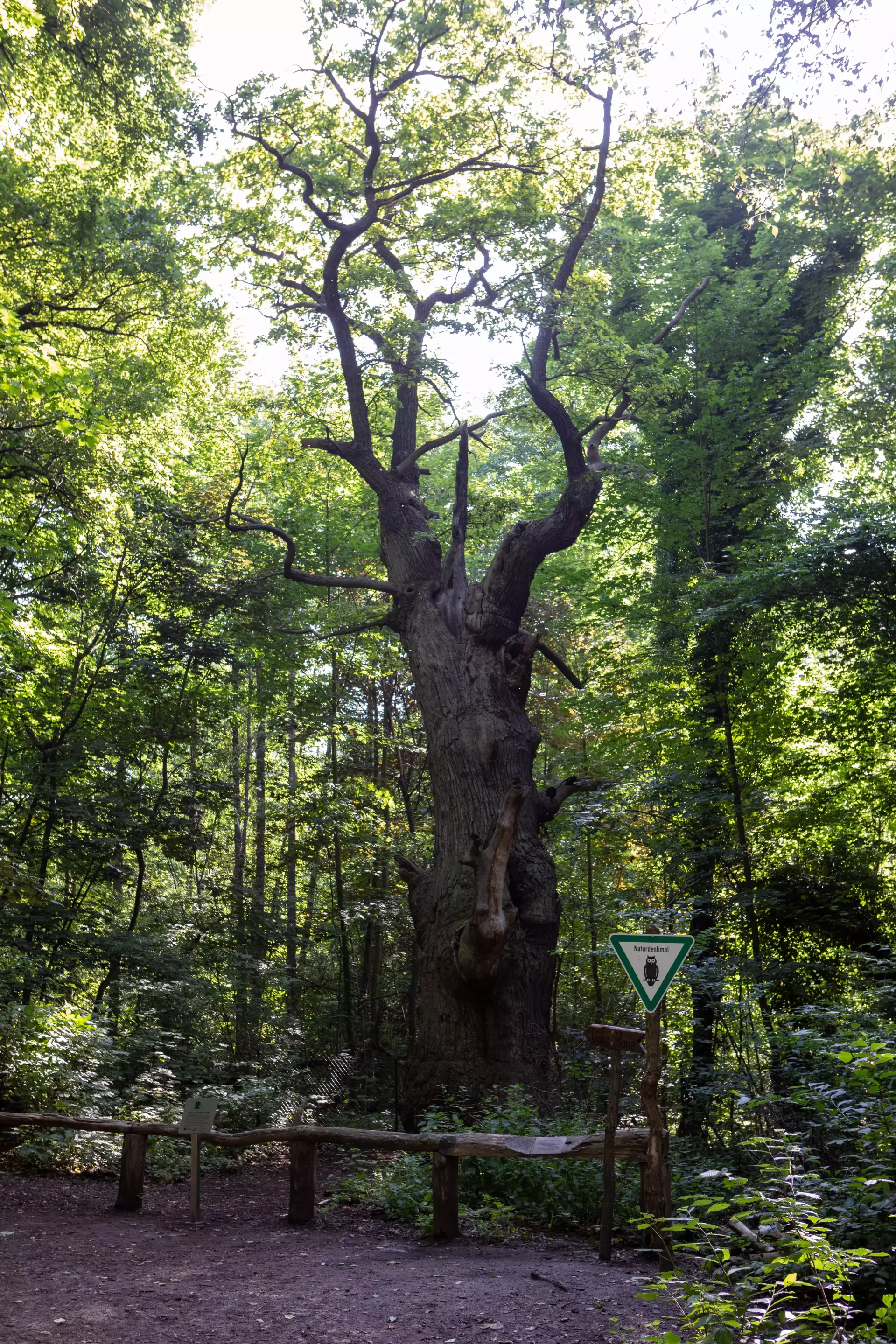
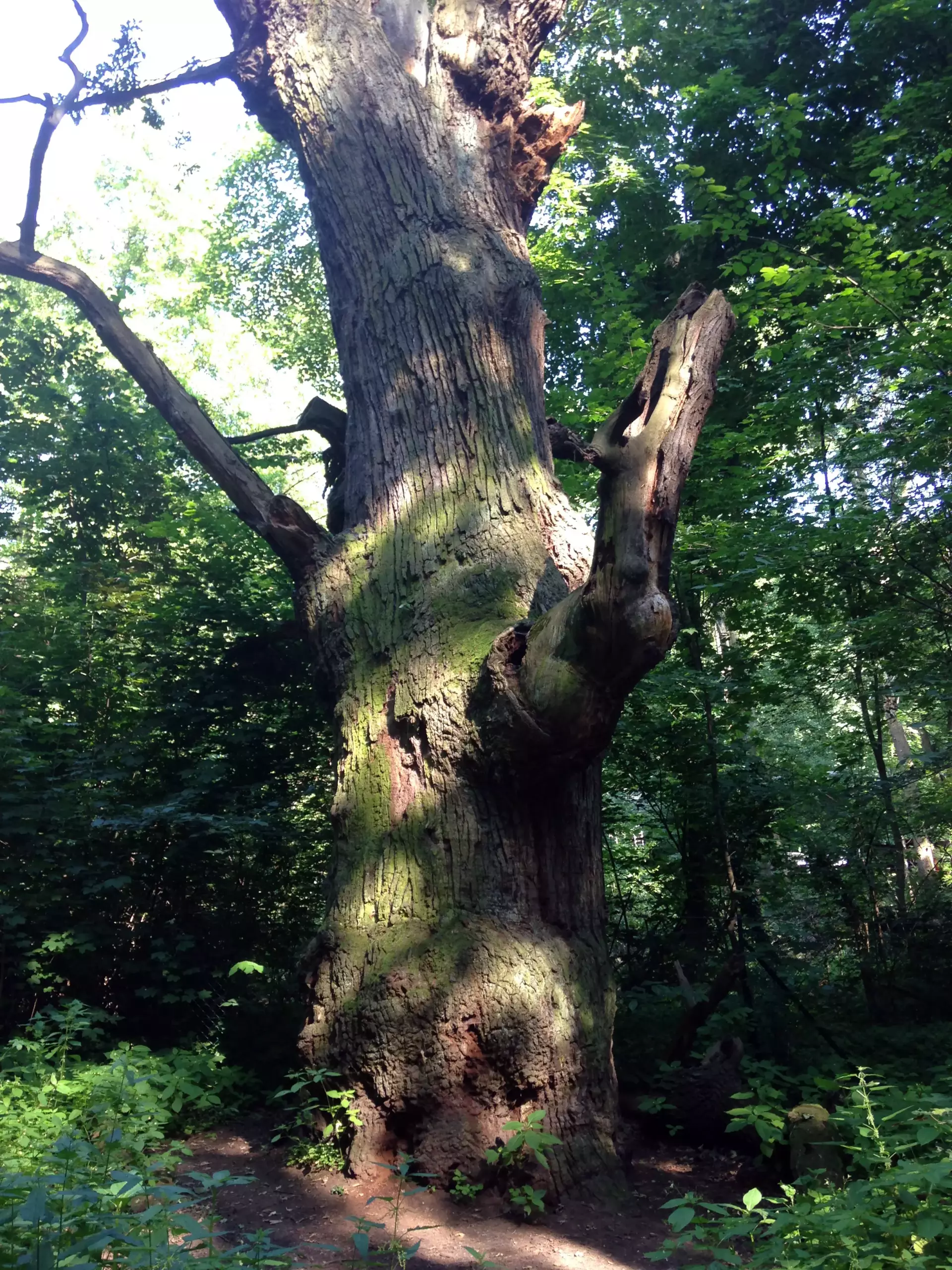
Close to Schloss Tegel, near the waters of the Große Malche, stands a remarkable oak that has watched centuries pass. This tree, known as “Dicke Marie,” is believed to have taken root around 1192—making it older than Berlin itself. Its broad trunk and weathered bark tell a long story of seasons, storms, and quiet summers by the lake.
The name “Dicke Marie,” which translates to “Fat Mary,” is said to come from the Humboldt brothers, who grew up nearby. According to local lore, they named the oak after their family’s overweight cook. The nickname stuck, and today it adds a playful note to the tree’s long history.
Dicke Marie stands as a living landmark in the Tegel area—an anchor point in the landscape that links modern Berlin to a distant past. Visitors pause to take in its size and age, often imagining how the surroundings have changed while the oak continued to grow, season after season.
Jewish cemetery and lapidarium with old tombstones.
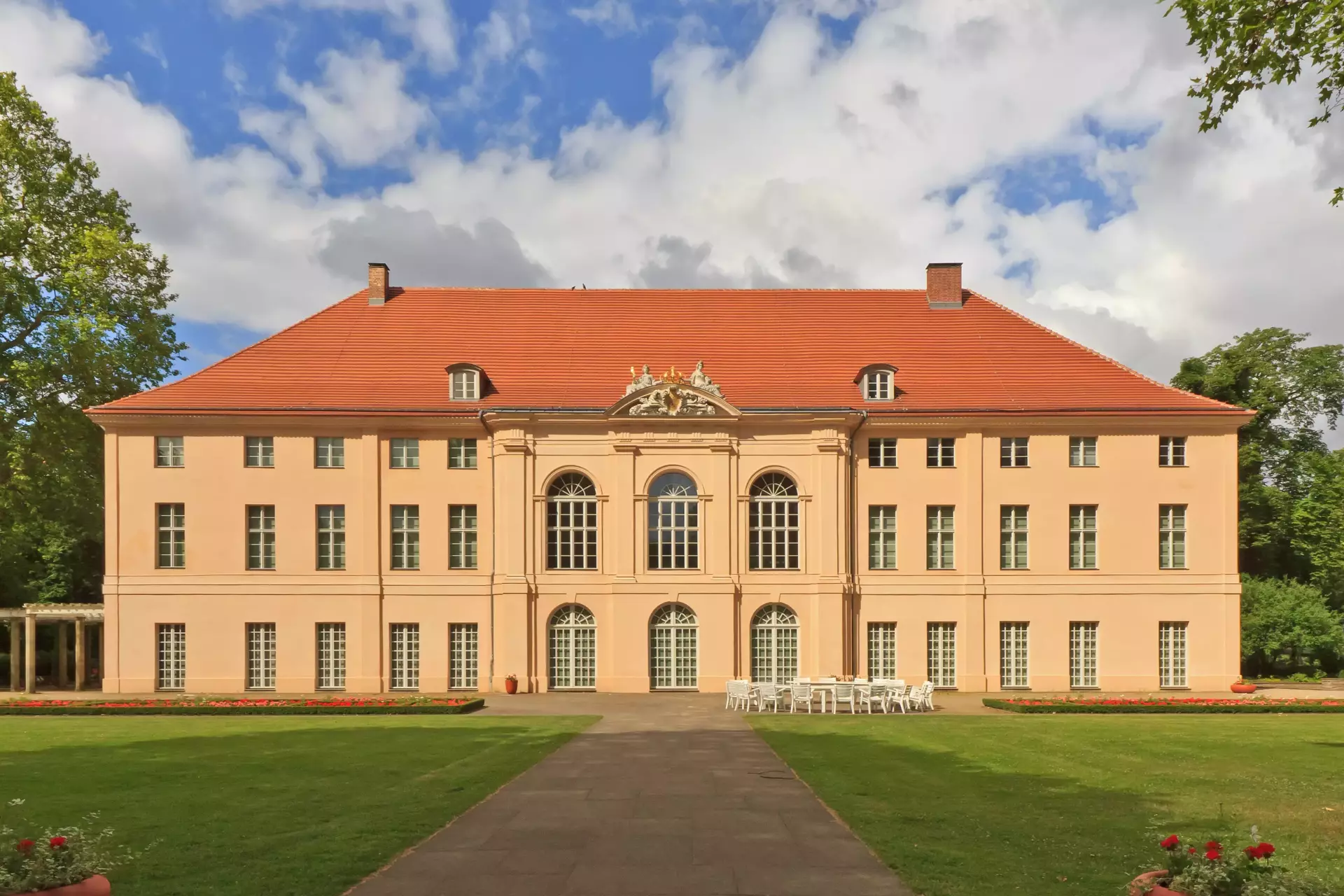
The charming Baroque water palace of the Hohenzollern electors surrounded by the Dahme river and an English garden.
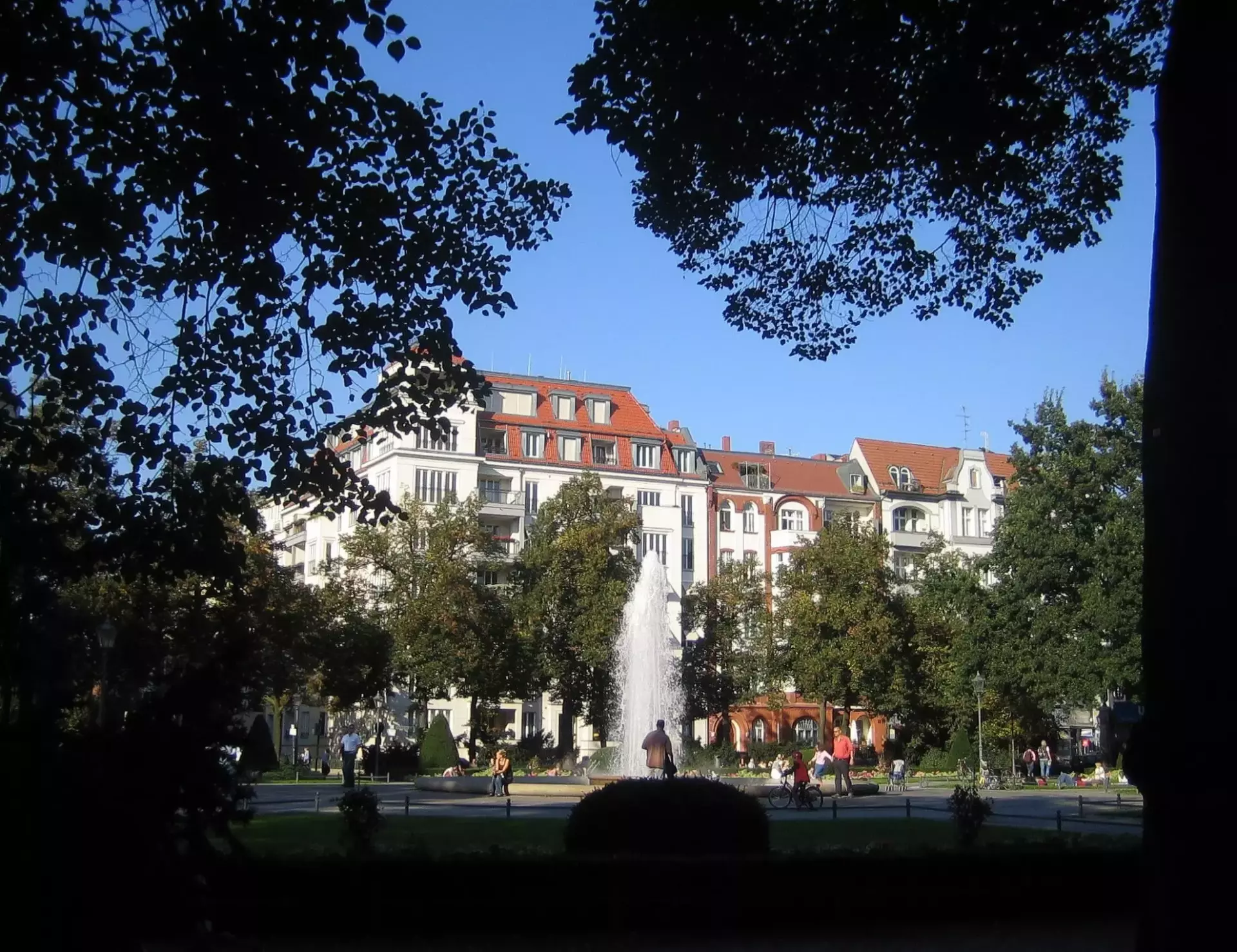
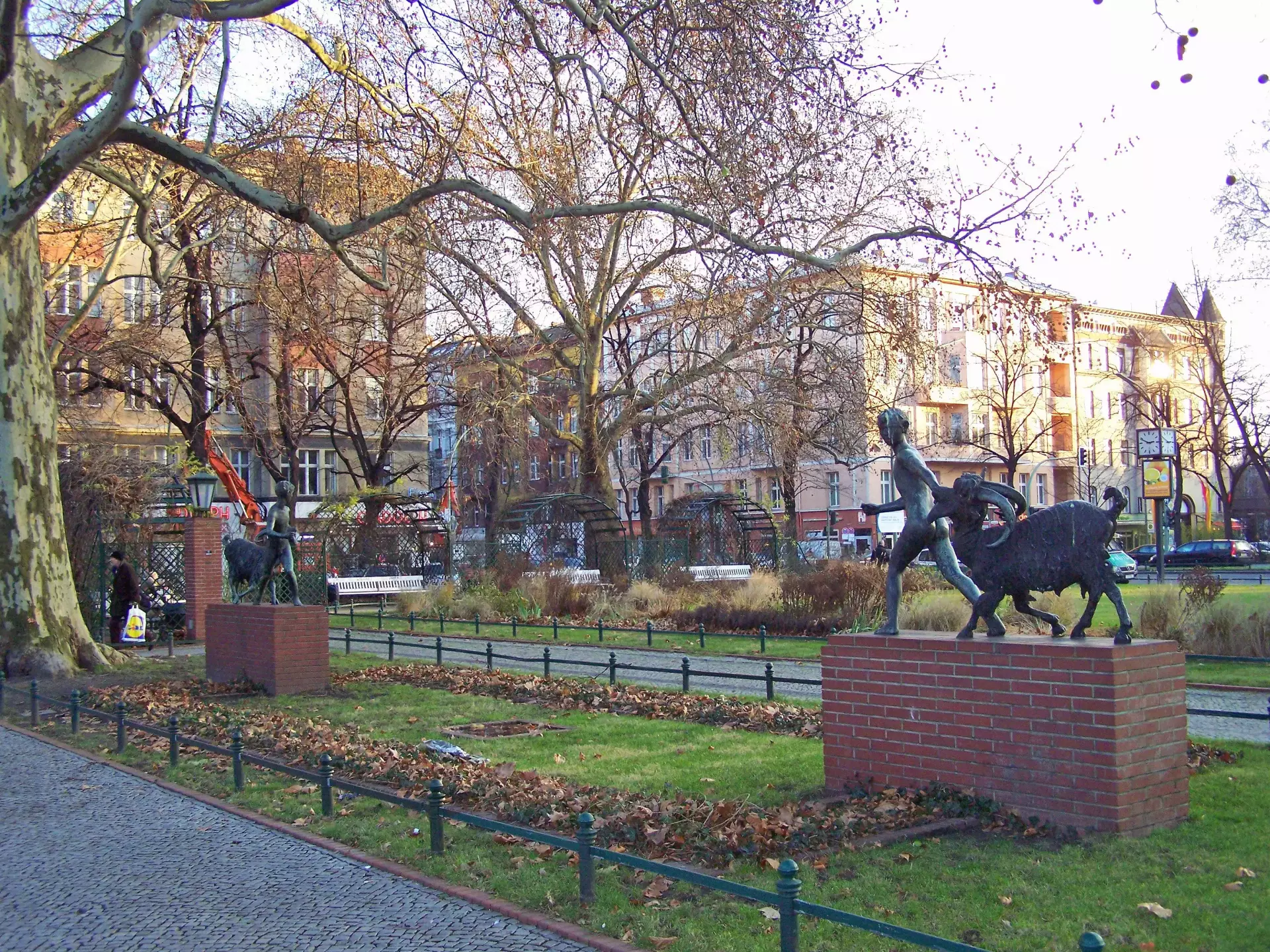
In 1893 the authorities of Berlin issued the artistic entrance to the National Park Friedrichshain. The fountain of fairy tales was commissioned by the National Park and later designed by Ludwig Hoffmann.
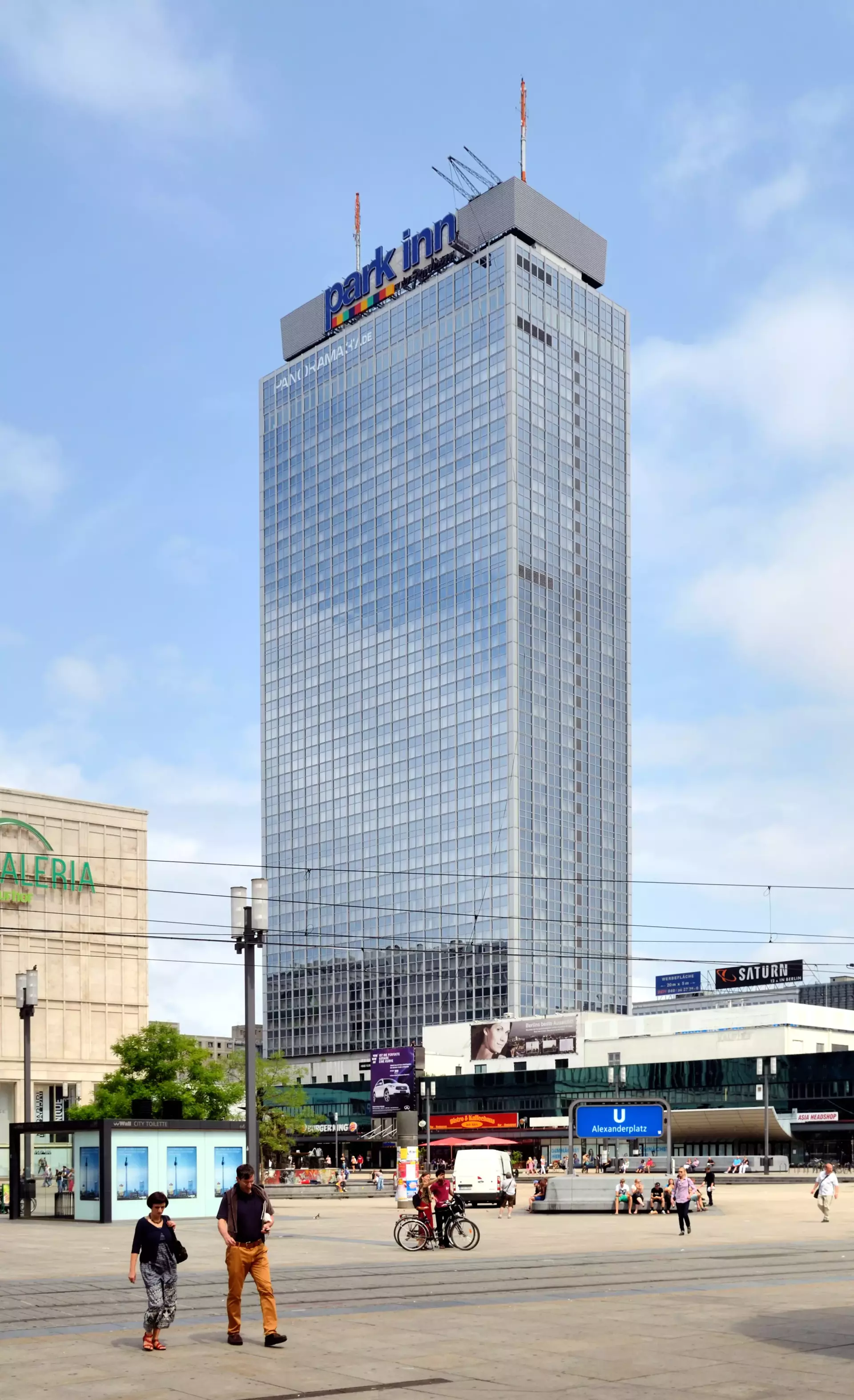
The main street of former East Berlin. It is a big avenue, featuring neoclassical East German buildings, fountains and lakes.
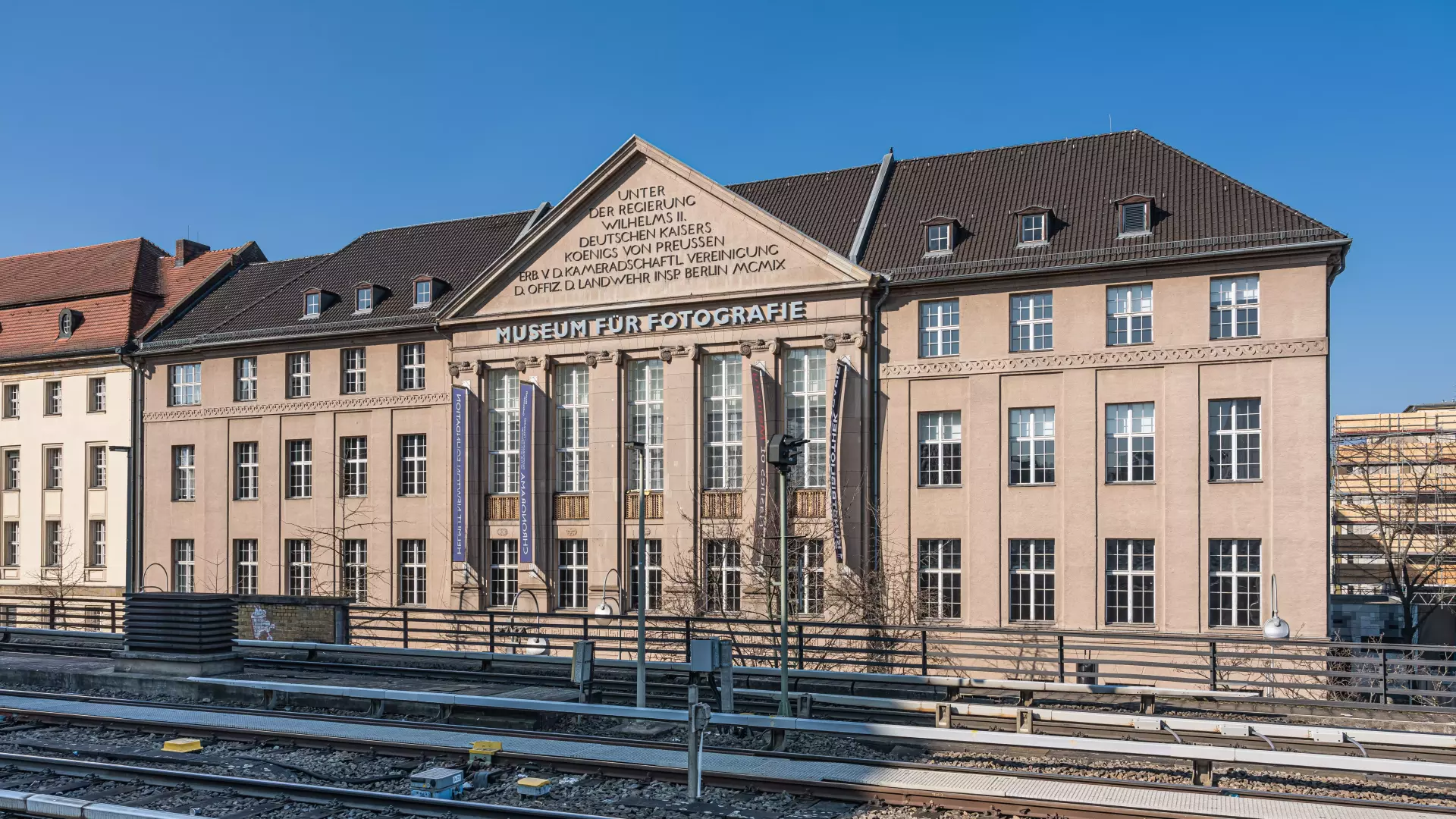
The former Imperial General Post Office, now Museum for telecommunication and post with many interesting historical objects.
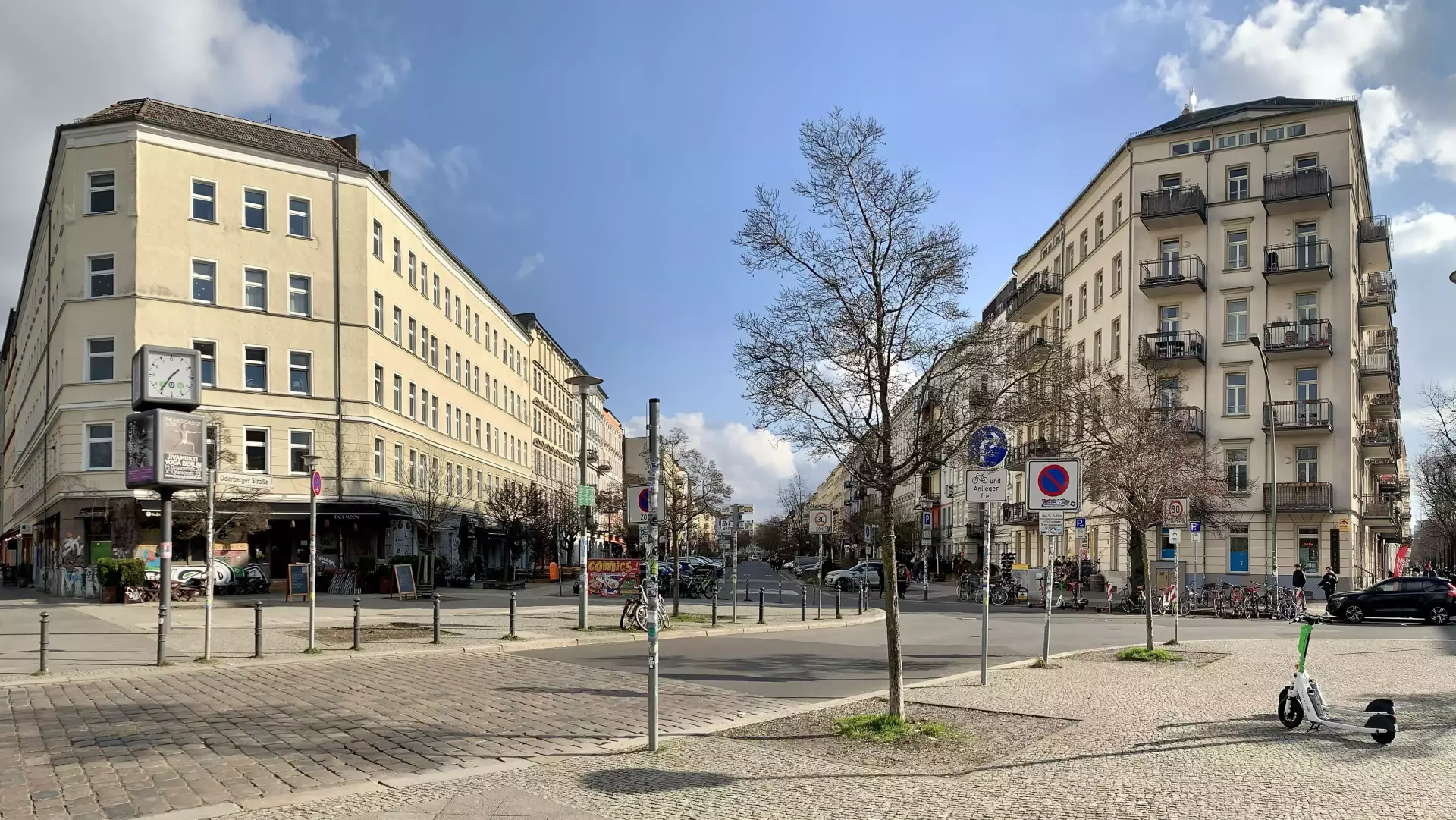
This area was Gay Central during the Weimar Republic, and it is today. But of course all are welcome. There is a diverse mix of restaurants and stores, several of which are open till midnight or later every day. The U-Bahn station has a superstructure and towers that echo the appearance of the Art Nouveau Neues Schauspielhaus across the street, now the Metropol, where radical left-wing dramas used to be presented in the 20s and 30s, and it is lit in rainbow colors.
Nice church near Unter den Linden/Museum Island, finished in 1830 by Schinkel in English Neogothic style. Nice exhibition inside (neoclassical statues and an exhibition about Schinkel's life and work upstairs).
Built by Hitler for the 1936 Olympic Games, this is one of the better examples of Nazi neoclassical architecture (laying claim to the legacy of Rome, fasces and all) and is still used for sporting events. At those Olympics, African-American athlete Jesse Owens won four gold medals, a party-spoiler for Aryan superiority. It's the home of soccer team Hertha BSC - they were relegated in 2023 and now play in 2. Bundesliga the second tier. In 2024 this stadium hosted games in the UEFA Euro Finals, including the final itself. For a glimpse of the Olympiastadion in its original state, seek out Leni Riefenstahl's movie Olympia - clips are shown in the Kinemathek and elsewhere.
The meeting point of one of the leading oppositions against the GDR regime and is a great Neogothic church. Also the only ecumenical Lord's supper with Protestants and Catholics together took place in the Gethsemanekirche (2003).
Specializes in 19th-century painting and sculpture; Monet, Manet, Cézanne, C. David Friedrich and other important 18th- and 19th-century artists are well-represented.