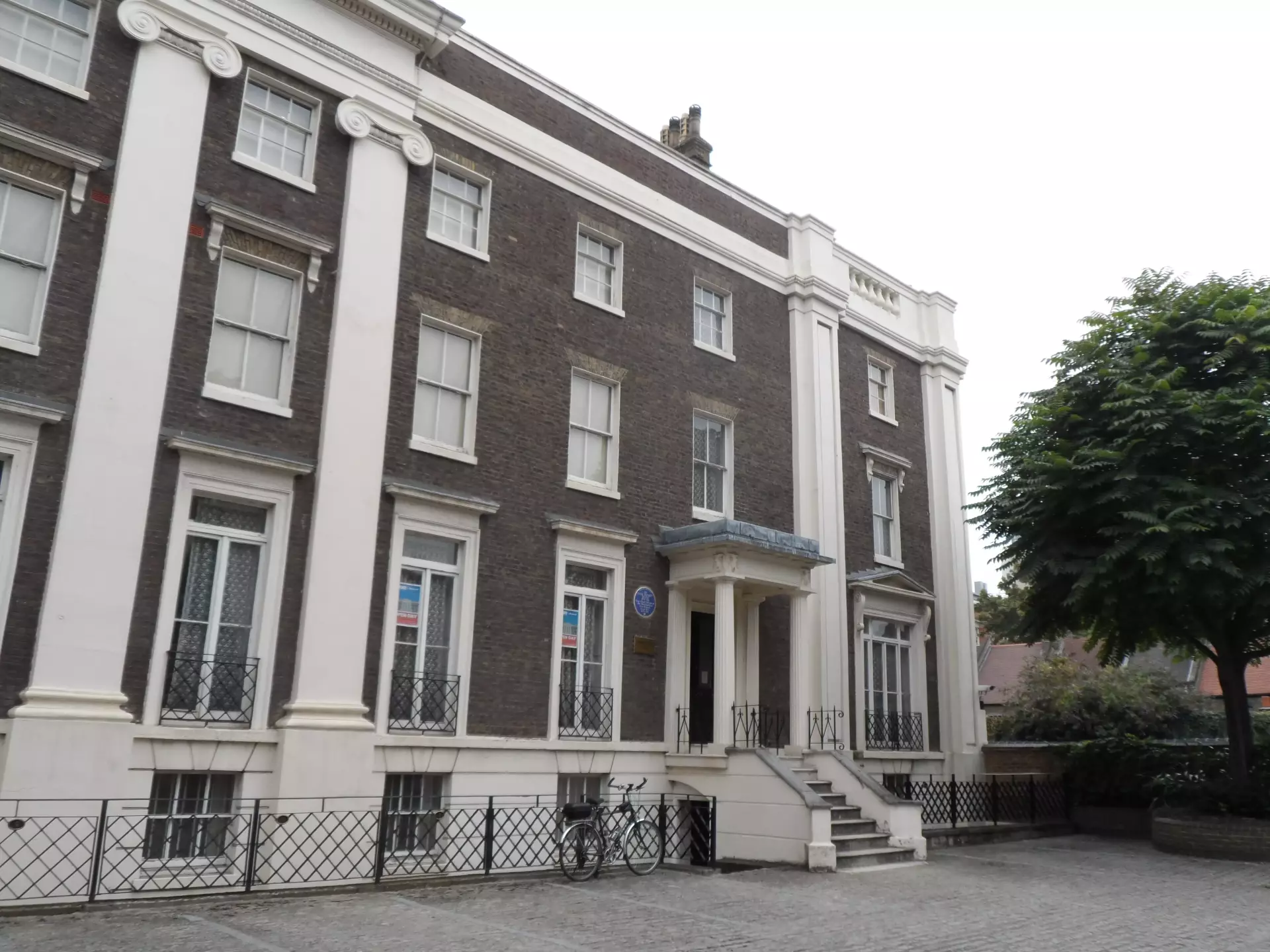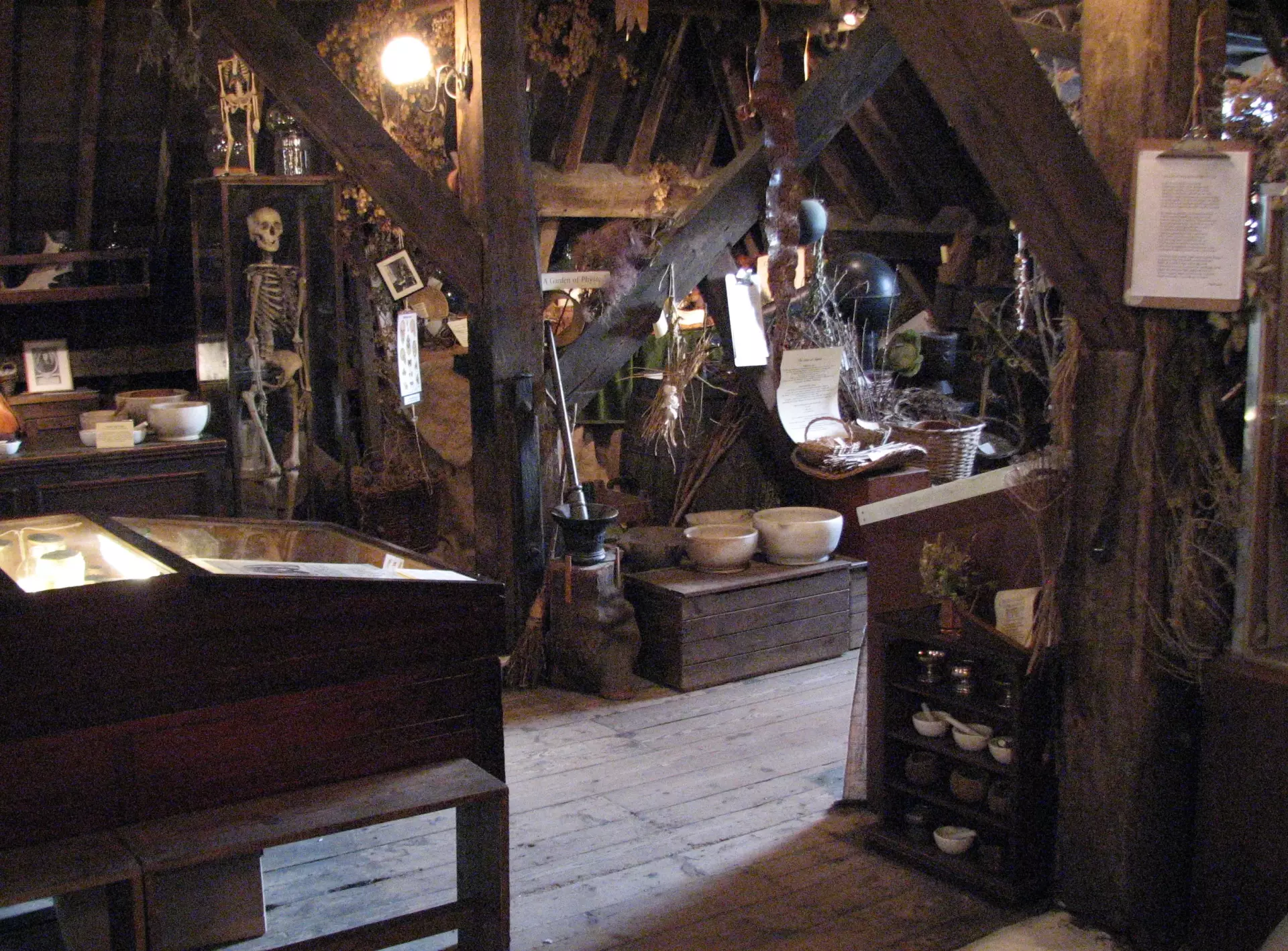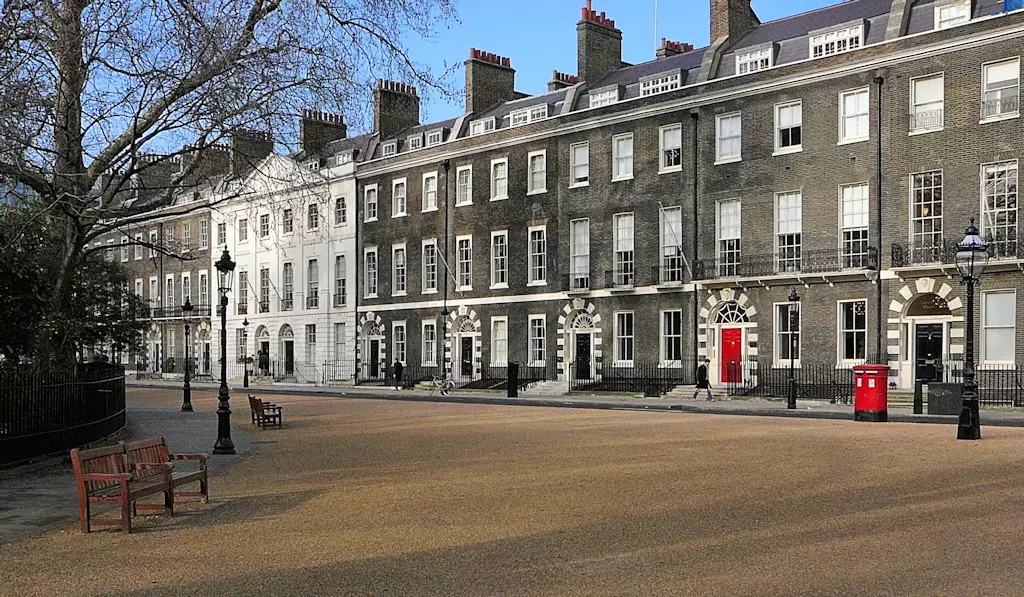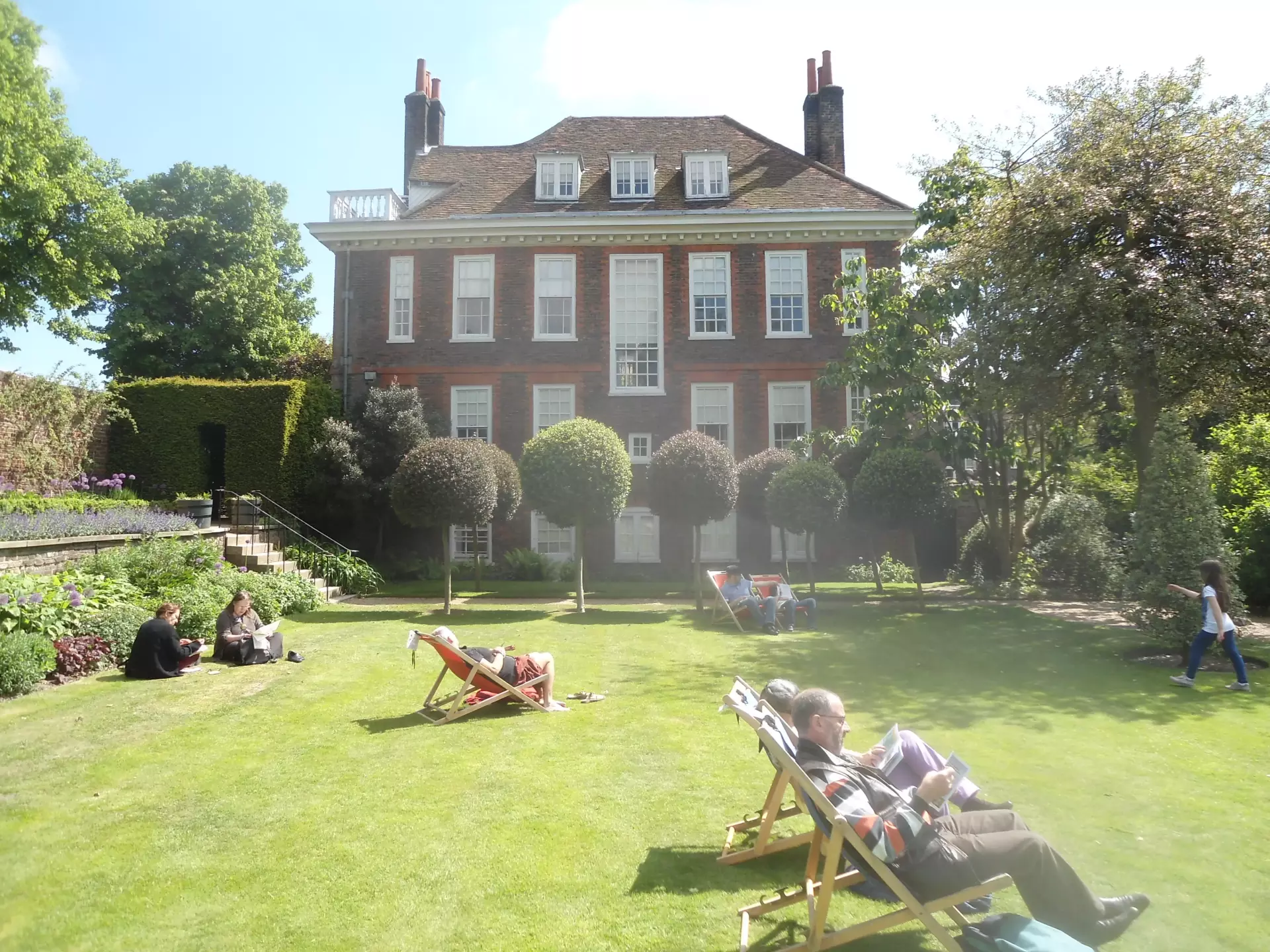
A magnificent old house dating back to 1667, Fenton House is a remarkable piece of history managed by the National Trust. This beautiful building is renowned for its globally significant collection of early keyboard instruments. Visitors can also admire a splendid array of art and porcelain throughout the house.
Fenton House isn't just a static display of historical artifacts. It frequently hosts recitals, offering visitors a unique opportunity to experience the sound of its rare keyboard instruments played by accomplished musicians. These performances add a vibrant dimension to the house's already rich cultural offerings.
Source - https://en.wikipedia.org/wiki/Fenton_House,_Hampstead
The great domed cathedral of St Paul's, designed by Sir Christopher Wren to replace the Gothic medieval cathedral destroyed in 1666 in the Great Fire of London, was built between 1675–1710. Of the most famous London sights, St Paul's is the one most conveniently located for the Barbican. It's a significant building in British history, having been the site of the funerals of several British military leaders (Nelson, Wellington, Churchill), and significantly held peace services marking the end of the two world wars. The cathedral is also famous for its Whispering Wall, as well as its stunning view over the city. The crypt is also open to the public, holding the tombs of Nelson, Wellington and Christopher Wren. It is possible to sidestep the admission charge by entering for one of the midday services, even if you don't take part, or for the daily choral evensong in the late afternoon. However, you'd still need a ticket to get to the top. Photography is not allowed.
Originally the private garden of Holland House, much of which was destroyed in the London Blitz, Holland Park is a mixture of woodland, European and Japanese-style formal gardens and leisure facilities. It includes a large field dedicated to football and cricket, as well as tennis courts. As you walk around the park, you can see bits of the house dotted around the place which give you some idea of how grand it used to be. In the summer this is a great place to catch outdoor opera. An ecology centre near the police station provides information about the ecology of the park and arranges various activities for children. There is a café in the park that sells ice creams and hot food. The park is a popular way to walk from Notting Hill to Kensington High Street.
The remains of the once-magnificent palace, home to English kings since Edward I, adjoin Richmond Green, a pleasant open green space and historic cricket ground. Only the Gate House and Wardrobe, now converted into flats, remain.
Church in Piccadilly designed by Sir Christopher Wren in 1684. It has a magnificent organ case and baptismal font by Grinling Gibbons.
There are three notable outdoor bathing ponds on the heath. The Men's Pond and Women's Pond are both part of the line of small lakes on the eastern edge of the heath known as Highgate Ponds, and the Mixed Pond is part of Hampstead Ponds on the opposite side. Swimming hours are seasonal, complicated, age-dependent and change frequently, so it is worth checking before making a special trip.
The complex incorporates the Old Broad House built in 1930s. The façades of which feature the famous sculpture of Prospero and Ariel and the Ariel friezes by Eric Gill and Gilbert Bayes. BBC's The One Show is transmitted from the studio at the ground floor every weeknight starting from 7PM. The studio is quite visible from the plaza outside and some parts of the show are performed from outside of the studio – in the plaza.
Park overlooking the river, with the local war memorial. Be careful at high tide, as it may flood.
The second biggest greenhouse in London, containing over 2,000 species of tropical plants as well as birds and fish.
Designed by one of Britain's leading architects, Sir Norman Foster, this curved glass skyscraper was the 2004 recipient of the Stirling Architectural Prize for Best Building. It was built on the site of the Baltic Exchange building, destroyed in 1992 by an IRA bomb which killed three. On the Bury Street side of the Gherkin by some black stone benches is the Tomb of the Unknown Girl for a teenaged Londoner who died 1,600 years ago (see infobox above), marked with a marble laurel wreath and inscription. Searcy's Restaurant (from £50) at the top takes bookings up to five weeks in advance and you have to go through security before going up.
A lovely park on the southern banks of the Thames known or its wildlife and some splendid examples of mature trees.
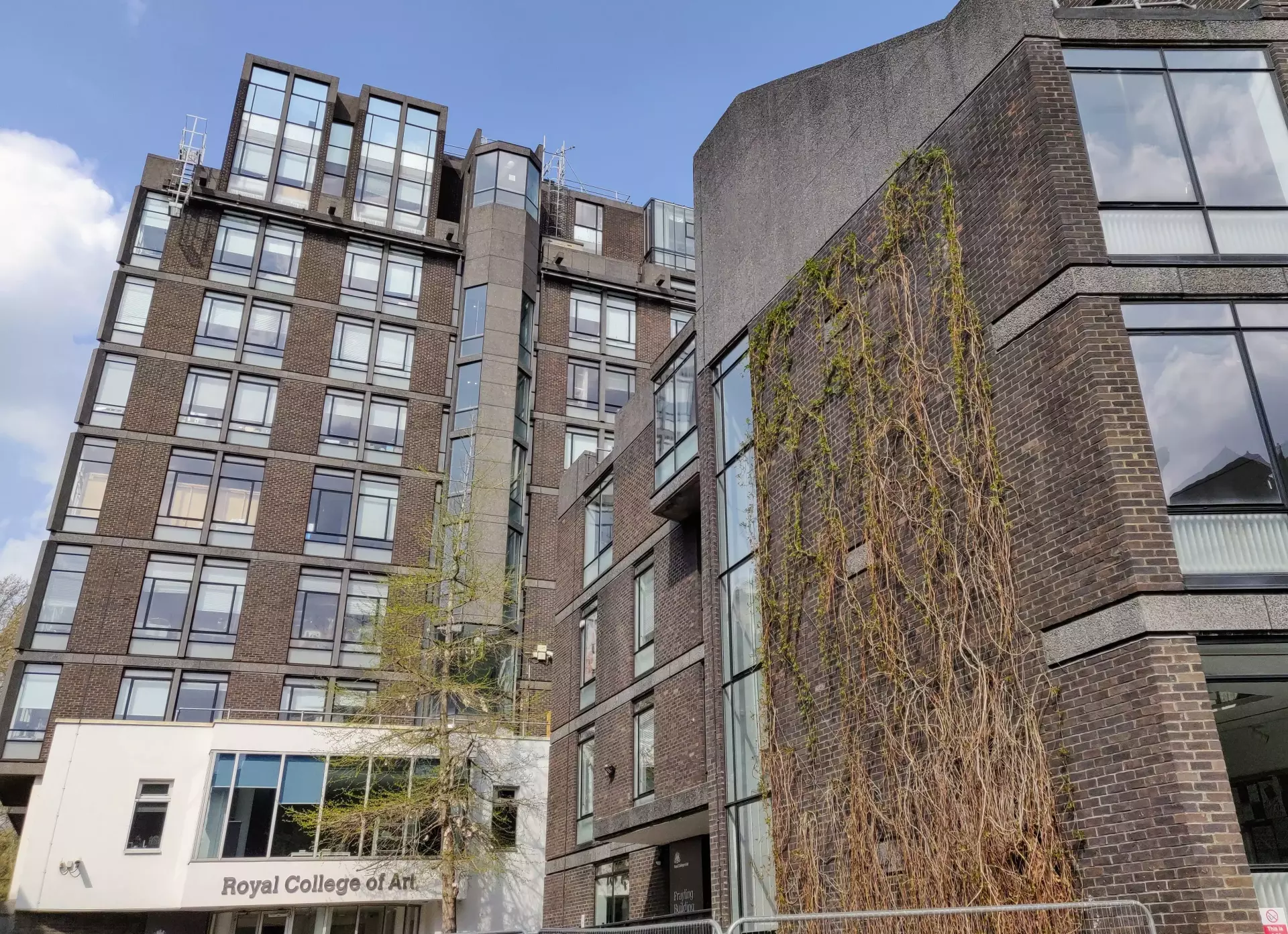
A Victorian school, now a university with a mission to advance knowledge of the fine arts. Exhibitions are common. Times and admission charges vary but can often be free, although visitors may need to book tickets to certain events.
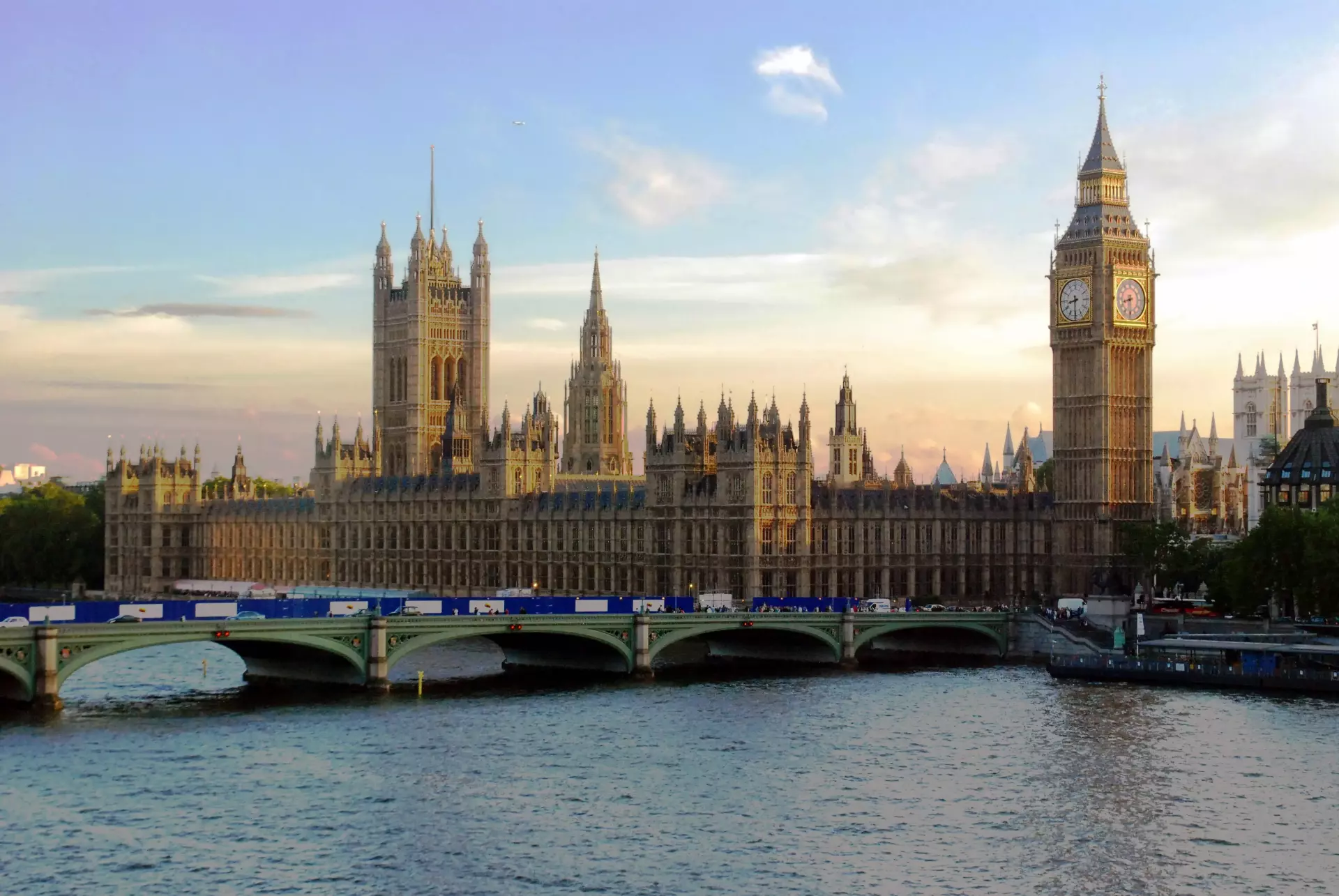
On the UNESCO World Heritage List, the Palace of Westminster is the seat of Parliament in the United Kingdom. It's often termed the "Mother of All Parliaments" - an exaggeration, but perhaps only a slight one. The present building largely dates from the 19th century when it was rebuilt following a fire in a splendid example of Victorian neo-Gothic architecture. The House of Commons (elected Members of Parliament or MPs) is located to the north of the building and is decorated with green leather upholstery, and the House of Lords (unelected Lords) is located to the south and decorated with red leather upholstery.
The London residence of the Dukes of Wellington, which now acts as a museum for the inaugural and most famous holder of the title. It boasts an impressive collection of paintings, sculptures, medals and swords. Perhaps the most bizarre item in Wellington's collection is a nude statue of Napoleon Bonaparte, commissioned by the emperor himself and bought by the British government following his defeat at the Battle of Waterloo as a gift for the duke.
London's main zoo is in the northern reaches of Regent's Park. Takes a very conservation-driven approach these days and always has great exhibits aimed at children. Opened in 1828 for scientific study, then to the public in 1847.
The restoration of the nave was completed in September 2004, and this church is still a striking building designed by Sir Nicholas Hawksmoor with a particularly tall, pointed spire. Hawksmoor's design was significantly altered in the 19th century, and present continuing restoration is intended to restore it to Hawksmoor's original vision. Christ Church was built as part of the 50 Churches for London project.
Former offices of the Greater London Authority. A radically-designed glass fronted and rounded building, previously headquarters for London's Mayor and Assembly. City Hall has now be relocated to The Crystal, a building in Greenwich, near to the cable car. The old building is disused and not open to the public, but can be viewed from the outside.
Madame Tussauds is a world-famous waxwork museum, best known for its Grand Hall, with a collection of international royalty, statesmen and world leaders. Visitors generally report that the entrance fee does not warrant the selection of waxworks on show, which rarely resemble celebrities. Also, there is usually a long queue stretching down the road.
The headquarters of world's most famous insurance market, housed in a revolutionary (at the time) bizarre, Matrix-like glass-and-steel building designed by Richard Rogers, with all support services (lifts, ventilation, etc.) suspended outside. Recognised as a masterpiece of exoskeleton architecture.