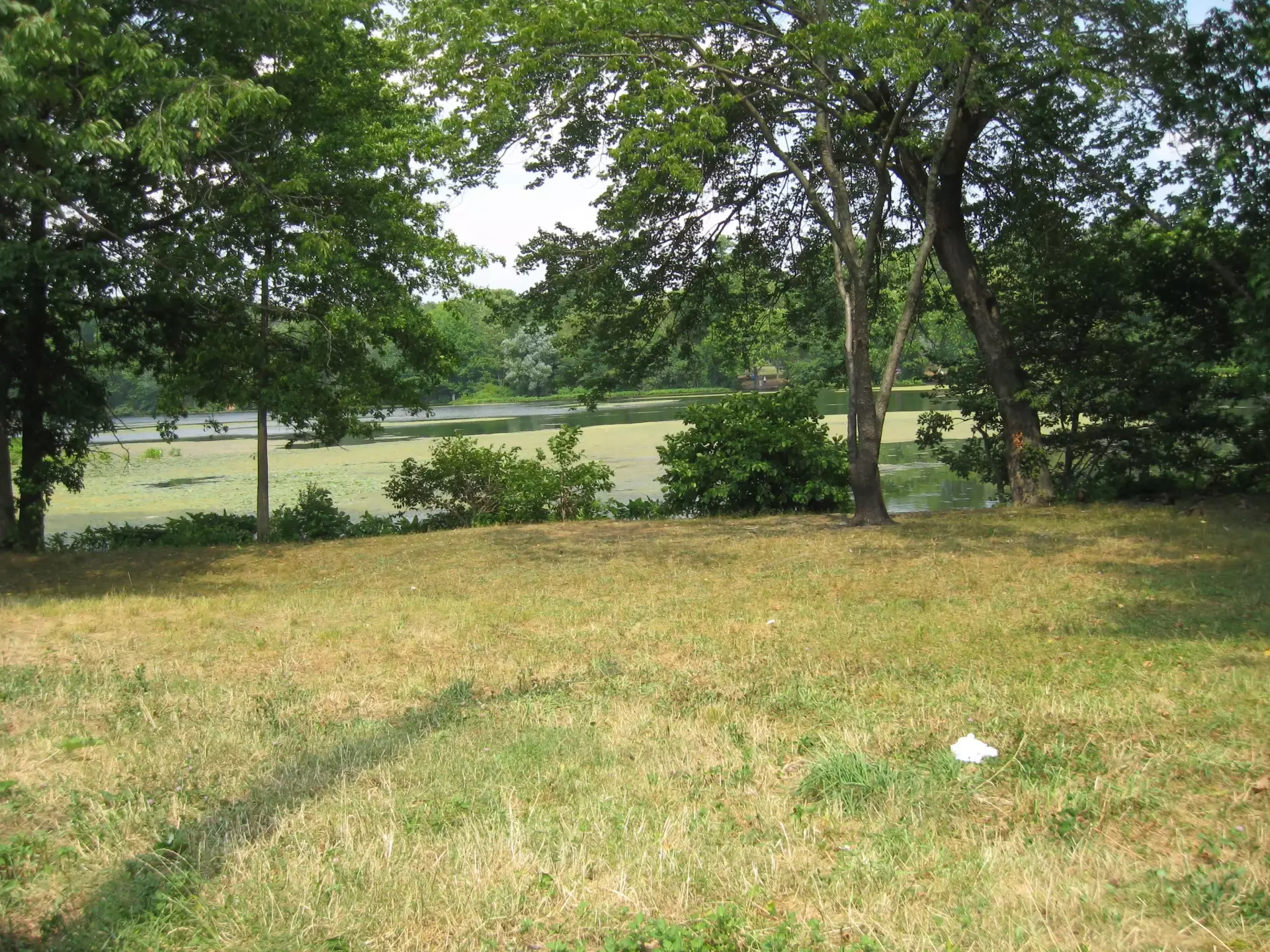
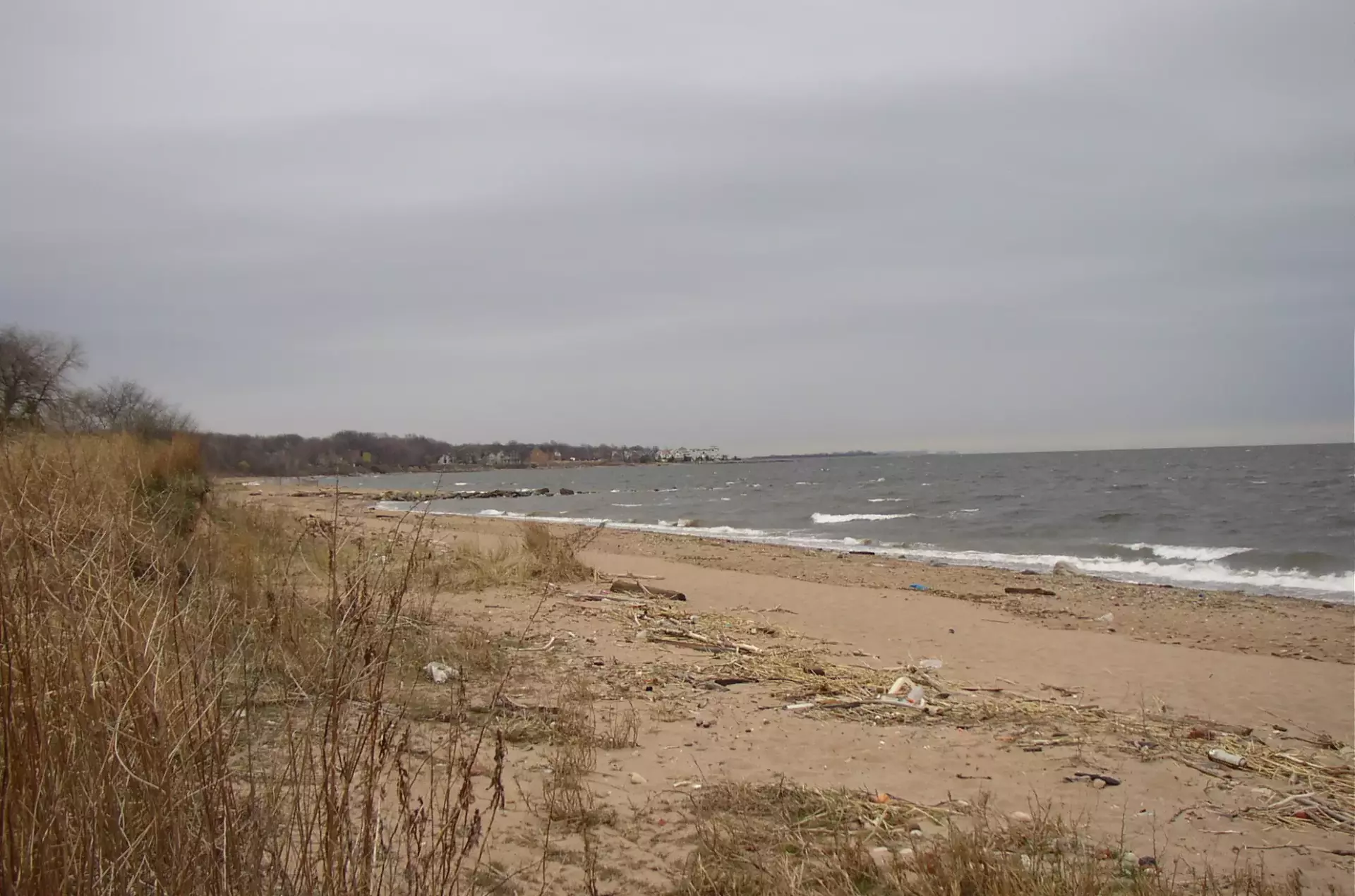
Wolfe's Pond Park is a beautiful escape located on the south shore of Staten Island, New York. This expansive park covers 297 acres, offering a delightful mix of dense woodlands, recreational facilities, and serene shoreline.
The park is home to a wide variety of plant and animal life, making it a perfect spot for nature lovers. Visitors can stroll through lush trails where they might spot native birds or small woodland creatures. The park's diverse ecosystem provides a sense of tranquility that feels far removed from the city's hustle and bustle.
Offering something for everyone, Wolfe's Pond Park includes areas for both relaxation and activity. Those interested in sports can enjoy facilities such as basketball courts, a skateboard park, and open fields for soccer or baseball. For a more relaxed day, families can gather for picnics on the grassy areas, or children can play on the well-equipped playgrounds.
The park's beachfront area is a highlight for many visitors. With access to the sandy shore along Raritan Bay, guests can enjoy sunbathing or take a soothing walk along the water's edge. The beach area provides a peaceful setting for those looking to unwind by the sea.
For fishing enthusiasts, the park offers designated areas where one can cast a line and try their luck. The calm waters of Wolfe's Pond are also ideal for canoeing and kayaking, giving visitors a chance to explore the park from a different perspective.
Throughout the year, Wolfe's Pond Park hosts various events that attract both locals and tourists. These include seasonal festivals, community gatherings, and nature walks led by local guides. Such events provide a great opportunity to meet new people and learn more about the area's natural beauty.
Wolfe's Pond Park truly offers a remarkable blend of natural and recreational experiences, making it a versatile destination for anyone seeking a break from city life.
Source - https://en.wikipedia.org/wiki/Wolfe%27s_Pond_Park
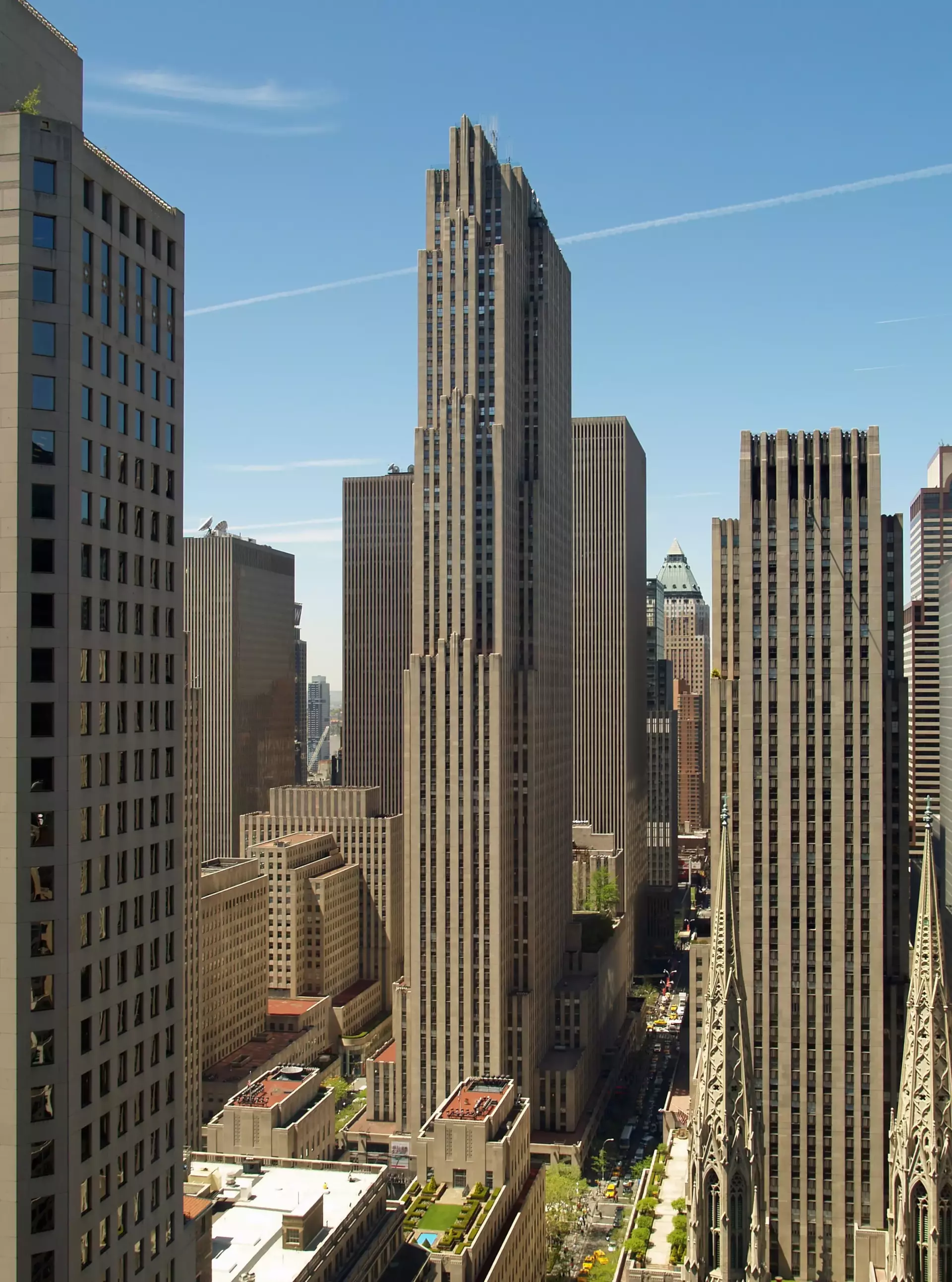
The Christmas Tree, the Skating Rink, NBC Studios, the shops and hubbub - you can't miss it. The Christmas Tree and the Skating Rink are naturally not year round, but in the summer, the complex is a hub for touristy operations. Within the striking Art Deco buildings of the complex are several dining establishments overlooking the area and many stores. See the Rockettes, another show, or just tour the famous Art Deco masterpiece. On the 70th floor of the Comcast Building (better known by some as "30 Rock") is this narrow observation deck, built to resemble the deck of a cruise ship. The deck affords uninterrupted views over Central Park to the north and across Midtown to the south.
Built in 1802 (and physically shifted from its original location), this was the home of Alexander Hamilton, one of the founding fathers and the first Secretary of Treasury.
One of Manhattan's favorite meeting points, the centerpiece of this Terrace is the Angel of the Waters fountain, dedicated in 1873 and an enduring icon of the park.
An elevated walkway and jetty provides access to the only natural salt marsh remaining in Manhattan, and expansive views of the Hudson River and the cliffs of Spuyten Duyvil in the Bronx across the river.
Most well known as the Model Boat Pond, visitors can often see a racing regatta between members of the Model Yacht Club, or rent a model boat from a boathouse and cafe on the pond. Just to the north of the pond is the Alice in Wonderland sculpture depicting the Tea Party scene, and on the west side of the pond is the Hans Christian Andersen sculpture, which shows the writer seated on a bench reading a book to his Ugly Duckling character.
A historic site, not least because of the Black Thursday crash of the Exchange on 24 October 1929 and the subsequent sell-off panic which started on Black Tuesday, 29 October, precipitating the worldwide Great Depression of the early 1930s. The present Exchange building opened in 1903, recognized from the first as an example of masterful architecture, with the six massive Corinthian columns across its Broad Street facade imparting a feeling of substance and stability and, to many, seeming the very embodiment of America’s growth and prosperity. The building has been closed to the public since 9/11.
Large garden and arboretum featuring a variety of plants, and also a Victorian-style wedding garden.
A branch of the Smithsonian Institution, the Cooper Hewitt is devoted to over 240 years of contemporary and historic design, with changing exhibits.
Americana including Audubon’s watercolors of birds.
A picturesque brick building that actually predates the park. It was built in 1851 to serve as a munitions supply depot for the New York State National Guard, and was designed to look like a medieval fortress, with battlements overlooking the area. Today the building holds a refreshment stand and a small art gallery with rotating/seasonal exhibits.
This pretty building was built as Brooklyn's city hall in 1851 and is still a very significant official building in very active use.
None of Central Park is actual virgin forest, but this is the closest any part of the park gets to feeling like genuine forest. It is beautiful and cool in hot weather. However, like a real forest, it is a mosquito habitat, so make sure to use insect repellent before walking through this part of the park.
Probably the most famous of the Guggenheim foundations (others found in Bilbao and Venice), which hold avant-garde modern art by artists such as Kandinsky and Mondrian, the New York branch is housed in a unique and famous building designed by Frank Lloyd Wright and rendered in a rounded, organic form and completed in 1959. Be sure to take the elevator to the top floor, then follow the spiral viewing floors downwards to the street level. One of eight buildings by Wright to be listed as a world heritage site.
Housed in a 560,000-square-foot, Beaux-Arts building, the Brooklyn is the 2nd largest art museum in New York City and one of the largest in the USA. Its world-renowned permanent collections include more than one million objects, from ancient Egyptian masterpieces to contemporary art, and represent a wide range of cultures. It is a 30-minute subway ride from Midtown Manhattan, and has its own subway station (renovated in 2019-20), the museum is part of a complex of 19th-century parks and gardens that also includes Prospect Park, the Brooklyn Botanic Garden, and the Prospect Park Zoo. On the first Saturday of each month, the museum is open until 11PM with free admission and special events.
A 2011 addition to the Lower Manhattan skyline, this 76-story residential skyscraper by the noted Frank Gehry has a distinctive rippled, "wavy" facade that is quite eye-catching. It is best viewed from City Hall Park and the Brooklyn Bridge.