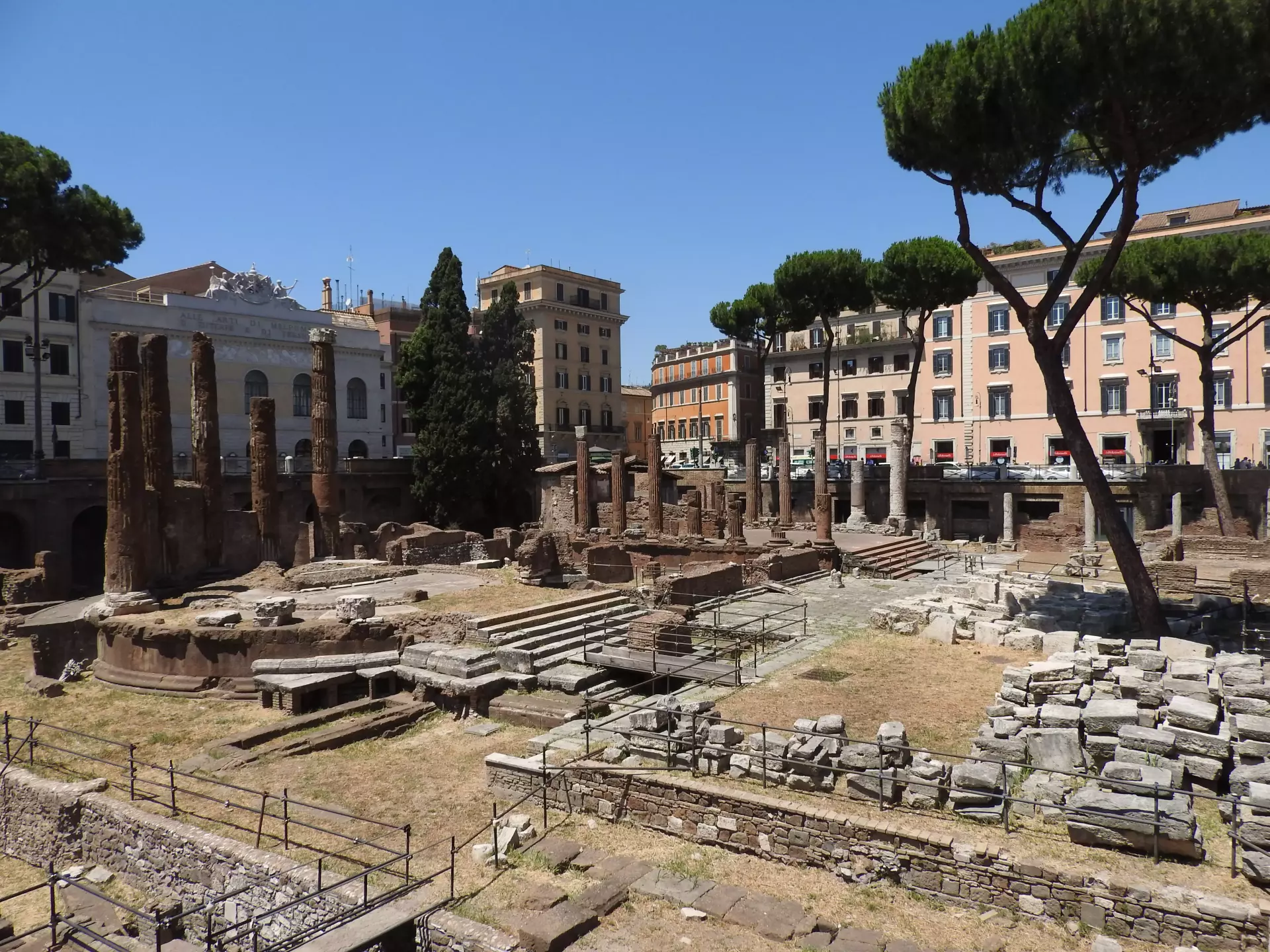
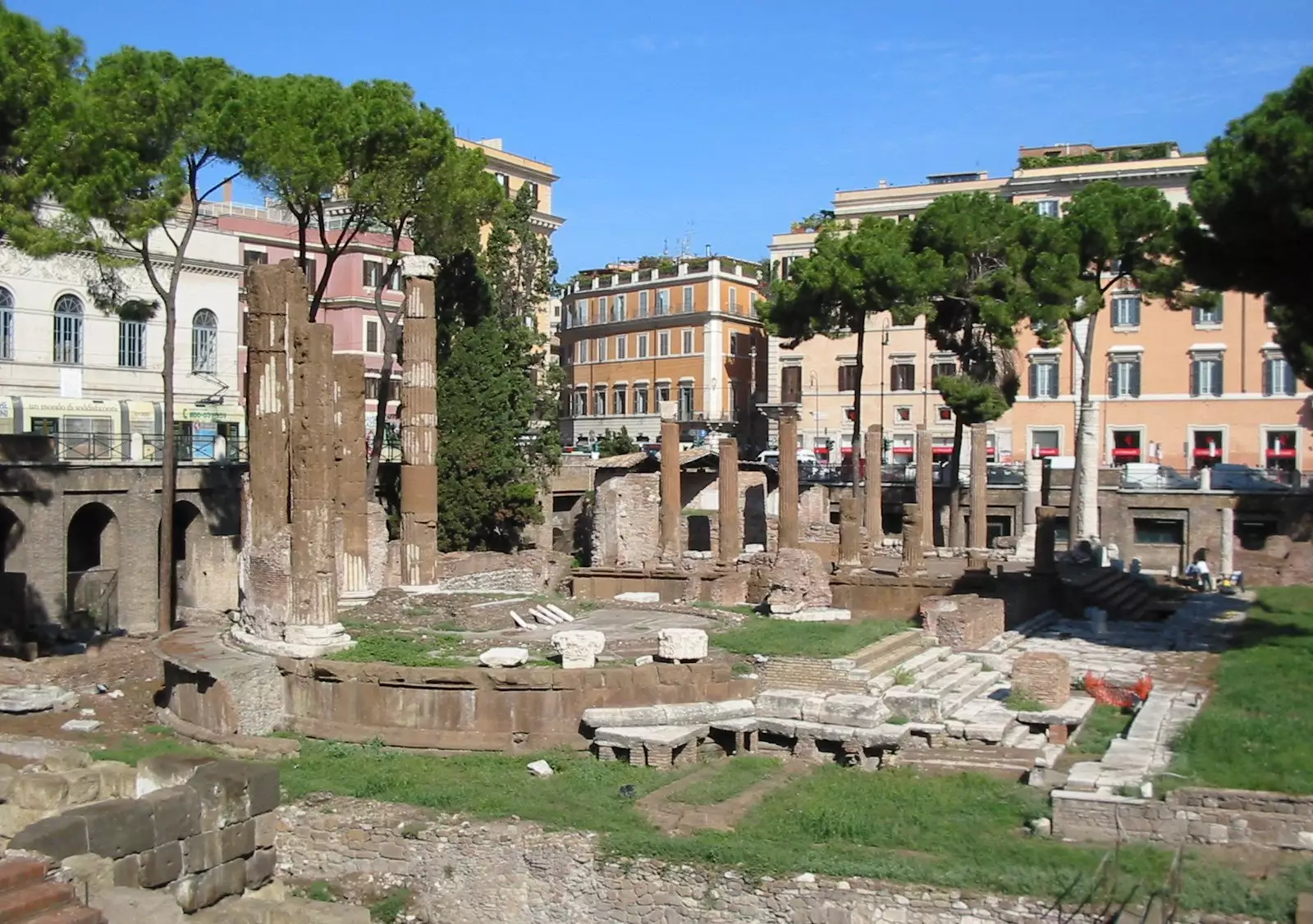
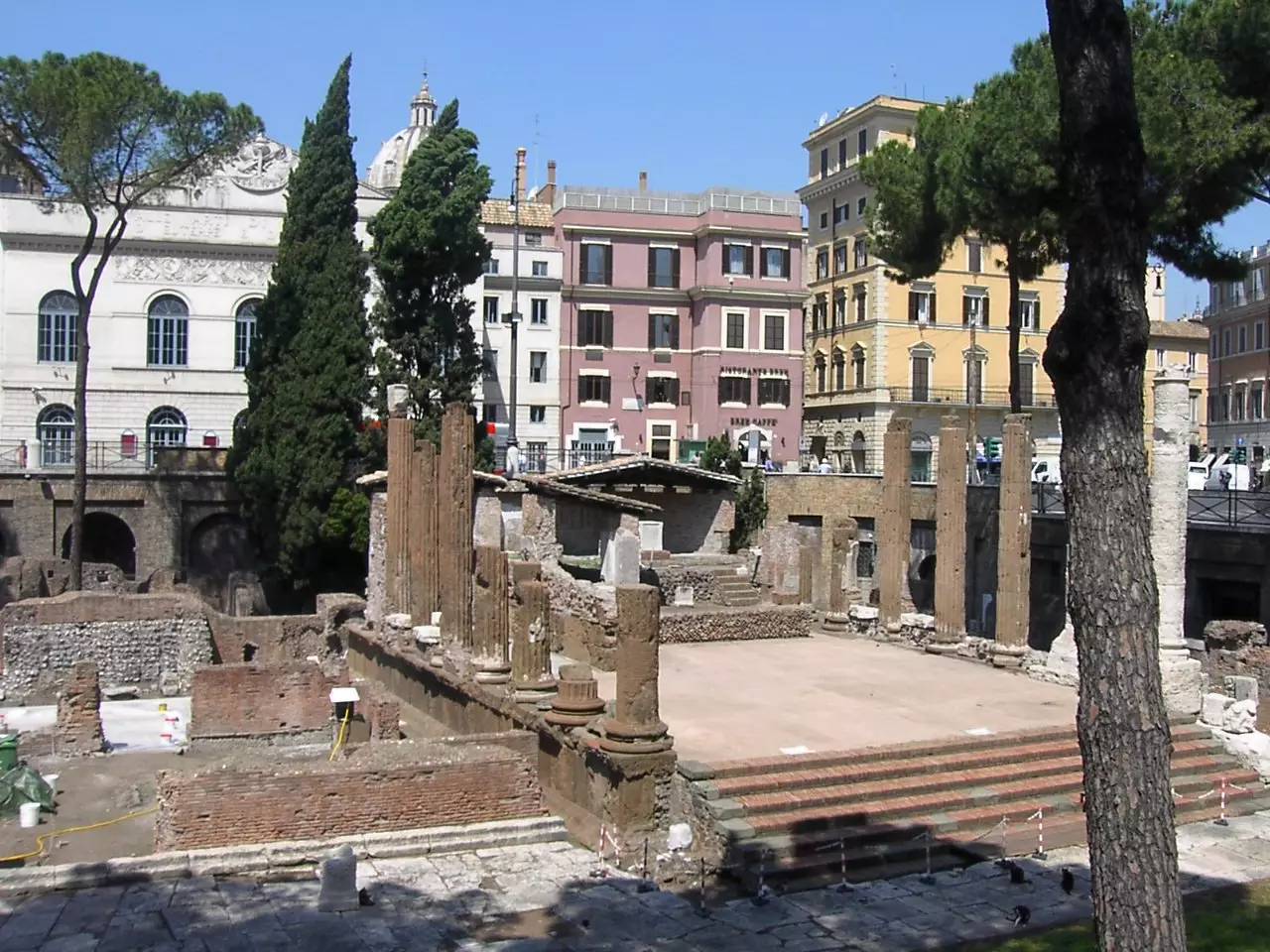
Largo di Torre Argentina is a fascinating archaeological site in Rome. Contrary to what many people think, its name does not come from the country Argentina. Instead, it is linked to the Latin name for Strasbourg, "Argentoratum." A courtesan connected to Pope Alexander VI, who came from Strasbourg, once lived in this area, giving the place its unusual name.
Excavations at Largo di Torre Argentina have revealed important remains from the Roman Republican era. Visitors can see the foundations of four ancient temples, each with its history and mystery. The site also includes the ruins of the grand Theater of Pompey. This theater is a significant historical spot, as it is where Julius Caesar was famously assassinated by Roman senators in 44 BC. Alongside these monuments, a Roman public toilet, or "Latrina," has also been discovered, showing a glimpse of daily life in ancient Rome.
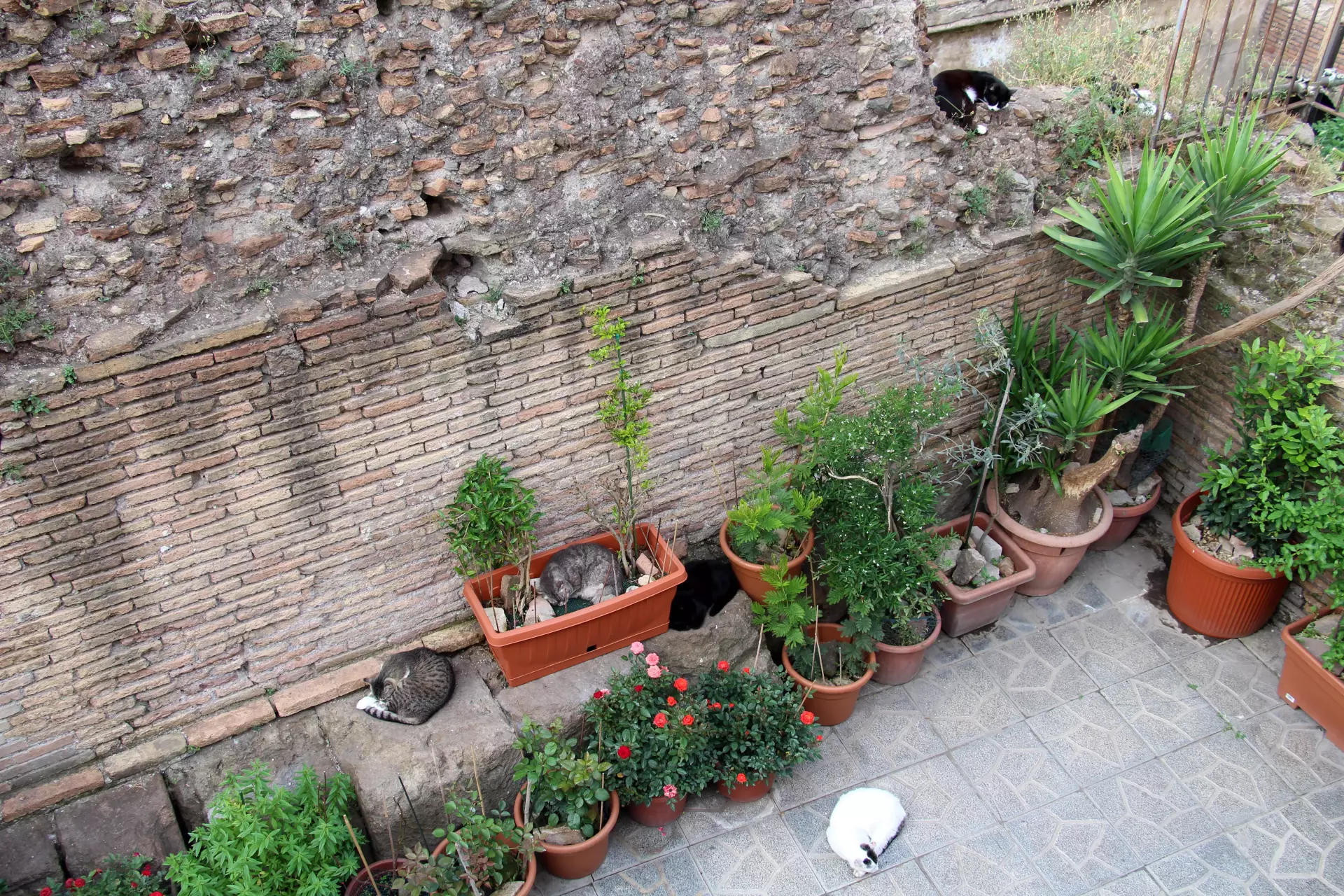
For many years, Largo di Torre Argentina has been known for its large population of cats. The feline residents are cared for by a local animal rights organization. Some say that this was a playful response to Mussolini, who ordered the site's excavation and was rumored to dislike cats. However, observers in September 2024 noted that no cats were visible from the street, leaving the current status of the famous colony uncertain.
Source - https://en.wikipedia.org/wiki/Largo_di_Torre_Argentina
Parco Savello is the name of the grounds and orange grove next to the Santa Sabina church at the top of the Aventino and also where you have one of the best views of the city. Families gather here to sit under the dozens of orange trees. The "Giardino degli Aranci" is also a well known spot for lovers at night. The best views are arguably from Janiculum hill, just across the Tevere (Tiber) river. Immediately below you, the Tiber snakes its way through the city, and directly beyond it you can see the lively medieval quarter of Trastevere. Beyond that is the majestic dome of St. Peter's Basilica, with the historic centre of Rome visible to the right.
Underground burial place of an ancient Roman family and of seven early popes.
The Collegio Romano was a college of the Jesuit order. Many popes, cardinals and bishops were educated here. Since 1870 it has been a secular (non-monastic) school. The coat of arms on the doorway is that of Pope Gregory XIII (1572–1585). The tower was erected in 1787 and served as an observatory. Until 1925 all clocks in Rome were set after that of the Collegio Romano.
The Piazza di Spagna (Spanish Square) is the most famous square in Rome. For a very long time it was the meeting point of all foreigners coming to Rome. In the 17th century it was the residence of the Spanish Ambassador to the Holy See. The area around the residence was Spanish territory and foreigners who stayed here without permission were forced to serve in the Spanish army. The Fontana della Barcaccia (Old Boat Fountain) on Piazza di Spagna was designed and built in 1627-29 by Pietro Bernini, father of the more famous Gian Lorenzo Bernini. The fountain celebrates the fact that before high walls were built along the banks of the Tiber Rome often used to flood. Once the waters were so high that a boat ended up in the square. The decorations on the fountain imitate the coat of arms of Pope Urban VII, Barberini'p, who ordered the fountain to be built. A less aesthetic occupant of the square is Italy's first McDonalds, dating back to 1986. Also in the piazza is a column erected in 1856 to commemorate the Immaculate Conception. The column is topped by a statue of the Virgin Mary, and rests on a base with statues of Moses, David, Isaiah and Ezekiel. The Pope visits the Piazza every year on December 8th to celebrate Immaculate Conception.
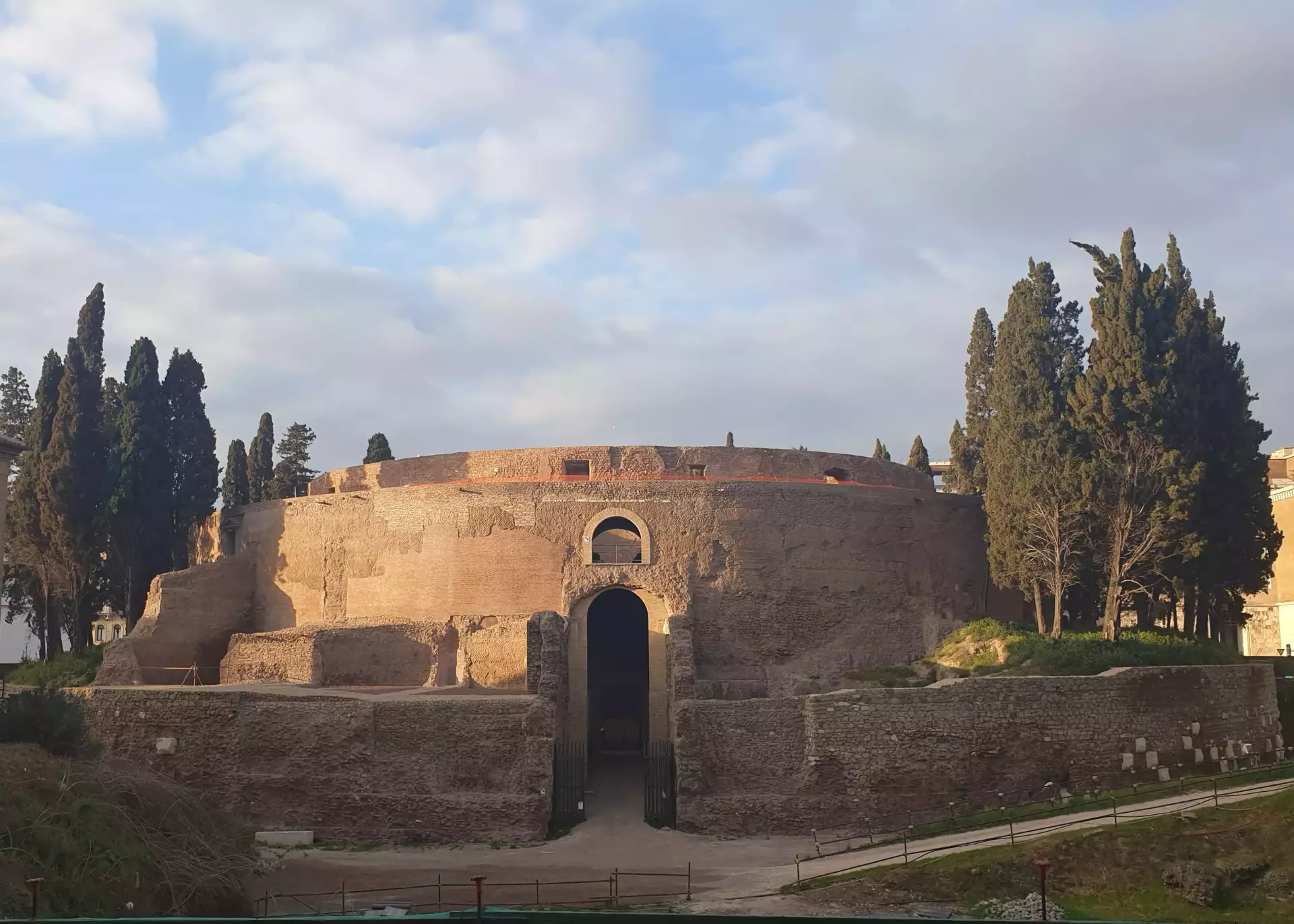
This is a large tomb built by the Roman Emperor Augustus in 28 BC in the form of a stone ring covered by an earth mound. A brick wall, 87 m in diameter, carried an earth mound covered with cypresses. On top of the hill stood a bronze monument of the emperor. The building was 44 meters high. At the beginning of the alley, which led to the tomb were two Egyptian obelisks. On both sides of the doorway bronze plates describe the "Res gestae", the deeds of the emperor. The urns of Augustus, Marcellus, Octavia, Agrippa, Drusus and other members of the Julian Claudian dynasty were revered here. In the Middles Ages the building served as citadel of the Colonna family. It was destroyed by Pope Gregor IX in 1241. The body of Cola di Rienzo. a popular leader of the people in the mid-14th century, was burnt in this monument. The Mausoleo di Augusto is not open to the public, and is fenced off.
Inaugurated in 217 AD and used until the 6th Century. The baths were big enough for 1600 bathers at a time. Impressive and well-preserved. Used for operas in summer months (see Opera di Roma for details) and was the location for the famous "three tenors" concert in July 1990, at the time of the World Cup (soccer).
In addition to Santa Maria in Cosmedin there is a lot to be seen around this piazza. Opposite the church is the round temple dedicated to Hercules Invictus (the Unconquered Hercules), and not far from that the rectangular Fortuna Virilis, both constructed in the 1st Century. Opposite, to the back of the piazza is the Arch of Argentari and behind that the church of San Giorgio in Velabro, the front of which was repaired after being damaged by a terrorist bomb in July 1993.
Small collection of railway carriages and related stuff. Really just for those with special interest in the topic. Entrance through the station if the main entrance is closed.
This is not the real name of the church on the corner by the main entrance to San Callisto but it is universally known by this name. By legend it is located on the spot where Saint Peter had a vision of the risen Christ while fleeing persecution in Rome. According to the tradition, Peter asked Jesus, Domine, quo vadis? “Lord, where are you going?” The current church is from 1637. Inside is a copy of a stone said to contain the imprints of the feet of Jesus; the original is maintained in San Sebastiano, further along the Appian Way
Although started in the 2nd century, San Callisto has had many more recent burials, including 16 popes. The burial arcades are almost 20 km long.
More modern than most Roman churches: it was not started until 1873. This is Rome’s Episcopalian church. Some very interesting artwork, particularly the mosaics by Edward Burne-Jones of the Pre-Raphaelite school.
Beautiful park, the 2nd largest in Rome (after Villa Doria Pamphili) at 450 acres/182 hectares. Hosts concerts on summer evenings. former summer residence of Italian monarchs. Also known for it's bunker.
Early Roman houses dating back to the 1st century, believed to be homes of early Christians. Well-preserved frescoes and a small museum.
Perhaps the most fascinating building in Rome. The core of the structure began life as the mausoleum of Emperor Hadrian, built between 135 and 139 AD. Subsequent strongholds built on top of the mausoleum were in turn incorporated into a residence and castle by medieval Popes. The building was used as a prison until 1870 but now houses a museum. Opera buffs will be exhilarated to visit the balcony from which Tosca leaps to her death. Film buffs will recognise it as a setting from Angels and Demons.