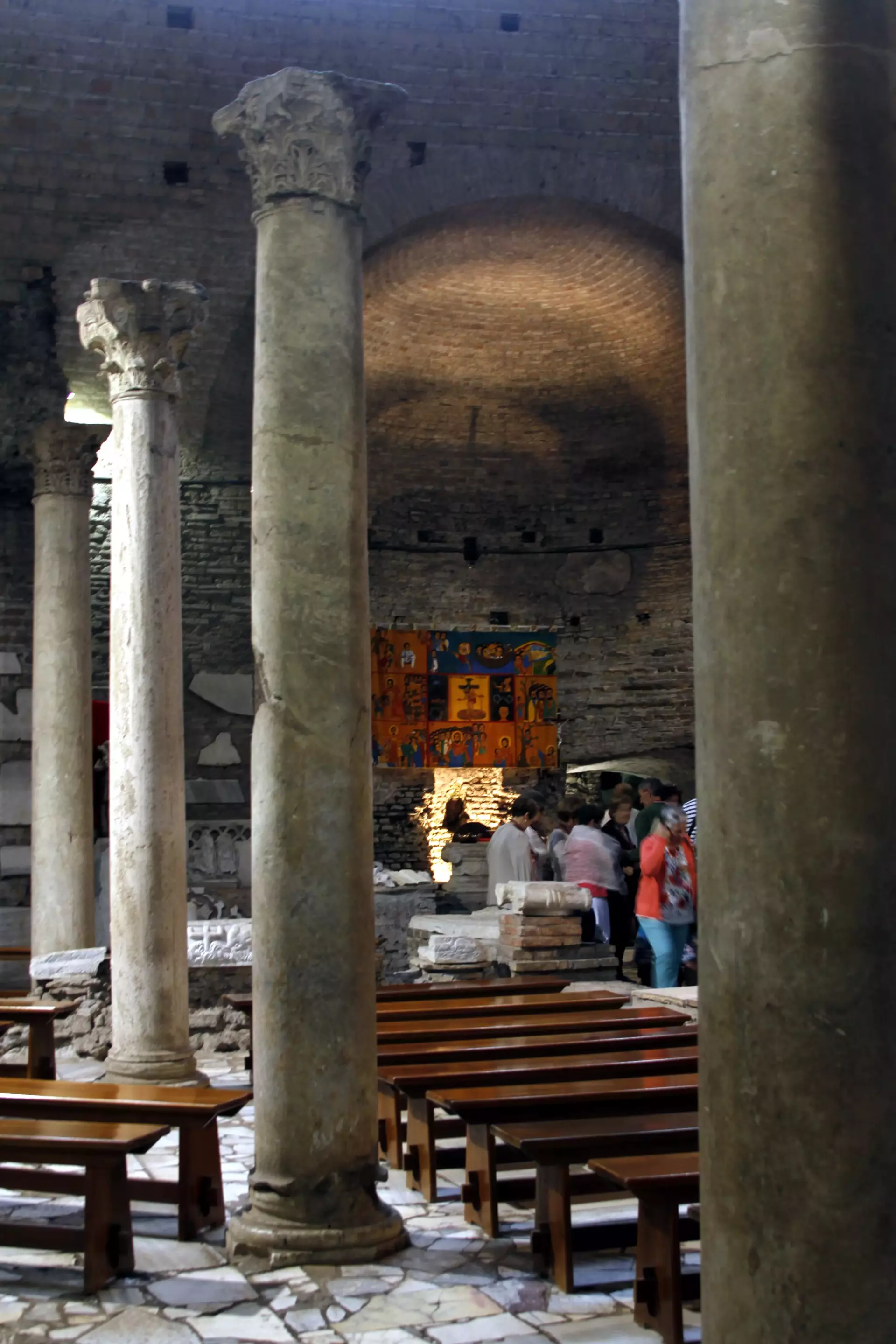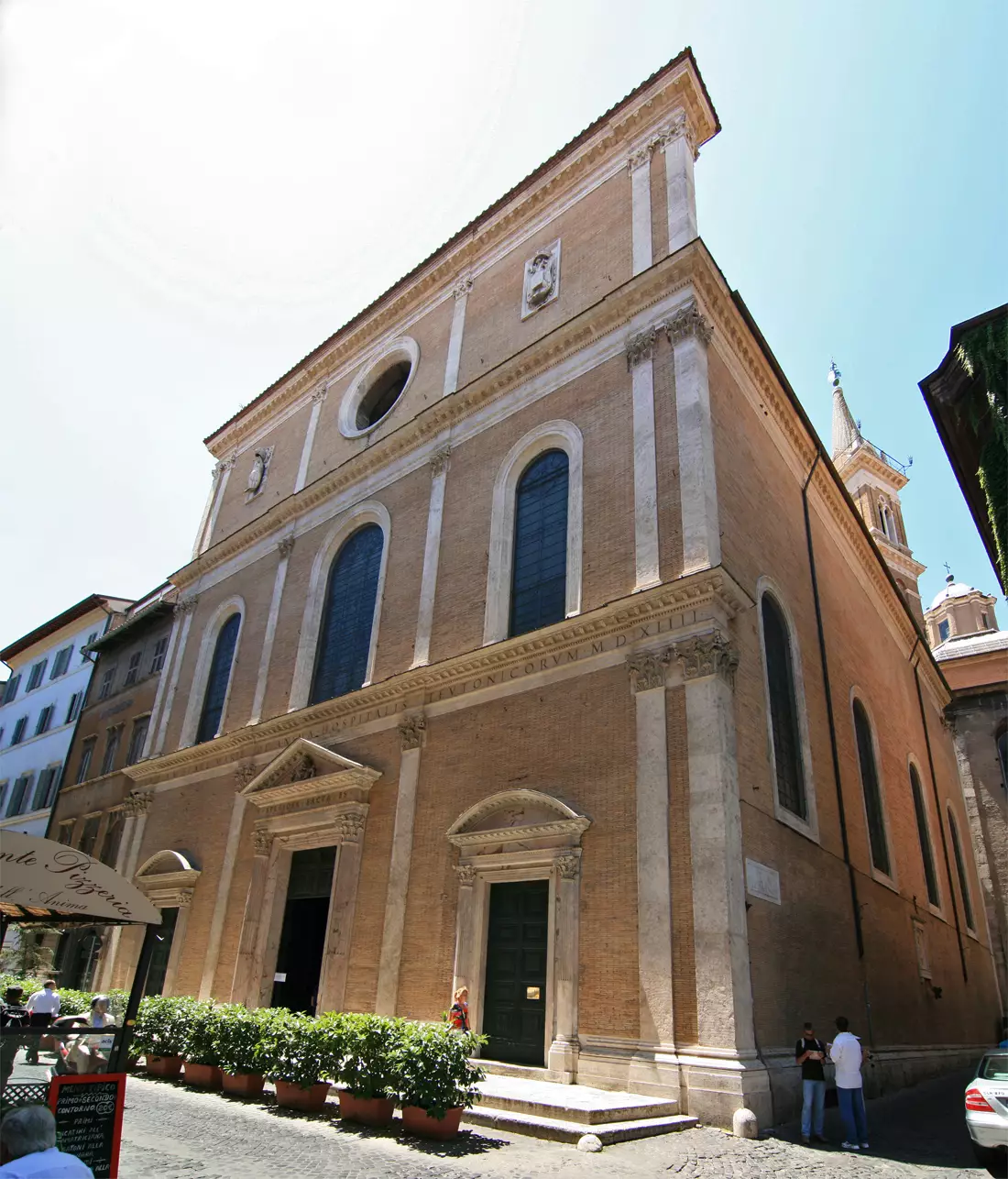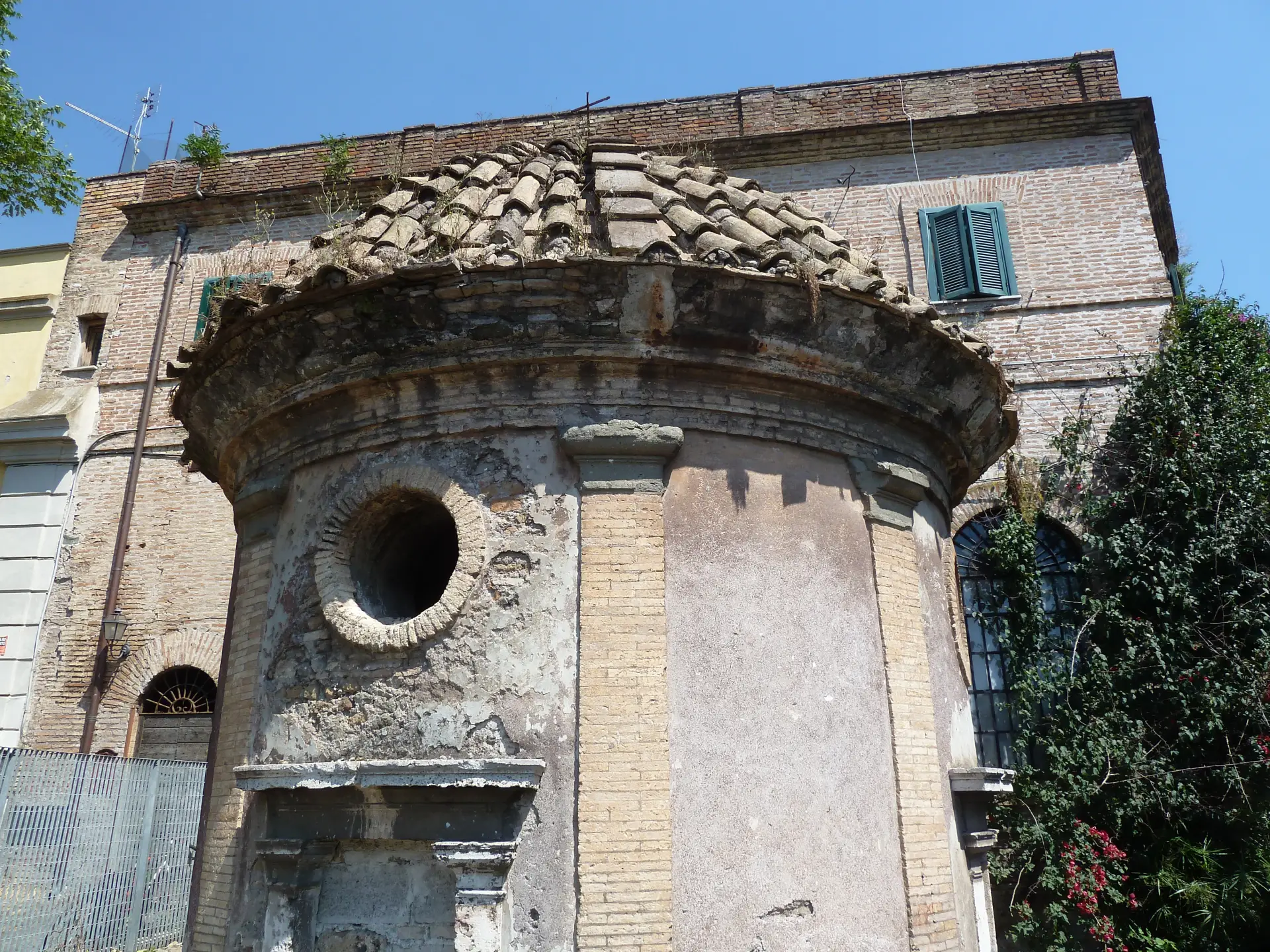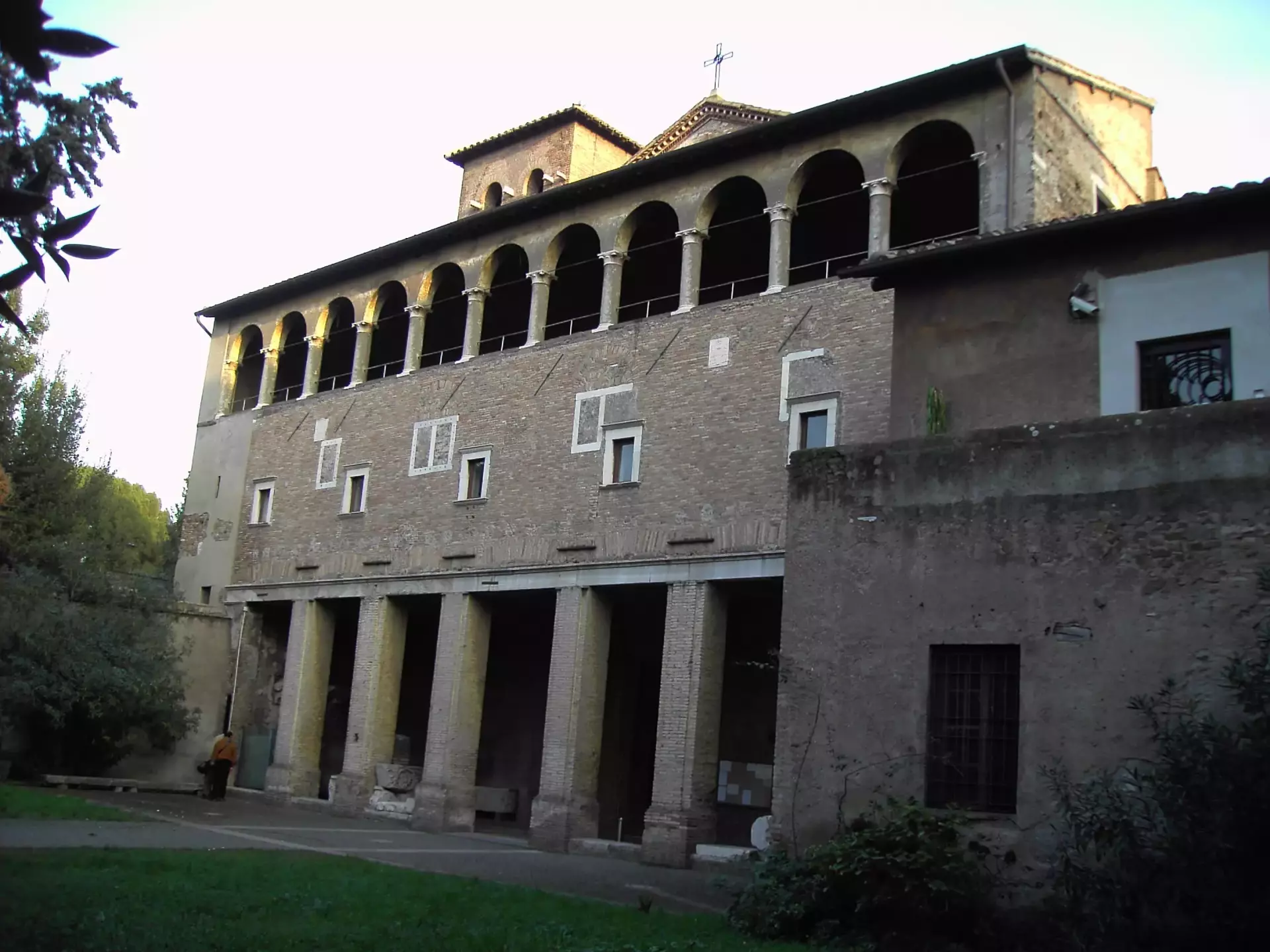
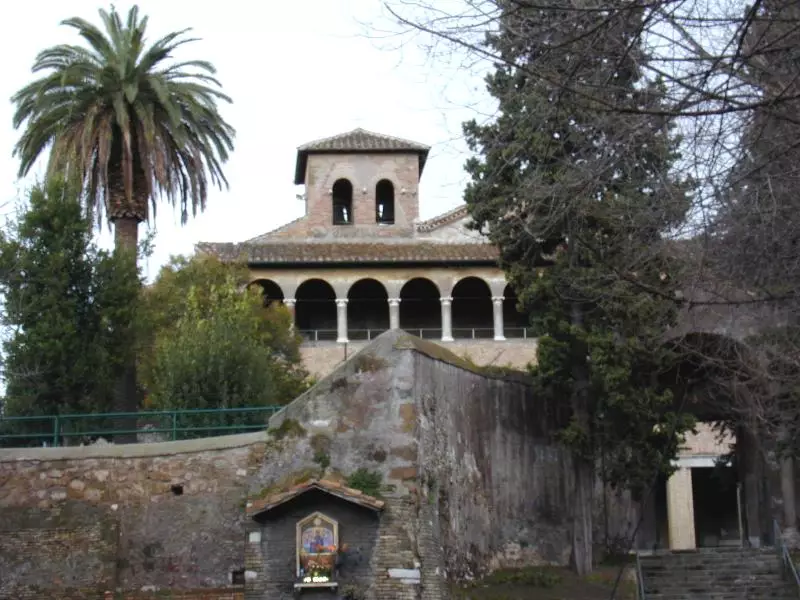
San Saba stands out as one of the most respected monasteries in Rome during the 8th and 9th centuries. Over the years, the church has been developed and restored, leading to a unique blend of architectural styles that reflect its long history.
Visitors can admire beautiful floor mosaics that showcase the craftsmanship of earlier times. On the left side of the church, there are fascinating frescoes, offering a glimpse into the art and culture of centuries past. These details add to the character and atmosphere of San Saba, making it a notable part of Rome's religious and historical landscape.
Source - https://en.wikipedia.org/wiki/San_Saba,_Rome
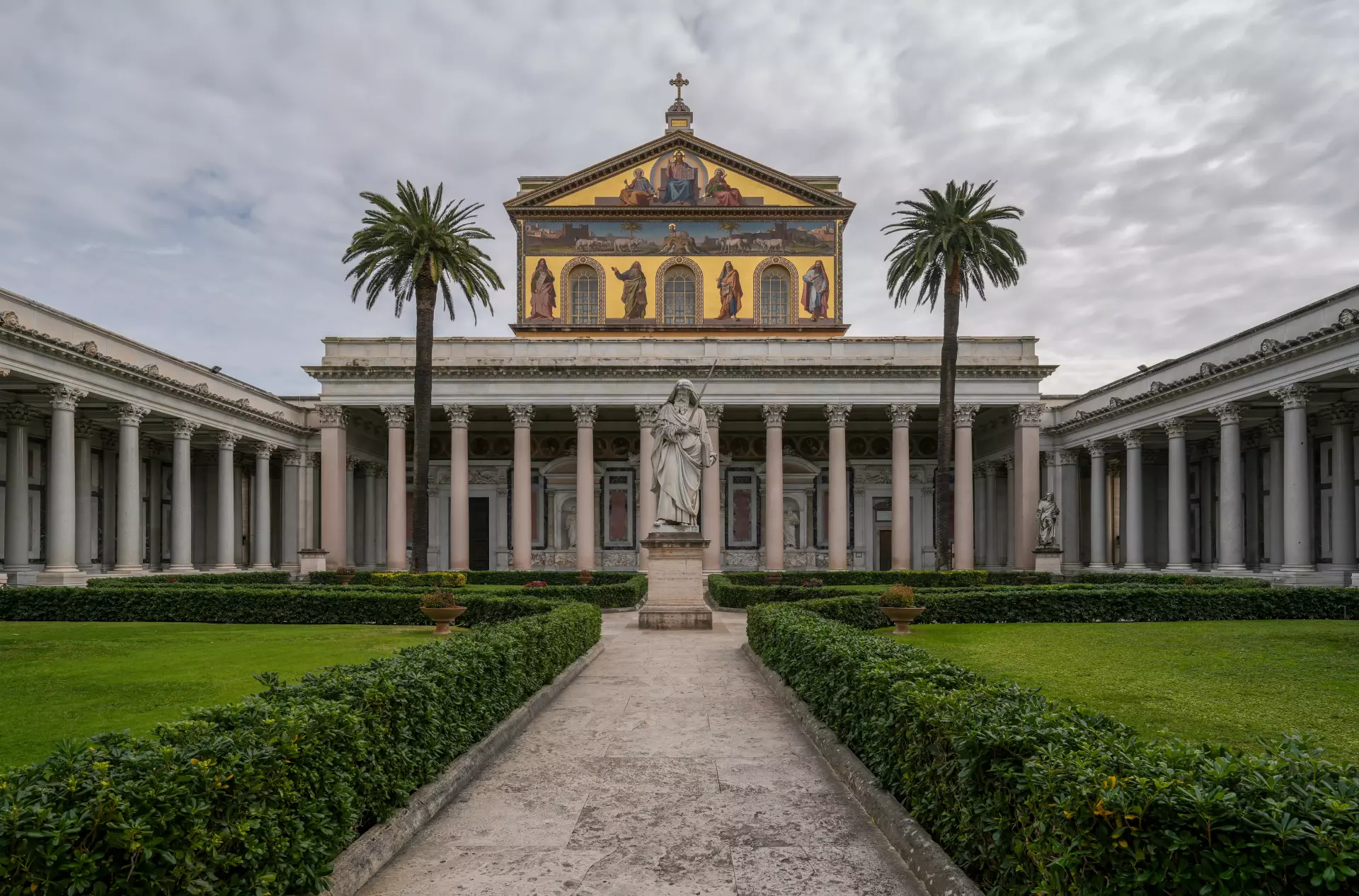
Next door to the Pyramid, this fine gate in the Aurelian Wall is named after St. Paul as the Via Ostiense leads to the basilica of St. Paul's Outside the Walls (see Rome/South).
They are posted at entrances to the Vatican City to provide security and protect the Pope. They wear very colourful clothing, similar to the uniforms worn by Renaissance-era soldiers. The Pontifical Swiss Guards is also the smallest and oldest standing army in the world, founded in 1506 by Pope Julius II. The origins of the Swiss guards, however, go back much further as the popes had regularly imported Swiss mercenaries during the 1400s.
The Celian Hill is one of the seven hills of Rome. You immediately see the church of San Gregorio Magno. On this site monks were trained before setting off as missionaries to England at the end of the 6th Century. Further up the hill is Santi Giovanni e Paolo. At this point it is difficult to believe you are in the middle of a major city. This church was built in 398 over the home of two Roman soldiers, John and Paul, who were martyred for their Christian beliefs in 362. Excavations show that there were several burials on the site, a risky business as burials were illegal at that time. After the church you come to the back entrance of the Villa Celimontana park (jazz festival nightly in late June-August). The modern buildings before you reach the park are owned by Silvio Berlusconi’s television company. By the main entrance of the park note the boat-like fountain known as the “Navicella”. As you exit the main entrance to the left is the church of S. Maria in Domnica, which has some interesting mosaics. Next to this church is the Porta Esquilina, one of the gates from the original Servian walls of Rome. It dates back to the 4th century BC.
The 4th rebuilding of the meeting place for the Roman Senate, once converted into a church during the Middle Ages, but now restored since the 1930s.
A 1st-century tomb surrounded by two farmhouses from the Middle Ages, one of which used to be a cheese store. Rather hidden behind a high wall, the tomb is rarely open to the public. You might be lucky on a Sunday: on the third Sunday of every month there is a guided tour at 11:00.
The two museums are on opposite sides of the Piazza del Campidoglio, It is recommended to book tickets online Built in the 17th century to a design based on an architectural sketch by Michelangelo. Highlights include the ancient Colossus of Constantine statue (the Colosseum was probably named for another giant statue, the Colossus of Nero which stood near the Flavian Amphitheatre as the Colosseum was originally known), The Dying Gaul, a magnificent marble sculpture that copies a bronze Greek original of the 3rd century BC and the Capitoline Venus. It also contains the remarkable original gilt bronze equestrian statue of emperor Marcus Aurelius (the one in the piazza is a replica). Also based on a Michelangelo architectural plan, this compact gallery is well endowed in classical sculpture and paintings. Highlights include the small 1st-century-BC bronze Lo Spinario, a Greek statue of a little boy picking a thorn from his foot; the Lupa Capitolina (Capitoline Wolf), a rare Etruscan bronze statue probably dating from the 5th century BC; and (in the entrance courtyard), the massive head, hands, foot and kneecap from a colossal statue of Constantine the Great. The palace also contains a Pinacoteca (Picture Gallery) with paintings mainly from the 16th and 17th centuries - highlights include: Caravaggio's Fortune-Teller and his curious John the Baptist; The Holy Family, by Dosso Dossi; Romulus and Remus, by Rubens; and Titian's Baptism of Christ.
A magnificent patrician house with beautiful gardens. It was built by order of Cardinal Alessando Albani in 1743-1763 in order to accommodate his collection of art. The collection was taken care of by the Winkelmann, adviser and friend of the cardinal. In Rome, Winkelmann wrote his "Geschichte der Kunst des Altertumns (HIstory of the Art of Antiquity)", which made him the founder of classical archaeology. The painted ceiling of the great hall depicting Mount Parnassus is by the German painter Anton Raphael Mengs who was considered as the greatest painter in Rome in the 18th century. A permission to visit is to be requested by email or fax from Principi Torlonia's administration where you'd need to indicate date and time desired, your name and number of people in your party (max. 10).
Rome's museum of contemporary art, housed in a former industrial complex. Rotating exhibitions, each one usually lasting about 4 months. The MACRO Testaccio exhibition space is located in Aventino-Testaccio.
A lovely, if somewhat run-down park (parts of it are blocked due to the poor state of the roads) with statues and a great view on the city.
A tomb for the wealthy Gaius Cestius, who died in 12 BC. Admission to the monument only by guided tours on specific dates (2nd and 4th Saturday every month, and in combination with a ticket to the Museum of Via Ostiense also on the 1st and 3rd Saturday of every month).