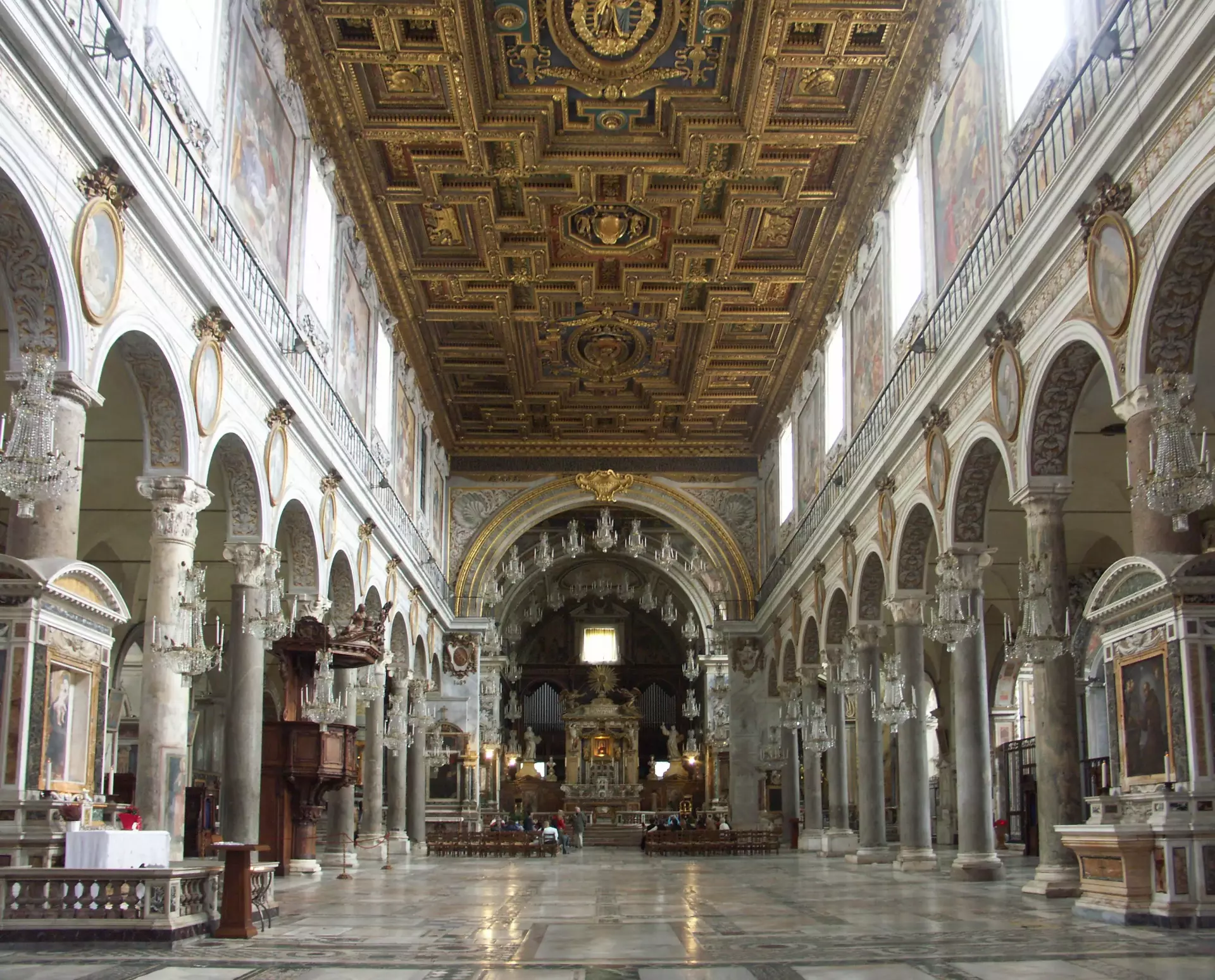
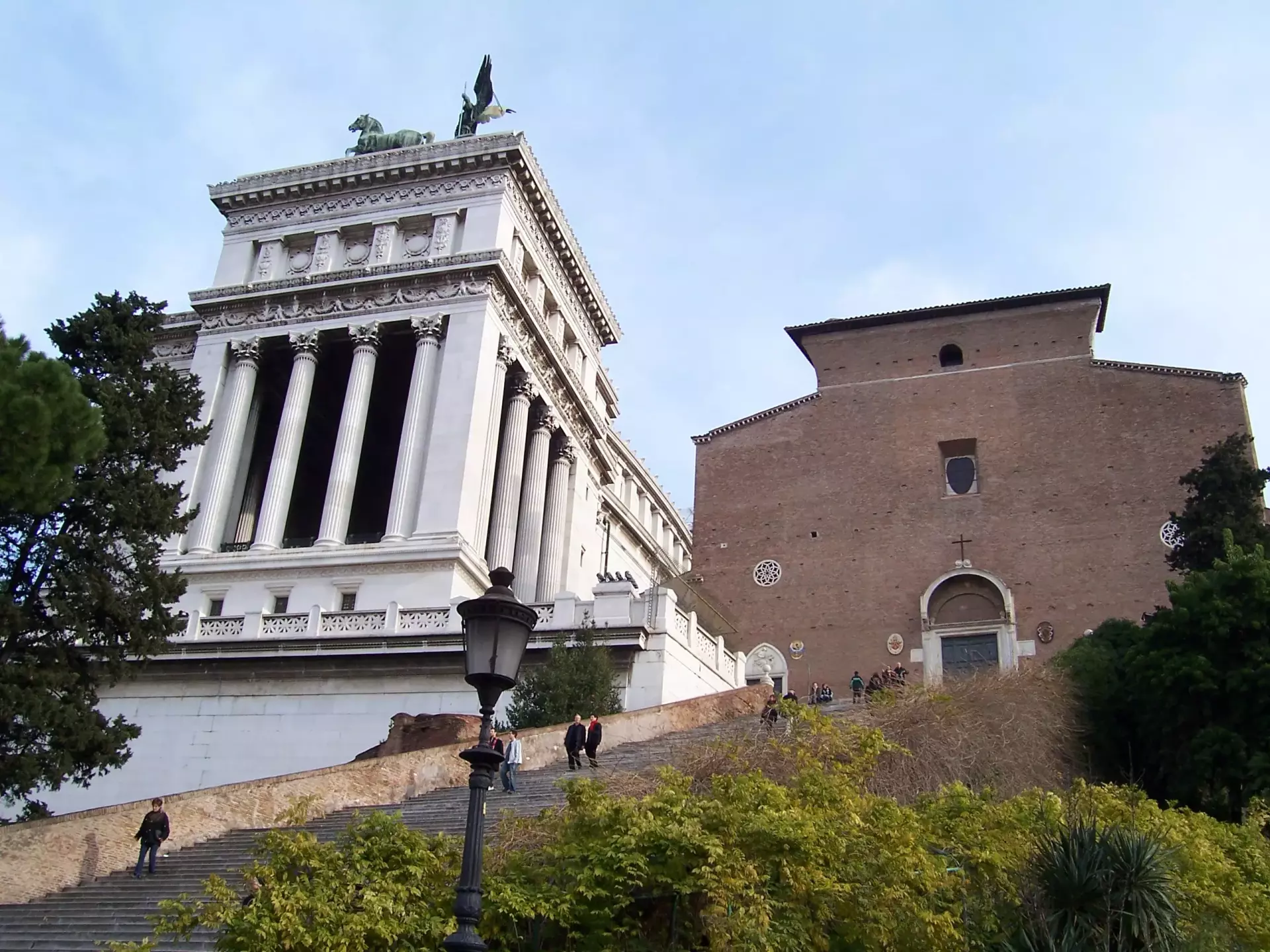
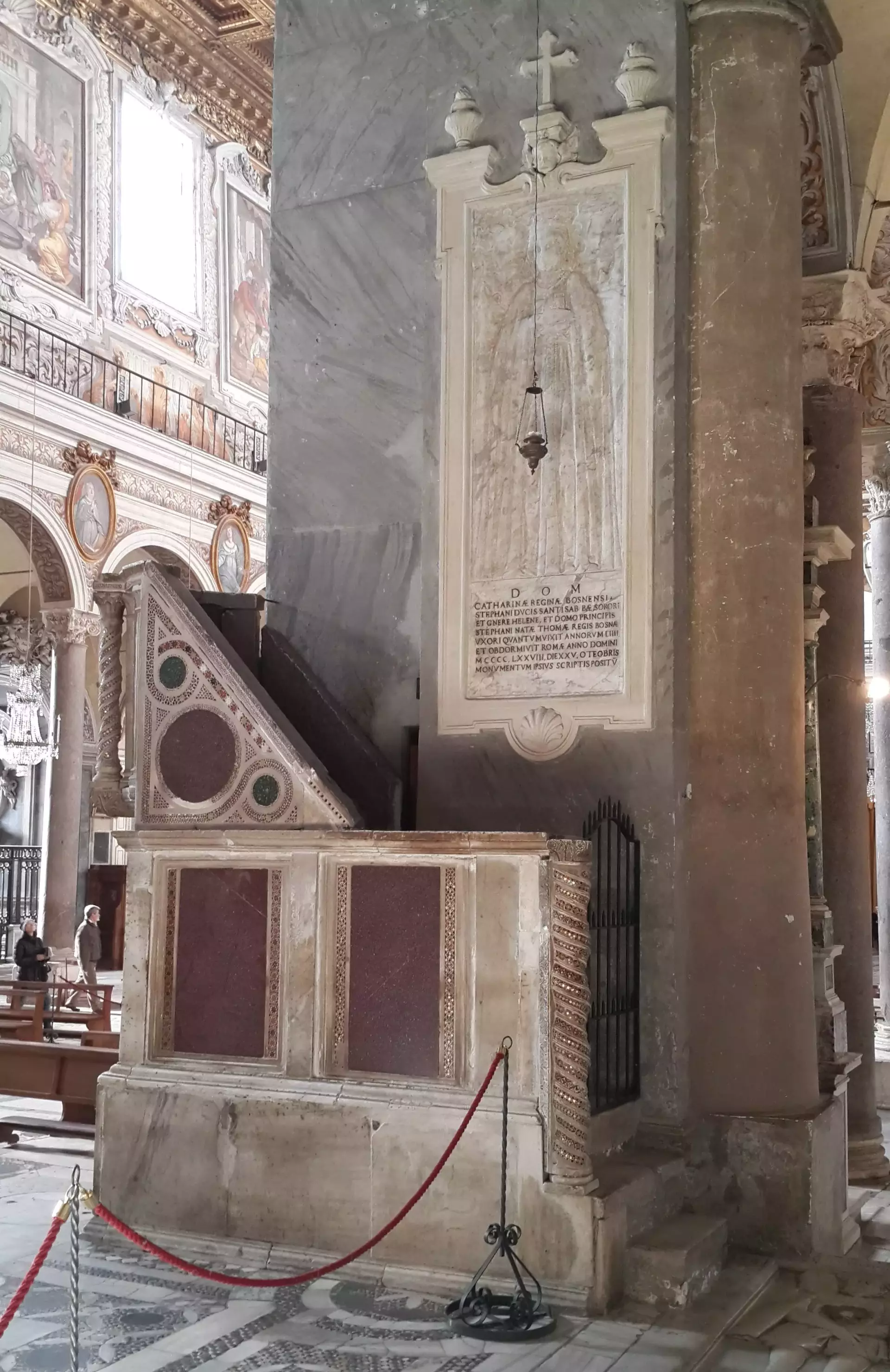
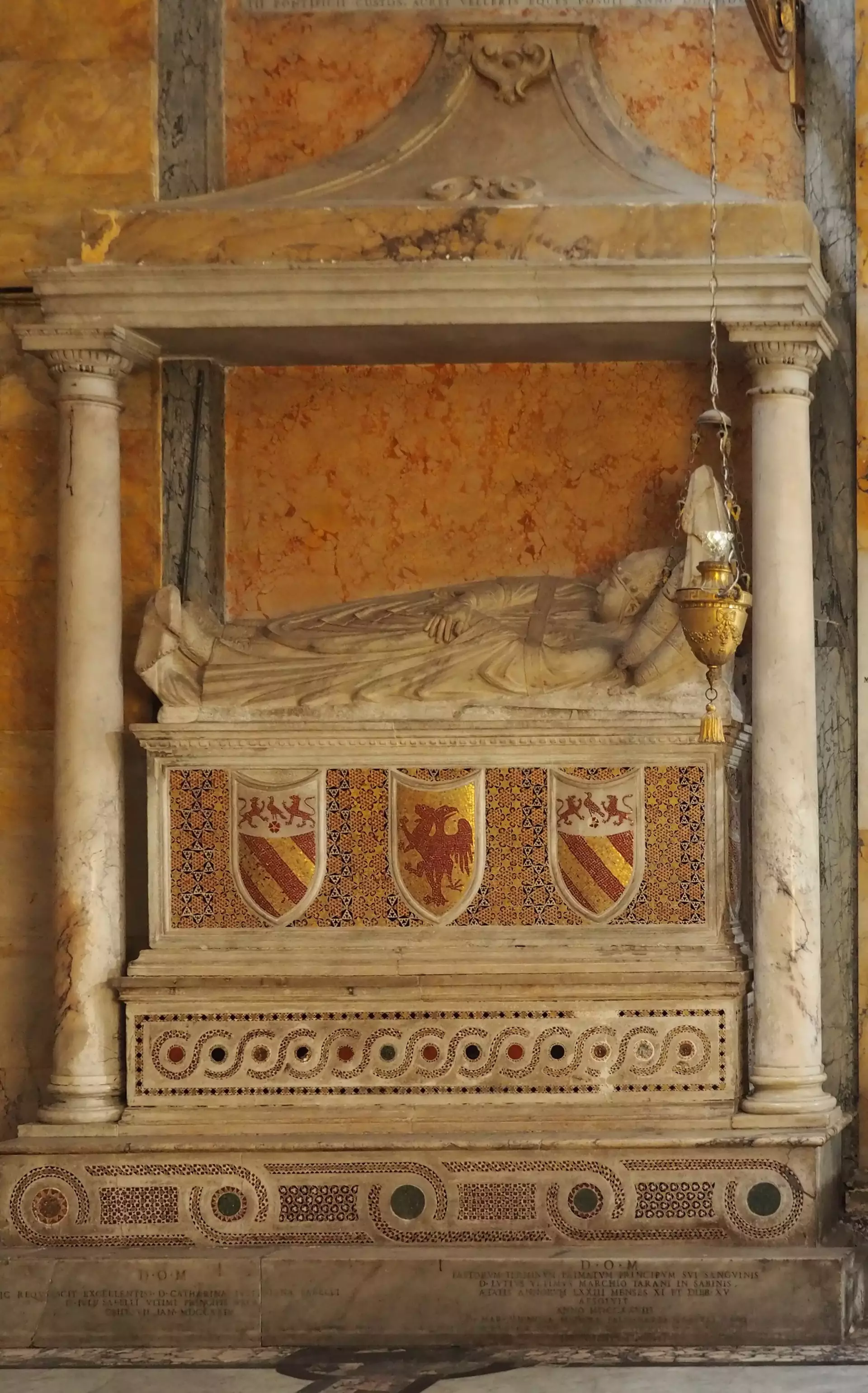
Perched atop the Capitoline Hill in Rome, Santa Maria in Aracoeli is a church that commands attention—not with its exterior, but with the splendor that lies within. At first glance, its plain stone façade may seem unremarkable, almost austere compared to the ornate basilicas scattered across the city. But step inside, and the atmosphere changes entirely.
Crossing the threshold, visitors are greeted with an interior that feels more like a grand ballroom than a traditional church. Glittering chandeliers hang from the high, coffered wooden ceiling, casting a warm glow over marble floors and richly decorated chapels. The nave is lined with twenty-two ancient columns, each one unique, hinting at the church’s long and layered history.
Santa Maria in Aracoeli dates back to the 6th century and is woven into the very fabric of Rome’s past. According to local legend, it was built on the site where Emperor Augustus had a vision of the Virgin Mary and the Christ Child, an event commemorated by the church’s name—“Aracoeli” translates to “Altar of Heaven.”
Among the church’s many treasures is the intricately carved wooden ceiling, added to commemorate the victory at the Battle of Lepanto. Visitors also flock to see the revered statue of the Santo Bambino, a much-loved figure during Christmastime, and the magnificent frescoes that adorn the chapels. Yet, perhaps the true magic of Santa Maria in Aracoeli lies in how it continually surprises: from the grand staircase that leads to its doors, to the opulent interior that belies its humble exterior, every step reveals a new layer of wonder.
So next time you find yourself wandering the Capitoline Hill, don’t be fooled by appearances. Santa Maria in Aracoeli is a testament to the age-old adage: never judge a book by its cover.
Source - https://en.wikipedia.org/wiki/Santa_Maria_in_Ara_Coeli
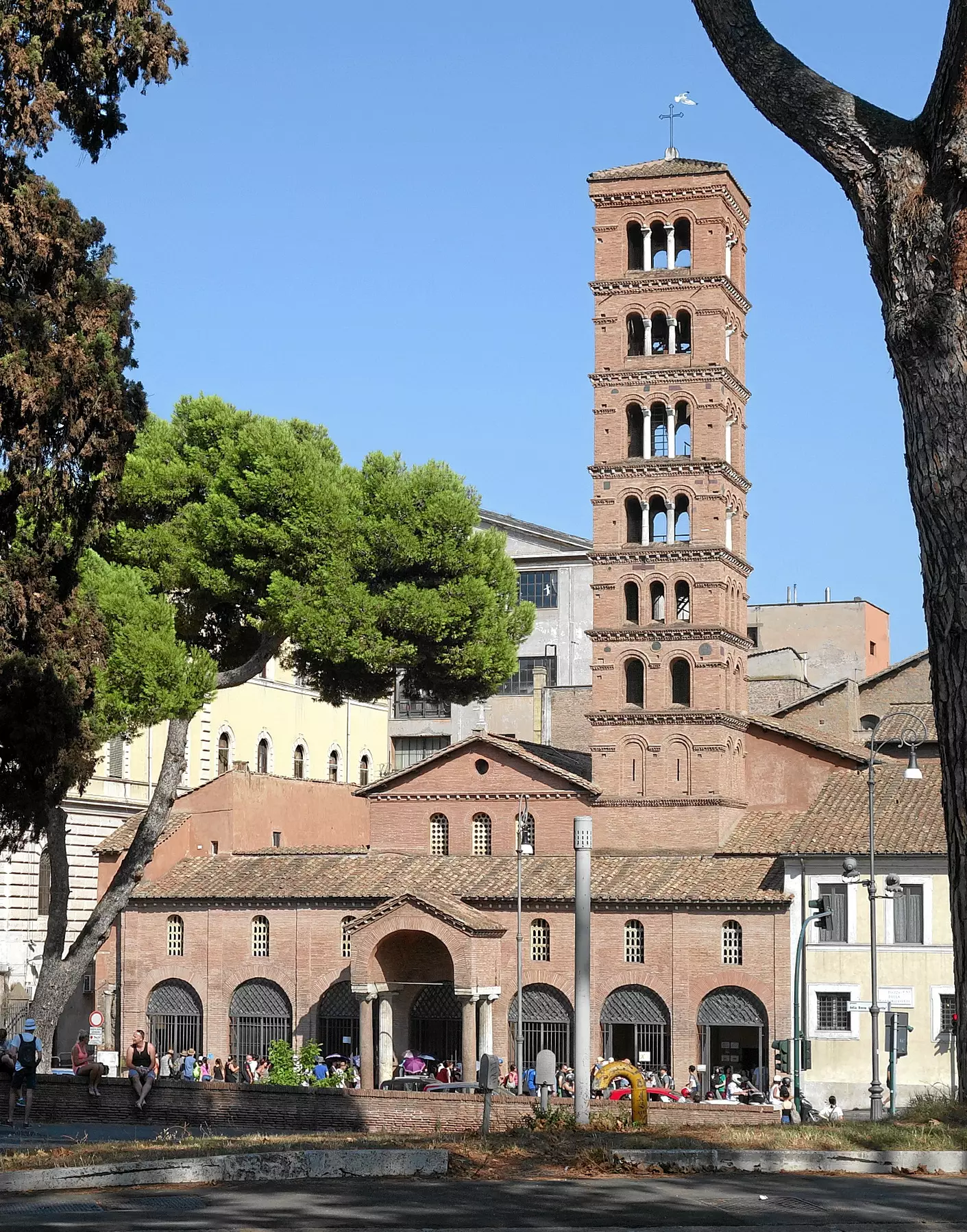
In addition to Santa Maria in Cosmedin there is a lot to be seen around this piazza. Opposite the church is the round temple dedicated to Hercules Invictus (the Unconquered Hercules), and not far from that the rectangular Fortuna Virilis, both constructed in the 1st Century. Opposite, to the back of the piazza is the Arch of Argentari and behind that the church of San Giorgio in Velabro, the front of which was repaired after being damaged by a terrorist bomb in July 1993.
This is the largest square in Rome. It sometimes hosts pop concerts and is the focal point for Rome's New Year's Eve celebrations. The twin churches Santa Maria dei Miracoli (1681) and Santa Maria in Montesanto (1679) used to provide a clear welcome to Rome for those coming from the north. Much older, to the north of the piazza is yet another Santa Maria (see below). The Piazza del Popolo is considered as one of the most beautiful squares in Europe. It was enlarged and two streets, the Via di Ripetta and the Via del Babuino were added by order of Pope Sixtus V. In the middle of the square is an obelisk (see below). In 1809-1816, Giuseppe Valadier, Roman architect of French origin, gave the square its characteristic oval shape.
The Ghetto lies between the island in the River Tiber and the Theatre of Marcellus and includes Rome’s synagogue. It was established in 1555 as a result of a Papal Bull by Pope Paul IV that required all Jews to live in the area, considered one of the least desirable quarters of the city, as it was subject to constant flooding by the river. The area was originally enclosed by walls and gates that were only open during the day. With the end of the Papal States in 1870, the requirement that Jews live in the Ghetto came to an end. The walls were torn down in 1888 and much of the ghetto was demolished. However, there is still much to see, including walls of buildings that incorporate Roman ruins, and there are several good Jewish restaurants.
Built in honour of Victor Emmanuel, the first king of a unified Italy, this vast structure may appear to be solid white marble but actually contains many rooms inside. There are two permanent museums, one on Italian Reunification and one on emigration from Italy, as well as other spaces that host rotating exhibitions. A walk through the Flag Room leads to the tomb of the unknown soldier. Good views from half-way up but you can also pay €10 (€2 concessions) and take a lift all the way to the top.
Early Roman houses dating back to the 1st century, believed to be homes of early Christians. Well-preserved frescoes and a small museum.
Simple and elegant lines make up this building, whose construction began in 1480 for Count Girolamo Riario, nephew of Papa Sisto IV, and was taken up by architect Martino Longhi for the new owner, Cardinal Marco Sittico Altemps. Today it houses one of the branches of the National Museum of Rome, showcasing ancient and Renaissance sculptures, and the results of the 16th/17th-century fashion for 'completing' ancient sculptures missing heads or arms.
Located a short walk west of the Colosseum, this well-preserved monumental arch was erected (soon after 315) to commemorate the victory of Constantine, the first Christian emperor, over his rival Maxentius at the Battle of the Milvian Bridge in 312. In general design, the Arch of Constantine imitates the century-earlier Arch of Septimius Severus (nearby in the Forum). The three arches are decorated utilizing mainly materials plundered from other imperial monuments by Trajan, Hadrian and Marcus Aurelius. The quality of its sculptural decoration, however, betrays the slow degradation that Classical Roman sculpture had experienced in the 3rd century AD.
A 19th-century addition to the square, made to balance the Fontana del Moro.
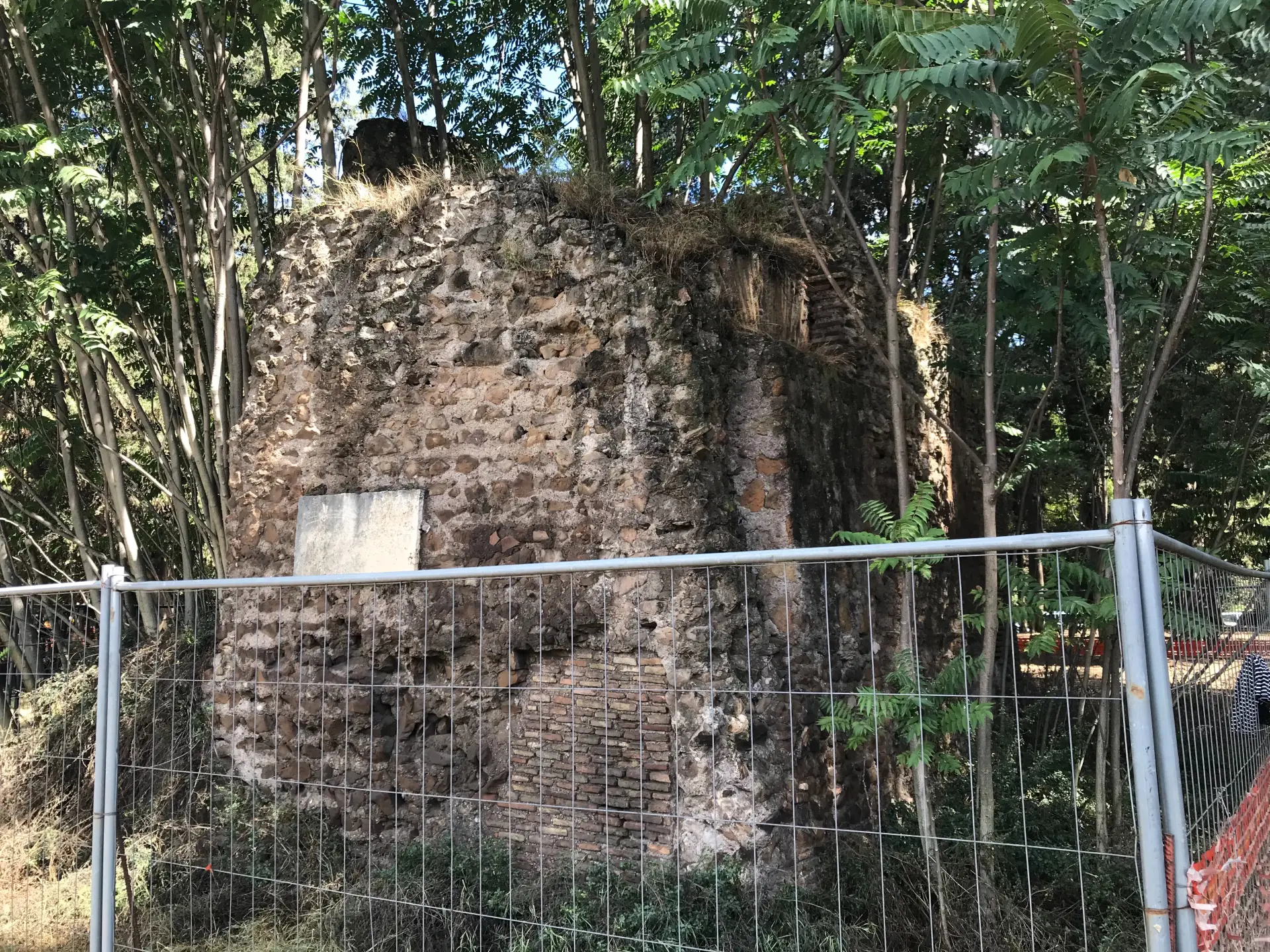
This archaeological site displays the thermal baths of the villa of the wealthy Herod Atticus. Also in the complex is a restored villa, until 2002 a private residence, that has an exterior completely covered with pieces from Roman ruins, including pipes used in the baths. There are some very helpful staff to show you around, although they only speak Italian. An interesting photographic exhibition in the house traces the development of the Appian Way over the last century. Almost opposite the entrance to the baths is a ruined tower known as the Torre di Capo di Bove.
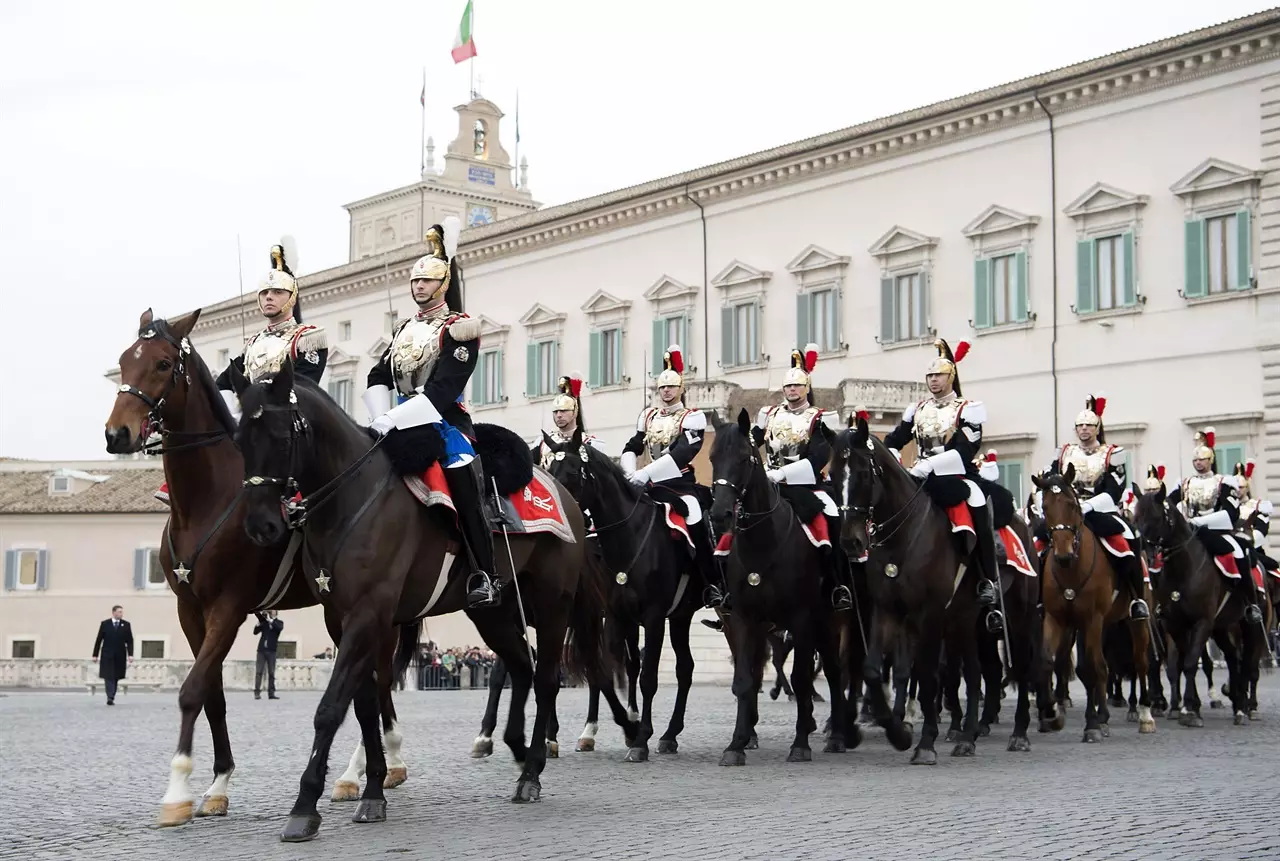
Home of the President of the Italian Republic, and the Quirinal Gardens. Built in 1573 as a papal summer residence, and has since also served as the residence for the pope and later for the king of Italy.
Home of the Abbot Primate of the Benedictine Confederation and Benedictine monks studying in Rome. Visit the monastic produce shop and listen to the best Gregorian chant in Rome during Vespers (19:15 each evening).
Built in 141 AD and dedicated to the Empress Faustina; after her husband emperor Antoninus Pius died in 161 AD the temple was rededicated to the couple.
The museum is dedicated to Napoleon Bonaparte and his family. After Napoleon's death in 1821 the Pope gave permission to his family to settle down in Rome. His sister married Prince Camillo Borghese.
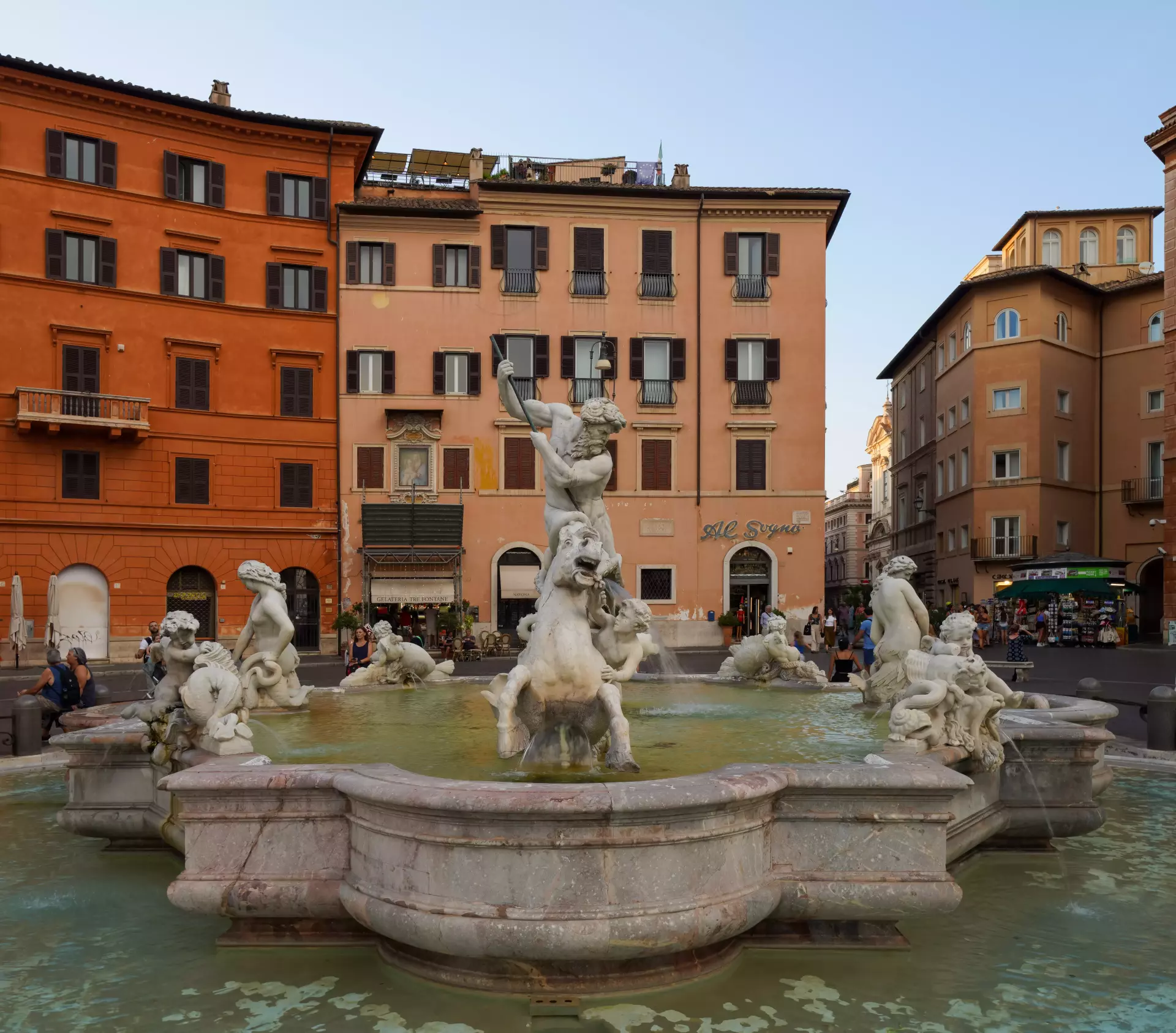
At the southern end of the Piazza, designed by Bernini but the main statue of the Moor was done by Giacomo della Porta and the other statues are 19th-century copies of the originals.
More of an enormous traffic circle than a piazza, but a good central location. The centerpiece is the enormous Vittorio Emanuele Monument (aka the Wedding Cake or the Typewriter) with the Capitoline hill next door. Mussolini used to harangue Romans from the first floor balcony of Palazzo Venezia (see under Museums), to the west of the square.
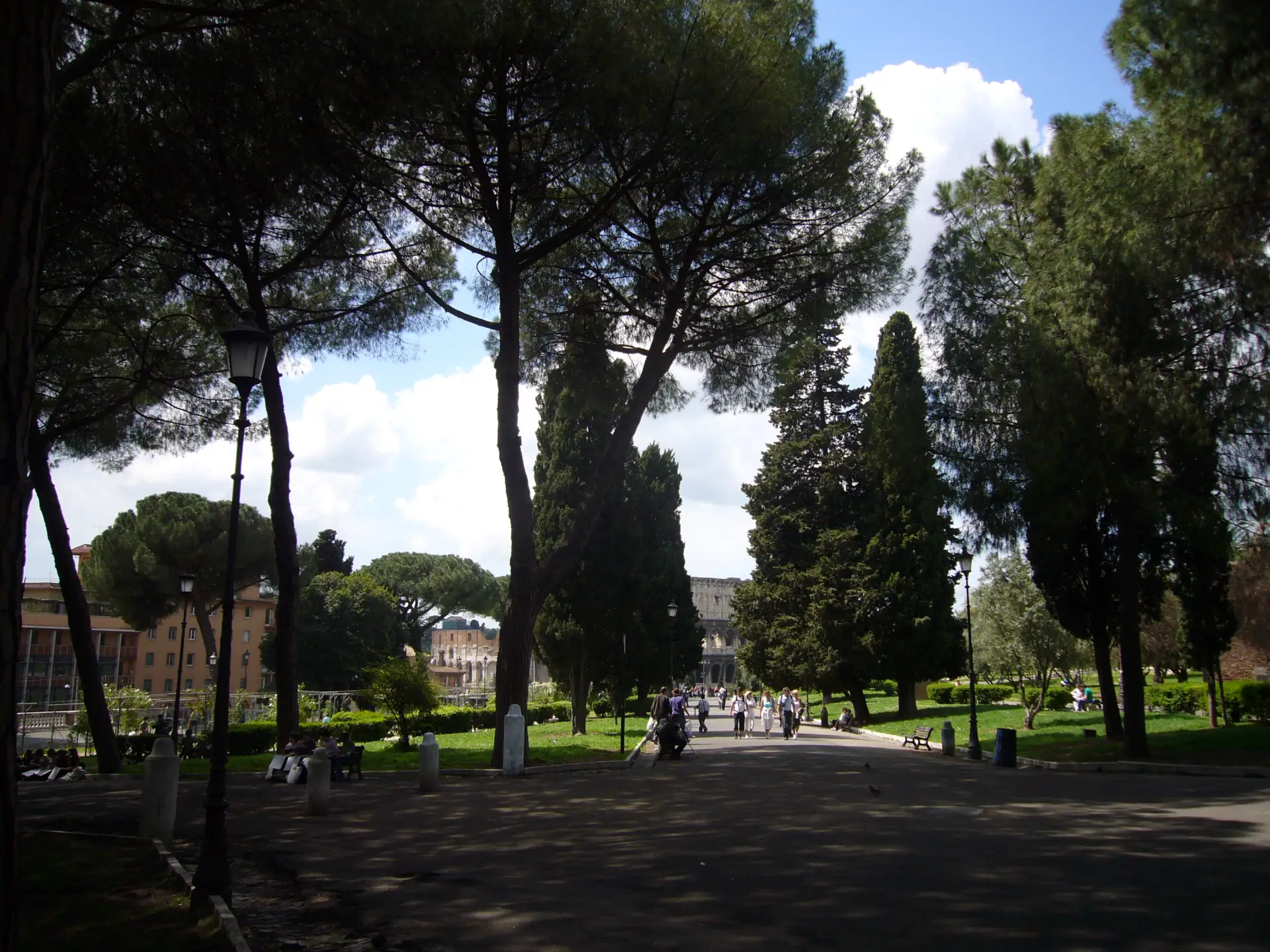
A lovely, if somewhat run-down park (parts of it are blocked due to the poor state of the roads) with statues and a great view on the city.