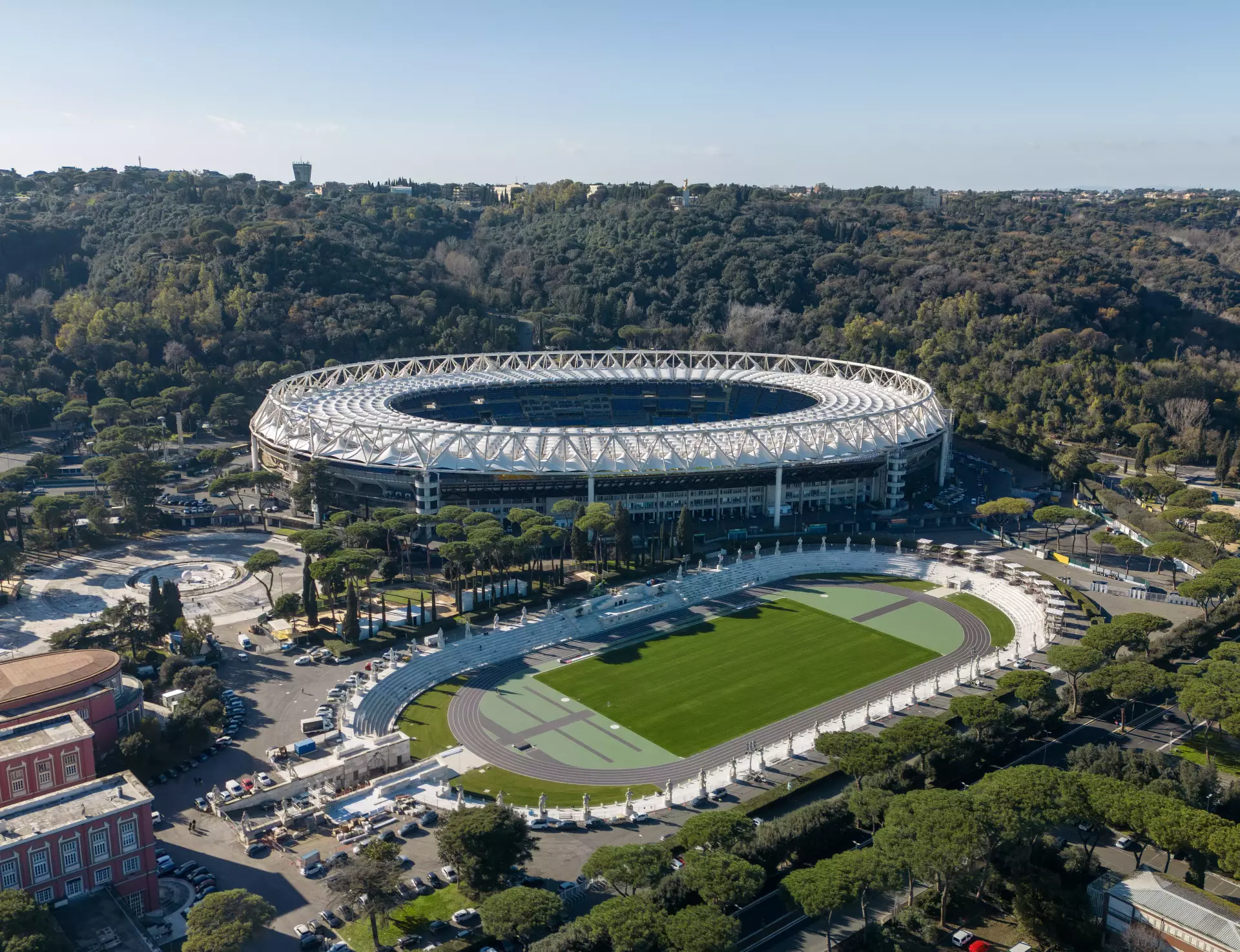
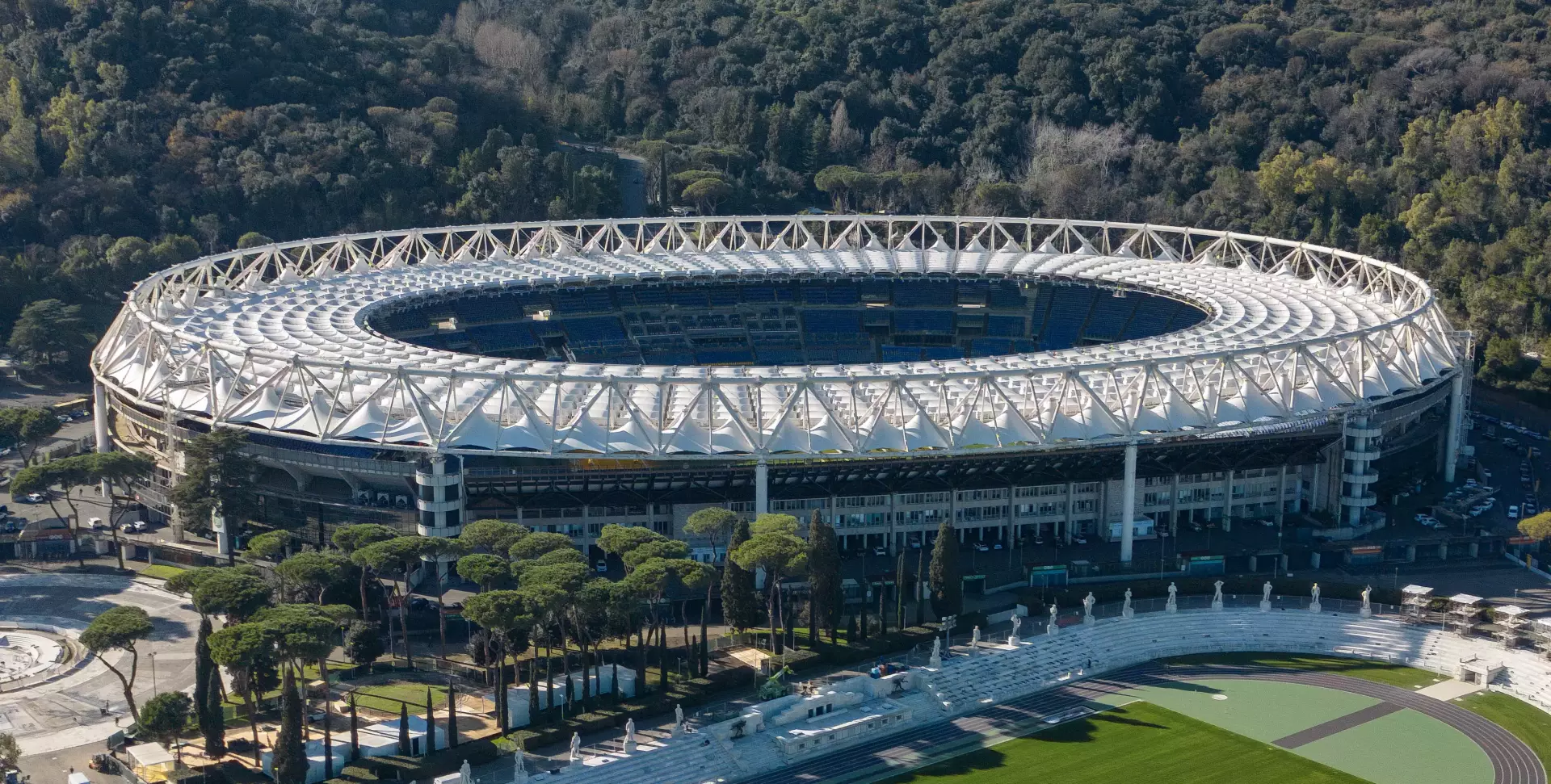
Stadio Olimpico stands on the west bank of the River Tiber, about three kilometers directly north of the Vatican. This famous stadium is a key part of a major sports complex, an area built for the 1960 Olympic Games.
The sports complex includes more than just the main stadium. Visitors will also find the Olympic swimming pool and a well-known tennis center. Every year, the tennis courts host the ATP and WTA Italian Open, attracting top players from around the globe.
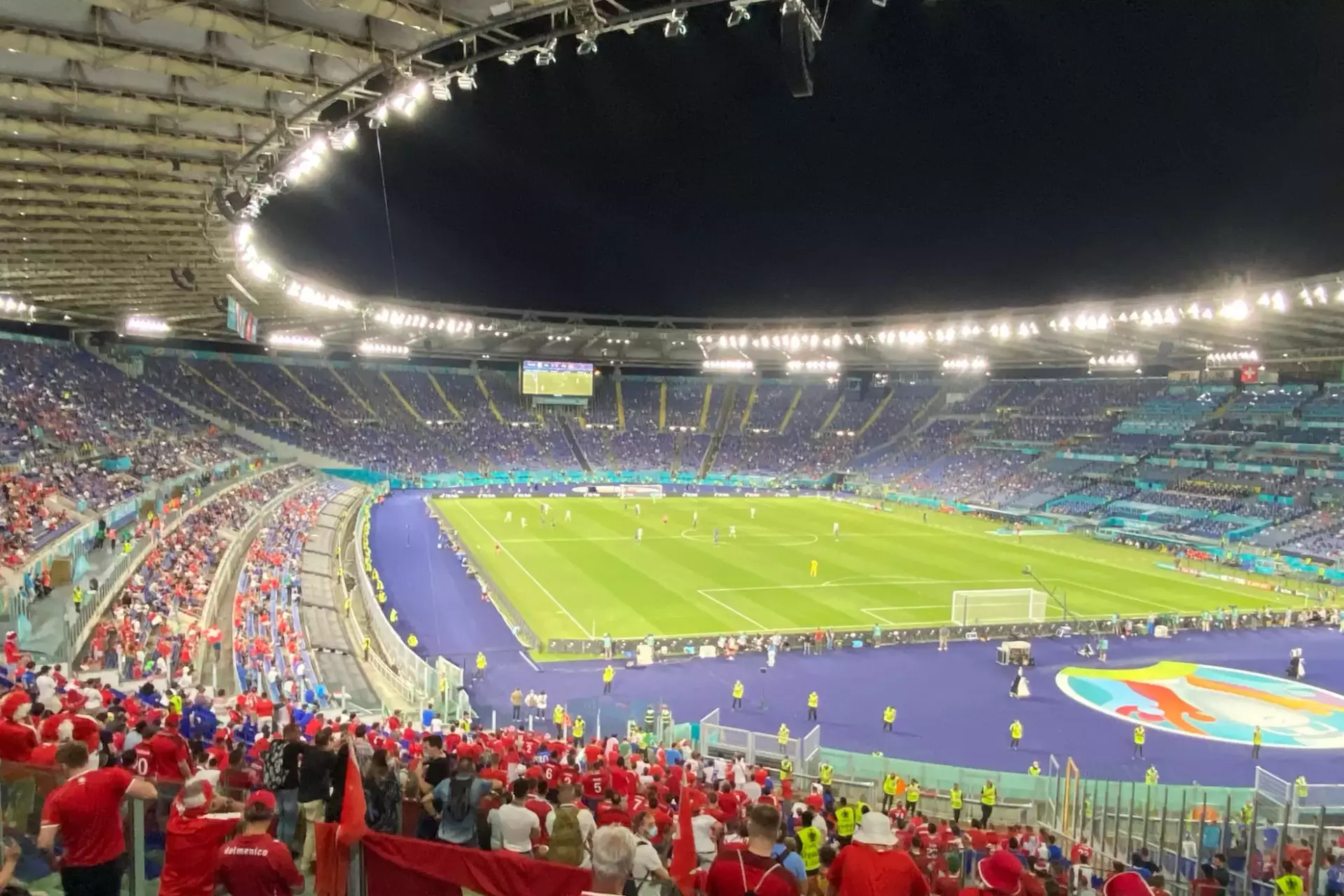
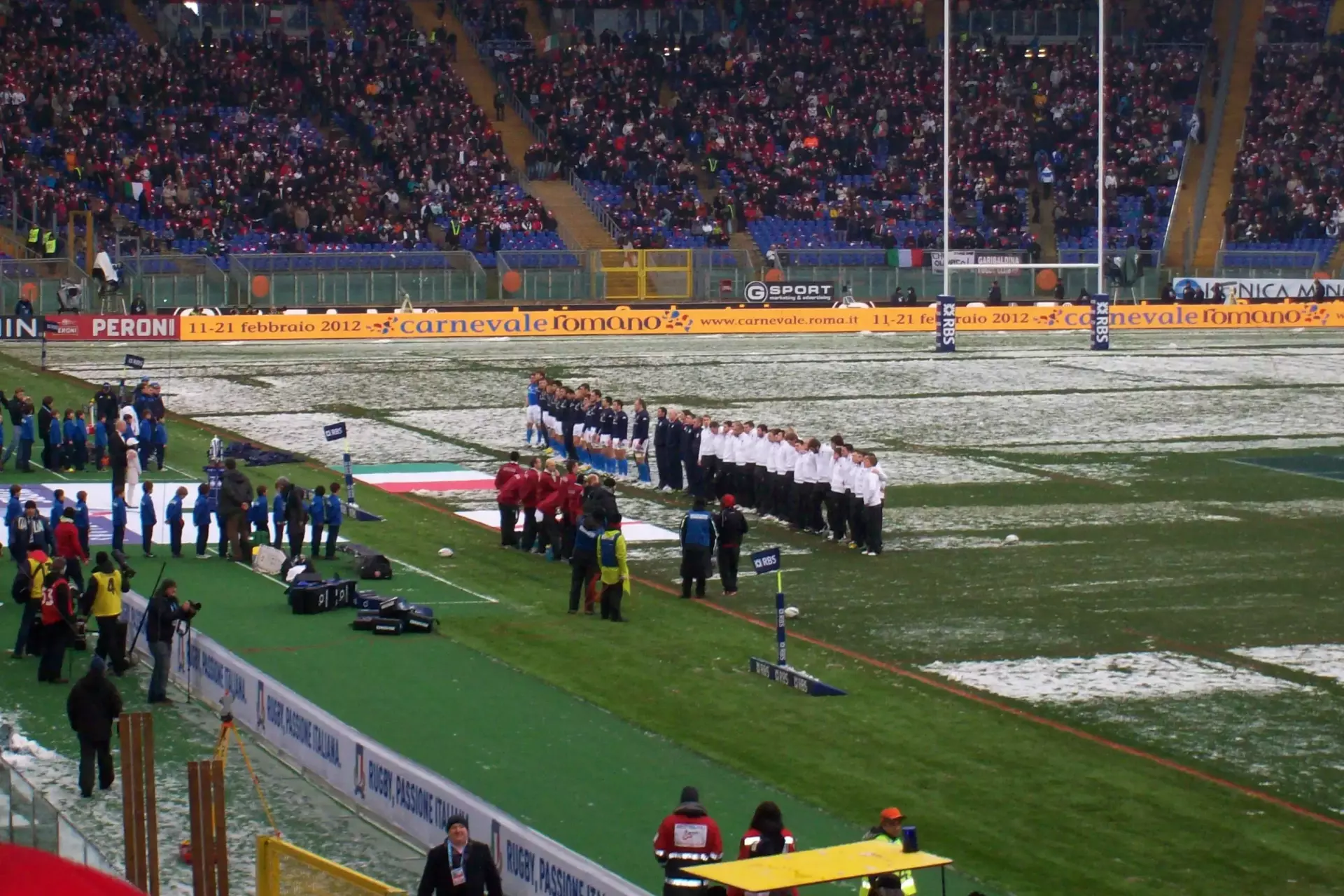
With a seating capacity of over 80,000, Stadio Olimpico is the largest sports venue in Rome. The stadium underwent major renovations to prepare for the 1990 FIFA World Cup finals. These changes included an extensive rebuild and the addition of a roof, making the stadium suitable for a range of international events and large gatherings.
Source - https://en.wikipedia.org/wiki/Stadio_Olimpico
A tomb for the wealthy Gaius Cestius, who died in 12 BC. Admission to the monument only by guided tours on specific dates (2nd and 4th Saturday every month, and in combination with a ticket to the Museum of Via Ostiense also on the 1st and 3rd Saturday of every month).
Parco Savello is the name of the grounds and orange grove next to the Santa Sabina church at the top of the Aventino and also where you have one of the best views of the city. Families gather here to sit under the dozens of orange trees. The "Giardino degli Aranci" is also a well known spot for lovers at night. The best views are arguably from Janiculum hill, just across the Tevere (Tiber) river. Immediately below you, the Tiber snakes its way through the city, and directly beyond it you can see the lively medieval quarter of Trastevere. Beyond that is the majestic dome of St. Peter's Basilica, with the historic centre of Rome visible to the right.
Designed by Bramante to mark the spot of St. Peter's martyrdom, this delightful miniature building is considered a masterpiece of Renaissance architecture. Open to the public.
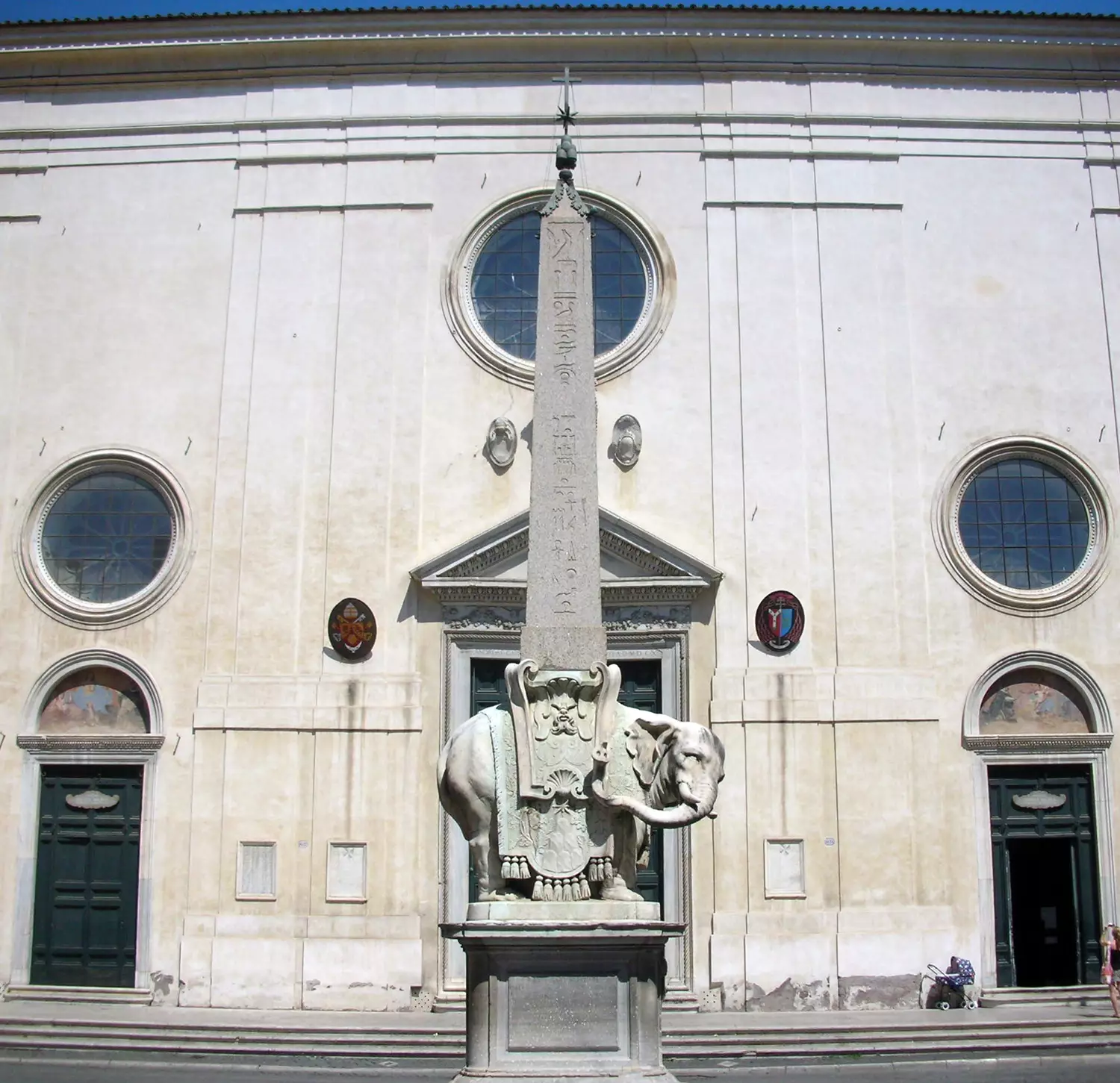
One of Bernini's masterpieces, an obelisk on the back of an elephant.
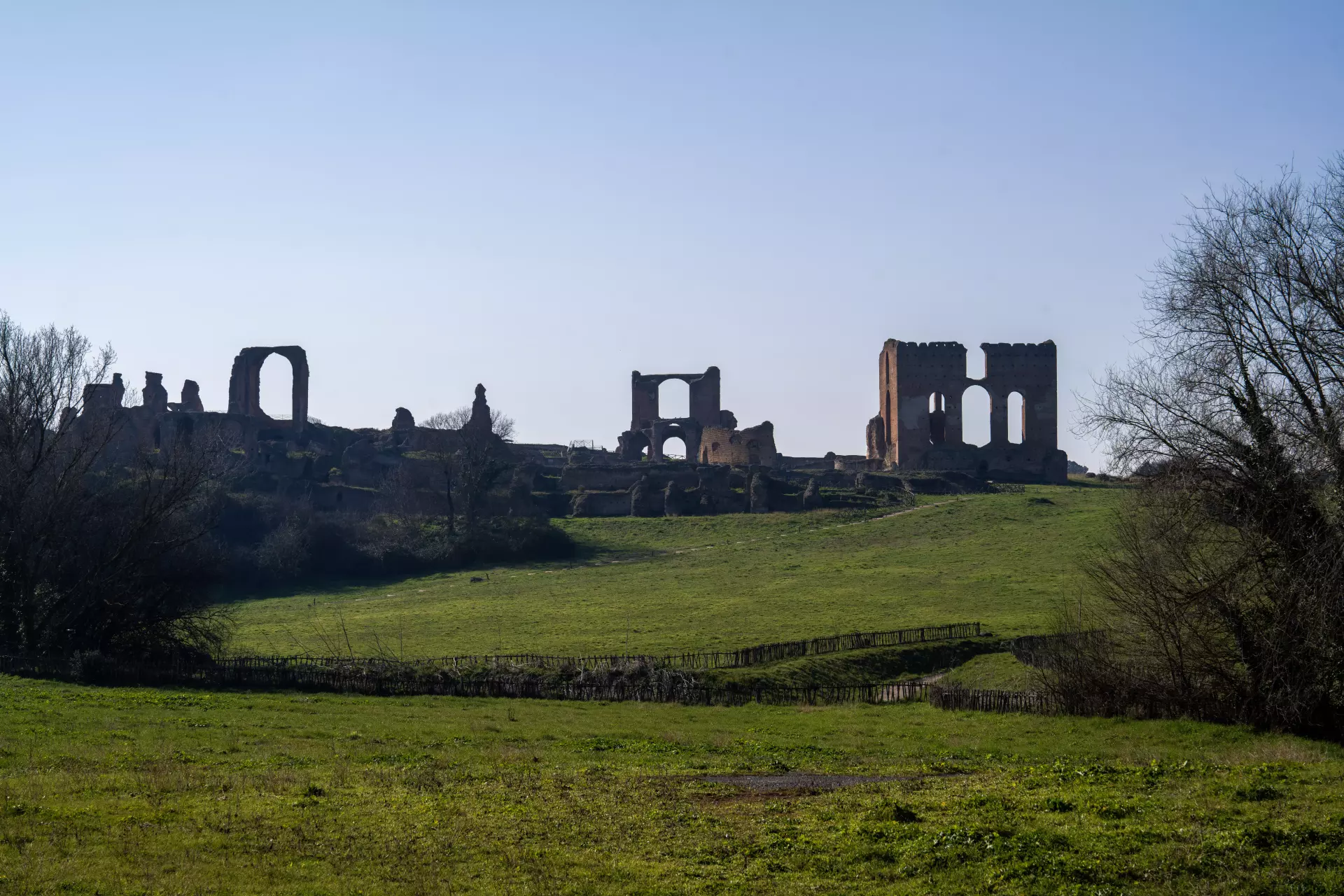
This archaeological site displays the thermal baths of the villa of the wealthy Herod Atticus. Also in the complex is a restored villa, until 2002 a private residence, that has an exterior completely covered with pieces from Roman ruins, including pipes used in the baths. There are some very helpful staff to show you around, although they only speak Italian. An interesting photographic exhibition in the house traces the development of the Appian Way over the last century. Almost opposite the entrance to the baths is a ruined tower known as the Torre di Capo di Bove.
This church, which was commissioned by Ferdinand and Isabella of Spain, marks the point where, according to tradition, St. Peter was crucified. Particularly interesting for Irish visitors as it contains the graves of three Gaelic Chiefs who fled Ireland in 1607.
This is the attractive park on the hillside directly west of the Colosseum. Visible ruins in the area come from the Baths of Trajan. These baths were built on the top of the ruins of Domus Aurea - the Golden House of Nero (the Colosseum was built on the drained site of Nero's lake). The area underneath the park contains an enormous area from Nero's villa. It was restored at great expense in the 1980s and 1990s, opened to the public, and then closed again after a few years when it began to leak!
Permanent collection features paintings and drawings of Rome between the 18th and 20th centuries together with a fascinating black and white photo exhibition of Rome from 1950-80. Also offers rotating exhibitions, usually of the work of photographers.
With its strange Liberty- style buildings with influence from the Art Nouveau of the 1920s this small bunch of blocks is one of the most interesting, and less known, landmarks of the city. A must see.
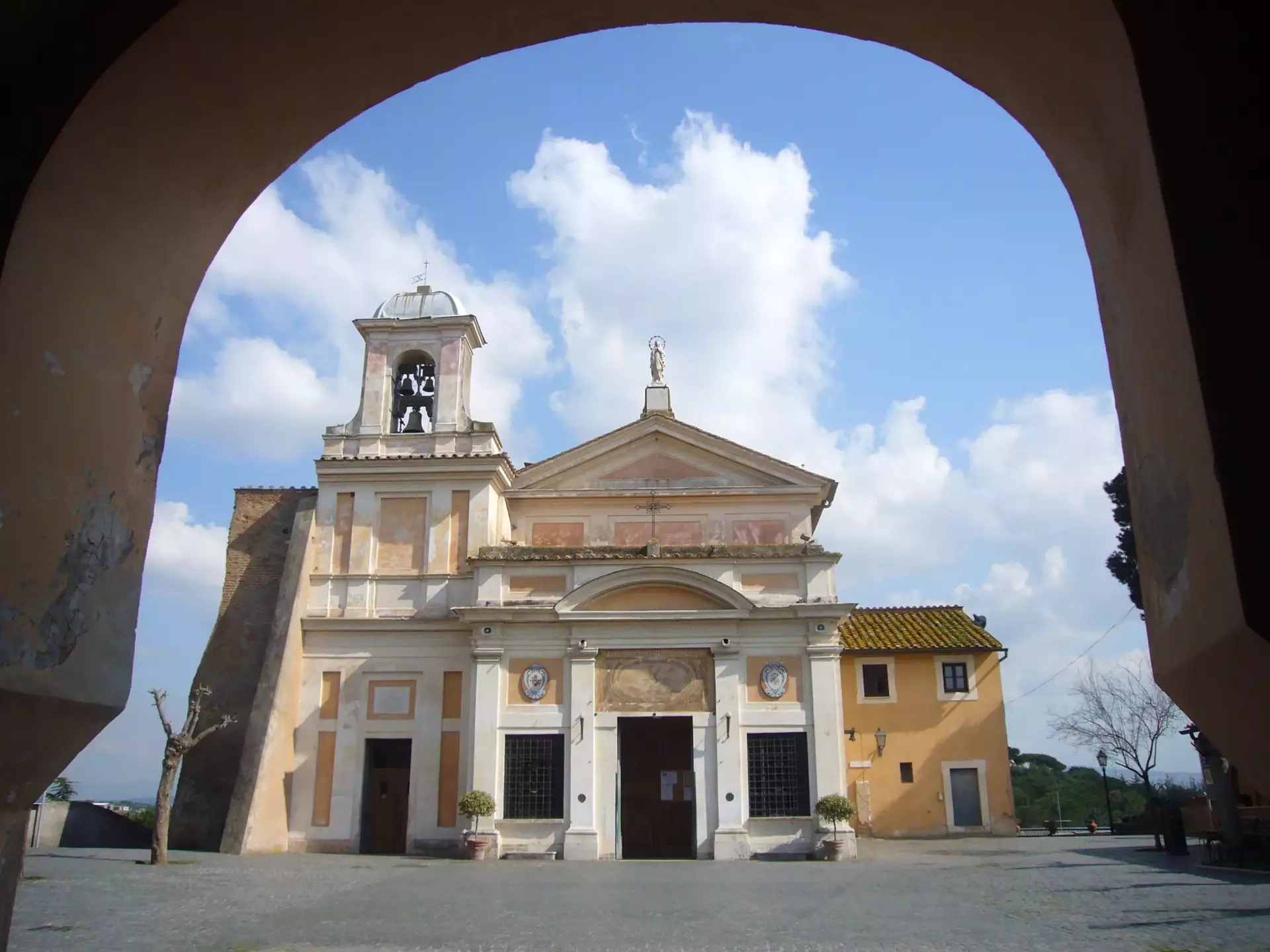
This church can be an interesting deviation if you are passing through its neighbourhood. It is believed to be the grave of the Saints Ciro and Giovanni, killed during the time of the Emperor Diocletian. The original name was Abba Cyrus and through Appaciro and then Appacero it finally became Pacera, very close to today's Passera. The building is on top of a 3rd century building still visible in the lower floor and in the underground. The main part of the building dates back to the 9th century as do the frescoes on the higher floor. Some of the frescoes have been restored. Downstairs there is a small quadrangular room and the underground, where the remains of the two Saints are supposed to be. There are still visible 3rd century traces of Roman frescoes; in front of the stair you can enjoy a small bird, the Justice, and an athlete while in the vault some eight apex stars. Bus 128,780,781,775 (first stop in Via della Magliana).
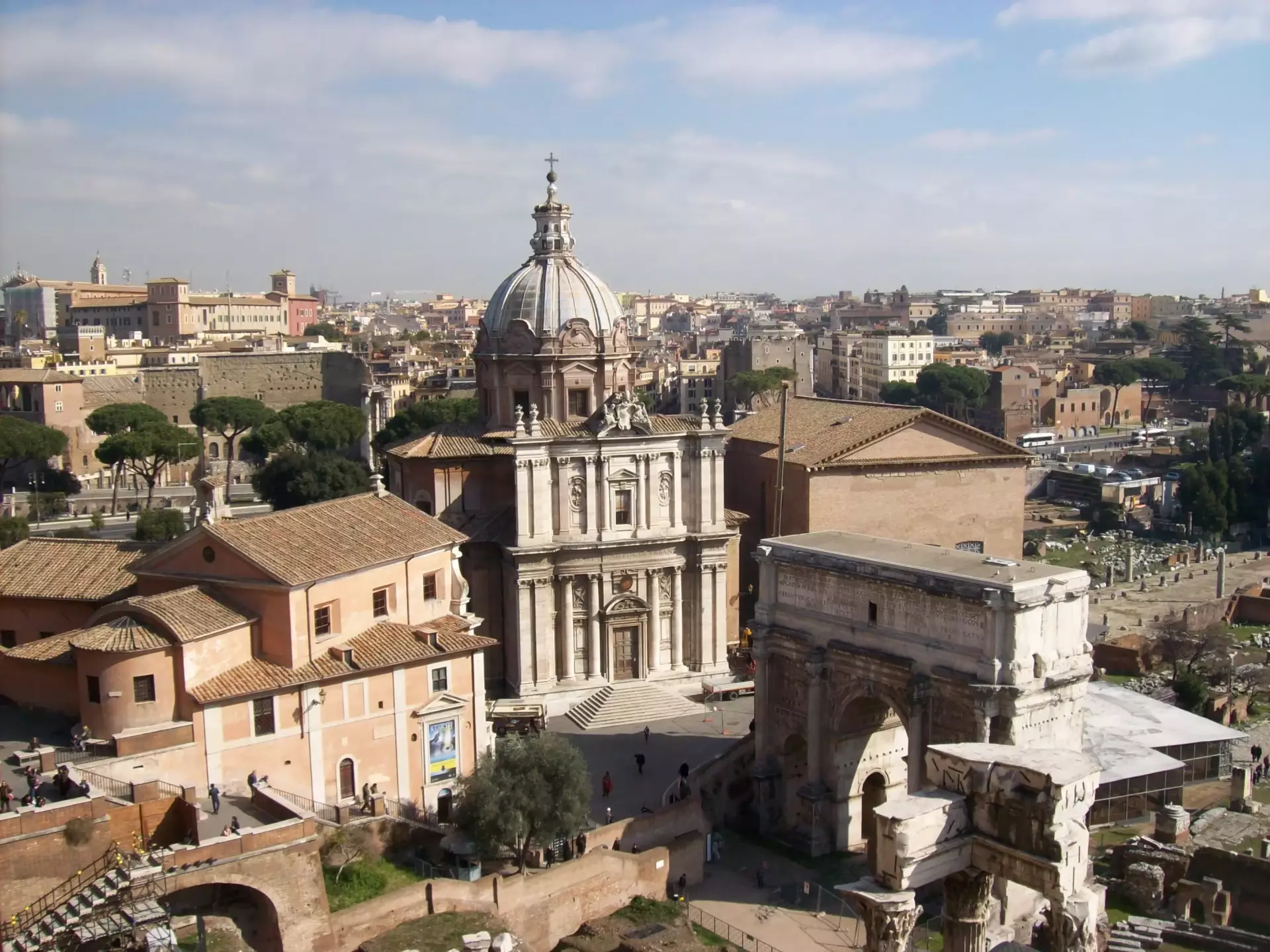
If stones could talk: these hallowed ruins were the most powerful seat of government in the world. To stand in the political, legal and religious centre of the whole Roman Empire brings shivers down one's spine. It is the best way of imagining the splendour and glory of ancient Rome. Located in a small valley between the Capitoline and Palatine hills, access to the Forum is by foot only, from an entrance on the Via dei Fori Imperiali. Wheelchair access is available for most of the Forum but be aware that the path is often bumpy due to it containing original stones from the ancient Roman period. The Forum is much less crowded than the Colosseum and, from a historical perspective, much more interesting. You can hire an audioguide for €5.5 from a small booth just above the Arch of Titus near the Colosseum. These audioguides contain an audio jack so that two people can easily share one. Built in 141 AD and dedicated to the Empress Faustina; after her husband emperor Antoninus Pius died in 161 AD the temple was rededicated to the couple. Completed in 179 BC. The 4th rebuilding of the meeting place for the Roman Senate, once converted into a church during the Middle Ages, but now restored since the 1930s. Erected in 203. You can see it close up from Via della Curia also (without entering the Forum). Finished in 29 BC, marks the spot of Caesar's spontaneous cremation and Mark Antony's funeral speech, made famous by Shakespeare in his play Julius Caesar ("Friends, Romans, Countrymen, lend me your ears ..."). Built in 81 AD by the emperor Domitianus in dedication to his brother Titus, who died earlier that year and reigned as emperor from 79-81, overseeing the opening of the Colosseum in 80 and the eruption of Mt Vesuvius the previous year. The remains of the ancient Roman archives, where Cicero and Seneca did research. Visible from the Forum and accessible through the Capitoline Museum.

Early Roman houses dating back to the 1st century, believed to be homes of early Christians. Well-preserved frescoes and a small museum.
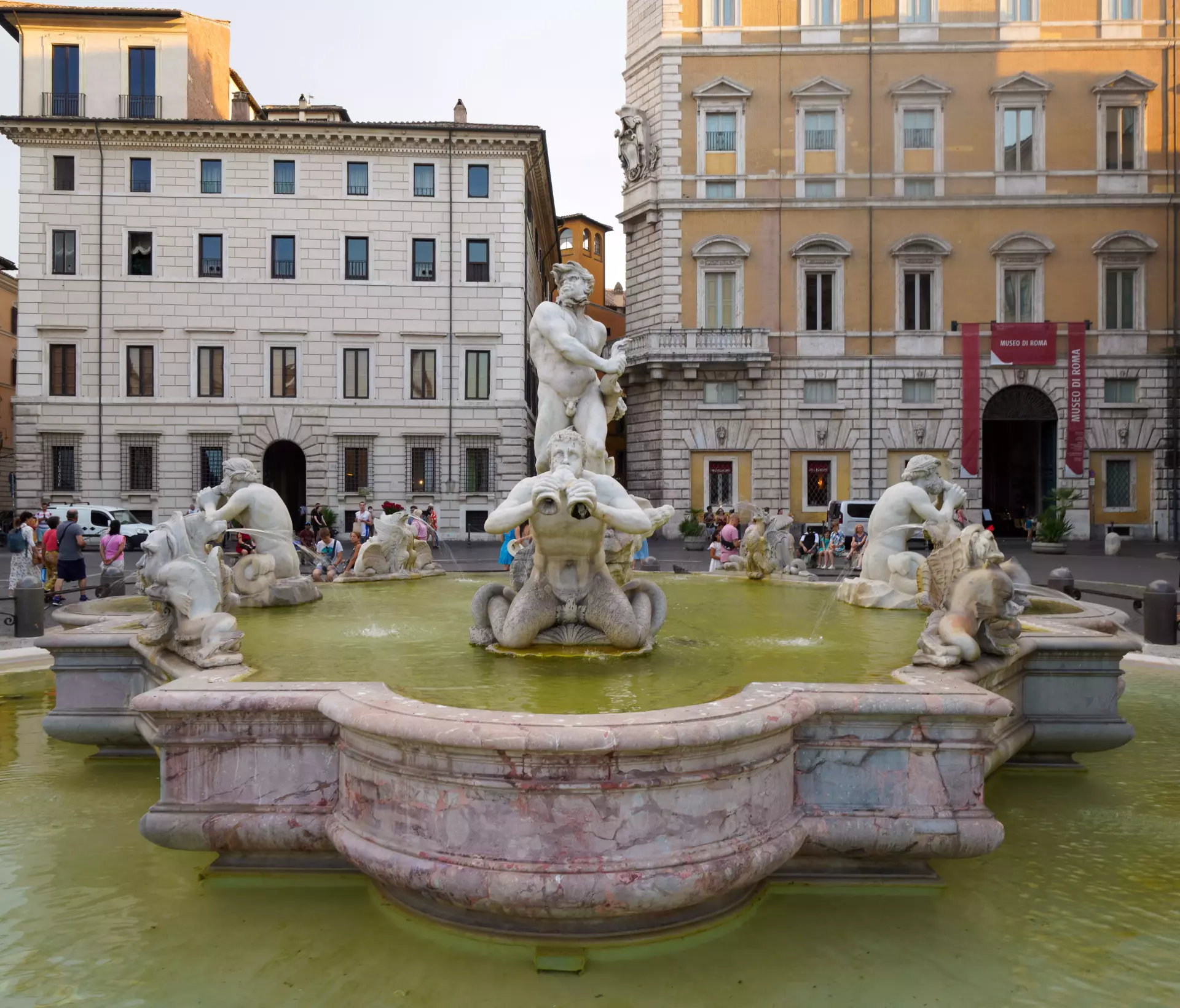
At the southern end of the Piazza, designed by Bernini but the main statue of the Moor was done by Giacomo della Porta and the other statues are 19th-century copies of the originals.
The renamed Rome Zoo, one of the oldest in Europe, founded in 1911. On the edge of the Borghese Gardens, a short, well-signposted walk from the Gallery. They try hard, but San Diego this isn't. If you are a regular zoo-goer you will be disappointed.