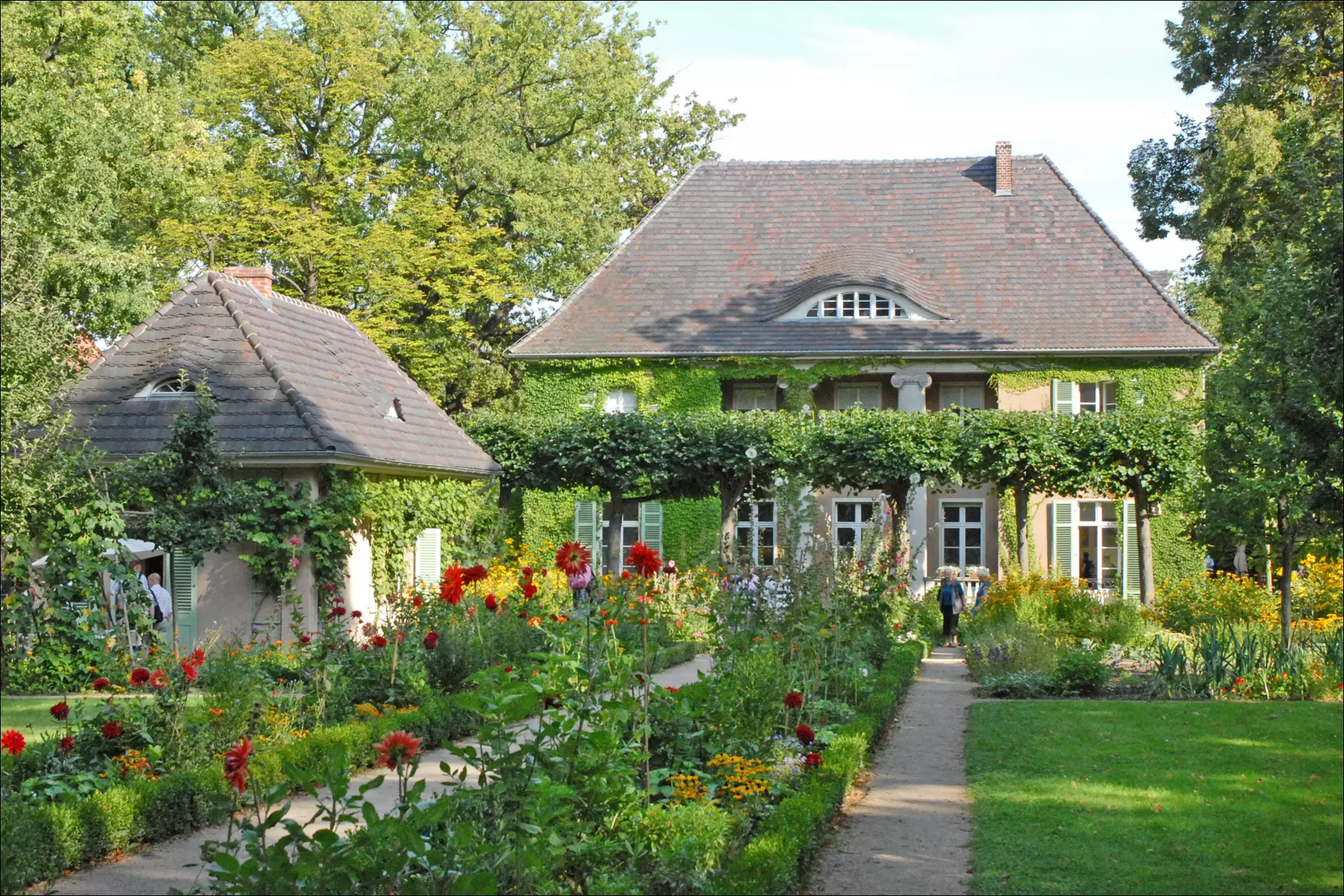
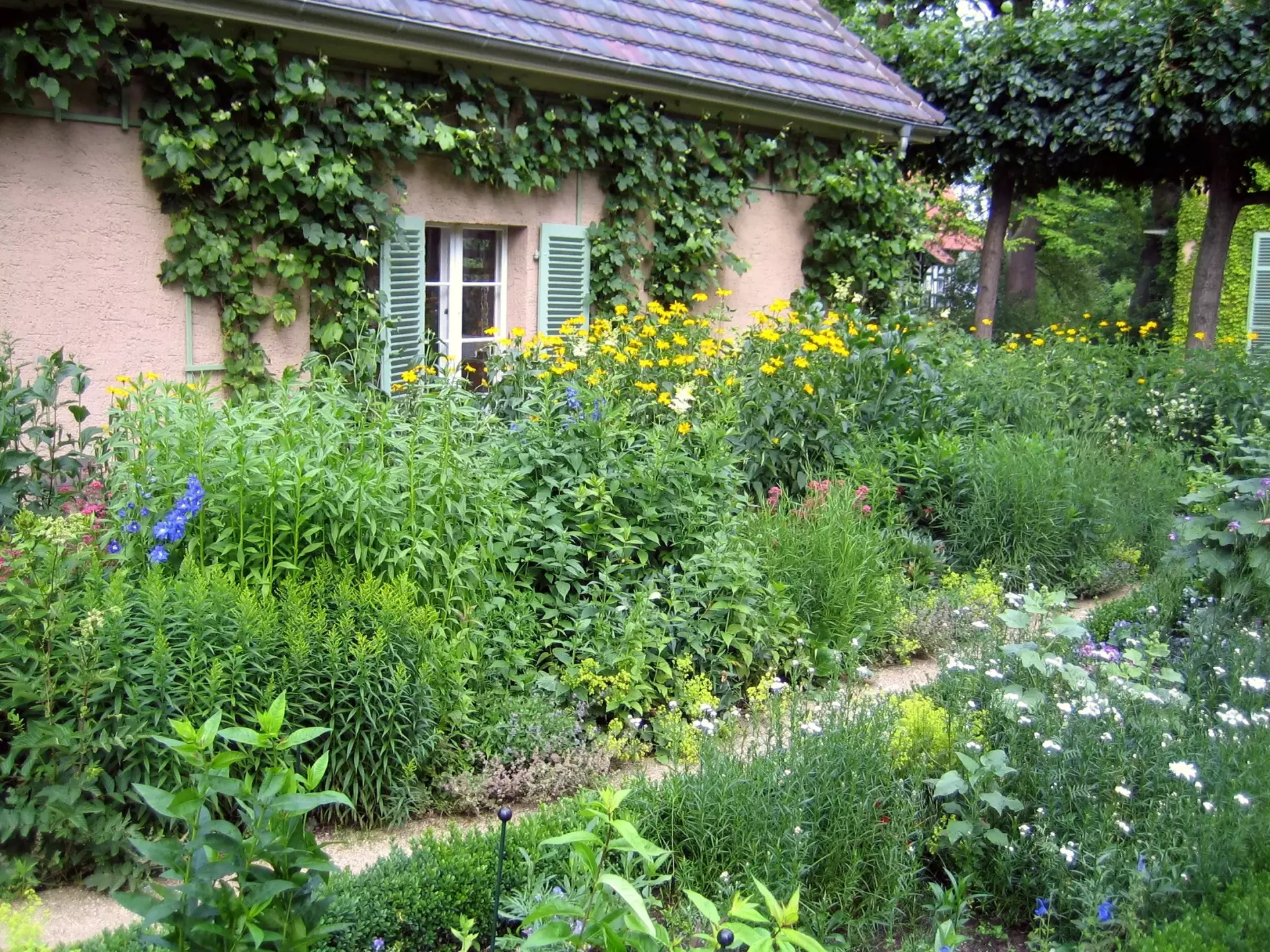
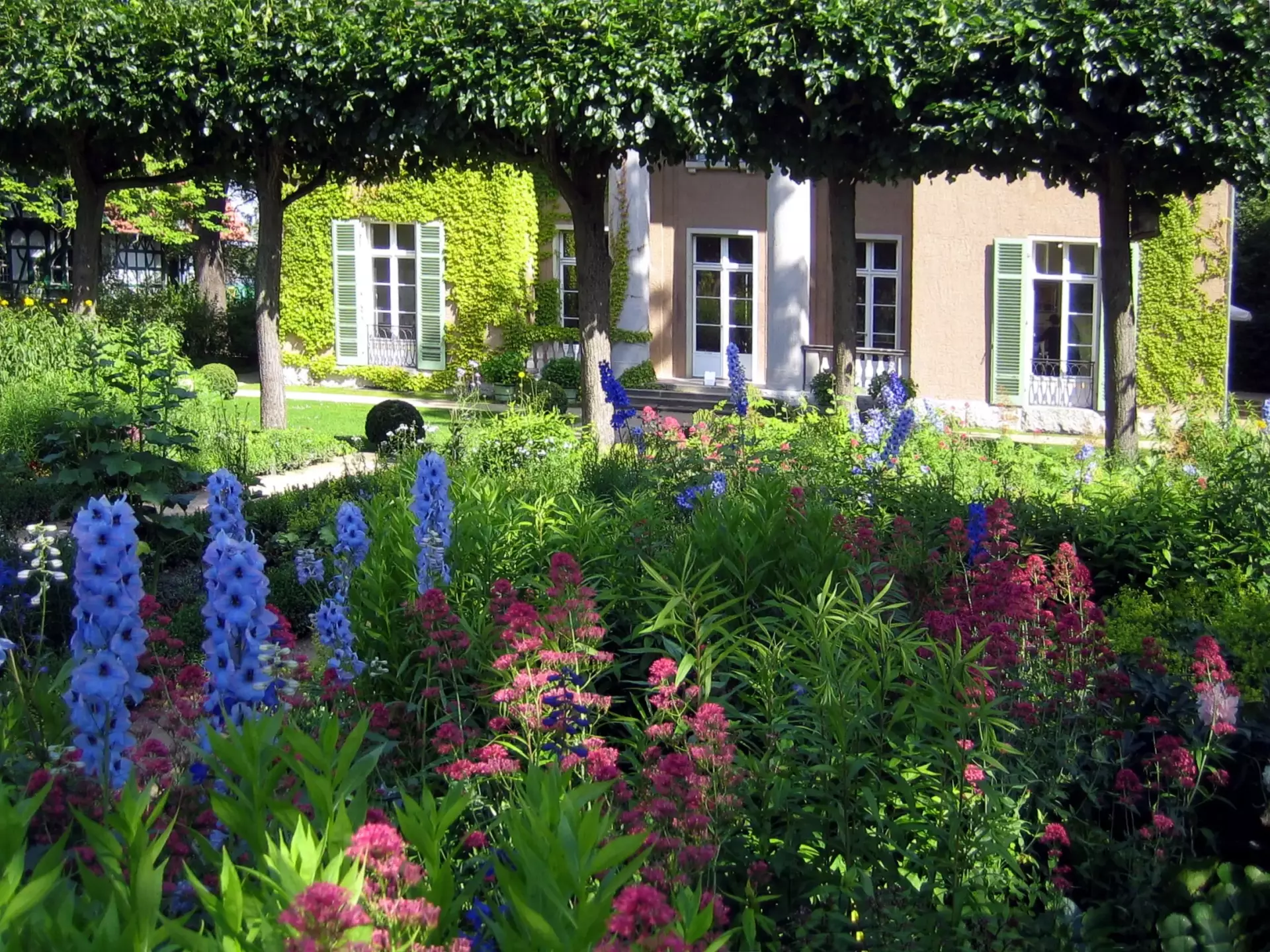
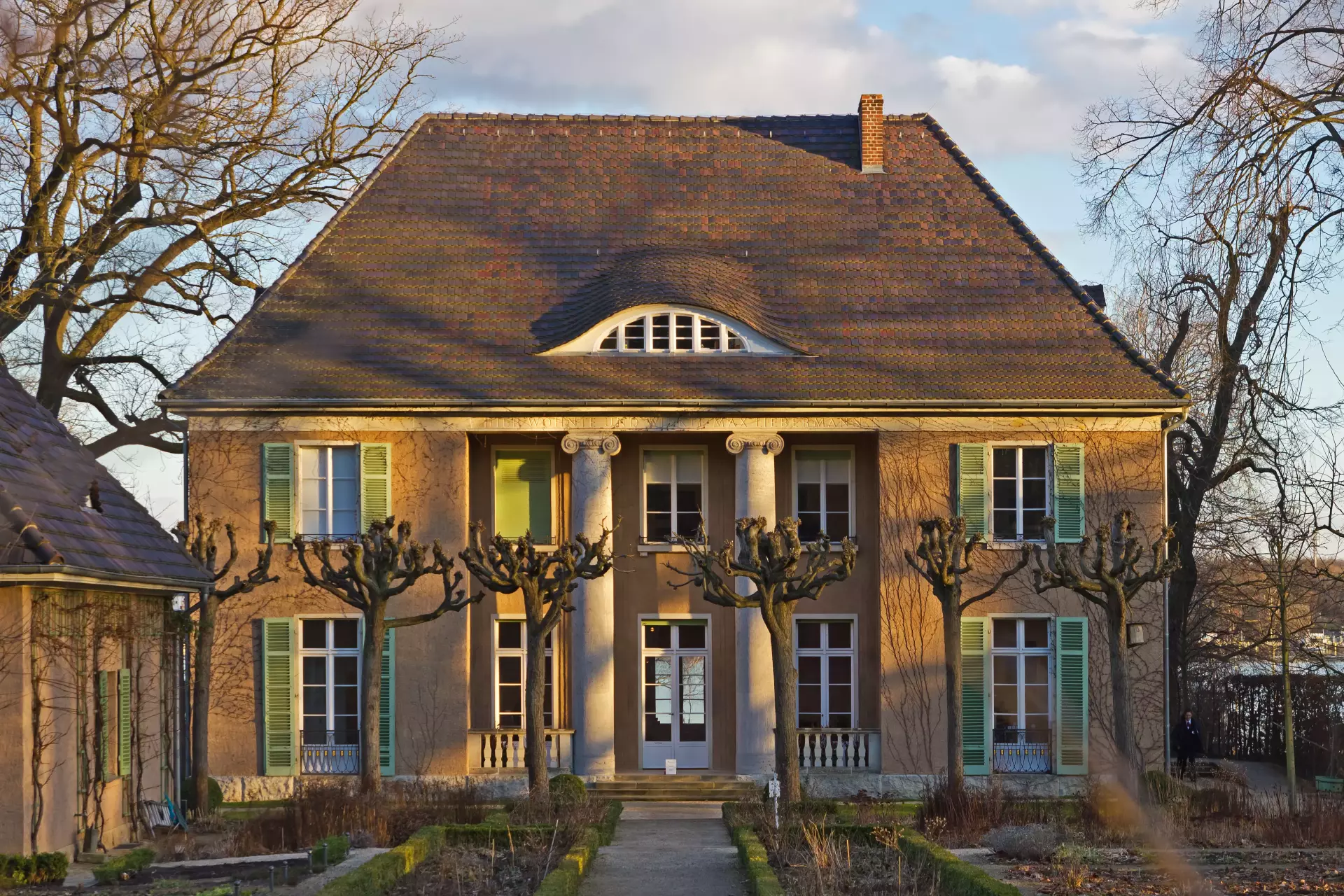
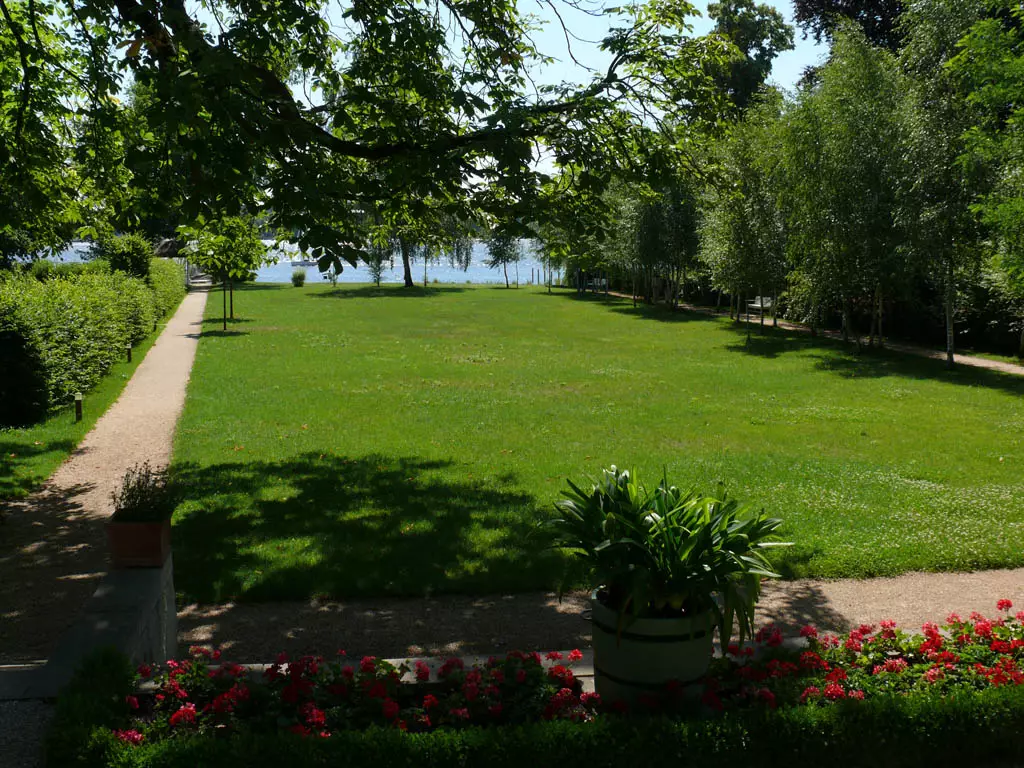
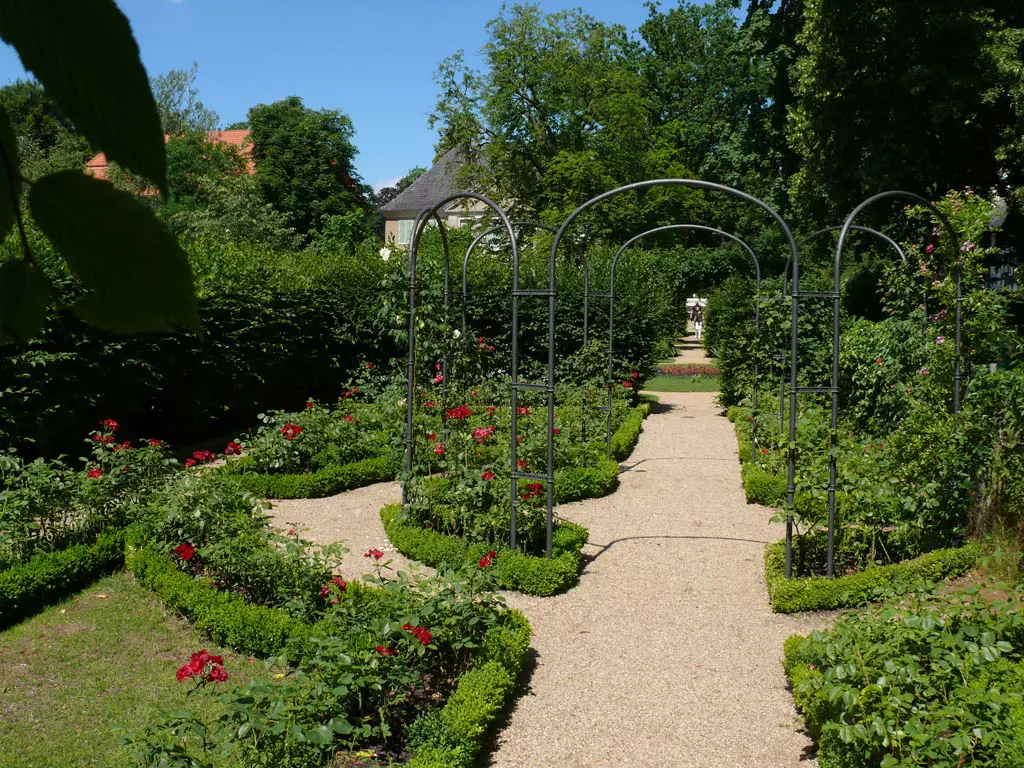
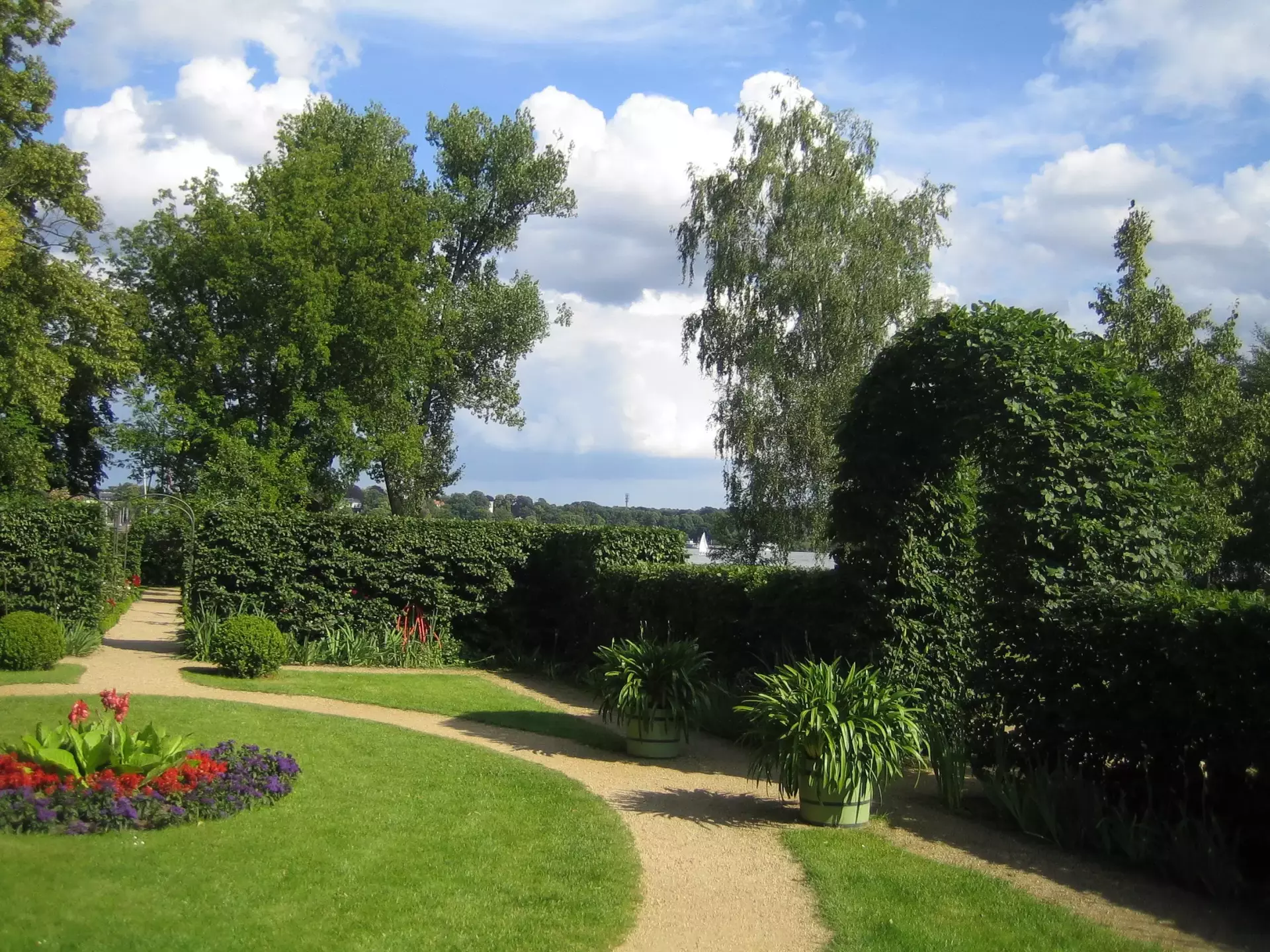
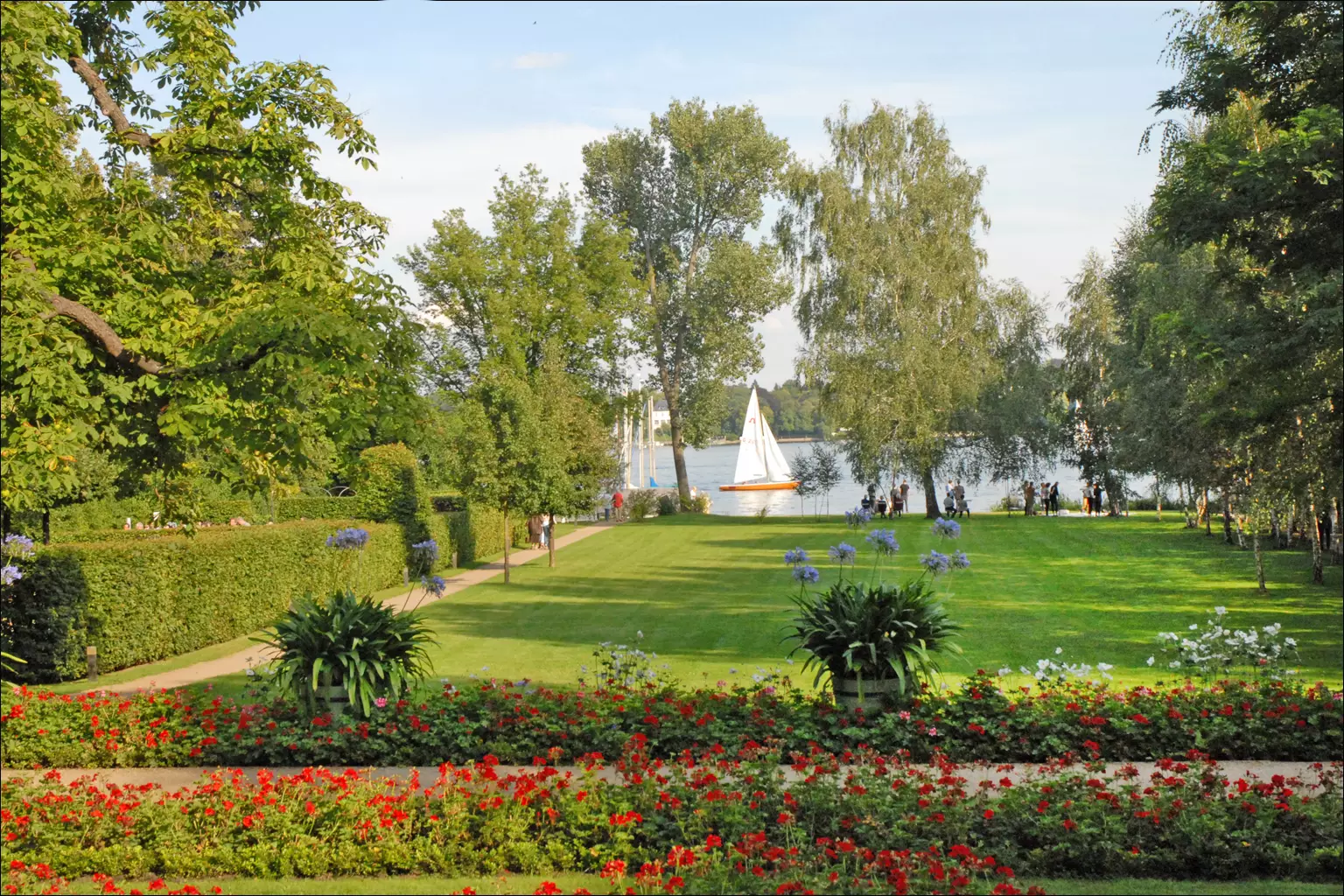
The Liebermann-Villa am Wannsee is a house museum dedicated to Max Liebermann, the German painter and printmaker. Set by the shores of Lake Wannsee, the villa preserves the atmosphere of his summer residence, where art and everyday life once met. Visitors move through bright rooms that showcase his work and the place that inspired it.
About 15 Liebermann paintings are on display, offering a close look at his brushwork and themes. The selection highlights his interest in light, gardens, and relaxed outdoor scenes. Being in the rooms where he worked adds context to the canvases, turning the museum into both a gallery and a story of his creative process.
The villa overlooks Lake Wannsee, and the landscape plays a key role in understanding the art on the walls. Views across the water and the structured garden show the motifs that appear in Liebermann’s paintings. Windows frame the scenery much like a painting, linking the interior displays to the world outside.
The house reflects early 20th-century design, with clean lines and generous light. Historical details, photographs, and period touches help trace the artist’s life and his circle in Berlin. The museum’s calm pace encourages slow looking, making small details—like color shifts and garden textures—stand out.
Source - https://en.wikipedia.org/wiki/Liebermann_Villa
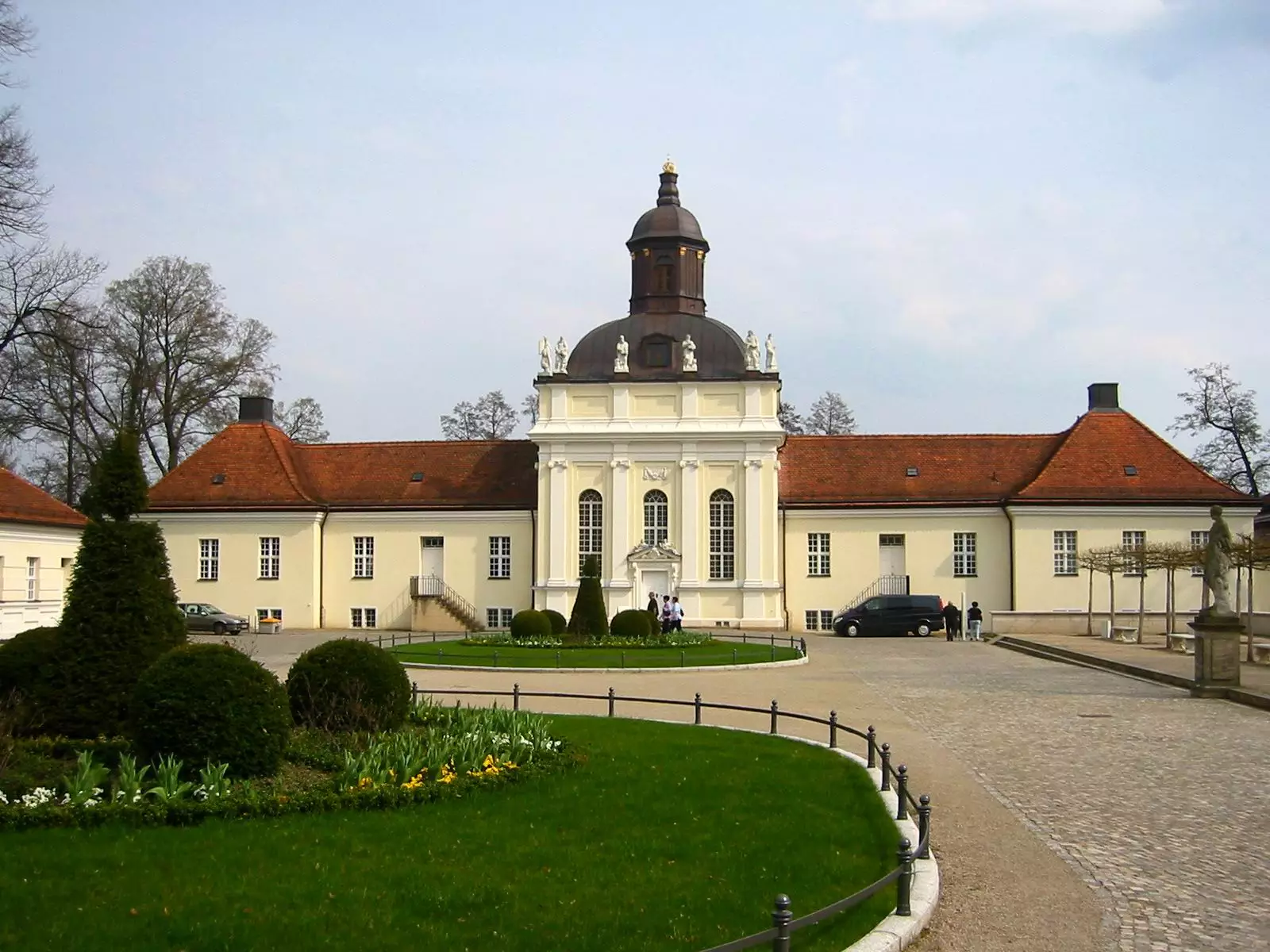
The oldest museum of its kind in Germany which, despite great losses during the World War II, still possesses one of the world's primary collections of European applied art. There are two sections to the collection: one located at the Kulturforum in Tiergarten, the other at Köpenick Palace.
The main street of former East Berlin. It is a big avenue, featuring neoclassical East German buildings, fountains and lakes.
The Gemäldegalerie contains an astounding array of paintings, including works by Rembrandt, Rubens, Botticelli, Raphael, Titian, Goya, Velasquez and Watteau. The collection contains works from the old Bodemuseum on Museumsinsel in the East, now closed, and the former Gemäldegalerie in Dahlem. Its strong points are German paintings of the 13-16th centuries, Netherlandish painting of the 15th and 16th centuries, Flemish paintings of the 17th century, and miniature paintings of the 16th-19th centuries. In the newer section of the museum, designed by architects Heinz Hilmer and Christoph Sattler, there is enough space to display 1,150 masterpieces in the main gallery and 350 in the studio gallery - of the almost 2,900 pieces in the European painting collections. Established in 1830, the newly built gallery from 1998 has about 7,000 sq m of exhibition space (a complete tour of the 72 rooms covers almost 2 km).
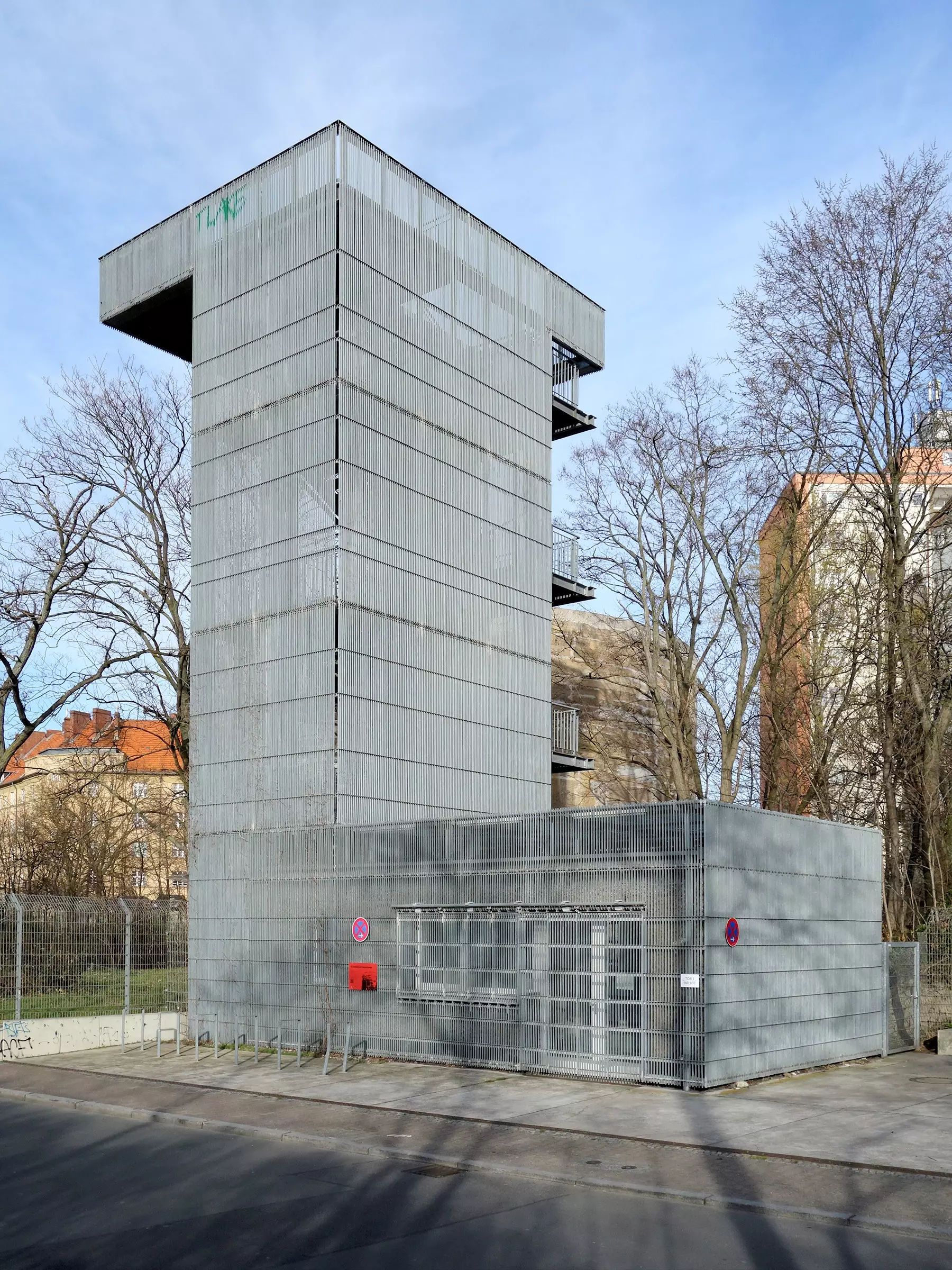
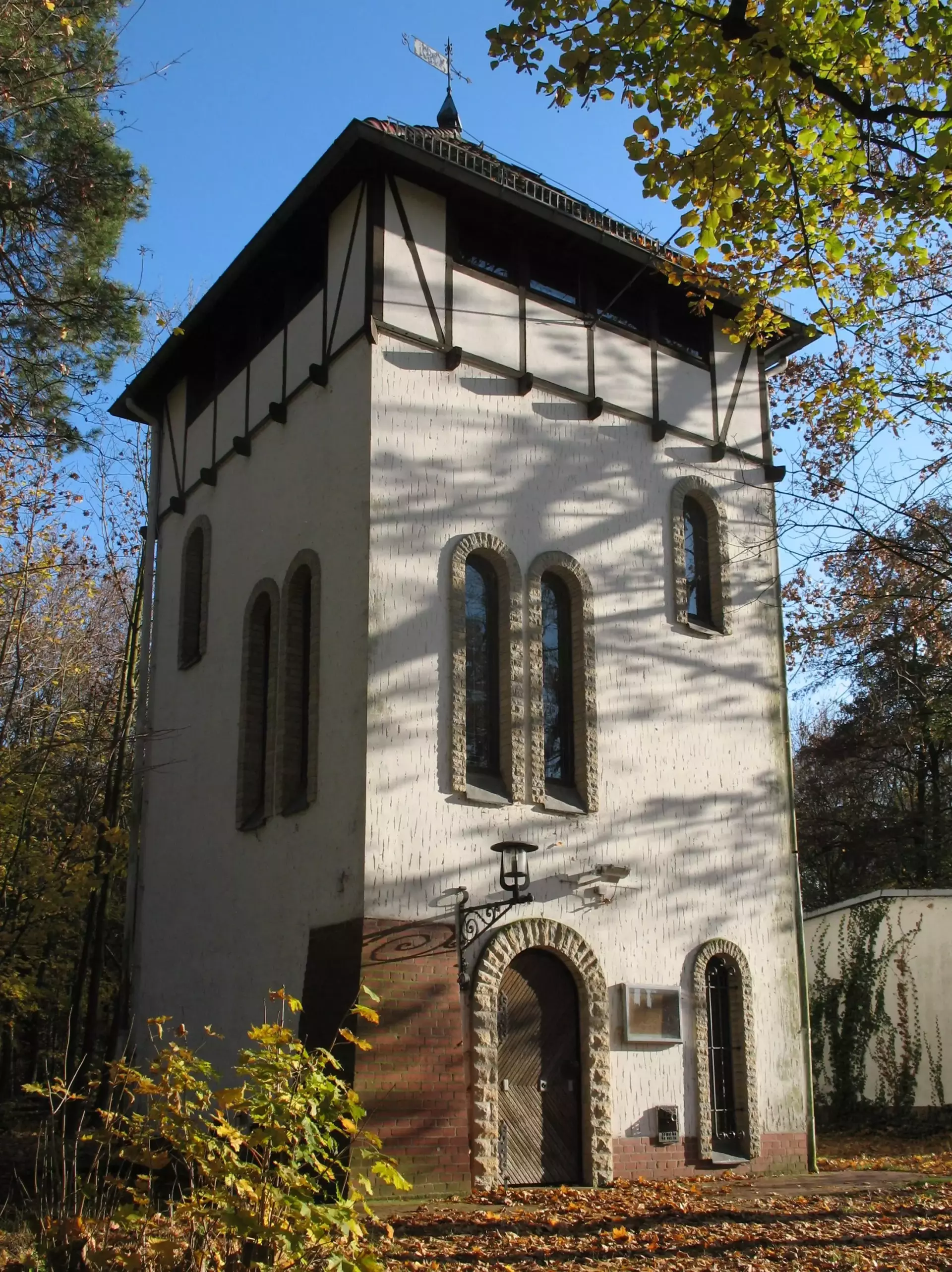
An observation tower without an elevator in Southeast Berlin, from which you can see that there is a great deal of forest around Berlin. There is a cafe at the tower.
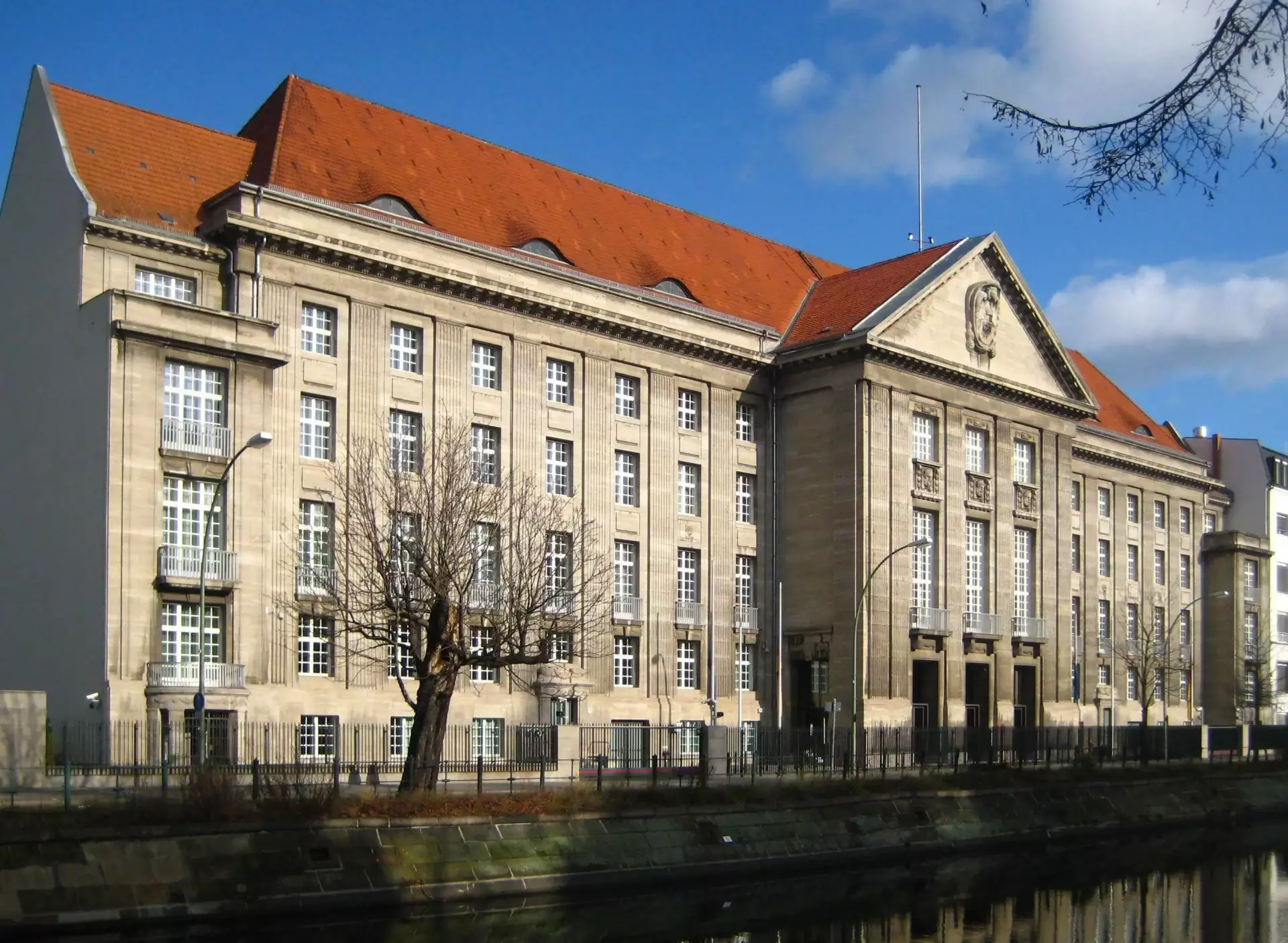
The building houses the personal offices of the Chancellor and the Chancellery staff. The Berlin Chancellery is one of the largest government headquarters buildings in the world. By comparison, the new Chancellery building is ten times the size of the White House. A semi official Chancellor's apartment is on the top floor of the building. The 200-m², two-room flat has thus far only been occupied by Gerhard Schröder chancellors since then have lived elsewhere. It is usually not possible to visit the building, but on occasion there are tours, usually around August. The building was deliberately designed in a way to symbolize the German constitutional system - it's in the line of sight of the Bundestag and lower in height, symbolizing the role of parliament in controlling government and "the people's house" being the higher power in the relationship between the two. Or at least that's the idea.
Built 1859-1866 this is one of the most architecturally stunning synagogues in Germany to survive both the Nazi era and the war.
This heritage-protected public bathing beach which opened in 1907 is one of the largest inland lidos in Europe and has a 1275-m-long sand beach, a capacity for up to 30,000 guests and a popular nudist area.
The charming Baroque water palace of the Hohenzollern electors surrounded by the Dahme river and an English garden.
Small terrace on the top of the Park Inn, publicly accessible. Take the elevator to the 40th floor, and follow the signs up the stairs. Pay the attendant who also serves beer and coffee. Great views of the Fernsehturm. In the summer, consider base jumping off the roof with Jochen Schweizer. It is often closed in bad/windy weather, so look for a notice posted near the elevator that the terrace is closed.
Nice church near Unter den Linden/Museum Island, finished in 1830 by Schinkel in English Neogothic style. Nice exhibition inside (neoclassical statues and an exhibition about Schinkel's life and work upstairs).
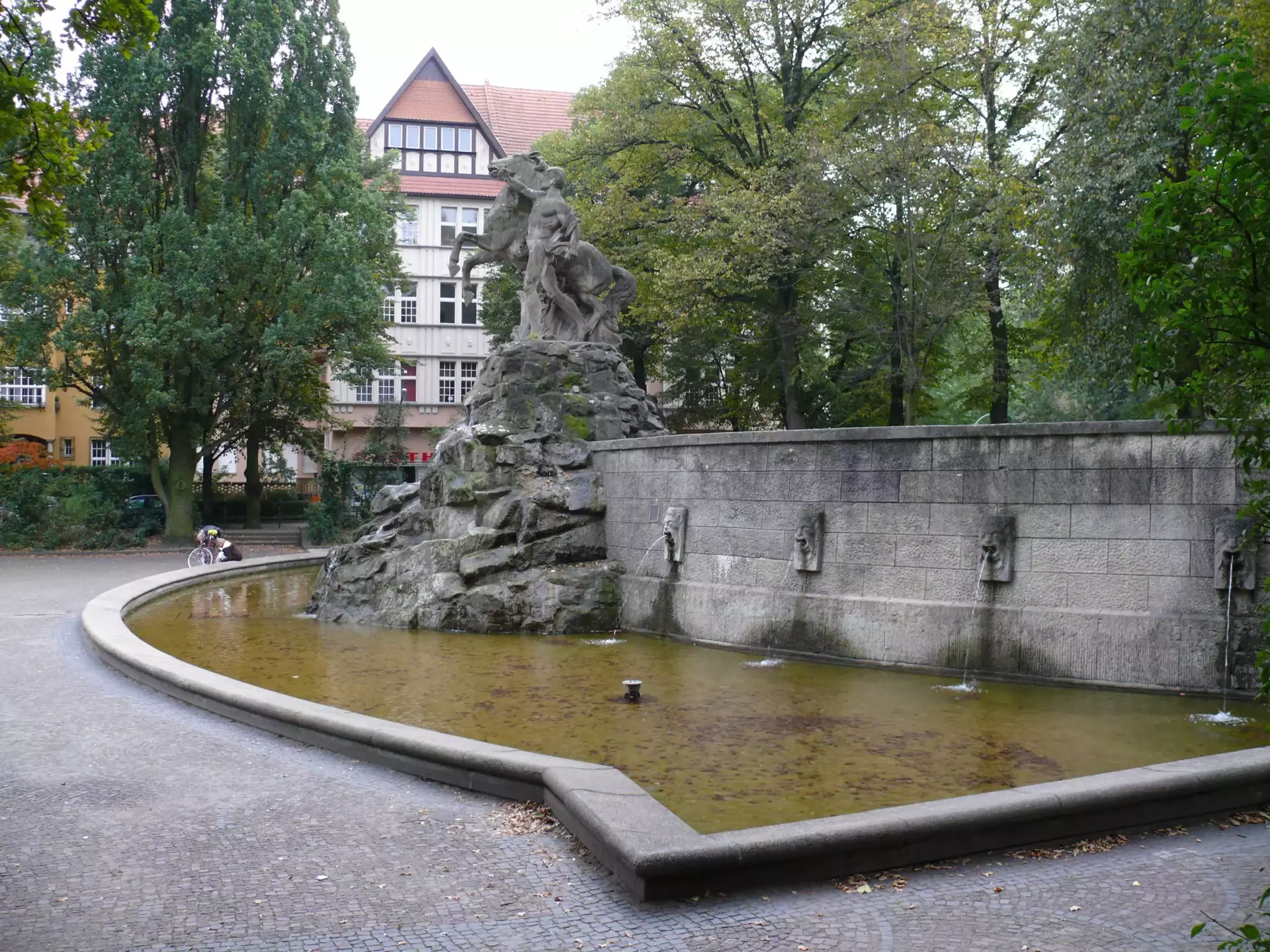
The Bayerischer Platz is the centre of the Bayerisches Viertel ("Bavarian district", with many streets named after Bavarian cities), which was destroyed a lot more during World War II (about 60%). Somewhere around there Albert Einstein lived once. You’ll find several memorial signs providing information about the Nazi regime's persecution of gays and Jews.
Berlin's biggest lake and popular resort for bathing and watersports. You can also travel there by tram, which is an experience by itself.
A cuboid made of concrete. On the front side of the cuboid is a window, through which visitors can see a short film of two kissing men. The video will be changed every two years and will also show kissing lesbians.
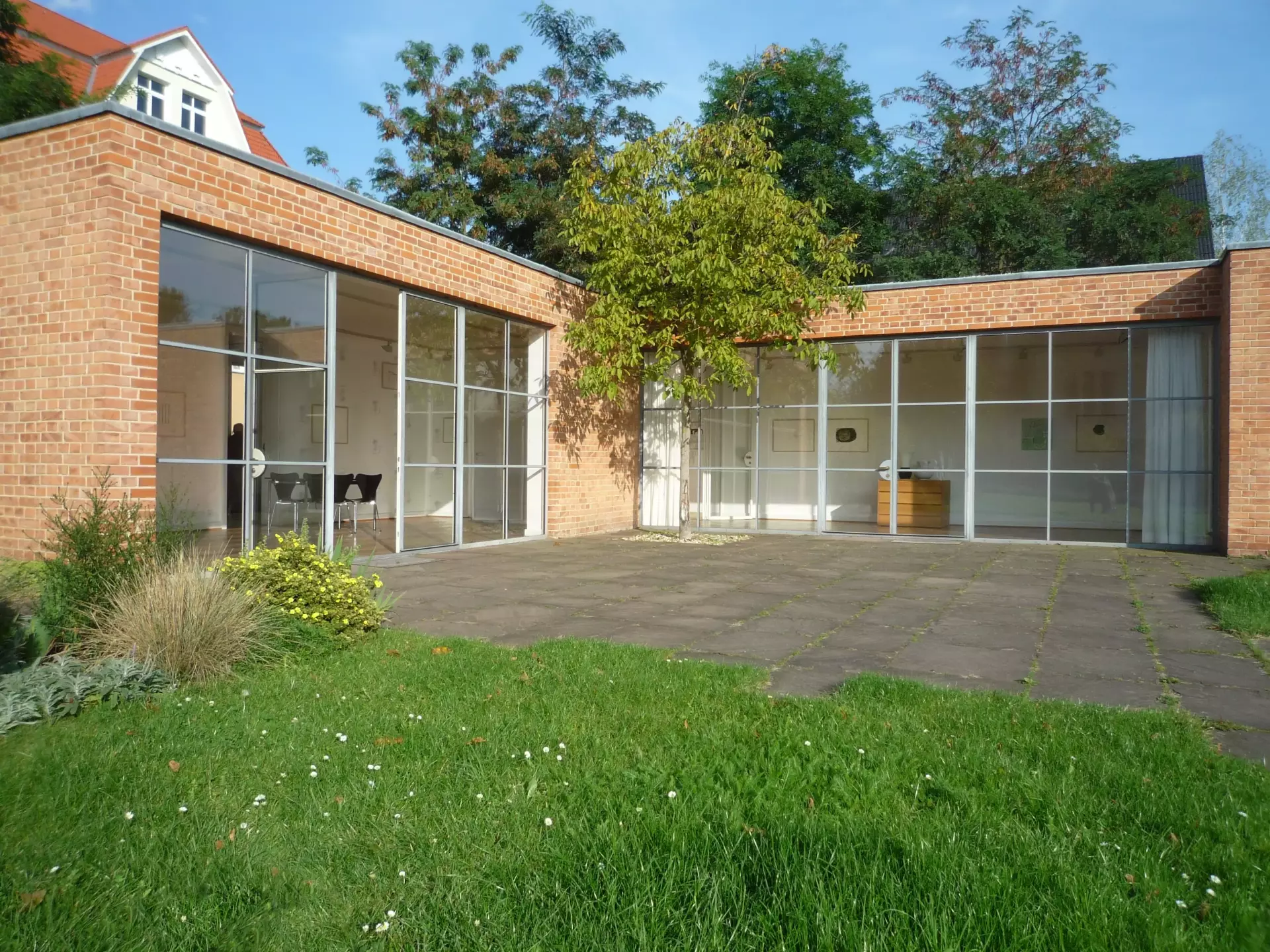
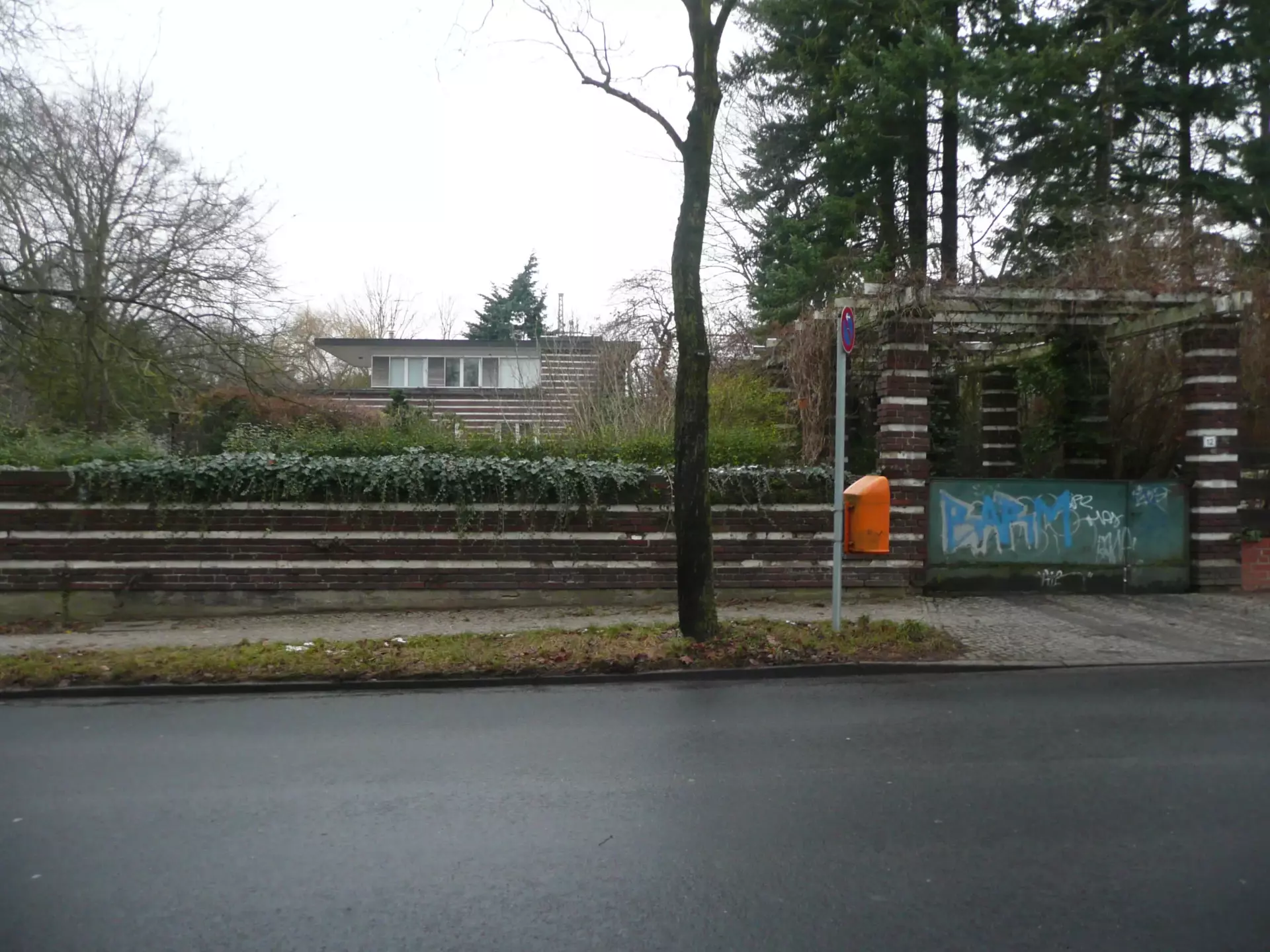
The last Mies van der Rohe building (a dwelling house) in Germany before his emigration to the U.S. (1938). Now there are small contemporary/modern art exhibitions.
Arguably the most beautiful bridge in Berlin and the only connection between Friedrichshain and Kreuzberg. As signage on the bridge indicates, it was built twice - once in the 1890s and once in the 1990s. Before reunification the border ran where the bridge now is.