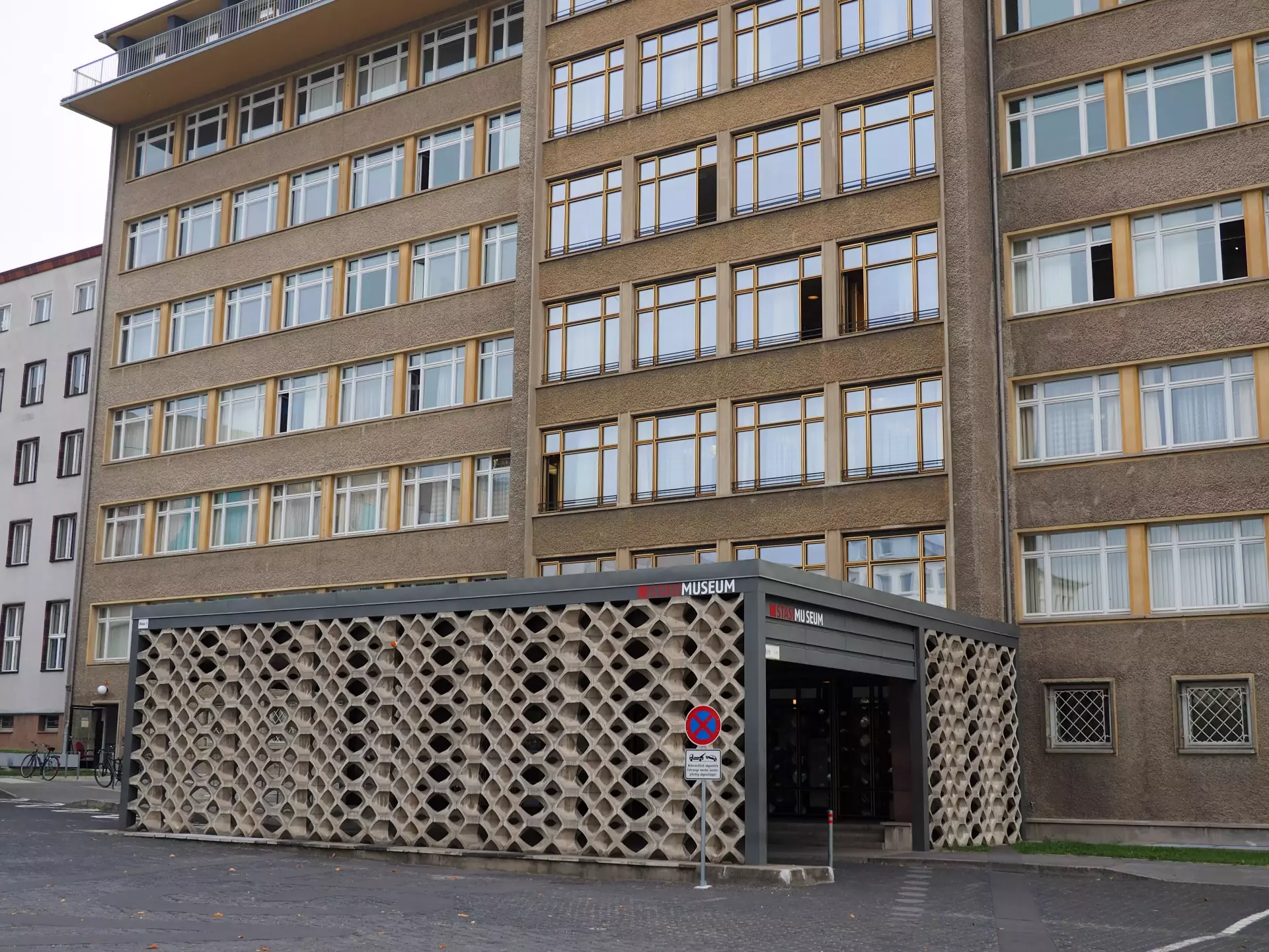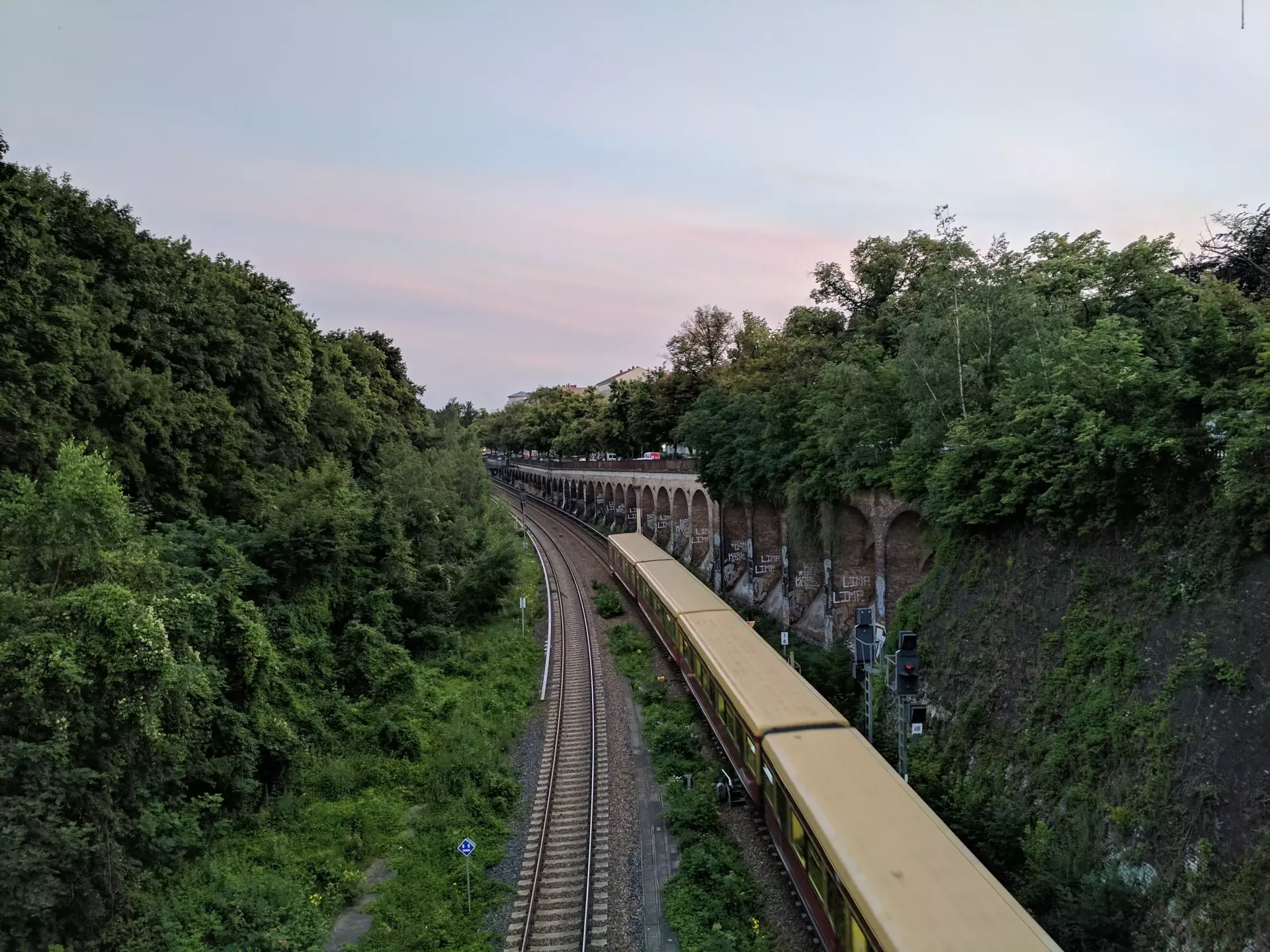
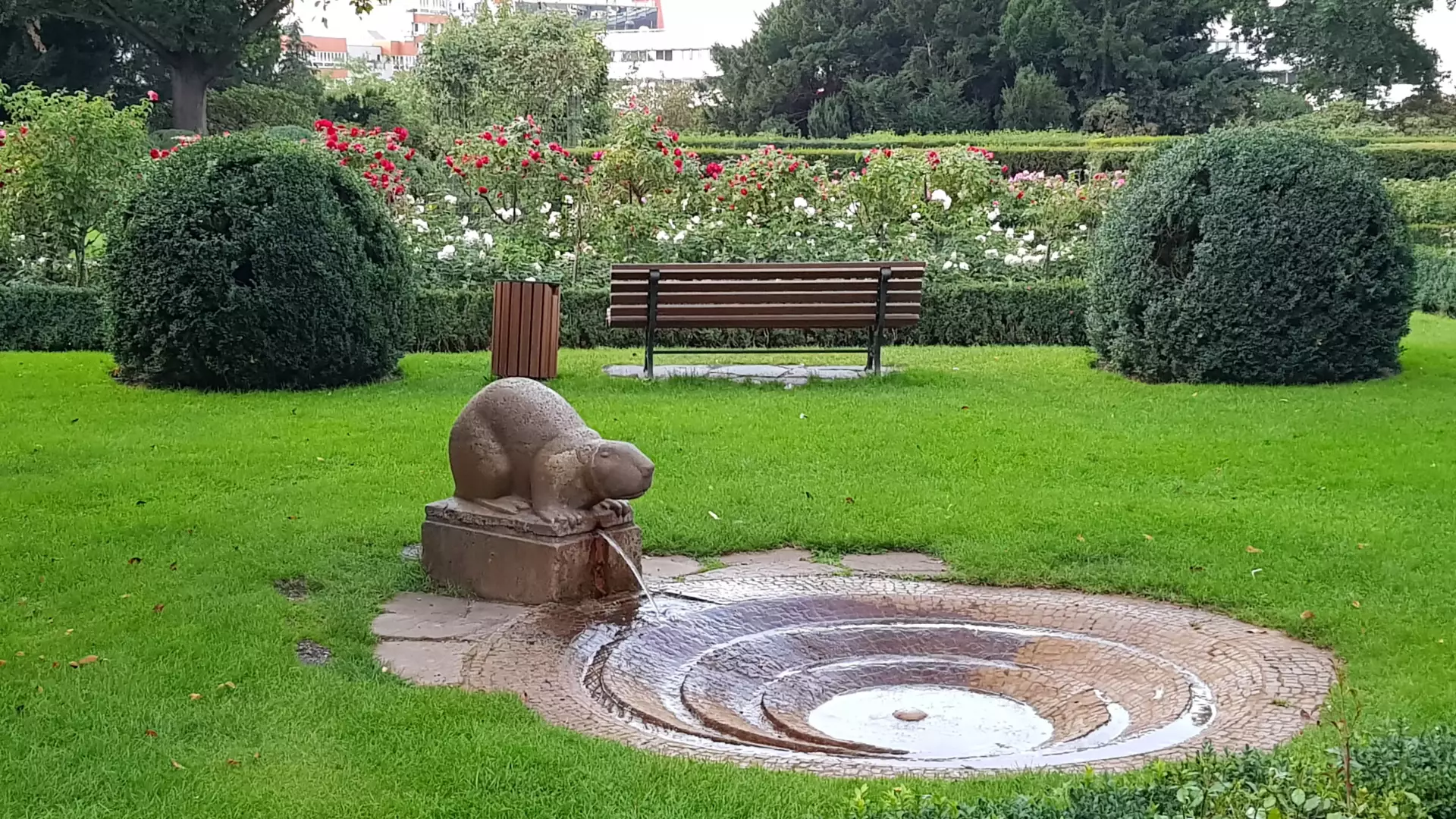
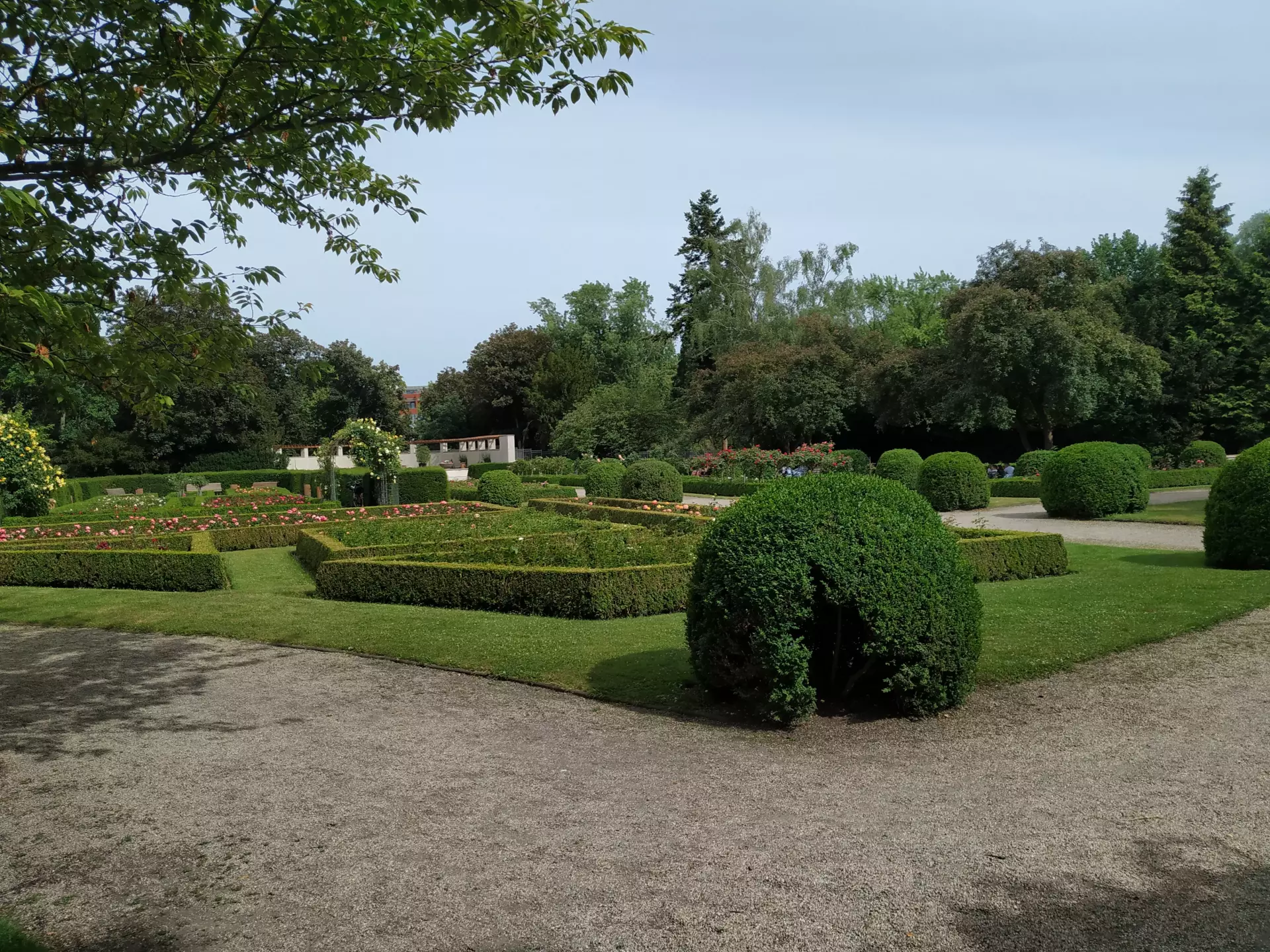


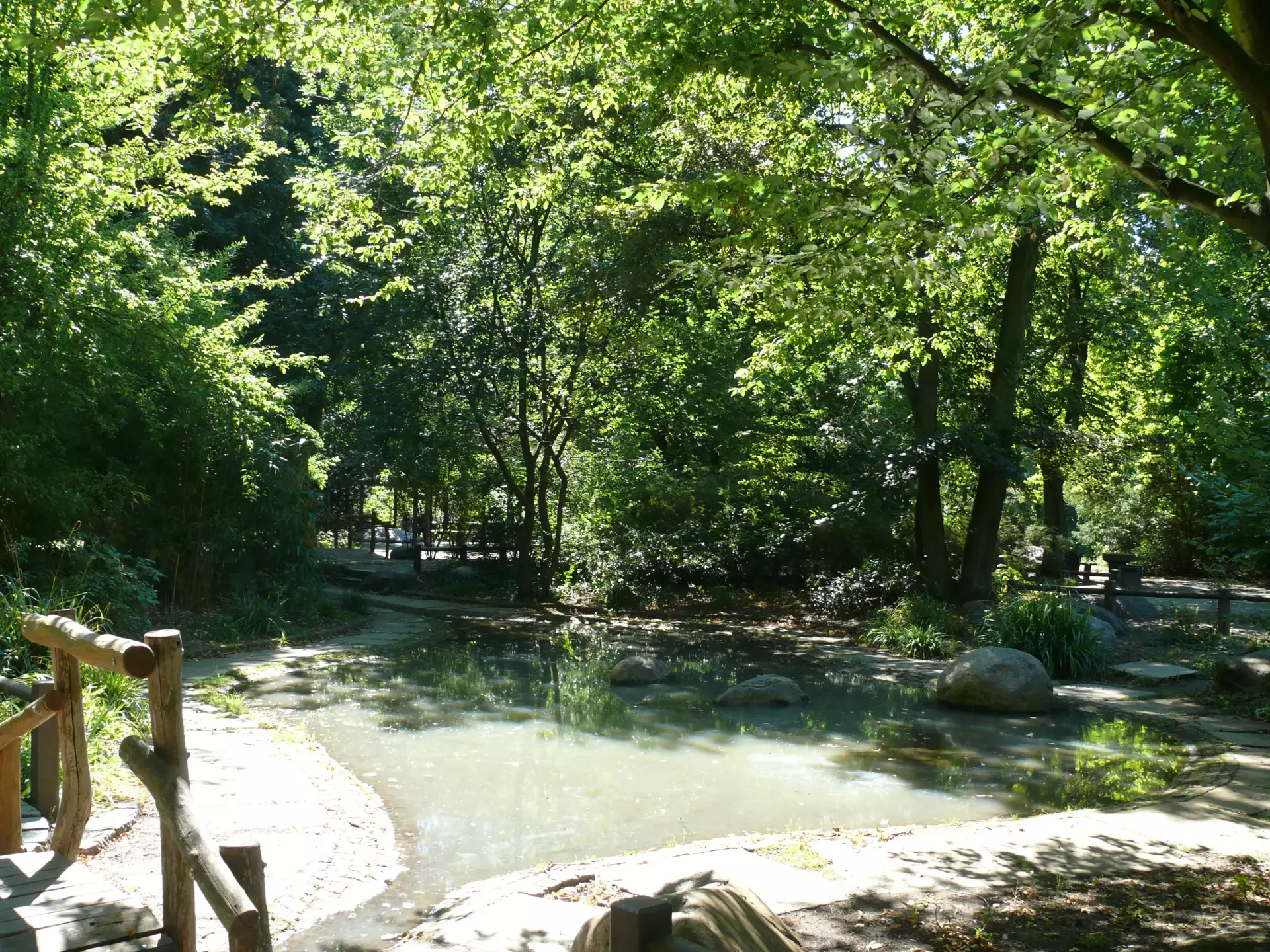
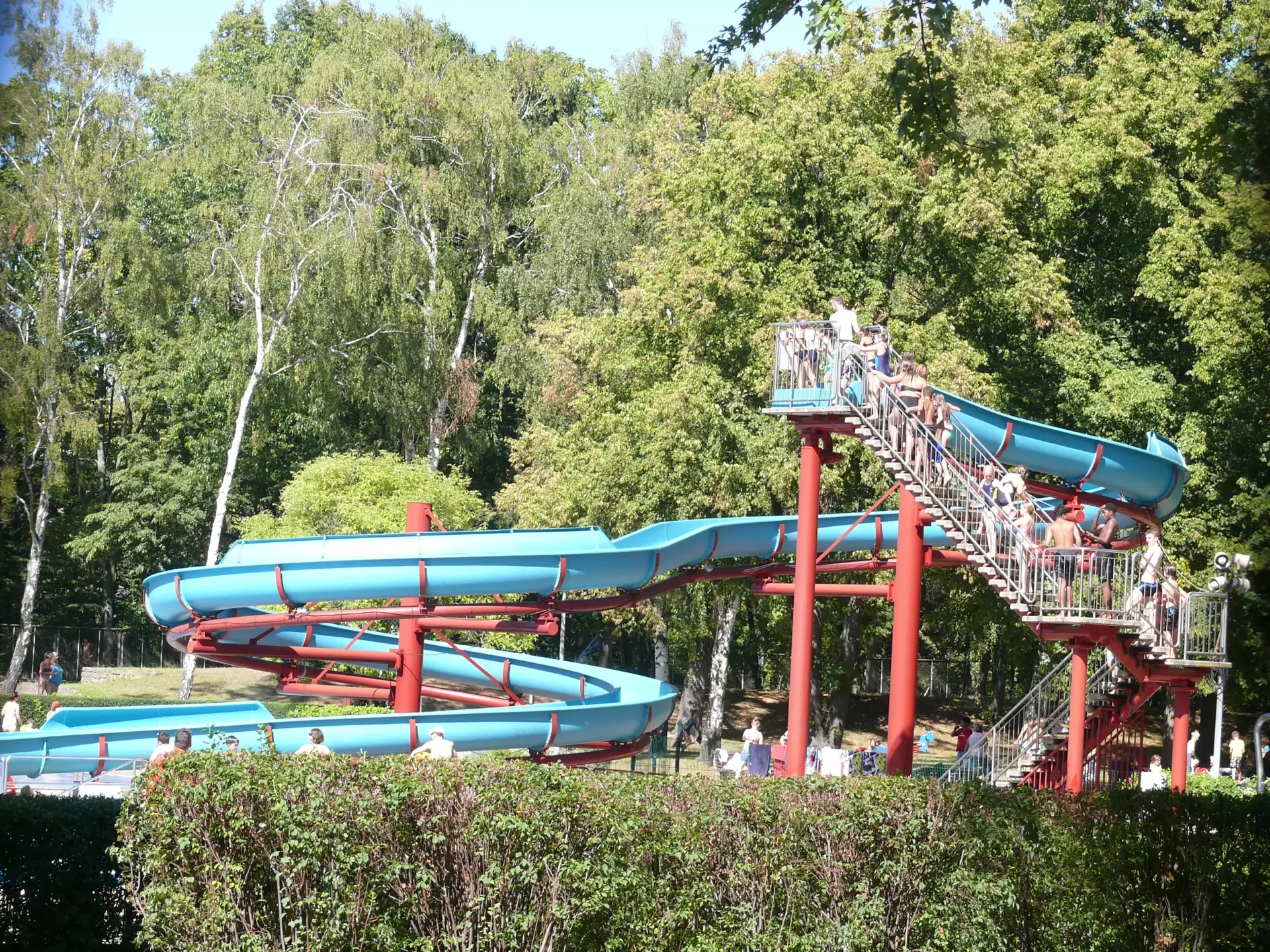
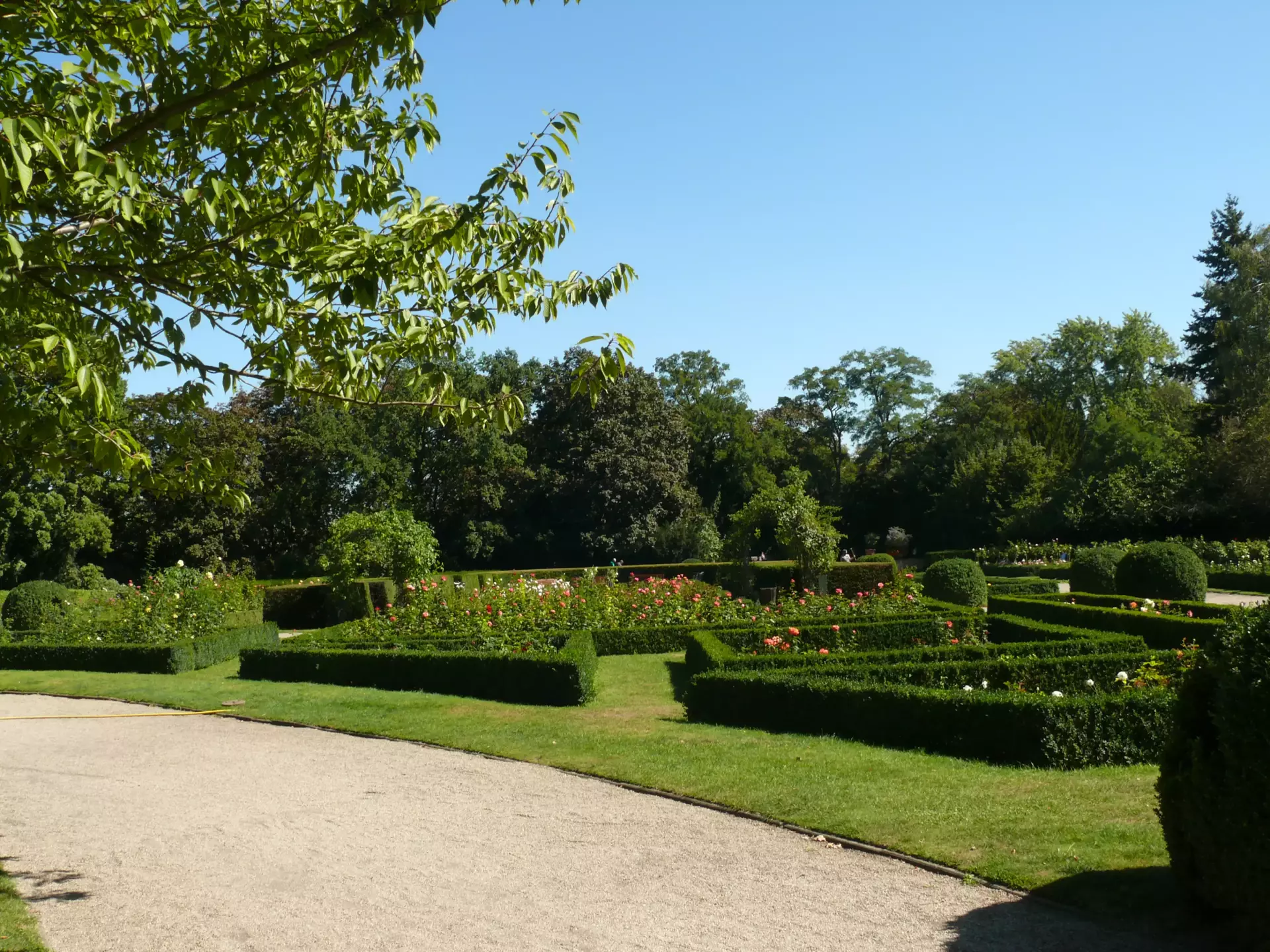
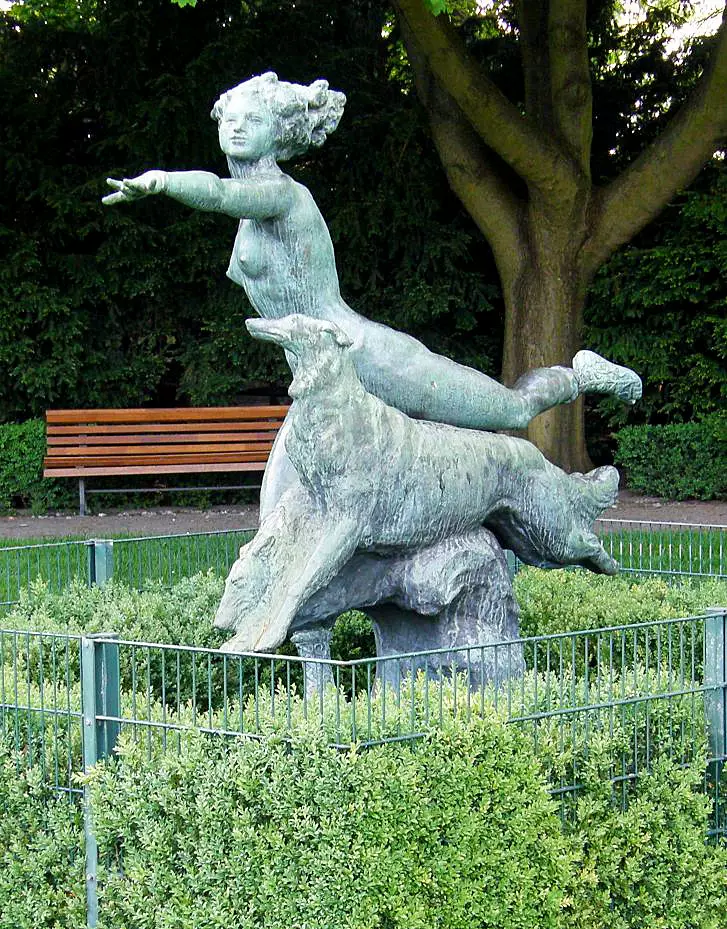
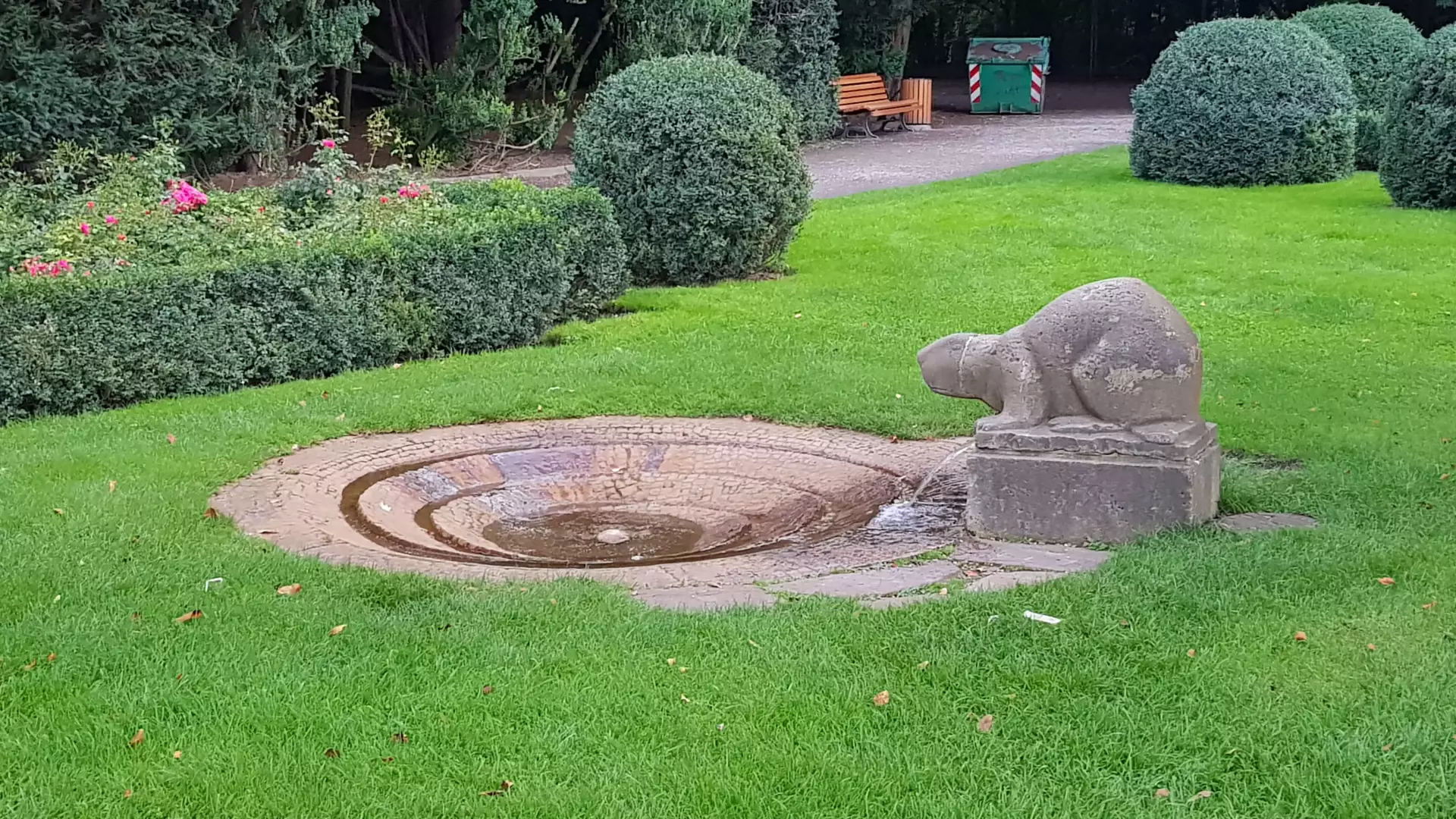
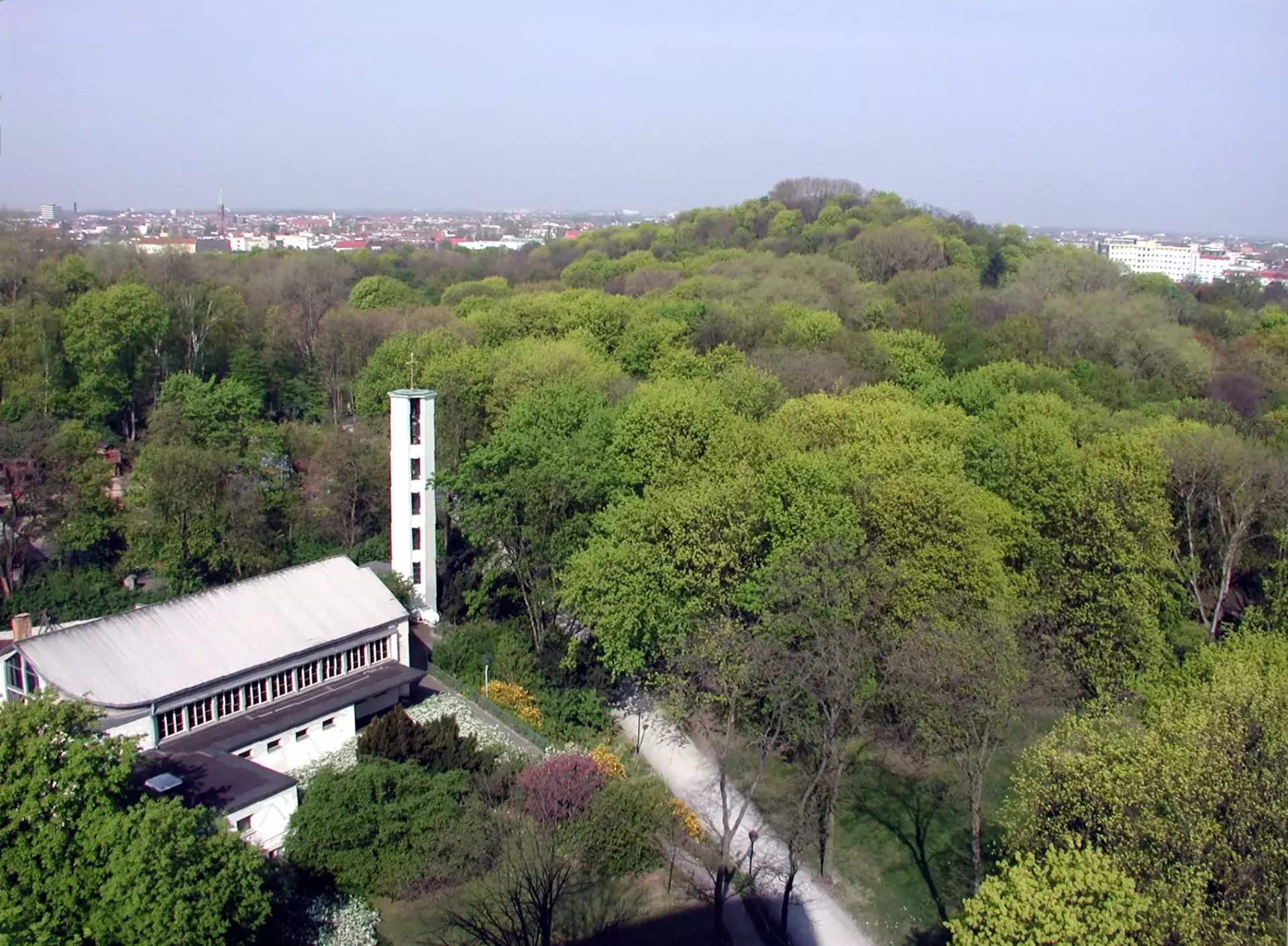
Humboldthain Park blends calm green spaces with a striking piece of wartime architecture. Wide lawns, winding paths, and dense clusters of trees create a peaceful setting for walks, picnics, and quiet breaks from the city. Seasonal flower beds and shaded benches add simple charm, while playgrounds and open areas keep the atmosphere lively without feeling crowded.
Runners and cyclists often trace the park’s gentle slopes, and in spring and summer the air carries birdsong and the scent of blossoms. In winter, the park’s contours stand out more clearly, revealing the terrain shaped by history and time. It remains an easy place to wander, with plenty of corners to pause and take in the surroundings.
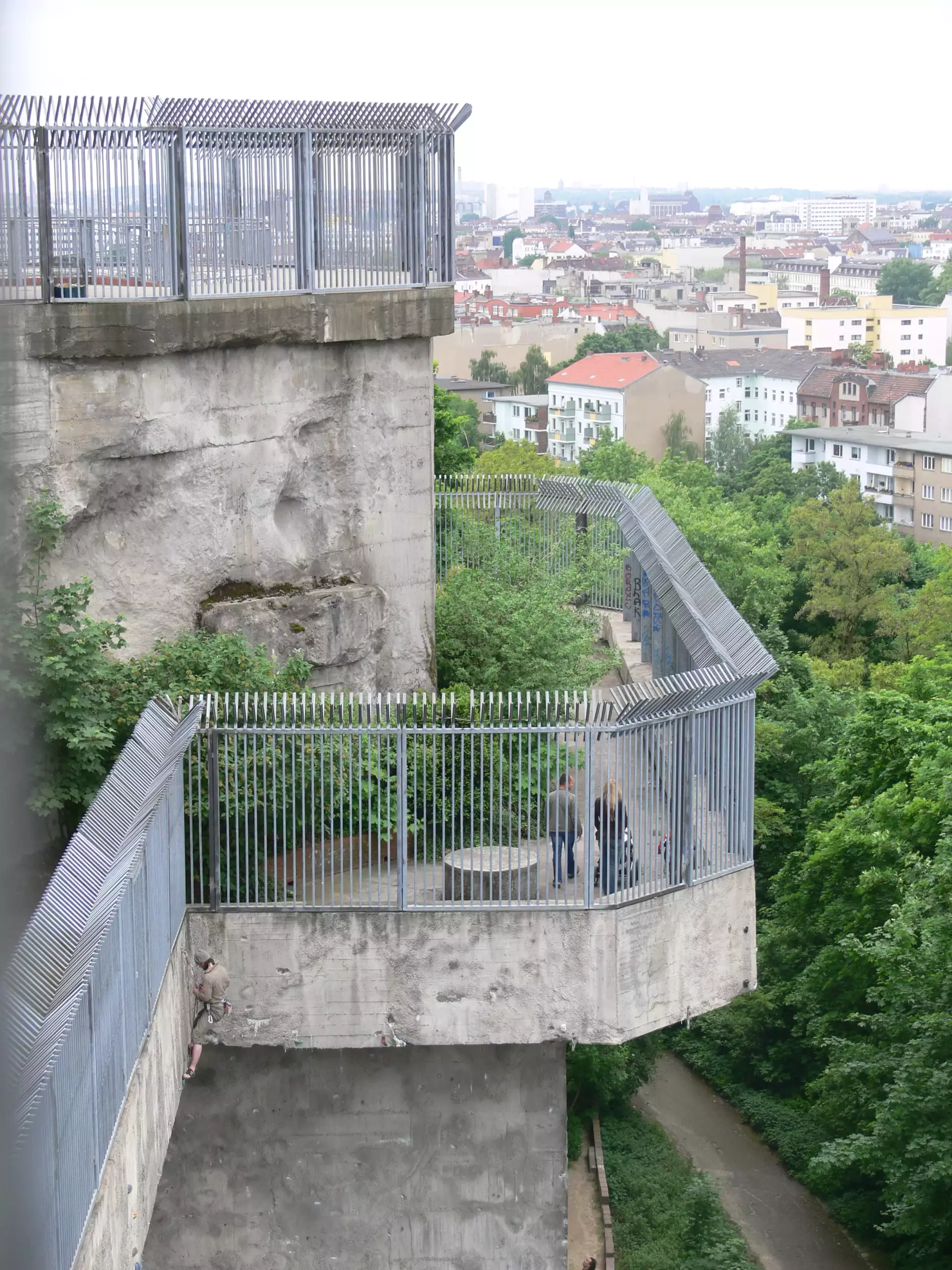
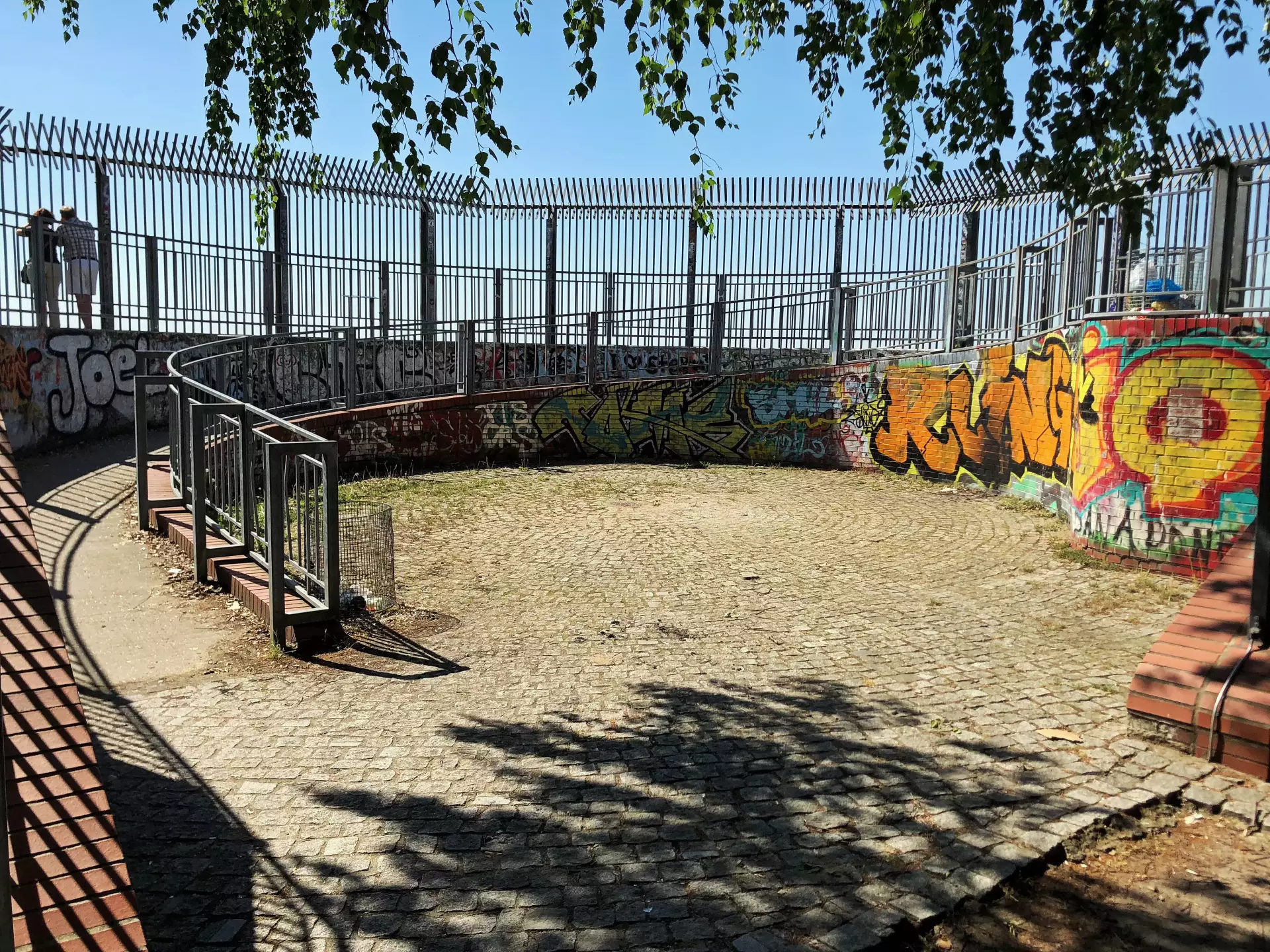
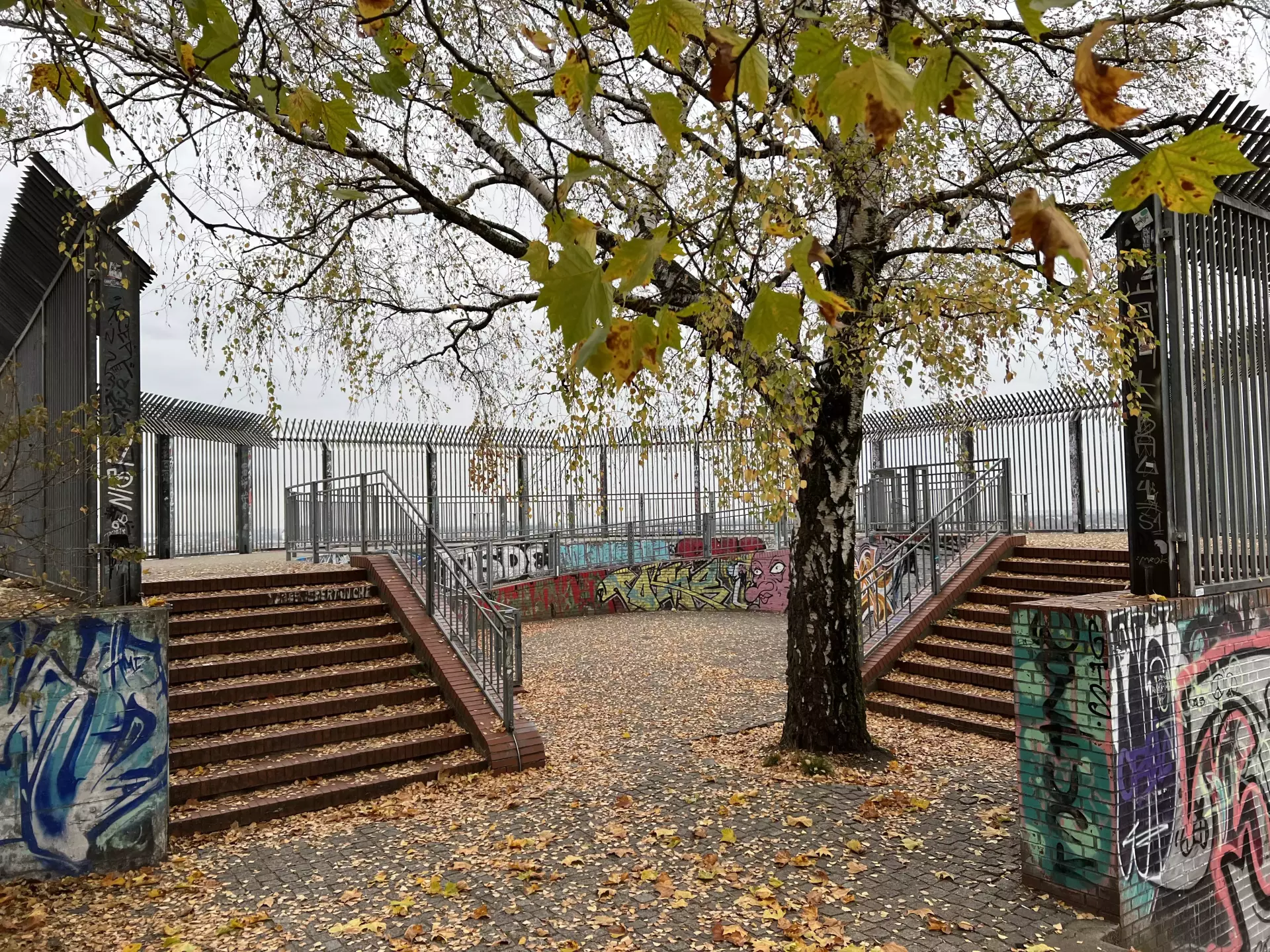
Rising above the treetops, the concrete Flakturm—an anti-aircraft gun tower from the Second World War—provides a stark contrast to the greenery below. Its weathered walls tell a story of defense and endurance, and its presence is impossible to miss from many points in the park. Stairs lead up to viewing platforms where wide-open vistas stretch across Berlin’s rooftops and landmarks.
From the top, the city unfolds in every direction: rail lines, church spires, and contemporary high-rises form a layered skyline. Sunsets can be dramatic here, with warm light catching the tower’s edges and dissolving into the horizon. Even on overcast days, the view remains broad and absorbing, offering an elevated sense of the city’s scale.
Below, the park resumes its softer rhythm—families on blankets, friends chatting along paths, and the rustle of leaves in the wind. The Flakturm stands as both a lookout and a reminder, anchoring Humboldthain in Berlin’s landscape and history while the everyday life of the park carries on around it.
Source - https://en.wikipedia.org/wiki/Volkspark_Humboldthain
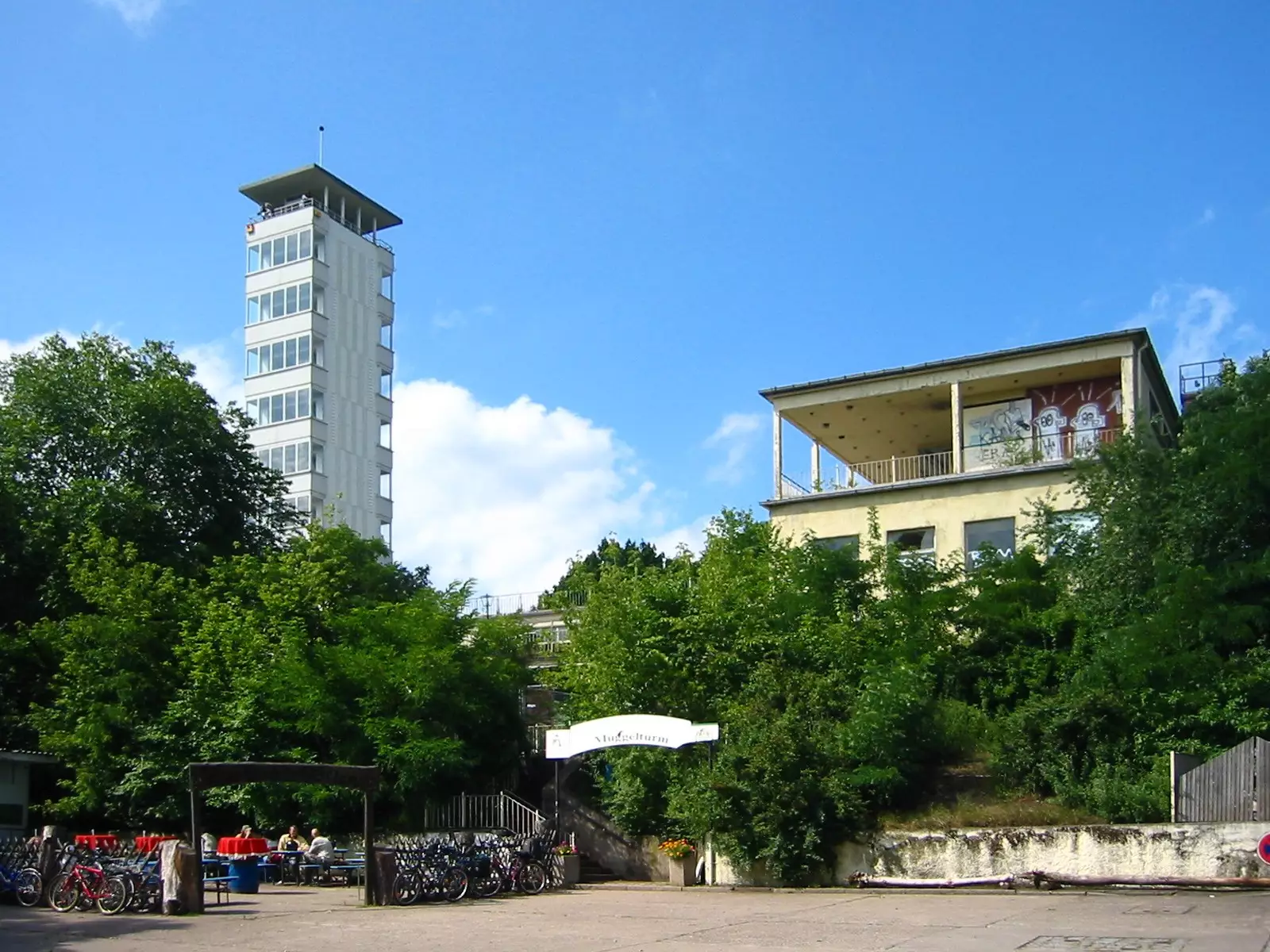
A man-made hill of about 120 m in the Grunewald, created after the Second World War from debris of the city. On top is the Field Station Berlin, a former US listening station. Inside the building complex you can see lots of graffiti art. The hill can be accessed without any restrictions and is free; however, the building complex is surrounded by fences and requires a ticket (tours are available as well).
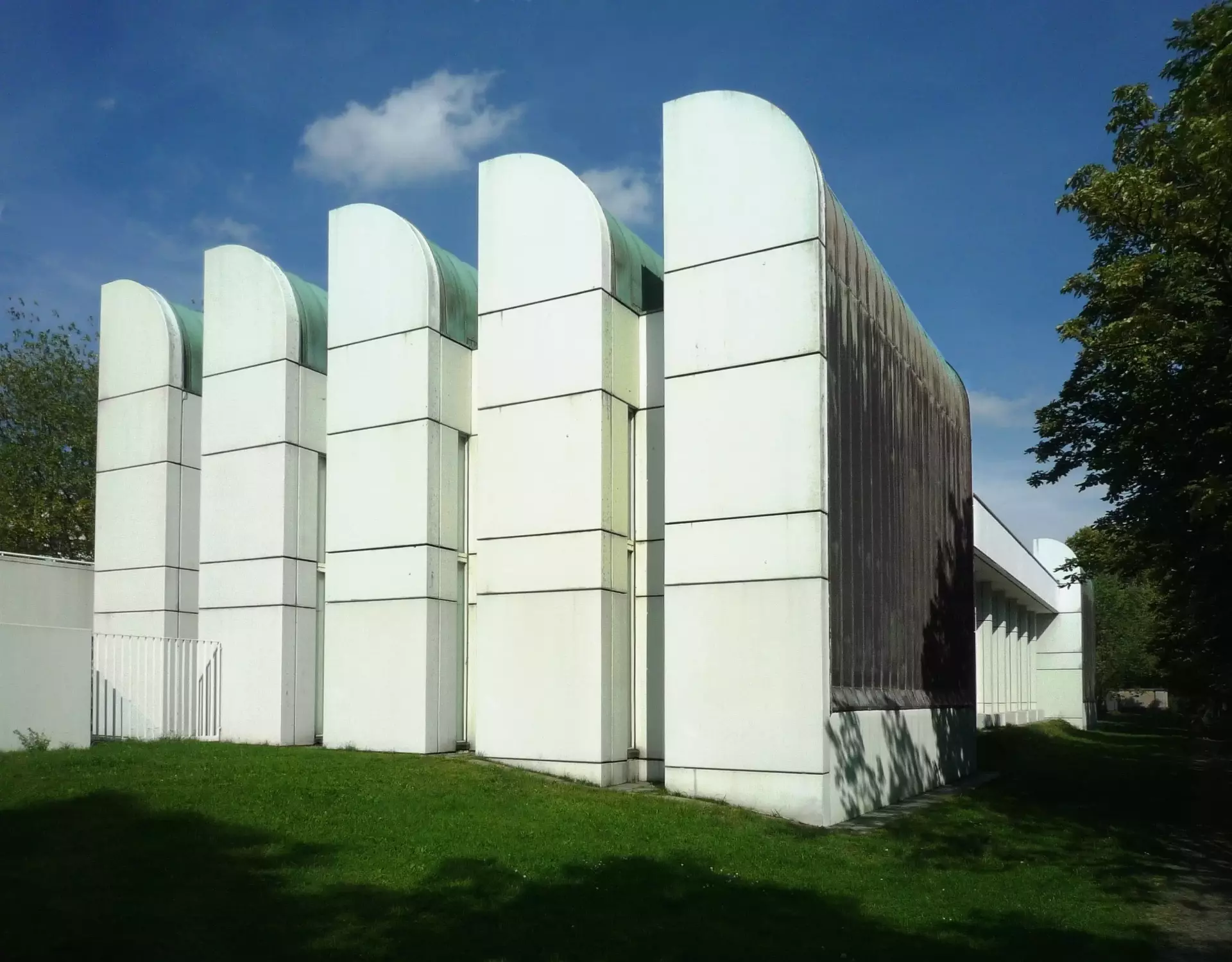
Spectacular building by Mies van der Rohe contains its own collection and temporary exhibitions.
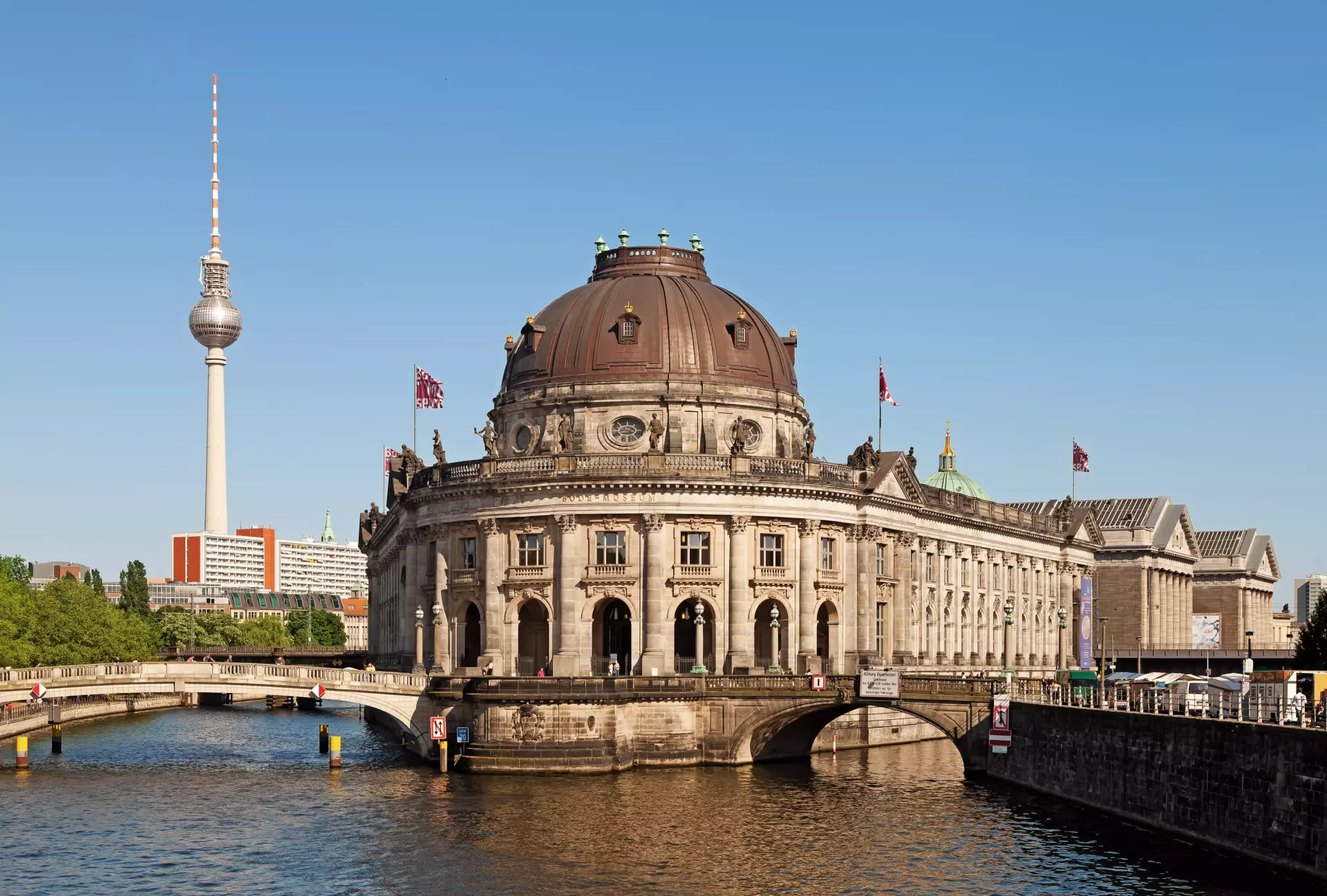
The museum’s treasures include the sculpture collection with works of art from the middle ages to the 18th century. The Bode museum is best known for its Byzantine art collection and the coin cabinet.
Small park in the heart of West Berlin. Great place to chill on a sunny day. There are many great cafés and restaurants nearby. Linger over a coffee here and watch people passing by.
Built by Hitler for the 1936 Olympic Games, this is one of the better examples of Nazi neoclassical architecture (laying claim to the legacy of Rome, fasces and all) and is still used for sporting events. At those Olympics, African-American athlete Jesse Owens won four gold medals, a party-spoiler for Aryan superiority. It's the home of soccer team Hertha BSC - they were relegated in 2023 and now play in 2. Bundesliga the second tier. In 2024 this stadium hosted games in the UEFA Euro Finals, including the final itself. For a glimpse of the Olympiastadion in its original state, seek out Leni Riefenstahl's movie Olympia - clips are shown in the Kinemathek and elsewhere.
150-200 m along the Wiener Straße (bypassing the fire house and the public swimming pool) from U-Bahn Görlitzer Bahnhof, the park is famous for the Turkish families barbecuing on summer weekends, failed contemporary art and relaxed atmosphere of students. It does have a reputation of being full of pickpockets and drug dealers though and the police makes regular visits to this place to check on the situation.
The oldest museum of its kind in Germany which, despite great losses during the World War II, still possesses one of the world's primary collections of European applied art. There are two sections to the collection: one located at the Kulturforum in Tiergarten, the other at Köpenick Palace.
Berlin's oldest church (1230) is a 3-nave hall church. It is in the centre of an area destroyed by bombs in the war which was then turned into a faux "old town" by the East German authorities called Nikolaiviertel. The area is more a hodge-podge of relocated buildings than an authentic reproduction, and the newly-built 1988 apartments that attempt to "harmonize" with the older buildings are embarrassing. The church is one of the only structures that was renovated rather than rebuilt. It is best known for a sandstone sculpture called the Spandauer Madonna (1290), but there are other interesting pieces here. When the church was destroyed in 1938 and rebuilt in the 1970s, the communist officials intended to use it as a museum, which did not open until 1987. The museum includes sacred textiles and religious sculpture from the fourteenth to the sixteenth centuries. The Nikolaikirche is the showplace of the Nikolaiviertel, which isn't saying much.
Designed by Hans Poelzig in 1929, it is the first self-contained broadcasting house in the world and it is still in use today.
This imposing building houses the Federal German Parliament or "Bundestag" and was completed in 1894 to meet the need of the newly-unified German Empire of the Kaisers for a larger parliamentary building. The Reichstag was intended to resemble a Renaissance palace, and its architect, Paul Wallot, dedicated the building to the German people. The massive inscription in front still reads: "Dem Deutschen Volke" - 'For the German people'. The Nazi leader Adolf Hitler exploited the fire which gutted the Reichstag building in 1933 by blaming the Communists for the arson and for attempted revolution. There is good evidence to suggest, however, that his followers were actually responsible and that this was a manufactured crisis. The iconic photo symbolizing the Soviet victory over Nazi Germany shows a Soviet soldier planting the Soviet flag on top of the building and there are to this day graffiti left by Soviet soldiers on some walls of the Reichstag which were deliberately preserved by the new Germany as a memento of the war. It's perhaps the only national parliament to have traces left by a foreign army deliberately preserved. When German reunification became a reality, the new republic was proclaimed here at midnight on 2 October 1990. The Reichstag building is well-known in the art world thanks to Paris-based Bulgarian artist Christo's mammoth 'Wrapped Reichstag' project in 1995. The entire building was swathed in silver cloth for two weeks that summer.The Reichstag has undergone considerable restoration and alteration, including the addition of a spectacular glass dome designed by the British architect Norman Foster completed in 1999. You can visit the Reichstag building proper and even listen to a parliamentary debate but you need to book on their website sometimes weeks or even months in advance. Fortunately its much easier to visit the glass dome. You can reserve a visiting time and date on their website or in the small building across Scheidmannstrasse, except during the high season you should be able to arrange a time later the same day or the next day. Photo ID or passport is required to make the booking. A passsport is required during your visit. This is a very popular tourist attraction in Berlin and can get quite crowded however it is worth the effort. The helical path up the inside of the dome is a lot of fun and the 360 degree views at the top are splendid.
House museum on Max Liebermann, German painter and printmaker. Has about 15 Lieberman paintings.
The building of one of Berlin’s oldest breweries is a ravishingly beautiful and heritage-protected industrial monument.