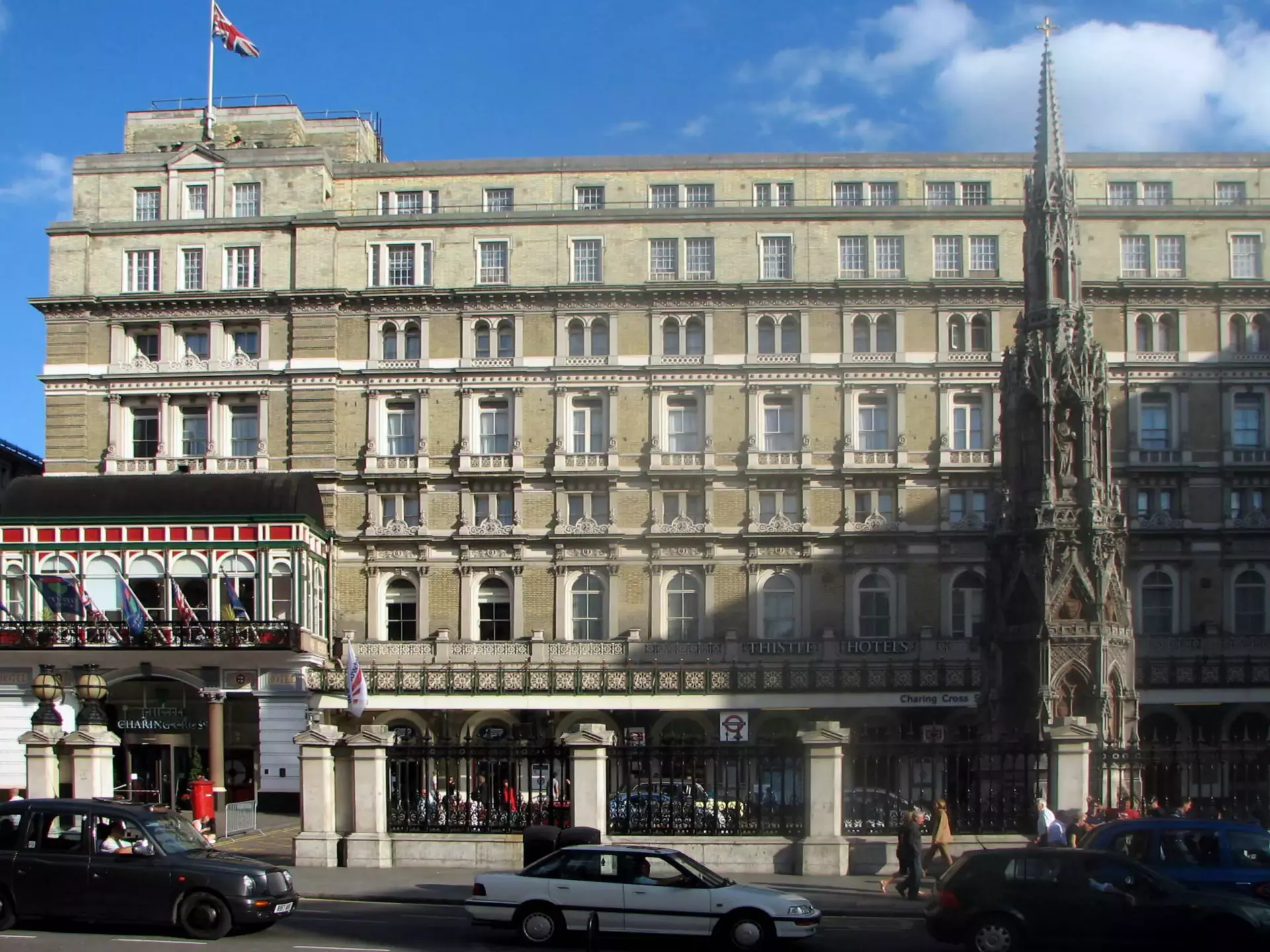
Charing Cross Station stands proudly, combining the old with the new through its grand architecture. The station is an intriguing blend of an enormous office and shopping complex, crafted in glass and pale stone. Adding to its charm is a lavish hotel nestled within the site, offering a touch of luxury to visitors.
The station’s name has historical roots, inspired by the Queen Eleanor gothic pillar situated just outside. Though the pillar itself is a Victorian-era replica, it pays tribute to the original 13th-century monument, adding a sense of history and tradition to the bustling modern hub.
Charing Cross Road once held fame for its quaint vintage bookshops, a haven for book lovers. Unfortunately, many of these shops have vanished, driven away by soaring rents and the rise of online booksellers. Despite this, the road continues to be a literary landmark, being home to Foyle's, one of London's largest and most renowned bookshops.
Source - https://en.wikipedia.org/wiki/Charing_Cross
This steel pedestrian bridge connecting Bankside with the City of London has all the lovely views of the Thames that you'd expect, but most of those who cross Millennium Bridge never notice its most distinctive feature. The bridge is dotted with hundreds of tiny paintings, so small that you'll probably miss them under your feet if you're not looking for them.
A royal residence which is still used by Prince William, Kate and their young family. Much of it is however open to the public and it is a very popular tourist attraction perhaps due as much to its association with Princess Diana as anything else. The King's Gallery here is a magnificent Regency period court drawing room and contains some impressive paintings including a Van Dyke. Also a nice restaurant on site called The Orangery.
Originally the private garden of Holland House, much of which was destroyed in the London Blitz, Holland Park is a mixture of woodland, European and Japanese-style formal gardens and leisure facilities. It includes a large field dedicated to football and cricket, as well as tennis courts. As you walk around the park, you can see bits of the house dotted around the place which give you some idea of how grand it used to be. In the summer this is a great place to catch outdoor opera. An ecology centre near the police station provides information about the ecology of the park and arranges various activities for children. There is a café in the park that sells ice creams and hot food. The park is a popular way to walk from Notting Hill to Kensington High Street.
The restoration of the nave was completed in September 2004, and this church is still a striking building designed by Sir Nicholas Hawksmoor with a particularly tall, pointed spire. Hawksmoor's design was significantly altered in the 19th century, and present continuing restoration is intended to restore it to Hawksmoor's original vision. Christ Church was built as part of the 50 Churches for London project.
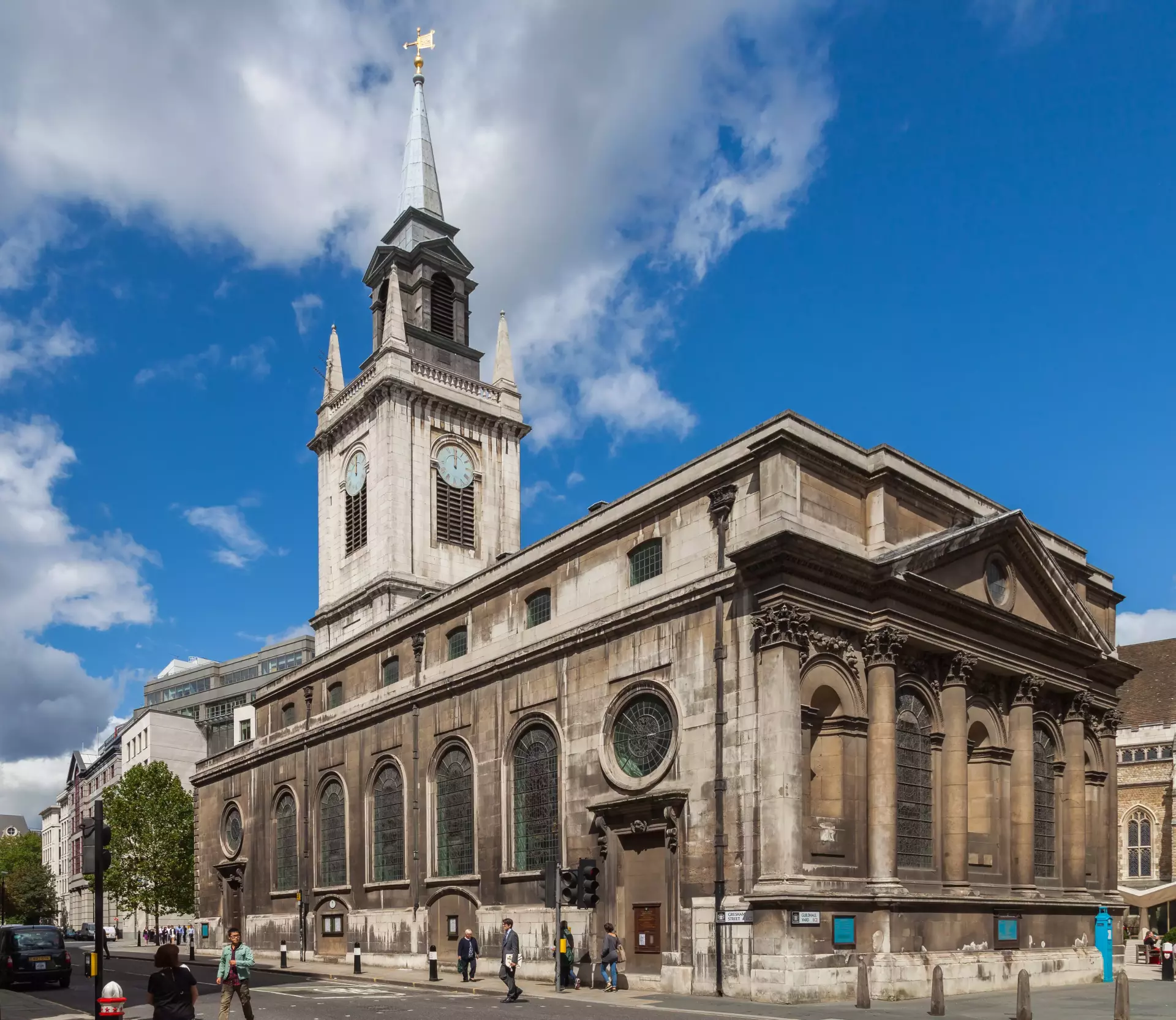
Constructed 1672-9 to a design by Sir Christopher Wren and regarded as one of the finest Wren churches. The 63 feet (19 m) high dome is based on Wren's original design for St Paul's Cathedral. The circular altar is by the British sculptor Henry Moore, and the kneelers are designed by Patrick Heron. Free lunchtime concerts at 1PM on Tuesdays (except August). Free Organ recitals at 12:30PM on Fridays. Occasional art exhibitions on Christian themes and other events.
A vast shopping, eating, entertainment and (primarily) business complex, home to Britain's second tallest skyscraper, One Canada Square. Now increasingly lively at weekends as well, but still at its most impressive during the week. Spectacular main exit from the Jubilee line Tube station. There is a substantial amount of information about the history and the architecture of the development on the website of Canary Wharf Group, the company that owns the development.
Church in Piccadilly designed by Sir Christopher Wren in 1684. It has a magnificent organ case and baptismal font by Grinling Gibbons.
Worth a quick visit if you are passing. The brick and stone neo-Byzantine Catholic Cathedral (not to be confused with the much more famous Westminster Abbey) is near Victoria Station, just off Victoria Street. Construction started in 1895, and some of the interior is still unfinished. The Treasures of Westminster Cathedral exhibition is inexpensive and worthwhile for learning the history of the cathedral, there are interesting exhibits including a 1:28 wooden scale model uses by the architects. Has a café and gift shop.
Now preserved by the National Trust, this 18th-century house was the home of the historian Thomas Carlyle from 1834 and now houses a museum dedicated to his life and work.
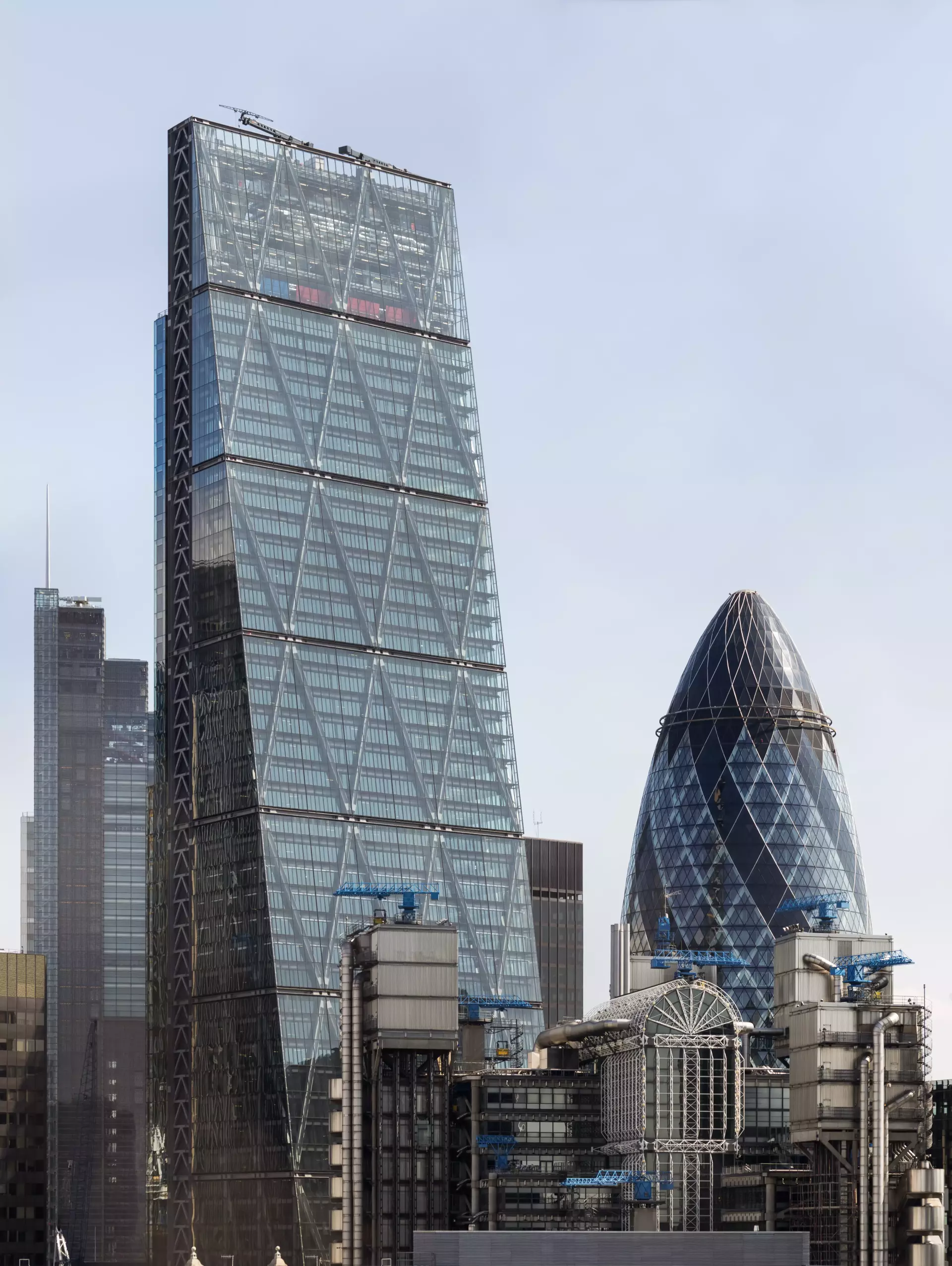
Designed by one of Britain's leading architects, Sir Norman Foster, this curved glass skyscraper was the 2004 recipient of the Stirling Architectural Prize for Best Building. It was built on the site of the Baltic Exchange building, destroyed in 1992 by an IRA bomb which killed three. On the Bury Street side of the Gherkin by some black stone benches is the Tomb of the Unknown Girl for a teenaged Londoner who died 1,600 years ago (see infobox above), marked with a marble laurel wreath and inscription. Searcy's Restaurant (from £50) at the top takes bookings up to five weeks in advance and you have to go through security before going up.
Houses the British national collection of western European art dating from the 13th to 19th centuries. A truly awe-inspiring collection, notable works include Hans Holbein's The Ambassadors, Van Gogh's Sunflowers and Constable's The Haywain. The vast majority of art is free of charge to visit. Temporary exhibitions are generally fairly costly, but invariably well researched and presented. The audioguides are very comprehensive, have comments on most of the paintings in the museum, and are free though this fact is not advertised. A donation is suggested. In addition to courses, workshops, lectures and other events, the National Gallery has free talks and tours every day.
The most senior of the Royal palaces in London (built between 1531 and 1536) and the official seat of the monarch.
Designed and built in 1619-1622 by the Neo-Classical architect Inigo Jones, The Banqueting House is now all that remains of Whitehall Palace, the sovereign's principal residence from 1530-1698 when most of it was destroyed by fire. Renowned for its architecture and paintings (by Rubens, among others), the building is also famous for being the scene of Charles I's execution in 1649 at the end of the English Civil War.