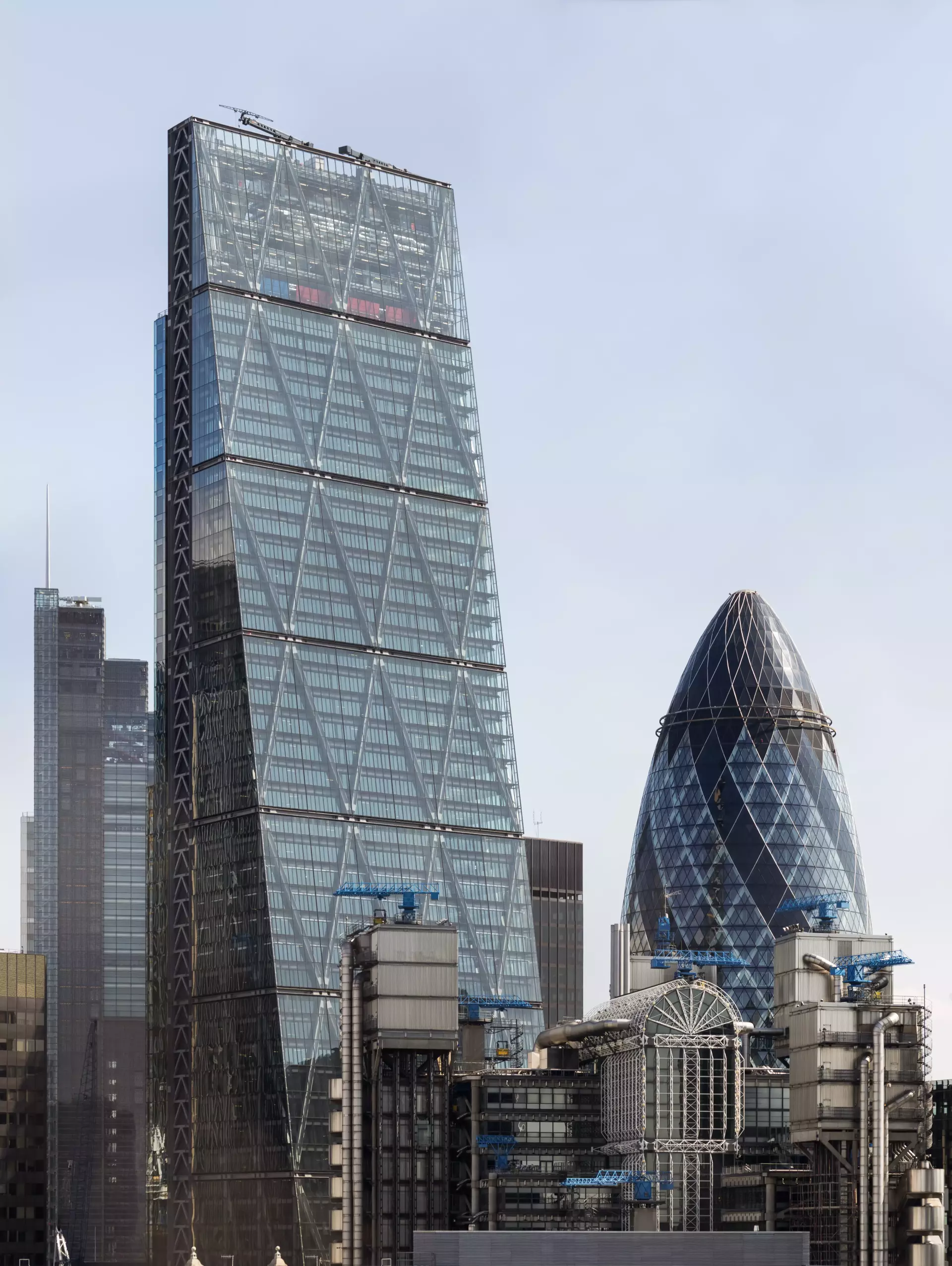
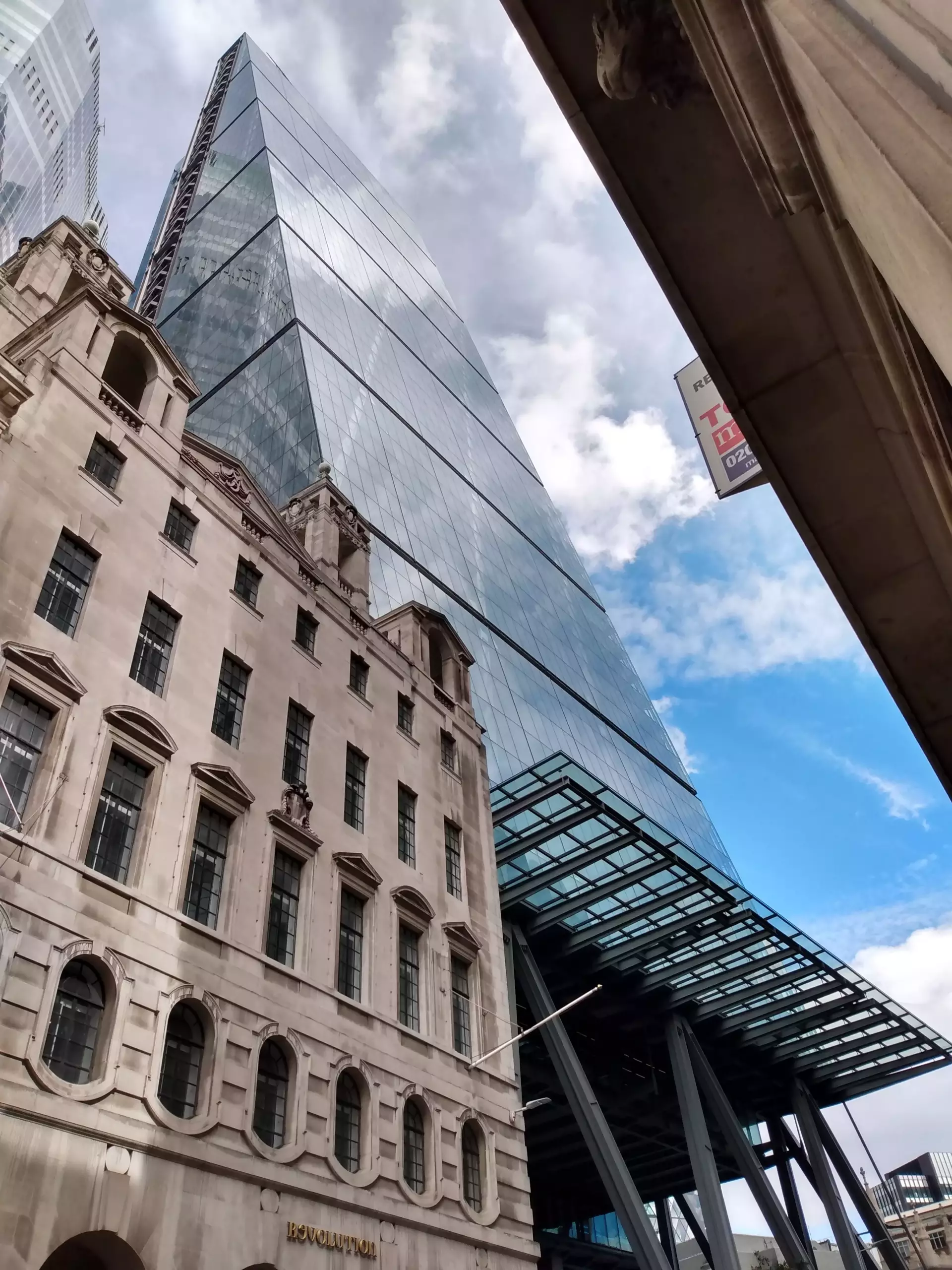
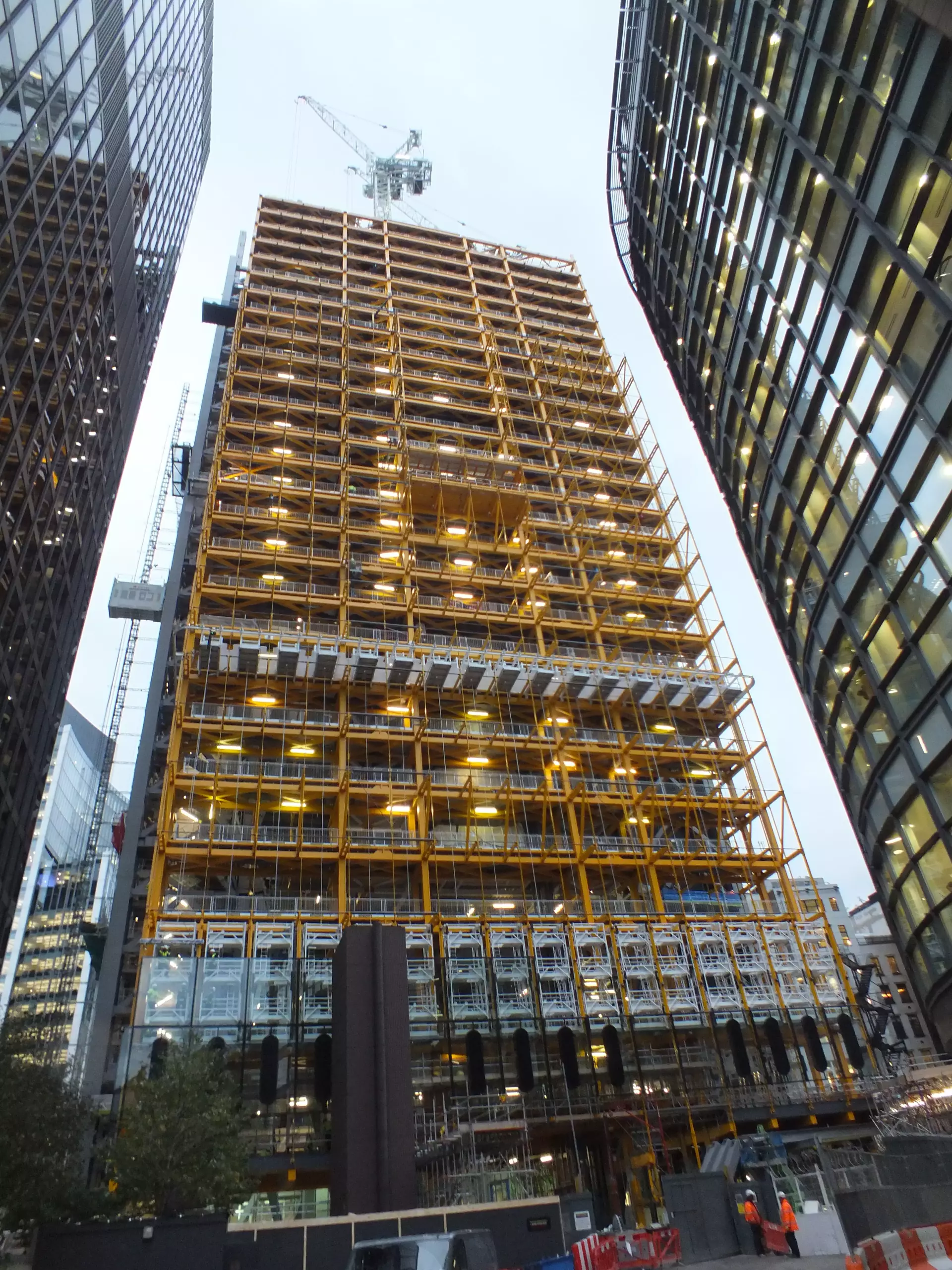
The Leadenhall Building, affectionately known as the Cheesegrater, stands as a remarkable piece of modern architecture. This innovative skyscraper, completed in 2014, is a testament to the creativity and vision of its designer, Richard Rogers. It's one of the standout features in London's iconic skyline.
The structure rises with a distinctive tapering design, which gives it the resemblance to its culinary namesake. This unique shape isn't just for show; it cleverly ensures that the building doesn't block protected sightlines of St Paul's Cathedral. Such attention to detail in city planning highlights the blend of modern innovation with historical preservation.
Situated in the heart of London's financial district, the Leadenhall Building sits directly opposite another of Rogers's masterpieces, the Lloyd's building. This proximity creates a captivating juxtaposition of architectural styles, showcasing Rogers's signature flair for incorporating bold lines and transparent elements.
The building's futuristic design extends beyond its appearance. Inside, it boasts state-of-the-art facilities and cutting-edge technology that make it one of the most advanced office spaces in the city. The innovative design prioritizes both functionality and aesthetics, making it a favorite among businesses seeking a prestigious address.
The Leadenhall Building is more than just a skyscraper; it's a symbol of modern London's architectural ingenuity. Its nickname may be playful, but the impact it has on the skyline and the city is profound, embodying the spirit of advancement and artistry.
Source - https://en.wikipedia.org/wiki/122_Leadenhall_Street
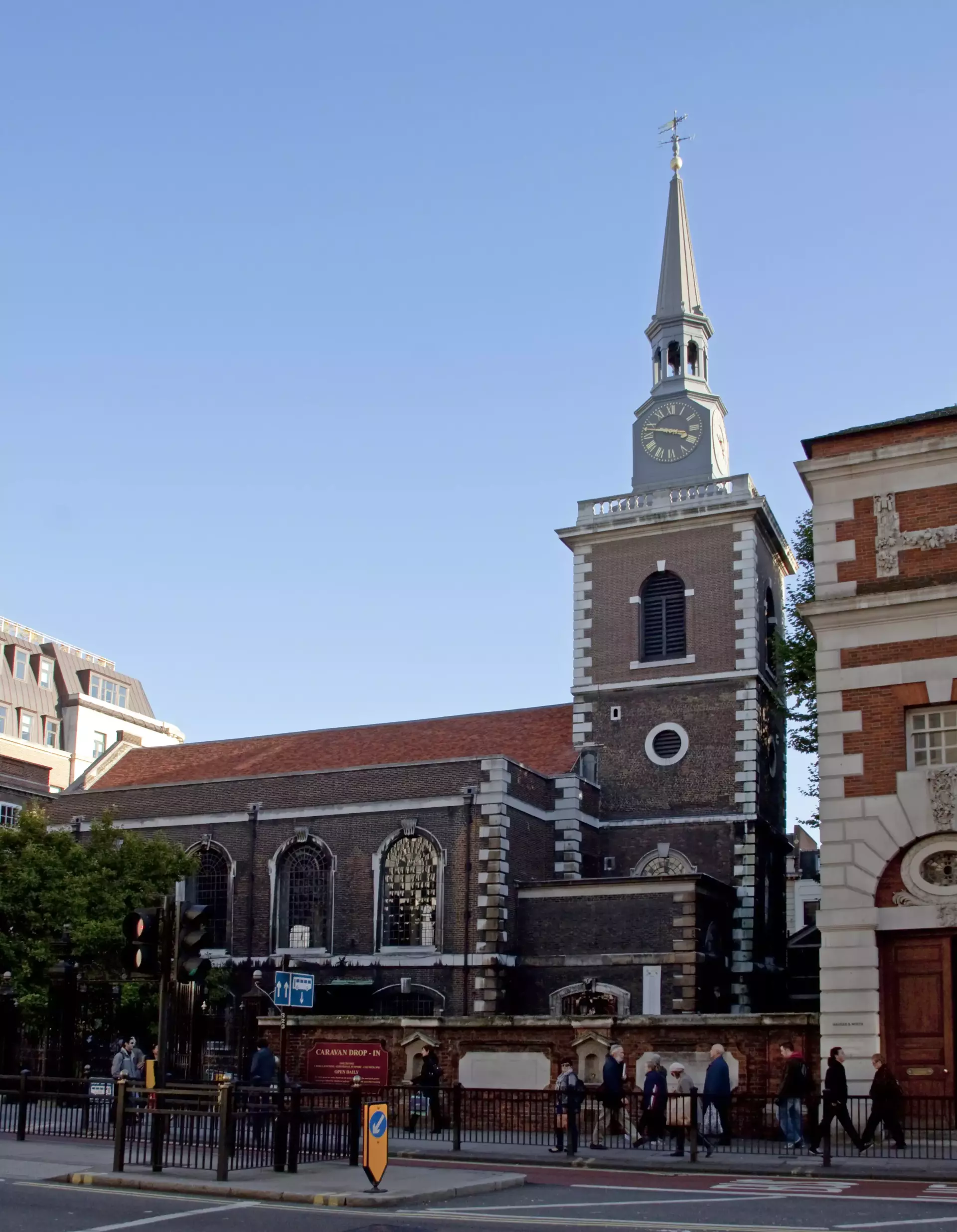
Constructed 1672-9 to a design by Sir Christopher Wren and regarded as one of the finest Wren churches. The 63 feet (19 m) high dome is based on Wren's original design for St Paul's Cathedral. The circular altar is by the British sculptor Henry Moore, and the kneelers are designed by Patrick Heron. Free lunchtime concerts at 1PM on Tuesdays (except August). Free Organ recitals at 12:30PM on Fridays. Occasional art exhibitions on Christian themes and other events.
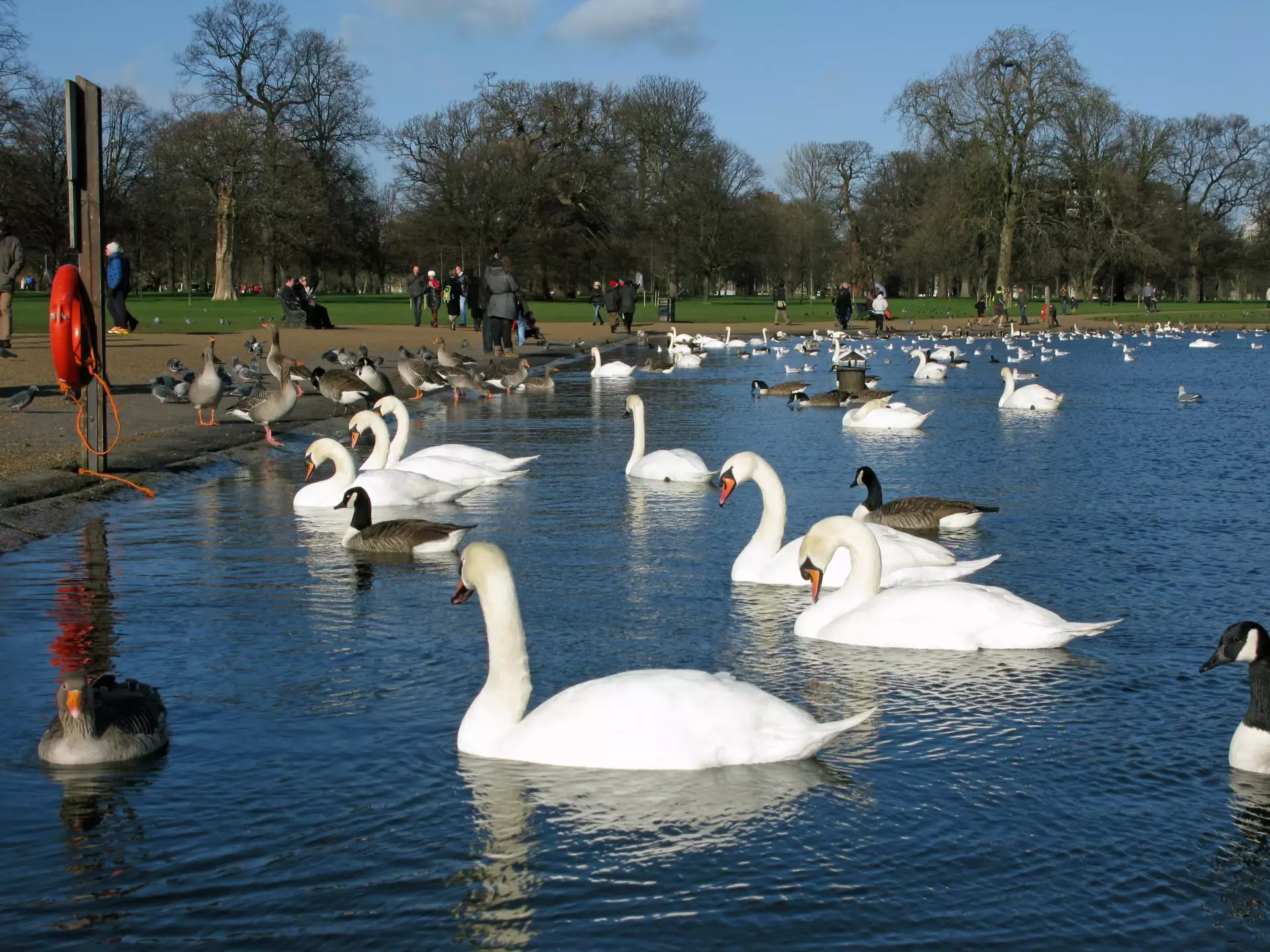
The largest open space in London, covering almost 1,000 hectares (2,500 acres) and home to a huge array of wildlife, including 400 wild deer. Also contains the lush Isabella Plantation, which is full of trees and flowers, and the Royal Ballet School, seen in the film Billy Elliot. Popular with cyclists, both for the on-road perimeter circuit and the off-road trails. There are several car parks for walkers and picnickers.
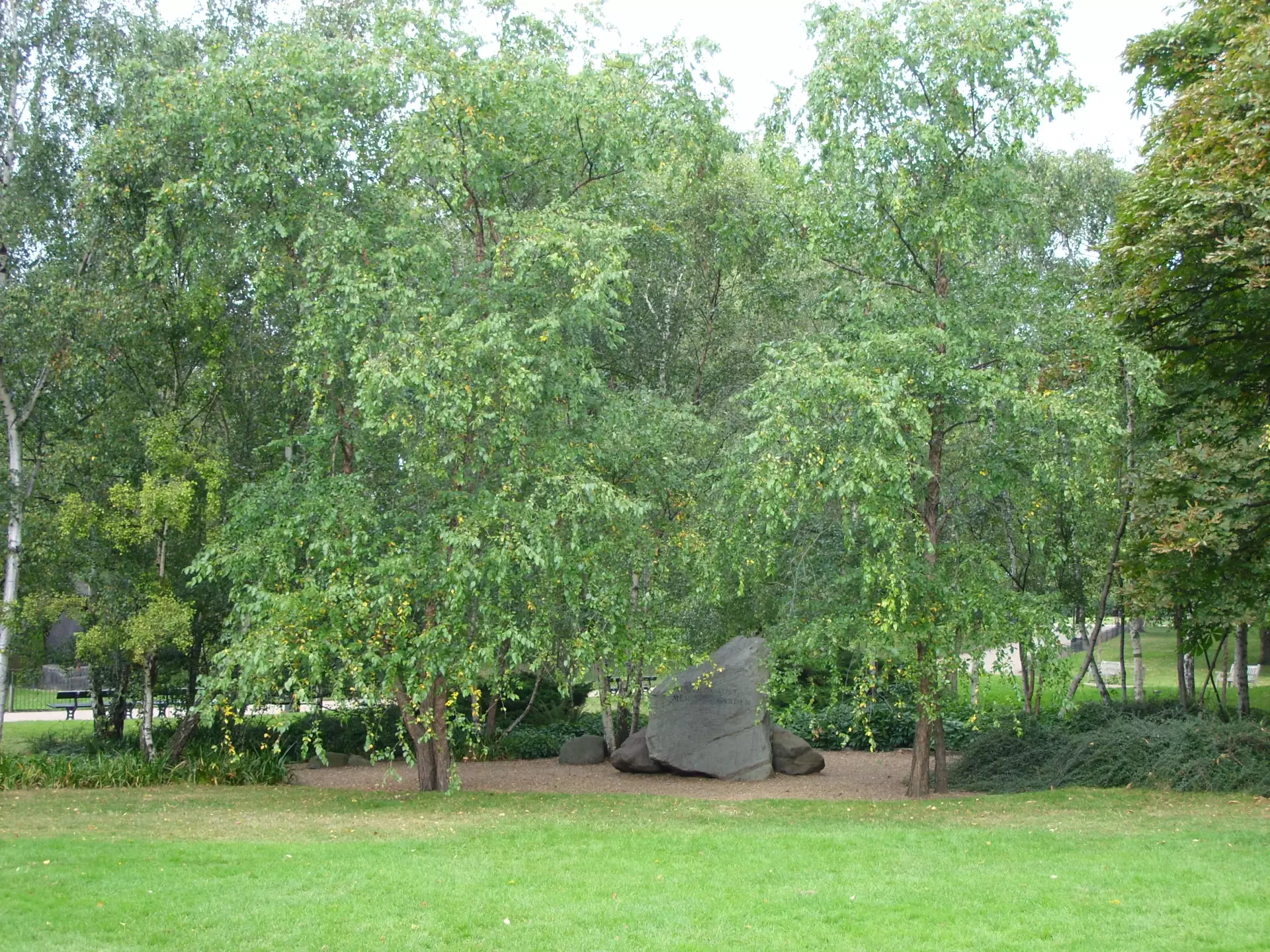
Peaceful gardens and interesting monuments including the daughter of Richard Cromwell, son of Oliver Cromwell.
Beautiful Italianate church created during the Catholic revival of the 19th century.
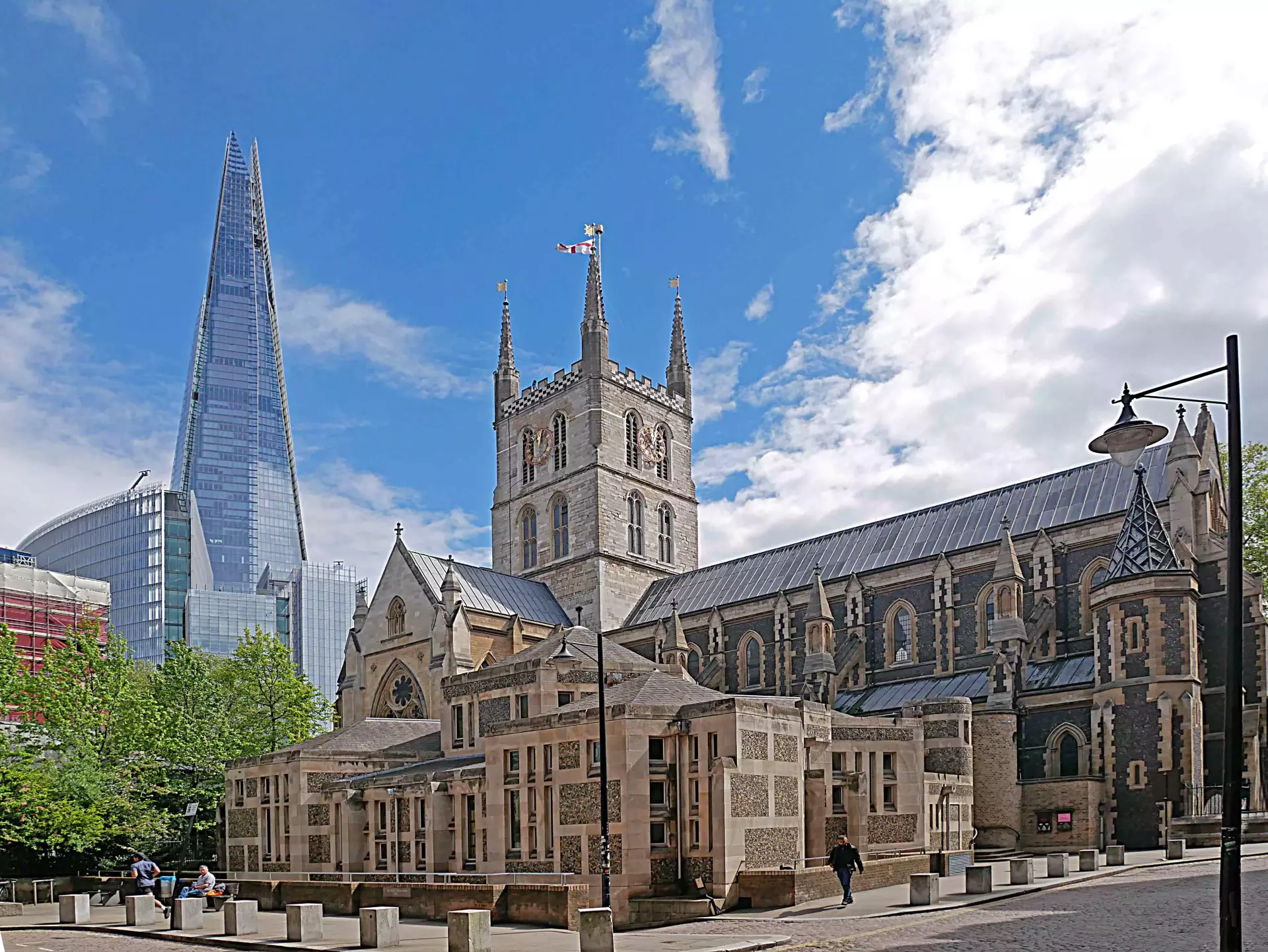
191-m (627-ft) skyscraper can be seen from far away and is the sixth highest building in UK.
Magnificent 19th-century bridge, decorated with high towers and featuring a drawbridge. The bridge opens several times each day to permit ships to pass through – timings are dependent on demand, and are not regularly scheduled. When Tower Bridge was built, the area to the west of it was a bustling port – necessitating a bridge that could permit tall boats to pass. Now the South Bank area sits to its west, and the regenerated Butler's Wharf area of shops and riverside restaurants lie to its east. You can get the lift to the top level of the bridge and admire the view. Glass floors provide an interesting perspective for the brave. The museum highlights the bridge's history and engineering, and there are photographic exhibitions along the walkways between the towers.
A modest museum covering local history which relocated in 2010; has an excellent cafe.
Built of Portland stone and dedicated to the aircrews of Allied nations under Bomber Command during World War II.
The Guildhall Art Gallery houses the City Corporation's art collection, and also runs special exhibitions throughout the year. During construction of the modern gallery, workers discovered the ruins of London's Roman amphitheatre. The gallery was redesigned, and now the Amphitheatre is open to the public within the Guildhall Art Gallery itself and also free of charge.
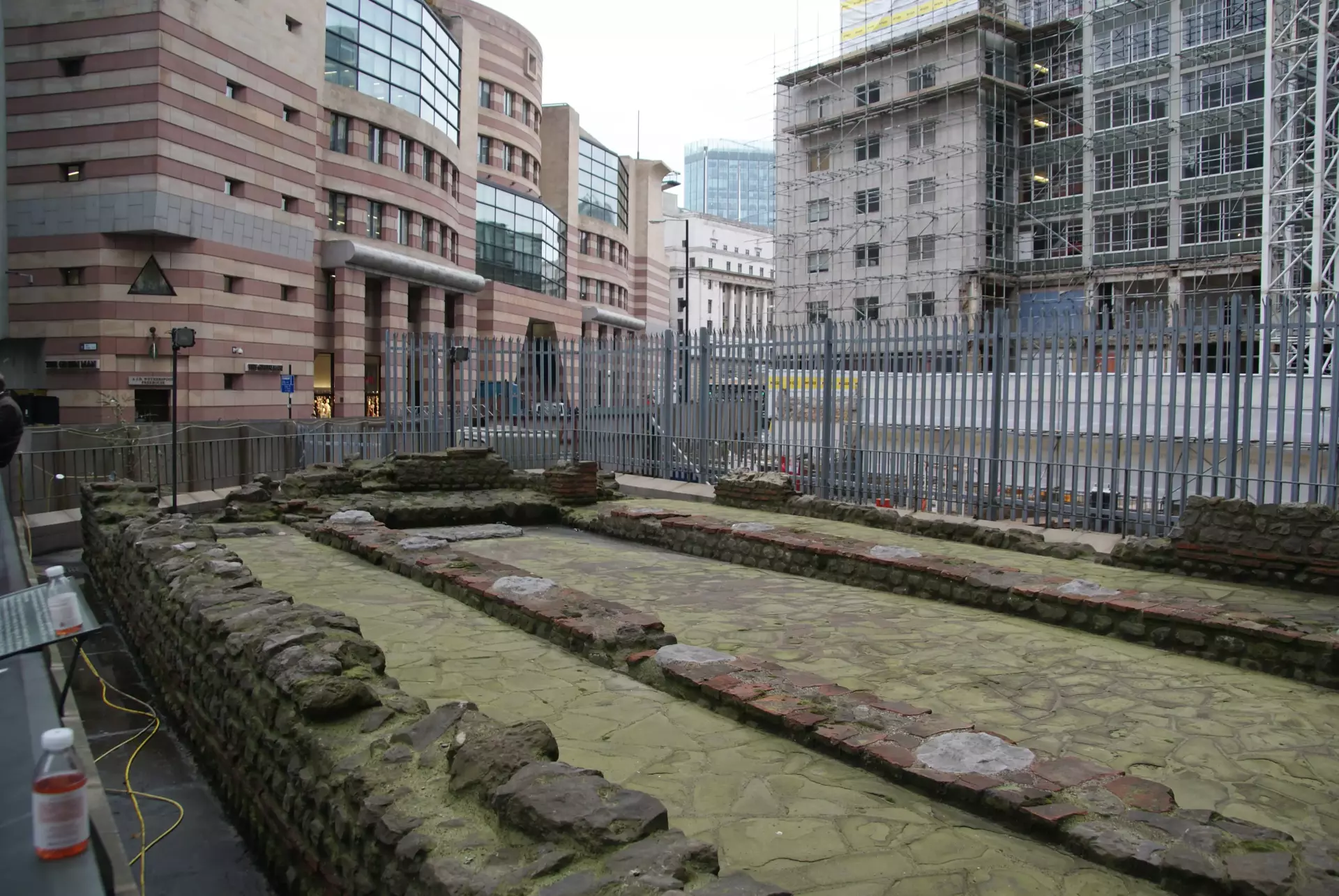
The London Mithraeum is a 3rd century Roman mithraeum that was discovered in Walbrook during construction work in 1954. The entire site was relocated several times before being returned to its original site as part of the new Bloomberg building. This temple of the mystery god Mithras became perhaps the most famous 20th-century Roman discovery in London. In addition to the temple structure, there is a display of Roman artefacts found on the site and a contemporary art exhibit responding to the site. Visitor numbers are limited and timed slots are often fully booked up several weeks into the future so plan well ahead.
Created by Tonkin Zulaikha Greer and Janet Laurence to remember the Australians who died in both world wars. Made from Australian granite.
A retirement home for soldiers created by King Charles II. Tours around the listed building and grounds are regular and include the museum (which can be visited separately) whose exhibits contain military memorabilia donated by Chelsea Pensioners over the years.