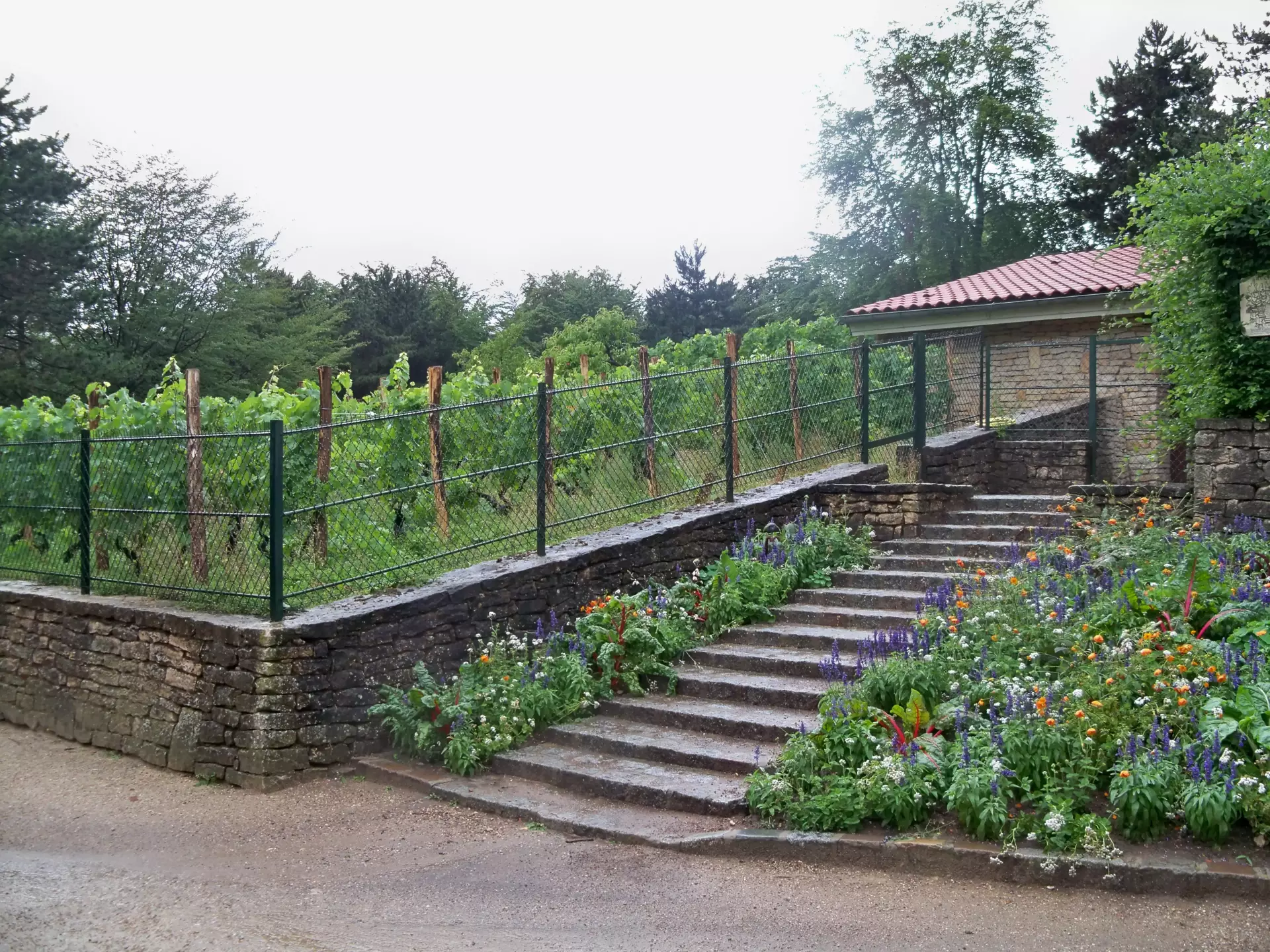
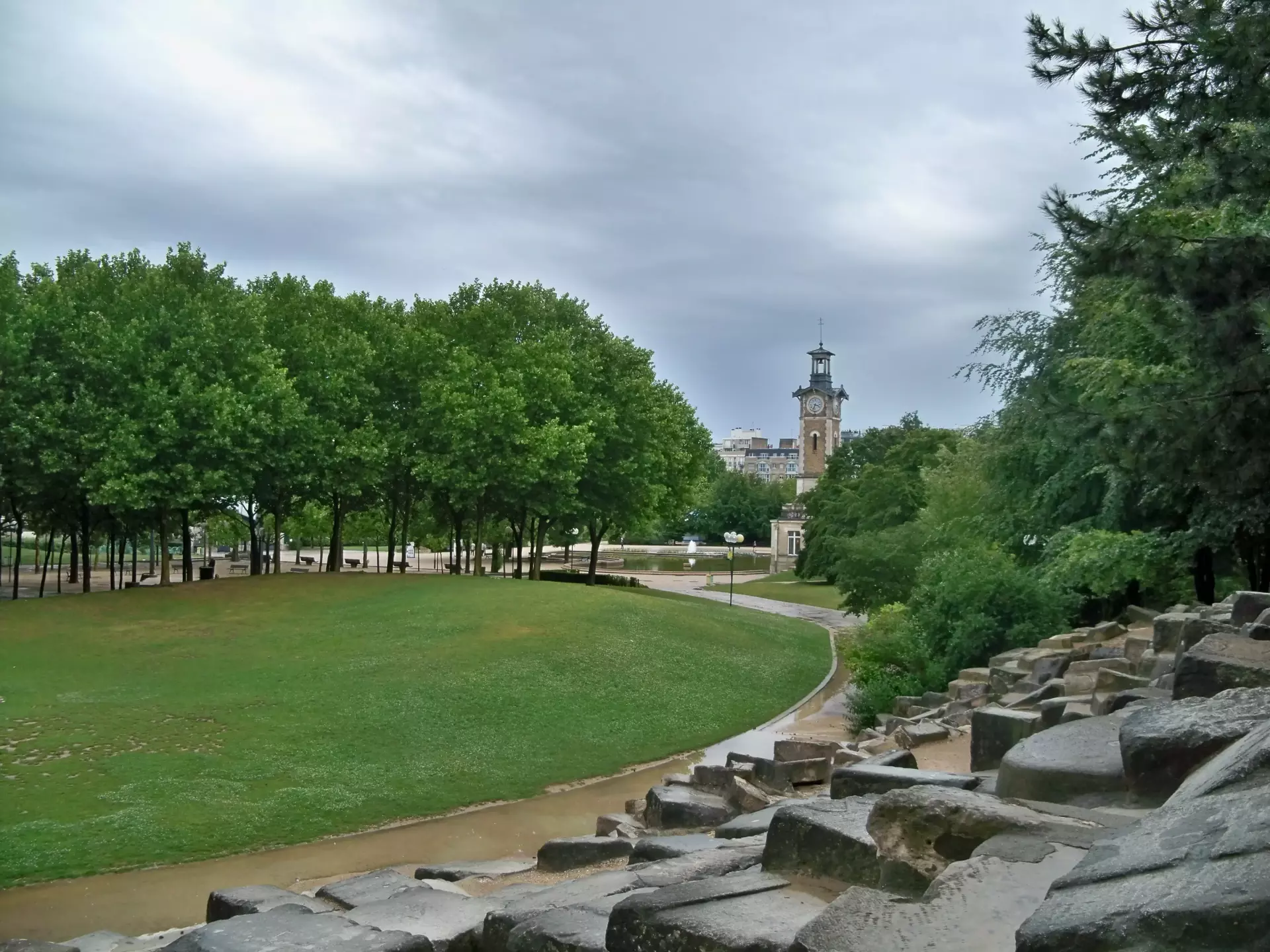
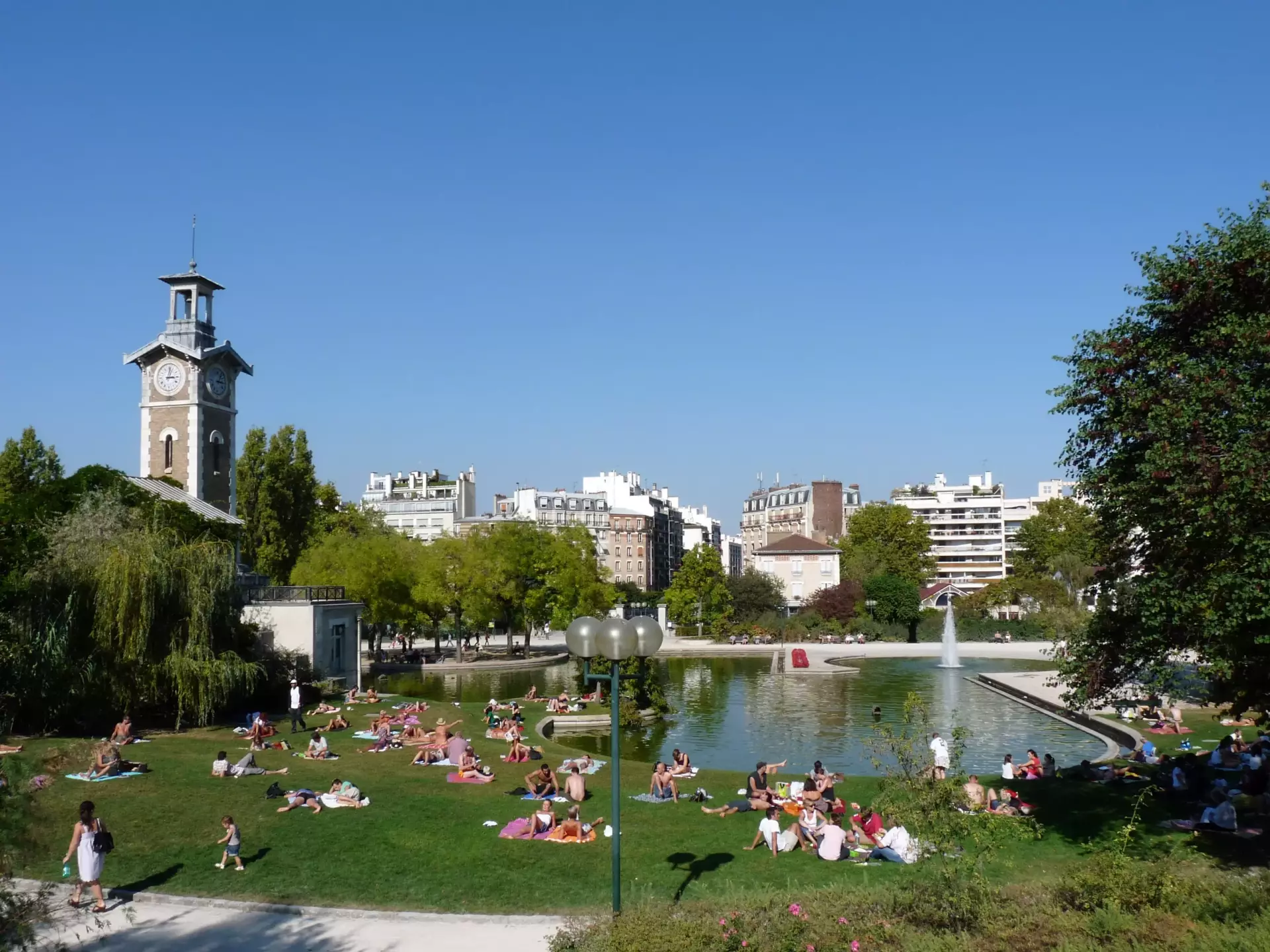
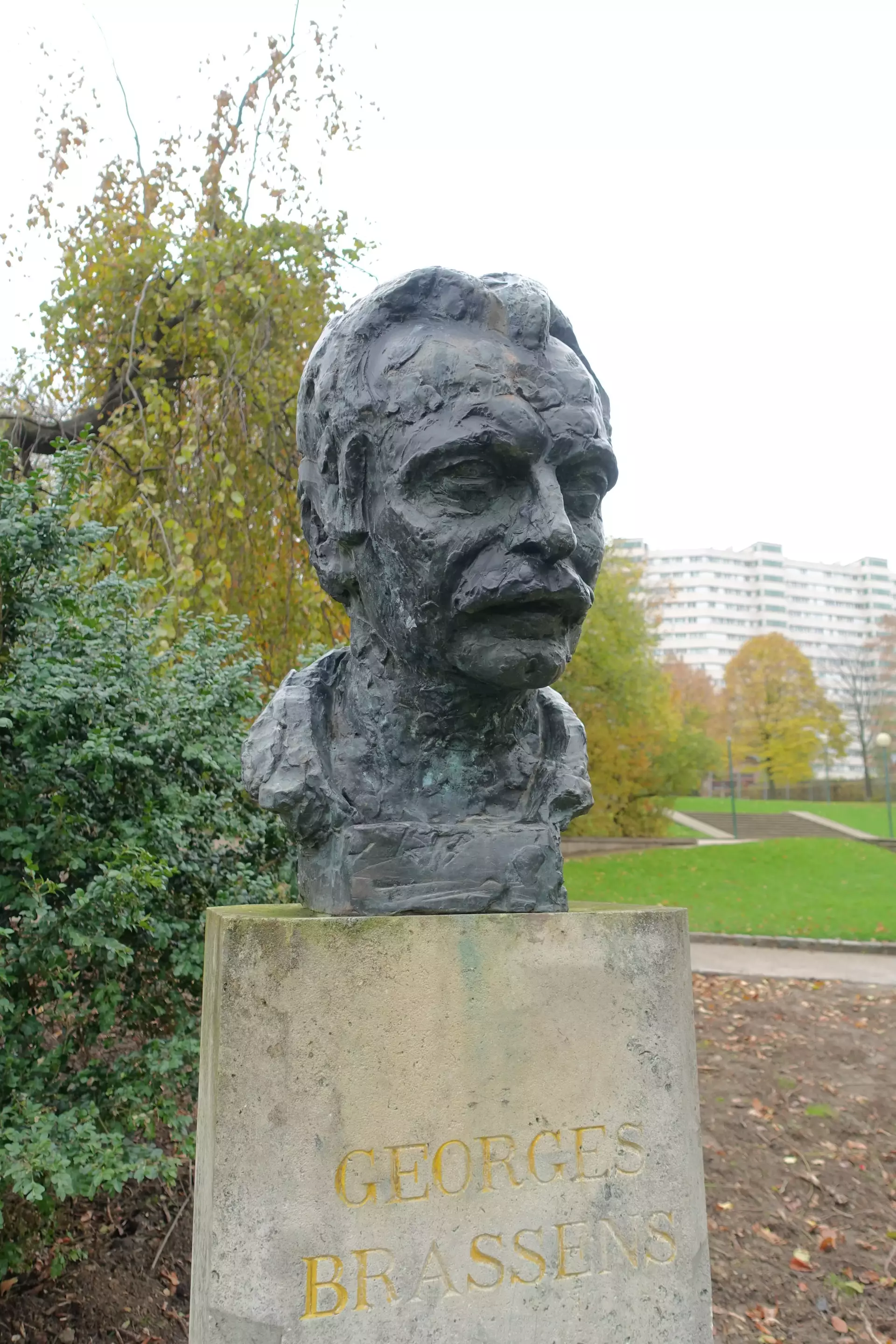
Georges-Brassens Park is a peaceful green space located in the 15th arrondissement of Paris. Once the site of old slaughterhouses and a horse market, the park blends its rich history with modern landscaping. Its entrance is marked by a pair of large iron gates, hinting at its past industrial life, while inside, winding paths lead through flowerbeds, lawns, and shaded areas perfect for relaxation.
Lush trees and colorful gardens fill the park, offering a quiet escape from the city’s busy streets. There is a central pond where ducks and geese swim, watched over by willow trees. Vine-covered pergolas stretch along walkways, providing cool shade on sunny days. Fragrant herb gardens and beehives add to the park’s natural charm, making it a pleasant spot for a stroll or picnic.
Families often visit Georges-Brassens Park for its well-equipped playgrounds. Swings, climbing frames, and sandpits entertain young visitors, while older children enjoy the merry-go-round and puppet theater. There is also a pony riding circuit that is popular during weekends and school holidays.
Each weekend, book lovers gather at the park’s covered book market, held in the former horse market halls. Dozens of stalls display second-hand and antique books, drawing collectors and curious passersby alike. Community events and open-air concerts sometimes fill the park with music, especially in summer, adding to the lively atmosphere.
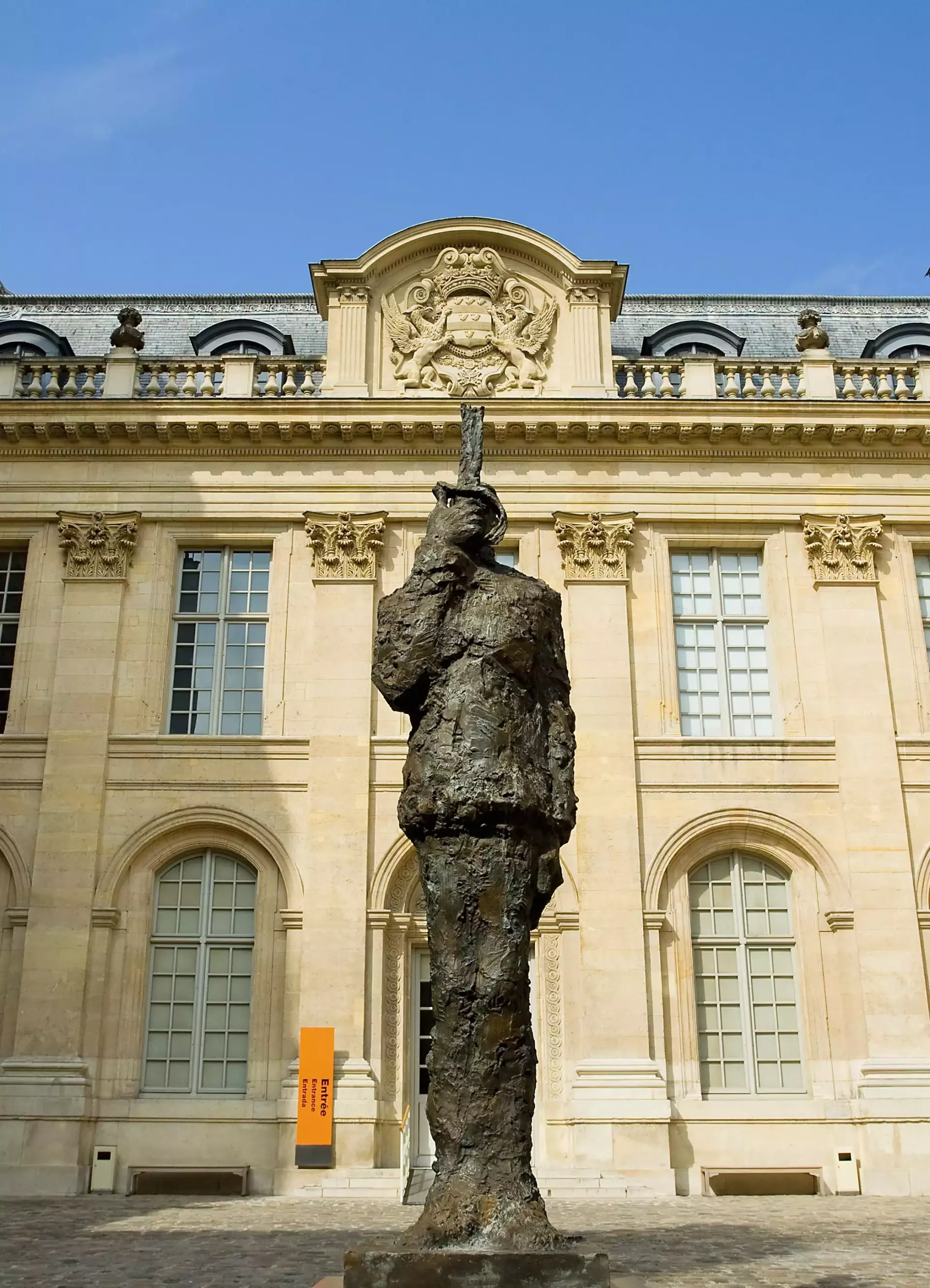
The park is named after Georges Brassens, a famous French singer and songwriter who lived nearby. A bronze statue of Brassens, guitar in hand, stands near the entrance, honoring his legacy. Signs throughout the park share stories about his life and music, connecting visitors to the cultural heritage of the neighborhood.
Source - https://en.wikipedia.org/wiki/Parc_Georges-Brassens
The Musée Grévin is a waxwork museum with some 500 characters arranged in scenes from the history of France and modern life.
Built adjoining the now-lost royal palace of the Tuileries, these gardens lying immediately west of the Louvre offer a central open space for Parisians and visitors with semi-formal gardens (an outdoor gallery for modern sculpture), various cafés, ice cream and crépe stalls, and a summer fun fair. The gardens are frequently home to a giant Ferris wheel and enclose the Musée de la Orangerie and the Jeu de Paume.
The C.I.U.P. is a student quarter established in 1925, providing homes for about 10,000 students, scientists, and artists from 120 countries. It has 40 houses attributed to individual nations. The individual houses organise top quality cultural and political events. Among the most remarkable buildings are the Fondation Deutsch de la Meurthe, the Heinrich Heine House (Maison Heinrich Heine - Fondation de l'Allemagne), the Swedish Student House (Maison des Etudiants Suédois), and the Swiss Pavilion (Pavillon Suisse) which was built in 1933 on plans of Le Corbusier.
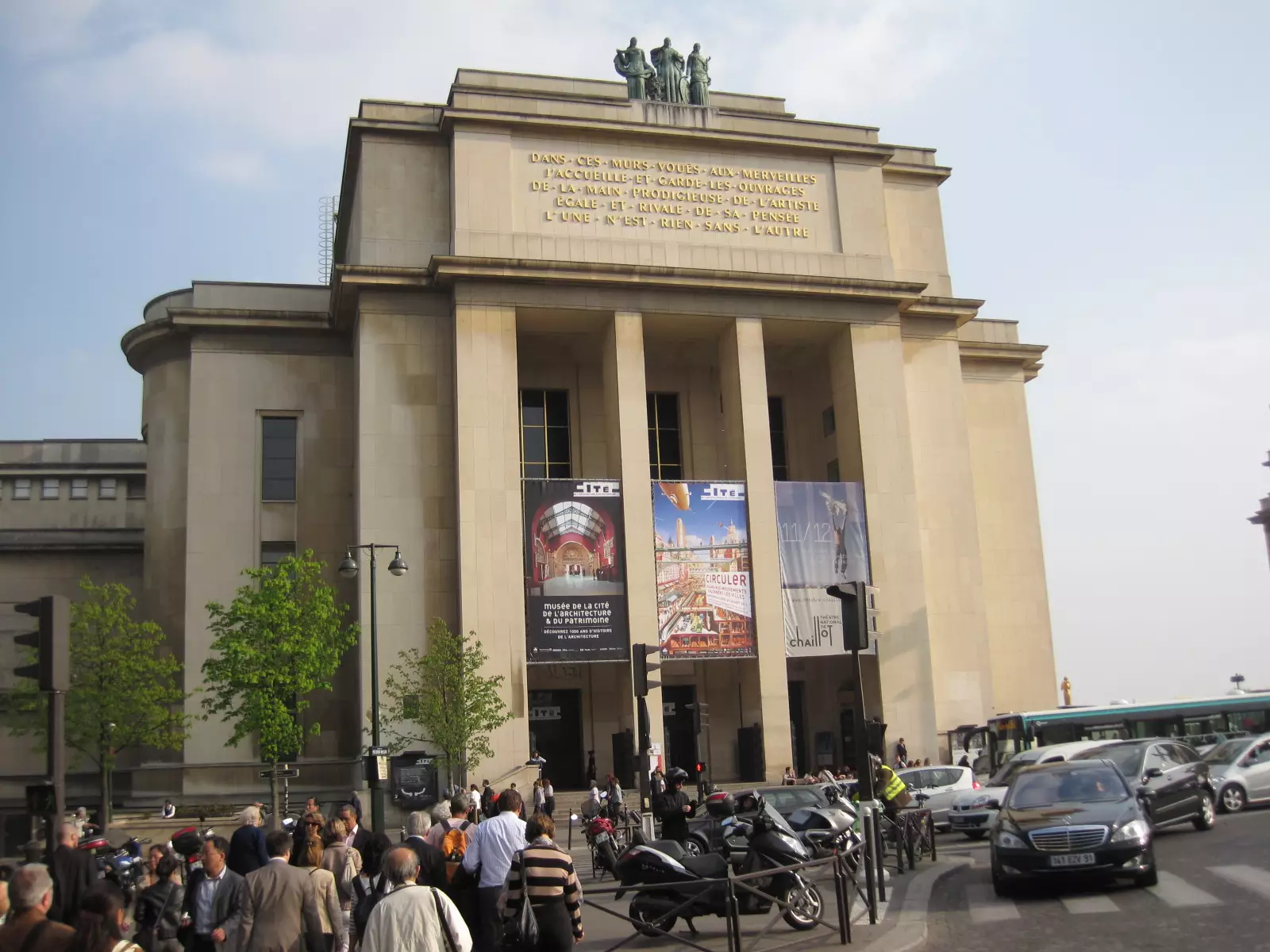
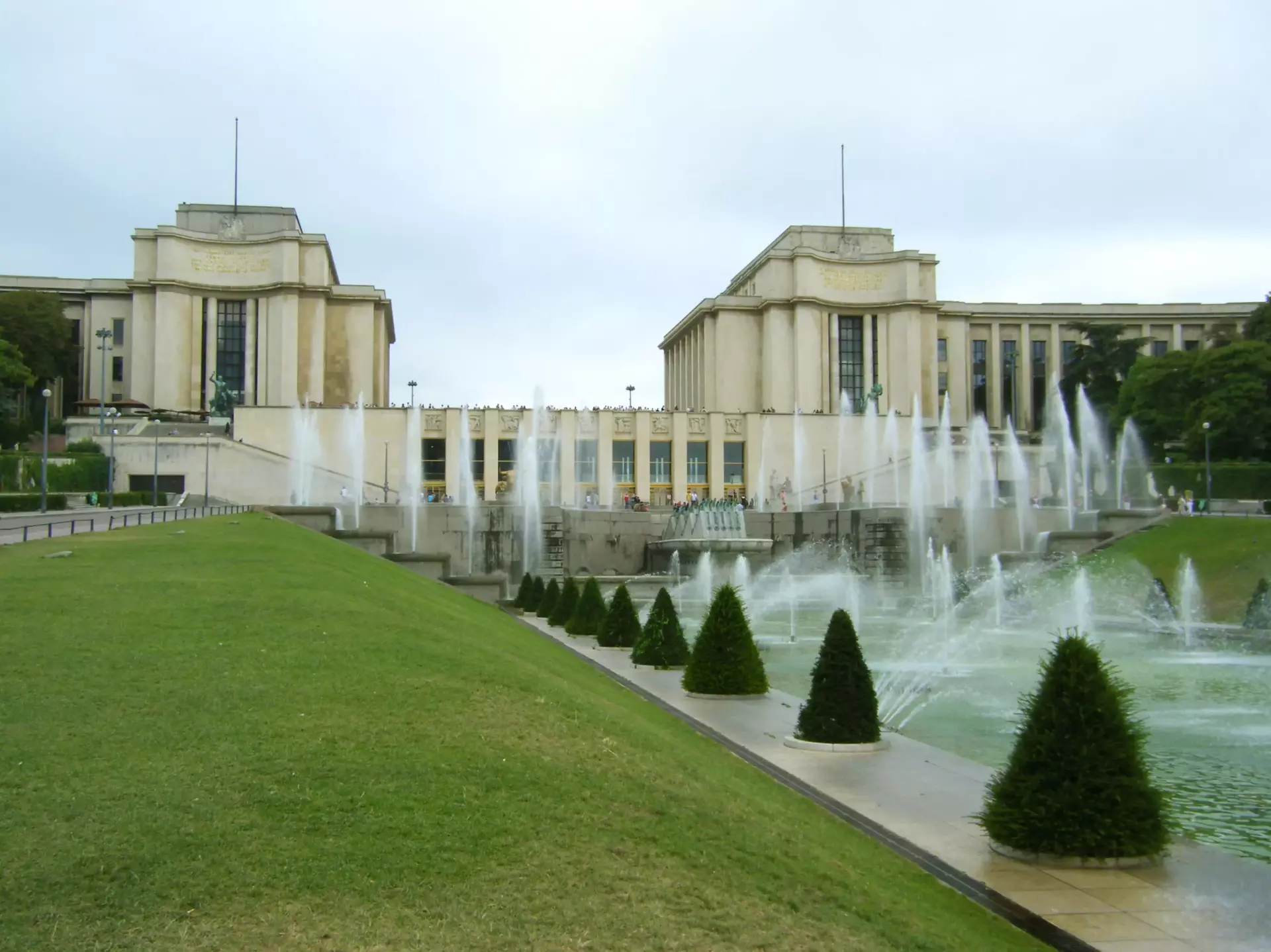
Great perspective on the Eiffel Tower and Left Bank from Place du Trocadéro in between the two buildings of the palais. Former location of the Palais du Trocadéro. It accommodates three museums, an aquarium, and the Theatre Nationale du Chaillot.
The sleaze of boulevard de Clichy between place Pigalle and place Blanche can provide a moment of distraction. Be warned if you are male it is better to do this in the company of a female fellow traveller, as the clubs often send the girls outside to attempt to physically drag passing men off of the street. These strip clubs are big ripoffs. They tempt you with a free drink for €10 entry; once in the girl who starts dancing orders a couple of drinks (Red Bull) and then before you realise you are presented with a bill ranging from €500-700. They have these big bouncers who threaten/manhandle you till you arrive at some settlement with them. The whole of Pigalle is a rip off, best avoided. The police know about these places but nothing is done.
Paris's international exhibition centre (the 4th largest in Europe) has millions of visitors annually.
One of the last remnants of medieval Paris outside of the 4th, this tower was once part of a castle called l'hôtel de Bourgogne.
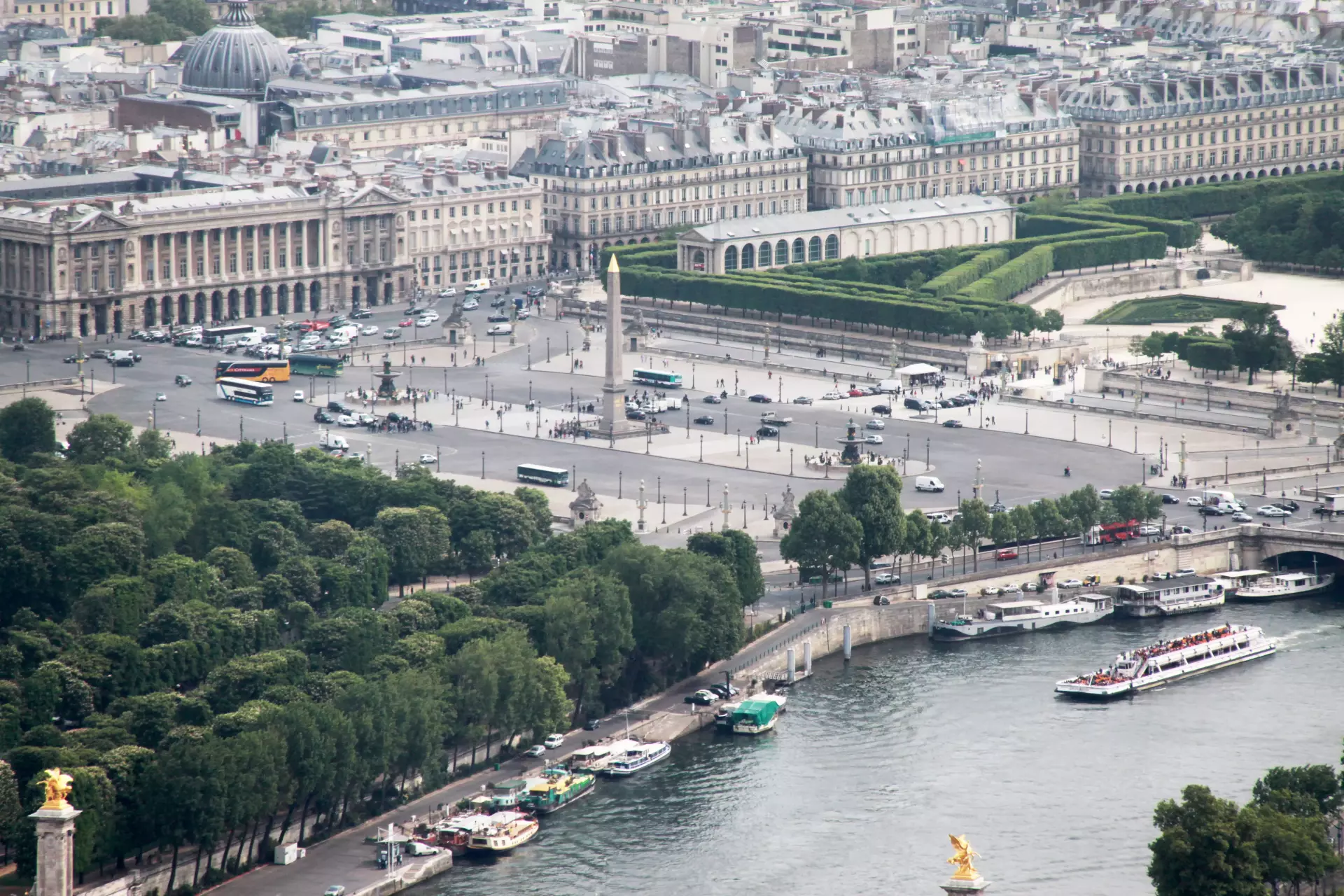
For many visitors one of the must-see places in Paris is the Avenue des Champs-Elysées which was first created in 1667 by Louis XIV's gardener, Andre Le Nôtre, in order to improve the view from the Tuileries garden. This elegant and broad avenue was extended towards the end of the 18th century, now running from the place de la Concorde to the Arc de Triomphe. It is noted today as one of the most prestigious shopping boulevards of Paris.
The oldest church in Paris, founded in the year 542 by King Childebert. The church as it exists today dates mainly from the 11th century, the period in which it became the center of a powerful Benedictine abbey. The Revolution witnessed the suppression of the abbey in 1794, when most of the monastic buildings were put to the torch. Earlier, 318 priests had been hacked to death nearby by a mob on 3 September 1792. The church underwent significant restoration in the 19th century, ensuring the preservation of the building, which by that date represented a fascinating mix of styles: 6th century marble columns placed alongside Gothic vaults and supported by Romanesque arches. Famous burials within the church include René Descartes (philosopher), Nicolas Boileau (poet) and King John Casimir of Poland, who had become (in 1669, before his death) abbot of the church's monastery.
Established in 1926, it was meant to show appreciation for Muslim help in fighting the Germans. The café serves excellent mint tea and North African food.
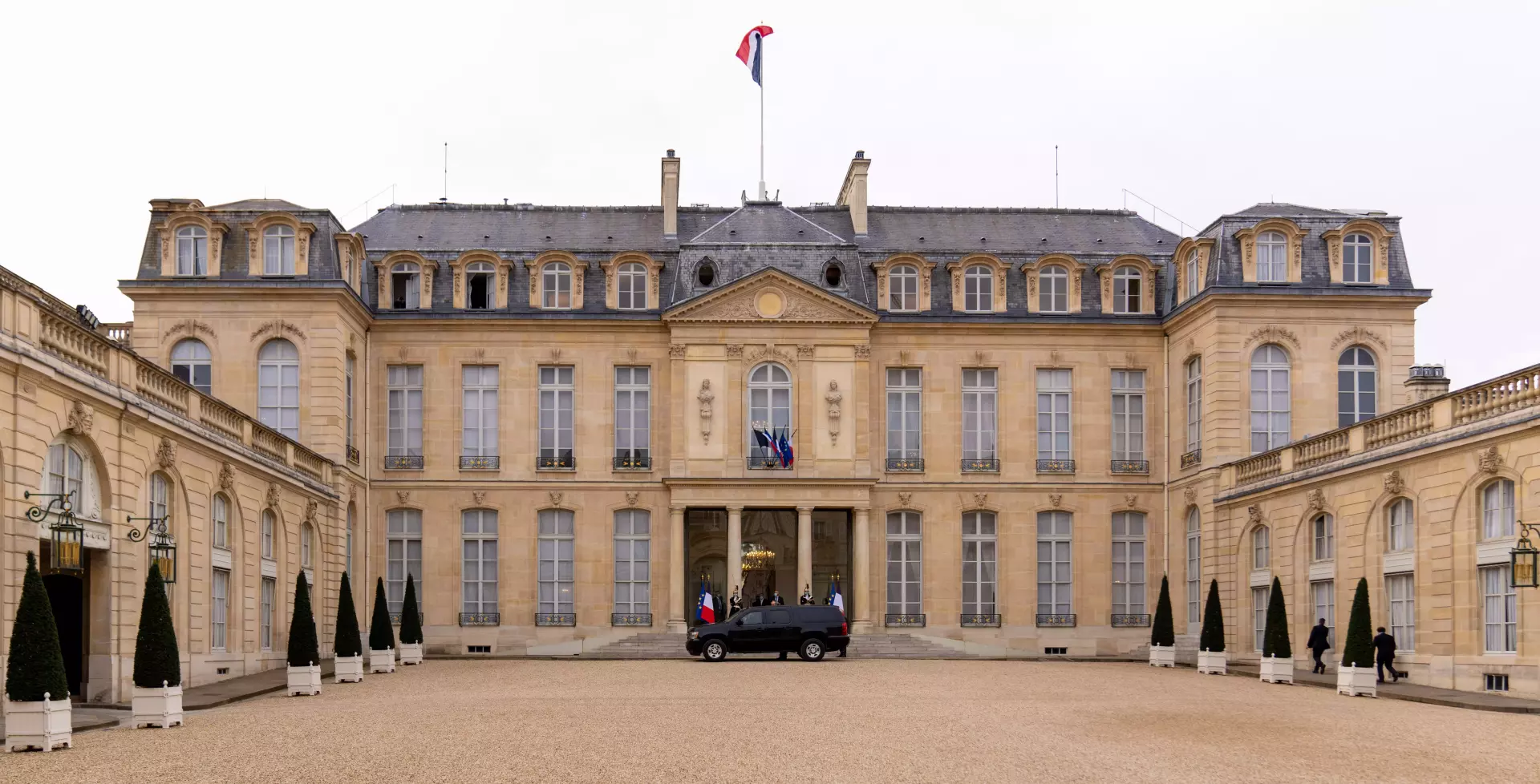
The official residence of the President of France since 1848. Dating to the early 18th century, it contains the office of the President and the meeting place of the Council of Ministers. It is located near the Champs-Élysées in the 8th arrondissement of Paris, the name Élysée deriving from Elysian Fields, the place of the blessed dead in Greek mythology. Not open to the public, except occasionally during the annual National Heritage Days (usually a weekend in mid-September). Important foreign visitors are hosted at the nearby Hôtel de Marigny, a palatial residence.
Built in 1717, the windmill is now part of a restaurant of the same name, and is easily visible from the street.
Ordered by Cardinal de Richelieu (1585-1642), King Louis XIII's prime Minister in 1629 (completed in 1636); originally called Palais Cardinal; it became Le Palais Royal when Anne d'Autriche, Louis XIII's wife, came to live here to get away from the Louvre palace. It eventually housed Louis XIV until the move to Versailles. It includes also a beautiful garden Les jardins du Palais Royal, enclosed by the buildings. It's been the theatre of one of the seminal events of the French Revolution (Camille Desmoulins made a famous declaration here in 1789). The Théatre Français nearby was built in 1716. There are numerous restaurants inside the garden , including famous Le Grand Véfour. There's also the controversial Colonnes de Buren, striped columns installed within the inside yard amid the 17th century architecture.
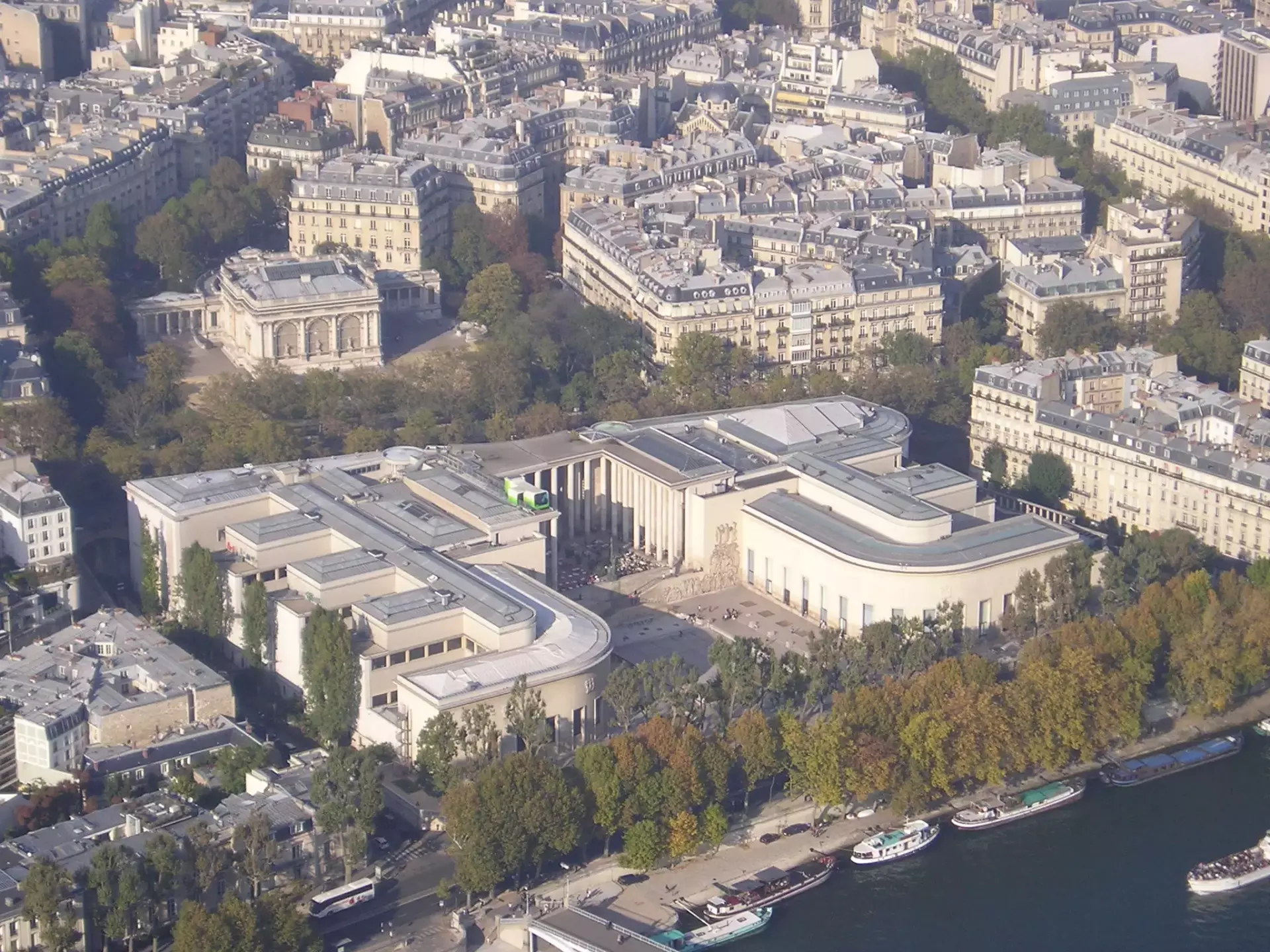
The Museum of Mankind, accommodated in the Palais du Chaillot, is an anthropological museum covering the history of mankind and human societies.
Since 2021 the 18th-century former Bourse de Commerce building has been the Paris home of the art collection of the French business magnate François Pinault, showing a rotating selection of contemporary artworks either newly commissioned or taken from his collection.
Considered one of the most colourful Parisian parks, a local favourite, the Parc Montsouris was opened in 1878, having been designed by Alphand for Baron Haussmann. A large man-made lake and waterfalls are surrounded by long stretches of gently sloping lawns. Bronze statues are to be found studding the grounds, amongst the 1,400 trees, including such exotic varieties as the giant sequoia and the ginkgo. The park is featured in the film Cléo de 5 à 7. It is popular among families (there are two playground areas for children) and students.
For a taste of the French countryside, a visit to Bercy Village brings to life the spirit of market shopping inside Paris.
A monument to the French art de vivre, housed in a 19th-century wing of the Louvre that has been restored to beaux-arts splendour, its galleries and period rooms showcase eight centuries of Gallic taste in interior decoration.