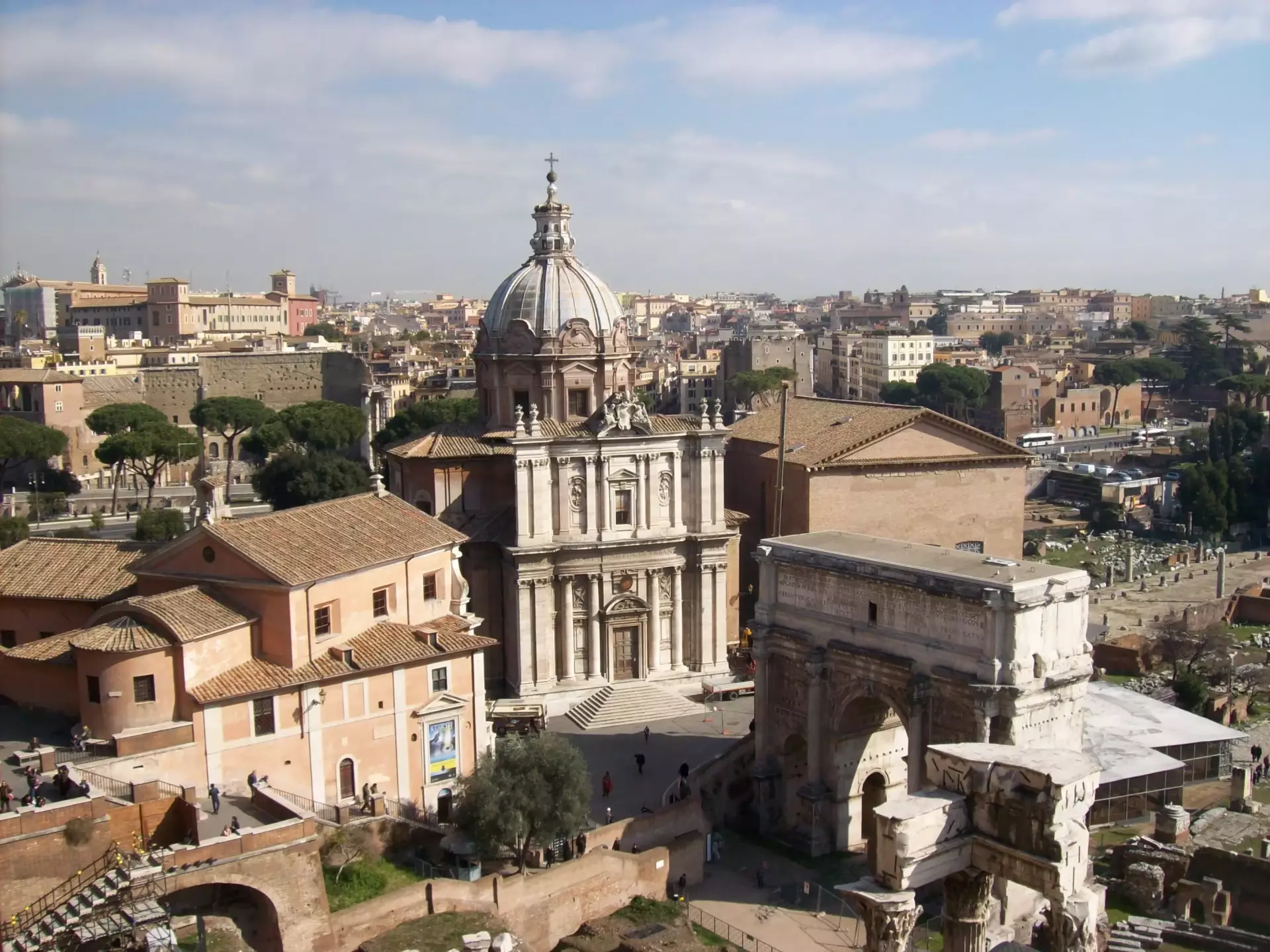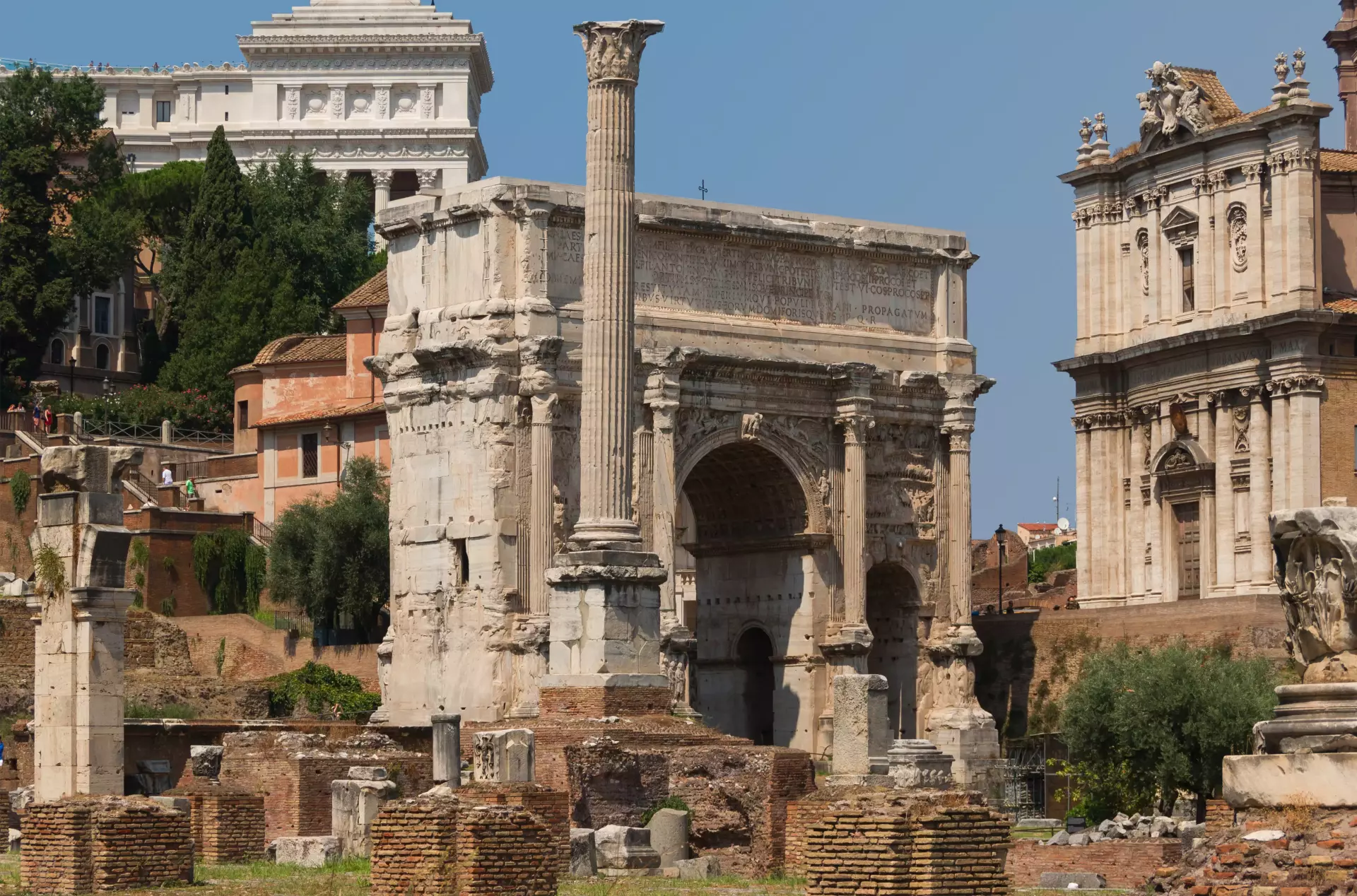
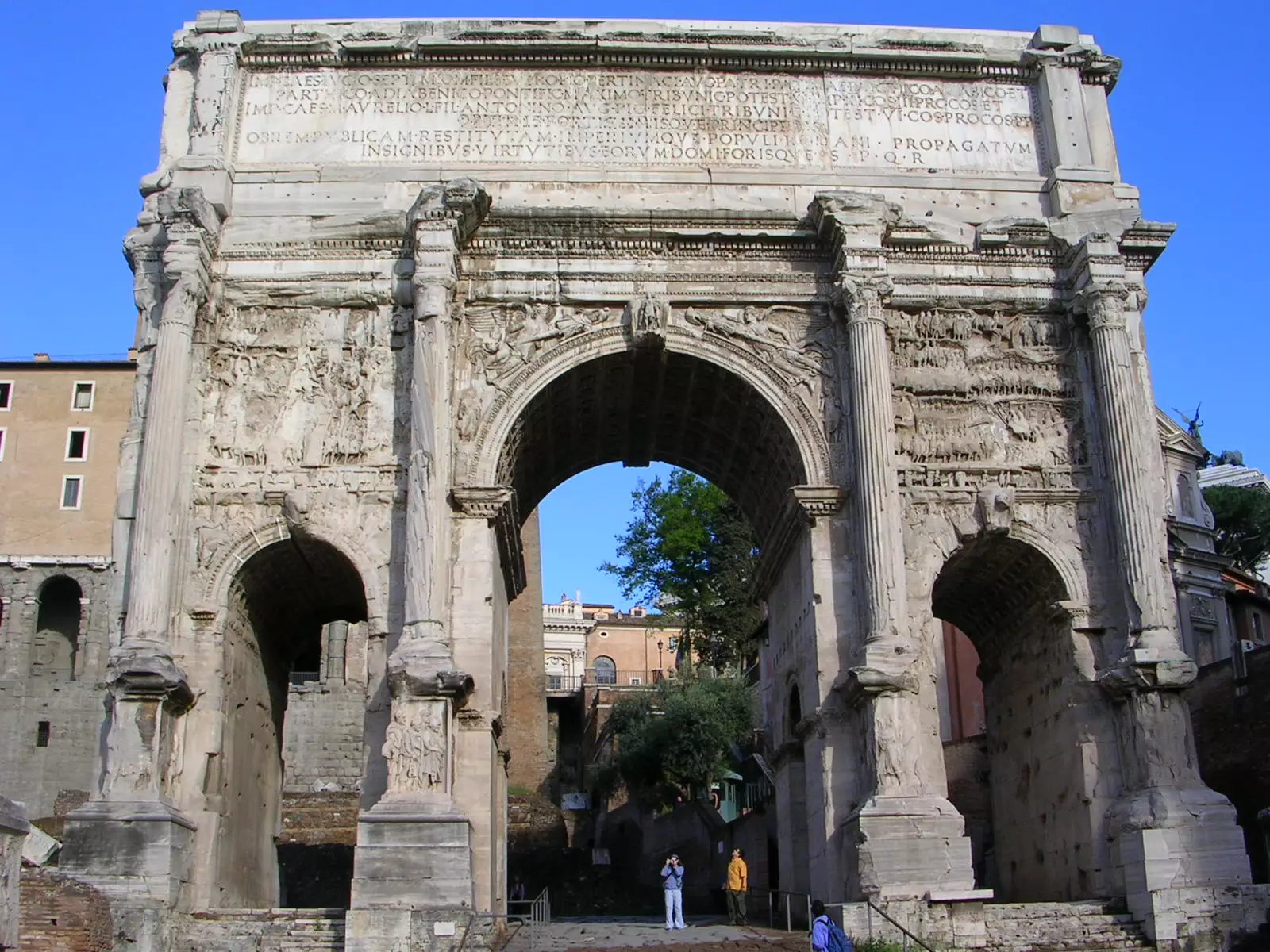
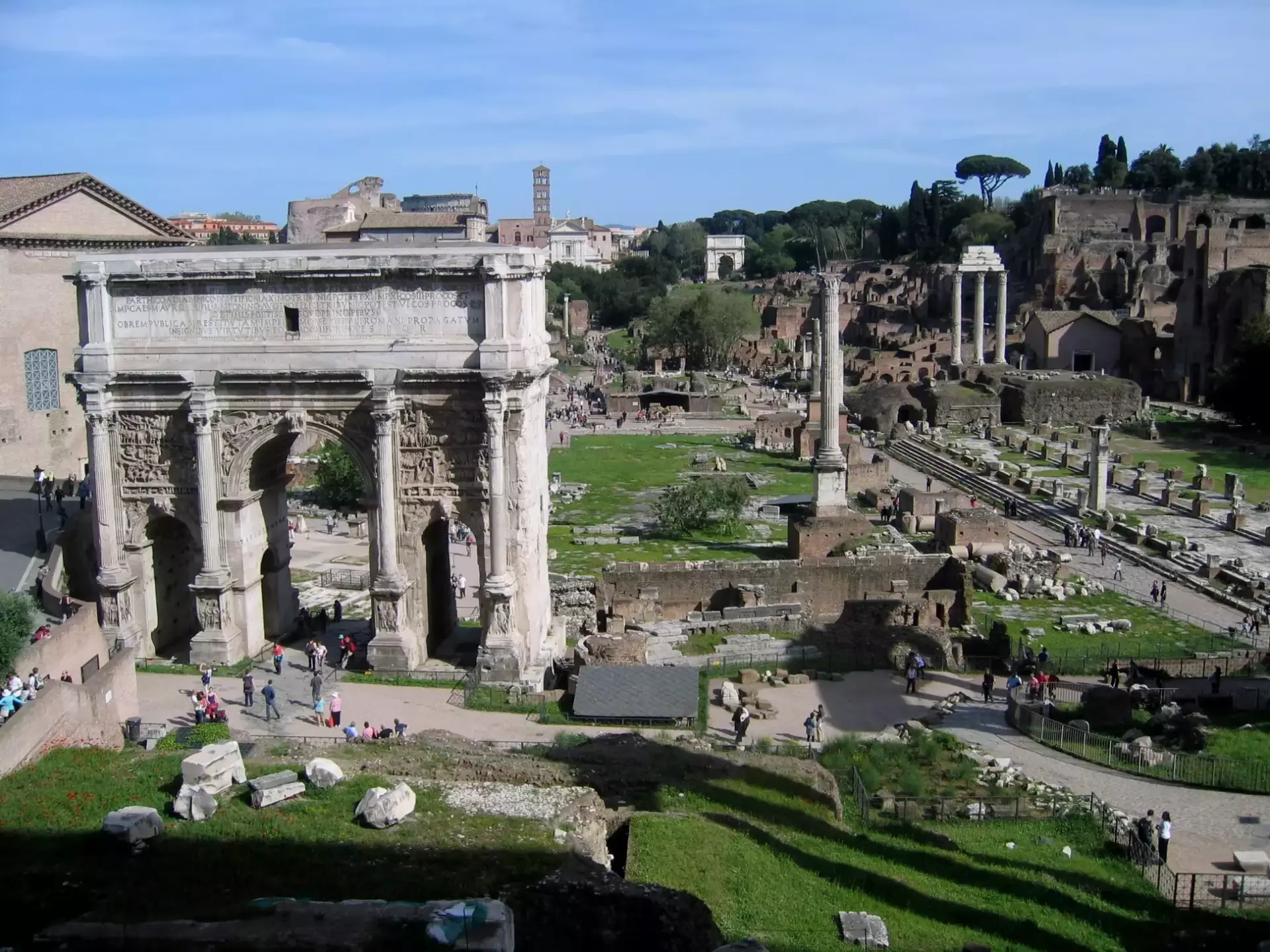
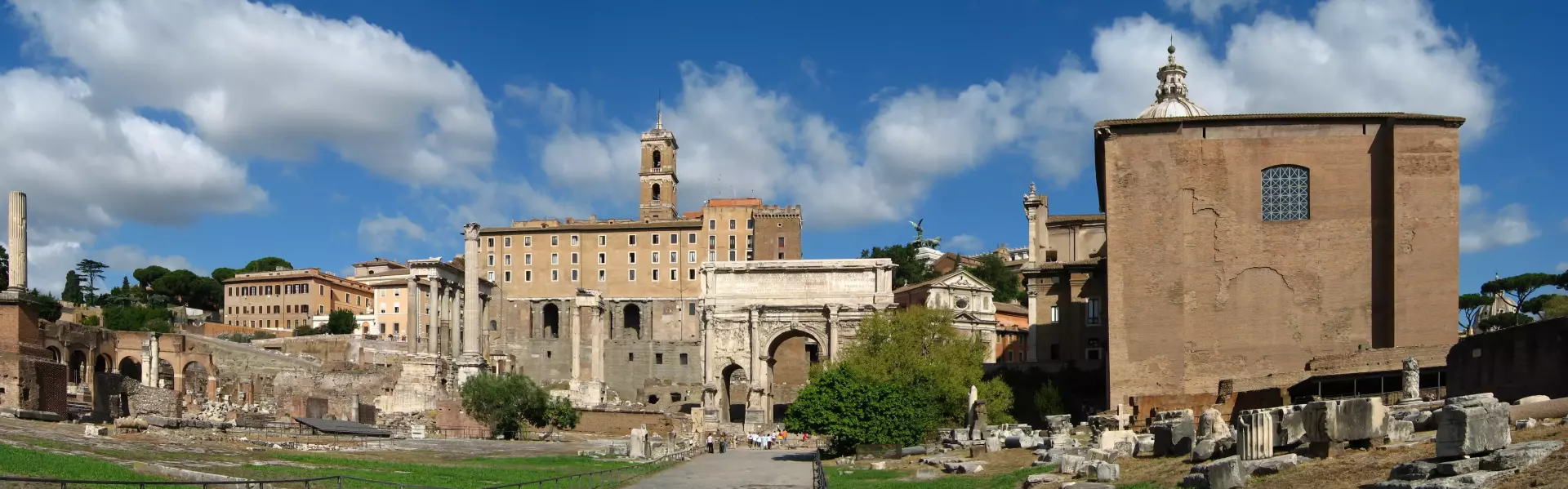
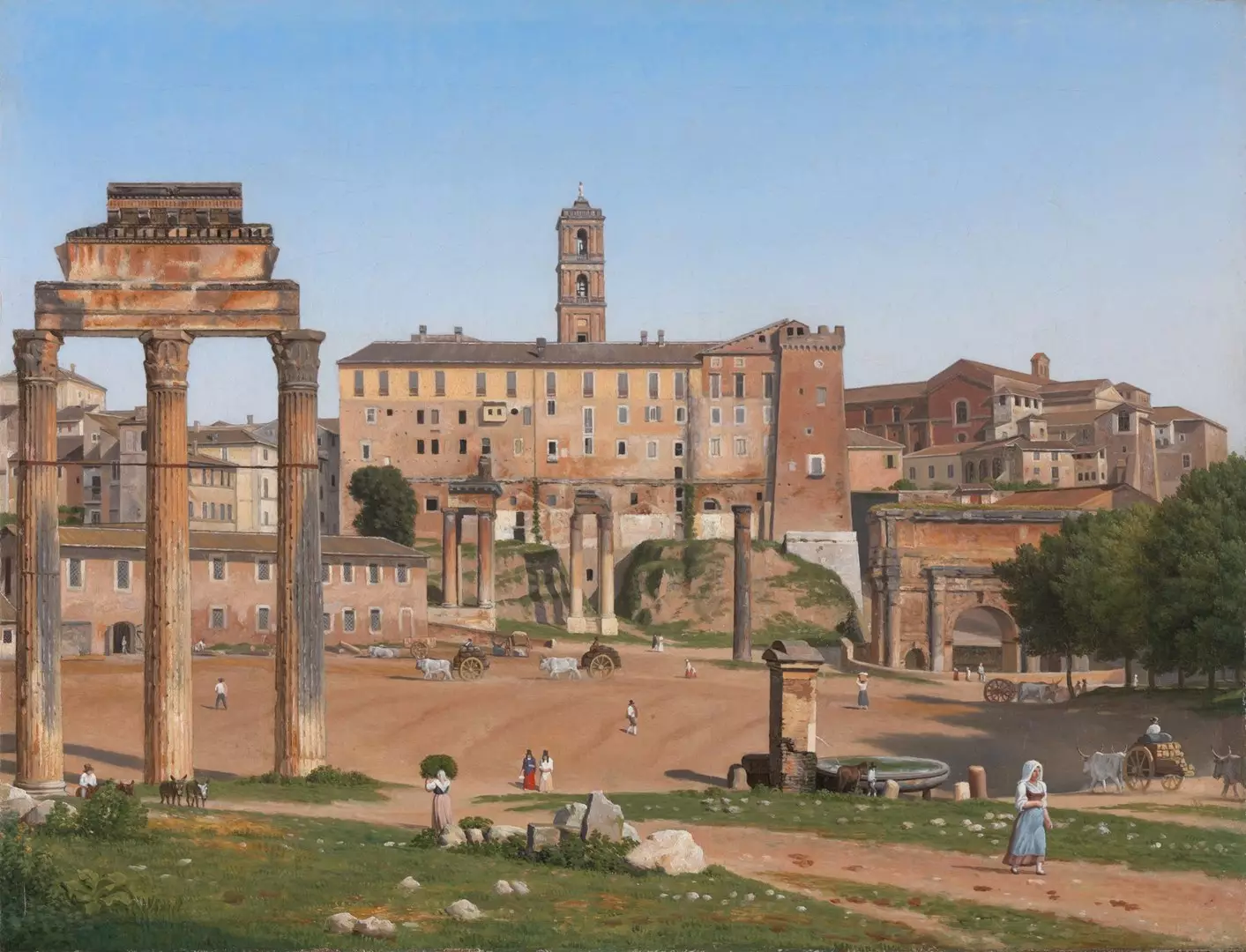
Nestled in the heart of Rome's historical tapestry, the Arch of Septimius Severus stands as an enduring testament to the grandeur of ancient architecture. Erected in 203, this iconic monument offers a glimpse into the Past Empire's might and splendor.
The arch is not only a celebration of Roman victory but also a masterpiece of engineering and artistry. Its intricate carvings narrate tales of triumph and power, allowing visitors to immerse themselves in the captivating stories etched in stone.
For travelers eager to experience this monumental marvel without delving into the bustling crowds of the Forum, a rewarding alternative awaits. From Via della Curia, one can enjoy a remarkable close-up view of the arch, capturing its magnificence in relative tranquility.
As you stand on this historic street, the arch's detailed reliefs loom majestically, providing a serene yet awe-inspiring vantage point. It's a perfect spot for history enthusiasts and casual visitors alike to appreciate the artwork and its historical significance without the need for a Forum entrance ticket.
The Arch of Septimius Severus is more than just an ancient relic; it's a portal into an era where emperors reigned, and Roman culture flourished. Visiting this site is an invitation to step back in time and witness the architectural prowess that continues to inspire and captivate modern audiences.
Whether you're a seasoned historian or a curious traveler, this ancient arch provides a meaningful connection to an illustrious past. Don't miss the opportunity to let its timeless allure enhance your Roman adventure.
Source - https://en.wikipedia.org/wiki/Arch_of_Septimius_Severus
More modern than most Roman churches: it was not started until 1873. This is Rome’s Episcopalian church. Some very interesting artwork, particularly the mosaics by Edward Burne-Jones of the Pre-Raphaelite school.
A relaxing place to sit and recover from the exertions of sightseeing. Permanent collection plus annual competition.
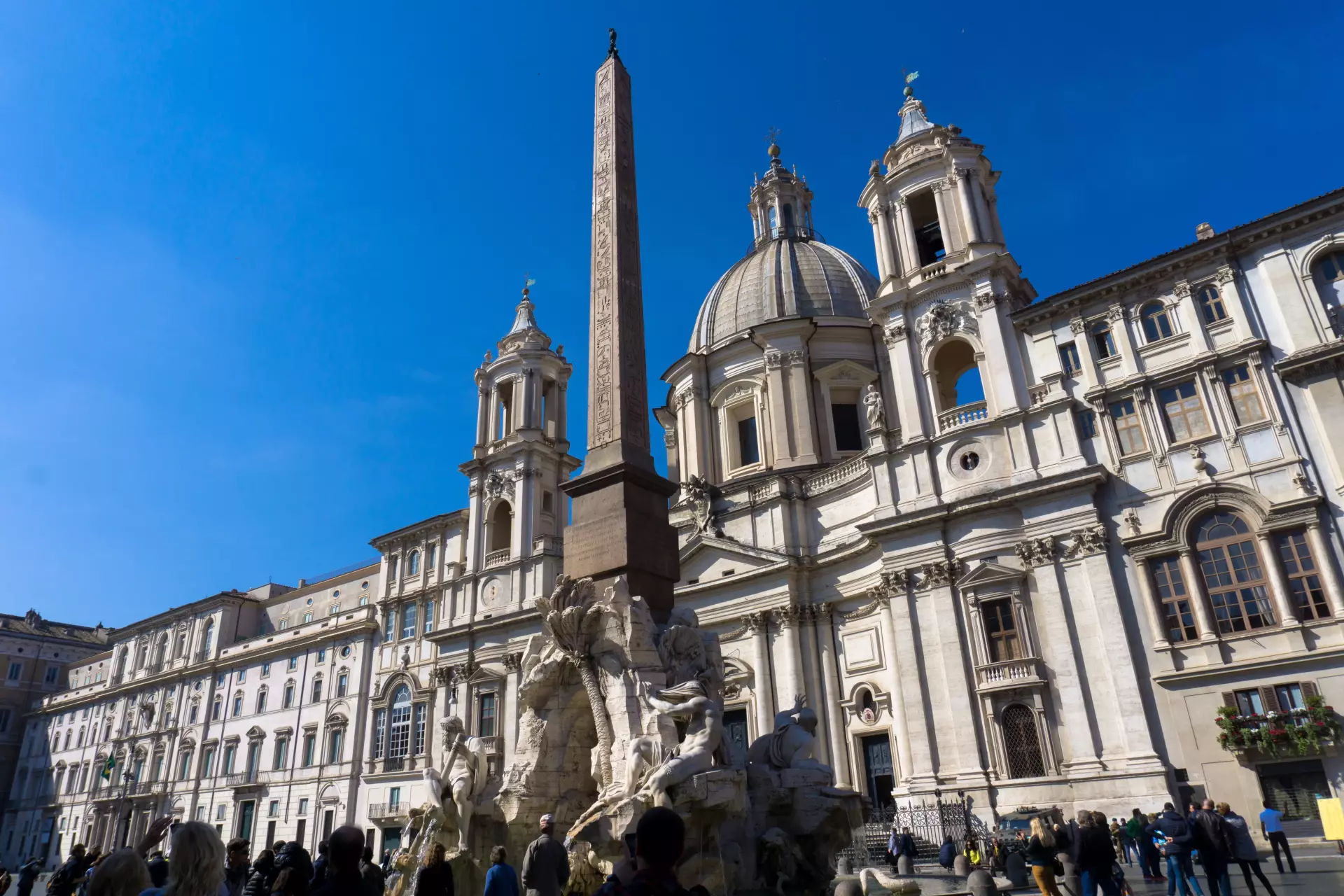
By Bernini, in the very centre of Piazza Navona. Incorporates an Egyptian obelisk and symbolises four of the world's great rivers (the Ganges, the Nile, the Danube and the Plata), representing the four continents known at the time.
Designed by Bramante to mark the spot of St. Peter's martyrdom, this delightful miniature building is considered a masterpiece of Renaissance architecture. Open to the public.
Built in the 9th century, this ancient basilica crowns the top of the Esquiline Hill. Tons of gold decorate the interior together with impressive mosaics (particularly when the floodlights are turned on), and there is a museum on the premises. If you are in Rome on Corpus Christi (Corpus Domini), which is the Thursday after the 8th Sunday after Easter, an early-evening service is held in San Giovanni by the Pope followed by a procession along Via Merulana to Santa Maria. Good opportunity for a close up view of the Pope. This is a very large church with lots to see, as for example, the main part of the church has two layers of mosaics and paintings high on the walls, the altar and apse are spectacular, and then there are several more or less large chapels you won't want to miss, including the one with the amazing golden baptismal font. Allow at least an hour if not an hour and a half or more to visit the interior, even if you do not take any special tours, and also allow time to view the exterior from all sides. Overall, at least 2 hours would not be too much time to allot.
This church, which was commissioned by Ferdinand and Isabella of Spain, marks the point where, according to tradition, St. Peter was crucified. Particularly interesting for Irish visitors as it contains the graves of three Gaelic Chiefs who fled Ireland in 1607.
Contains the tomb of Pope Hadrian IV, the last non-Italian pope before Pope John Paul I.
This is not, contrary to popular belief, one of the original seven hills that Rome was founded on. It is the second highest after Monte Mario, though, and offers incredible panoramic views of the city as long as the authorities remember to prune the trees on the hillside (if they are too tall you can walk a few meters down the hill for views that are just as good). On the other side of the piazza there is also a nice view of the dome of St. Peter's. The Piazza and the street leading up the hill are dedicated to Giuseppe Garibaldi who led Italian troops against the French here in 1849. There are also several commemorative statues.
An example of urban planning that goes back to Pope Julius II, who, in 1508, envisioned it as a street that would connect all major government buildings. It is around a kilometer long and is in a straight line, an unusual feature for the time. It is lined with some interesting palaces but these days is more known for its antique shops. Via Giulia runs parallel with and one block from the River Tiber.
Brand new museum designed to celebrate the art and architecture of the 21st century.
The Piazza di Spagna (Spanish Square) is the most famous square in Rome. For a very long time it was the meeting point of all foreigners coming to Rome. In the 17th century it was the residence of the Spanish Ambassador to the Holy See. The area around the residence was Spanish territory and foreigners who stayed here without permission were forced to serve in the Spanish army. The Fontana della Barcaccia (Old Boat Fountain) on Piazza di Spagna was designed and built in 1627-29 by Pietro Bernini, father of the more famous Gian Lorenzo Bernini. The fountain celebrates the fact that before high walls were built along the banks of the Tiber Rome often used to flood. Once the waters were so high that a boat ended up in the square. The decorations on the fountain imitate the coat of arms of Pope Urban VII, Barberini'p, who ordered the fountain to be built. A less aesthetic occupant of the square is Italy's first McDonalds, dating back to 1986. Also in the piazza is a column erected in 1856 to commemorate the Immaculate Conception. The column is topped by a statue of the Virgin Mary, and rests on a base with statues of Moses, David, Isaiah and Ezekiel. The Pope visits the Piazza every year on December 8th to celebrate Immaculate Conception.