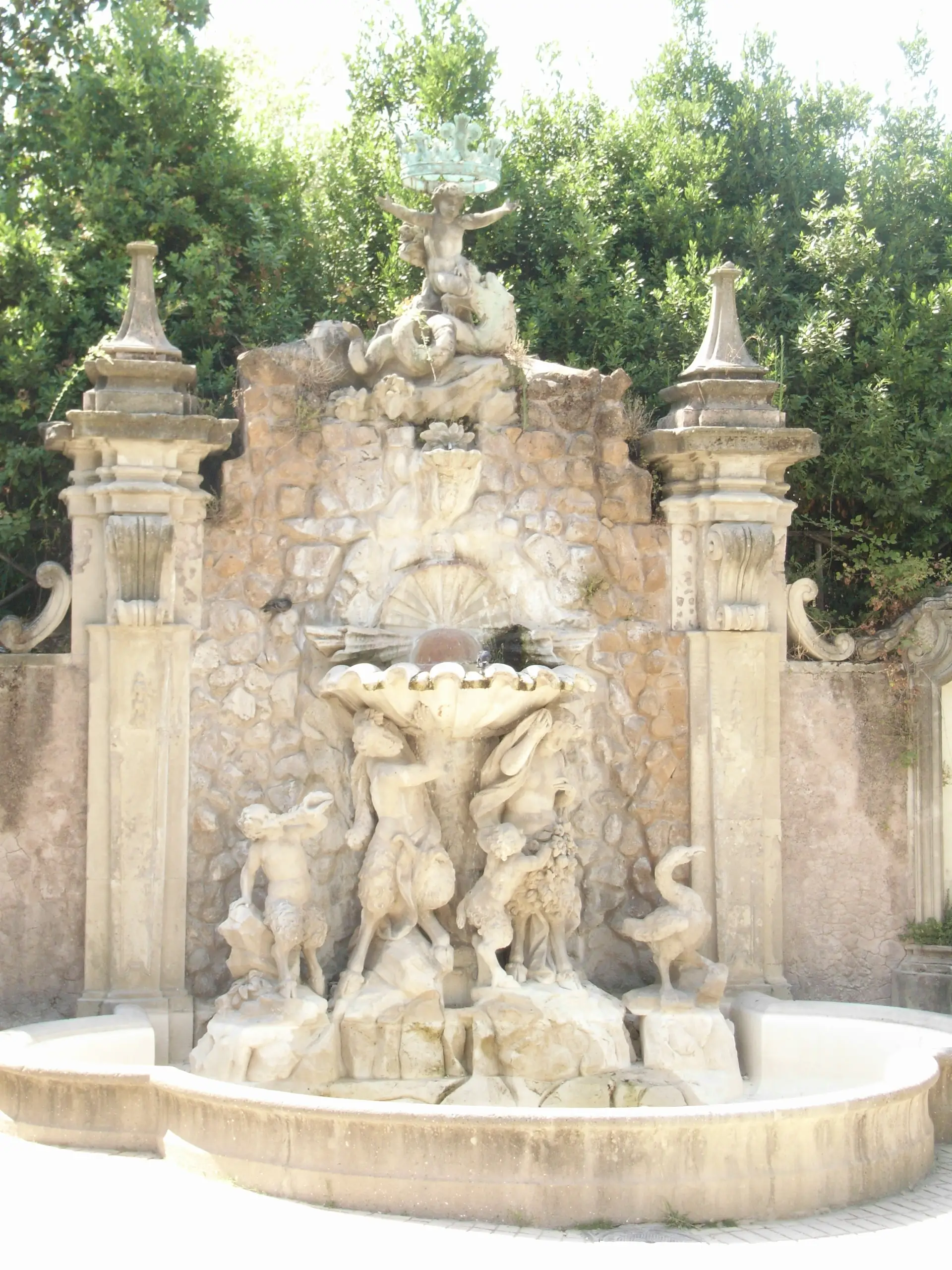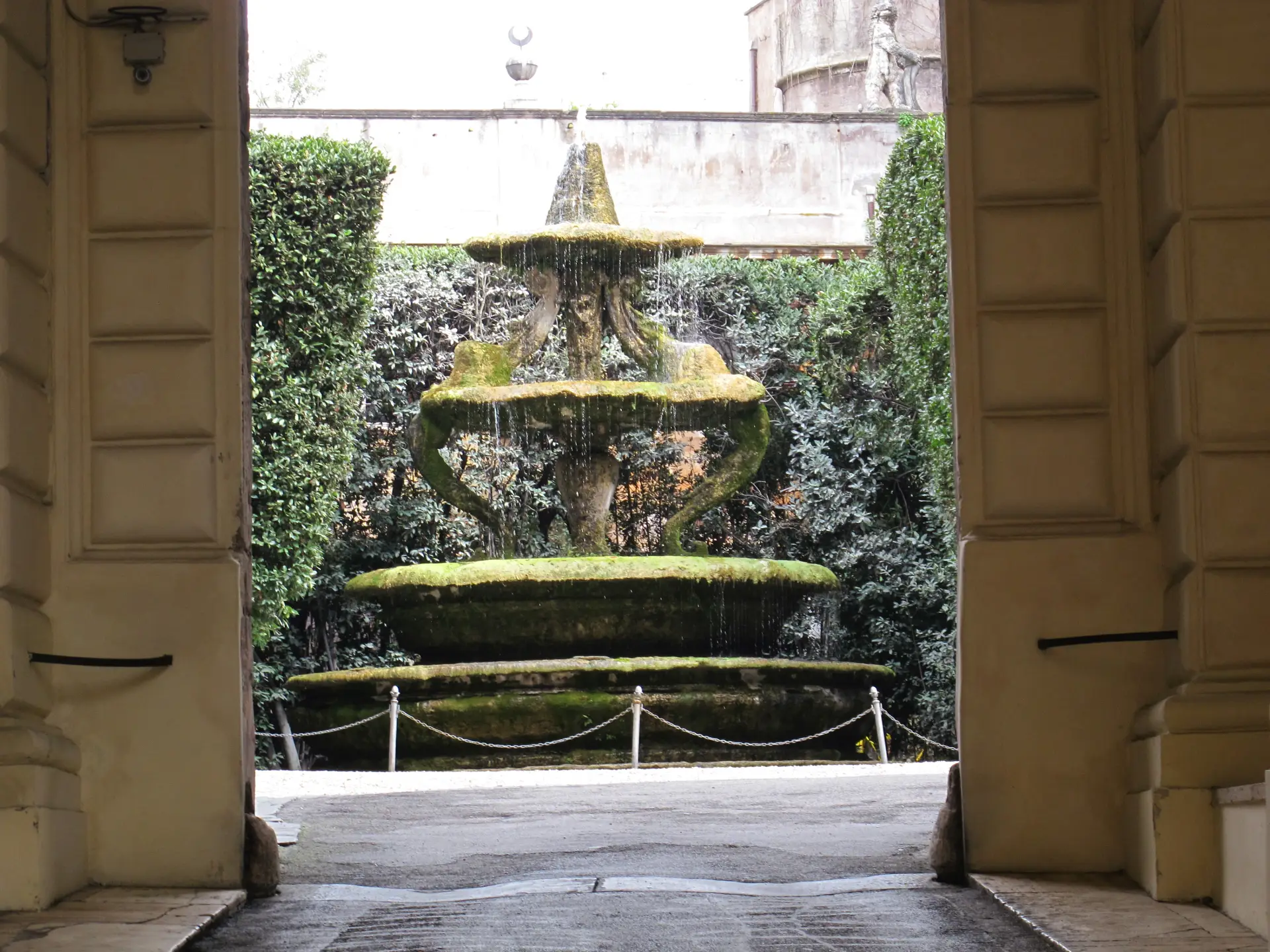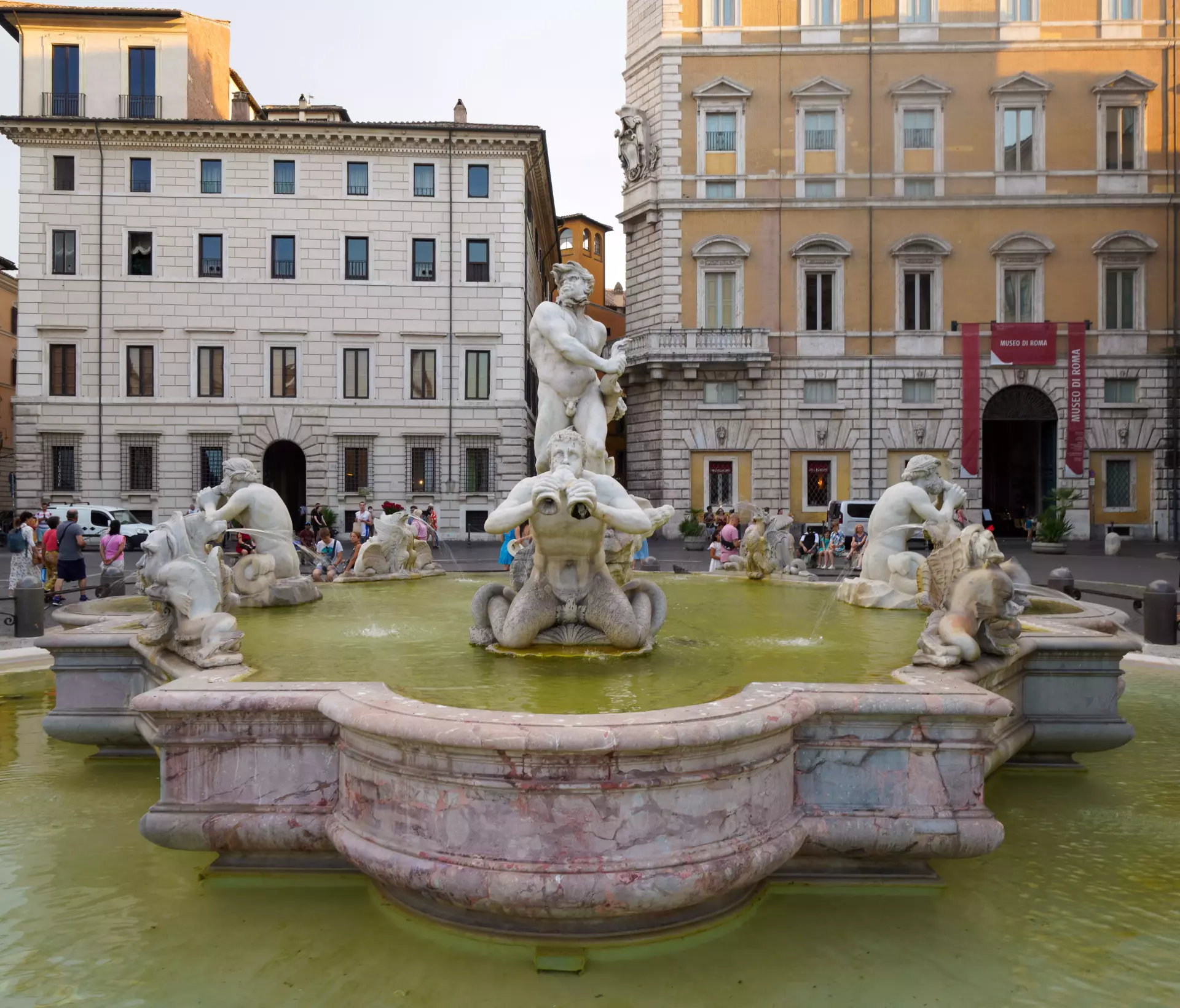
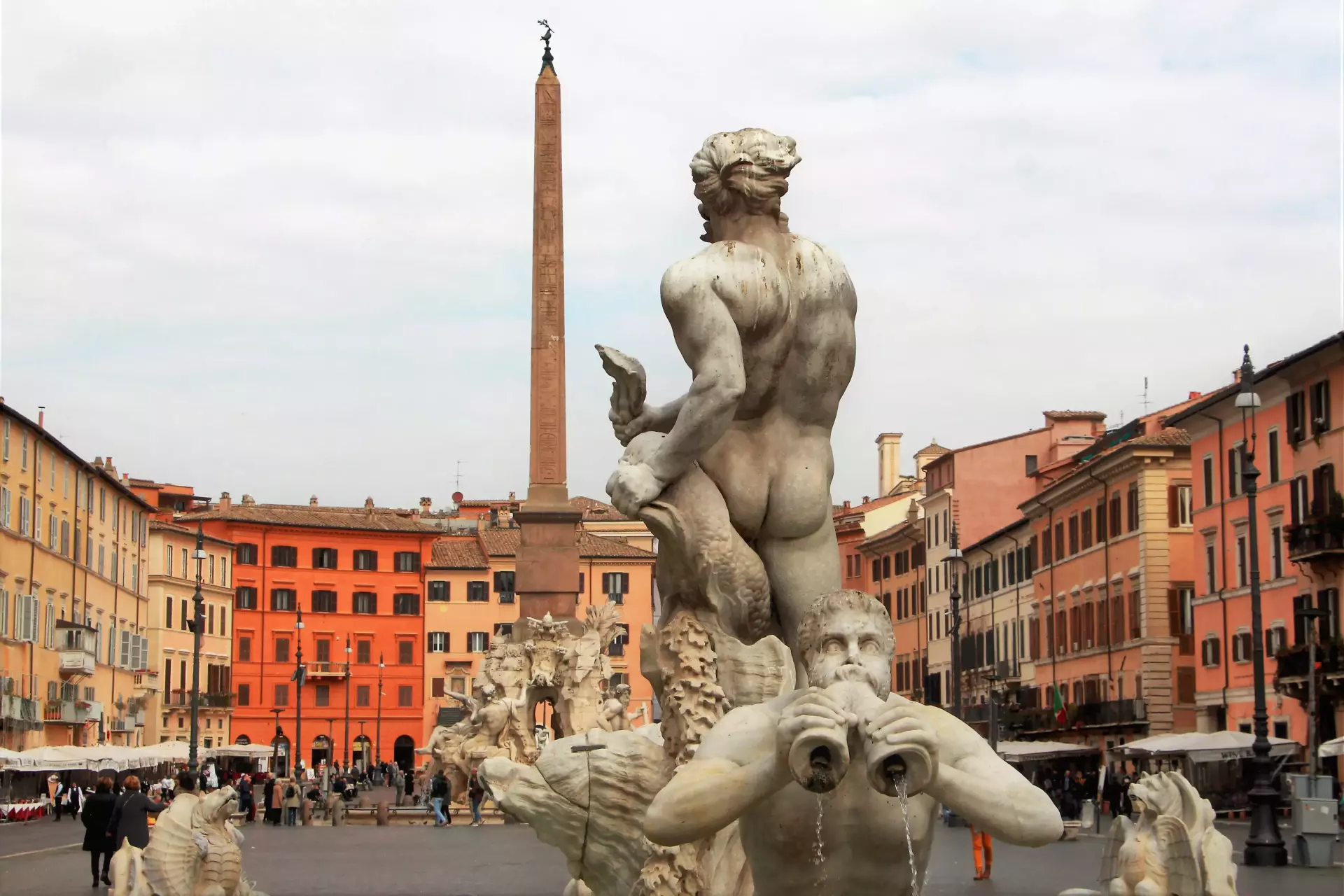
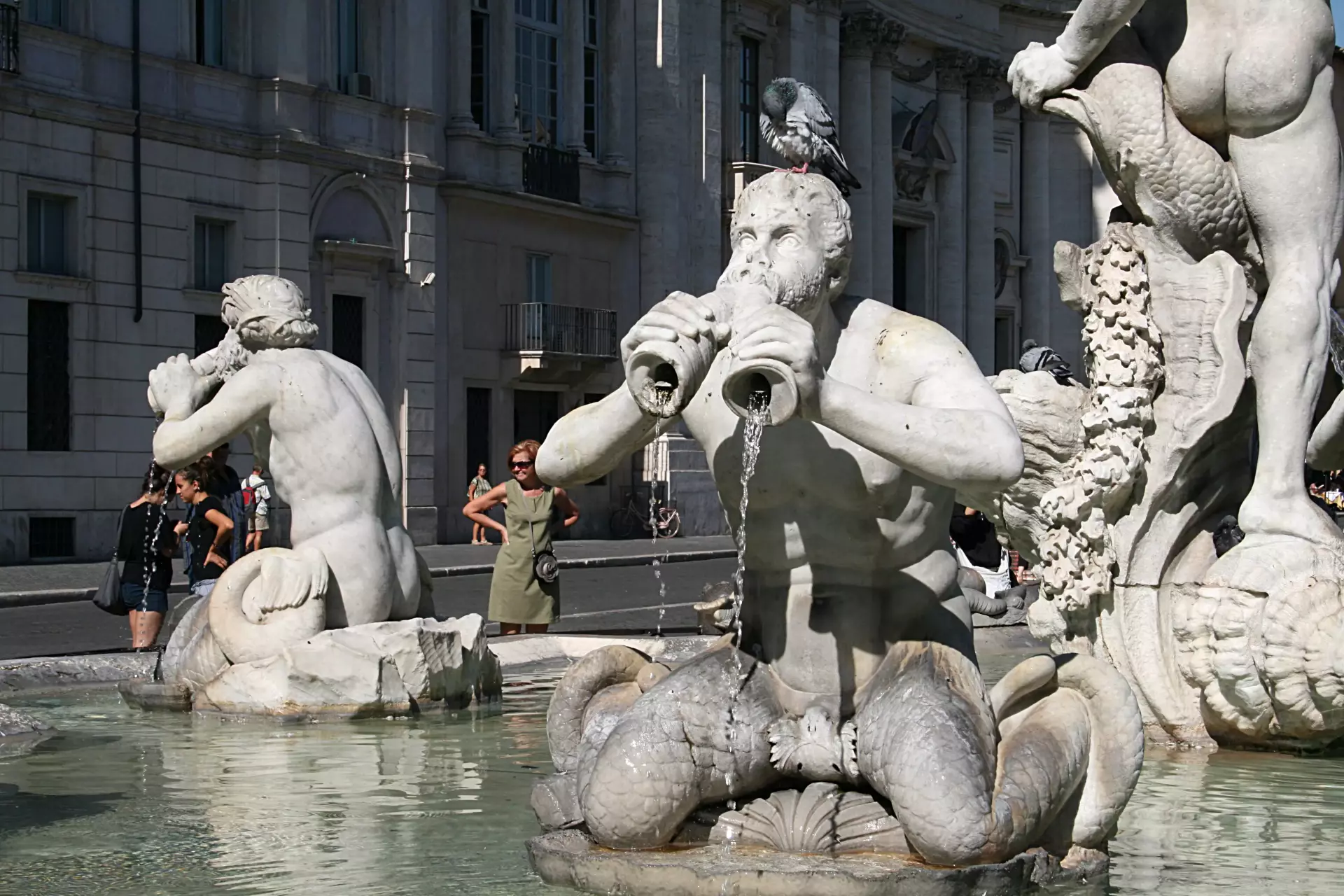
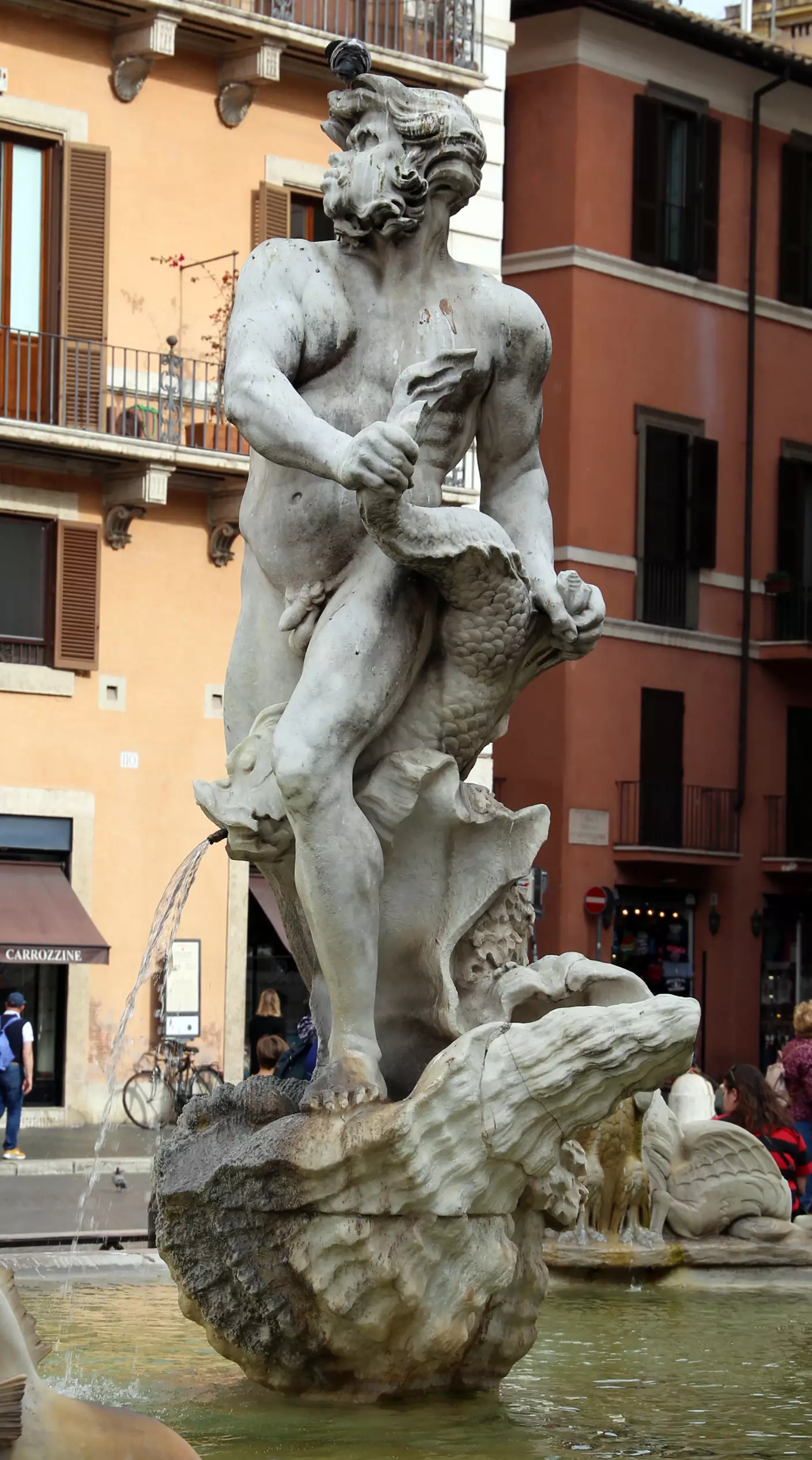
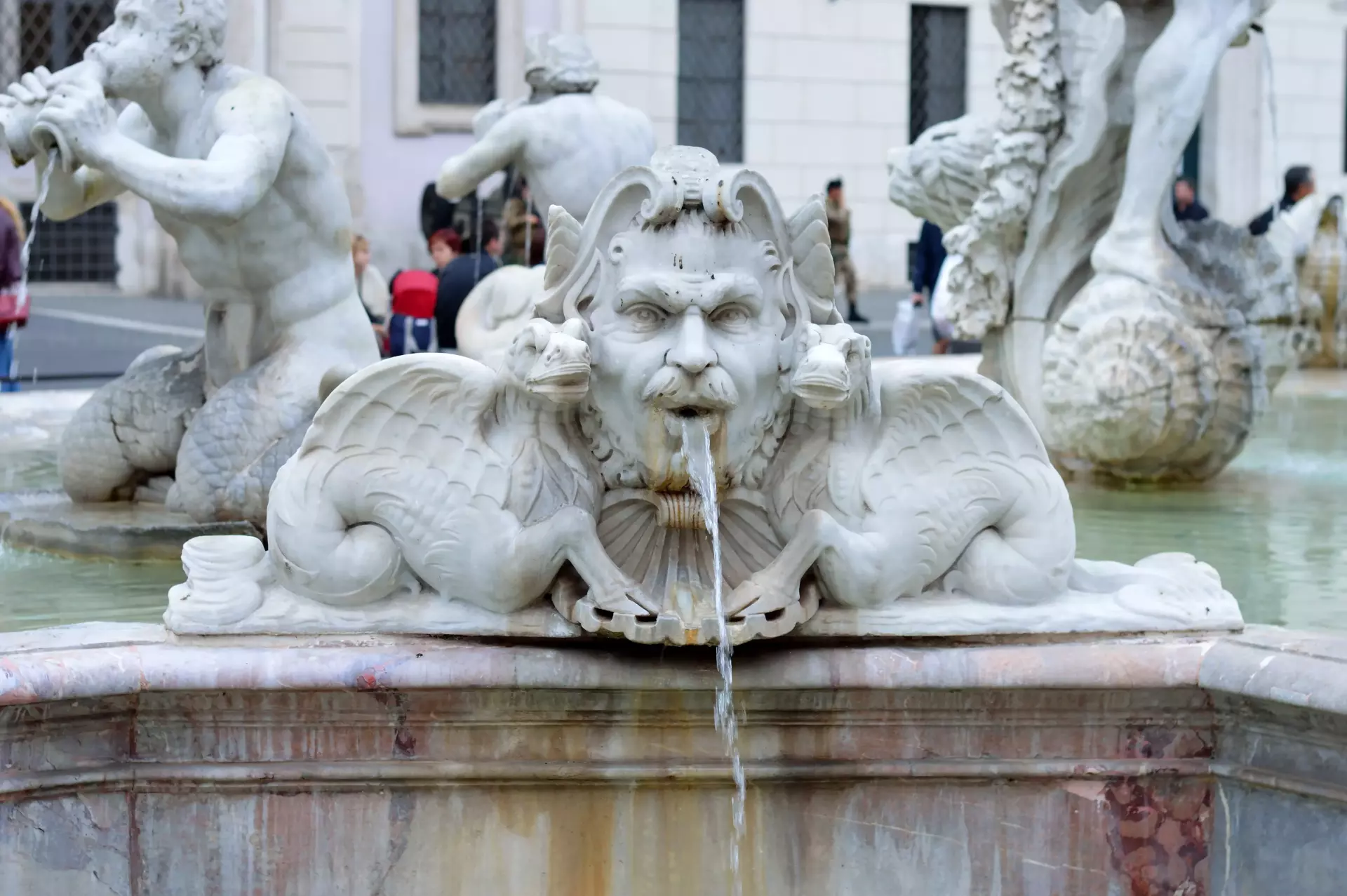
At the southern end of Piazza Navona stands the Fontana del Moro, a striking fountain that draws the attention of many visitors. Although the overall design of the fountain is attributed to the famous artist Bernini, the main statue, known as the Moor, was sculpted by Giacomo della Porta.
Over time, the original figures surrounding the central statue were replaced. Today, the four other statues that circle the Moor are actually 19th-century copies of the originals, preserving the look and spirit of the fountain while protecting the historic artworks from further damage.
Source - https://en.wikipedia.org/wiki/Fontana_del_Moro
The renamed Rome Zoo, one of the oldest in Europe, founded in 1911. On the edge of the Borghese Gardens, a short, well-signposted walk from the Gallery. They try hard, but San Diego this isn't. If you are a regular zoo-goer you will be disappointed.
This is a large tomb built by the Roman Emperor Augustus in 28 BC in the form of a stone ring covered by an earth mound. A brick wall, 87 m in diameter, carried an earth mound covered with cypresses. On top of the hill stood a bronze monument of the emperor. The building was 44 meters high. At the beginning of the alley, which led to the tomb were two Egyptian obelisks. On both sides of the doorway bronze plates describe the "Res gestae", the deeds of the emperor. The urns of Augustus, Marcellus, Octavia, Agrippa, Drusus and other members of the Julian Claudian dynasty were revered here. In the Middles Ages the building served as citadel of the Colonna family. It was destroyed by Pope Gregor IX in 1241. The body of Cola di Rienzo. a popular leader of the people in the mid-14th century, was burnt in this monument. The Mausoleo di Augusto is not open to the public, and is fenced off.
The Celian Hill is one of the seven hills of Rome. You immediately see the church of San Gregorio Magno. On this site monks were trained before setting off as missionaries to England at the end of the 6th Century. Further up the hill is Santi Giovanni e Paolo. At this point it is difficult to believe you are in the middle of a major city. This church was built in 398 over the home of two Roman soldiers, John and Paul, who were martyred for their Christian beliefs in 362. Excavations show that there were several burials on the site, a risky business as burials were illegal at that time. After the church you come to the back entrance of the Villa Celimontana park (jazz festival nightly in late June-August). The modern buildings before you reach the park are owned by Silvio Berlusconi’s television company. By the main entrance of the park note the boat-like fountain known as the “Navicella”. As you exit the main entrance to the left is the church of S. Maria in Domnica, which has some interesting mosaics. Next to this church is the Porta Esquilina, one of the gates from the original Servian walls of Rome. It dates back to the 4th century BC.
This is one of the two main Jesuit churches in Rome, the other being the nearby Sant'Ignazio. The interior is Baroque art on steroids. Simply astounding.
The house in which the famous English poet John Keats succumbed to consumption, now preserved as a memorial to his life and that of his friend Shelley, both of whom are buried in Rome's Protestant Cemetery (see Testaccio).
This impressive villa covers 23 hectares. It can be accessed from the Via Appia Nuova (Bus 118) or through Via Appia Antica 251. Parts can be seen from the Appian Way at around the 5th mile just after No 251. The villa was built by Maximus and Condinus Quintilii. The emperor Commudus liked it so much that he put the brothers to death in 182 AD and took it for himself. A museum has friezes and sculptures from the villa. The nypheum, the tepidarium and the baths may also be visited. At Appia Antica 251 is Santa Maria Nova, a farmhouse that has undergone many reincarnations since being built on top of a Roman cistern that was probably used by Villa dei Quintilii.
This is an important place of pilgrimage for Catholics because of the supposedly miraculous powers of an image of the Virgin Mary. The first miracle was in 1740 when a traveller being attacked by a pack of dogs called out to the Virgin’s image for rescue and the dogs calmed down. The image was moved to Rome in the Second World War and is credited with saving the city from destruction, as a result of which Romans vowed to construct this new sanctuary.
Next door to the Pyramid, this fine gate in the Aurelian Wall is named after St. Paul as the Via Ostiense leads to the basilica of St. Paul's Outside the Walls (see Rome/South).
The mausoleum of Cecilia Metella, who died in 69 BC, is the best preserved monument on the Appian Way and dominates the surroundings. In the Middle Ages it was transformed into a fortress and battlements were added. At that time there was considerable competition for ownership because of its strategic location.
This museum is built on top of the excavation site of the Balbi Crypt, a building from the first century A.D. which underwent considerable modifications in the following centuries. Through the building's history, the museum gives us glimpses of what Roman life across the ages was like. Free visits of the ruins are possible. The Essedra ruins are only accessible on Saturdays and Sundays, at 10:45, 11:45, 12:45, 14:45 and 15:45.
Built in 81 AD by the emperor Domitianus in dedication to his brother Titus, who died earlier that year and reigned as emperor from 79-81, overseeing the opening of the Colosseum in 80 and the eruption of Mt Vesuvius the previous year.
They are posted at entrances to the Vatican City to provide security and protect the Pope. They wear very colourful clothing, similar to the uniforms worn by Renaissance-era soldiers. The Pontifical Swiss Guards is also the smallest and oldest standing army in the world, founded in 1506 by Pope Julius II. The origins of the Swiss guards, however, go back much further as the popes had regularly imported Swiss mercenaries during the 1400s.
The chains that allegedly held St. Peter are displayed in a case before the altar. More importantly, contains the impressive statue of Moses by Michelangelo. It's close to the Colosseum, but a little hard to find. Take the steps opposite the Colosseum on Via dei Fori Imperiali, cross the road at the top and seek directions. Also reachable through steps to the right leading off Via Cavour.
Finished in 29 BC, marks the spot of Caesar's spontaneous cremation and Mark Antony's funeral speech, made famous by Shakespeare in his play Julius Caesar ("Friends, Romans, Countrymen, lend me your ears ...").
Although started in the 2nd century, San Callisto has had many more recent burials, including 16 popes. The burial arcades are almost 20 km long.
A medieval church dating from the 6th century and home to the Bocca della Verità (Mouth of Truth). The Bocca della Verità at the entrance to the church is thought to be a 1st-century manhole cover. It is believed that if you put your hand in the mouth and tell a lie, the hand will be bitten off. Queues for the privilege of risking this can get rather long. Don't ignore the church, which is a gem, and has a separate entrance. Its mosaic floor in the Cosmatesque style is more rustic and less intricate than some others (Santa Maria in Trastevere, for example), but its simplicity gives it a solidity not found in the more ornate styles. S.M. in Cosmedin has a fine medieval choir enclosure and the tallest medieval belfry in Rome.