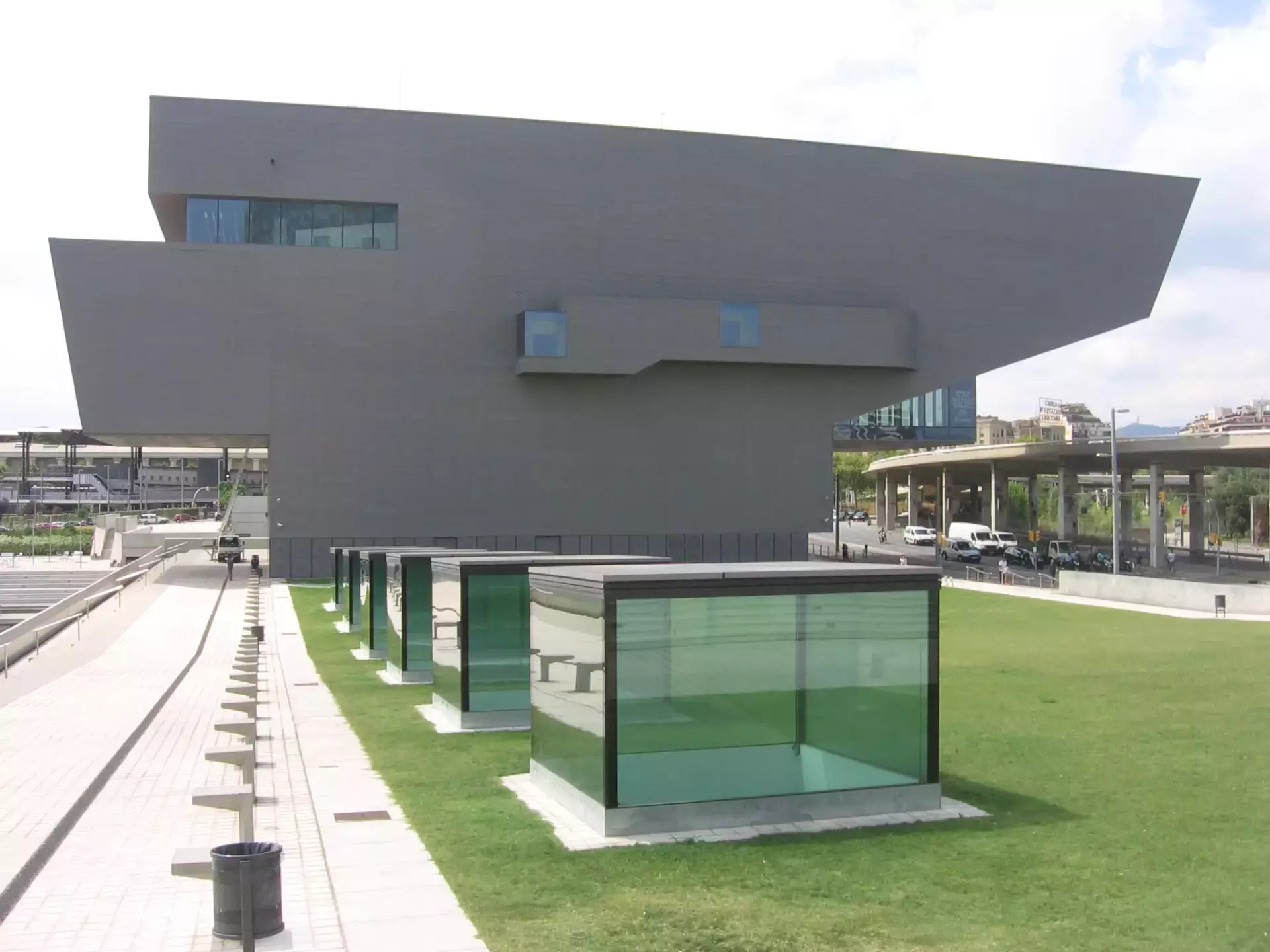
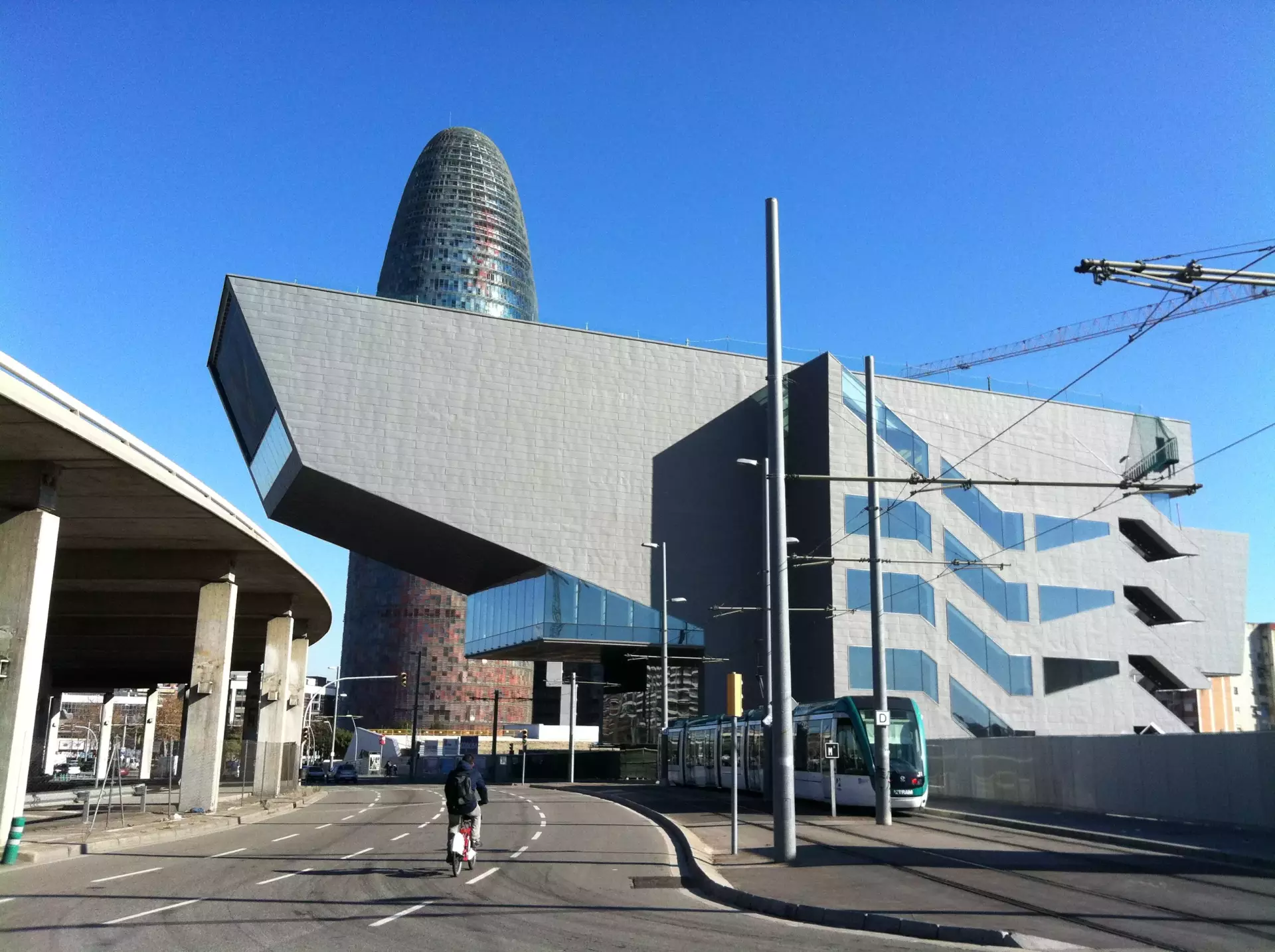
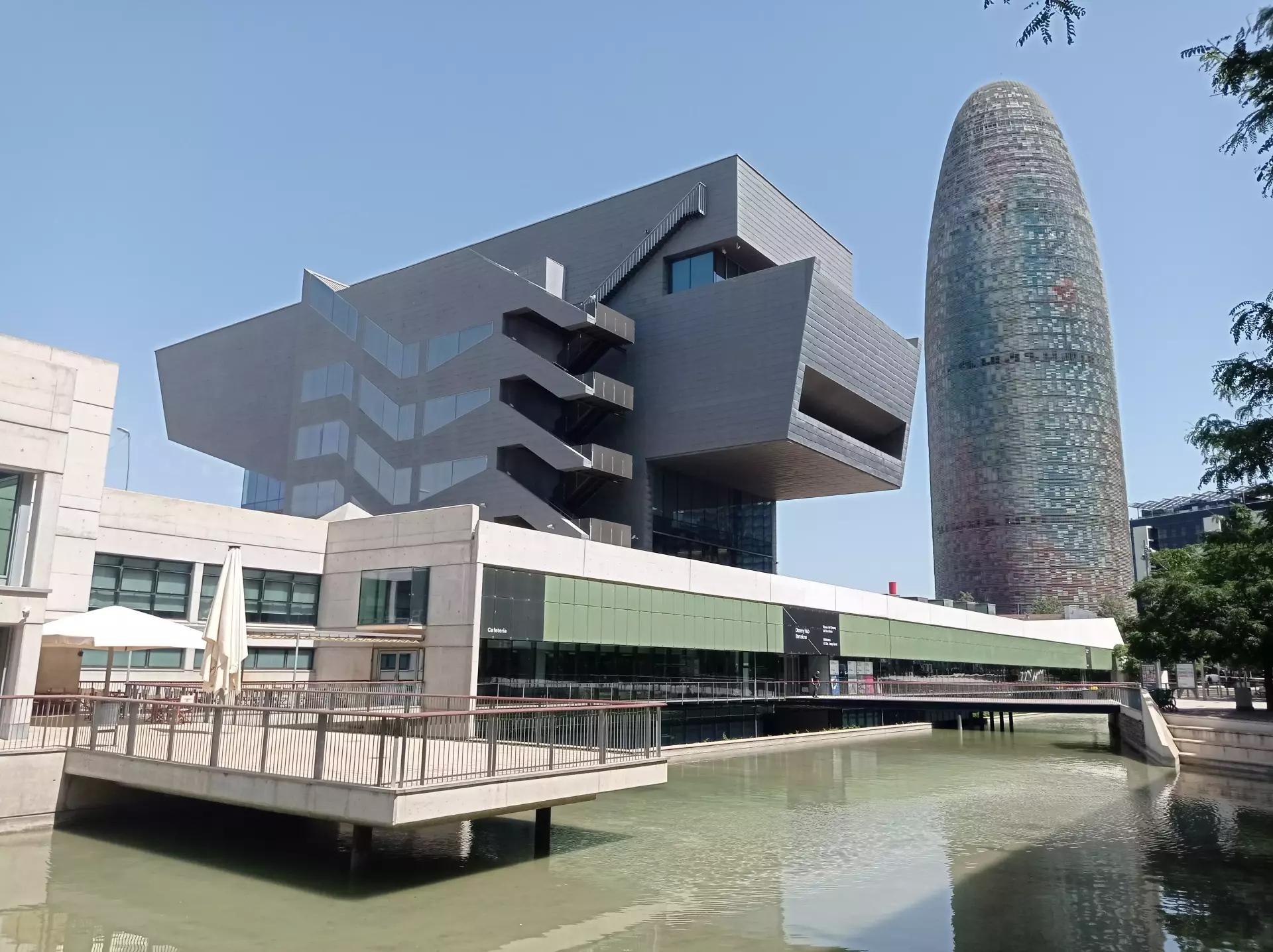
Barcelona offers a unique experience for design enthusiasts at the Disseny Hub Barcelona. Contrary to what some might think, “disseny” is the Catalan word for “design,” not related to Mickey Mouse. This cultural center is a true treasure for anyone interested in applied arts, design, and creativity.
The Disseny Hub houses the Museu del Disseny de Barcelona, which brings together collections that once belonged to several separate institutions: the Decorative Arts Museum, the Ceramics Museum, the Textile and Clothing Museum, and the Graphic Arts Cabinet. Visitors can explore everything from historical craftsmanship to contemporary design innovations.
The building itself, designed by MBM Arquitectes, is considered an architectural landmark of contemporary Barcelona. Its bold, multi-level structure, nicknamed “the stapler” by locals, dramatically overlooks the busy Plaça de les Glòries Catalanes. With its striking form and vibrant exhibitions, it blends modern design with the dynamic energy of the city.
Source - https://en.wikipedia.org/wiki/Design_Museum_of_Barcelona
One of Gaudi's masterpieces, there is not one straight edge on the exterior and the structure is one of Gaudi’s most eccentric and enticing architectural creations. Tours of the interior and the incredible roof structures are available. Great views of the tall buildings (especially La Sagrada Familia) from the roof. Hosts a large exposition of Gaudi works, covering Sagrada Familia and Casa Batlio, not only La Pedrera itself. The exposition is a good place to start your exploration of Gaudi; it reveals many hidden details for the art novice.
This former hospital is an architectural masterpiece that is now open for visitors. Inpatient wards (and most outpatient facilities) have been moved to a new building of Nou Hospital, but in terms of touring the area, that makes it all the easier. One of "small hidden features" is a network of underground passages where small carriages can be seen, you can get there near WCs on a central square, between Banc de Sang and Quiròfans.
The stadium and its surroundings built in 1927 and renovated for the 1992 Summer Olympics provides nice architectonic and city views. Since it's not too crowded outside sport events, it's usually a pretty calm place.
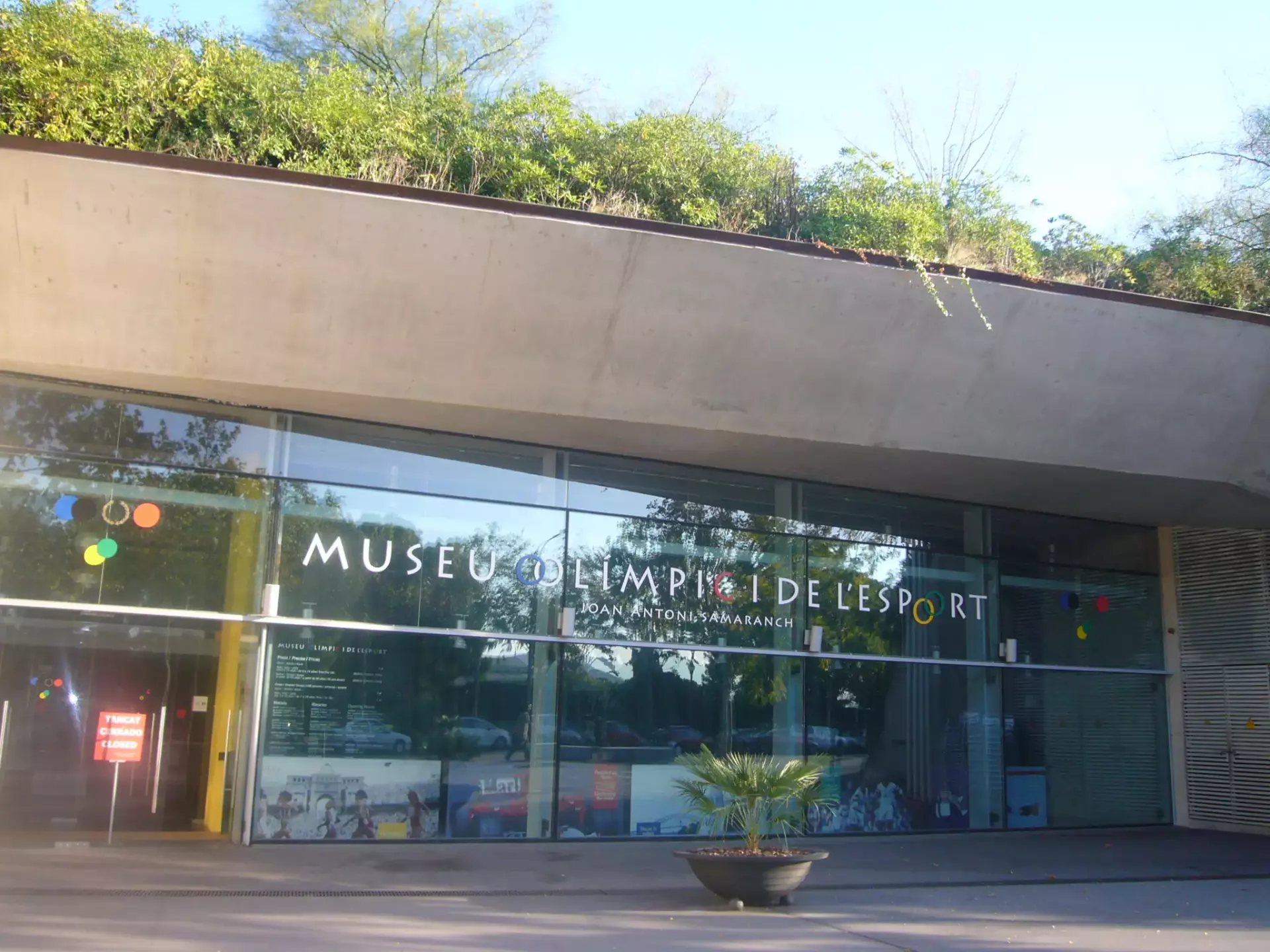
The museum displays high-performance sport competitions, recreational sports, sports in general and sports for disabled people. It shows how sport can promote values, educate, innovate and renew. The museum has a sport idols space with outstanding players.
Placa d'Espanya was created for the 1929 World Exhibition, on a site once used for public hangings. The fountain in the center of the square is a great attraction and plays music during the summer. Plaça Espanya is located at the base of Montjuic hill.
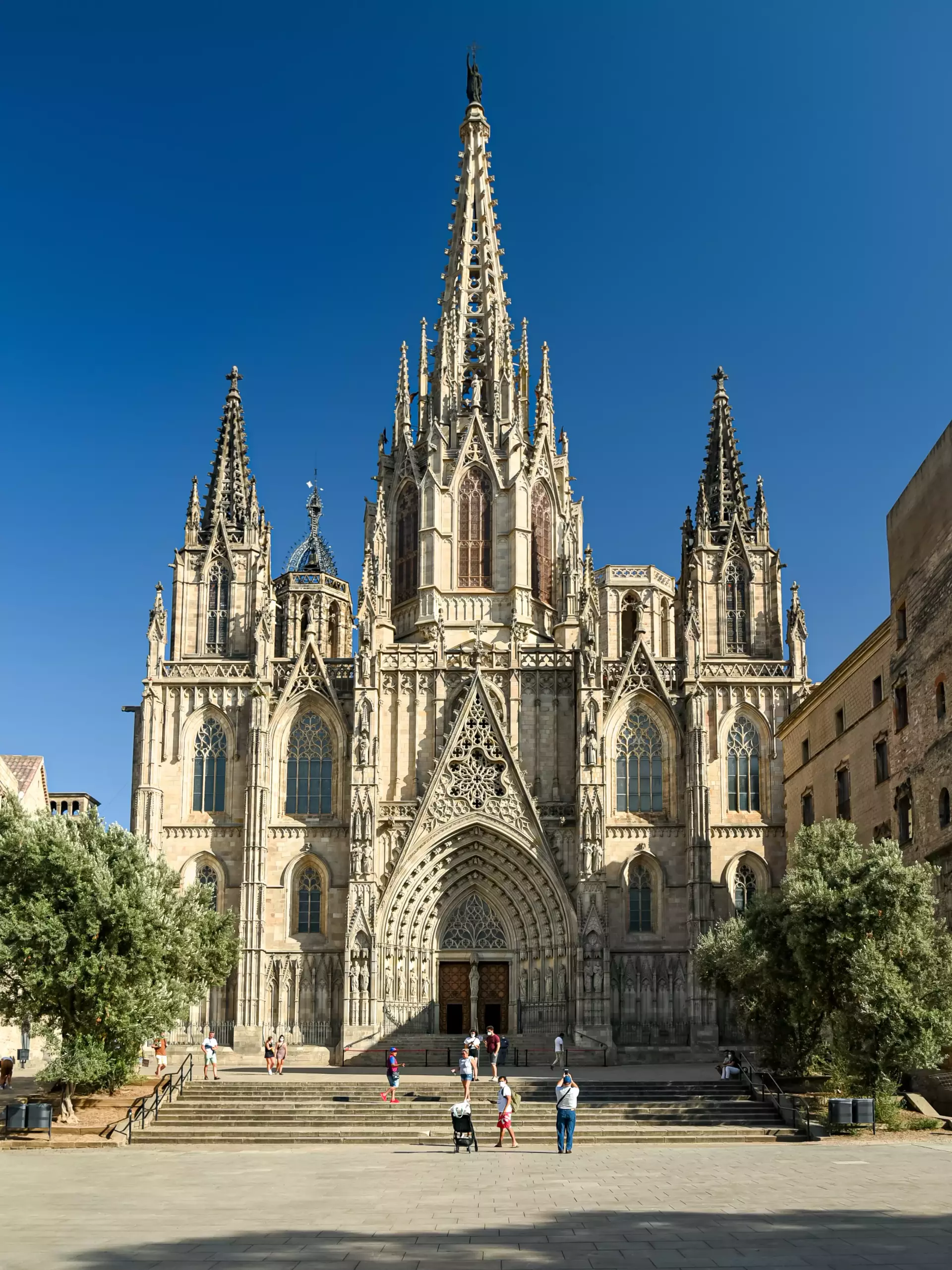
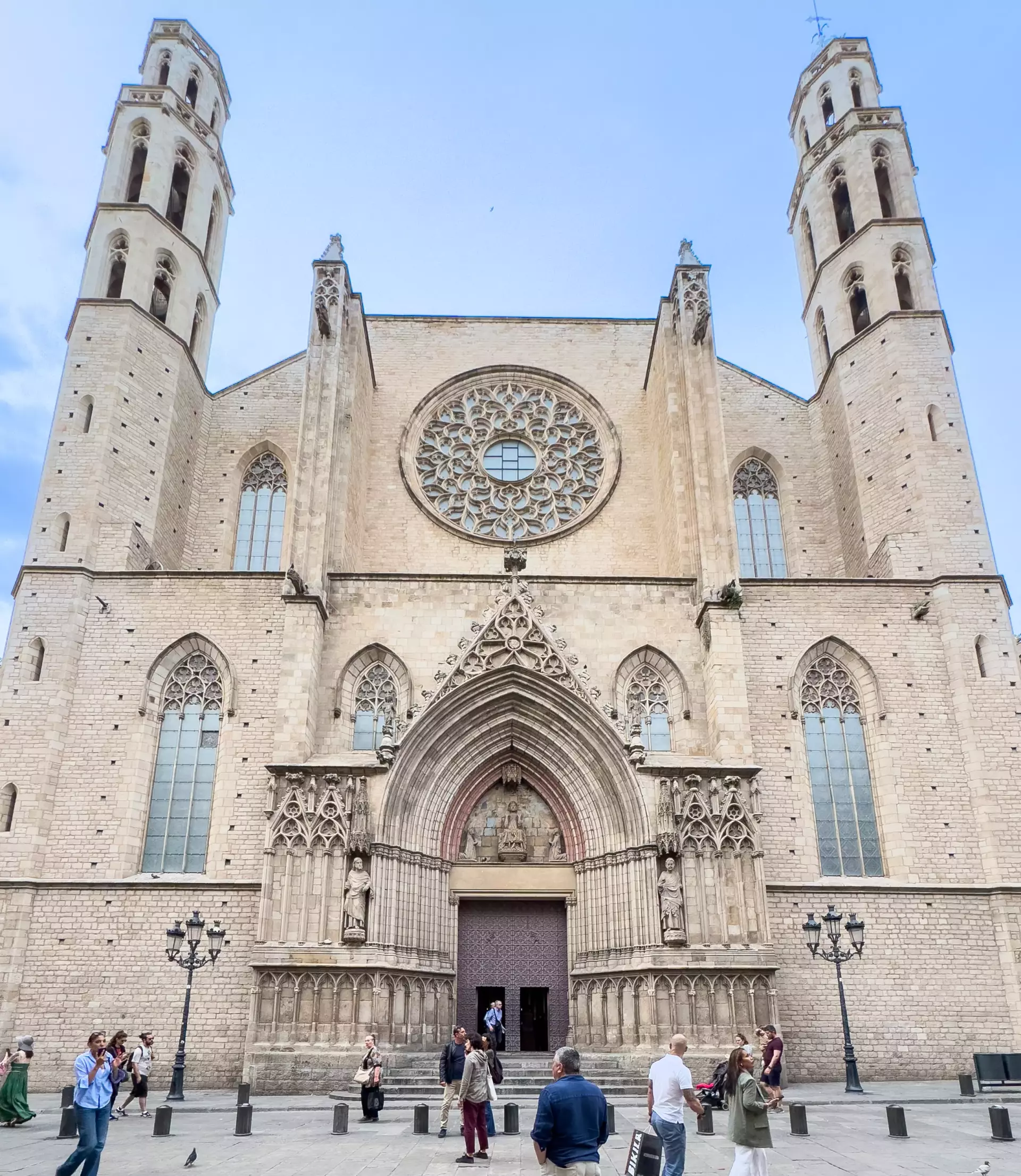
The main Gothic church in Barcelona. The cloister is maybe the most interesting part.
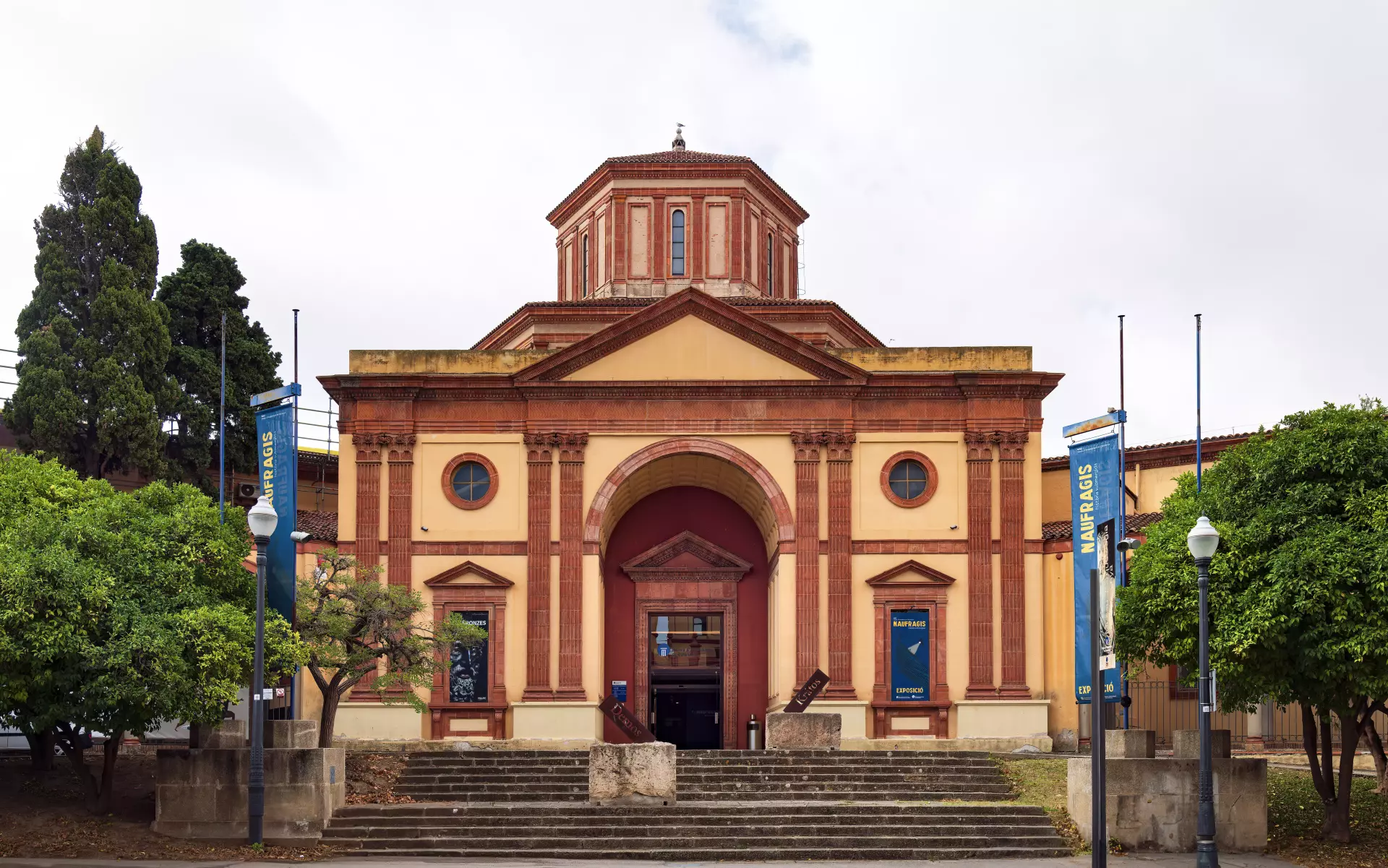
This museum mainly exhibits exponents, which were imported by Catalan sailors as they explored the new world. Free on the first Sunday each month (11:00 to 15:00)
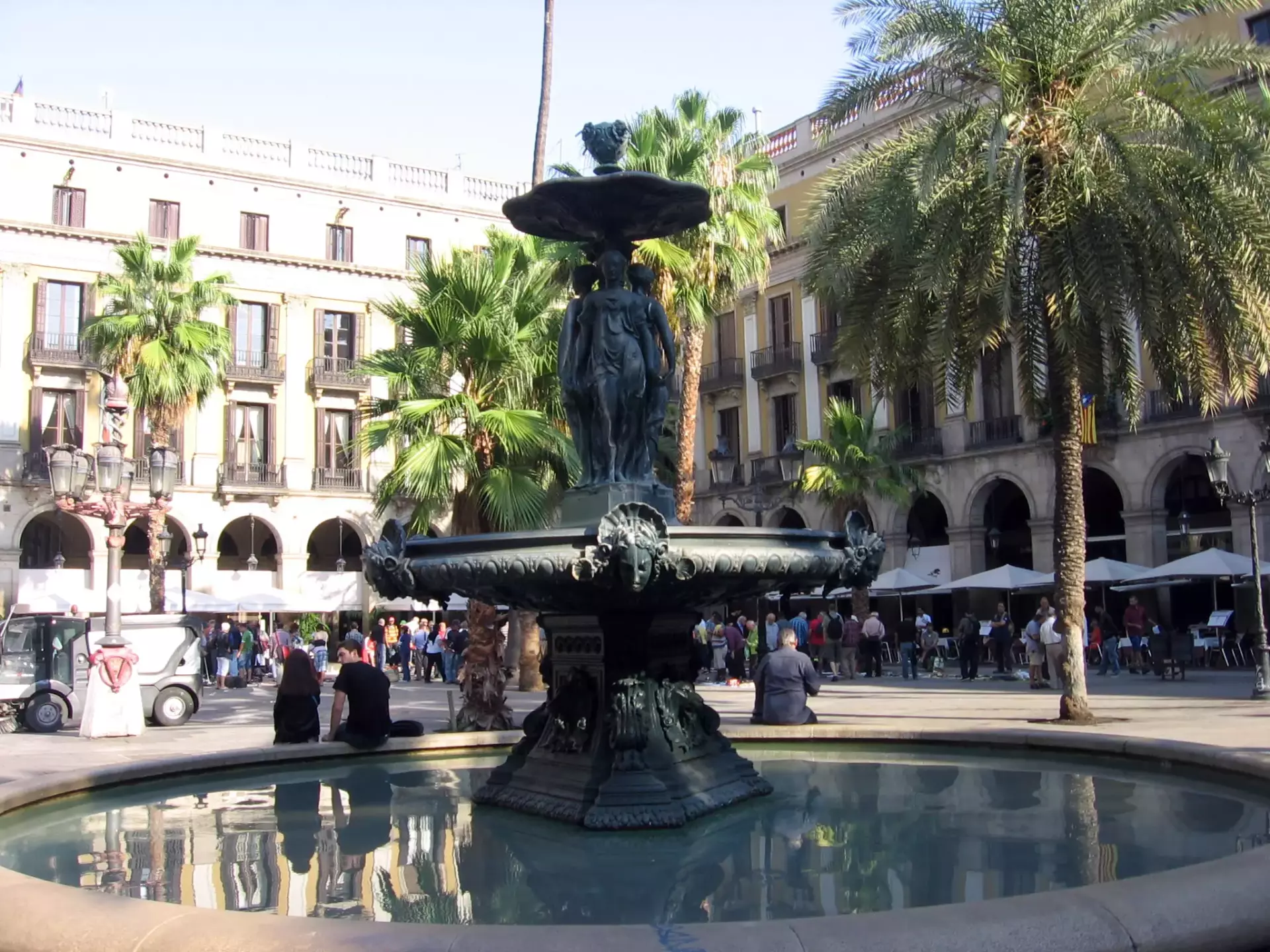
This square is famous for the nightlife and the uniform architecture, and features fountains and palm trees. It was built during the 19th century on the site of a monastery, after the Mendizábal law expelled the monks. After some years Antoni Gaudí designed the streetlights which are still there. It has lots of activity during the day, thanks to the many terraces of the bars and restaurants.
A beautiful Gothic monastery near the university, there are a museum which depicts the monastery life, a church, and a marvelous chapel covered with medieval frescoes.
Situated on the Montjuic, it exhibits archaeological findings from Catalunia from different periods. Under 16 and 65+ free. €3 for others. Special discounts for other groups.
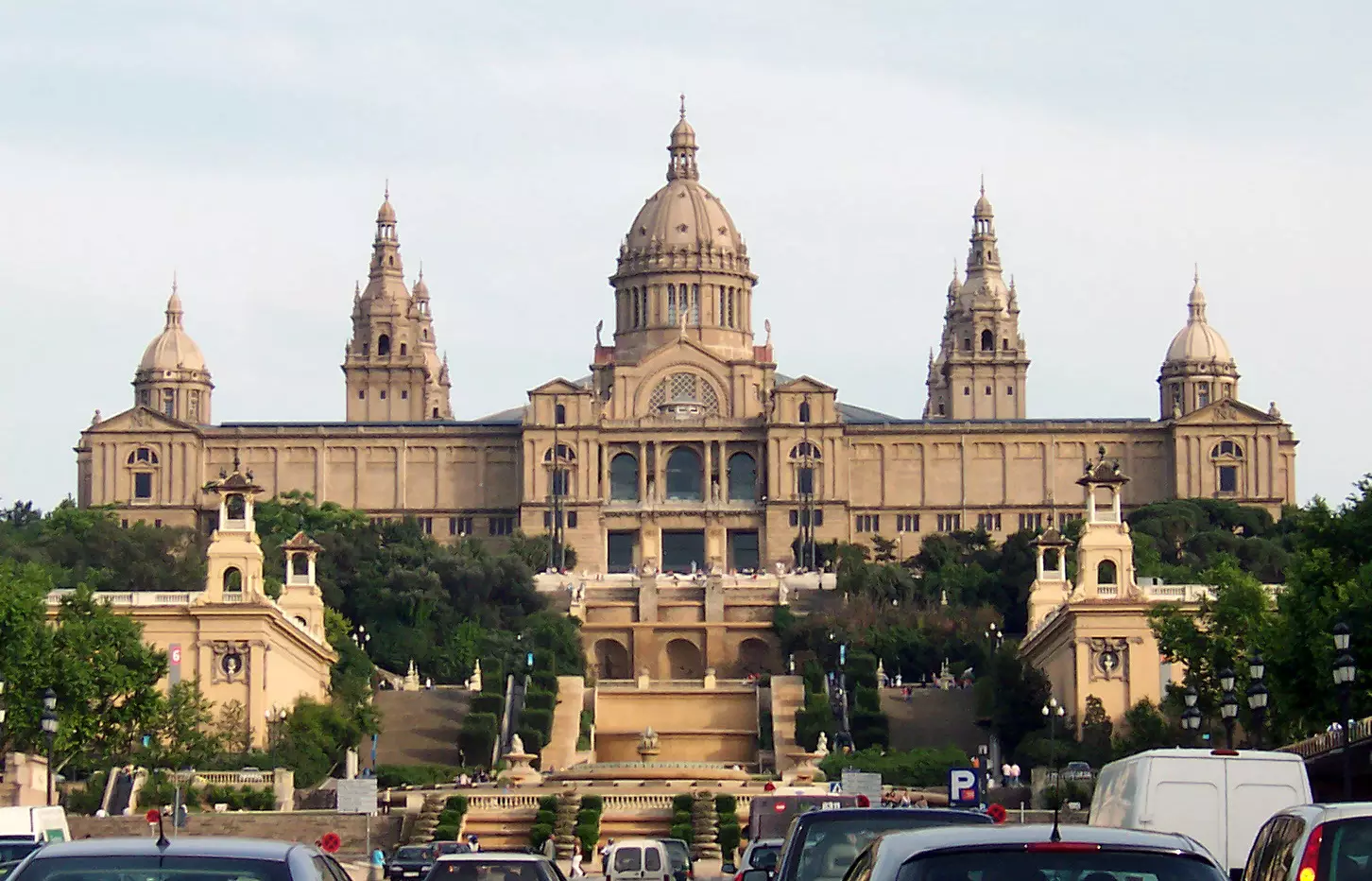
Has the single best collection of Romanesque art in the world, and a fine Gothic collection as well. Includes the Pantocrator from the Taüll Romanesque church. The building itself is also very beautiful.
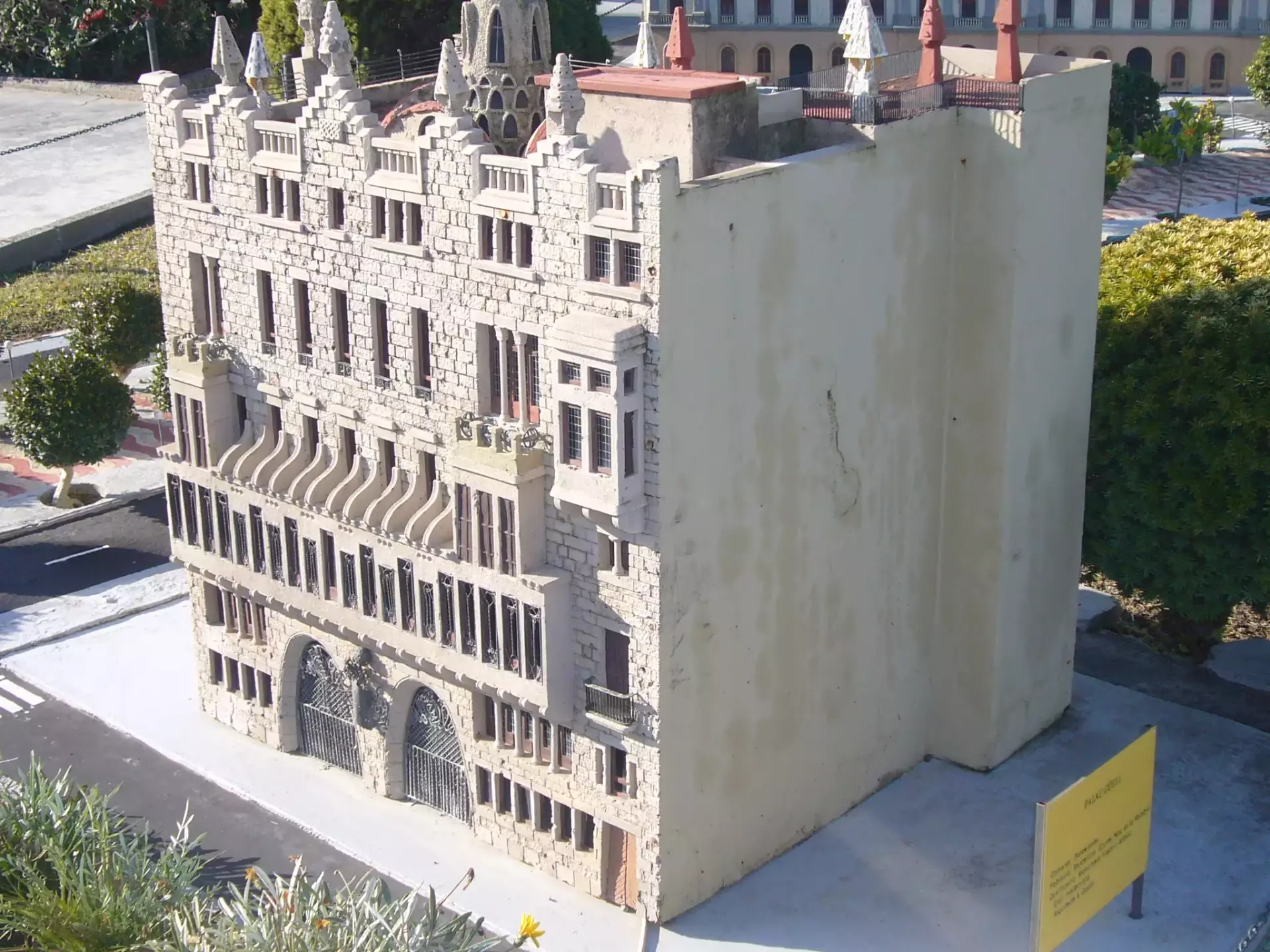
A fake village built in 1929, with replicas of characteristic buildings in Spain (like the Avila walls, the Vall-de-roures town hall, etc.). The village hosts the Fondation Fran Daurel, where you can enjoy an interesting Modern Art collection boasting Miró, Picasso, Tapiès and other, mostly Spanish and Catalan, contemporary artists. The audio tour is very worthwhile there. Also worth seeing - the flamenco show at Tablo de Carmen. You can also step into several of the workshops to see craftsmen at work such as glassblowers and leather workers.
Designed by Puig i Cadafalch, the building is a fine work of Modernism. Check the detailed photos and explanation of facade sculptures. It also has a shop that sells fine chocolate (the Amatller family made its money out of cocoa).
The Pavilion is one of the emblematic works of Mies van der Rohe and key reference architecture of the twentieth century. The famous German Pavilion was designed for the 1929 Barcelona International Exhibition and reconstructed in 1986 on its original site. Its innovative architectural structure marked a radical change in the layout of space and greatly influenced the development of modern architecture. Furthermore, the Pavilion exhibits the Barcelona Chair, also designed by Mies van der Rohe, along with a bronze reproduction of Georg Kolbe’s sculpture Morning. The Fundació Mies van der Rohe veils for the conservation of the Pavilion.
This market was the central market for Barcelona until 1973 and its closing marked the beginning of the neighborhood's decline before its current resurgence. While undergoing renovations, whole streets and homes that had been demolished by Phillipe V's orders were discovered and archaeologists who worked to transform the market in to a cultural centre and history museum. Entrance and street level is free, but to visit the ruins requires paying for a ticket.
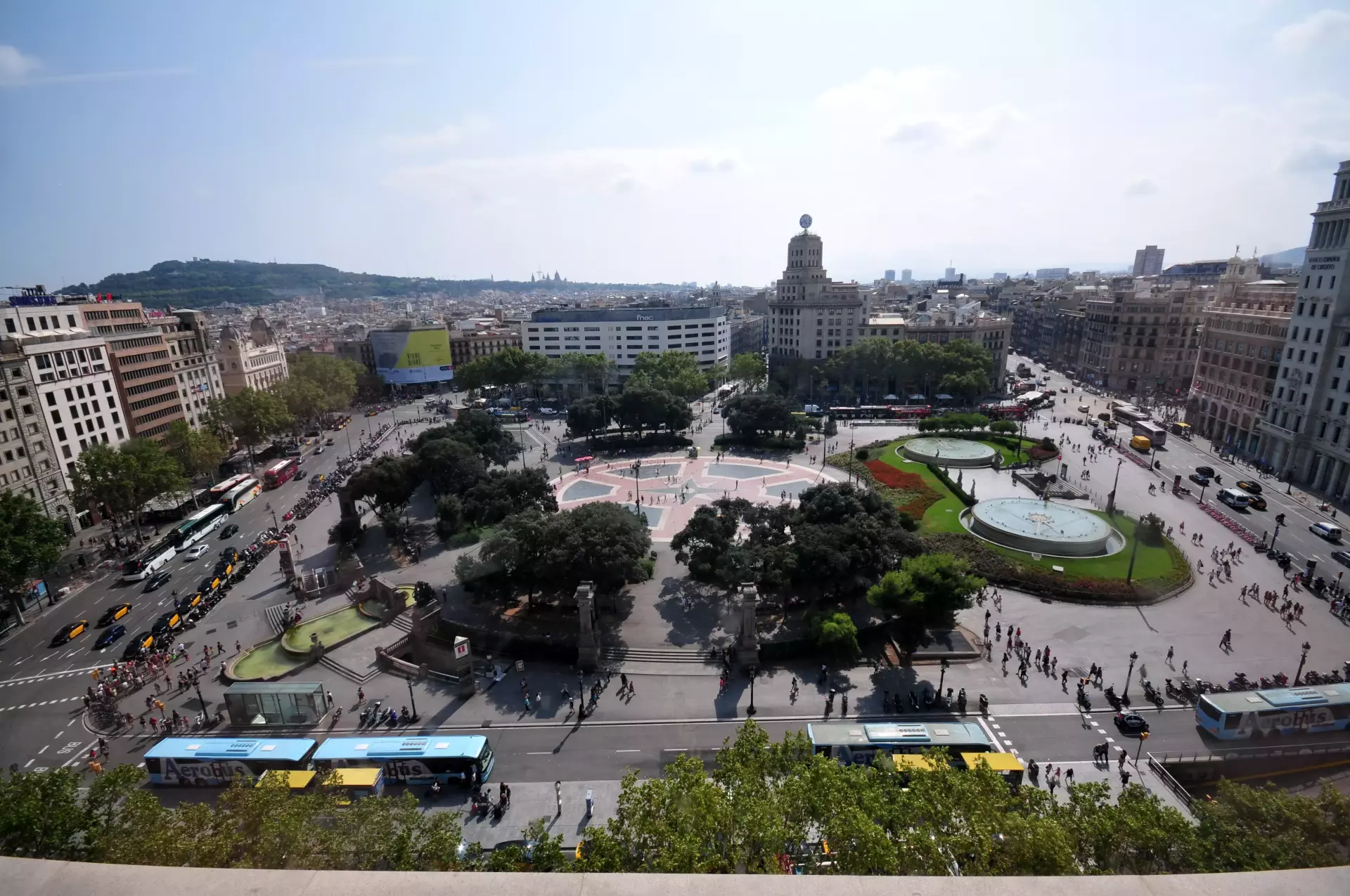
Connecting many of the major streets in the city, the Plaça is a central location and a hub of activity. It is a favourite meeting spot for locals and a transit hub for the tourist buses. There are many fountains, statues and gardens around the plaza, and a number of benches to just sit and take it all in.
Has a lot of art from his first period, before the cubism, but almost none of his most famous works. Pictures are described only in Spanish, but overview texts for each period are available in English. Luggage over 30x30cm needs to be left at the checkroom and there's no liability for lost valuables.