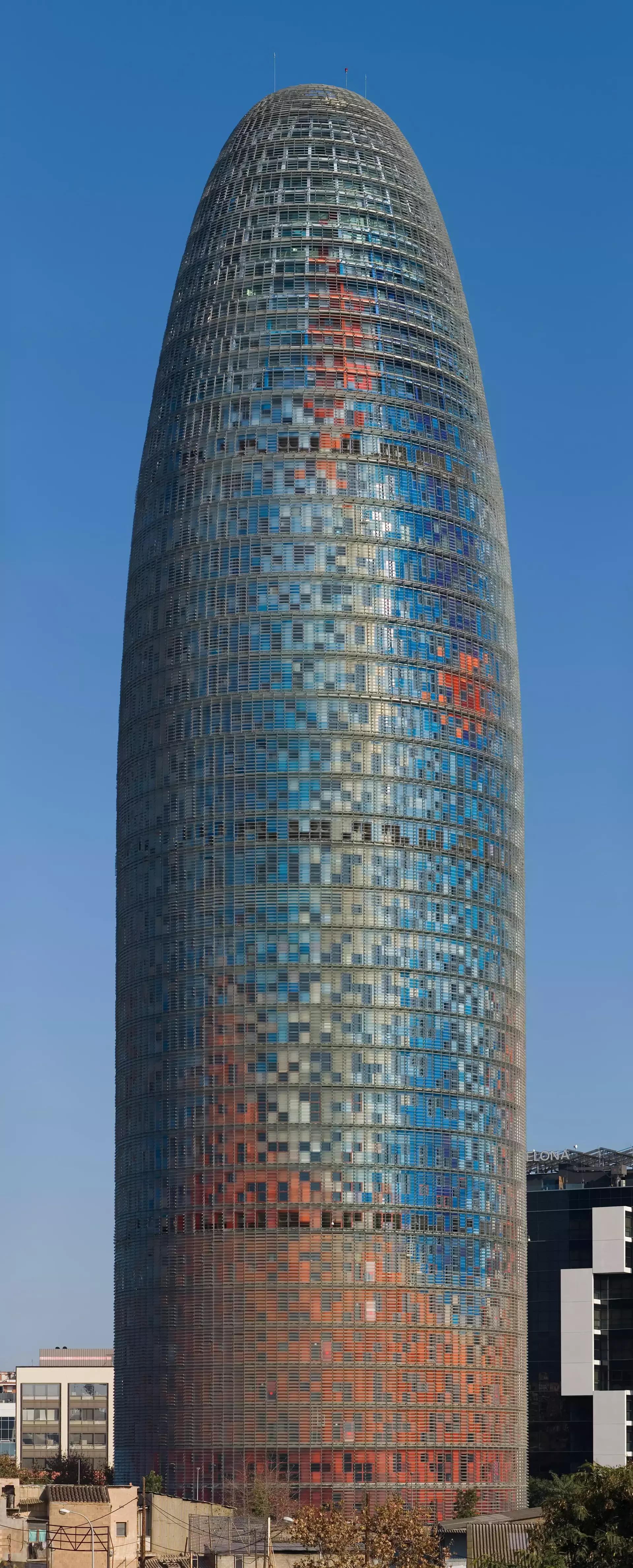
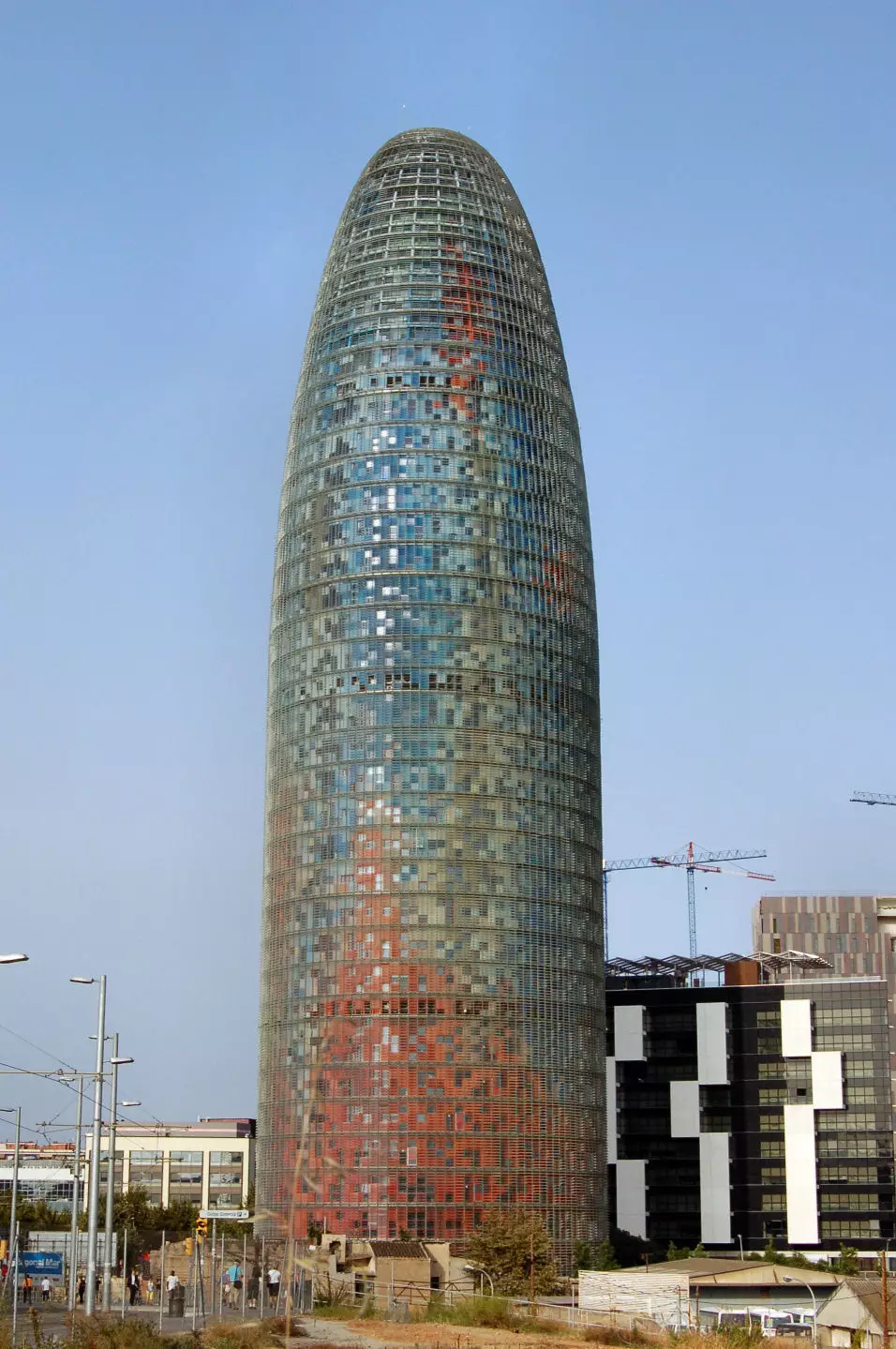
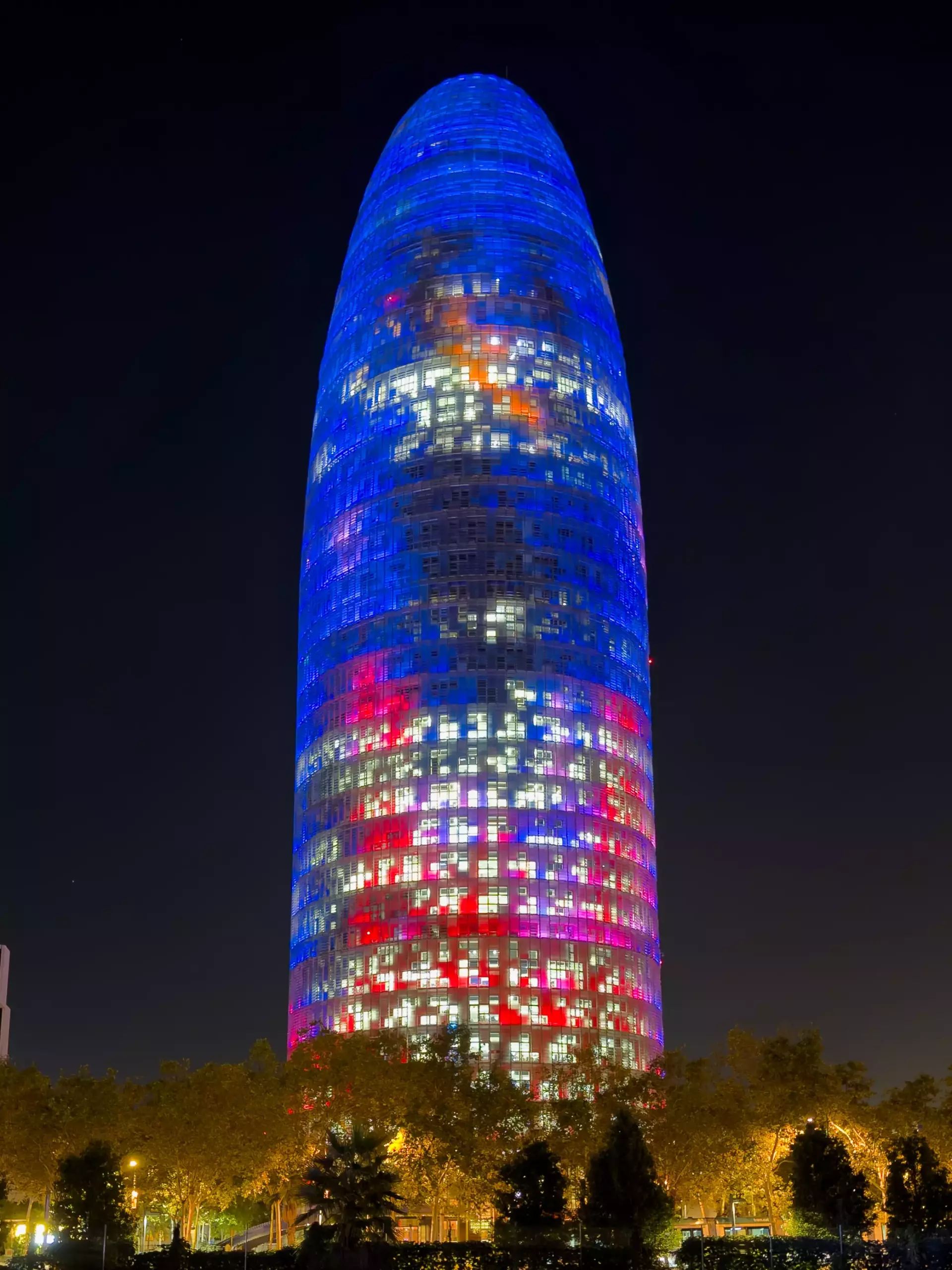
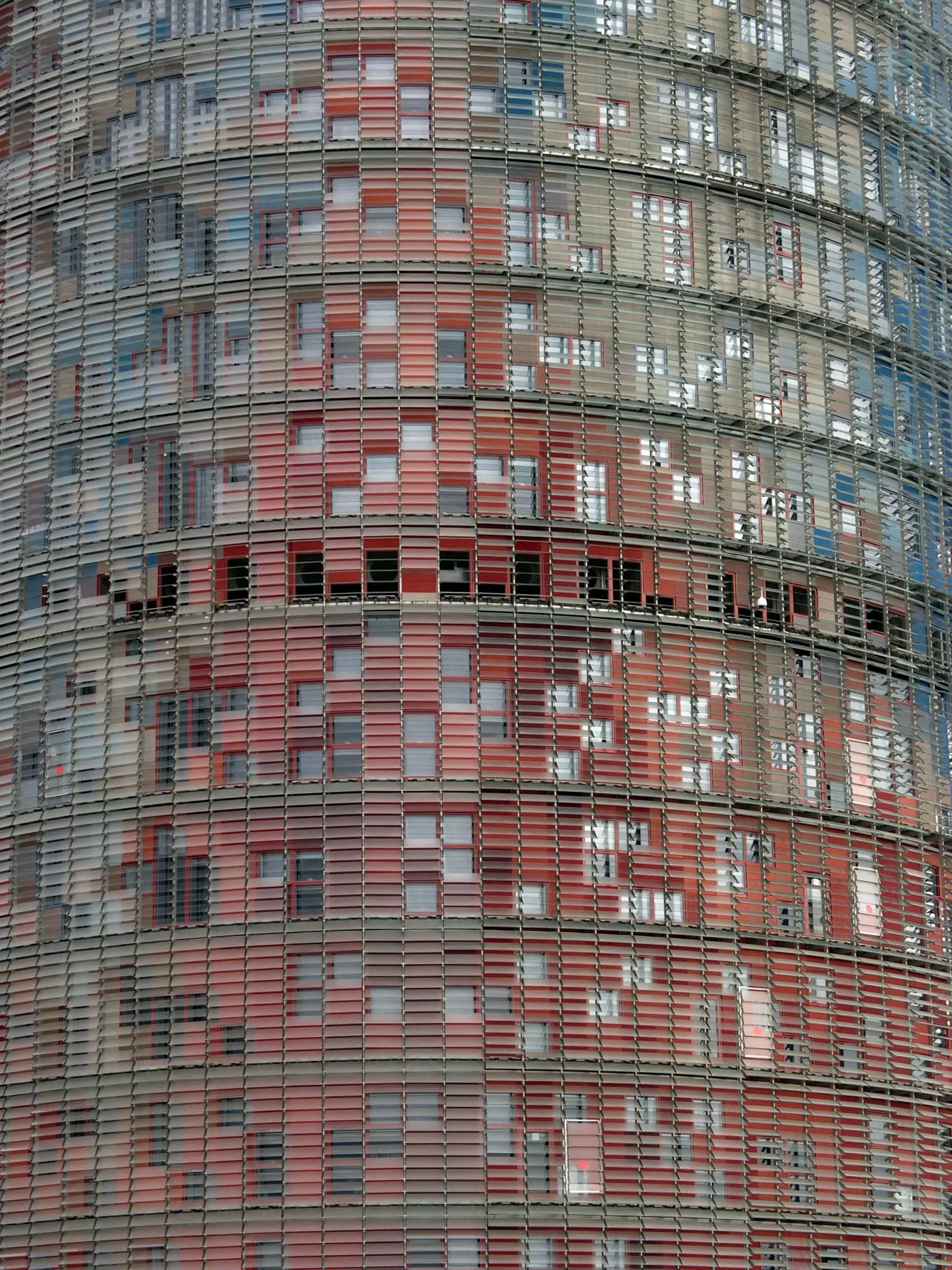
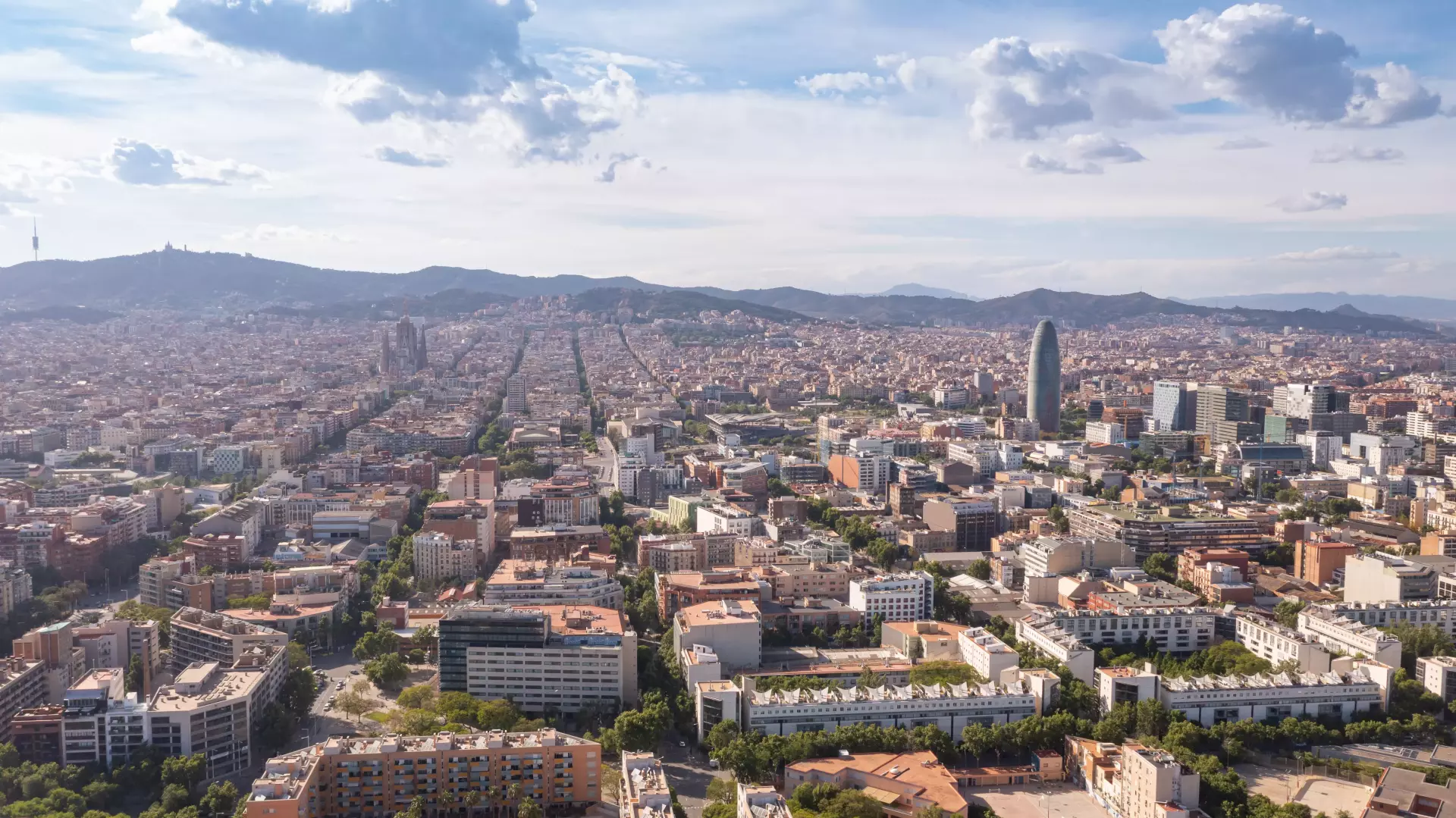
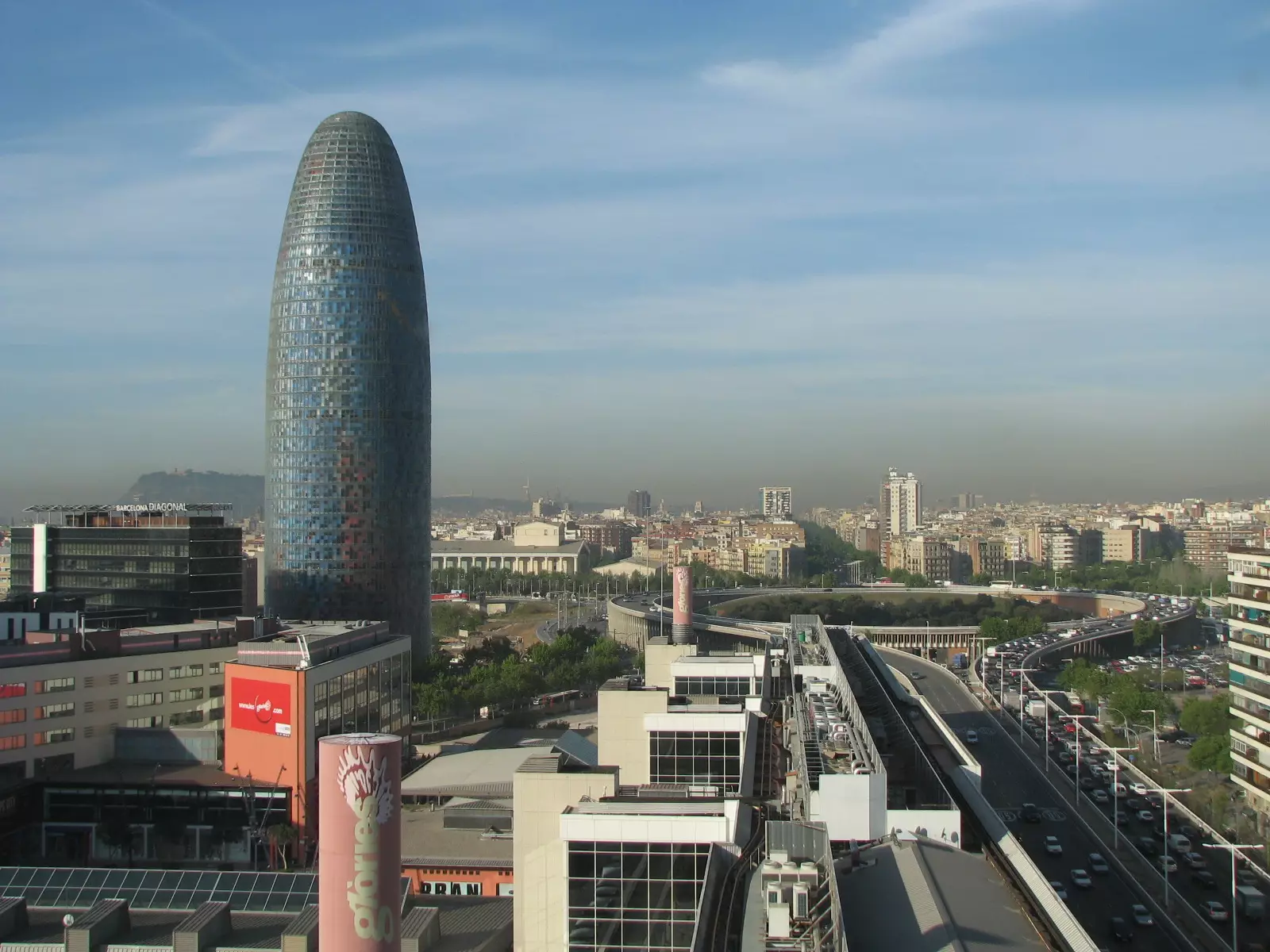
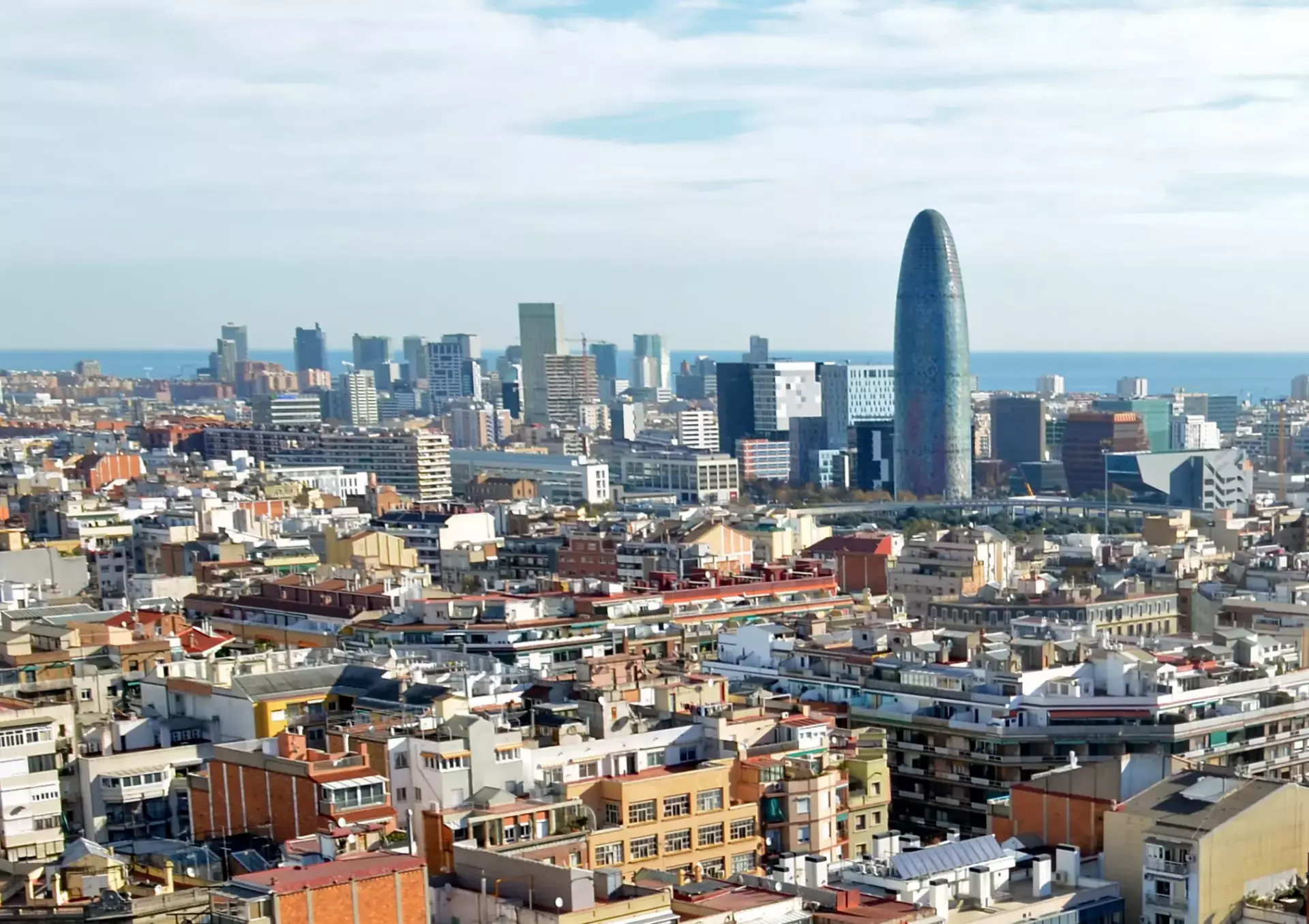
Torre Glòries, formerly known as Torre Agbar, is an iconic office tower that has become a defining element of Barcelona’s skyline. Its distinctive shape and colorful night-time illumination make it one of the city’s most recognizable landmarks.
Since 2022, visitors have been able to enjoy panoramic views from the 30th-floor observation deck. From here, Barcelona unfolds in every direction, offering breathtaking perspectives of the city’s most famous sites.
Beyond the views, Torre Glòries also offers Hyperview Barcelona, an immersive audiovisual installation located on the underground floor. Using real-time environmental and urban data, it provides a dynamic way to connect with the rhythms of the city.
Source - https://en.wikipedia.org/wiki/Torre_Gl%C3%B2ries
A fake village built in 1929, with replicas of characteristic buildings in Spain (like the Avila walls, the Vall-de-roures town hall, etc.). The village hosts the Fondation Fran Daurel, where you can enjoy an interesting Modern Art collection boasting Miró, Picasso, Tapiès and other, mostly Spanish and Catalan, contemporary artists. The audio tour is very worthwhile there. Also worth seeing - the flamenco show at Tablo de Carmen. You can also step into several of the workshops to see craftsmen at work such as glassblowers and leather workers.
Museum dedicated to the FC Barcelona. It occupies 3,500 m² and attracts 1.2 million visitors a year, ranking it second to the Museu Picasso, which attracts 1.3 million visitors, as the most visited museum in the city of Barcelona. All of the Barcas trophies and jerseys of many famous players of the team are exhibited. The museum can be visited by booking the Camp Nou Experience package, which includes also a stadium tour. The stadium tour is not fantastic and the audio guide is not really worth it either, but for a quick recent history of matches played there, consult the backs of the doors in the cubicles. Most have a lot of graffiti championing the team that played there. It is also unfortunate that the home team changing rooms are not open to the public, only the somewhat dated guest's team dressing rooms, which are not that impressive.
Urban park created from redeveloping industrial land. It covers 14 hectares and includes seven areas like a children's play area, a lake with sculptures and a central plaza.
One of the most unusual landmarks in this otherwise ultra-modern area is this 19th-century (finished in 1882) brick water tower. Standing 62 metres tall, it is now overshadowed by neighbouring residential, office and hotel towers and easy to miss unless you know where to look for it.
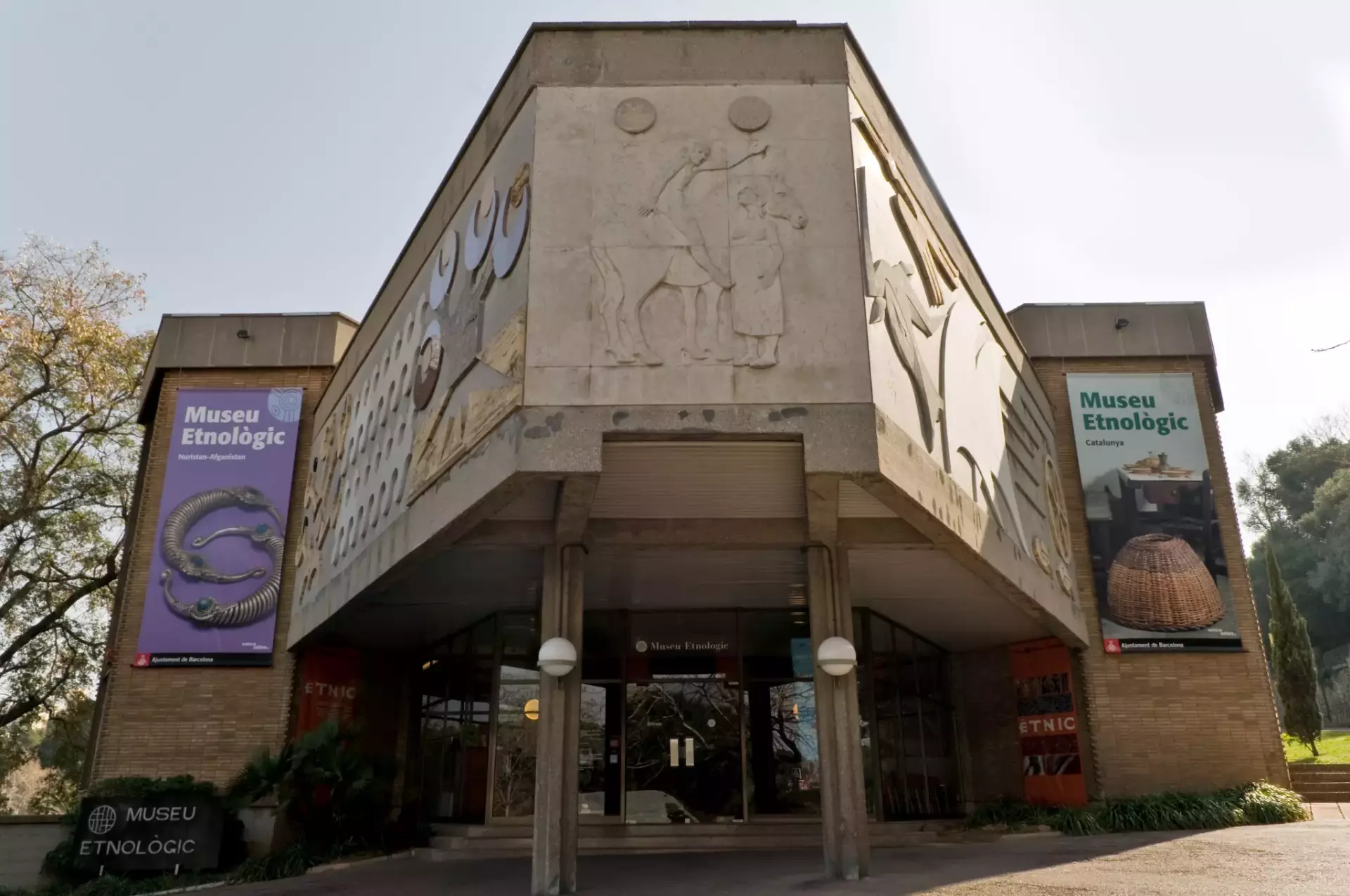
The museum has limited opening hours but the park it is situated in is also interesting. Check website before going to the museum as it will eventually relocate to The Can Bagaria building.
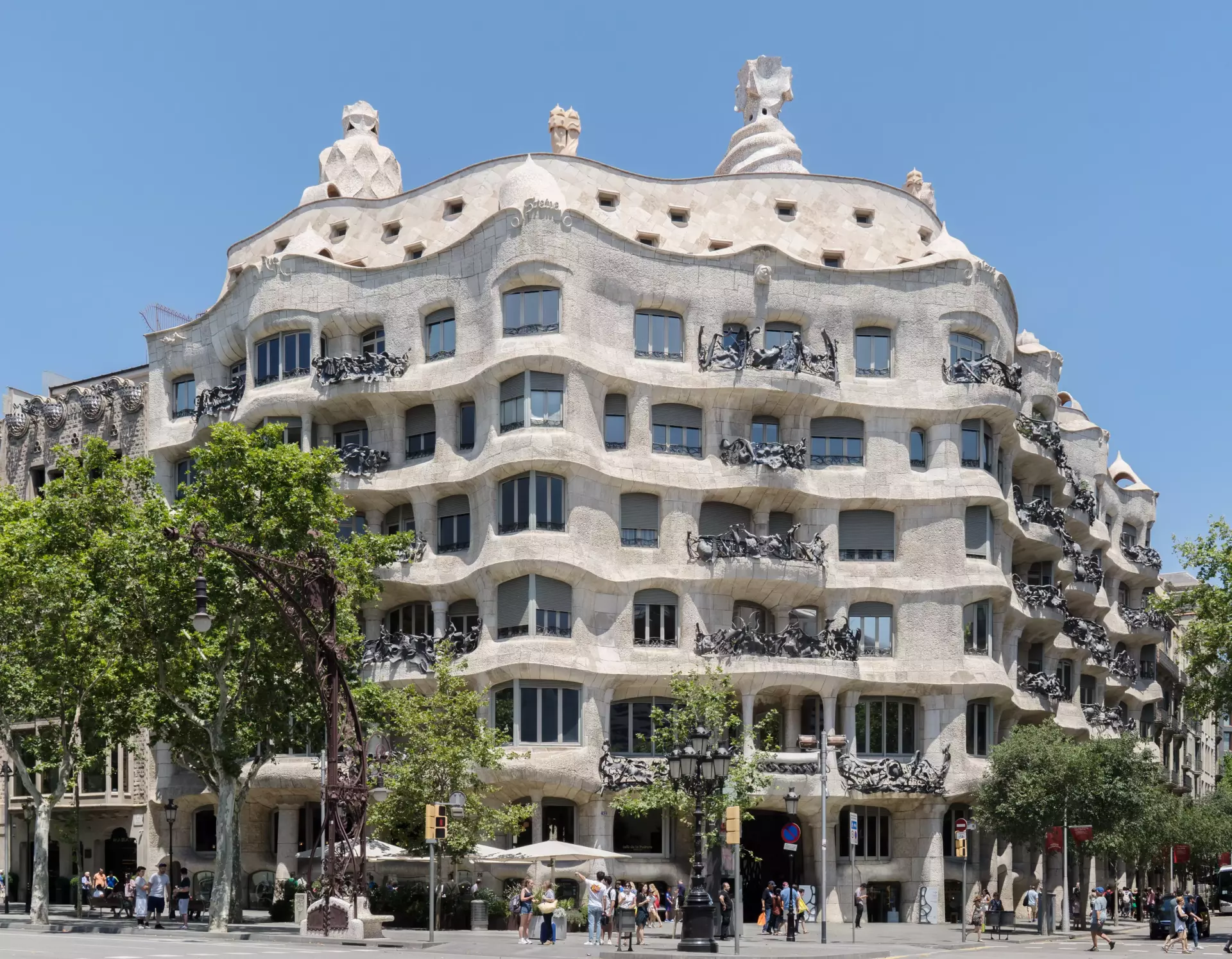
Palace designed by Gaudí for the industrial tycoon Eusebi Güell. There is a basement and three levels of the palace to explore, the highest featuring a small exhibition. It is in a different style to Gaudi's apartment blocks La Pedrera and Casa Batlló, as well as being cheaper and less crowded than those sites. The rooftop of Palau Güell features the more standard Gaudi style chimneys, and views across El Raval.
Has a lot of art from his first period, before the cubism, but almost none of his most famous works. Pictures are described only in Spanish, but overview texts for each period are available in English. Luggage over 30x30cm needs to be left at the checkroom and there's no liability for lost valuables.
Placa d'Espanya was created for the 1929 World Exhibition, on a site once used for public hangings. The fountain in the center of the square is a great attraction and plays music during the summer. Plaça Espanya is located at the base of Montjuic hill.
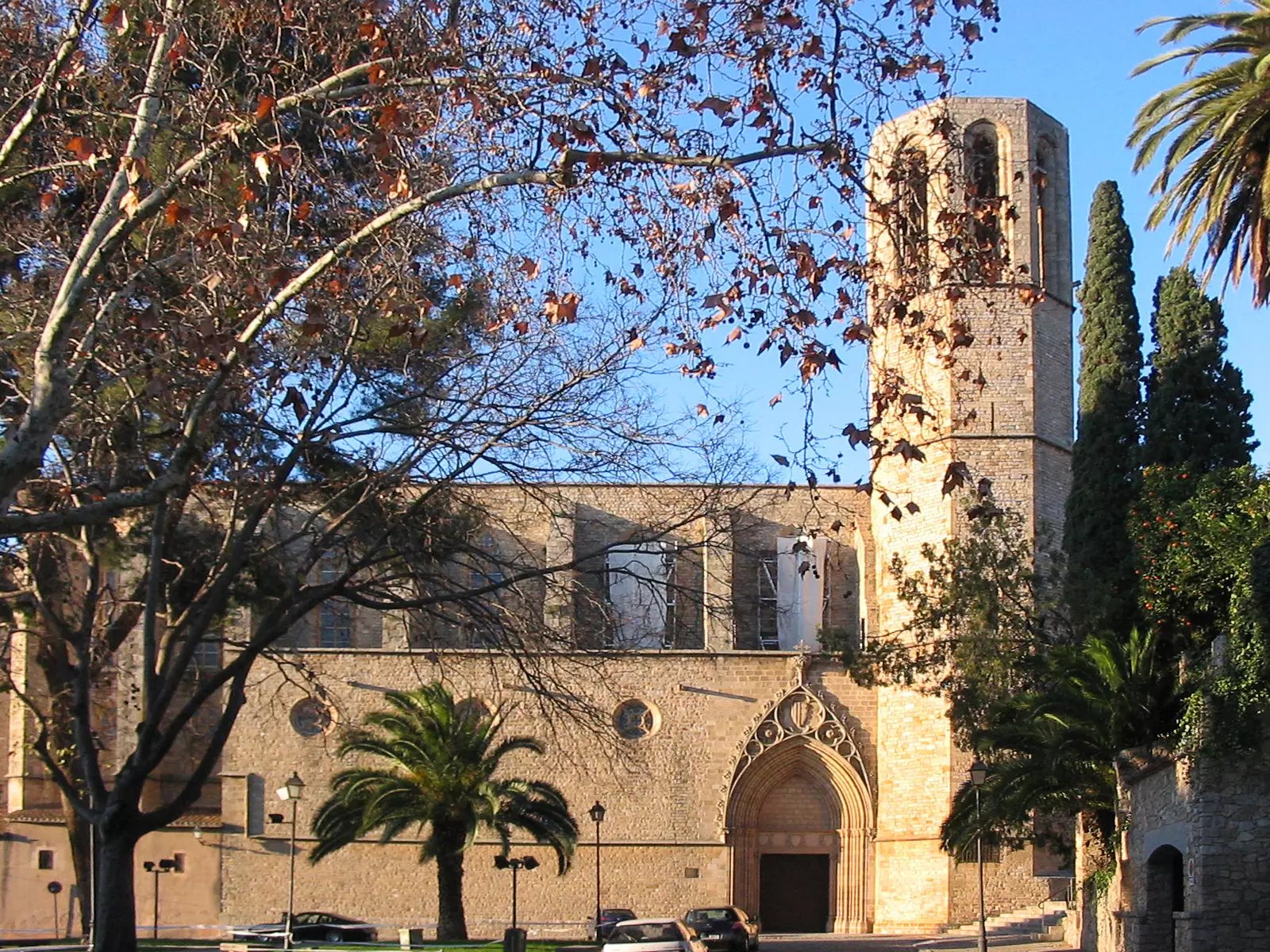
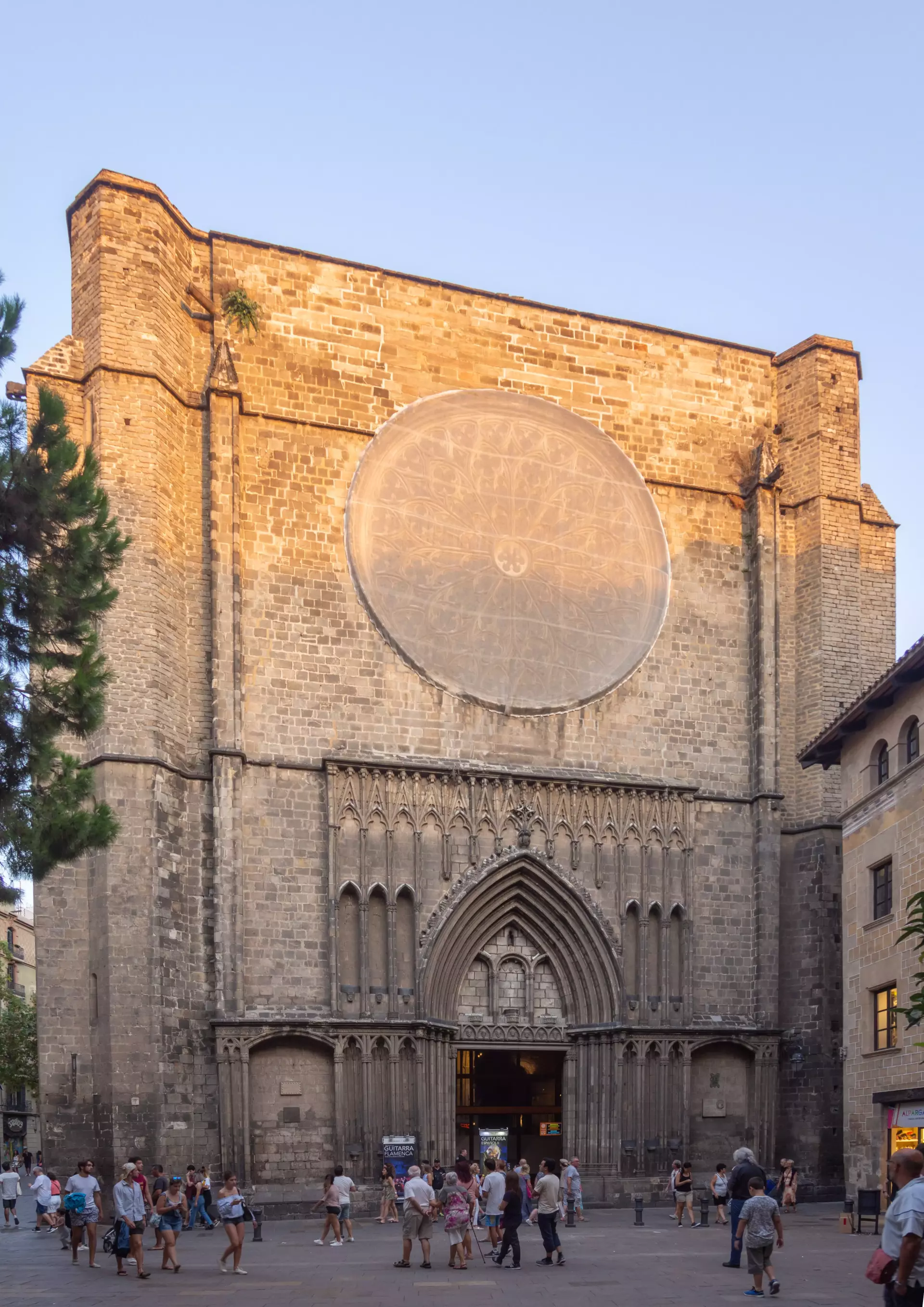
A beautiful Gothic monastery near the university, there are a museum which depicts the monastery life, a church, and a marvelous chapel covered with medieval frescoes.
One of the most romantic squares in Barcelona, it hides a dark history in that it was built over the city's old cemetery. Barcelona's most famous architect, Antonio Gaudi, was on his way to visit the church there when he was run over and killed in 1928. There is a baroque church (Sant Felip Neri), a 14th-century palace and a fountain in the middle. To arrive, take the narrow street next to the cathedral cloister. The palace was moved from its original location in the street Via Laietana during the 1920s. If you look the front of the church, you can see some holes made by a civil war bomb. If you go out the square through the other street, you'll arrive to the street Baixada de Santa Eulàlia, where is said that the Barcelona's protector was tormented.
This street has the biggest collection of Gothic houses in Barcelona. In amongst these houses is the Picasso Museum, which is definitely worth a visit. There are also smaller museums along the street, and many tapas restaurants though they may be more expensive on this street.
The university has many interesting buildings, libraries and courtyards.
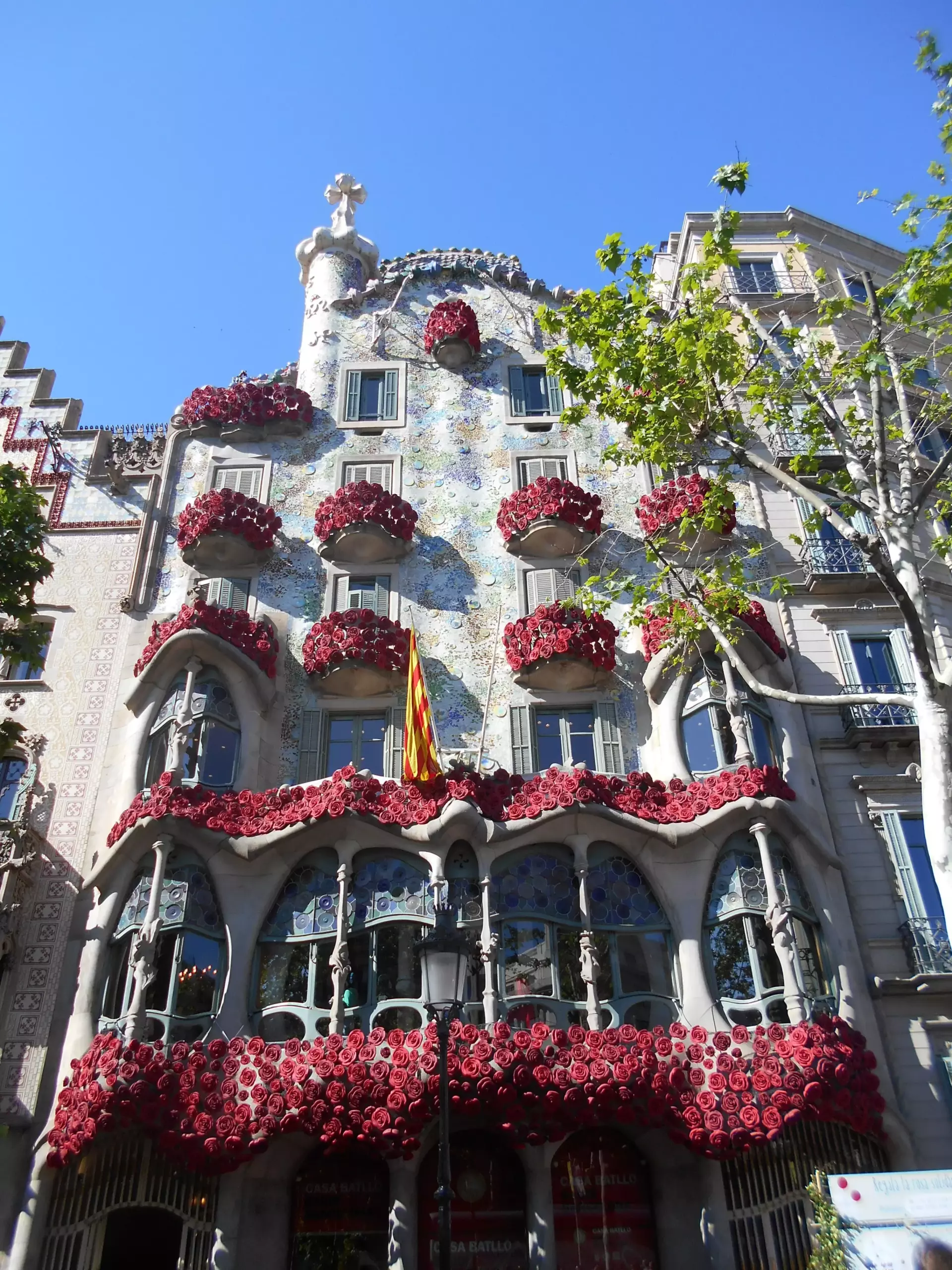
Another Gaudi masterpiece along the same avenue as La Pedrera. Open to the public. No straight line or right angles appear anywhere in the house. Often overlooked for La Pedrera, (also by Gaudi), La Casa Batlló is equally as stunning with its unique architecture and infamous two ornamental pillars in the entrance to the terrace. Open for visitors from ground floor to the roof, and down by an old-time elevator.
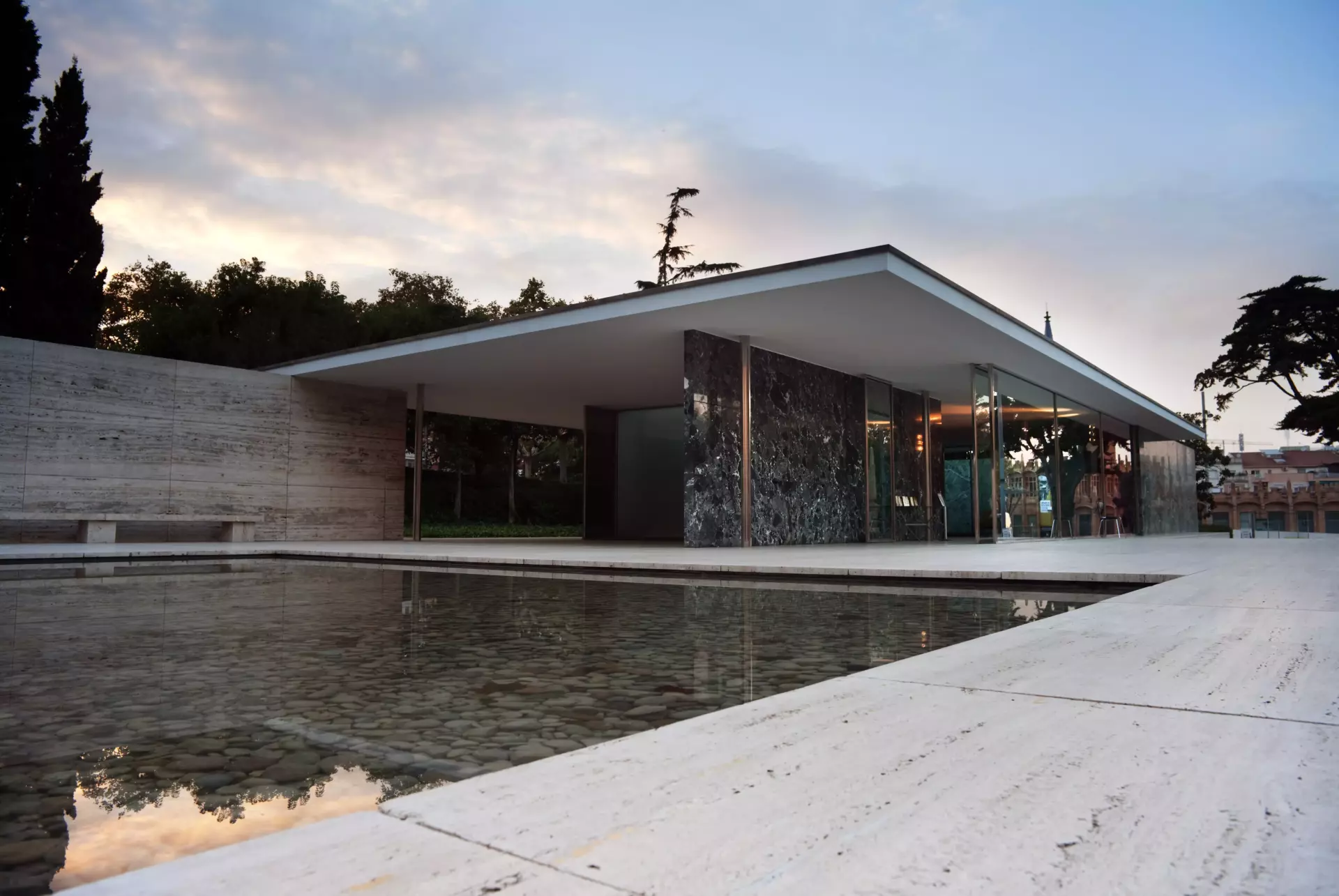
The Pavilion is one of the emblematic works of Mies van der Rohe and key reference architecture of the twentieth century. The famous German Pavilion was designed for the 1929 Barcelona International Exhibition and reconstructed in 1986 on its original site. Its innovative architectural structure marked a radical change in the layout of space and greatly influenced the development of modern architecture. Furthermore, the Pavilion exhibits the Barcelona Chair, also designed by Mies van der Rohe, along with a bronze reproduction of Georg Kolbe’s sculpture Morning. The Fundació Mies van der Rohe veils for the conservation of the Pavilion.
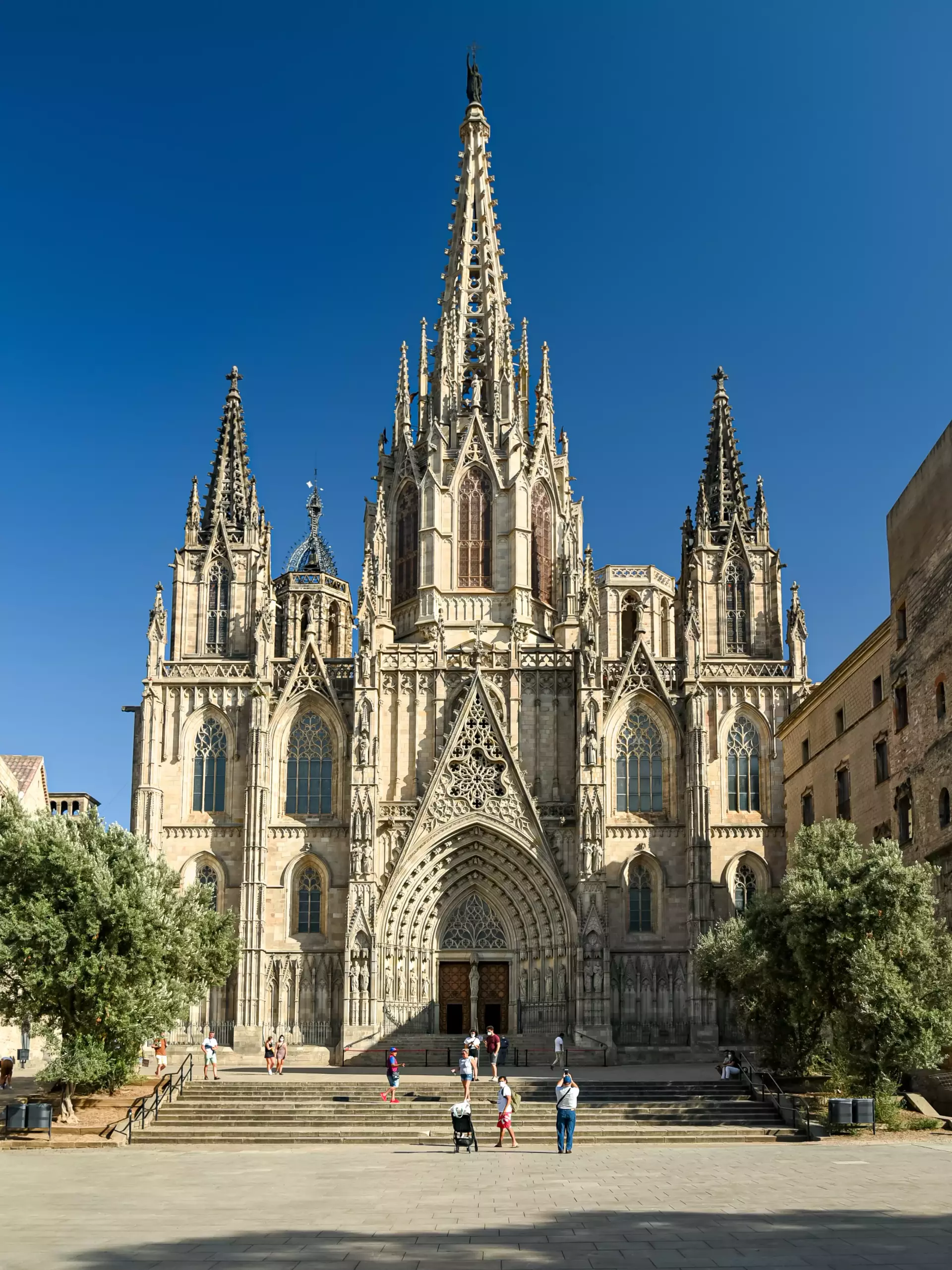
The main Gothic church in Barcelona. The cloister is maybe the most interesting part.
Connecting many of the major streets in the city, the Plaça is a central location and a hub of activity. It is a favourite meeting spot for locals and a transit hub for the tourist buses. There are many fountains, statues and gardens around the plaza, and a number of benches to just sit and take it all in.
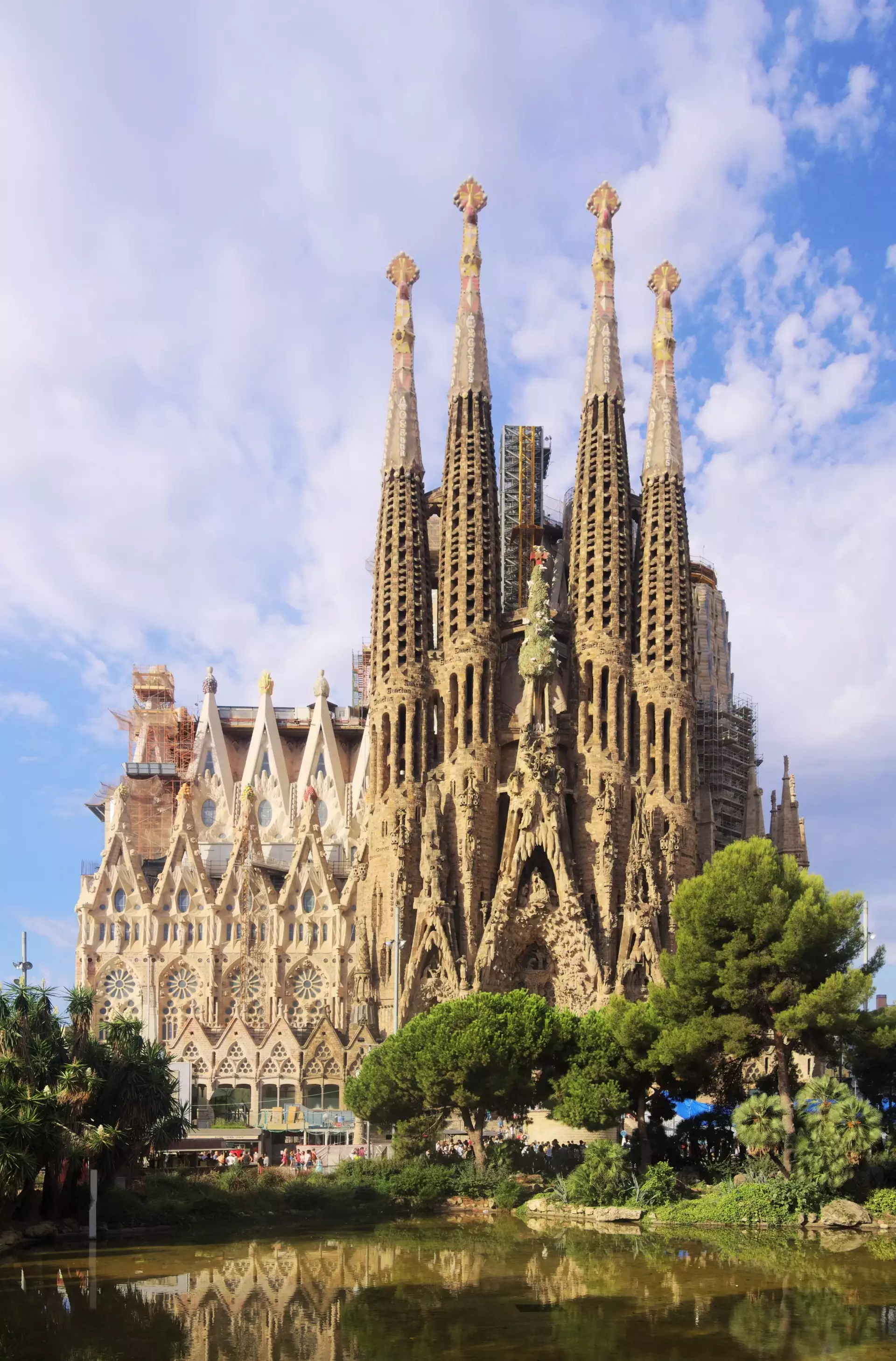
Barcelona's most popular and famous attraction, the Sagrada Família is a testament to Antonio Gaudi's modernist style and unlike any other church in the world. The texture and detail on the façades are intricate and incorporate forms seen in nature as much of Gaudi's work does. The inside is huge — it's estimated that it can hold 13,000 people — with vaulted ceilings and columns designed to be reminiscent of trees. The church is still under construction, but the central nave, apse and crypt are open. Seeing the Sagrada Família at night with lights on is impressive — this is the time when you understand why people say that it is built of bones.