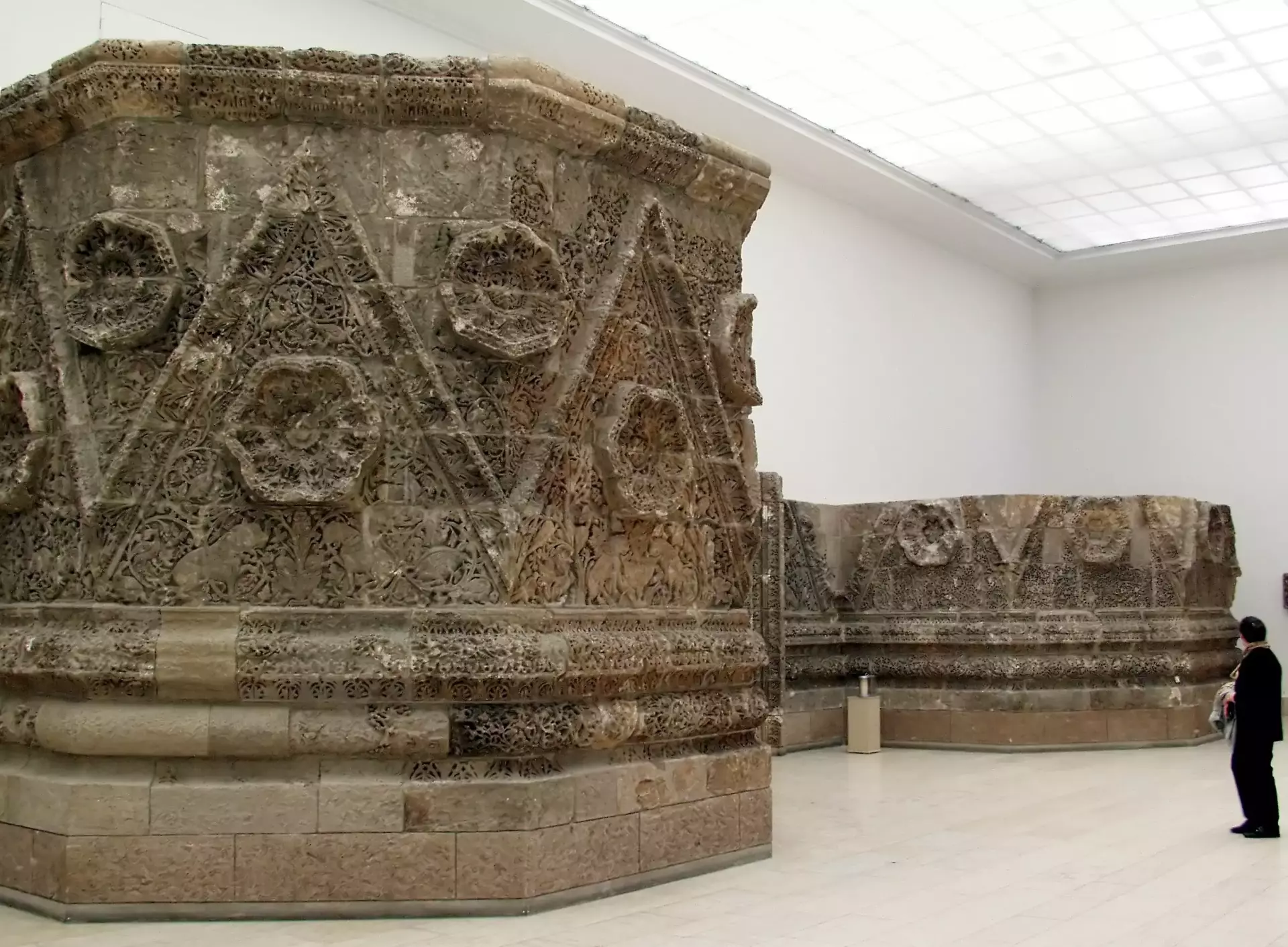
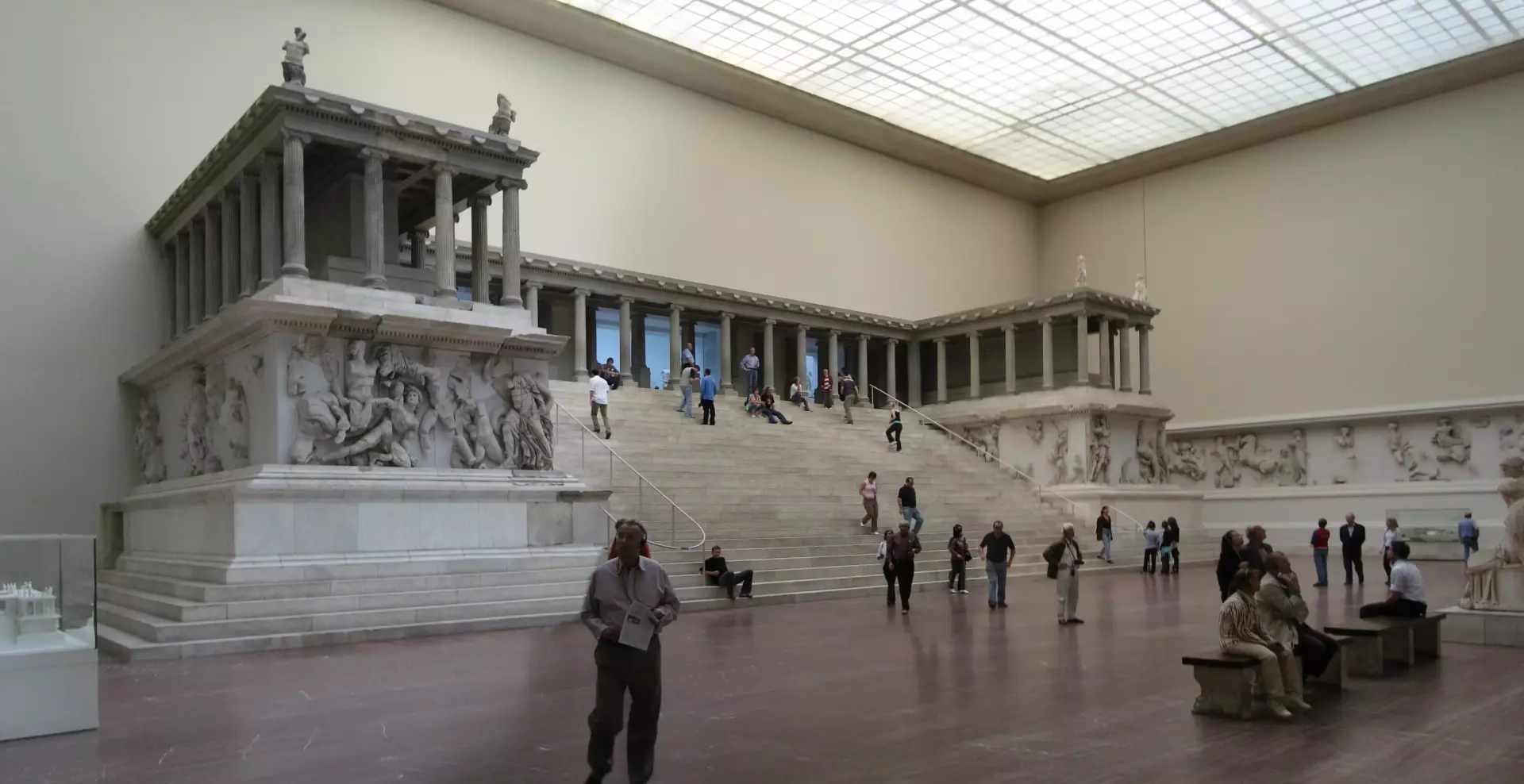
The Pergamon Museum stands at the end of a long chapter of collecting and discovery on Berlin’s Museum Island. Built to showcase major archaeological finds from the 18th and 19th centuries, it brings together three vast collections under one roof: the Collection of Classical Antiquities, the Museum of Near Eastern Antiquities, and the Museum of Islamic Art.
The museum’s most famous space is the Pergamonsaal, home to the Pergamon Altar from 165 BC, originally part of a grand complex in the ancient city of Pergamon in Asia Minor. Rising to the height of three stories, the altar is striking for both its scale and its precise craftsmanship. A sweeping frieze shows gods locked in battle with giants, its fine details highlighted by the room’s uniform stone-colored setting.
Facing the staircase, a small model on the left maps the original layout of the frieze panels on the altar. On the right, a 1:300 scale model of the ancient city of Pergamon offers a wider view of the world that produced the monument.
Another highlight is the monumental Market Gate of Miletus, a towering facade from a Roman marketplace. Recently restored, it showcases the museum’s role in preserving and presenting large-scale architectural pieces from antiquity.
On the first Sunday of each month, many Berlin museums waive entry fees; advance reservations are sometimes required. Details are available through Museums Sonntag Booking. Since 2018, the experience has expanded with a vast 360° panorama of Pergamon in a separate building, included with the Pergamon-only ticket.
Source - https://en.wikipedia.org/wiki/Pergamon_Museum
This abandoned amusement park with its iconic large Ferris wheel opened in the German Democratic Republic in 1969. After its closing in 2002 the rotting theme park and its apocalyptic atmosphere became a target of international media coverage, amongst others by the New York Times. In 2016 it was announced that the venue will be restored and reopened as an art and culture park.
This heritage-protected 120-m-long pedestrian tunnel below the river Spree was the first ferro-concrete tunnel in Germany that has been built using pneumatic caissons. Two beaches can be accessed via the tunnel which are not far from its south entrance.
A domed church at Bebelplatz/Unter den Linden, the oldest (mid-18th century) and one of the biggest Catholic churches in Berlin. Interior was redesigned in a modern style in the 1950s, but there are still many treasure chambers in the basement.
It was a museum of applied arts and a listed historical monument since 1966, and it is now a well-known Berlin exhibition hall.
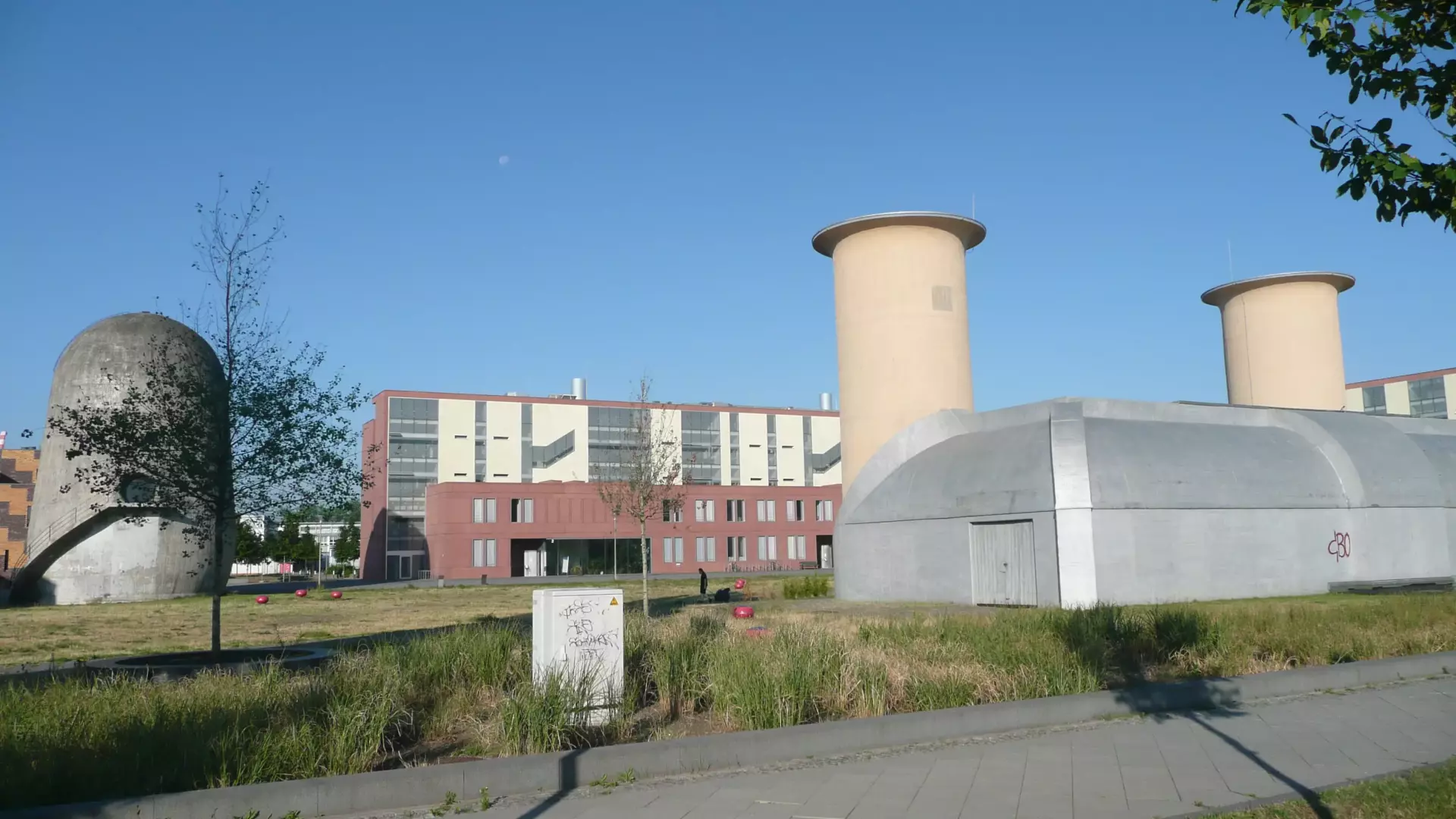
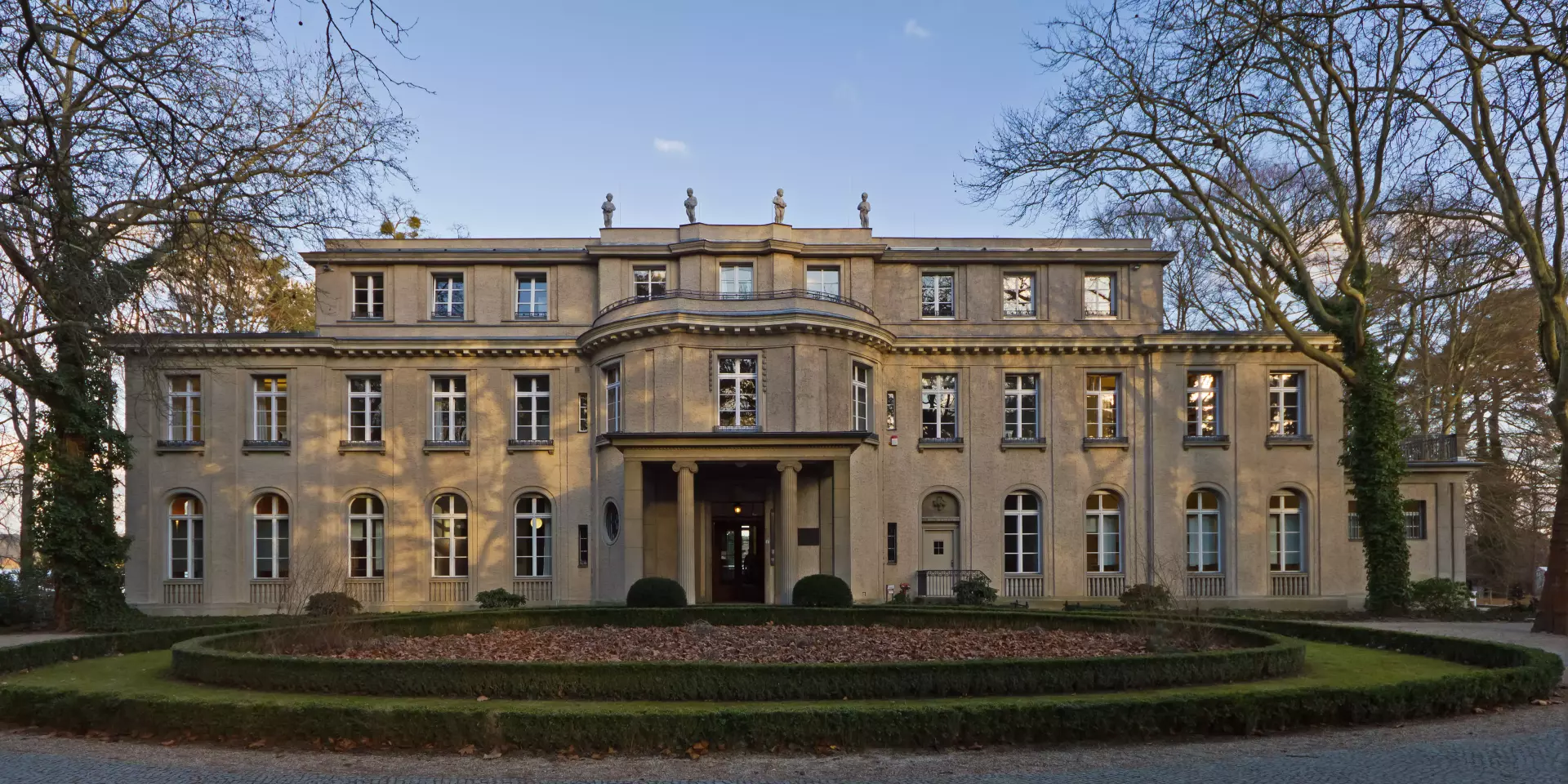
From 1941, 12,000 tons of concrete in a 15-m-high and 20-m-diameter cylinder were built to test the load-bearing capacity of the Berlin soils (turns out glacial sands are no good basis for gargantuan architecture) for Albert Speer's Germania buildings. Too massive for later blasting, this is one of the more bizarre remains of the Third Reich.
The longest stretch of the Berlin Wall still in existence, painted by artists in 1991 and restored in 2009, after years of decay. At Mühlenstraße, next to the river Spree. The murals are painted on the east side of the wall after the fall of Communism; so they are not from the Cold War, during which murals could only be painted on the west side. Make sure not to miss the famous mural of a car seemingly crashing through the wall with Leonid Brezhnev and Erich Honecker kissing above it. It is actually on the back side of the gallery (it is facing away from the street.) It is just inside the entrance of the Eastern Comfort Hostel, near the east end of the gallery.
This chapel was built on the site of a church built in 1894 which sat on the "death strip" and was thus blown up by the GDR authorities in 1985. The chapel is the site of occasional memorial services for victims of the wall.
One of the most authentic and oldest villages (1247) in the outskirts of Berlin, it looks the same way it did some hundred years ago. Take S-Bahn 1 to Waidmannslust and then bus 222 to Alt-Lübars.
The main street of former East Berlin. It is a big avenue, featuring neoclassical East German buildings, fountains and lakes.
The largest zoo in the world, both in terms of number of species (1500) and animal population (14,000). It is especially famous for its pandas. The Elephant Gate (Budapester Straße), one of the two entrances and next to the Aquarium, is a traditional photo stop for most visitors because of the architecture.
150-200 m along the Wiener Straße (bypassing the fire house and the public swimming pool) from U-Bahn Görlitzer Bahnhof, the park is famous for the Turkish families barbecuing on summer weekends, failed contemporary art and relaxed atmosphere of students. It does have a reputation of being full of pickpockets and drug dealers though and the police makes regular visits to this place to check on the situation.
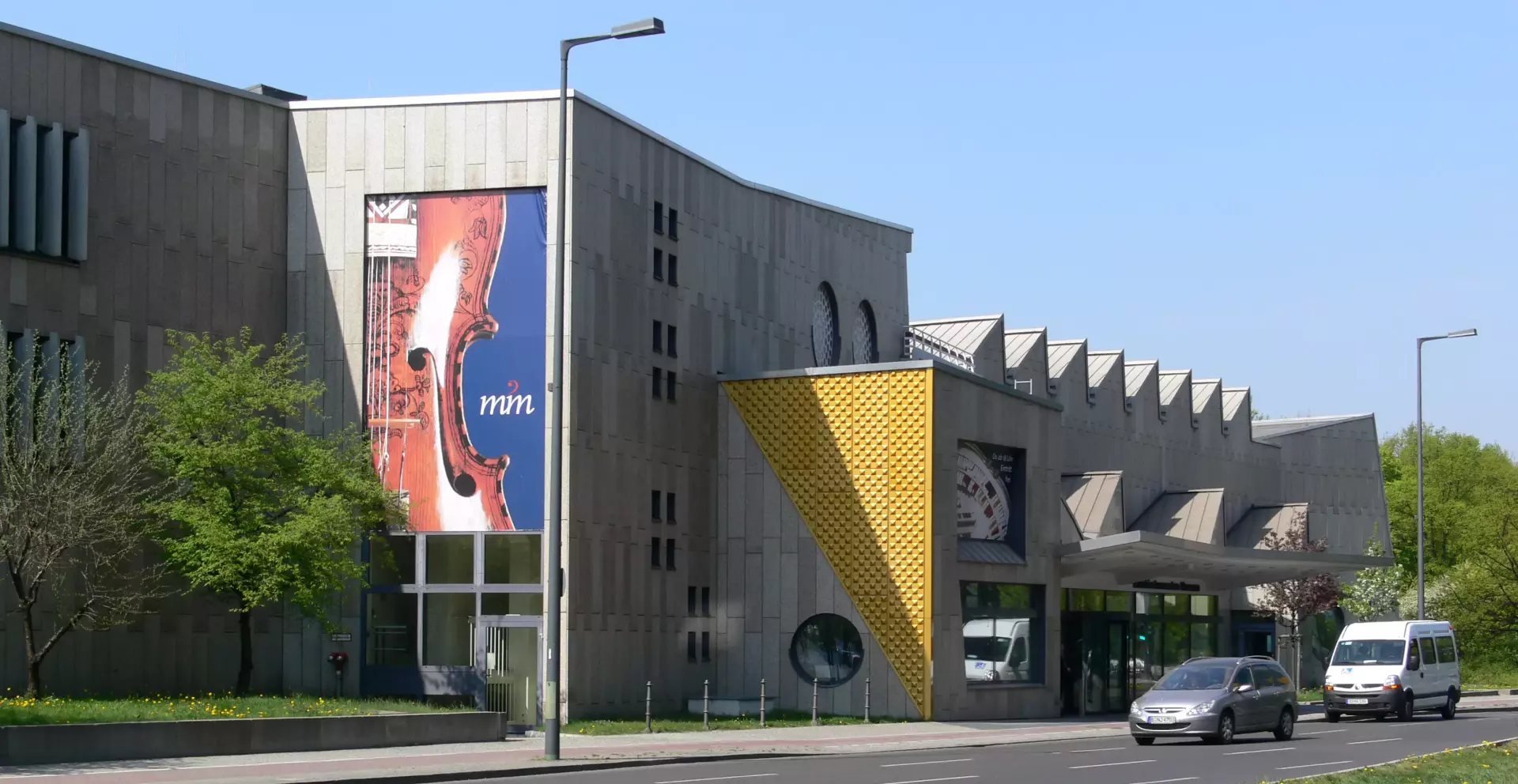
Germany's national centre for contemporary non-European art. The house is a leading centre for the contemporary arts and a venue for projects breaking through artistic boundaries. This architectural landmark was an American contribution to the international building exhibition INTERBAU 1957 as an embodiment of the free exchange of ideas. Colloquially called Schwangere Auster (Pregnant Oyster).
The large square in front of the Brandenburg Gate contains the French and American embassies, the rebuilt Hotel Adlon, and the new building of the Academy of Arts.
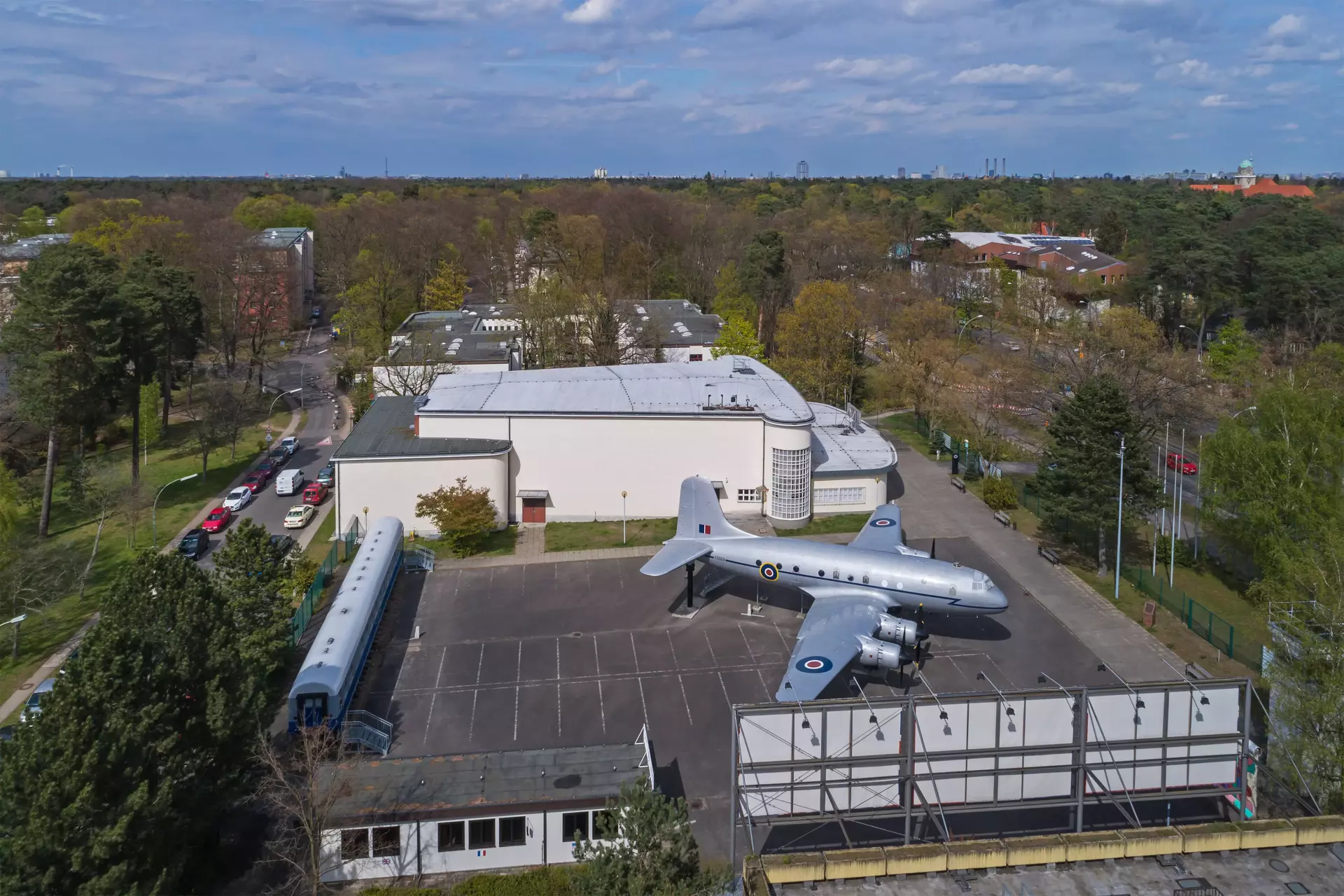
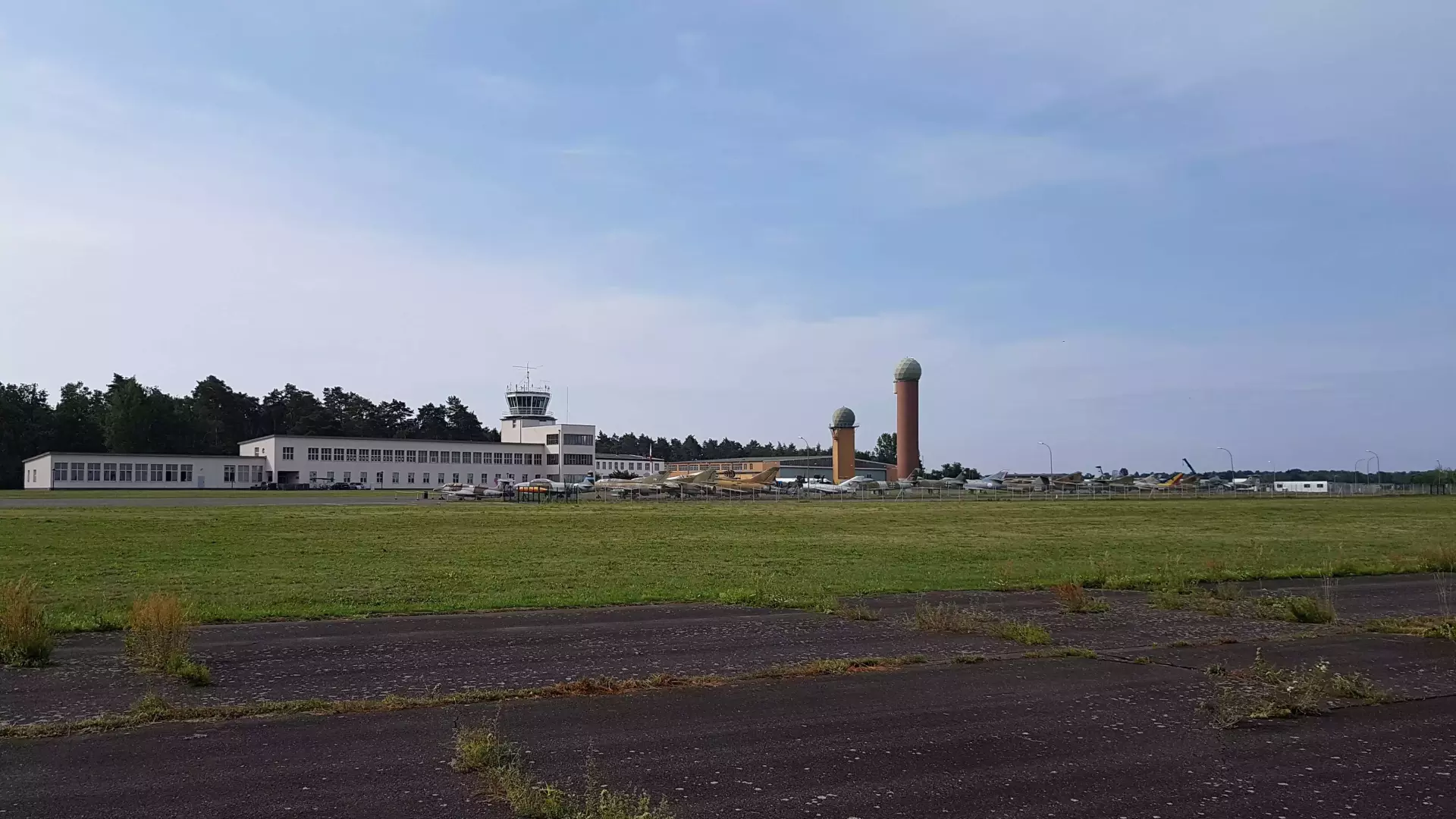
At a former Luftwaffe and Royal Air Force (RAF) airfield, RAF Gatow. The museum's focus is on military history, particularly the history of the Luftwaffe of the Bundeswehr, with a collection of more than 200,000 items, including 155 aeroplanes, 5,000 uniforms and 30,000 books. There are also displays (including aeroplanes) on the history of the airfield when it was used by the RAF. Aircraft include reproductions of Otto Lilienthal's gliders, of World War I planes such as the Fokker E.III, and World War II planes such as the Bf 109 and Me-262, as well as at least one aircraft of every type ever to serve in the air forces of East and West Germany. Most of those postwar aircraft are stored outside on the tarmac and runways, however, and many are in bad condition. There are long term restoration projects, including a Focke-Wulf Fw 190. RAF Gatow is notable as the "missing third airport" of West Berlin. Each sector used to have its own airport; the French sector had Tegel, the American sector had Tempelhof and the British had Gatow. However, RAF Gatow never saw much traffic of any kind, was more kept as a political statement than for transportation value, and thus was shut down after reunification. Tempelhof, after having been shut down for civilian traffic from 1975 to 1981, closed for all flights in 2008, while Tegel shut down in November 2020.