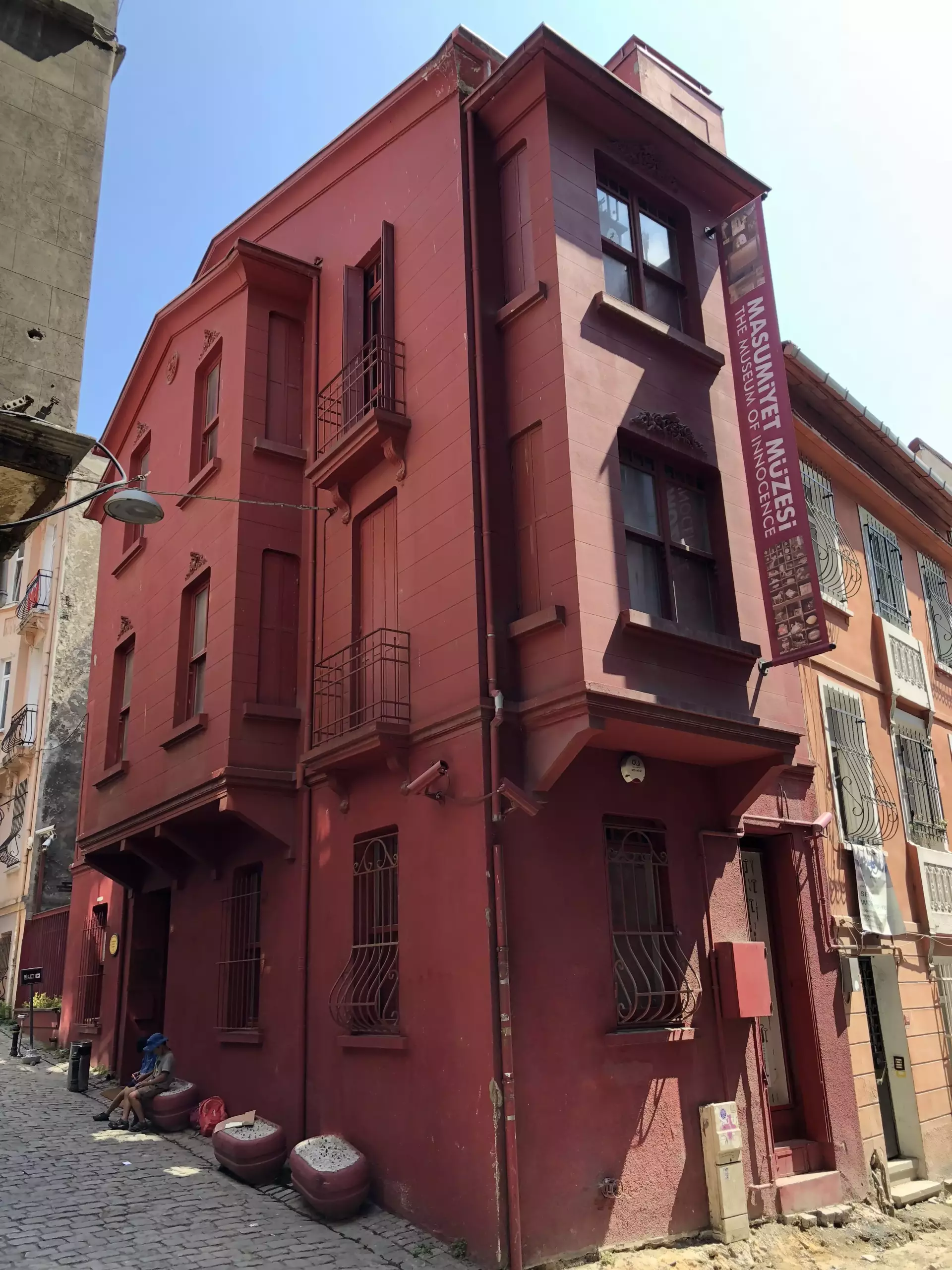
The Museum of Innocence opened its doors in 2012 in Istanbul’s lively Beyoğlu district. This museum was established by Turkish Nobel Prize winner Orhan Pamuk, who also wrote a novel that shares the same name. The museum brings the story of the book to life, blending literature with real-life objects and memories.
Inside, visitors discover thousands of everyday items from the late 1970s to early 1980s. Each object holds a story, illustrating not only the romance between the two characters from Pamuk’s novel but also daily life and culture in Istanbul during those years. The displays include clothing, photographs, trinkets, and even ticket stubs, creating a sense of nostalgia for an era gone by.
The museum is designed like a time capsule, with each room capturing a chapter from the novel and a moment in the city’s history. Every detail is carefully arranged to mirror the emotions and events described in Pamuk’s story, allowing visitors to experience both fiction and reality in a single space.
Source - https://en.wikipedia.org/wiki/The_Museum_of_Innocence_(museum)
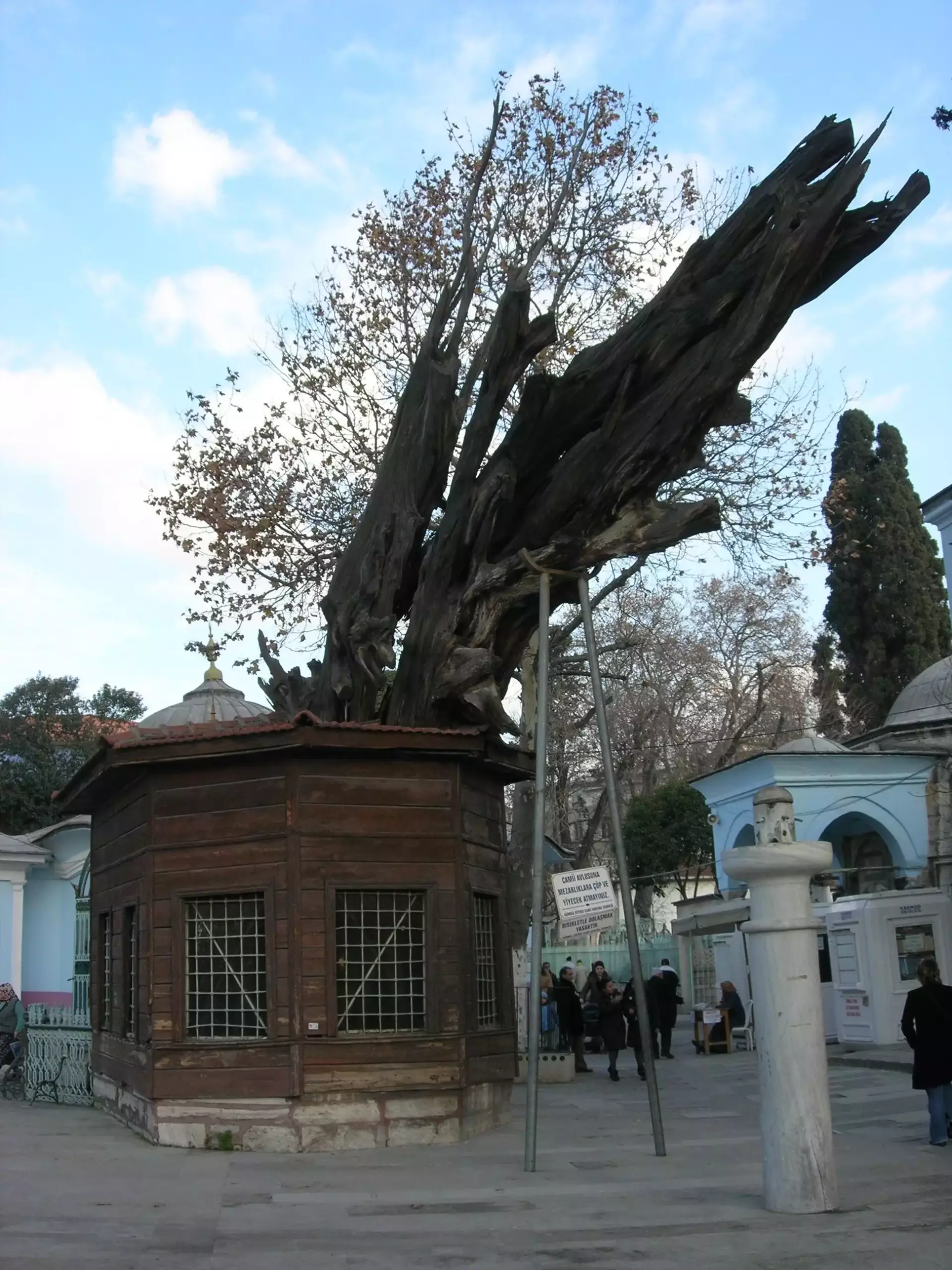
On top of a hill overlooking the Golden Horn, this is a magnificent mosque built by Sinan in the 1550s. It was centrepiece of a large külliye, a religious complex which included madrasas, a public kitchen and a hospital.. The small cemetery east has the mausoleums of Suleiman the Magnificent and of his wife Hurrem Sultan or Roxelana.
A neo-gothic Anglican cathedral which would not be out of place in northwestern Europe, the Crimean Memorial Church was built for the Protestant community of the city by Britain in the late 19th century. It was named in honour of the soldiers died in the Crimean War of 1856, fought against Russia by the allied Ottoman and British Empires. The congregation of the church today mostly consists of Anglican East Asians and Sri Lankans resident in Istanbul.
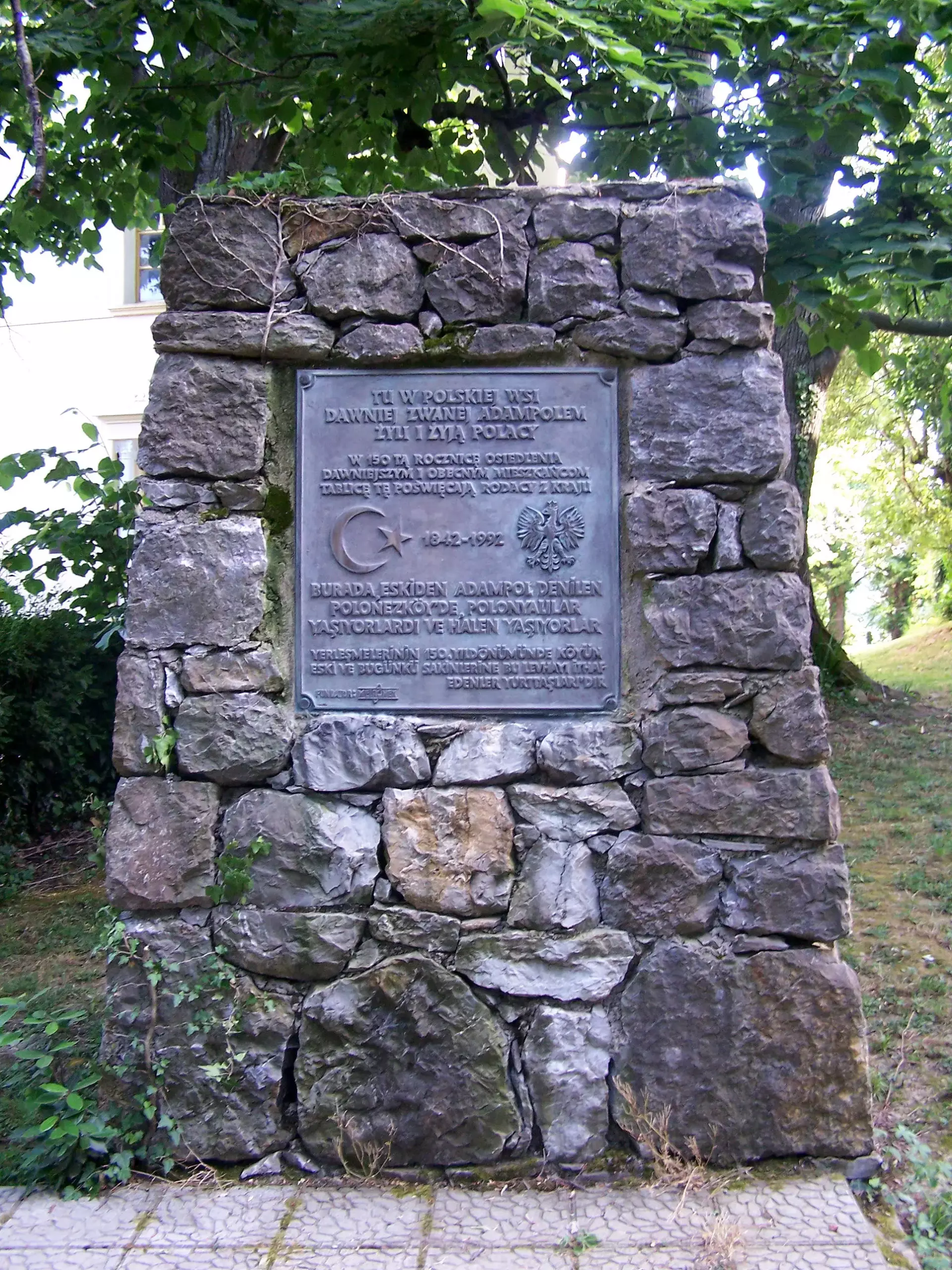
The "Polish village" was founded in 1842 by Polish settlers in the wake of the failed uprising against Russian Imperial rule, and reinforced by more settlers after every subsequent civil upheaval until Poland's independence in 1918. Most then returned, but several stayed on, adopting Turkish citizenship but maintaining their Polish language and culture. The village has houses in traditional Polish style, a 1914 little Catholic chapel, and the Church of Matka Boska Częstochowska. It's set in woodland (a nature park) and is a popular day-trip from the city. There's four restaurants and half a dozen small hotels, plus more of each in nearby Beykoz.
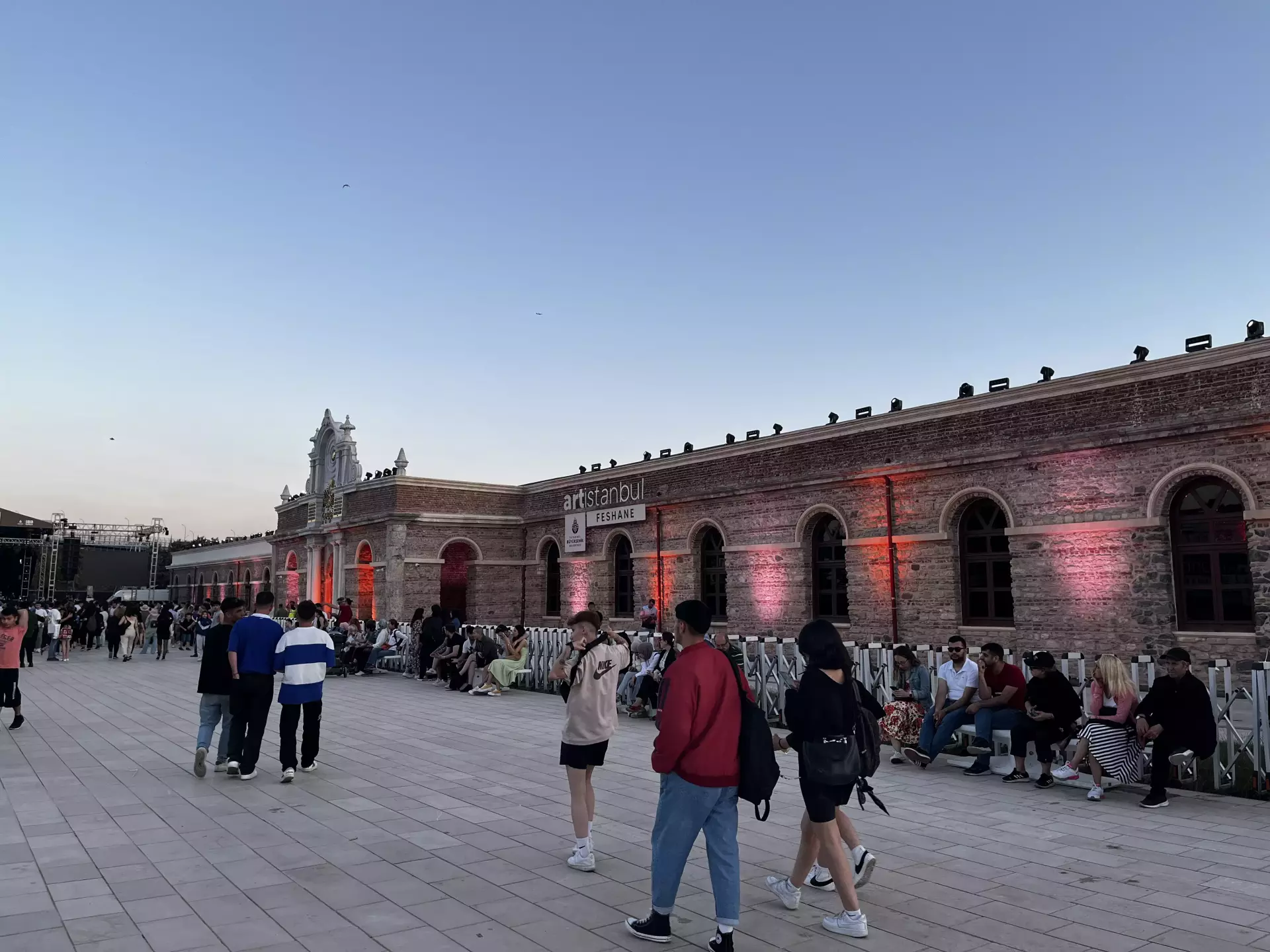
Feshane began as a factory producing fezzes (fes), the red hats made of felt adopted by the Ottomans in the early 19th century as a part of westernizing efforts in lieu of much more traditional turbans. However, the fez was scrapped in favour of western garments during Atatürk's reforms of the 1920s and 30s as it was thought to symbolize the old, decidedly oriental regime. A restoration in 1998 made it a cultural and exhibition center, and after another in 2023, it was reopened as a culture and art center under the name Artistanbul Feshane.
A ritual dancing hall of the mystical Mevlevi order, the followers of the teachings of Mewlānā Rumi. The quiet and peaceful garden is a welcome escape from the hustle and bustle of Beyoğlu. The oldest Mevlevi lodge in Istanbul, the convent was started in 1491, when the surrounding area was, hard to believe today but, pure wilderness beyond the city walls of Galata, although the current building dates back to 1855, as the older versions succumbed to repairs, rebuildings, and fires. However, the lodge was shut down in the early years of the republic (in 1925) along with all other 'reactionary' movements in Turkey, and the building has been serving as a museum dedicated to the Mevlevi order since 2010. Downstairs is a series of rooms dealing with the daily life of an average dervish, with informational signs in Turkish and English about the history of Islam and the Mevlevi order (also notice the original wooden pillars that support the building on this floor). On the upper floor is a dancing hall, a perfect example of 19th century Ottoman Baroque. Pre-Covid, this was where the sema whirling ceremonies were held every weekend evenings (admission by an extra ticket costing around 100 TL); check if they resumed. On the third floor is a display of various traditional Turkish/Islamic arts, including paper marbling (ebru), and calligraphy. After exiting the building, check out the small graveyard (or the "silent house" as the sign at its entrance says) on one side of the building, shaded by a number of hackberry trees, which Ottomans favoured to plant in the yards of mosques and graves to sign holiness. Here, the carved fez, or the basket of flowers in case of women, perched upon the highly detailed marble gravestone indicates the occupant's rank in the dervish hierarchy. At one corner of the necropolis is the grave of İbrahim Müteferrika, a converted Hungarian who was the first to start automated publishing in Ottoman Turkish in the 18th century, and served as the translator of Hungarian revolutionaries who sought asylum in Turkey, such as Kossuth, who stayed for a year in Kütahya, or Ferenc Rakoczi, who lived his last years in Tekirdağ.
Situated on the gentle hill overlooking the neighbourhood of Emirgan and the Bosphorus, Emirgan Park was for long the only place in the city where Istanbulites can admire the beauty of tulips. Having lost that distinction since the first decade of the 2000s as tulips are now everywhere, this is still a beautiful park with artificial ponds, small waterfalls, and impressive views of the Bosphorus. There are also cafes with open-air sections housed in pleasant former imperial hunting manors. Squirrels are there, too, in the middle of this metropolis of more than 15 million people, though you may have to look a bit deeper (or a bit upper on the branches!) to spot them.
It was built by the Genoese in the 14th century on the city walls of Galata, marking the highest point of their territory. Ride an elevator and take two flights of stairs to the top, then walk the parapet for a 360°-view of Istanbul, including the entire Sultanahmet peninsula: crowned by Topkapı Palace, the Blue Mosque and Hagia Sophia. A beautiful spot worthy of a lot of pictures.
One of the icons of the city is also called the Leander's Tower, on a Bosphorus islet off Salacak. The local myth ascribes its name to a princess, whose father wanted to protect her in this offshore tower from a prophecy that she would be killed by a snakebite on her birthday, but the snake found its way inside a basket of fruits — ironically a birthday present from her father — and you've probably already guessed the rest of the story. In actual timeline, it served as a defensive structure (there was a wall connecting it to the Asian mainland, and the Byzantines used to stretch a chain from here to the European mainland across the mouth of the Bosphorus to shut it to adversary shipping in times of conflict, but they didn't during the final Ottoman siege in 1453), as a customs and quarantine station, as a lighthouse, as a warehouse of various sorts of goods, and as a high-end restaurant before the last restoration finished in 2023 dedicated it as a museum. There is a light show viewable from the mainland every day at 21:00.
An attractive stairway mixing the Neo-Baroque and early Art Nouveau styles, climbing up from Bankalar St towards the Galata Tower. It was built in the 1870s by Abraham Salomon Camondo, who belonged to a prominent Ottoman-Venetian Jewish family of financiers and philanthropists.
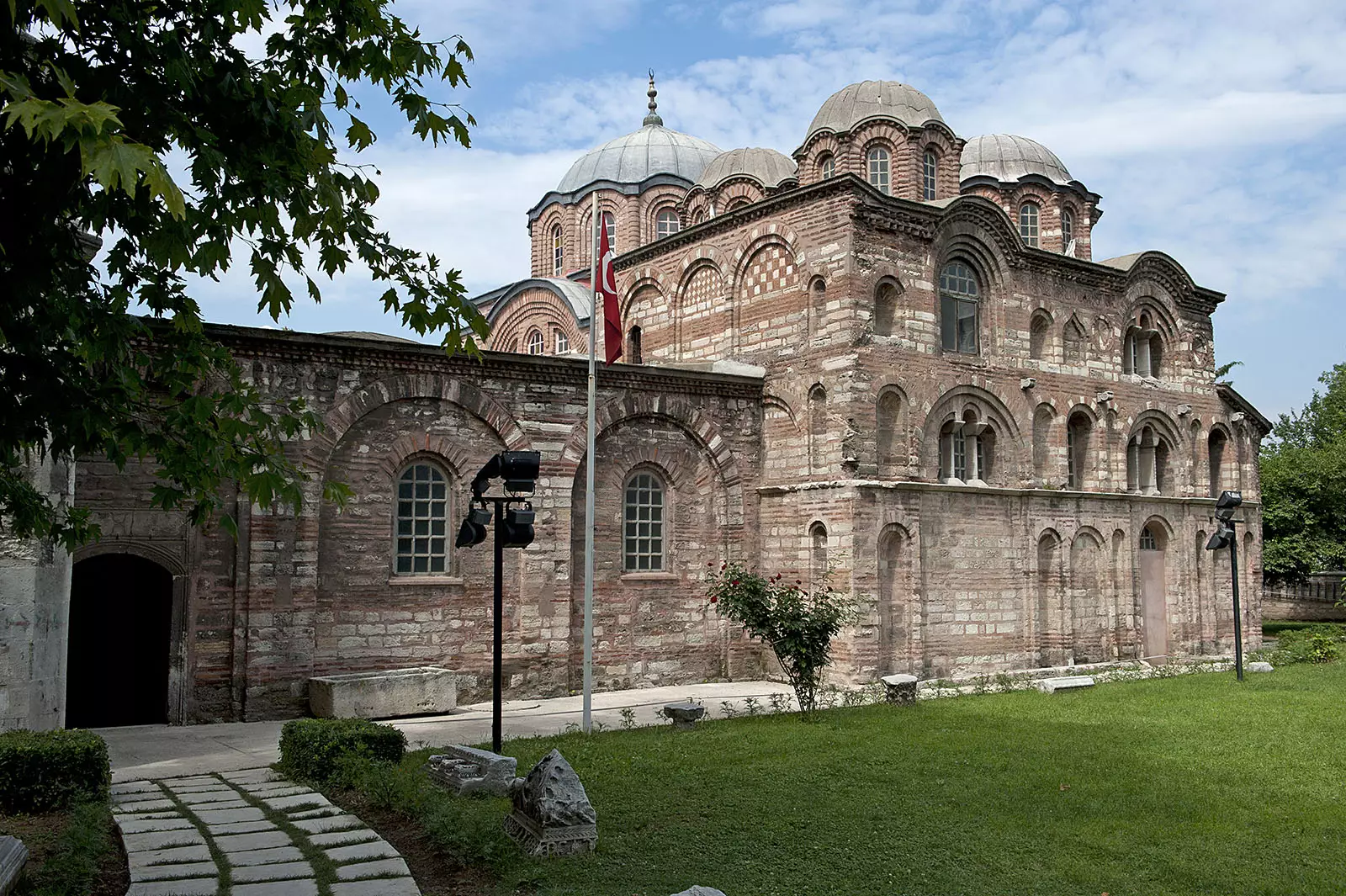
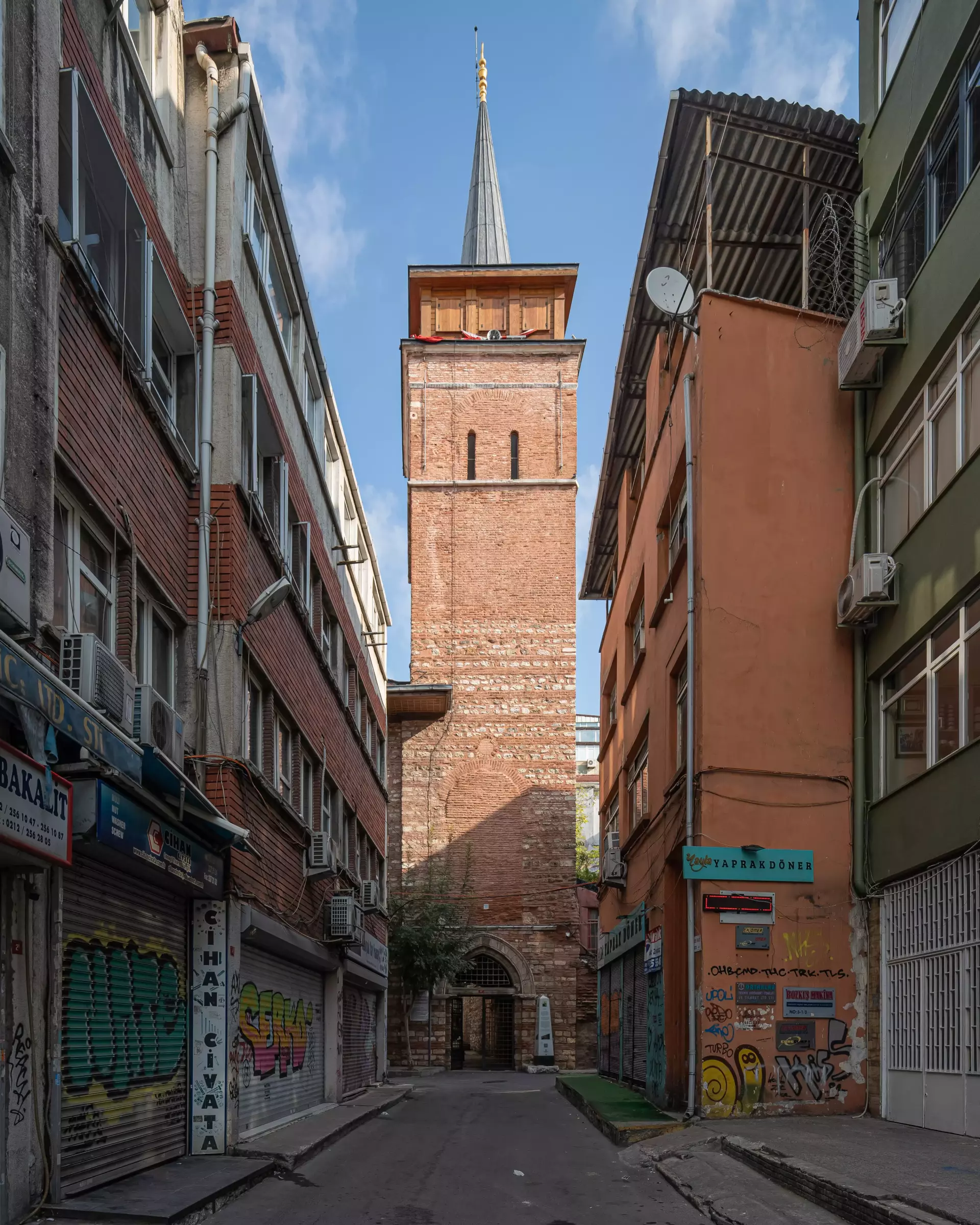
The Church of Theotokos Pammakaristos ("All-Blessed Mother of God") was built between the 11th and 12th centuries. The parekklesion or side-chapel was added maybe 1300, with rich mosaics. The main building became a mosque in 1591, named for Sultan Murad III's conquest (fetih, hence Fethiye) of Georgia and Azerbaijan: the interior was opened up, but the chapel was undisturbed and in modern times became a museum. In 2020 the entire building was proclaimed a mosque, and every scrap of Byzantine artistry was covered up, so now there's nothing worth seeing.
A village with an impressive citadel overlooking the Bosphorus and its mouth into the Black Sea. By land it's accessible only by a hairpinning road through the forest, with few buses. It's best reached by ferry from Eminönü (twice daily) or Sariyer (frequent). In the village, a road is signposted up to the hilltop Yoros citadel (a little more than 1 km, 20 min on foot, free admission). There's a pleasant area with cafés by the ferry pier; the place gets crowded at weekends during summer. Nasty big dogs stalk the citadel area at night. See Istanbul#The_classic_Bosphorus_cruise.
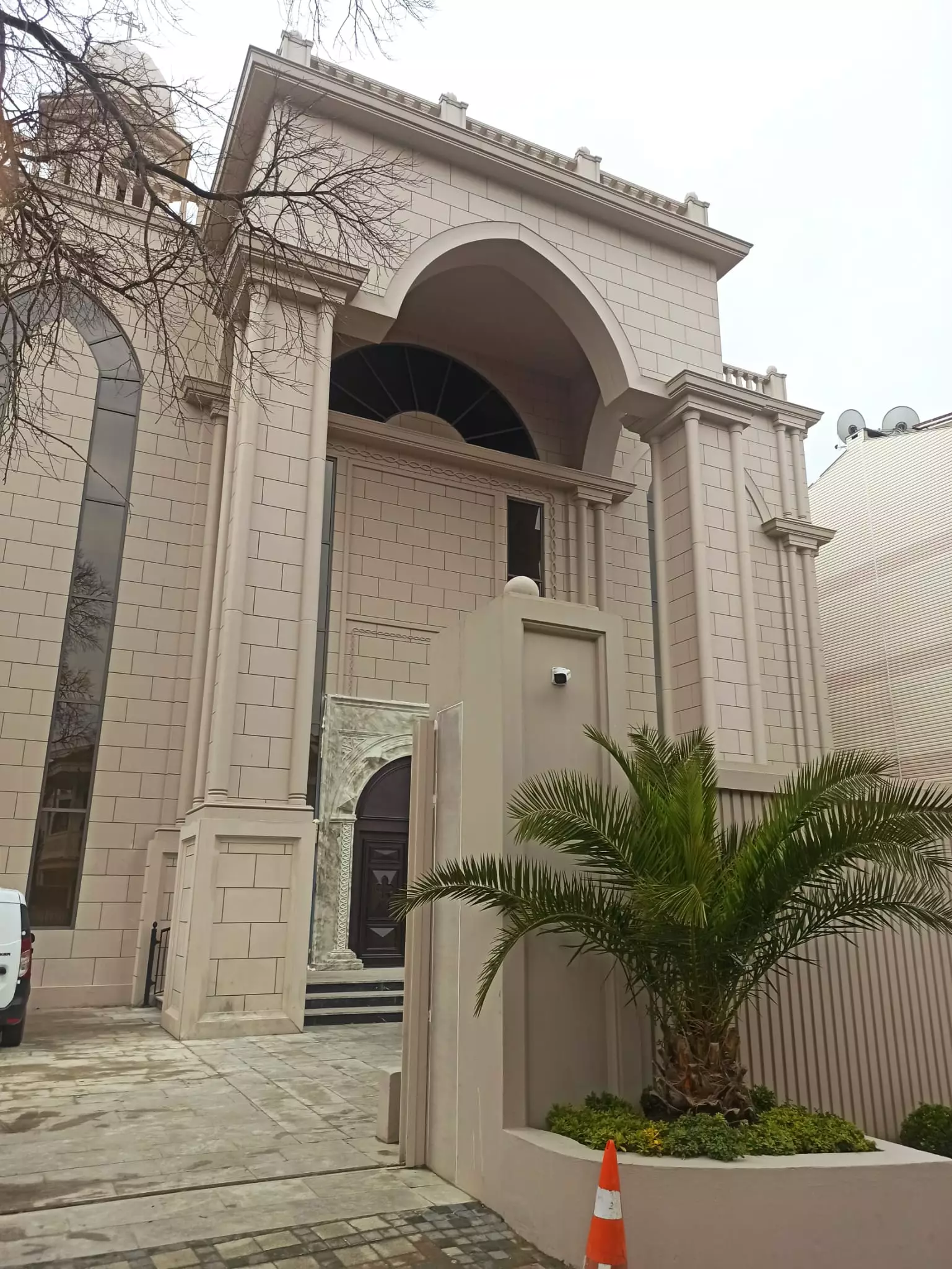
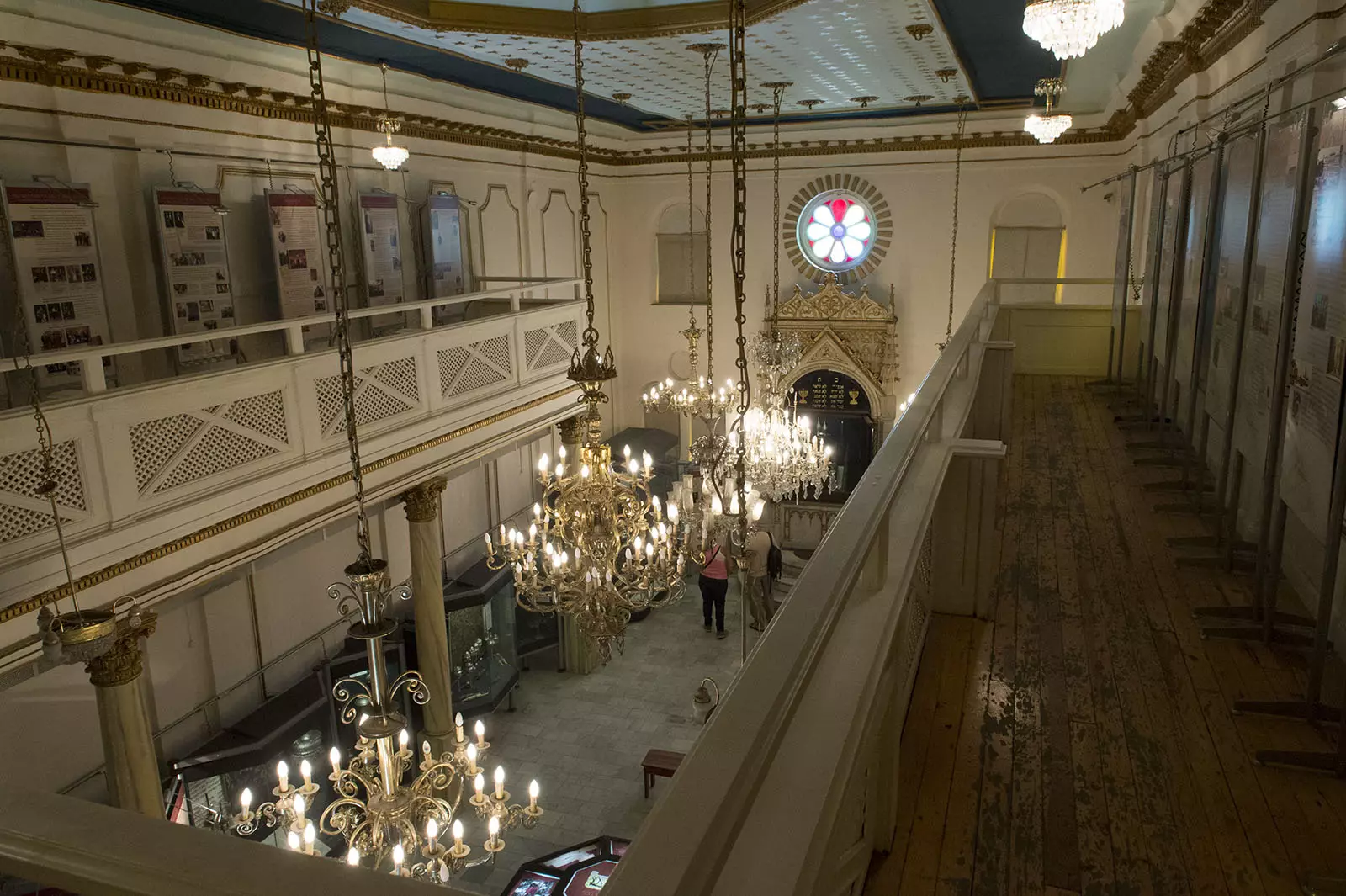
This attractive neighbourhood was home to a large Christian and Jewish population until some decades ago and still has a number of sights like two synagogues, some churches among which the Armenian Surp Krikor Lusavoriç, dozens of wooden houses and a Jewish and Christian cemetery.
A historic house museum dedicated to the life of Adam Mickiewicz, renowned Polish poet. This is where he lived while in Turkey from September 1855 to 26 November 1855, when he died of illness.
Although not at the size of Hagia Sophia, this is the largest active church in Turkey. It’s directly on Istiklal St, but somewhat hidden from view by its yard portal. Catholic Masses in Italian, Turkish, and English (in different days of the week).
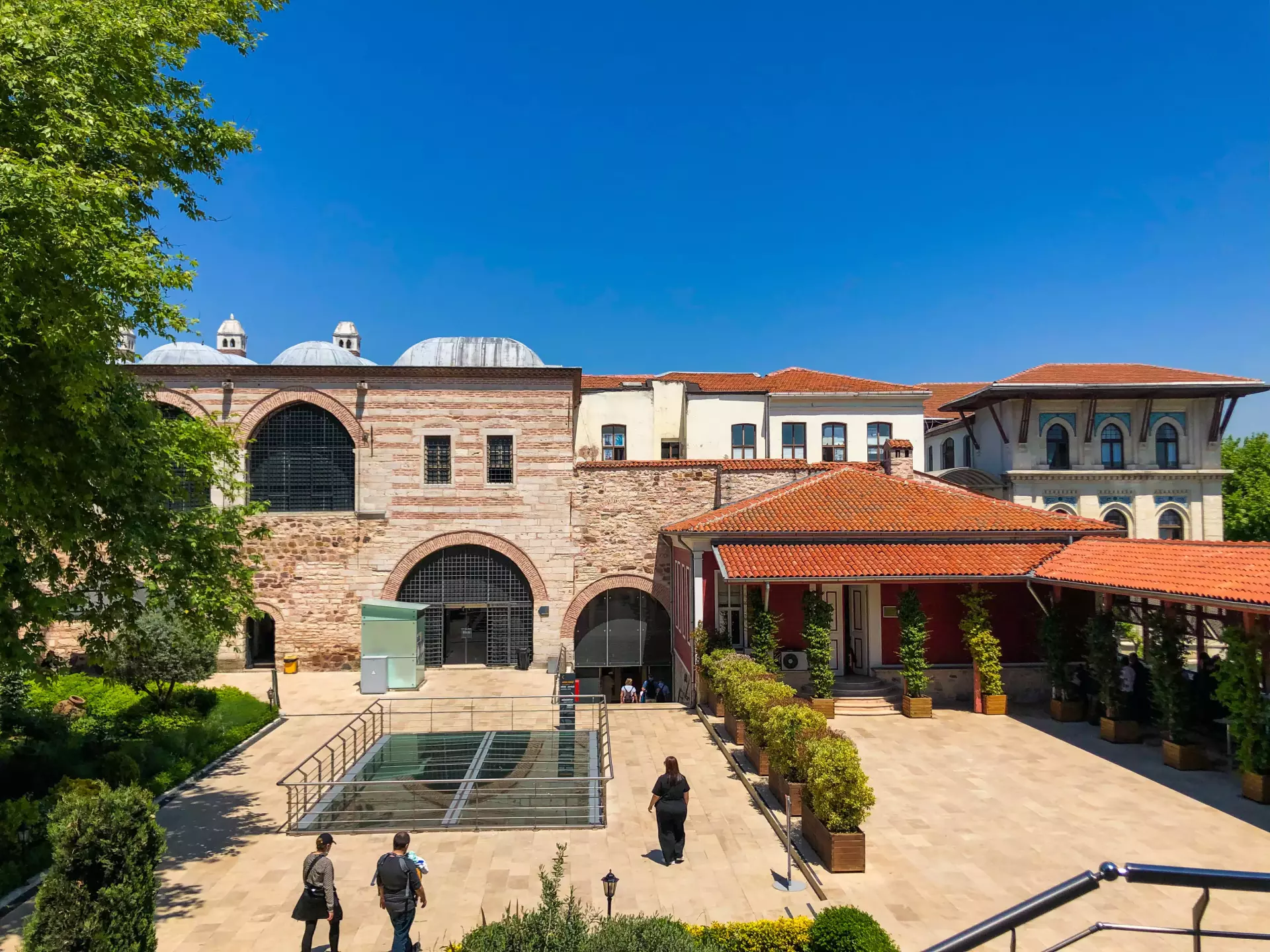
Among the exhibition of this museum are five thousand pieces from the Ottoman era through WWII, with the most prominent piece possibly being the huge chain that the Byzantines stretched across the mouth of the Golden Horn to keep out the Sultan's navy in 1453 during the siege of Constantinople. In the yard of the museum, the Janissary Band (Mehter Takımı), the world’s oldest military band gives concerts of march music in traditional uniforms each afternoon, at 15:00.
This is a circular indoor space enclosed by a 3D depiction of the Ottomans breaching the Walls of Constantinople on 29 May 1453, with sound effects. It's over-priced, unhistorical and tourist-trappy.
It was built in 2001 and is the first miniature park in Istanbul (the world's largest miniature park in respect to its model area). The park hosts icons of many cultures and civilizations. Models vary from the Hagia Sophia to Galata Tower, from Safranbolu Houses to the Sumela Monastery in Trabzon, from Qubbat As-Sakhrah to the ruins of Mount Nemrut. In addition, some works that have not survived into the present, such as the Temple of Artemis, the Halicarnassus Mausoleum and Ajyad Castle, were recreated. All former Ottoman Empire in one place.
A nice, organized museum with contemporary installations. It may be seen as overpriced given its small size. It also has a simple cafe.