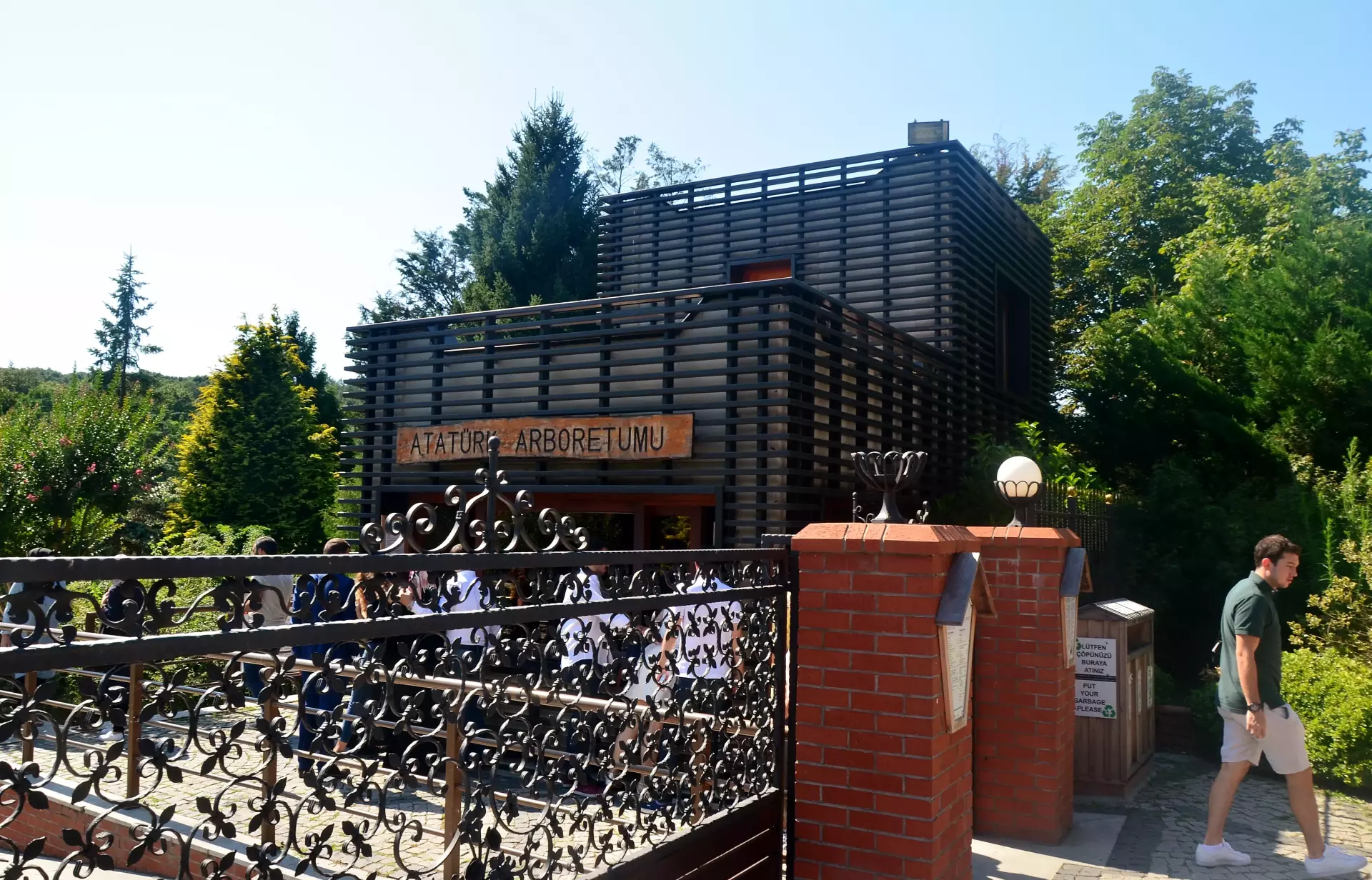
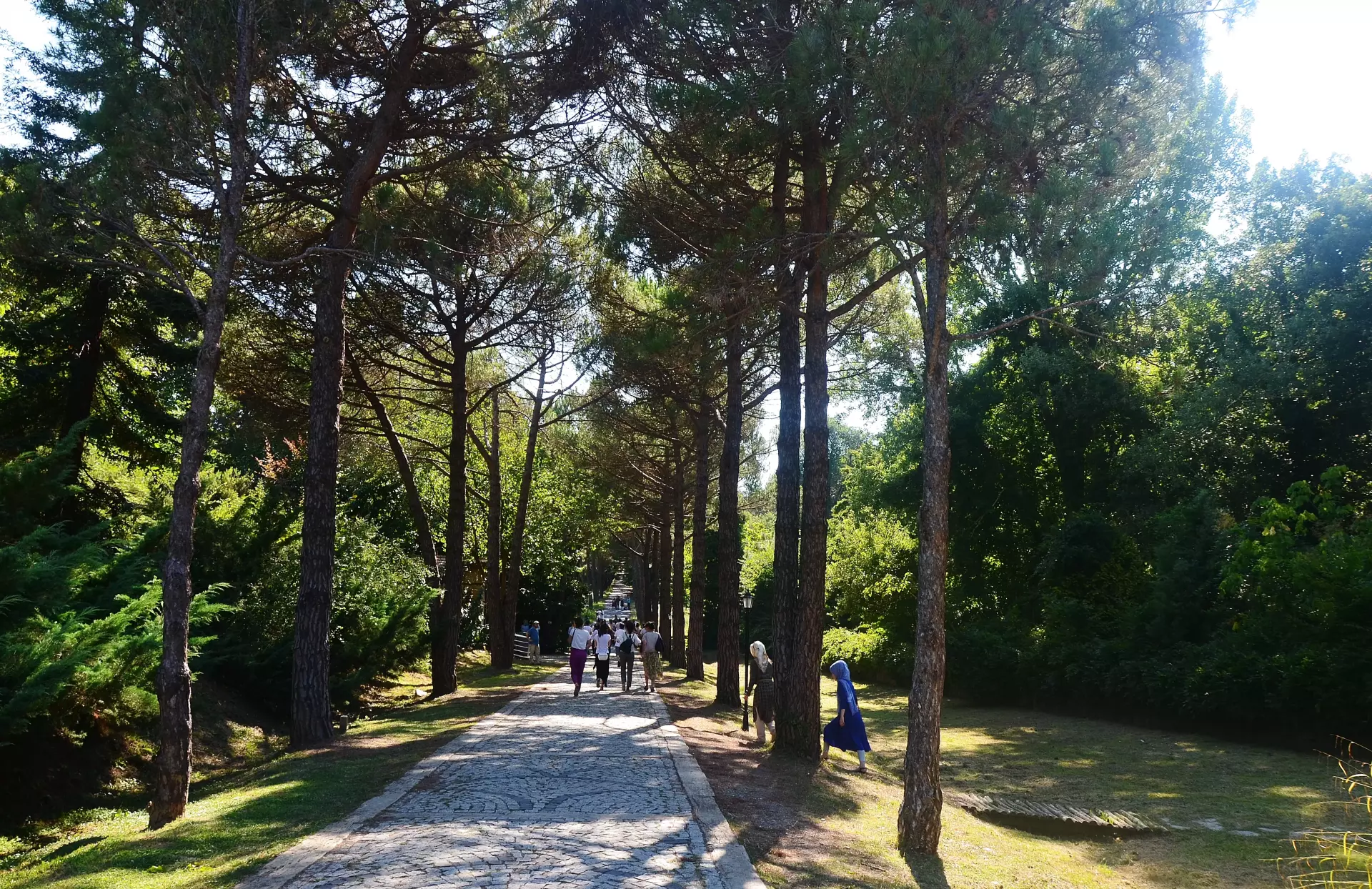
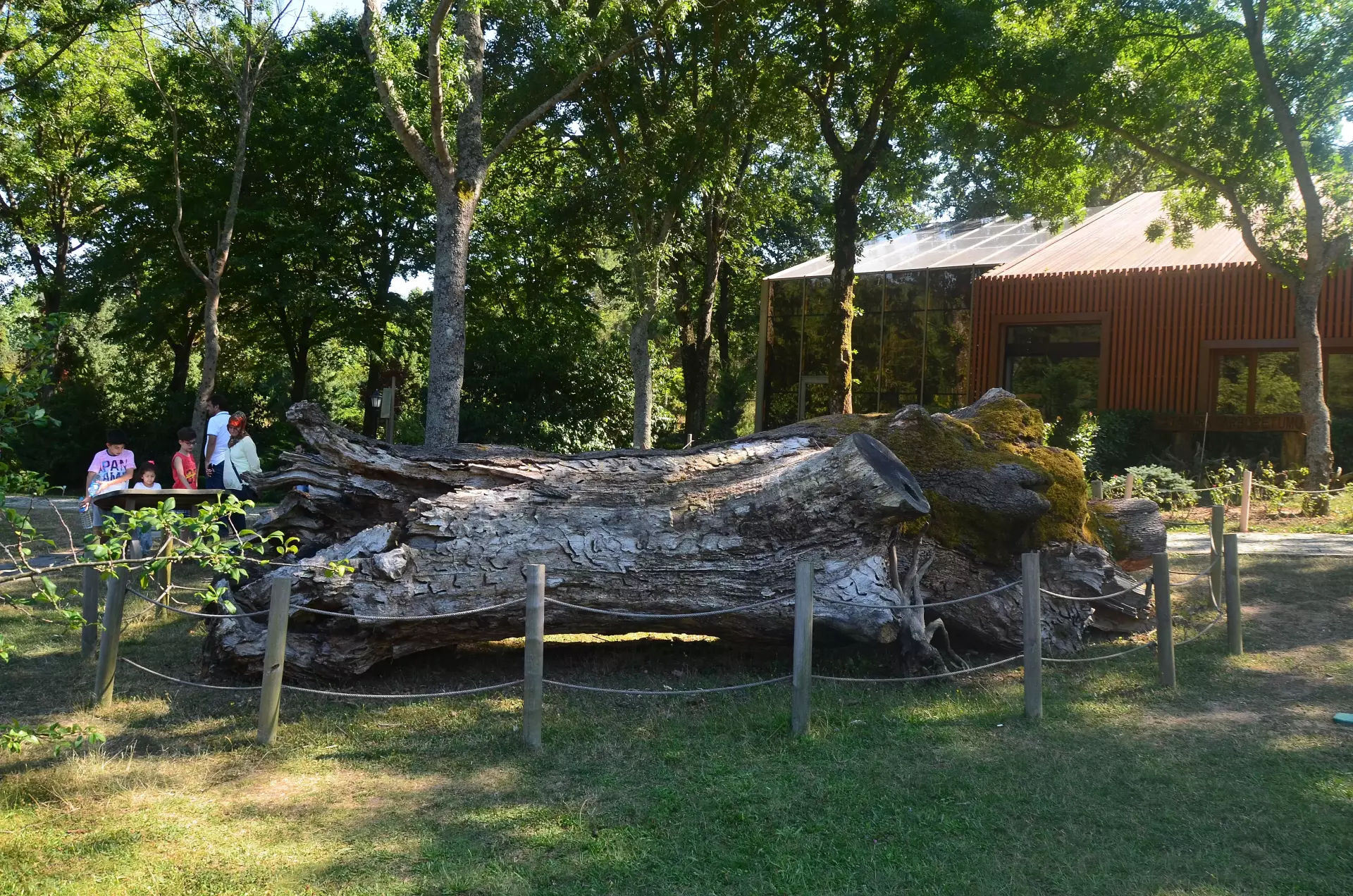
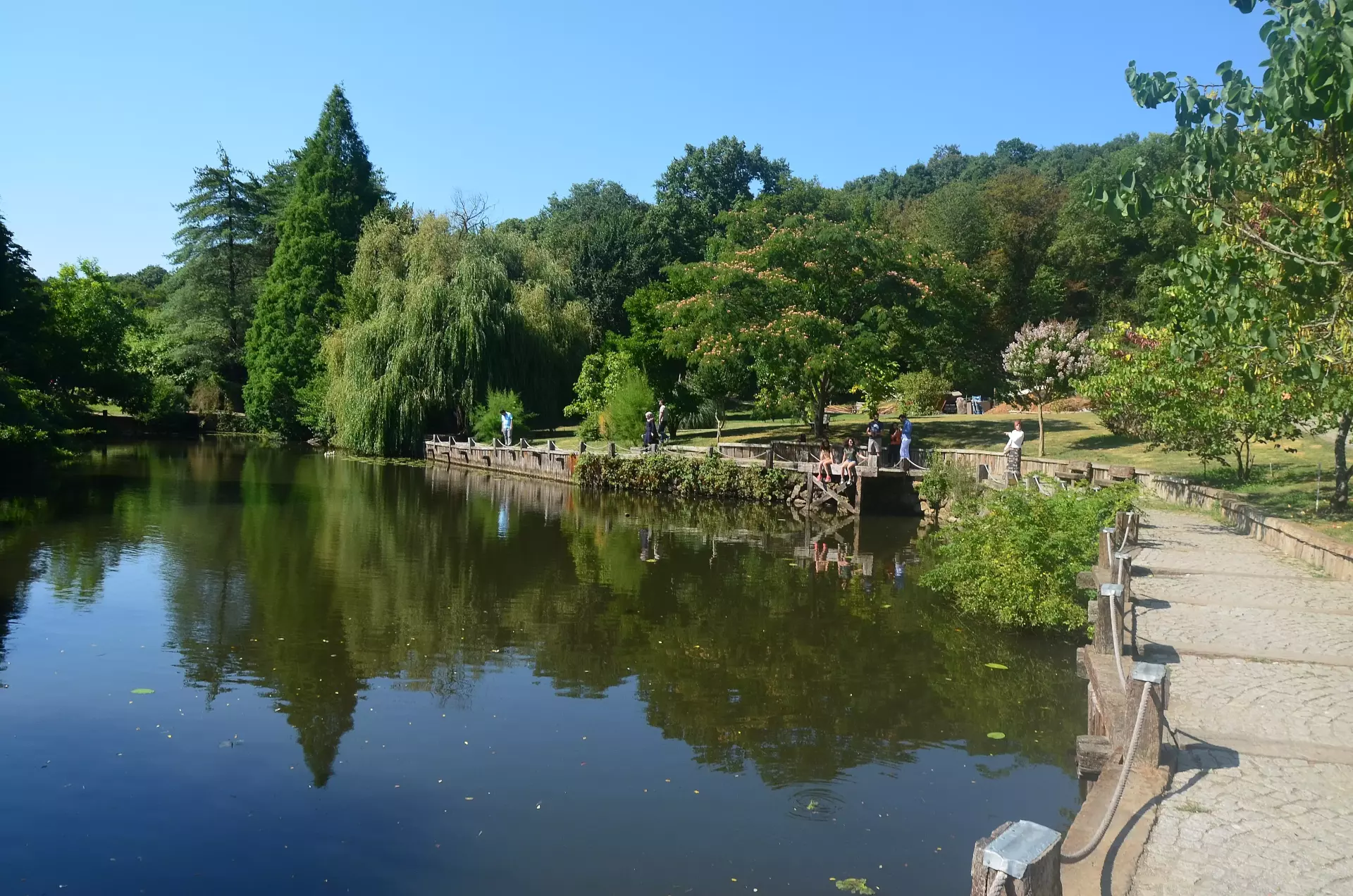
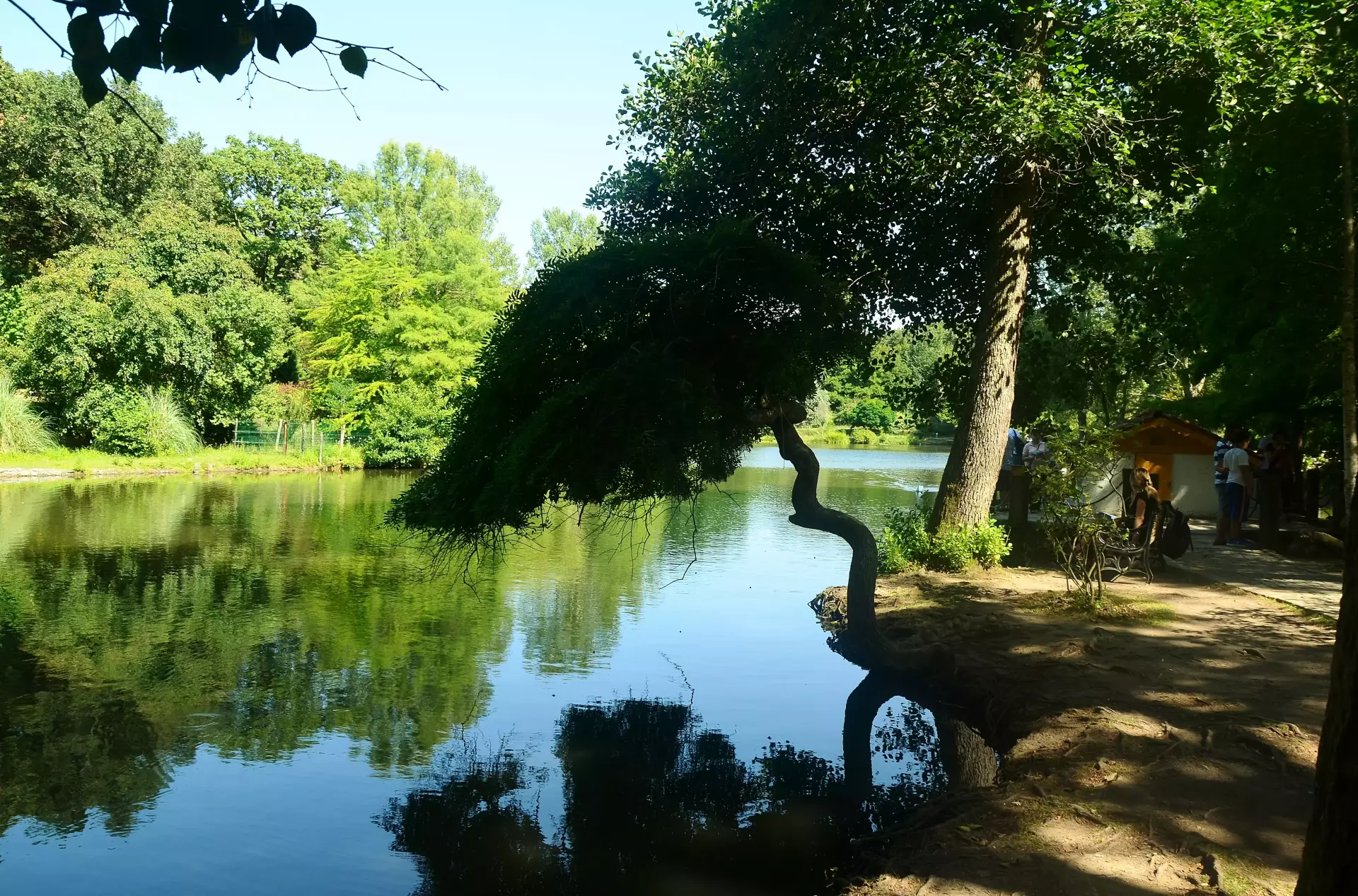
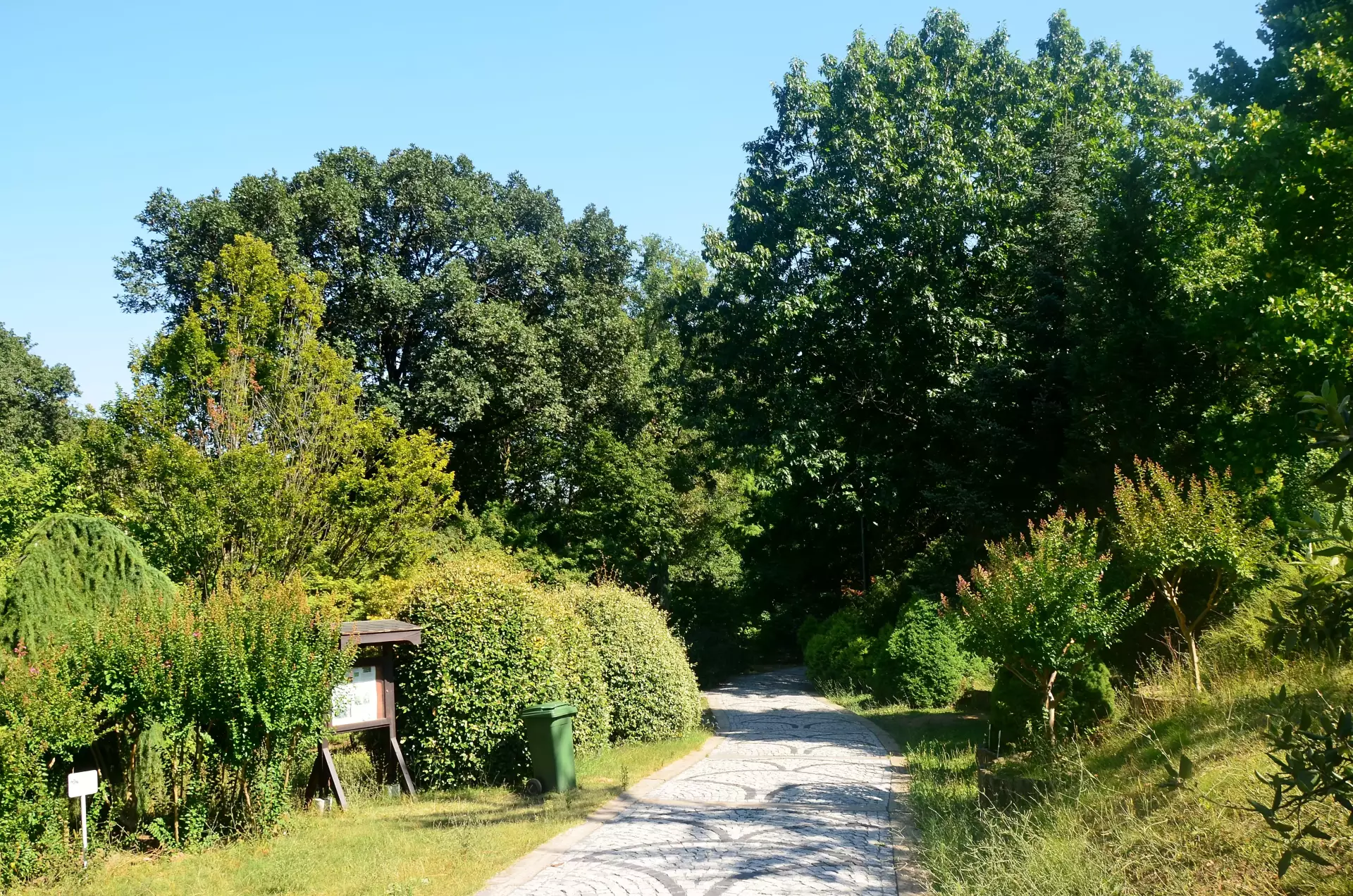
The journey to Atatürk Arboretum begins in Bahçeköy village, following a scenic road through Belgrad Forest towards Kemerburgaz. After about ten minutes, the arboretum appears, embraced by a lush natural oak forest. This tranquil area showcases a diverse collection of trees, many of which are not native to the region. As the seasons change, especially in late autumn, the landscape transforms into a colorful tapestry of crimson, gold, and deep purple leaves.
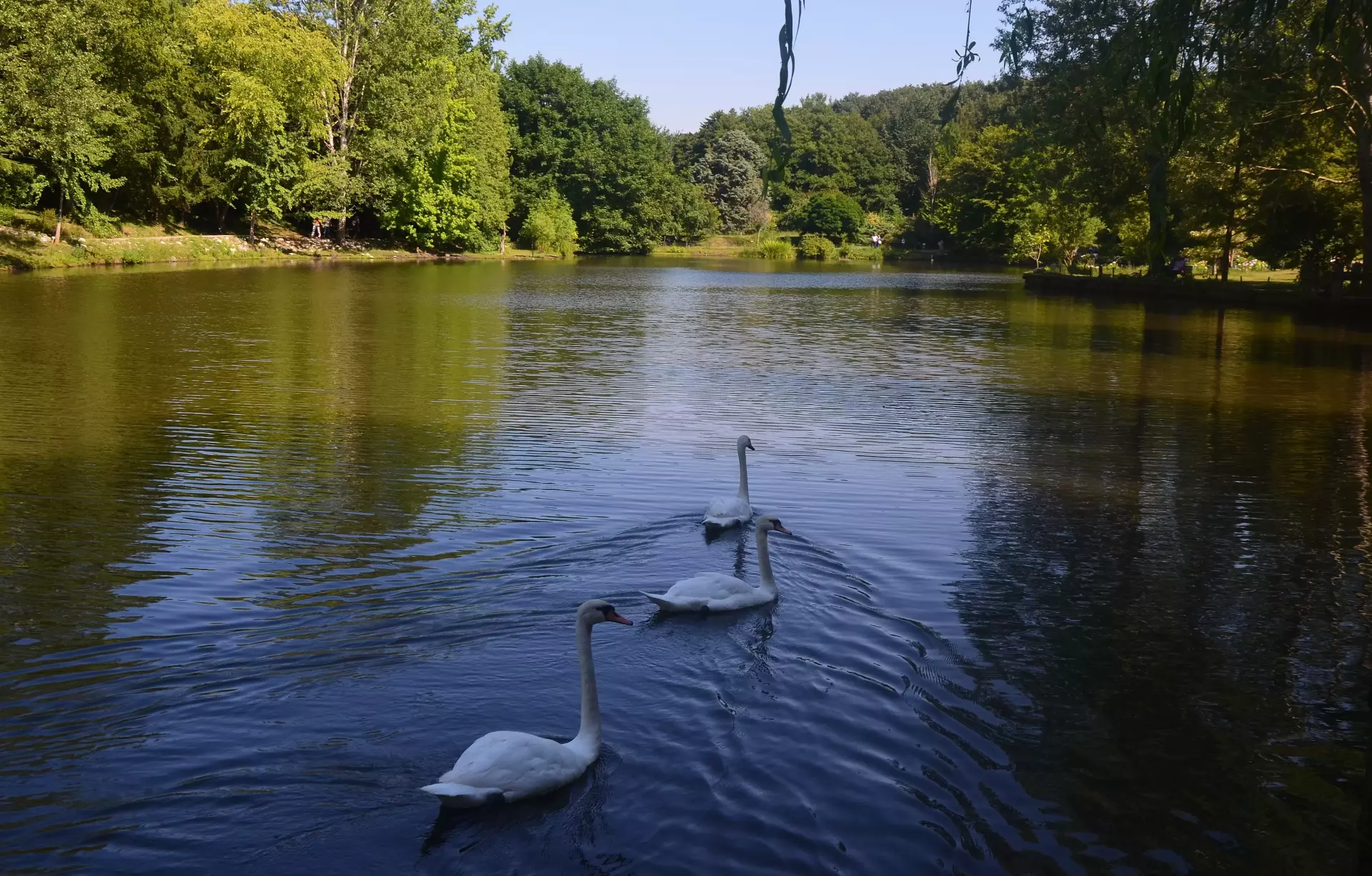
A walk through the arboretum reveals a large pond, home to lively ducks that bring energy to the peaceful setting. The air often carries a gentle mist in autumn, giving the place a mystical atmosphere. Every season paints the arboretum with different colors and light, making each visit a scenic experience. During the fall, visitors may spot migratory birds stopping by, adding to the natural charm and activity of the area.
There are a few important rules to remember while exploring Atatürk Arboretum. Eating, picnicking, video photography, and smoking are not allowed within the grounds. These guidelines help protect the environment and maintain the tranquil space for everyone to enjoy.
Source - https://en.wikipedia.org/wiki/Atat%C3%BCrk_Arboretum
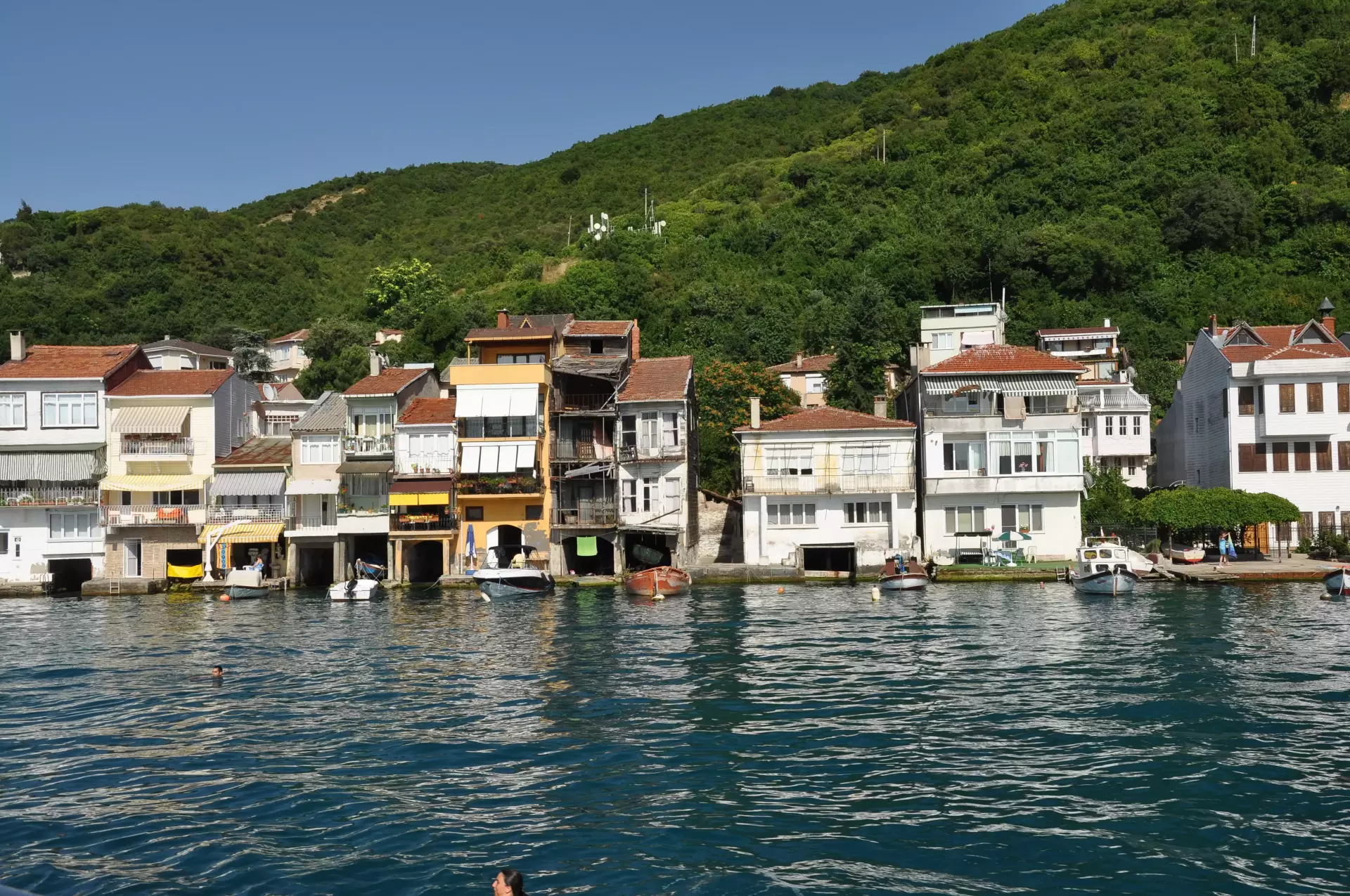
A medieval citadel on the Bosphorus at the mouth of the Göksu creek. It was built in the late 14th century to control (polite word for "choke off") shipping along the Bosphorus, which narrows to 660 m at this point. It worked in tandem with Rumeli Citadel, built some 50 years later on the European bank. It fell into disrepair but was restored in the 1990s. You can't go in, but it's a pleasant setting; the entire village is named Anadolu Hisarı after the fort and has many traditional wooden houses (yalı). Ferries along the Bosphorus call here.
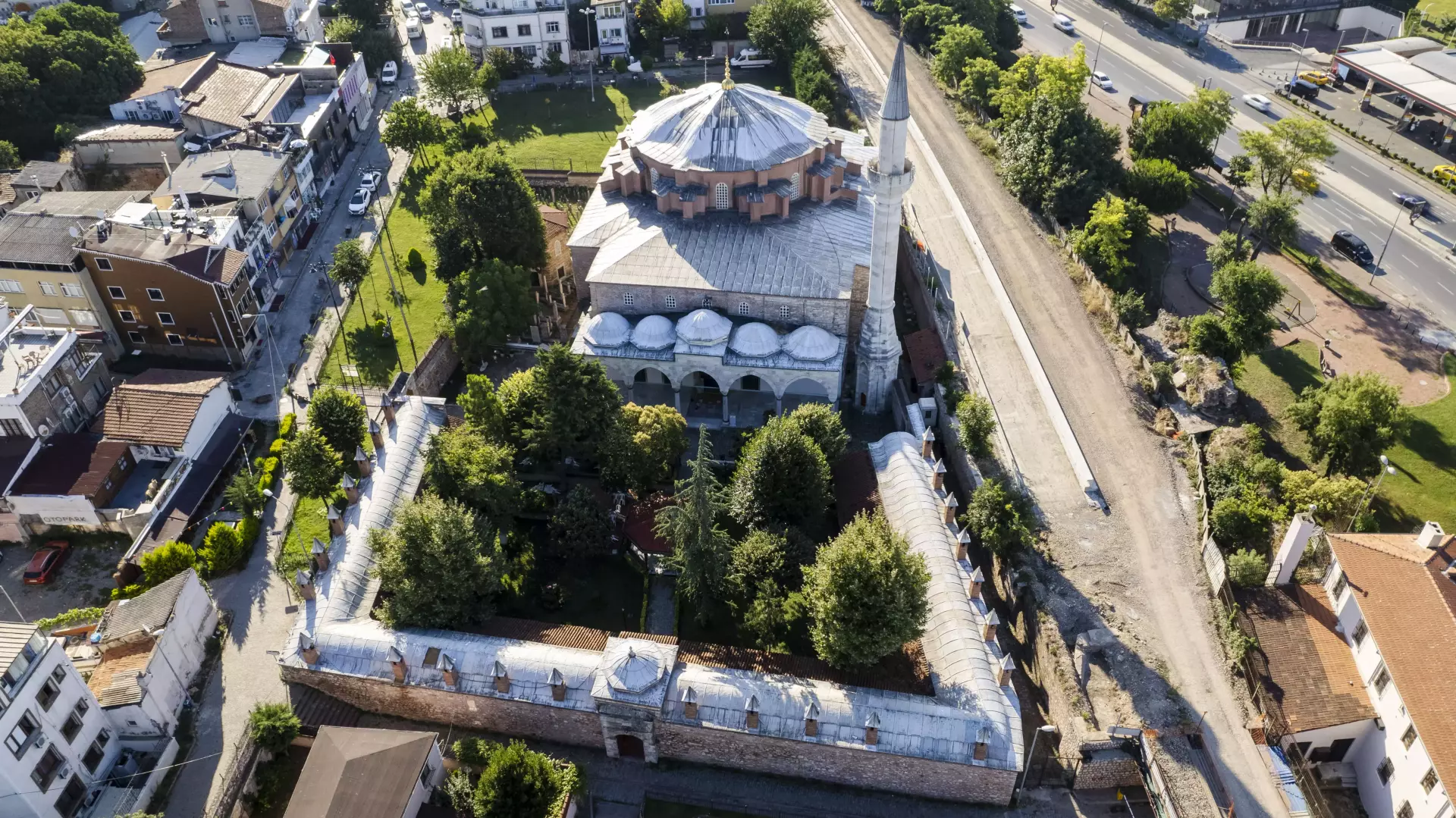
The Church of Theotokos Pammakaristos ("All-Blessed Mother of God") was built between the 11th and 12th centuries. The parekklesion or side-chapel was added maybe 1300, with rich mosaics. The main building became a mosque in 1591, named for Sultan Murad III's conquest (fetih, hence Fethiye) of Georgia and Azerbaijan: the interior was opened up, but the chapel was undisturbed and in modern times became a museum. In 2020 the entire building was proclaimed a mosque, and every scrap of Byzantine artistry was covered up, so now there's nothing worth seeing.
This attractive neighbourhood was home to a large Christian and Jewish population until some decades ago and still has a number of sights like two synagogues, some churches among which the Armenian Surp Krikor Lusavoriç, dozens of wooden houses and a Jewish and Christian cemetery.
It was built by the Genoese in the 14th century on the city walls of Galata, marking the highest point of their territory. Ride an elevator and take two flights of stairs to the top, then walk the parapet for a 360°-view of Istanbul, including the entire Sultanahmet peninsula: crowned by Topkapı Palace, the Blue Mosque and Hagia Sophia. A beautiful spot worthy of a lot of pictures.
This is a circular indoor space enclosed by a 3D depiction of the Ottomans breaching the Walls of Constantinople on 29 May 1453, with sound effects. It's over-priced, unhistorical and tourist-trappy.
A ritual dancing hall of the mystical Mevlevi order, the followers of the teachings of Mewlānā Rumi. The quiet and peaceful garden is a welcome escape from the hustle and bustle of Beyoğlu. The oldest Mevlevi lodge in Istanbul, the convent was started in 1491, when the surrounding area was, hard to believe today but, pure wilderness beyond the city walls of Galata, although the current building dates back to 1855, as the older versions succumbed to repairs, rebuildings, and fires. However, the lodge was shut down in the early years of the republic (in 1925) along with all other 'reactionary' movements in Turkey, and the building has been serving as a museum dedicated to the Mevlevi order since 2010. Downstairs is a series of rooms dealing with the daily life of an average dervish, with informational signs in Turkish and English about the history of Islam and the Mevlevi order (also notice the original wooden pillars that support the building on this floor). On the upper floor is a dancing hall, a perfect example of 19th century Ottoman Baroque. Pre-Covid, this was where the sema whirling ceremonies were held every weekend evenings (admission by an extra ticket costing around 100 TL); check if they resumed. On the third floor is a display of various traditional Turkish/Islamic arts, including paper marbling (ebru), and calligraphy. After exiting the building, check out the small graveyard (or the "silent house" as the sign at its entrance says) on one side of the building, shaded by a number of hackberry trees, which Ottomans favoured to plant in the yards of mosques and graves to sign holiness. Here, the carved fez, or the basket of flowers in case of women, perched upon the highly detailed marble gravestone indicates the occupant's rank in the dervish hierarchy. At one corner of the necropolis is the grave of İbrahim Müteferrika, a converted Hungarian who was the first to start automated publishing in Ottoman Turkish in the 18th century, and served as the translator of Hungarian revolutionaries who sought asylum in Turkey, such as Kossuth, who stayed for a year in Kütahya, or Ferenc Rakoczi, who lived his last years in Tekirdağ.
Built in first half of the 15th century, this is the large medieval castle under the Second Bosphorus Bridge. Its former name Boğazkesen (Turkish)/Laimokopia (Greek) means both "strait-blocker" and "throat-cutter" in both languages and denotes the reason of its building—to shut the supply routes from the Black Sea in the north into the slowly falling apart Byzantine Empire through the Bosphorus. Rumeli, literally "the Roman land", was the name of the European half of the Ottoman Empire, and as is usual with some other structures and villages along the Bosphorus, used as a prefix to differentiate Rumeli Hisarı from its counterpart in the Asian Side, the much smaller Anadolu Hisarı just across the Bosphorus.
This is the main attraction around this part of the city. The holiest Islamic shrine in the city, the complex includes, right next to the mosque, the tomb of Abu Ayyub al-Ansari (Eyüp Ensari Türbesi), the standard bearer of Prophet Mohammad, died and buried here during the first Muslim siege of Constantinople (674-678 AD). The neighbourhood was named after him. Muslims flock here (in such huge numbers that sometimes you have to queue for a few minutes before entering the tomb) also to see a rather uninteresting plaque made of plastic, which is purported to be Mohammad's footprint. The interior of the tomb, covered with fine tiles/faience, is nonetheless well worth a look, however. It is also interesting to see the devout Muslims leaving the place by walking backwards through its exit hallway, as not to turn their backs to al-Ansari's catafalque, though obviously no one expects everyone to quit the place in the same manner.
Although not at the size of Hagia Sophia, this is the largest active church in Turkey. It’s directly on Istiklal St, but somewhat hidden from view by its yard portal. Catholic Masses in Italian, Turkish, and English (in different days of the week).
The imperial enclave of the Ottoman emperors for four centuries. Lavishly decorated, with exhibitions of fine craftmanship and four courts of increasing grandeur. The second court has the Harem and the State Treasury, housing a weaponry display. The third court has the Imperial Treasury, with Islamic and Christian relics. The views from the Fourth Court over the Bosphorus are spectacular. Reckon on spending several hours here and bring water as the museum kiosk is overpriced.
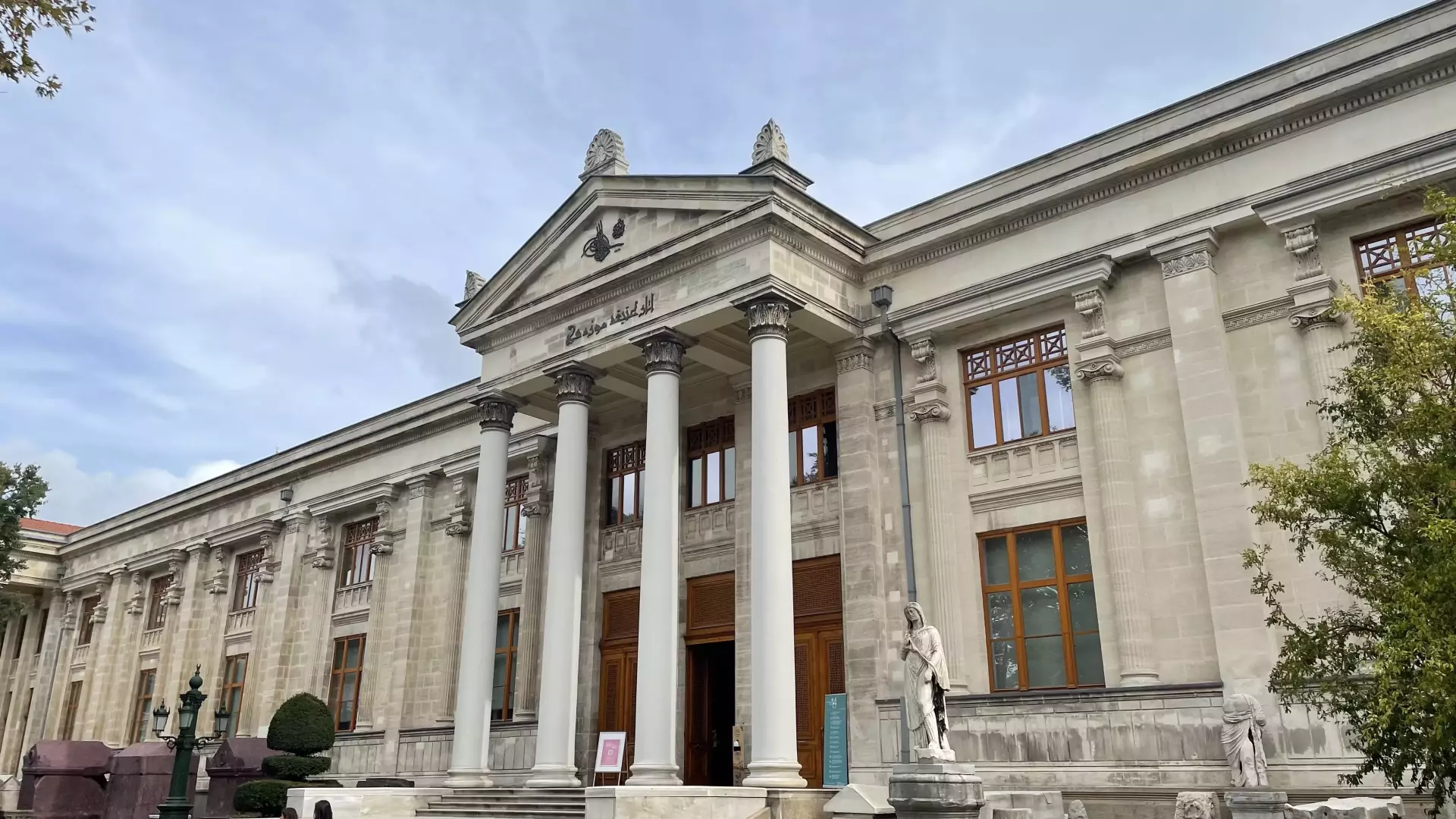
Turkey was slow to protect its antiquities and to display them properly, but in 1867 Sultan Abdülaziz toured the museums of Paris, London and Vienna and saw what was needed. The main collection is in a grand neo-classical building of 1891, with two annexes for ancient art and Islamic art. Exhibits include Sumerian tablets, pieces of the wall of Babylon, Roman statues, and the sarcophagus of Alexander the Great, which he never lay in.
Istanbul's former Asia-side railway station nowadays has no trains, but is worth a look. It was built by the Germans in 1908 in a distinctive Teutonic-castle style - to make an impact on travellers from Asia about to step into Europe, and a counterpoint to Sirkeci station (also closed) on the European side which is modelled in Oriental style. It's intended eventually to make this the terminus for the high speed rail network.
A private museum with a large painting collection and archaeological collections of measurement units and tools used in Asia Minor since antiquity and faiences of Kütahya.
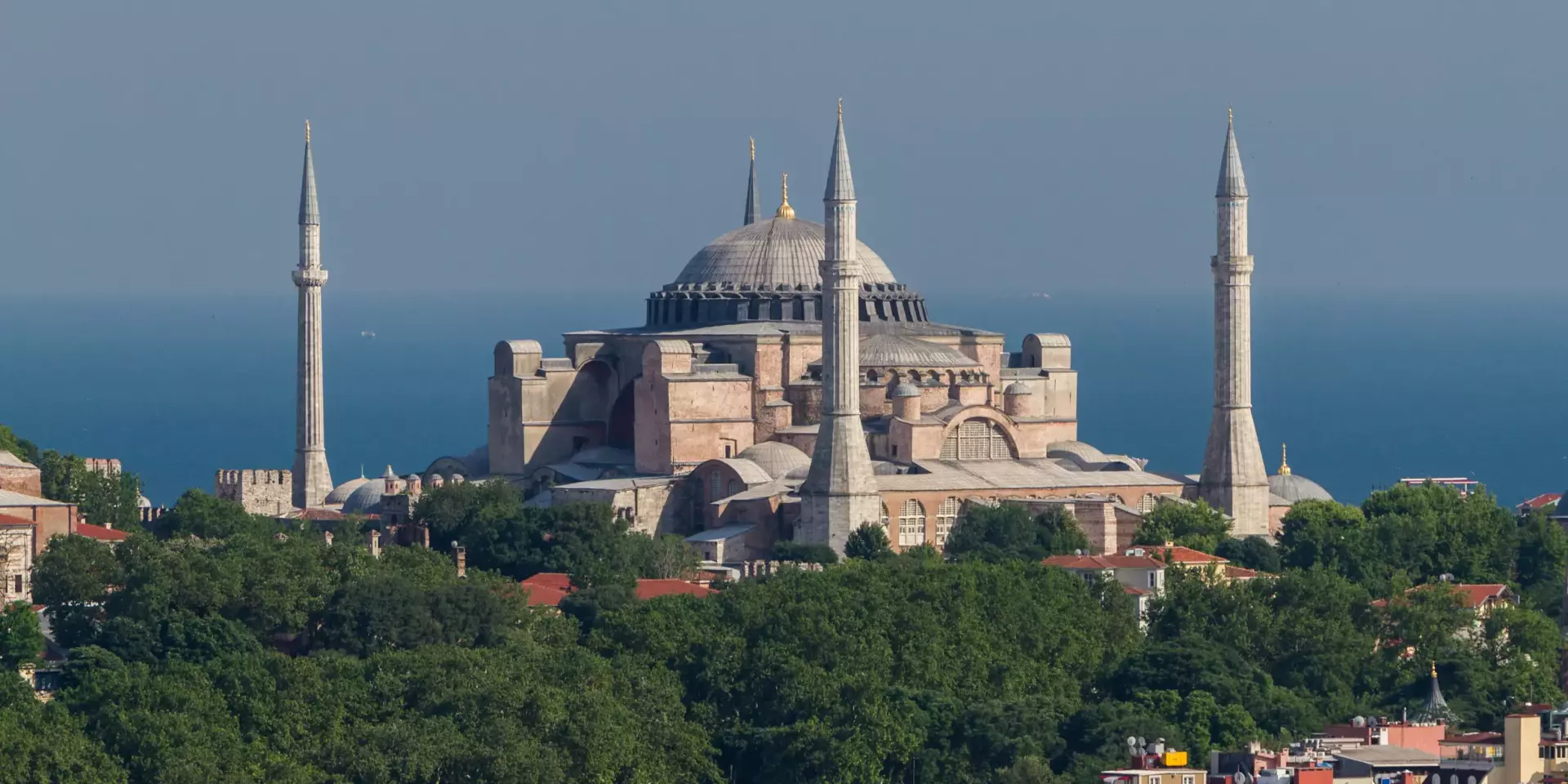
Built as the Church of Saints Sergius and Bacchus around 530 AD, the same time as Hagia Sophia, but their styles differ. Transformed into a mosque in the early 1500s, it's beautifully decorated, with fine marble details, and has a pleasanter atmosphere than the larger busy mosques. The adjoining madrasa houses craft shops.
A neo-gothic Anglican cathedral which would not be out of place in northwestern Europe, the Crimean Memorial Church was built for the Protestant community of the city by Britain in the late 19th century. It was named in honour of the soldiers died in the Crimean War of 1856, fought against Russia by the allied Ottoman and British Empires. The congregation of the church today mostly consists of Anglican East Asians and Sri Lankans resident in Istanbul.
The only active Ashkenazi Synagogue open to visits and prayers.
It was built in 2001 and is the first miniature park in Istanbul (the world's largest miniature park in respect to its model area). The park hosts icons of many cultures and civilizations. Models vary from the Hagia Sophia to Galata Tower, from Safranbolu Houses to the Sumela Monastery in Trabzon, from Qubbat As-Sakhrah to the ruins of Mount Nemrut. In addition, some works that have not survived into the present, such as the Temple of Artemis, the Halicarnassus Mausoleum and Ajyad Castle, were recreated. All former Ottoman Empire in one place.