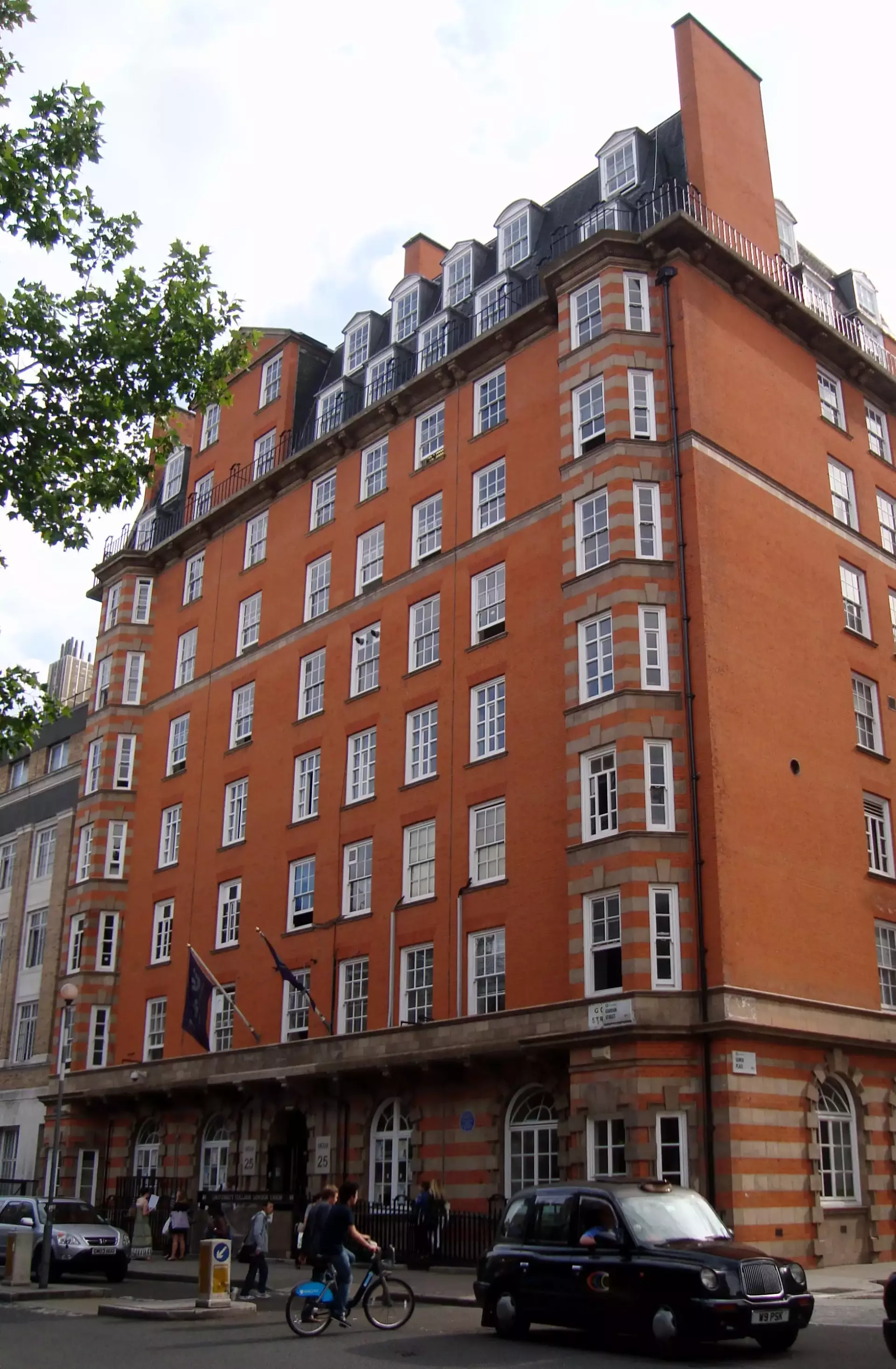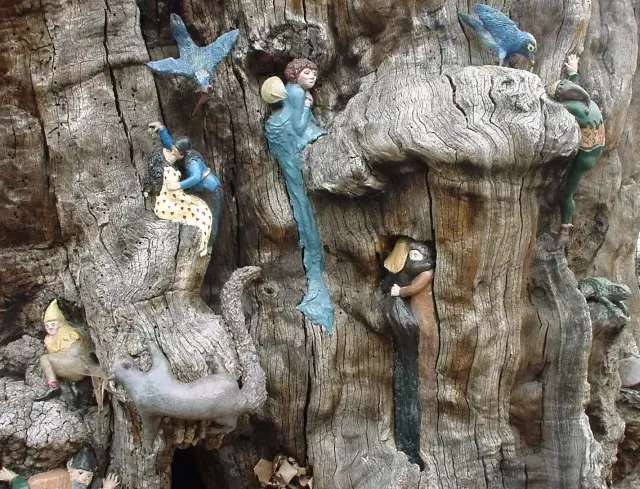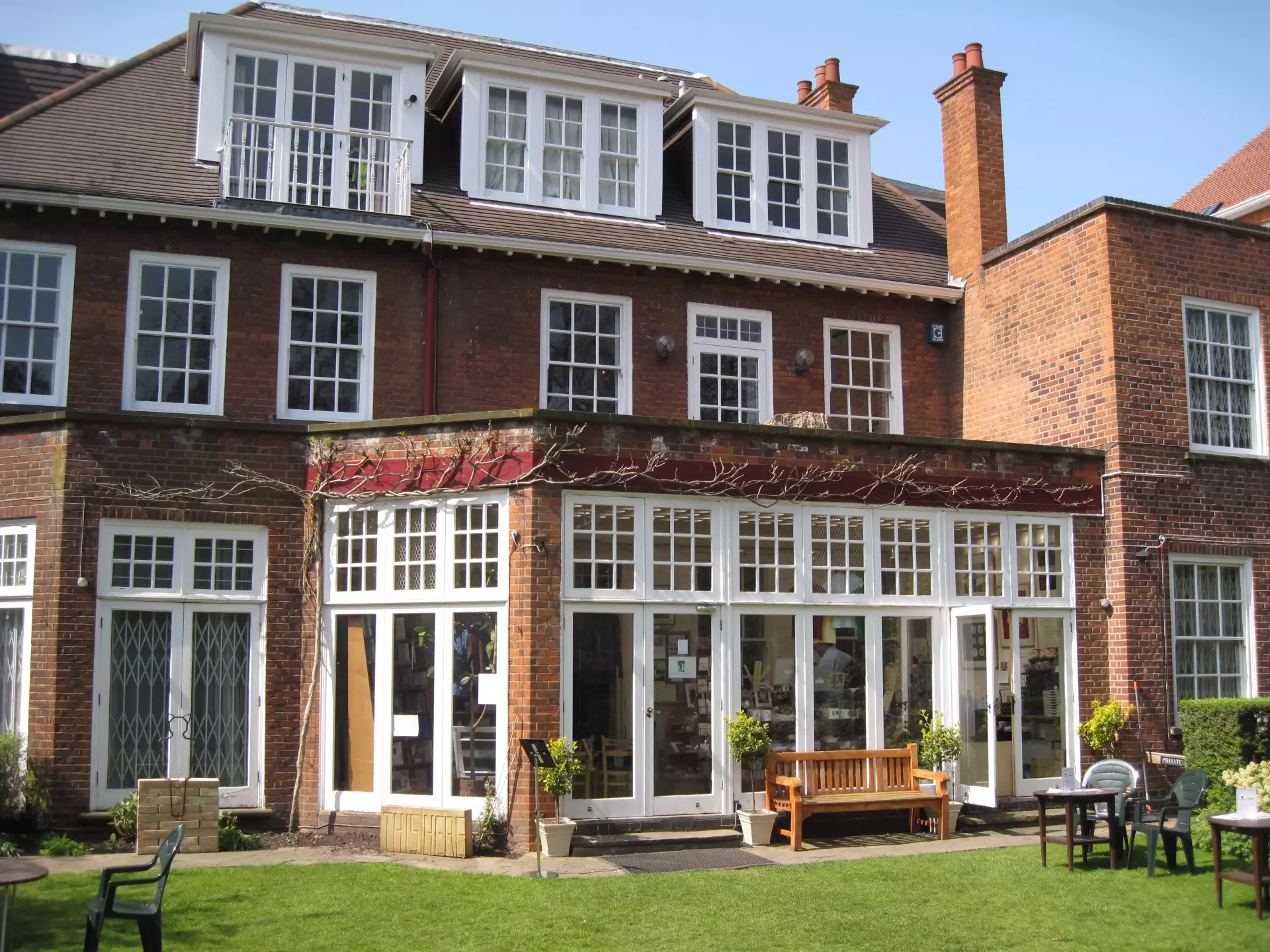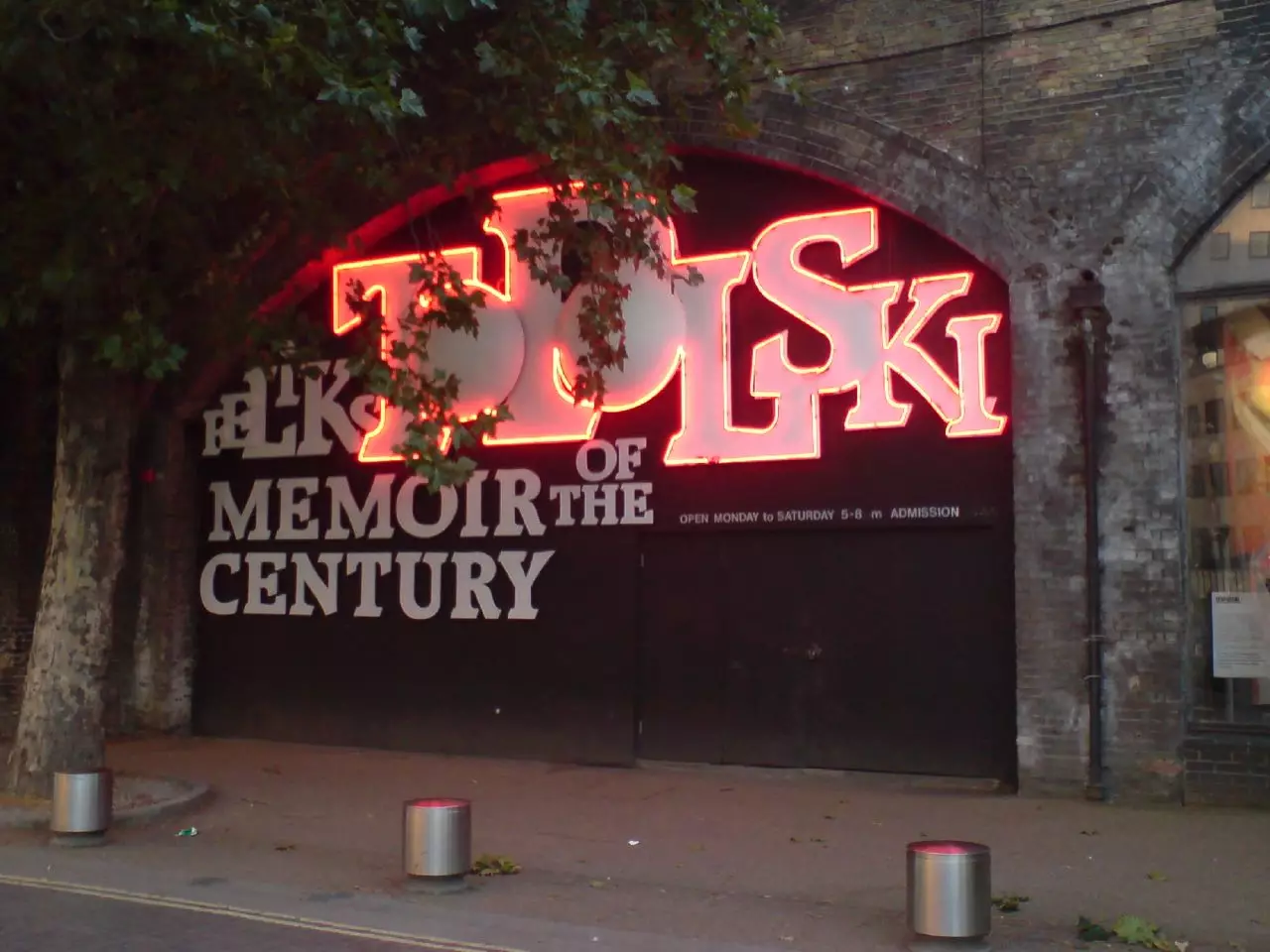
Painted between 1975 and 1989, Topolski Century stands as a unique and monumental artwork by Polish artist Feliks Topolski. This impressive piece captures key events and iconic figures of the 20th century in a remarkable way.
Spanning 600 feet in length and reaching 20 feet in height, the artwork serves as Topolski's eye-witness testimony to an era that significantly shaped modern life. His artistic portrayal includes notable personalities like Winston Churchill, Mahatma Gandhi, Martin Luther King, Pablo Picasso, and Coco Chanel, reflecting a wide-ranging global perspective.
Topolski Century reflects a vast scope, offering a legacy to future generations. Through this work, Topolski provides a visual narrative that captures the essence of an entire century, making it a testament to his artistic vision and historical insight.
Source - https://en.wikipedia.org/wiki/Bar_Topolski
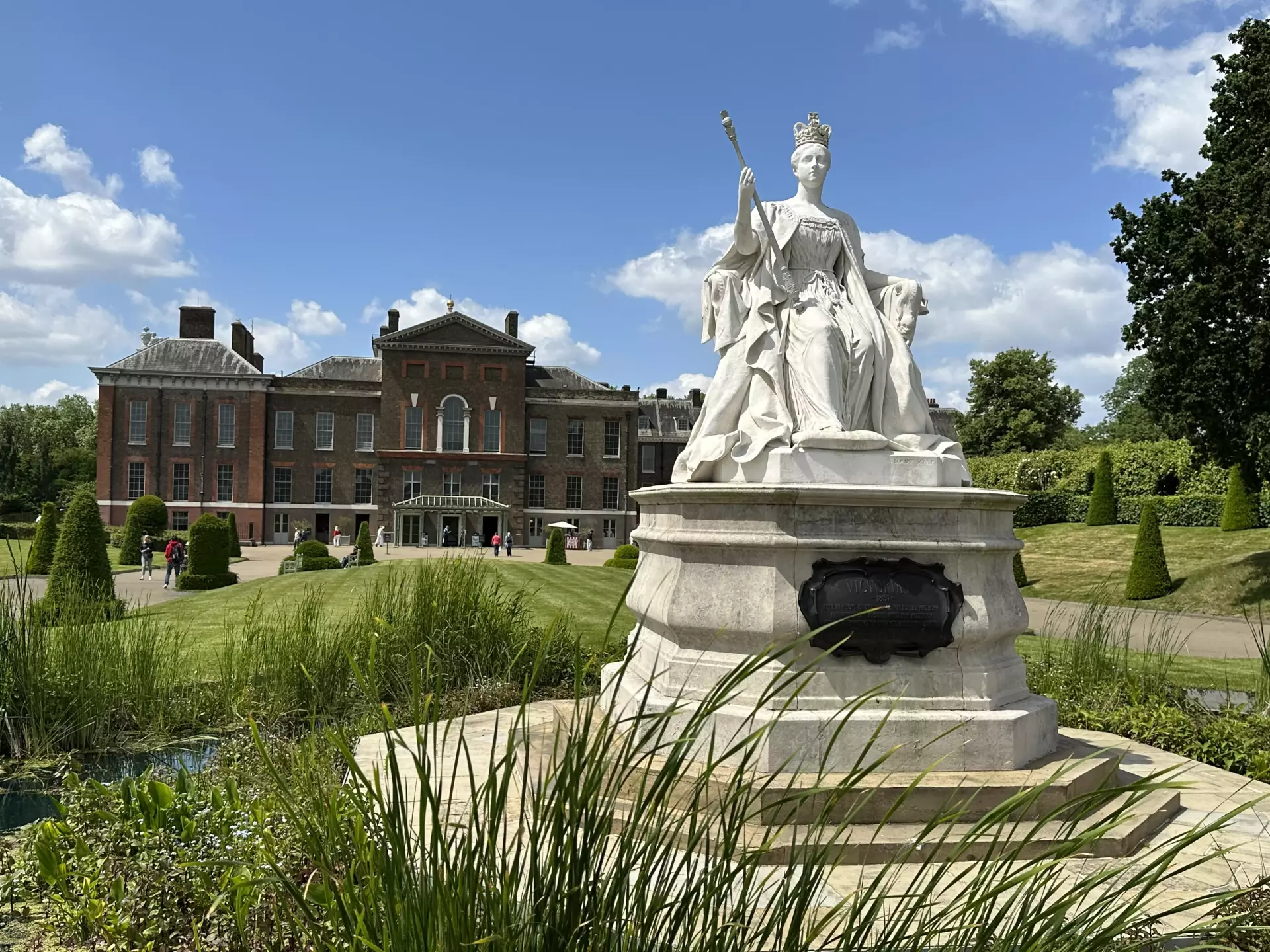
The most senior of the Royal palaces in London (built between 1531 and 1536) and the official seat of the monarch.
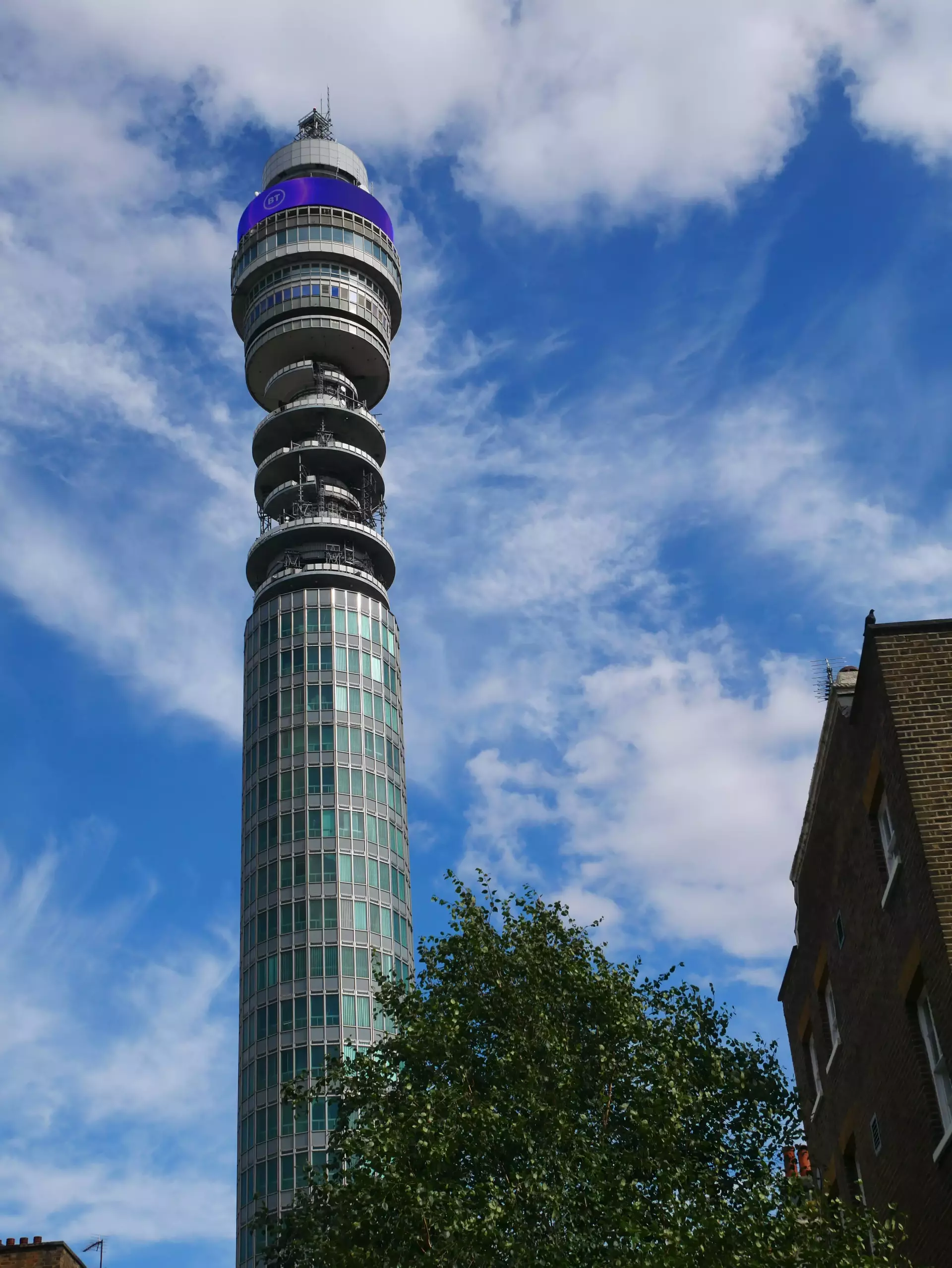
191-m (627-ft) skyscraper can be seen from far away and is the sixth highest building in UK.
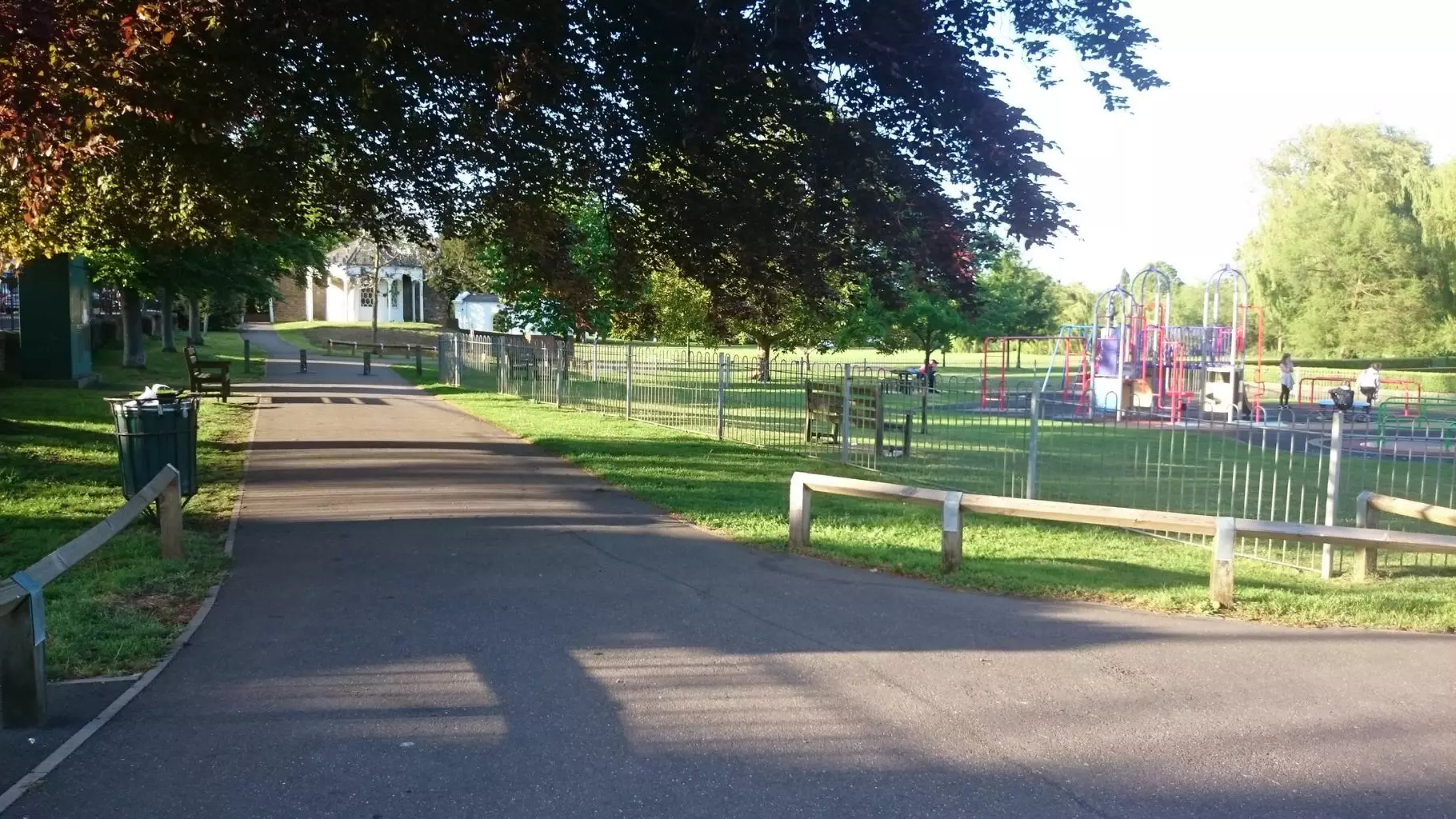
Park overlooking the river, with the local war memorial. Be careful at high tide, as it may flood.
Cleopatra's Needle originated in the ancient Egyptian city of Heliopolis, in the Temple of Atum, but the Romans moved it to Alexandria in 12 BC. In 1819, viceroy Mehemet Ali presented Cleopatra's Needle to the British, commemorating military victories in Egypt, but it remained in Alexandria until 1877 when transportation was arranged to bring it to London. On the voyage, the ship capsized in a storm, killing six crewmembers. Cleopatra's Needle was thought to be lost, but Spanish trawlers found it afloat a few days later, and after some repairs, it arrived in London on 21 Jan 1878. The obelisk is flanked by two faux-sphinxes, which show the effects of bombings of London during World War II. Today, Cleopatra's Needle shows some wear from exposure to London's damp weather.
The ruins of a church dating back to Saxon times, rebuilt by St Dunstan in 950, destroyed in the Great Fire of London, and then rebuilt by Sir Christopher Wren in 1697. Most of the church was destroyed during the blitz, leaving only the tower (dating from Wren's time) and hollowed-out walls (from an 1817 reconstruction). The ruins are now overgrown with picturesque vines and trees, and were converted into a public garden in 1967, complete with benches.
In many cities a local transport museum would be of very narrow interest - not London, however! London's public transport is iconic, and the story of how it developed from horse and cart through early buses, Tube trains and trolleybuses to the present day is well worth coming to find out about. There is plenty of opportunity to clamber aboard the historic buses and Tube trains on display. Also, because London's transport is so well known, the museum shop contains plenty of items that make interesting and original gifts and souvenirs.
Houses the British national collection of western European art dating from the 13th to 19th centuries. A truly awe-inspiring collection, notable works include Hans Holbein's The Ambassadors, Van Gogh's Sunflowers and Constable's The Haywain. The vast majority of art is free of charge to visit. Temporary exhibitions are generally fairly costly, but invariably well researched and presented. The audioguides are very comprehensive, have comments on most of the paintings in the museum, and are free though this fact is not advertised. A donation is suggested. In addition to courses, workshops, lectures and other events, the National Gallery has free talks and tours every day.
The great domed cathedral of St Paul's, designed by Sir Christopher Wren to replace the Gothic medieval cathedral destroyed in 1666 in the Great Fire of London, was built between 1675–1710. Of the most famous London sights, St Paul's is the one most conveniently located for the Barbican. It's a significant building in British history, having been the site of the funerals of several British military leaders (Nelson, Wellington, Churchill), and significantly held peace services marking the end of the two world wars. The cathedral is also famous for its Whispering Wall, as well as its stunning view over the city. The crypt is also open to the public, holding the tombs of Nelson, Wellington and Christopher Wren. It is possible to sidestep the admission charge by entering for one of the midday services, even if you don't take part, or for the daily choral evensong in the late afternoon. However, you'd still need a ticket to get to the top. Photography is not allowed.
A private residence which can only be seen from the street. Designed and built in a French neo-Gothic style by William Burges, it features a handsome cone-roofed tower. Legendary guitarist Jimmy Page has been the house's proud owner since he bought it from actor Richard Harris in 1972.
A memorial made out of 52 stainless steel columns representing each of the 52 victims who died in a series of terrorist attacks in the London bombings on July 7th, 2005.
Peaceful gardens and interesting monuments including the daughter of Richard Cromwell, son of Oliver Cromwell.
Originally the private garden of Holland House, much of which was destroyed in the London Blitz, Holland Park is a mixture of woodland, European and Japanese-style formal gardens and leisure facilities. It includes a large field dedicated to football and cricket, as well as tennis courts. As you walk around the park, you can see bits of the house dotted around the place which give you some idea of how grand it used to be. In the summer this is a great place to catch outdoor opera. An ecology centre near the police station provides information about the ecology of the park and arranges various activities for children. There is a café in the park that sells ice creams and hot food. The park is a popular way to walk from Notting Hill to Kensington High Street.
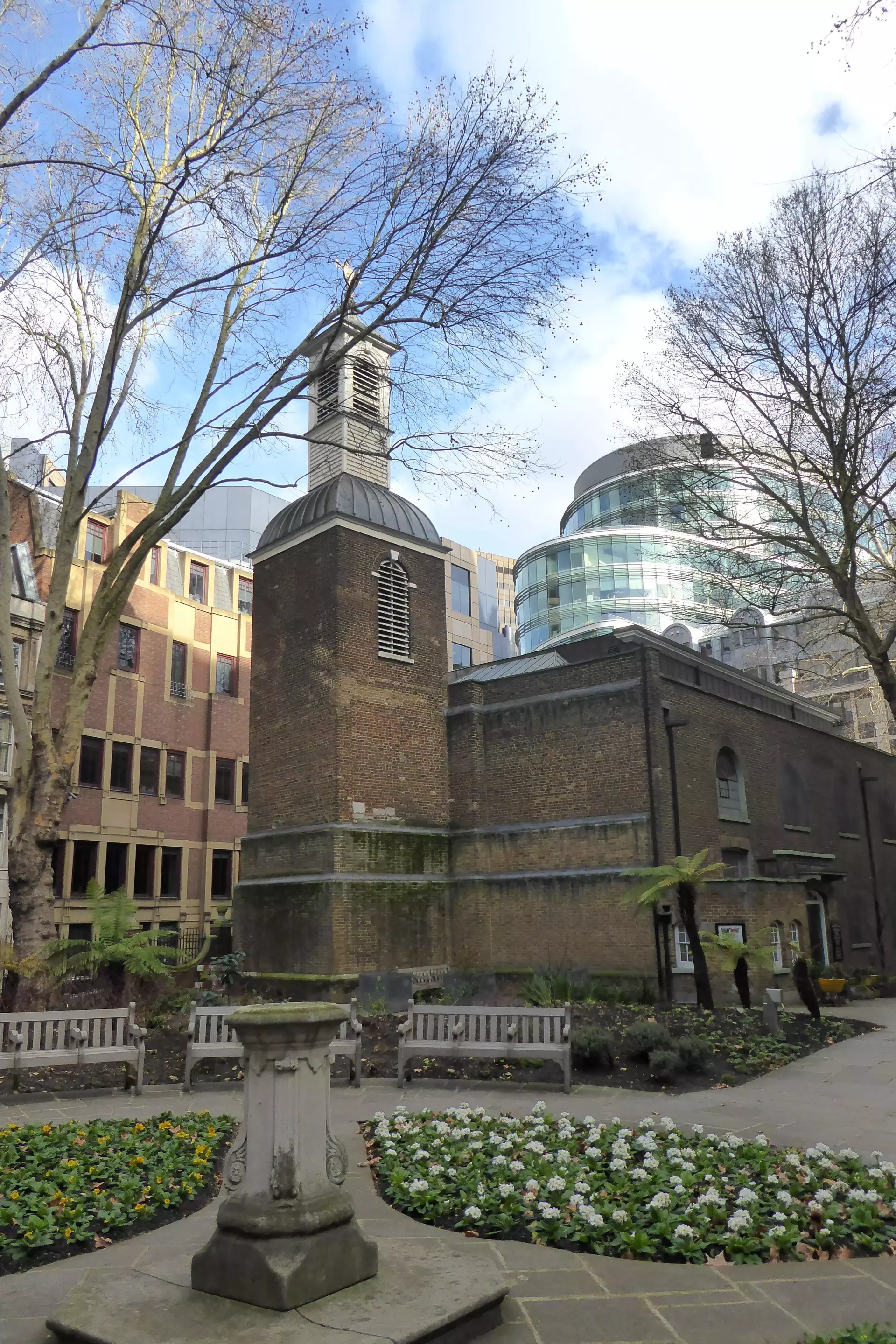
Medieval Grade I listed church. This church played a key role in the English Revolution and was the parish church of some of the most decisive Puritans: Oliver Cromwell was married and this is where John Milton was buried. It was the home of the Morning Exercises. The tower remains from the original building; the rest was destroyed in the Blitz but rebuilt based on the original plans.
A lovely park on the southern banks of the Thames known or its wildlife and some splendid examples of mature trees.
The remains of the once-magnificent palace, home to English kings since Edward I, adjoin Richmond Green, a pleasant open green space and historic cricket ground. Only the Gate House and Wardrobe, now converted into flats, remain.
Church in Piccadilly designed by Sir Christopher Wren in 1684. It has a magnificent organ case and baptismal font by Grinling Gibbons.