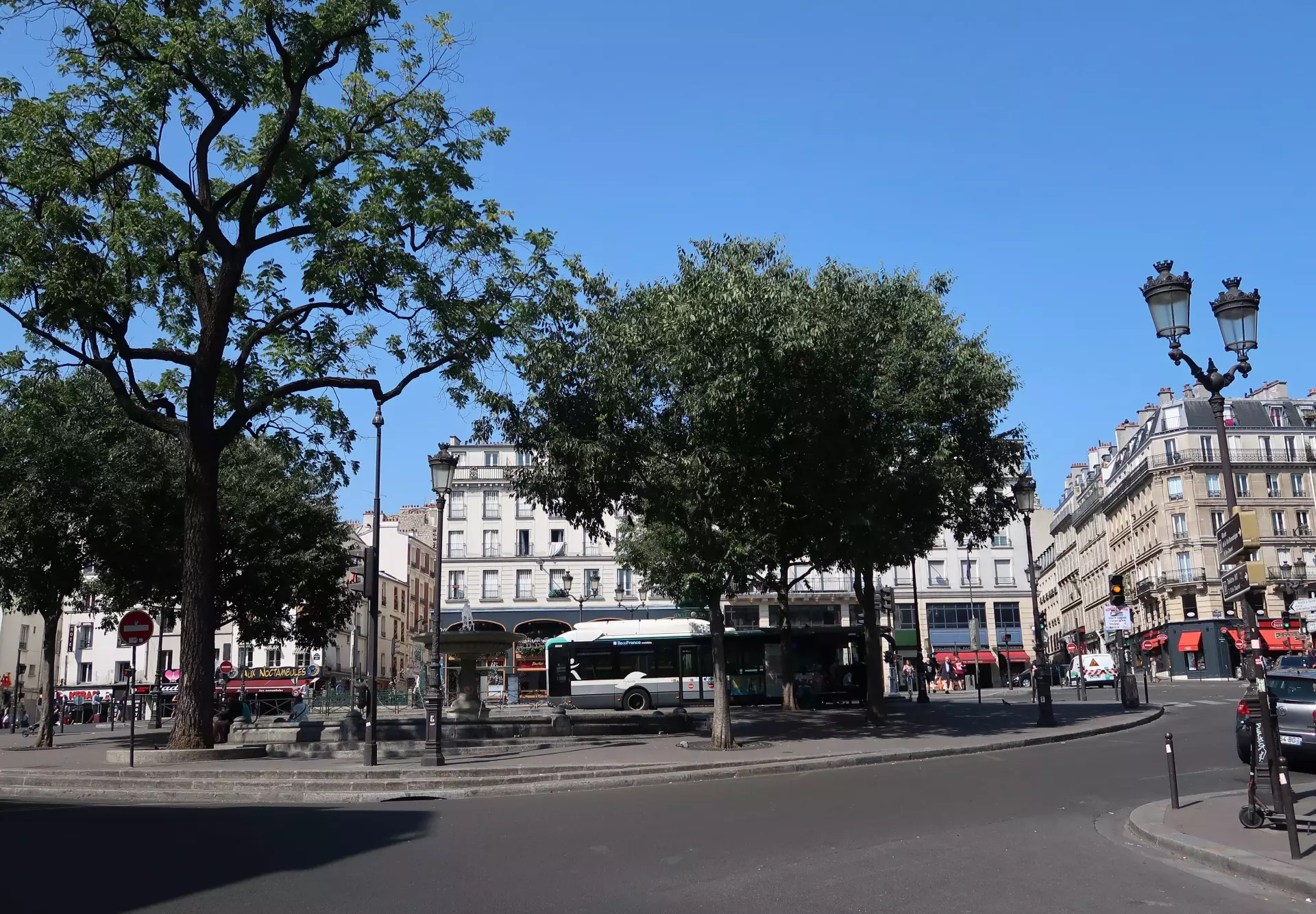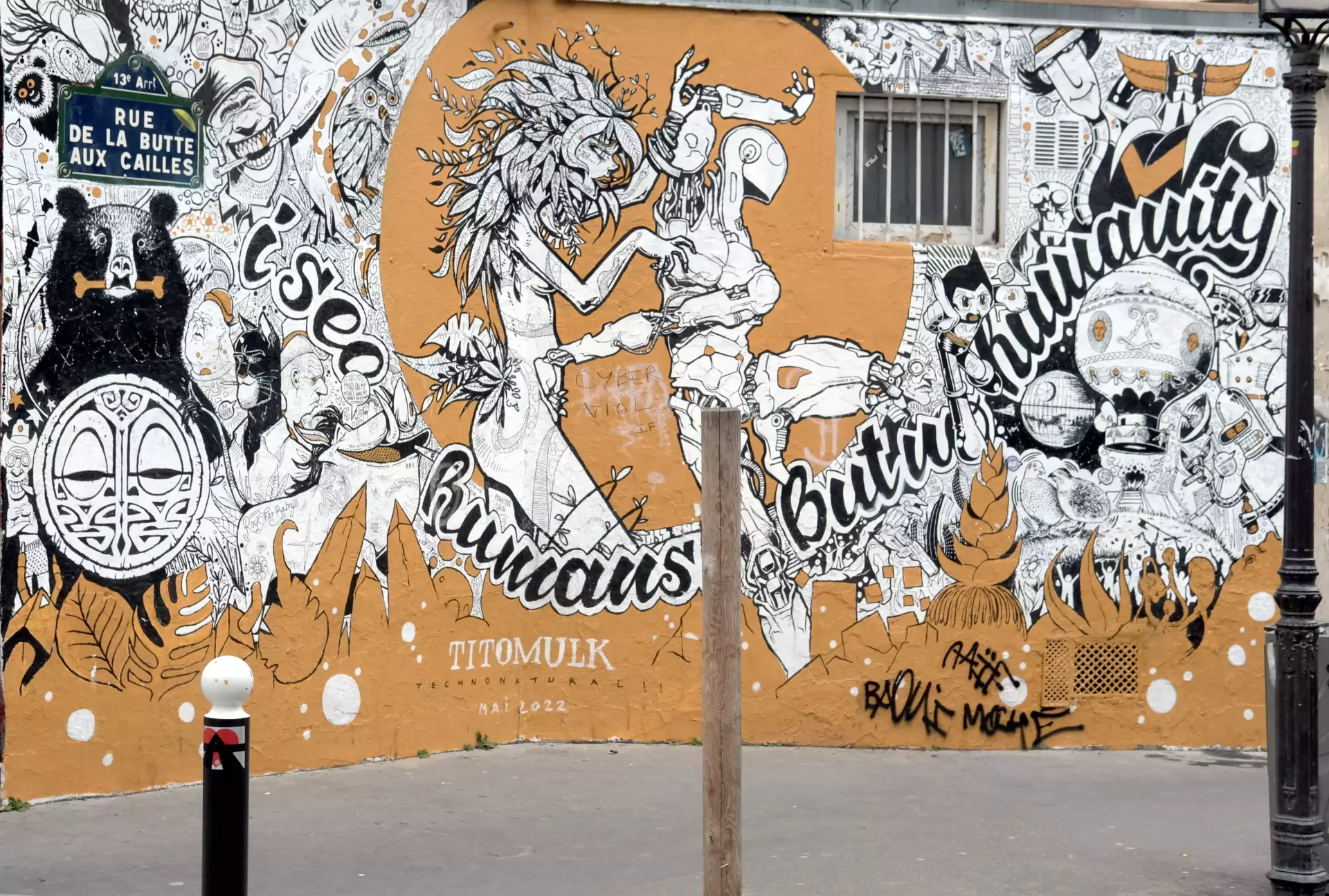
Butte-aux-Cailles is a small neighborhood located on a hill in the southeastern part of Paris’s 13th arrondissement. This area is known for its quaint, winding streets and a relaxed, almost village-like atmosphere, quite different from the busy city center.
The narrow streets of Butte-aux-Cailles are lined with charming houses, colorful facades, and plenty of greenery. The peaceful vibe makes it a pleasant spot for a stroll, especially for those looking to explore a quieter side of Paris. Visitors often find cozy cafés and friendly bistros where locals gather for lunch or dinner, enjoying simple French dishes in a welcoming setting.
Butte-aux-Cailles also has a special place in Paris’s music history. The famous French rock band "Mano Negra" was known to spend time here, adding another layer of character to the neighborhood’s reputation. Today, the area continues to attract artists and musicians, maintaining its creative spirit and unique local culture.
Source - https://en.wikipedia.org/wiki/Butte-aux-Cailles
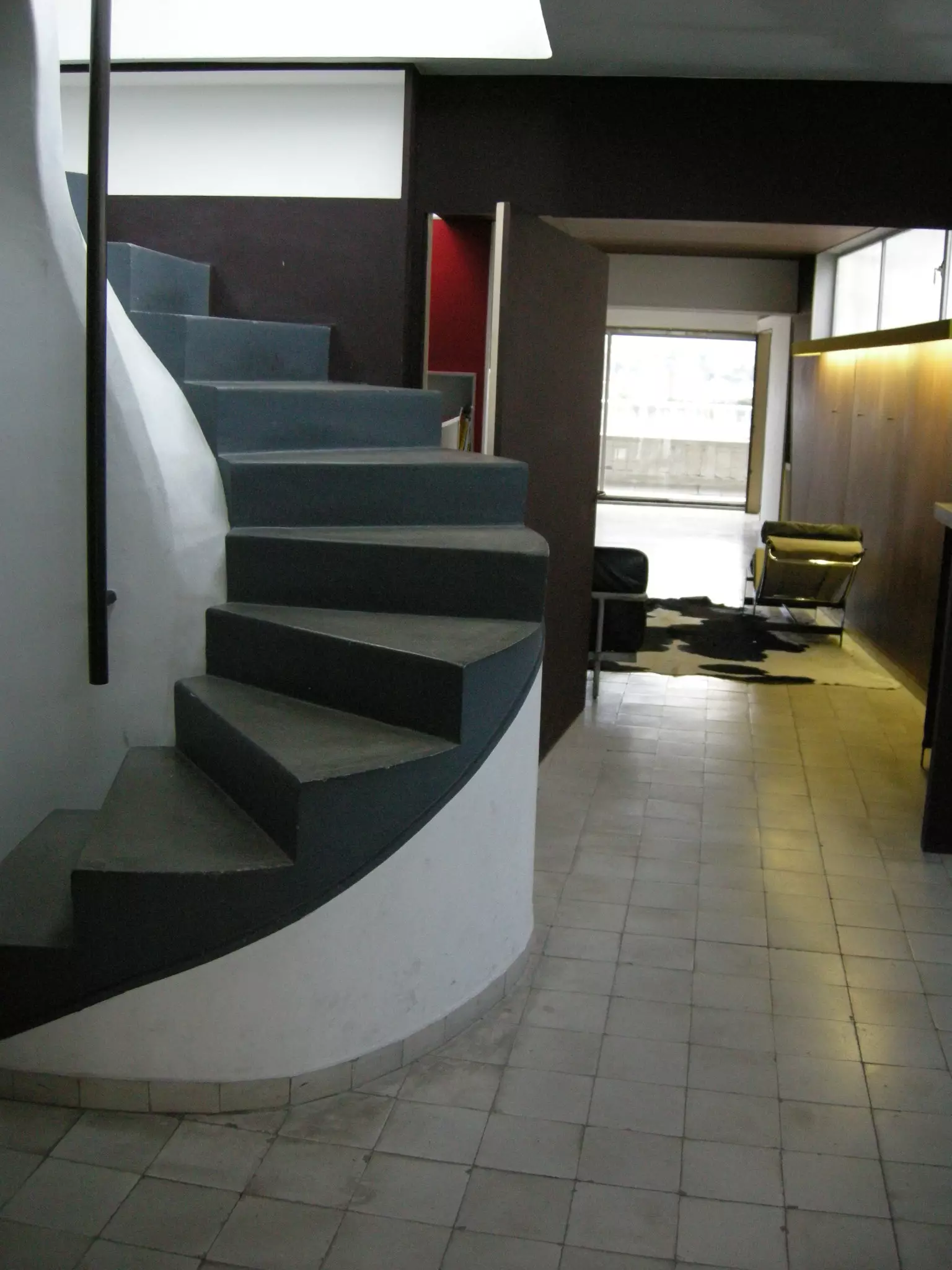
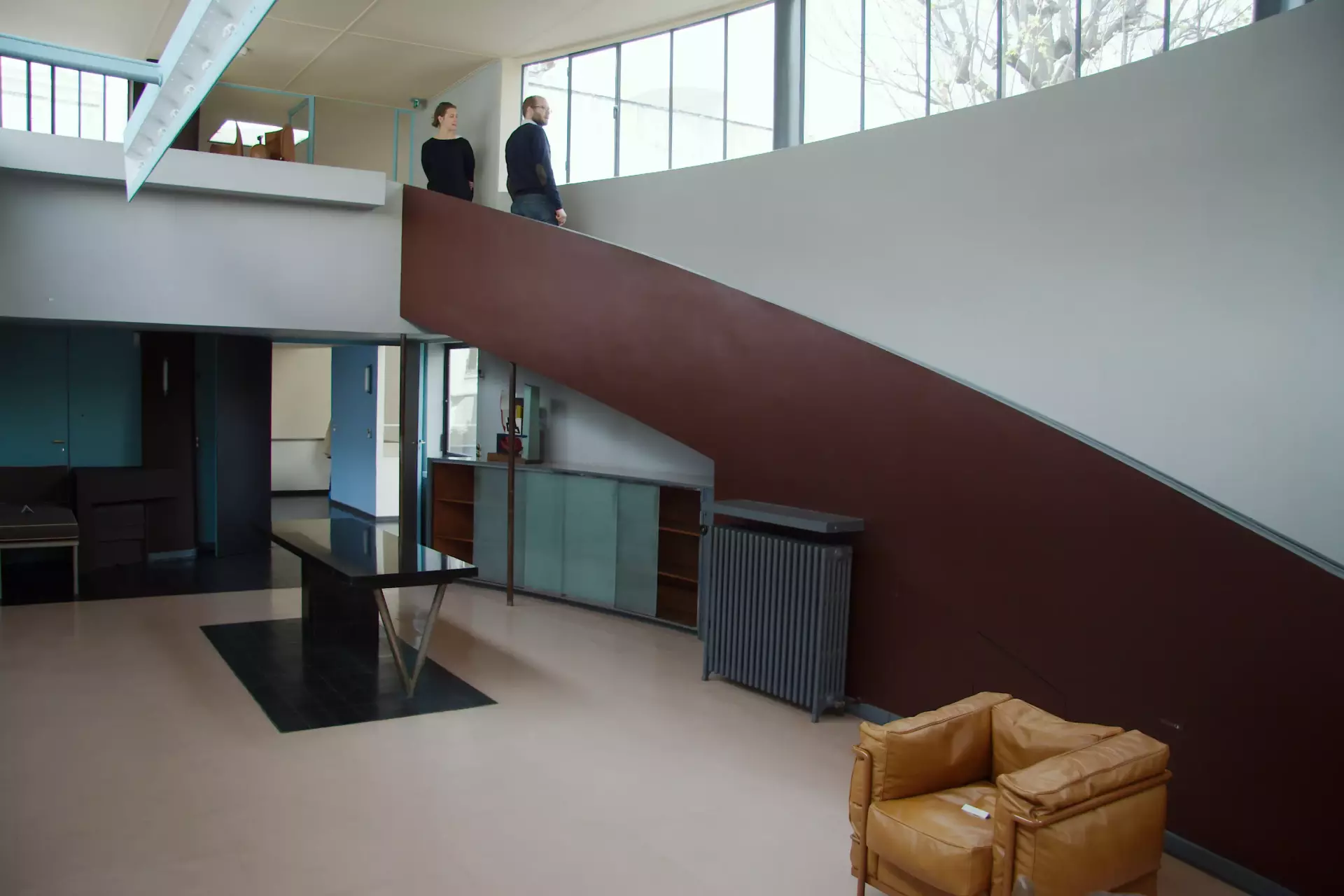
The C.I.U.P. is a student quarter established in 1925, providing homes for about 10,000 students, scientists, and artists from 120 countries. It has 40 houses attributed to individual nations. The individual houses organise top quality cultural and political events. Among the most remarkable buildings are the Fondation Deutsch de la Meurthe, the Heinrich Heine House (Maison Heinrich Heine - Fondation de l'Allemagne), the Swedish Student House (Maison des Etudiants Suédois), and the Swiss Pavilion (Pavillon Suisse) which was built in 1933 on plans of Le Corbusier.
Suspended above the train tracks this garden is surprisingly calm and chilled-out.
Beautiful round "square" with an equestrian statue of King Louis XIV and matching 17th century buildings.
The east wing of the Palais de Tokyo holds the modern art collection of the city of Paris, dating roughly from World War I to date (the older part of the collection is at the Petit Palais in the 8th), including around 10,000 works.
Mainly used as a concert hall and venue for fashion shows today, the Cirque d'Hiver was built in 1852, as the name would suggest, as a winter venue for circuses.
The Paris Botanical Garden, founded as the royal medicinal garden in 1626 by King Louis XIII's doctor, contains over 10,000 species. The grounds also include a small zoo known as La Ménagerie, and the Muséum National d'Histoire Naturelle, which includes the Grande Galerie de l'Evolution (where you can see thousands of naturalized animals from all over the world) and the 'Galerie de paléontologie et d'anatomie comparée' (same thing, but with skeletons).
Most of the works by Picasso and others which were in the master's possession at the time of his death are now on display here.
Since 2021 the 18th-century former Bourse de Commerce building has been the Paris home of the art collection of the French business magnate François Pinault, showing a rotating selection of contemporary artworks either newly commissioned or taken from his collection.
Enter Bastille station through any entrance or on any train and then make your way to the Bobigny/Pablo Picasso-bound platform. All that's left of the fortress whose front steps used to lead up from place de la Bastille are some foundation stones which you can see while waiting for a north bound train on this metro platform. There are maps and explanations showing where the fortress used to be relative the place and surroundings (basically the location of the old front steps are now occupied by Café des Phares).
An industrial design museum in Paris that houses the collection of the Conservatoire National des Arts et Métiers (National Conservatory of Arts and Industry), which was founded in 1794 as a repository for the preservation of scientific instruments and inventions.
The magnificent setting of The Phantom of the Opera, the inside is as opulent as the outside. However, since the opening of the Opera Bastille (12th) in 1989, the Palais Garnier has been reserved mostly for dance performances, particularly ballet.
The oldest planned square in Paris, and what many tourists as well as locals consider the heart of the Marais area.
Tourists cross this park with the large fountain on the way to the Place du Trocadéro viewpoint to the Eiffel Tower.
Contained within two historic houses (hotels), the museum explores the history of Paris through objects in over 140 separate rooms.
This charming museum is owned by the French Académie des Beaux-Arts. Its main collection areas, the result of several large donations, include: First Empire art and furnishings; illuminated manuscripts; and Impressionist art, including the largest Monet collection in the world and works by Renoir, Manet, Morisot, Caillebotte and Gauguin.
The bridge is widely regarded as the most ornate, extravagant bridge in the city. It is classified as a French Monument historique.
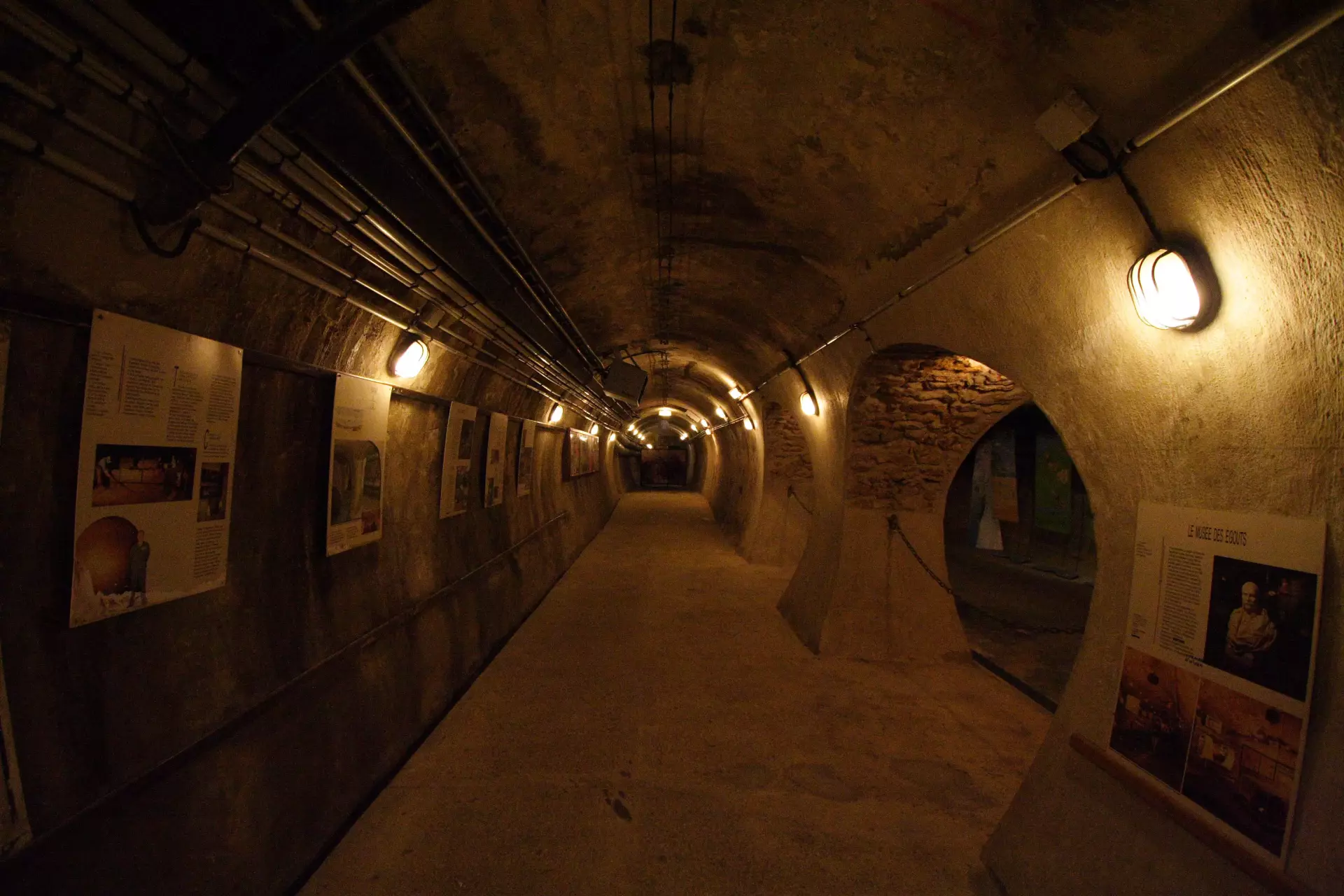
For an interesting take on Paris, check out the underground sewers of Paris. See swords found in the sewers over the years and get an appreciation for what it takes to keep Paris running.
An indoor sports arena that seats around 17,000 for sports and slightly over 20,000 for major concerts; formerly known as Palais des Omnisports de Paris-Bercy and Bercy Arena. Home to numerous concerts and major sporting events, most notably the Paris Masters tournament on the ATP World Tour in men's tennis.