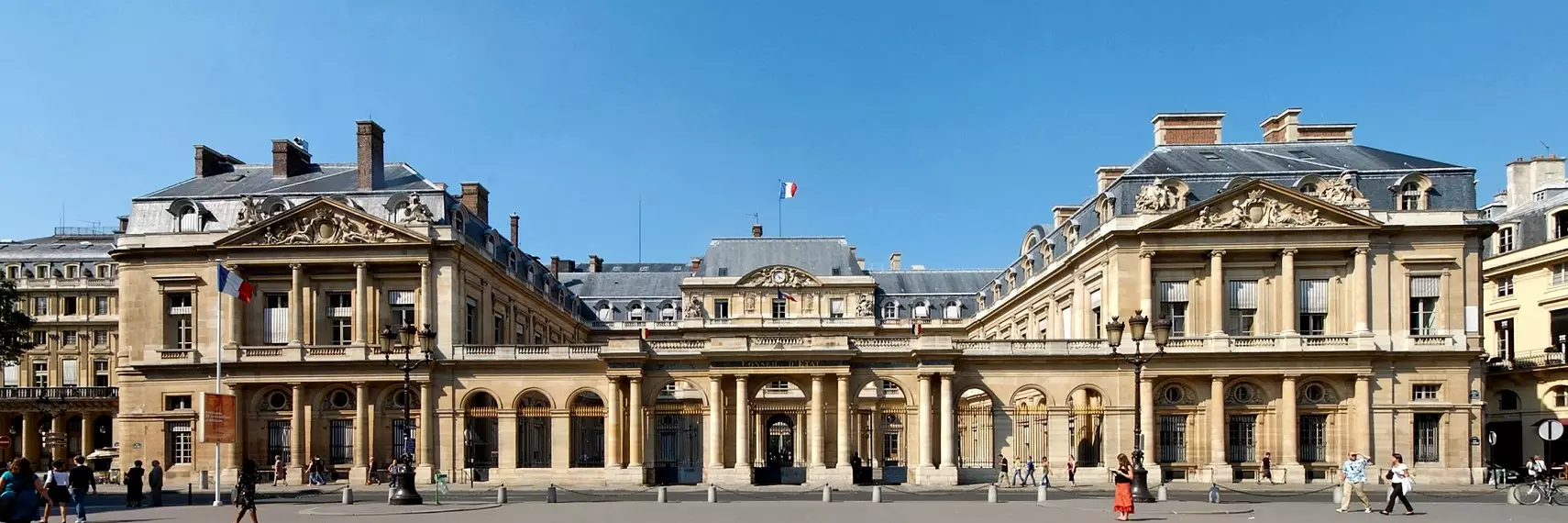
The National Assembly is located in a historic building that was once known as the Palais Bourbon. Since 1827, this impressive structure has served as the home of the lower house of the French parliament.
The building itself is known for its striking architectural details. Inside, one highlight is the library, which showcases the painting "L'Histoire de la Сivilization" by the renowned artist Delacroix. This artwork draws attention from many visitors and adds to the building’s sense of history and culture.
Guided tours are available throughout the day for those interested in learning more about the National Assembly and its role in French government. Visitors need to show identification before joining a tour. For those curious about the workings of democracy, there is also the opportunity to attend assembly debates and see parliament in action.
Source - https://en.wikipedia.org/wiki/National_Assembly_(France)
The Palais de Tokyo is Paris's largest specialist contemporary art exhibition venue, owned and operated by the national government. The building dates to 1937 and also includes the Museum of Modern Art of the City of Paris.
The magnificent setting of The Phantom of the Opera, the inside is as opulent as the outside. However, since the opening of the Opera Bastille (12th) in 1989, the Palais Garnier has been reserved mostly for dance performances, particularly ballet.
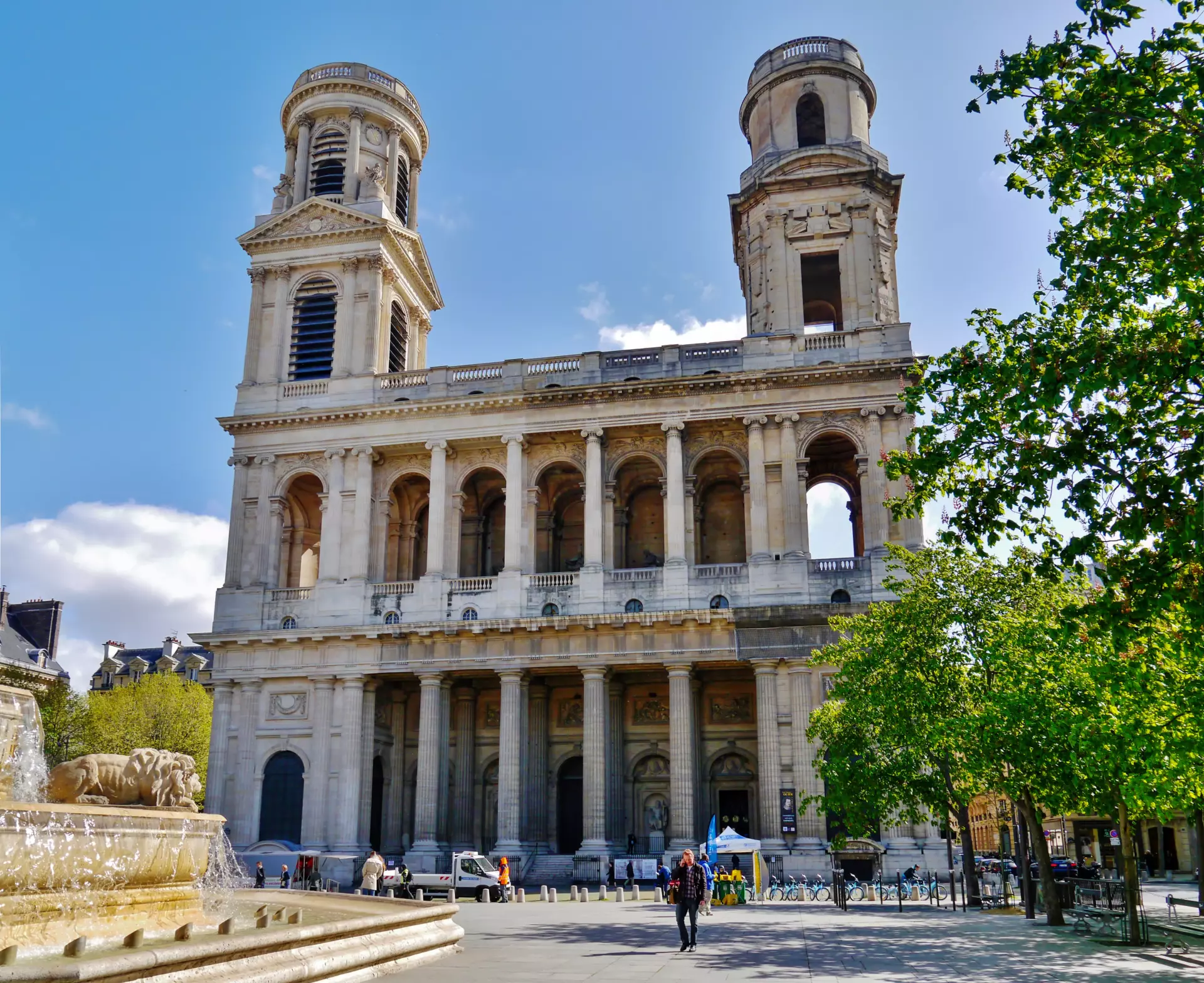
The oldest church in Paris, founded in the year 542 by King Childebert. The church as it exists today dates mainly from the 11th century, the period in which it became the center of a powerful Benedictine abbey. The Revolution witnessed the suppression of the abbey in 1794, when most of the monastic buildings were put to the torch. Earlier, 318 priests had been hacked to death nearby by a mob on 3 September 1792. The church underwent significant restoration in the 19th century, ensuring the preservation of the building, which by that date represented a fascinating mix of styles: 6th century marble columns placed alongside Gothic vaults and supported by Romanesque arches. Famous burials within the church include René Descartes (philosopher), Nicolas Boileau (poet) and King John Casimir of Poland, who had become (in 1669, before his death) abbot of the church's monastery.
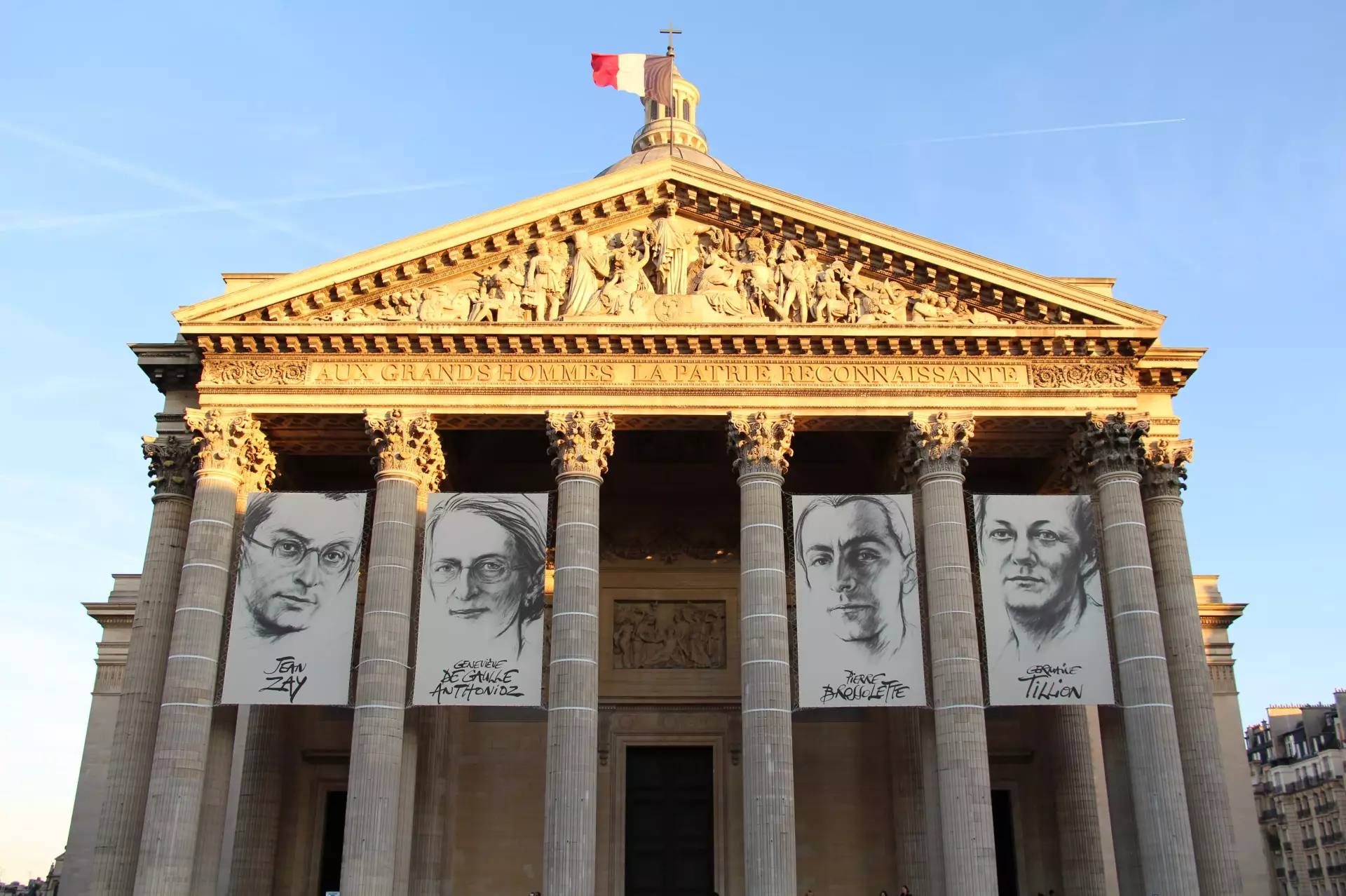
It was conceived by Louis XV as a grand neo-classical church honouring St. Geneviève, the patron saint of Paris. After the Revolution, the building was converted into a mausoleum for the great philosophers, military, artists, scientists, and heroes of the French Republic. Occupants of the crypt include Voltaire, Rousseau, Victor Hugo, Zola, the Curies, and Alexandre Dumas (reinterred here in 2002). The view from the dome (206 steps) is marvellous. Check tour departure times at the information desk. A fascinating reconstruction of Foucault's pendulum also hangs within the Panthéon.
The ancient medieval fortress and prison of the city's island, site of some remarkable medieval royal architecture and the scene of Marie Antoinette's imprisonment in the period leading to her execution in 1793; lots of revolutionary associations.
Reopened after extensive renovations, this small museum near the Louvre houses the Jean Walter and Paul Guillaume Collection, sold to the French Republic on very generous terms and numbering 143 paintings from the late 19th century and the first half of the 20th century (15 Cézannes, 24 Renoirs, 10 Matisses, 12 Picassos, 28 Derains, 22 Soutines). The collection joined the eight immense Water Lilies that Monet gave France in 1922 and which have been displayed since 1927 in two huge oval rooms purpose-built on the artist's instructions.
Built in 1717, the windmill is now part of a restaurant of the same name, and is easily visible from the street.
One of the largest collections outside Asia of Southeast Asian, Indian, Afghan, Chinese, Japanese, and Korean art.
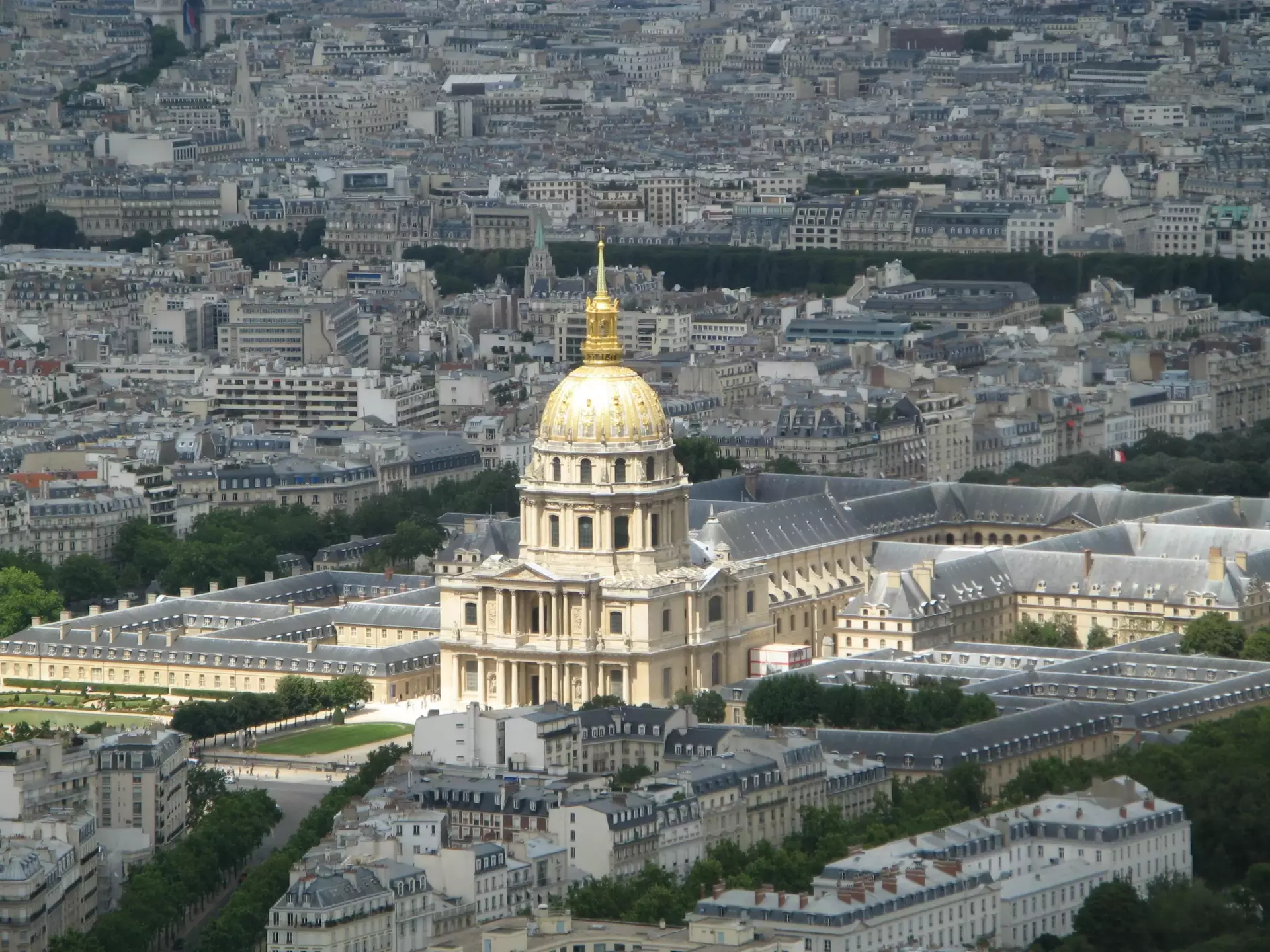
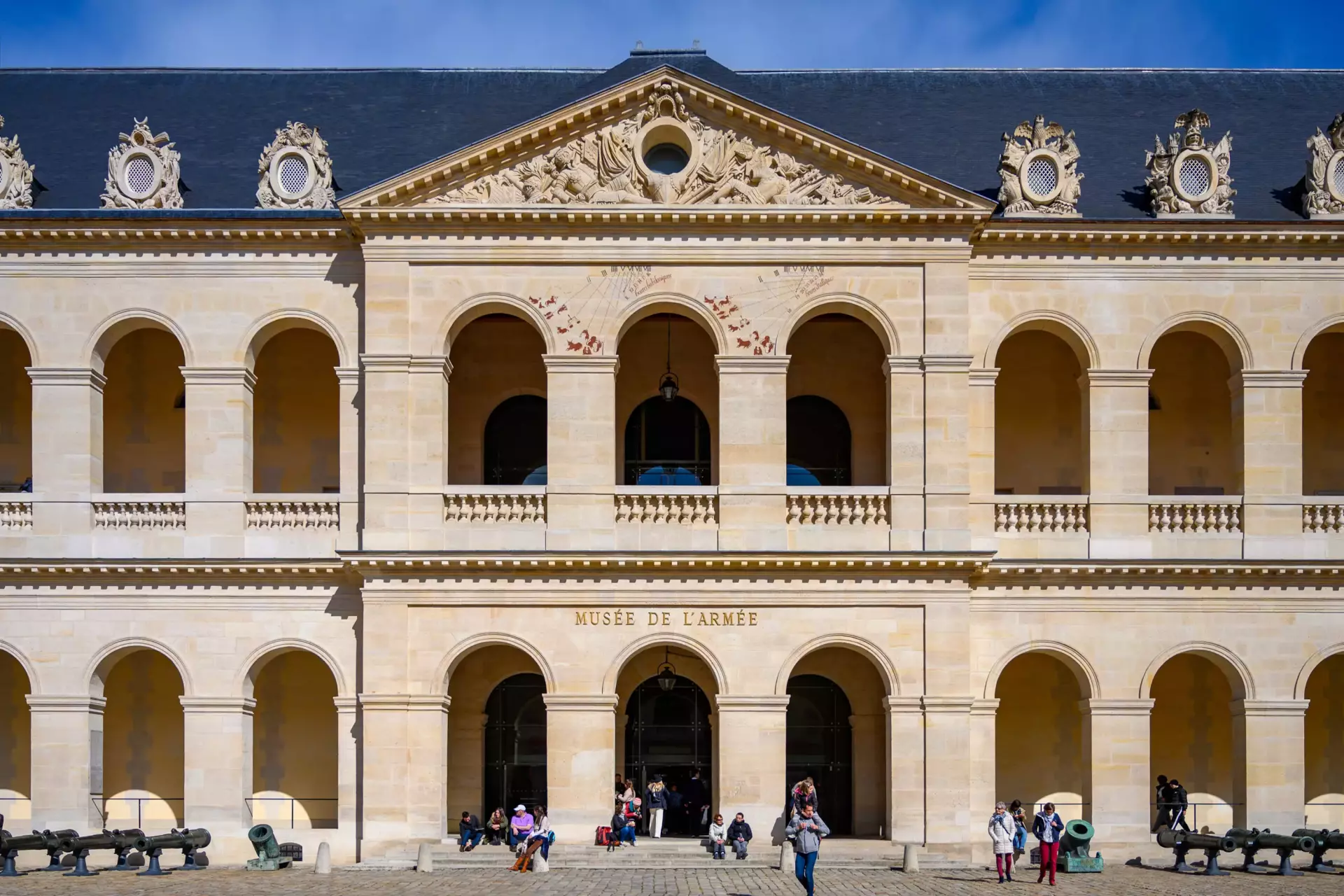
Founded in 1671 by Louis XIV as a hospital for 6,000 wounded soldiers—this function explaining the name of the building—the golden-domed Hôtel des Invalides still functions as an infirmary and now also houses the Musée de l'Armée. The church attached, l'Eglise du Dôme, houses the tomb of Napoleon.
Paris's international exhibition centre (the 4th largest in Europe) has millions of visitors annually.
A former fortress and royal residence at the edge of the city, alongside the Bois de Vincennes. Most of the building is open to public.
The Musée Grévin is a waxwork museum with some 500 characters arranged in scenes from the history of France and modern life.
A museum dedicated to the life and work of the great sculptor. The house contains an extensive collection, which is unusually well presented in a spacious building with big windows that are open in nice weather, which makes this museum double pleasant.
Since 2021 the 18th-century former Bourse de Commerce building has been the Paris home of the art collection of the French business magnate François Pinault, showing a rotating selection of contemporary artworks either newly commissioned or taken from his collection.
The Paris Botanical Garden, founded as the royal medicinal garden in 1626 by King Louis XIII's doctor, contains over 10,000 species. The grounds also include a small zoo known as La Ménagerie, and the Muséum National d'Histoire Naturelle, which includes the Grande Galerie de l'Evolution (where you can see thousands of naturalized animals from all over the world) and the 'Galerie de paléontologie et d'anatomie comparée' (same thing, but with skeletons).
The largest square in Paris with fantastic vistas in every direction. It was in this square (then called la Place de la Revolution) that the French King Louis XVI, Marie Antoinette and many others were guillotined during the Terror. The large Egyptian obelisk in the centre of the Place de la Concorde was brought from the Temple of Luxor.