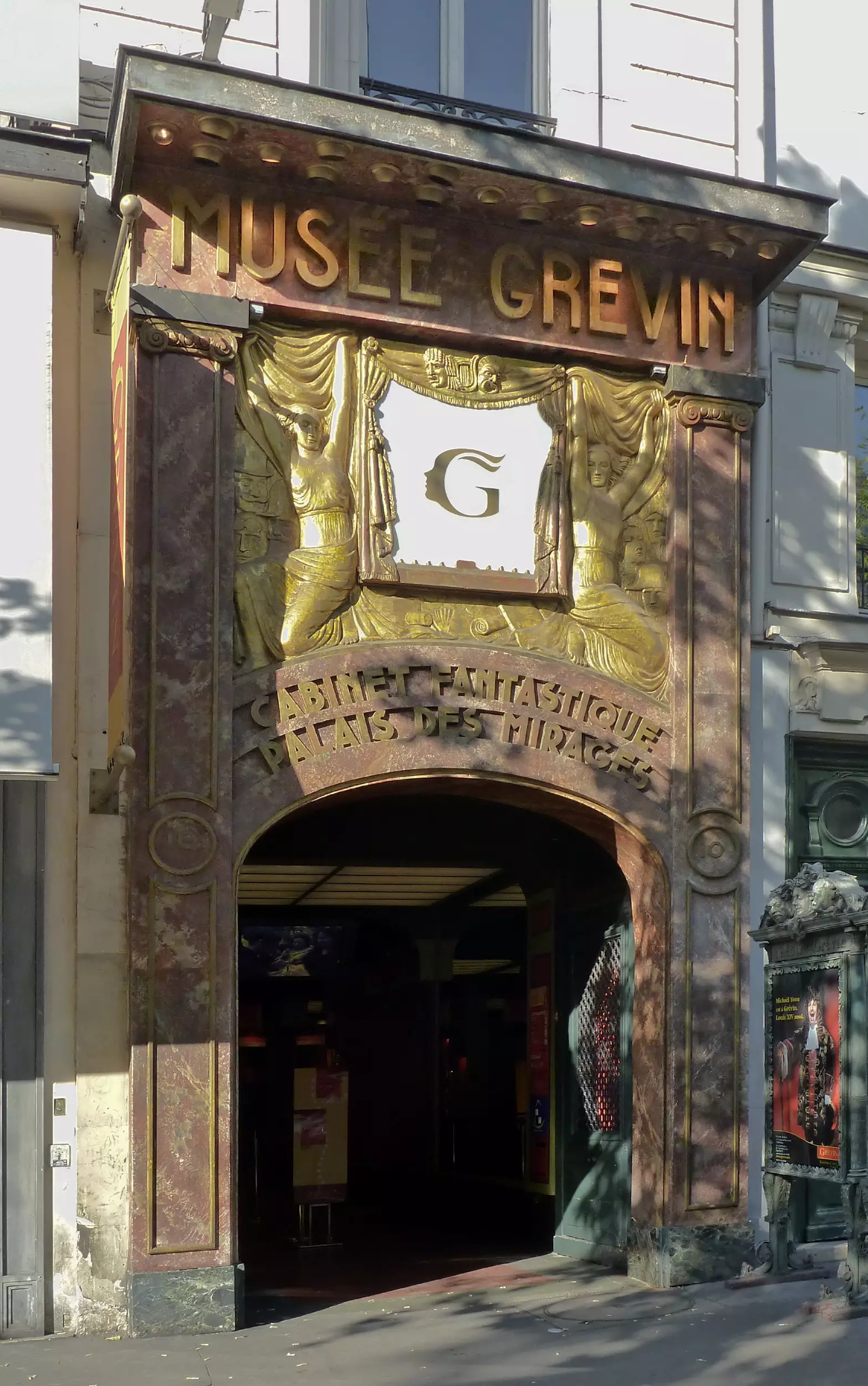
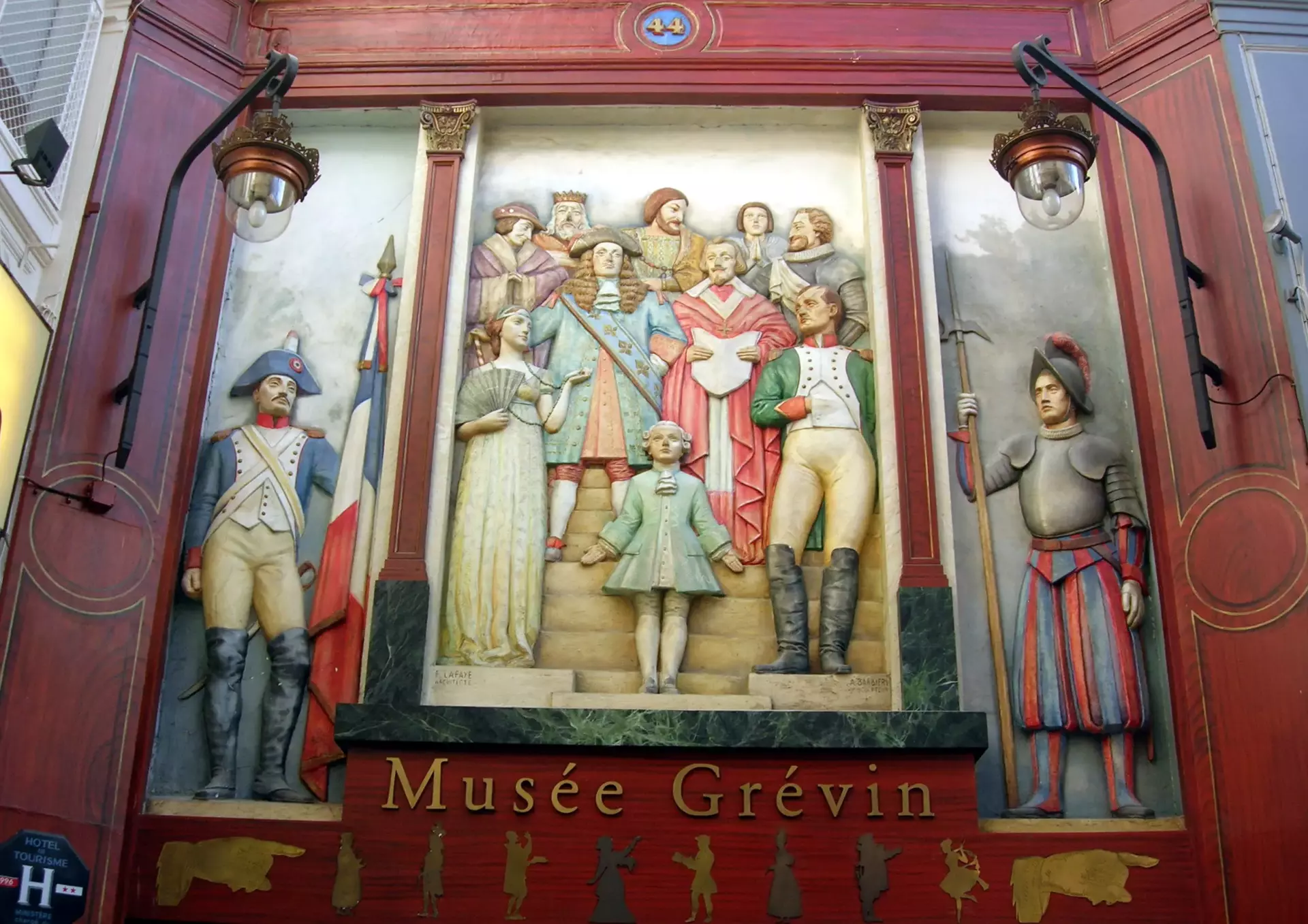
The Musée Grévin is a famous waxwork museum in Paris. Inside, visitors can see around 500 lifelike figures made of wax. These figures are carefully arranged in detailed scenes that tell stories from French history as well as moments from today’s world.
The museum’s exhibits bring together a variety of well-known people, from kings and queens to artists, actors, and leaders. Each wax character is shown in a carefully recreated setting, helping to capture important events and daily life in France. Alongside historical figures, the museum features modern celebrities and public figures, making the experience both educational and entertaining.
Source - https://en.wikipedia.org/wiki/Mus%C3%A9e_Gr%C3%A9vin
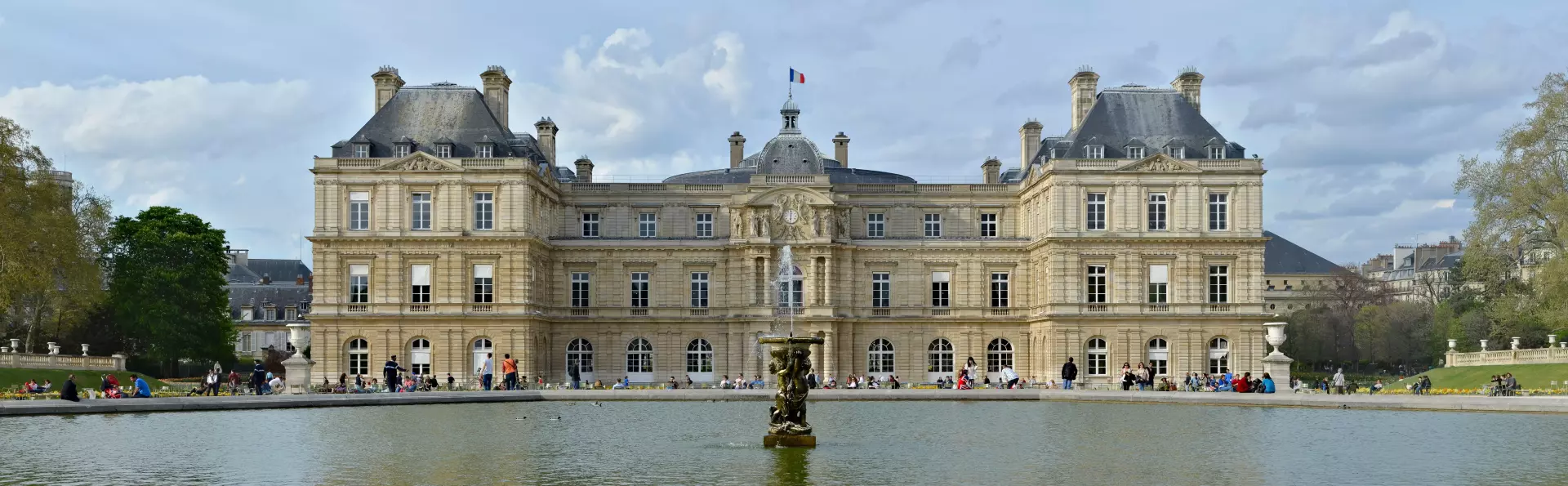
Visitable only by reservation and then only one Saturday every month. A richly decorated palace built for Marie de Medici in the early 17th century, which is now the French Senate. For those interested in seeing a Parisian monument normally unavailable to the public, or for those interested in the inner workings of the French Government. The large Luxembourg Garden is open to the public year-round. The garden is home to the Medici fountain, a children's playground, and vintage toy boats for hire that children push around in the Grand Bassin duck pond (a 90-year tradition).
A former fortress and royal residence at the edge of the city, alongside the Bois de Vincennes. Most of the building is open to public.
Housed in an amazing Art Deco building, purpose-built for the 1931 Colonial Exhibition, featuring an elaborate frieze across the front facade that depicts the achievement of French overseas territories. It houses an Aquarium and an Immigration Museum. The aquarium can be seen in about an hour and is popular with families with small children.
A must for anyone interested in the history of the American Revolution. This small cemetery includes three mass graves from the French Revolution, plus a section that includes many of France's most noble families that lost members during the French Revolution and consequently have a continuing right to be buried there. In the farthest right hand corner is the tomb of General Lafayette, the friend and fellow soldier of George Washington. Beside him is his beloved wife plus other members of her family, the de Noailles, who were almost completely wiped out during the French Revolution because of their closeness to the Court. Since 1834 the American flag has apparently flown continuously over his grave, even during the German occupation of Paris during World War II. Well worthy of a visit.
The bridge is widely regarded as the most ornate, extravagant bridge in the city. It is classified as a French Monument historique.
A little district within the district. Very charming little streets on a hill on the west end of the 13 district. Nice for lunching/dining activities. This is the place where the band "Mano Negra" was hanging around.
One of Paris's best kept secrets, painted by Monet numerous times. It is a very elegant centre of green in the middle of cosmopolitan Paris. Make sure you check out the statues, entrance rotunda and the surrounding mansions. Thanks to Haussmann himself this precious slice of parkland was reserved for the enjoyment and leisure of the people of Paris. It is unusual in France due to its casual, informal "English" style planning, and is a contrast to other Parisian parks such as the classically laid out and formal Luxembourg Gardens and the Tuileries. Randomly placed throughout the park are scaled-down architectural replicas including an Egyptian pyramid, Dutch windmill, and a Chinese fort. Free Wi-Fi in the park.
It was conceived by Louis XV as a grand neo-classical church honouring St. Geneviève, the patron saint of Paris. After the Revolution, the building was converted into a mausoleum for the great philosophers, military, artists, scientists, and heroes of the French Republic. Occupants of the crypt include Voltaire, Rousseau, Victor Hugo, Zola, the Curies, and Alexandre Dumas (reinterred here in 2002). The view from the dome (206 steps) is marvellous. Check tour departure times at the information desk. A fascinating reconstruction of Foucault's pendulum also hangs within the Panthéon.
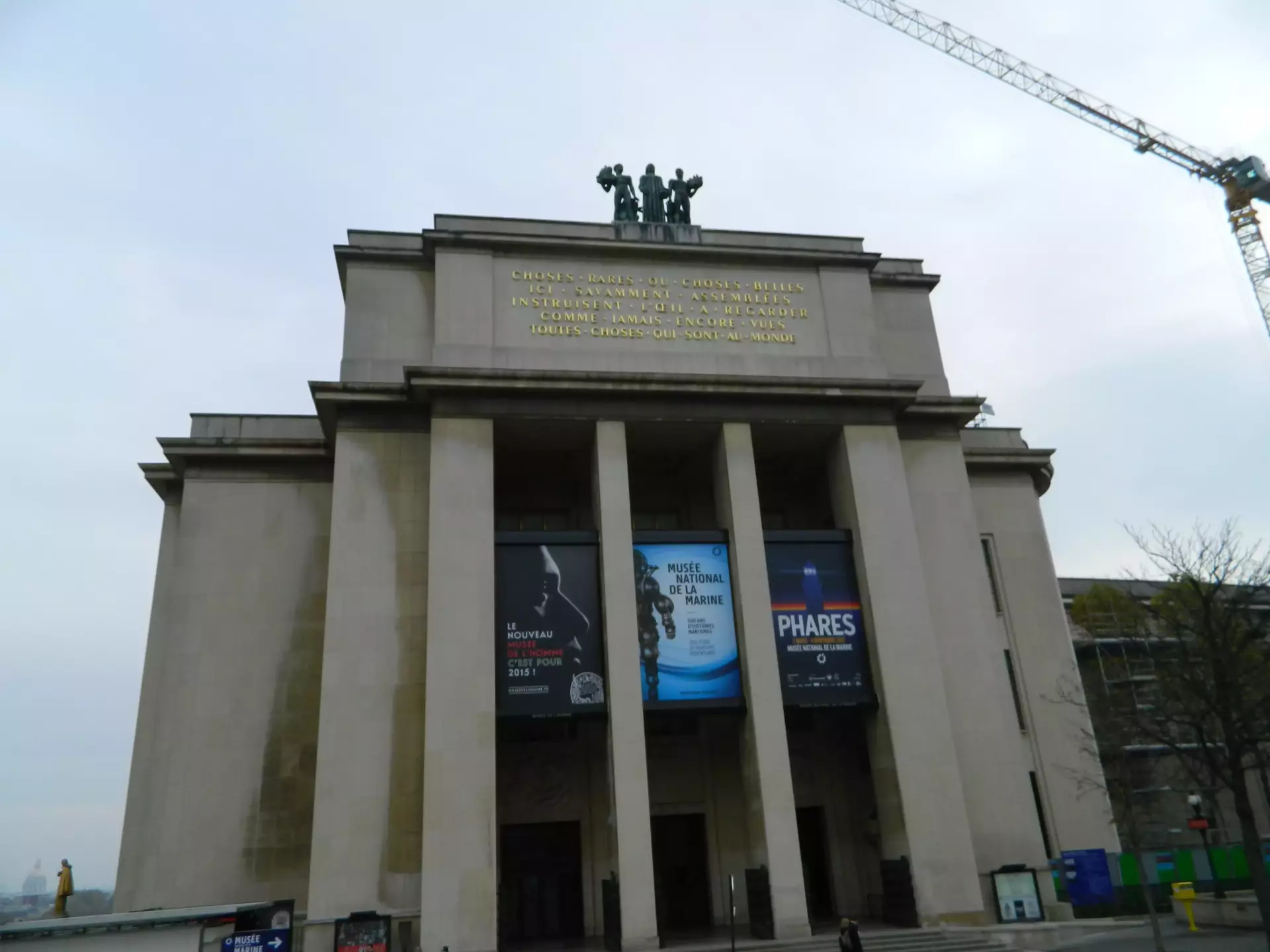
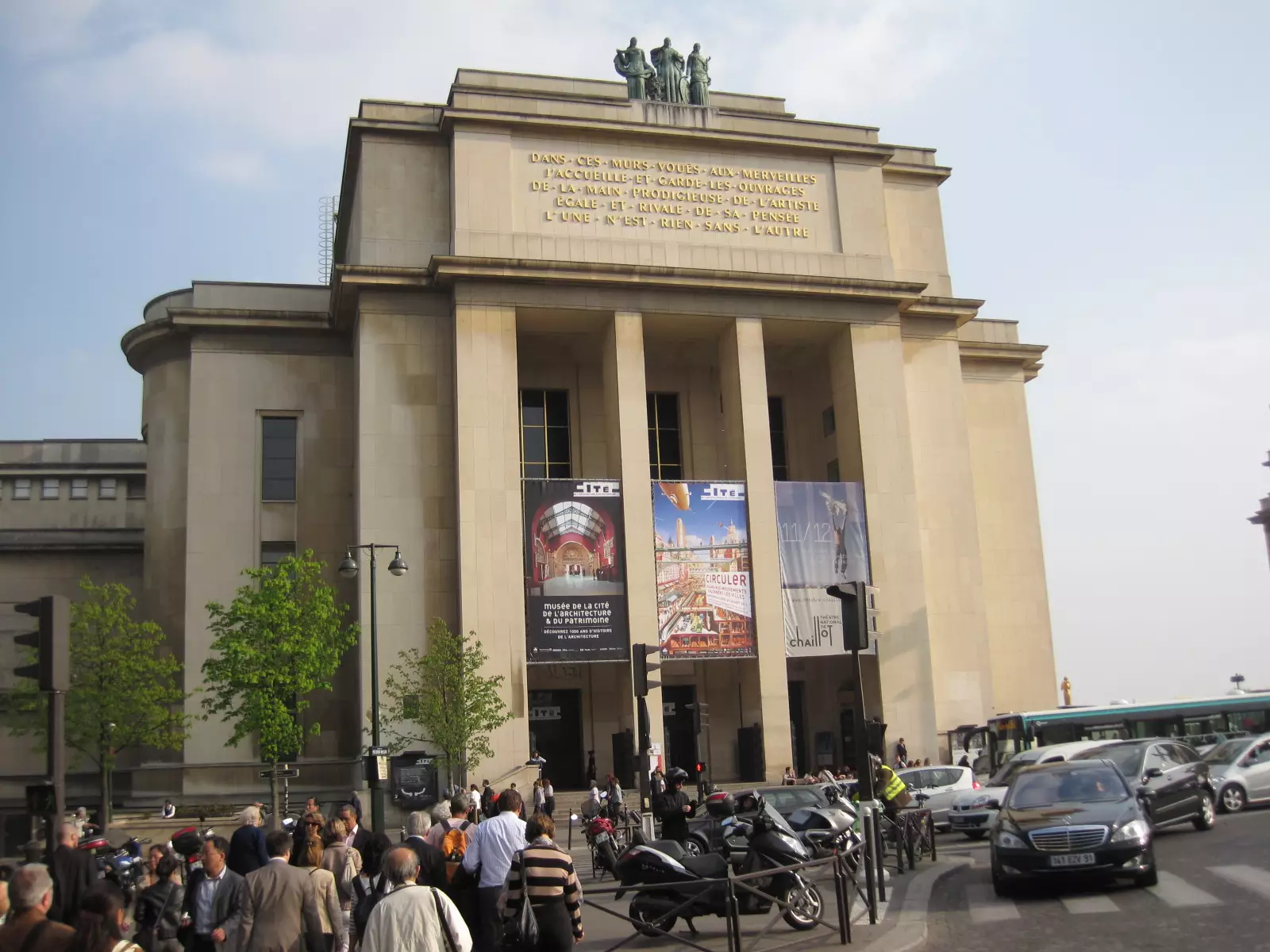
Great perspective on the Eiffel Tower and Left Bank from Place du Trocadéro in between the two buildings of the palais. Former location of the Palais du Trocadéro. It accommodates three museums, an aquarium, and the Theatre Nationale du Chaillot.
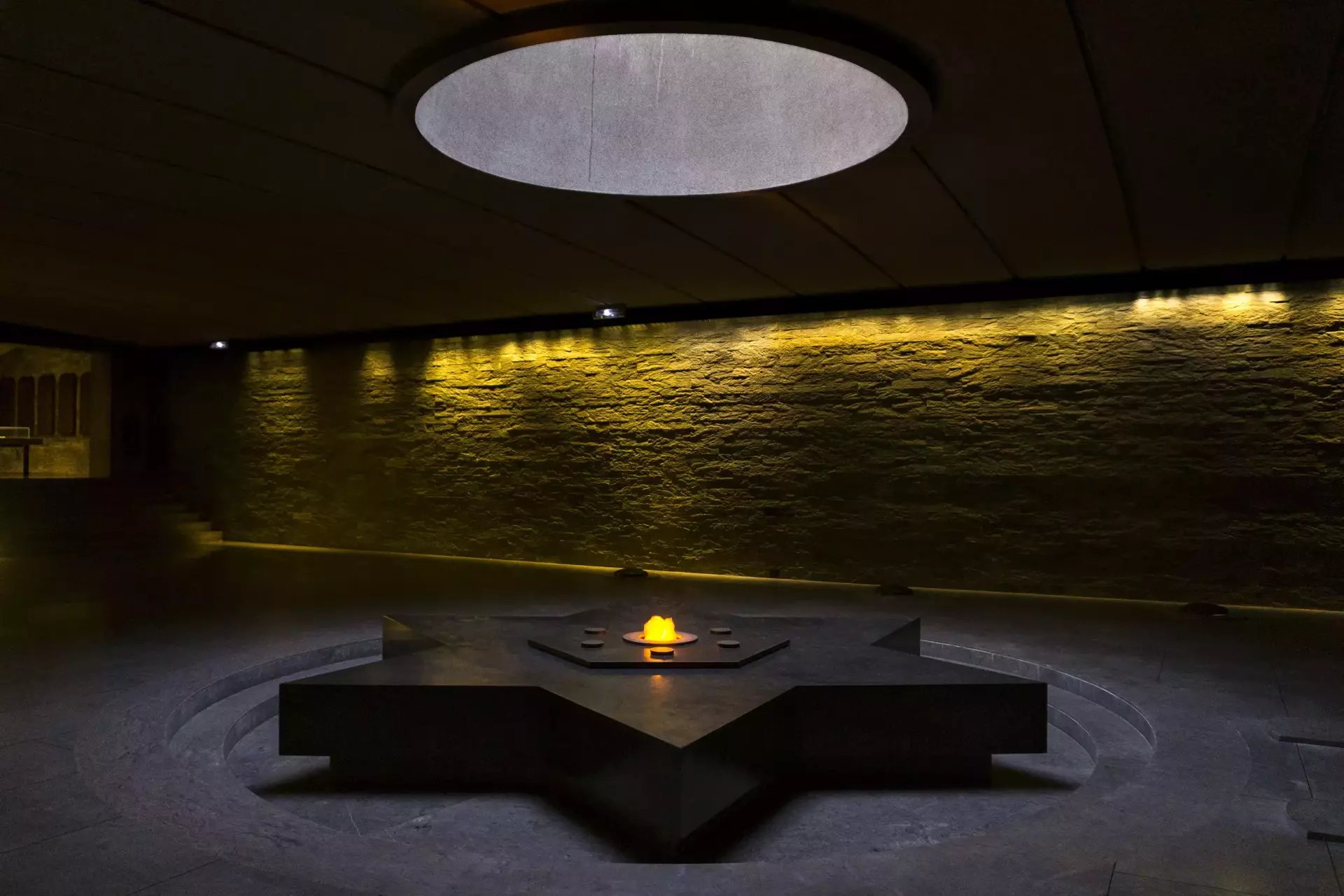
The largest French museum of Jewish art and history
The Jewish quarter, with many small delis and shops. Lively on most days except for Saturdays.
The two pavilions were built in 1784 to 1787 by the French architect Claude-Nicolas Ledoux, who erected many similar toll houses at the entrances to the city.
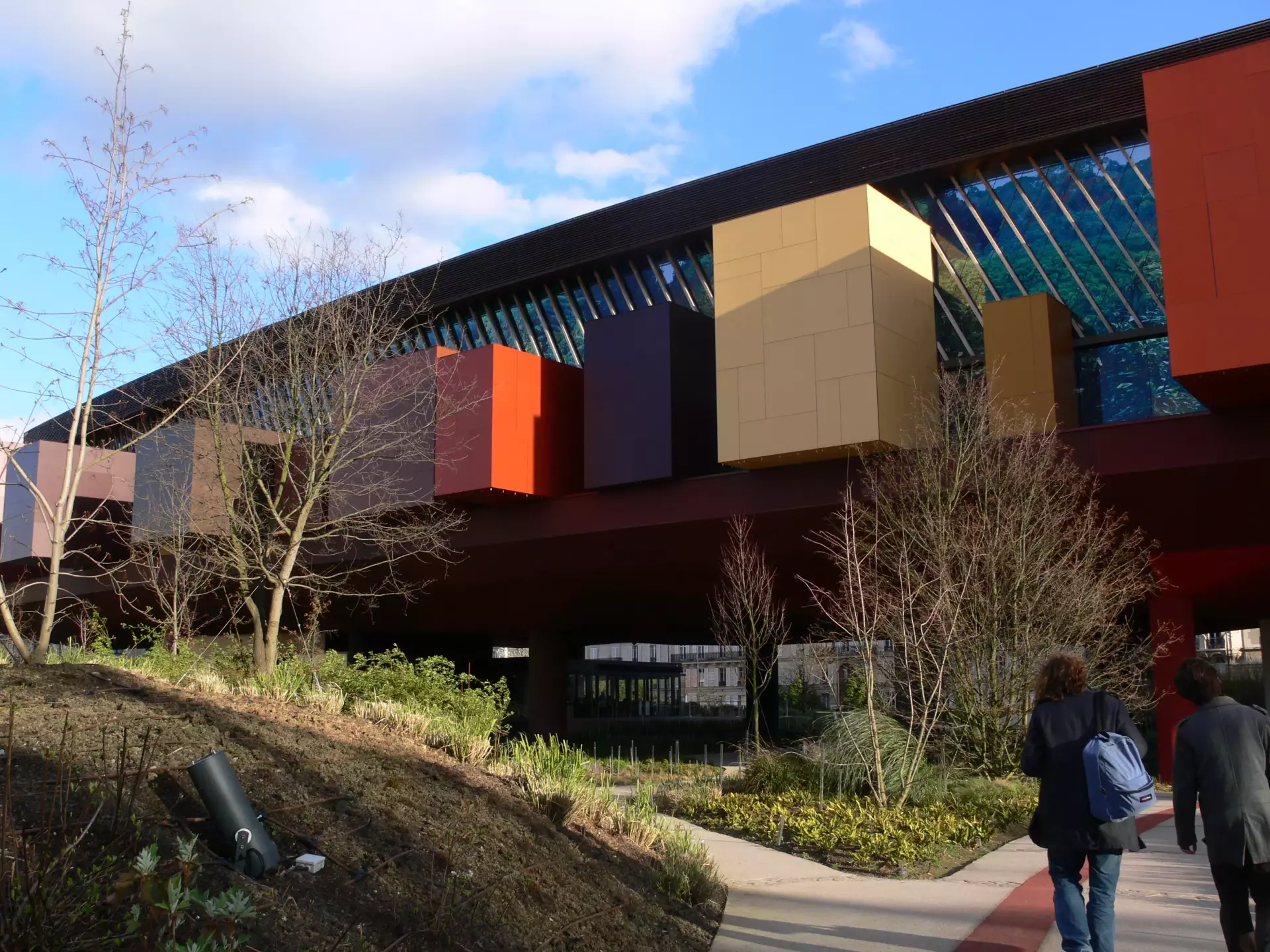
Opened in 2006, this is the newest and the most modern of Paris' great museums, housing an outstanding collection of tribal art, with a particular emphasis on France's former (and present) territories in Oceania and Africa. The museum is large and you can easily spend half a day browsing, especially if you pause to explore the multimedia presentations.
One of the best-known and most beautiful churches in Paris, in the guise of a Corinthian order classical temple. Construction started in 1764, although the church was not finally consecrated until 1845. The Madeleine has a lavish interior of marble and gold.
Soaring stained glass windows beaming ample light onto the rich primary colours of the tile mosaics on the floor, this photogenic church was built by the French kings to house the relics of the Crown of Thorns. Make sure you go on a sunny day, as the highlight of this small chapel in Rayonnante Gothic style are the large stained-glass windows which soar up to near the vaulted ceiling. Also of interest is the extremely ornate lower level. If it happens to be rainy or cloudy, give Sainte-Chapelle a miss, as the play of coloured lights on the floor is well worth the wait for a sunnier day. As the chapelle is inside the Courts of Justice, there will thus be a security check.
The Palais de Tokyo is Paris's largest specialist contemporary art exhibition venue, owned and operated by the national government. The building dates to 1937 and also includes the Museum of Modern Art of the City of Paris.
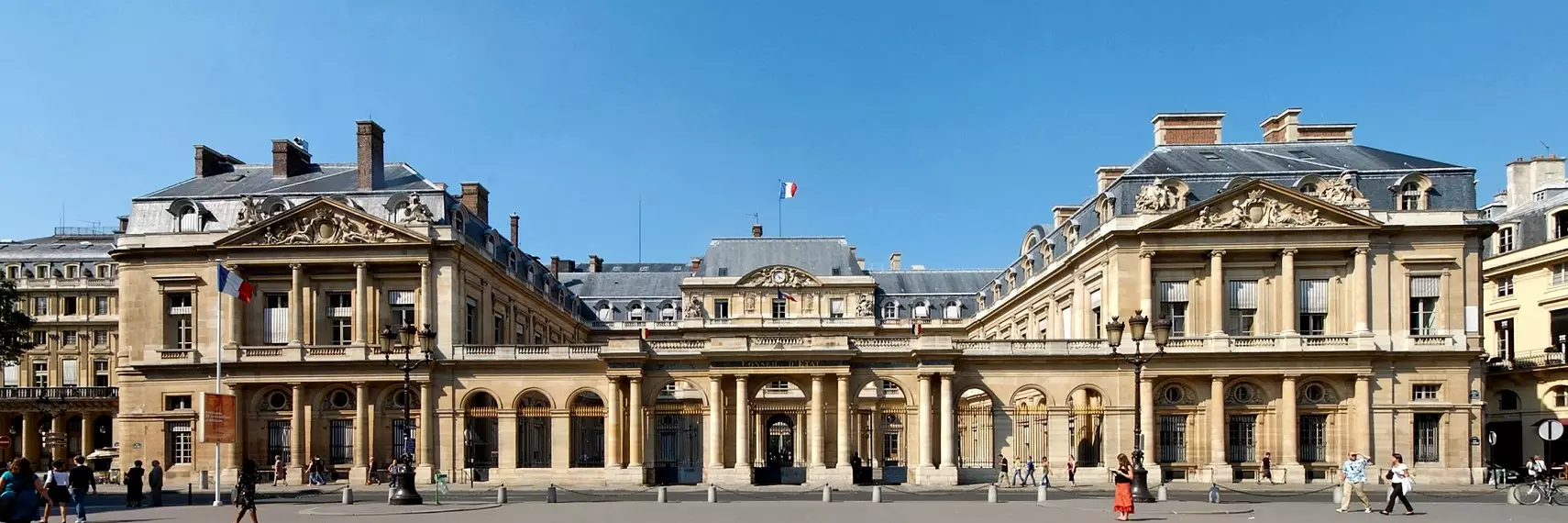
Ordered by Cardinal de Richelieu (1585-1642), King Louis XIII's prime Minister in 1629 (completed in 1636); originally called Palais Cardinal; it became Le Palais Royal when Anne d'Autriche, Louis XIII's wife, came to live here to get away from the Louvre palace. It eventually housed Louis XIV until the move to Versailles. It includes also a beautiful garden Les jardins du Palais Royal, enclosed by the buildings. It's been the theatre of one of the seminal events of the French Revolution (Camille Desmoulins made a famous declaration here in 1789). The Théatre Français nearby was built in 1716. There are numerous restaurants inside the garden , including famous Le Grand Véfour. There's also the controversial Colonnes de Buren, striped columns installed within the inside yard amid the 17th century architecture.
The early Gothic Cathédrale de Notre Dame (Our Lady) has a 12th century design but wasn't completed until the 14th. Still it is a good example of the development of the style, though the west or main portal is a bit unusual in its rigidity. A April 2019 fire caused severe damage, but after extensive renovation the cathedral was reopened to the public in December 2024.