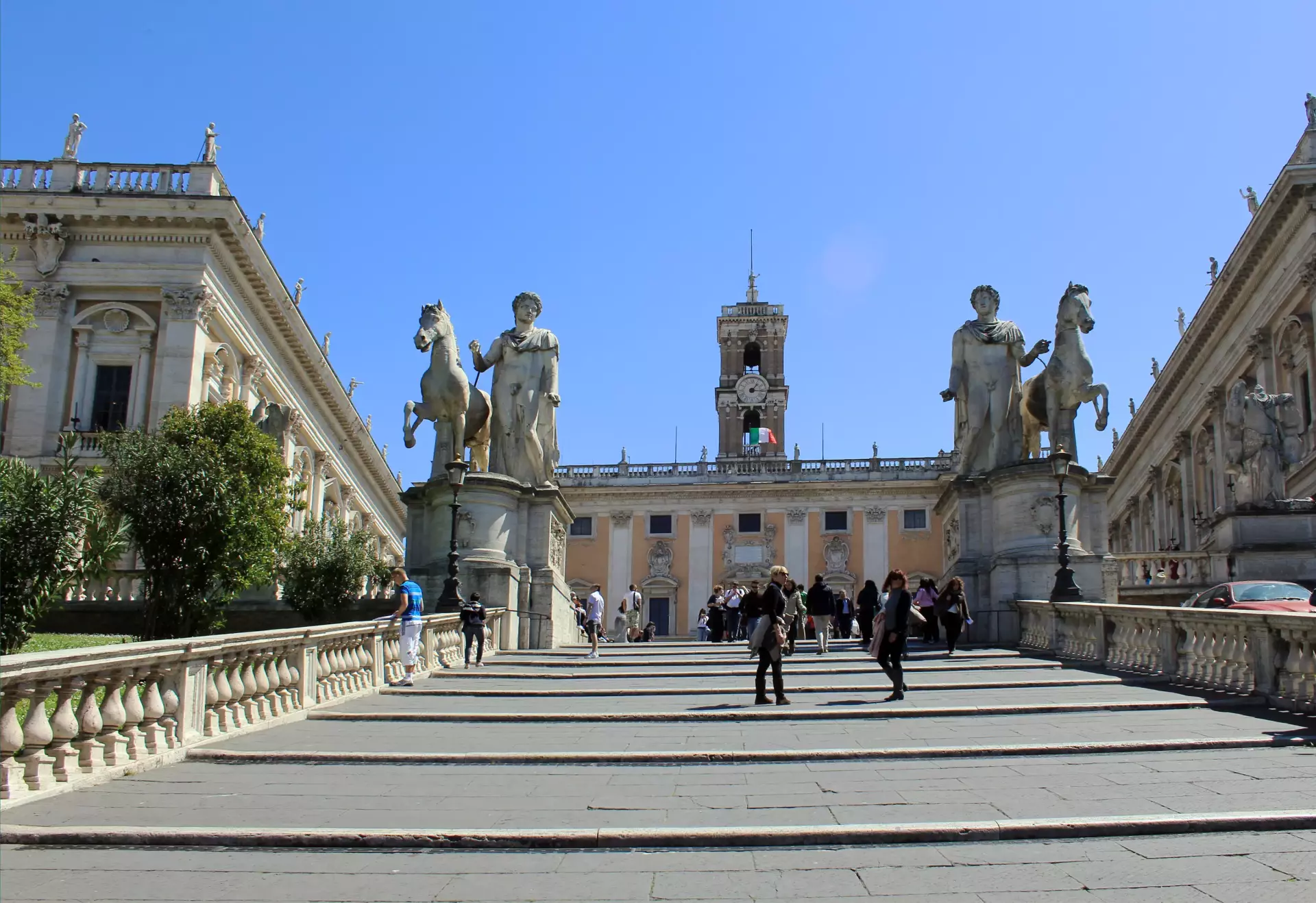
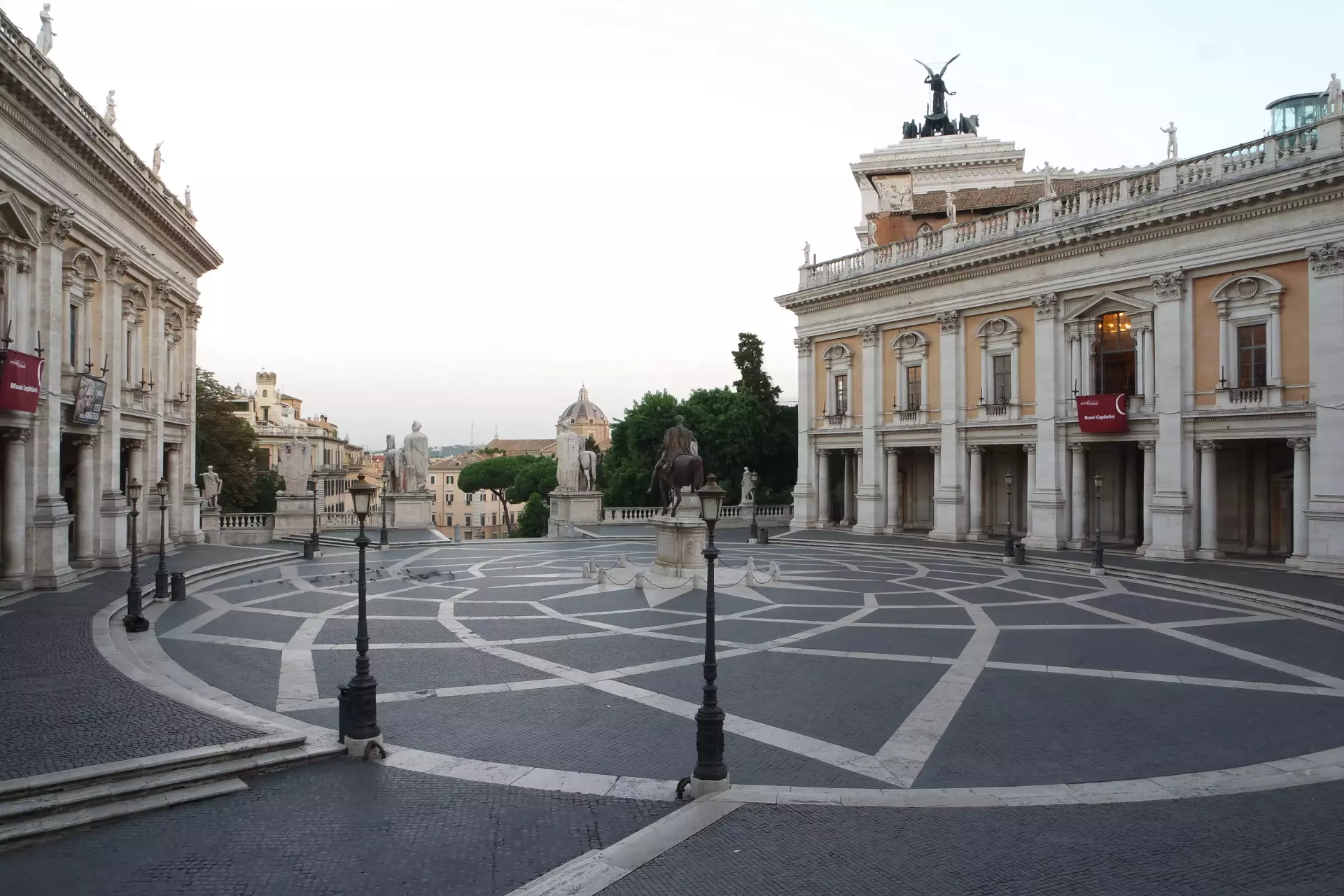
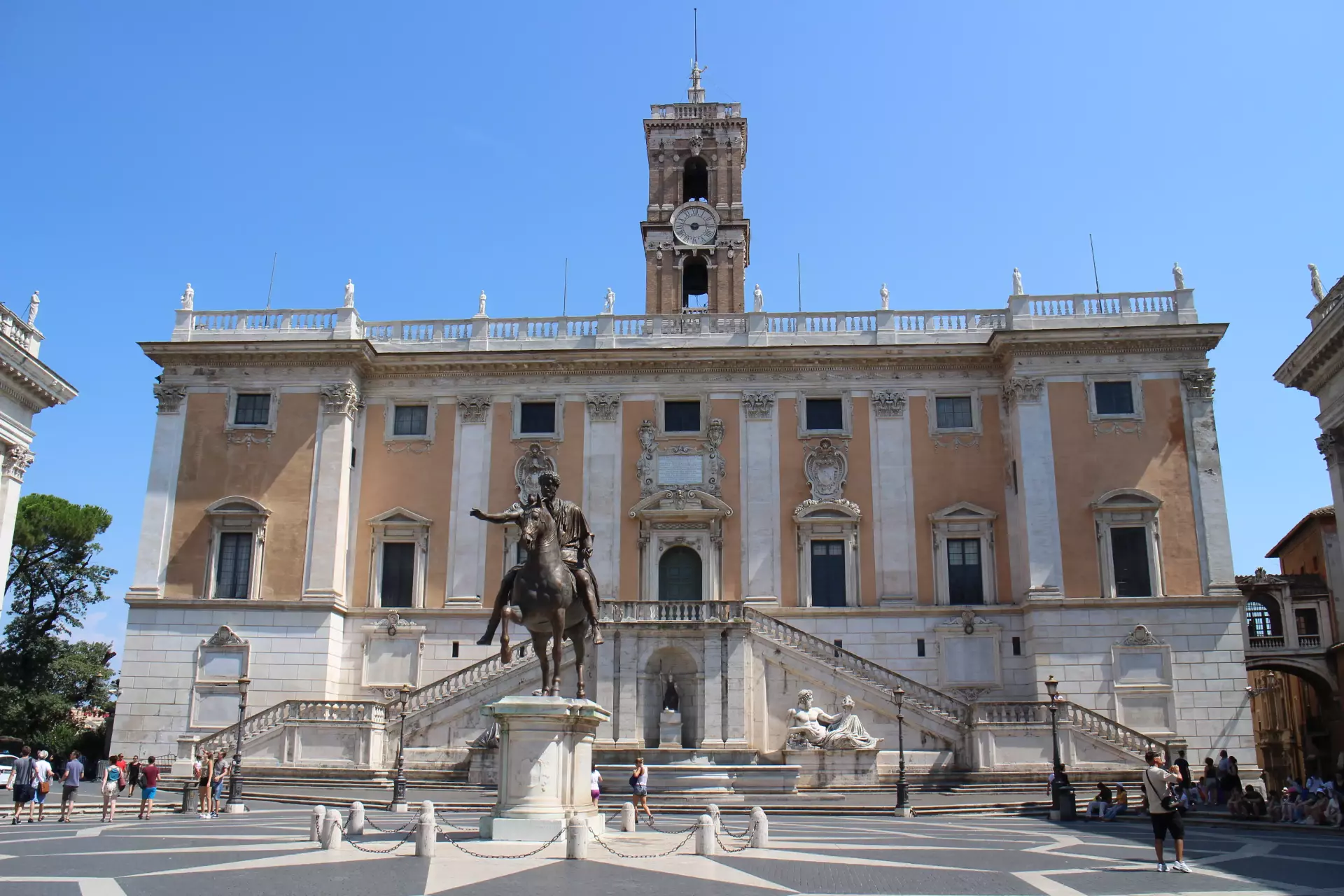
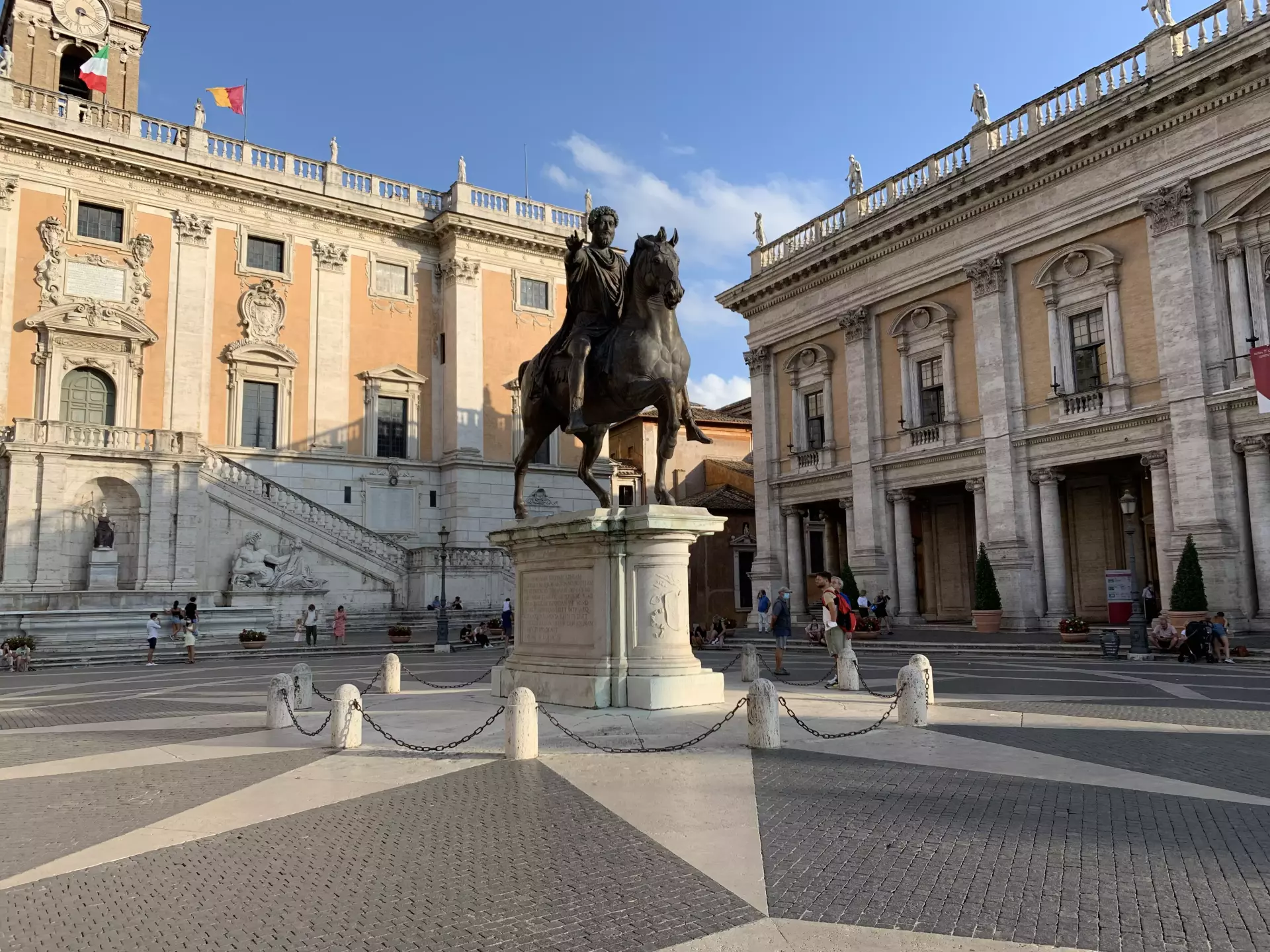
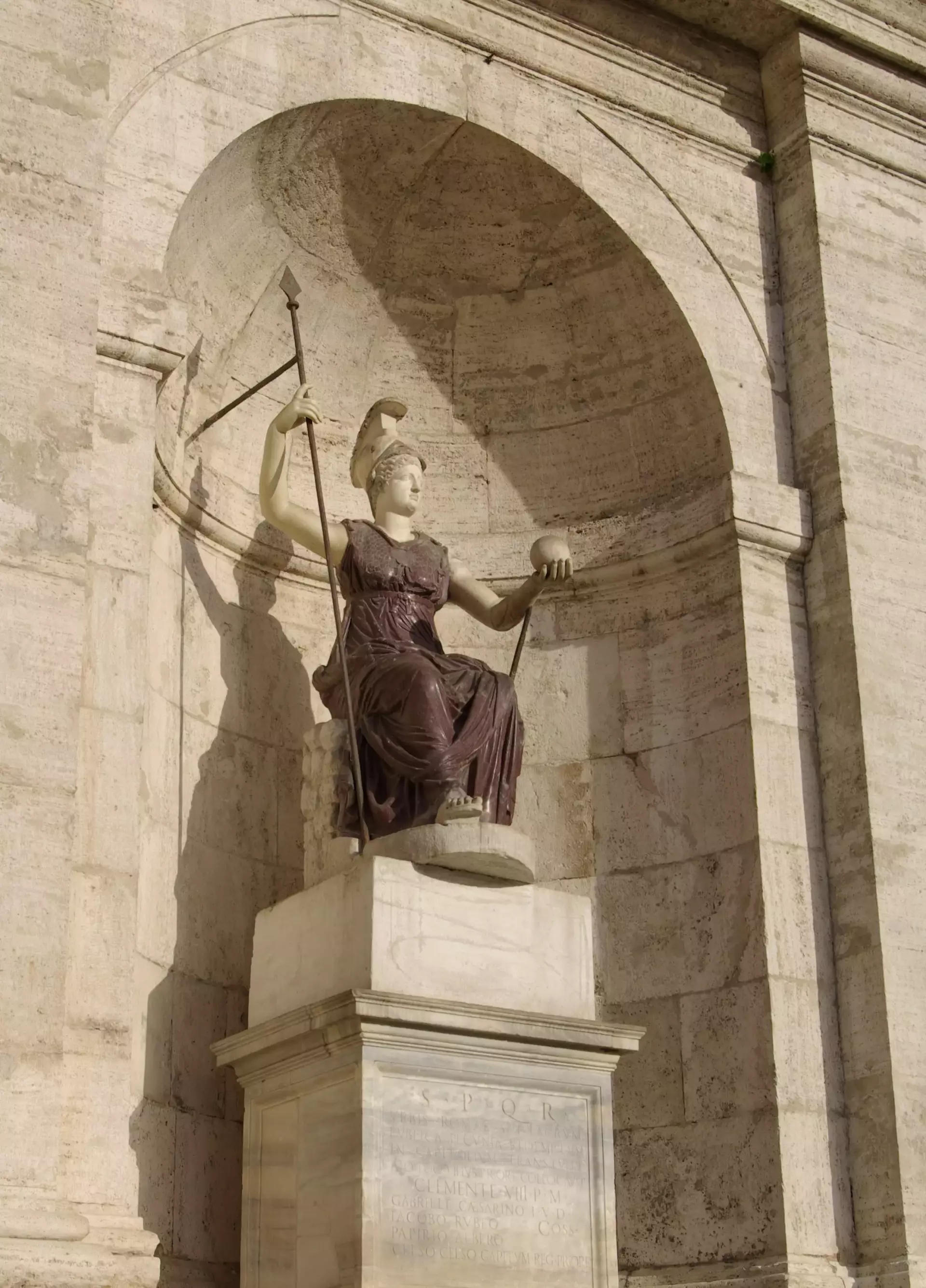
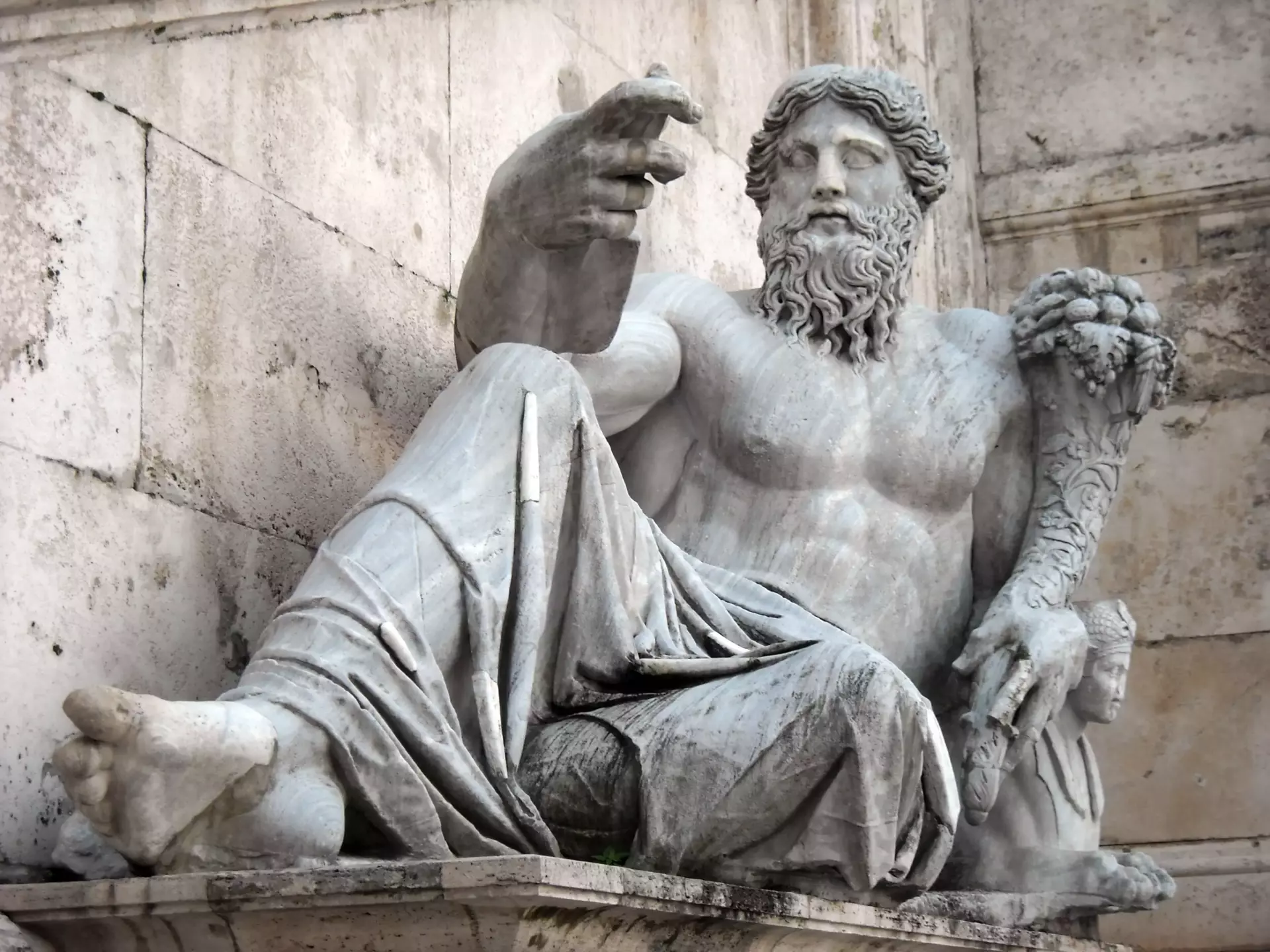
Perched atop the Capitoline Hill, Piazza del Campidoglio is one of Rome’s most captivating and historic squares. As you meander up the elegant steps, you’re immediately struck by its harmonious symmetry and the sense of grandeur that surrounds you—a testament to the genius of its designer, Michelangelo.
Michelangelo’s vision transformed the uneven, ancient site into a masterpiece of Renaissance urban planning. The piazza’s graceful oval design is framed by three majestic palazzi, each meticulously arranged to draw the eye to the center, where a striking equestrian statue of Marcus Aurelius stands. The statue you see glinting in the sunlight is a faithful replica; the ancient original, spared from the ravages of pollution, is safely preserved inside one of the museums that line the square.
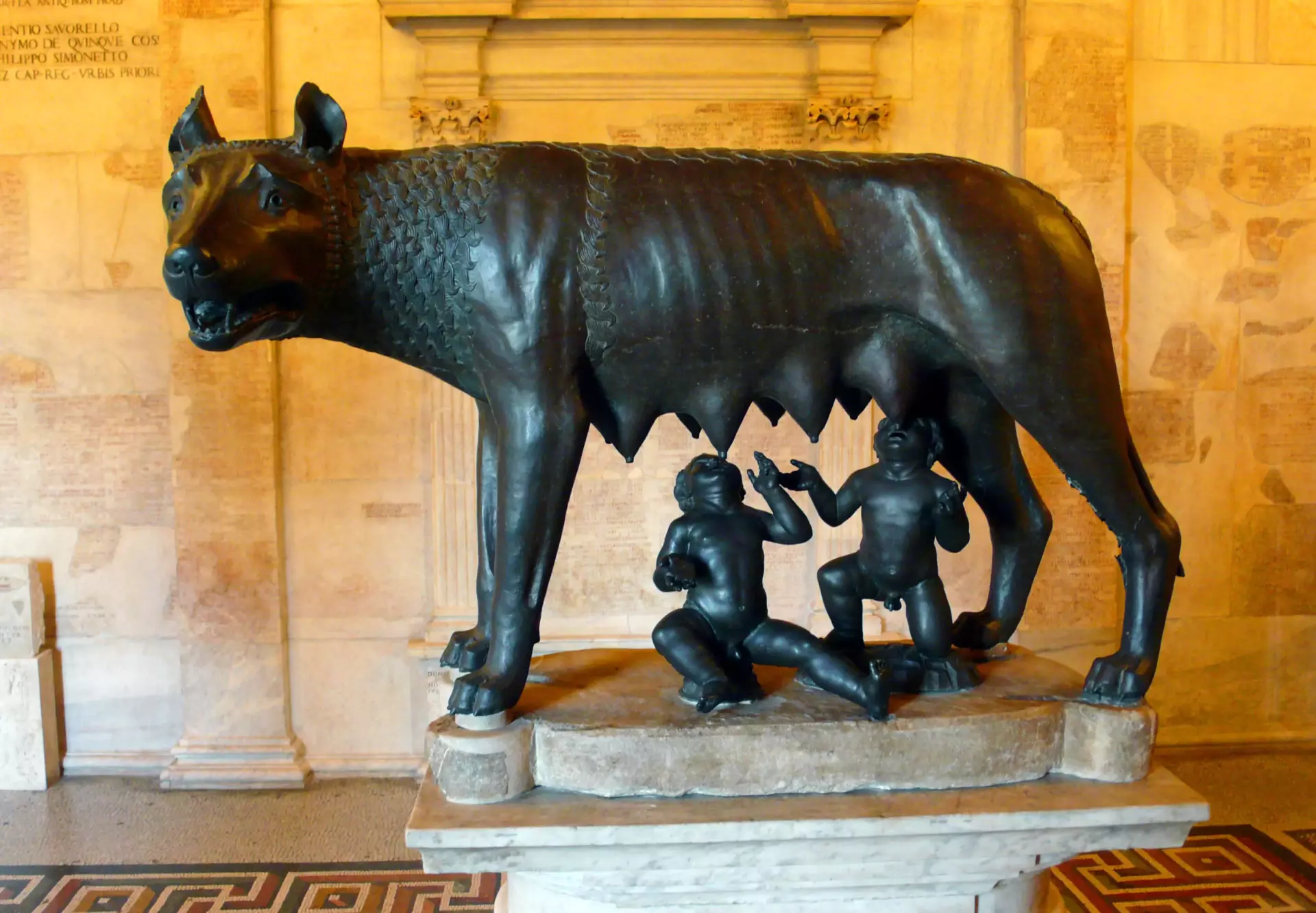
The Capitoline Museums, housed within the elegant palaces flanking the piazza, are a treasure trove for art and history lovers. Within these hallowed halls, you’ll encounter priceless artifacts, classical sculptures, and centuries-old paintings that tell the story of Rome’s illustrious past. The museums offer more than just art—they provide a journey through time, deepening your appreciation for the Eternal City.
Don’t miss the opportunity to stroll behind the Palazzo Senatorio, the dignified seat of Rome’s city government. Here, a breathtaking viewpoint awaits, offering a sweeping vista over the Roman Forum. From this vantage point, the ruins of ancient temples and basilicas stretch out before you, weaving together the threads of Rome’s history in a panorama that’s simply unforgettable.
Source - https://en.wikipedia.org/wiki/Piazza_del_Campidoglio
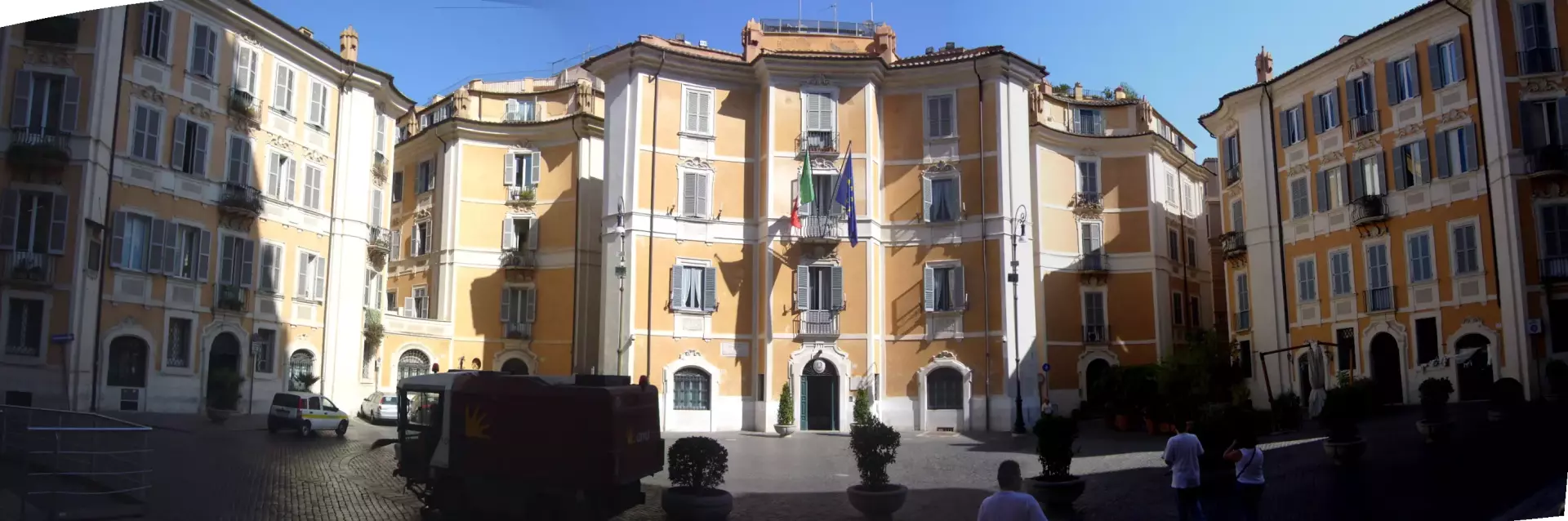
This little church is hard to find but well worth the extra effort although it is often closed when you get there. One of Borromini's masterpieces. It is located only a block from Piazza Navona, but not usually visible from the street, as you must enter the courtyard of an old palazzo to reach the church. Sant'Ivo is a small church the dome of which is shaped like the Star of David, but with every other point rounded. The steeple seen from the outside looks like it has a staircase wrapped around it that ascends to heaven. As the church was commissioned by the Barberini family that produced a number of popes and whose family symbol was the bee—some say the steeple resembles the stinger of the insect.
Brand new museum designed to celebrate the art and architecture of the 21st century.
The Catacombs of Domitilla are considered to be the best preserved of all Roman catacombs. They are the only ones still to contain bones. Domitilla also has a subterranean basilica, much of which was reconstructed in 1870.
Perhaps the most fascinating building in Rome. The core of the structure began life as the mausoleum of Emperor Hadrian, built between 135 and 139 AD. Subsequent strongholds built on top of the mausoleum were in turn incorporated into a residence and castle by medieval Popes. The building was used as a prison until 1870 but now houses a museum. Opera buffs will be exhilarated to visit the balcony from which Tosca leaps to her death. Film buffs will recognise it as a setting from Angels and Demons.
A tomb for the wealthy Gaius Cestius, who died in 12 BC. Admission to the monument only by guided tours on specific dates (2nd and 4th Saturday every month, and in combination with a ticket to the Museum of Via Ostiense also on the 1st and 3rd Saturday of every month).
Next door to the Pyramid, this fine gate in the Aurelian Wall is named after St. Paul as the Via Ostiense leads to the basilica of St. Paul's Outside the Walls (see Rome/South).
The western end of the ancient Via Appia road connecting Rome to Brindisi in the heel of Italy, and as such the third world heritage site in Rome together with the Old Center and the Vatican. As such it's an important historical location, even if the remains of the gate aren't as impressive as the city's major sites. As Via Appia heads southeast out of Rome, and after a few kilometers the route is officially named Via Appia Antica and starts looking more historical: it gets narrow as a city street, the asphalt is replaced by a rock surface and the road is lined with parks and park-like areas and walled old buildings. This section has been described as the world's longest museum.
The Scala Sancta (Holy Stairs) is, according to Roman Catholic tradition, the staircase used by Jesus Christ to approach Pontius Pilate to be sentenced to death. Attracts numerous pilgrims who climb the stairs on their knees.
Inaugurated in 217 AD and used until the 6th Century. The baths were big enough for 1600 bathers at a time. Impressive and well-preserved. Used for operas in summer months (see Opera di Roma for details) and was the location for the famous "three tenors" concert in July 1990, at the time of the World Cup (soccer).
A truly monumental stairway of 135 steps (similar to climbing eight flights of stairs), built with French funds between 1721 and 1725 in order to link the Bourbon Spanish embassy to the Holy See (still located in the piazza below), with the Bourbon French church (its monastery founded in 1495) above. Don't sit on them though, or eat, or push a baby stroller on them, or do anything else that might obstruct pedestrians, make them dirty, or cause additional wear and tear, or else you will have to pay a fine that ranges from €250 to €400.
A lovely, if somewhat run-down park (parts of it are blocked due to the poor state of the roads) with statues and a great view on the city.