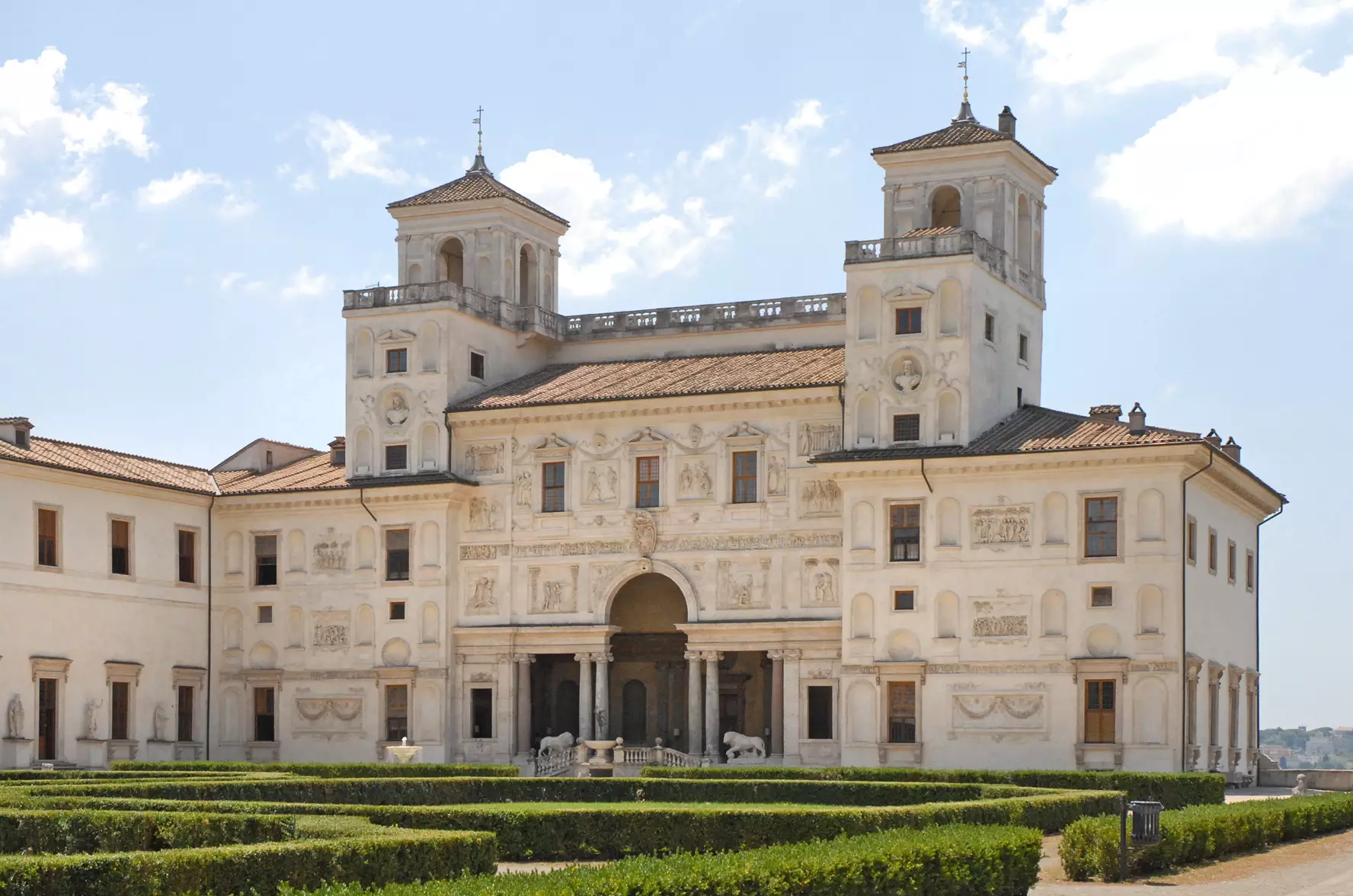
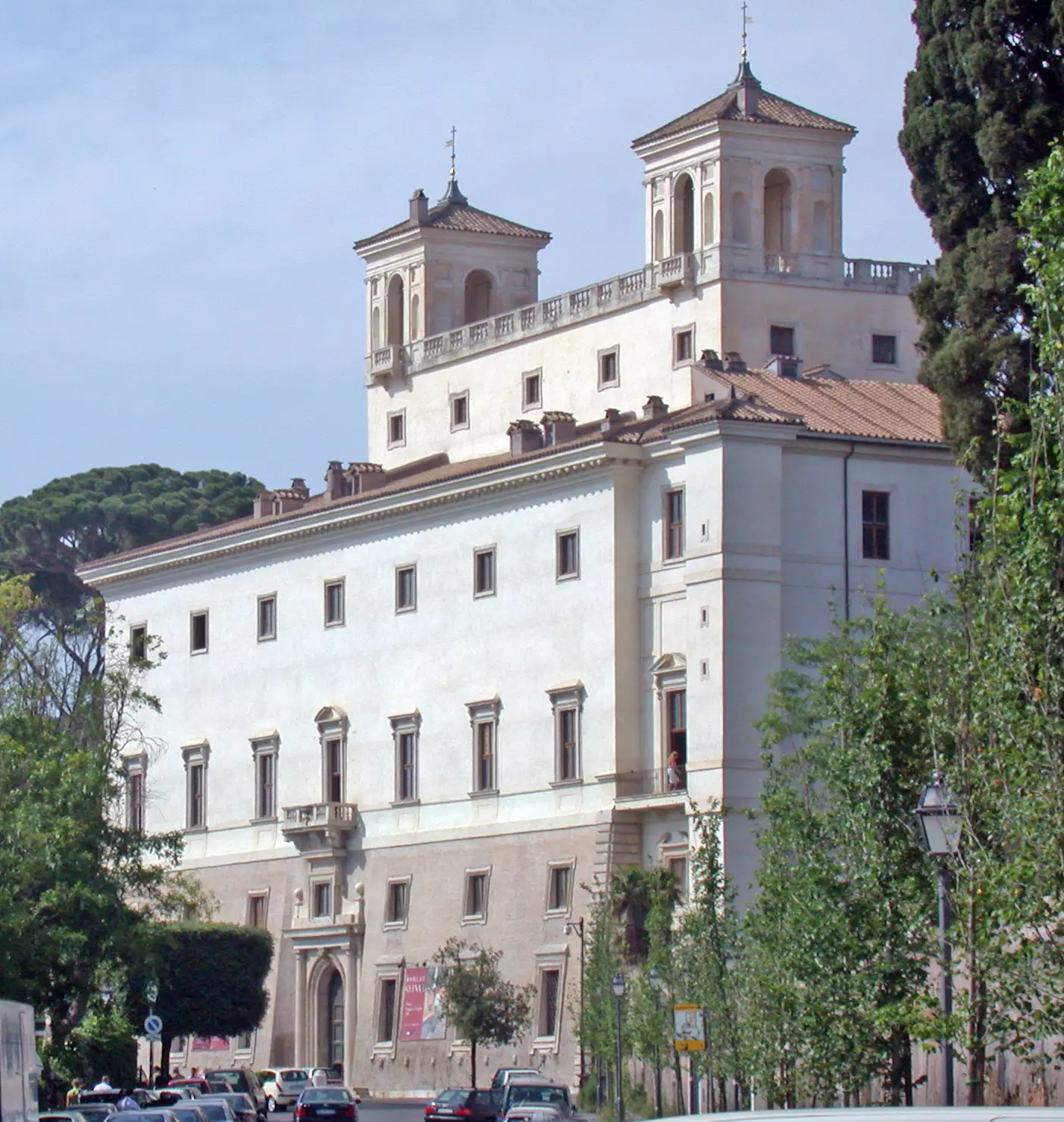
Villa Medici stands as an important landmark in Rome, with a history that stretches back to the Renaissance. The villa was built in 1544 at the command of Cardinal Ricci di Montepulciano. Several decades later, in 1576, ownership passed to Cardinal Fernando di Medici, linking the villa with one of Florence’s most famous dynasties.
In 1803, Villa Medici became home to the French Academy in Rome. This prestigious institution was originally established in 1666 by King Louis XIV of France. The goal was to give promising painters the chance to study classical art and architecture in the heart of Rome. Over the centuries, the academy attracted some of the most celebrated artists in history. Nicolas Poussin was among the first students, while Jean-Auguste-Dominique Ingres later served as director. Not only painters, but also musicians such as Hector Berlioz and Claude Debussy spent time at the academy, shaping their creative journeys within these historic walls.
Today, Villa Medici continues to play a role in the arts. The building hosts occasional concerts and exhibitions in a unique setting. Visitors are also welcome to explore the villa's gardens, which offer a peaceful retreat from the busy city and a chance to experience the legacy of centuries of artistic achievement.
Source - https://en.wikipedia.org/wiki/Villa_Medici
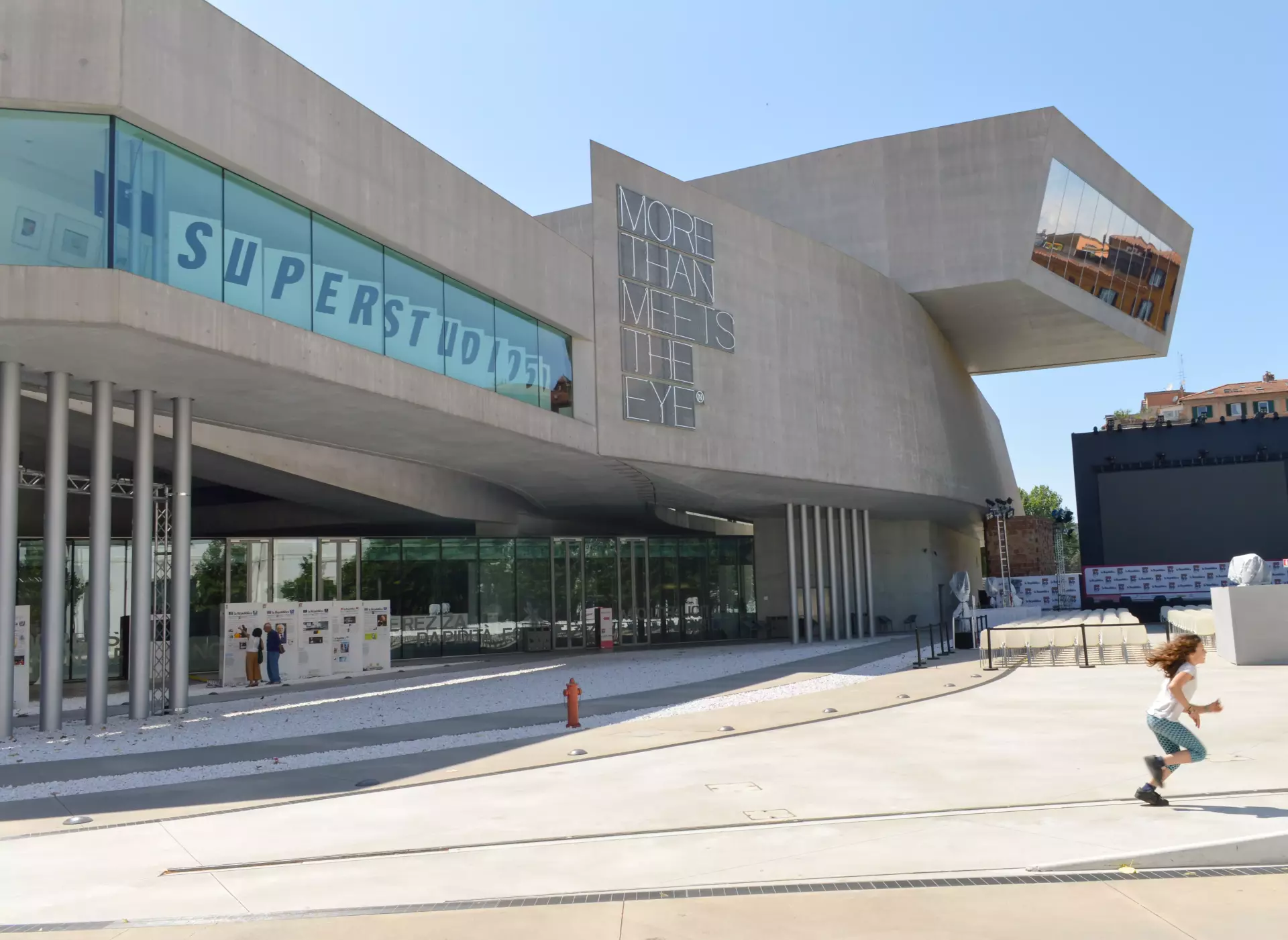
An ethnographic collection of around 60,000 pieces from European indigenous cultures. Documents evolution from the Palaeolithic age to the Iron Age.
Perhaps the most fascinating building in Rome. The core of the structure began life as the mausoleum of Emperor Hadrian, built between 135 and 139 AD. Subsequent strongholds built on top of the mausoleum were in turn incorporated into a residence and castle by medieval Popes. The building was used as a prison until 1870 but now houses a museum. Opera buffs will be exhilarated to visit the balcony from which Tosca leaps to her death. Film buffs will recognise it as a setting from Angels and Demons.
Built in the 9th century, this ancient basilica crowns the top of the Esquiline Hill. Tons of gold decorate the interior together with impressive mosaics (particularly when the floodlights are turned on), and there is a museum on the premises. If you are in Rome on Corpus Christi (Corpus Domini), which is the Thursday after the 8th Sunday after Easter, an early-evening service is held in San Giovanni by the Pope followed by a procession along Via Merulana to Santa Maria. Good opportunity for a close up view of the Pope. This is a very large church with lots to see, as for example, the main part of the church has two layers of mosaics and paintings high on the walls, the altar and apse are spectacular, and then there are several more or less large chapels you won't want to miss, including the one with the amazing golden baptismal font. Allow at least an hour if not an hour and a half or more to visit the interior, even if you do not take any special tours, and also allow time to view the exterior from all sides. Overall, at least 2 hours would not be too much time to allot.
Unusual and fascinating round church dedicated to St. Stephen. It is the national church of Hungary in Rome. Dating from the 5th Century this is believed to be the largest round church in the world. Charles Dickens described its wall paintings of martyrdom and butchery as "hideous". A good starting point to visit the attractions of the Celio Hill (see Rome/Aventino-Testaccio).
Home of the President of the Italian Republic, and the Quirinal Gardens. Built in 1573 as a papal summer residence, and has since also served as the residence for the pope and later for the king of Italy.
Like Pasquino, the Facchino is one the so-called "speaking figures" which are peculiar to Rome. He is looking out of the Banco di Roma building. The man depicted is holding a barrel in his hands and is carrying water. It is sometimes said that he is looking similar to Martin Luther, but more probably a porter who died while carrying a barrel is depicted here.
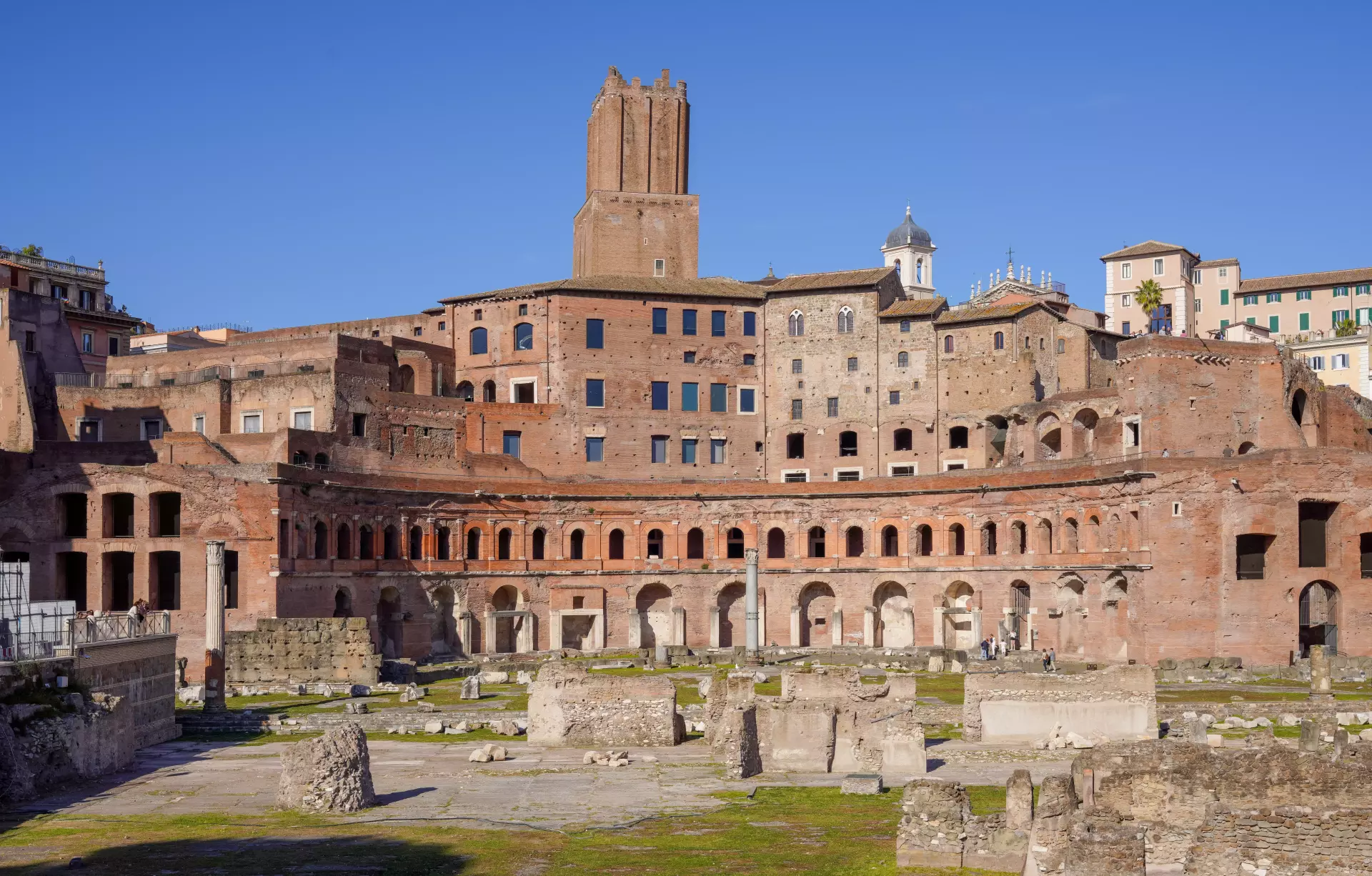
The remains of the ancient Roman archives, where Cicero and Seneca did research. Visible from the Forum and accessible through the Capitoline Museum.
It was immortalised in 1960 by the Federico Fellini film La Dolce Vita. It is also the location of the US Embassy, in the massive Palazzo Margherita. Via Veneto went into a period of decline in the 1980s but has returned to popularity and the roadside cafes are the place to be seen if you are into that sort of thing.
At the southern end of the Piazza, designed by Bernini but the main statue of the Moor was done by Giacomo della Porta and the other statues are 19th-century copies of the originals.
Pope Nicholas III connected Castel Sant'Angelo to St. Peter's by a covered fortified corridor called the Passetto di Borgo. This proved useful for Pope Clement VII during the Sack of Rome (1527). You can still see much of the Passetto by walking along the Borgo Sant'Angelo, which runs parallel to, and north of, the Via della Conciliazione.
Located a short walk west of the Colosseum, this well-preserved monumental arch was erected (soon after 315) to commemorate the victory of Constantine, the first Christian emperor, over his rival Maxentius at the Battle of the Milvian Bridge in 312. In general design, the Arch of Constantine imitates the century-earlier Arch of Septimius Severus (nearby in the Forum). The three arches are decorated utilizing mainly materials plundered from other imperial monuments by Trajan, Hadrian and Marcus Aurelius. The quality of its sculptural decoration, however, betrays the slow degradation that Classical Roman sculpture had experienced in the 3rd century AD.
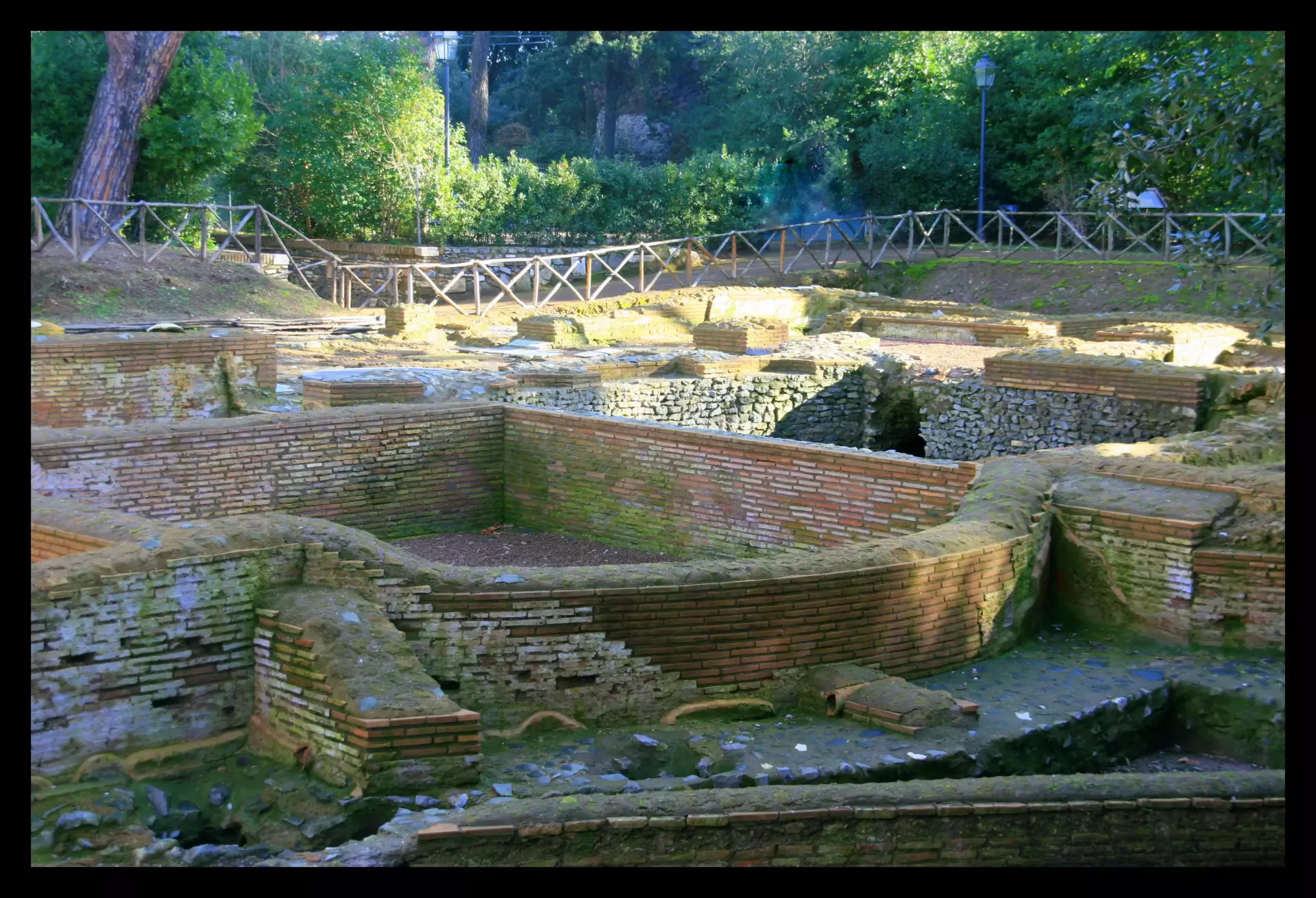
Caffarella Park covers an area of 339 ha and is part of the larger Appia Antica park. It contains both a working farm and numerous Roman ruins, some quite well preserved and is a great place for a stroll or cycle away from Rome’s traffic.
Built after 1631, the crypt of the church contains a macabre display - a series of chapels decorated with the bones of 3700 dead friars. The bones are glued to the walls and ceilings in bizarre and striking decorations.
This is an important place of pilgrimage for Catholics because of the supposedly miraculous powers of an image of the Virgin Mary. The first miracle was in 1740 when a traveller being attacked by a pack of dogs called out to the Virgin’s image for rescue and the dogs calmed down. The image was moved to Rome in the Second World War and is credited with saving the city from destruction, as a result of which Romans vowed to construct this new sanctuary.