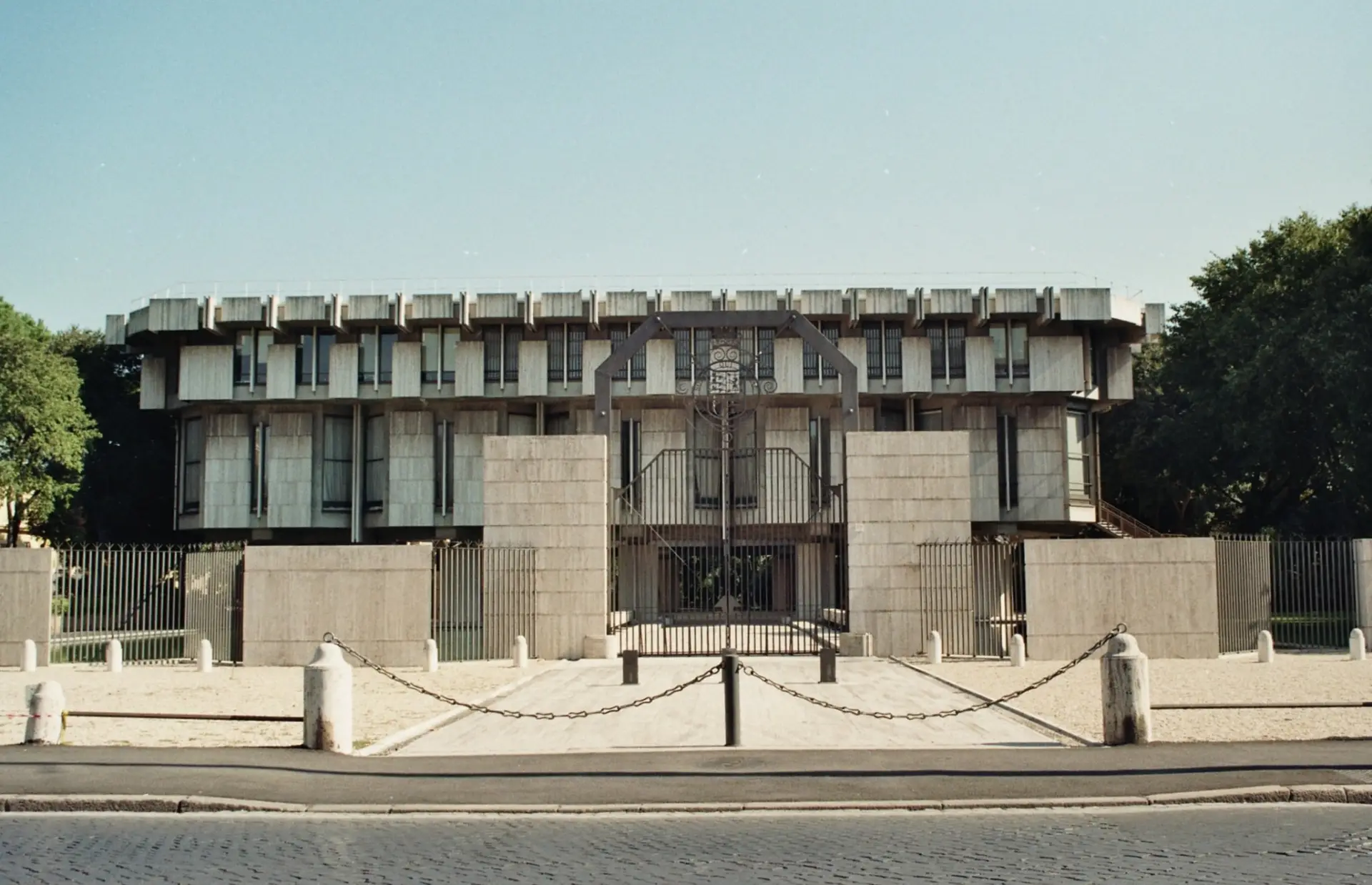
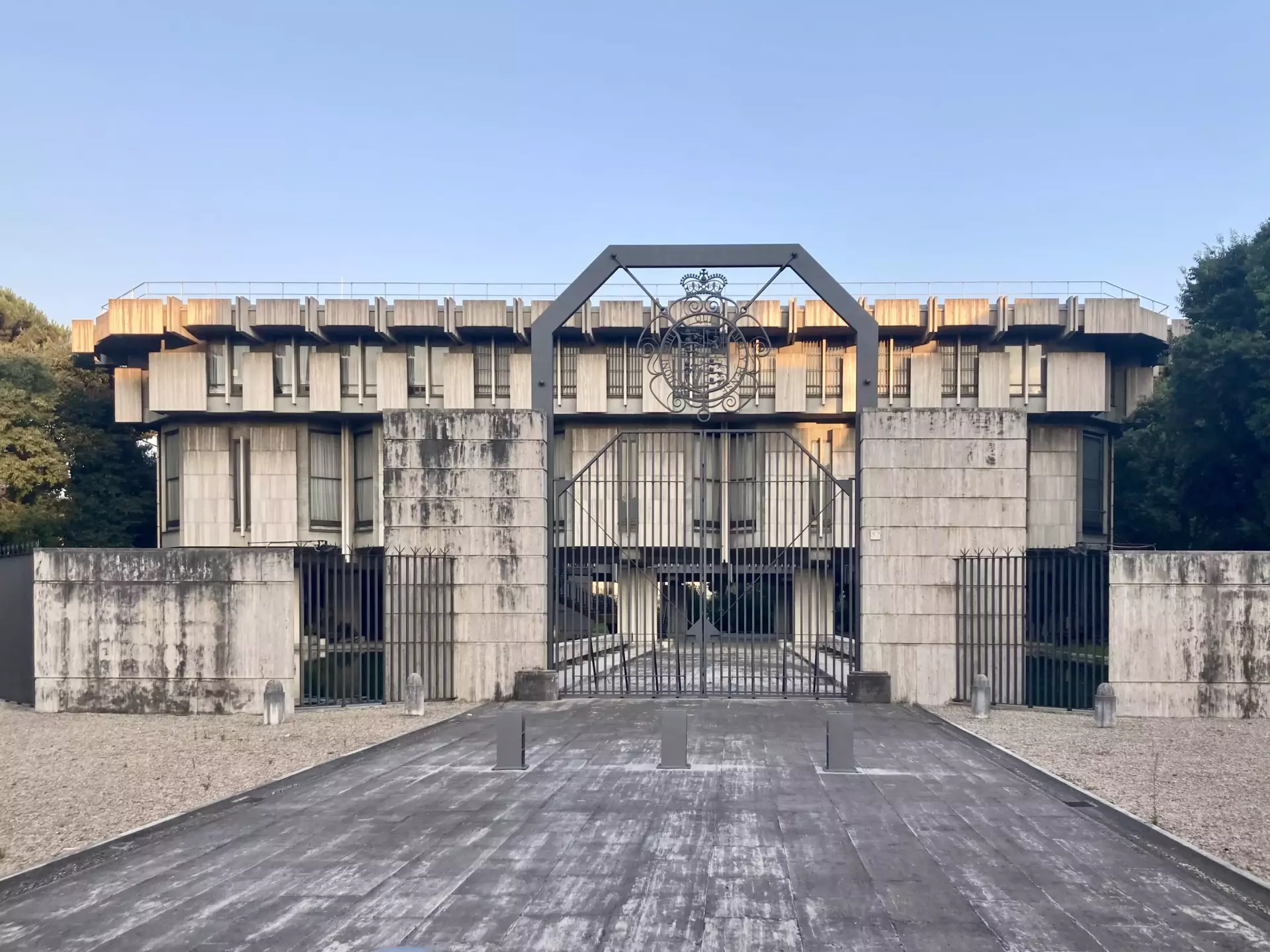
At the northern end of Via XX Settembre, right next to the historic Porta Pia designed by Michelangelo, stands the Embassy of the United Kingdom in Rome. This location holds a unique mix of history and modern design, making it a notable landmark in the area.
The current embassy was built after a tragic event in 1946, when the previous building was destroyed by a terrorist bomb. In response, a fresh vision was needed for the British diplomatic presence in the city. The celebrated architect Sir Basil Spence was chosen to design the new embassy, bringing contemporary ideas to the project.
One of the most distinctive features of the embassy is its construction on stilts. This design choice allows for uninterrupted views of the surrounding gardens, blending the building into its environment while showcasing modern architectural innovation. The embassy’s style stands out in the city, reflecting both progress and respect for its remarkable setting near one of Rome’s famous gateways.
Source - https://en.wikipedia.org/wiki/Embassy_of_the_United_Kingdom,_Rome
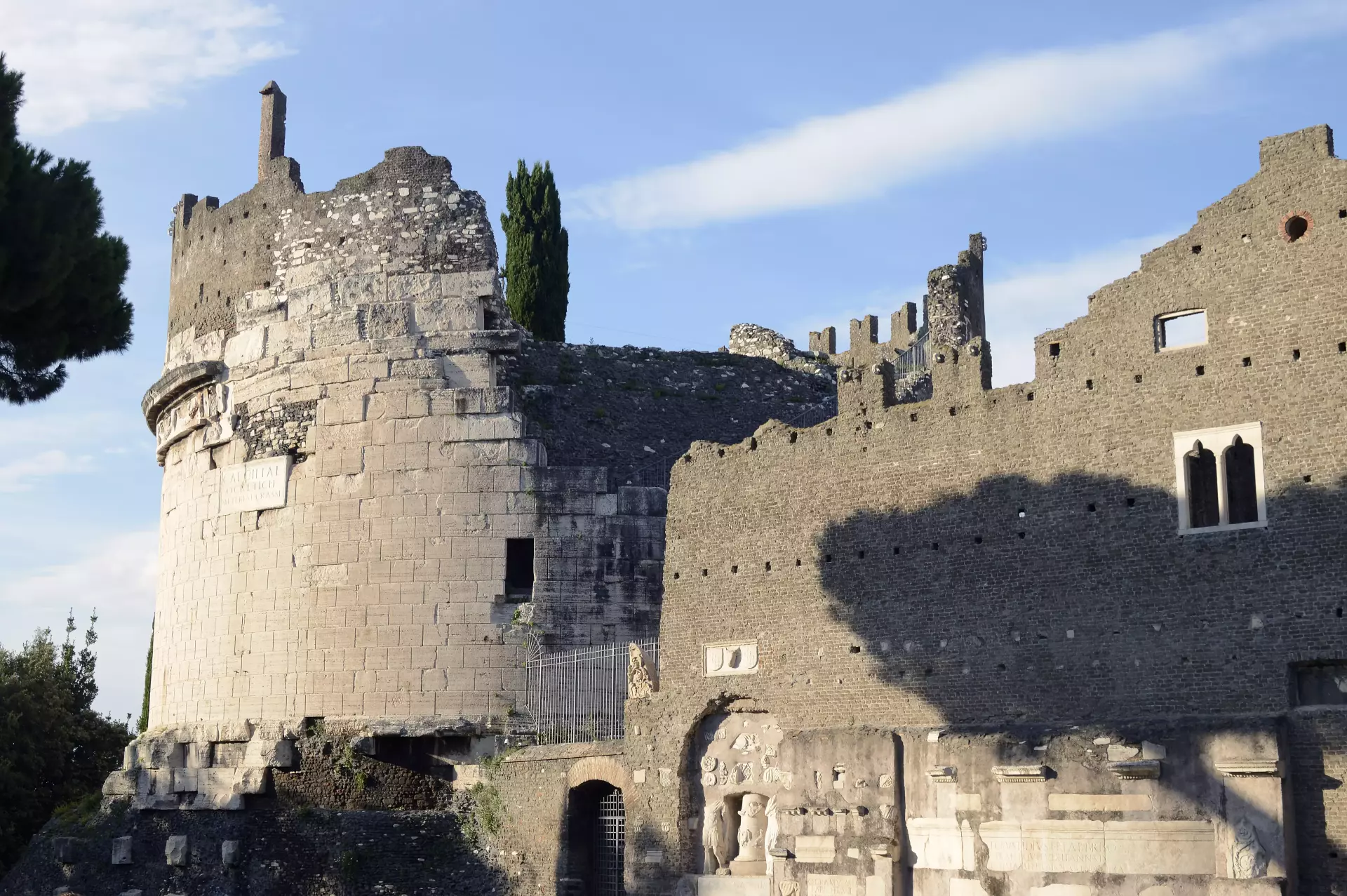
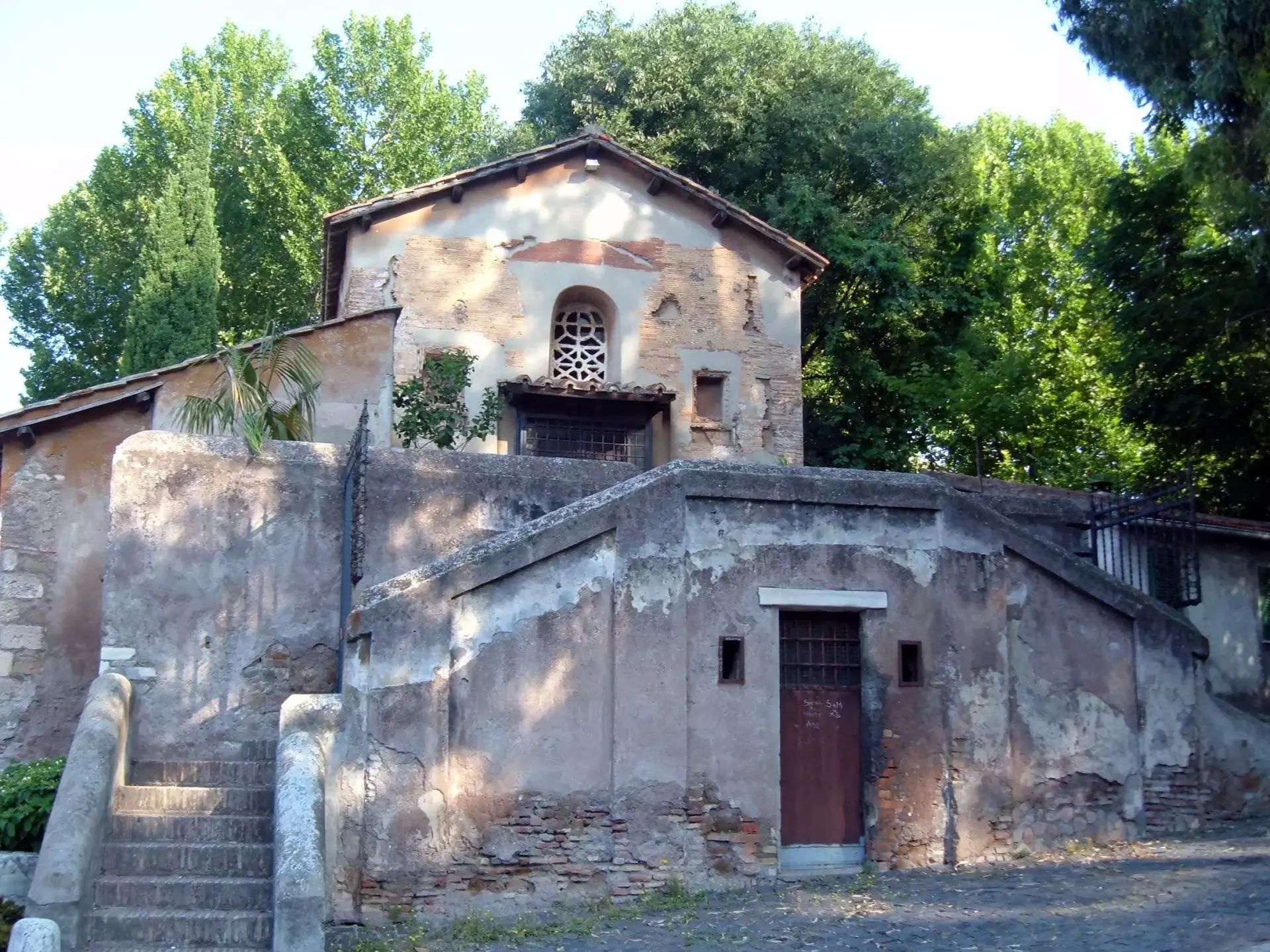
A 1st-century tomb surrounded by two farmhouses from the Middle Ages, one of which used to be a cheese store. Rather hidden behind a high wall, the tomb is rarely open to the public. You might be lucky on a Sunday: on the third Sunday of every month there is a guided tour at 11:00.
This building housed the University of Rome from the middle of the 15th century until 1935. The splendid interior courtyard was created by Giacomo della Porta. The inside church of Sant'Ivo (see above) is one of the masterpieces of the architect Borromini.
The Piazza di Spagna (Spanish Square) is the most famous square in Rome. For a very long time it was the meeting point of all foreigners coming to Rome. In the 17th century it was the residence of the Spanish Ambassador to the Holy See. The area around the residence was Spanish territory and foreigners who stayed here without permission were forced to serve in the Spanish army. The Fontana della Barcaccia (Old Boat Fountain) on Piazza di Spagna was designed and built in 1627-29 by Pietro Bernini, father of the more famous Gian Lorenzo Bernini. The fountain celebrates the fact that before high walls were built along the banks of the Tiber Rome often used to flood. Once the waters were so high that a boat ended up in the square. The decorations on the fountain imitate the coat of arms of Pope Urban VII, Barberini'p, who ordered the fountain to be built. A less aesthetic occupant of the square is Italy's first McDonalds, dating back to 1986. Also in the piazza is a column erected in 1856 to commemorate the Immaculate Conception. The column is topped by a statue of the Virgin Mary, and rests on a base with statues of Moses, David, Isaiah and Ezekiel. The Pope visits the Piazza every year on December 8th to celebrate Immaculate Conception.
Next door to Santa Croce. A collection of around 3000 pieces, although only a third of these are displayed.
Early Roman houses dating back to the 1st century, believed to be homes of early Christians. Well-preserved frescoes and a small museum.
The house in which the famous English poet John Keats succumbed to consumption, now preserved as a memorial to his life and that of his friend Shelley, both of whom are buried in Rome's Protestant Cemetery (see Testaccio).
Between the Pantheon and Via del Corso. A stunning example of Baroque art. The ceiling frescoes are especially fine, including a trompe l'oeil dome by the master Andrea Pozzo.
Rome's museum of contemporary art, housed in a former industrial complex. Rotating exhibitions, each one usually lasting about 4 months. The MACRO Testaccio exhibition space is located in Aventino-Testaccio.
Finished in 29 BC, marks the spot of Caesar's spontaneous cremation and Mark Antony's funeral speech, made famous by Shakespeare in his play Julius Caesar ("Friends, Romans, Countrymen, lend me your ears ...").
Like Pasquino, the Facchino is one the so-called "speaking figures" which are peculiar to Rome. He is looking out of the Banco di Roma building. The man depicted is holding a barrel in his hands and is carrying water. It is sometimes said that he is looking similar to Martin Luther, but more probably a porter who died while carrying a barrel is depicted here.
The building is in one of the most hidden corners of the city center among Piazza Navona and Castel Sant'Angelo. It served as residence for the Orsini family. Nowadays it is private property and one can only glance at the courtyard and the amazing fountain inside, erected in 1618 by architect Antonio Casoni. However, the brief moment is worth it.
At the southern end of the Piazza, designed by Bernini but the main statue of the Moor was done by Giacomo della Porta and the other statues are 19th-century copies of the originals.
Contains the tomb of Pope Hadrian IV, the last non-Italian pope before Pope John Paul I.