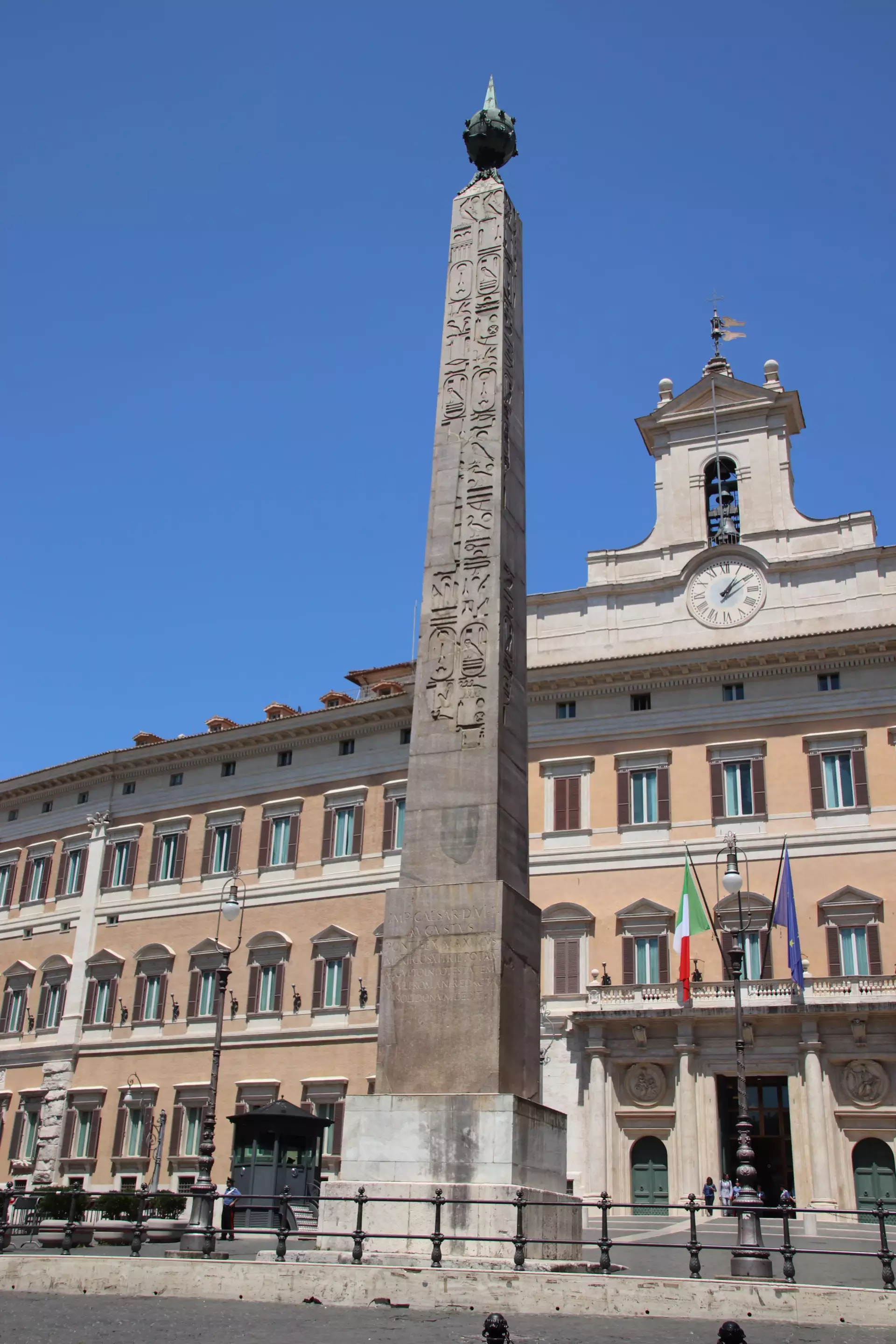
The Obelisk of Montecitorio is an impressive monument with a fascinating story. Originally carved in ancient Egypt, this obelisk was brought to Rome in the year 10 BC, during the rule of the Roman Emperor Augustus. It stands as a striking link between two great civilizations, showcasing the Roman love for Egyptian art and culture.
The obelisk was first created in Heliopolis, a major city in ancient Egypt known for its grand temples and monuments. Made of red granite, it was decorated with hieroglyphics that honor Pharaoh Psamtik II. In 10 BC, Augustus decided to transport the obelisk to Rome as a symbol of Rome’s power and their admiration for Egypt.
Once in Rome, the obelisk was placed in the Campus Martius, a large public area used for assemblies and celebrations. It served as the gnomon, or shadow-casting pointer, of a giant sundial called the Solarium Augusti. The movement of the shadow across the markings on the pavement allowed the Romans to tell time and mark important dates.
Over the centuries, the obelisk suffered damage and was eventually buried by floods and shifting ground. It was rediscovered and restored in the 18th century and now stands in Piazza Montecitorio, in front of the Italian parliament building. Today, the Obelisk of Montecitorio remains a testament to the enduring connections between ancient Egypt and Rome.
Source - https://en.wikipedia.org/wiki/Obelisk_of_Montecitorio
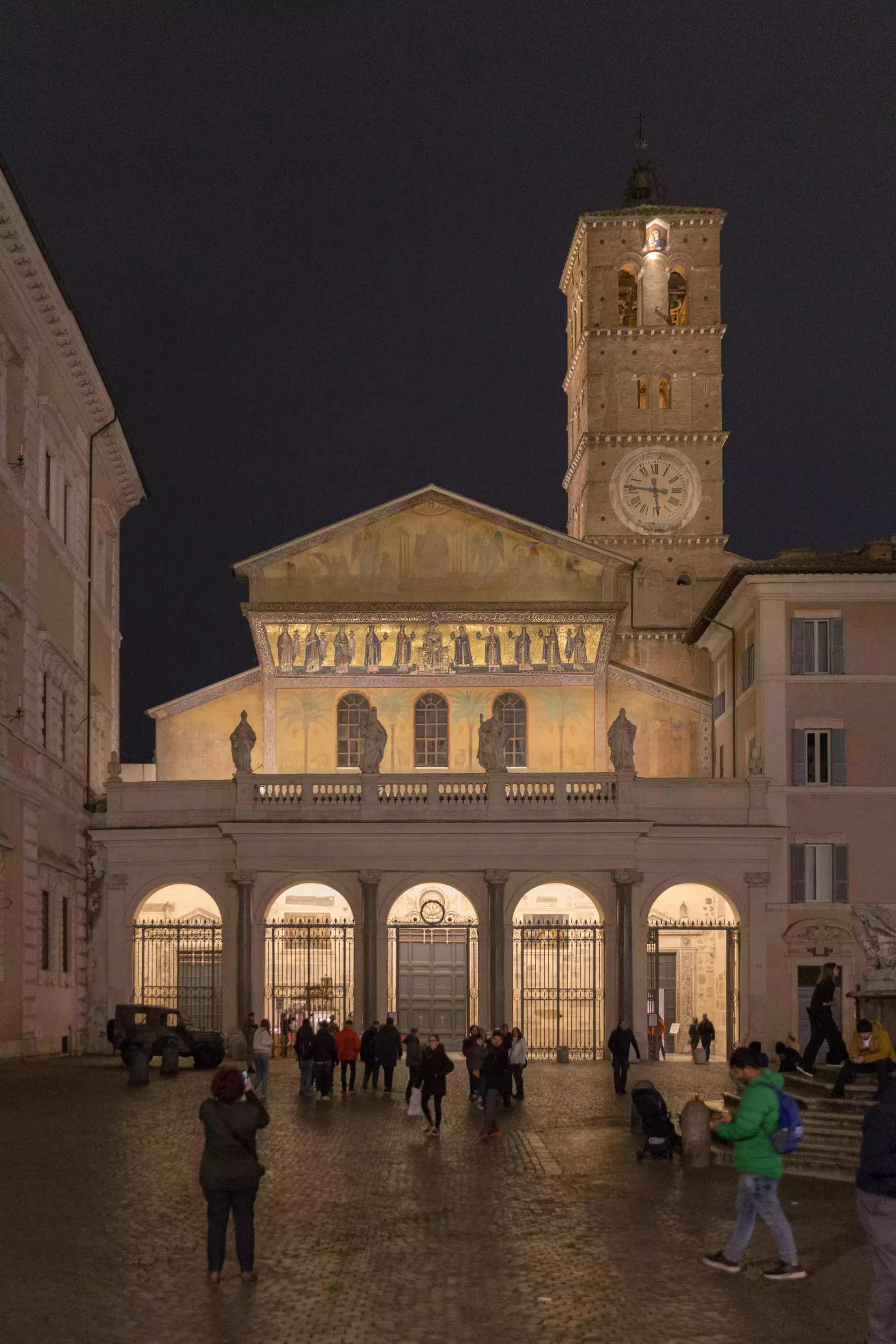
A 5th-century basilica, simply and attractively decorated. The wooden door, of which 18 carved panels of scenes from the Bible survive, is believed to date from the church's construction.
This is not, contrary to popular belief, one of the original seven hills that Rome was founded on. It is the second highest after Monte Mario, though, and offers incredible panoramic views of the city as long as the authorities remember to prune the trees on the hillside (if they are too tall you can walk a few meters down the hill for views that are just as good). On the other side of the piazza there is also a nice view of the dome of St. Peter's. The Piazza and the street leading up the hill are dedicated to Giuseppe Garibaldi who led Italian troops against the French here in 1849. There are also several commemorative statues.
Permanent collection features paintings and drawings of Rome between the 18th and 20th centuries together with a fascinating black and white photo exhibition of Rome from 1950-80. Also offers rotating exhibitions, usually of the work of photographers.
A relaxing place to sit and recover from the exertions of sightseeing. Permanent collection plus annual competition.
Rome's museum of contemporary art, housed in a former industrial complex. Rotating exhibitions, each one usually lasting about 4 months. The MACRO Testaccio exhibition space is located in Aventino-Testaccio.
This small museum records the liberation of Rome from German occupation during the Second World War. During the occupation the building was used as a prison. Stair lifts and chair lifts available for wheelchair users (call ahead).
More of an enormous traffic circle than a piazza, but a good central location. The centerpiece is the enormous Vittorio Emanuele Monument (aka the Wedding Cake or the Typewriter) with the Capitoline hill next door. Mussolini used to harangue Romans from the first floor balcony of Palazzo Venezia (see under Museums), to the west of the square.
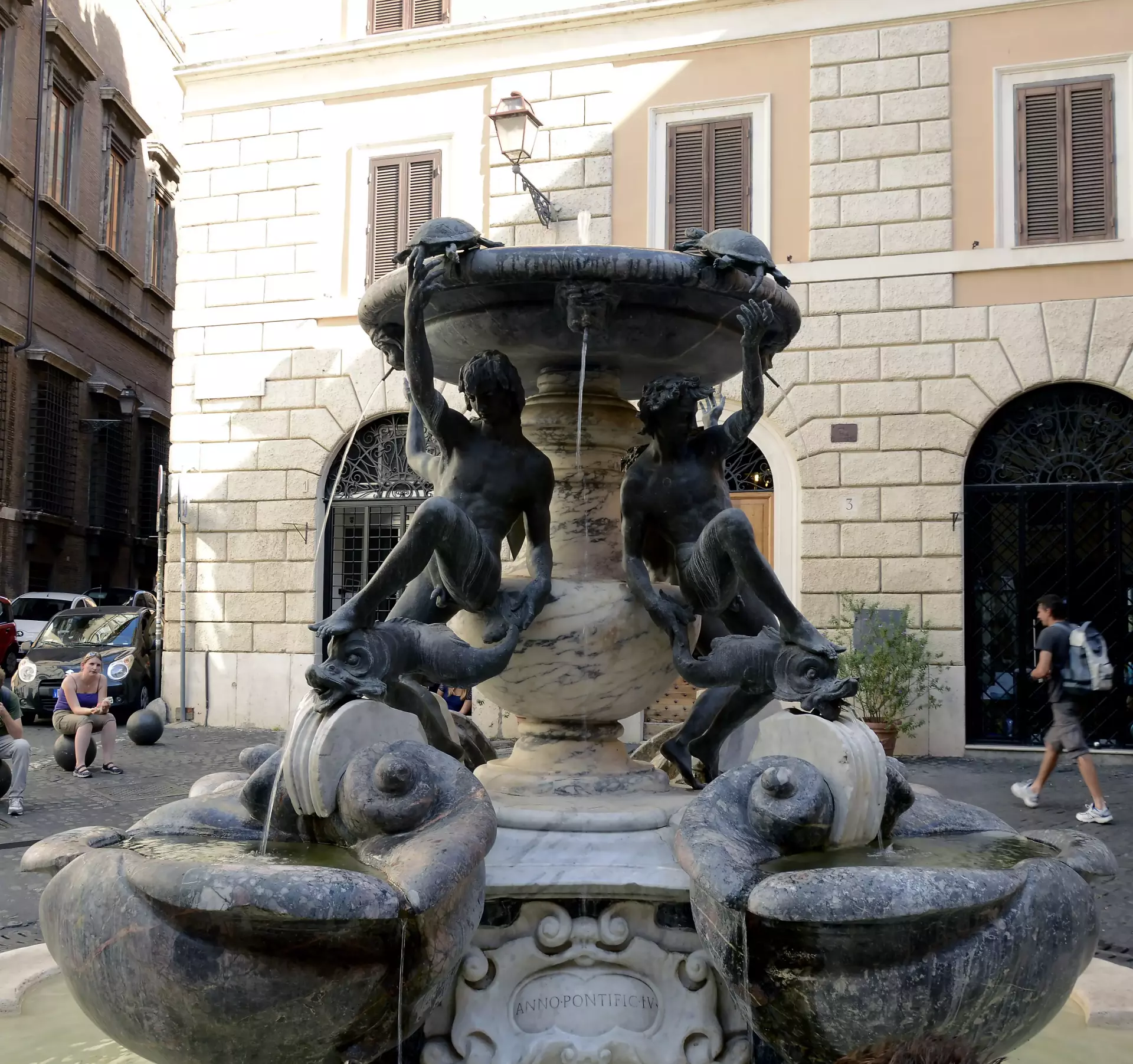
A pleasant fountain in an out-of-the-way square. It was originally meant to have four dolphins rather than turtles, but the dolphins proved to be too large for the water pressure, so the turtles were added as an afterthought.
The house in which the famous English poet John Keats succumbed to consumption, now preserved as a memorial to his life and that of his friend Shelley, both of whom are buried in Rome's Protestant Cemetery (see Testaccio).
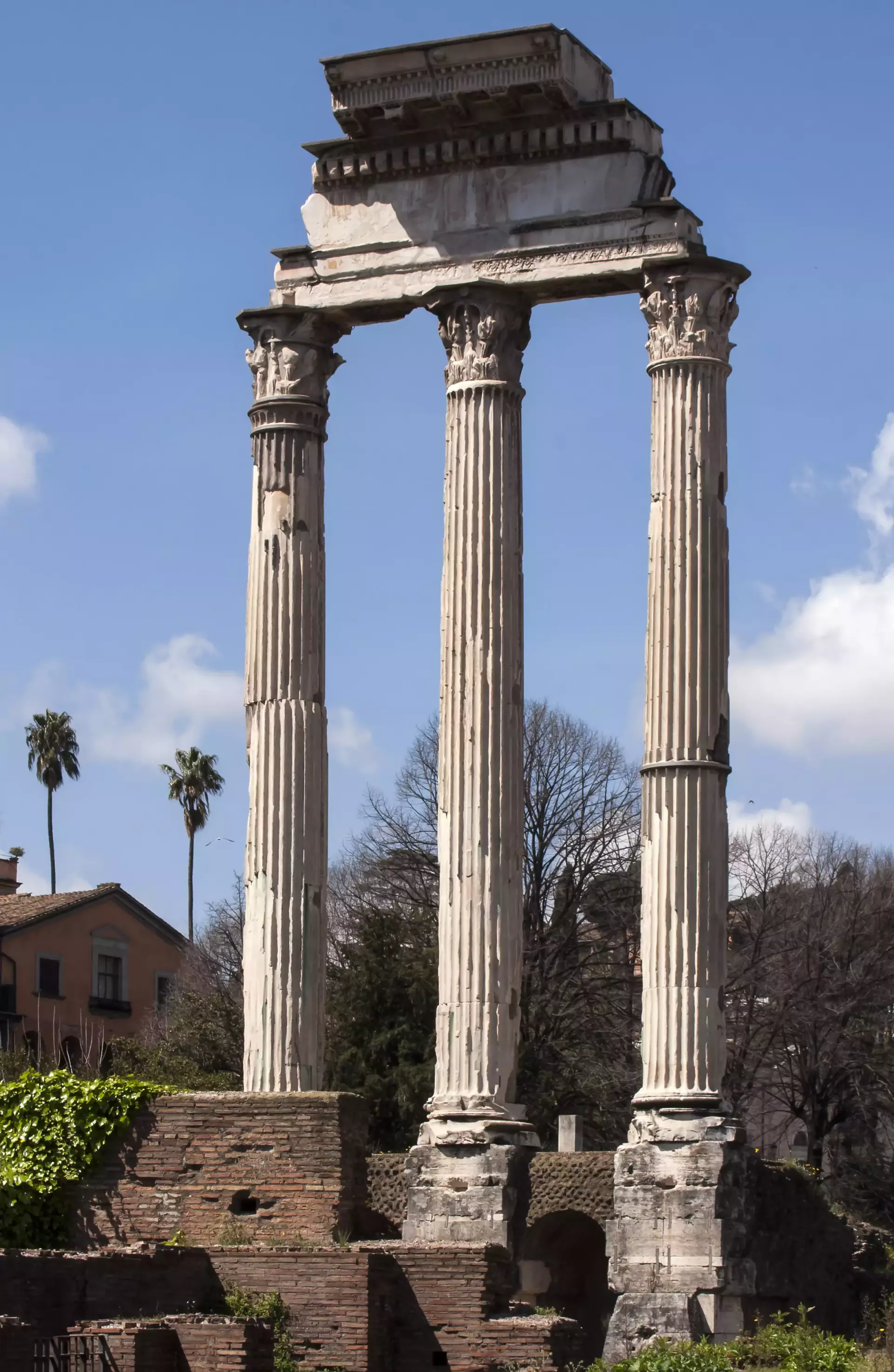
Built in 141 AD and dedicated to the Empress Faustina; after her husband emperor Antoninus Pius died in 161 AD the temple was rededicated to the couple.
According to an inscription Emperor Augustus dedicated the obelisk to the sun in the 11th year of his consulate (10BC), after he had annexed Egypt to Rome. The obelisk is 24 m high. It was erected in Heliopolis in Egypt and was dedicated to Pharao Sethos I (1313-1292 BC) and Pharoa Ramses II (1292-1275 BC). Augustus brought the obelisk to the Circus Maximus, where it was rediscovered in 1587, broken into three pieces and was relocated to Piazze del Popolo on the orders of Pope Sixtus V in 1589.
Four fountains from the time of Pope Sixtus V when much of Rome was redeveloped. A reclining deity is the theme of each sculpture. This is a busy intersection and if you don't look twice you may miss these exquisite examples of Roman mythology.
By Bernini, in the very centre of Piazza Navona. Incorporates an Egyptian obelisk and symbolises four of the world's great rivers (the Ganges, the Nile, the Danube and the Plata), representing the four continents known at the time.
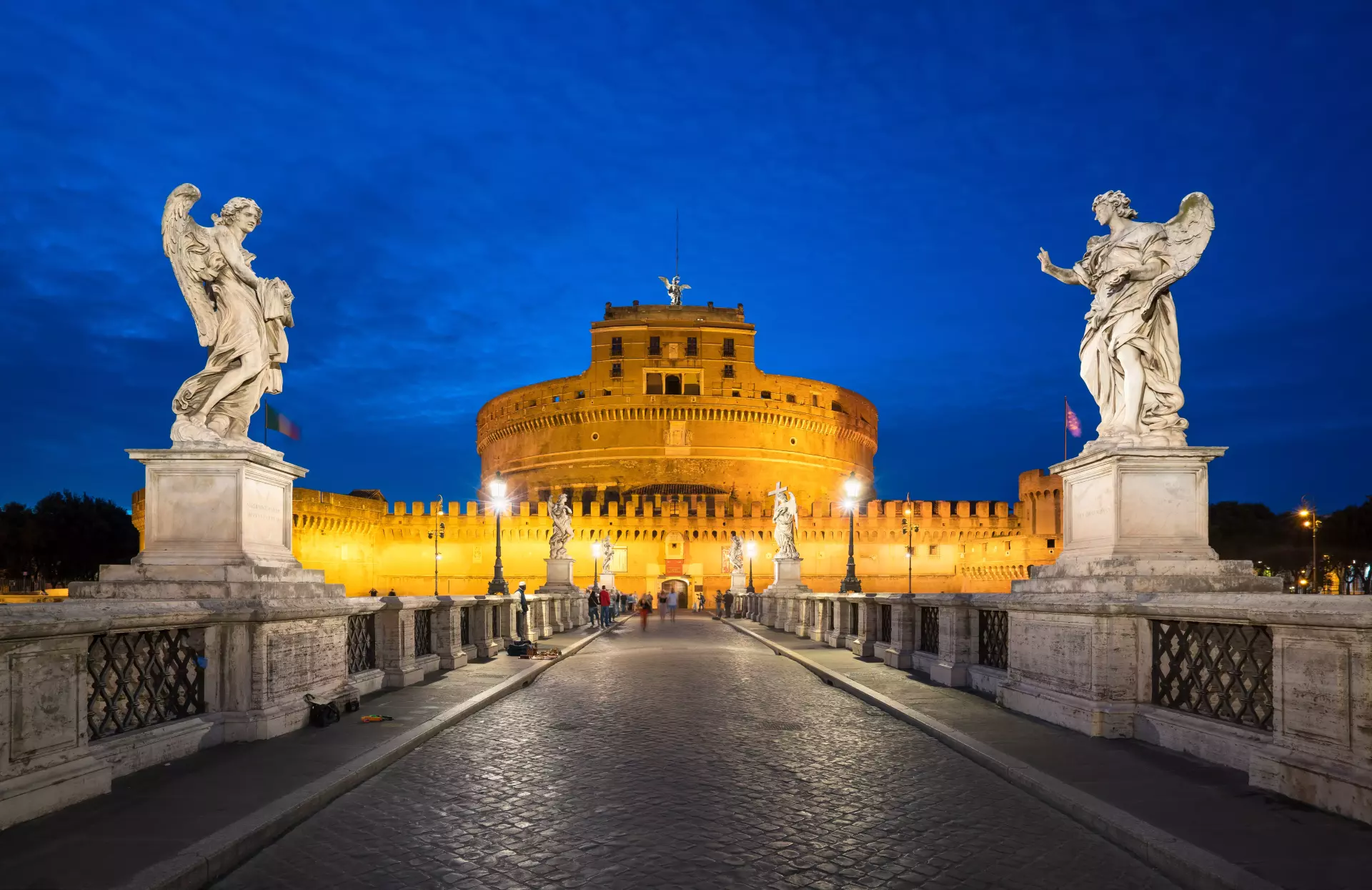
Pope Nicholas III connected Castel Sant'Angelo to St. Peter's by a covered fortified corridor called the Passetto di Borgo. This proved useful for Pope Clement VII during the Sack of Rome (1527). You can still see much of the Passetto by walking along the Borgo Sant'Angelo, which runs parallel to, and north of, the Via della Conciliazione.