The Pincio Park stretches out above Piazza del Popolo, offering visitors a peaceful green space with a fascinating history. Designed in the 19th century by Giuseppe Valadier, the same architect behind Piazza del Popolo, the park has long been a favorite retreat for both locals and travelers. Its tree-lined paths are framed by evergreen bushes, palm trees, and pines, providing welcome shade and a charming atmosphere.
One of the park’s most distinctive features is the Casina Valadier, which once served as an elegant restaurant. This grand building has seen many illustrious guests over the years, including Mahatma Gandhi, Benito Mussolini, composer Richard Strauss, and Egypt’s King Farouk. The Casina’s unique blend of history and culture gives the park a special sense of character.
From the Piazzale Napoleone I, visitors are treated to sweeping views over Rome. The panorama includes the Vatican and stretches from Monte Mario to the Gianicolo hill. Whether exploring the park from the direction of Villa Borghese or following Viale Trinità dei Monti, these paths are especially beautiful in the golden light of sunset.
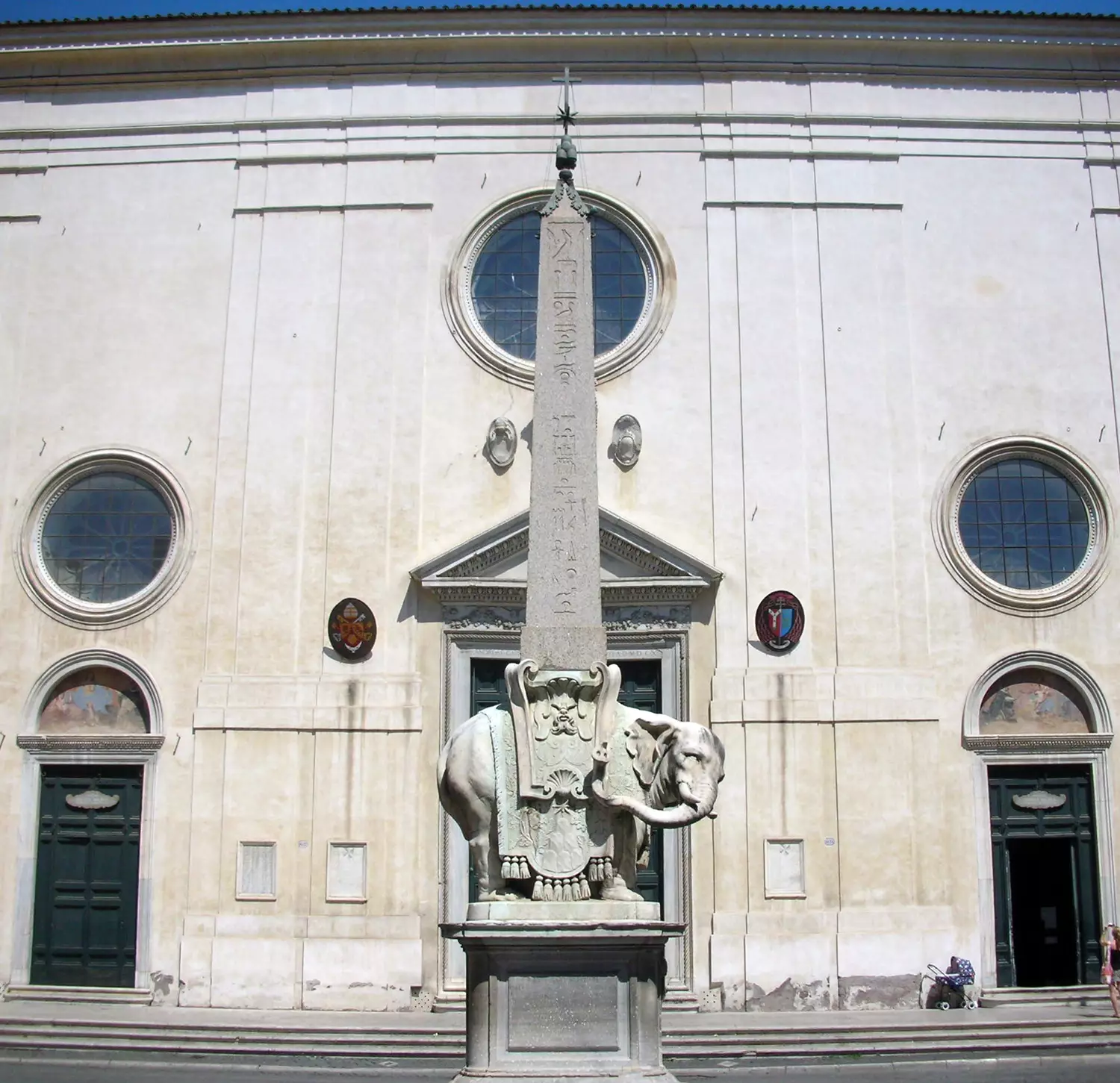
Within the park stands an Egyptian obelisk, erected by Emperor Hadrian. This monument honors Antinous, Hadrian’s favorite and a figure deeply admired by the emperor. According to tradition, Antinous once saved Hadrian’s life and was later revered as a deity by the Romans. The obelisk stands as a lasting tribute to this remarkable story, adding another layer to the park’s rich history.
The 4th rebuilding of the meeting place for the Roman Senate, once converted into a church during the Middle Ages, but now restored since the 1930s.
In addition to Santa Maria in Cosmedin there is a lot to be seen around this piazza. Opposite the church is the round temple dedicated to Hercules Invictus (the Unconquered Hercules), and not far from that the rectangular Fortuna Virilis, both constructed in the 1st Century. Opposite, to the back of the piazza is the Arch of Argentari and behind that the church of San Giorgio in Velabro, the front of which was repaired after being damaged by a terrorist bomb in July 1993.
Finished in 29 BC, marks the spot of Caesar's spontaneous cremation and Mark Antony's funeral speech, made famous by Shakespeare in his play Julius Caesar ("Friends, Romans, Countrymen, lend me your ears ...").
Borghese Gallery and Museum is a lovely display in a beautiful villa setting, which concentrates on the quality rather than the size of its collection. There are some very notable works by Antonio Canova and Gian Lorenzo Bernini here, Bernini's Apollo and Daphneis quite amazing. It also houses some of Caravaggio paintings, well worth the admission charge. Originally, the gallery was one of the most magnificent private art collections in the world. It was founded by Cardinal Scipione Borghese. At the beginning of the 19th century, Prince Camillo Borghese sold great parts of the collections to Paris where today they belong to the most valuable exhibits of the Louvre. Since 1902 the villa and the gallery are owned by the Italian state. The number of people admitted is limited to 360 every 2 hours, so it is best to make a well in advance for the time slot you want. Cameras and photography are allowed. Plan to arrive at the museum at least 15 minutes prior to your entry time, to obtain your ticket from Will Call and to deposit purses, strollers, backpacks, bottles, and other bulky items in the cloak room. If you are late for your reservation the museum may not allow you to use your ticket.
By Bernini, in the very centre of Piazza Navona. Incorporates an Egyptian obelisk and symbolises four of the world's great rivers (the Ganges, the Nile, the Danube and the Plata), representing the four continents known at the time.
The most extensive collection of Etruscan art and artifacts anywhere. Fantastic collection and well worth the admission charge. A difficult museum to find, but a lovely display in a beautiful villa setting.
More modern than most Roman churches: it was not started until 1873. This is Rome’s Episcopalian church. Some very interesting artwork, particularly the mosaics by Edward Burne-Jones of the Pre-Raphaelite school.
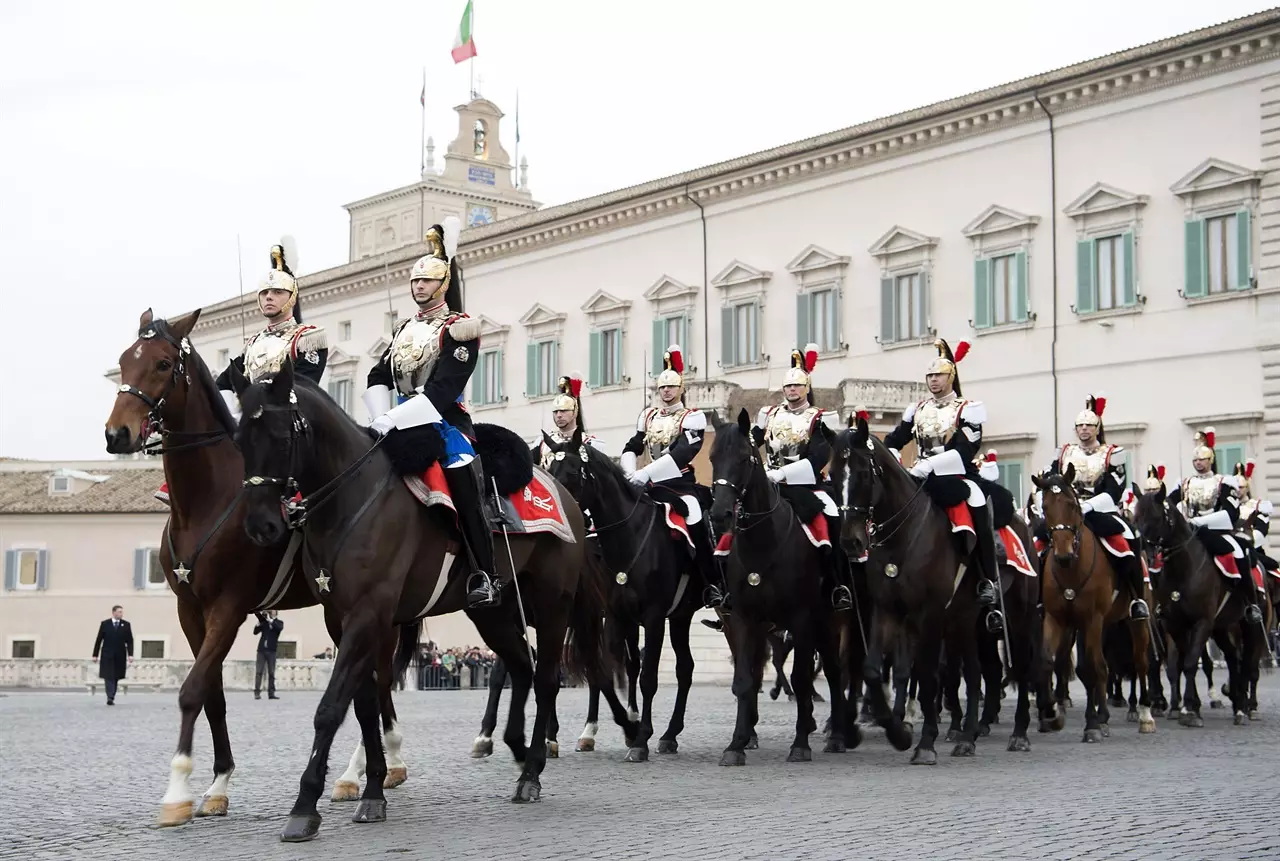
They are posted at entrances to the Vatican City to provide security and protect the Pope. They wear very colourful clothing, similar to the uniforms worn by Renaissance-era soldiers. The Pontifical Swiss Guards is also the smallest and oldest standing army in the world, founded in 1506 by Pope Julius II. The origins of the Swiss guards, however, go back much further as the popes had regularly imported Swiss mercenaries during the 1400s.
An example of urban planning that goes back to Pope Julius II, who, in 1508, envisioned it as a street that would connect all major government buildings. It is around a kilometer long and is in a straight line, an unusual feature for the time. It is lined with some interesting palaces but these days is more known for its antique shops. Via Giulia runs parallel with and one block from the River Tiber.
This is not, contrary to popular belief, one of the original seven hills that Rome was founded on. It is the second highest after Monte Mario, though, and offers incredible panoramic views of the city as long as the authorities remember to prune the trees on the hillside (if they are too tall you can walk a few meters down the hill for views that are just as good). On the other side of the piazza there is also a nice view of the dome of St. Peter's. The Piazza and the street leading up the hill are dedicated to Giuseppe Garibaldi who led Italian troops against the French here in 1849. There are also several commemorative statues.
Like Pasquino, the Facchino is one the so-called "speaking figures" which are peculiar to Rome. He is looking out of the Banco di Roma building. The man depicted is holding a barrel in his hands and is carrying water. It is sometimes said that he is looking similar to Martin Luther, but more probably a porter who died while carrying a barrel is depicted here.
The Piazza di Spagna (Spanish Square) is the most famous square in Rome. For a very long time it was the meeting point of all foreigners coming to Rome. In the 17th century it was the residence of the Spanish Ambassador to the Holy See. The area around the residence was Spanish territory and foreigners who stayed here without permission were forced to serve in the Spanish army. The Fontana della Barcaccia (Old Boat Fountain) on Piazza di Spagna was designed and built in 1627-29 by Pietro Bernini, father of the more famous Gian Lorenzo Bernini. The fountain celebrates the fact that before high walls were built along the banks of the Tiber Rome often used to flood. Once the waters were so high that a boat ended up in the square. The decorations on the fountain imitate the coat of arms of Pope Urban VII, Barberini'p, who ordered the fountain to be built. A less aesthetic occupant of the square is Italy's first McDonalds, dating back to 1986. Also in the piazza is a column erected in 1856 to commemorate the Immaculate Conception. The column is topped by a statue of the Virgin Mary, and rests on a base with statues of Moses, David, Isaiah and Ezekiel. The Pope visits the Piazza every year on December 8th to celebrate Immaculate Conception.
A 5th-century basilica, simply and attractively decorated. The wooden door, of which 18 carved panels of scenes from the Bible survive, is believed to date from the church's construction.
The Collegio Romano was a college of the Jesuit order. Many popes, cardinals and bishops were educated here. Since 1870 it has been a secular (non-monastic) school. The coat of arms on the doorway is that of Pope Gregory XIII (1572–1585). The tower was erected in 1787 and served as an observatory. Until 1925 all clocks in Rome were set after that of the Collegio Romano.
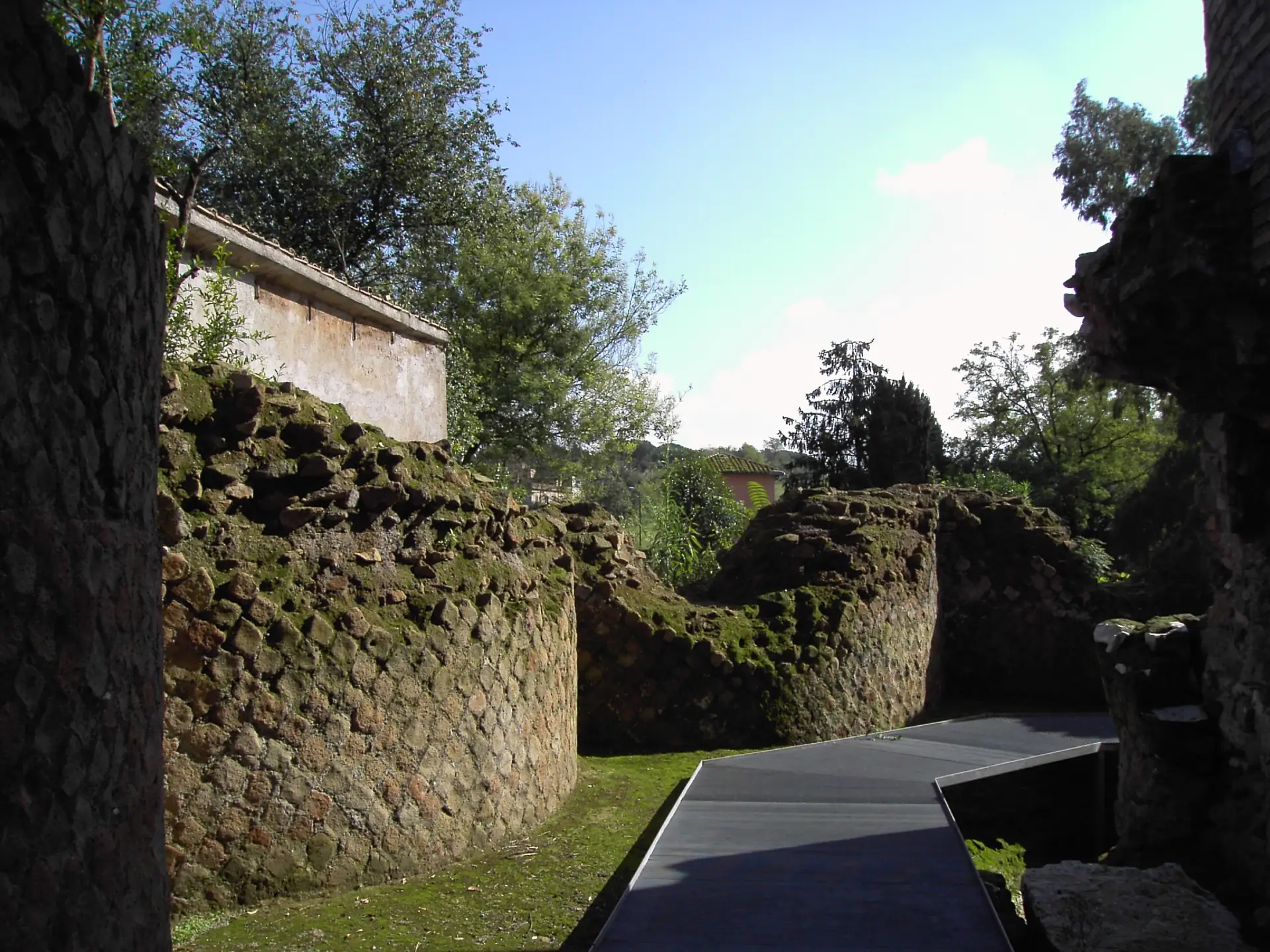
The mausoleum of Cecilia Metella, who died in 69 BC, is the best preserved monument on the Appian Way and dominates the surroundings. In the Middle Ages it was transformed into a fortress and battlements were added. At that time there was considerable competition for ownership because of its strategic location.
Church built on the site of three Roman pagan temples, which can be explored underground for a small fee paid at a desk near the church entrance.